No, patio doors are not all the same size. The dimensions vary significantly depending on the door type (sliding, French, hinged, or bifold), the manufacturer, and whether you're looking at the nominal size, the actual frame/unit size, or the rough opening in your wall. A standard sliding patio door might be 72" wide by 80" tall, but a bifold opening for the same space could span 96" or more, and French doors come in widths ranging from 60" to 96". If you're replacing an existing door, you also have to account for the fact that two doors with the same nominal size from different brands can have slightly different frame dimensions, track heights, and threshold profiles, which means they won't always swap in cleanly.
Are All Patio Doors the Same Size? Measure Correctly
Owen Delaney
28 Apr 2026
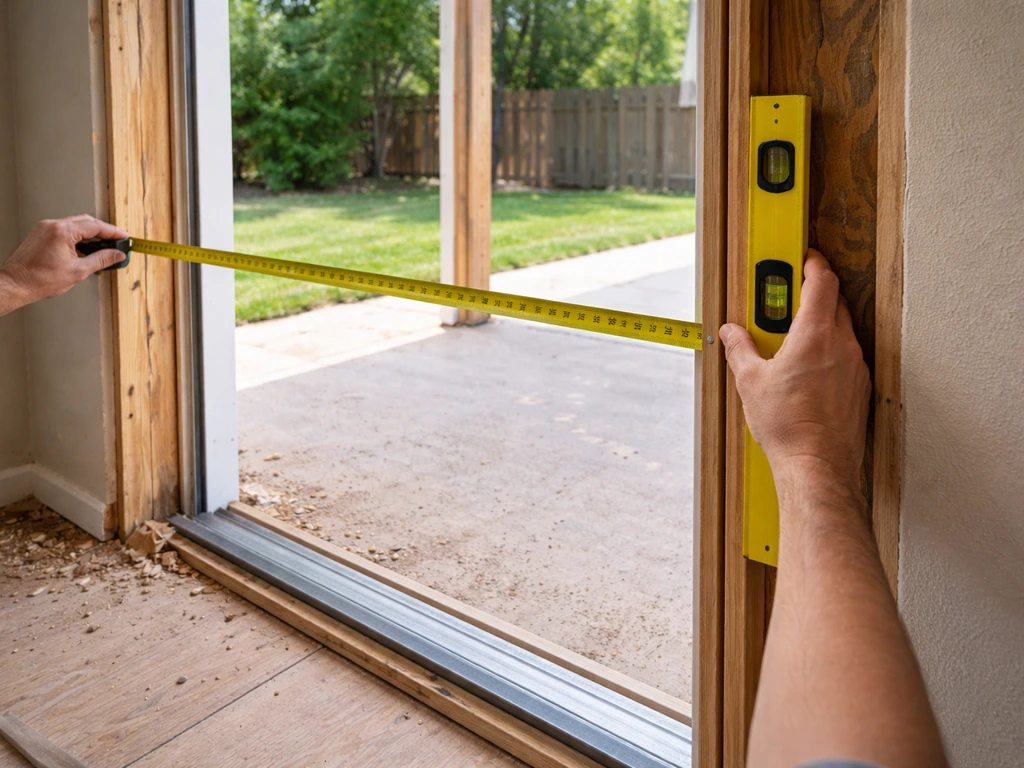
How to measure your patio door opening correctly
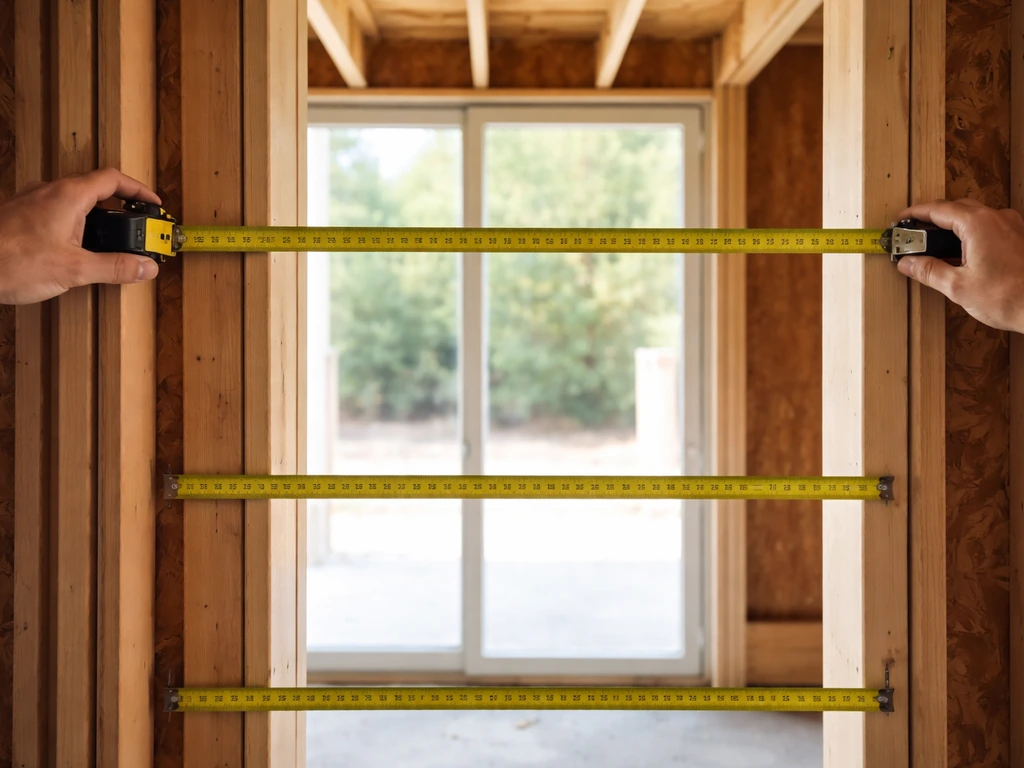
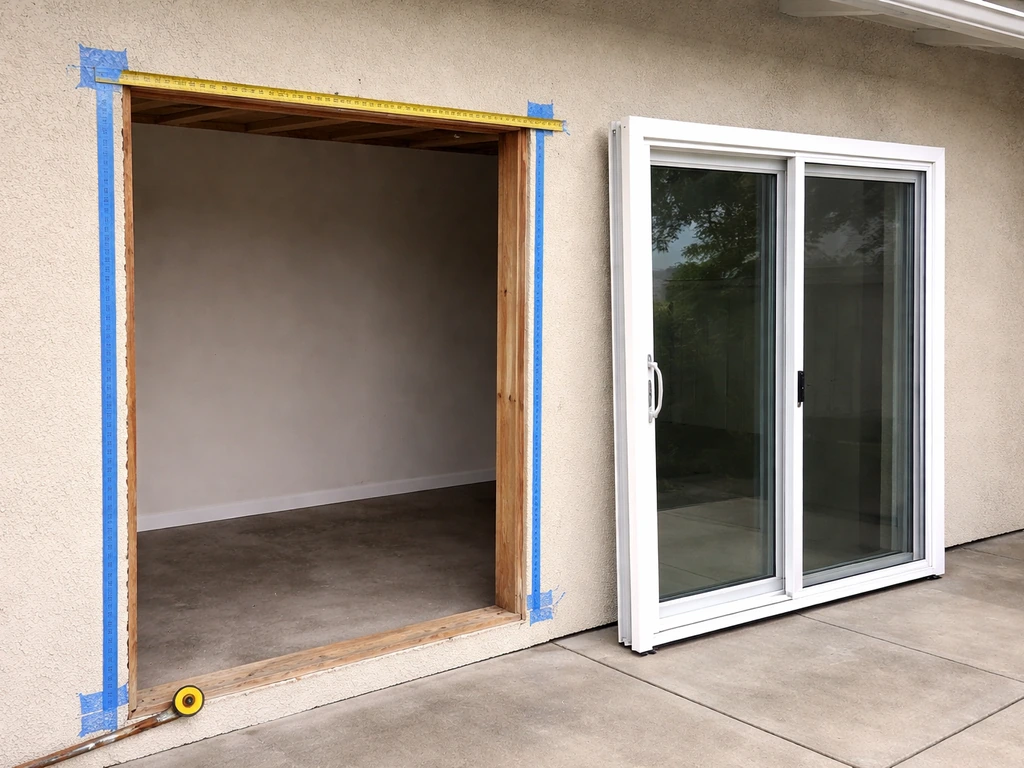
The single biggest mistake homeowners make is measuring the old door itself and ordering based on that number. You need to measure the rough opening, which is the framed hole in your wall from stud to stud (width) and from the subfloor to the bottom of the header (height). That's the number manufacturers need to match a unit to your space.
Measure the width at three points: top, middle, and bottom of the opening. Measure the height at three points: left, center, and right. Always use the smallest measurement from each set as your reference. Openings settle and shift, and an inch of variation across a doorway is surprisingly common, especially in older homes. If you try to fit a unit to the largest measurement, you'll end up fighting it during installation.
Here's how the key terms relate to each other, because manufacturers use them differently and it's easy to order the wrong thing:
- Rough Opening (RO): The stud-to-stud width and subfloor-to-header height. This is what your framing contractor or the manufacturer's install guide will reference first.
- Unit/Frame Size (also called "Door Dimension" by Andersen): The outside-frame-to-frame measurement of the assembled door unit you're buying. Per Andersen's documentation, unit dimension always refers to outside frame to frame.
- Nominal Size: A rounded label used for marketing and ordering (like "6068" for a 6-foot-wide, 6-foot-8-inch-tall door). It doesn't reflect the exact frame size.
- Unobstructed Glass / Active Opening: The actual clear area you can walk or see through once the frame, track, and panels are in place. This matters for screen inserts and security hardware compatibility.
- Finished Opening: The opening after drywall and trim are added, which is smaller than the rough opening.
As a rule of thumb, manufacturers like Pella design their units so the frame width (FW) and frame height (FH) equal the rough opening minus 0.5 inches in each direction. Home Depot's installation guide similarly recommends the rough opening be about 1/2 inch larger than the door unit size in both dimensions to leave room for shimming and leveling. Always defer to the specific manufacturer's sizing table for the unit you're buying, because that half-inch gap is a general guide, not a universal rule.
One more thing worth measuring: the floor-to-finished-floor height if you're replacing a door on a slab or in a space with tile or hardwood. JELD-WEN specifically flags this for replacement projects because a taller replacement unit, or one with a different threshold profile, may require adjusting the rough opening height. Don't assume your current door's height is the same as the new unit's height just because the nominal sizes match.
Common standard sizes by patio door type
Here's a practical breakdown of the size ranges you'll actually encounter when shopping for each major patio door style. These are the sizes that manufacturers stock or build as standard configurations, meaning faster delivery and lower cost compared to custom orders.
Sliding patio doors
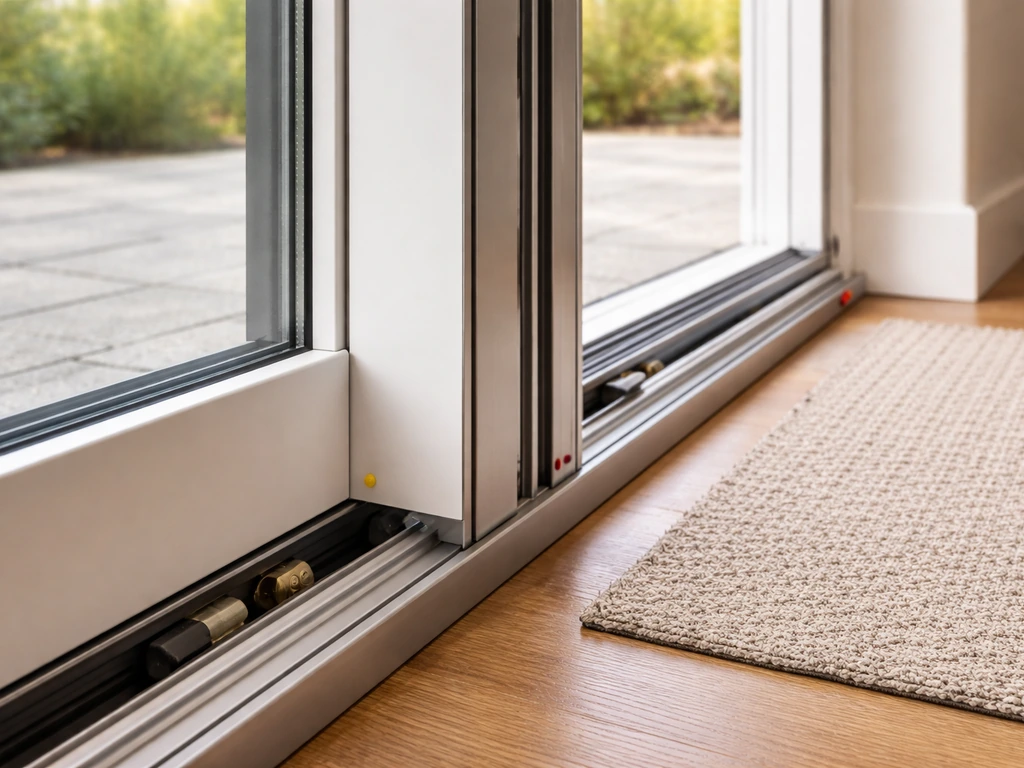
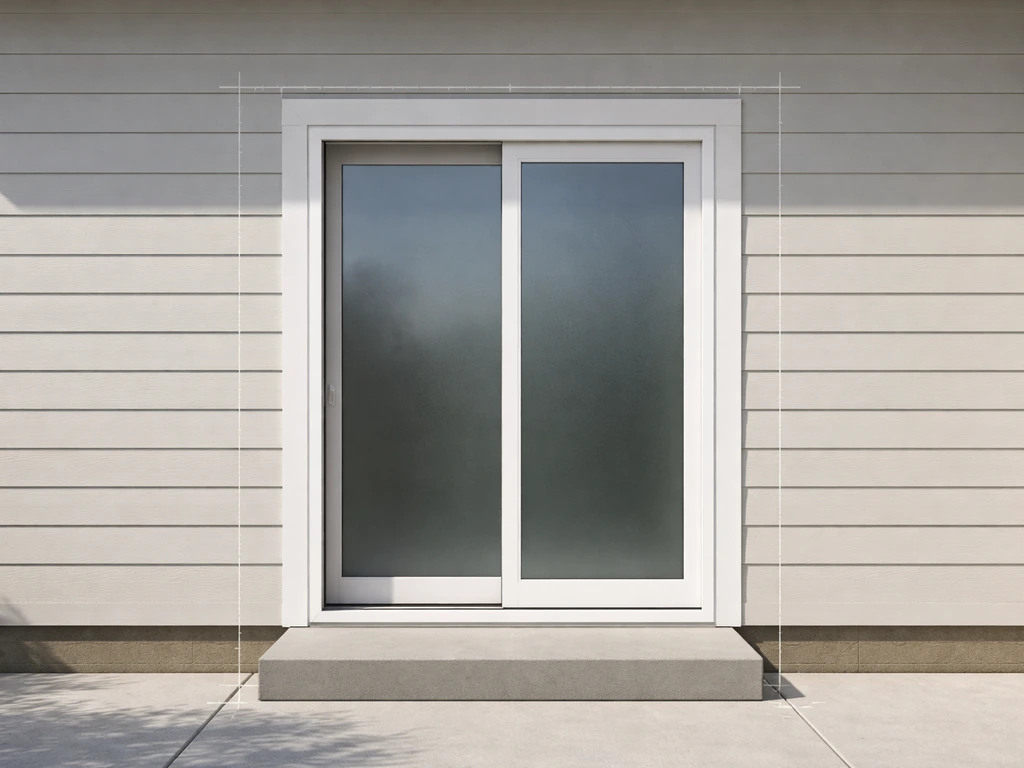
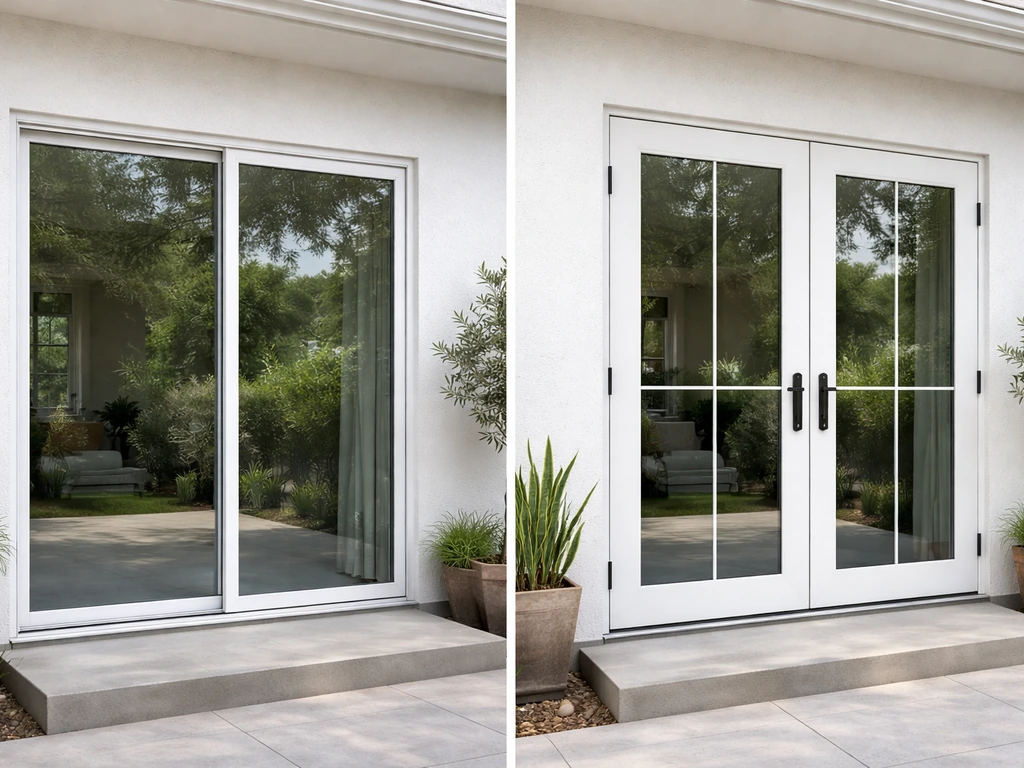
<a data-article-id="79E6856B-2A85-4CE6-B559-F31A1C0BBD7B">The most common sliding patio door size is 72" wide by 80" tall</a> (often called a "6068" or "6-0 x 6-8"). You'll also commonly find 60" x 80" (5-foot) and 96" x 80" (8-foot) configurations. Some manufacturers publish standard sizes up to 144" wide for three- or four-panel setups, but those start pushing into semi-custom territory depending on the brand. Standard heights are almost universally 80" (6'8"), with 96" (8') available from many manufacturers as a premium stock option.
French and hinged patio doors
French door widths typically run 60", 72", 84", and 96" as standard configurations. For French doors, the what is the standard size of french patio doors question is usually answered with common stock widths like 60", 72", 84", and 96", but you still need your rough opening to match French door widths typically run 60", 72", 84", and 96" as standard configurations.. Standard heights mirror what you see with sliding doors: 6'8", 6'11", 8', and in some Andersen product lines, even 10'. The nominal width for a double French door refers to both panels combined, so a 72" French door has two roughly 36" panels. Home Depot lists 72" x 80" as one of its primary French patio door categories, which aligns with what you'll find in stock at most home improvement stores.
Bifold patio doors
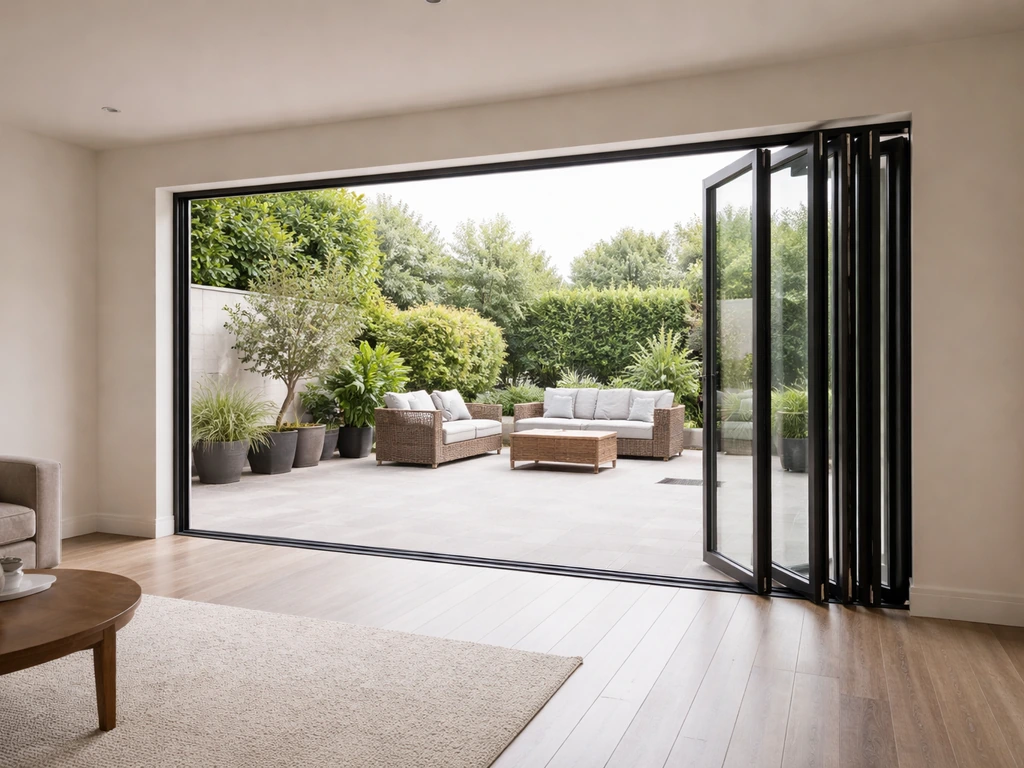
Bifold (also called multi-fold or accordion) patio doors are the most variable in size because they're designed to span large openings with multiple folding panels. Common starting widths are 60" and 72" x 80" for smaller configurations, but they can easily extend to 144" or 180" for whole-wall openings. The rough opening for bifolds requires particularly careful measurement: measure width at the top, middle, and bottom, use the smallest value, and then subtract about 1/2 inch as a buffer before matching to manufacturer specs. Some surface-mounted bifold systems don't follow standard rough-opening conventions at all, so always check the specific installation type.
Quick size reference by door type
| Door Type | Common Widths | Common Heights | Notes |
|---|---|---|---|
| Sliding | 60", 72", 96" | 80" (standard), 96" (premium) | 72" x 80" is the most common stock size |
| French/Hinged | 60", 72", 84", 96" | 80", 83", 96", 120" | Width = combined panel measurement |
| Bifold | 60" to 180"+ | 80" (most common) | Panel count varies; surface-mount systems differ |
| Single Hinged | 32", 36" | 80", 96" | Often paired with sidelites in patio applications |
Stock vs custom sizing: what "standard" really means
"Standard size" in the patio door world means the manufacturer builds that configuration regularly and keeps it in inventory (or builds it on a short production cycle). It does not mean every brand uses the same dimensions. A 72" x 80" sliding door from Andersen and a 72" x 80" door from Pella will both have a nominal size of 72" x 80", but their frame dimensions, track heights, and threshold profiles can differ by fractions of an inch to over an inch. That's why you can't always pull one brand out and drop another brand's door in without some modification to the rough opening or framing.
Custom sizing is worth considering when your rough opening falls outside the standard ranges, when you're working with a masonry or stucco exterior that makes widening the opening expensive, or when you need a very specific glass dimension for a view or privacy reason. Andersen, for example, offers custom sizes in small increments across their A-Series line, which gives you more flexibility without going to a fully bespoke fabricator. The trade-off is cost and lead time, which I'll cover below.
If your rough opening is close to a standard size, it's almost always cheaper to shim and adjust the framing to fit a stock door than to order custom. Home Depot's install documentation specifically notes that reducing a rough opening by shimming or adding wall studs is far easier than enlarging it, especially in load-bearing walls where a structural engineer may need to be involved.
Frame and track differences that affect your usable opening
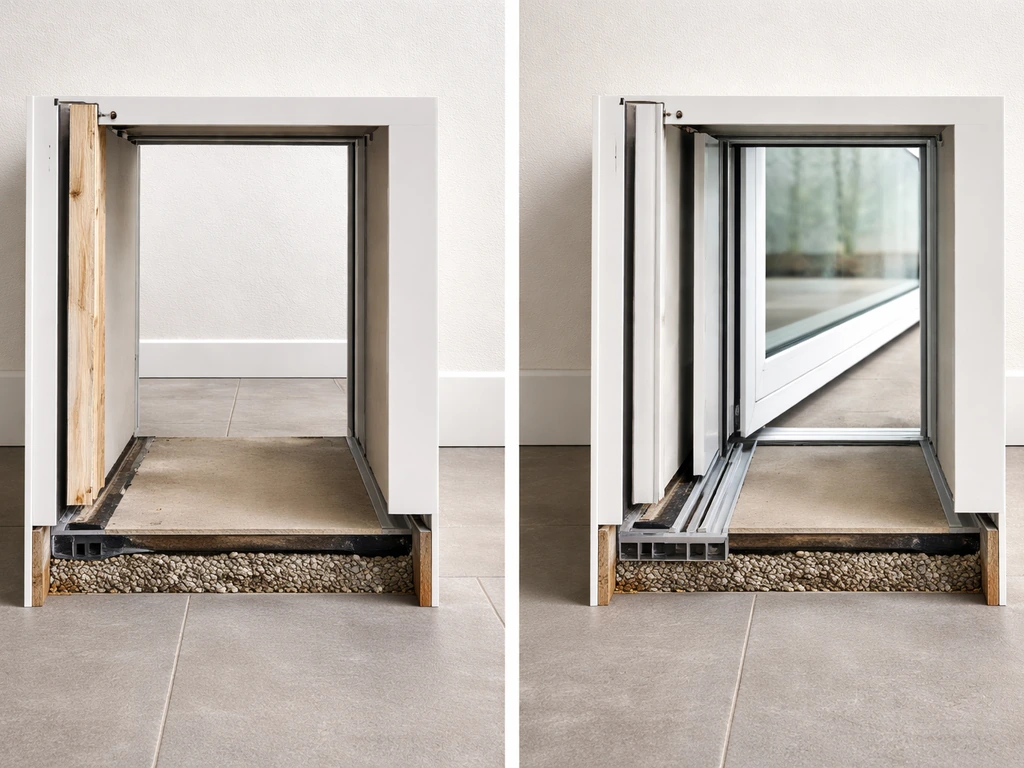
The rough opening is what you have. The usable opening, meaning the space you actually walk through or the space available for a screen, is smaller once the frame, track, and threshold are installed. This gap between nominal size and actual clearance trips people up constantly when ordering accessories like screen doors, retractable screens, or security bars.
For a sliding patio door, the track system along the bottom takes up height (typically 1" to 1.5" depending on the threshold design), and the frame eats into the width on both sides. The active panel, meaning the one that actually slides open, is only about half the total door width on a two-panel unit. So on a 72" sliding door, your walkthrough clearance is closer to 34" to 35", not 36".
French and hinged doors give you more of the full width as usable passage when both panels are open, but the frame and any astragal (the vertical piece between panels) still reduce the clear opening. For bifolds, nearly the full width becomes usable when the panels are folded to the side, which is one of the main reasons homeowners choose them for large openings despite higher cost and complexity.
Drainage and threshold height differences also matter in climates with rain or snow. Some manufacturer threshold profiles sit higher than others, which affects both the step-over height and whether your existing flooring transition will work without modification. If you're replacing an older door with a modern energy-efficient unit, the new threshold may be noticeably different in height from what you had, requiring trim or flooring adjustments around the opening.
Replacement planning: why matching your existing opening is harder than it sounds
Replacing a patio door isn't as simple as measuring the old door and ordering the same size. Even when the nominal dimensions match, hardware, track profiles, and frame depths can vary enough between brands and series to create real headaches during installation.
Start by finding the model number of your existing door. It's usually on a sticker inside the frame, on the head jamb, or on the edge of the door slab. That model number lets you look up the manufacturer's original spec sheet and compare it directly to the replacement unit you're considering. If you're staying with the same brand and series (for example, replacing an Andersen 400 Series with another Andersen 400 Series), the swap is usually straightforward. Crossing brands or series is where problems appear.
Here's what to check before committing to a replacement unit:
- Measure the rough opening (stud-to-stud width, subfloor-to-header height) at three points each direction, using the smallest measurement.
- Record the existing unit's frame/overall size (outside frame to outside frame), not just the nominal size.
- Note the threshold type and height, especially if your floor is tile, hardwood, or on a slab.
- Check whether the existing frame is recessed into the wall (common in brick or stucco exteriors) because the replacement unit needs to match that depth or you'll have trim and sealing issues.
- Confirm the swing direction for French/hinged doors (inswing vs outswing) and the active panel side for sliding doors (which panel slides, left or right).
- Verify that screen door hardware, existing lock prep holes, and any security hardware will align with the new door's pre-drilled locations.
Masonite's measuring guidance is worth noting here: when measuring a unit for replacement, measure from the exterior edge of the side jamb to the interior edge, excluding any exterior trim like brickmold or casing. That trim dimension is separate from the unit size, and conflating the two is a common ordering mistake.
For brick or masonry openings, the masonry opening is its own measurement, and some manufacturer sizing charts include a separate column for it alongside rough opening and unit dimensions. If your home has brick, you need all three numbers before ordering.
Costs and lead times: stock vs custom
Stock (standard) patio doors are significantly cheaper and faster to get than custom-sized units. Here's a realistic breakdown of what to expect:
| Option | Typical Cost Range (unit only) | Lead Time | Best For |
|---|---|---|---|
| Stock sliding door (60"–96" wide) | $400 – $2,500+ | In stock or 1–2 weeks | Standard rough openings that match common sizes |
| Stock French/hinged door | $500 – $3,500+ | In stock or 1–3 weeks | Openings at 60", 72", 84", or 96" widths |
| Custom sliding or French door | $1,500 – $6,000+ | 4–12 weeks | Non-standard rough openings, masonry constraints |
| Custom bifold/multi-fold | $3,000 – $15,000+ | 6–16 weeks | Large or irregular openings, premium installations |
| Stock bifold (smaller configs) | $1,500 – $5,000+ | 2–6 weeks | Standard 60"–72" openings with standard heights |
These ranges are for the door unit itself and don't include installation labor, which typically runs $300 to $1,000 or more depending on your region, the complexity of the opening (masonry vs wood framing), and whether trim or framing modifications are needed. Custom orders also typically require a non-refundable deposit and can't be returned if you ordered the wrong size, so get your measurements confirmed by a pro before pulling the trigger.
Sizing also affects accessory compatibility and cost. Screen inserts, retractable screen doors, patio door covers, and security bars or locks are all sized to specific door configurations. If you’re wondering whether patio screen doors are a standard size, the key point is that they must match the exact door configuration and frame clearance, not just the nominal door dimensions patio screen doors are standard size. A patio screen door does not have one universal standard size, so you need to match it to your patio door’s exact configuration and frame clearance. If you order a non-standard-size door, you may find that off-the-shelf screen doors and security hardware don't fit, adding more custom fabrication cost on top of the door itself. This is worth factoring in during the planning phase, not after the door is installed.
Your next steps for getting the right size
If you're at the start of this process, here's the practical path forward. Measure your rough opening today using the three-point method described above. Knowing what a <a data-article-id="3DF89FD1-3C58-429F-8F03-7967229B8FD7"><a data-article-id="4CEDF7E3-7427-469A-AE89-6B3D1EEDDD7E"><a data-article-id="7269FDD7-105F-4237-99DD-657E604B0A11"><a data-article-id="4CEDF7E3-7427-469A-AE89-6B3D1EEDDD7E">standard patio door size</a></a></a></a> is can help you interpret the common stock dimensions you will see at home improvement stores. If you also want the stock ranges for typical widths and heights, review what is the standard sliding patio door size before you order. If you are also trying to determine the smallest size available for your space, see what is the smallest sliding patio door for a quick size benchmark compared to standard stock ranges. Write down the smallest width and height measurements. Find your existing door's model number and pull the spec sheet so you know the actual frame/unit size, not just the nominal size. Then compare those numbers to the manufacturer's sizing table for the unit you're considering, paying attention to the rough opening column, not just the nominal or door dimension column.
If your rough opening falls within half an inch of a standard size, plan on shimming to fit a stock door rather than ordering custom. If you're more than an inch off in either direction, or if you're working with a masonry or stucco exterior that can't easily be modified, get a quote for a custom unit and factor in the extra lead time and cost before committing to a project timeline.
Finally, before you finalize any order, confirm the threshold height, swing direction, and screen/hardware compatibility with the specific unit you're buying. A patio door that fits the rough opening but requires a custom screen insert or won't accept a standard multi-point lock adds cost and frustration that's entirely avoidable with a few minutes of upfront checking.
FAQ
If my patio door is labeled 72 x 80, does that mean the rough opening should also be 72 x 80?
Usually no. The label is typically the door unit or nominal size, while the rough opening is the framed opening in the wall. In many systems the rough opening needs to be about a half inch larger in each direction to allow for shims and leveling, but you should confirm that exact allowance in the specific manufacturer’s sizing table for the unit you plan to buy.
Can I measure the old patio door slab and use that to order the replacement?
That’s the most common mistake. The slab measurement can differ from the frame dimensions, and the threshold and track system add height and clearance requirements. For replacement orders, measure the rough opening (framed hole) at three points and use the smallest width and height readings as your target.
What if the three width measurements are not the same, do I use the middle measurement?
Use the smallest value from the three width readings. Openings can rack or settle, and fitting to the largest measurement often causes installation issues, forced shimming, or gaps that require extra trim and rework.
Do I also need to measure from the outside of the jamb, or from inside trim?
Measure to match how the manufacturer defines the opening. For replacement measurements, one key gotcha is using unit dimensions that exclude exterior trim like brickmold or casing. If you’re unsure, record both (1) the masonry or framed opening and (2) the jamb-to-jamb clear measurement, then confirm which one the spec sheet wants.
Are patio door sizes standardized across brands, like Andersen versus Pella?
They’re not fully standardized. Even when two doors share the same nominal size, frame width, frame depth, track height, and threshold profile can vary. That means a same-size swap can still require framing adjustments, and accessories like screens may not fit without changes.
Is a screen door universal for a given patio door size, for example 72 x 80?
No. Screen inserts, retractable screens, and even security hardware often require compatibility with the specific frame clearance and track or threshold style. Treat it as configuration-specific, not just nominal size-specific, and verify compatibility before ordering any accessory.
If I’m replacing on a slab or tiled floor, do I need an extra height measurement beyond the rough opening?
Yes. Measure the floor-to-finished-floor height (or the height difference across the threshold) because newer energy-efficient thresholds can be taller than older ones. A taller threshold may require flooring transition adjustments or changes to trim clearance even when the rough opening matches the nominal door size.
How much clearance should I expect for the usable walk-through once installed?
Plan for less than the nominal width. Sliding doors can have a noticeably narrower clearance because the frame and track take up width, and the active sliding panel covers only part of the total width when open. If you have tight accessibility requirements, confirm clearance from the manufacturer’s diagram or measure the frame and track footprint during install.
When should I choose stock (standard) sizing versus custom sizing?
Stock is usually best when your rough opening is very close to a common size, typically within about half an inch, because shimming and minor framing adjustments are simpler and cheaper. Choose custom when you’re further off, dealing with masonry or stucco where widening is difficult or expensive, or needing a specific glass or hardware configuration that won’t align with stock models.
Do hinged or French doors have the same rough opening rules as sliding doors?
The rough opening measurement principle is the same, but the usable passage and clearance details differ. Hinged and French styles rely more on swing clearance and frame elements like astragals, so a rough-opening match alone doesn’t guarantee the same walk-through width you’re picturing. Always confirm swing direction, clearance, and lock/handle compatibility for the series you’re buying.