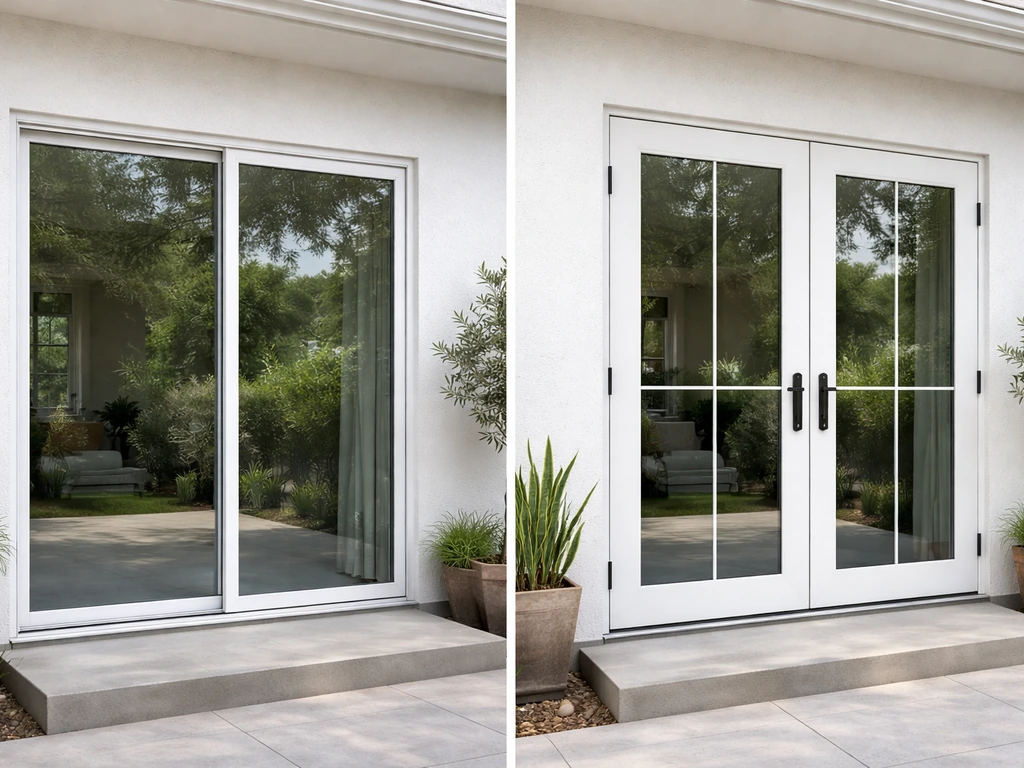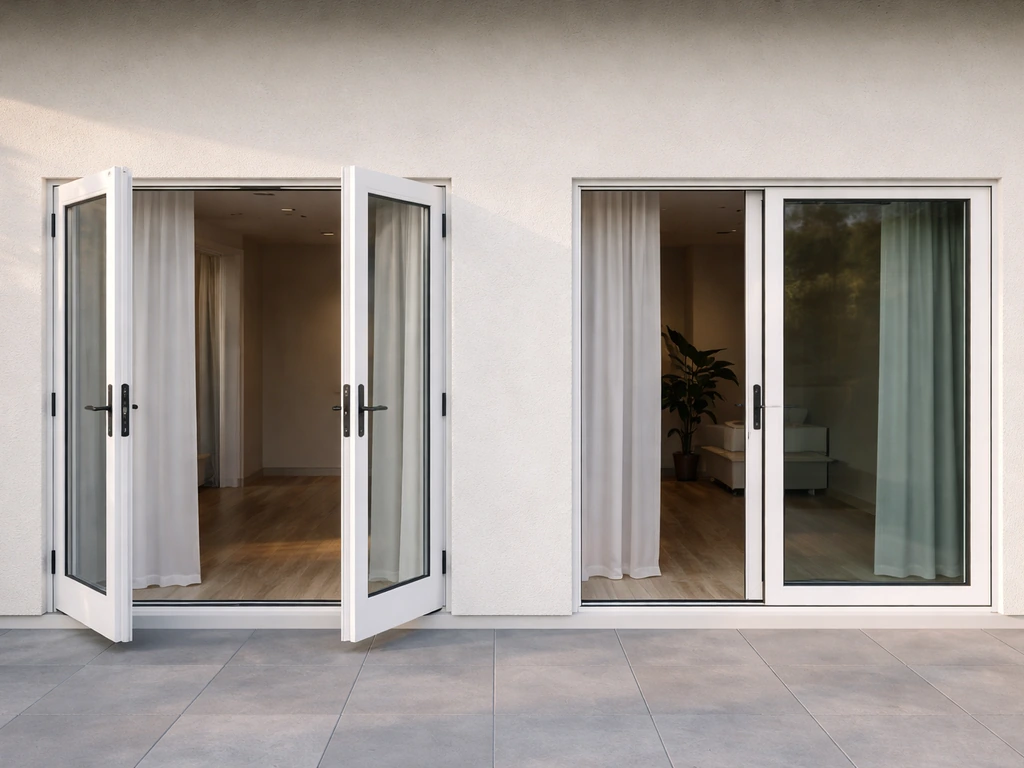
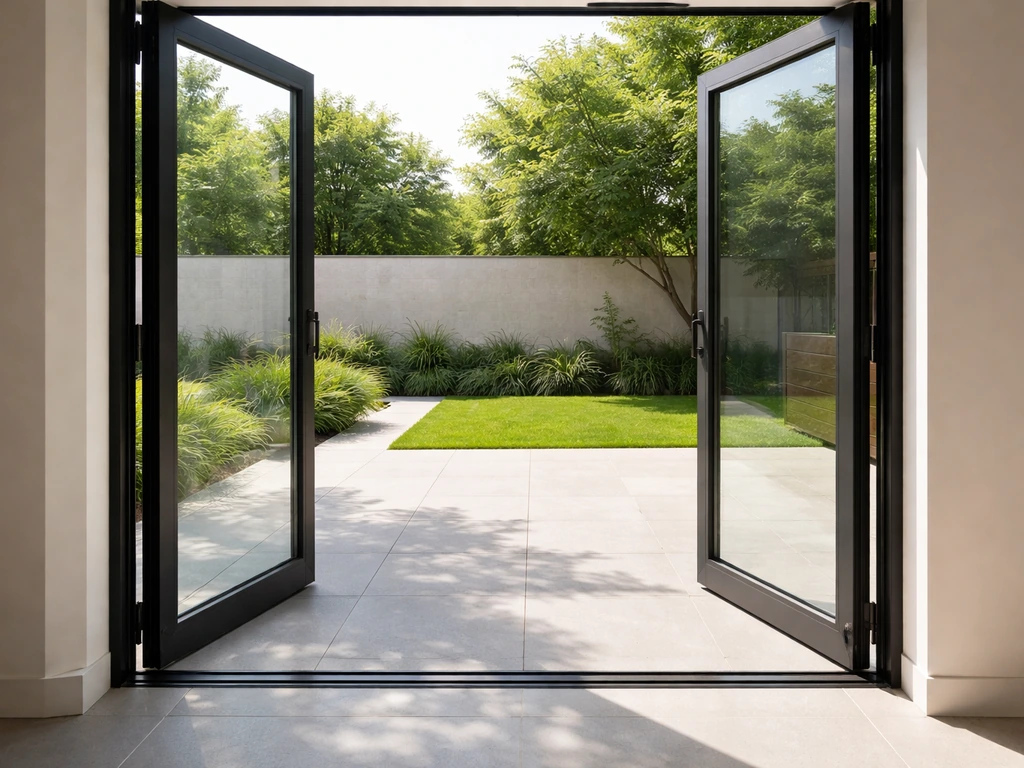
If you want the best French patio doors for most homes today, fiberglass is the top material pick: it handles temperature swings better than wood, costs less to maintain than aluminum, and comes with the best energy ratings across the board. Pair that with a multi-point locking system, low-E double or triple glazing matched to your climate zone, and a quality threshold with compression weatherstripping, and you have a door that performs for 20-plus years without much fuss. That said, the 'best' option really does shift depending on whether you're in a hot-humid climate versus a cold northern one, whether you're replacing in an existing opening or doing new construction, and how much you want to spend upfront versus over time.
Best French Doors Patio: Choose the Right Option Today
Owen Delaney
16 May 2026
What 'best' actually means for a French patio door
A lot of French door marketing throws around words like 'premium' and 'craftsman-quality' without telling you anything useful. When I look at whether a French patio door is genuinely good, I focus on four things: thermal performance, air-tightness, forced-entry resistance, and long-term durability of the material. Everything else, style, color, hardware finish, flows from those.
On the energy side, the numbers that matter are U-factor (heat loss) and SHGC (solar heat gain coefficient), both rated by NFRC and used by ENERGY STAR to qualify doors by climate zone. A lower U-factor means less heat escaping in winter. SHGC matters differently depending on where you live: in the South, you want a lower SHGC to block summer heat; in the North, a moderate SHGC can help you passively collect winter sun. Look for the ENERGY STAR label matched to your climate zone right next to the NFRC label on the glass unit. Doors that qualify under ENERGY STAR Version 6 also have to meet an air leakage limit of no more than 0.3 cfm per square foot, which is the benchmark used by building codes and DOE. If a door's spec sheet doesn't show that number, ask for it.
Security is where a lot of French door shoppers get burned. Single-point latches, the standard handle-and-latch setup, are fine for interior use but not adequate for an exterior patio door. Multi-point locking systems engage the frame at three or more spots simultaneously, making forced entry dramatically harder than a single deadbolt. Pella, Andersen, and ThermaTru all offer multi-point locks, and ThermaTru specifically recommends them for 8-foot and double-door configurations. If you're buying a double French door, budget for the multi-point upgrade. It's usually $100 to $300 extra and worth every dollar.
French patio door types and how they're configured
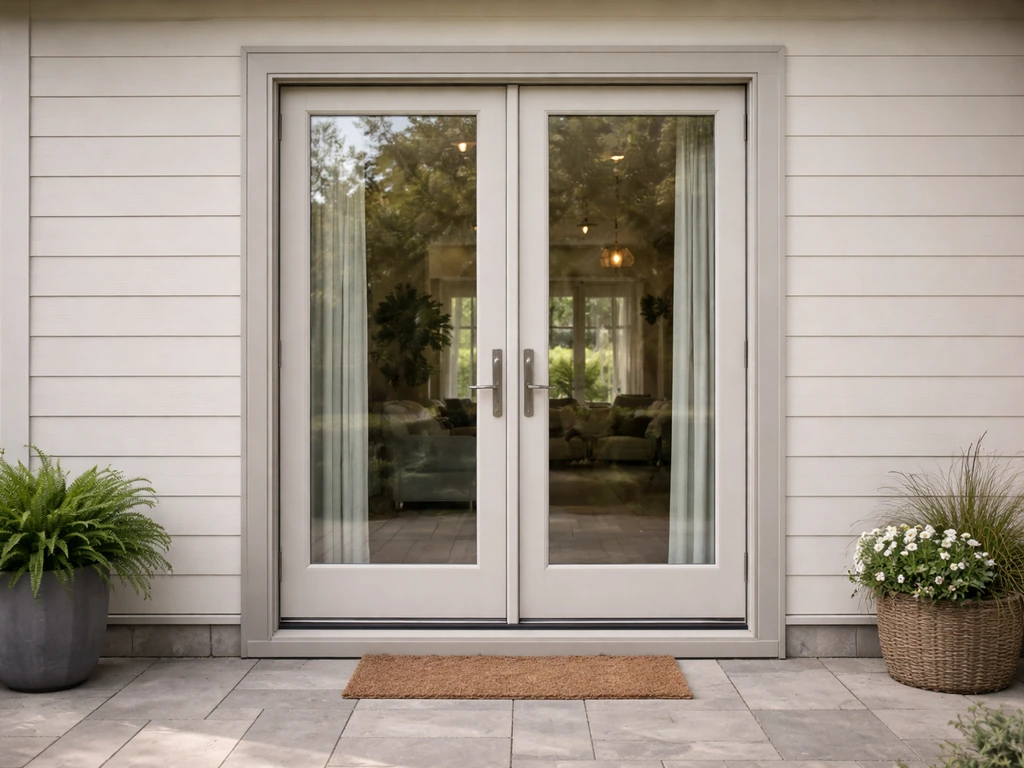
French patio doors are hinged doors with large glass panels, and they come in single-panel or double-panel (pair) configurations. If you're comparing options, it helps to start with a clear definition of what a French patio door is and how it typically operates French patio doors. A single French patio door is one hinged panel, usually 30 to 36 inches wide, that swings on its own. A double French door pair is two panels sharing a center meeting point: one is the active panel (the one you open daily, with the handle and lock), and the other is the passive panel (held closed by flush bolts at the top and bottom until you need the full opening). That active-passive setup is how most double sets work day to day.
Swing direction matters a lot in tight spaces. In-swing doors open toward the interior of your home, which means you need clear floor space inside. Out-swing doors push toward the patio or exterior, which saves interior space but requires no obstructions on the outside and can be harder to weather-seal against driving rain. Most US homes use in-swing French patio doors, and most screen options are designed for in-swing setups. Pella's hinged French patio doors, for example, swing to the interior and come with either hinged screens for single-door configurations or sliding screens for double-door setups.
You can also find French patio doors in one-, two-, or three-panel configurations (Andersen's 400 Series Frenchwood is one example), or with sidelights and a transom window above. If you want more light and ventilation, French patio doors with a top window or transom can be a great option to consider during planning transom window above. If your opening allows for a transom, it adds significant natural light, and that's a style detail worth considering early in the planning process since it affects rough opening sizing and framing requirements.
Materials and glass options: what performs best by climate and budget
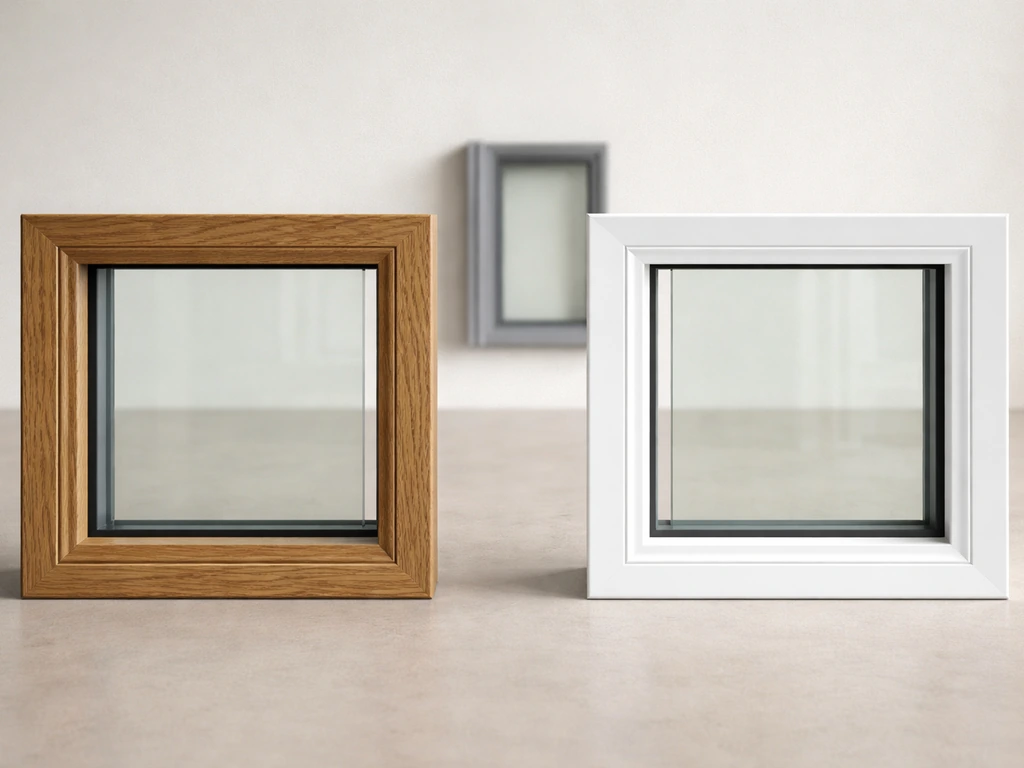
Material choice is probably the biggest single decision you'll make, and it affects upfront cost, maintenance load, energy performance, and lifespan all at once. Here's how the main options stack up:
| Material | Typical Cost Range (door only) | Best Climate Fit | Maintenance Level | Lifespan |
|---|---|---|---|---|
| Vinyl | $500 – $2,000 | All climates; great in humid regions | Very low | 20–30 years |
| Aluminum | $650 – $3,000 | Mild/coastal; not ideal for cold climates without thermal break | Low | 30–40 years |
| Fiberglass | $850 – $4,500 | All climates; especially strong in extreme temps | Low | 30+ years |
| Wood | $1,500 – $5,000+ | Dry climates; higher maintenance in wet/humid regions | High | 20–50 years with upkeep |
| Clad Wood (wood interior, aluminum/fiberglass exterior) | $2,500 – $5,000 | All climates; best of both worlds | Medium | 30–50 years |
Fiberglass is the most versatile material on that list. It doesn't warp or swell in humidity, handles freeze-thaw cycles without cracking, and accepts paint or stain well. Vinyl is the budget-friendly workhorse and genuinely low-maintenance, but it has fewer profile options and can look less refined on higher-end homes. Wood looks beautiful but needs refinishing every few years if it's exposed to weather, which rules it out for a lot of homeowners. Clad wood gives you the warm wood look inside with a protective exterior shell, but you're paying a premium for it.
Choosing the right glass package for your region
Glass choice is just as important as frame material. Double-pane low-E glass is the baseline for a quality French patio door today. In cold northern climates (ENERGY STAR Northern or North-Central zones), prioritize a low U-factor (look for 0.30 or below) and a moderate SHGC (0.35–0.45 can help with passive solar gain). In hot southern climates (South or South-Central zones), you want a low SHGC (0.25 or lower) to reduce solar heat gain, and U-factor matters slightly less. Triple-pane glass improves U-factor significantly and reduces condensation risk, but it adds weight, cost, and complexity to the door operation. For most climates, a quality double-pane low-E unit with argon fill hits the sweet spot. Manufacturers like Andersen publish NFRC ratings tables by glass package, which makes side-by-side comparison straightforward. Always compare full-unit NFRC values, not just center-of-glass numbers, since the frame and edge seal affect real-world performance.
For security-focused buyers, laminated glass is worth the upgrade. Unlike tempered glass, which shatters into small pieces when broken, laminated glass (with an interlayer bonded between panes) holds together after impact, making it much harder to create an entry point. This is particularly relevant for French patio doors since they have large glass panels. Some manufacturers offer it as an option; others build it into their security packages.
How to measure your opening for French patio doors
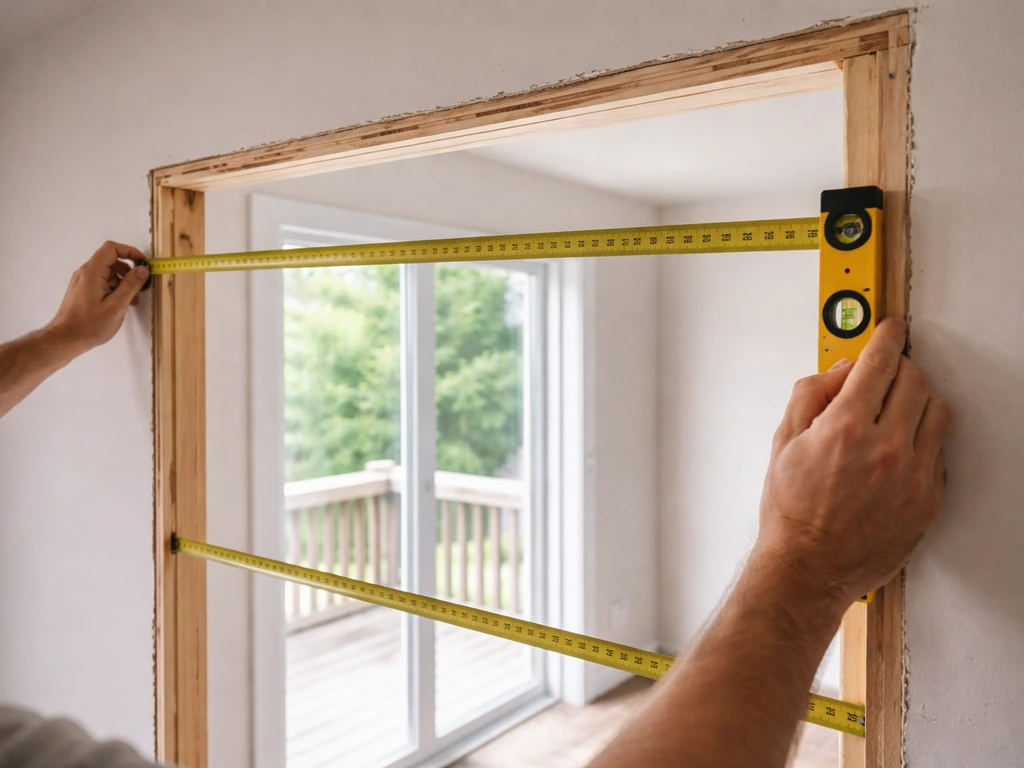
Getting the measurement wrong is the most common and most expensive mistake homeowners make when buying a replacement French door. The key concept is that the rough opening (the framed hole in your wall) needs to be slightly larger than the door unit itself to allow for shimming, leveling, and proper fastening.
- Measure the rough opening width at three points: top, middle, and bottom. Use the smallest measurement.
- Measure the rough opening height on both sides and at the center. Use the smallest measurement.
- For a replacement, the door unit width should be the rough opening width minus 1/2 inch (Andersen's installation guide specifies rough opening must be 1/2 inch greater than unit width and height). JLC's French door installation guidance calls for 3/4 to 1 inch wider and 1/2 inch taller than the net frame size to allow shimming.
- If the manufacturer doesn't specify exact rough opening tolerances, Fine Homebuilding's rule of thumb is to add about 2 inches to the door width to get the rough opening width.
- Check your threshold height (floor to bottom of header) to confirm you have enough vertical clearance for the door unit plus any threshold hardware.
- For new construction framing, use the door manufacturer's call size to rough opening table, not a generic guide. Simonton's documentation shows how 'call size' nomenclature maps to actual rough opening dimensions, and the difference is not always intuitive.
- Always confirm squareness: measure diagonally corner to corner. If the two diagonal measurements differ by more than 1/4 inch, the opening is racked and needs correction before door installation.
Standard double French patio door widths run 60 inches (5 feet) and 72 inches (6 feet) for the most common sizes, with heights of 80 inches (6'8") and 96 inches (8 feet). Custom sizes are available from most manufacturers but add lead time and cost. If your existing opening is a non-standard size, replacing with a standard-size door and re-framing is often cheaper than ordering custom.
Top French patio door picks by what you actually care about
Rather than ranking doors one through five generically, here's how I'd approach the pick based on the priorities that actually drive most homeowners' decisions:
Best for energy efficiency
Andersen's A-Series and 400 Series Frenchwood doors consistently earn strong NFRC ratings and ENERGY STAR certification across multiple climate zones. The A-Series in particular offers a wide range of glass packages with published U-factor and SHGC values so you can match the door to your climate. Pella's Impervia (fiberglass) and Reserve (wood) lines also hit ENERGY STAR numbers, with the Impervia being the easier long-term maintenance choice. Look for triple-pane glazing options if you're in a very cold climate (Zone 6 or above) and are willing to spend more upfront for lower heating bills.
Best for security
Pella and ThermaTru both offer multi-point locking systems as options or standard features on their higher-end French door lines. ThermaTru explicitly recommends multi-point locks for 8-foot and double-door configurations, and Pella offers them as a security upgrade across several series. Combine a multi-point lock with laminated glass (instead of or in addition to tempered), reinforced strike plates with 3-inch screws into the framing, and a door with a robust threshold and compression weatherstripping. That combination addresses the three most common forced-entry vulnerabilities: the lock mechanism, the glass, and the door-to-frame seal.
Best for low maintenance
Fiberglass wins here without much debate. Pella's Impervia series, Andersen's 400 Series (which uses Fibrex, a wood-fiber/polymer composite), and ThermaTru's Pulse and Smooth-Star fiberglass lines all require minimal upkeep: no painting, no staining, no swelling in humidity. Vinyl is also very low-maintenance and cheaper, but if your home has wood or clad trim and you care about aesthetics, fiberglass takes paint better and tends to look more like wood at a distance.
Best budget option
Vinyl French patio doors in the $500 to $2,000 range (door only) can get you a solid ENERGY STAR-rated unit if you choose a reputable brand. JELD-WEN's vinyl French patio doors are widely available through big-box retailers and offer a reasonable balance of price and performance. Don't go so cheap that you're skipping multi-point locking or settling for poor weatherstripping, especially if this is your primary back-door entry. The lock and seal quality matters far more on an exterior patio door than on an interior application.
What French patio doors cost and what moves the price
Budgeting for French patio doors means separating door cost from installation cost, because they're very different numbers and the installation side surprises a lot of people.
| Cost Category | Typical Range | Notes |
|---|---|---|
| Vinyl door (materials only) | $500 – $2,000 | Most affordable; good energy performance |
| Aluminum door (materials only) | $650 – $3,000 | More durable finish; thermal break needed for cold climates |
| Fiberglass door (materials only) | $850 – $4,500 | Best all-around; wide price range by brand/glass package |
| Clad wood door (materials only) | $2,500 – $5,000 | Premium look; lower exterior maintenance than solid wood |
| Professional installation (labor) | $500 – $1,500+ | Varies by region, removal of old door, framing repairs, accessibility |
| Multi-point lock upgrade | $100 – $300 | Highly recommended for double doors and 8-foot configurations |
| Laminated glass upgrade | $200 – $600 | Security and noise reduction benefit |
| Screens (hinged or sliding) | $150 – $400 | Varies by door configuration and brand |
Installation labor adds real money, and the range is wide because it depends on whether the old door needs to be removed, whether the rough opening needs reframing, whether there are water damage or rot issues around the existing frame, and local labor rates. A straightforward swap of an existing standard-size door in good condition might run $500 to $800 in labor. If there's rot, reframing, or a non-standard opening involved, you can easily hit $1,500 or more. Get at least two quotes from local installers who have French door experience specifically, since the shimming and alignment involved in a double door pair is more demanding than a single sliding door swap.
One more cost factor: if you're in a colder climate and upgrading to a triple-pane unit, factor in that the heavier sash can stress hinges over time. Quality hardware, including heavy-duty hinges rated for the door weight, is a legitimate add-on cost that's worth paying. Cheap hinges on a heavy glass door will sag and create alignment and sealing problems within a few years.
Accessories and upgrades that actually make a difference
Screens
French patio doors and screens have always been a bit awkward together since the doors swing rather than slide. For single-panel French doors, hinged insect screens are the standard solution: they're mounted on the exterior (for an in-swing door) and swing open when you use the door. For double French door pairs, sliding screens are the more practical choice since a hinged screen for each panel creates too much clearance complexity. Pella offers both configurations, and Andersen confirms that hinged insect screens are compatible with single-panel, active-passive, and passive-active panel configurations for its 400 Series Frenchwood hinged doors. If screen compatibility matters to you, confirm it before you buy the door, not after. The screen system is often sold separately and the compatibility is model-specific.
Blinds and shades
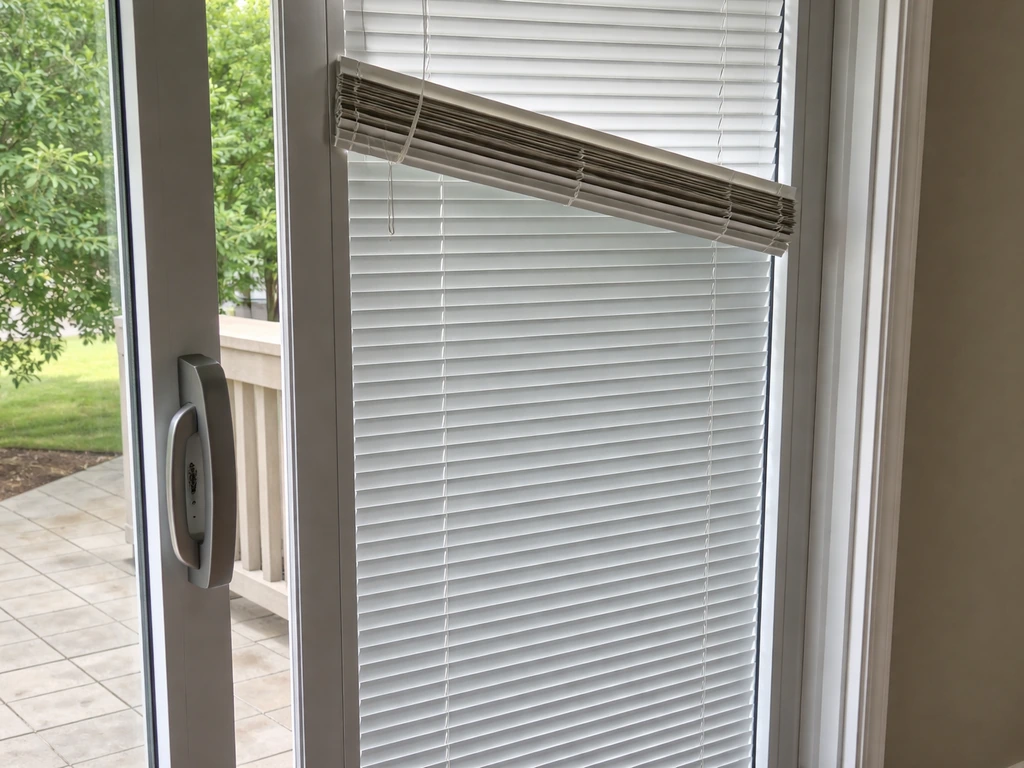
Between-the-glass blinds and shades are worth considering for French patio doors that face a sun-exposed direction or open onto a space with privacy concerns. These integrated systems live inside the sealed glass unit, so there's no dust buildup and no cords or slats to break. Pella offers this on several French door lines. The trade-off is that if the mechanism fails, you're dealing with a glass unit replacement rather than just buying a new shade. If privacy is your main concern, exterior solar shades or a retractable awning can also address it without the built-in complexity.
Security upgrades
Beyond multi-point locks, a few other upgrades make a meaningful security difference. Reinforced strike plates with 3-inch screws that reach the structural framing (not just the door casing) are a cheap and effective improvement. Security film applied to the glass won't stop a determined intruder but significantly slows glass breakage and holds shards together, similar to what laminated glass does internally. Door sensors tied to a home security system add deterrence and alert value. If your French doors have sidelites, those are also a vulnerability point since someone can break a sidelite to reach the interior lock handle. Laminated glass for sidelites is worth the upgrade if security is a priority.
Keeping French patio doors operating smoothly long-term
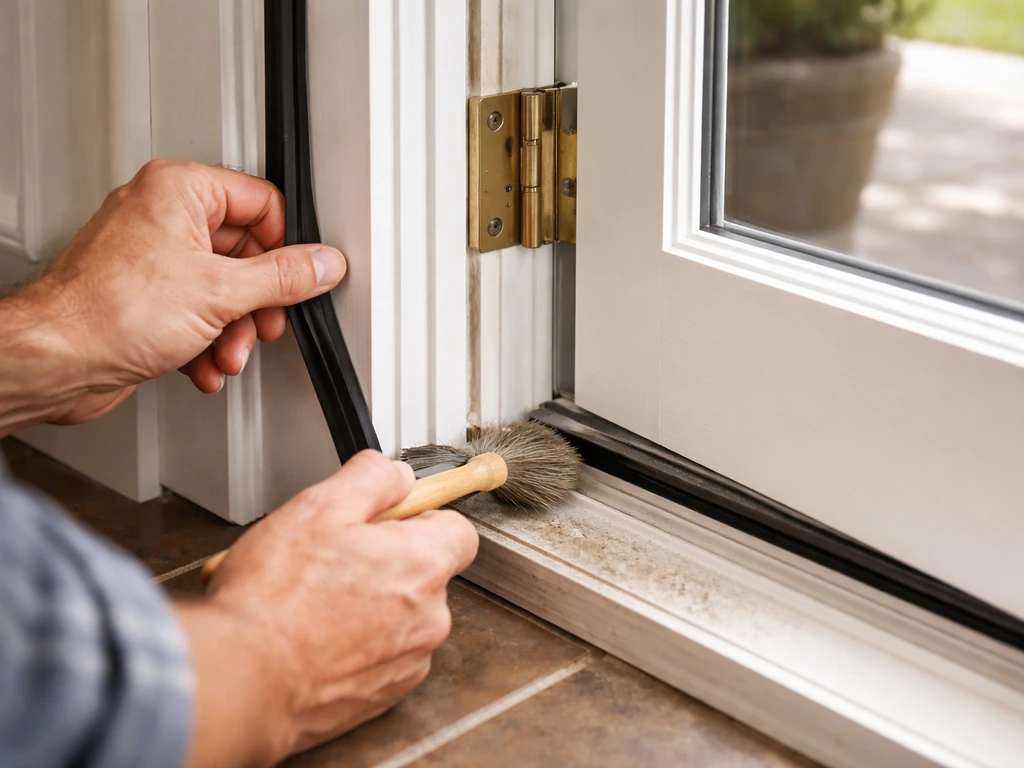
A quality French patio door that gets basic regular attention will operate smoothly and seal correctly for decades. Here's the short maintenance checklist I'd hand any homeowner after a French door installation:
- Inspect weatherstripping twice a year (spring and fall). Look for compression loss, cracks, or gaps at the corners. Compression weatherstripping is inexpensive to replace and is the first line of defense against air and water infiltration.
- Clean and lubricate hinges annually with a dry lubricant or light oil. Heavy doors put constant stress on hinges, and squeaking is an early sign that lubrication or adjustment is needed.
- Check and adjust door alignment every year or two. Fiberglass and vinyl doors stay stable, but slight settling in the house framing can cause a door to drag or fail to latch cleanly. Most multi-point lock issues stem from door-to-frame misalignment, not the lock itself.
- Clean the threshold and door bottom seal. Debris in the threshold channel prevents the door from sealing fully at the base, which is a common source of drafts and water intrusion.
- Inspect the exterior frame and caulking annually. Re-apply exterior caulk anywhere you see separation between the frame and the wall, especially at the corners and top of the frame.
- For wood or clad-wood doors, inspect the exterior finish every 1 to 2 years. Touch up any chipped or worn finish before moisture gets into the wood substrate.
- Operate the flush bolts on the passive panel seasonally to prevent them from sticking in place. It's easy to forget about the passive panel for years until you need to open it fully, and a stuck flush bolt is a frustrating problem.
If you're shopping today, start by locking in your material preference (fiberglass for most people, vinyl if budget is tight, clad wood if aesthetics are the priority), confirm your rough opening dimensions before contacting any supplier, and get quotes that include installation labor from contractors who have done French door replacements specifically. Then match your glass package to your ENERGY STAR climate zone and add the multi-point lock. That sequence covers the decisions that drive 90 percent of how satisfied you'll be with the door five years from now.
FAQ
How do I measure my rough opening correctly for the best French doors patio (replacement)?
Measure the rough opening in at least two spots for width and height, because older framing can be out of square. The rough opening should be slightly larger than the door unit so the installer can shim, level, and fasten without forcing the frame, forcing the frame often causes poor operation and air leaks later.
If I switch from one French door configuration to another (single to double, or to a transom), will that affect the framing and install?
Yes, but you should treat it as a plan change, not a simple swap. A larger or different swing door often requires updating the header, adding or moving blocking, and sometimes reworking the threshold and floor transitions, which can add time and cost compared with matching the existing opening.
What should I ask for on the spec sheet beyond U-factor and SHGC when choosing the best French doors patio?
For most climates, default to full-unit NFRC ratings (U-factor and SHGC) for the exact model and glass package, then confirm the air leakage requirement is met. If the spec sheet does not clearly show the air leakage number, ask the seller for the ENERGY STAR qualification details for that exact door and glass option.
What’s the best way to evaluate weather sealing for an exterior patio French door?
You typically cannot judge weather sealing by looking only at the glazing and frame color. Pay attention to the threshold design, compression weatherstripping quality, and whether the door has a properly integrated drainage path, especially if your area gets driving rain.
Can I get the right screen if I choose out-swing French doors for my patio?
Most screen products assume an in-swing setup, so an out-swing door can limit options or require a specific screen configuration. If you already know your swing direction, confirm the screen type (hinged for single, sliding for double) is compatible with that door model before you order.
When should I choose between-the-glass blinds versus upgrades like solar shades for French doors?
If privacy and sun control are both concerns, between-the-glass options help with cleanliness and durability, but they are less repairable if the internal mechanism fails. In high-sun areas, also consider solar-control glazing (lower SHGC) so you are not relying only on shades.
Are laminated glass and security film worth it for the best French doors patio if I live in a cold, stormy area?
If your home is in a region with freezing temperatures and wet snow, laminated glass and strong sealing help reduce risk from accidental impact and water intrusion, but the real performance hinge is still the installation quality and compression threshold fit. Ask about low-E coatings, argon fill, and the exact glass package warranty if breakage is a concern.
Will upgrading to triple-pane glass cause hinge sagging or operational issues?
Yes, because heavy glass packages can increase stress on hinges and the operating system. If you move from double-pane to triple-pane, confirm the hinge rating and ask whether the installer should use heavy-duty hinges for that specific door weight.
What additional security upgrades matter most beyond choosing multi-point locks for exterior French doors?
For security, the key is that the lock must engage the frame at multiple points and the strike plates must be fastened into structural framing with the right screw length. A multi-point lock upgrade without reinforced strikes often underperforms in real break-in scenarios.
Why does installation cost for French patio doors vary so much, and what triggers the higher price?
It depends on the current opening and whether the existing frame is structurally sound. If you have wood rot, water damage, or a non-standard opening, replacement labor rises quickly because reframing and sealing steps become necessary.
Should I order custom French patio door sizes or re-frame to a standard size?
Order standard sizes when possible because custom typically increases lead time and cost, and it can also complicate screen compatibility and hardware matching. If your opening is non-standard, compare the price of custom versus re-framing to reach a standard rough opening.
What’s a simple checklist I can use before I pay a deposit for the best French doors patio?
Ask for a door that matches your hand and swing preference, screen compatibility (single or double, hinged or sliding), and a glass package that aligns with your climate zone. Then verify the installer plan includes correct shimming, alignment for the active and passive panels, and a compression threshold fit.