Most built-in blind problems on patio doors come down to one of four things: a jammed or worn operator mechanism, a kinked or tangled cord/tape, seasonal expansion that tightens the glass unit frame, or simple dirt buildup in the track. The good news is that a lot of these are fixable today with a few careful checks, and you don't need to open the sealed glass unit to do them.
Patio Doors With Built-In Blinds Problems: Troubleshooting Guide

Owen Delaney
14 May 2026
Quick symptom checklist: figure out what's actually wrong
Before you do anything, match your symptom to the list below. This narrows down the cause fast and tells you whether you're dealing with a mechanism issue, a cord/tape issue, or a glass-unit issue. The distinction matters because glass-unit problems almost always mean a pro call or a replacement, while mechanism and cord issues are often DIY-fixable.
- Blinds won't raise or lower at all: likely a failed operator mechanism, broken cord/tape, or a spring that's locked up
- Blinds raise but won't lower (or vice versa): cord kink, tangled lift tape, or a one-way spring failure
- Blinds tilt fine but won't raise or lower: you may have tilt-only blinds (this is a feature, not a defect — Pella sells both types)
- Blinds feel sticky or stiff when operating: cold weather expansion, dirt in the track, or a stiffened operator that needs cycling
- Blinds hang unevenly or at an angle after raising/lowering: cord not fully extended, kink in the lift cord, or a bottom rail that's sitting off-level
- Blinds lock up mid-travel while retracting: spring mechanism engaged in the wrong position — needs a specific reset move
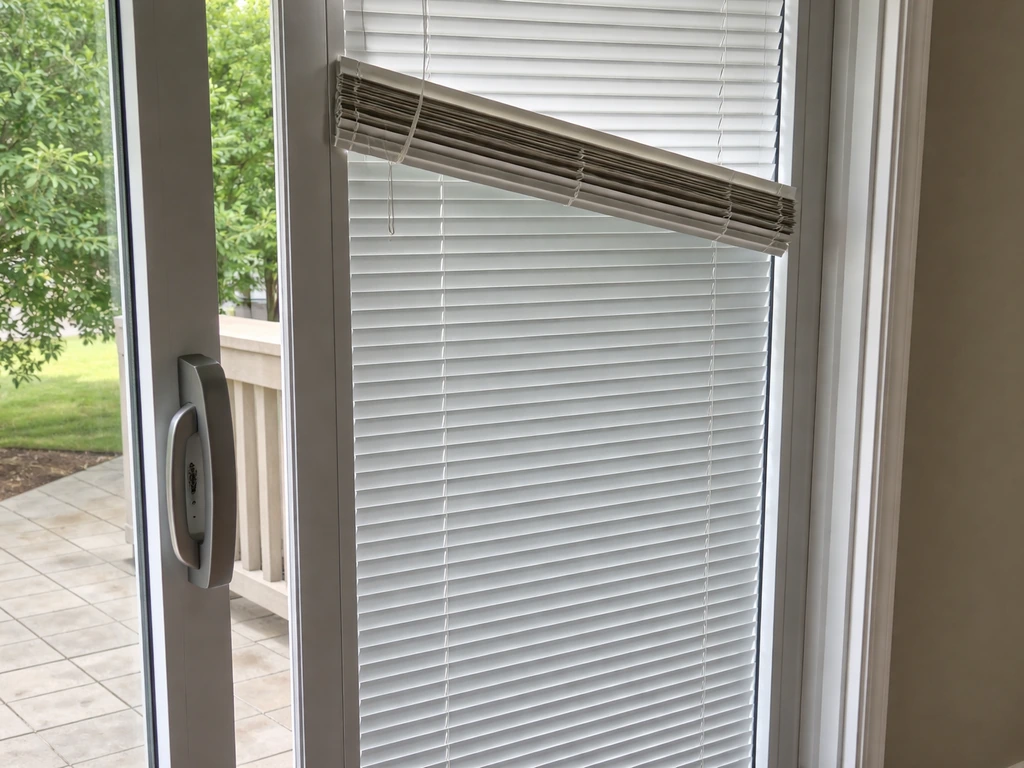
- Slats are bent, broken, or clumped together: impact damage or a cord that's been yanked too hard
- Gaps at the top, bottom, or sides letting in light: misalignment of the blind assembly inside the glass unit, or the glass unit itself has shifted
- Condensation or fogging inside the glass: the seal has failed — this is a glass-unit replacement job, not a blind repair
- Sluggish operation that's gotten worse over time: dust and debris accumulation in the operator track
What's actually causing these problems
Jammed or worn operator mechanisms
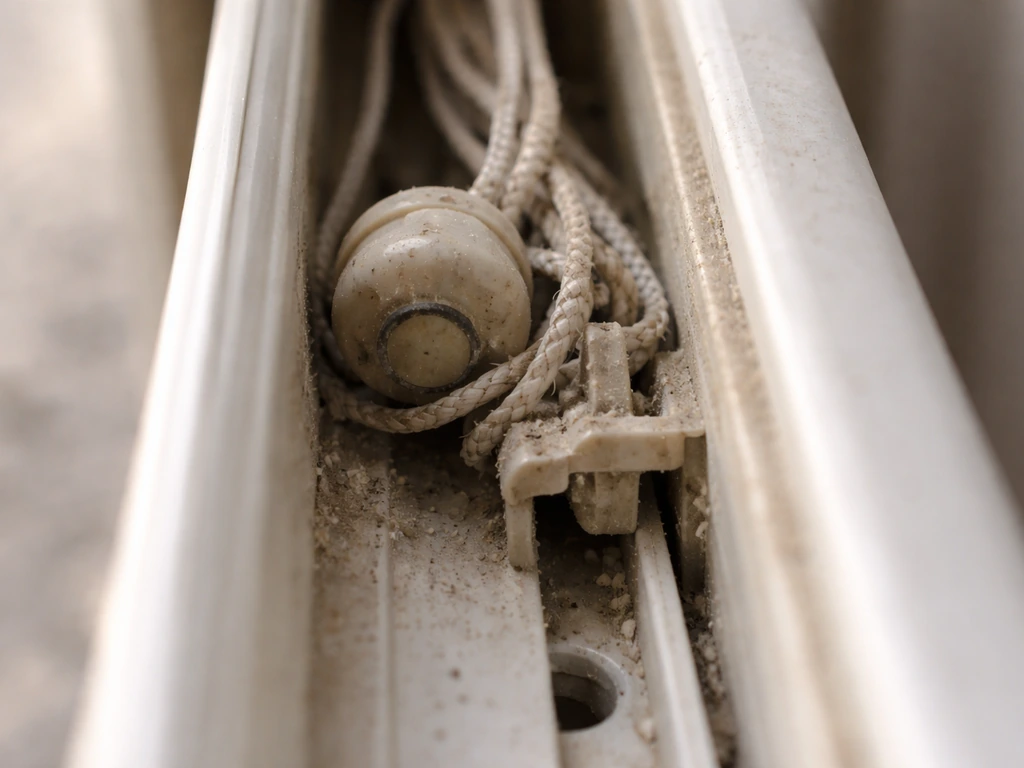
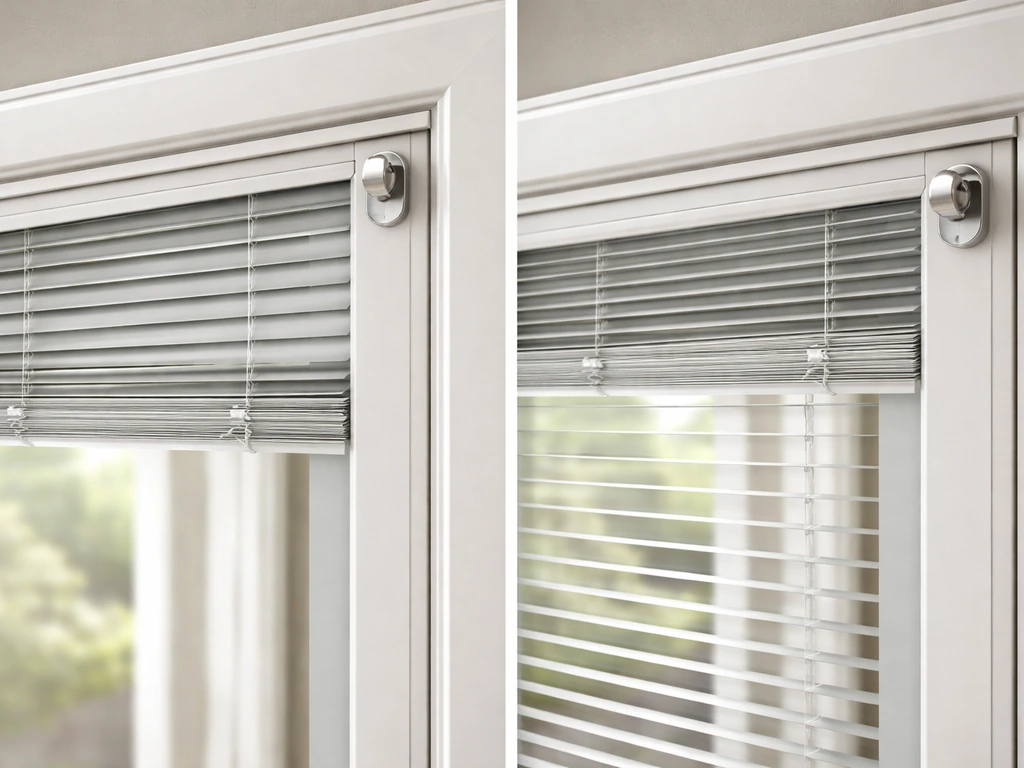
The operator is the small control knob, handle, or magnetic wand on the door frame that you use to raise, lower, or tilt the blinds. On most patio doors with between-the-glass blinds, this is a spring-loaded or gear-driven mechanism. Over time the internal spring loses tension, the gear teeth wear down, or the mechanism gets stiff from temperature cycling. When this happens, the control feels like it's turning or moving but nothing happens inside the glass unit, or it moves the blind partway and then stops.
Cord, tape, or belt failure
Between-the-glass blinds use either lift cords or fabric lift tapes to raise and lower the slats, and a separate tilt cord or rod to angle them. These components live inside the sealed unit, which means you can't reach them for a simple re-string. If a cord breaks or tangles, or if a lift tape frays or slips off its drum, the blind stops responding normally. A cord that's knotted or kinked (rather than broken) may just need to be fully extended and re-seated, which is what Pella's own documentation covers for the uneven-level symptom.
Seasonal expansion and contraction
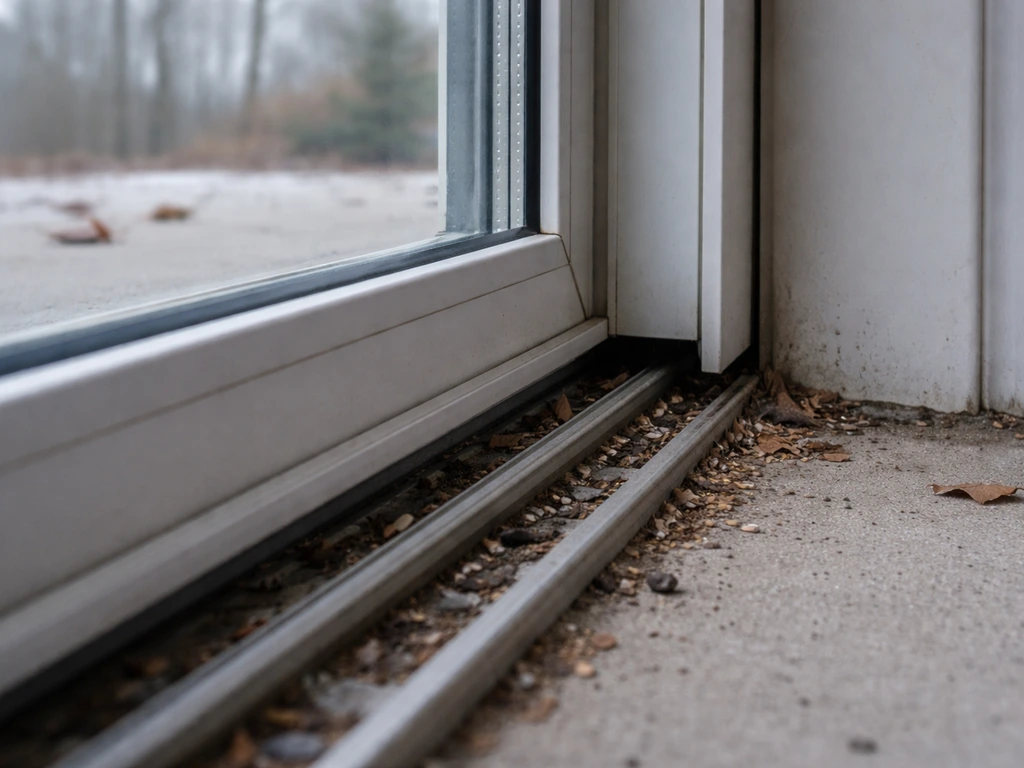
Patio door frames, especially vinyl and composite ones, expand and contract measurably with temperature swings. In winter, a frame that's contracted can put side pressure on the glass unit, which slightly compresses the blind's operating clearance. This is often why blinds that work fine in summer feel stiff or sticky in January. The blind isn't broken; it's just operating in tighter conditions than it was designed for.
Dirt and debris in the operator track
The track channel where the operator connects to the blind assembly is narrow and sits at the edge of the door slab. It collects pet hair, dust, and fine grit over years of use. Even a small amount of debris can create enough drag to make the blind feel sticky, operate unevenly, or stop midway through travel.
Misalignment from installation or shifting
If the door itself isn't plumb and square in the frame, which happens more than people expect, especially on sliding patio doors that settle over time, the glass unit can sit slightly off-axis. This puts uneven stress on the blind assembly and can cause the bottom rail to hang at an angle, create gaps at one side, or cause the blind to bind at the top or bottom of its travel.
Impact damage to slats
A hard knock to the glass, from a pet, a kid, or something falling against the door, can bend or break individual slats inside the sealed unit. Broken slats can't be replaced individually without opening the unit. This is usually a judgment call: one bent slat in the middle of the door is mostly cosmetic, but several broken slats near the top can interfere with the lift mechanism.
DIY diagnosis: safe checks you can do right now
Important note before starting: between-the-glass blinds live inside a sealed insulating glass unit. You should never try to open or drill into the glass unit yourself. Beyond the safety risk, it voids the glass unit warranty (typically 10 to 20 years depending on the manufacturer) and destroys the gas fill and thermal performance. Every step below works from the outside of the glass only.
- Identify your blind type first. Look at the operator on the door edge or frame. If there's only one control (usually a tilt knob or wand), you likely have tilt-only blinds. If there are two controls or a single control that pushes/pulls as well as rotates, you have raise/lower plus tilt. Don't try to force a tilt-only blind to raise — it's not designed to.
- Try the warm-up cycle for sticky blinds. Leave the blind fully raised (or fully lowered, wherever it's stuck) for a few minutes, then try operating it in the opposite direction using slow, steady pressure. Don't yank or force it. This loosens a stiffened mechanism and often restores function when cold weather or long periods of disuse are the cause.
- Fix uneven/tilted blinds with a full lower-and-pull. If your blind looks crooked after operating it, lower it completely to the bottom of the glass unit. Then gently pull down on the bottom rail while the cord is fully extended — this reseats the cord on its drum and removes kinks. Raise slowly afterward. Pella's own manual recommends exactly this step.
- If the blind locks up while retracting, try the spring-release move. Pull the glass unit (if it's a hinged glass panel) toward the lock/latch side of the door frame. This releases a spring that may have engaged mid-travel. This is a documented Pella fix but applies to similar spring-loaded mechanisms on other brands too.
- Inspect the operator for visible damage. Look at the control knob, wand, or handle on the frame edge. Is it cracked, loose, or spinning freely without resistance? A freely-spinning operator almost always means the internal gear or spring has failed. A completely stuck operator may just have debris jammed in the track slot.
- Check door alignment. Stand back and look at the door in its frame. Is the gap around the door slab even on all sides? Does the door slide or swing smoothly? If the door itself is out of square, fix that first — a misaligned door frame will keep stressing the blind assembly even after you address the blind directly.
- Look for fogging or moisture inside the glass. If you see condensation between the panes, the glass seal has failed. No amount of blind troubleshooting fixes this — the insulating glass unit needs replacement.
Cleaning and maintenance that actually restores smooth operation
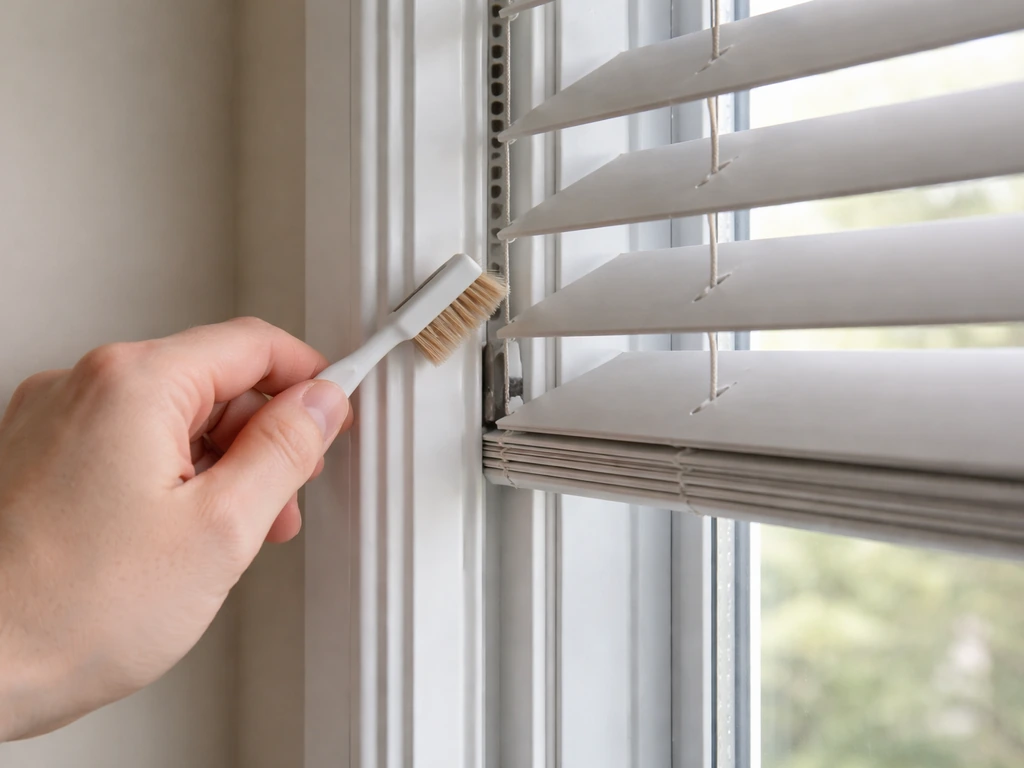
You can't clean the slats inside the sealed unit, but you can clean everything that affects how the mechanism operates from outside. The most impactful thing most homeowners can do is clean the operator track channel, the slot in the door frame where the control connects to the blind assembly.
- Use a dry, soft brush (an old toothbrush works perfectly) to sweep dust and debris out of the operator channel on the door edge. Work from top to bottom so debris falls out rather than getting packed further in.
- Follow with a vacuum using a crevice tool to pull out loosened debris. Don't use compressed air — it pushes debris deeper into the channel.
- Wipe the channel with a slightly damp cloth, then dry it thoroughly. Moisture left in the channel encourages mold and can cause further sticking.
- Do not apply WD-40, spray lubricants, or silicone spray directly into the operator channel or on any part of the mechanism that contacts the glass edge. Oil-based lubricants attract dust, which makes the problem worse over time. If the manufacturer specifically recommends a dry lubricant (like PTFE powder), use that sparingly.
- Clean the exterior glass surfaces near the operator area with standard glass cleaner — this doesn't affect the blind internally but removes grime that can migrate into the frame gap over time.
- For sliding patio doors with built-in blinds, also clean the door track and rollers. A door that doesn't slide smoothly puts sideways stress on the glass unit and the blind assembly inside it.
Aim to clean the operator channel twice a year, once in spring before you start using the door heavily, and once in fall before the cold weather sets in. Most people who have persistent sticking problems haven't cleaned this area in years.
Repair vs. replace: when to DIY, when to call a pro
This is the honest part. A lot of built-in blind problems are not cost-effectively repairable once the blind assembly itself is damaged. Here's how to think through the decision.
| Symptom | Likely Fix | DIY or Pro? | Typical Cost Range |
|---|---|---|---|
| Sticky/stiff operation | Warm-up cycle, track cleaning | DIY | $0 |
| Uneven blind after operating | Full lower and cord reset | DIY | $0 |
| Blind locked up mid-retract | Spring release move | DIY | $0 |
| Operator knob/wand broken or stripped | Replace operator assembly | DIY or Pro | $20–$80 for parts |
| Cord tangled or off-drum inside unit | Glass unit replacement or blind assembly swap | Pro | $200–$600+ depending on door size |
| Broken slats (multiple) | Glass unit or blind assembly replacement | Pro | $200–$600+ |
| Failed glass seal (fogging) | Insulating glass unit replacement | Pro | $150–$400+ per panel |
| Door out of alignment causing blind stress | Door rehang/adjustment | Pro | $100–$300 |
The operator assembly (the external control mechanism) is usually the only part you can replace without touching the sealed glass unit. Most manufacturers sell these as a serviceable part. When you call a door installer or service tech, ask specifically about: the operator assembly part number for your door model, whether a replacement blind assembly (the whole unit that sits inside the glass) is available, and whether a full insulating glass unit replacement makes more sense given your door's age.
One practical rule: if your door is more than 10 to 15 years old and the blind assembly itself has failed, you're often better off replacing the glass unit or upgrading to a different window treatment solution rather than paying for a repair that might fail again soon. Replacement glass units with fresh blind assemblies from most major brands run $200 to $600 or more depending on the door size, and a new operator assembly adds another $20 to $80. Get a written quote before committing.
If you're at the point where repair doesn't pencil out, it's also worth comparing built-in blind alternatives like exterior roller shades, cellular shades hung inside the door frame, or top-down/bottom-up blinds mounted on the door glass itself. Top-down/bottom-up blinds for patio doors let you control privacy from the bottom while keeping natural light at the top. If you are moving beyond built-in blinds, it helps to compare the best patio door coverings for your privacy and light-control needs. These options give you a lot more flexibility and are far easier to service or replace independently.
Pella built-in blinds: what's different and what to know
Pella is one of the most common brands homeowners run into with built-in blind problems, and their setup has some specifics worth knowing before you troubleshoot.
Tilt-only vs. raise/lower: the most common point of confusion
Pella explicitly documents two types of between-the-glass blinds: tilt-only and raise/lower. Tilt-only blinds are designed to angle the slats for light and privacy control but will never raise or lower, that's how they're built. If you're trying to get your Pella built-in blinds to raise and discovering they won't, check whether your door has tilt-only blinds first. Look at the operator on the door frame: a single rotating knob or wand typically indicates tilt-only. If it's supposed to raise and lower, there should be a separate mechanism or a push/pull function in addition to the tilt.
Hinged glass panel doors and the spring release
Some Pella patio doors (and French patio doors in particular) have a hinged glass panel with the blind assembly built in. These operate slightly differently from sliding door built-in blinds. If the blind locks up while retracting on one of these doors, Pella's documented fix is to pull the glass panel toward the lock/latch side of the door, this releases the spring mechanism that's caught. It sounds counterintuitive but it works. If you have a Pella French door and this is your symptom, try this before calling anyone.
Pella Insynctive motorized blinds
If you have a newer Pella Designer Series patio door, it may have Insynctive motorized between-the-glass blinds. These are factory-installed and use a remote or smart-home control system rather than a manual operator. If your Insynctive blinds stop responding, the troubleshooting path is completely different from manual blinds: check the battery in the remote, check the motor pairing status, and consult Pella's Insynctive-specific documentation. A motor failure in a motorized system is a tech/warranty call to Pella, not a DIY fix.
Pella warranty and parts
Pella offers limited lifetime warranties on many of their window and door products, and the between-the-glass blind components are often covered separately from the glass seal warranty. Before paying for any repair, call Pella's customer service with your door's model number and installation date. They can tell you exactly what's covered, whether the glass unit is still under warranty, and what the replacement parts cost. Having your original documentation helps significantly here.
How to prevent these problems and set yourself up for long-term function
Regular maintenance habits that make a real difference
- Clean the operator channel twice a year (spring and fall) as described above — this is the single most effective maintenance step
- Exercise the blind through its full range of motion monthly, especially if the door gets infrequent use. Mechanisms that sit in one position for months are more likely to stiffen and stick
- Keep the door track and rollers (for sliding doors) clean and lubricated — smooth door operation reduces stress on the glass unit and blind assembly
- Check door alignment annually: look for uneven gaps around the door slab and adjust the rollers if the door has drifted out of square
- Avoid slamming the door or letting it close hard — repeated impact stress is one of the leading causes of slat damage and cord failure inside the sealed unit
- In very cold weather, give the blind a minute to adjust to temperature before operating it aggressively — a slow first cycle prevents spring and tape stress
Privacy and light control when blinds are malfunctioning
If your built-in blinds are stuck in a partially open or fully open position while you wait for a repair or replacement, you don't have to live with no privacy. A tension-mounted cellular shade or a panel track blind can be hung inside the door frame without drilling into the door itself. These work alongside or instead of built-in blinds, and they're a lot easier to clean and replace. Top-down/bottom-up shades are particularly useful on patio doors because they let in light at the top while maintaining privacy at eye level.
Thinking about an upgrade or replacement door?
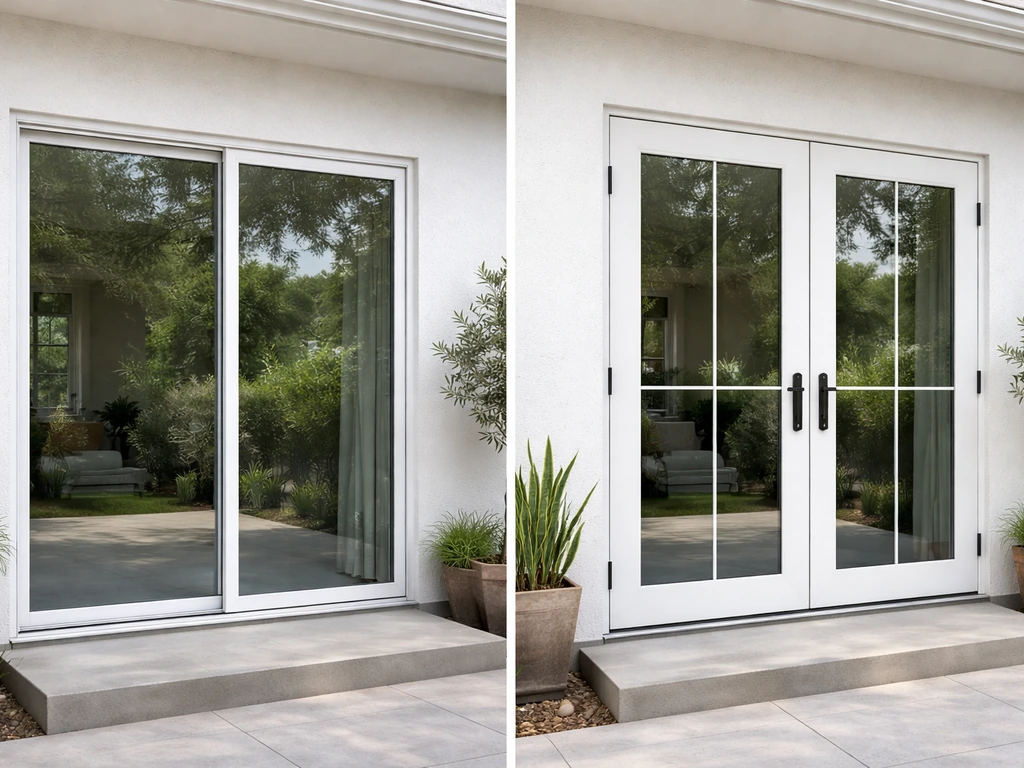
If your built-in blind problems keep recurring and your door is aging out, this is a good time to evaluate whether built-in blinds are still the right choice for your next door. Between-the-glass blinds are convenient and clean-looking, but they come with a real trade-off: when they fail, repair is expensive and sometimes impossible without replacing the whole glass unit. If you are shopping for window treatments, choosing the best patio door blinds upfront can reduce how often you run into these sticky, jamming, and access issues. On the other hand, exterior treatments or standalone interior blinds are cheaper to service but more exposed and less streamlined visually. Climate matters here too, in high-humidity coastal areas, glass seals tend to fail faster, which brings the blind assembly down with it. In very sunny climates, slat fading inside the sealed unit is a real long-term issue. If you're comparing door styles, sliding patio doors tend to have the most accessible operator channels and the most available replacement parts. French door built-in blinds, especially on the operable panel, take more stress from repeated opening and closing, which can accelerate wear on the cord and mechanism.
Whatever direction you go, the next step today is simple: run through the symptom checklist at the top of this article, try the relevant DIY fix if the problem is a mechanism or cord issue, clean the operator channel if you haven't done it recently, and call Pella or your door manufacturer with your model number before spending any money on parts. Most of these problems are more diagnosable than they first appear, and knowing exactly which component has failed saves you from replacing things that don't need replacing.
FAQ
My patio doors with built-in blinds are sticky only when I open or close the door. Is that a blind problem or a door alignment problem?
Test with both the blind control and the door movement: if the door slides and the blind still binds, it points to the blind operator channel, debris, or frame alignment. If the bind only happens when the door is moving, inspect the track rollers and the door’s overall alignment first, because even a small out-of-square door can keep re-loading the blind mechanism.
The built-in blinds stop partway up or down at the same spot each time. What should I check first?
If you notice the blind stopping at the same height every time, avoid forcing it past the stop. Fully retract and then extend it once after cleaning the operator channel, then try again gently. Consistent partial travel often indicates cord/tape mis-seating or increased drag at one specific point in the channel.
What is the safest way to clean the operator channel without making the patio doors with built-in blinds problems worse?
Make sure the blind is fully lowered (or fully raised, depending on the symptom) before you clean, and use a dry brush or vacuum first, then a lightly damp cloth for residue. Don’t spray cleaners into the sealed unit area or flood the operator slot, because moisture can increase stiffness later and may attract more grit.
Can I troubleshoot the sealed-unit blinds from the outside, or do I need to open anything?
Yes for mechanism and cord/tape symptoms, no for sealed-unit symptoms. If you can feel the operator mechanism moving but the blind doesn’t respond, you can usually troubleshoot from outside. If the blinds respond but are broken unevenly, or you hear internal clicking and slats look skewed, that is more consistent with sealed-unit damage that typically needs a professional.
One slat looks bent in my patio doors with built-in blinds. Can I replace just that slat?
Do not attempt to replace individual slats. In between-the-glass designs, bent or broken slats generally require replacing the whole blind assembly or the glass unit. If only one slat is slightly misaligned, you can sometimes monitor performance after cleaning and alignment checks, but plan for a replacement if multiple slats are damaged near the travel path.
Why do my patio doors with built-in blinds problems show up mostly in winter, then improve in summer?
If you recently cleaned and the blinds still feel stiff only in cold weather, treat it as a seasonal clearance problem rather than a broken component. Warm the door area gradually (normal indoor heating is best) and retry operation, then re-clean the channel before the next cold snap to remove any loosened grit.
My blinds come down at an angle and leave gaps on one side. Could the frame be the cause?
For uneven operation, check two things before concluding the blind failed: (1) door plumb and square, look for a visible gap difference at the sides when the door is closed, and (2) whether the bottom rail hangs at a tilt. If either is off, realigning the door or adjusting rollers often improves blind binding without replacing the blind assembly.
The operator knob moves but the blinds do nothing. How can I tell whether it is a mechanism issue or a clearance/debris issue?
If you see the control knob or wand move but the blind doesn’t, try the door gently in both directions while operating the blind, then stop. If the response changes when the door is pushed slightly toward the frame, it suggests the clearance or contact point is off due to alignment or debris, not a fully broken operator.
When I call for service, what exact questions should I ask about replacing the operator or the glass unit?
The best practice is to collect your door model number and installation date before calling. Then ask the service rep whether your operator assembly is sold separately, the blind assembly availability, and whether the insulating glass unit replacement would be more cost-effective for your door age. Getting a written quote for parts and labor prevents surprise pricing.
How do I confirm whether my Pella between-the-glass blinds are tilt-only or raise/lower?
If you have a dual-function operator (tilt plus raise/lower), verify you are using the correct motion for the lift. Tilt-only setups will never raise or lower, so a mismatch between expected and actual control function is a common cause of “it doesn’t move” complaints.
On a Pella French patio door, the built-in blind locks during retracting. Is there a quick fix I can try first?
If your French patio door’s blind locks up while the glass panel retracts, try Pella’s documented approach: pull the hinged glass panel toward the lock or latch side of the door to release the spring mechanism that has caught. If it still locks after one careful attempt, stop and call service to avoid bending components.
My newer Pella Designer Series has motorized between-the-glass blinds, and they stopped responding. What should I check before calling?
For motorized Insynctive blinds, the first checks are the remote battery and whether the motor is still paired to the system. If those are fine and the blinds remain unresponsive, treat it as a warranty or tech issue because troubleshooting typically involves motor electronics not meant for DIY access.
My built-in blinds are stuck and I need privacy now. What temporary options work without drilling into the door?
If you need privacy while repairs are pending, choose a tension-mounted cellular shade or an inside panel track blind that sits within the door frame. These avoid drilling into the door and can often be removed quickly later, which reduces hassle during the repair or replacement window.
My patio doors with built-in blinds problems keep coming back. How do I decide between continued DIY cleaning and paying for a replacement?
If you are seeing recurrence soon after cleaning or minor adjustments, it is a sign the operator assembly or blind assembly is nearing failure. In that case, it is often smarter to price the replacement blind assembly or full glass unit instead of repeating partial fixes that only temporarily reduce binding.