The best patio door covering depends on your door type and your top priority. For sliding doors in a hot, sunny room, a solar roller shade or panel track blind is almost always the right call. For French doors, individual cellular shades or curtains mounted to the door panels work best. For bifold doors, exterior solar screens or a simple curtain rod system outside the door frame are usually the most practical. If you want one answer to walk away with: cordless cellular shades handle privacy, insulation, and light control better than anything else inside, while exterior solar screens beat everything for heat and glare before it even hits the glass.
Best Patio Door Coverings: Top Picks by Door Type
Owen Delaney
18 Jun 2026
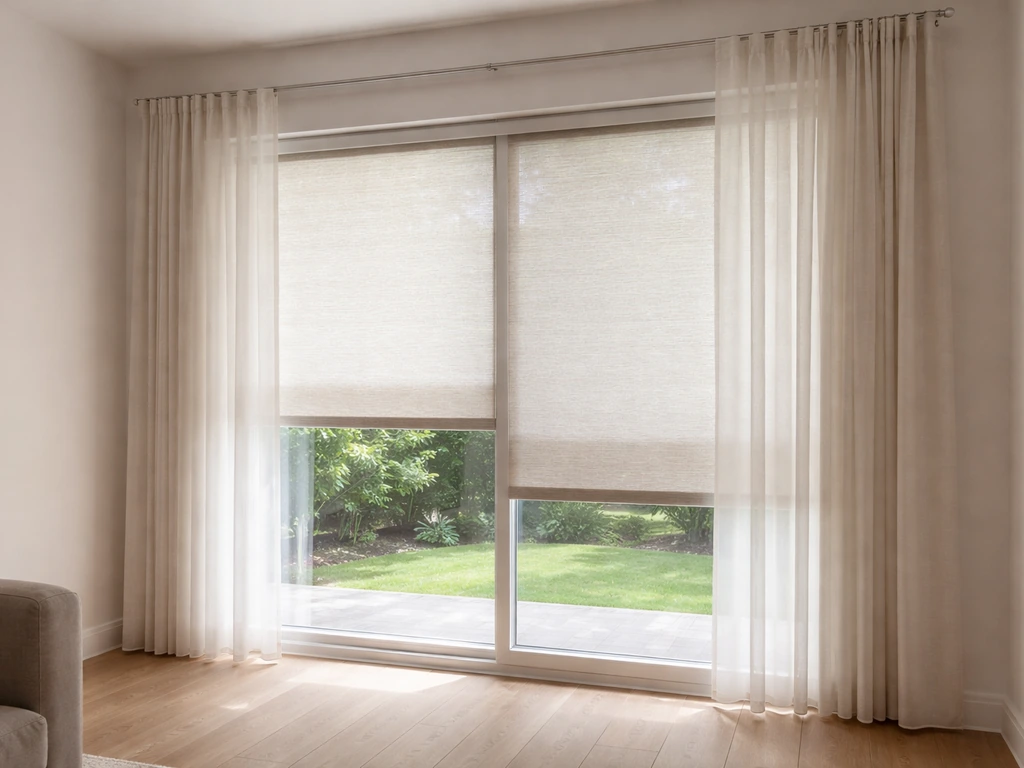
Start here: your door type shapes everything
Before you pick a covering, you need to know what your door actually does, because operating hardware that works great on a stationary French door will be a daily frustration on a sliding door you open five times a day. Sliding patio doors glide along a horizontal track, which means any covering needs to stack or retract without blocking that track or getting caught in the panel. French doors are hinged and swing open, so coverings either need to be mounted on each door panel individually (so they move with the door) or hung on a rod far enough outside the door frame that they swing clear. Bifold and multi-slide doors fold or stack, often opening up most of the wall, which makes wide fixed coverings almost useless during the day.
Beyond door type, think about what you actually need from a covering. Privacy from a street-facing home is different from blocking afternoon glare in a sunroom. Insulation matters a lot in cold climates but less in mild ones. If you have kids or pets charging through the door ten times a day, you need something cordless, durable, and easy to move. Write down your top two or three priorities before you start shopping, because every covering type makes a tradeoff somewhere.
Interior coverings compared: blinds, shades, curtains, and sheers
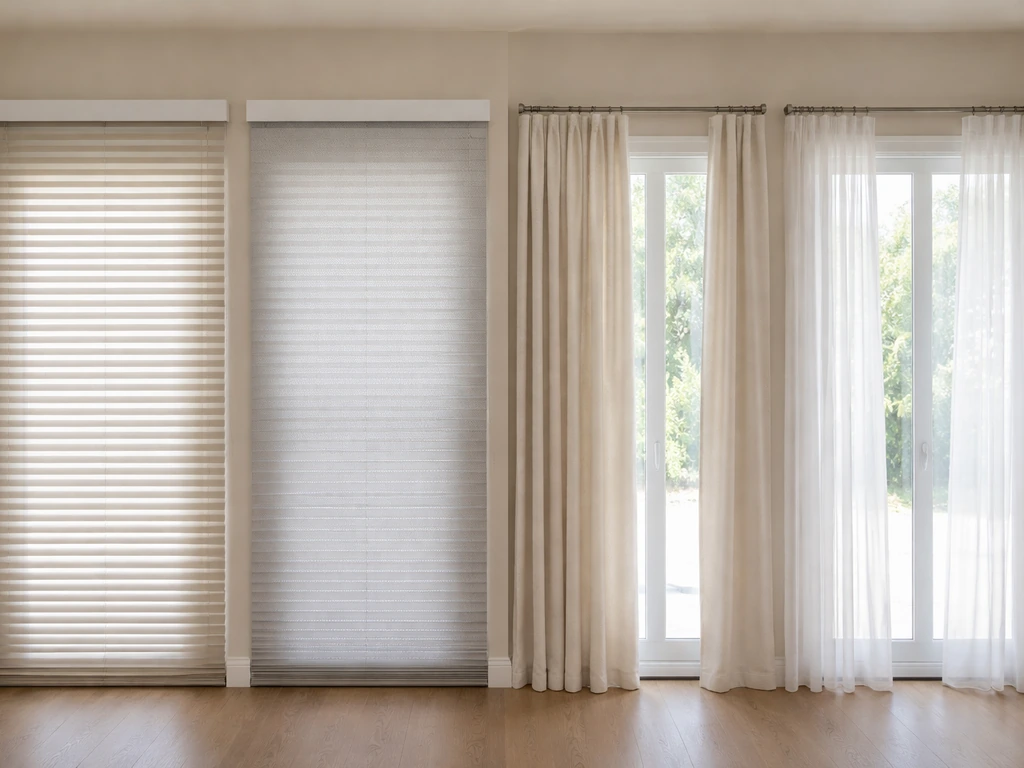
Interior coverings are what most people reach for first, and they cover most situations well. The main categories are blinds (horizontal or vertical slats), shades (fabric panels that roll or fold), and soft treatments like curtains, drapes, and sheers. Each does some things well and some things poorly.
Cellular (honeycomb) shades
Cellular shades are my top recommendation for most homeowners because they balance all the priorities better than anything else on the interior side. The honeycomb cell structure traps air and acts as insulation, and a well-installed cellular shade can reduce heat loss through a glass door by 40% or more, which translates to roughly 10% savings on heating energy according to the Department of Energy. DOE testing has also shown up to 20% overall energy savings across 15 climate scenarios. They come in single-cell, double-cell, and triple-cell versions, with more cells meaning more insulation. Blackout and light-filtering fabric options give you control over how much light comes through. They look clean, they're available in cordless and motorized versions (important for safety if you have kids), and custom widths are easy to order. The main tradeoff is cost: custom cellular shades typically start around $56 to $120 per shade before installation, and can run higher depending on size and operating system.
Roller shades
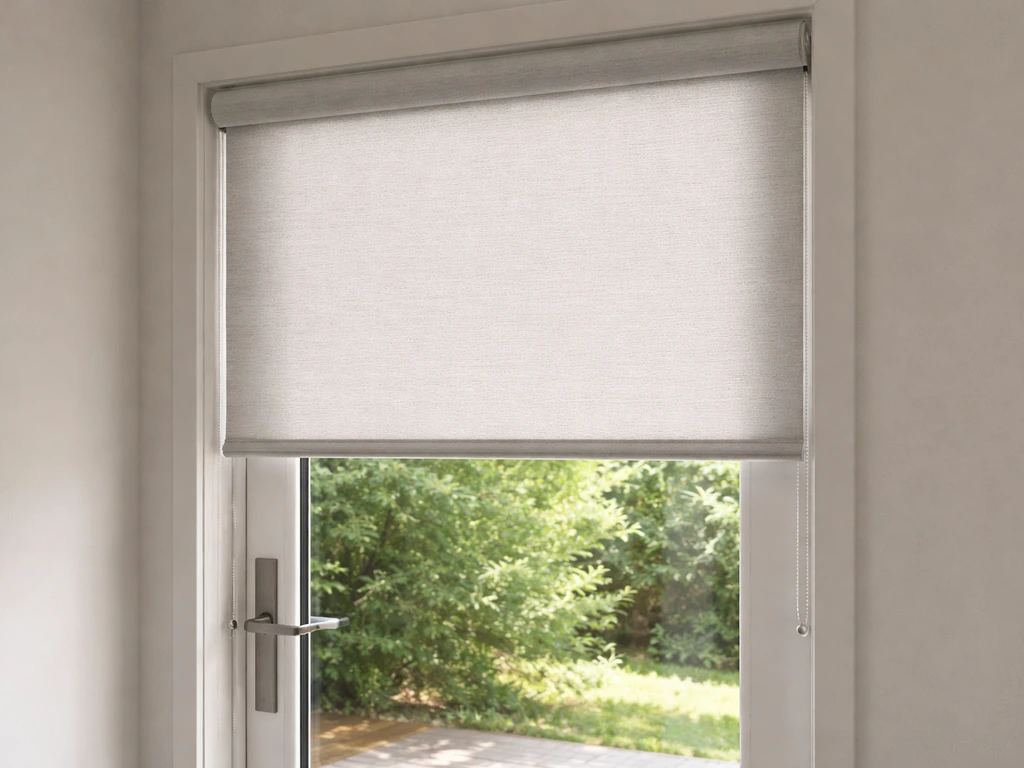
Roller shades are simple, slim, and inexpensive. They're excellent for blocking sunlight, creating privacy, and room darkening, but they offer only a small amount of insulation compared to cellular shades. If you don't care about energy efficiency and just want to knock out glare or get privacy at night, a quality roller shade does the job cleanly and costs less. Solar roller shades are a specific type worth calling out: they use an open-weave fabric that blocks UV and glare while still letting you see outside during the day. The weave is rated by openness factor, from 1% (blocks most light, best glare control) to 10% or higher (more view, less heat blocking). For a south- or west-facing sliding door, a 3% to 5% openness solar roller shade is a good balance.
Vertical blinds
Vertical blinds have been the default patio door solution for decades and they still make sense in some situations. They work well on wide sliding doors because the slats hang vertically and can be drawn to one side, mimicking the door's operation. They're cheap, widely available, and easy to replace. The downsides are real though: the slats catch dust, they're noisy in drafts, and they look dated in most homes. If you're renting or selling soon, a vertical blind gets the job done. If you're staying and you care about the look of the room, there are better options today.
Curtains, drapes, and sheers
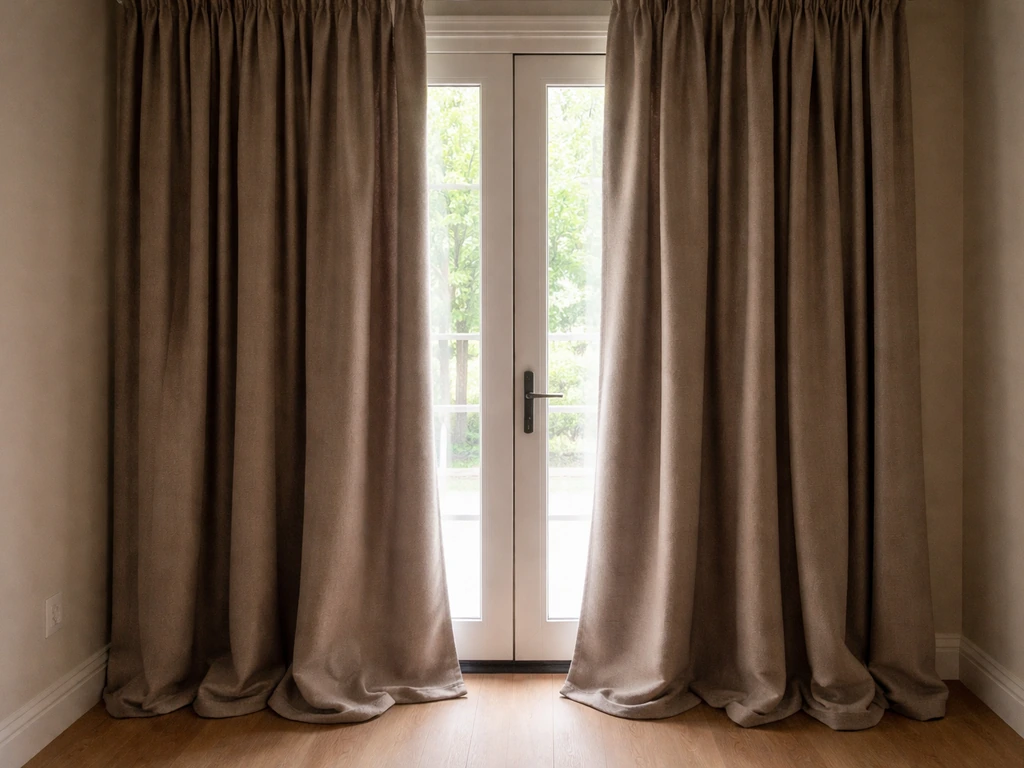
Curtains and drapes add softness and warmth to a room that hard blinds or shades can't match. Heavy thermal drapes can also provide meaningful insulation, especially if you close them at night against cold drafts. Sheers are a great middle ground: they diffuse light beautifully during the day, give some daytime privacy, and layer well under blackout drapes for rooms where you want flexibility. The challenge with curtains on patio doors is clearance: you need a rod that extends well past the door frame on both sides so you can fully push the curtains off the glass when you open the door. On French doors that swing in, floor-length curtains need enough clearance to avoid catching on the handles. On sliding doors, curtains work fine as long as they stack off to the side of the fixed panel.
| Covering Type | Best For | Insulation | Light Control | Cost Range (per panel/shade) | Works on Sliding Doors | Works on French Doors |
|---|---|---|---|---|---|---|
| Cellular shades | All-around performance, energy savings | Excellent | Good to excellent | $56–$120+ | Yes (panel track or individual) | Yes (mount on each panel) |
| Roller/solar shades | Glare control, clean look, low cost | Minimal | Good | $30–$100+ | Yes | Yes |
| Vertical blinds | Wide sliding doors, rentals | Low | Decent | $20–$80 | Yes (purpose-built) | Not ideal |
| Curtains/drapes | Aesthetics, flexibility, layering | Moderate (thermal lined) | Variable | $30–$150+ per panel | Yes (with wide rod) | Yes (with clearance) |
| Sheers | Daytime privacy, light diffusion | Low | Light filtering only | $20–$80 per panel | Yes | Yes |
Exterior and solar screening options: stopping heat before it gets inside
If heat and glare are your main problems, exterior solutions are worth serious consideration. The reason is physics: an interior shade blocks sunlight after it's already passed through the glass and started heating the room. An exterior screen stops solar energy before it reaches the glass, which is fundamentally more effective. Exterior solar screens and motorized shade systems can significantly outperform interior blinds for heat control in hot climates.
Exterior solar screens
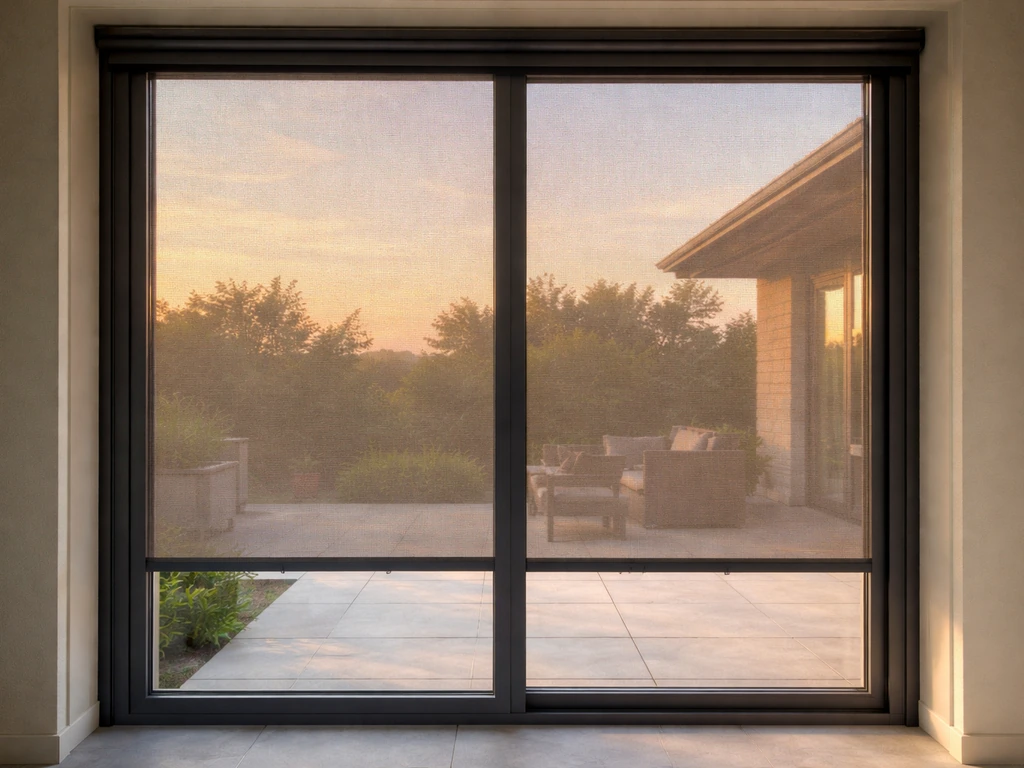
Exterior solar screen fabric uses the same openness-factor rating as interior solar shades, but installed outside the glass. A 1% to 3% openness screen on the outside of a west-facing patio door dramatically cuts the solar heat load hitting your glass. Quality exterior screen fabrics are built to resist rain, frost, and wind, and some high-end systems marketed for storm-prone regions claim resistance even in hurricane-level conditions. Exterior solar screens are built to resist rain, frost, and wind, and some systems even handle strong wind better than typical exterior blinds. The tradeoffs are cost and installation complexity: exterior systems need to be properly mounted to the structure and generally require professional installation. They also change the exterior look of your home, which matters if you have strict HOA rules.
Motorized exterior shade systems
Systems like motorized zip screens or cable-guide exterior shades combine weather protection with the convenience of a button or app. These retract when you want the view or the breeze, and deploy when you need shade or privacy. They're the most expensive option by a significant margin, but for a south-facing outdoor living area that gets punishing afternoon sun, they genuinely transform how usable the space is. If you're already investing in a high-end patio door, this is worth pricing out alongside interior solutions.
Screen doors and retractable screens
Standard screen doors address a different problem: ventilation with bug protection. They don't provide privacy or meaningful heat control, but they're essential if you want to leave the patio door open in warm weather. Retractable screen systems hide away when not in use, which works well on French and bifold doors where a traditional screen door would interfere with the swing or fold. These are worth pairing with your interior shade solution rather than treating them as either/or.
Best picks by scenario and door style
Here's where I'll give you the direct recommendations. These are based on the most common situations I hear about from homeowners, and what consistently works best for each one.
| Scenario / Door Type | Best Covering Pick | Why |
|---|---|---|
| Sliding door, hot/sunny climate | Solar roller shade (3–5% openness) or exterior solar screen | Stops glare and heat; stacks neatly beside track |
| Sliding door, cold climate | Double-cell cordless cellular shade or panel track cellular | 40%+ reduction in heat loss; clean operation |
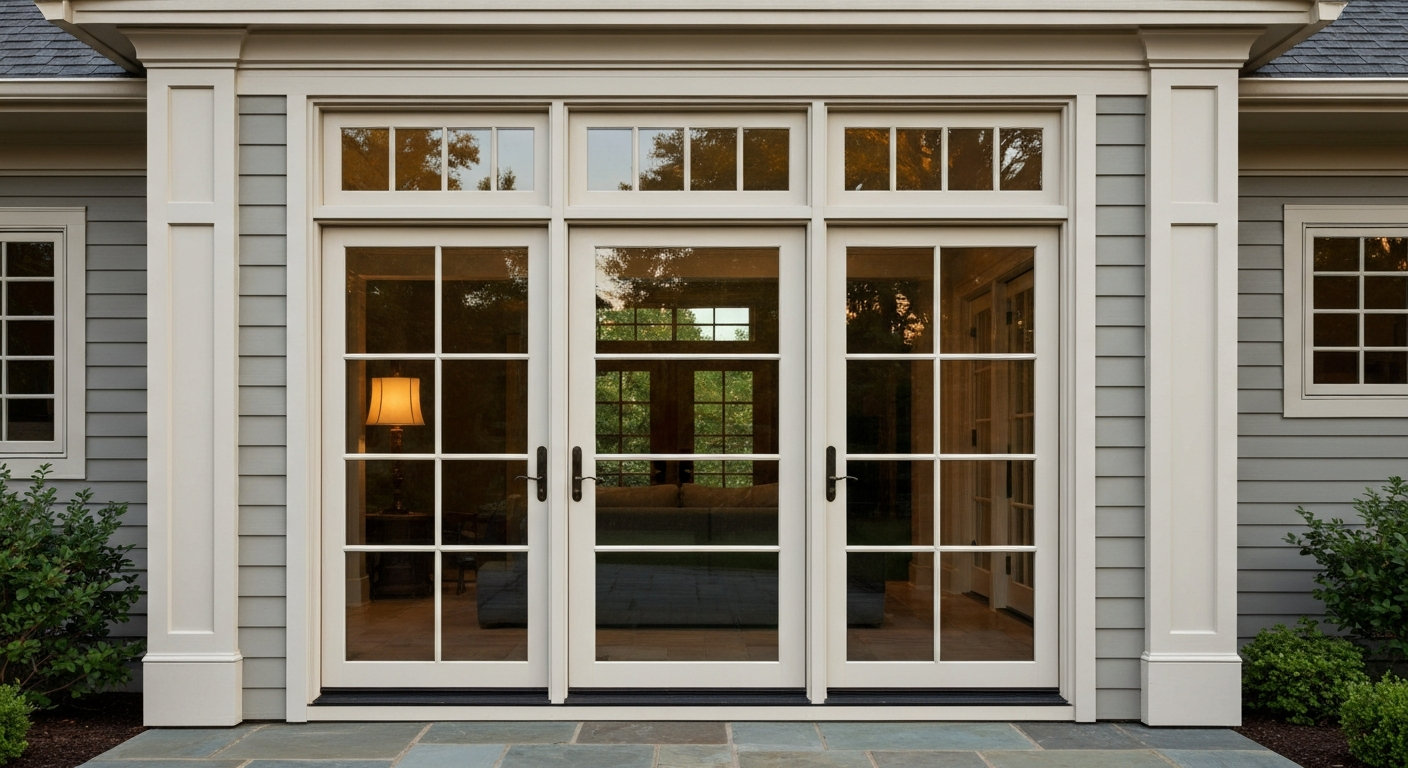
| French doors, any climate | Individual cellular or roller shades mounted on each door panel | Moves with the door; no clearance issues |
| French doors, formal/aesthetic priority | Floor-length drapes on a wide rod outside the door frame | Elegant look; rod must clear full swing width |
| Bifold or multi-slide doors | Exterior solar screen or wide curtain rod outside door frame | Interior options interfere with fold/stack operation |
| High-privacy, street-facing home | Blackout cellular shade + sheer layer, or 1–3% solar shade | Day and night privacy without losing all light |
| Homes with kids or pets | Cordless or motorized cellular or roller shade | Eliminates cord strangulation hazard (CPSC-flagged risk) |
| Frequent door use (multiple times/day) | Motorized shade with app or remote, or easy-lift cordless shade | Operates without touching; no cord wear over time |
| Windy/coastal area | Exterior motorized zip screen with track; or interior cellular | Zip-track systems stay locked in high wind; interior avoids exterior exposure |
| Rental or budget-first | Vertical blinds or basic roller shade | Low cost, easy install, replaceable |
How to measure and choose your mount type
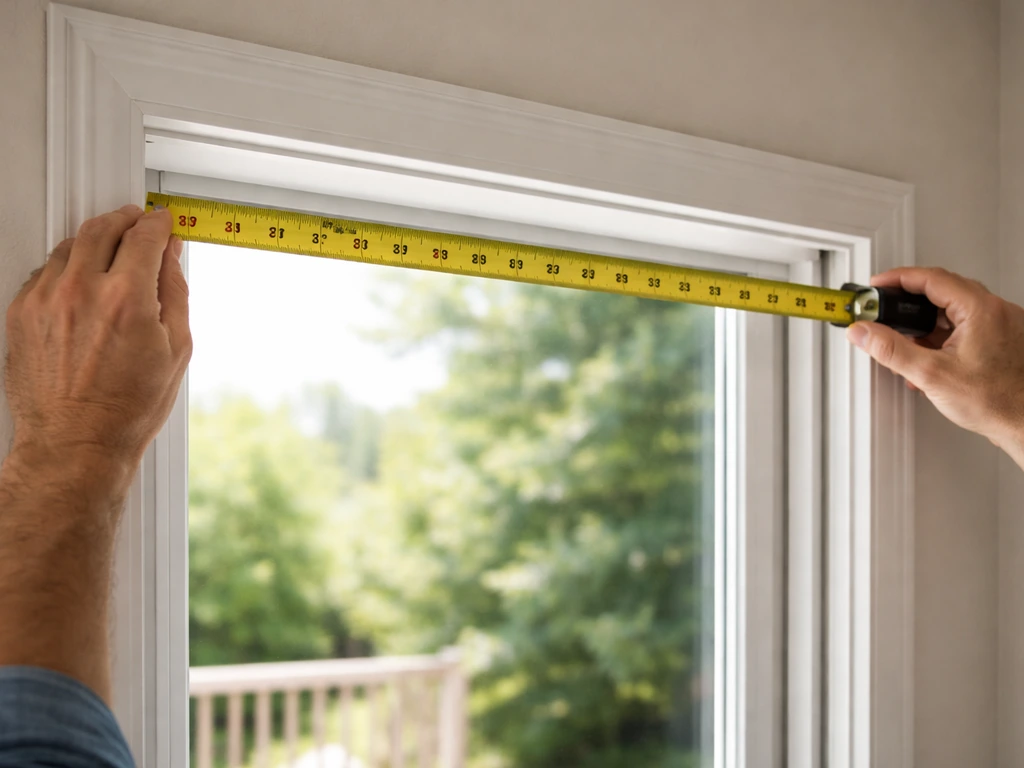
Getting the measurement right is where most DIY installs go wrong. A shade that's a quarter inch too wide won't fit inside the frame, and one that's too narrow leaves light gaps at the sides. Here's the straightforward process.
Inside mount vs outside mount
Inside mount means the shade or blind installs inside the window or door frame opening. It looks cleaner, takes up less wall space, and works well if you have a deep enough frame (most modern patio door frames have at least 2 to 3 inches of depth). Outside mount means the hardware attaches to the wall or frame face above the opening. This is the right choice when you want to make the door look larger, when you need to cover light gaps at the edges, or when the door frame is too shallow for an inside mount bracket. Outside mount also gives you more flexibility on width, since you can cover a few extra inches on each side.
How to measure for inside mount
- Measure the width of the opening at the top, middle, and bottom. Use the narrowest measurement and round down to the nearest 1/8 inch.
- Measure the height on the left, center, and right. Use the measurement that fits your needs (longest for maximum coverage).
- Most shade manufacturers will deduct a small amount from your width for bracket clearance, but confirm with your specific brand before ordering.
- For cellular shades especially, a minimum 2 to 2.5 inch overlap on each side (outside mount) is recommended to reduce light gaps at the edges.
How to measure for outside mount
- Decide how much wider and taller than the opening you want the shade to be. A minimum of 1.5 to 2 inches overlap on each side is typical for light control; 3 inches is better for blackout.
- Add that overlap to both sides of the width and to the top for your total shade width and height.
- Mark your bracket mounting points and check for wall obstructions (trim, switches, outlets) before ordering.
- For floor-length drapes, measure from the rod location to the floor and subtract 0.5 inch to avoid dragging.
Operating mechanisms for patio doors
For sliding doors, look for panel track systems (individual fabric panels on a ceiling-mounted or wall-mounted track that slide side to side) or wide single roller/cellular shades that span the full door width and retract upward. Panel tracks work especially well on very wide openings. For French doors, individual shades or blinds mounted on each door panel with hold-down brackets at the bottom keep the covering from swinging when the door opens. For motorized options, Hunter Douglas's PowerView system and similar platforms integrate with smart home systems including Alexa, Apple HomeKit, and Google Assistant, and can be controlled via app or dedicated remote. Motorized is particularly useful for large or hard-to-reach patio doors, but setup requires some app-based programming time.
What things cost and whether to hire it out
Let's be direct about money. Patio door coverings have a wide price range, and the variables that drive cost up are motorization, custom sizing, premium fabrics, and professional installation. Here's a realistic breakdown.
| Covering Type | Product Cost (DIY) | Professional Install (per opening) | Total Installed Estimate |
|---|---|---|---|
| Basic vertical blinds | $20–$80 | $65–$120 | $85–$200 |
| Roller or solar shade (standard) | $30–$100 | $65–$120 | $95–$220 |
| Cellular shade (custom, cordless) | $56–$120+ | $65–$120 | $120–$240+ |
| Motorized cellular or roller shade | $150–$400+ | $100–$200+ | $250–$600+ |
| Exterior solar screen (installed) | $200–$600+ | Usually bundled | $400–$1,000+ |
| Curtains/drapes + rod hardware | $50–$300+ | $65–$120 | $115–$420+ |
Professional installation runs roughly $65 to $120 per window or door opening on average nationally in 2026, not counting the product itself. That's money well spent for heavy motorized systems or exterior screens where a bad mount can cause real problems. For a standard cellular shade or roller shade on a sliding door, most handy homeowners can install it in 20 to 30 minutes with a drill and a level. The instructions that come with quality brands are genuinely good, and there's almost always a measuring guide on the manufacturer's website.
Where professional installation really pays off is with motorized systems that require low-voltage wiring (like Hunter Douglas PowerView+ which uses its own power supply for both power and communication), exterior screen systems that need to be anchored to siding or masonry, and any situation where you have non-standard or irregular openings that require on-site adjustments.
One honest note on cost vs value: the energy savings from cellular shades are real. The DOE's research shows up to 20% energy savings in some climate scenarios, and significant reduction in heating costs just from closing them at night. Over a few years, a quality cellular shade on a large patio door can genuinely offset a meaningful chunk of its own cost in reduced heating and cooling bills. That's not a marketing claim, it's tested data. So spending $150 on a good double-cell cellular shade instead of $40 on a basic roller shade is often the smarter financial move over a 5 to 10 year horizon.
Installation tips, cleaning, and making them last
Installation basics
For inside-mount shades on a sliding door, the most common mistake is not checking for the door frame's depth before ordering. Measure from the front face of the frame to the first obstruction (often the door slab or track hardware) and confirm the bracket depth your shade requires. Most cellular shade brackets need 1.5 to 2 inches of depth. If you're tight, go outside mount. For French door panel-mount shades, always use hold-down brackets at the bottom of each shade panel to keep it flush against the glass when the door swings. Without them, the shade flaps and the bottom rail can bang against the door hardware. Always anchor curtain rod brackets into studs or use appropriate wall anchors, especially for heavy drapes over a wide patio door where the rod can pull out of drywall under load.
Cord safety
The CPSC has flagged corded window coverings as a strangulation hazard for young children, and their guidance is clear: in homes with kids under age 6, go cordless or motorized. The U.S. Consumer Product Safety Commission (CPSC) warns that window covering cords can pose strangulation and loop hazards for young children and recommends cord hazard awareness in the home corded window coverings as a strangulation hazard. If you have corded shades and kids, use cord cleats mounted high on the wall to keep cords out of reach. This isn't optional; it's a genuine safety issue. Cordless cellular and roller shades are widely available at similar prices to corded versions, so there's no real reason to choose corded if you have young children at home.
Cleaning and maintaining your coverings
- Cellular shades: use a hair dryer on the cool/low setting to blow dust out of the cells every few months. Spot clean with a damp cloth and mild soap. Avoid soaking the fabric.
- Roller and solar shades: wipe down with a damp cloth. Most solar screen fabrics resist moisture well but avoid submerging them.
- Vertical blinds: individual slats can be removed and wiped down or hand-washed. Replace damaged slats individually rather than the whole set.
- Curtains and drapes: check the care label. Most fabric panels can be machine washed on gentle; thermal-lined drapes may need dry cleaning.
- Exterior screens: rinse with a garden hose periodically to remove pollen and dirt. Inspect mounting hardware each spring for corrosion, especially in coastal climates.
Sun fade and longevity
South- and west-facing patio doors take the most sun abuse, and cheap fabrics will fade noticeably within a year or two. When you're shopping, look for coverings with a UV-resistant or fade-resistant fabric rating. Most quality cellular shade fabrics and solar screen materials are specifically engineered for high-UV environments. For curtains and sheers, look for solution-dyed fabrics, which have color embedded in the fiber rather than surface-dyed, making them much more fade resistant. Moisture is the other enemy: patio doors near pools or in humid climates can cause fabric to mildew. Choose moisture-resistant fabrics and make sure there's some airflow so the covering can dry if it gets damp.
A quality cellular shade or solar roller shade from a reputable brand should last 7 to 10 years with basic care. Exterior screen systems with quality hardware can last 10 to 15 years. Cheap vinyl vertical blinds often start cracking or warping within 3 to 5 years in sunny climates. When you're comparing prices, factor in replacement frequency, not just the upfront cost.
Pairing coverings with your overall patio door setup
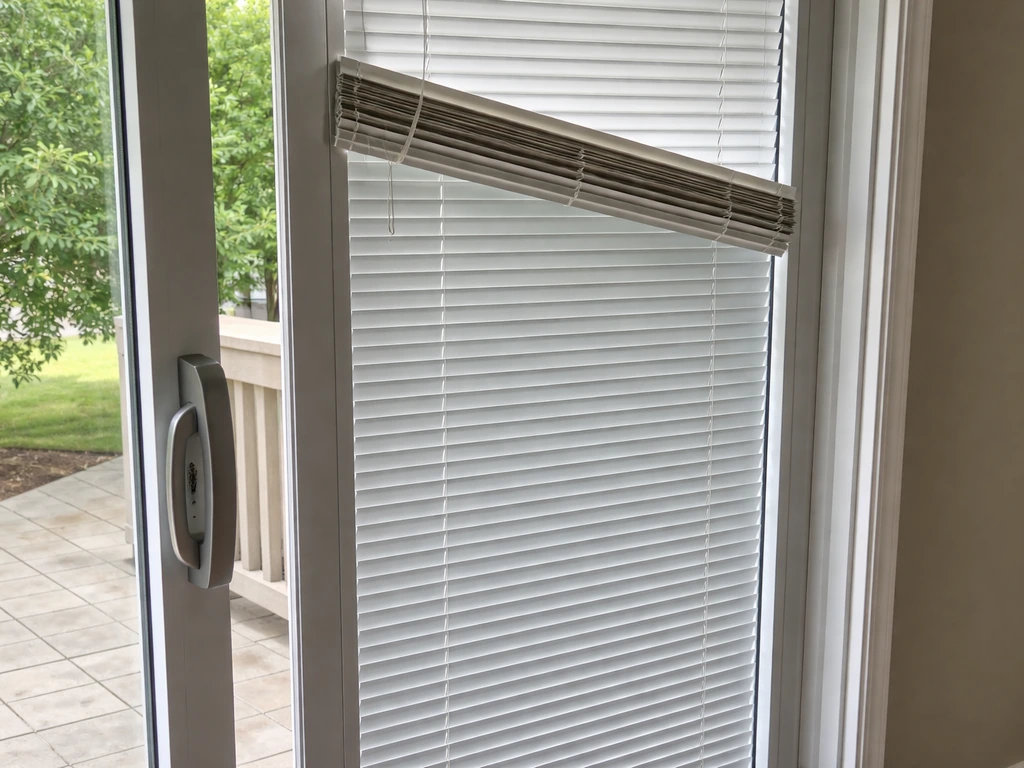
The type of patio door frame and glass you have affects what works best. A door with a lot of frame depth (common in wood or composite frames) gives you more inside-mount options. A slim-profile aluminum frame may push you toward outside mount or panel-mounted solutions. If your door has built-in blinds between the glass panes, that affects your layering options too. If you have patio doors with built-in blinds, the common problems like uneven operation or limited insulation are worth checking before you layer another covering patio doors with built-in blinds problems. Those systems have some specific limitations and failure patterns worth understanding before you decide whether to add an additional exterior or interior layer on top of them.
If security is a concern alongside privacy, a good covering works best when paired with a door security bar or pin lock rather than relying on the covering itself to deter entry. Coverings prevent people from seeing in, but they don't stop the door from opening. Treating them as a privacy and climate solution, not a security one, will help you make better decisions about what to buy.
If you're also researching specific blind types for patio doors, considering alternatives to traditional blinds, or evaluating top-down bottom-up options that give you privacy while keeping the top open for light, those are all worthwhile directions to explore once you've settled on your door type and primary priorities. The covering choice connects back to the door itself, so knowing your door style is always the right starting point. If you want a similar privacy benefit but with more flexible light control, top down bottom up blinds for patio doors are worth comparing.
Your next steps: a quick action plan
- Identify your door type (sliding, French, or bifold) and write down your top two priorities (e.g., heat control + privacy, or aesthetics + insulation).
- Measure your door opening: width at three points, height at three points, and frame depth if you're considering inside mount.
- Decide on inside or outside mount based on frame depth and light-gap priorities.
- Match your scenario to the best-pick table above and shortlist two or three product types.
- Get quotes from two to three online retailers (most have free measuring guides and return policies) and at least one local installer if you're going motorized or exterior.
- Check whether your covering choice is cordless or has a cord management solution, especially if you have young children.
- Order with a couple inches of margin in hand for any last-minute measurement adjustments, and plan your installation for a day when you can leave the door accessible for a few hours.
FAQ
What’s the best patio door covering if I want privacy but still need to see outside during the day?
For sliding doors and sunrooms, choose a solar roller shade or an exterior solar screen with a low openness factor (around 3% to 5% for many south or west exposures). This keeps most glare down while preserving a usable view, and it also reduces heat load before it reaches the glass.
Should I prioritize inside-mount or outside-mount for a sliding patio door?
Pick inside-mount only if your frame has enough depth for the bracket requirements and you can avoid obstructions from the track hardware. If your frame is shallow or you’re getting light gaps, outside-mount usually gives more flexibility and a cleaner edge-to-edge look.
Can I layer an interior shade with curtains on a patio door without making it hard to open?
Yes, but plan clearance first. Curtains need enough rod extension so they can stack off the glass, and if you use a shade underneath, keep the shade’s retraction path clear of curtain folds and tiebacks. For hinged French doors, verify handle clearance so floor-length panels do not snag on opening.
What’s the safer option if I have kids, but I still want cordless light control?
Go cordless cellular shades or cordless roller shades. If you must use a corded option temporarily, cord cleats should be mounted high and the cords should be kept short enough that they cannot form a loop, this is a safety priority, not an aesthetic one.
Why do my inside-mount shades feel like they don’t fit even if I measured correctly?
Most fit issues come from measuring to the wrong obstruction or ignoring bracket depth. Measure from the front face of the frame to the first barrier (often the slab, track, or a handle area) and compare that to the manufacturer’s required mounting depth for your specific shade bracket.
Are vertical blinds still a good choice for a patio door, or are they usually outdated?
They work best on wide sliding doors when you can draw the slats fully to one side without fighting the track. If you care about a modern look or dust and airflow noise, you will likely be happier with cellular shades, a panel track system, or curtains with the right stacking clearance.
What should I choose if heat and glare are my main problems, but I do not want major exterior changes?
Start with an interior solar roller shade designed for the door’s sun exposure (openness factor guidance matters). If that still feels too warm in peak afternoons, an exterior solar screen is the next step because it blocks energy before it enters the glass, but it does require proper structural mounting and may affect your home’s exterior look.
How do I decide between a panel track system and a wide single roller or cellular shade on a sliding door?
Use a panel track when the opening is very wide and you want multiple panels to manage coverage cleanly. Use a single wide shade when you prefer a simpler look and one retraction style, but confirm the retraction space is large enough and that it won’t interfere with door movement.
What covering helps most with drafts and nighttime heat loss?
Cellular shades are usually the best interior option because the honeycomb cells trap air, a major driver of draft and heat loss reduction. For even better performance, choose a light-filtering or blackout fabric option that closes fully at night and avoid gaps where cold air can leak through the sides.
Will a patio door cover help with security or should I treat it as purely privacy and climate control?
Treat it as privacy and climate control only. A covering can block visibility, but it will not prevent the door from being opened. If security matters, pair your choice with a door security bar or pin lock and consider upgrading the hardware.
How do I prevent fading and mildew if my patio door is near a pool or in a humid area?
Look for UV or fade-resistant fabric ratings and, for curtains and sheers, solution-dyed fabrics for better color stability. For mildew risk, choose moisture-resistant materials and ensure there is enough airflow around the covering so it can dry if it gets damp.
What’s a realistic life span difference between interior shades and exterior screens?
Plan on roughly 7 to 10 years for quality interior cellular or solar roller shades with normal care, while quality exterior screen hardware can last longer, often 10 to 15 years. Cheap vertical blinds are typically the shortest-lived in strong sun, due to warping and cracking over time.