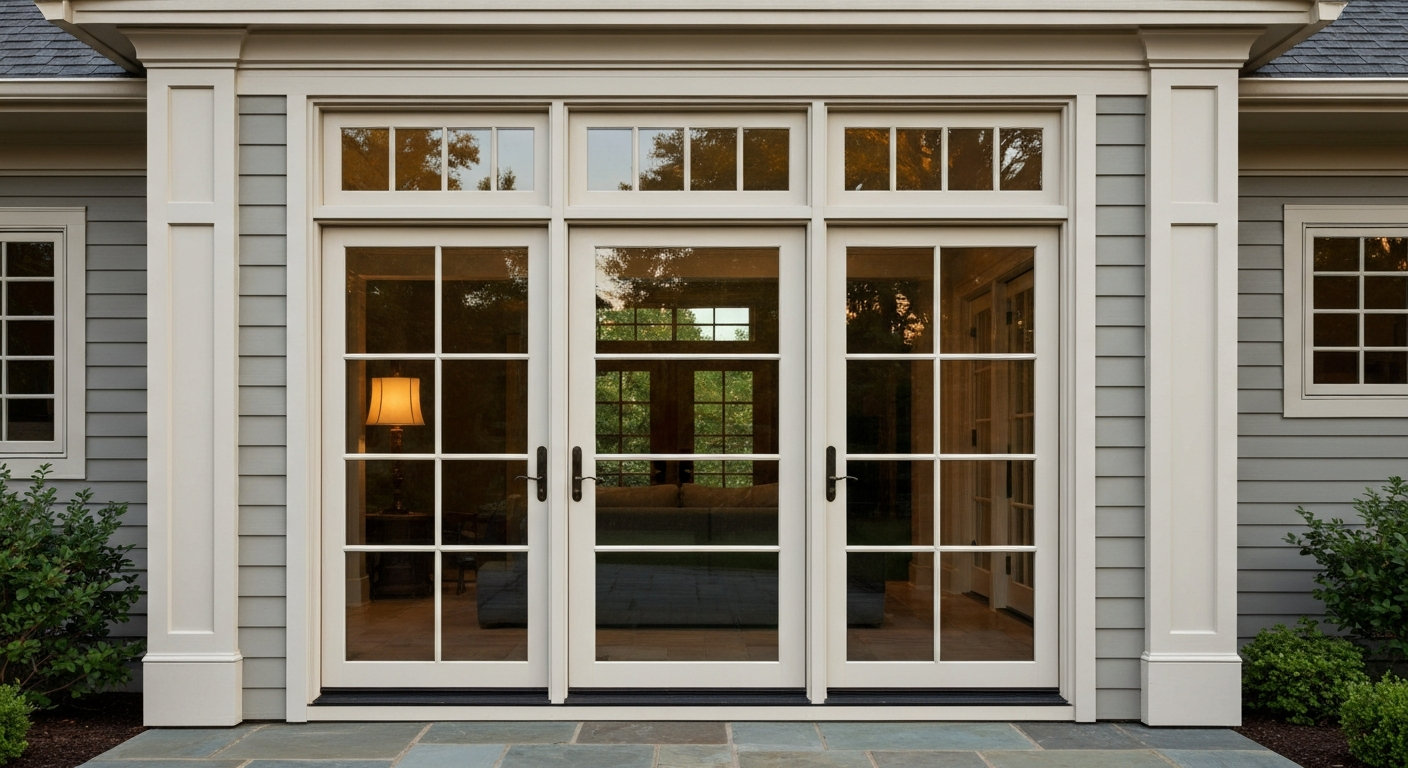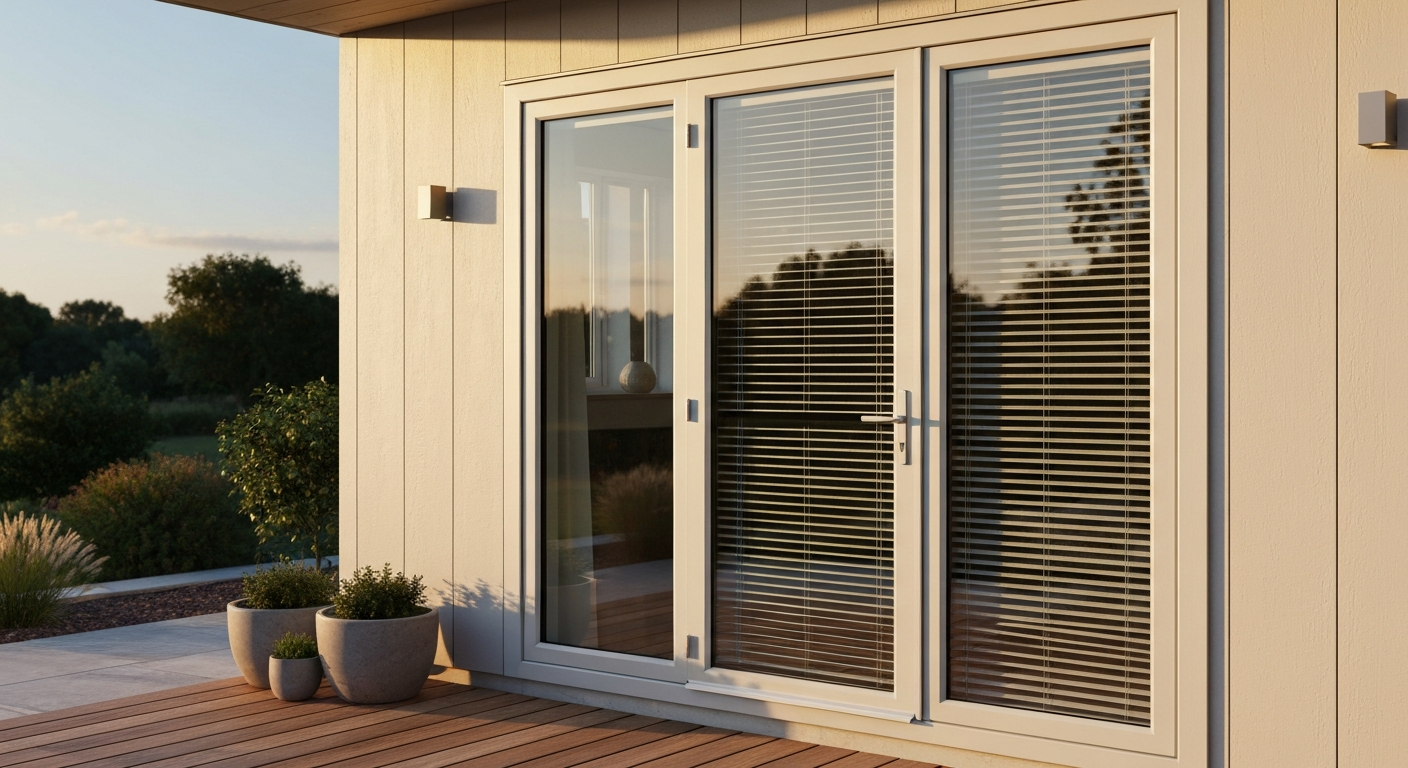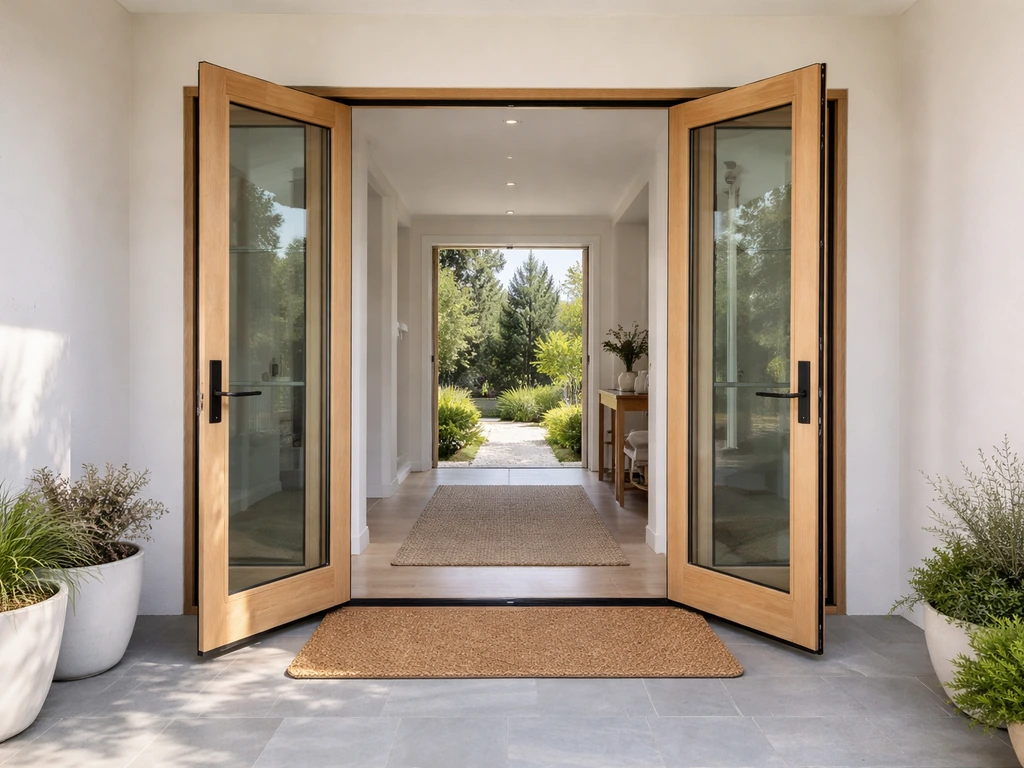
The best patio door for most homes in 2026 is a vinyl sliding door or a fiberglass French door, depending on how much space you have and how often you'll use it. Vinyl sliding doors are the go-to for value, low maintenance, and energy efficiency in tight spaces. If you’re comparing options, using this guide to find the best patio doors UK will help you choose the right type for your home energy efficiency.
Best Patio Doors: Compare Types, Materials, Cost, and Fit

Owen Delaney
29 Apr 2026
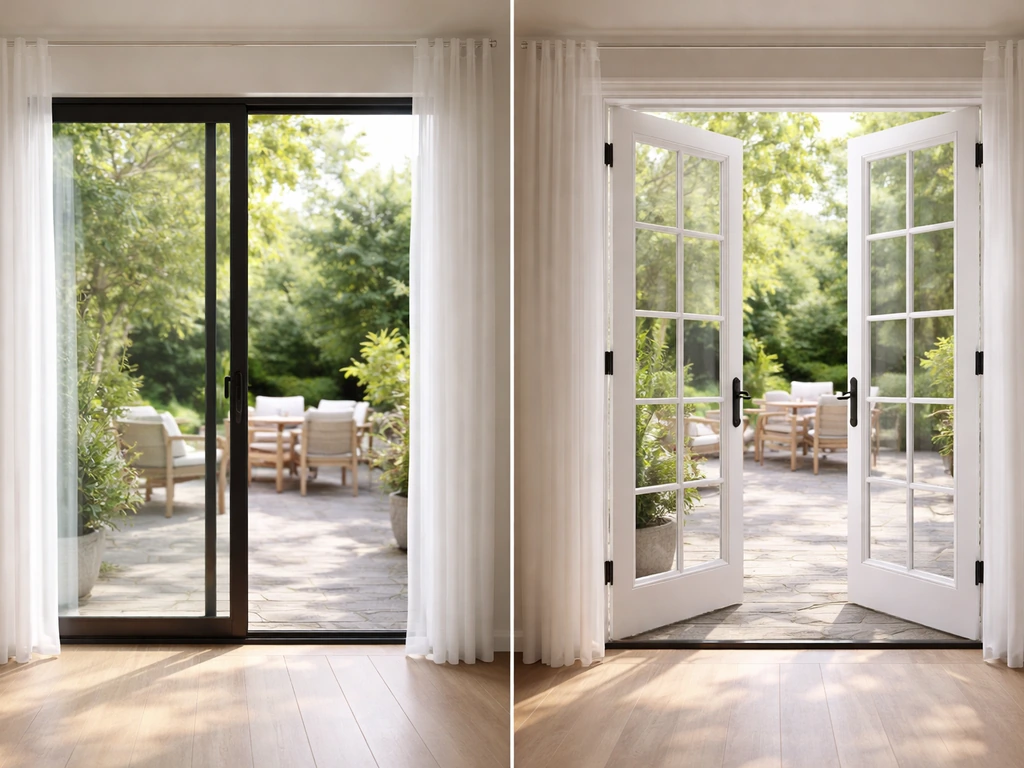
Fiberglass French doors are worth the extra cost if you want a traditional look, better long-term durability, and a door that can be painted or stained. That said, the right answer really does depend on your situation, so this guide walks through every factor: door type, material, sizing, security, cost, and accessories. If you're comparing options, you'll also want to look at material, energy performance ratings, security features, and proper sizing.
How to Choose the Best Patio Door for Your Home
Before you compare brands or browse showrooms, get clear on your priorities. Five questions will narrow your options faster than any spec sheet.
- Space: Do you have room for a door that swings open? If not, a sliding or bifold door is the better fit.
- Traffic: Is this a high-use door for daily in-and-out, or mainly a view door you open occasionally? Sliding doors handle heavy traffic well; French doors feel more intentional.
- Energy efficiency: Are you in a cold climate where U-factor matters most, or a hot climate where solar heat gain (SHGC) is the bigger concern?
- Security: Ground-floor patio doors are a common entry point for break-ins. Multi-point locks and reinforced frames are worth prioritizing.
- Maintenance tolerance: Wood looks great but needs repainting every few years. Vinyl and fiberglass are largely maintenance-free.
Once you've answered those, you're already 80% of the way to the right door. The rest is matching specs to budget.
Patio Door Types: Sliding, French, Bifold, and Hinged Compared
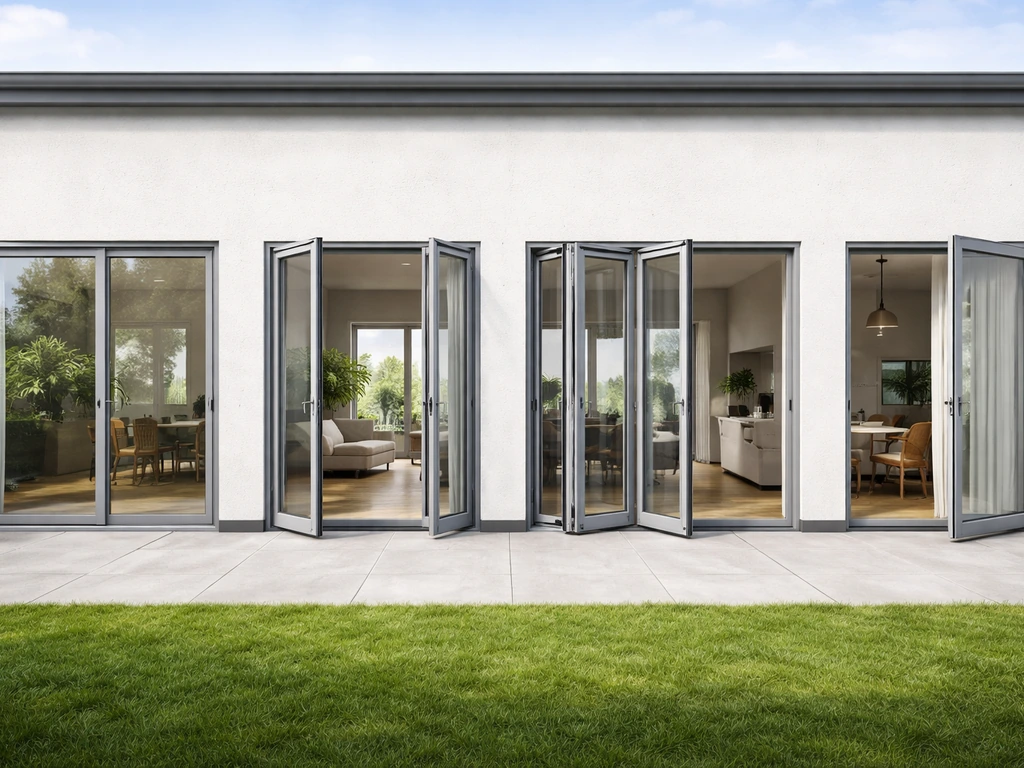
Each door style has a sweet spot. Here's where each one wins and where it falls short.
| Door Type | Best For | Opening Width | Space Required | Typical Cost (Door Only) | Main Drawback |
|---|---|---|---|---|---|
| Sliding | High traffic, limited space, wide openings | 60" to 144" | No swing clearance needed | $400–$2,500 | Track maintenance; only half the opening is accessible at once |
| French (Hinged) | Aesthetics, airflow, traditional homes | 48" to 72" | Needs 36"+ swing clearance per panel | $800–$4,000 | Takes up floor space when open |
| Bifold | Maximum opening, indoor-outdoor living | 72" to 240"+ (multi-panel) | Panels fold to one side, minimal stacked depth | $2,500–$10,000+ | Higher cost, more seals to maintain |
| Single Hinged (Swinging) | Small openings, secondary access | 28" to 36" | Full door swing required | $300–$1,500 | Limited to narrow openings |
Sliding Patio Doors
Sliding doors are the most popular choice in North America for good reason. If you still want to compare styles beyond sliding, the guide on what are the best patio doors can help you pick the best match for your home and priorities. They don't eat into your living room or patio space when open, they're easy for kids and older adults to operate, and they come in the widest range of sizes and price points. The trade-off is that the sliding panel only opens half the door width, and the track at the bottom can collect dirt or go out of alignment over time. A quality roller system and a steel-reinforced track solve most of those problems.
French Patio Doors
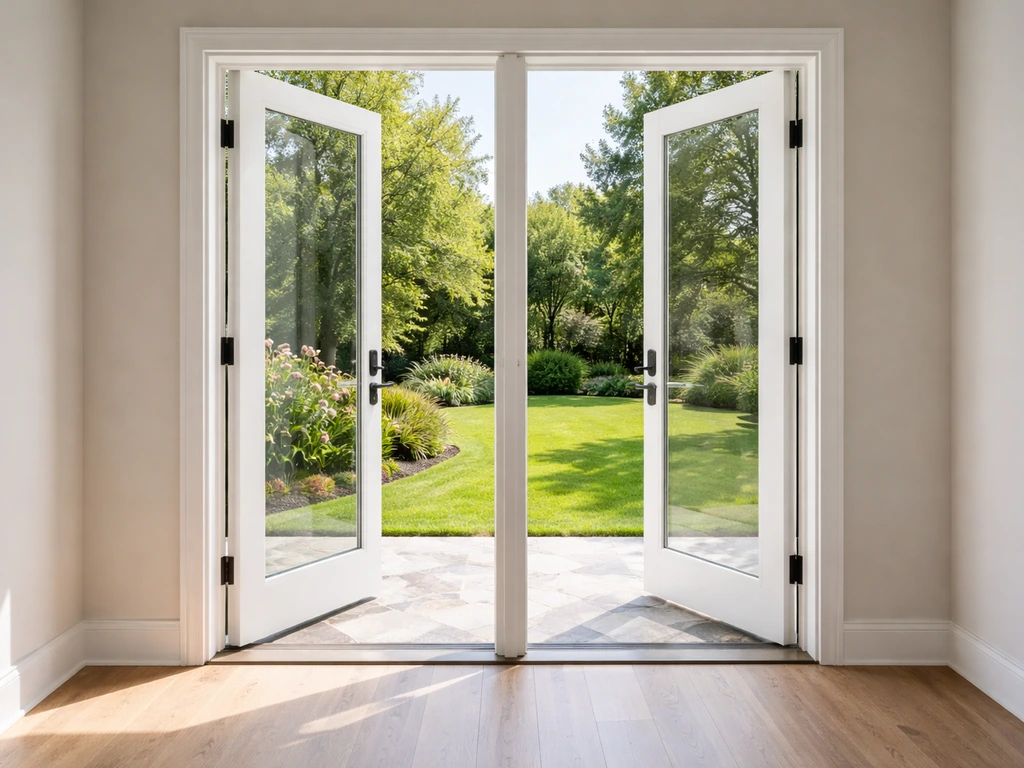
French doors are the go-to when aesthetics matter and you have the floor space for a full swing. They open the entire doorway for maximum airflow, which is a real advantage in summer. The downside is clearance: each panel needs room to swing, so you need at least 36 inches of clear floor space on the interior (or exterior for outswing models). Outswing French doors are slightly more weather-resistant and don't take up interior space, but they're more exposed to wind. If you're comparing styles and materials, fiberglass French doors give you the classic wood look without the maintenance headaches.
Bifold Patio Doors
Bifold doors (sometimes called accordion or folding doors) are the premium option for connecting indoor and outdoor spaces. When fully open, they essentially remove an entire wall. They look stunning and add serious resale value, but they cost significantly more and have more seals, hinges, and hardware points to maintain. They're also more sensitive to installation quality: a slightly out-of-level threshold will cause panels to bind. If your budget is above $5,000 for the door alone and you want a dramatic indoor-outdoor experience, bifolds are worth it. Otherwise, a wide sliding door gives you most of the benefit at a fraction of the price.
Materials and Real-World Performance
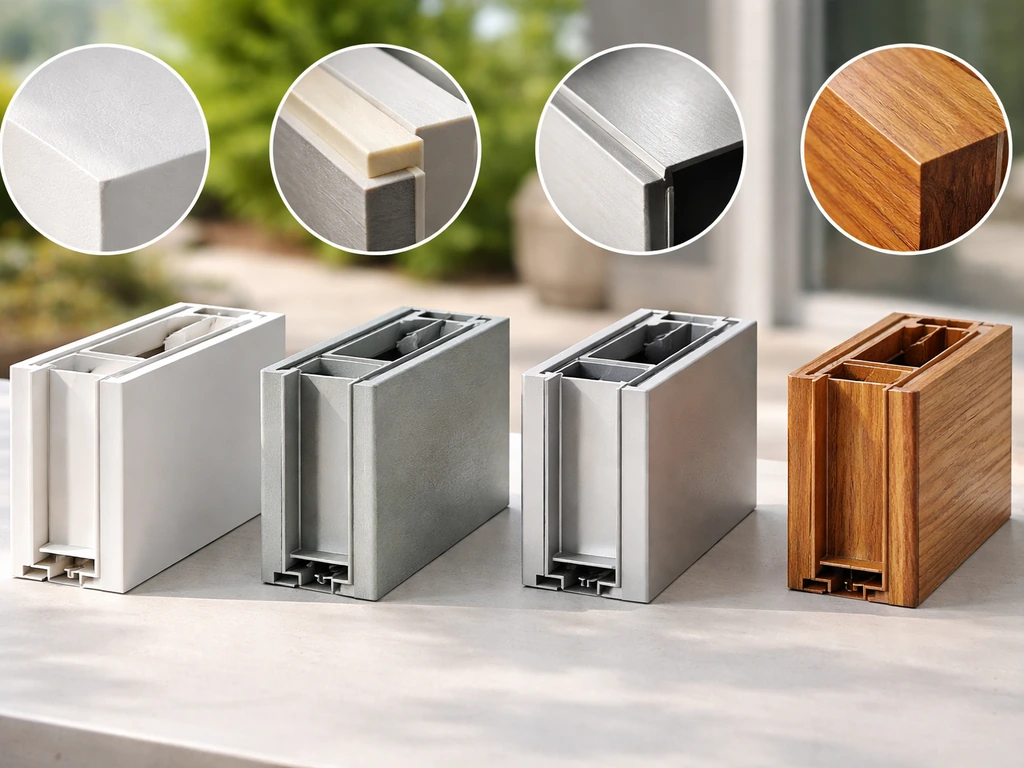
The frame material affects energy performance, maintenance, lifespan, and cost more than most people realize. Here's how the four main options stack up in the real world. Patio doors are commonly made with frames and panels from materials like vinyl, fiberglass, aluminum, and wood, with glass making up the glazing what are patio doors made of.
| Material | Energy Performance | Maintenance | Lifespan | Cost Range (Door) | Best Climate Fit |
|---|---|---|---|---|---|
| Vinyl (uPVC) | Excellent (low U-factor, good insulation) | Very low – no painting needed | 20–40 years | $400–$2,000 | All climates; especially cold |
| Fiberglass | Excellent (matches or beats vinyl) | Very low – paintable/stainable | 30–50+ years | $1,200–$5,000 | All climates; humid or extreme temps |
| Aluminum | Poor unless thermally broken | Very low – corrosion resistant | 30–40 years | $800–$3,500 | Mild/coastal climates; not ideal for cold |
| Wood | Good (natural insulator) | High – paint/stain every 3–5 years | 20–30 years (with upkeep) | $1,000–$5,000+ | Dry climates; poor for high humidity |
Vinyl is the best value for most homeowners. It's the most widely installed material in North America, comes in a huge range of styles, and delivers strong energy performance without any upkeep. The knock on vinyl is that it can't be painted (the color is baked in) and cheaper versions can warp in extreme heat. If you still want the best overall performance and finish options, the other top materials like fiberglass are worth comparing under best patio door material. Stick to multi-chamber vinyl profiles from reputable brands and this isn't a real concern.
Fiberglass is the material I'd choose if I were spending my own money on a forever home. It's dimensionally stable (meaning it doesn't expand and contract much with temperature), holds paint and stain beautifully, and the best fiberglass doors mimic wood grain convincingly. The higher upfront cost is the only real barrier.
Aluminum is worth considering for modern-style homes or coastal environments where corrosion resistance matters, but only in thermally broken versions. A thermally broken aluminum frame has a plastic barrier separating the interior and exterior aluminum sections, which dramatically reduces heat transfer. Without it, aluminum frames are energy nightmares in cold climates.
Wood is genuinely beautiful but genuinely high-maintenance. In humid climates especially, wood frames swell, warp, and rot faster than any other material. If you love wood aesthetics, a fiberglass door with a wood-grain finish gives you 90% of the look with a fraction of the upkeep.
Sizing and Fit: Get This Right Before You Order
Sizing errors are the single most common (and expensive) mistake in patio door replacement. The door unit itself has a nominal size, but what matters for ordering is the rough opening in your wall.
Standard Patio Door Sizes
Standard sliding and French patio door widths run 60 inches (5 feet), 72 inches (6 feet), and 96 inches (8 feet). Heights are typically 80 inches (6 feet 8 inches) as standard, with 96-inch (8-foot) options common on newer construction. Bifold systems are custom-sized and can span 12 to 20 feet or more.
Measuring the Rough Opening
The rough opening is the framed hole in your wall, and it needs to be slightly larger than the door unit to allow for shimming and leveling. The standard allowance is 0.5 inches on each side and at the top, so a 72-inch door needs a rough opening of approximately 73 inches wide and 81.5 inches tall (for an 80-inch door). Measure the rough opening in three places: top, middle, and bottom for width, and left, center, and right for height. Use the smallest measurement to determine what door unit will fit.
- Measure rough opening width at top, middle, and bottom. Use the smallest number.
- Measure rough opening height on the left, center, and right. Use the smallest number.
- Subtract 0.5" from each dimension to get your maximum door unit size.
- Check floor level with a 4-foot level. An unlevel sill causes sliding doors to drift and bifolds to bind.
- Confirm header height if you're in a cold climate: frost heave can shift rough openings over time.
If you're replacing an existing patio door, you can often order the same nominal size and it will drop in without structural changes. But always verify: previous owners may have done non-standard work, and settling can change actual dimensions even if the original door was standard.
Security, Weatherproofing, and Insulation: What Actually Matters
A patio door is only as good as its weakest point, and that's usually the lock, the weatherstripping, or the glass. If you're specifically comparing models, the best patio glass doors will balance insulation, security glass options, and smooth operation for your space and climate. To get better performance and safety, look for patio door glass that is tempered the glass. Here's what to look for in the specs.
Energy Performance Ratings
Look for NFRC-certified ratings on any door you're considering. The NFRC label reports U-factor (lower is better for insulation, aim for 0. 30 or below), SHGC (solar heat gain coefficient, lower blocks more sun heat, higher lets in more warmth), visible transmittance (VT), and optionally air leakage (AL) and condensation resistance (CR). ENERGY STAR-certified doors are independently tested to meet U-factor and SHGC thresholds that vary by climate zone, plus an air leakage requirement of 0.
ENERGY STAR Version 7. 0 sets an air leakage threshold for residential windows, doors, and skylights of 0. 3 cfm/ft² or less [air leakage requirement of 0. ](https://www.
energystar. gov/sites/default/files/asset/document/ENERGY%20STAR%20Version%207. 0%20Residential%20Windows%2C%20Doors%2C%20and%20Skylights%20Final%20Draft%20Specification. pdf).
3 cfm per square foot or less. Buying ENERGY STAR-certified is the fastest way to confirm a door meets real performance standards without having to decode specs yourself. [Performance grades under the NAFS standard (AAMA/WDMA/CSA 101/I. ](https://webstore.
ansi. org/standards/csa/aamawdmacsa101a4402017)S. 2/A440) are also worth checking for structural and water resistance, especially if you're in a high-wind or heavy-rain area.
Security Features to Prioritize
- Multi-point locking system: engages at multiple points along the door frame, not just at the handle. This is the single biggest upgrade over a standard single-point lock.
- Reinforced or anti-lift hardware: sliding door panels can be lifted out of their tracks from the outside without a proper anti-lift device. Look for a built-in anti-lift pin or add one.
- Tempered or laminated safety glass: tempered glass breaks into small, dull fragments; laminated glass holds together when shattered. Both are significantly harder to breach than standard glass.
- Steel-reinforced frames: some fiberglass and vinyl doors include a steel reinforcement in the frame for additional kick-in resistance.
- Secondary bar or track lock: a simple cut-down wooden or metal bar in the track of a sliding door adds a physical barrier that costs almost nothing.
Weatherstripping and Sealing
Quality weatherstripping is critical. Look for compression seals (not just brush seals) on sliding doors, and check that French door astragal seals (the center post seal) are adjustable. Thermally broken thresholds matter too: a metal threshold that bridges interior and exterior is a cold bridge that undermines your door's overall energy performance. The best thresholds are thermally broken or have a foam fill.
Price and Value: What the Best Patio Door Actually Costs
Here's the honest range for doors plus professional installation in 2026. These numbers cover the most common configurations (6-foot sliding or French door, standard height, single opening).
| Door Type & Material | Door Unit Cost | Professional Installation | Total Installed Range |
|---|---|---|---|
| Vinyl sliding (standard) | $400–$1,200 | $300–$600 | $700–$1,800 |
| Vinyl sliding (premium) | $1,200–$2,500 | $400–$800 | $1,600–$3,300 |
| Fiberglass French | $1,500–$4,000 | $500–$1,000 | $2,000–$5,000 |
| Aluminum sliding (thermally broken) | $1,000–$3,500 | $400–$900 | $1,400–$4,400 |
| Wood French | $1,200–$5,000+ | $500–$1,200 | $1,700–$6,200+ |
| Bifold (multi-panel, any material) | $2,500–$12,000+ | $800–$3,000+ | $3,300–$15,000+ |
Installation costs vary widely based on whether the rough opening needs modification, whether the installer must dispose of an old door, and local labor rates. In high cost-of-living metro areas, installation alone can run $800 to $1,200 for a straightforward replacement. Always get at least two quotes and ask specifically whether the quote includes removal and disposal, shimming, flashing, interior and exterior trim, and any drywall or stucco patching.
When comparing brands, ignore marketing terms like 'premium' or 'designer' and focus on three things: NFRC ratings, warranty terms (look for a lifetime frame warranty and at least 10 years on the glass unit), and the installer's own experience with that brand. A mid-tier door installed properly will outperform a premium door installed badly every single time.
Accessories and Upgrades Worth Considering
A patio door doesn't live in isolation. The right accessories make it more functional, more private, and more secure.
Screens
If you open your patio door for ventilation, a screen is essential. Standard sliding doors usually come with a sliding screen panel. For French and hinged doors, a retractable screen (single or double panel) is the cleanest option: it disappears into a cassette when not in use and doesn't block the view or the aesthetic. Magnetic screen doors are a budget option but tend to misalign over time. For bifold doors, a retractable pleated screen system that spans the full opening is the most seamless solution, though it adds $500 to $2,000 to the project.
Blinds, Shades, and Curtains
Built-in between-the-glass blinds (available from several manufacturers) are worth the $200 to $500 upgrade if privacy and a clean look matter to you. They can't be damaged by kids or pets, never need dusting, and don't block the door from operating. Exterior solar shades or roller blinds mounted above the door are another option that dramatically reduces solar heat gain in west- or south-facing doors. Standard curtain panels work fine for French doors but are impractical on sliding doors unless you use a bypass rod system.
Locks and Security Hardware Upgrades
If your new door doesn't come with a multi-point lock as standard, budget $150 to $400 to add one. A double-cylinder deadbolt (key required on both sides) adds security but can be a safety hazard in emergencies; a thumb-turn deadbolt is a better balance. For sliding doors, a secondary security bar in the track costs under $30 and is worth adding regardless of what lock came with the door. Smart locks compatible with patio door hardware are increasingly available and cost $150 to $350.
Hardware Finishes and Handles
Brushed nickel and matte black are the most popular finishes right now and coordinate easily with most interior hardware. Polished chrome shows fingerprints and is harder to match to newer fixtures. Match your patio door hardware finish to your interior door hardware for a cohesive look. Lever handles are easier for older adults or anyone with reduced grip strength.
Shortlist and Decision Checklist
Here's how to narrow from 'every option' to 'the right door for me' in about 20 minutes.
- Measure your rough opening (width and height in three places each). Write down the smallest numbers.
- Decide on door type based on space: sliding if you can't swing a door, French if you want aesthetics and have clearance, bifold if budget is $5,000+ and you want maximum opening.
- Pick a material: vinyl for best value, fiberglass for premium durability and aesthetics, aluminum only if you need corrosion resistance and will specify thermally broken.
- Check NFRC ratings: U-factor at or below 0.30 for cold climates, SHGC at or below 0.25 for hot climates, air leakage at or below 0.3 cfm/ft². Look for ENERGY STAR certification to confirm.
- Confirm security features: multi-point lock standard or available, anti-lift hardware on sliding panels, tempered or laminated glass.
- Get at least two installation quotes. Confirm each quote includes removal, disposal, shimming, flashing, and trim.
- Check warranty: lifetime frame, 10+ years on the insulated glass unit (IGU), and transferable if you might sell the home.
- Decide on must-have accessories upfront (screen type, between-glass blinds) so they can be ordered with the door rather than retrofitted later.
For most homeowners doing a straightforward replacement on a standard 6-foot opening: a vinyl sliding door in the $1,000 to $1,500 range with ENERGY STAR certification, a multi-point lock, and a retractable screen will deliver excellent performance and low maintenance for 25 to 30 years. If you're building new, doing a renovation, or have the budget and want something that really elevates the space, a fiberglass French or sliding door from a mid-to-premium brand is worth every dollar. Whatever you choose, nail the installation: a perfectly spec'd door installed poorly is just an expensive headache. If you want the best patio doors in Canada, prioritize the same factors outlined here and match the right style and material to your climate and budget.
FAQ
Can I order the same nominal patio door size if I am replacing an existing door?
Not necessarily. Most replacements fit a similar nominal width, but you should confirm the rough opening is correct and that the track or hinge side has enough clearance. If the previous door was shimmed differently, settled, or the framing is off square, you may need a different door size or installation plan.
If two patio doors have the same U-factor, what should I check next for comfort?
Air leakage testing is most helpful for places with strong drafts or high heating and cooling costs. If two doors have similar U-factor and SHGC, the one with lower air leakage can feel noticeably tighter, especially near the lock area and threshold.
How do I make sure the energy rating applies to the exact patio door I’m buying?
Use the door’s test report, not just the label. Even when a door is claimed to be “energy efficient,” performance can vary by glass package and frame options. Look for NFRC ratings that match the exact configuration you plan to buy, including the glass option and whether it is tempered.
Why do patio doors sometimes look installed correctly but still drag or stick?
Plan on more than a single measurement for installers, because sliding and hinged units require level and square mounting to operate smoothly. If you are dealing with an uneven floor, consider adding a thermally broken threshold and shims, and verify the sill height before ordering the finished door.
What should I ask about when troubleshooting a sliding patio door that won’t seal properly?
For sliding doors, the biggest practical issues are rollers, track alignment, and the condition of the sill. Ask the installer what roller system comes with your door, whether the track is steel-reinforced, and how they will shim and flash the sill area to prevent water intrusion.
Which parts of the door matter most for winter performance and drafts?
For climates that freeze, prioritize a weather system that includes a thermally broken threshold (or insulated/foam-filled threshold components), good compression seals, and adjustable astragal seals for French doors. A good lock is not enough if the bottom and meeting rails leak air or moisture.
Does tempered glass automatically mean my patio door is energy efficient and secure?
Most “tempered glass” is a safety requirement, but it does not automatically guarantee the best insulation or security. For cold climates, you want low-E coatings and a strong airspace design in the sealed unit, and for security you should confirm the glass type and thickness options offered by the manufacturer.
Will a better lock fix leaks around the meeting rails?
A multi-point lock is typically paired with correctly aligned meeting rails and properly installed strike points. If the door frame is not plumb or the door panel is slightly out of square, the multipoint lock can feel stiff or still leave gaps, so installation quality matters as much as hardware.
Which type of patio door screen is least likely to become annoying over time?
Screen choice depends on how often you use the door and how much airflow you need. For French doors, retractable cassette screens are cleaner and less obtrusive than magnets, while bypass track magnetic screens can shift with routine use, especially with larger door panels.
Are between-the-glass blinds worth it, and what are the trade-offs?
Between-the-glass blinds reduce UV and add privacy without interfering with operation, but they require the correct sealed-unit build. Confirm whether the blinds are manual or motorized and whether the unit is still serviceable, since repairs can be more expensive than standard interior curtains.
What should my contractor’s quote include to avoid hidden costs?
Yes, and it is easy to miss. Installation should include removal and disposal, shimming/leveling, flashing that directs water outward, and proper interior and exterior trim sealing. If rough opening modification is needed, confirm who patches drywall or stucco and whether color-matching is included.
What warranty details should I confirm before signing?
If the door is installed outside the warranty conditions, you may have trouble with future claims. Ask for written warranty terms on the frame, glass unit, and hardware, and clarify what happens if the installer is not the original installer of record.
What extras people forget to budget for when buying the best patio doors?
Budget for operation too. If you plan to replace screens, add blinds, or upgrade locks, those costs can add up quickly. Also factor in whether the door will require a different threshold height for clearance, since that can affect exterior steps or interior flooring.
What is the simplest decision framework for choosing between sliding, French, and bifold patio doors?
A fast rule of thumb is to pick the door style based on floor space and the track or swing limitations, then pick material based on your climate and maintenance tolerance. If you want the widest balance for most homes, vinyl sliding commonly hits that sweet spot, while fiberglass is often the safer choice for paint/stain aesthetics and longer-term durability.