Vertical blinds are the best all-around window treatment for sliding patio doors. They move the same direction as the door, stack neatly out of the way when you need access, and come in every budget range from $50 DIY kits to custom fabric panels. That said, the right pick for your door depends on whether you care more about privacy, insulation, light filtering, or just not spending an afternoon wrestling with installation brackets.
Best Window Treatments for Patio Doors: Blinds to Choose
Owen Delaney
1 May 2026
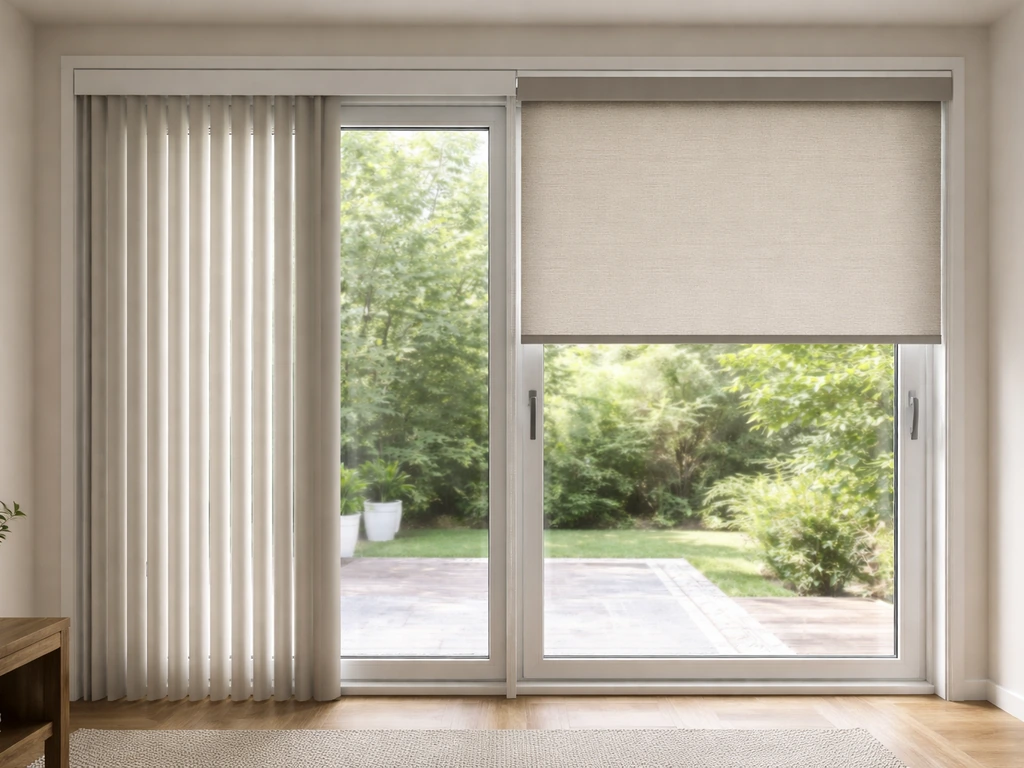
If you mainly want a simple way to cover my patio doors for privacy and light control, compare vertical blinds, roller shades, and panel tracks next. This guide walks through all of it: which treatments work best for which door styles, how to measure so you don't order the wrong size, what installation actually involves, and how to layer treatments for a complete setup.
Best options by patio door style
Sliding patio doors
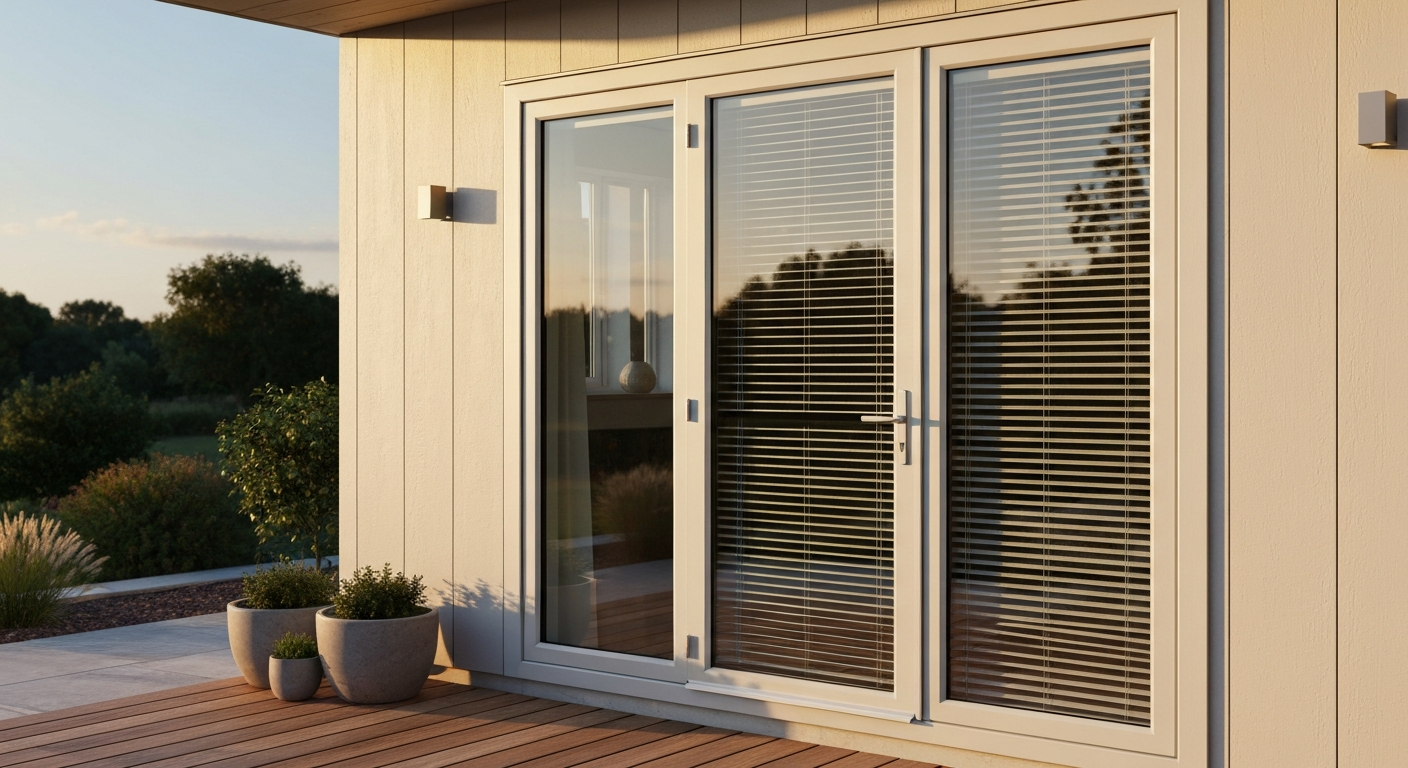
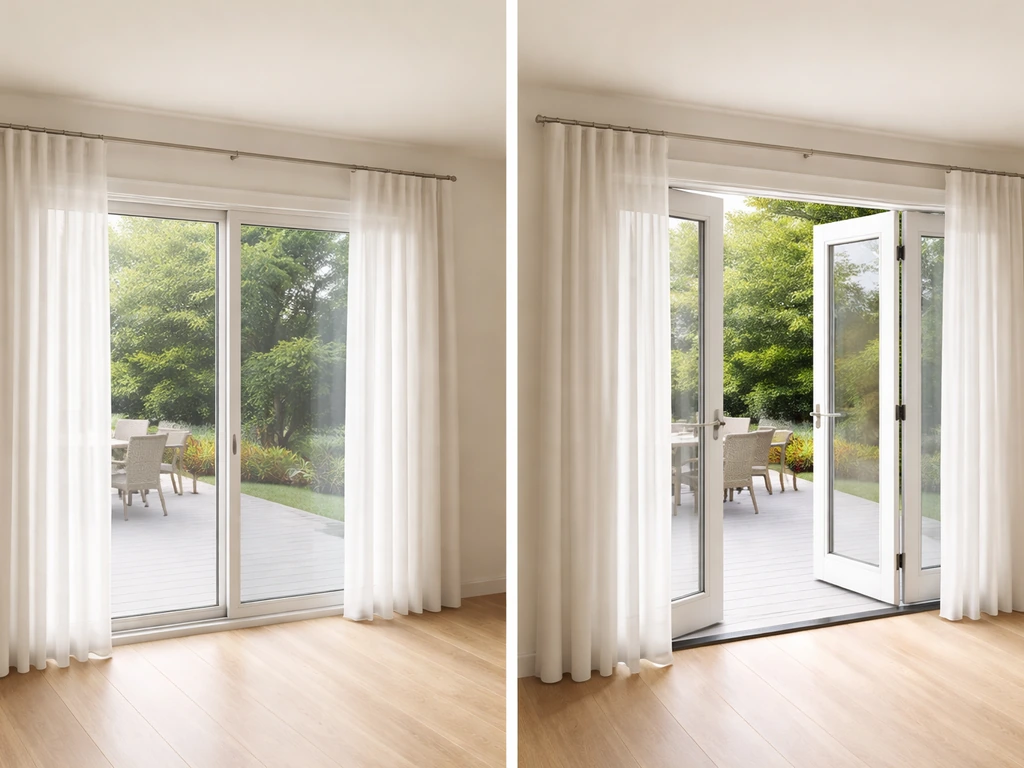
Sliding glass doors present a specific challenge: the treatment has to move horizontally without catching on the door's track or handle, and it has to stack compactly so it doesn't block the opening when the door is in use. Vertical blinds solve both problems naturally. The vanes hang from a headrail and traverse left or right, so they clear the opening completely when you pull the door open.
Panel track blinds (also called sliding panels) work the same way and look more contemporary if you want a cleaner, fabric-forward look. Roller shades on a wide outside-mount bracket are another strong choice, especially if you want a sleeker profile, though they're less convenient because you have to raise the whole shade to open the door rather than just sliding it aside.
French patio doors and bifold patio doors
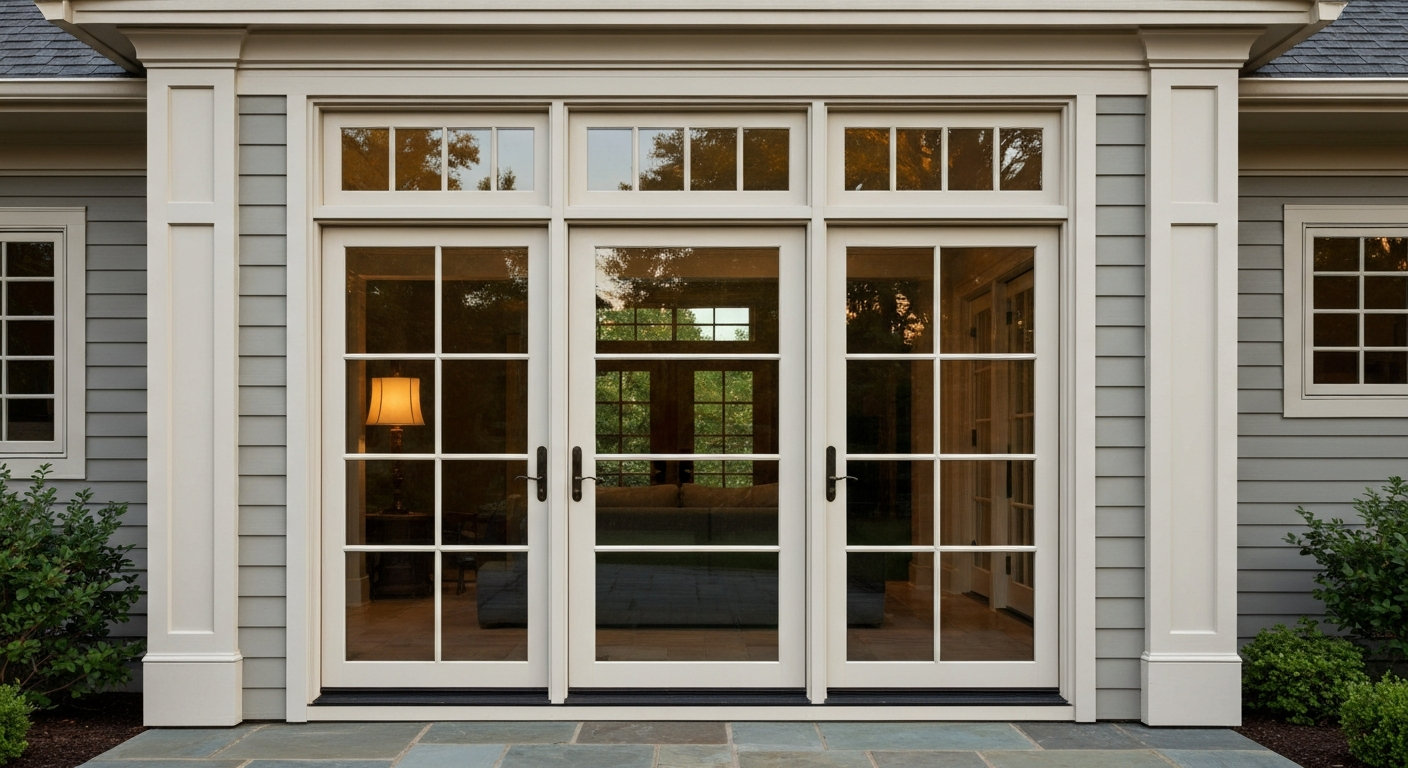
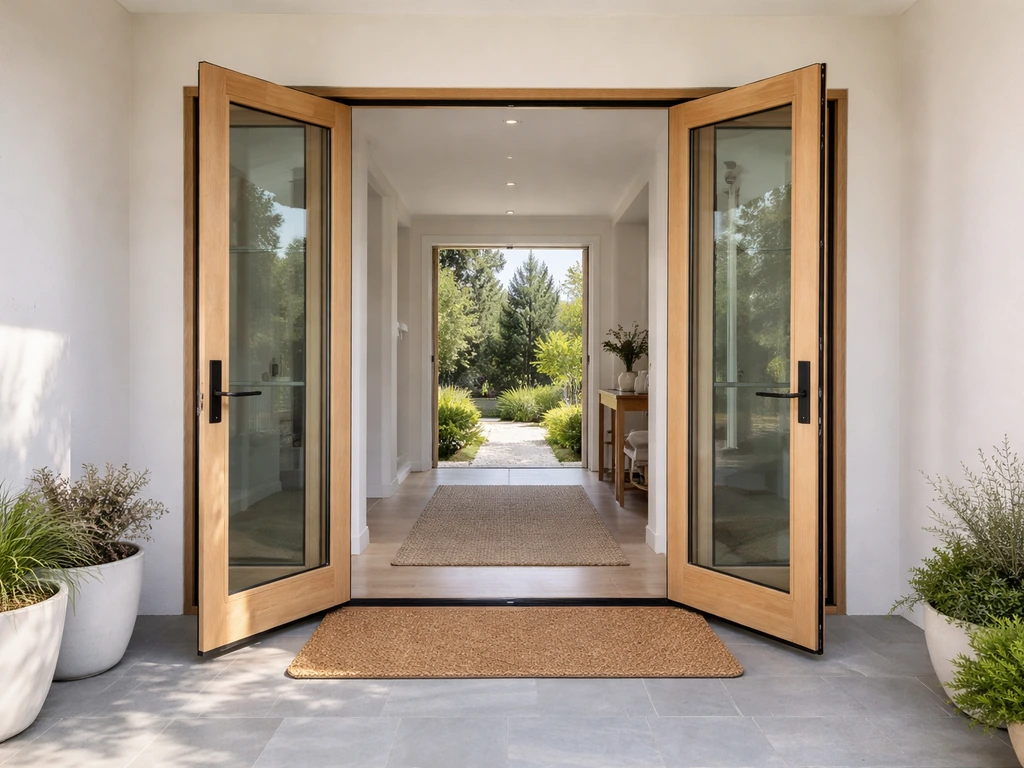
French patio doors swing open, so vertical blinds are actually a poor match here. Curtains, side panels, or individual shades mounted directly to each door panel work much better. If you go with shades mounted on the door itself, make sure the hardware is rated for door-mounted use so it doesn't rattle or shift when the door swings. Bifold patio doors fold accordion-style, which means almost any treatment mounted above and outside the door frame works fine, since you're not sliding anything across the opening. Wide roller shades, drapery panels on ceiling-mounted tracks, or plantation shutters installed in each individual panel section are all popular choices here.
Blinds picks: vertical blinds, roller shades, and panel tracks
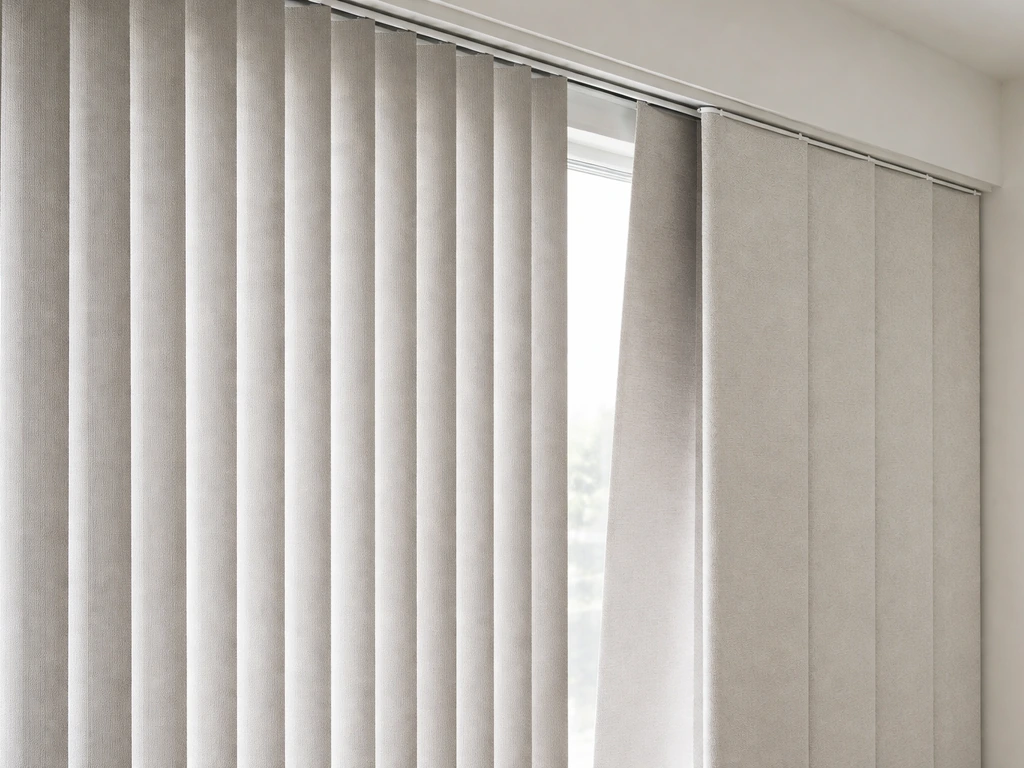
Vertical blinds remain the most popular blind-style treatment for sliding doors for good reason. The vanes (typically 3. 5 or 5 inches wide) rotate to adjust light and privacy, then stack to one side or split to both sides when you open the door. Fabric vanes look softer and more finished than vinyl; vinyl is more moisture-resistant and easier to wipe down, which matters if your door faces a pool or gets heavy condensation.
PVC vanes sit in the middle in terms of durability and price. If you have kids or pets, go cordless from the start. The CPSC's updated voluntary standard (ANSI/WCMA A100-2018) requires new stock blinds to be cordless or to have inaccessible cords no longer than 8 inches in any position, so most major retailers already default to cordless options.
Panel track blinds are essentially wide fabric panels that slide along a ceiling or wall-mounted track. They give a much cleaner, modern look than traditional vane blinds and are excellent for very wide openings (9 feet or more). The trade-off is that the panels don't tilt like vanes, so your only light control options are fully open or fully closed unless you layer them with a sheer panel.
Roller shades and solar shades work well on sliding doors when mounted outside the frame on a wide headrail. Solar shades are particularly useful if your patio door faces west or south: they block glare and UV rays while still letting you see out. The openness factor (OF) on solar shades ranges from 1% (very private, high blockage) to 14% (very open, minimal blockage). For most living rooms, a 3% to 5% openness gives a good balance of glare control and outward visibility.
Matching your treatment to your actual need
| Priority | Best treatment | What to look for |
|---|---|---|
| Privacy | Vertical blinds (fabric), blackout roller shade, plantation shutters | Closed-vane coverage with no gaps at edges; outside mount overlapping the frame |
| Light control | Solar shade (3–5% OF), light-filtering cellular shade, fabric vertical blinds | Adjustable vanes or layered sheer/blackout combo |
| Insulation / energy savings | Honeycomb (cellular) shades, insulated vertical cellular panels | Double or triple cell construction; look for Energy Star or tax-credit eligible products |
| Airflow when door is open | Panel track blinds, vertical blinds (stacked to one side) | Compact stack-off that clears the full door width when open |
| Aesthetics / style | Drapery panels over vertical blinds, panel track fabric panels, plantation shutters | Coordinate with door hardware finish and interior color palette |
Insulation and energy savings
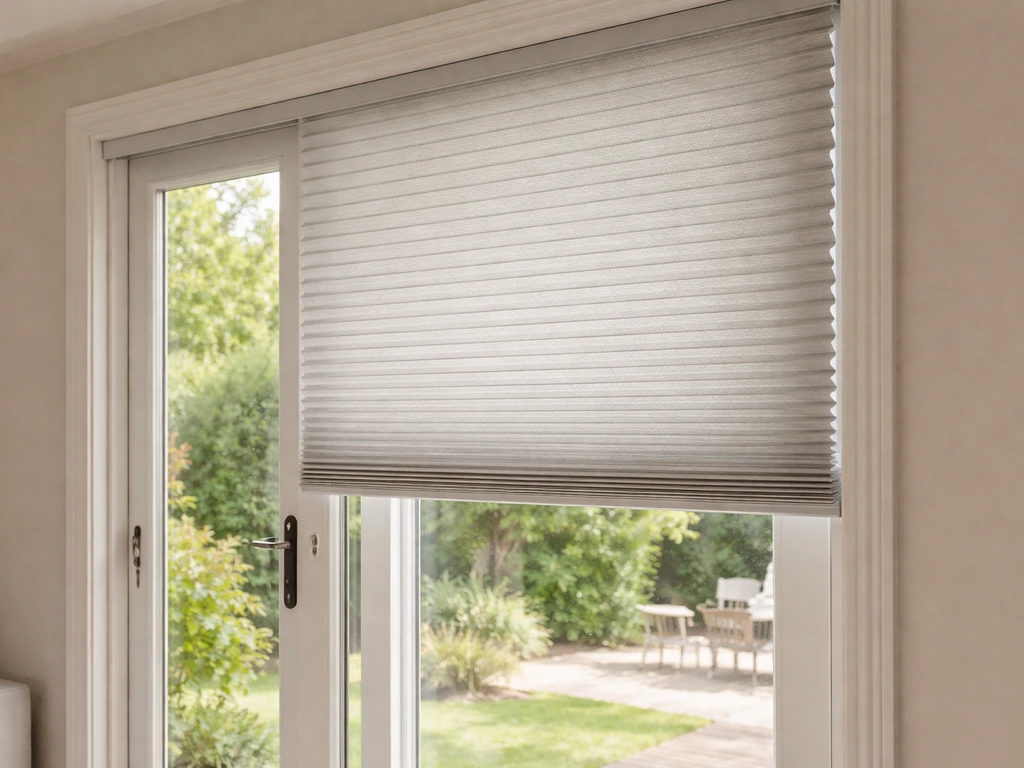
If energy efficiency is the main goal, cellular (honeycomb) shades are the clear winner. The U. S. Department of Energy specifically calls out insulated cellular shades as one of the best choices for energy savings, and the honeycomb structure traps air to raise the effective R-value of your window assembly.
Hunter Douglas Duette shades, for example, advertise a winter R-value of 5. 74 for certain double-cell configurations, and some of their qualifying cellular shades are eligible for a federal tax credit of up to $1,200. The catch with cellular shades on sliding doors is that you have to raise the shade fully to open the door, which makes them less convenient day-to-day than vertical blinds or panel tracks.
Many people solve this by using cellular shades for fixed glass panels and vertical blinds or panel tracks for the operating door section.
Privacy and light filtering
Light-filtering shades reduce incoming light and provide daytime privacy without going fully dark. Blackout options block virtually all light and are better for bedrooms or media rooms where the patio door faces a bright direction. If your patio door opens to a shared fence or neighbor's yard, fabric vertical blinds with a tight vane overlap or an outside-mount roller shade that extends 3 inches past each side of the frame will close the edge gaps that let people see in from an angle.
How to measure your sliding patio door for window treatments
Getting the measurement right before you order is the single biggest thing you can do to avoid a return headache. Whether you're doing an inside mount (treatment fits inside the frame) or an outside mount (treatment hangs on or above the wall above the frame), the rules are slightly different.
Inside mount measurement
- Measure the width of the door opening at the top, middle, and bottom. Use the narrowest measurement and deduct 1/4 to 1/2 inch so the blind or shade fits without rubbing the sides.
- Measure the height on the left, middle, and right of the opening. Use the shortest measurement.
- If the blinds will hang close to the floor, deduct another 1/2 inch from the height so the vanes or bottom rail don't drag on the track or floor, which causes operating problems over time.
- Check your inside-mount depth: most vertical blind headrails need at least 2.5 to 3 inches of depth inside the frame. Measure from the front of the frame to any obstruction (handles, trim, or the door itself when closed).
Outside mount measurement
Outside mounts almost always look better on patio doors because they cover more of the frame and eliminate edge light gaps. For vertical blinds or panel track blinds, Home Depot's measurement guide recommends extending the treatment at least 3 inches past the door frame on each side (6 inches total extra width). For roller or solar shades, the recommendation is to overlap the opening by at least 2.25 inches on each side (4.5 inches total). For height, measure from your chosen mounting point (top of trim, above trim, or ceiling) down to the floor, then deduct 0.5 inches so the bottom clears when the door operates.
One more thing to check before you finalize measurements: make sure the headrail placement won't block the door handle or interfere with the sliding track. Hold a tape measure or a piece of trim at the proposed headrail height and physically slide the door open and closed to confirm clearance. It sounds obvious, but it's easy to overlook when you're ordering online.
Installation and operating tips
Inside vs. outside mount
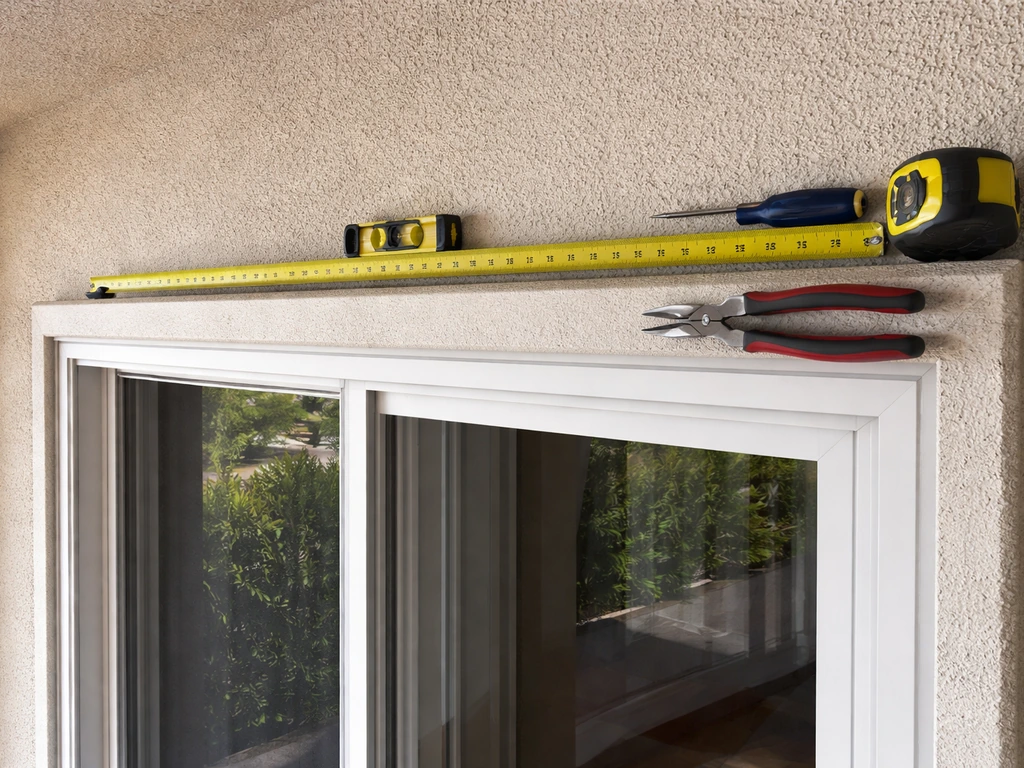
Inside mount gives a clean, built-in look and is fine if your frame has enough depth and no obstruction from the door's handle or pull bar. Outside mount is almost always the safer choice for sliding patio doors because it gives you more control over coverage, avoids conflict with the door hardware, and makes the opening look taller and wider. When you're doing an outside mount for vertical blinds, Lowe's recommends sliding the mounting brackets to each end of the headrail first, then centering the headrail in the intended position before marking your bracket holes. This small step prevents the common mistake of marking holes from the center outward and ending up with uneven coverage.
Bracket placement and headrail installation
For most vertical blind kits, you'll mount the headrail brackets into the wall or the top of the door frame, then snap or clip the headrail into place. The key thing Hunter Douglas emphasizes in their installation materials is that if the brackets are mounted correctly (level and at the right depth), everything else snaps into place easily. If the brackets are even slightly off-level or installed at the wrong depth, the headrail will twist and the vanes won't hang straight. Spend the extra five minutes with a level on the brackets before you drill.
Safety: cords and children
If there are children or pets in the house, choose cordless blinds or motorized options without exception. The CPSC is very direct about this: corded window coverings are a strangulation hazard, and the agency recommends replacing corded blinds with cordless alternatives in any home where children live or visit. Most retailers now default to cordless for vertical blinds and shades, but double-check before finalizing your order, especially if you're buying from a discount supplier.
Maintenance
Vinyl and PVC vertical blinds are the easiest to maintain: wipe them down with a damp cloth or mild soap solution. Fabric vanes can usually be spot-cleaned, but check the manufacturer's care label first. Most fabric panel track panels are not machine washable. Solar shades and roller shades benefit from occasional dusting with a soft brush attachment on a vacuum. If your door faces a high-humidity area like a pool deck, vinyl or moisture-resistant PVC is a better long-term choice than fabric, which can develop mildew at the bottom edge.
What it costs: DIY vs. professional, budget vs. premium
There's a wide range here, and it's worth being realistic about what you're spending before you pick a treatment style.
| Treatment type | DIY material cost (approx.) | Professional install range | Notes |
|---|---|---|---|
| Basic vinyl vertical blinds | $30–$80 for standard 6-ft door | $135–$400 installed | Easiest DIY install; most big-box kits include hardware |
| Fabric vertical blinds | $80–$200+ | $200–$650 installed | Custom widths and fabrics add cost quickly |
| Panel track blinds | $100–$300+ | $200–$500+ | Higher material cost; very clean look |
| Roller / solar shades | $50–$250 per shade | $150–$400 installed | May need two shades for very wide doors |
| Cellular / honeycomb shades | $100–$400+ per shade | $200–$500 installed | Best insulation; some qualify for federal tax credit |
| Plantation shutters | $300–$800+ per section | $500–$1,500+ installed | Premium look; very durable; high upfront cost |
According to Angi's 2026 data, professional vertical blind installation for a sliding glass door typically runs $200 to $400 depending on size and material, and the broader range for any patio door blind installation is $135 to $650. If you're comfortable with a drill and a level, vertical blinds and roller shades are very manageable DIY projects. Cellular shades and panel tracks on very wide openings are where I'd consider calling a professional, especially if precise fit matters to you from an energy-efficiency standpoint. Hunter Douglas also recommends using a window covering professional for measurement and installation when you're investing in premium products, specifically to ensure the fit and operation are correct.
Layering, screening, and security: building a complete setup
Pairing blinds with curtains or drapery
One of the most common questions about patio door treatments is whether to use blinds alone or add curtains on top. The answer depends on what you want the space to feel like. Blinds or shades alone are practical and low-maintenance. Adding drapery panels on either side (not covering the door, but flanking it) instantly makes the room feel more finished and adds a soft texture that blinds can't provide.
If you also want the finished look, add curtains or drapery alongside the blinds or shade for softness and style. The most functional approach is to mount vertical blinds or a roller shade on the door itself for day-to-day light and privacy control, then add stationary drapery panels on each side of the door frame for softness and style. This layered look is especially effective on larger patio door openings where bare blinds can look utilitarian.
Screen doors and sliding door screens
If you want airflow without insects, a screen door is the right solution, and it works independently of whatever interior window treatment you choose. Retractable screen doors are popular with sliding patio doors because they disappear when not in use and don't fight with interior blinds or shades. Just make sure the screen and the blind headrail don't conflict: if you're doing an inside-mount vertical blind, the headrail should sit inside the interior frame and leave clearance for the screen track.
Security upgrades that work with window treatments
Sliding glass doors have some well-known security vulnerabilities: they can be lifted off their track, and the basic latch locks are not hard to bypass. Anti-lift devices (a simple bar or pin in the track) and upgraded locking hardware are the first things to add. Security film on the glass makes it much harder to break through. Motion-activated exterior lighting is another practical deterrent. None of these conflict with your interior window treatment choice, but it's worth addressing security at the same time you're upgrading the treatments rather than treating them as separate projects. Blackout or opaque treatments also add a layer of visual security by preventing someone from seeing into the room and assessing what's inside.
Where to start
If you're still deciding: start with your daily habits. Do you open the patio door multiple times a day? Vertical blinds or a panel track will frustrate you less than a roller shade you have to raise every time. Do you face direct afternoon sun?
A solar shade layered under drapery panels is hard to beat for glare control and looks. Is energy efficiency the priority? Cellular shades on fixed glass panels with vertical blinds on the operating section is a smart split. Measure carefully using the outside-mount guidelines above, check handle clearance before you order, and go cordless if there's any chance a child or pet will be near the door.
That combination of practical choices will get you a setup that works well every day, not just on install day.
FAQ
Should I mount the best window treatment for patio doors inside the frame or outside the frame?
For sliding patio doors, most of the time you should choose an outside mount, because it reduces edge gaps and gives you better coverage around handles and the track area. Inside mount can work only if the frame is deep enough and nothing (handle, pull, screen track) interferes when the door opens.
How do I choose between solar shades, roller shades, and regular blinds if my patio door faces harsh sun?
If you use solar shades or roller shades on a sliding door, treat the sun direction like a selection rule: in west or south-facing rooms, prioritize UV and glare reduction even if you still want daytime visibility. A practical way to choose is to start with moderate openness (around 3% to 5%) and layer drapery if you need more privacy at night.
What cordless option is best if I want safety and easy daily use?
Cordless is the safe default for any home with kids or frequent visitors, but also check how the shade operates day to day. For cellular shades, you may need to raise fully each time to open the door, while vertical blinds and panel tracks let you slide aside without a full lift. If convenience is a priority, cordless vertical or panel tracks usually win.
Can I layer blinds or shades with curtains on a patio door without making it inconvenient?
Yes, you can combine treatments, and the easiest high-function layout is usually shades or blinds on the door section for movement plus stationary drapery panels on the sides for softness. Keep the drapery off the door path so it doesn't get tugged or scraped, and use the drapery to hide any minor side gaps from the operating treatment.
What should I do if my patio door treatment still leaves a side gap for privacy?
For privacy gaps, measure for true overlap, then add width strategically. If you notice people can see in from an angle, use tighter vane overlap on vertical blinds (or extend an outside-mount roller or solar shade farther past each side of the frame). Also confirm you did not mount too low, since low mounting can create a viewable line over the vanes.
How can I be sure the headrail will not hit the door handle or interfere with the track?
Handle clearance is just as important as total width. Before you order, physically test by placing the headrail at the intended height and sliding the door open and closed, watching for contact with the handle, pull, or any screen hardware. If you cannot confirm clearance in a real test, assume the clearance will be tighter once brackets and mounting depth are added.
Why are vertical blinds often a poor fit for French patio doors, and what should I use instead?
For French patio doors, avoid sliding-door solutions like vertical blinds on the opening, because they do not track the swinging panels cleanly. Instead, mount treatments directly to each door panel, and if you use door-mounted shades, verify the hardware is rated for door swing so it doesn't shift or rattle over time.
Is cellular (honeycomb) shading worth it on a sliding patio door even though it lifts to open?
Cellular shades are excellent for insulation, but they are less convenient on the operating door because they typically must lift fully to open. A common compromise is to use cellular shades on fixed glass sections and use vertical blinds or panel track on the sliding section so you get both energy performance and easy access.
When should I choose panel track blinds over vertical blinds for a wide patio door?
If you want a modern look and your opening is very wide, panel track blinds are often the better aesthetic and coverage choice. The limitation is light control, because they generally don't tilt like vane blinds, so you may only get fully open or fully closed unless you add a sheer layer.
What are the most common installation mistakes that ruin how patio door blinds hang?
Most DIY issues come from uneven brackets or incorrect mounting depth, which causes the headrail to twist and the vanes to hang incorrectly. Use a level for the brackets, install to the specified depth, and re-check bracket placement before snapping the headrail in place, since corrections are much easier before the final assembly.
Which materials are best if my patio door gets heavy condensation or humidity?
For cleaning, the best choice depends on humidity exposure. Vinyl or PVC vanes are easier to wipe down and generally hold up better near pool decks or areas with heavy condensation, while fabric vanes or fabric panels may spot-clean well but can be more vulnerable to mildew at the bottom edge over time.
How do I coordinate a retractable screen door with the interior patio door window treatment?
If insects are a concern, treat insect screening as a separate layer rather than relying on the window covering. A retractable screen door works well with sliding doors and disappears when not in use, but you still need to ensure the blind headrail clearance matches the screen track if you are doing an inside-mount setup.
Will blackout or opaque treatments actually improve security, or should I focus only on locks?
Upgrading security and the window covering are complementary. Anti-lift devices, upgraded locking hardware, security film, and better exterior lighting help prevent entry, while opaque or blackout treatments reduce visibility into the home. If you install a treatment that blocks view, do it alongside hardware upgrades so the security benefit is not only cosmetic.