A manual retractable patio awning is the most practical shade solution for most homeowners: no motor, no electrical work, no expensive repairs when something goes wrong. If you also want to budget for your patio, pricing for retractable screens varies by size, material, and whether you choose a manual or motorized style cost. You crank it out when the sun is beating down, crank it back in before a storm, and that's it. If your patio gets brutal afternoon sun or you want a covered space without building a permanent structure, a manual retractable awning is almost always the right call. The key is getting the size right, understanding what the fabric can actually handle, and mounting it to something solid enough to hold it. Get those three things right and you'll have a system that retracts smoothly for years.
Manual Retractable Patio Awning Buying Guide and Sizing Steps
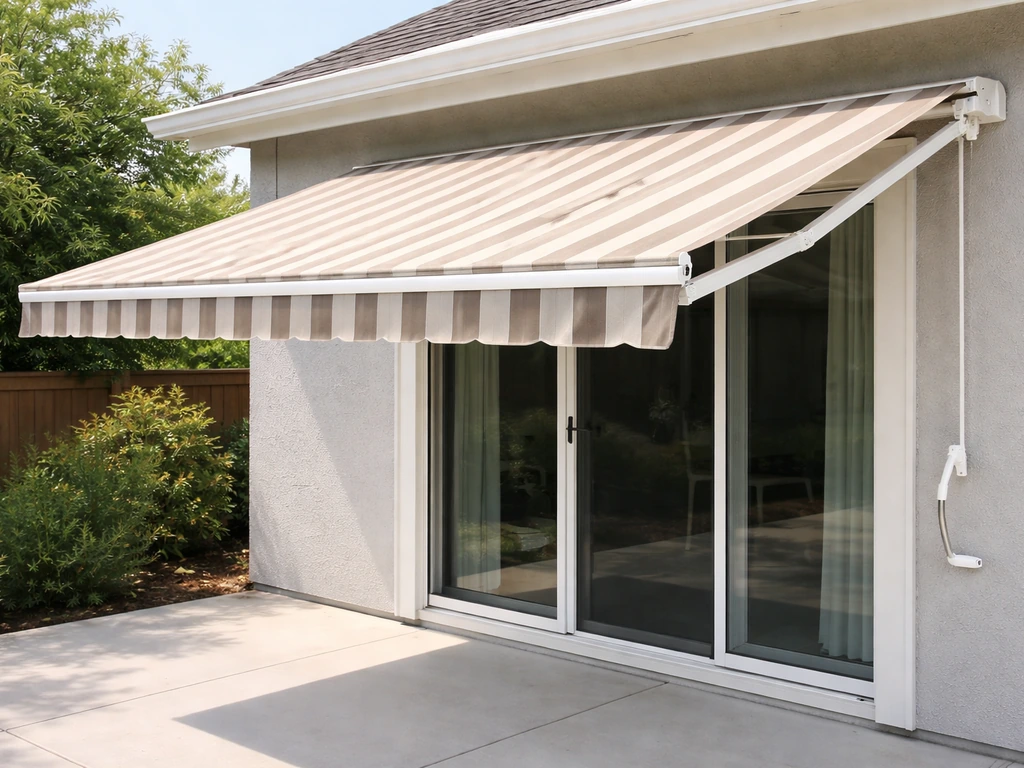
What a manual retractable patio awning is and when it makes sense
A manual retractable awning is a lateral-arm canopy system that folds flat against your house when not in use and extends outward over your patio using a hand crank. The fabric rolls out from a tube mounted at the wall, supported by two scissor-style arms that hold the canopy open at an angled pitch. When you're done, you crank it back in and it tucks away under a protective hood or against the mounting bar. No electricity, no remote, no smart hub required.
These systems are designed for sun shade and light rain protection, not for replacing a roof. Manufacturers like Solera by Lippert and Rolltec are explicit about this: retractable awnings are not built for sustained heavy downpours, hurricanes, or tropical storm conditions. Solera by Lippert’s retractable awning guide notes that adjustable pitch (tilting angle) helps manage sun and light rain, and that retractable awnings are not designed for sustained heavy downpours or tropical-storm conditions retractable awnings are not built for sustained heavy downpours, hurricanes, or tropical storm conditions. If you're in a climate with intense afternoon sun and want the flexibility to cover or uncover your patio quickly, this is your product. If you're looking for something that stays out in all weather year-round, a fixed pergola or permanent canopy is a better fit.
Manual models make the most sense if you're cost-conscious (they run several hundred to a few thousand dollars less than motorized versions), comfortable with occasional hand-crank operation, and don't need automation. They're also easier to maintain and repair since there's no motor to replace. The main trade-off is convenience: if you're inside and a storm rolls in, you need to actually go out and crank it in. Motorized awnings solve that, but they cost significantly more upfront and add complexity.
Getting the size right before you buy anything
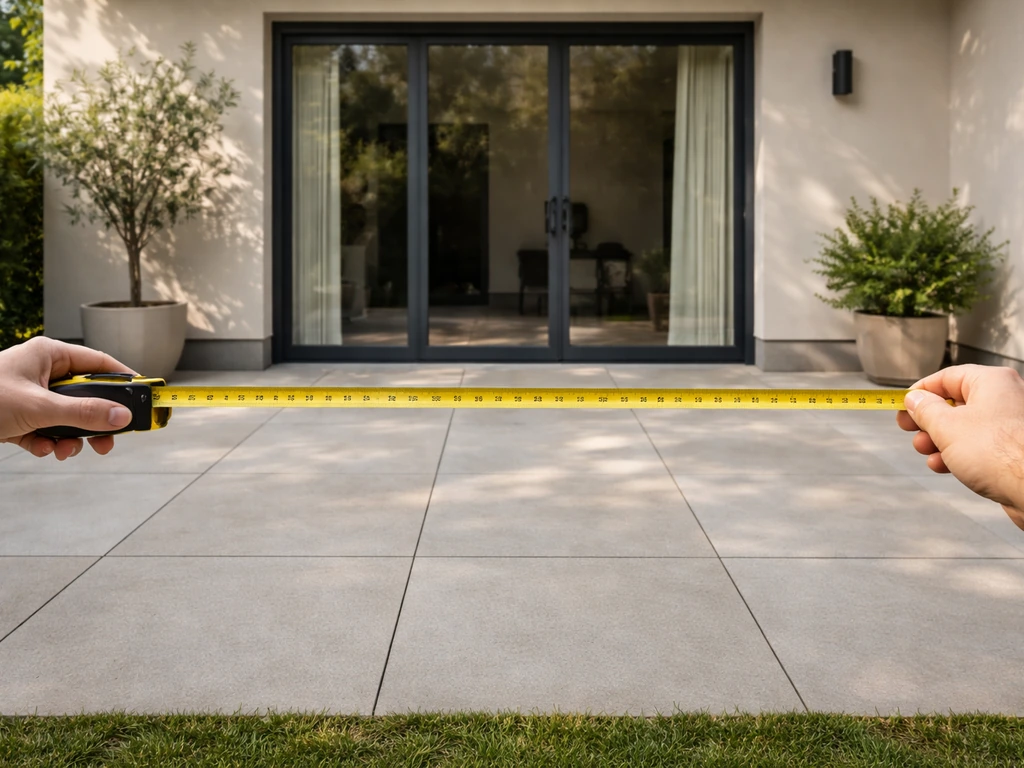
Sizing is where most people go wrong, and it's the one mistake that's genuinely hard to fix after installation. There are two main measurements you need: width and projection. Width is the side-to-side span of the awning. Projection (sometimes called reach or depth) is how far the canopy extends outward from the wall. That second number is trickier than it sounds.
Measuring width
Measure the width of the area you want shaded, then account for a few inches of manufacturing variance. SunSetter's measuring guide notes, for example, that a 10-foot awning actually measures about 3 inches wider than the listed size, and the fabric itself runs about 4.5 inches narrower than the overall awning width. These numbers vary by brand and model, so always check the specific product's measurement guide before ordering. The practical takeaway: order to the space you want shaded, not to the exact wall span, and verify the fabric coverage for that model.
Measuring projection
Projection is the distance from the wall down the fabric slope to the front bar, not a straight horizontal measurement. Rolltec specifically clarifies this: it's the diagonal slope length, not a level reach. Because the awning pitches downward when extended (typically at a 20 to 25 degree angle), a 10-foot projection means the front bar ends up roughly 3 to 4 feet lower than your mounting point. That geometry matters for clearance planning. You need to know where your front bar will actually end up, not just how far out it reaches.
Clearance requirements
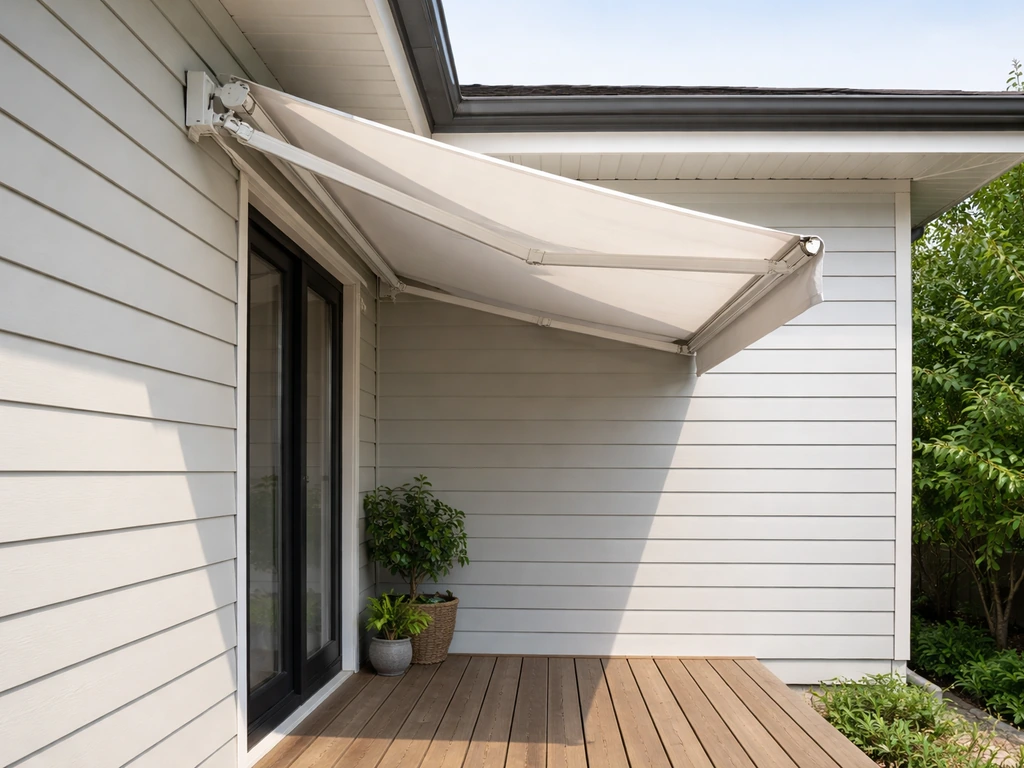
The mounting height is critical. SunSetter's measuring guide specifies a minimum clearance of 7 feet 6 inches from your deck or patio floor to the bottom of any roof, eave, or overhang above the awning. Angi's installation guidance cites a similar range of 7.5 to 8 feet of clearance. If you have a low eave or a covered porch roof directly above where you'd mount the awning, measure carefully before you order. The mounting surface also needs to be flat and even, per Rolltec's installation guidance. A wavy or uneven fascia board will make proper alignment a headache.
- Measure the width of the patio area you want shaded (side to side)
- Measure the projection you need (how far out from the wall), remembering this is a slope measurement, not a flat horizontal
- Measure the height from your patio floor to the bottom of any overhead obstruction (eave, soffit, roof) and confirm you have at least 7 ft 6 in
- Check that your planned mounting surface (wall, fascia board) is flat, even, and structurally solid
- Cross-reference your width and projection measurements with the specific product's sizing chart before ordering
How manual retractable awnings actually work
The mechanics are straightforward. The awning fabric is rolled around a horizontal tube at the top. Two lateral (scissor) arms are attached to the front bar and fold back against the wall when the awning is retracted. When you extend the awning, the arms unfold and push the front bar outward while the fabric unrolls. The pitch (downward angle) is set by the arm tension and mounting angle. Some models let you adjust the pitch using the crank itself.
Manual operation works via a hand crank, usually operated with a wand or detachable crank handle. On most models, including SunSetter's 900XT and 1000XT, you extend by cranking until the front bar reaches head height, then continue cranking to reach your desired extension. To retract, you crank back in until the awning is fully against the house. Rolltec's Bravo manual specifies the direction: counter-clockwise to extend, clockwise to retract. That said, always check your specific model's instructions since it can vary.
The awning mounts to the house either at the wall framing (stud mount) or to the fascia board under the roofline. Wall mounting generally provides more structural support. Fascia mounting works when the fascia is thick, solid, and properly backed. The mounting brackets need to land in solid wood or masonry, not just siding or thin trim. DIY Retractable Awning's installation instructions are explicit: mount to the most solid part of the structure, with wall spacers of 4 to 6 inches depending on your mounting surface material.
What to look for when picking the best manual retractable awning
There's no single "best" awning for every patio, but there are clear criteria that separate quality systems from the ones you'll be fighting with in two years. Here's how to evaluate what you're looking at.
Frame and hardware materials
Look for powder-coated aluminum arms and frame with stainless steel hardware at the joints and connection points. Awntech's Destin manual awning, for example, uses a powder-coated aluminum and steel frame with stainless steel parts, which resists rust and holds up in humid or coastal climates. Avoid bare steel frames without a proper coating in any climate with regular moisture.
Fabric: woven acrylic vs. laminated
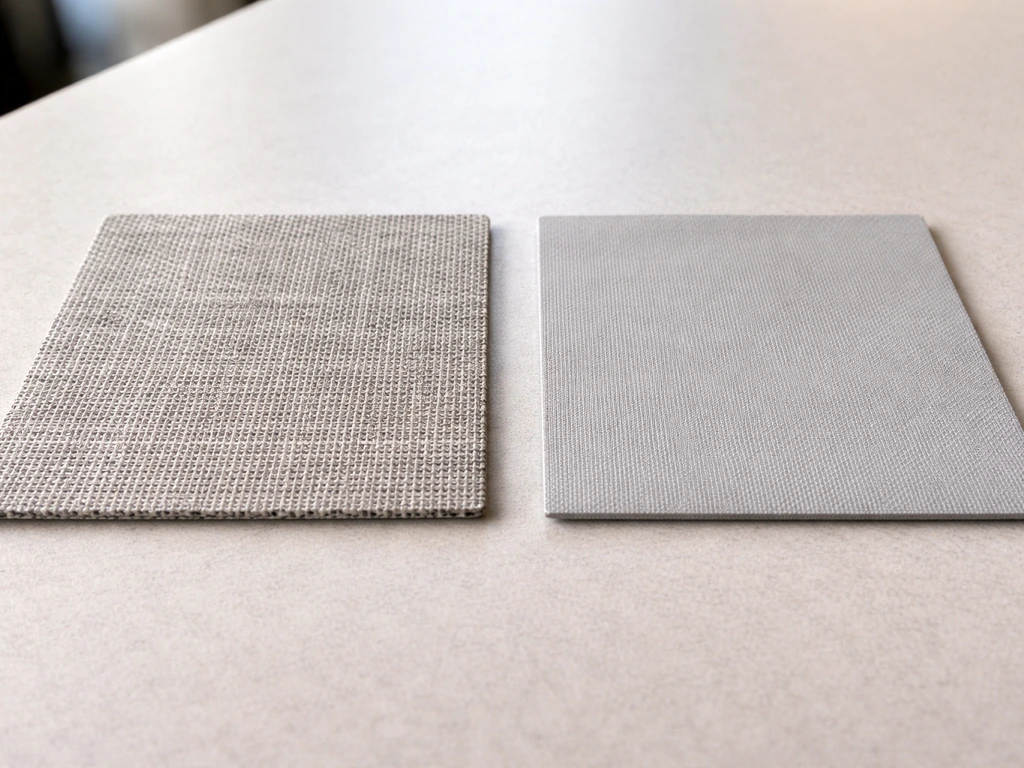
This is the most important material decision. Woven acrylic (solution-dyed acrylic) is the industry standard for retractable awning fabric. It's breathable, resists fading and mildew, and offers strong UV protection. SunSetter's solution-dyed acrylic blocks 98% of harmful UV rays and resists mold and mildew, and the fabric carries a 10-year warranty. The trade-off is that woven acrylic is water-repellent, not fully waterproof. It handles light rain fine, but water can pool if the pitch is too flat or the rain is heavy.
Laminated fabric is 100% waterproof and better for patios that get regular rain. SunSetter offers this as an upgrade option. It's heavier and less breathable than woven acrylic, and it creates a more enclosed feel underneath. If you primarily want sun shade and your patio has decent drainage, go with solution-dyed acrylic. If you're in a rainy climate and want to sit outside during a steady drizzle, the laminated option is worth the extra cost.
Projection range and pitch adjustability
More projection means more coverage but also more wind load on the arms. The Awntech Destin offers up to 12 feet of projection with adjustable pitch. If you're covering a deep patio, look for models that explicitly support your projection requirement and have adjustable pitch so you can steepen the angle in light rain to prevent pooling. If your arms can't be adjusted, you're locked into whatever factory pitch the unit ships with.
Wind performance
SunSetter reports its awnings withstood wind gusts of 55 to 75 mph in independent lab tests. That's a useful benchmark, but keep in mind these are short-duration gust tests, not sustained wind ratings. Rolltec's installation manual includes a clear caution: retract the awning during heavy rain, snow, or severe wind. No manual retractable awning should be left extended in a serious storm, regardless of the wind test numbers. Build the habit of retracting before bad weather hits.
Cassette vs. open roll
A full-cassette design encloses the fabric roll inside a protective housing when retracted. This keeps the fabric cleaner, reduces UV degradation of the roll mechanism, and looks more finished. Open-roll designs are more common at lower price points and work fine but leave the rolled fabric exposed. For longevity and appearance, cassette models are worth the premium if you're planning to keep the awning for 10-plus years.
| Factor | What to Look For | Red Flag |
|---|---|---|
| Frame | Powder-coated aluminum + stainless steel hardware | Bare steel with no coating |
| Fabric | 100% solution-dyed acrylic or laminated waterproof | Generic polyester with no UV rating |
| Projection | Up to 12 ft with adjustable pitch | Fixed pitch with limited extension |
| Warranty | 10 years on fabric, 5+ years on frame | Less than 3-year total warranty |
| Housing | Full cassette protects the roll when retracted | Exposed roll with no protection |
| Crank mechanism | Smooth gear operation, wand included | No crank detail listed in specs |
Installation: DIY or hire someone?
Installing a manual retractable awning is a genuine DIY project, but it takes two people, a good drill, and patience with leveling. You're mounting a heavy unit (many awnings weigh 80 to 150+ pounds) to the wall of your house at head height or above. The margin for error on levelness is small because an off-level mount means the fabric rolls unevenly and the arms don't track straight.
What's involved in a typical installation
- Locate the mounting surface (wall studs or solid fascia backing) and mark bracket positions
- Set spacers to achieve the correct wall offset (4 to 6 inches depending on surface material)
- Mount the main support brackets to solid structure, not just siding or drywall
- Lift the awning body onto the brackets with a helper (this is the hardest part of DIY)
- Level the unit carefully and tighten all hardware to spec
- Attach the lateral arms if they're shipped separately
- Set the pitch angle per the manufacturer's instructions
- Test extend and retract several times before calling it done
When DIY makes sense
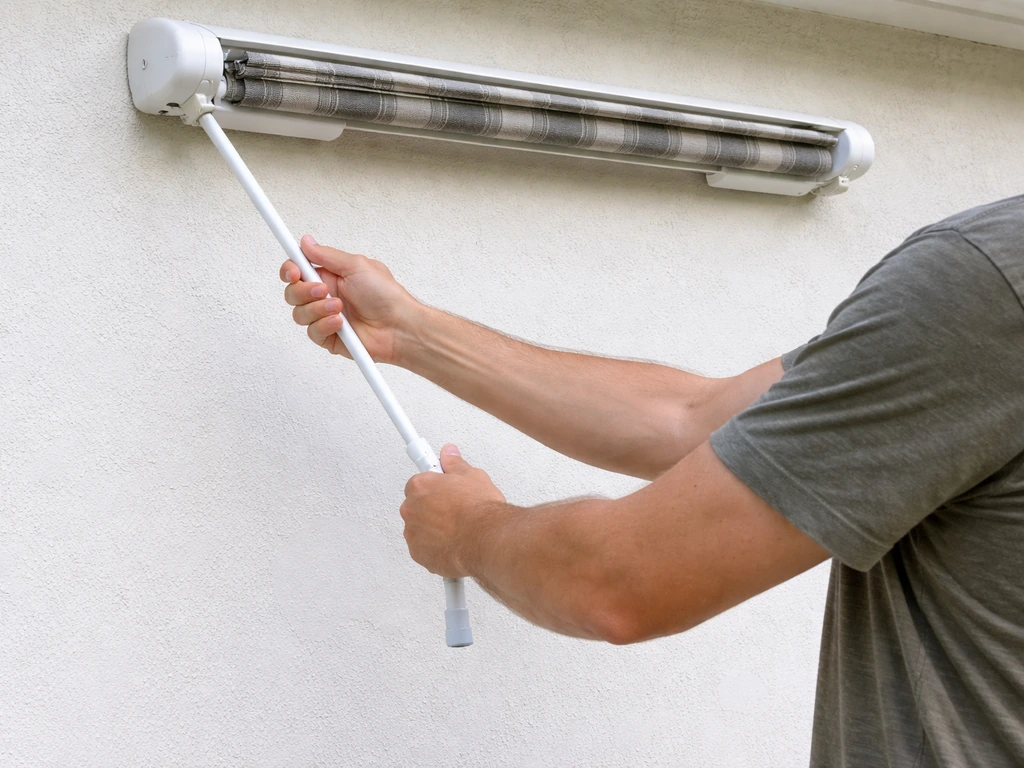
DIY is realistic if you're comfortable with a drill and a level, can recruit a helper, and are mounting to a standard wood-framed wall or solid fascia board. Most brands sell directly and include detailed installation manuals. Ecanopy's 2024 installation guide even includes a troubleshooting section because installation precision directly affects long-term retraction reliability. If something is slightly off from day one, it will get worse over time.
When to hire a pro
Hire an installer if your mounting surface is masonry (brick or stucco), if you have a high or difficult-to-access mounting point, or if the awning is particularly wide or heavy. Masonry requires specific anchors and drilling technique that most homeowners don't have the tools for. A professional installation typically runs a few hundred dollars and is worth it to avoid a callback six months later because the brackets are working loose. Some brands like SunSetter also offer installer referral programs if you buy direct.
Keeping it running smoothly year after year
Maintenance on a manual retractable awning is light but non-negotiable if you want it to retract smoothly after five or ten years. Most problems that develop over time (stiff cranks, uneven rolling, squeaky arms) come from neglected cleaning or dry pivot points.
Cleaning the fabric
Use mild soap and warm water with a soft brush, then rinse thoroughly with a hose. SunSetter's maintenance guidance specifically recommends this approach and emphasizes doing it routinely rather than waiting until the fabric looks visibly dirty. Ecanopy's Key West cassette manual also specifies mild soap and a damp cloth for fabric care. Never use harsh chemical cleaners or bleach on solution-dyed acrylic. Let the fabric dry completely in the extended position before retracting it, because rolling up a wet awning is a fast way to grow mildew inside the roll.
Cleaning and lubricating the frame
Clean aluminum parts with a light detergent and water. Rollac's owner's manual explicitly states not to use oil or WD-40 on the aluminum elements. For the pivot points and crank mechanism, follow your specific manual's lubrication diagram. Ecanopy's 2024 installation manual includes a lubrication diagram showing exactly where to apply lubricant for reliable long-term operation. Dry or corroded pivot points are the number-one cause of stiff retraction, so don't skip this step when you do your annual inspection.
Seasonal care and weather habits
Retract the awning any time you're expecting heavy rain, strong wind, or snow. This isn't just a manufacturer caution, it's the habit that separates awnings that last 15 years from ones that need repairs after two seasons. Snow load on an extended fabric can buckle the arms. Heavy rain without enough pitch can pool and stress the front bar. In climates with hard winters, store the awning retracted (cassette models help here) and cover or winterize it if you're not using the patio for months at a time. Inspect the fabric for small tears or fraying at the edges each spring, and check that all mounting hardware is still tight after the first big wind event of the season.
Warranty benchmarks to know
Good warranties on manual retractable awnings look like this: 10 years on solution-dyed acrylic fabric (SunSetter, Sunesta both hit this mark), 5 to 10 years on the frame and mechanical components. Awntech's Destin and Rolltec's Adalia X3M both offer competitive coverage. A warranty shorter than 5 years on the frame is a signal that the manufacturer doesn't have high confidence in the hardware durability. Keep your purchase documentation and register the product immediately after installation.
The bottom line: what to buy, how to size it, and what to do next
If you want a manual retractable patio awning that will hold up and retract cleanly for a decade, buy a full-cassette model with a powder-coated aluminum frame, stainless steel pivot hardware, and 100% solution-dyed acrylic fabric with at least a 10-year fabric warranty. If you're also replacing a patio door handle, note that many are not truly universal, so check the lock style and mounting size before buying manual retractable patio awning. SunSetter, Awntech's Destin, and Rolltec's Adalia X3M are all solid starting points at different price tiers. Size it by measuring your exact patio width and the projection you need (remembering projection is a slope measurement, not horizontal), confirm 7 feet 6 inches of clearance from floor to eave, and verify your mounting wall is flat, even, and structurally solid.
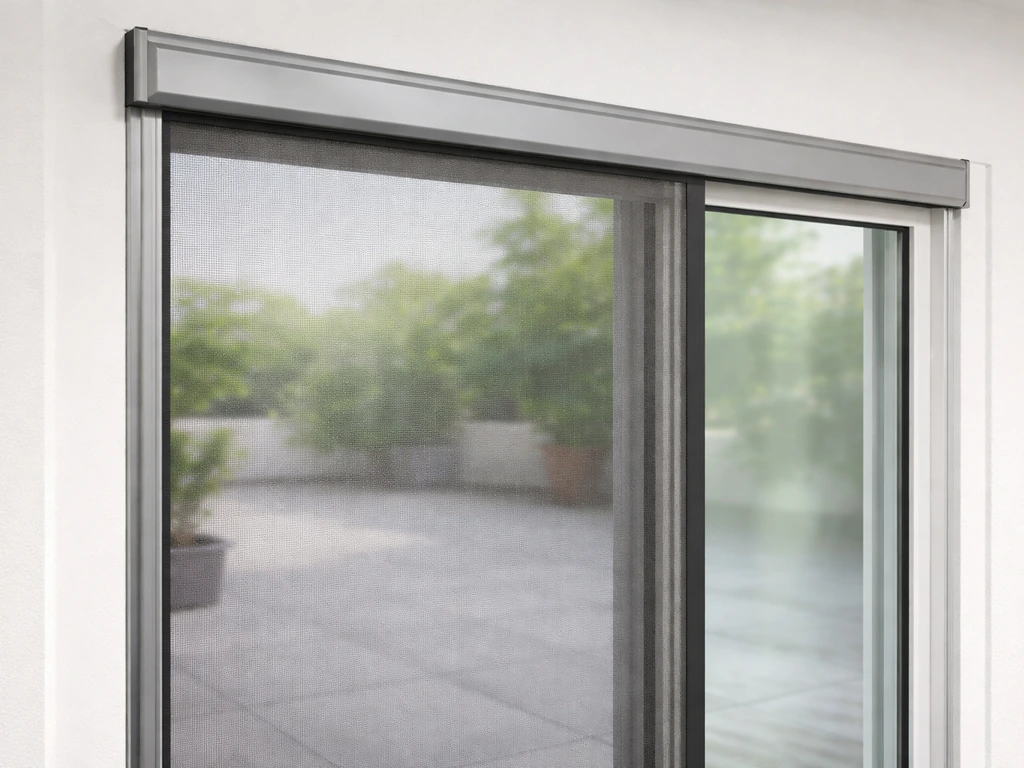
For installation, DIY is a reasonable choice if you have a helper and a wood or fascia mounting surface. Go with a professional if you're dealing with masonry or a difficult mounting height. Once it's up, clean the fabric at least twice a year with mild soap and water, lubricate the pivot points annually, and make a habit of retracting before any serious weather. Do those things and a quality manual awning will outlast several generations of patio furniture. If you're also thinking about screens for your patio door or patio opening, the retractable screen options that pair well with awnings are worth looking into alongside this purchase. If you want more bug-free comfort outdoors, consider retractable bug screens for your patio opening retractable screen options. A manual retractable patio screen is a great complement when you want insect protection and airflow without adding a bulky fixed screen retractable screen options.
FAQ
Can a manual retractable patio awning stay out during light rain?
Yes, light rain usually is fine if the pitch allows water to run off. If your area sees steady drizzle or frequent downpours, choose the laminated fabric option and avoid extending it less than the recommended drop angle, since pooling water can cause sagging and accelerate edge wear.
What angle or pitch should I aim for so the awning doesn’t pool water?
Follow the model’s stated pitch or choose an option with adjustable pitch if you expect rain. A steeper pitch helps water shed and reduces stress on the front bar, but going too steep can change how much of the patio you actually cover, so re-check your measured projection after installation.
How do I account for the awning sag and fabric coverage when sizing?
Size using the width you want shaded, then confirm the specific fabric coverage numbers in the product’s measurement guide. Even with correct ordering, fabric can look slightly different when fully extended, so if you need full coverage up to a doorway or railing, verify coverage at the lowest extension you plan to use.
What clearance do I need if there’s a ceiling fan or soffit trim above where the awning mounts?
The key is the minimum distance from your patio floor to the lowest obstruction, including eaves, soffits, and any installed fixtures in that line. If you have obstructions, plan to mount high enough for safe crank clearance and consider an awning with a slightly different bracket height rather than forcing a compromise.
Do I really need to mount into studs, or can I use fascia mounting for a manual retractable patio awning?
Fascia mounting can work only when the fascia is thick and solid and properly backed, with brackets landing in strong material. If the fascia is thin, rotted, or largely decorative trim, stud mounting is safer. When in doubt, ask for guidance based on your wall type rather than assuming one mount method fits all.
What’s the best way to handle an off-level patio or uneven wall?
You need the awning’s mounting plate level and the brackets aligned to the same plane. If the wall or fascia is wavy, shimming and careful layout are often necessary, but the safer DIY approach is to stop and correct the mounting surface before drilling. An out-of-level install can make the crank feel stiff and cause uneven rolling.
Why does the crank feel harder after a few months even if the awning is new?
Common causes include pivot points that were never lubricated, debris or grit inside the cassette or at arm joints, and hardware that loosened due to an installation that was slightly misaligned. Clean first, then inspect and lubricate only the points your manual specifies, and re-check fastener tightness after the first strong wind event.
Can I leave the awning partially extended during wind or when I’m away?
Avoid it. Partial extension can increase flutter and twisting on the arms, and a manual awning requires you to physically retract it before severe weather. If you want peace of mind, plan to fully retract at the first signs of strong wind, snow, or heavy rain rather than settling for partial coverage.
What size crank clearance should I plan for when using a manual retractable patio awning?
Make sure you have enough space to reach the crank location safely and to rotate it without hitting nearby furniture, railings, or the patio door. If the awning mounts near a walkway or tight corner, choose a model with a crank position that clears the path you use during bad weather.
How often should I clean and lubricate a manual retractable patio awning in different climates?
In most regions, cleaning a couple times per year is a good baseline and annual lubrication of pivot points is the maintenance cycle. If you live near the ocean, expect more salt buildup, rinse aluminum parts more frequently, and check for corrosion or stiffness sooner so you can address issues before they spread to the mechanism.
Is it safe to retract the awning if the fabric is wet?
Don’t retract wet fabric if you can avoid it. Rolling moisture into the roll promotes mildew inside the housing and can lead to stiff retraction later. If it’s unavoidable, extend it again soon to dry fully before the next retract cycle.
What warranty issues should I look for before buying a manual retractable patio awning?
Pay close attention to how the warranty divides between fabric and mechanical components, a short frame/mechanism warranty under 5 years is a red flag. Also check whether registration is required and keep installation documentation, since warranty claims often depend on proof of purchase and correct installation.
Will a retractable patio awning help with privacy and direct sun at the same time?
It helps with direct sun and glare, but most awning fabrics are designed for shade, not full privacy. If privacy is a priority, consider a fabric color and style that reduces visibility, and confirm that the awning’s extension and pitch align with where people sit, so the fabric actually shades the sight lines you care about.
Can I pair a retractable screen with a manual retractable patio awning?
Often yes, especially when the screen mounts to the patio opening or door system rather than conflicting with the awning’s roll path. Before ordering, verify that the screen tracks and hardware do not interfere with where the awning front bar and cassette sit when fully extended or retracted.