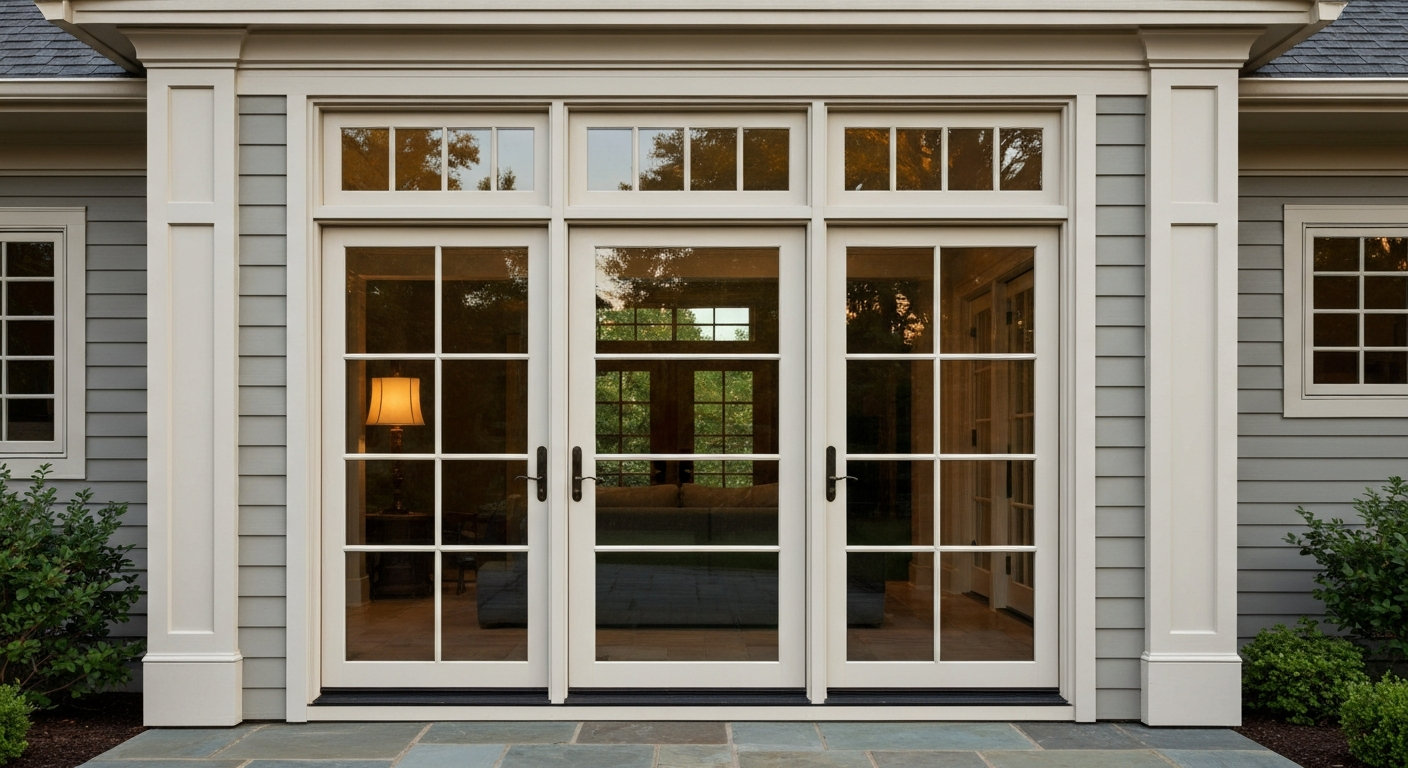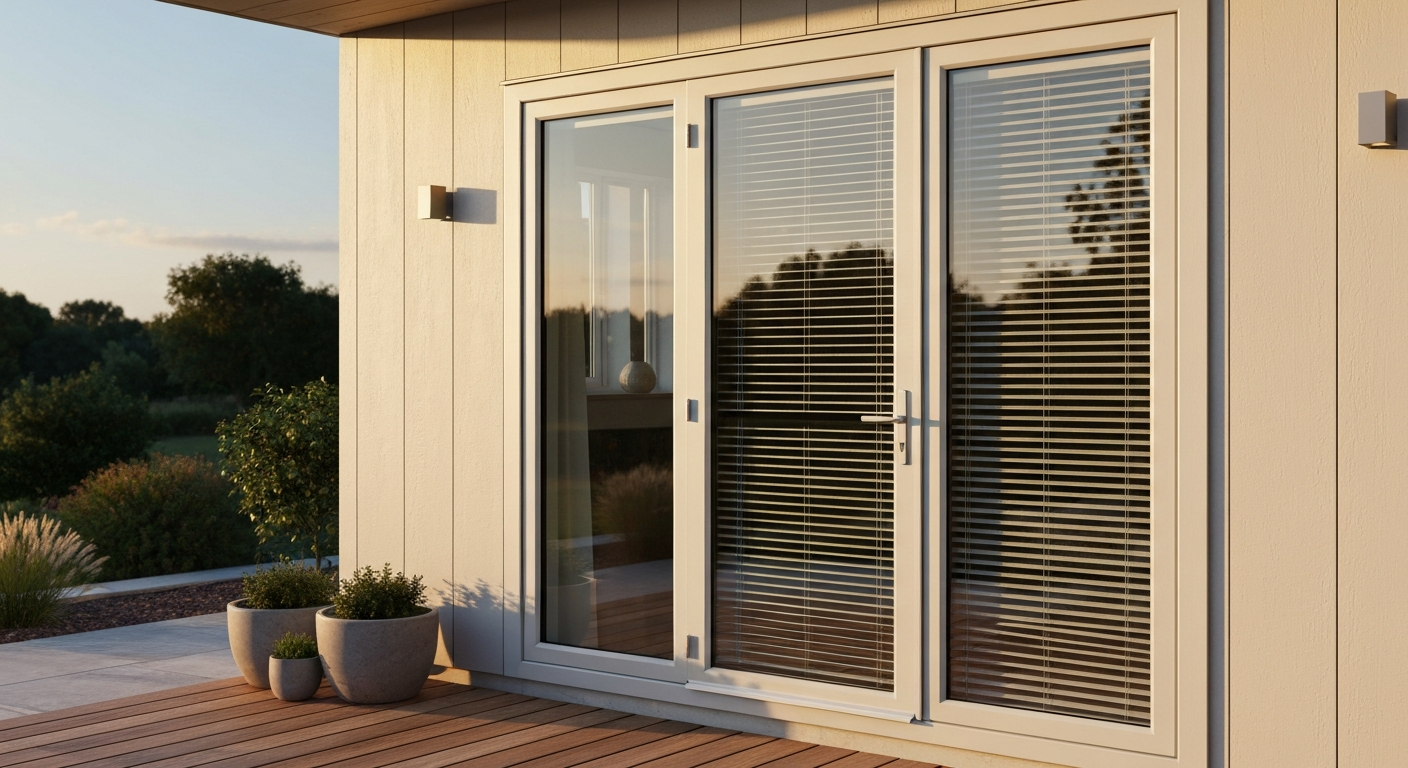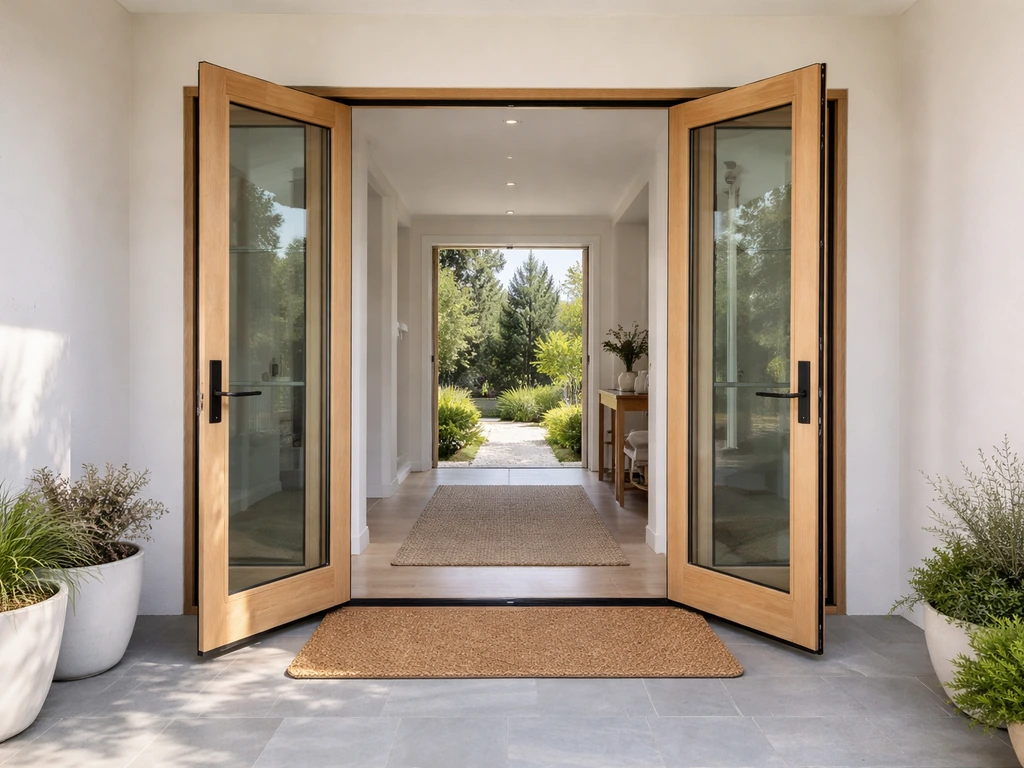
French doors, bifold doors, and hinged outswing patio doors are the three best alternatives to a sliding patio door for most homes. French doors work in almost any opening, bifold doors maximize the view and ventilation in wider openings (typically 8 feet or more), and hinged outswing doors are the most affordable and easiest to install. The right pick depends on how much clearance you have, how wide your opening is, and whether you're replacing a door that's genuinely worn out or just underperforming.
Sliding Patio Door Alternatives: Best Options and Costs

Owen Delaney
11 May 2026
Why people actually replace their sliding patio doors
Before you start shopping, it's worth being honest about why you're replacing. If you're weighing your options, reviewing the pros and cons of sliding patio doors can also clarify when sticking with a slider makes sense versus switching to a different door type. Sometimes the problem is fixable. A door that's stiff or hard to slide is usually a roller or track issue, debris builds up, rollers crack over time, and the door starts grinding. In a lot of cases, cleaning the track and replacing the rollers (a $20–$50 parts job) gets the door gliding smoothly again. Same thing with a stuck lock or peeling weatherstripping: those are cheap part swaps, not reasons to replace the whole unit.
That said, there are situations where replacement makes real sense. If the track is bent from an impact, the frame has warped, or the insulated glass unit has failed (that's the foggy-between-the-panes look caused by a broken seal), you're looking at costs that start to approach or exceed a new door. And if you're dealing with an older single-pane slider, you're losing a significant amount of heat through the glass, the Department of Energy specifically flags sliding glass doors as a major source of heat loss in homes. Replacing with a better-insulated alternative door system can noticeably cut your heating and cooling bills.
Other real-world reasons homeowners switch away from sliders include wanting a wider opening for entertaining or accessibility, preferring a different aesthetic (French doors read more traditional, bifolds more modern), or needing better air sealing than a worn sliding track can provide. ENERGY STAR Residential Windows, Doors, and Skylights Version 6.0 lists air leakage requirements for residential doors, with sliding doors at or below 0.3 cfm/ft² for sliding doors and 0.5 cfm/ft² for swinging doors blank" rel="noopener noreferrer">air leakage vulnerability at the interlock where the panels meet. Track-based doors have an inherent air leakage vulnerability at the interlock where the panels meet, and once the weatherstripping starts going, it's hard to fully restore the seal.
Your best alternatives to a sliding patio door
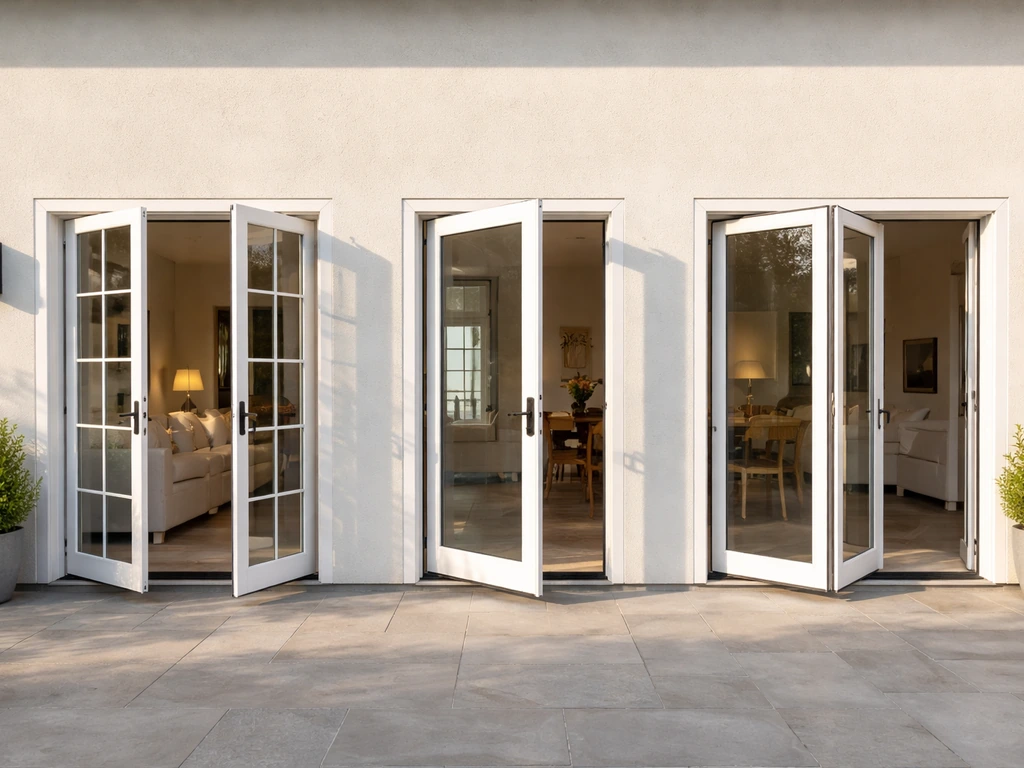
Here's a practical rundown of the main door types to consider, with honest notes on where each one works best.
French doors (hinged, double-door configuration)
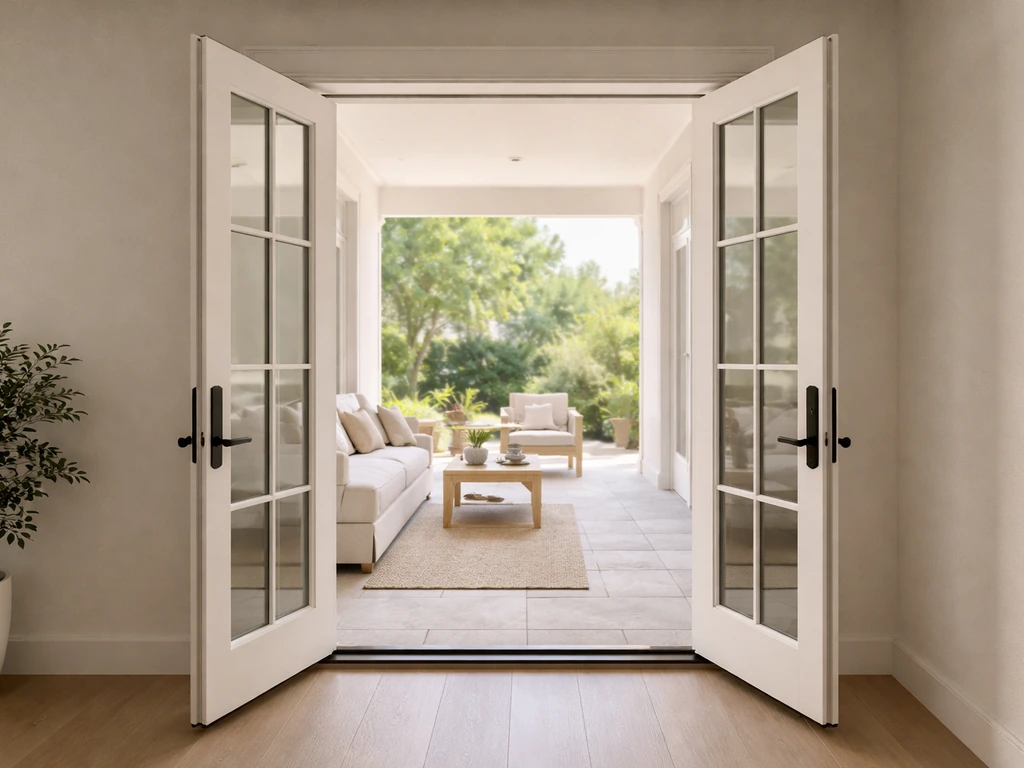
French doors are two hinged panels that swing open from the center. They're the most versatile replacement for a slider because they fit standard rough openings (typically 60 or 72 inches wide, which matches most existing slider frames), they come in a huge range of price points and materials, and they work with any standard ceiling height. They swing inward, outward, or as a combination. Outswing is generally better for weather performance and doesn't eat into your interior floor space.
Hinged single or double outswing patio doors
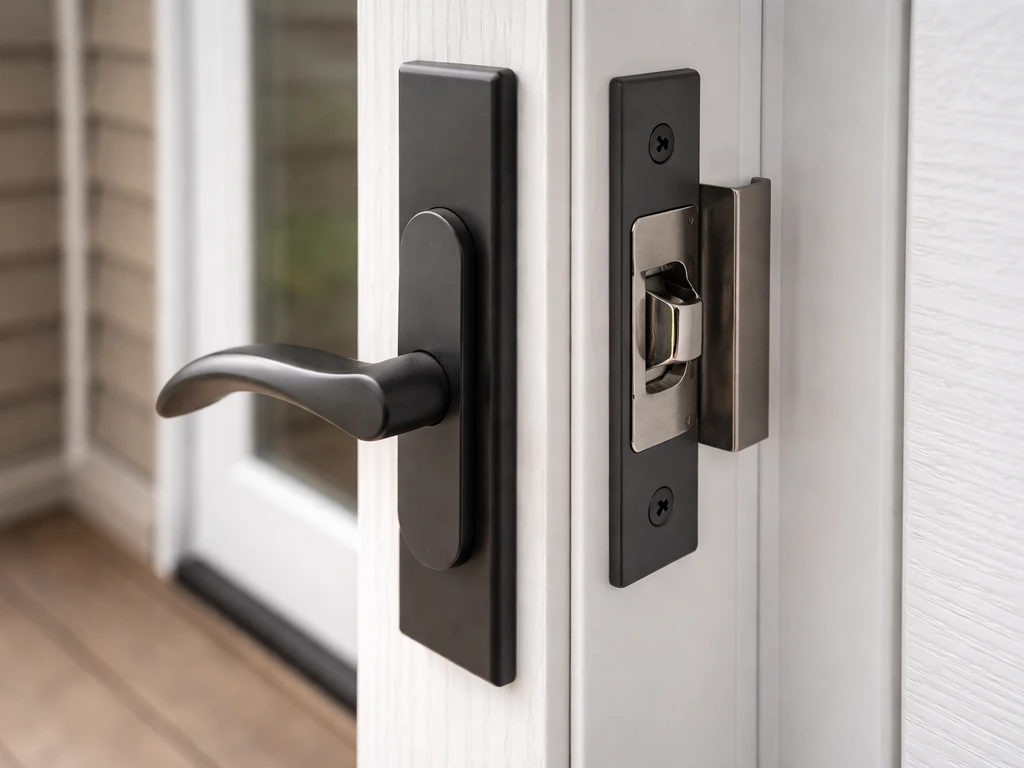
A standard hinged patio door (sometimes just called a swinging patio door or garden door) is a single or double panel that hinges on one side and latches on the other. These are the most affordable option and the easiest to install, especially if you're staying in the same rough opening. A single hinged door is a straightforward DIY-friendly swap. The tradeoff is you get less glass area and a smaller opening width compared to French or bifold configurations.
Bifold and accordion doors
Bifold patio doors (also called accordion or folding glass wall systems) use panels that fold and stack to one side, creating an almost fully open wall. They're best for openings of 8 feet or wider and are popular for indoor-outdoor living spaces. The opening they provide is genuinely dramatic, some systems fold away 90 percent or more of the wall. The downsides: they're expensive (typically $3,000–$10,000+ installed), require a very level track and precise installation, and the folding mechanism adds complexity that can mean more maintenance over time.
Multi-slide or lift-and-slide doors
If you like the sliding format but are frustrated by a worn-out traditional slider, a lift-and-slide or multi-slide door is worth considering. These are premium sliding systems where the door lifts off its track seal to open and drops back down to create a compression seal when closed. They operate much more smoothly than conventional sliders and seal significantly better. They're priced like a mid-to-high-end product (think $3,500–$8,000+ installed for a standard two-panel unit), but they address most of the common complaints about traditional sliders without changing the door format.
Pivot doors
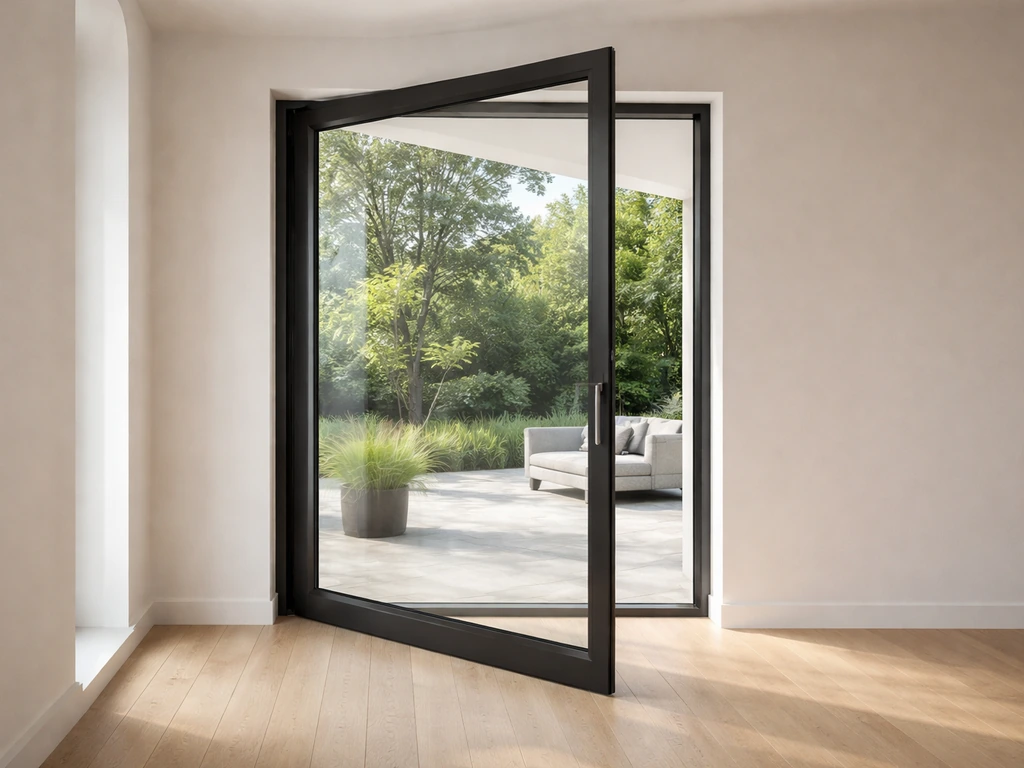
Pivot doors rotate on a central or offset pivot point rather than swinging from a side hinge. They have a distinctive modern look and can handle very wide single-panel openings. They're a niche option, custom pricing, complex installation, and not right for every home style, but if you want a statement door in a contemporary home, they're worth a look.
Matching the door type to your actual space
Before you commit to any alternative, measure carefully. The three numbers you need are the rough opening width, the rough opening height, and the available swing clearance (how far the door can swing into the room or onto the patio without hitting furniture, steps, or a railing).
Most sliding patio doors use a rough opening of 60 inches (5 feet) or 72 inches (6 feet) wide, with a height of 80 or 96 inches. French doors and standard hinged patio doors are manufactured to fit exactly these openings, which means you can often swap one for the other without any framing changes, a significant labor and cost savings. Bifold systems typically need at least 96 inches (8 feet) of width to look and function right, so if your opening is 60 or 72 inches, a bifold is a tighter fit and may require enlarging the opening.
For swing clearance, a standard 6-foot French door needs about 36 inches of clearance per panel on the swing side. If you have a deck railing right outside, outswing doors won't work unless the railing is set back far enough. Inswing is the solution there, but then you need 36 inches of interior clearance. Measure both directions before deciding on swing direction. If you are wondering how to choose a sliding patio door, swing clearance and rough-opening measurements are the same starting points, even if you end up with a different door type Measure both directions.
Also check the sill and subfloor situation. Sliders sit in a frame that's flush or close to flush with the floor. Hinged doors often have a sill threshold that's slightly raised. If you're replacing a slider with French doors and want a smooth transition to an outdoor deck, look for a low-profile or zero-threshold system, which some manufacturers offer specifically for accessibility.
| Door Type | Typical Opening Width | Swing Clearance Needed | Best For |
|---|---|---|---|
| French doors | 60–72 in (standard) | 36 in per panel | Most homes, any style |
| Single hinged door | 32–36 in panel | 32–36 in one side | Smaller openings, budget replacement |
| Bifold/accordion | 96 in+ (ideal) | None (panels stack) | Wide openings, indoor-outdoor living |
| Lift-and-slide | 60–144 in+ | None (slides) | Those who prefer sliding format |
| Pivot door | 36–72 in+ | Half-panel depth | Modern/contemporary homes |
Security, weather sealing, and energy performance
This is where the differences between door types get real. Traditional sliding patio doors have a known weakness: the track-and-interlock system where the two panels meet. Over time (and sometimes from new), this area leaks more air than a compression-sealed door. Manufactured exterior door fenestration/door assemblies must meet a 0.3 cfm/ft² air leakage rate at 75 Pa where applicable, per the referenced energy code context a compression-sealed door. French doors with compression weatherstripping around the full perimeter seal more tightly when properly installed and maintained. Hinged doors in general have an advantage here because the door presses against the frame seal rather than sliding past it.
For glazing, the difference between a single-pane slider from the 90s and a modern double or triple-pane unit is enormous. Any of the alternatives above paired with low-E, argon-filled double-pane glass will dramatically outperform an old slider. To choose the best material for sliding patio doors, pair your door frame and hardware with energy-efficient glass and strong weather sealing. If you're in a cold climate, look for units with a U-factor of 0.30 or lower. In hot climates, prioritize a low Solar Heat Gain Coefficient (SHGC) of 0.25 or below to reduce cooling loads.
On security, hinged doors (including French doors) with proper multi-point locking hardware are generally considered more secure than standard sliding doors. A traditional slider can be vulnerable to being lifted off its track, though modern anti-lift pins and security bars largely address this. French doors with a flush bolt at the top and bottom of the fixed panel plus a deadbolt on the active panel are very secure. Bifold systems vary a lot by manufacturer, look for multi-point locking systems that engage at both the top and bottom track.
| Door Type | Air Sealing | Security (standard hardware) | Glazing Options | Energy Performance Potential |
|---|---|---|---|---|
| French doors | Excellent (compression seal) | Very good (multi-point lock) | All standard options | High |
| Single hinged | Excellent (compression seal) | Very good | All standard options | High |
| Bifold/accordion | Good (varies by brand) | Good (multi-point) | All standard options | High (frame matters) |
| Lift-and-slide | Excellent (compression when closed) | Excellent | All standard options | Very high |
| Traditional slider | Fair (track leakage) | Moderate (needs upgrades) | All standard options | Moderate to high |
What this actually costs, and what to expect from installation
French doors are often the most cost-effective alternative. Installed costs typically run $1,300–$5,500 depending on material (fiberglass and wood are at the top, vinyl is at the bottom), glass package, and your local labor rates. That's competitive with or sometimes cheaper than a mid-range replacement sliding door. Single hinged patio doors can come in even cheaper, with installed costs starting around $800–$2,500 for a standard vinyl or fiberglass unit.
Bifold and accordion systems are a significant step up in cost. You're typically looking at $3,000–$10,000 or more installed, with luxury aluminum systems from brands like NanaWall or Marvin running well past $10,000 for larger openings. Lift-and-slide premium sliders land in the $3,500–$8,000 range for a standard two-panel unit. These are doors where material quality, hardware precision, and installation quality matter enormously, cutting corners on a bifold install leads to track alignment problems that are expensive to fix.
On DIY feasibility: a standard French door replacement in an existing rough opening is genuinely DIY-able for a homeowner comfortable with carpentry. You're setting the frame, shimming it level and plumb, fastening, flashing, and trimming, all standard skills. A single hinged door is even simpler. Bifold systems and lift-and-slide doors should be professionally installed in most cases. The tolerances are tight, the units are heavy (sometimes 200–400 lbs per panel for glass bifold systems), and a bad install creates problems that show up months later.
Lead times are worth flagging right now. Standard French and hinged patio doors in common sizes are often in stock at big-box stores or available within 2–4 weeks from manufacturers. Custom sizes, bifold systems, and premium lift-and-slide units frequently have 8–16 week lead times as of 2026, so plan ahead if you're on a renovation timeline.
| Door Type | Installed Cost Range | DIY Feasible? | Typical Lead Time |
|---|---|---|---|
| French doors | $1,300–$5,500 | Yes (standard openings) | 2–6 weeks |
| Single hinged patio door | $800–$2,500 | Yes | 1–4 weeks |
| Bifold/accordion | $3,000–$10,000+ | Not recommended | 8–16 weeks |
| Lift-and-slide | $3,500–$8,000+ | Not recommended | 8–16 weeks |
| Pivot door | $2,500–$10,000+ | No | 8–20 weeks |
Screens, coverings, and hardware upgrades for each door type
Screens are one area where sliding doors genuinely have an advantage, the built-in screen track is simple and works well. When you switch to French doors or hinged patio doors, you need to think about screening separately. The most common solutions are retractable screen systems (Phantom and Larson are two widely available brands) that mount to the door frame and roll away when not in use, or hinged screen doors that work like a traditional storm door. Retractable screens are cleaner-looking and don't obstruct the view when retracted; hinged screen doors are cheaper but add visual bulk.
For bifold systems, retractable screen systems designed specifically for wide openings are available from several manufacturers (Centor makes one that integrates directly into the bifold frame). These are excellent but add $500–$2,000 to the project cost depending on the opening width.
For window coverings, French doors work well with side-panel curtains or drapes on a rod mounted above the door opening. Vertical blinds (a classic slider solution) don't translate well to French doors. Plantation shutters mounted on the door panels themselves are a good-looking, functional option that provides both privacy and light control. For bifold and lift-and-slide systems, motorized roller shades or panel track blinds that span the full opening are the most practical solution.
On hardware, don't underestimate this line item. French doors benefit from a multi-point locking system (the active panel locks at three or more points along the door edge), a flush bolt on the fixed panel, and a heavy-duty handle set rated for exterior use. Budget $150–$400 for quality hardware if it's not included in the door unit price. For bifold and lift-and-slide systems, hardware is usually proprietary to the manufacturer and included, but ask specifically about security ratings and whether the system meets ANSI/BHMA grade standards.
Long-term maintenance: what each door type actually demands
Every door type has its maintenance reality. Here's what to expect over the long haul, which is something worth factoring into your decision alongside upfront cost.
- French doors (vinyl frames): Lowest maintenance. Wipe down the weatherstripping annually, lubricate hinges and locks once a year, and check the door alignment every few years. Vinyl doesn't rot, warp, or need painting. Life expectancy is 20–30 years with basic care.
- French doors (wood frames): More demanding. Wood needs repainting or restaining every 3–5 years depending on climate and sun exposure. Check for rot at the bottom corners and along the sill. Beautiful, but higher upkeep than vinyl or fiberglass.
- French doors (fiberglass frames): Middle ground — more durable than wood, slightly more maintenance than vinyl. Fiberglass can be painted, holds its shape well in temperature extremes, and resists rot. A good choice for coastal or high-humidity climates.
- Bifold/accordion doors: The folding mechanism needs periodic lubrication (manufacturer-specified lubricant, typically every 6–12 months). Track alignment should be checked annually — bifold systems are sensitive to settling and the track can go out of level. Hardware complexity means more parts that can eventually fail.
- Lift-and-slide doors: The lift mechanism and seals need annual inspection and lubrication. These are precision-engineered systems where deferred maintenance shows up as declining seal performance. Most manufacturers recommend professional servicing every 3–5 years.
- All glass patio doors: Inspect IGU (insulated glass unit) seals every few years for fogging between panes. Once a seal fails, the glass unit needs replacement — this is a common issue on all door types after 15–20 years and typically costs $200–$600 per panel to replace.
For most homeowners, French doors in fiberglass or vinyl are the sweet spot of durability, performance, and low maintenance. They fit existing openings, perform well in most climates, and the maintenance tasks are simple enough to handle yourself. If you want a wider opening and indoor-outdoor flow, bifold doors deliver something sliders simply can't, but go in with realistic expectations about cost, installation complexity, and the ongoing care they need to perform at their best. French doors and other alternatives can offer benefits of patio doors such as better daylight, improved indoor-outdoor flow, and strong energy performance when you choose the right glass and seals.
The best next step: measure your rough opening today (width, height, and swing clearance), note your frame material and condition, and decide whether you're staying in the same opening or expanding it. That single decision, same opening or larger, narrows your options significantly and makes the rest of the choice much easier. If you're staying in a standard 60 or 72-inch opening, French doors are almost certainly your most practical, cost-effective alternative to that sliding door.
FAQ
If my slider opening is 60 or 72 inches wide, can I use a French door or hinged patio door without changing the framing?
Often yes. Most French and standard hinged patio doors are built to match common rough openings (commonly 60 or 72 inches wide). The practical caveat is you must confirm the exact rough opening width, not just the existing door size, because trim removal or older framing can leave you slightly off-level or undersized in a way that still requires minor carpentry.
How do I figure out swing clearance for outswing versus inswing doors with a deck railing?
Measure where the door will travel, not just where it “fits.” For outswing, check the clearance to the railing’s top and any balusters, then measure from the hinge side to the furniture and step edges on the interior side. If the railing sits too close, you usually need inswing, but that requires you to verify interior clearance in the room, including chair backs and walkway space.
My slider is “hard to slide” but the glass is fine, should I replace the whole door or just repair it?
Start with the low-cost checks, because a lot of stiffness is mechanical rather than structural. Clean the track, inspect for bent track sections, then replace rollers if they’re cracked or worn (rollers are typically a $20–$50 parts job). If the lock doesn’t catch cleanly after roller replacement, or the frame is out of square, that’s when replacement becomes more sensible.
What’s the difference between a failed seal and an air-leak problem, and how does that affect my decision?
Foggy glass between panes usually means the insulated glass unit seal failed, which is typically a higher-cost fix and may push you toward replacing the whole unit or at least the glass package. By contrast, gaps around the meeting stiles or poor latching performance often point to weatherstripping, alignment, or worn track components, which can sometimes be improved with adjustments and seal replacement rather than a full swap.
Can I improve energy performance without switching door types?
Yes, sometimes, but it depends on what’s failing. Upgrading from an older single-pane slider to modern low-E, argon-filled double-pane (or better) glass can deliver a large improvement regardless of door type, but true air leakage at the interlock or track area may still keep bills higher if weatherstripping and alignment are worn.
Do lift-and-slide doors really seal better than traditional sliding doors, or is it marketing?
They’re designed for better sealing because the door lifts to clear the seal when opening, then compresses back down to create a tighter closed seal. A key decision point is installation quality and levelness, because these premium systems still depend on correct alignment to avoid imperfect compression and sticking over time.
Is a bifold a bad idea for a smaller opening like 72 inches?
It can be, even if it “technically fits.” Many bifold systems are visually and functionally best at wider openings, commonly around 8 feet or more. With narrower openings (like 60 or 72 inches), you may end up with a tighter fold profile, less usable open width, and options that look less dramatic than expected.
What should I ask a contractor about for a bifold installation to avoid expensive issues later?
Ask how they will ensure the track is perfectly level, how they handle out-of-plane framing, and how they will verify panel alignment after the unit is mounted. Also confirm whether the warranty covers labor if the system needs later realignment, because poor tolerance control can lead to problems that show up months later, like rubbing, uneven stacking, or weather seal gaps.
How do I handle screening if I switch from a sliding patio door to French or hinged doors?
Plan on choosing a screen option separately. Retractable screens mounted to the door frame are typically the cleanest look, while hinged screen doors are usually cheaper but more visually noticeable. For wider openings (especially bifolds), look for retractable systems made for that configuration, and budget extra because screen integration can add several hundred to a couple thousand dollars.
What glazing performance numbers should I target in different climates?
If you’re in a cold climate, look for a low U-factor, often targeting 0.30 or lower. If you’re in a hot climate, prioritize a low Solar Heat Gain Coefficient (SHGC), commonly aiming for 0.25 or below. Also check that the glass package you choose matches your door type and frame system, because not every combination performs the same in real installs.
Do I need to worry about security even with French doors, or are they always safer than sliders?
They’re generally harder to compromise when properly installed, but not automatically “always safe.” Confirm the lock configuration, such as multi-point locking on the active panel and proper bolts on the fixed panel, and make sure the frame is sturdy enough at the hinge and strike areas so the hardware can actually anchor into solid structure.
Are these alternatives good candidates for DIY, and which ones should I avoid doing myself?
French doors in an existing rough opening and single hinged patio doors are often the most DIY-friendly because the frame swap is straightforward carpentry. Avoid DIY for bifold and lift-and-slide in most cases, since the heavy panels, tight tolerances, and precise alignment requirements can cause seal and operational problems that are costly to correct.
What should I do about lead times if I’m planning a renovation schedule?
Treat custom and premium units as long-lead projects. Standard French and hinged doors are often available quickly, while bifold and premium lift-and-slide units commonly require extended lead times. Order early enough that the door arrival date lines up with when the rough opening, flooring transitions, and trim work will be ready.
What is a practical next step if I’m not sure whether to keep the same opening or expand it?
Decide first, because it drives the door type shortlist. If you stay in a standard 60 or 72-inch opening, French or a standard hinged door is usually the easiest path. If you’re expanding, you open up more options like bifolds and wider configurations, but also budget for framing changes and potentially different flooring and threshold details.