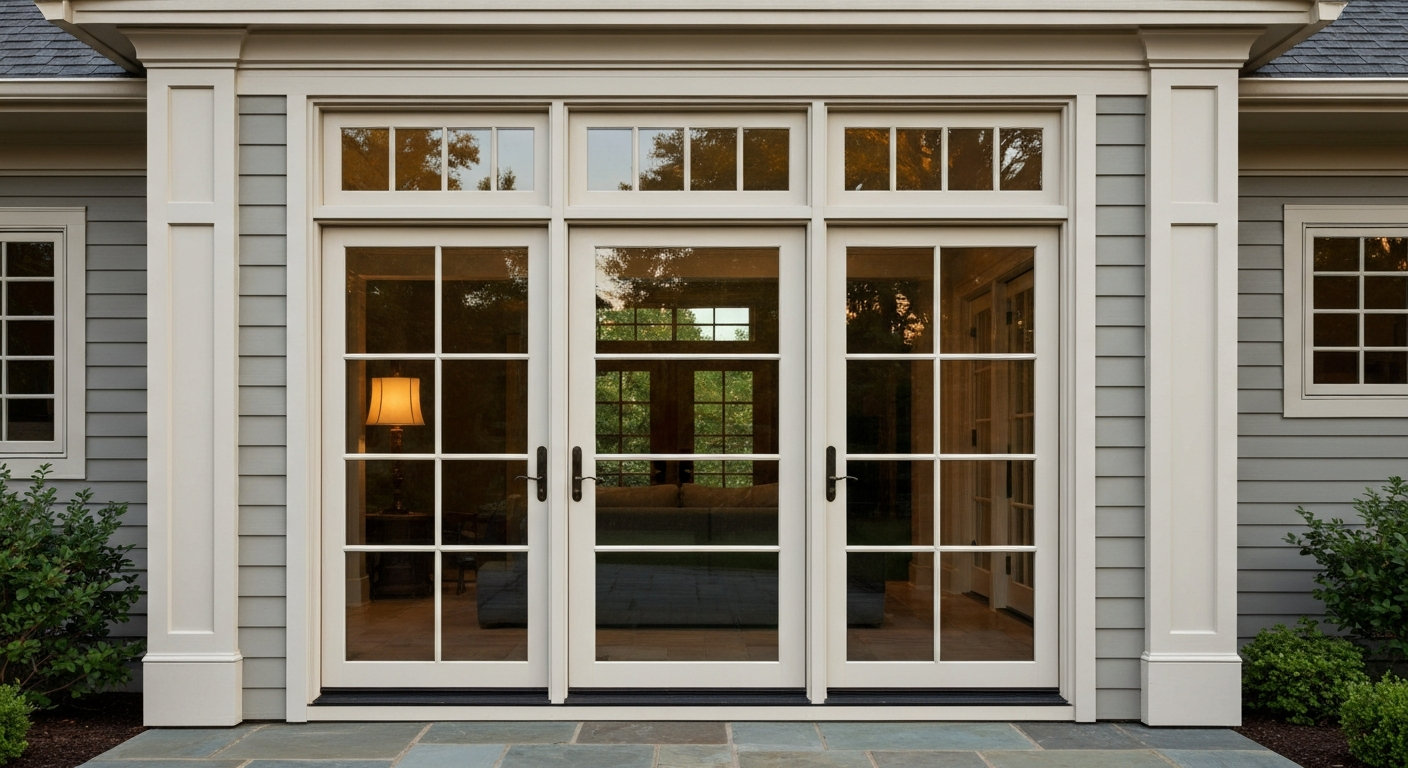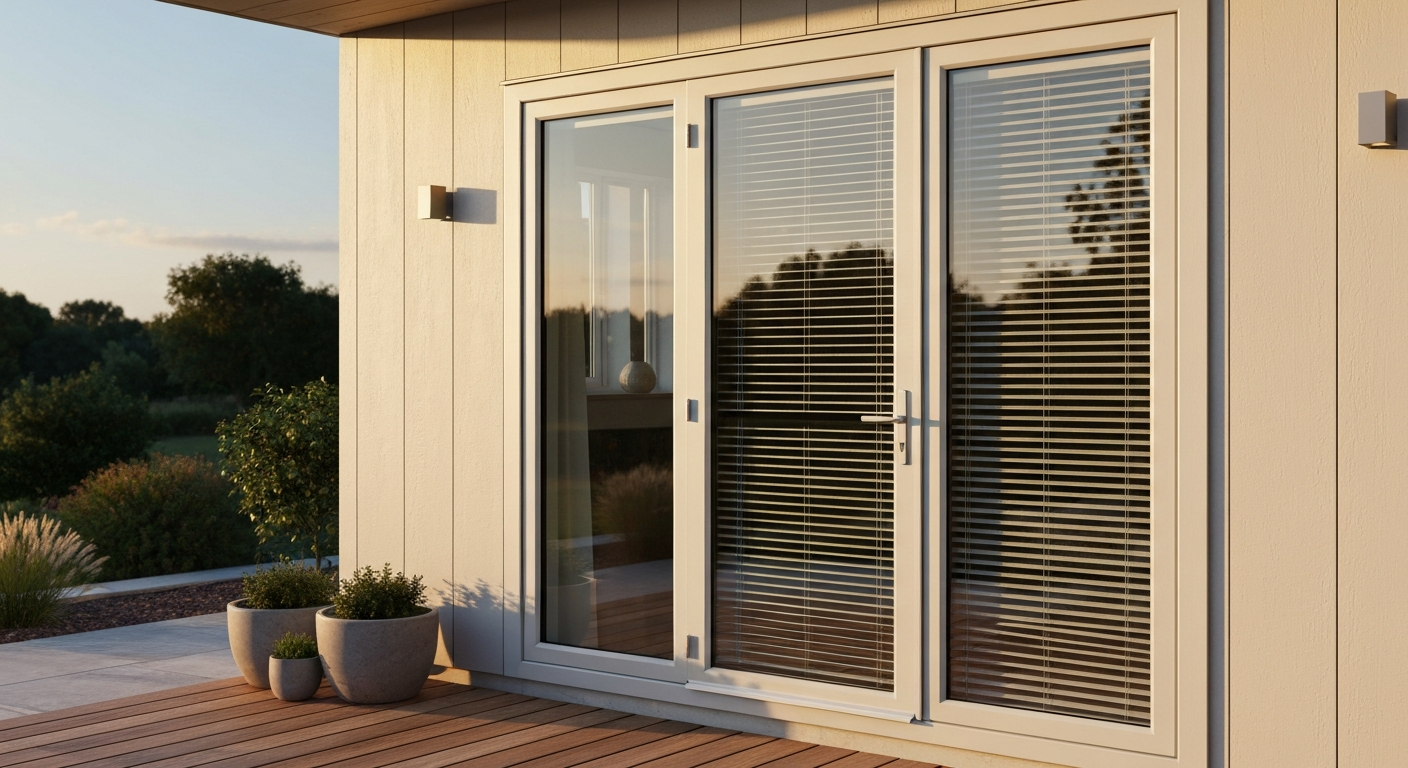
A patio door is a large exterior door, typically mostly glass, that connects your home's interior to an outdoor space like a patio, deck, or backyard. Unlike a standard entry door, it's designed to do three things at once: give you easy walk-through access, flood the room with natural light, and let in fresh air when you need ventilation. Most patio doors span at least 60 inches wide and 80 inches tall, and they're almost always installed at the back of the house. The big glass surface is the defining feature, and it's also what makes the choice of glazing, frame material, and hardware so important.
What Is a Patio Door? Types, Costs, and Buying Tips

Owen Delaney
18 May 2026
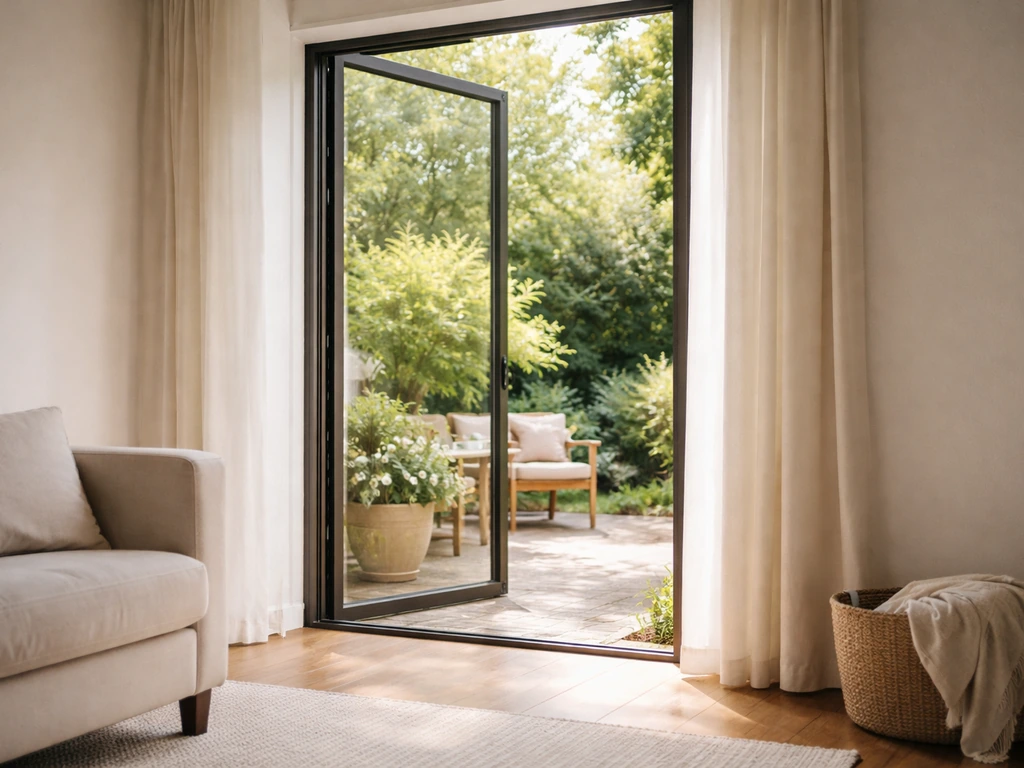
What makes a patio door different from a regular door
The defining characteristic is the glass. A standard entry door might have a small decorative window, but a patio door is predominantly glass from near the top to near the bottom. That's intentional: the whole point is to visually blur the line between indoors and out while giving you a wide, easy path onto your deck or patio. Because so much of the door is glass, and because glass is a poor insulator compared to a solid door panel, the glazing quality matters a lot more than on a regular door. The Department of Energy specifically calls out sliding glass doors as doors that can lose significantly more heat than other door types, which is why you'll always see patio doors advertised with U-factor and SHGC ratings.
The term 'patio door' covers several operating styles, not just one design. French doors, sliding doors, bifold doors, and multi-slide doors all fall under the patio door umbrella. What they share is purpose: wide glass panels, a connection to the outdoors, and an opening big enough to walk through comfortably. Where they differ is in how they open, how much floor space they need, and how they fit different architectural situations.
The main patio door types, and when each one makes sense
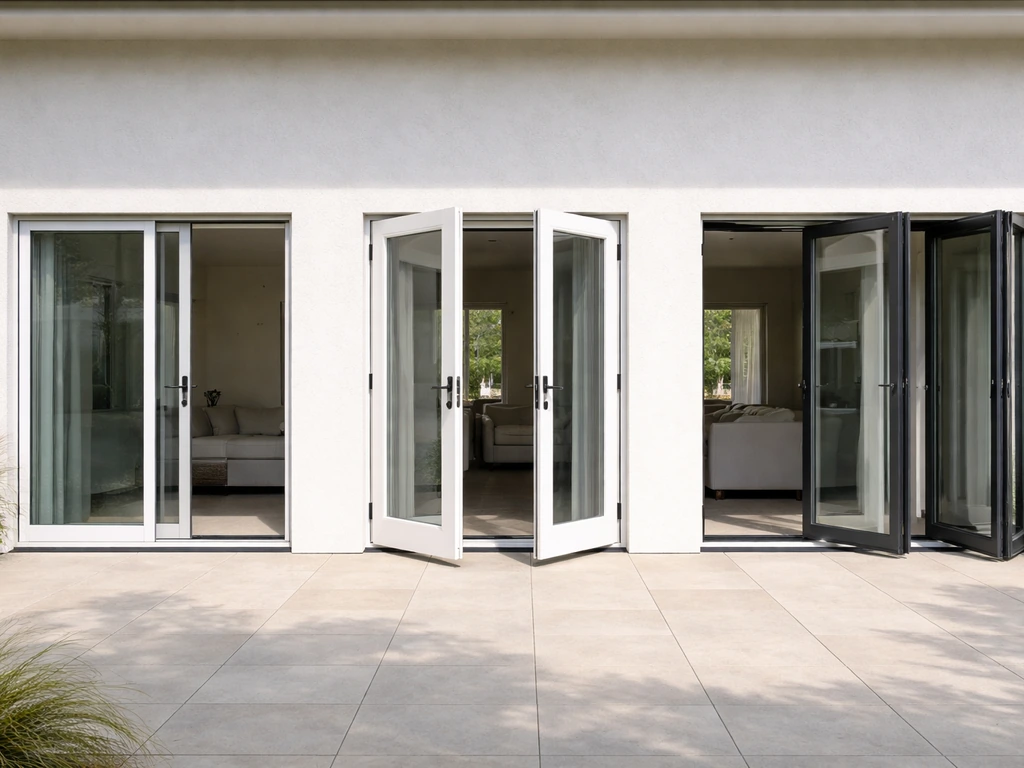
Choosing a patio door type isn't really about aesthetics first. It's about your floor plan, how much exterior clearance you have, and how often you'll be opening and closing it. Here's a practical breakdown of the most common options.
Sliding (gliding) patio doors
Sliding doors are the most common patio door in North American homes. Two or more panels sit in a track, and one panel slides parallel to the wall to open. Because the door never swings into the room or onto the deck, it works well in tight spaces on either side. A standard two-panel sliding door is typically 60 or 72 inches wide. They're generally the least expensive option and the easiest to find in stock sizes. The tradeoff is that only half the opening is ever usable, since one panel is always stationary. If you want to roll a grill through or carry large furniture, that limitation becomes real.
French (hinged) patio doors
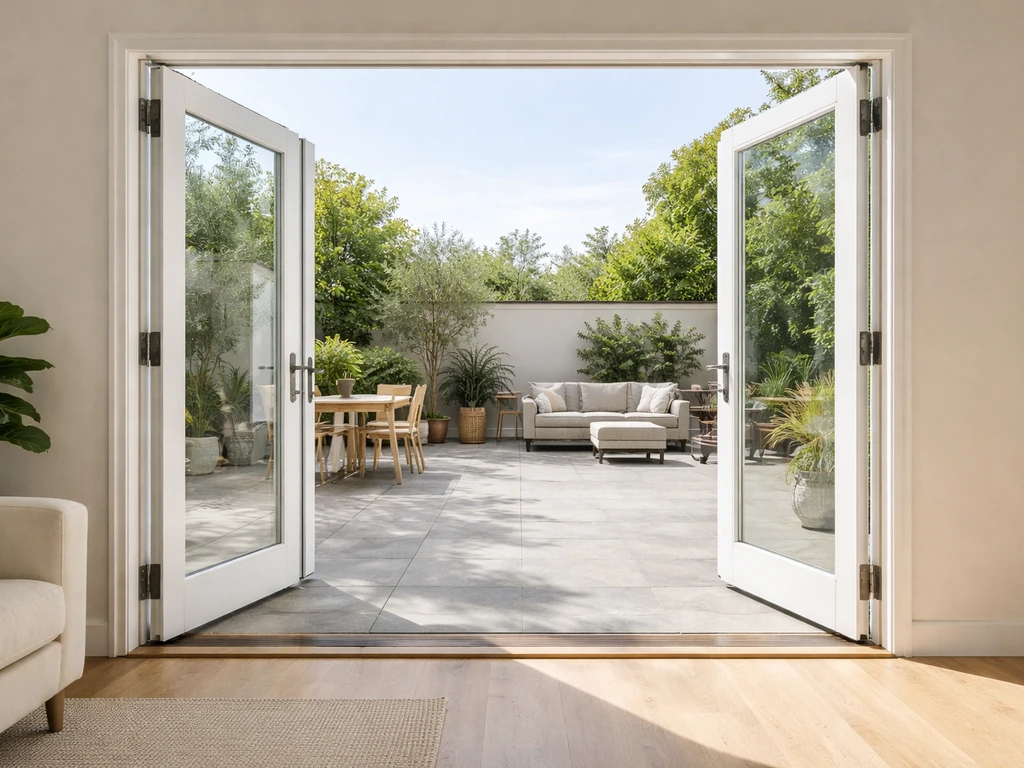
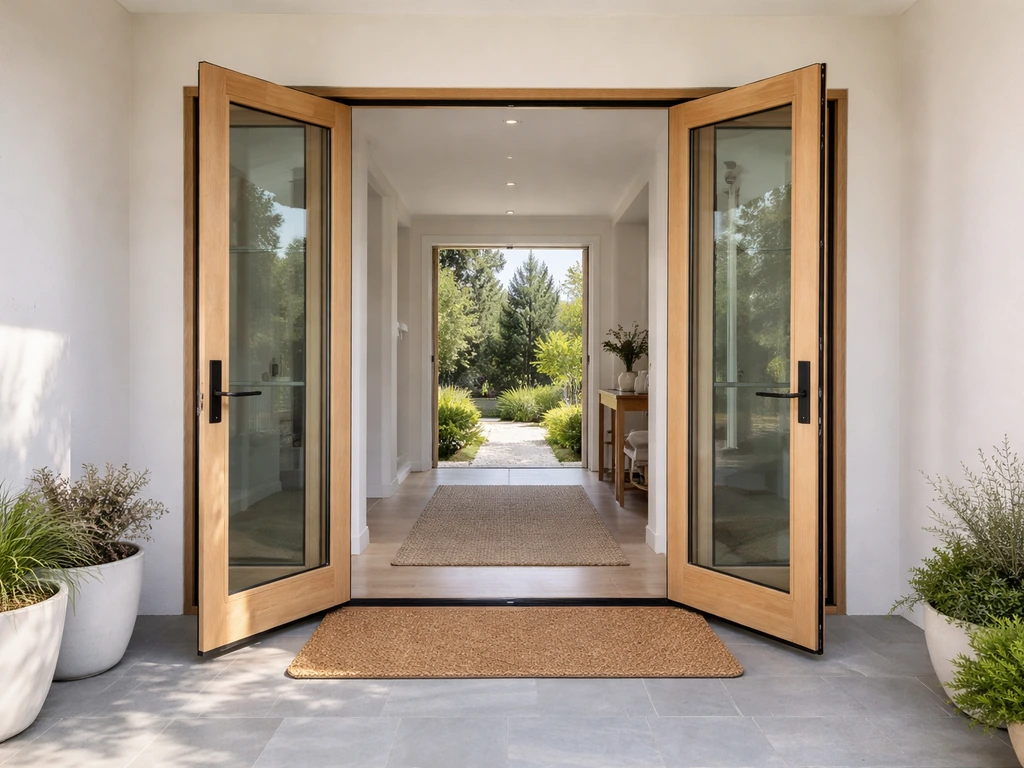
French doors are hinged on both sides and swing open like a pair of interior doors. They give you a fully open passage when both panels are open, which makes them popular for dining rooms and living rooms where you want a dramatic indoor-outdoor connection. The catch is swing clearance: you need enough space on both the inside and the outside for the doors to open freely. They can be configured as in-swing or out-swing, and the choice matters for your furniture layout and your deck railing placement. French doors tend to look more traditional and formal than sliding doors, so they fit certain home styles better.
Bifold patio doors
Bifold doors fold accordion-style on a track, stacking against one or both sides of the opening when fully open. This is how you get a truly wide-open wall-to-outside experience, the kind you see in home renovation shows where the kitchen essentially opens up to the patio. They're the most expensive common option, they require precise installation, and the track on the floor needs regular cleaning to stay functional. But if you have a wide opening and want maximum access, nothing else competes. Plan on spending significantly more than a standard sliding door, and budget for professional installation.
Multi-slide and lift-and-slide doors
Multi-slide doors use multiple panels (sometimes up to ten) that slide and stack together or disappear into a wall pocket. They create a very wide opening without the folding mechanism of a bifold. Lift-and-slide doors are a variation where a mechanism actually lifts the panel slightly before it slides, reducing friction and making very large, heavy glass panels easier to operate. Both types are premium products, typically found in custom or high-end remodels. If you're reading about lift-and-slide doors specifically and comparing them to standard sliders, those deserve their own close look since the operating mechanism is quite different. In plain terms, a lift-and-slide patio door uses a lift mechanism to make moving large glass panels smoother and easier than a standard sliding door lift-and-slide doors.
Quick comparison by use case
| Door Type | Best For | Space Needed | Typical Cost Range (Installed) |
|---|---|---|---|
| Sliding | Tight spaces, high traffic, budget-conscious | Minimal swing clearance needed | $600 – $4,000 |
| French (Hinged) | Traditional homes, wide clear openings | Swing clearance inside and out | $1,500 – $6,000 |
| Bifold | Wide openings, indoor-outdoor living | Panel stack space at one or both ends | $3,000 – $10,000+ |
| Multi-slide / Lift-and-slide | Large openings, high-end remodels | Wall pocket or stack space | $5,000 – $20,000+ |
Frame materials: what actually holds it all together
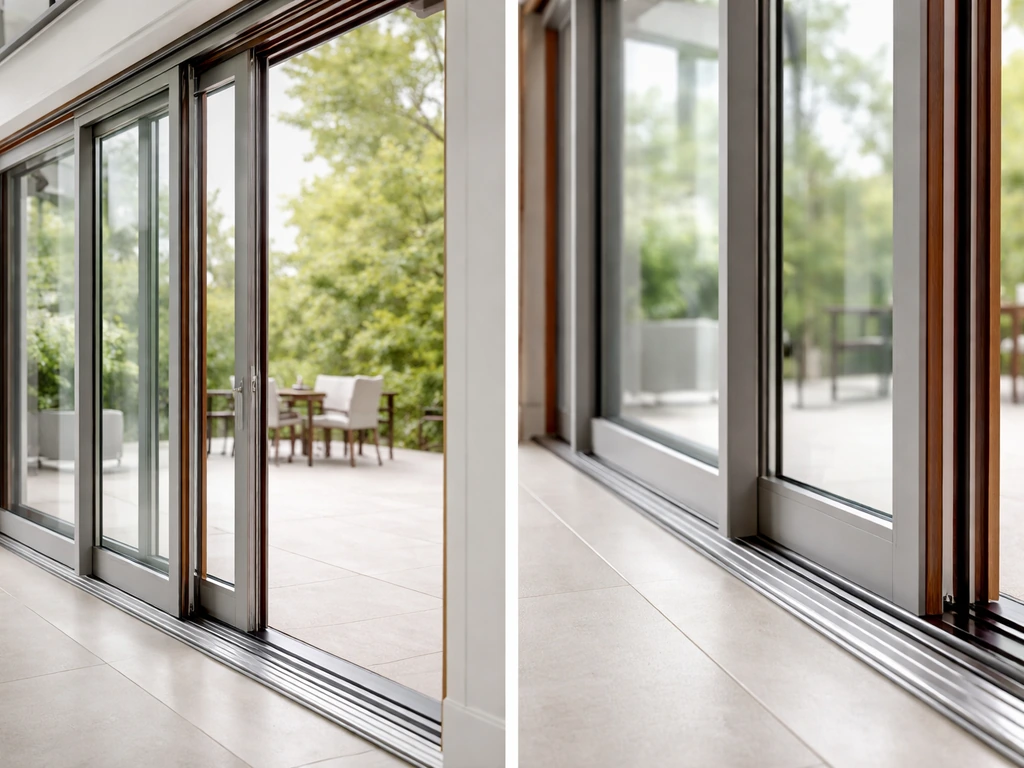
The frame material affects durability, maintenance, insulation, and long-term cost more than most people expect. There are five main options: vinyl, wood, fiberglass, aluminum, and clad wood.
| Material | Pros | Cons | Best Climate/Situation |
|---|---|---|---|
| Vinyl | Low maintenance, affordable, decent insulation | Less rigid than other materials, limited color options | Mild to moderate climates, budget-conscious buyers |
| Wood | Beautiful, excellent insulator, paintable/stainable | Requires regular maintenance, can rot or warp | Dry climates, historic or traditional homes |
| Clad Wood | Wood interior aesthetics, protected exterior | More expensive than pure vinyl or aluminum | Humid or coastal climates with wood-look preference |
| Fiberglass | Very durable, low maintenance, great insulation | Higher upfront cost | Extreme climates, high-end installs |
| Aluminum | Strong, slim sightlines, corrosion-resistant | Poor thermal performance without thermal break | Mild climates, modern/contemporary homes |
For most homeowners replacing an existing patio door, vinyl or fiberglass hits the best balance of cost, durability, and energy performance. If you're shopping for patio doors fort worth, vinyl or fiberglass are common picks because they balance cost, durability, and energy performance. Wood looks incredible but the maintenance commitment is real, especially on a door that gets direct sun and weather exposure. Aluminum is worth considering if you want slim frames and a modern look, but make sure the frame has a thermal break (an insulating barrier inside the frame) or it will bleed heat in cold months.
Energy efficiency and why your climate changes everything
Energy efficiency matters more for patio doors than almost any other door type, because you're dealing with a large glass area that can bleed heat or trap solar gain depending on how it's glazed. The two numbers to know are U-factor (how much heat the door loses, lower is better) and SHGC (solar heat gain coefficient, how much solar energy passes through, also lower is better in hot climates but higher is sometimes preferred in cold ones).
ENERGY STAR certifies doors against climate-zone-specific thresholds, so a door that qualifies in Florida won't necessarily qualify in Minnesota. When you're shopping, look for the ENERGY STAR label and check both the U-factor and SHGC for your region. In cold climates, you want a low U-factor above almost everything else to minimize heat loss through that big glass panel. In hot, sunny climates, a low SHGC helps keep solar heat out. In mixed climates, you're balancing both.
Double-pane glass with a low-E coating is the baseline for any patio door worth buying today. Single-pane patio doors are still out there in older homes and they lose heat at a dramatically higher rate. If you're replacing an older door, the energy savings from upgrading the glazing alone can be significant. If you're looking at patio door definition insurance coverage, higher-performing glazing can also influence how insurers view risk and potential water damage energy savings from upgrading the glazing. Triple-pane options are available and make sense in very cold climates, but the added cost and weight need to justify themselves in your specific situation.
How to measure for a patio door replacement
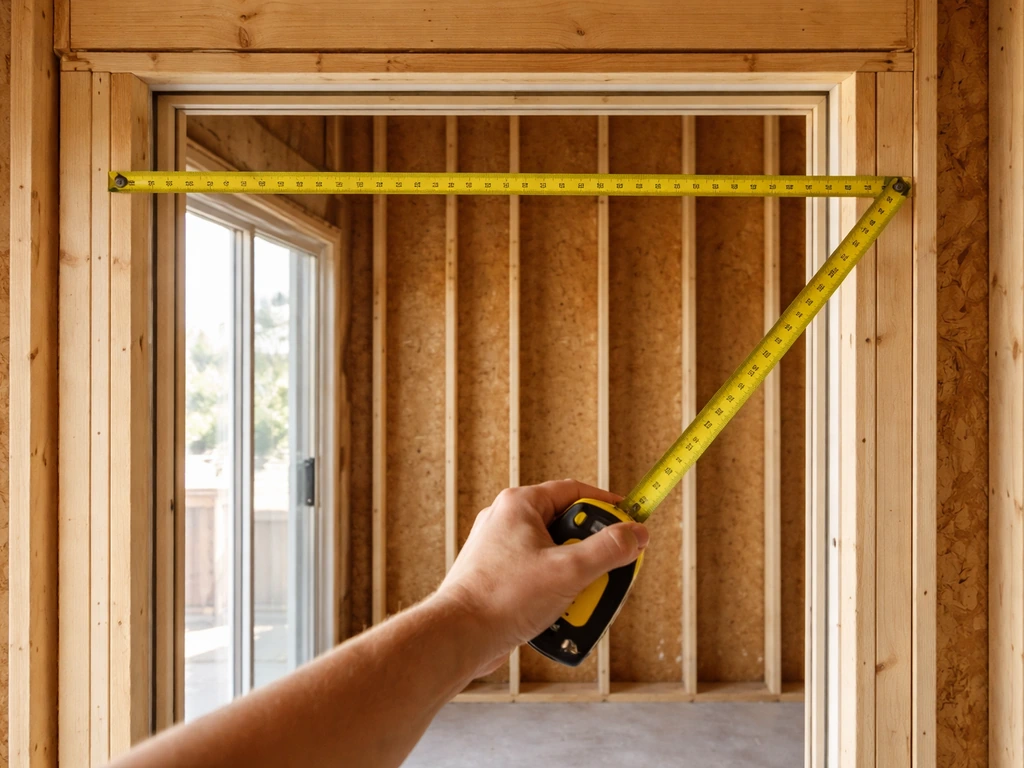
If you're replacing an existing patio door, you measure the rough opening, not the door itself. The rough opening is the framed hole in the wall before any trim or finishing. Measure the width at three points (top, middle, bottom) and use the smallest measurement. Do the same for height. Pella's guidance, for example, instructs homeowners to measure width and height across the door frame and notes that patio doors can be custom-made to specific measurements, so getting the rough opening right is the starting point.
For a standard replacement, you want to match the existing rough opening as closely as possible to avoid opening up walls. A rough opening for a 72-inch sliding door will typically be about 73.5 to 74 inches wide and 82 inches tall, though this varies by manufacturer. The door unit (frame plus panels) is always slightly smaller than the rough opening, and the gap is filled with shims, insulation, and flashing. Speaking of flashing: this is one of the most commonly skipped steps in DIY installs, and it's the number one cause of water damage around patio doors. The Building America Solution Center specifically flags missing or poorly lapped flashing as a major moisture intrusion risk.
- Measure rough opening width at top, middle, and bottom; use the smallest number
- Measure rough opening height on both sides and in the center; use the smallest number
- Account for the door unit being 0.5 to 1.5 inches smaller than the rough opening on each dimension
- Check that the sill is level before ordering; an unlevel sill causes sliding doors to drift open or closed
- If the opening needs to be widened, that's a structural job requiring a properly sized header beam
What a patio door replacement actually costs
The national average to install a sliding glass patio door is around $2,500 according to This Old House, but the real range is wide: roughly $600 on the low end for a basic vinyl slider installed in a standard opening, up to $10,000 or more for a large, high-performance door with premium glazing. French doors and bifold doors push toward the higher end of that range even at entry-level quality. The door price you see at a home improvement store is just the starting point.
Here's what actually drives the final cost up:
- Door type: bifolds and multi-slides cost significantly more than standard sliders
- Size: anything wider than 72 inches or taller than 80 inches moves into custom pricing
- Frame material: fiberglass costs more than vinyl, which costs more than basic aluminum
- Glazing package: triple-pane, low-E coatings, and argon-filled glass all add cost
- Hardware: multipoint locking systems and premium handles add $100 to $400
- Installation labor: typically $300 to $1,000 for a straightforward swap, more if walls need to be opened
- Disposal of the old door: often $50 to $150 if the installer handles it
- Structural changes: widening a rough opening requires a new header and framing work, which can add $500 to $2,000 or more
If you're a confident DIYer, installing a pre-hung patio door in an existing rough opening is doable, but flashing and weatherproofing are where most DIY installs go wrong and cause expensive water damage later. For hinge and French-style patio door installations, Pella’s installation documentation includes rough-opening verification targets and describes the weather-resistant barrier or wrap cut pattern hinged and French-style patio door installations. For a first replacement, I'd lean toward professional installation and treat the labor cost as insurance against a water damage bill down the road.
Security, privacy, and the accessories that are actually worth it
Patio doors get targeted by burglars more often than entry doors because the locking mechanisms on older sliding doors are genuinely weak, and glass is breakable. The good news is that a few targeted upgrades make a big difference.
Locking and security
Pella recommends multipoint locks for sliding patio doors specifically because they engage the frame at multiple points instead of just one, making the door much harder to force open. The old-school trick of putting a cut-down broomstick in the track is better than nothing, but a purpose-built anti-lift bar or track pin is more reliable and doesn't get kicked out accidentally. For glass security, laminated glass is the real upgrade: it holds together when struck rather than shattering into pieces, which removes one of the fastest break-in methods. Security film applied to existing glass is a cheaper alternative that adds similar resistance. A layered approach, multipoint locks plus anti-lift hardware plus laminated glass or security film, is what security experts actually recommend for glass doors.
Privacy options
Patio doors are almost entirely glass, which means privacy is a real consideration depending on your yard and neighbors. Frosted or obscure glass is available as an option at the time of purchase and gives permanent privacy while still letting light through. Exterior or interior blinds built between the glass panes are another popular factory option that eliminate the need for any window covering. For existing doors, cellular shades, vertical blinds, and curtain panels are the most common after-market solutions. Exterior privacy screens that attach to the door frame are also available and double as insect screens.
Screens and weatherproofing add-ons
Most sliding and French patio doors come with a screen panel, but bifold and multi-slide doors often require a separate screen system that's worth pricing out before you commit to a door. Retractable screen systems are popular for French and multi-slide configurations where a fixed screen would block the opening. For weatherproofing, door sweeps and threshold seals are the most cost-effective upgrade on an aging door that's letting in drafts. If you have an older single-pane patio door that you're not replacing yet, a properly installed storm door over it can meaningfully reduce heat loss, though it needs to be rated for the application to achieve the savings the DOE describes.
Where to go from here
Now that you know what a patio door is and how the main types compare, the logical next steps are pretty straightforward. Measure your rough opening first before you do anything else, because that determines what fits without structural work. Then decide on your type based on how your space actually functions, not just how something looks in a showroom. From there, match the frame material and glazing to your climate, check the ENERGY STAR ratings for your zone, and get at least two installation quotes that include flashing and finishing work. Home insurance rules for patio doors vary by policy, so check your coverage for glass, water damage, and any specific exclusions. If you're wondering, "are patio doors covered by insurance," check your policy details since coverage can vary by the type of damage and the door's installation and features insurance for patio doors. If you're also weighing whether your new door might qualify for an energy tax credit, or thinking about whether your homeowner's insurance covers the door, those are separate questions worth looking into before you finalize your purchase decision.
FAQ
What’s the difference between a patio door and a sliding glass door?
Sliding glass door is one common operating style of patio door. A patio door is the broader category that includes sliding, French, bifold, and multi-slide designs, all intended for walk-through access to a patio or deck.
Do patio doors have to be installed on the back of the house?
They’re most commonly placed at the rear, but that’s not a requirement. Some homes use side patios or wraparound decks, so the “most common location” is a planning norm, not a code or product rule.
How do I know if I have enough space for a French patio door?
You need clearance for the door swing both inside and outside. Measure where furniture, floor molding, window trim, and deck railings are, then confirm you can open both panels without hitting obstacles, especially with in-swing versus out-swing setups.
For a sliding patio door, does the stationary panel reduce what I can actually open?
Yes. On most two-panel sliders, only the moving panel clears the opening, so you effectively get less usable width than the rough opening. If you plan to move furniture or roll a grill through, compare the “clear passage width,” not just the overall door width.
What should I check besides the rough opening size when replacing a patio door?
Confirm the wall condition and the sill area. Even if the opening is correct, older installs can have damaged or uneven framing that affects how the door sits, which in turn impacts weatherproofing and drainage.
Is triple-pane glass always worth it for patio doors?
Not automatically. Triple-pane can help in very cold climates, but it adds weight and cost, so make sure the frame and hardware are rated for it. If your area is mixed or mild, double-pane with the right low-E coating may be the better value.
What U-factor and SHGC numbers should I target in my climate?
In cold climates, prioritize a low U-factor to reduce heat loss. In hot, sunny areas, prioritize a lower SHGC to limit solar heat gain. In mixed climates, look for a balance and avoid choosing one rating without checking the other for your region.
Can I use the same patio door measurements as the existing door unit?
No. You generally match the rough opening, because the door unit (frame plus panels) is slightly smaller. If you measure the old door itself, you can end up with a gap that’s too large or too small for proper shimming, insulation, and flashing.
What’s the most common installation mistake that leads to patio door leaks?
Inadequate flashing and poor water management at the sill and side jambs. If water gets behind the trim or isn’t lapped correctly, it can cause hidden damage, even if the door seems to work fine initially.
Do I need a separate screen for every type of patio door?
Not always. Many sliding and French doors include a screen, but bifold and some multi-slide systems often require a dedicated screen setup. Before buying, confirm the screen type, fit, and whether it’s fixed, retractable, or separate from the door package.
What security upgrades matter most for patio doors?
Start with multipoint locking hardware for sliding doors, then address glass impact resistance. Laminated glass is a major step up because it holds together when struck, and security film can be an alternative for existing doors (quality and installation matter).
How can I improve energy performance on an older patio door without replacing it?
You can reduce drafts with a properly installed threshold seal and door sweeps, and you may consider a storm door over the existing unit. Those options help, but they won’t match the heat performance of new insulated glazing.
Does patio door privacy require buying different glass?
Not necessarily. You can choose factory options like frosted or obscure glass, or add built-in blinds between panes. For existing doors, common after-market options include cellular shades, vertical blinds, or exterior privacy screens that also act as insect screening.
Will patio door installation costs change based on the door type?
Yes. Sliding doors are usually less expensive to install than French, bifold, or multi-slide because opening size, weight, and framing complexity differ. Premium multipanel and lift-and-slide systems also often require more specialized setup.
What should my installation quote include to avoid surprises?
Ask whether the quote includes flashing, sill pan or equivalent water management, insulation around the frame, and interior and exterior trim finishing. Also ask how the contractor verifies operation and alignment, since misalignment can cause both leaks and poor locking.
Are patio doors always covered by homeowners insurance?
Coverage varies by policy terms and the type of damage. Glass may be covered under certain provisions, but water damage and installation-related issues can be treated differently. Review your policy for exclusions and whether you have separate coverage options for wind or impact damage.