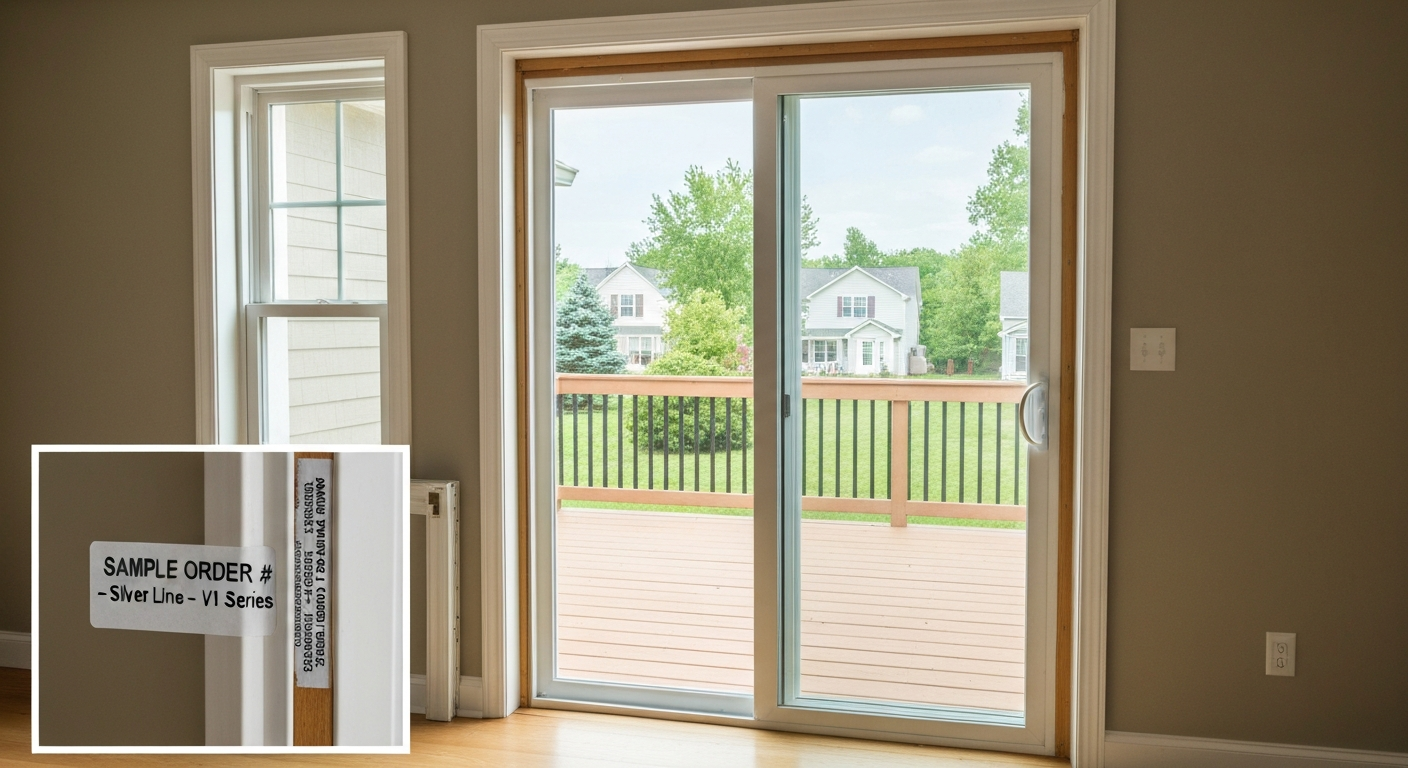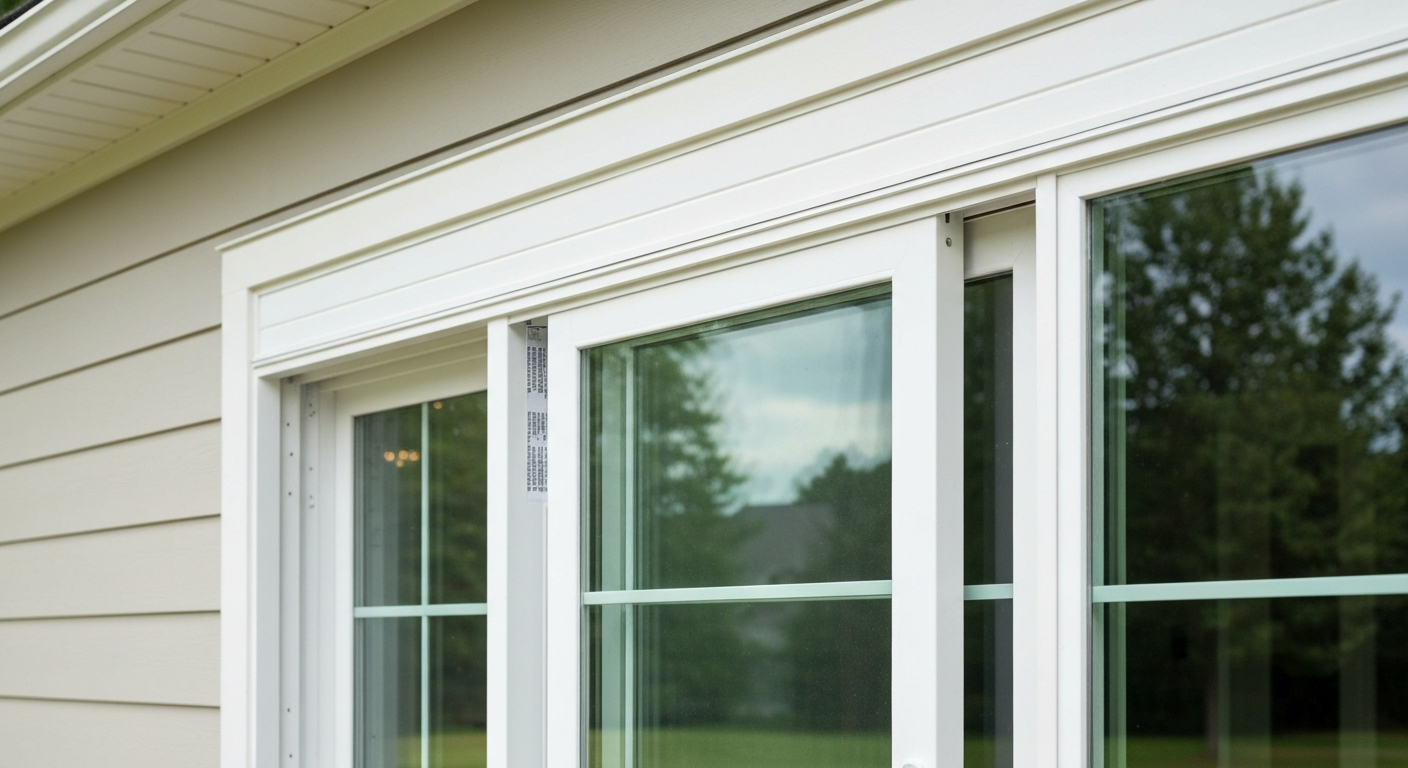
MP patio doors are made by Nan Ya Plastics Corporation USA. The trademark 'MP DOORS' (USPTO Registration No. 5,395,417) is registered to Nan Ya Plastics Corporation, covering non-metal gliding and composite patio doors and related frames. The company operates under the MP Doors brand at mpdoors.com, publishes its own installation guides and Energy Star spec data, and names itself as the warrantor in its Limited Lifetime Warranty documentation. See the MP Doors, Limited Lifetime Warranty (PDF) naming Nan Ya Plastics Corporation USA as the warrantor and listing customer service contact information MP Doors — Limited Lifetime Warranty (PDF). So if you have an MP Doors label on your sliding patio door, Nan Ya Plastics is your manufacturer, and that is who you call for warranty claims and replacement parts.
Who Makes MP Patio Doors: Manufacturer IDs & Buying Guide

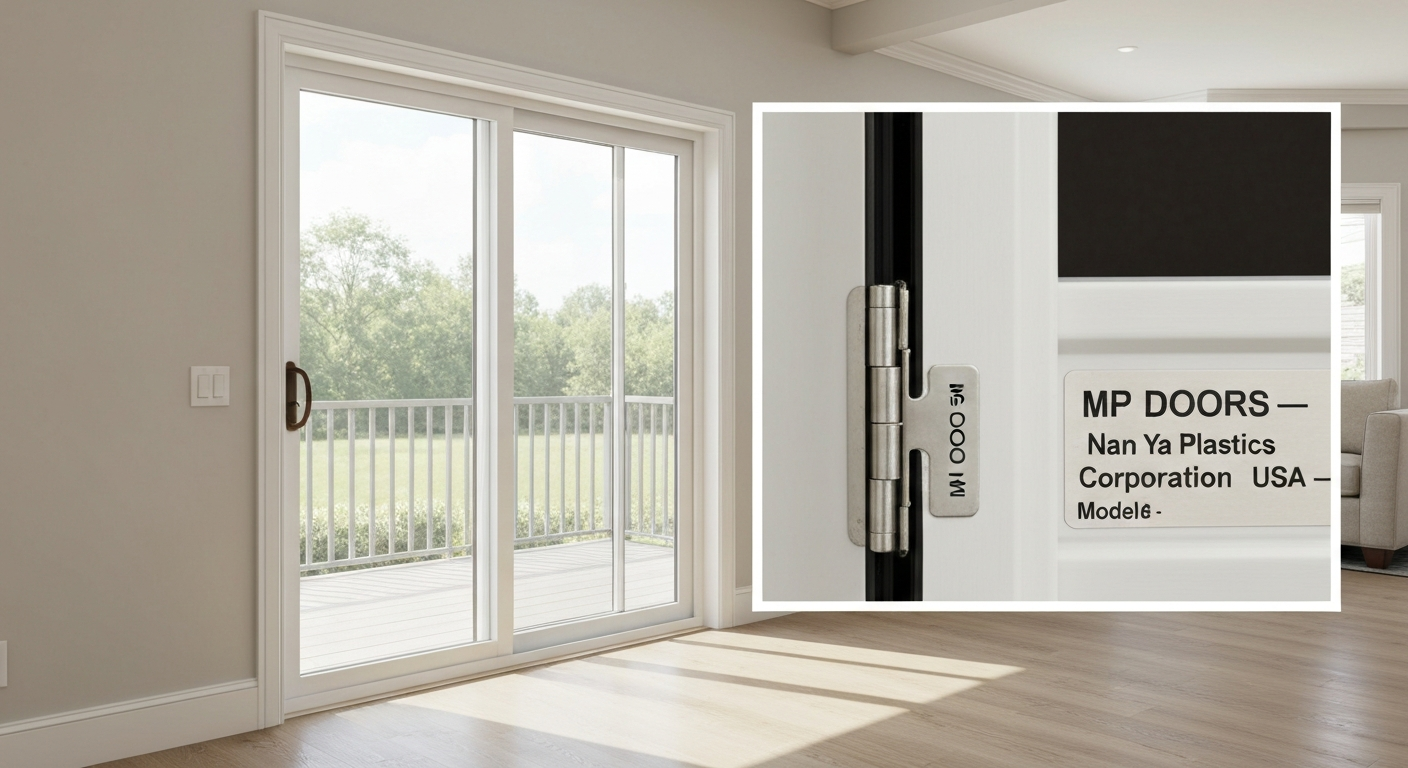
Why 'MP' can mean more than one thing
Here is where it gets confusing. 'MP' stamped on a patio door does not always point to the MP Doors brand from Nan Ya Plastics. Patio doors pick up letters and codes at multiple points in the supply chain: the original manufacturer stamps a production code, the distributor may add its own dealer mark, and big-box retailers sometimes sell private-label versions under similar-sounding names. Home Depot, for example, has sold products listed under 'MasterPiece' or 'MP' in their door department, which are a separate product line from Nan Ya's MP Doors brand. A stamp, sticker, or embossed 'MP' on the glass edge or frame corner could theoretically reference a production batch code, a private-label identifier, or even a model designation rather than a brand name. Pella, Find the Serial Number on Your Windows & Doors (support) documents common label locations such as the sash/frame (hinge side), inside the top track, the edge of the glass spacer, or the NFRC/energy label Pella — Find the Serial Number on Your Windows & Doors (support).
This is not unusual in the door industry. Brands like ReliaBilt exist exclusively as store-brand labels for a single retailer. Others, like Silverline, carry their own name but sit under a larger corporate umbrella. The practical takeaway: never assume the two-letter code on a door tells you the full story. You need to dig one level deeper, and the next section tells you exactly how.
How to confirm who actually made your patio door
I have gone through this process myself when helping a neighbor track down a replacement roller for a sliding door that had been in her house for over a decade with no paperwork. Here is the verification checklist I use every time.
- Check the door jamb and sash first. Most manufacturers attach a label to the hinge side of the frame, the top of the sash, or inside the top track. Look for a printed sticker or foil label with a manufacturer name, model number, or order number.
- Inspect the glass spacer edge. Tilt or slide the panel and look at the edge of the insulated glass unit. Manufacturers often etch or print a production code, date, and company name directly into the glass spacer or the corner key.
- Find the NFRC label. Any door sold with an energy rating in the United States will have a National Fenestration Rating Council (NFRC) label. This label carries a CPD (Certified Products Directory) number. Go to nfrc.org, click the Certified Products Directory, enter that CPD number, and you will see the rated manufacturer's name and the exact product line.
- Cross-reference with paperwork. Pull your original purchase receipt, the builder's spec sheet, or the home inspection report. Even a partial model number typed into a Google search alongside 'patio door' often surfaces the manufacturer's installation PDF, which names the company.
- Call the retailer with the model number. If you bought the door at Lowe's, Home Depot, or a local building supply, give them the full model/SKU number. Their product lookup systems tie SKUs to vendors, and they can often tell you the source brand within a few minutes.
- Contact the manufacturer directly using the label info. If the label says 'MP Doors,' call mpdoors.com or Nan Ya Plastics Corporation USA's customer service line listed in the warranty PDF. If it says 'MasterPiece,' that is a separate company (masterpiecedoors.com). Getting these two straight before you order parts saves a lot of wasted shipping.
ReliaBilt: the Lowe's house brand
ReliaBilt is Lowe's exclusive store brand for windows and patio doors, sold only through Lowe's retail locations and their website. The brand's technical documentation lives at reliabilt.atriumwindows.com, which gives you a hint about the manufacturing relationship. ReliaBilt patio doors come in vinyl-framed sliding configurations, typically with aluminum-reinforced rails and tracks, steel or aluminum rollers, and optional Low-E/argon glazing upgrades.
Common panel sizes run the standard residential range: 60x80 (a 5068 unit), 72x80 (6068), and wider configurations at 6468, 8068, 9068, and 12068 for larger openings. Pricing at Lowe's for a standard 60x80 ReliaBilt vinyl sliding door has been listed around $538, while 72x80 models vary from roughly $473 to over $1,000 depending on the series and options like blinds-between-glass or exterior color finishes. The brand carries a limited lifetime warranty on vinyl components and working parts. To verify the exact manufacturing source on a ReliaBilt door, look for the NFRC CPD number on the glass label and run it through nfrc.org.
Silverline: fusion-welded vinyl with a corporate parent
Silver Line Windows and Doors (silverlinewindows.com) sells its own branded V1 and V3 gliding patio door lines, built with fusion-welded vinyl frames and steel reinforcement. They offer an optional Coastal Watch impact series for high-wind zones, and they publish downloadable product detail drawings, sizing PDFs, and panel replacement service guides, which is actually more technical transparency than a lot of brands offer. Warranty claims for Silverline products run through Cornerstone Building Brands' warranty portal, which tells you the corporate structure: Silverline operates as a branded division under the Cornerstone Building Brands umbrella. If you need to know who makes Silverline patio doors, Silverline is manufactured under Cornerstone Building Brands.
To confirm the manufacturer on a specific Silverline door, find the NFRC label, pull the CPD number, and verify it at nfrc.org. You can also download the matching product detail drawing from silverlinewindows.com using the series name from your label, which will confirm the exact model and frame construction details. Silverline doors are typically sold through independent dealers and distributors rather than a single big-box chain, so your local building supply or window dealer is often the best service contact.
Veranda: distribution notes and how to trace the maker
Veranda patio doors appear primarily through Home Depot, where the brand is positioned as an entry-level to mid-range option. The Veranda name itself functions as a product line label, and understanding the full manufacturing chain behind it requires the same verification steps as any private-label product: check the jamb label, find the NFRC CPD number, and cross-reference with the retailer's vendor records. If the door is still installed and the label is intact, the NFRC lookup is the fastest route to a confirmed manufacturer name. If you are shopping new and considering Veranda, ask the store associate to pull the vendor spec sheet, which should list the manufacturing source explicitly.
Summit: PVC performance from the Pacific Northwest
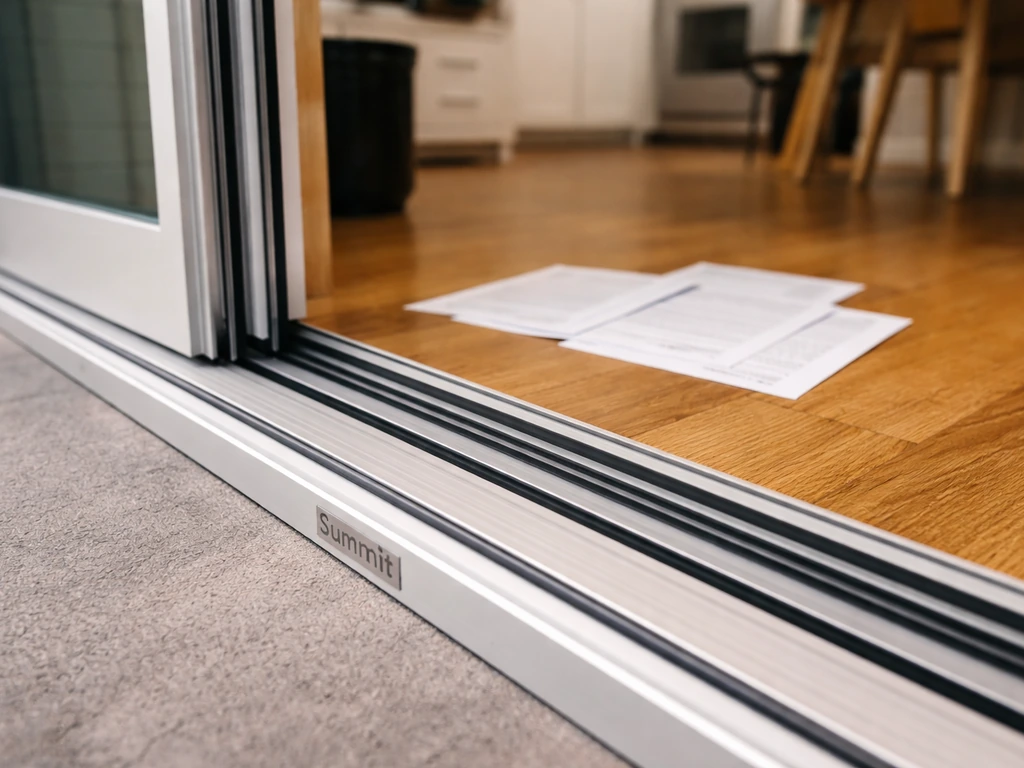
Summit Windows and Doors is a U.S.-based manufacturer operating out of the Seattle area. Unlike big-box store brands, Summit sells direct and through authorized dealers, with a physical showroom you can actually visit. Their current product focus is PVC (uPVC) doors with European-engineered hardware, multi-point locking systems, and triple-glazing options aimed at energy performance in Pacific Northwest climates. They advertise a lifetime warranty and note aluminum product lines in development. If you are looking at a Summit door and need to confirm manufacturing origin, the company is straightforward about it: check their official site for the model name, or call the Seattle contact number listed on summitwindowsanddoors.com. Unlike distributor-label brands, Summit is the manufacturer of record. If you need to know who makes Summit patio doors, Summit Windows and Doors of the Seattle area is the manufacturer of record.
Masterpiece: composite doors since 1971
MasterPiece Doors (masterpiecedoors.com) is an independent door manufacturer founded in 1971. They make composite and fiberglass doors, and they are open about their identity: the About page names the company directly, and the warranty documentation is posted publicly on their site. The warranty is a 5-year limited warranty covering composite and fiberglass products, with specific exclusions for warping, finish issues caused by improper installation, and conditions outside their guidelines. This is a notably shorter warranty than the lifetime coverage offered by ReliaBilt or MP Doors, so factor that in when comparing.
The confusion with 'MP' arises partly because MasterPiece doors have appeared in Home Depot listings under SKUs that include 'MP' in the product code, and their name is sometimes abbreviated. If your door has a label that reads 'MasterPiece' or 'MP' with a Home Depot purchase history, masterpiecedoors.com is your manufacturer contact. If your door is a gliding (sliding) patio door rather than an entry swing door, cross-check with the MP Doors brand from Nan Ya Plastics, since MasterPiece's main product focus is entry/swing composite doors.
Brand comparison at a glance
| Brand | Manufacturer / Parent | Primary Material | Common Sizes | Warranty | Where to Buy | Price Range (Door Unit) |
|---|---|---|---|---|---|---|
| MP Doors | Nan Ya Plastics Corporation USA | Vinyl / Composite | 60x80, 72x80, custom | Limited Lifetime | Independent dealers, direct | Mid-range |
| ReliaBilt | Lowe's store brand (Atrium/Cornerstone) | Vinyl (aluminum-reinforced) | 60x80, 72x80, 64x80, 80x80, 90x80, 120x80 | Limited Lifetime (vinyl + working parts) | Lowe's only | $473 to $1,000+ |
| Silverline | Cornerstone Building Brands division | Fusion-welded vinyl (steel reinforced) | V1/V3 series, multiple widths | Limited Lifetime | Independent dealers / distributors | Mid-range |
| Veranda | Private-label (verify via NFRC) | Vinyl | Standard residential sizes | Varies by label — verify | Home Depot | Entry to mid-range |
| Summit | Summit Windows and Doors (direct manufacturer) | uPVC, upcoming aluminum | Custom / configurable | Lifetime | Direct / authorized dealers (Seattle area) | Mid to premium |
| Masterpiece | MasterPiece Doors (independent, est. 1971) | Composite / Fiberglass | Standard entry sizes | 5-Year Limited | Home Depot, independent dealers | Mid-range |
Sizing, installation, and upgrade options
Rough opening size drives everything. The most common residential patio door rough openings are 60 inches wide by 80 inches tall (for a standard 5-foot slider) and 72 inches wide by 80 inches tall (6-foot). Wider openings at 8, 9, and 12 feet are available for living rooms or decks where a narrow opening would feel cramped. Before you order, measure the rough opening width and height, then subtract at least 0.5 inches each direction for shimming clearance. Getting this wrong means a return shipment or a reframed opening, and neither is cheap.
Installation is where a lot of homeowners get surprised by cost. The door unit price is only part of the budget. Factor in rough opening modification if your existing frame is non-standard, flashing and weatherproofing materials, threshold adjustments for uneven floors, and hardware upgrades. If you are replacing an existing sliding door in a standard opening, a competent DIYer can handle it in a weekend, but I would recommend at least having a professional check the flashing and threshold seal before closing up the wall.
For upgrades, the three most practical additions to any patio door are: a full-view screen door (retractable screens hold up better than sliding screen panels over time), a multi-point locking system (especially worth it if you are upgrading to a uPVC door like Summit's), and low-E glass with argon fill if the existing unit is single-pane or early double-pane. These upgrades address the three most common homeowner complaints: bugs getting in, security concerns, and high energy bills.
Where to find parts and service
For MP Doors from Nan Ya Plastics, start with mpdoors.com's customer service line listed in the warranty PDF. For ReliaBilt, Lowe's is your first stop since it is their exclusive brand, and the Atrium/Cornerstone service portal is the escalation path. For Silverline, the Cornerstone Building Brands warranty portal handles claims, and many independent window dealers stock common Silverline hardware parts. For Summit, direct contact through summitwindowsanddoors.com is the correct path since they sell direct and through authorized dealers. For MasterPiece, masterpiecedoors.com lists a direct contact, and Home Depot can pull vendor contact info for warranty issues if you purchased there.
For older doors where the brand is unclear, a local window and door service company can often identify the hardware manufacturer from the roller, latch, and frame profile even without a label. Replacement rollers and latch hardware are largely cross-compatible within standard profiles, so even if you cannot confirm the original brand, a good service tech can match the hardware by measurement.
Your next steps as a homeowner
- If you already have a patio door labeled 'MP': confirm it is an MP Doors product from Nan Ya Plastics by checking mpdoors.com against your model number. If the model does not appear there, run the NFRC CPD number to rule out a MasterPiece or private-label product.
- If you are replacing a door and comparing brands: use the table above to align your budget and warranty expectations. Lifetime warranty coverage (MP Doors, ReliaBilt, Silverline, Summit) is meaningfully better than a 5-year term for anything you plan to keep more than a decade.
- If you are buying at a big-box store: ask for the NFRC label information and run the CPD number before you finalize the purchase. This tells you exactly what you are buying and who stands behind the warranty.
- If you need parts for an unidentified door: photograph the glass edge stamp, the frame label, and any hardware, then bring those photos to a local window service dealer. Most can identify the profile and source a match.
- If energy performance matters: prioritize doors with Low-E coated double or triple glazing and argon fill. All the major brands above offer this option; verify it is included in the specific SKU you are purchasing rather than assuming it is standard.
- If security is a priority: look for multi-point locking as either a standard or upgrade feature. Summit's uPVC line includes this; for other brands, aftermarket multi-point hardware kits are available and can be retrofitted to most vinyl sliding doors.
FAQ
Who manufactures "MP" or "MP Doors" patio doors?
Public trademark and warranty records identify MP Doors (branded "MP DOORS") as tied to Nan Ya Plastics Corporation (MP Doors / Nan Ya Plastics Corporation USA is named in the MP Doors limited lifetime warranty and in MP's published product/installation materials).
How can a homeowner verify the maker of a patio/slider door when the label only shows "MP" or is ambiguous?
Verify the maker by locating the manufacturer/order label or code on the door (common label locations: sash or frame edge, inside the top track, hinge/lock stile, or printed on the energy/NFRC label). Note the label name, model/CPD number or serial/order code and: 1) search NFRC's Certified Products Directory using the CPD/label code to confirm rated manufacturer/product; 2) compare the label name to the warranty/installation guide received with the door or on the brand website; 3) photograph and email the label to the retailer or to the named manufacturer for confirmation. If no permanent label is found, look for package paperwork or original purchase invoice and contact the installer/retailer to obtain the manufacturer/order information.
Quick brand profiles: Summit, MasterPiece, ReliaBilt, Silver Line and Veranda — who are they and what do they sell?
Summit: A U.S. manufacturer offering PVC (uPVC) and aluminum doors with customizable options, European‑style hardware and performance (lists lifetime warranty on its site). MasterPiece (MasterPiece Doors): Independent door maker founded decades ago; sells composite/fiberglass and vinyl‑framed doors and posts a 5‑year limited warranty. ReliaBilt (RELIABILT): A retail/exclusive brand for Lowe's—vinyl sliding patio doors in multiple series, standard sizes and budget price points; offers limited lifetime warranty on frames/working parts. Silver Line: A branded division providing fusion‑welded vinyl gliding patio doors (V1/V3 lines), with steel reinforcement options, coastal/impact options and a limited lifetime warranty; warranty administration routed through parent warranty portal. Veranda: A retail patio‑door line commonly sold through big‑box channels (retailer listings vary); characteristics and warranty depend on the retail brand/series—verify manufacturer via the label or retailer documentation.
How do these brands compare on materials, common sizes and typical price bands?
Materials: Summit — PVC (uPVC) and aluminum options; MasterPiece — composite/fiberglass and some vinyl‑framed models; ReliaBilt — vinyl frames (some reinforced rails); Silver Line — fusion‑welded vinyl with steel reinforcement options; Veranda — typically vinyl (check retailer). Common sizes: Most retail and builder lines sell common sliding sizes such as 60×80 (5×8), 72×80 (6×8) and wider multi‑panel options (e.g., 96×80, 120×80); check each brand's size guide for exact panel layouts. Typical price bands (market ranges, approximate): entry/retail vinyl (ReliaBilt/Veranda/Silver Line basic) — several hundred to low‑thousand USD depending on size/options; mid‑range (better glazing, reinforced frames, larger sizes) — $1,000–$2,500; higher‑performance PVC/aluminum or specialty composite doors (Summit, high‑end MasterPiece, custom builds) — $2,000+. For accurate pricing, get current retailer/manufacturer quotes for your exact size and options.
What warranty and quality signals should a homeowner look for when choosing between these brands?
Warranty signals: length and scope (lifetime vs 5‑year limited), what is covered (frame, hardware, glass, finish), transferability and claim process contact. Quality signals: presence of NFRC or ENERGY STAR ratings and CPD numbers, steel reinforcement in sashes/rails, multi‑point locking hardware, tempered/Low‑E insulated glass with argon, documented installation guides/parts diagrams, and accessible service/parts channels. Always read the full warranty for exclusions (installation, finish, misuse).
How can I compare brands quickly for my decision (materials, sizes, prices, warranties)?
Gather three measurable inputs and compare side‑by‑side: 1) Exact finished opening size (width×height in inches). 2) Desired material and performance (vinyl vs uPVC vs fiberglass vs aluminum; Low‑E/argon glass and U‑factor/SHGC targets). 3) Total all‑in price including delivery and professional installation. Then request specification sheets and warranty PDFs from each brand/retailer and check for NFRC/CPD numbers. Use those documents to compare: material, available panel layouts for your opening, listed sizes, warranty length/scope, and certified performance numbers.