If a standard patio door isn't working for your space, you have real options: bifold door systems, French doors, multi-slide doors, wall pocket doors, and even large casement or garden door combos can all do the same job. Which one you pick depends on your rough opening size, how much you want to spend, what climate you're dealing with, and whether you're prioritizing light, airflow, security, or all three. This guide breaks down every realistic alternative side by side so you can make a decision today, not after three more hours of reading.
Alternative to Patio Doors: Options, Costs, and Fit Guide

Owen Delaney
11 May 2026
Why you're even looking for an alternative (and what to clarify first)
People land on this topic for very different reasons, and it matters which one applies to you. Some homeowners hate the track on a sliding patio door, it collects dirt, it gets sticky, and eventually the rollers fail. Others have a rough opening that's awkward for a standard 6-foot slider. Some are converting a sunroom or adding a new opening to a deck and want something more architecturally interesting than a basic slider. And a few are just replacing a worn-out unit and wondering whether there's a better system to put in its place.
Before you start pricing alternatives, nail down two things: First, are you replacing an existing door in a finished opening, or are you framing a new rough opening? If you're replacing a door slab only, you're working with the finished opening size and your options are more constrained. If you're reframing or building new, you have a lot more flexibility. Second, what's the primary problem you're solving? If it's space (a swinging door hits furniture), that pushes you toward bifolds or pocket doors. If it's energy loss, material and glazing choices matter more than the door style. If it's security, some alternatives are genuinely weaker than a standard patio door and you need to know that upfront.
Top alternatives compared: what they are and where they actually work
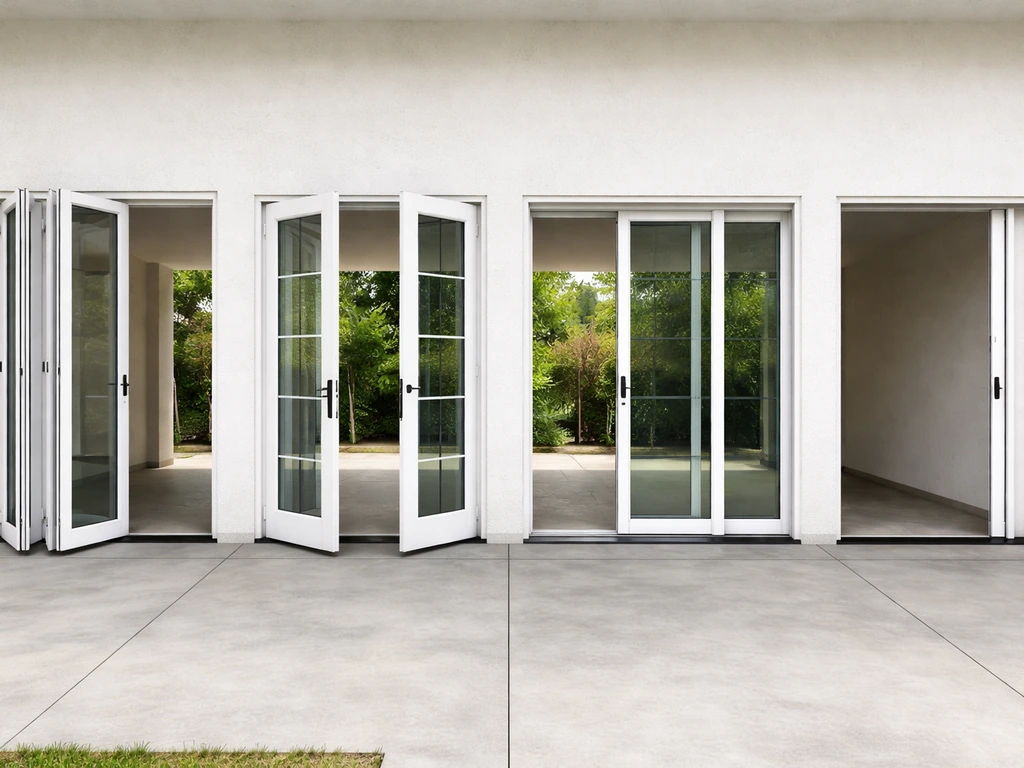
Here are the main options that genuinely substitute for a standard sliding or French patio door. Each one has a legitimate use case, and each has real tradeoffs.
| Option | Best for | Space needed | Natural light | Ventilation | Security level | Rough price range (door only) |
|---|---|---|---|---|---|---|
| Bifold door system | Wide openings, indoor-outdoor living, decks | Folds to one side, minimal swing | Excellent | Excellent when fully open | Moderate (improve with multi-point locks) | $1,500–$6,000+ |
| French doors (hinged) | Traditional homes, bedrooms, sunrooms | Needs swing clearance both or one side | Very good | Good with both panels open | Very good (solid frames, deadbolt-ready) | $800–$4,000+ |
| Multi-slide / stacking door | Large openings, modern homes, great rooms | Panels stack to one or both sides | Excellent | Excellent | Good (depends on locking hardware) | $2,500–$10,000+ |
| Pocket door (exterior-rated) | Tight spaces, flush wall finish | None when open — slides into wall cavity | Moderate (glass insert options) | Moderate | Moderate (limited deadbolt options) | $1,000–$3,500+ |
| Garden door / casement combo | Smaller openings, cottage or traditional styles | One fixed panel, one swinging | Good | Good on the operable side | Good | $700–$2,500+ |
| Accordion/folding glass wall | Sunrooms, additions, maximum opening | Stacks to one or both ends | Maximum | Maximum | Moderate (improve with premium locks) | $3,500–$15,000+ |
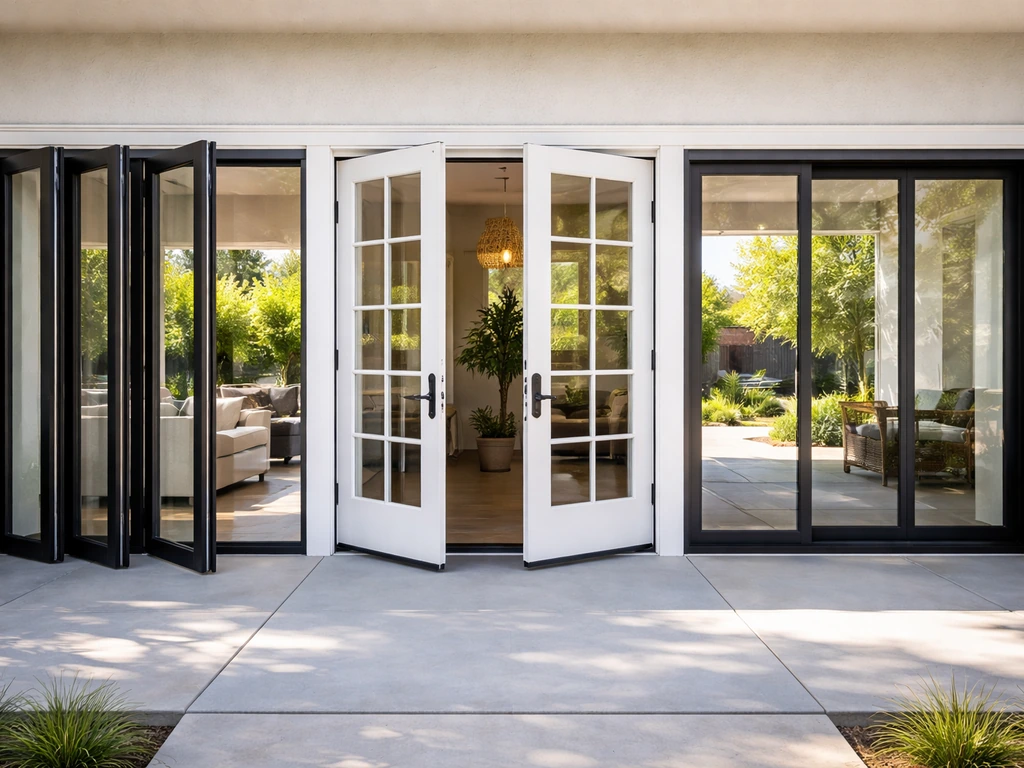
Bifold door systems
Bifolds are probably the most popular true alternative to a standard patio door right now, especially for deck and indoor-outdoor connections. They fold accordion-style to one or both ends of the opening, and when fully open they essentially remove the wall between your living space and the outside. The tradeoff is cost and weather sealing: entry-level bifolds are not as airtight as a quality sliding or French door, so in cold climates you need to specifically look for thermally broken aluminum or fiberglass bifold units with proper weatherstripping. Budget vinyl bifolds exist but typically aren't suitable for exterior use in harsh weather.
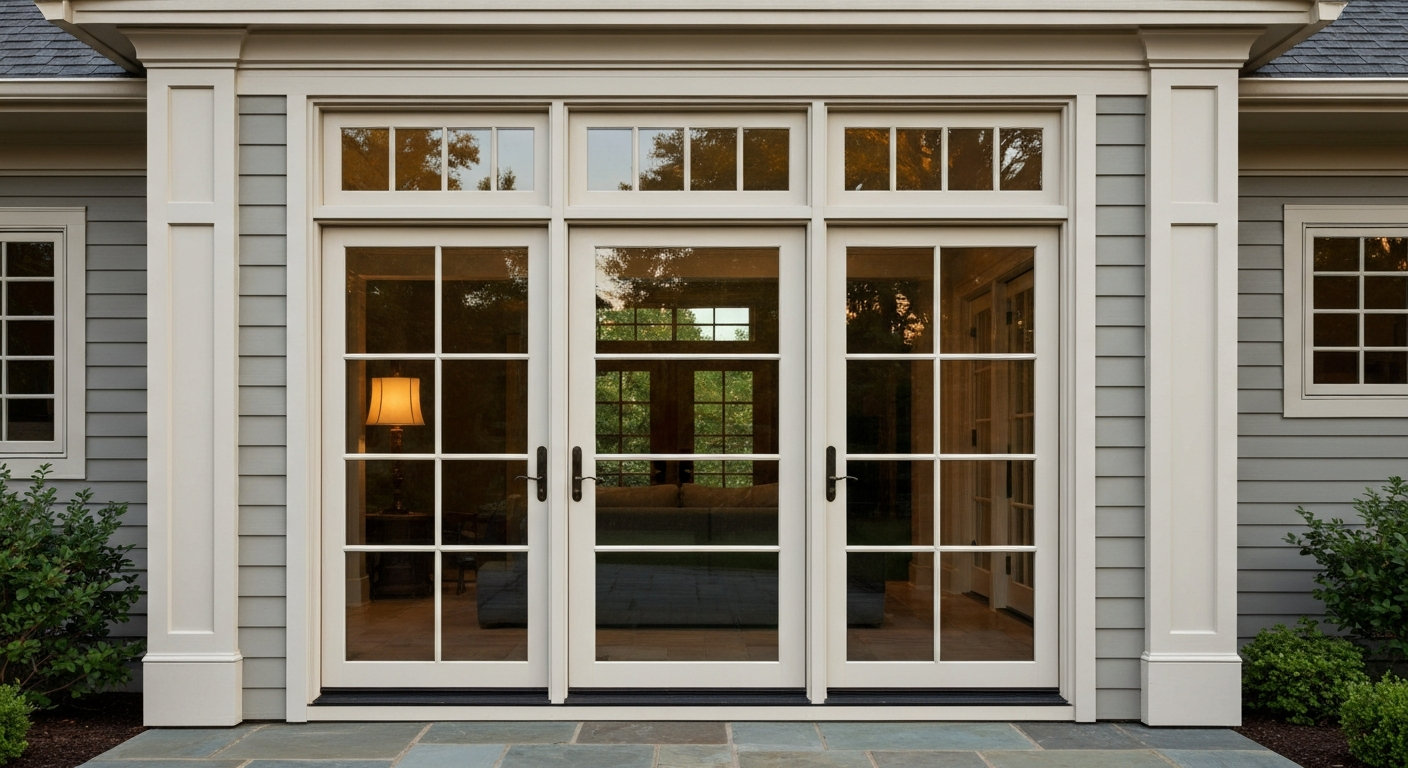
French doors
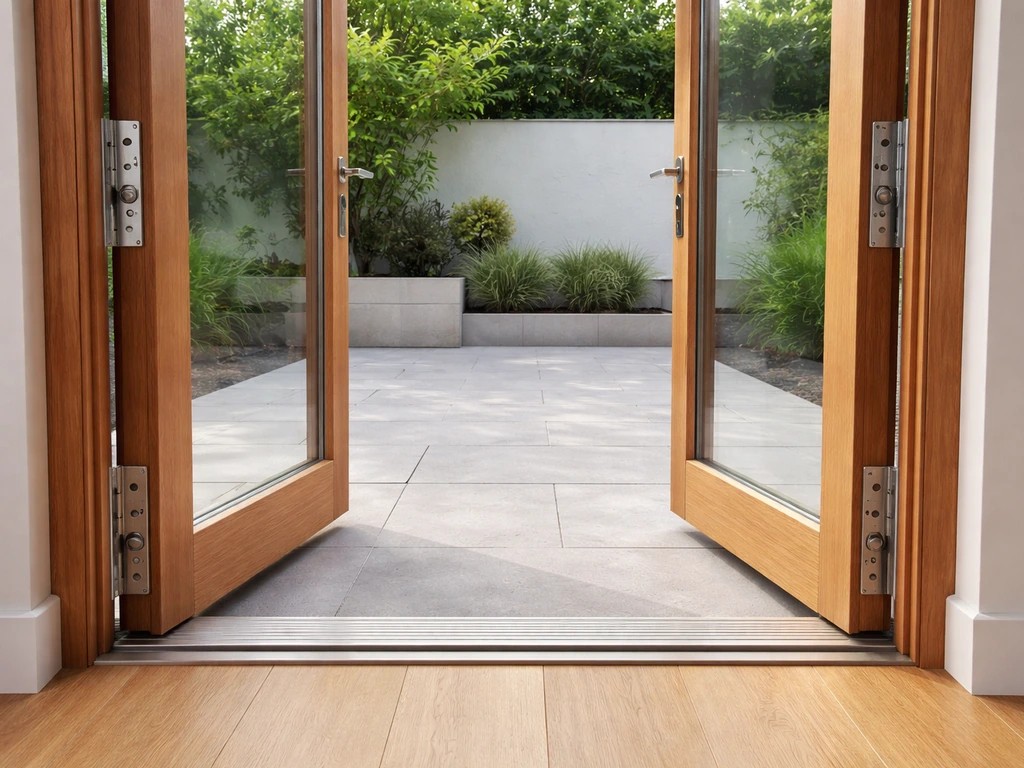
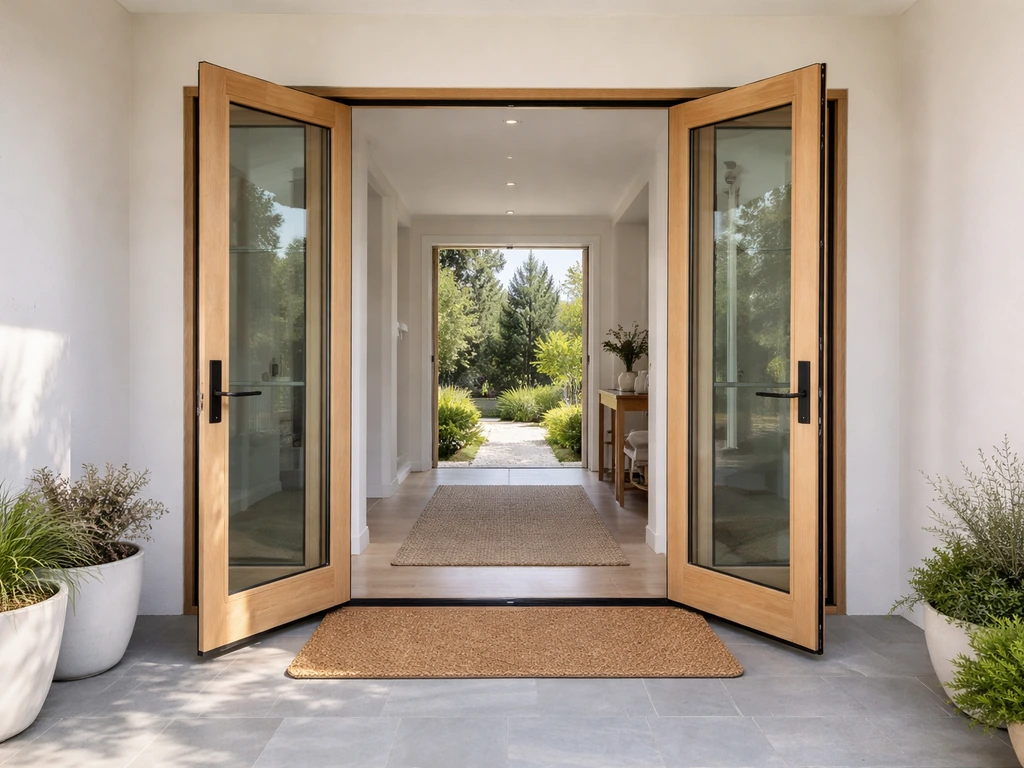
French doors are the most classic swap for a patio door, and they're a great choice when you want a traditional or transitional look and have room for the swing. The big advantage is security: hinged French doors accept standard deadbolts and multi-point locking systems, and a solid wood or fiberglass French door unit is genuinely harder to force than most sliding door setups. The downside is that you need swing clearance, typically 32 to 36 inches in front of each door panel. In a room where furniture is close to the opening, that's a real problem. One fix is an outswing French door (panels swing out onto the deck), but that requires a different rough-opening height measurement to account for threshold clearance, which Lowe's measurement guides specifically flag as an adjustment point.
Multi-slide and stacking doors
Multi-slide doors are basically an evolved version of the sliding patio door: instead of one fixed and one moving panel, you get three, four, or more panels that all move and stack at one or both ends. They're ideal if you love the look of a sliding door but want a wider opening. These are a premium product, expect to spend at least $2,500 on the door unit alone, and often much more for wide spans with good energy ratings. They do solve the track-dirt problem partially because better units use top-hung systems with minimal floor track, though you still have some floor channel.
Exterior pocket doors
True exterior-rated pocket doors are less common but worth knowing about if you have a very tight space. The door panel slides completely into the wall cavity, so there's zero intrusion into the room and zero swing. The wall cavity needs to be deep enough, typically 4.5 inches minimum for a single pocket, and you lose the wall space on either side for electrical outlets or load-bearing framing. Security is the weak point: most pocket door hardware doesn't support a proper deadbolt, so these work best for low-risk areas like a screened porch or sunroom rather than a primary exterior entrance.
Garden doors and casement combos
A garden door is essentially a single hinged door with a fixed sidelight or a fixed glazed panel next to it, it looks like a French door but only one panel actually opens. If your rough opening is narrower (say, 48 to 60 inches) and a full French door feels like overkill, a garden door gives you a similar aesthetic with less swing demand. These are widely available from Pella, Andersen, and Milgard, and they're often easier to fit into an existing rough opening because you're only dealing with one operable panel.
Sizing, measurements, and rough-opening realities
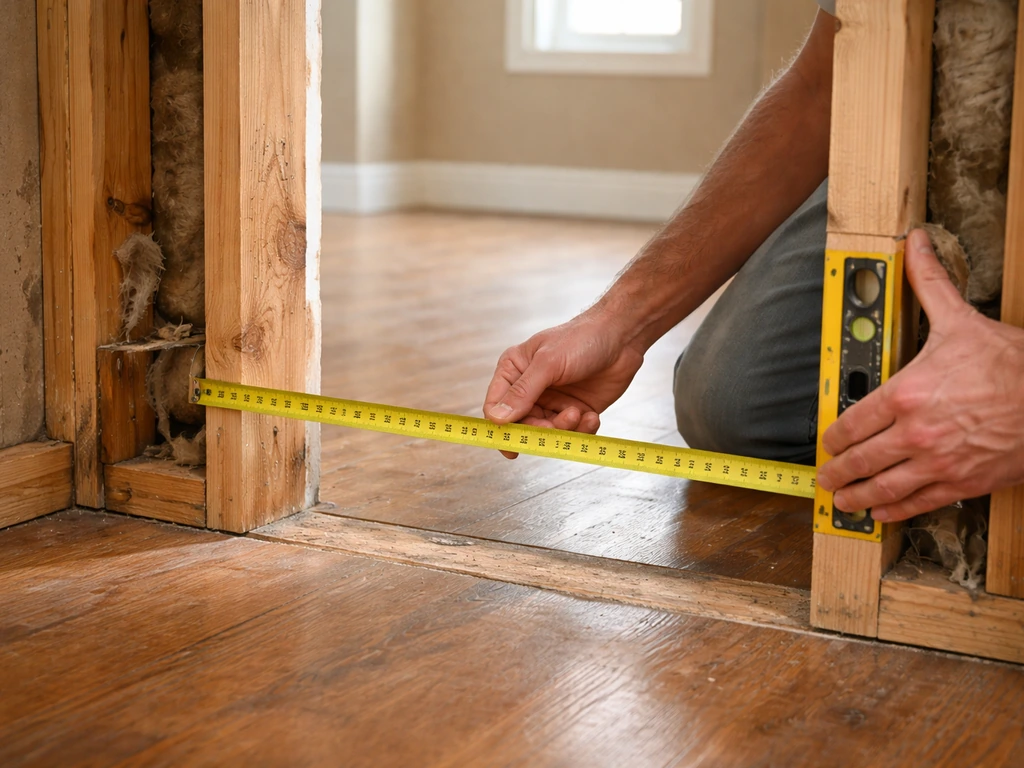
This is where a lot of homeowners get tripped up. The rough opening and the finished opening are not the same number, and confusing them leads to ordering a door that doesn't fit. The rough opening is the framed gap in the wall before any trim or jamb is installed. The finished opening is what's left after the frame and jambs go in. As a general rule, a finished opening is about 1 inch taller than the door slab itself (accounting for top gap and floor clearance). When you're replacing just a door slab in an existing frame, measure the finished opening, that's your real constraint.
For new rough openings, Pella's installation guidance says the rough-opening height should be 1/2 inch to 1 inch greater than the door frame height, not the slab height. Always confirm these numbers before ordering because, as Pella's own documentation puts it, you need clearance to allow for installation tolerances. Ordering based on the wrong measurement is an expensive mistake that can push your project back weeks. Lowe's measurement guides add another wrinkle: if you're installing an outswing unit, the rough-opening height calculation changes to account for the threshold and how the door clears the exterior surface.
If your opening has sidelites or a transom, the math gets more involved. Lowe's provides example configurations (one 12-inch sidelite vs. two 12-inch sidelites, combinations with rectangular transoms) to show how the rough opening grows with each addition. The takeaway: measure your rough opening width and height carefully, note whether you have sidelites or transoms, and always confirm the door manufacturer's specific clearance requirements before you order. Don't rely on one-size-fits-all rules.
- Measure rough opening width and height at multiple points — walls aren't always perfectly square
- Measure the finished opening separately if you're replacing an existing door without reframing
- Add 1/2" to 1" to the door frame height for rough-opening clearance (confirm with your manufacturer's spec sheet)
- For outswing doors, adjust the height measurement for threshold clearance
- Account for sidelite and transom widths separately — they add to your total rough opening width
- Confirm measurements match the manufacturer's rough opening chart before placing any order
Materials, energy efficiency, and how climate should drive your choice
The frame material you pick matters a lot more for alternatives to patio doors than most people realize, partly because many alternatives (bifolds, multi-slides, folding glass walls) have a lot more frame area relative to glass than a standard slider. More frame means more conductive surface, so a poorly chosen material in a cold climate will cause condensation, frost, and energy loss.
| Material | Best climate | Maintenance | Thermal performance | Typical lifespan | Cost level |
|---|---|---|---|---|---|
| Vinyl | Moderate (not extreme cold or heat) | Very low | Good (non-conductive) | 20–30 years | Budget to mid |
| Wood | Mild, low-humidity climates | High (paint/stain every 3–5 years) | Excellent (natural insulator) | 30–50+ years with upkeep | Mid to high |
| Wood-clad (exterior aluminum or fiberglass) | Most climates including harsh | Low exterior, moderate interior | Excellent | 30–50 years | High |
| Aluminum (non-thermally broken) | Warm climates only | Very low | Poor (highly conductive) | 20–30 years | Mid |
| Thermally broken aluminum | Most climates | Low | Good to very good | 25–35 years | High |
| Fiberglass | All climates including extreme | Very low | Excellent | 30–50+ years | High to premium |
For bifold and multi-slide systems specifically, thermally broken aluminum and fiberglass are the go-to materials in climates that see real winters. Regular aluminum conducts cold directly through the frame and will frost up in temperatures below 30°F. If you're in a warm, sunny climate like the Southwest, standard aluminum is fine and actually holds up better against UV than vinyl, which can warp under intense heat. Wood is beautiful but demands real upkeep, if you're installing a wide bifold or multi-slide system that you'll open and close regularly, the expansion and contraction of wood panels can cause alignment issues over time unless the unit is very well engineered.
On glazing: look for double-pane units as a minimum. ENERGY STAR ratings for windows, doors, and skylights use blank" rel="noopener noreferrer">U-factor and SHGC, where SHGC is the fraction of solar radiation admitted through the product. In cold climates, triple-pane glass makes a noticeable difference in comfort near the glass surface, and low-E coatings with an argon or krypton fill help reduce heat transfer. For French doors and garden doors, most major brands (Pella, Andersen, Milgard, JELD-WEN) offer ENERGY STAR certified configurations, check the U-factor (lower is better for cold climates) and the Solar Heat Gain Coefficient (lower SHGC is better if you're trying to block summer heat in warm climates).
What this is going to cost you: budget ranges and what actually drives the price
Costs vary widely depending on system type, material, glass spec, and brand. Here's a realistic breakdown for the door unit plus professional installation, which is how most homeowners do this.
| Option | Door unit cost | Installation cost (rough) | Total installed range | DIY-friendly? |
|---|---|---|---|---|
| French doors (vinyl or fiberglass) | $800–$4,000 | $500–$1,500 | $1,300–$5,500 | Possible for experienced DIYers |
| Garden door | $700–$2,500 | $400–$1,200 | $1,100–$3,700 | Yes, with basic carpentry skills |
| Bifold door system | $1,500–$6,000+ | $800–$3,000 | $2,300–$9,000+ | Not recommended — alignment is critical |
| Multi-slide / stacking door | $2,500–$10,000+ | $1,200–$4,000 | $3,700–$14,000+ | No — professional only |
| Exterior pocket door | $1,000–$3,500 | $1,000–$3,500 (wall work included) | $2,000–$7,000+ | No — wall modification required |
| Folding glass wall / accordion | $3,500–$15,000+ | $2,000–$6,000 | $5,500–$21,000+ | No — professional only |
What drives price up the fastest: width of the opening (more panels, more frame, more glass), frame material (fiberglass and thermally broken aluminum add significant cost over vinyl), glass spec (triple pane and low-E coatings add $200–$500+ per unit), and brand premium (Pella, Andersen, and Marvin carry significant brand markup over equivalents from Milgard or JELD-WEN). Labor costs also spike if the rough opening needs to be modified, reframing, adjusting a load-bearing header, or adding a larger header for a wider opening can add $1,000–$3,000 in framing work alone before the door is even touched.
On DIY: French doors and garden doors are realistic DIY projects if you're comfortable with carpentry, shimming, and weatherstripping. Bifolds and multi-slides are not, the alignment tolerances are tight, and a misaligned bifold system that doesn't seal properly or drags on the track is a frustrating and expensive fix after the fact. For any system wider than 6 feet, I'd strongly recommend professional installation. The savings aren't worth the risk.
Security, screening, and weather protection: don't overlook these
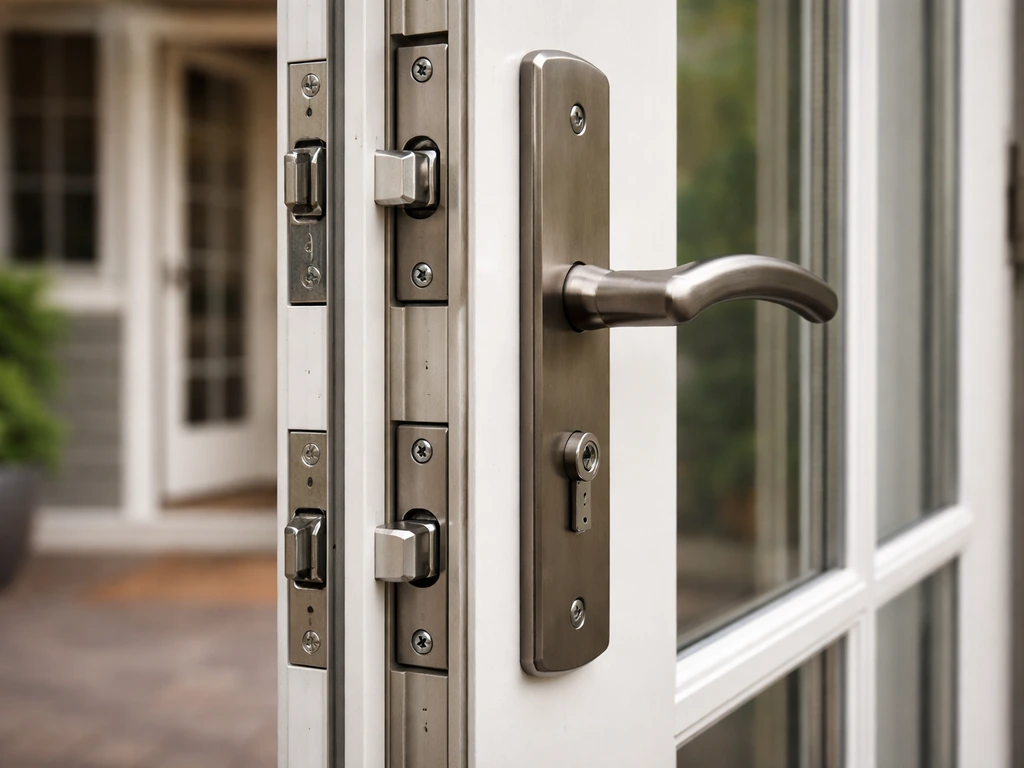
This is an area where alternatives to standard patio doors can vary a lot, and it's worth factoring in at the purchase stage rather than as an afterthought. Knowing what to put on patio doors also helps you choose the right hardware and coverings for screens, privacy, and weather protection. The good news is that most of these gaps can be addressed with the right hardware and accessories.
Security upgrades
French doors and garden doors are naturally strong security options, they accept standard deadbolts and multi-point locking systems, and solid fiberglass or wood doors resist forced entry well. Bifolds and folding glass walls are the weakest point: most use a simple locking handle at the center meeting point, which is not as secure as a deadbolt. Upgrade to a multi-point lock system from the manufacturer (many offer this as an add-on) and look for models with a floor bolt option for the end panel. For any glass-heavy alternative, consider a security film applied to the interior glass surface, it won't stop a determined intruder but it significantly slows glass breakage and deters opportunistic break-ins.
Screening options
Standard sliding screen doors don't work with most alternatives, so plan for this. Bifold and multi-slide systems often have retractable screen systems that mount to one side and pull across the opening, these are excellent when they work, but they're an added cost ($300–$1,500 depending on opening width) and an added maintenance item. French doors typically use a magnetic screen system or a traditional hinged screen door on one or both panels, which is simpler and less expensive. For folding glass walls, retractable screens are really the only practical option, and some manufacturers (like NanaWall and LaCantina) offer integrated screen systems with the unit. If screening is important to you, confirm that a compatible screen solution exists for your chosen system before you order the door.
Weather protection
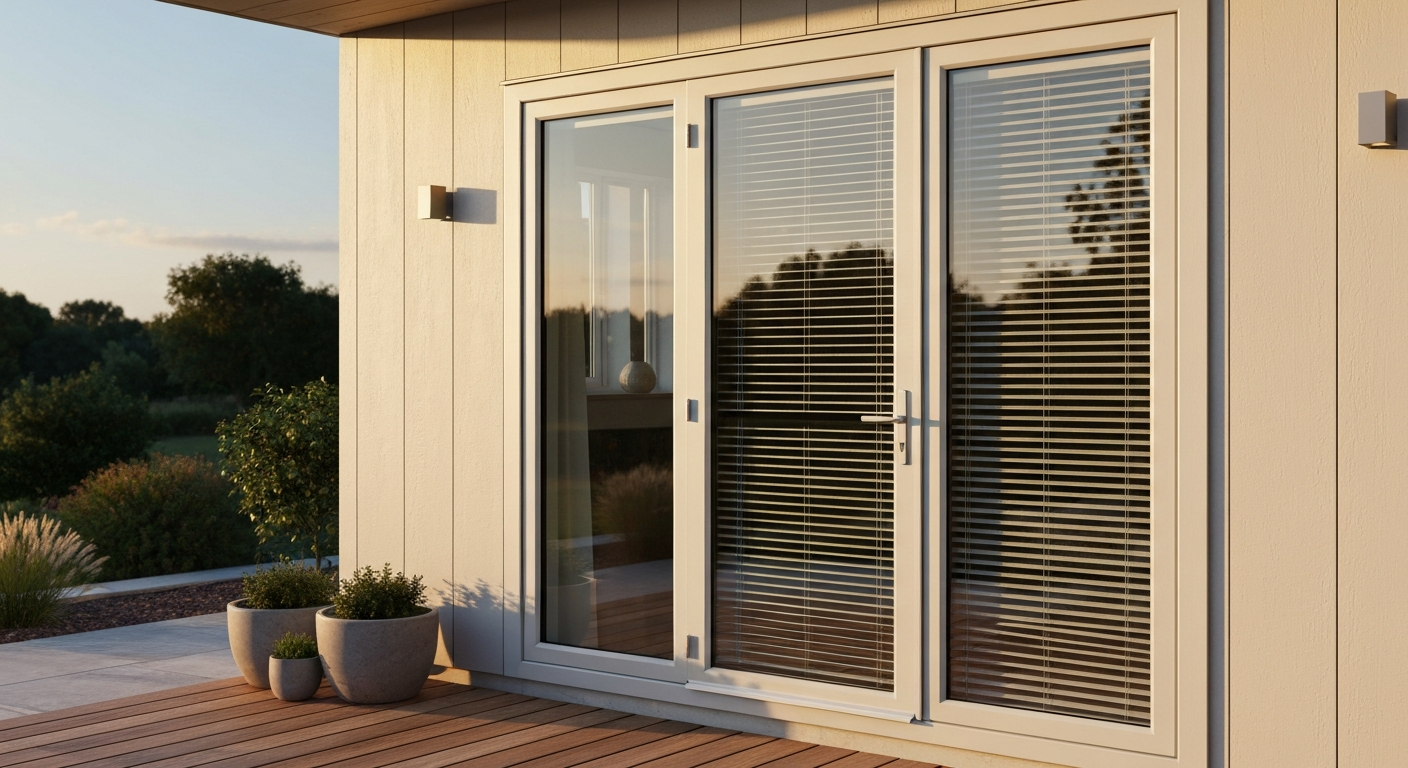
Wide opening systems (bifolds, multi-slides, folding walls) are inherently more exposed at the threshold, and water infiltration is a real concern in rainy or coastal climates. Look for units with a raised sill (rather than a flush/zero-threshold design) if you're in a high-rain area, flush thresholds are great for accessibility but require very good drainage design around the opening to keep water out. Outswing French doors provide excellent weather protection because the panels compress the weatherstripping when pushed shut by wind and rain, this is actually one of their underappreciated advantages over sliding systems. For covering alternatives (from sun, weather, or privacy standpoints), the same logic that applies to standard patio door window treatments applies here: roller shades, solar shades, and shutters are all workable, though the panel configuration of bifolds and multi-slides makes some covering solutions more awkward to install and use.
How to choose the right alternative today
Run through this framework before you talk to a contractor or visit a showroom. It'll save you a lot of time and help you walk in with a clear brief.
- Measure your rough opening (width and height at multiple points) and your finished opening if you're replacing an existing door. Note any sidelites or transoms separately.
- Identify your primary problem: space constraints, style, energy performance, security, or opening width. Your main problem should drive the system type.
- Match your climate to a frame material: fiberglass or thermally broken aluminum for cold/harsh climates, vinyl for moderate climates, aluminum for warm/dry climates.
- Set a realistic budget that includes installation, not just the door unit. For openings over 6 feet, add a professional installation line to your budget and assume at least $800–$1,500 for labor alone.
- Check screening compatibility before ordering — especially for bifolds and multi-slides.
- Confirm security hardware options: look for multi-point locking systems and deadbolt compatibility if this is a primary exterior entrance.
- Get at least two installation quotes and ask each contractor to confirm rough-opening requirements against the manufacturer's spec sheet for your specific unit.
- If you're considering DIY, be honest: French doors and garden doors are manageable; anything wider or more complex requires professional installation.
The clearest recommendation: if your space allows for the swing and you want the best combination of security, energy performance, and value, French doors (outswing, fiberglass, with a multi-point lock) are still the most practical and cost-effective alternative to a standard patio door for most homes. If you want a wider opening and you have the budget, a multi-slide or bifold system in thermally broken aluminum or fiberglass is the upgrade worth making. If space is genuinely the constraint and you can't swing a door in or out, an exterior pocket door or retractable system is the niche solution that solves the problem.
One more thing worth thinking about as you narrow down options: once you've chosen your door system, decisions about window treatments, whether that's blinds, shutters, curtains, or solar shades, work differently for different systems. Do you put curtains on patio doors? Yes, but for each door type you’ll want a slightly different curtain setup. If you want a practical alternative to curtains for patio doors, focus on options that fit the door type and still block light, heat, and privacy issues. If you're specifically trying to replace vertical blinds for patio doors, the right covering depends on the door type and panel movement window treatments, whether that's blinds, shutters, curtains, or solar shades. A bifold with multiple narrow panels needs a different covering approach than a single-panel French door. Keep that in mind as part of your total project plan, not a detail to sort out after installation.
FAQ
What should I measure if I’m replacing an existing patio door slab versus the whole unit?
Measure the finished opening width and height first (this is what the door slab, jamb, and top gaps reference). If you are not reusing the frame, also confirm the rough opening dimensions after the old unit is removed, because framing tolerances can change. Keep a note of threshold height too, since outswing doors and some multi-slide systems require clearance that slab-only replacements often ignore.
How do I decide between bifold and multi-slide when both can open wide?
Choose bifold if you want fewer panels to manage and you can tolerate folding geometry at the sides. Choose multi-slide if you want a more “straight” opening and you plan to frequently open wide for traffic or furniture. In practice, multi-slide units usually cost more and are more sensitive to exact leveling, so if your floor is not perfectly flat, plan for a more involved installation.
Are French doors really better for security than bifolds and sliding systems?
They can be, especially because you can use standard deadbolts and often add a multi-point lock kit. The key is the meeting stile and whether the inactive panel has proper locking hardware. For bifolds and multi-slides, look specifically for manufacturer-supported multi-point locking and, if available, a floor bolt for at least the end panel, since center-handle-only locks are the weak point in many setups.
What’s the most common reason alternative patio doors don’t fit correctly?
Ordering based on the wrong opening measurement (rough opening height versus finished opening height), or using the slab dimensions instead of the framed allowance. This gets worse with sidelites or transoms, because the required rough opening width and height increases beyond simple “add an inch” rules. Always confirm clearance requirements in the door’s installation instructions before ordering.
Can I reuse my existing patio door frame for an alternative like French doors?
Often you cannot, because most alternatives use different jamb depths, different threshold designs, and different mounting patterns (especially pocket doors and multi-slide systems). Reuse is most feasible only when the replacement system is explicitly designed for the same manufacturer frame type, or when a contractor verifies the framing, sill, and header requirements match.
Do pocket doors work outdoors as a true alternative to a patio door?
They can for certain niches, but true exterior pocket doors are uncommon and security hardware options are limited. If you do it, prioritize an exterior-rated door slab and hardware specified for outside use, then plan around weather stripping and drainage for the pocket area (that wall cavity needs extra attention). Most homeowners choosing a pocket exterior solution do so for screened porches or low-risk exterior access rather than primary entrances.
What’s the best way to address track dirt and maintenance on sliding-style alternatives?
Even when a system is “top-hung” and uses less floor track, you still need a debris-management plan for the track channel and sill. Choose a unit with a minimal floor channel, add a scheduled cleaning routine (especially after pollen and leaf fall), and confirm whether the manufacturer offers replaceable track components or easy service access.
How should I handle thresholds for energy efficiency and water resistance?
In rainy or coastal climates, raised sills generally handle wind-driven water better than flush zero-threshold designs, but you must ensure proper drainage and sealing around the opening. If accessibility is required, flush thresholds can work, but only when the contractor builds a drainage-forward detail (weep paths, flashing, and correct slopes). Also verify threshold compatibility with screens, because some screen systems require specific clearance.
What glazing specs should I prioritize for comfort near the glass?
Start with double-pane as the minimum, then consider triple-pane if you spend time near the opening in cold weather. Look for low-E coatings plus argon or krypton fill to reduce heat transfer, and confirm the U-factor (lower is better for cold climates) and SHGC (lower helps limit summer heat gain). If you are choosing between two similar doors, the energy performance differences often come more from the glass package than from the door frame design alone.
Will thermally broken aluminum or fiberglass actually prevent frost?
Thermally broken frames can significantly reduce condensation and frost risk, but they do not replace good installation practices. The biggest failures usually involve poor air sealing, gaps at the sill or jamb, or incorrect insulation continuity in the surrounding wall. If you are in sub-30°F conditions, confirm the unit is rated for your climate zone and that the contractor uses the recommended flashing and insulation methods.
Can I install these alternatives myself, or should I always hire a pro?
DIY can work for French or garden doors if you are comfortable with shimming, leveling, and weatherstripping alignment. For bifolds, multi-slides, and folding glass walls, professional installation is strongly recommended because panel alignment, latch calibration, and sealing surfaces must be exact. A small leveling or framing error can cause sticking, poor seals, and expensive rework.
How do I choose the right screen solution for each door type?
Assume standard sliding screen doors will not fit most alternatives. Bifold and multi-slide systems may have retractable screen options that mount to one side and pull across, but they add cost and require maintenance. French and garden doors usually work best with hinged or magnetic screen setups on one or both panels. Before ordering, confirm screen compatibility for your exact configuration, including panel count and swing direction.
What window treatment mistakes happen most often with alternative patio doors?
The common mistake is buying treatments designed for one panel layout and then discovering the panels stack or swing in a way that blocks operation. For example, bifolds with narrow panels need a treatment that works around frequent movement, while French doors typically support drapery or rods positioned to clear the swing. Plan the treatment around the door’s open and closed “sweep,” not just the door’s closed appearance.
Which option is best if I’m worried about accessibility and furniture clearance?
If swing clearance is the problem, bifolds, multi-slides, or pocket configurations often solve it. If you need easy threshold access, confirm the unit’s threshold height and drainage design, and verify screen hardware does not create trip hazards. For French doors, an outswing option can improve weather compression but changes how you must account for exterior clearance.
How much should I budget beyond the door unit price?
Factor in framing work if the opening must be expanded or the header adjusted, since that can add significant cost before the door is installed. Also include additional items that often get overlooked, like upgraded locks or multi-point hardware, screen systems compatible with the chosen door, and any extra weatherproofing details. When comparing quotes, ensure they specify the same glass package and the same installation scope, not just the door style.