For most sliding patio doors, a keyed surface-mount lock paired with an anti-lift pin and a security bar (Charlie bar) gives you the best all-around protection at a realistic budget. That combination stops the two most common break-in methods: forcing the latch and lifting the door out of its track. But the short answer to are patio doors easy to break into is that a lock that prevents forced entry and lift-out makes a big difference. If you want a single-product upgrade with the most impact, add the anti-lift pin first. The built-in latch that came with your door almost certainly doesn't prevent lift-out, and that's the easiest exploit a burglar can use.
Best Lock for Patio Door: Choose and Upgrade Securely

Owen Delaney
17 May 2026
What 'best' actually means for your patio door
Before you buy anything, get clear on what you're actually solving for. 'Best lock' means something different depending on whether you're renting, whether you have kids, whether you live in a high-crime area, or whether your main concern is a door that just won't stay latched. Here's a quick checklist to help you define your target.
- Anti-lift protection: Does your current setup prevent the door panel from being physically lifted out of the track? If not, this is your first fix.
- Keyed access: Do you need to lock the door from the outside (not just inside)? A keyed cylinder replaces a simple thumbturn and adds real deterrence.
- Secondary reinforcement: Is there a bar, pin, or foot bolt that prevents the door from sliding open even if the main lock is defeated?
- Cylinder quality: Is the lock cylinder pick-resistant and bump-resistant, or is it a basic $8 wafer lock?
- Strike plate and anchor screws: Are the keeper and strike secured with 3-inch screws into the door frame, or with the short factory screws?
- Weather exposure: Is the lock fully exposed to rain, salt air, or extreme cold? Stainless steel or solid brass hardware lasts; zinc die-cast does not.
- Left vs. right configuration: Have you confirmed the lock you're buying is compatible with the direction your panel slides?
If you can check all seven boxes, you have a genuinely secure patio door. Most homes are missing at least three of them, which is exactly why the NIJ's sliding glass door security standard was developed specifically to address the 'opportunity crime' committed by unskilled and semi-skilled burglars. These aren't sophisticated attacks. They're quick, physical, and they exploit gaps that a $30 upgrade can close.
Choosing the right lock type for a sliding patio door
Sliding patio doors use a completely different locking logic than hinged doors. Instead of a deadbolt that throws into a door jamb, you're working with a latch or hook that engages a keeper mounted on the fixed frame. That means there are several distinct lock styles to consider, and they aren't interchangeable.
Surface-mount keyed locks
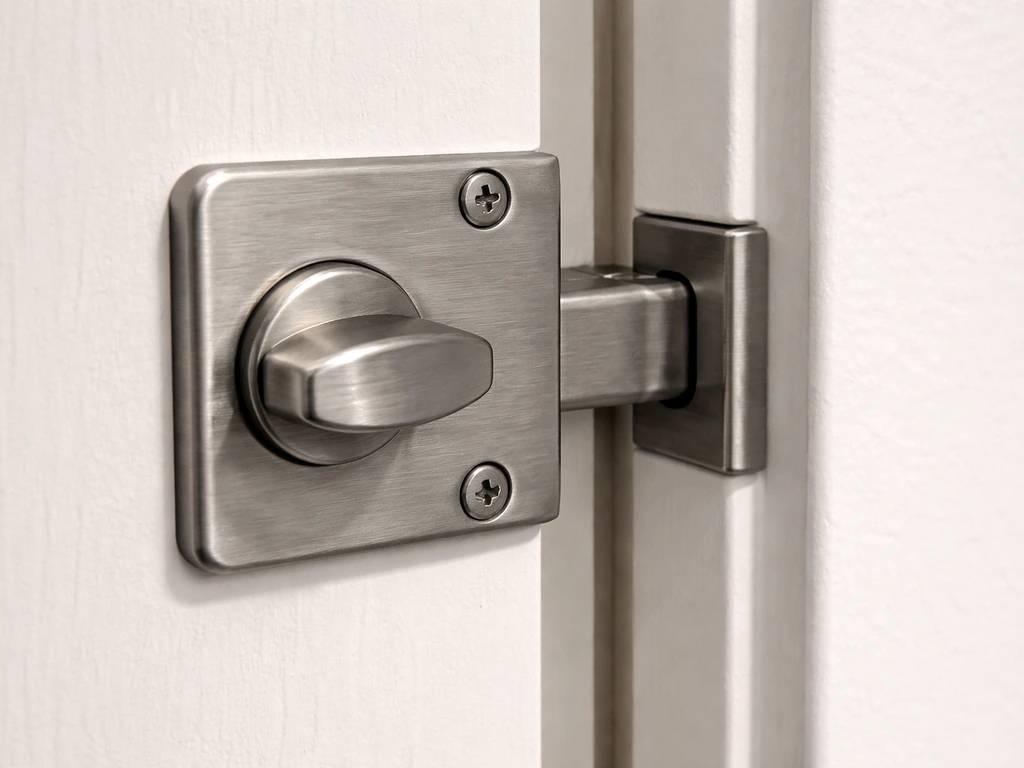
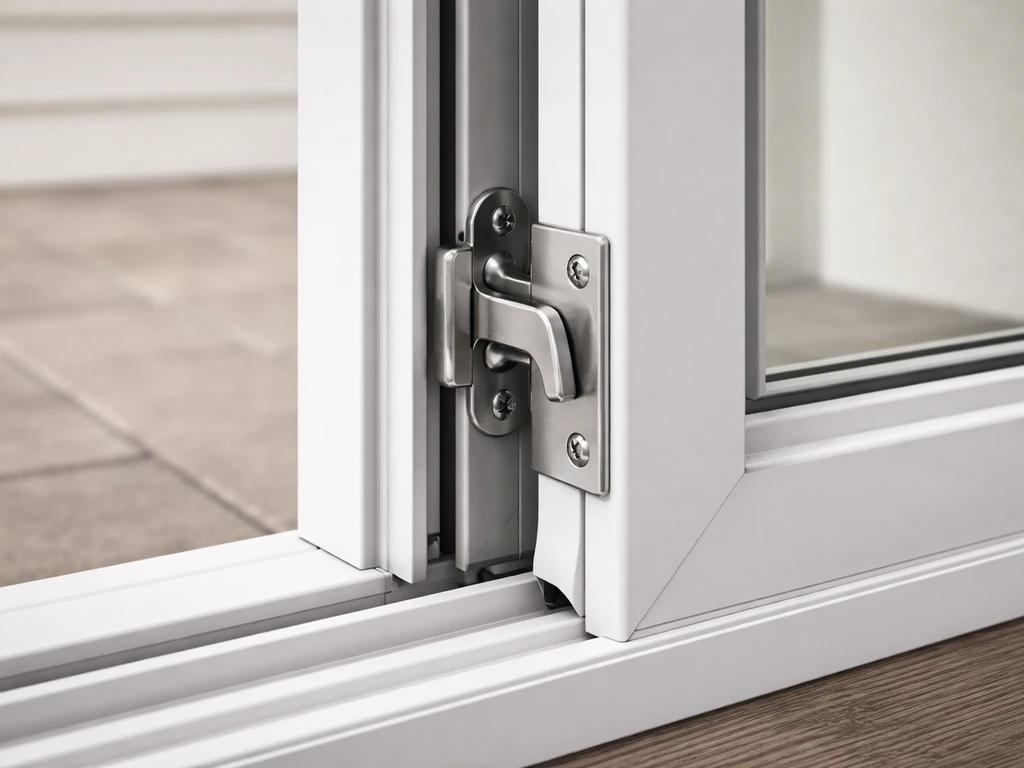
These are the most practical upgrade for most homeowners. A surface-mount keyed lock bolts onto the interior face of the sliding panel and hooks into a keeper on the fixed frame. They cost roughly $20 to $60 and are a direct replacement for or addition to the factory latch. Look for ones with a solid brass or stainless steel hook bolt rather than a stamped steel tongue. The key cylinder should be at least 5-pin for meaningful pick resistance.
Thumbturn/internal sliding locks
Most patio doors ship from the factory with a thumbturn crescent latch. These are fine for keeping the door closed day-to-day but they're not a security lock. They can often be defeated by vibrating or flexing the door panel. If yours is still the original, it's worth replacing or supplementing it, but don't treat a new crescent latch as a security upgrade on its own.
Multi-point locking systems
Multi-point locks engage the frame at two or three points simultaneously, typically at the top, middle, and bottom of the panel. They're dramatically stronger than single-latch setups and are the standard on European-style lift-slide and tilt-and-slide doors. The catch is that retrofitting a multi-point system into an older sliding door is usually not practical unless you're also replacing the door hardware set entirely. If you're buying a new door, make multi-point locking a requirement.
Security bars and Charlie bars
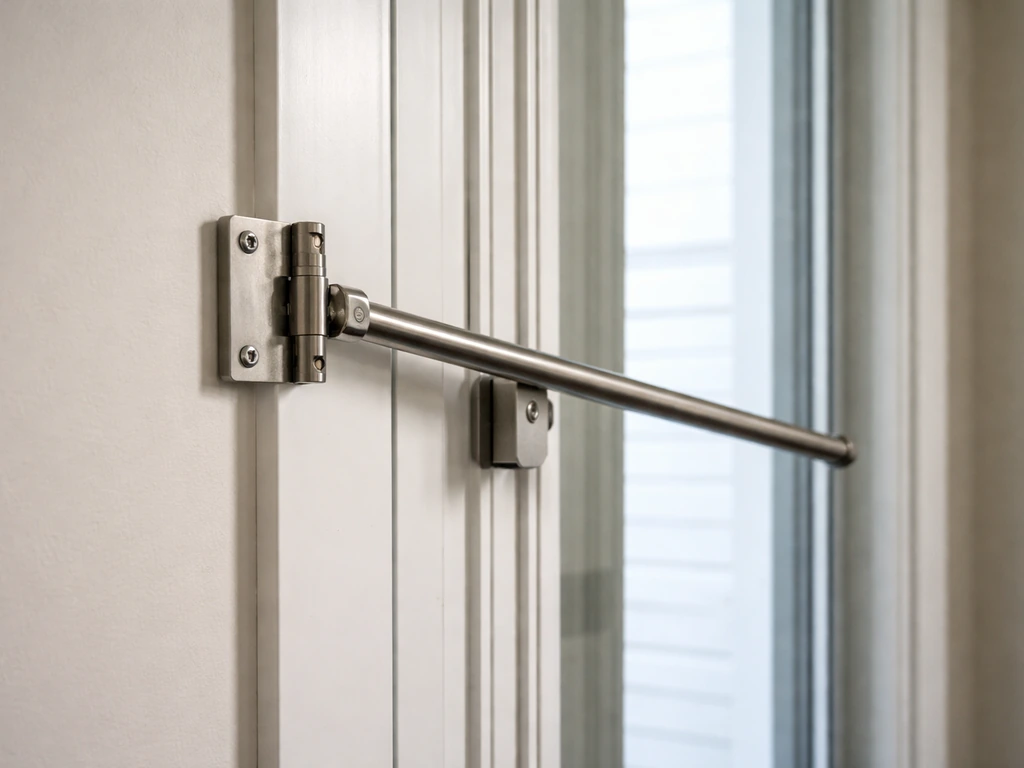
A Charlie bar (also called a hinged security bar) mounts on the interior frame and swings down to block the sliding panel from opening. The Tucson Police Department recommends this approach explicitly, and for good reason: even if someone defeats the lock cylinder, the bar stops the door from moving. A cut-to-length wooden dowel or metal rod in the track does the same job for about $5, though a mounted bar is more convenient to use daily. These work alongside the main lock, not instead of it.
Anti-lift pins and track blocks
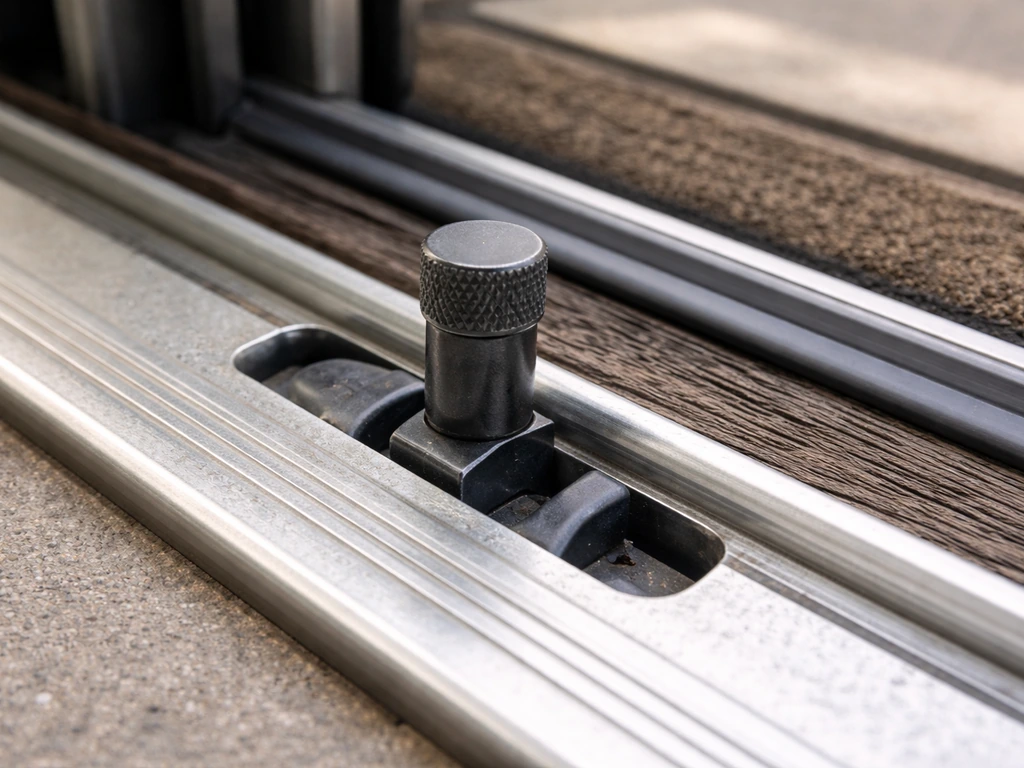
This is the most overlooked upgrade. Most sliding doors can be lifted vertically off their bottom track even when the latch is engaged, because the door panel has clearance to lift up into the upper track and then swing out. An anti-lift pin is a bolt or pin that passes through the upper track above the door panel, eliminating that clearance. Track blocks serve a similar purpose. These are inexpensive (often under $20 for a set) and address a vulnerability that no amount of cylinder quality fixes.
Foot bolts
A foot bolt drops into a 'twin-notch keeper' installed in the sill and locks the panel at the bottom. It adds a third engagement point and is especially useful on double sliding doors where both panels move. It's a bit cumbersome for daily use but excellent for vacation homes or secondary doors that aren't opened every day.
Hasp and padlock
A hasp bolted through the door panel and frame, secured with a quality padlock, is a very strong option for low-traffic doors like a back patio you rarely use. It's also a legitimate police-recommended approach. The padlock shackle should be hardened steel. The downside is convenience: it's slow to use and awkward from the outside.
Sizing, fit, and compatibility: getting the right lock for your door
This is where most people get tripped up. They order a lock online and discover it doesn't fit the rail, the stile thickness, or the direction the door opens. Here's what to measure and confirm before you buy.
Left-hand vs. right-hand configuration
Stand inside your home facing the patio door. If the sliding panel moves to the left, you have a left-handed door; if it moves to the right, it's right-handed. Many surface-mount keyed locks are handed, meaning the hook bolt faces a specific direction. Order the wrong one and the bolt will face a wall rather than the keeper. Some locks are reversible (the hook bolt can be flipped), but confirm this before buying.
Door stile thickness and frame dimensions
Measure the width of the vertical stile (the edge rail of the sliding panel) where the lock will mount. Most aluminum sliding doors have stiles in the 1-1/2 to 2-inch range; vinyl doors are often slightly wider. The lock body must fit within that stile width without overhanging. ClearCool's installation specs are a good example of this constraint: they specify that the lock body must not extend beyond the back (cold-side) surface of the door, which matters for air sealing and keeping the panel operating smoothly in its track.
Keeper/strike positioning
The keeper on the fixed frame has to align precisely with the lock bolt on the sliding panel. ClearCool's specs place the lock keeper 1-7/8 inches (48 mm) from the bottom edge of the door sash, just above the interior edge of the bottom horizontal rail. Your door may differ, but the principle is the same: measure from a fixed reference point and verify alignment before drilling. Once you install the lock, close the door, engage the lock, and look for any gap or resistance. Adjust the keeper laterally until you get maximum engagement.
Surface mount vs. mortise
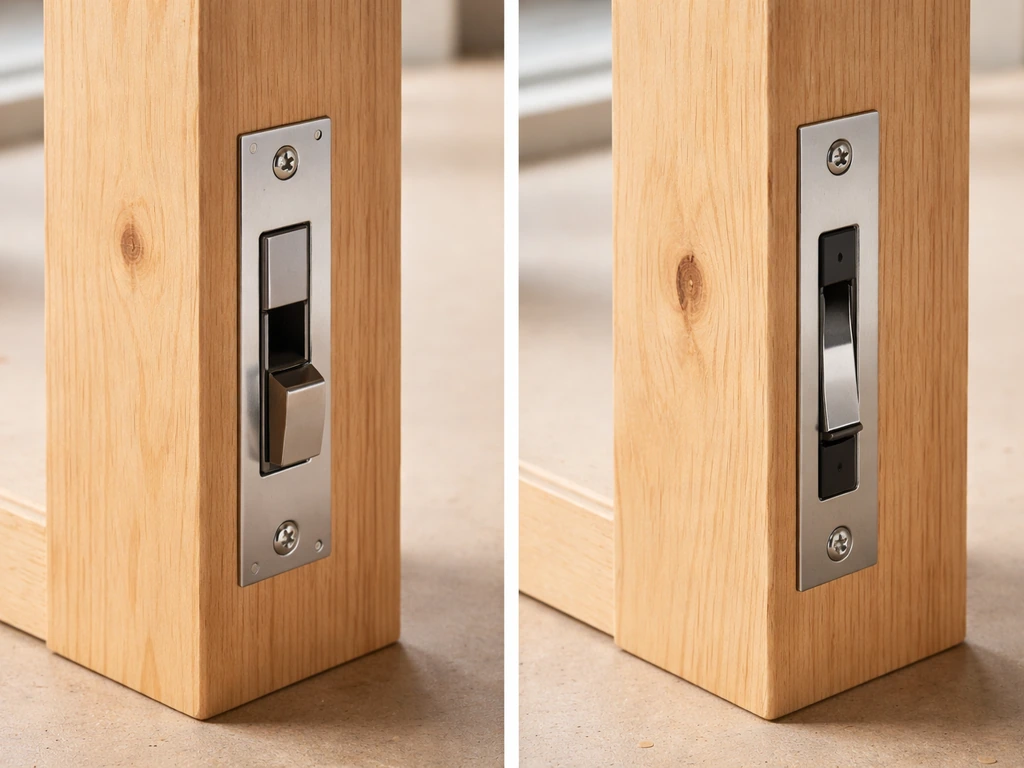
Surface-mount locks attach to the face of the stile with screws. They're DIY-friendly and reversible. Mortise locks are recessed into a routed pocket in the stile, giving a cleaner look and a stronger mechanical connection, but they require a router and precise fitting. For vinyl doors, mortise can be tricky because the stile chambers behind the face aren't solid. Surface mount is the practical default for retrofits.
Rail and track compatibility for anti-lift hardware
Anti-lift pins and anti-derailer locks have their own fit requirements. Functional Fenestration's Anti-Derailer Lock, for example, specifies placement 2mm above the top of the track to avoid interference. Check whether your upper track is a standard extruded aluminum channel or a proprietary profile before ordering anti-lift hardware, because some systems are brand-specific.
Security features that actually move the needle
Not every feature on a lock's spec sheet matters equally for patio door security. Here's what to actually prioritize.
Anti-lift mechanism
I keep putting this first because it keeps getting skipped. A burglar who can lift your door panel 1/2 inch and pop it out of the bottom track doesn't need to defeat your lock at all. Anti-lift pins or track-mounted blocks directly prevent this. A properly installed pin system plus correct roller adjustment are both required for this to work. The pin creates the barrier; roller adjustment ensures the door doesn't already have excessive vertical play.
Cylinder quality
For a keyed lock, the cylinder is the weak link if it's cheap. Look for a 6-pin cylinder at minimum, and ideally one from a brand that offers pick and bump resistance (Medeco, Mul-T-Lock, or ASSA Abloy at the high end; Schlage B-series cylinders are a solid mid-tier option). The wafer-type cylinders common in budget patio door locks can be picked in seconds and bumped almost as fast.
Strike plate and anchor screws
The keeper (strike) on the fixed frame is only as strong as what it's screwed into. Factory screws are typically 3/4 inch to 1 inch long and bite into the door frame extrusion. Replace them with 3-inch screws that reach into the structural framing behind the frame. On a vinyl frame, use a reinforced steel strike cup if available. This matters because kick-in and pry attacks against the keeper are more common than lock picking on patio doors.
Hook bolt vs. spring latch
A hook bolt (also called a deadbolt-style hook) physically hooks around the keeper and resists pry and pull forces. A spring latch just pushes against the keeper and can be slipped with a credit card or thin tool. For any keyed exterior-use patio lock, insist on a hook bolt design.
Gaps this won't address
No lock stops glass breakage. A sliding glass door is still glass. If your main concern is a determined intruder, security film on the glass itself is a separate but important layer. Also, a security bar blocks the door from sliding but doesn't prevent glass breakage or lock picking if someone reaches through a broken pane. Layered approaches (bar + keyed lock + anti-lift + glass film) are what BobVila and law enforcement consistently recommend, and the reasoning is straightforward: each layer removes one easy option from the attacker's playbook. Layering multiple safety patio door features like a lock, anti-lift pin, and glass film can prevent many common break-in attempts safety patio doors.
Installation: doing it right the first time
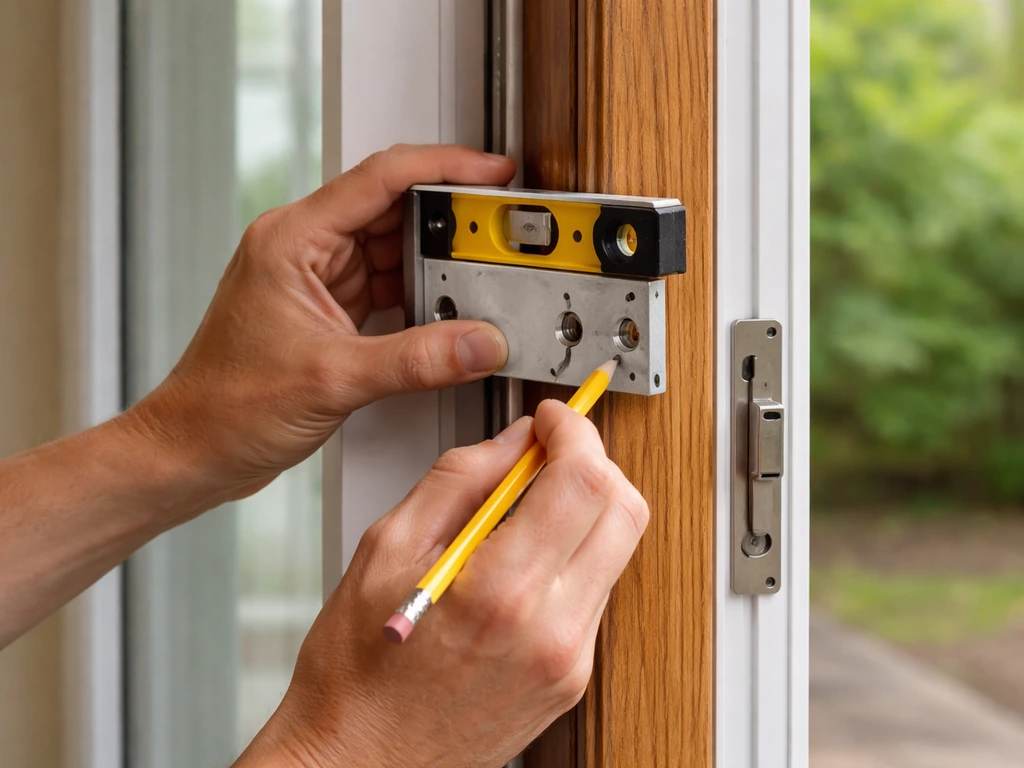
Most surface-mount patio door locks are DIY-installable in 20 to 45 minutes if you measure correctly. Multi-point system retrofits or anything requiring routed mortise pockets is a different story. Here's how to approach the common scenarios.
Step-by-step for a surface-mount keyed lock
- Measure your stile width, door-panel thickness, and the height of your existing latch from the bottom of the panel. Note these before ordering.
- Confirm left/right hand and whether you need a reversible or handed lock.
- Close the sliding panel and mark the mounting hole positions on the stile using the template provided with the lock. Use painter's tape to avoid scratching the frame.
- Drill pilot holes. Do NOT drill into or near the glass. If your pilot hole location is closer than 1/2 inch from the glass edge, reposition the lock higher or lower.
- Mount the lock body with the supplied screws. Tighten snugly but don't overtorque on vinyl frames.
- Close the door and engage the lock to mark where the keeper should land on the fixed frame.
- Mount the keeper at that position, then adjust it laterally until you feel full engagement with no slop or binding. Sunshine Hardware's installation guidance specifically calls out this adjustment step as critical: the keeper must be positioned for maximum engagement, not just approximate alignment.
- Test the lock 10 times from both sides. It should engage smoothly with no grinding. If it grinds, adjust the keeper.
Installing anti-lift pins
Drill a hole through the upper track (into but not through the door panel's top rail) at a downward angle, using a 3/16-inch bit. Wright Products’ patio door handle installation instructions describe drilling through the upper track as part of installing anti-lift hardware for the handle/lock assembly workflow Drill a hole through the upper track.
Insert a removable pin or bolt. The door panel should have zero vertical play when the pin is in. If your door already has excessive roller-related vertical slop, fix the rollers first. Viwinco's adjustment guidance recommends tuning rollers and then aligning the keeper so the lock engages properly.
Roller adjustment affects how much the panel can move vertically, which directly determines how effective your anti-lift pin is.
When to call a professional
Hire a pro if: the door rollers need replacing (not just adjustment), the frame is damaged or warped, you're retrofitting a multi-point system, or the existing keeper is embedded in a proprietary vinyl profile that needs special tooling. A professional door or locksmith service for a full security tune-up (roller adjustment, anti-lift install, latch inspection, Charlie bar mount) runs around $150 to $250 depending on your area. That's reasonable for a door you use every day.
Common mistakes to avoid
- Drilling too close to the glass panel: always stay at least 1/2 inch away from any glass edge.
- Skipping keeper adjustment and assuming factory alignment is correct: it rarely is after any roller or frame movement.
- Installing anti-lift pins without checking roller condition first: a worn roller can let the door drop, which defeats the pin.
- Using the factory short screws for the keeper instead of 3-inch structural screws.
- Buying a handed lock without confirming the door direction.
Keeping your lock working through rain, cold, and years of use
A patio door lock lives in a tough spot: exposed to temperature swings, humidity, door vibration, and UV if it faces south or west. Here's what maintenance actually looks like in practice.
Material matters for weather resistance
Stainless steel (grade 316 for coastal/salt environments, 304 for inland) and solid brass are the right choices for exposed patio hardware. Zinc die-cast (zamak) locks are common in budget hardware and will corrode within two to three years in humid climates. You can tell zinc die-cast by its weight: it feels light and slightly hollow. Solid brass is noticeably heavier.
Lubrication schedule
Lubricate the lock cylinder with dry graphite powder or a PTFE (Teflon)-based spray every 12 months, or whenever the key starts to feel stiff. Avoid WD-40 in cylinders: it attracts dust and gums up over time. For the hook bolt or latch mechanism, a light silicone spray on the moving parts twice a year keeps action smooth. Also lubricate the track and rollers separately with a silicone-based lubricant to reduce the force needed to slide the door.
Winter and temperature expansion
Aluminum frames expand and contract significantly with temperature changes. A lock that engages perfectly in summer can bind or fail to engage in winter because the frame has contracted and shifted the keeper out of alignment. If you notice seasonal binding, adjust the keeper position slightly in the fall. Crestline's installation guidance includes a roller and alignment verification step for exactly this reason. Also check that any anti-lift pins can still be removed smoothly in cold weather.
Cleaning
Wipe down the lock exterior with a damp cloth monthly. For coastal homes, rinse the hardware with fresh water every few weeks to remove salt deposits. Keep the track free of debris (leaves, dirt, grit) because a packed track prevents the door from seating correctly, which puts mechanical stress on the lock keeper and can cause premature wear or misalignment.
Budget vs. upgrade: what to spend and where
You don't need to spend a lot to get significantly better security than the factory latch. But there is a meaningful jump in quality at the mid-tier that's worth understanding.
| Tier | What you get | Approximate cost | Best for |
|---|---|---|---|
| Basic ($10–$30) | Surface-mount thumbturn or low-end keyed lock, basic keeper, no anti-lift | $10–$30 | Rental properties, low-risk areas, temporary fix |
| Good value ($30–$80) | Keyed surface-mount lock with hook bolt, anti-lift pin set, 3-inch keeper screws | $30–$80 total | Most homeowners — this is the recommended starting point |
| Mid-tier ($80–$150) | Quality keyed lock with 6-pin cylinder (Schlage/ASSA Abloy), Charlie bar, foot bolt | $80–$150 total | High-traffic patio doors, families with kids or pets who use it constantly |
| High-security ($150–$400+) | Multi-point lock system, security cylinder, reinforced keeper, security film on glass | $150–$400+ (often needs pro install) | High-crime areas, primary access doors, vacation homes |
The 'good value' tier is where most homeowners should land. A $25 keyed hook-bolt lock plus a $15 anti-lift pin set plus upgrading the keeper screws to 3-inch costs under $50 and closes the two most exploited vulnerabilities on a sliding patio door. Adding a Charlie bar brings the total to around $70 and gives you a secondary mechanical barrier that doesn't rely on any cylinder at all.
If you're shopping for a new patio door and security is a priority, the better investment is choosing a door with a multi-point lock system built in from the factory rather than retrofitting security hardware onto a basic door. If you're also shopping for hardware, the best patio dog door options often pair well with a properly secured sliding patio door so pets can move freely without creating an easy entry point. That's where the 'best security patio doors' conversation starts, and it's worth considering before you buy rather than after.
Your next steps
- Determine your door's hand (left or right slide) and stile width before ordering anything.
- Check for vertical play by trying to lift the sliding panel upward while the latch is engaged. If it moves at all, prioritize an anti-lift pin.
- Replace the keeper screws on your existing hardware with 3-inch screws today. This takes 10 minutes and costs almost nothing.
- Order a keyed surface-mount hook-bolt lock matched to your door's hand and stile size.
- Install an anti-lift pin or track block in the upper rail.
- Add a Charlie bar or cut-to-length security bar for a secondary mechanical stop.
- Schedule a roller adjustment if the door doesn't glide smoothly, since roller condition directly affects how well every lock and anti-lift pin performs.
- If you're in a high-exposure environment (coastal, very cold winters), choose stainless steel hardware and plan to lubricate and inspect it twice a year.
FAQ
Can I use the same lock on both left-hand and right-hand sliding patio doors?
Not always. Many surface-mount keyed locks are handed, the hook bolt faces a specific direction and must line up with the keeper on the fixed frame. If your lock is labeled reversible, confirm the hook can flip and still engages the correct keeper location, otherwise you will mount it but get poor engagement or a bolt that sits against a wall.
How much cylinder quality actually matters if I install an anti-lift pin and security bar?
Cylinder quality matters, but it becomes a secondary factor. If the door cannot lift out of the track and cannot slide open, a weaker cylinder may not lead to entry. Still, you should use a stronger pick-resistant cylinder (often 6-pin or better) because an attacker might try to exploit any remaining gap, especially after glass breakage or frame tampering.
What should I do if the lock engages, but it requires extra force to close or the latch feels tight in winter?
Adjust the keeper position rather than forcing the lock. Aluminum frames can shift with temperature, so the keeper can drift out of alignment, causing binding. Make small keeper adjustments in fall, and verify rollers are correctly set first, because vertical play can also make the anti-lift pin less effective or harder to engage.
Do anti-lift pins replace the need for better screws on the keeper?
No. Anti-lift pins stop lift-out, but the keeper area is still a primary pry target. Use screws long enough to bite into structural framing (for many setups, longer than the factory screws) and consider a reinforced strike cup on vinyl frames if available, since a weak strike lets attackers defeat the latch even with a strong pin.
Is a security bar only for people who forget to lock the door?
A bar is useful even with good locking habits. It provides a mechanical “movement blocker,” so even if someone defeats the cylinder, the door still cannot slide open. For best results, pair the bar with the keyed hook-bolt lock and anti-lift pin, because the bar does not stop glass breakage by itself.
Should I upgrade to a multi-point lock on an older patio door?
Usually only if you are also upgrading the hardware set or replacing the door hardware entirely. Retrofits often require compatibility with the frame and stile thickness, and multi-point systems may need different internal mounting points. If the keeper locations and hardware geometry do not match, the multi-point lock may install but fail to engage properly.
Can I just put a padlock hasp on a sliding patio door and call it secure?
It can be strong for low-traffic doors, but it depends on mounting and access. A hasp secured correctly can resist forced opening, but it is inconvenient and may be easier to tamper with if the mounting area can be pried. Use a hardened steel shackle padlock and ensure the hasp is bolted to solid material, not only thin door skin.
What’s the quickest way to confirm my keeper alignment after installing a lock?
Engage the lock with the door closed, then look for any visible gap at the lock area and check for resistance when closing. If the hook bolt only contacts partially, adjust the keeper laterally until engagement is smooth and firm. Also confirm the door has minimal vertical play, because extra slop can prevent full engagement and reduce anti-lift performance.
How do I know whether my sliding door has lift-out clearance that an anti-lift pin can fix?
If the door can lift vertically enough to come out of the bottom track while the latch is engaged, you have the typical clearance vulnerability. A practical test is to close and lock, then check whether the panel still has noticeable upward movement at the corner. If it does, an anti-lift pin or track block is the right category of fix.
What lubrication should I use for the lock cylinder and the moving latch parts?
For the key cylinder, use dry graphite powder or a PTFE-based spray. Avoid WD-40 in the cylinder because it can attract dust and become gummy over time. For the latch or hook mechanism, use a light silicone spray on moving parts twice a year to keep action smooth.
Is it normal for a new patio lock to loosen or misalign over time?
Yes, especially on exterior doors exposed to vibration and thermal cycling. Recheck keeper screw tightness and engagement after the first few seasonal changes. If screws loosen or the strike shifts, the lock can start to “almost engage,” which increases wear and can create a new entry point.