Most patio doors have at least one serious safety gap, and the fix is usually cheaper and faster than you'd expect. Whether you're worried about break-ins, a toddler slipping through a screen, a cracked glass panel in a storm, or a door that leaks every time it rains, the upgrade path is pretty straightforward once you know what to look for. This guide walks you through a full safety audit of your current door, explains what to prioritize based on your risk and budget, and gives you a clear checklist if you're shopping for a replacement.
Safety Patio Doors: What to Check and Upgrade Now

Owen Delaney
20 May 2026
Quick safety diagnosis for your current patio doors
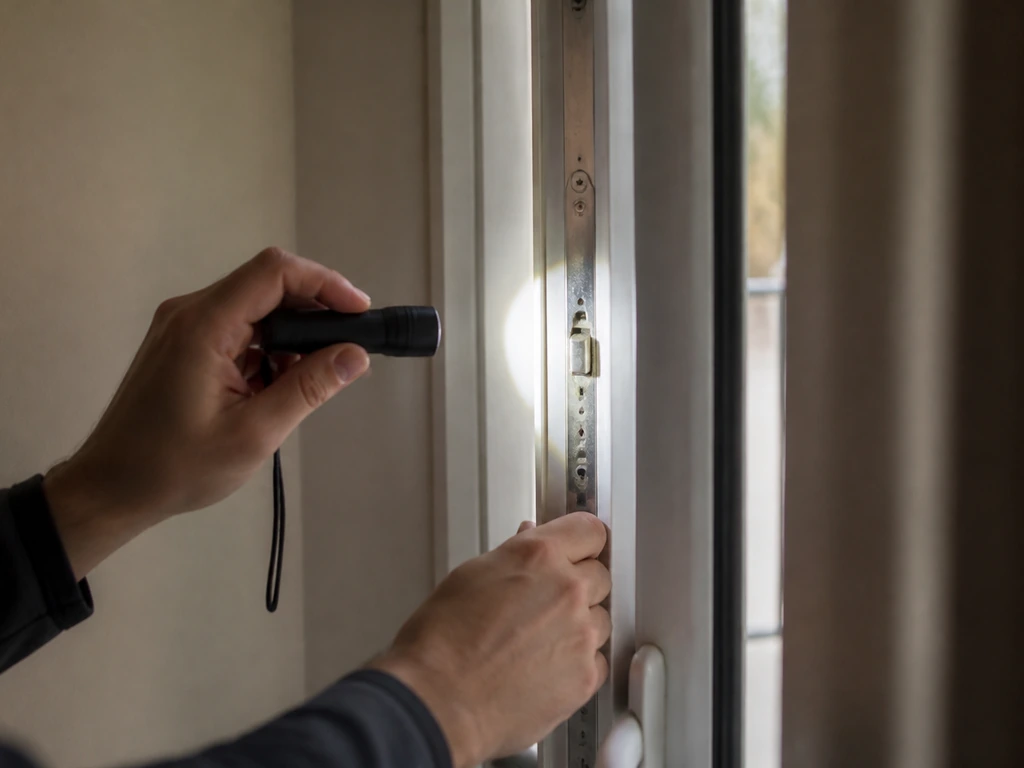
Before you spend anything, spend 10 minutes actually inspecting your door. Most problems are visible once you know what to look for. Grab a flashlight and work through this in order.
- Lock engagement: Close and lock the door, then push and pull firmly. A standard single-latch sliding door lock will flex or pop open under about 20-30 lbs of lateral force if the latch is worn or the strike is misaligned. If there's any give, that lock is not doing its job.
- Frame and track alignment: Look at the gap between the door panel and the frame at the top, sides, and bottom. Gaps wider than 1/8 inch on a sliding door are a red flag for alignment issues, energy loss, and pry vulnerability.
- Glass condition: Look for chips at the corners, stress cracks radiating from edges, or a broken seal (fogging between double-pane glass). Corner chips weaken tempered glass dramatically. Fogging means the insulating gas has escaped and moisture is trapped inside.
- Strike plate and hardware: Pull the door trim back slightly or shine a flashlight at the strike plate area. Short screws (under 3 inches) in a soft wood frame mean the strike plate can be kicked in. Check for rust, looseness, or the latch not fully seating.
- Screen integrity: Push gently on the screen mesh. Torn mesh, bent frames, or screens that pop out easily are a child and pet hazard, not just a bug problem.
- Weather seal condition: Run your finger along the bottom sweep and side seals. If the rubber or brush seal is cracked, compressed flat, or missing sections, water and air are getting in.
- Sill and frame for water damage: Press your finger into the wood at the sill corners (or check for rust staining on aluminum). Soft wood or rust means water intrusion has already started.
If you found problems in steps 1, 2, or 3, security and glass upgrades are your first priority. Steps 4 and 6 are often DIY fixes under $50. Steps 5 and 7 depend on how bad the damage is but can escalate quickly if ignored.
Security upgrades: locks, hardware, strikes, and weak points
The single-latch hook lock that ships with most sliding patio doors is genuinely one of the weakest entry points in a typical home. It's not just that the lock itself is flimsy, it's that the whole system (short strike screws, thin aluminum or vinyl frame, no secondary lock) is built to a price point, not a security standard. Here's how to systematically close those gaps.
Upgrade the lock first
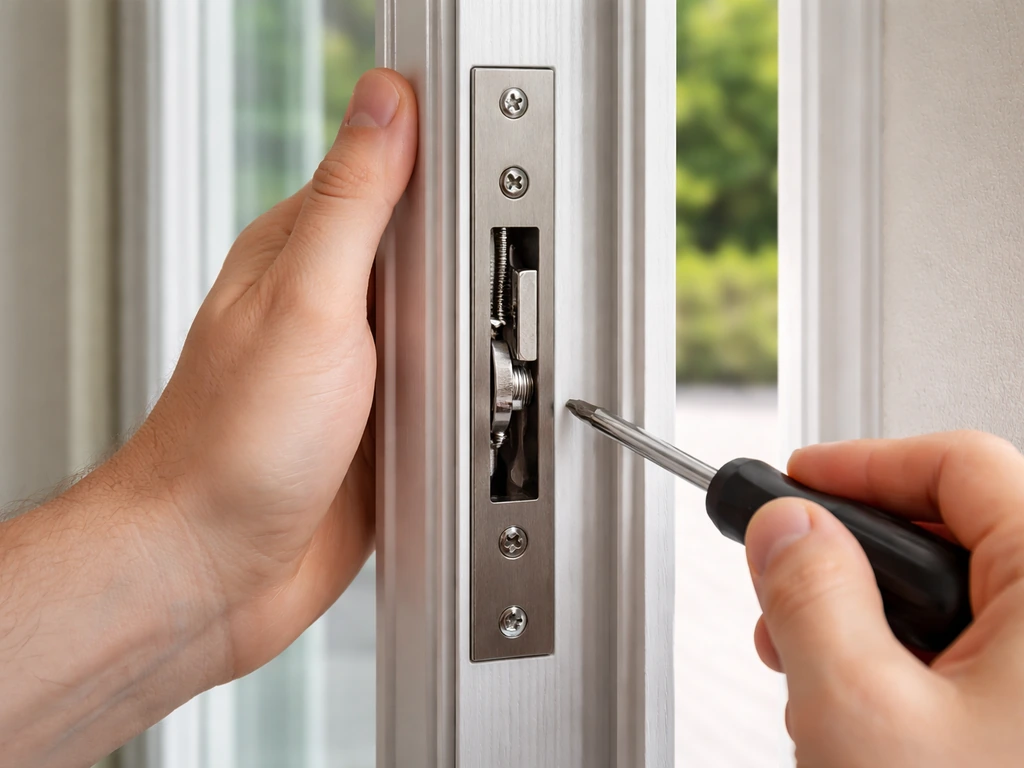
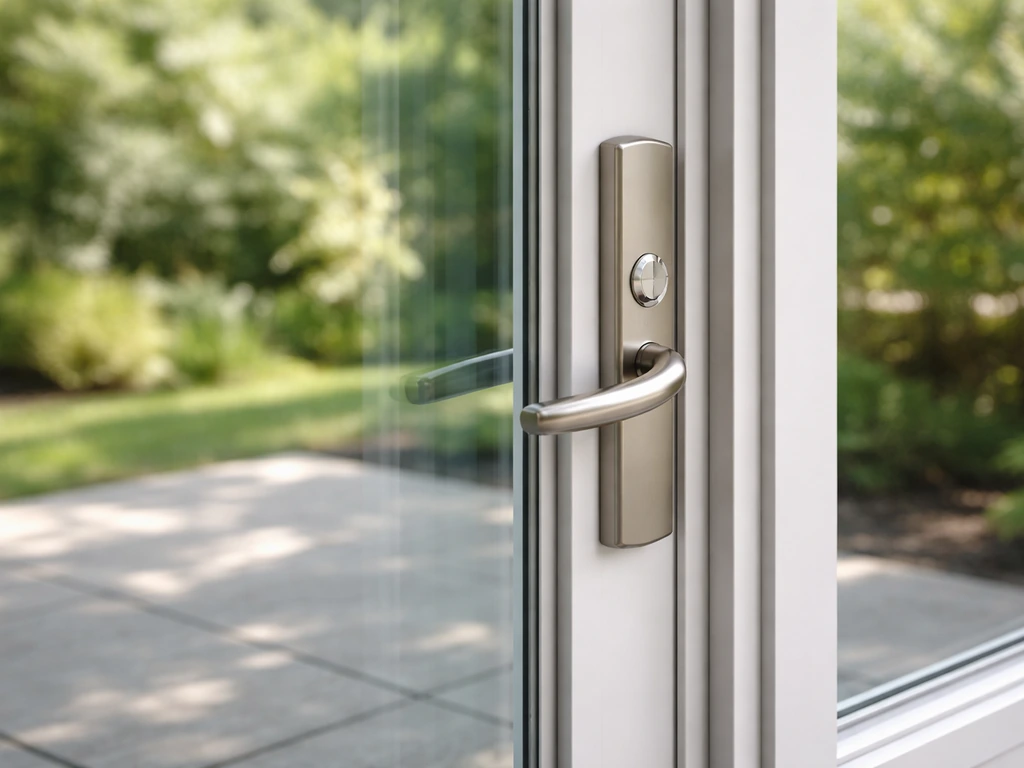
For sliding patio doors, look for a mortise-style lock rather than a surface-mounted latch. Systems like Truth Hardware's Nexus line are designed as two-point and multi-point locksets for sliding patio doors, meaning they engage the frame in multiple spots simultaneously rather than at a single latch point. That matters because a single engagement point can be defeated by lifting the door panel or applying focused pressure to that one spot. Multi-point locks distribute the load across the frame, making forced entry dramatically harder. Expect to pay $80-$200 for a quality mortise lock upgrade, plus $100-$200 for professional installation if the door prep (the routed channel inside the door edge) isn't already sized for the new hardware.
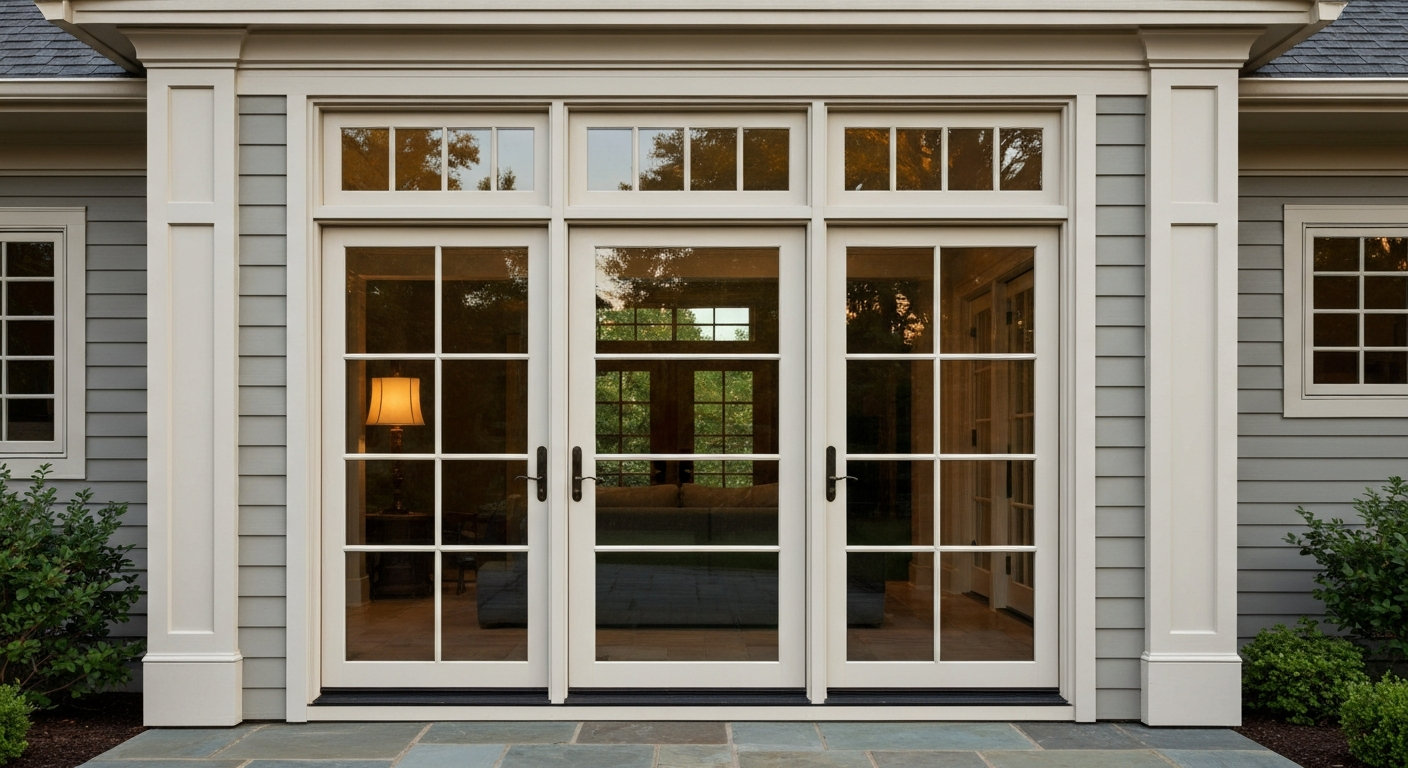
For French patio doors, the same principle applies. Truth Hardware's Sentry system, for example, is a multi-point hinged door hardware system designed specifically for the North American market. Standard French door deadbolts engage at one point. Multi-point systems add top and bottom bolt engagement simultaneously when you lock the door, which means the whole door is anchored to the frame, not just the middle. These run $150-$400 for the hardware and are worth it on any French door that's a primary entry point.
Strike plate and frame reinforcement
The strike plate is where most forced entries actually happen. Replace any strike plate held by screws shorter than 3 inches. A heavy-duty strike box (a deep steel cup that captures the latch, rather than just a flat plate) with 3-inch screws driven into the wall stud behind the frame can increase kick resistance from under 100 lbs to over 1,000 lbs. This upgrade costs about $15-$40 for the hardware and takes 20 minutes with a drill.
Secondary blocking for sliding doors
Even with a better lock, sliding doors can be lifted off their tracks if the anti-lift tab is missing or worn. Check that your door has one (a small plastic or metal tab that drops into the track and prevents the panel from being lifted out). If not, a security bar or door stopper placed in the track is a fast, cheap fix. A cut-down wooden dowel or a purpose-made adjustable security bar works well for overnight or when you're away. Paired with a good primary lock, this layered approach covers the two main attack vectors for sliding doors: the lock itself and the lift attack.
Cylinder quality matters for keyed locks
If your French or sliding door has a keyed cylinder, check whether it's a Grade 3 (builder-grade, cheapest), Grade 2 (residential standard), or Grade 1 (commercial, most pick and bump resistant) cylinder. Upgrading to a Grade 1 cylinder or a high-security cylinder with anti-bump and anti-pick pins costs $40-$120 and replaces in minutes. It's a small investment for a meaningful improvement in pick resistance.
Child and pet safety: gaps, screens, handles, and emergency egress
Security isn't the only safety concern here. Young children and pets create a completely different set of risks around patio doors, and most of them are about accidental exits, falls, and glass injuries rather than intruders.
Screen safety and pet/child exits
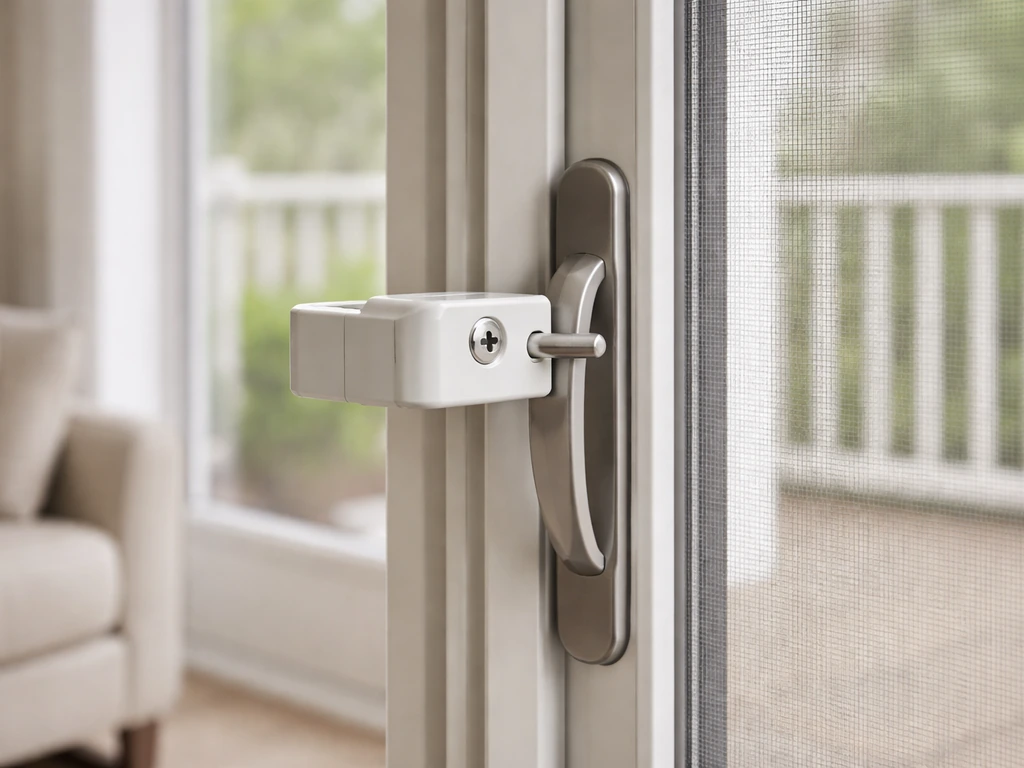
Standard fiberglass screen mesh does almost nothing to stop a dog or a running toddler. It tears easily, the frames pop out, and screens on sliding doors often have no secondary retention. If you have kids under 6 or a medium-to-large dog, upgrade to a heavy-duty screen (pet screen mesh is about 7x stronger than standard fiberglass, typically woven from vinyl-coated polyester) or a retractable screen with a positive-latch frame. Expect to pay $20-$60 for a re-screen with pet mesh on a standard door, or $300-$700 for a quality retractable screen system. For decks or second floors, this is not optional.
Handle placement and child access
Standard patio door handles sit at 36 inches, which is reachable for most children over 3. If you don't want your child going outside unsupervised, add a keyed or pin-operated child safety lock at the top of the door (above 54 inches) as a secondary control. These cost $10-$30 and install with two screws. They're not a substitute for supervision, but they buy you meaningful reaction time.
Glass and impact hazards for children
Children running into clear glass panels is a real injury risk. Apply frosted or decorative window film to the lower 24-36 inches of glass panels that face an activity area or yard. This makes the glass visible as a barrier. More importantly, confirm that any glass your child could fall into is tempered (it breaks into small, blunt pieces) rather than annealed (which breaks into large, sharp shards). I'll cover glazing in detail in the next section, but this is where it intersects directly with child safety.
Emergency egress requirements
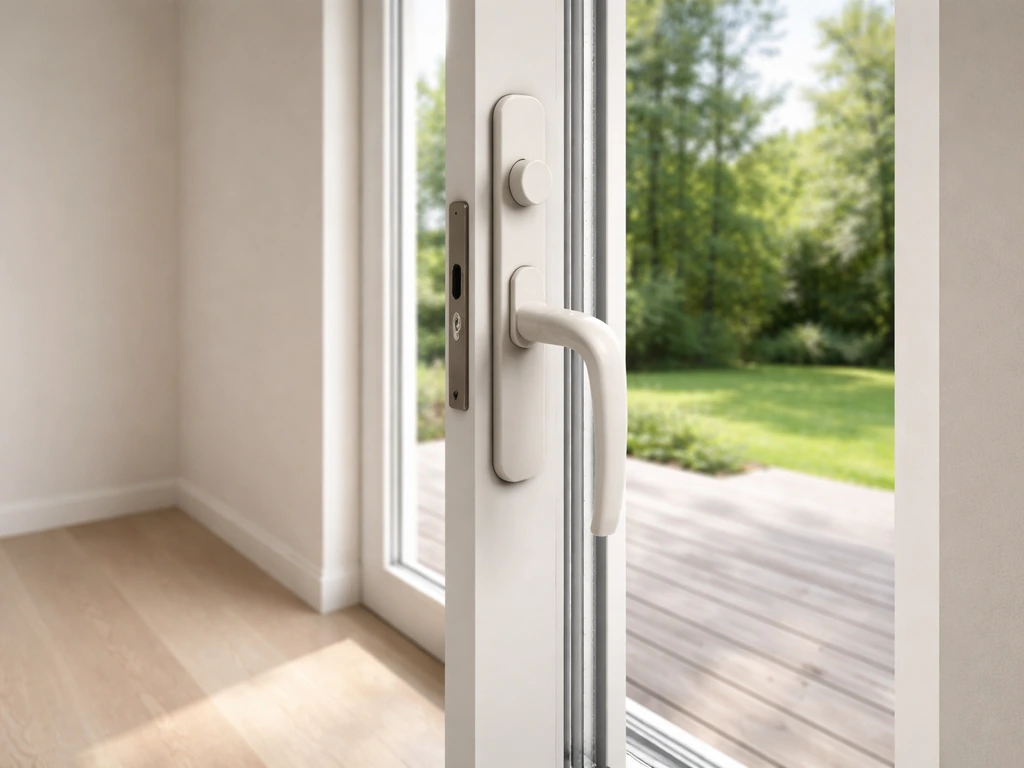
Building codes in most North American jurisdictions require that patio doors serving as a secondary egress from a bedroom or living area be operable from the inside without a key and without special knowledge or force. If your patio door has a keyed lock that must be unlocked before the door can be opened from the inside, it may not meet egress code. Verify this with your local building department, especially if your door serves as the second exit from a bedroom. For French doors with a multi-point lock, make sure the interior handle or lever operates the multipoint system without a key. Many do, but check yours.
Glazing and storm safety: tempered, laminated, and impact-resistant glass
The glass in your patio door is probably the largest single piece of glazing in your home. What it's made of determines whether a storm, an accident, or a break-in attempt turns into a minor incident or a major injury.
Tempered vs. laminated vs. annealed glass
Any patio door built in the US after about 1977 should have tempered glass as a minimum, because building codes have required it for hazardous locations (which includes all glazing in doors) for decades. Tempered glass is heat-treated to be roughly 4x stronger than standard annealed glass, and when it does break, it shatters into small pebble-like pieces rather than knife-like shards. If you're not sure whether your existing door has tempered glass, look for a small etched or printed bug in the corner of the glass panel. It will say "tempered" or show an ANSI Z97.1 or CPSC 16 CFR 1201 marking. If you can't find that mark, assume the glass is annealed and prioritize replacement.
Laminated glass takes safety further. It's two panes of glass with a polyvinyl butyral (PVB) interlayer bonded between them. When laminated glass breaks, the interlayer holds the fragments together, like a car windshield. This matters for two reasons: it significantly reduces injury risk from glass fragments, and it keeps the opening sealed even after impact, slowing entry during a break-in and maintaining weather protection during a storm. Impact-rated doors (required in hurricane zones and increasingly popular in severe-weather regions) use laminated glass that meets specific impact standards, typically ASTM E1886 and E1996 for large-missile and cyclic-pressure testing.
| Glass Type | Break Pattern | Security Benefit | Storm Benefit | Typical Cost Premium |
|---|---|---|---|---|
| Annealed (standard) | Large sharp shards | None, avoid this | None | Baseline |
| Tempered | Small blunt pebbles | Moderate (still breachable) | Moderate | $0-$50 over annealed |
| Laminated | Holds together on interlayer | High (stays in frame after impact) | High | $150-$400 per panel |
| Impact-rated (laminated + tested) | Holds together, resists repeated blows | Very high | Highest (hurricane-rated) | $400-$1,200+ per panel |
Upgrading existing glass vs. replacing the whole door
If your door frame and hardware are in good shape but the glass is inadequate, it's sometimes possible to replace just the insulated glass unit (IGU) inside the existing frame with a laminated or impact-rated unit. This costs $200-$600 per panel for materials plus $100-$200 labor and is worth investigating before a full door replacement. Call a glass company that does commercial work, not just a window film installer, and ask specifically about IGU replacement with laminated glass. The caveat: some door frames aren't deep enough or strong enough to hold the heavier laminated unit, and some manufacturers void their warranty if you swap the glass. Get it in writing before you proceed.
Weather sealing and water intrusion prevention
Water damage from a leaking patio door is one of those slow-motion disasters that homeowners consistently underestimate until there's visible mold or rotted framing. The good news is that most leaks come from failed seals, not structural damage, and fixing them costs $20-$200 depending on what's failed.
Where patio doors actually leak
- Bottom sweep: The rubber or brush seal along the bottom of the door panel compresses over time and stops sealing against the threshold. If you can see daylight under a closed door or feel a draft, the sweep is gone. Replacement sweeps are $15-$40 and typically snap or screw on without removing the door.
- Side weatherstripping: The foam or pile weatherstrip on the door frame sides gets compressed and torn. Replacement pile or foam strip costs $10-$30 per door and sticks or staples in place.
- Threshold seal: The rubber gasket on the threshold sill itself can harden, crack, or compress. Some thresholds have adjustable screws that let you raise the seal height to restore contact with the door bottom. Try adjusting before replacing.
- Glass-to-frame glazing tape/seal: On older sliding doors, the glazing compound or tape that seals the glass into the door frame can dry and crack. Water entering here tracks inside the frame and shows up as rot or water staining at the corners.
- Exterior caulk at the frame perimeter: The joint between the door frame and the rough opening (visible on the exterior) needs to be caulked with a paintable silicone or polyurethane caulk. This joint is often the real source of water intrusion that looks like a sweep or seal failure from the inside.
The right caulk and sealant choices
Use a 50-year silicone or polyurethane caulk on the exterior frame joint, not standard latex. Latex caulk fails at exterior joints within 3-7 years because it doesn't handle UV and thermal cycling. Apply it in temperatures above 40°F and below 90°F for proper cure. Budget $8-$20 per tube, and plan on using one full tube per door. For wood frames, also prime any bare wood before caulking. On the interior side, use a paintable latex caulk for aesthetics where needed, but the real waterproofing happens outside.
When to worry about the flashing, not just the seals
If you've replaced seals and still have water coming in during wind-driven rain, the problem is likely the flashing at the top or sides of the rough opening, not the door seals themselves. This is a framing-level repair that requires removing the exterior casing and adding or replacing aluminum or self-adhering membrane flashing. It's a job for a contractor and runs $300-$1,000 depending on how much damage has accumulated. Don't keep replacing seals if the flashing is the root cause.
Safe operation and maintenance by door type
Sliding, French, and bifold patio doors each have their own specific failure points and maintenance needs. Here's what to watch for with each.
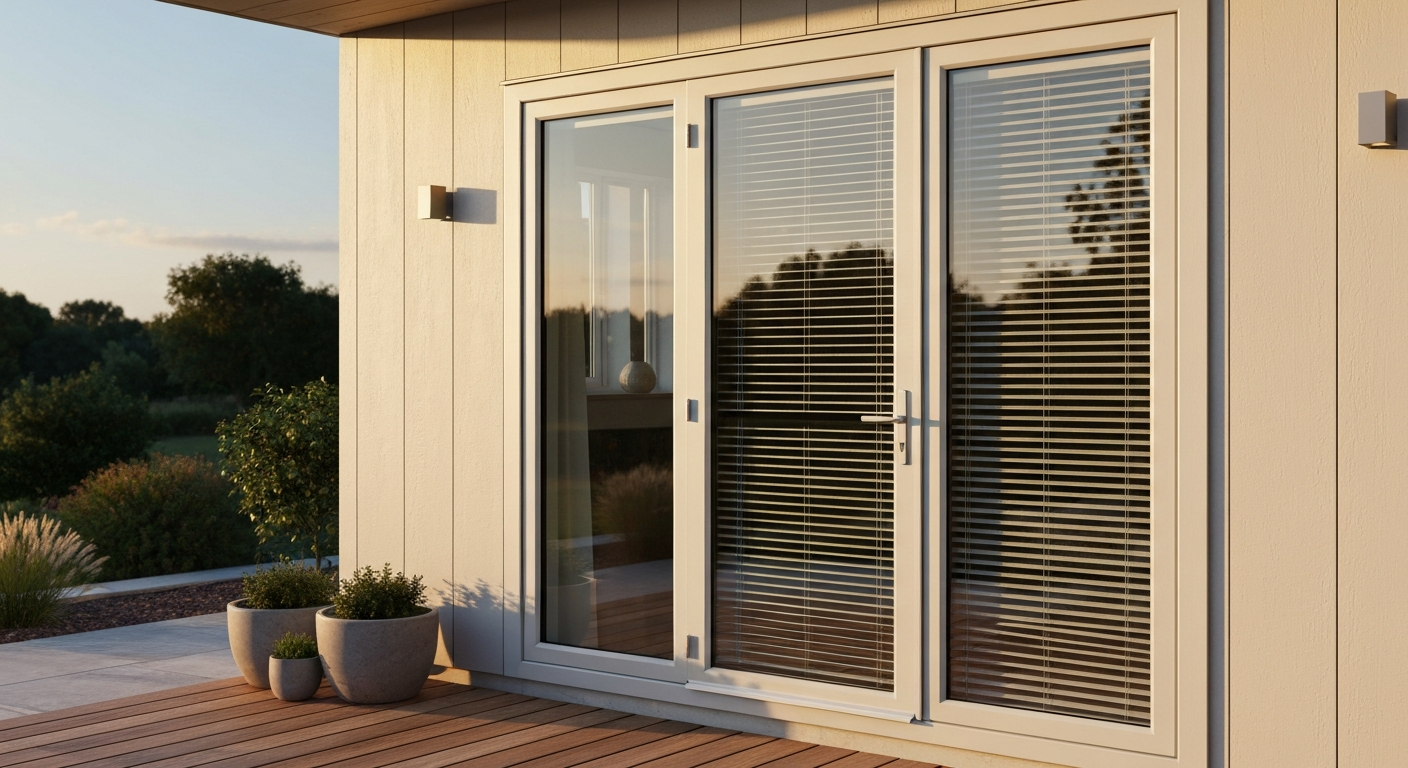
Sliding patio doors
The most common operational safety problem with sliding doors is a panel that's hard to move. Stiff operation usually means worn or dirty rollers, a bent track, or accumulated debris. This matters for safety because people force stiff doors, which breaks hardware, and because a door that doesn't slide freely in an emergency is a real egress problem. Clean the track with a stiff brush and a vacuum twice a year. Lubricate the rollers and track with a silicone spray (not WD-40, which attracts dirt). If the door still drags after cleaning, remove the panel and inspect the rollers. Replacement rollers for common door brands cost $10-$40 and are a DIY job with a Phillips screwdriver. Also check that the anti-lift tabs (the small devices at the top of the frame that prevent the panel from being lifted off the track) are present and intact.
French patio doors
French doors are hinged, so the maintenance focus shifts to hinge condition, latch alignment, and the astragal (the vertical strip that covers the gap between the two panels when closed). Tighten hinge screws annually, and if any screws spin freely, replace them with longer screws or use a hardwood plug and re-drill. The astragal seal should compress fully when the door is locked closed. If there's a visible gap, adjust the strike or replace the astragal. Multi-point lock systems on French doors need periodic lubrication of the locking rod mechanism (a dry graphite lubricant works well) so that all lock points engage smoothly without forcing the lever.
Bifold patio doors
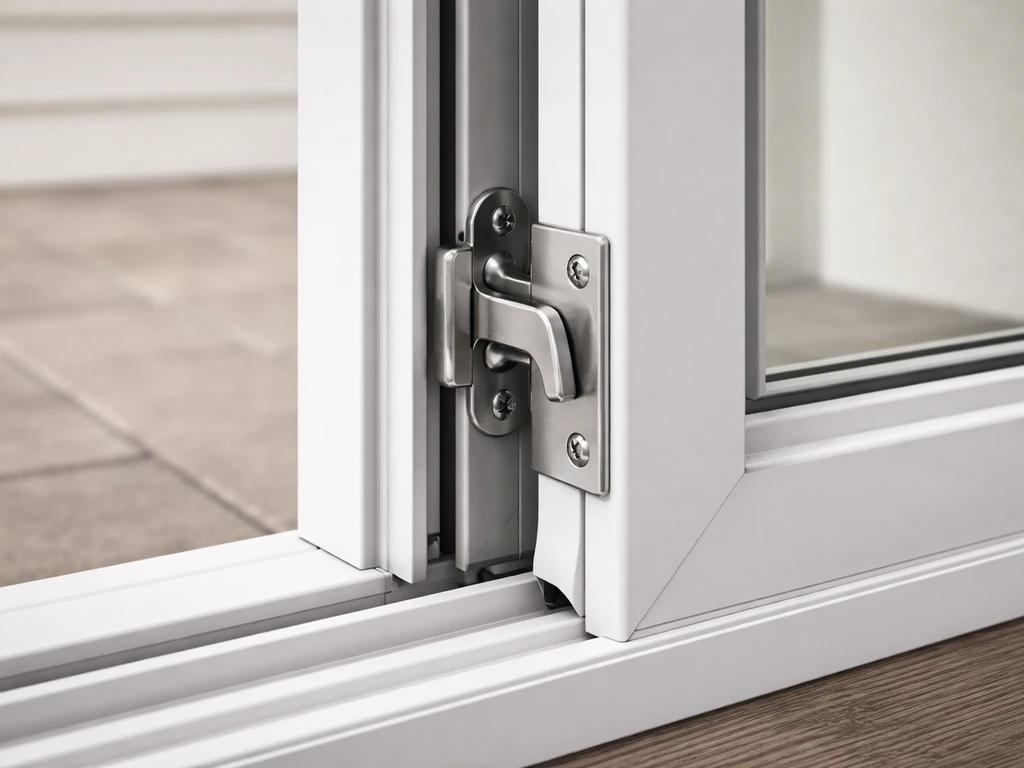
Bifold patio doors (also called folding or accordion doors) fold out of the way in multiple panels and are popular for opening up a wall fully to a patio. They have more moving parts than sliding or French doors and therefore more potential failure points. The pivot points and track rollers need lubrication every 6 months. Check that the lead panel (the panel that swings and carries the lock) latches cleanly into the threshold receiver and the top jamb lock. Bifolds can sag at the panels over time as the weight of the glass shifts the alignment, which causes the panels to bind, gap, or fail to seal at the bottom. Annual alignment adjustment by a glazier or the door manufacturer's service is worth scheduling.
Maintenance schedule at a glance
| Task | Sliding | French | Bifold | Frequency |
|---|---|---|---|---|
| Clean and lubricate track/rollers | Yes | No | Yes | Every 6 months |
| Tighten hinge or pivot hardware | No | Yes | Yes | Annually |
| Inspect and replace weatherstripping | Yes | Yes | Yes | Annually |
| Check anti-lift tabs or top locks | Yes | No | Yes | Annually |
| Test lock engagement and latch seating | Yes | Yes | Yes | Every 6 months |
| Inspect exterior caulk at frame | Yes | Yes | Yes | Annually |
| Check glass seal (fogging, chips) | Yes | Yes | Yes | Annually |
Frame material and how it affects safety
If you're replacing a door rather than just upgrading hardware, the frame material you choose has real safety and maintenance implications.
| Frame Material | Forced Entry Resistance | Water/Rot Resistance | Hardware Compatibility | Maintenance Level | Approximate Door Cost |
|---|---|---|---|---|---|
| Vinyl (PVC) | Moderate (can crack under force) | Excellent | Limited retrofit options | Very low | $600-$2,500 |
| Aluminum | Good (strong but can be pried) | Excellent | Wide, including multi-point | Low | $800-$3,500 |
| Wood | Good if solid, poor if rotted | Poor without maintenance | Wide, easy to reinforce | High | $1,000-$4,500 |
| Fiberglass | Very good (dense, rigid) | Excellent | Wide, takes hardware well | Low | $1,200-$5,000 |
| Steel (residential) | Best | Moderate (rusts if unsealed) | Wide | Moderate | $1,500-$5,000+ |
For pure security, fiberglass and steel frames are the strongest choices. For low maintenance with good security, fiberglass is the practical winner for most homeowners. Wood looks great but demands attention to sealing and paint every few years or the frame degrades in ways that directly compromise both weather sealing and the structural integrity that your lock depends on.
Shopping checklist: what to verify before you buy or replace
If you're buying a new patio door or replacing an existing one, these are the specific things to confirm with the dealer or manufacturer before you commit. Don't assume anything is included or standard.
- Glass certification: Confirm the door comes with tempered glass as a minimum (look for ANSI Z97.1 or CPSC 16 CFR 1201 certification). Ask explicitly if the glass is laminated or impact-rated, and get this in writing if you're in a storm-prone area.
- Lock type and grade: Ask whether the included lock is a single-latch or a multi-point system. If it's single-latch, ask about factory-prep for a multi-point upgrade and what hardware is compatible.
- Strike plate screws: This sounds minor, but ask what length screws come with the strike plate. If the answer is 3/4 inch or 1 inch, plan to replace them immediately with 3-inch screws.
- Anti-lift and anti-slide security for sliding doors: Confirm the door includes anti-lift tabs and ask whether a security bar or secondary lock is available as a factory option.
- Egress compliance: Confirm that the door meets your local IRC/building code egress requirements and that it can be opened from the inside without a key.
- Weatherstrip and threshold warranty: Ask specifically about the weatherstrip and threshold seal warranty. Some door warranties cover the glass and frame for 20-25 years but only cover seals for 1-2 years.
- Impact rating if relevant: If you're in a hurricane zone or a high-wind area, ask for the specific ASTM E1886/E1996 or Miami-Dade NOA rating. A dealer who can't answer this probably doesn't have the documentation.
- Frame reinforcement at lock points: For French and hinged doors, confirm that the frame is reinforced (with steel inserts or solid wood blocking) at the lock strike and hinge locations, not just hollow extrusion.
- Installer experience with this door type: Sliding, French, and bifold doors each require different installation skills. Ask the installer how many of this specific door type they've installed in the past year.
- Energy performance (secondary to safety but worth confirming): An NFRC label should show U-factor, Solar Heat Gain Coefficient, and condensation resistance. Low-E coatings on double-pane units are standard now; triple-pane is worth considering in climates with extended freezing winters.
Where to start today based on your situation
Not everyone needs to do everything at once. Here's how I'd prioritize based on what you found in your inspection.
| Your Situation | First Upgrade | Estimated Cost | DIY or Pro? |
|---|---|---|---|
| Lock flexes or doesn't fully engage | Multi-point mortise lock or security bar | $80-$300 | Pro recommended |
| Strike plate with short screws | Heavy-duty strike box with 3-inch screws | $15-$40 | DIY |
| Child or pet screen breach risk | Pet-grade screen re-mesh or retractable screen | $20-$700 | DIY or Pro |
| Glass is annealed or unmarked | IGU replacement with tempered/laminated glass | $300-$800 | Pro required |
| Door drags or rollers are worn | Track cleaning and roller replacement | $10-$40 + time | DIY |
| Visible gap under door or drafts | Bottom sweep and threshold seal replacement | $20-$80 | DIY |
| Water staining at sill corners | Exterior caulk + inspect flashing | $20-$1,000 | DIY or Pro |
| Old door, multiple problems | Full door replacement | $1,200-$5,000+ installed | Pro required |
The lock and strike plate upgrades are where I'd always start if there's any security concern, because they're cheap, fast, and have the highest impact on actual forced-entry resistance. Glazing and water damage are slower-burning problems but get expensive fast if left alone. Screen and child safety upgrades are the easiest DIY wins and often get overlooked until something goes wrong.
For a deeper dive on any one part of this, the related topics on security bars, door stoppers, and the best locks specifically for patio doors are worth reading alongside this guide. When you’re evaluating door stoppers, focus on models that prevent the door from moving while still allowing safe, smooth operation. If you need a pet-friendly setup, compare the best patio dog door options so your dog can go out without creating new safety gaps. If you want a direct recommendation for your door style, compare the best lock options specifically for patio doors before you buy the best locks specifically for patio doors. Those get into specific product recommendations and sizing details that go beyond what a general safety overview can cover. The core message here is simple: run the inspection, fix the cheapest problems first, and make a plan for the bigger ones before they become emergencies.
FAQ
How do I tell if my sliding patio door’s anti-lift tab is actually doing its job?
Besides checking that the tab exists, do a quick functional test: close and lock the door, then try lifting the handle end of the panel slightly while watching the top corners for any gap at the track interface. If you feel movement or see the rollers lose contact, the tab may be worn or the track may be out of alignment, even if the tab looks present.
Will a security bar or door stopper interfere with emergency egress from the patio door?
It can if it’s installed so it prevents the door from opening quickly from inside. For any patio door used for a bedroom secondary exit, make sure the bar or stopper is removable or adjustable without tools, and that the inside opening action remains smooth and unobstructed when minutes matter.
Is tempered glass always safe for kids, or do I still need film or frosting?
Tempered glass reduces injury severity, but it does not prevent a child from running into the glass. If the door serves an activity route, add frosting or window film to the lower 24 to 36 inches anyway to create a clear visual barrier and reduce impact risk.
What if my door has an etched “tempered” mark, but I still see large cracks or glass weakness after an impact?
Any compromised tempered glass panel should be replaced, even if the marking is present. Tempering strength does not guarantee resistance after a partial failure or impact that can weaken the panel. If the door is still serviceable but damaged, treat it as unsafe and replace the glass unit.
Can I replace just the glass, or does IGU replacement usually require a whole door swap?
IGU replacement is sometimes possible, but it depends on frame depth, door construction, and how the glass is retained. If the frame was not designed to hold laminated or impact-rated units, you may run into fit and load issues. Ask the glass company to confirm weight compatibility and whether your door manufacturer’s warranty is still valid after the glass-only swap.
What’s the fastest way to diagnose a patio door leak if seals were recently replaced?
After wind-driven rain, check where water first appears inside: if it starts near the top corners or along the upper jamb, flashing around the rough opening is often the culprit. Look for signs of water staining behind interior trim, because that points to a flashing or exterior wrap issue rather than the door perimeter seals.
Should I lubricate roller tracks with grease instead of silicone spray?
Usually no. Grease can attract debris and create a sticky mix that makes the rollers drag again, which increases the chance people force the door and damage hardware. Use silicone spray intended for doors, and clean the track first so you are lubricating the system, not grinding dirt.
If my lock meets the grade recommendation, do I still need to upgrade the strike plate?
Often yes, because forced entry resistance depends on the latch engagement point and what it bites into. If your strike is held with short screws, the door can still fail even when the lock itself is solid. Upgrading to a deep steel strike box with proper stud-length screws is commonly a higher-impact step.
Are multi-point locks compatible with all French patio door frames?
Not always. Compatibility depends on the frame prep, interior hardware operation, and whether the multipoint system’s rods align with your existing astragal and mortise locations. If you’re buying a multi-point system, confirm that your current interior lever or handle can operate it without keys, and verify that replacement hardware matches your hinge and mortise dimensions.
What’s the safest height to place a child safety lock on a patio door?
A common approach is mounting the secondary lock so it’s out of reach for most children, typically above about 54 inches. Ensure it’s positioned so a small child cannot reach the mechanism through nearby furniture or gaps, and remember it adds a delay, it does not replace supervision.
Do screen upgrades help with security too, or only with pets and toddlers?
Mostly only with accidental access and pet containment. Even heavy-duty or retractable screens are not a security substitute for locks and glazing because screens and frames can still be forced or removed. If security is a concern, prioritize latch, strike, and glazing performance first.
How often should I inspect weather sealing and hardware condition on patio doors?
At minimum, inspect twice per year (spring and fall): look for gaps when locked, check for loose or spinning screws, and verify that the door still slides smoothly without extra force. If you live in severe weather or coastal conditions, do a quick visual check after major storms because seal and hardware wear can accelerate.