For most patio doors, a cellular shade or solar roller shade is your best starting point. Cellular shades win on insulation and privacy, solar rollers win on glare control while keeping your view. If you want both, layer them or go with a dual-shade system. The right pick depends on your door type, how much light you want to block, and whether you're more worried about heat, privacy, or style, so let's work through it practically.
Best Shades for Patio Doors: Types, Colors, Fit Tips
Owen Delaney
15 May 2026
Which shade type actually works for patio doors
Patio doors aren't regular windows. They're taller, often wider, they move (or at least one panel does), and they're your main connection to the outside. That changes everything about which shade type makes sense.
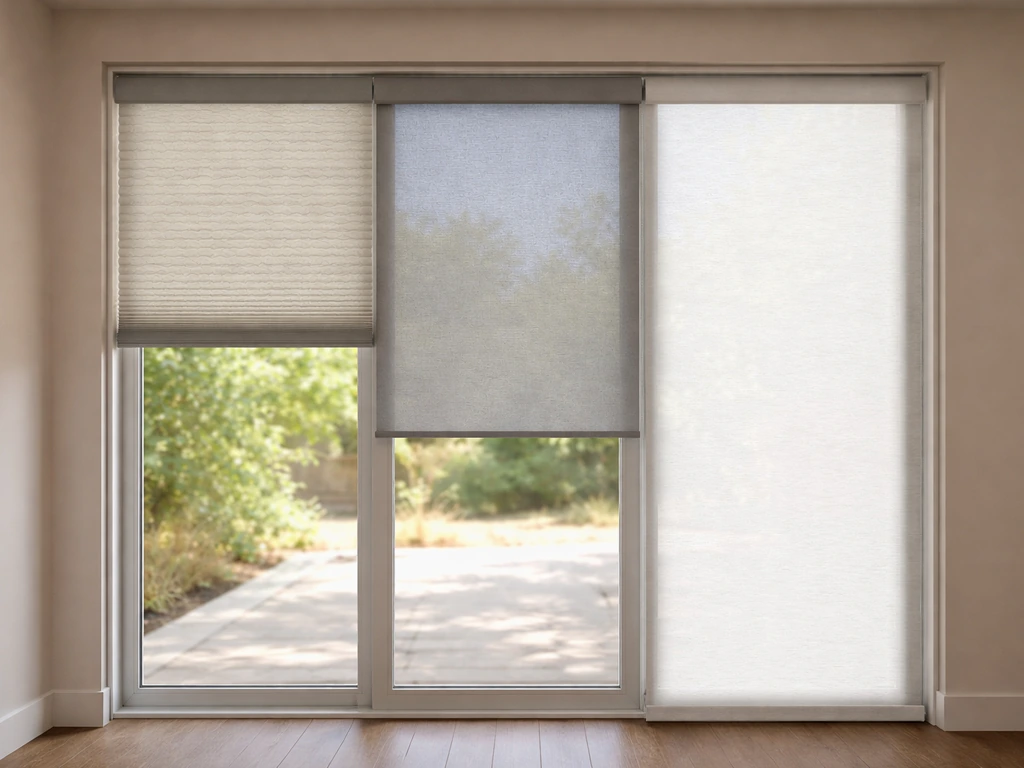
Cellular shades (also called honeycomb shades) are the top pick for most homeowners. The honeycomb structure traps air in pockets, which reduces heat flow through the glass and adds meaningful insulation, more than any other soft shade type. Hunter Douglas's Duette line, for example, publishes winter R-values on their thermal brochures, and the difference between bare glass and a fitted cellular shade is real. They also come in blackout versions (like Duette LightLock) if you need full light block, or top-down/bottom-up configurations that let you get privacy without killing natural light.
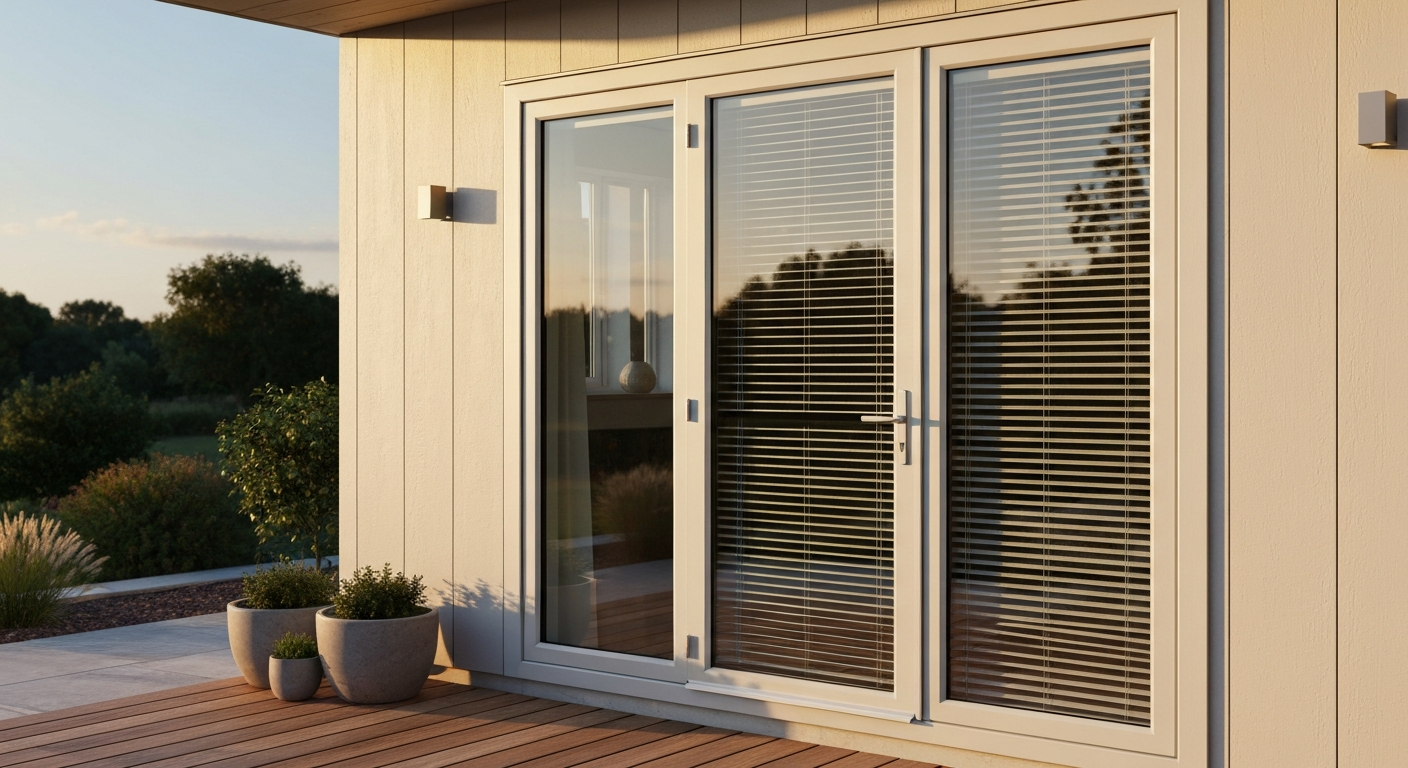
Solar roller shades are the other major contender. A sheer solar fabric cuts glare and solar heat gain while still letting you see outside during the day, Lutron describes this well in their motorized roller line. They're easier to operate across wide spans, clean easily, and look clean and modern. The trade-off: they give you much less privacy at night when your interior is lit.
Roman shades and standard fabric shades look beautiful but provide only a small amount of insulation compared to cellular options. They're better for French doors where aesthetics are a priority and heat loss is less of a concern. Vertical blinds have a bad reputation (deservedly, in most cases) but Hunter Douglas's Vertiglide system, which runs cellular honeycomb fabric vertically on a side-to-side track, is a genuinely smart solution for sliding glass doors. It stacks left, right, or split-draw, which means you can clear the opening without losing half your view to a bunched fabric pile.
Plantation shutters are the premium option. They're durable, look high-end, and offer solid light control, but they're expensive and don't work well for very wide sliding doors unless you do individual panel shutters per door section. Interior screens (retractable or fixed) solve the bug problem but not privacy or heat. For exterior roller shades, brands like Coolaroo build mold, mildew, and fade resistance into their outdoor fabrics, worth considering if you want coverage that extends beyond the glass.
| Shade Type | Best For | Insulation | Privacy | View Preservation | Patio Door Fit |
|---|---|---|---|---|---|
| Cellular / Honeycomb | Energy savings, full privacy | Excellent | High | Low to medium | Sliding, French, bifold |
| Solar Roller Shade | Glare + view balance | Moderate | Daytime only | High | All types |
| Vertiglide (vertical cellular) | Sliding doors specifically | Good | High | Medium | Sliding glass doors |
| Roman / Fabric Shade | Style-focused rooms | Low | Medium-High | Low | French doors |
| Plantation Shutters | Upscale look, durability | Moderate | High | Medium | French, bifold panels |
| Exterior Roller Shade | Heat, glare, outdoor use | Good | High | Medium | All types (exterior mount) |
Colors and materials that handle light, privacy, and heat
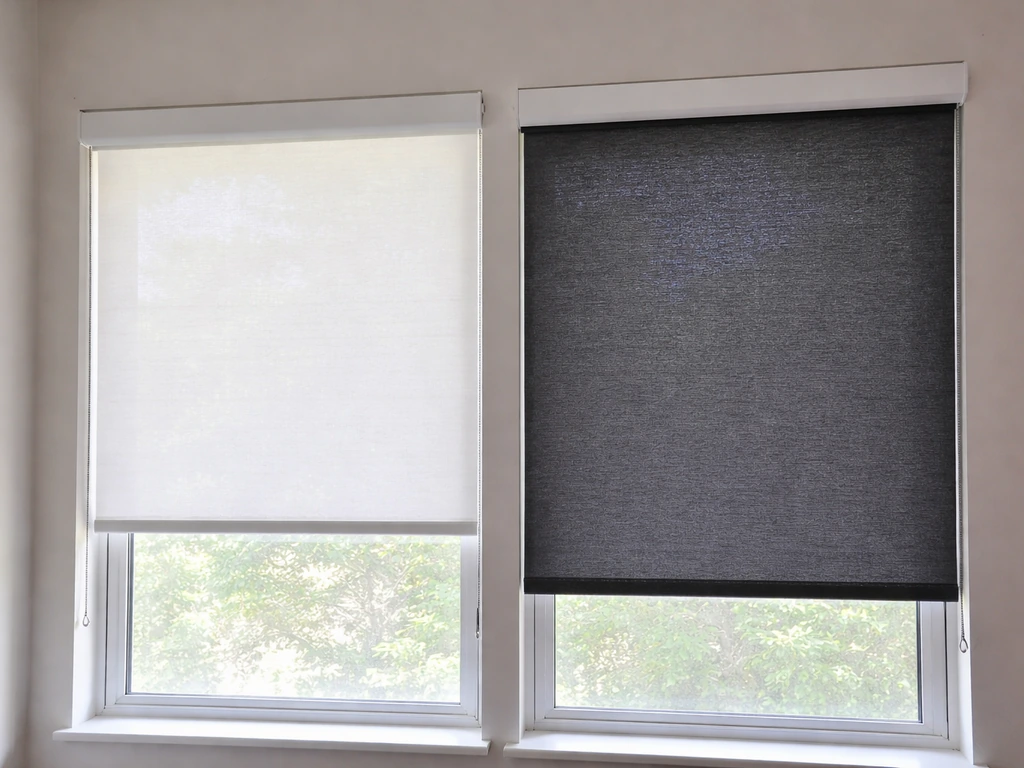
Color matters more than most people think, and not just for looks. Darker fabrics absorb more solar radiation, a dark gray or charcoal solar shade will block more heat than a white one in the same openness factor. But darker shades inside the room can make the space feel smaller and reduce how much reflected light you get when they're closed. Lighter colors reflect more light back into the room, which is useful in north-facing rooms that need all the natural brightness they can get.
For solar roller shades, the openness factor is the key spec: a 3% openness fabric blocks more light and gives more privacy than a 10% openness fabric, while a 10% fabric preserves more of your view. Most people with south or west-facing patio doors do well with a 5% openness in a medium-to-dark color. If your door faces east or north, a 10% or even 14% fabric might give you enough control without dimming the room unnecessarily.
For cellular shades, fabric weight and cell construction matter most. Single-cell (single honeycomb) shades are lighter and less expensive. Double-cell shades trap more air and raise the R-value noticeably. Triple-cell options exist and push insulation even further, useful in climates with extreme summers or cold winters. Heavier fabrics provide marginally better thermal performance than lighter ones in the same cell configuration, but the cell structure does most of the work.
For moisture-prone areas near patio doors (especially if condensation builds up in winter or you're in a humid climate), avoid natural woven shades or linen-style fabrics that absorb moisture and can develop mildew. PVC-coated polyester or solution-dyed acrylic fabrics used in outdoor rollers like Coolaroo are far more resistant. If you're going with an interior shade in a high-humidity zone, stick with polyester-based cellular or roller fabrics and avoid organic materials.
Measuring for sliding, French, and bifold doors
Getting the measurement wrong is the most common mistake people make, and it usually means paying for a second order. Measure everything to the nearest 1/8 inch, this isn't the place to round to the nearest inch.
Inside-mount measurements
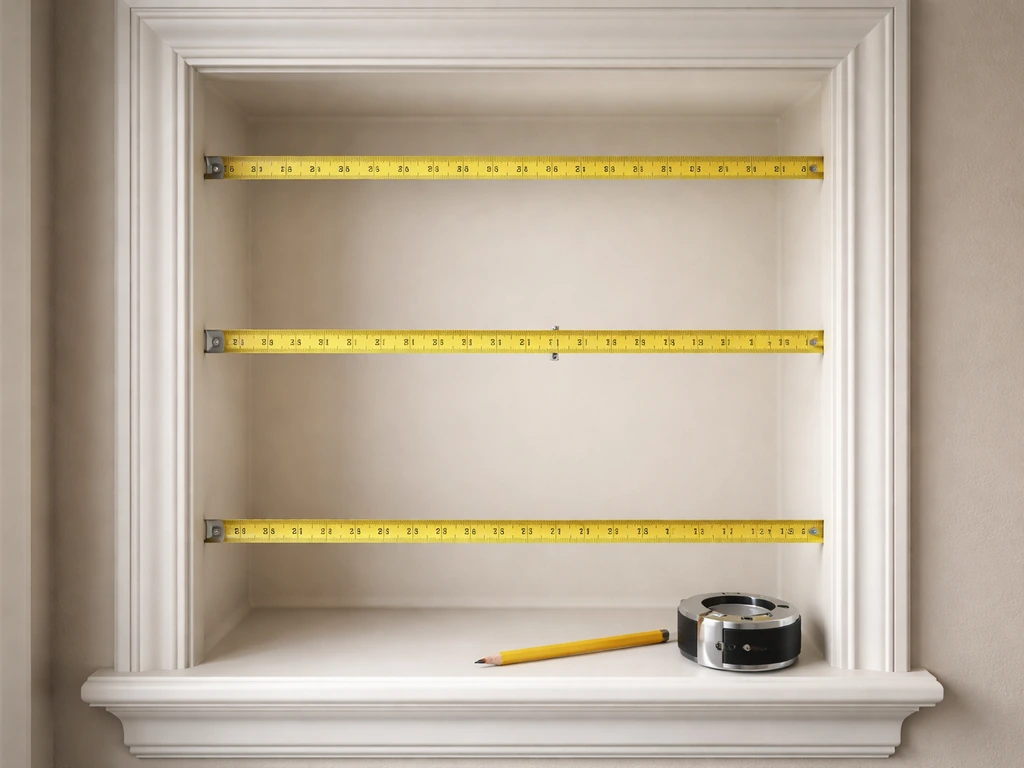
For inside-mount shades, measure the width of the opening at the top, middle, and bottom, use the narrowest measurement and don't add anything. The manufacturer will deduct the necessary clearance. For height, measure at the left, center, and right and use the longest measurement. Measure to the point where you want the shade to stop, if there's a door track or threshold that limits drop, measure to there.
Outside-mount measurements
Outside-mount gives you better light block because the shade overlaps the frame. Add at least 1. 5 inches on each side of the opening, [some guides (including American Blinds and Lowe's) recommend exactly this](https://www. americanblinds.
com/help/how-to-measure/sheer-shades), while Blinds. com suggests adding at least 2 inches to both width and height in some cellular shade configurations. JCPenney notes that for blinds or shades that stack to the side or above the opening, you add the stack amount to the measurement, and if the shade will rest on the sill, you add overlap to the top only [add the stack amount to the measurement, or add overlap to the top only](https://www. jcpenney.
com/m/measuring-for-blinds-shades). Measure height from where the top of the shade will mount to where it will end, if you're covering a full door, you'll typically want it to reach the floor or just above the threshold. Round the width up to the nearest available size when ordering.
Sliding glass doors
A standard sliding glass door is 80 inches tall and either 60 or 72 inches wide (5 or 6 feet). Wider three-panel configurations run 96 inches or more. For a Vertiglide or vertical cellular system, measure the full opening width, the shade travels side to side, so the full width is what you're covering. Make sure there's clearance at the top of the frame for the headrail, and that the stack direction matches which panel slides.
French doors
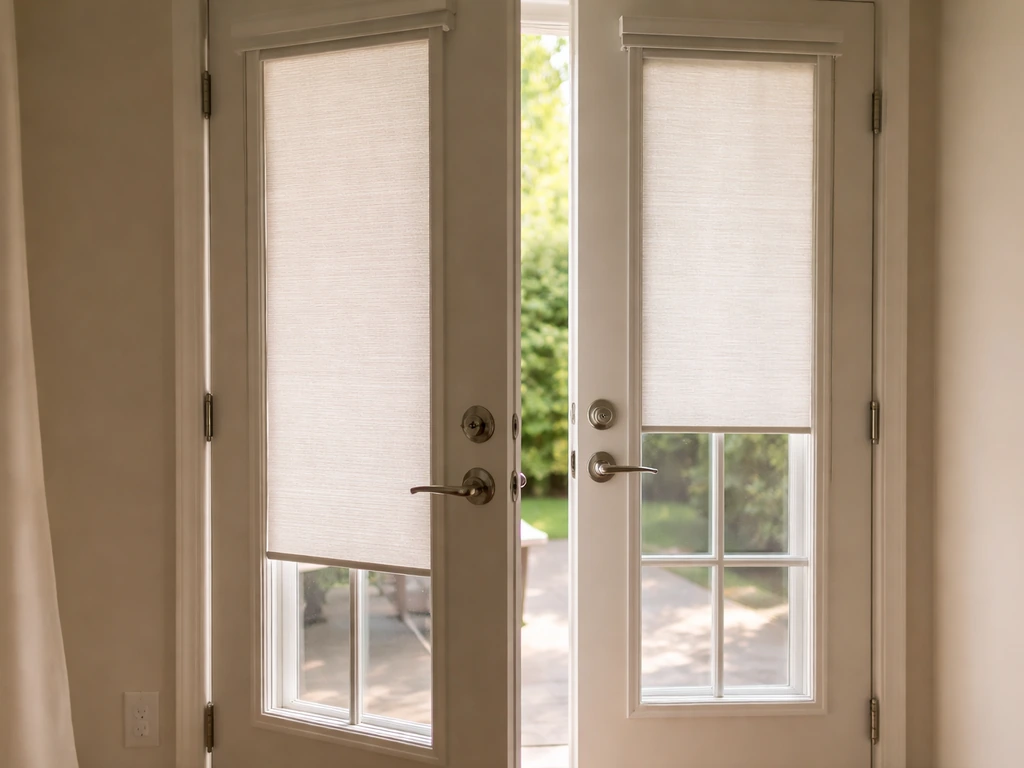
French doors swing open, so inside-mount shades need to be narrow enough to stay within the door's glass panel, not span the full doorframe. Measure each glass panel individually. If you want the shade to travel with the door when it opens (which most people do), mount it directly to the door panel, not the wall. This requires shallow-mount hardware; check that your shade's headrail depth fits within the door frame depth before ordering.
Bifold doors
Bifold doors are the trickiest to cover. Because the panels fold and stack, a single shade spanning the full opening won't work unless it mounts above and outside the full frame. If you're fitting individual shades to each panel, measure each panel separately and account for the bracket and chain mechanism, there will be a gap between shades of roughly 4 cm per panel junction. Order Blinds' guidance on bifold door roller blinds specifically notes this gap and recommends ensuring each frame section is at least 4 cm wide to maintain coverage and avoid light leakage. For a cleaner look with less fuss, an outside-mount ceiling-dropped shade that clears the full folded panel stack is often simpler and more effective.
Mounting options and what they actually change
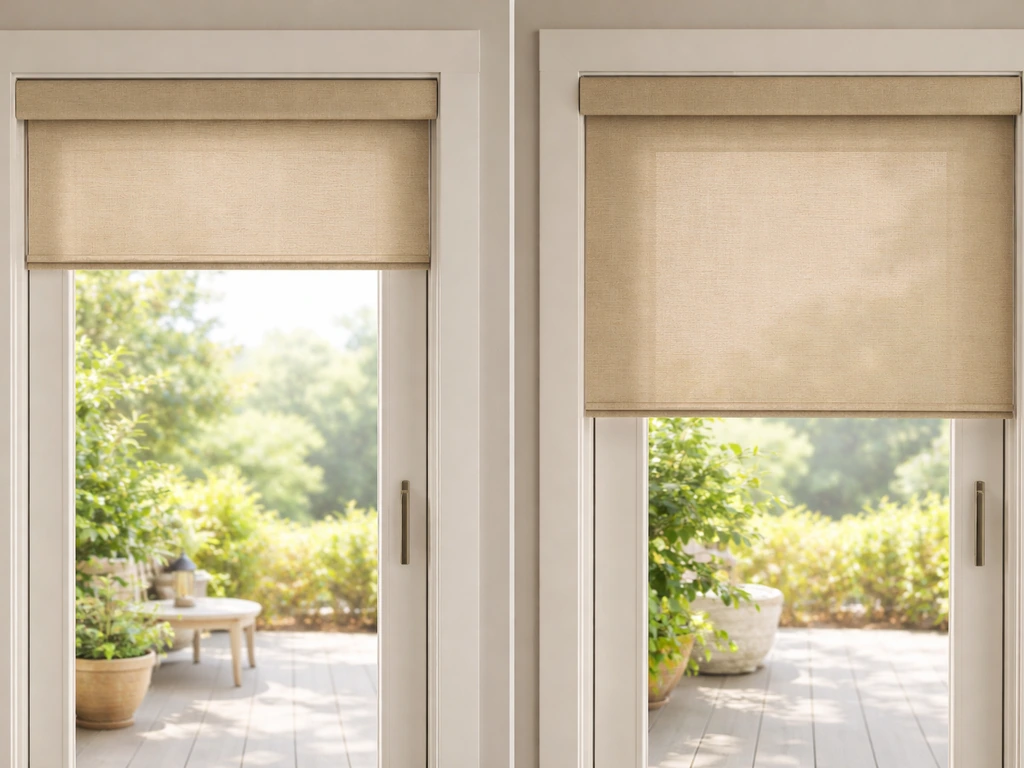
Inside-mount looks cleaner and more built-in. It works well when you have enough frame depth to accept the headrail (typically 1.5 to 2 inches minimum, though this varies by product). The downside is that it does less to block light at the edges, with cellular shades, side tracks help with this, but you'll still get some light leakage around the perimeter on a very sunny day.
Outside-mount covers the frame and blocks light more completely at the sides and top. It's the better choice for heat and privacy performance. You can mount to the wall above the door or, if the frame is wide enough, to the face of the frame itself. For outside-mount, the shade overlaps the opening by your added margin on each side, which is why those extra 1.5 to 2 inches per side matter.
Ceiling-mount is ideal for bifold doors and very wide sliding doors where wall or frame mounting is awkward or the door mechanism interferes. The shade drops from the ceiling, clears the full door swing or stack, and creates a dramatic floor-to-ceiling look. It also handles cases where the wall space above the door is limited. The main practical consideration: make sure the ceiling is solid enough for the brackets, especially for heavier shades on wide spans, and confirm that the shade's drop length reaches where you need it.
Pairing shades to your door type and room style
If you have a sliding glass door in a casual family room or open-plan living area, solar roller shades or a Vertiglide cellular system keep things looking clean and modern without fussing with fabric stacks. They pair well with contemporary or transitional interiors. For a more traditional or coastal look, woven wood shades or Roman shades on a sliding door work if you use an outside-mount ceiling panel approach.
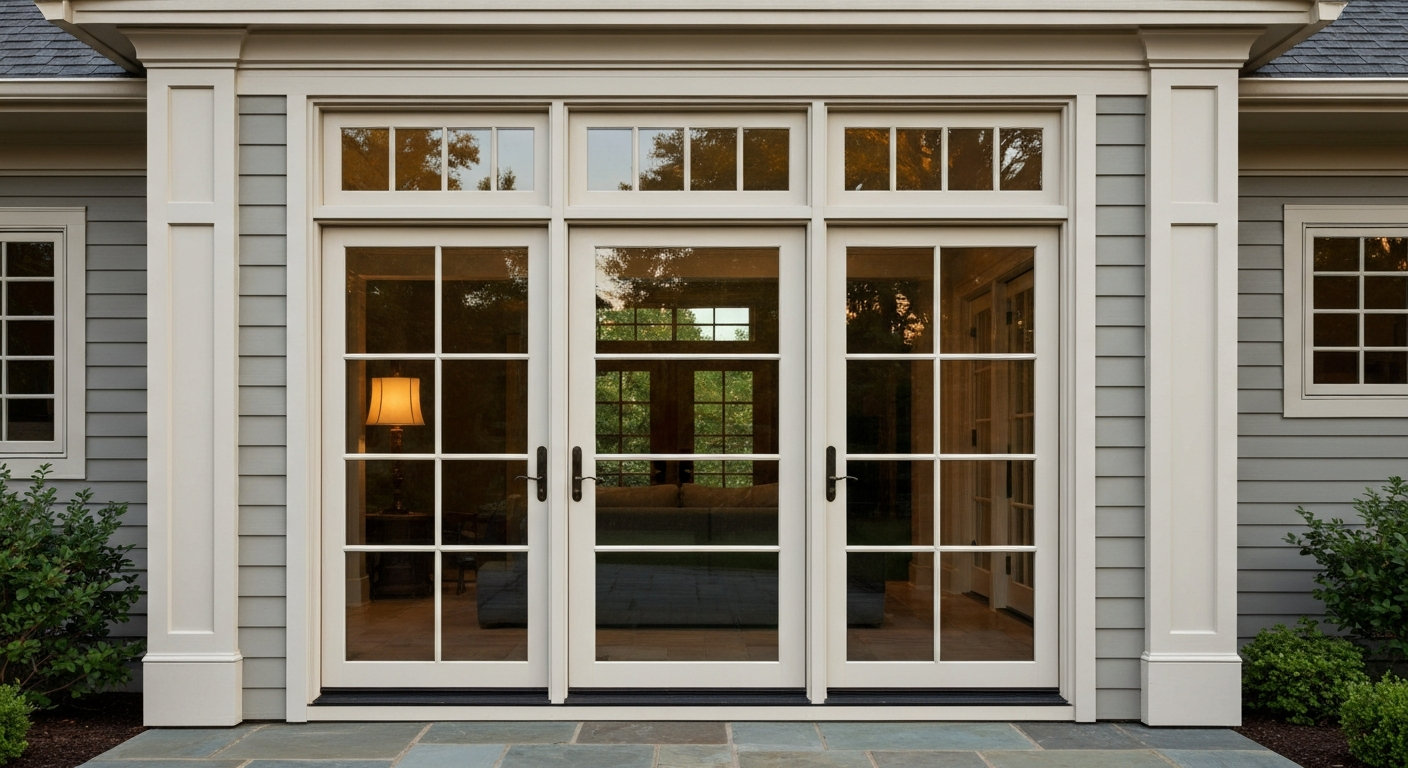
French doors in a dining room or bedroom call for something more tailored. Individual shades or shutters mounted directly on each door panel give a polished, symmetrical look. Roman shades work beautifully here in a linen or cotton-blend fabric, and plantation shutters are a strong long-term investment that reads as a finish rather than a window treatment. Avoid bulky roller shades on French doors, they look clunky when the door is open.
Bifold doors, especially wider configurations used as indoor-outdoor room dividers, look best with a ceiling-mounted treatment that lets you cover the full span cleanly. Large-format roller shades in a solar or blockout fabric work well here, they disappear when rolled up and make a strong visual statement when down. If your bifold doors open to a deck or patio and you're worried about outdoor UV, consider exterior roller shades mounted on the outside of the frame.
Operation and durability: manual vs motorized, and handling the elements
For anything wider than about 72 inches, motorization is worth serious consideration, not just for convenience, but because manually operating a heavy or wide shade repeatedly puts stress on the mechanism and fabric. Lutron's motorized roller shades and Hunter Douglas's PowerView system are both well-regarded options. A motorized shade on a wide sliding door that you open and close daily will outlast a manual cord system on the same span, in most cases.
Cordless options are worth choosing even on narrower spans, especially if you have kids or pets. Hunter Douglas's Vertiglide is cordless as a standard feature. Cordless lift systems also tend to operate more smoothly on tall doors because there's no cord length to manage.
Moisture is the real enemy for interior patio door shades. Condensation on sliding glass doors is common in winter, and if your shade hangs close to the glass, the bottom rail and lower fabric can get damp repeatedly. Polyester and PVC-coated fabrics handle this much better than natural fiber shades. For exterior applications, Coolaroo's solution-dyed polyester fabrics are specifically rated for mold, mildew, and UV fade resistance, if you're considering an outdoor shade for a covered patio door area, this is the category to look at. Choosing the best paint for a patio door also means picking a finish rated for outdoor UV and moisture, especially near the glass best paint for patio door.
Wind is a factor for any exterior shade and for interior shades near a frequently opened door. If your patio door is often open and there's a breeze, lightweight roller shades will flutter and wear faster at the edges. Exterior shades need side guides or hold-down brackets to stay controlled in wind. For interior use near a breezy opening, a heavier fabric or a shutter (which stays in place regardless of airflow) is more practical.
Cleaning is simpler than most people expect. Solar and cellular polyester fabrics can usually be spot-cleaned in place with a damp cloth. For retractable screens and outdoor rollers, Lowe's care guidance recommends cleaning in place and letting dry before retracting. Avoid machine washing most shade fabrics, it distorts the cell structure or coating.
What patio door shades actually cost in 2026
Let's be honest about the price range, because it's wide. A budget cordless cellular shade from a big-box retailer can be under $50 for a standard size, while a custom motorized solar shade for a 96-inch sliding door from a premium brand can run $600 or more, just for the shade, before installation.
| Shade Type | DIY / Ready-Made Range | Custom Range (per shade) | Motorized Upcharge |
|---|---|---|---|
| Cellular / Honeycomb (single cell) | $40–$120 | $55–$380 | +$100–$300 |
| Cellular / Honeycomb (double/triple cell) | $80–$200 | $100–$400+ | +$100–$300 |
| Solar Roller Shade | $50–$150 | $80–$350 | +$100–$400 |
| Vertiglide (Hunter Douglas) | Not available off-shelf | $300–$700+ | Included in PowerView |
| Roman Shade (fabric) | $60–$180 | $150–$500 | +$150–$400 |
| Plantation Shutters (per panel) | $150–$300 | $250–$600+ | N/A |
| Exterior Roller Shade (e.g., Coolaroo) | $80–$250 | $200–$600 | +$150–$350 |
Professional installation adds $65 to $120 per window in labor on average for a standard shade or blind. For a full patio door with a ceiling mount, complex bifold setup, or motorized system requiring wiring, you can expect installation labor to run higher, sometimes $150 to $250 for the door alone. A full custom window treatment including measurement and professional install averages around $200 to $400 per window according to 2026 pricing guides, though wide patio doors push toward the top or beyond that range.
The biggest price drivers are: custom sizing (anything non-standard jumps cost fast), motorization (adds $100 to $400 depending on brand and system), fabric quality (blackout and specialty coatings cost more than standard sheers), and installation complexity (ceiling mounts, wide spans, and motorization wiring all add time). If you're on a budget, a standard-size cordless cellular shade from a direct-to-consumer brand like Factory Direct Blinds starts around $56 to $120 depending on size and cell structure, a solid middle-ground option that doesn't sacrifice function.
Your next steps before you order
Start by deciding on your priority: if heat and energy savings are the main goal, go cellular (double-cell minimum) with an outside mount. If you want to keep your view and just cut glare, a solar roller at 5% openness in a medium-dark color is your shade. If you want both, a dual-shade system with a sheer solar in front and a room-darkening cellular behind gives you full flexibility.
- Measure your opening at three points (top, middle, bottom for width; left, center, right for height) to the nearest 1/8 inch.
- Decide inside-mount or outside-mount — outside-mount gives better light block and is easier to measure correctly.
- If you have a sliding door, add the stack direction to your notes so you order the shade to clear the right panel.
- For bifold doors, measure each panel individually and plan for 4 cm gaps between shades, or plan a single ceiling-mount shade for the full span.
- Check your door frame depth before ordering an inside-mount shade — most headrails need at least 1.5 inches of depth.
- If the shade spans more than 72 inches, price out motorization — the convenience and longevity payoff is real.
- For high-humidity zones or doors with condensation issues, specify polyester or PVC-coated fabrics and avoid natural woven options.
Once your shades are sorted, it's worth thinking about the full door maintenance picture. If you're working on the patio door itself as well, you might also be wondering can you paint upvc patio doors and what finish will hold up outdoors.
The glass itself benefits from a good cleaner to stay clear alongside your new shades, and if your door tracks are stiff or squeaky, that's worth addressing at the same time so your new shade hardware doesn't have to fight a poorly operating door. A streak-free routine is the easiest way to get the best glass cleaner for patio doors, especially on high-traffic sliding panels good cleaner.
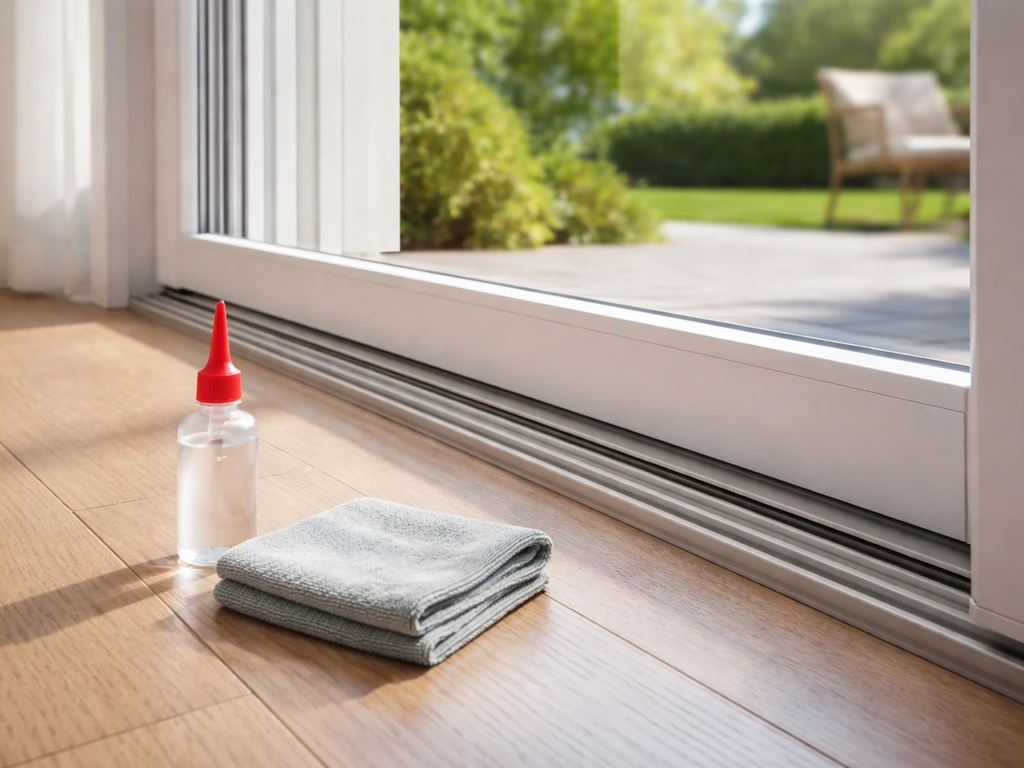
Use the right patio door lubricant to keep the tracks moving smoothly and prevent wear or sticking over time. Small things that seem unrelated, like how smoothly the door panel glides, actually affect how long your shade operating system holds up.
FAQ
How do I choose patio door shade openness for privacy at night?
A “best” opacity depends on day versus night. For privacy after dark, choose either a blackout cellular version or a solar fabric with lower openness (lower percentage means less light penetration). If you go with a solar roller for daytime glare, assume you will need curtains or blackout backup at night if interior lights are on.
What’s the best way to prevent condensation damage on shades near patio doors?
If you expect condensation on the glass (common in winter on sliding doors), avoid hanging fabric too close to the pane. Choose cellular shades with moisture-resistant fabric options (polyester-based) and ensure the lower rail and lift mechanism are not routinely touching or trapping damp air. Keeping some airflow behind the shade reduces repeated damp exposure.
Can I use inside-mount shades on a sliding patio door if the door track is close to the frame?
Yes, but only with the right mounting plan. If you install inside-mount shades on a sliding door, track depth can limit headrail fit and you can end up with a shade that binds or cannot fully close. For moving panels, verify headrail depth and clearance for the door’s movement path before ordering, and use outside-mount or ceiling-mount if wall/frame depth is tight.
What should I check before buying a wide patio door shade (like 96 inches or more)?
For wide sliding doors and heavy treatments, don’t rely on “one size fits all” guidance from window shades. Confirm that the system you pick is rated for your total span and weight, and that the headrail is braced for the full width. Motorization also needs clearance for the motor headrail and wiring route, which can affect feasibility.
Is motorization really worth it if we only use the door occasionally?
Not always. Motorization is most durable when the system uses a continuous, properly tensioned lift and has the correct control setup for your width. If you plan to open and close daily, prioritize a motorized model designed for large spans, and avoid underspec’d corded or manual spring mechanisms that can wear faster with frequent daily use.
What’s the most effective combination for both glare control and insulation?
If sunlight is strong, the fabric openness and color can matter more than style. Pair a lower openness solar shade for heat and glare with a moderate interior color that reflects light, then use cellular shades for insulation on the same door to reduce evening heat loss. This layering approach usually performs better than relying on solar or cellular alone.
Do solar roller shades protect against UV as well as heat?
Often, yes, but only for specific scenarios. Solar shades help reduce glare and solar heat gain, while cellular shades are best for insulation. If you mainly want UV protection, focus on fabric coatings and openness, and consider a solution-dyed or outdoor-rated fabric only when you truly need outdoor exposure. Otherwise, interior-rated polyester can be enough without the extra outdoor-price tier.
Can I use natural woven shades on a patio door that gets humid in winter?
Woven or natural fiber shades can look great, but they can be risky in condensation-prone zones. If humidity is high or your glass sweats, choose polyester or PVC-coated options, or use an outdoor-rated fabric system only for exterior-mounted shades. Also make sure the bottom rail and lift components are not exposed to drips from the door track area.
What mounting style minimizes light gaps on bifold patio doors?
Yes, and it’s usually the cleaner way to avoid light gaps on bifold doors. Instead of trying to span each folded panel perfectly, choose an outside-mount or ceiling-mount shade placement that clears the full stack, then use a fabric type intended for wide-format roller systems. This reduces the chance you end up with visible seams at panel junctions.
How can I avoid a shade that looks misaligned or leaves light leaks around the edges?
For a fresh, consistent look, order to the tightest available coverage size you can based on the manufacturer’s cut or size steps, then follow their clearances rules exactly. If you round incorrectly or choose the wrong mounting depth, you can end up with a shade that looks pulled back from the frame and leaks light at the edges.
What’s the best order of operations, clean door tracks first or install shades first?
Start by cleaning the glass and checking the door tracks, then tune the shade installation. If the door is stiff or squeaky, fix it first with proper lubrication so the moving panel does not create vibration that stresses the shade hardware. After install, spot-clean the fabric and do a few full up and down cycles to ensure smooth travel before daily use.