The best sliding glass patio door for most homeowners is a vinyl or fiberglass-framed, double or triple-pane low-E unit rated U-factor 0.25 or lower, with a multi-point locking system, a robust bottom track, and an ENERGY STAR certification matched to your climate zone. That combination covers energy performance, security, and daily durability without sending you into a feature spiral. Where you go from that baseline depends on your opening size, your climate, how much glass you want exposed, and whether you need a built-in screen system, all of which this guide walks through directly.
Best Sliding Glass Patio Door Buying Guide for 2026

Owen Delaney
30 Apr 2026
What 'best' actually means for a sliding patio door
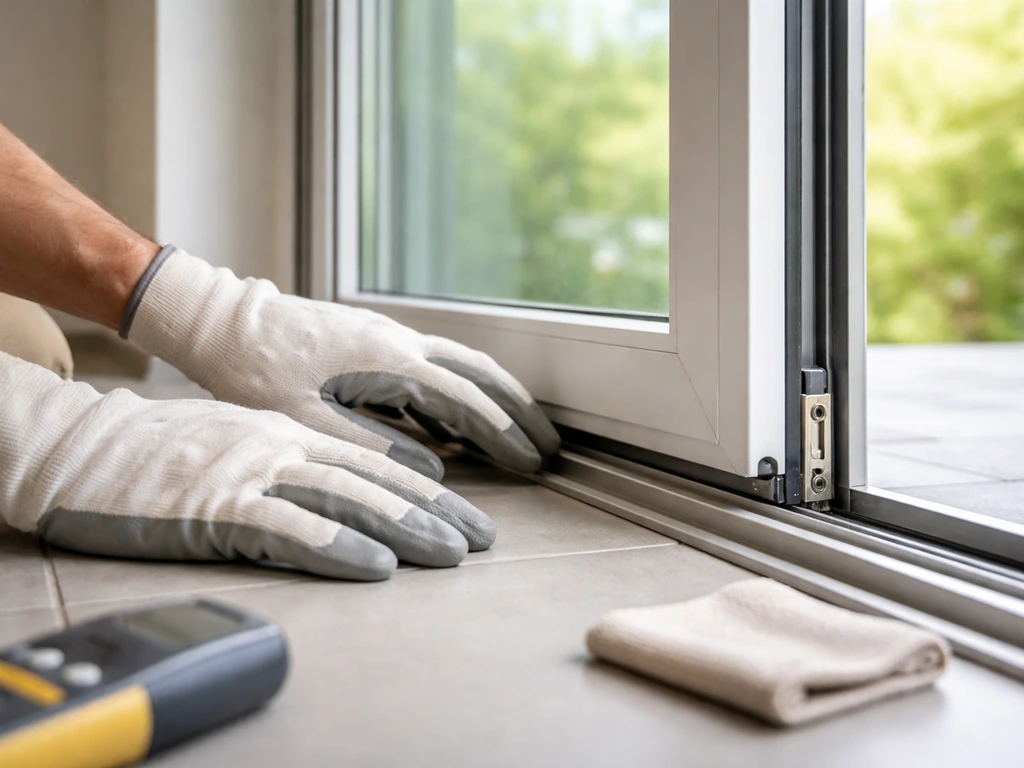
Shoppers get distracted by brand names and aesthetics, but a truly high-performing sliding glass door hits a specific checklist before looks even enter the conversation. Energy performance is the first filter. The NFRC label on any door tells you the certified U-factor (how much heat escapes) and SHGC (solar heat gain coefficient, how much solar energy passes through). ENERGY STAR's 2025 Most Efficient criteria for sliding glass doors sets the Northern Zone bar at U-factor ≤ 0.
20 with corresponding SHGC guidance. Even if you're not in the coldest zone, targeting U-factor ≤ 0. 25 is a practical benchmark that most quality doors can hit. Always verify a door's NFRC rating in the NFRC Certified Products Directory before you buy, the sticker on the showroom floor isn't always the full story.
Beyond energy numbers, a quality sliding patio door needs to pass air and water performance testing under AAMA/WDMA/CSA 101/I. S. 2/A440, the North American standard that classifies doors by structural, air-leakage, and water-penetration resistance. Performance classes run from R (residential) up through LC, CW, and AW, with CW and AW representing higher structural and weather resistance.
For most suburban homes, an R or LC-rated door is fine. If you're on an exposed coastal lot or in a high-wind area, look for CW or higher. Air infiltration should be ≤ 0. IRC 2024 requires windows, skylights, and sliding glass doors to meet an air infiltration rate of not greater than 0.
3 cfm per square foot (1. 5 L/s·m²) when tested per NFRC 400 or AAMA/WDMA/CSA 101/I. S. 2/A440 [air infiltration should be ≤ 0.
](https://codes. iccsafe. org/content/IRC2024P2/chapter-11-re-energy-efficiency). Air infiltration and exfiltration metrics in cfm/ft² are shown in the AAMA/WDMA/CSA 101/I.
S. 2/A440 example document, such as an example value around 0. 1 cfm/ft² [Air infiltration should be ≤ 0. ](https://www.
amscowindows. com/wp-content/uploads/2017/08/110-15199. pdf). 3 cfm per square foot, that's the code-level ceiling, and a good door beats it.
- NFRC-certified U-factor ≤ 0.25 (≤ 0.20 for Northern/Canadian climates)
- ENERGY STAR certified for your climate zone
- AAMA/WDMA/CSA 101/I.S.2/A440 tested — confirm the performance class (R, LC, CW, or AW)
- Air infiltration ≤ 0.3 cfm/ft²
- Multi-point locking hardware, not just a single latch
- Stainless steel or corrosion-resistant bottom track hardware
- Thermal break in the frame (critical for aluminum frames)
- Backed by a transferable warranty of at least 10 years on glass seals
Sliding vs. multi-slide vs. French-style: picking the right type first
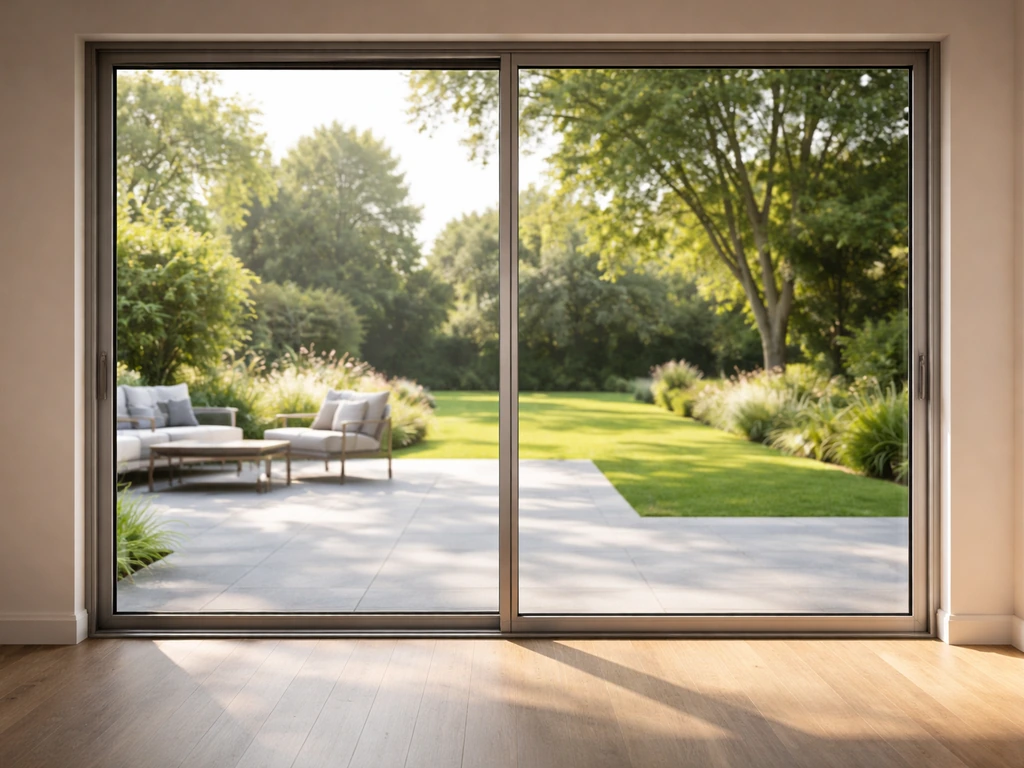
Standard sliding glass patio doors use two panels on parallel tracks, one fixed, one operational. They're the most common, least expensive, and easiest to replace because the opening sizes are standardized. They work well for openings up to about 12 feet wide. If you want more glass or a wider opening without a center post, this is where you start shopping.
Multi-slide patio doors (sometimes called stacking sliders or panoramic doors) use three or more panels that either stack to one side or tuck into a wall pocket when open. Pella, Andersen, and Ply Gem all offer these, and they can be configured as bypass, pocket, or bi-part systems. The appeal is obvious, a 16- to 20-foot opening of pure glass and air when fully open. The tradeoffs are real too: installation is significantly more complex, costs jump substantially, and the rough opening needs to be engineered properly to carry the header load. If you're drawn to multi-slide, treat it as a small renovation project, not a door swap.
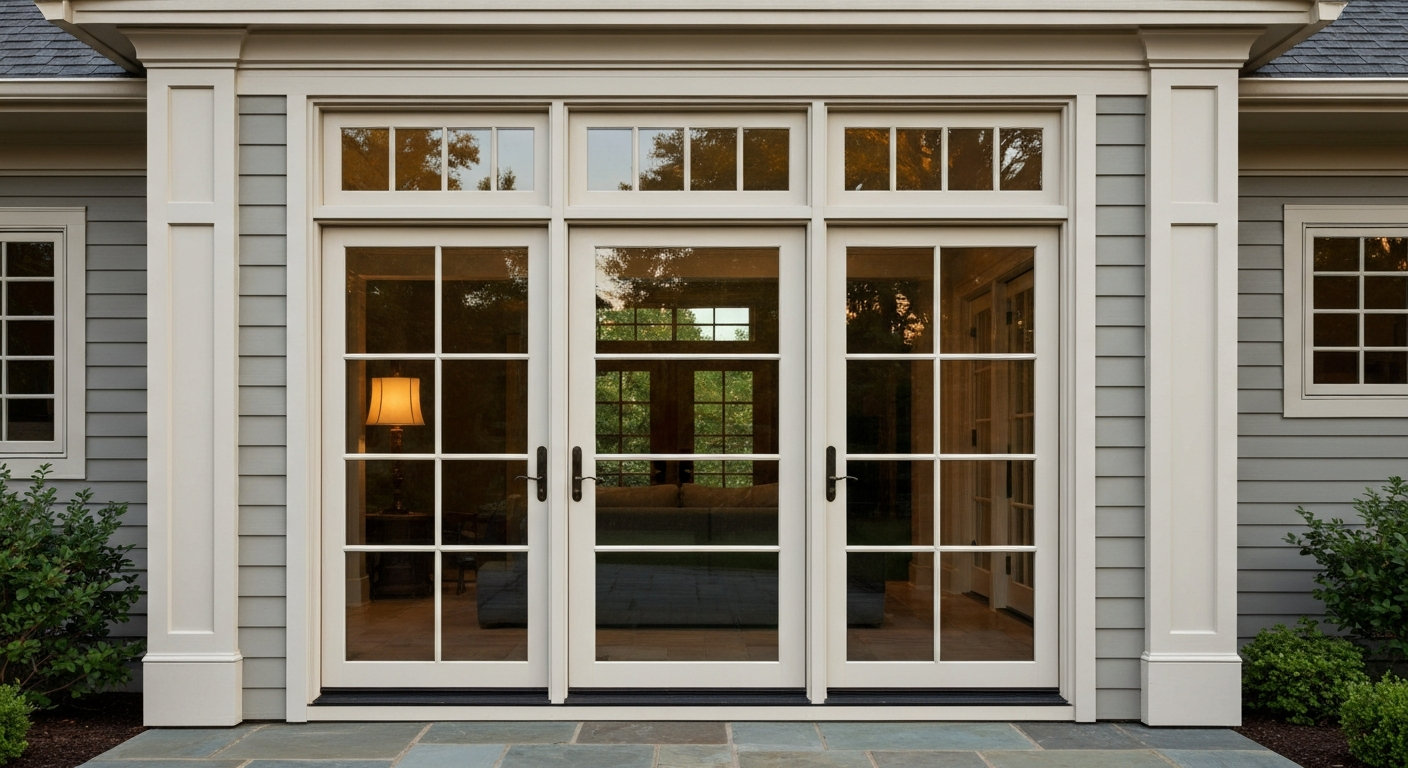
Sliding French patio doors split the difference. They use a traditional divided-light or simulated divided-light aesthetic on panels that slide rather than swing. The look reads as a French door; the operation is a slider. They're popular in older homes where swinging French doors would eat into living space, and they're often priced between a standard slider and a full multi-slide system. If your main concern is aesthetics and your opening is standard width, a sliding French door is a genuinely good call.
| Type | Best For | Typical Width Range | Relative Cost | Installation Complexity |
|---|---|---|---|---|
| Standard 2-panel slider | Most replacement projects, standard openings | 5 ft to 12 ft | Lowest | Low to moderate |
| Multi-slide / stacking slider | Wide openings, indoor-outdoor living, new construction | 12 ft to 30+ ft | Highest | High — structural work often required |
| Sliding French door | Traditional aesthetics, standard-width openings | 5 ft to 10 ft | Moderate | Low to moderate |
How to measure for a replacement sliding patio door
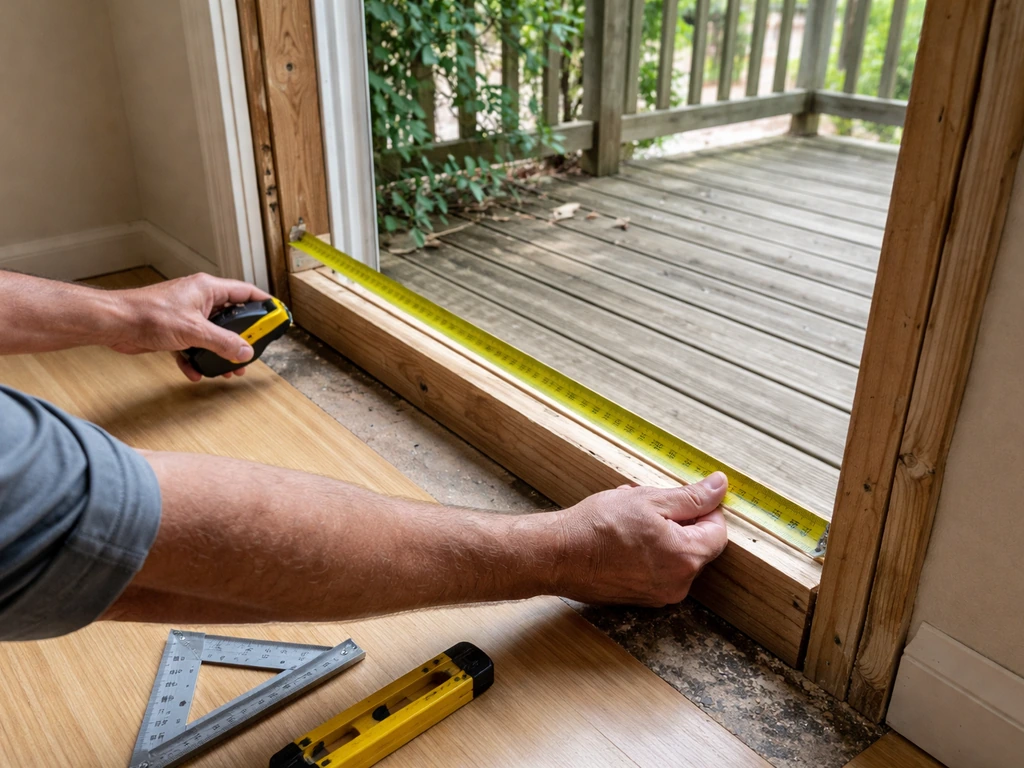
Measuring wrong is the single most common mistake homeowners make, and it delays projects by weeks when the door arrives and doesn't fit. For a replacement, you're measuring the rough opening (RO), the framed opening behind the existing door, not the door itself. Pull off the interior trim to expose the rough framing, then measure width and height at three points each: top, middle, and bottom for width; left, center, and right for height. Use the smallest measurement in each direction as your working number.
Once you have width and height, check squareness by measuring both diagonals corner to corner. If they differ by more than 1/4 inch, the opening is out of square and will need correction before the new door goes in, otherwise the panels won't slide or seal correctly. Standard industry practice leaves roughly 1/2 inch total play (about 1/4 inch per side) between the door unit and the rough opening for shimming and leveling. Some guides add 1.
5 to 2 inches to the nominal door size to get the RO, but always cross-reference against the actual manufacturer's RO specification for the specific door you're ordering. Marvin, Pella, and Andersen all publish detailed RO measurement instructions, use the one that matches your brand.
- Remove interior casing to expose the rough framing
- Measure width at top, middle, and bottom — use the smallest number
- Measure height at left, center, and right — use the smallest number
- Measure both diagonals — they should match within 1/4 inch
- Check the sill for level and the jambs for plumb
- Compare your RO dimensions against the manufacturer's specified RO for your target door size
- Order based on the manufacturer's RO spec, not the old door's nominal size
Features that separate a great sliding door from a mediocre one
Glass packages
Double-pane low-E glass is the baseline for any quality exterior patio door in 2026. Triple-pane is worth the premium in climates where winter temperatures regularly drop below 0°F (about -18°C), because the third pane can push U-factor from around 0. 25 down to 0. 20 or lower.
Look for argon or krypton gas fill between panes, krypton is better for thinner profiles but costs more. The SHGC value you want depends on orientation: south-facing doors in cold climates benefit from a higher SHGC (0. 35+) to capture passive solar heat; west-facing doors in hot climates want a lower SHGC (under 0. 25) to block afternoon heat.
Condensation resistance (CR) ratings above 50 help prevent interior frost and moisture buildup in cold weather, the DOE includes this on the NFRC label as a comfort metric worth checking.
Tracks and sills
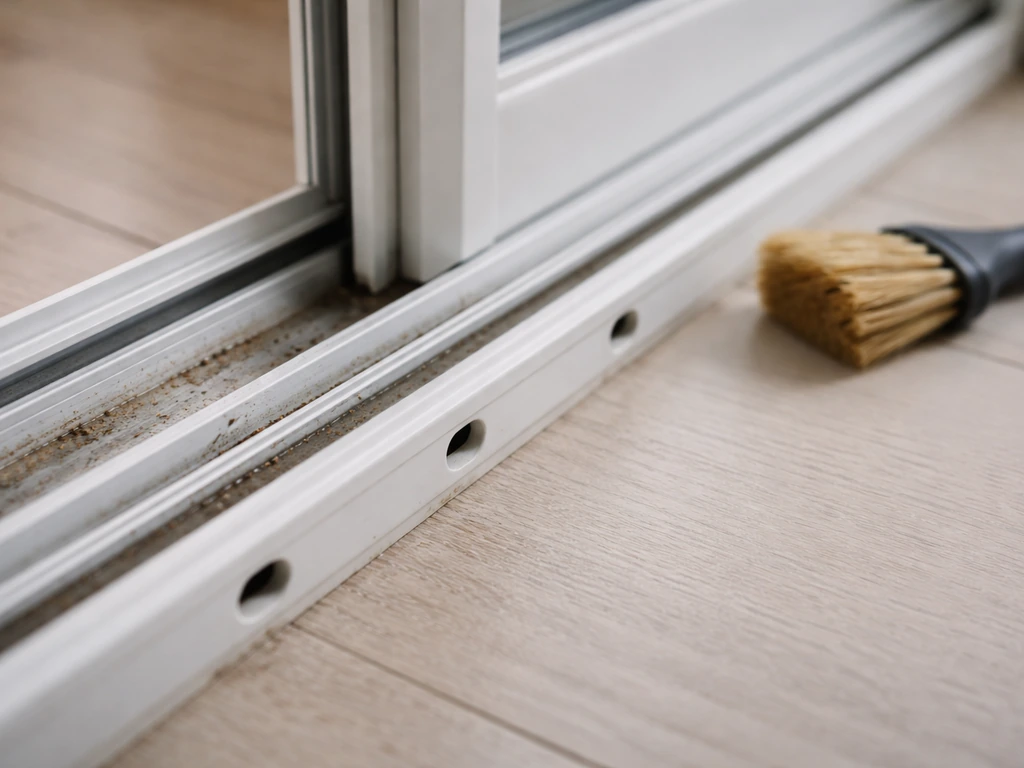
The bottom track takes more abuse than any other part of a sliding door. Dirt, water, and foot traffic all concentrate there. Clogged drainage holes and standing water on the sill are the leading causes of threshold damage, seal failure, and long-term energy loss. Look for a sill with integrated drainage channels and weep holes, and a track material that won't corrode or deform, stainless steel rollers and a reinforced composite or aluminum track are the minimum.
Top-hung systems, where the door panel hangs from an overhead track rather than rolling on the bottom, reduce sill clogging and are worth considering if low-maintenance operation is a priority for you. Top-hung sliding patio doors can be a smart choice when you want smoother operation with less maintenance over time Top-hung systems.
Frame materials
Vinyl frames are the most popular for good reason: low maintenance, good thermal performance, and competitive pricing. Fiberglass frames are dimensionally stable in extreme temperature swings, stronger than vinyl, and worth the 20-30% price premium in climates that see big seasonal changes. Aluminum frames are lightweight and strong but conduct heat and cold, if you go aluminum, a proper thermal break in the frame profile is non-negotiable, not an upgrade. Wood-clad frames (wood interior, aluminum or fiberglass exterior) give you the warmth of wood inside with weather protection outside, at the highest price point.
Hardware and security
A single hook latch is not a security system. Better sliding doors come with multi-point locking hardware that engages at two or three points along the door stile when you turn the handle. Add an anti-lift pin or security bar in the track (a simple $15 upgrade) to prevent the panel from being lifted off the track from outside. For high-security installs, look for doors with an integrated flush bolt at the top of the active panel. Handle sets should feel solid with no play, loose handles are a leading indicator of overall hardware quality.
Screen door options worth knowing about
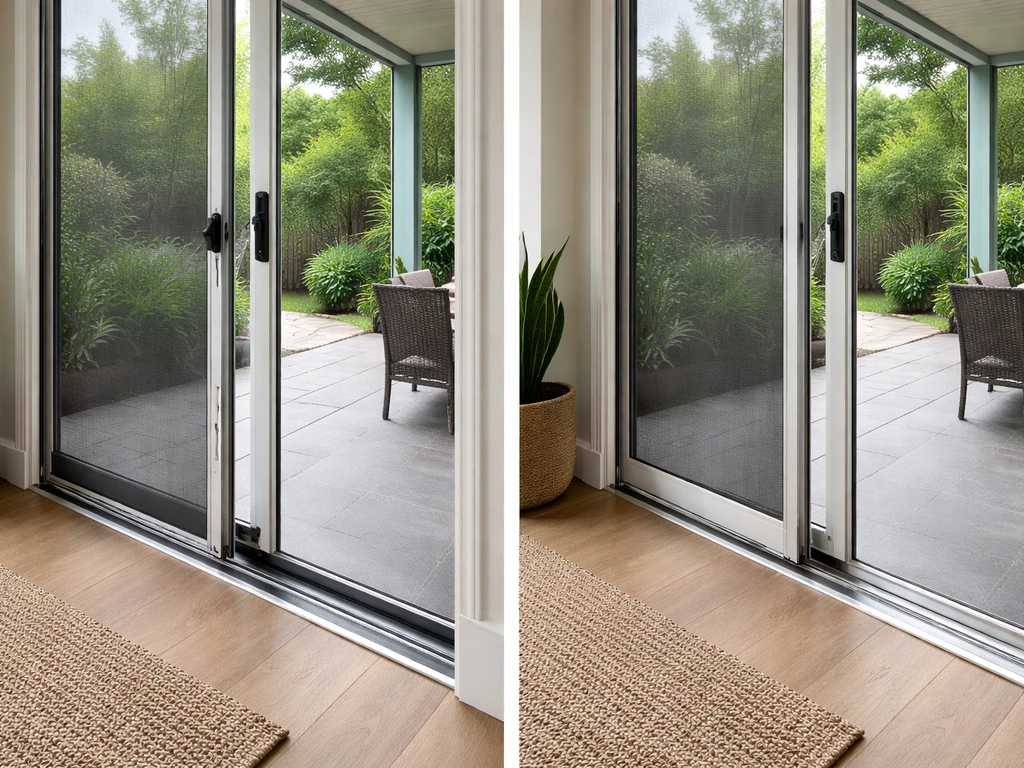
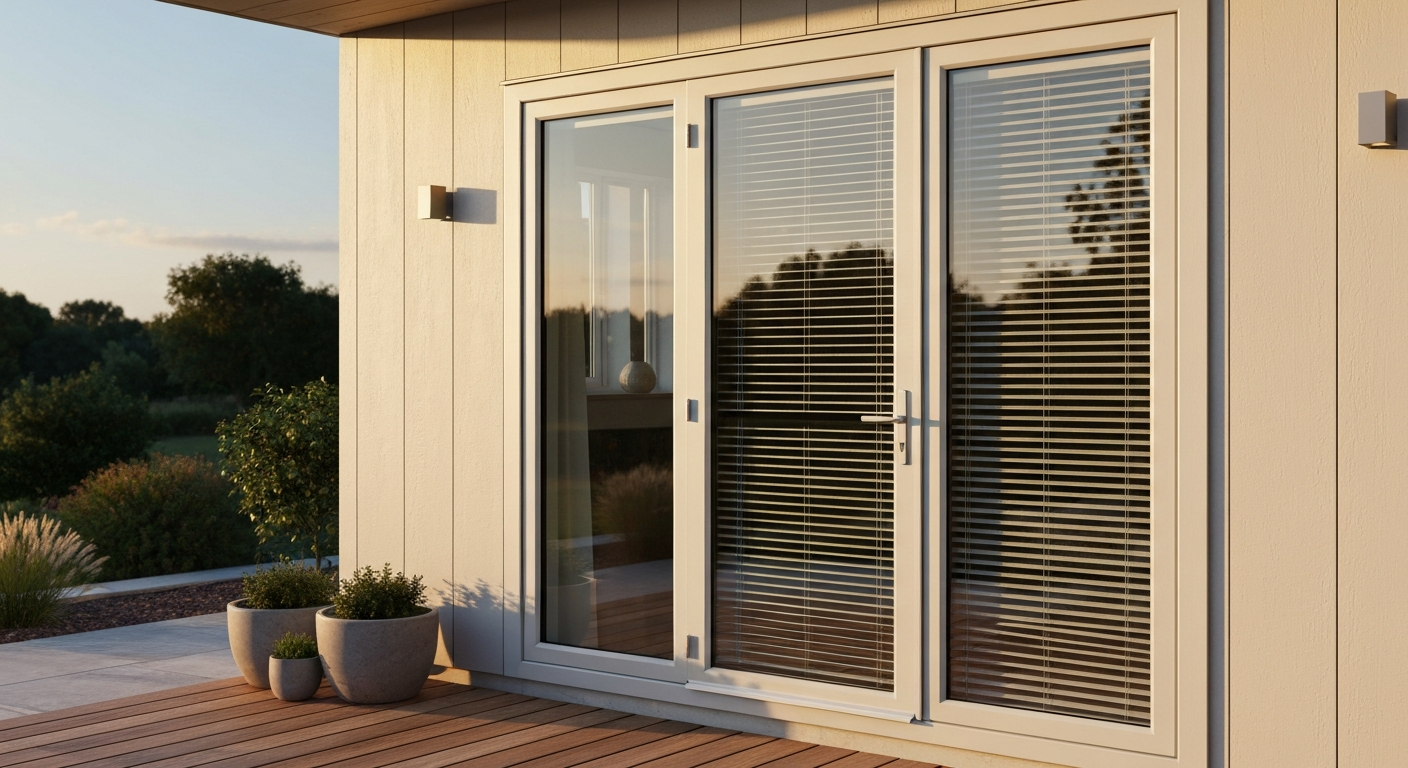
Most standard sliding glass doors come with a basic sliding screen door that runs in a third outer track. If you want privacy without adding another window treatment, prioritize sliding patio doors with built-in blinds that stay protected inside the frame. These work fine but require regular cleaning and alignment, and they're the first thing to go out of square. If you're replacing a door and the screen is the main frustration, you have better options now.
Retractable screens pull back into a housing when not in use, keeping them out of the UV and dirt when you don't need them. They're a popular upgrade on new door installs and can also be retrofitted to existing frames. Plissé-style retractable screens use a pleated mesh that compresses into a compact cassette and are more durable than single-panel roll-up types. For homeowners who want fully unobstructed glass views, companies like Centor offer insect screen configurations that keep the fixed glass panel completely clear, with screening only where the door opens.
When installing any screen door into a new system, the screen goes into the track top-first (slide into the upper channel, then lower into the bottom track). This applies to both standard and replacement screen panels. It sounds obvious but skipping it is how screens get damaged during install.
If you're also looking at built-in blind systems integrated into the door panel itself, that's a separate product category worth exploring as part of your full door selection, the glass unit and blind mechanism are factory-sealed together. If you're trying to choose quickly, check reputable reviews for perfect fit blinds for sliding patio doors to see how well they handle fit, light control, and everyday operation perfect fit blinds for sliding patio doors reviews.
This matters because the best blinds for sliding patio doors in the UK help improve privacy, light control, and insulation without complicating day-to-day operation built-in blind systems. If you want the best sliding patio doors with built-in blinds, look for blinds that are factory-sealed with the glass unit for cleaner operation and better thermal performance built-in blind systems integrated into the door panel itself.
How to compare brands without getting lost
Andersen, Pella, Marvin, Milgard, and JELD-WEN are the names you'll see most often in the U.S. market. In Canada, brands like Loewen, Inline Fiberglass, and Thermoproof are worth adding to the list. No single brand is universally best, they each have strong product lines and weak spots, so comparing them requires going beyond marketing language.
Start by pulling the NFRC Certified Products Directory entry for the specific model you're considering. Confirm the U-factor, SHGC, and air leakage rate are what the sales sheet claims. Then ask whether the product is tested and certified under AAMA/WDMA/CSA 101/I.S.2/A440 and what performance class it carries. A brand that can't answer this question clearly isn't worth your time. Check ENERGY STAR's product database for your climate zone, products listed there have been independently tested and verified, not just self-reported.
Warranty terms matter more than brand reputation for day-to-day confidence. Look specifically at glass seal warranty (double-pane seals can fail), hardware warranty, and whether the warranty is transferable to a future homeowner. A 20-year glass seal warranty from a mid-tier brand beats a 10-year from a premium one. Also ask your dealer who handles warranty service locally, factory warranty is worthless if the nearest service center is three states away.
On the budget end, if you're working with a tighter number, there are solid options under $1,000 for a basic slider and strong value picks in the mid-range that deliver most of the performance of premium brands. On top of that, compare the door type, glass package, and warranty to make sure you are getting the best sliding patio doors under $1000 for your climate and usage options under $1,000. The gap between a $900 door and a $2,500 door is real, but it's mostly in frame quality, finish options, and warranty depth, the core glass and energy performance can be similar if both are properly NFRC-rated.
Cold-climate and Canadian buying considerations
If you're shopping in Canada or any Northern Zone U.S. climate (think Minnesota, Vermont, Montana, or anywhere with sustained sub-zero winters), the energy benchmarks tighten significantly. Natural Resources Canada publishes ENERGY STAR Most Efficient criteria for sliding glass doors with climate-specific U-factor and SHGC targets, these are stricter than the general U.S. baseline. The Northern Zone ENERGY STAR Most Efficient threshold is U-factor ≤ 0.20. At that level, triple-pane glass and fiberglass or well-insulated vinyl frames are essentially required to hit the number.
Condensation resistance (CR) deserves special attention in cold climates. When warm indoor air hits a cold glass surface, you get condensation or frost, which damages frames, promotes mold, and signals heat loss. A CR rating of 50 or higher (on the NFRC label's optional CR field) indicates better resistance. Fiberglass frames with warm-edge spacers in the glazing unit perform best here.
Installation in cold climates also means paying close attention to air sealing. Even a certified high-performance door leaks if it's installed without proper flashing, sill pan, and expanding foam or backer rod around the frame perimeter. In Canada, ensure your installer and product both comply with CSA A440 requirements, which are the Canadian-specific provisions within the AAMA/WDMA/CSA 101/I.S.2/A440 standard. Not all U.S.-market doors are CSA-certified, so verify before ordering if you're north of the border.
Your practical next steps to buy the right door
Here's how to move from reading this to actually having the right door on order. This process takes about one to two weeks if you're organized, and it saves you from the most common pitfalls.
- Measure your rough opening using the method above — width, height at three points each, both diagonals. Write it down and photograph the framing.
- Decide on door type: standard 2-panel slider, multi-slide, or sliding French. Multi-slide requires a separate structural assessment first.
- Set your performance floor: U-factor ≤ 0.25 minimum (≤ 0.20 if you're in Canada or a Northern Zone U.S. state), ENERGY STAR certified for your climate zone.
- Pick a frame material based on climate and budget: vinyl for most situations, fiberglass for extreme climates or premium performance, aluminum only with a proper thermal break.
- Pull the NFRC Certified Products Directory entries for your shortlisted models and compare actual rated U-factor, SHGC, and CR.
- Ask dealers specifically: What AAMA/WDMA/CSA performance class is this door? What does the glass seal warranty cover and for how long? Is it transferable?
- Get at least two installation quotes. Ask each installer to include flashing, sill pan, and air sealing in their scope — not just door swap labor.
- Order 4 to 8 weeks before your target install date for standard doors; 8 to 14 weeks for multi-slide or custom sizes.
One last thing worth knowing: the door itself is often only 60 to 70 percent of the total project cost once installation, disposal of the old unit, trim work, and any framing corrections are factored in. Budget accordingly, and don't compromise on installation quality to hit a door price target, a mediocre install ruins an excellent door faster than anything else. If you want the best sliding patio doors for the money, focus on NFRC-certified energy performance and security features, not just the sticker price.
FAQ
What should I do if the patio door sales sheet doesn’t match the NFRC label?
If the NFRC label is missing, inconsistent, or doesn’t show U-factor, SHGC, and air leakage for the exact model you’re buying, treat it as a red flag. Instead of relying on a showroom sticker or marketing sheet, ask for the NFRC certified listing for that specific unit number (and glass package), then confirm the values match what the seller claims.
How can I tell if a sliding patio door will be easy to keep operating smoothly?
For sliding patio doors, AR(rolling) hardware and the bottom track determine smoothness, not just the glass package. Before buying, ask whether replacement rollers and track parts are readily available for the door model you’re considering, and whether the rollers are adjustable (so alignment issues can be corrected without replacing the whole unit).
Why does my sliding screen door keep binding or coming out of its track?
Screen door issues often come from the frame being out of square during installation, or from the screen being installed in the wrong order. Even if your door is correct, a misaligned screen track can cause rubbing and binding, so confirm the screen installs top-first into the upper channel before it drops into the bottom channel.
Does switching to a top-hung sliding patio door automatically solve water and track problems?
Not always. A top-hung system can reduce sill clogging, but you still need correct drainage and proper air sealing at the perimeter. Verify the full door assembly is rated for your climate and that the install includes a sill pan or equivalent water management, otherwise you can trade track problems for hidden water issues.
Are there size limits where a standard sliding patio door stops performing well?
Standard sliding doors are simplest, but they can struggle when the door is oversized relative to the track and bottom support. If your opening is near the high end of what the manufacturer recommends, prioritize a thicker, more rigid bottom track and confirm the door system’s maximum sash weight and size limits before you order.
If I choose higher SHGC for winter, will it always make my home too hot in summer?
Not exactly. Higher SHGC can increase winter comfort benefits, but in summer it can also raise indoor cooling loads, especially on west-facing openings. Use orientation-based SHGC guidance, and if you’re between climates, consider shading (exterior overhangs or low-E with appropriate SHGC) rather than pushing SHGC too high or too low.
How do I know if condensation is a door problem or a humidity problem?
If you’re frequently seeing fogging between panes, that’s usually a failed insulated glass seal, not a ventilation issue. At that point, warranty details matter, because seal failures are typically covered for a set number of years and may require proof the failure is within the warranty term.
Can a high-efficiency sliding glass door lose its energy performance after installation?
Yes. A door can hit a good U-factor in the lab and still perform poorly if the perimeter air sealing is weak. Ask your installer how they’ll handle flashing, sill pan, and the backer rod or foam strategy around the frame, and confirm they’ll target continuous sealing without gaps or voids.
What should I expect in terms of trim and wall modifications during a sliding patio door replacement?
You should assume there will be removal and trim changes unless the replacement is a like-for-like match with the same rough-opening and interior finish depth. Before you schedule the door, ask the installer whether they’ll be correcting framing and whether new interior casing or exterior trim will be needed.
What security features matter most besides a multi-point lock?
Absolutely. A good locking system includes more than one engagement point, but security also depends on whether the active panel can be lifted out of the track. Ask if the system uses anti-lift protection like a pin or security bar, and verify the hardware is included for your configuration (some bundles omit it).
Can I retrofit a retractable or better screen if I’m keeping my current sliding patio door frame?
Screen retrofits are not always plug-and-play. Verify whether your existing frame supports the screen track style, whether the track height matches your screen model, and whether the screen is designed for your door type (standard slider versus multi-slide), since the operating geometry differs.
Is the sliding patio door warranty transferable if I sell my house?
In most cases, yes, but you need a warranty that covers both the original owner and future owners. Ask whether the warranty is transferable, whether there are location limits for service, and whether proof of purchase or an installation invoice is required to keep coverage valid.
When should I prioritize condensation resistance (CR) ratings over U-factor?
CR ratings are most helpful when you regularly run heat in freezing weather and want to reduce interior frost risk. If you’re in a cold climate, prioritize CR values (for example, 50 or higher) and confirm you’re getting warm-edge spacers and appropriate frame construction, not just a thicker glass package.
What costs should I budget for beyond the door itself?
Budgeting should include more than the door price because installation complexity changes with rough-opening corrections, old door removal, and whether the existing frame is square. Plan for a contingency if diagonal measurements show an out-of-square condition, since fixing the opening may require framing adjustments before the unit goes in.
How do I decide between a multi-slide versus a wider standard slider for a no-center-post look?
If your goal is maximum glass area and no center post, multi-slide is the fit, but it’s also the most installation-sensitive. Treat it as a structural opening project, and confirm the contractor will engineer the header load, handle the track alignment to prevent binding, and manage the larger air and water sealing scope around multiple panels.