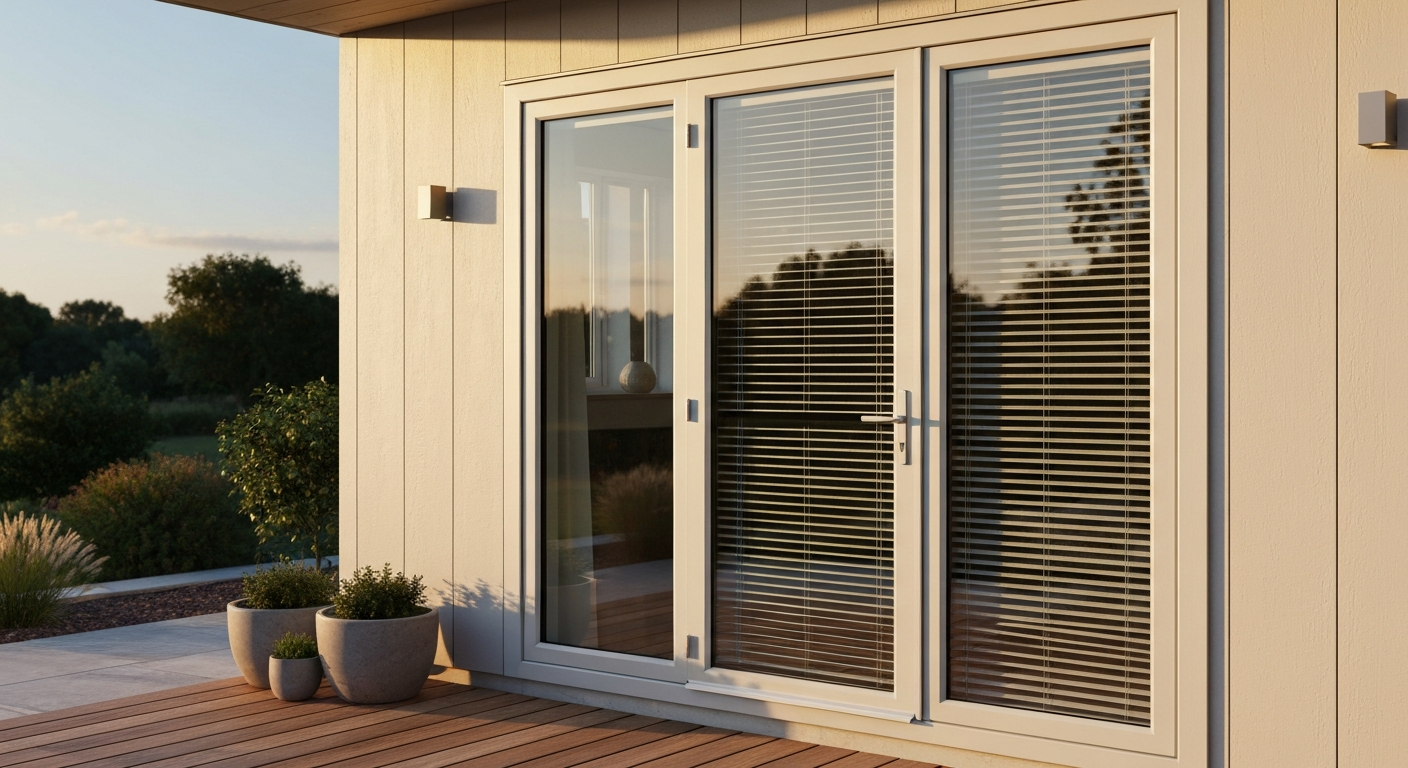
The best bug curtain setup for most patio doors is a magnetic mesh screen curtain sized to overlap your doorway by at least 2 inches on each side, made from fiberglass mesh with 18x16 threads per inch, and anchored at the bottom with a weighted hem or floor magnets to resist wind. That combination handles the majority of sliding, French, and single-panel patio door openings, keeps mosquitoes and flies out, and costs anywhere from $20 to $120 depending on size and quality. If you want something more permanent and polished, a retractable cassette screen in the $200–$600 range is worth the upgrade.
Bug Curtains for Patio Doors: Choose, Measure, Install

Owen Delaney
19 May 2026
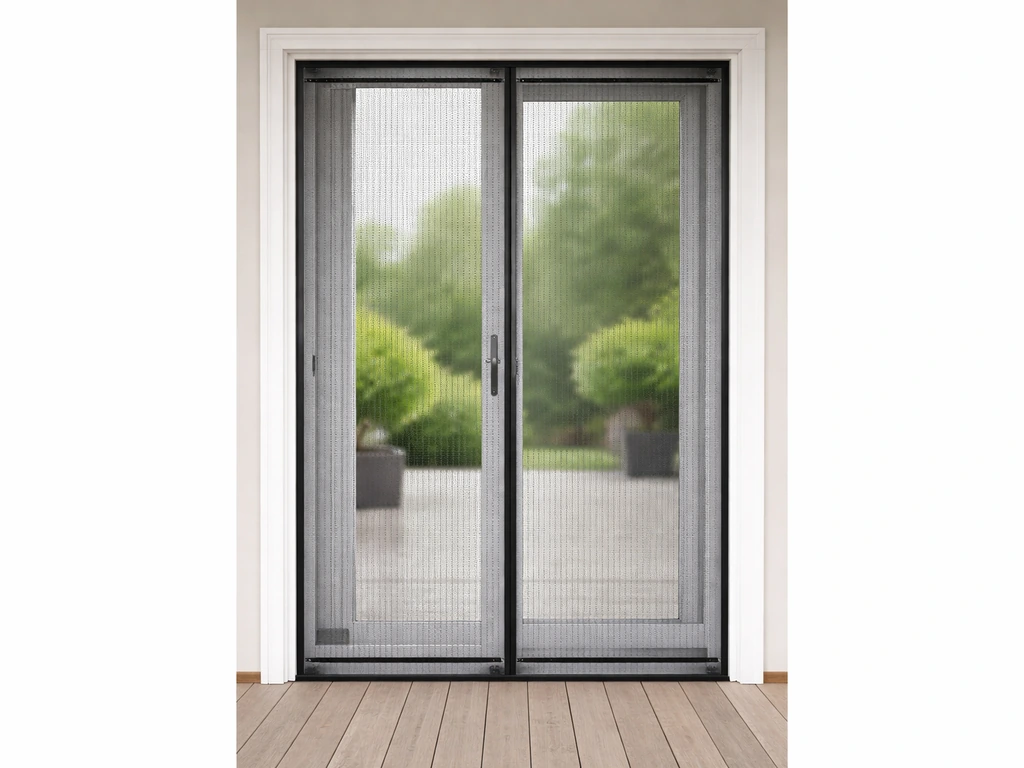
What bug curtains for patios are and how they work
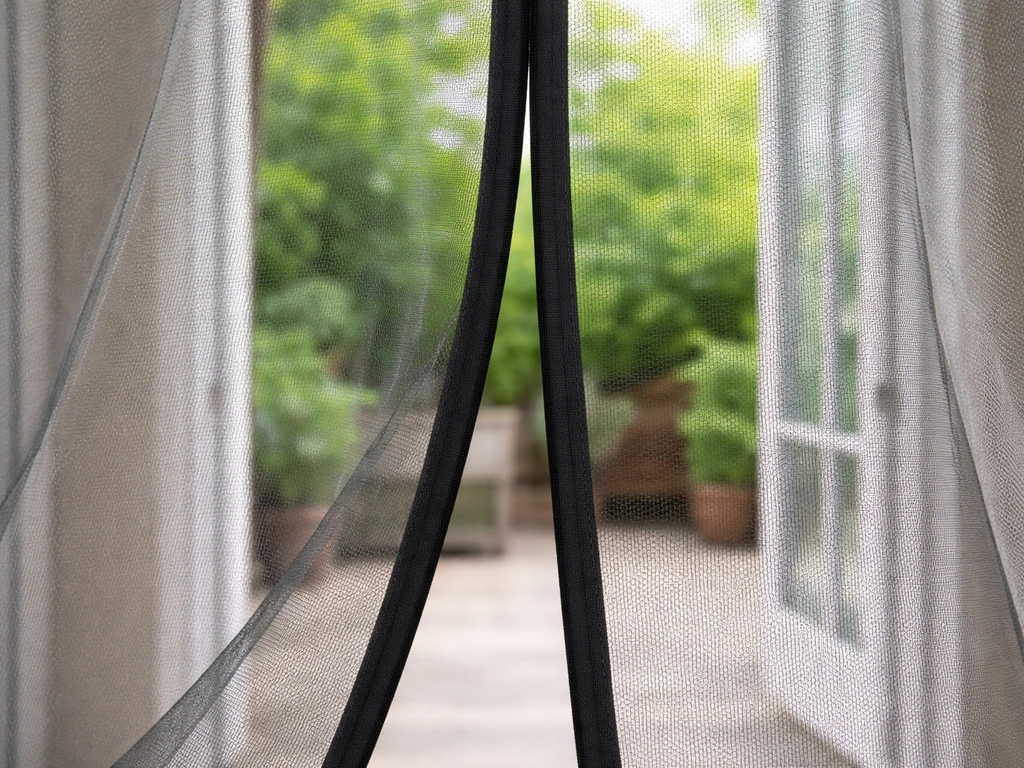
Bug curtains for patios are mesh barriers hung across patio door openings to block insects while still letting air move freely through the door. They are not the same as standard decorative curtains or blackout drapes. The mesh itself does the work: a properly sized opening in the weave lets air through but physically stops flies, mosquitoes, gnats, and most other flying insects from passing.
Standard insect screen mesh runs about 18 to 20 holes per inch, which is tight enough to stop common flying pests while still allowing meaningful airflow through an open door. USDA-ARS describes insect-blocking “curtains” as barriers that insects encounter at airflow interfaces, where the barrier’s interaction with airflow determines how well it excludes insects [Properly sized opening in the weave lets air through but physically stops flies, mosquitoes, gnats, and most other flying insects from passing. ](https://www. usda.
gov/media/people-research/it’s-curtains-for-mosquitoes-and-flies).
The most common format for a patio bug curtain is a split-panel mesh screen: two panels hang side by side with a magnetic center seam, so you walk through by pushing the panels apart and they snap back together behind you. More advanced versions use a retractable cassette system, where the mesh rolls into a housing mounted beside the door frame and pulls across only when you need it.
As Andersen describes their retractable screens, the screen "disappears" when not in use so it does not block light or views, then deploys fully when insects are a concern. Both types work on the same physics: insects hit the barrier at the door threshold where indoor and outdoor air are mixing, which is exactly where they try to enter.
Choosing the right style for your patio door
Your door type matters more than most product listings admit. A sliding patio door, a set of French doors, and a bifold or multi-panel door each create a different opening shape, a different traffic pattern, and different mounting challenges. Buying a curtain sized for one and trying to use it on another is one of the most common mistakes I see.
Sliding patio doors
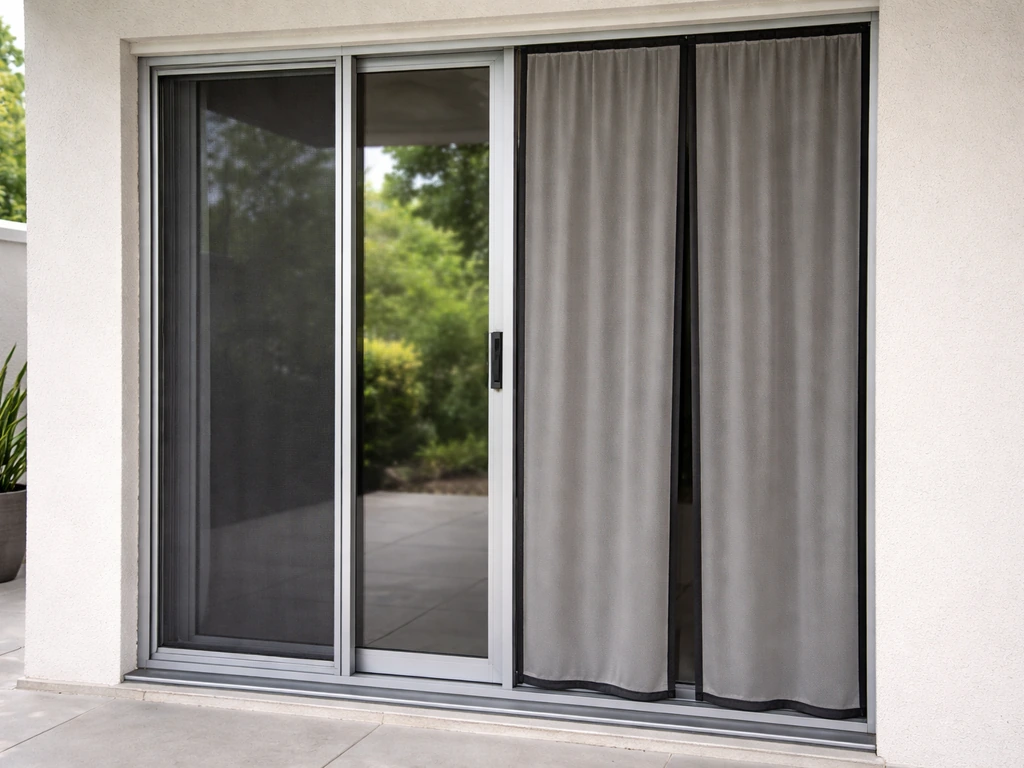
Sliding doors typically have an existing screen track on the exterior side. If your sliding door still has its factory screen, you may not need a curtain at all, just a replacement screen panel. If the track is damaged or missing, a magnetic mesh curtain hung from a tension rod or adhesive header inside the frame works well. The single-panel opening (usually 36 inches wide) is easy to cover. Go with a split-panel magnetic curtain for doors you walk through often.
French doors
French doors are the trickiest because both panels swing open, which means a rigid framed screen attached to one side will block the other door from opening fully. The cleanest solution is a magnetic split curtain wide enough to span the full double-door opening (typically 60 to 72 inches). You hang it from a rod or adhesive-mounted header above the entire doorway so neither door's swing is restricted. Some homeowners install individual magnetic curtains on each door leaf, but the center gap between them lets insects in if the magnets do not align precisely.
Bifold and multi-panel doors
Bifold and multi-panel patio doors create very wide openings, often 8 to 16 feet across. Standard off-the-shelf bug curtains will not span that width. For these doors, a retractable cassette screen mounted to the frame is almost always the right call. Mirage and other cassette-screen brands offer custom-width units that pull across the full opening. Custom retractable screens in this range run $400 to $1,500 installed, but they are the only option that genuinely seals a wide folding door without looking like an afterthought.
How to measure for the correct fit
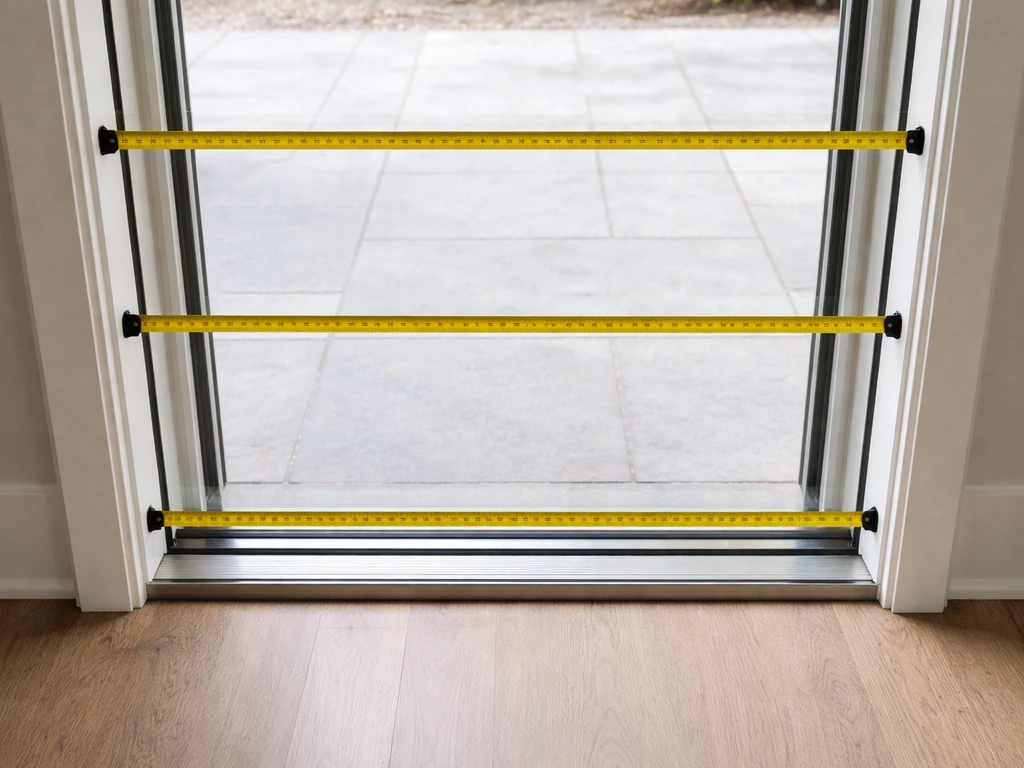
Measuring wrong is how you end up with gaps that let bugs in at the sides or bottom. Here is how to do it right for each mounting approach.
- Measure the width of the opening at three points: the top, middle, and bottom of the door frame. Use the widest measurement and add 2 inches on each side for overlap (so total curtain width = opening width + 4 inches).
- Measure the height from the top of the door frame to the floor. Add 1 to 2 inches so the curtain hem touches or barely sweeps the floor. Gaps at the bottom are the number one entry point for crawling insects.
- For French doors, measure the full combined opening width across both door leaves, not just one panel.
- For retractable cassette screens, measure the inside dimension of the door frame where the cassette housing will mount (the cassette itself adds about 2 to 3 inches to whatever side it mounts on, so verify you have clearance).
- Note any obstructions: door handles, security bars, sweep hardware, or weather stripping that could catch the curtain when the door is used.
Most magnetic mesh curtains sold online come in standard widths of 36 inches (single door), 60 inches (standard French door), and 72 inches (wide French door). For standard patio doors, the most common curtain widths are 36 inches for a single door, 60 inches for a standard French door, and 72 inches for a wider French door standard widths of 36 inches (single door), 60 inches (standard French door), and 72 inches (wide French door).. Heights are typically 80 to 83 inches to clear standard door heights. If your door is a non-standard size, measure carefully before buying. Custom-cut mesh is available from screen supply companies if you have an unusual opening.
What to look for when you are shopping
The product listings for bug curtains can feel overwhelming, but there are really only five things that matter for a patio door application.
| Feature | What to look for | What to avoid |
|---|---|---|
| Mesh material | Fiberglass or polyester with 18x16 thread count (18 threads per inch horizontal, 16 vertical) | Cheap nylon mesh with large weave openings that mosquitoes can pass through |
| Visibility and light | Light-colored or charcoal fiberglass mesh lets natural light through with minimal distortion | Opaque or heavily coated mesh that dims the door like a blackout curtain |
| Airflow | Open weave that does not significantly restrict airflow; fiberglass 18x16 passes roughly 40% of air volume | Ultra-fine mesh marketed for no-see-ums (240 mesh) which reduces airflow noticeably and costs more |
| Center seal | Strong rare-earth or neodymium magnets spaced every 4 to 6 inches along the split; weighted hem at the bottom | Weak button magnets or Velcro-only closures that blow open in light wind |
| Durability and frame | Reinforced nylon header tape; UV-stabilized mesh that won't become brittle after one season in direct sun | Thin plastic grommets or flimsy polyester fabric that frays within weeks of regular use |
If you live in an area with no-see-ums (biting midges), you will need a finer mesh, specifically 20x20 or tighter, sometimes called "no-see-um mesh. " The trade-off is reduced airflow and a slight haze to your view through the door. For most homeowners dealing with flies, mosquitoes, and gnats, standard 18x16 fiberglass is the sweet spot. It is worth noting that bug curtains for patio doors work differently from decorative curtain panels.
For help picking the best curtains for patio door in your exact setup, use the tips in the next sections to match your door type and size. If you are comparing these to thermal drapes or blackout curtain options, those serve entirely different purposes and will not stop insects. If you’re also trying to improve energy efficiency and comfort, compare those bug-curtain choices with the best thermal drapes for patio doors.
If you want to block light and improve privacy, the best blackout patio door curtains are designed for that purpose rather than insect control blackout curtain options.
Installing your bug curtain: DIY step by step
Most magnetic mesh bug curtains are genuinely DIY-friendly. The installation usually takes under 30 minutes and requires no special tools. Retractable cassette screens are a bigger project but still manageable for anyone comfortable with a drill and a level.
Magnetic mesh curtain (most common option)
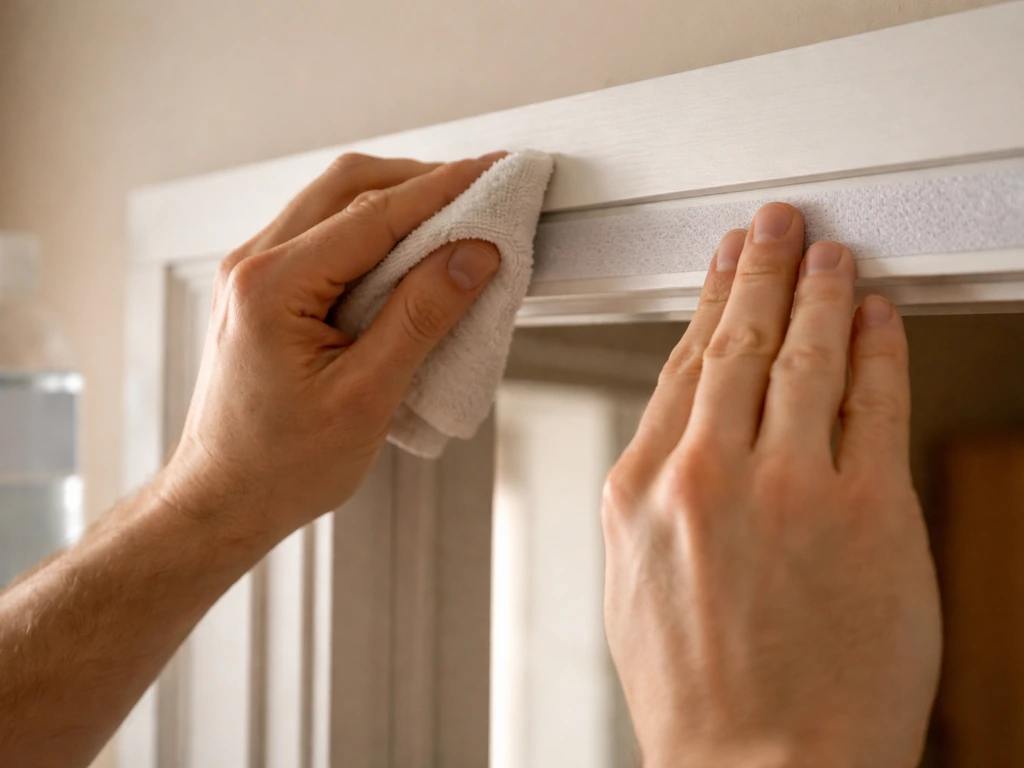
- Clean the door frame header thoroughly with rubbing alcohol. Any dust or grease will prevent the adhesive strips from sticking properly.
- If the curtain uses adhesive hook-and-loop tape (most do), press the tape header firmly against the top of the door frame and hold for 60 seconds. Let it cure for at least 2 hours before hanging the curtain.
- If using a tension rod or screw-in rod, mount the rod brackets just outside the door frame so the curtain covers the full opening plus your 2-inch overlap on each side.
- Hang the curtain panels from the rod or attach them to the hook-and-loop header. Let them hang freely and check that the two center panels align and the magnets snap together along the full length.
- Check the bottom hem. It should rest on or just brush the floor. If the curtain floats above the floor by more than half an inch, use a weighted rod or iron-on hem tape to add weight.
- Test the door by walking through at a normal pace several times. The magnetic seam should close completely behind you within 2 to 3 seconds. If it does not, the magnets may need to be repositioned or the curtain may need to be centered over the opening.
Retractable cassette screen (more permanent install)
- Mark the mounting position for the cassette housing on the door frame or wall. For a side-mounted unit, hold the cassette plumb against the frame and mark the screw holes with a pencil. For a header-mounted unit, mark across the top of the door frame.
- Pre-drill holes sized for the included anchors. If you are drilling into masonry or metal-clad frames, use a masonry or metal bit and appropriate wall anchors.
- Attach the cassette housing to the frame using the provided screws. Check it is level before tightening fully.
- Mount the opposite track or tension channel on the far side of the opening where the screen will latch when deployed.
- Extend the screen fully to the far track and attach the pull bar or handle to the latch point. Test the retraction action: it should pull smoothly and retract without bunching.
- Adjust spring tension if the screen retracts too fast (which can snap the mesh) or too slowly (which can leave it open). Most cassette units have an adjustment screw on the end cap.
Professional installation of retractable screens typically runs $150 to $300 for labor on top of the screen cost, and is worth it for very wide bifold openings or if the frame has non-standard dimensions that require custom fitting. For standard 36-inch single doors or 60 to 72-inch French door openings, DIY installation is entirely reasonable.
Sealing gaps, handling wind, and fixing common problems
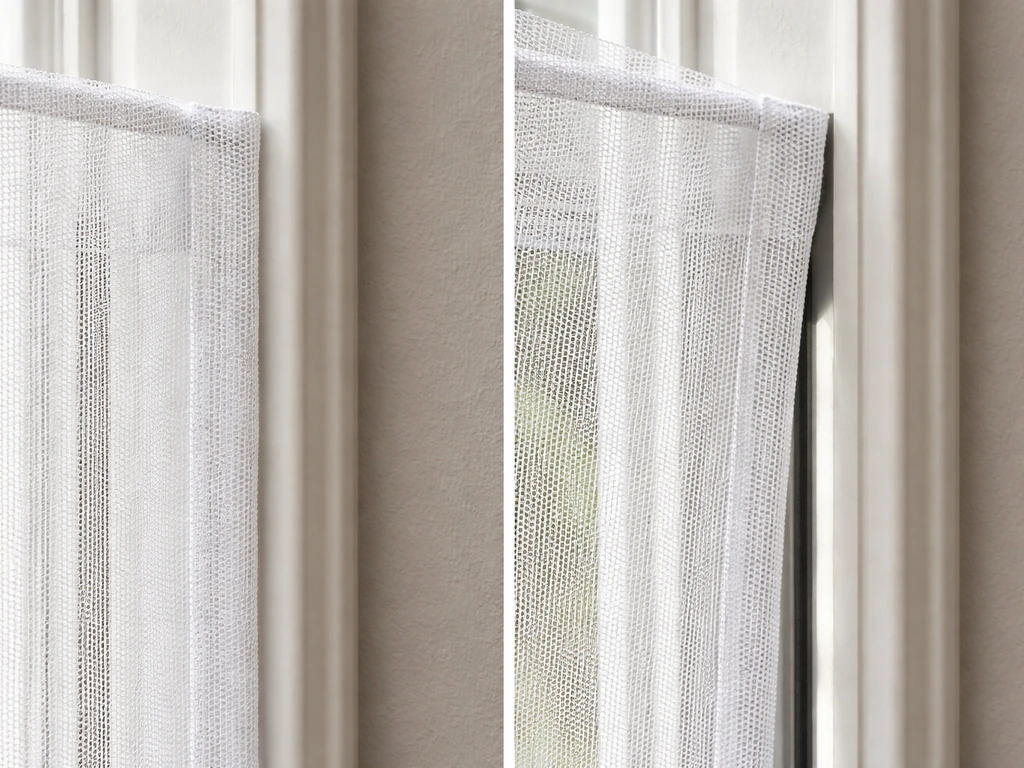
Even a well-installed bug curtain will have problems if you do not address sealing and wind resistance from the start. Here are the most common issues and how to fix them.
Gaps at the sides
Side gaps usually mean the curtain is not wide enough to overlap the frame. Confirm you have at least 2 inches of overlap on each side. If the curtain is the right width but still gaps, add a thin strip of self-adhesive weatherstrip foam to the door frame sides so the mesh presses against a slightly raised surface and seals more cleanly.
Gaps at the bottom
A floating hem is the most common entry point for insects. Add weight to the hem: sew a metal rod or dowel into a hem pocket, clip on metal curtain weights, or use a magnetic floor anchor strip that presses the mesh down to the threshold. For retractable screens, check that the bottom guide channel is flush with the floor and that the pull bar seats fully when the screen is extended.
Curtain blowing open in wind
Wind is the enemy of magnetic mesh curtains. If you are in a consistently breezy area, upgrade to a curtain with neodymium (rare-earth) magnets rather than standard ferrite magnets: neodymium magnets are noticeably stronger and resist wind better. You can also add a small hook-and-eye latch at the bottom center of the split to lock the panels together when you are sitting outside and not actively passing through. Retractable cassette screens with a positive latch mechanism at the far track are inherently more wind-stable than free-hanging curtains.
Curtain tangling or bunching
Tangling usually happens when the curtain is too long and piles up at the floor, or when it is too wide for the opening and folds back on itself. Re-measure and trim if necessary (fiberglass mesh cuts cleanly with fabric scissors and the edges can be sealed with a lighter flame). For retractable screens, tangling or bunching on retraction usually means the spring tension is too low or the guide tracks need cleaning and lubricating with a silicone spray.
Adhesive strips failing
Adhesive hook-and-loop headers are the weak point of cheap bug curtains. If yours is pulling away from the frame, remove it completely, clean the surface with isopropyl alcohol, and replace with heavy-duty outdoor-rated hook-and-loop tape (3M Dual Lock is a common upgrade). Alternatively, add two small cup hooks to the top of the door frame and hang the curtain from those rather than relying on adhesive.
Cleaning, storing, and knowing when to replace
Bug curtains collect dust, pollen, and grime faster than you expect because they are basically an air filter sitting in an active doorway. Regular cleaning keeps the mesh effective and extends the life of the screen significantly.
Cleaning routine
For magnetic mesh curtains, take the curtain down every four to six weeks during active use season and rinse it with a garden hose on a gentle setting. Lay it flat or hang it over a railing and scrub lightly with a soft brush and mild dish soap if there is visible grime. Rinse thoroughly and let it air dry completely before re-hanging. Do not put fiberglass mesh in the washing machine: the agitation breaks down the fibers and loosens the reinforced edges. For retractable cassette screens, wipe the mesh down in place with a damp cloth and clean the guide tracks with a dry brush to remove debris that causes the screen to drag.
Off-season storage
If you live somewhere with cold winters, take down magnetic mesh curtains at the end of the season, fold them loosely (do not crease the mesh tightly or you will create permanent fold lines), and store them flat in a plastic bin or rolled around a cardboard tube. Keep them out of direct sunlight in storage: UV exposure when not in use shortens the lifespan of the mesh even faster than UV exposure in use. Retractable cassette screens can stay mounted year-round in most climates, but inspect the housing for moisture intrusion or cracking before the next season starts.
When to replace
Replace a bug curtain when the mesh has visible holes or tears (any gap larger than a few millimeters will let mosquitoes through), when the magnetic seam no longer closes reliably even after adjusting the panel alignment, when the material has become stiff and brittle from UV exposure, or when the mounting header or adhesive has failed repeatedly and no longer holds. A quality fiberglass mesh curtain should last two to four seasons with regular care. Cheap polyester versions often degrade within a single season in a sunny, high-traffic door opening. Retractable cassette screens with aluminum housings can last ten or more years with basic maintenance, which is the main argument for spending more upfront.
If you are already thinking about how this fits into the broader setup of your patio door, the bug curtain is just one piece. Getting the curtain length right, choosing a curtain rod that clears your door hardware, and deciding on the right number of panels all factor into how the finished installation looks and functions.
Most standard magnetic mesh curtains come in common panel widths, so the right number of curtain panels for a patio door depends on your exact doorway width and whether you’re covering a single panel, a split opening, or a full French door span deciding on the right number of panels. A curtain rod for a patio door needs the right clearance and length to let the curtain overlap properly without rubbing on the hardware choosing a curtain rod.
The practical next step from here: take your three door measurements today, check whether your existing frame has mounting clearance for either a rod or a cassette housing, and then decide between a $25 to $80 magnetic mesh curtain for a quick seasonal fix or a $200 to $600 retractable unit for a permanent, polished solution.
If you are wondering what length curtains for patio doors to buy, start by measuring your door height and then account for the overlap you want at the top and bottom.
FAQ
Will bug curtains for patio doors work if I have indoor pets or kids that run through the opening?
Yes, but choose the format that matches your traffic. Split-panel magnetic curtains are usually easiest for frequent passing, while single-panel curtains can swing or sag if they get dragged. To prevent the magnets from pulling apart too easily, avoid extra-tight overlaps that cause the mesh to buckle, and consider adding a small bottom center hook-and-eye latch for stable closure when you are seated outside.
Do I need to worry about the curtain blocking airflow or making my door feel stuffy?
For most patio doors, mesh keeps air exchange strong because the weave allows airflow. If you live in a no-see-um area and use tighter no-see-um mesh, expect slightly reduced airflow and a faint haze. A good practice is to prioritize correct overlap and sealing so insects are blocked without relying on thicker material that further reduces airflow.
How can I tell whether my problem is the curtain size or the bottom seal?
If you see insects entering near the threshold, focus on the bottom first. A gap or a floating hem usually means you need added weight or a floor-magnet/anchor strip. If insects are consistently entering along both sides, the curtain is typically too narrow for the overlap requirement. Quick check: verify at least 2 inches of overlap on each side while the panels are fully closed.
What if my patio door has uneven or warped trim, so the curtain does not press flat?
Uneven frames can create small air channels even when the width is correct. Use an exterior-rated self-adhesive weatherstrip foam strip to create a continuous contact surface before reinstalling the curtain. If the surface is very rough or peeling, test the foam on a small section first, then switch to a mechanical hang method (hooks) if the header keeps failing.
Can I use a bug curtain over an existing insect screen, or will it interfere with the track?
Often yes, but it depends on how the existing screen is mounted. If your sliding door has a functioning factory screen track, replacing the screen panel may be the simplest, cleaner fix. If you add a magnetic curtain without clearing the track or hardware, the curtain may rub and shift, creating new gaps. Before buying, inspect the exterior side and confirm there is enough clearance for the curtain edge to overlap without contacting the sliding mechanism.
How do I handle a patio door that opens outward (some French or specialty doors)?
The key is avoiding interference with the swing path. For outward-swinging doors, prefer a magnetic split curtain that spans the entire double opening rather than attaching a rigid framed screen to only one leaf, because the other leaf’s movement can still catch the mesh. Mount from above the full doorway so neither panel’s swing is restricted, then confirm the overlap remains even when both doors are open.
What is the best mesh choice for gnats versus mosquitoes?
Gnats and mosquitoes are both flying insects, but gnats can slip through if there are even small weave or edge issues. If you only deal with typical mosquitoes and flies, 18x16 fiberglass mesh is generally the airflow-friendly sweet spot. If your area has very fine biting midges, step up to 20x20 or tighter no-see-um mesh, and compensate for slightly reduced visibility by ensuring the curtain is clean and not sagging.
My magnets do not close fully or they stay slightly open. What should I check first?
Start with alignment and tension. Make sure both panels overlap the frame evenly and that the center seam meets when the curtain is fully spread. If the overlap is correct but the magnets still fail, check whether the curtain is trimmed incorrectly or bunched near the bottom, then examine for stretched seams or damaged edges. If the header is pulling away, replace the mounting method rather than relying on the magnets to compensate for a losing seal.
Will a magnetic bug curtain hold in strong wind and rain?
Wind resistance depends heavily on magnet type and bottom anchoring. In consistently breezy locations, upgrade to neodymium magnets and ensure the bottom is pressed to the threshold with a magnetic floor anchor or properly weighted hem. Heavy rain can also loosen adhesive headers over time, so if your setup relies on adhesive hook-and-loop, plan to inspect it after storms and consider mechanical hooks if it repeatedly fails.
How often should I clean bug curtains for patio doors, and what cleaning method is safest?
During peak use season, most setups benefit from cleaning every four to six weeks. Rinse magnetic mesh gently and let it dry completely before rehanging. Avoid machine washing fiberglass mesh because agitation can weaken fibers and detach reinforced edges, which creates the exact small openings insects need.
When is it time to replace the curtain instead of repairing it?
Replace when the mesh develops visible tears or holes, when the magnets no longer close reliably after alignment, or when the material becomes stiff or brittle from UV exposure. Also replace if the mounting system fails repeatedly because repeated patching usually leaves uneven contact points that become bug entry routes.