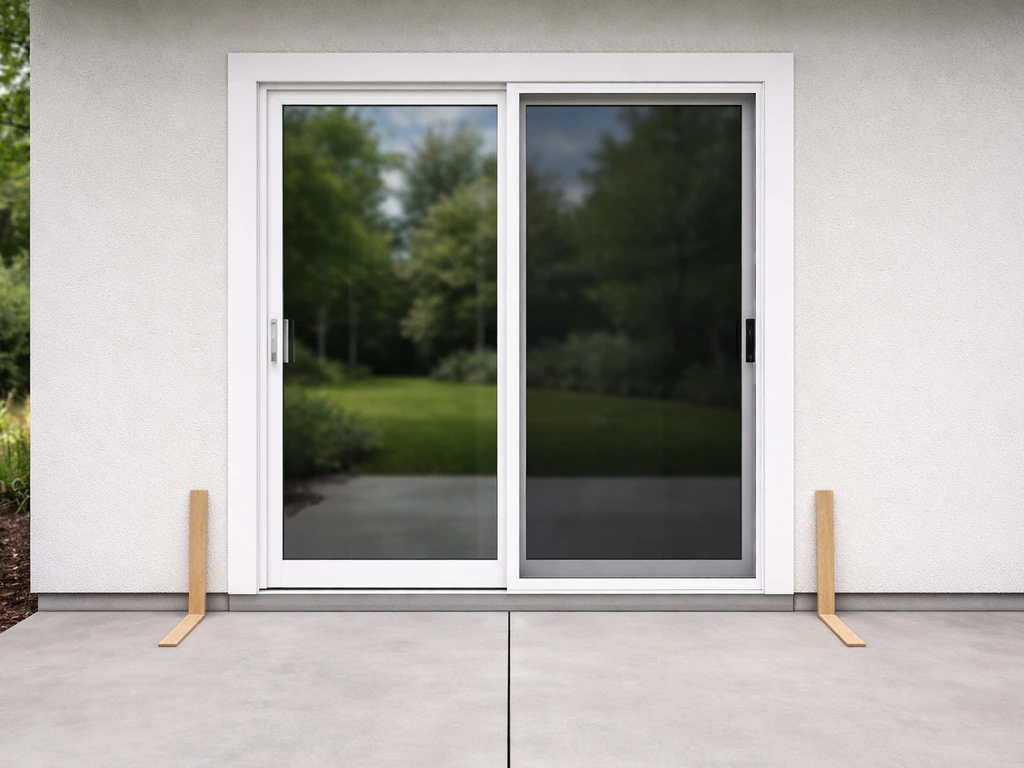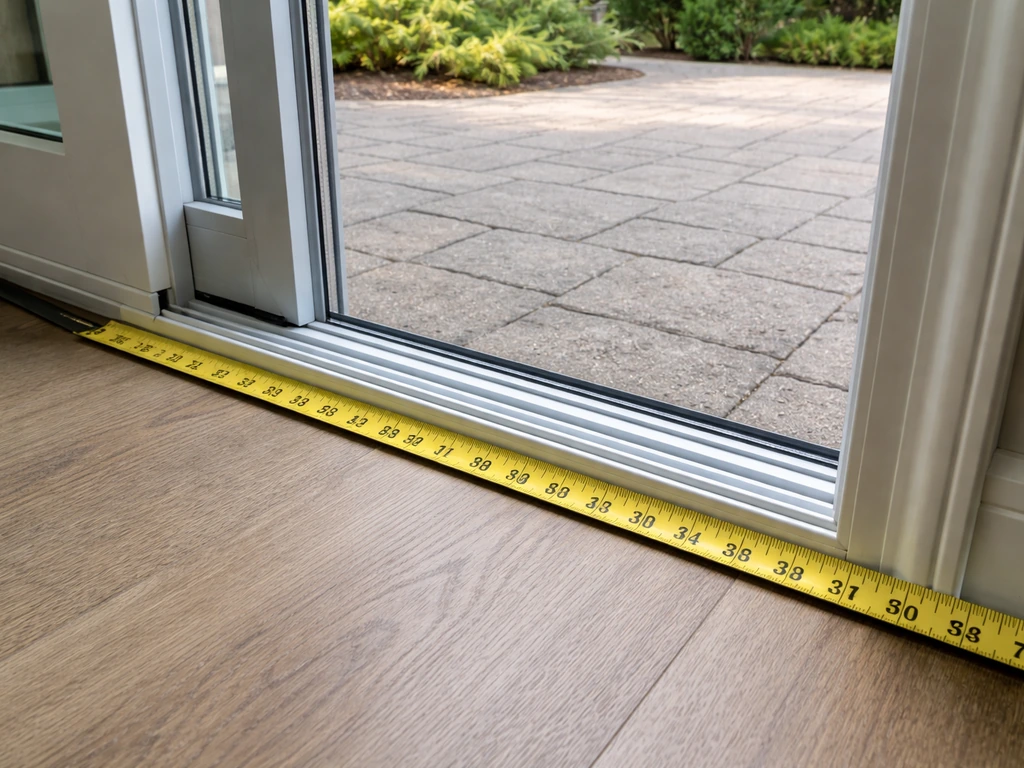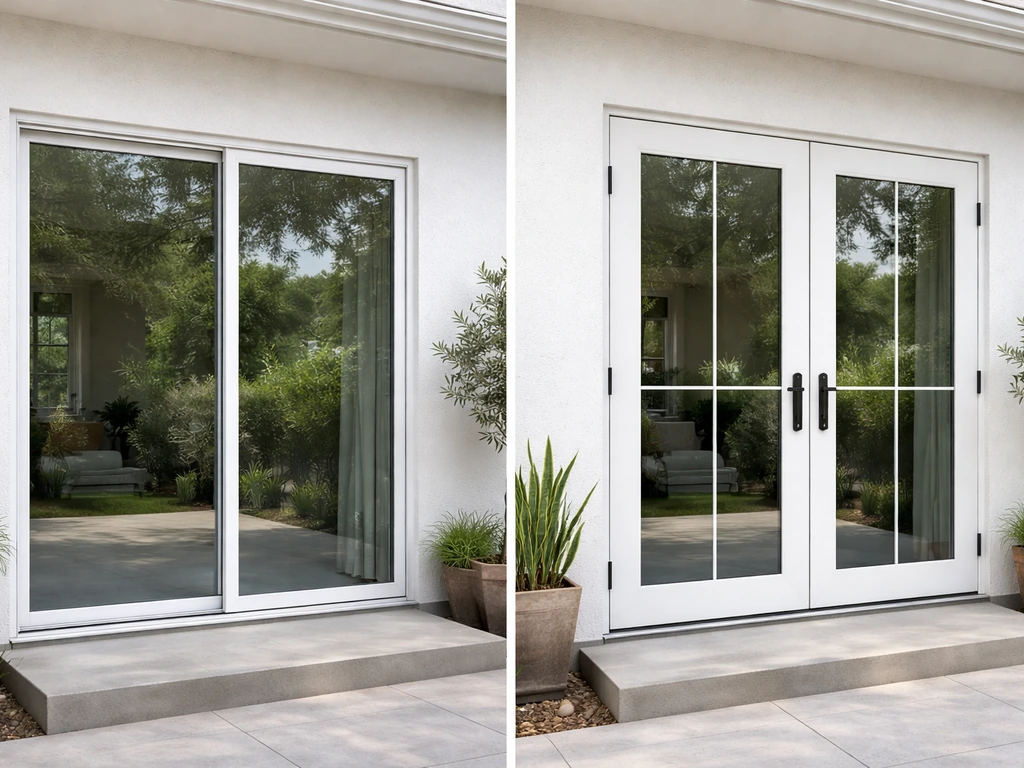
Most patio doors are 6 feet 8 inches tall (80 inches) and either 5, 6, or 8 feet wide, depending on whether you have a 2-panel or 3-panel unit. That's the short version. If you're replacing an existing door, the rough opening in your wall is typically about 1/2 to 1 inch larger than the door unit itself in both directions, and that gap matters a lot when you're ordering. Get the measurements wrong by even a quarter inch and you'll either be shimming aggressively or sending the door back.
How Big Is a Patio Door? Typical Sizes and How to Measure
Owen Delaney
6 May 2026
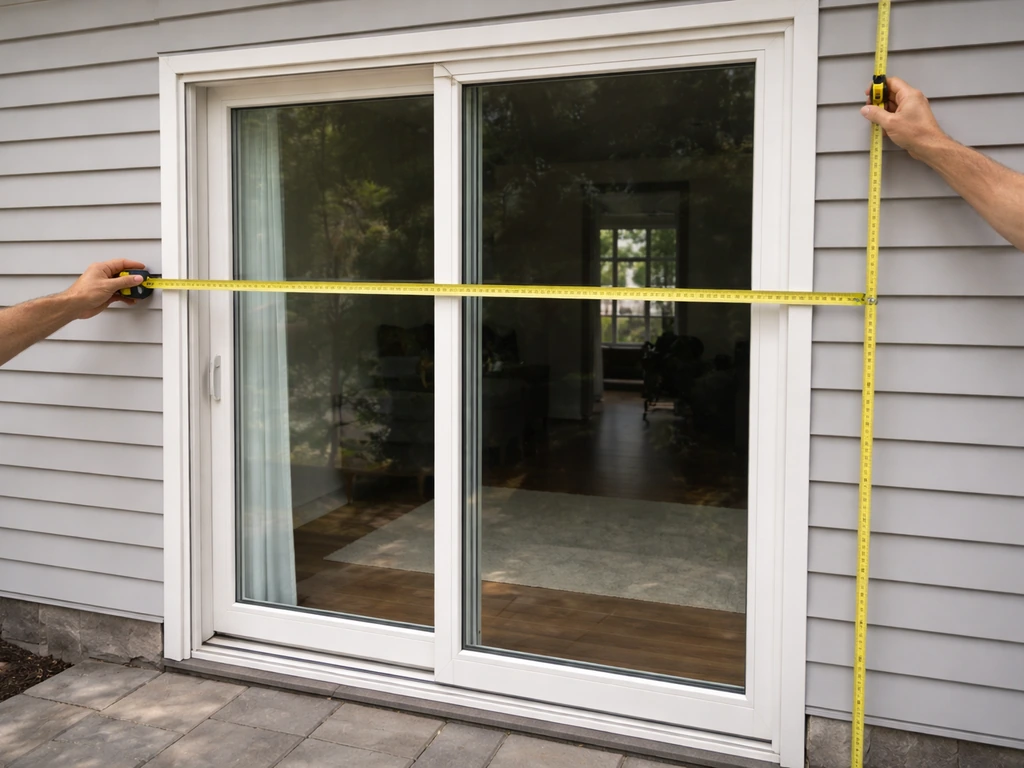
Typical patio door sizes and averages
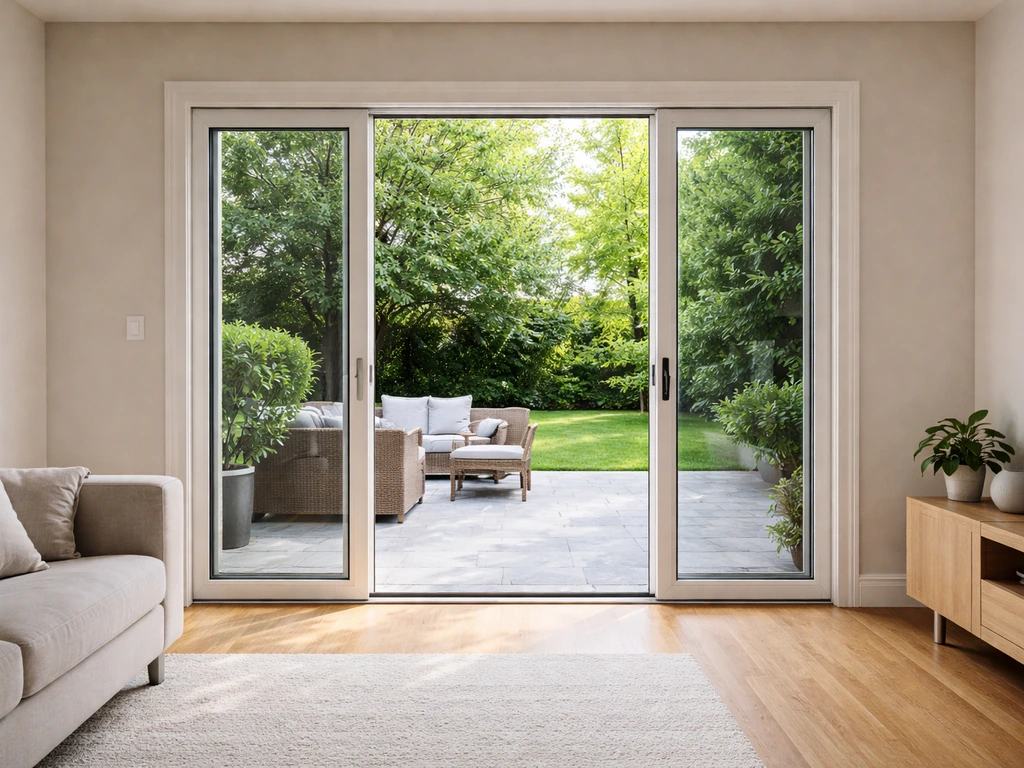
The most common patio door sizes in the US cluster around a few standard configurations. Andersen's 100 Series, for example, lists standard widths of 5', 6', and 8' and standard heights of 6'8", 6'11", and 8'. Those numbers reflect what most builders frame for, so they're a good baseline even if you're shopping a different brand. Height is usually 80 inches (6'8") for most homes built in the last 50 years, though newer builds and remodels increasingly use 96-inch (8') doors for a more dramatic look.
For sliding patio doors specifically, a 2-panel unit at 72 inches wide by 80 inches tall is probably the single most common size you'll encounter. Milgard's Ultra Series, for instance, lists a 2-panel configuration with a 72" x 96" rough opening as one of their standard options alongside the more common 60" x 80" and 72" x 80" openings. If you're in the UK, standard widths shift to metric equivalents around 1600mm, 1800mm, 2100mm, and 2400mm.
| Configuration | Common Width | Common Height | Notes |
|---|---|---|---|
| 2-panel sliding | 60" or 72" (5' or 6') | 80" (6'8") | Most common residential size |
| 3-panel sliding | 96" (8') | 80" or 96" | Good for wider openings |
| French (2-panel hinged) | 60" or 72" | 80" | Sometimes 82" in UK/EU markets |
| Bifold (4-panel) | 96"–144" (8'–12') | 80" or 96" | Widest opening possible |
| 2-panel sliding (tall) | 72" or 96" | 96" (8') | Growing in popularity in modern homes |
How patio door dimensions are measured
There are two numbers you'll deal with constantly: the unit size (also called the net size or frame size) and the rough opening. These are not the same thing, and confusing them is one of the most common ordering mistakes I see. The rough opening is the framed hole in your wall. The door unit is what you actually buy, and it's always slightly smaller than that opening to allow for shimming, leveling, and adjustment.
As a practical rule, the door unit runs about 1/2 inch narrower and 1/2 to 1 inch shorter than the rough opening. Milgard specifically instructs installers to confirm the door is 1/2" smaller than the rough opening in both dimensions. Pella's rough opening guidance says the opening should be 1/2" to 1" greater than the frame in height. For hinged patio doors, Pella's aluminum door installation manual specifies 3/4" greater in width and 1/2" greater in height. Simonton's new-construction instructions call for just 1/8" to 1/4" clearance between the frame and rough opening, so tolerances vary slightly by brand and door type.
To measure correctly, Pella recommends measuring width and height from the outside, running the tape across the door frame itself rather than from trim to trim. For replacement situations, RONA suggests removing interior trim to expose the jambs first, then measuring from the outside edge of the frame. And here's the detail that catches people: Clera Windows recommends measuring the rough opening width at three points (top, middle, and bottom) and recording the smallest number as your working measurement. Walls are rarely perfectly square, and using the largest measurement is a reliable way to order a door that won't fit.
Unit size vs. rough opening: a quick example
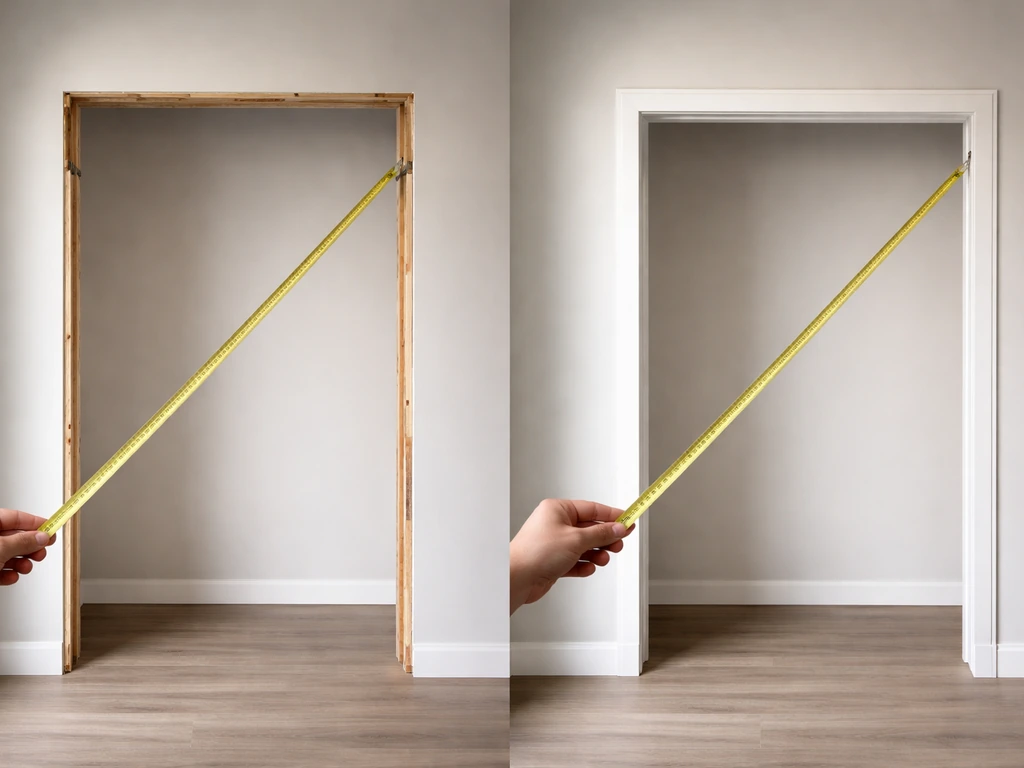
Take Milgard's Ultra Series 2-panel sliding door at the 60" x 80" rough opening size. The actual net (frame) size is 59-1/2" x 79-1/2". That half-inch difference in each direction is the clearance that lets installers get the door perfectly level and plumb. Andersen's A-Series gliding doors include specific minimum rough opening height callouts on their spec sheets, so always pull the spec sheet for the exact model you're considering rather than relying on general rules. Marvin puts it plainly: expect the rough opening to be 2 to 4 inches larger than the nominal door size in older construction where framing tolerances were looser.
One more check: after the door is set in the opening, measure both diagonals of the frame. RONA specifies these should match within 1/8". If they don't, the opening isn't square, and you'll have problems getting the door to seal and operate properly.
Sizes by door type: sliding, French, and bifold
Each door style has its own sizing conventions, and they're different enough that it's worth breaking them out separately. The width topic in particular varies quite a bit between styles.
Sliding patio doors
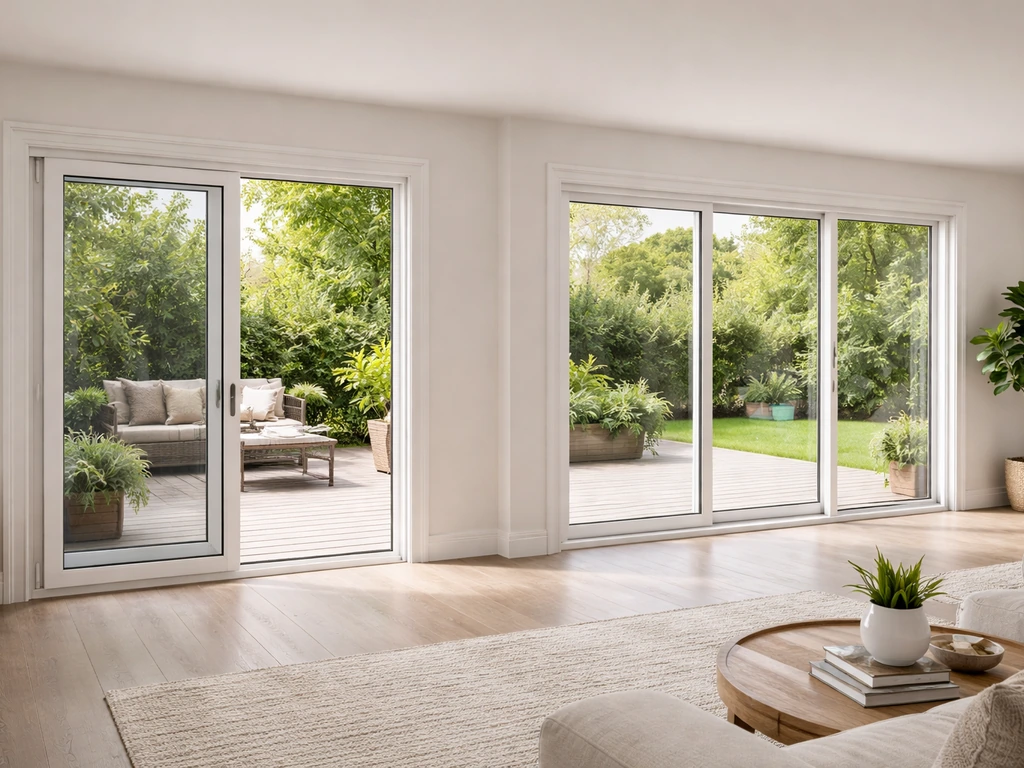
Sliding doors come in 2-, 3-, and 4-panel configurations, and the panel count determines the overall width range. Two-panel sliders are typically 60" to 72" wide. Three- and four-panel multi-slide doors start around 96" and can stretch well past that. Manufacturers use configuration codes like XO, OX, or XX where X means fixed and O means operable, and each configuration maps to a different call size, frame size, and rough opening. Simonton's multi-slide size guide, for instance, maps a call size of 5'-0" x 6'-8" to an actual frame size of 59-1/2" x 79-1/2" and a rough opening of 60" x 79-3/4". Always cross-check the call size against the rough opening column in the spec sheet before ordering.
French patio doors
Hinged French patio doors are typically 60" or 72" wide as a pair, with each panel running 30" or 36". Standard height is 80", though 82" shows up frequently in UK and European markets. The measurement approach is essentially the same as for sliders, but Pella specifically calls out that you should double-check both width and height when measuring hinged French doors, because the two panels need to meet squarely in the center and alignment errors are more visible than on a sliding unit. Milgard's Ultra Series French installation details include a specific checklist for confirming fit during and after installation.
Bifold patio doors
Bifold doors are the widest option and can span openings from about 8 feet up to 12 feet or more across multiple folding panels. Heights typically run 80" or 96". Because they fold back on themselves rather than sliding into a pocket or swinging on hinges, the rough opening needs to be particularly square and level, and the track system adds complexity to the installation. Standard sizing is less rigid here than with sliding or French doors, and custom configurations are common.
Quick size comparison by door style
| Door Style | Typical Width Range | Typical Height | Panel Options |
|---|---|---|---|
| Sliding (2-panel) | 60"–72" (5'–6') | 80" or 96" | XO or OX |
| Sliding (3–4 panel) | 96"–144" (8'–12'+) | 80" or 96" | OXO, OXXO, etc. |
| French (hinged) | 60"–72" | 80" | 2 panels, both swing |
| Bifold | 96"–192" (8'–16'+) | 80" or 96" | 4, 5, 6+ panels |
Choosing the right patio door size for your home
If you're starting from scratch on a replacement or planning a new opening, here's the step-by-step process I'd walk through before ordering anything.
- Remove interior trim around the existing door to expose the full jamb and rough framing.
- Measure the rough opening width at three points: top, middle, and bottom. Write down the smallest number.
- Measure the rough opening height at three points: left, center, and right. Write down the smallest number.
- Measure both diagonals of the rough opening. They should match within 1/8". If they don't, you have a framing or settling issue to address before the new door goes in.
- Subtract the clearance the manufacturer specifies (usually 1/2" per side for sliding doors, 3/4" width and 1/2" height for hinged units) to get your target door unit size.
- Cross-check your target unit size against the manufacturer's standard size chart. If your numbers fall between standard sizes, you'll need to decide whether to go slightly smaller and use more shim space or go custom.
- Confirm the door style (sliding, French, bifold) matches your rough opening width, since a 2-panel slider fits a very different opening than a 4-panel bifold.
- Double-check everything before you order. Pella recommends measuring to within 1/8" accuracy. A $10 tape measure error can turn into a $500 return shipping problem.
One practical note: patio door weight is a real consideration when sizing up, especially for sliding and bifold units. Larger doors are significantly heavier, which affects both the hardware requirements and whether your existing framing can handle the load without reinforcement. That's a conversation worth having with a contractor if you're going significantly wider or taller than your current opening.
What to do when your opening doesn't match standard sizes
Older homes especially have openings that don't line up with any standard size. A rough opening of 68" wide or 77" tall doesn't map neatly to any catalog entry, and that leaves you with a few options.
Go custom
Pella notes that their patio doors are custom made to the size you need and can be ordered to within 1/8" accuracy. Most major manufacturers, including Andersen and Milgard, offer custom sizing as part of their standard process rather than as a premium add-on. Custom sizing does typically add to lead time and cost, but it means you're not fighting with shimming or framing modifications on installation day. If you're ordering custom, send your rough opening dimensions to the manufacturer directly and let them calculate the unit size, rather than doing the subtraction yourself.
Modify the rough opening
Sometimes it makes more sense to resize the rough opening to match a standard door than to order a custom unit, especially if you're going wider than your current opening. This involves structural work, potentially touching the header above the door, and should be done by a licensed contractor. It's also the right move when an existing rough opening has settled out of square, since even a perfectly sized custom door won't perform well in an opening that's off by more than 1/8" diagonally.
Plan for installation requirements
Milgard references AAMA installation standards specifically: AAMA 2400 for new construction and AAMA 2410 for replacement installations. These standards define what "properly installed" means in terms of being level, plumb, square, and weather-tight. If you're working with a contractor, asking whether they follow AAMA 2400 or 2410 is a quick way to gauge whether they know what they're doing. For replacement doors especially, AAMA 2410 compliance ensures the installation is done to a documented, testable standard rather than "whatever fits."
The bottom line on mismatches: don't force a standard door into a non-standard opening with excessive shimming or trim tricks. Either size the door correctly for the opening you have, or fix the opening first. If you want to maximize how long do patio doors last, getting the right fit and proper installation is just as important as picking the right size. Both are legitimate paths, but skipping both and just making it work usually leads to air infiltration, hardware binding, and a door that needs replacing again in 10 years instead of lasting its full 20- to 30-year lifespan.
Your next steps before you buy
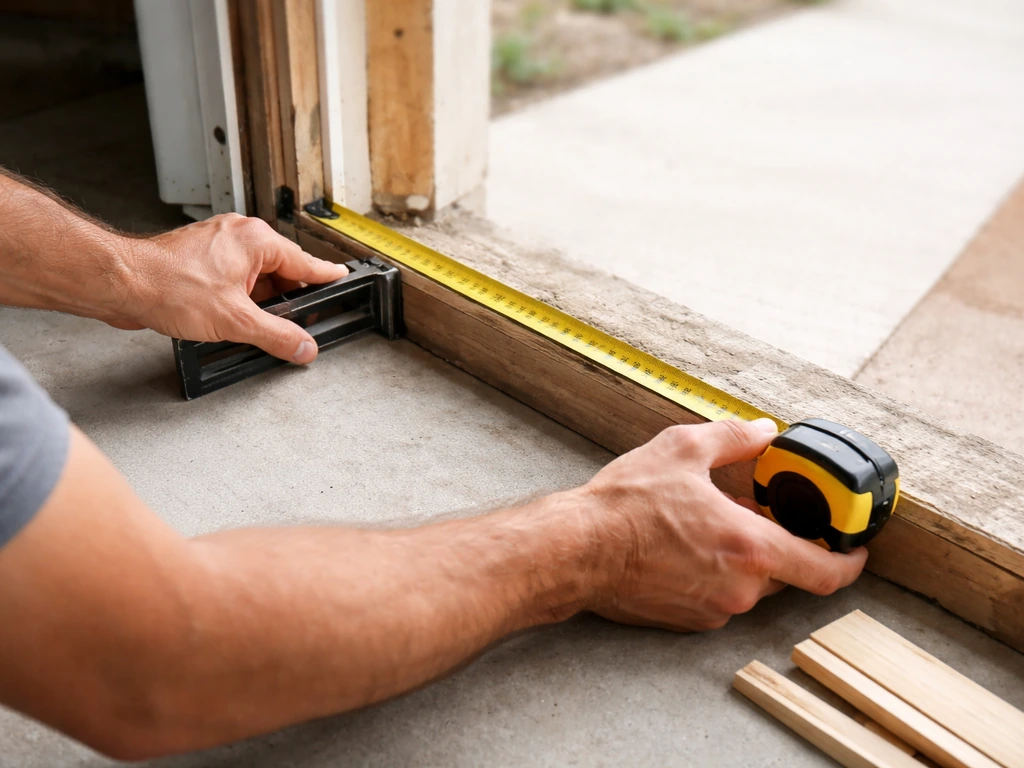
Before you call a dealer or click add to cart, do these things: measure the rough opening three times in each direction and record the smallest values, check both diagonals for squareness, identify your door style (sliding, French, or bifold), and pull the spec sheet for any door you're seriously considering to compare its rough opening column against your numbers. If you're within the standard size range, ordering is straightforward. If you're not, call the manufacturer directly before ordering rather than after. The 15-minute phone call before ordering is a lot cheaper than a return shipping label.
FAQ
Do I measure the patio door itself, or the opening in the wall?
If you only measure the glass or the visible door slab, you will likely end up with the wrong size. Always measure the rough opening (the framed hole) for replacement orders, and then compare it to the manufacturer’s rough opening column, since the purchased frame unit is slightly smaller to allow for leveling, shimming, and adjustments.
What does call size mean, and why doesn’t it match what I measure?
For most brands, the “call size” (marketing width and height) is not the same as the rough opening and not the same as the frame size. Use the spec sheet’s rough opening table for ordering, and confirm you are reading the correct configuration (for example, a 2-panel vs 3-panel slider) because the mapping changes.
What if my measurement changes depending on whether I measure to trim or to the frame?
Yes, if you have trim, brickmolding, or stucco returns that are thicker or thinner than typical. Your measurement method should expose the jambs or measure from the outside of the frame as the manufacturer instructs, otherwise you may accidentally measure over trim and end up with a door that won’t sit properly.
If the rough opening “looks square,” should I still check diagonals?
Measure diagonals both before ordering and again after the frame is set. If the diagonals do not match within the specified tolerance (commonly around 1/8 inch), you cannot rely on shimming alone for a proper seal, and you may get binding, poor lock alignment, and air leaks.
How much measurement error can I get away with before the door won’t fit?
A quarter inch can matter, but the bigger issue is where that error lands. If the opening is out of tolerance in both width and height, you can see problems during installation (shimming extremes, difficulty closing, or weeping at the sill). Recheck all measurements and compare the smallest readings you recorded to the spec sheet.
My rough opening isn’t a standard size. Should I order custom or modify the opening?
If you have a non-standard opening like 68 inches wide or 77 inches tall, you have two practical paths: order a custom unit (manufacturers often build to within tight tolerances) or modify the rough opening to hit a standard size. Trying to force a standard door into a more out-of-square opening typically leads to performance issues later.
Do sliding patio door widths change based on the panel configuration?
Yes, and it affects more than just the width. Multi-slide configurations use codes and different panel counts that change frame and rough opening dimensions, even if the overall marketing width seems similar. Confirm the exact configuration code on the spec sheet before ordering.
Are hinged French patio doors more sensitive to measurement mistakes than sliding doors?
French patio doors need extra attention to alignment at the meeting point. Measure width and height carefully from the correct reference points, because small errors become more noticeable where the two panels meet, and a misaligned pair can cause sealing issues.
If the door fits in the opening, can it still be installed incorrectly?
For sliders and French doors, track or hinge-free operation can be affected differently. Sliding doors can bind if the frame is not level and plumb, while French doors can misalign at the center meeting seam. In either case, you should confirm installation level, plumb, and square using the manufacturer or AAMA-aligned instructions.
Can I switch to a larger standard patio door without structural work?
Often, but only if the opening is within tolerance and the hardware allows it. If you need a wider or taller unit than the opening supports, resizing the rough opening may require structural work around the header and should be handled by a licensed contractor.