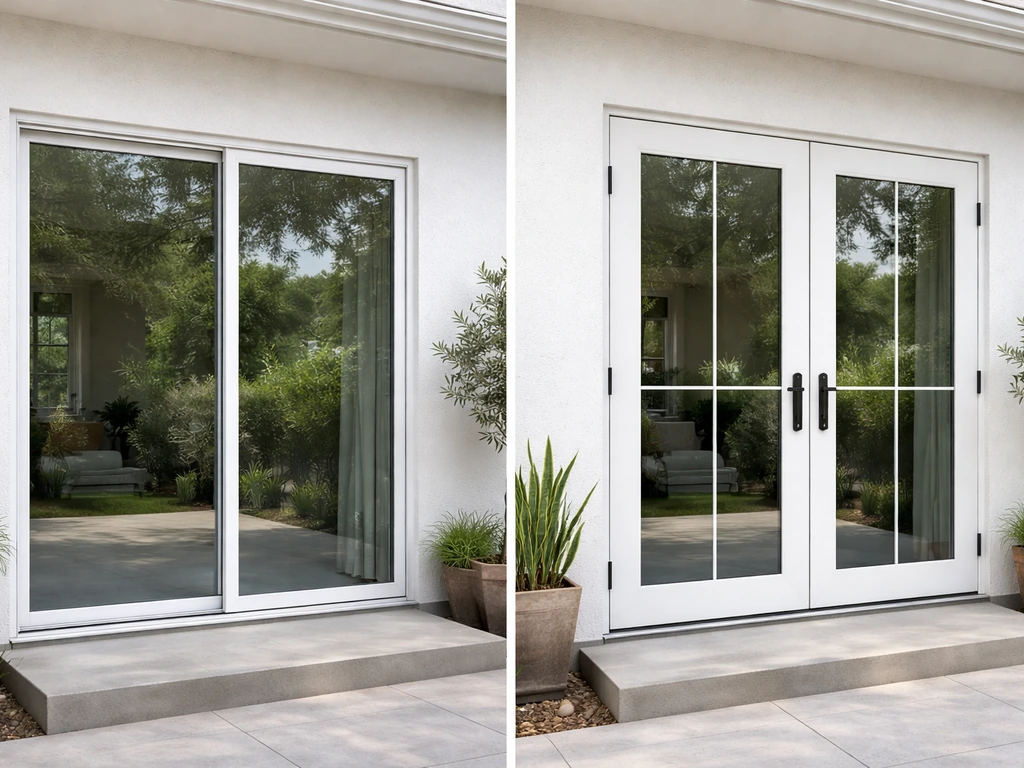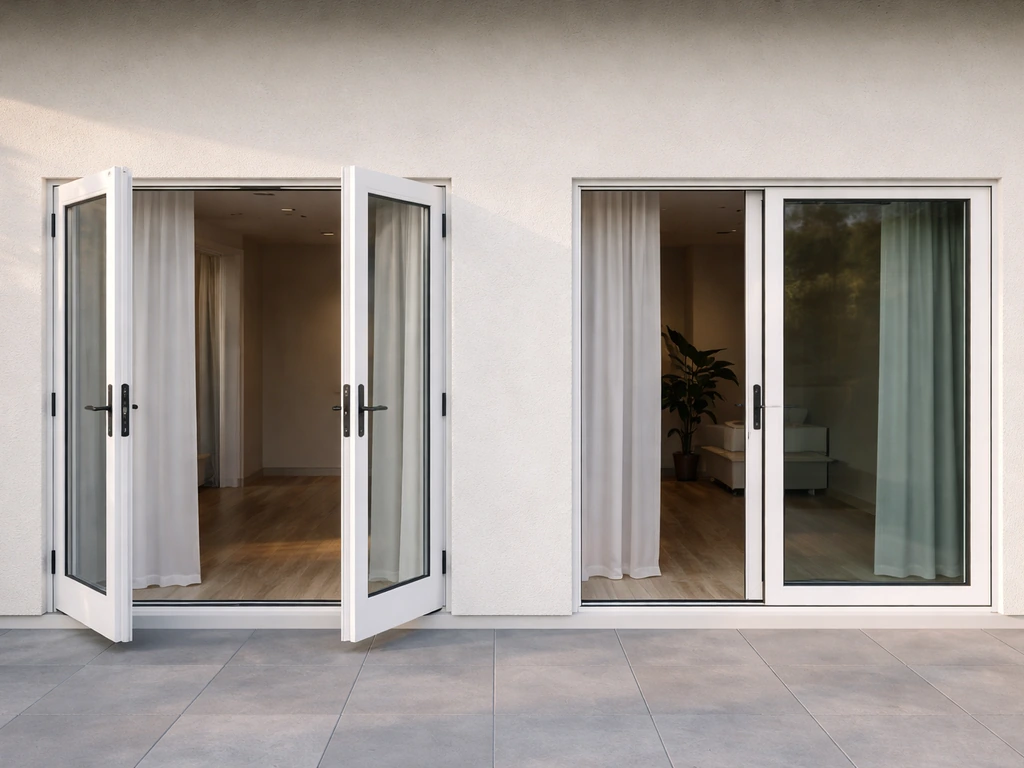
Most patio doors are 72 inches (6 feet) wide. If you want the full breakdown, including different types and measurements, see how big is a patio door 72 inches (6 feet) wide. That's the standard you'll see quoted by brands like Milgard, and it's the size that fits the rough opening in the majority of homes built in the last 50 years. But "patio door width" isn't one single number. It shifts depending on whether you're talking about a sliding door, a double French door, or a multi-panel unit, and whether you're measuring the door slab itself or the rough opening in the wall. Get that wrong and you'll order the wrong size or, worse, get midway through a removal and realize nothing lines up. If you also want to know the height, size labels like 6-0 and 8-0 can help you estimate common patio door dimensions.
How Wide Is a Patio Door in Inches Sliding or Double

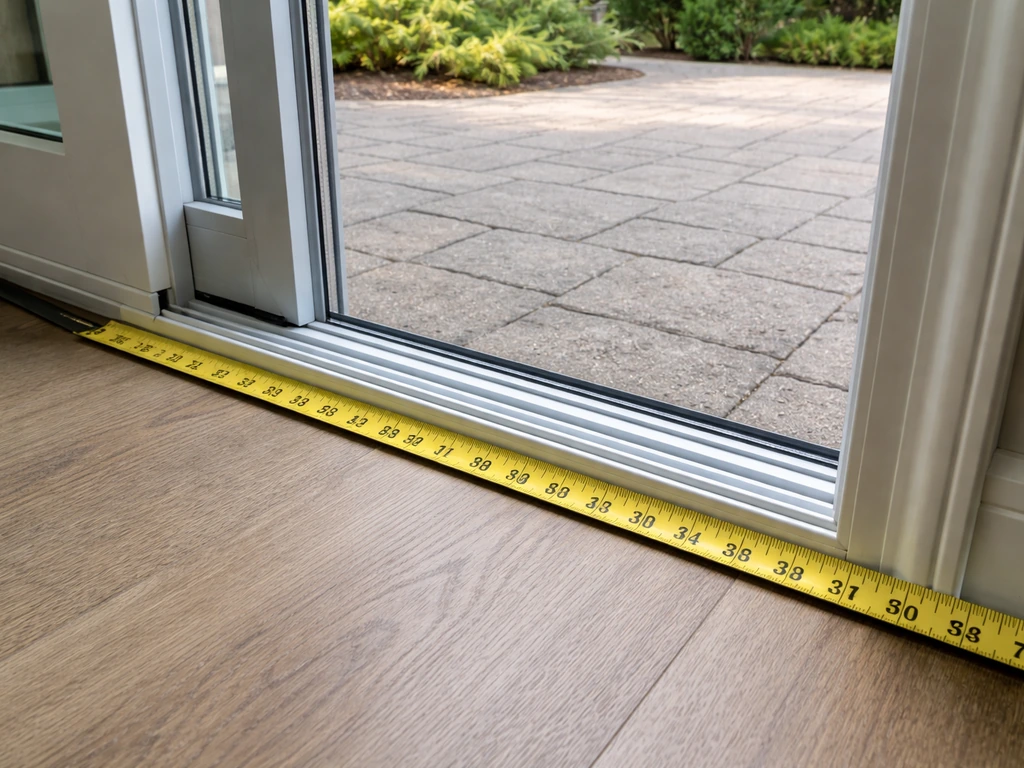
Typical patio door widths by type
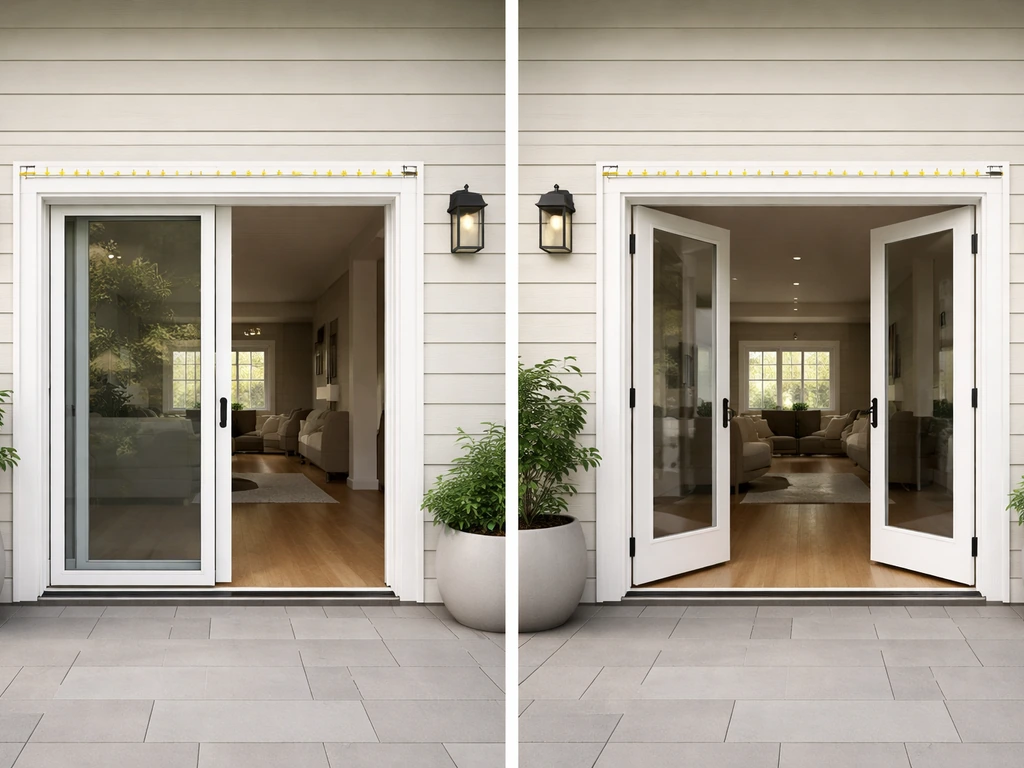
The width you need depends heavily on the style of door you're buying. Here's a quick breakdown of what you'll actually encounter in the market today:
| Door Type | Common Width Range | Most Common Standard Width |
|---|---|---|
| Sliding patio door (2-panel) | 60 to 96 inches | 72 inches (6 ft) |
| Sliding patio door (3-panel or more) | 96 to 192 inches | 96 or 144 inches |
| Double French patio door | 60 to 72 inches | 60 or 72 inches |
| Single hinged patio door | 32 to 36 inches | 36 inches |
| Bifold / multi-panel door | 96 to 192 inches | Varies widely by panel count |
The sliding glass door dominates the market by sheer volume, and that's why 72 inches is treated as "the" standard. If you are specifically asking how wide French patio doors are, the answer depends on the total opening and how the two hinged panels share it. French patio doors are nearly as common, and they carry their own sizing logic since two panels share that total opening. Bifold and multi-panel doors are in a different category entirely because they're custom-configured based on the space and panel count.
Sliding patio door width standards (and what "average" means)
Milgard lists 60, 72, and 96 inches as the core standard widths for sliding glass doors. Of those, 72 inches is the true average, meaning it's what you'll find in most tract homes and standard new construction. But 60-inch doors are common in smaller rooms, and 96-inch (8-foot) doors have become increasingly popular as homeowners push for that more open, indoor-outdoor feel. According to Mr. Handyman, sliding glass door widths can technically run from 60 all the way up to 192 inches for larger multi-panel configurations, with heights ranging from 80 to 96 inches.
When a manufacturer labels a door "6-0" or "8-0," that's industry shorthand for the unit size. A 6-0 door is 6 feet (72 inches) wide. That number refers to the net door unit size, which is slightly smaller than the rough opening you need in the wall. Milgard's Trinsic and Ultra series size charts both show that a 6-0-8-0 door (6 feet wide, 8 feet tall) has a net size of 71 1/2 inches wide, fitting into a rough opening that's 72 inches wide. So the label "72-inch door" really means the rough opening is 72 inches, not that the door slab itself measures exactly 72 inches.
There's also a third measurement that trips people up: the clear opening width. That's the actual usable pass-through space when the sliding panel is pushed aside. For a 96-inch wide sliding door, the clear opening in Milgard's Trinsic line comes out to around 92 1/2 inches because of the frame material on each side. If you're moving furniture or need to fit a wheelchair, the clear opening is the number you actually care about, not the overall unit width.
Double patio door widths and how sizing changes
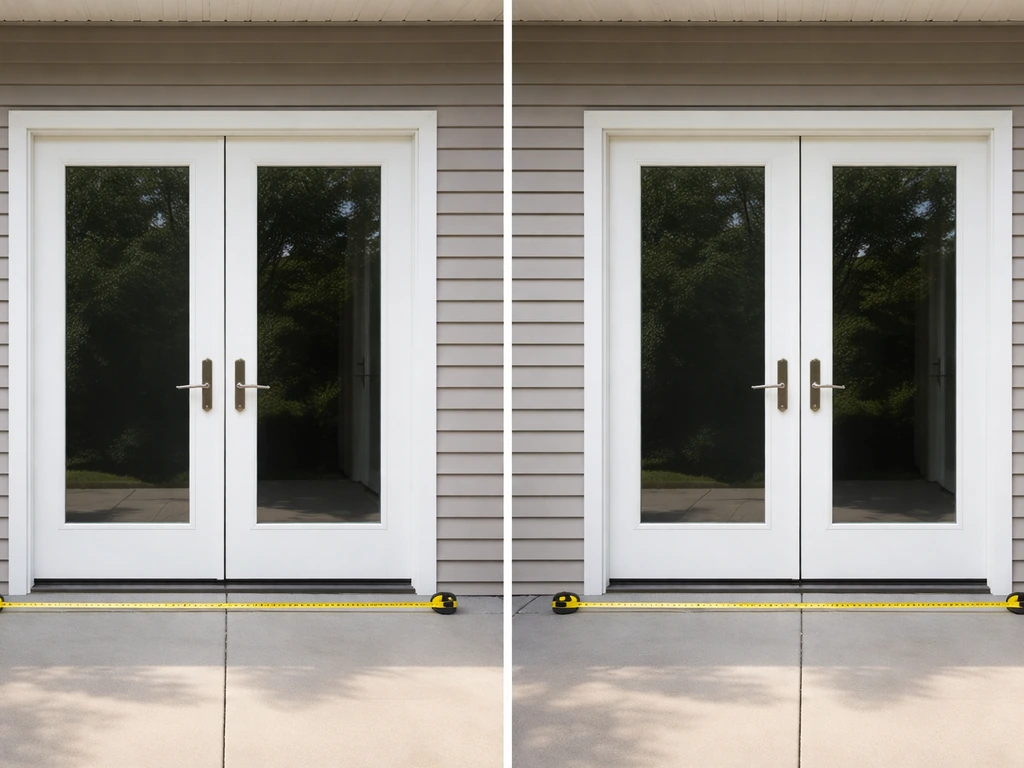
Double patio doors (French doors with two hinged panels that swing open) work differently from sliding doors. The total opening width is divided between two panels, so each panel is roughly half the overall frame width. A 60-inch double door gives you two panels at about 28 to 30 inches each. A 72-inch double door gives you two panels closer to 34 to 36 inches each. If you want to know more about French patio door widths specifically, the sizing logic there has its own nuances worth understanding separately.
The practical difference matters for installation: with a hinged double door, both panels need enough clearance to swing fully open without hitting walls, furniture, or railings. That's a bigger deal than with a sliding door, where the panel just retreats behind the stationary one. When you're replacing a sliding door with a French door (or vice versa), check that the swing clearance works before you fall in love with a particular door style.
For wider openings, some homeowners opt for a double French door combined with sidelights, which stretches the total framed opening to 96 inches or beyond. In those cases, the "door" label might say 6-0 (72 inches) but the full unit width including sidelights is much larger. Don't compare label sizes without checking the full unit dimensions.
How to measure patio door width correctly
This is where most DIY replacement projects go sideways. There are three measurements you need to understand before ordering a replacement door, and they're all different numbers.
- Rough opening width: Measure the framed opening in the wall from inside face of framing stud to inside face of framing stud. This is typically the widest number and is what you give to the manufacturer. Milgard's measurement guidance, along with Loewen's installation instructions, both center the sizing process around verifying this rough opening first.
- Net unit width (ordered size): The actual width of the door unit you order. Andersen's installation guides state the rough opening width must be at least 1/2 inch greater than the unit width. Milgard's specs confirm the same, showing a 6-0 net unit at 71 1/2 inches fitting a 72-inch rough opening.
- Clear opening width: The usable pass-through once the door is installed and opened. Always smaller than the net unit width because frame material eats into that space.
To measure correctly, remove any interior trim (casing) around the existing door so you can see the actual framing. Measure the rough opening width in at least three places: top, middle, and bottom. Use the smallest of the three measurements as your working number. Openings are rarely perfectly square, and ordering to the largest measurement will give you a door that won't fit without cutting framing.
Infinity by Marvin recommends planning for the rough opening to be 2 to 4 inches larger than the door unit when doing new construction or a reframe. If you're replacing an existing door in an already-framed opening, you usually have less wiggle room and need to order closer to the actual opening size.
Understanding patio door measurements in inches (and where confusion comes from)
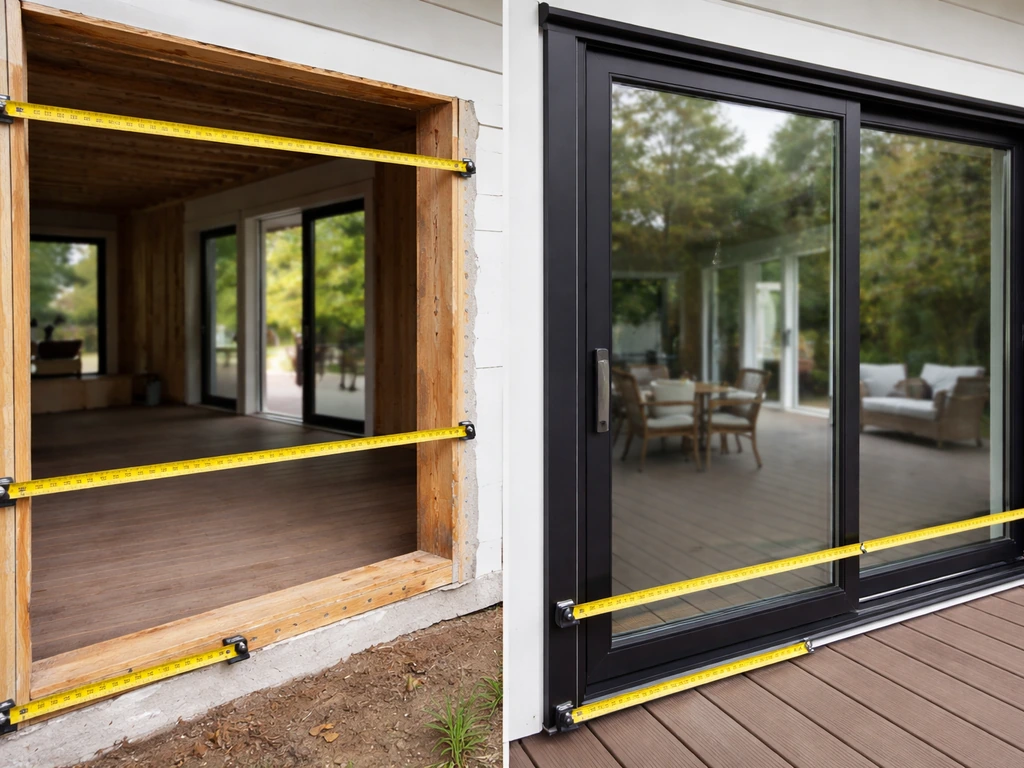
Patio door widths in inches can be listed four different ways, and they all look the same unless you know what you're looking at. A 72-inch door might be labeled as 72", 6-0, 6 ft, or simply "standard." Manufacturers sometimes list the rough opening size as the door size, and sometimes list the net unit size. Milgard, for example, uses the rough opening as the size reference point in some of their materials, while the actual ordered door is 1/2 inch narrower.
The most common confusion happens when someone measures their existing door frame opening and finds 71 1/2 inches, then searches for a "71.5-inch patio door" and finds nothing. That's because 71 1/2 inches is the net unit size of a standard 72-inch (6-0) door. The rough opening is 72 inches. You'd order a 72-inch (6-0) unit.
Here are the most common patio door widths you'll see listed in inches, and what they translate to in standard manufacturer sizing:
| Rough Opening (inches) | Door Label | Net Unit Width (approx.) |
|---|---|---|
| 60 inches | 5-0 | 59 1/2 inches |
| 72 inches | 6-0 | 71 1/2 inches |
| 96 inches | 8-0 | 95 1/2 inches |
| 120 inches | 10-0 | 119 1/2 inches |
| 144 inches | 12-0 | 143 1/2 inches |
Always confirm which measurement a manufacturer is advertising before you order. The product page may list the rough opening size, the net unit size, or occasionally both. If a spec sheet shows both a "rough opening" column and a "net size" column, like the Milgard Trinsic and Ultra series size charts, use the rough opening column to match against your measured wall opening.
Picking the right replacement size and when to call a pro
If your rough opening is exactly 72 inches, you order a standard 6-0 door and you're done. The situation gets more complicated when your measurement lands between standard sizes. Here's how to handle it:
- If your rough opening is larger than a standard size: You can add framing (blocking) to reduce the opening to fit a standard door. This is cheaper than ordering custom.
- If your rough opening is smaller than a standard size: You'll need to either re-frame to open it up, or find a manufacturer that offers that specific non-standard width. Custom doors are available from most major brands but cost significantly more.
- If your opening is within 1/2 inch of a standard size: Confirm that the gap on each side meets the manufacturer's minimum shim space requirement (usually 1/4 inch per side) and order the standard size.
- If you're widening an existing opening: That involves structural work and almost always requires a permit. This is where you call a pro, not just for convenience but because load-bearing implications need to be assessed.
For a straightforward replacement where the rough opening already exists and matches a standard size, a skilled DIYer can handle the swap. But if your measurements are off, the framing is out of square, or you're changing door styles (going from sliding to French, for example), bringing in a professional installer is worth the cost. Pella, Andersen, and most other brands have authorized installers who know their own product tolerances, and an installation mistake on a door that large usually means a full restart.
Your replacement shopping checklist
- Measure the rough opening width in three spots (top, middle, bottom). Use the smallest number.
- Measure the rough opening height in three spots (left, center, right). Same rule applies.
- Identify your door style (sliding, French, single hinged, bifold) since width standards differ.
- Confirm whether the manufacturer's listed size is rough opening or net unit width before ordering.
- Check the clear opening width if you need accessible passage or plan to move large items through.
- If the rough opening doesn't match a standard size, decide whether to adjust framing or go custom before shopping.
- Get at least two quotes if professional installation is involved, and ask whether they handle framing adjustments as part of the scope.
Getting the width right upfront saves you from expensive surprises later. Most replacement patio door projects that go smoothly are ones where someone took 15 minutes to measure carefully before clicking "add to cart." If you're also researching how tall your door needs to be, or how much weight a new door unit will add to the opening, those questions tie directly into the full sizing picture and are worth working through at the same time. Patio doors typically last 10 to 30 years depending on the material, finish, and how well they’re maintained how long do patio doors last. A patio door's weight depends on its size, material, and whether it is sliding or hinged, so it's worth confirming before you finalize the purchase how much weight a new door unit will add.
FAQ
My rough opening measures 71 1/2 inches, what patio door width should I order?
Measure the width of the wall opening after removing interior casing, but also measure the width of the door unit you have now if it is still available for reference. If your opening measures 71 1/2 inches, you generally need a 72-inch (6-0) net-to-rough-opening scenario, meaning you should buy a 6-0 unit rather than a “71.5-inch” door that usually does not exist as a standard labeled product size.
Why do two “72-inch” patio doors seem to fit differently?
Two doors can both be “72-inch,” but one may be labeled by rough opening and the other by net unit size. The reliable method is to confirm the spec sheet for whether it lists a rough opening size or a net size, then match that column to your measured framing opening. If the listing only shows one number, verify with the manufacturer or the retailer because 1/2 inch differences are common.
Does the swing clearance change the effective opening width for French (double) patio doors?
Yes, and it matters for clearance. With a double French door, each panel needs swing space, and uneven or tight clearances can force you to leave a wider working opening than a sliding door would require. Before ordering, confirm the door’s required swing clearance around the full arc, especially if you have trim, nearby walls, railing posts, or fixed furniture placement.
What should I do if my rough opening width is between two standard patio door sizes?
If your opening is between standard sizes, ordering the nearest larger rough opening usually is not the fix because the frame and installer tolerance may not allow “fitting” a door that is meant for a different rough opening. Instead, re-measure for squareness, then choose a unit that matches the rough opening column in the spec sheet, or plan for a reframe or professional adjustment if you cannot hit a standard size.
If I need wheelchair access, should I shop by overall width or clear opening?
For wheelchair or mobility use, rely on the clear opening width, not the overall unit width. The frame and tracks reduce the usable passage, so a “96-inch” sliding door may have a clear opening around the low 90s. Also check the threshold height, because usability often depends more on threshold height and floor transition than on the door slab width alone.
Can I replace a sliding patio door with a French double in the same rough opening?
If you are replacing a sliding door with a French double (or the reverse), you cannot assume the same rough opening width will work without checking the different installation requirements and hardware. Hinged doors also change clearance needs and may require different wall prep and sill details, so confirm compatibility before you order and dry-fit the new unit.
If my patio door has sidelights, what width am I supposed to measure and buy?
Yes, but only if the spec sheet supports the combination. When sidelights are involved, the “door” label might still show a 6-0 (72-inch) unit, while the full framed assembly including sidelights can be 96 inches or more. Confirm the total system width and rough opening needed for the entire unit, not just the door slab width.
What is the best way to measure patio door width so the door actually fits?
Your measuring strategy should account for out-of-square openings. Measure at the top, center, and bottom, then use the smallest dimension as your ordering number. If the difference between measurements is more than a small amount, plan to correct squareness or hire an installer, because ordering to the largest measurement is a common reason doors do not seat properly.
Do I need to order based on the exact rough opening, or can I oversize it like new construction?
In most retrofit replacements, you have less room to adjust than in new construction. New construction installs often allow the rough opening to be oversized by a couple inches for easier framing and shimming, but a replacement in an existing frame usually requires ordering closer to the actual opening size. If you are unsure whether you’re re-framing, confirm with an installer because tolerances vary by brand and system.
Why do my online search results not match my measured patio door opening?
Common DIY mistake is searching for the number you measured on the door frame, then assuming that number corresponds to a matching labeled door size. In reality, some measurements you see, like 71 1/2 inches, often correspond to the net unit size of a standard 72-inch (6-0) door. Always match your measured framing to the rough opening column, not to whatever value sounds like a “door width” in everyday language.