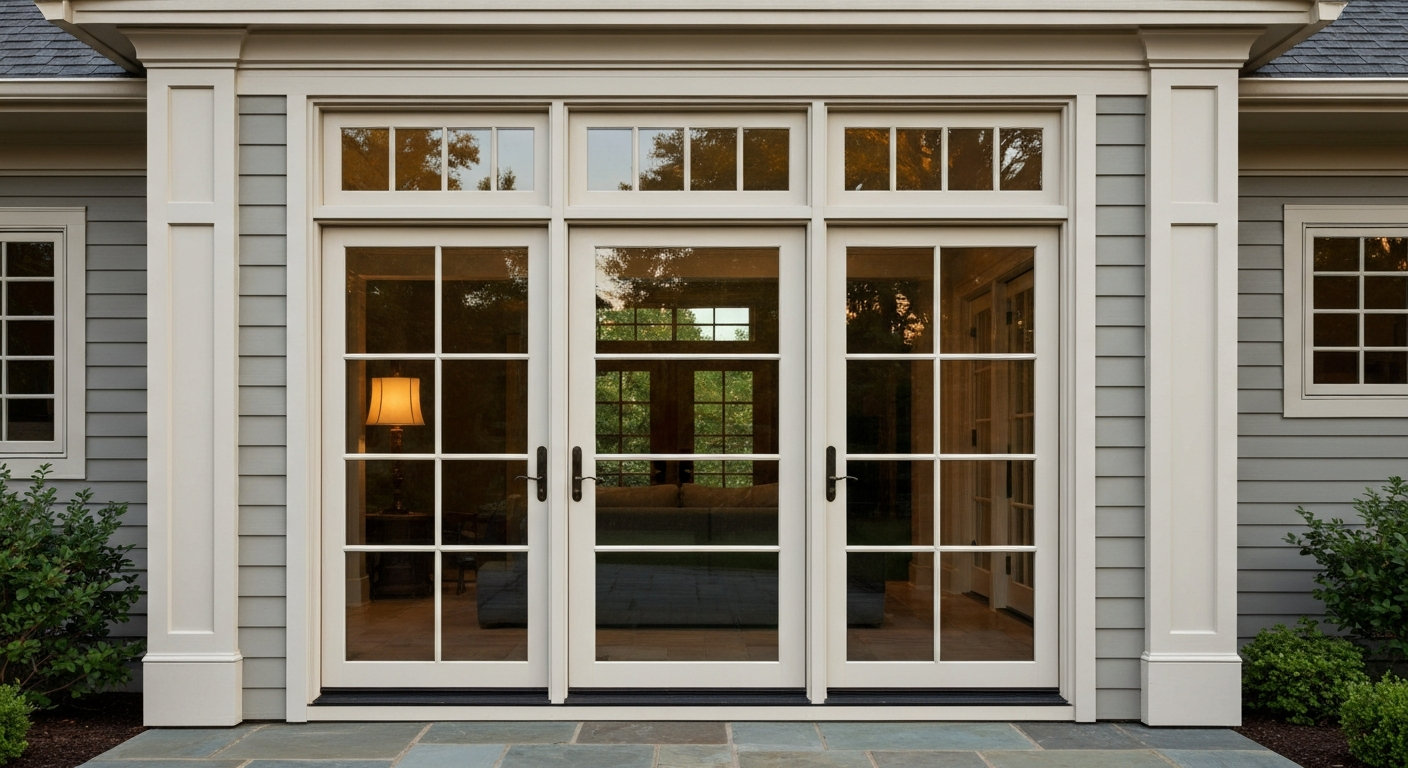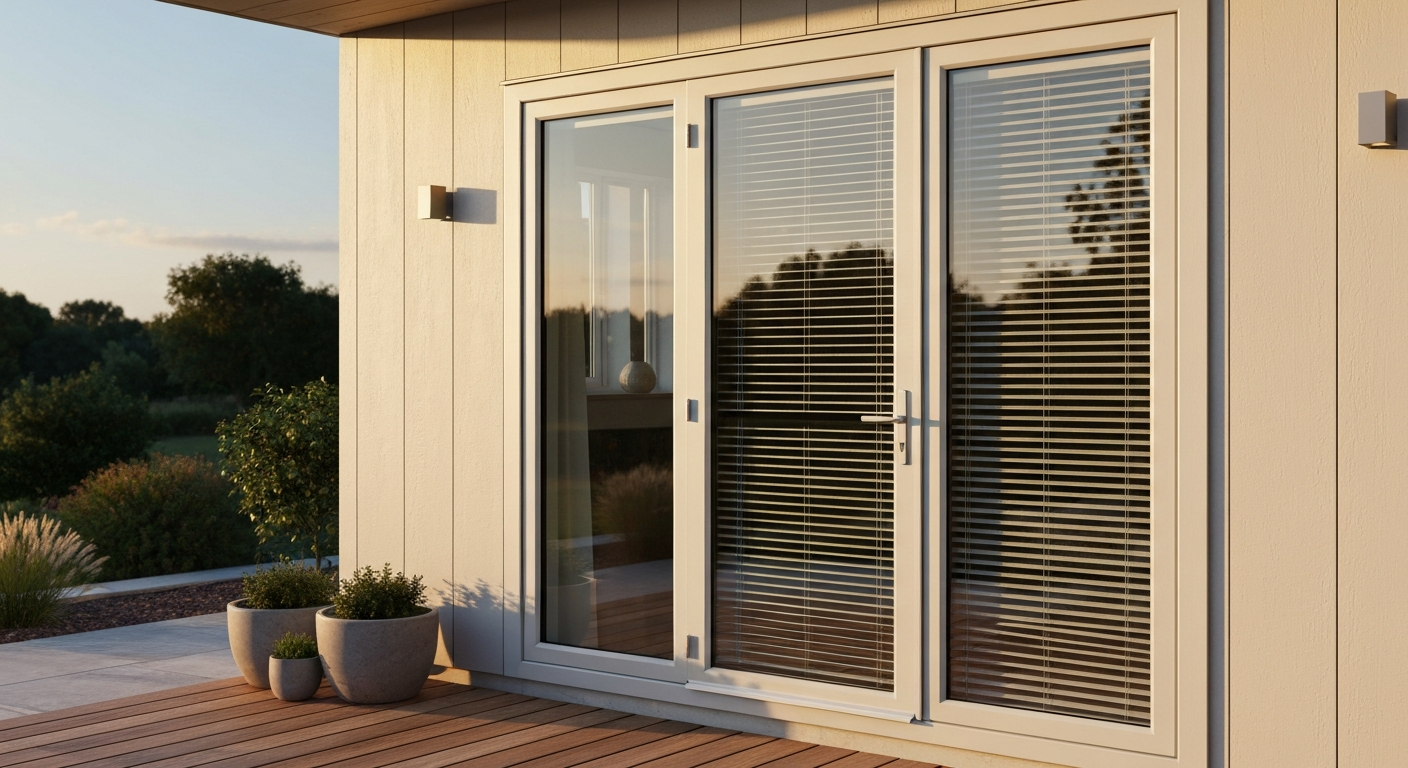
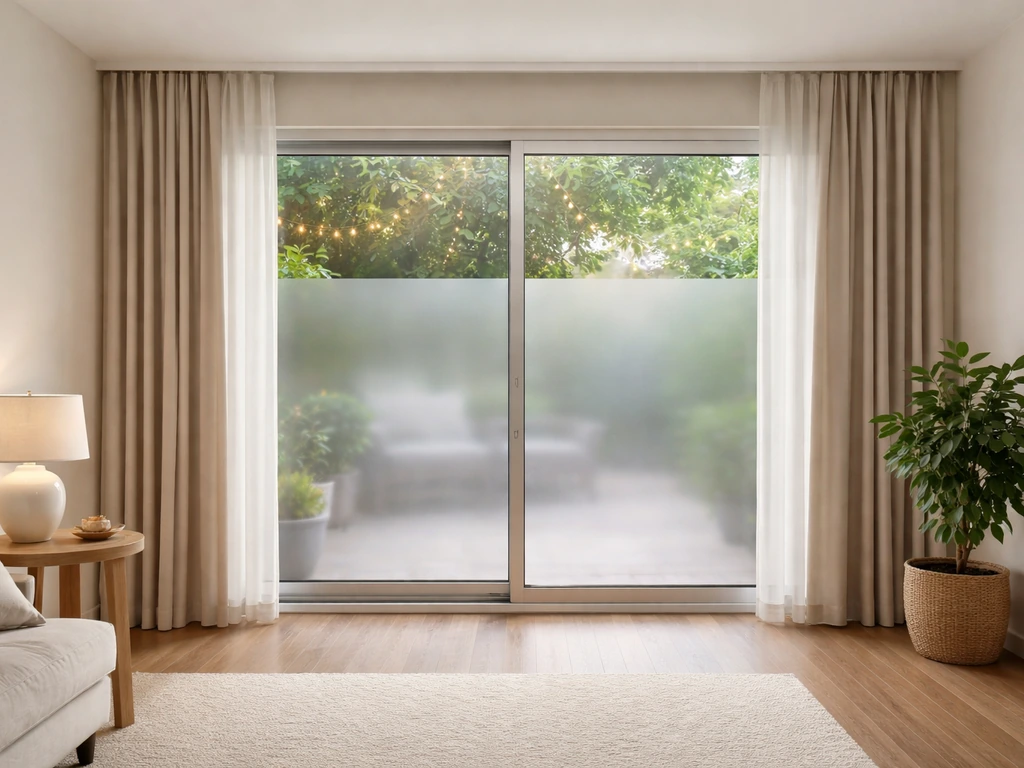
The best way to decorate sliding patio doors is to layer your treatments: hang curtains or drapes on a ceiling-mounted or wall-mounted rod well above the door frame, add blinds or shades directly inside or outside the glass panel area for light control, and finish with hardware accents or film for privacy. The key constraint that separates sliding doors from regular windows is the track. Every decoration choice has to account for the fact that the door panel moves laterally, so nothing can drape into the track, crowd the handle, or stack in the door's travel path when it opens.
How to Decorate Sliding Patio Doors Step by Step
Owen Delaney
19 May 2026
Start with measurements and how you actually use the door
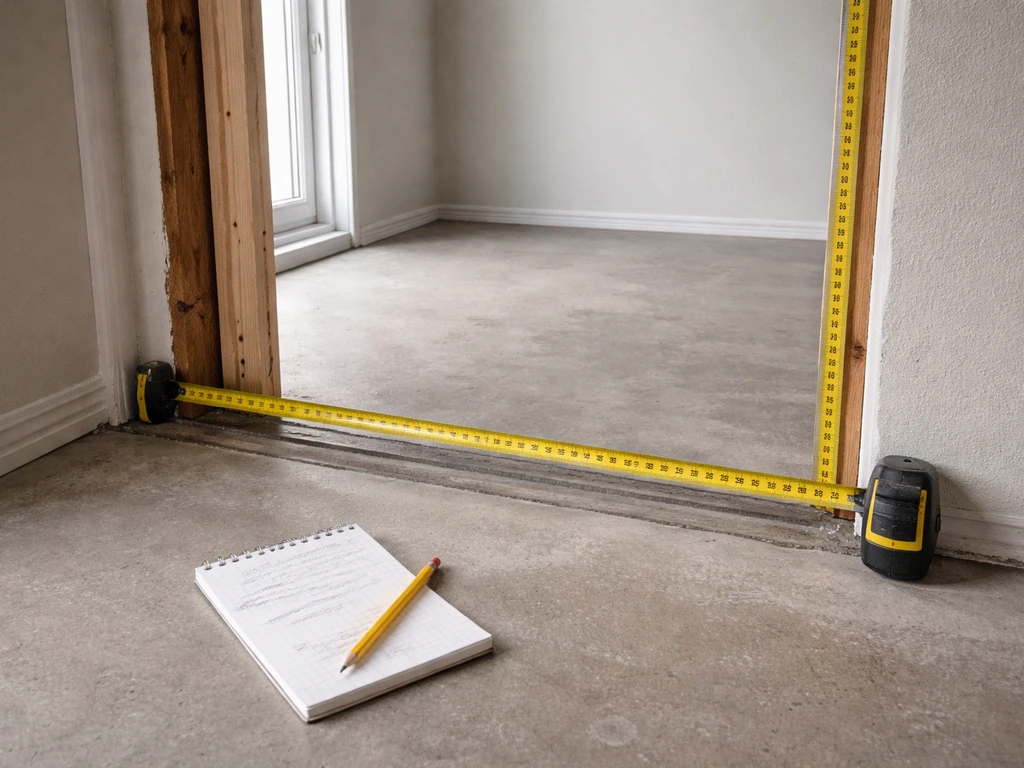
Before you buy anything, measure three things: the full rough opening width, the height from floor to ceiling (not just to the top of the frame), and how far the door panel travels when fully open. Most standard sliding patio doors are 6 feet wide (72 inches) with a panel that slides roughly 35 to 36 inches. Larger 8-foot and 12-foot doors are increasingly common, and the panel travel on those changes how much wall space you have to work with on the open side.
Write down how often you open the door and at what times of day. If you slide it open every morning for airflow, heavy floor-length drapes that puddle on the left side sound beautiful but become an immediate nuisance. If the door is mostly a view window that you open a few times a week, you have more flexibility. Privacy needs matter too: a door facing a neighbor's fence line needs a different solution than one overlooking a private backyard. Getting honest about usage now saves you from buying something you will immediately hate living with.
- Measure the full frame width and height, then measure just the glass panel area separately
- Note which direction the panel slides (left or right) and how much wall clearance exists on that side
- Check the track depth: most sliding door tracks project 1 to 2 inches above the floor, which matters for floor-length treatments
- Measure the distance from the top of the frame to the ceiling so you know how much mounting space you have
- Note the handle position on the interior panel so you know what clearance a blind or shade needs to leave accessible
Style choices: framing the door vs. dressing the glass
There are two visual approaches to decorating a sliding patio door, and they produce completely different looks. The first is the frame look: you treat the entire door opening like an architectural feature, using wide curtain panels, a statement rod, and layered textiles that extend well beyond the frame on both sides. This approach makes the door feel like a grand entry point and visually widens the wall. The rod should extend 12 to 18 inches past the frame on each side so that when the curtains are pushed to the edges, the glass is fully clear and the door slides freely. This works especially well in living rooms and open-plan spaces.
The second approach is the glass look: you keep decoration minimal and close to the glass itself, using inside-mount cellular shades, roller shades, or window film directly on the panels. The focus is on light control and privacy without adding fabric mass around the frame. This suits smaller rooms, modern interiors, and anyone who wants a clean sightline. Many homeowners combine both: a minimal shade on the glass for everyday privacy, and curtain panels framing the sides purely for softness and style.
Curtains and drapes: how to hang them without blocking the track
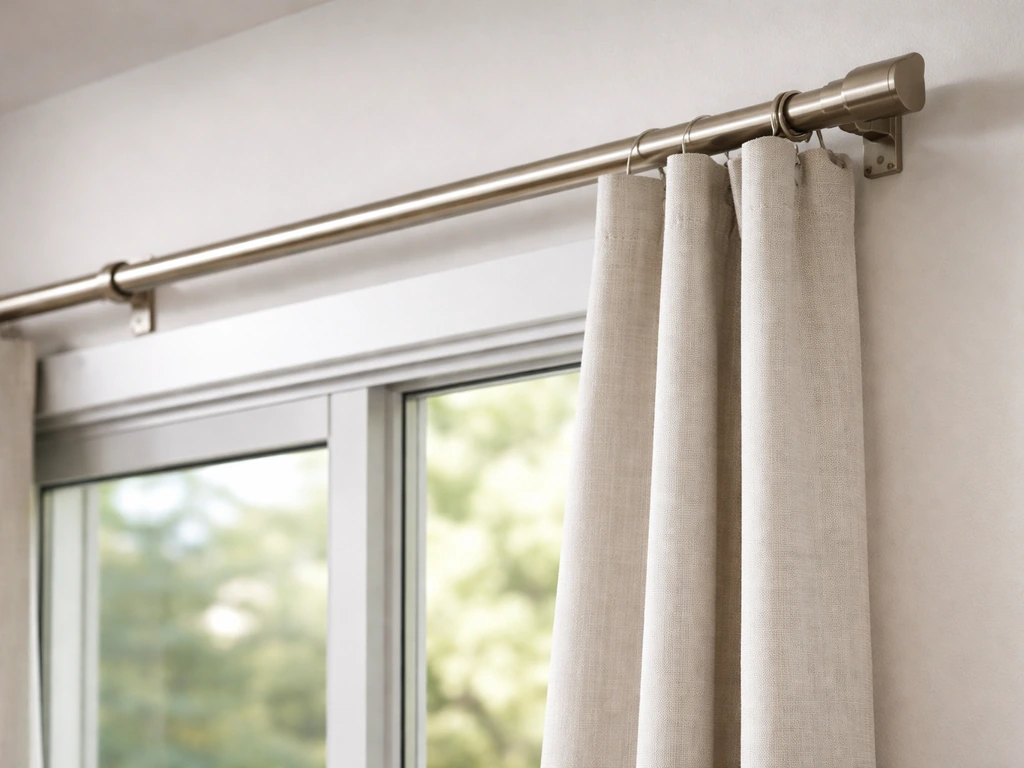
The biggest mistake people make with sliding door curtains is mounting the rod too close to the frame. If the rod bracket sits right above the frame, the curtain fabric hangs directly in front of the track and handle, and you end up wrestling the curtain aside every time you open the door. Mount the rod at least 4 to 6 inches above the top of the door frame, or go all the way to ceiling height for a dramatic, room-height look. Ceiling height mounting (typically 96 to 108 inches from the floor) makes the door look taller and keeps fabric well clear of the track.
Rod width is just as important. Extend the rod at least 12 inches past each side of the door frame so the panels stack completely off the glass when open. For a 72-inch door, that means a rod at least 96 inches wide, ideally 108 to 120 inches. This ensures zero interference with the sliding panel's travel path. Use a sturdy rod rated for the curtain weight: heavy linen or velvet panels on a flimsy rod will bow in the center within weeks.
Choosing panel count and fabric weight
For a standard 72-inch door, use four panels rather than two. Two wide panels create too much fabric bulk in the stack-back areas and look droopy in the middle when closed. Four narrower panels (each about 54 inches wide) give you full coverage when closed and neat stacks on each side when open. For floor length, measure from the rod to the floor and subtract about half an inch so the fabric skims the floor rather than dragging across the track. Blackout or thermal-lined drapes add energy efficiency benefits on top of the decorative value, which is worth considering in climates with strong summer sun or cold winters.
Blinds, shades, and window film for light control and privacy
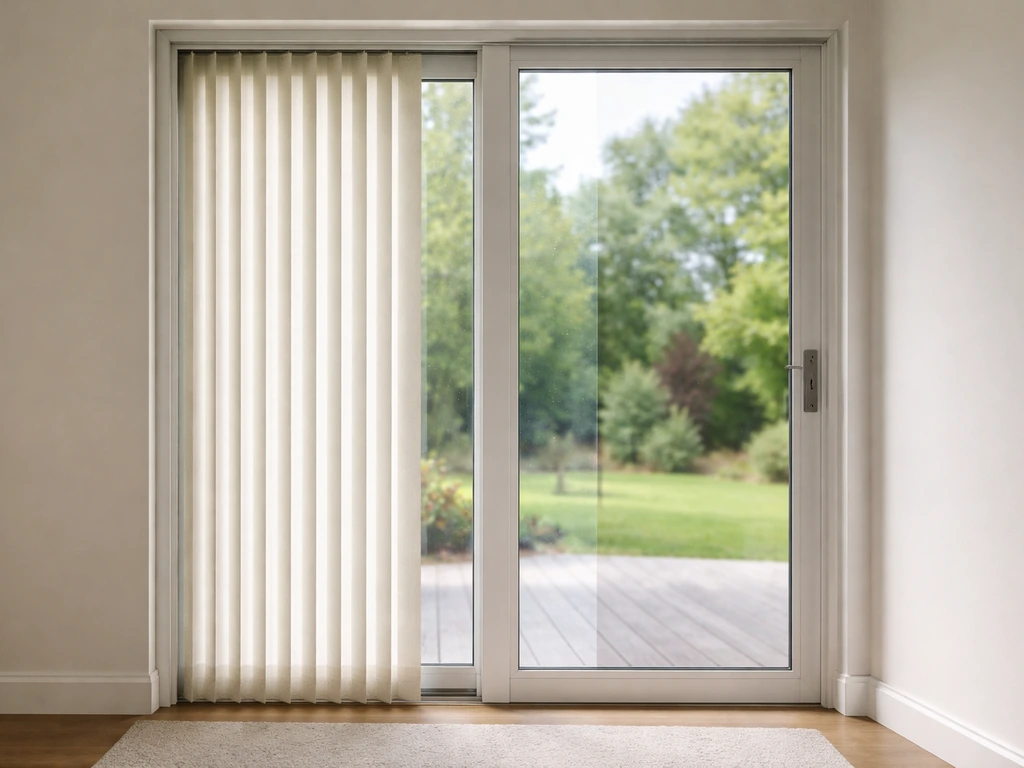
Blinds and shades mount directly on or inside the door frame and give you the most precise light control. The main constraint is whether you want an inside mount (within the door frame) or an outside mount (on the wall above the frame). Inside mounts look cleaner but require enough frame depth: most cellular shades and roller shades need at least 2 to 3 inches of frame depth for the headrail. Measure your frame depth carefully before ordering.
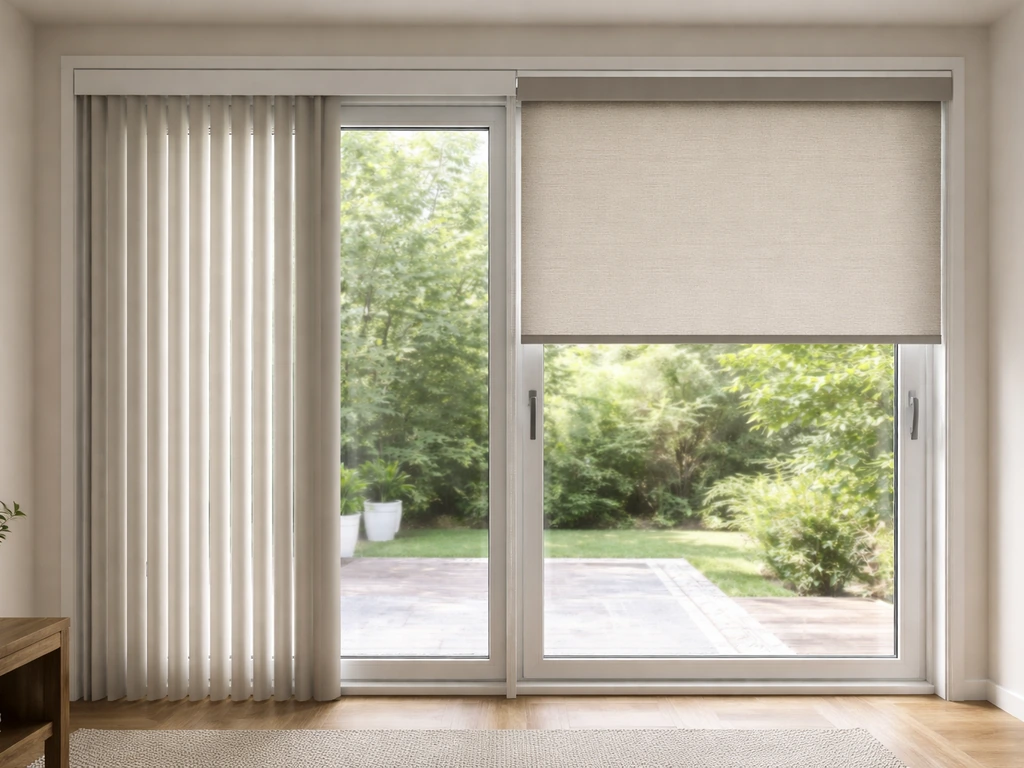
Vertical blinds have been the traditional sliding door choice for decades because the vanes hang parallel to the door and stack neatly to one side when the door opens. They work, but they can feel dated and the vanes are fragile. A better modern option is a panel track blind (also called a panel glide), which uses wide fabric panels that slide on a ceiling-mounted track.
It looks contemporary, the panels stack cleanly, and you can layer sheer panels with blackout panels on the same system. Roller shades are another strong option, especially for smaller doors: a 72-inch wide roller shade in a fascia housing looks sharp and comes in hundreds of fabric options from sheer solar screen to full blackout.
Window film: an underrated option for glass panels
blank" rel="noopener noreferrer">Window film is one of the best low-cost upgrades for sliding patio doors if you want privacy or UV protection without losing natural light. If you are wondering how to dress patio doors when you want privacy fast, window film is a practical place to start. Frosted or decorative film gives you daytime privacy while keeping the door bright, and solar control film cuts heat gain significantly in sun-facing doors.
Installation is DIY-friendly: clean the glass thoroughly, cut the film to size leaving a small margin around the edges (about 1/8 inch from the frame), and squeegee outward from the center to push out water and air pockets. Work slowly at the edges with a hard card to ensure adhesion.
Poor edge adhesion is the most common cause of peeling, so take your time pressing the film down along the perimeter. You will see some water bubbles immediately after installation; most disappear within 2 to 4 weeks as the adhesive cures. IWFA-related window film standards describe installation visual outcomes such as sight lines and gaps, and they address typical installation-quality issues like water-bubble and water-distortion concepts [water bubbles immediately after installation](https://www. sea-cool.
com/iwfa). Film that still shows bubbles or distortion after a month likely has trapped air from insufficient squeegeeing.
Decorative screening and hardware accents that actually do something
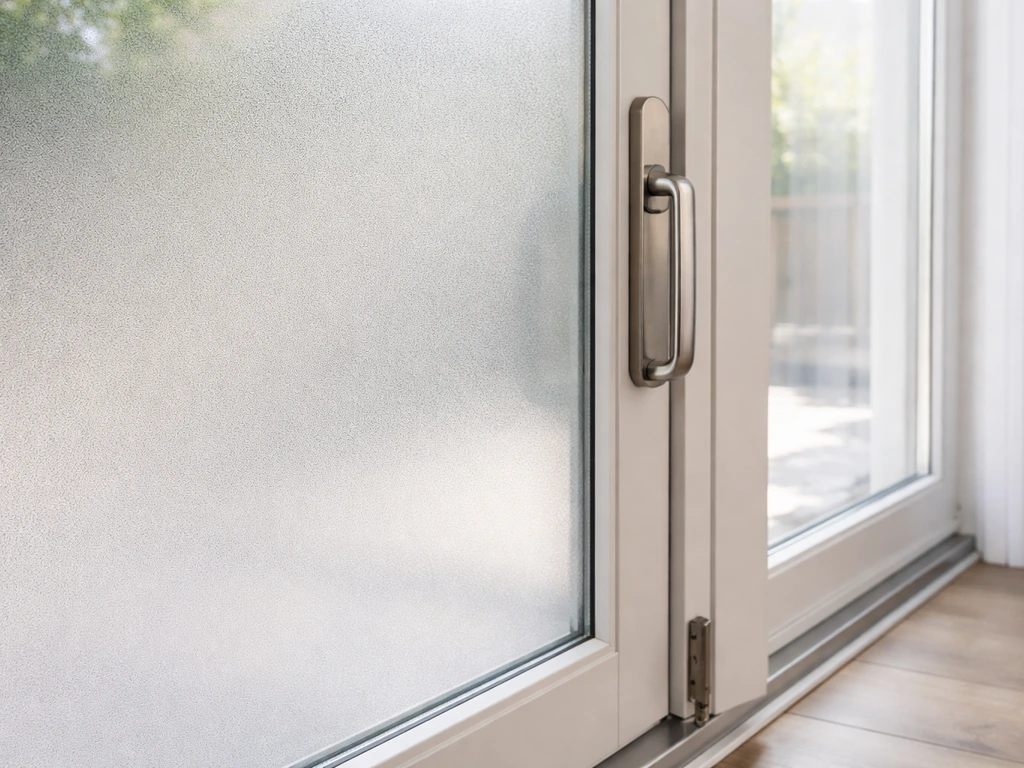
Decorative security film (sometimes called safety and security film) is a thicker version of standard window film, typically 4 to 8 mil versus 2 mil for basic solar film. It does not make glass unbreakable, but it holds shattered glass together after impact, which adds a meaningful security layer to a sliding patio door. It comes in clear, frosted, and tinted finishes, so you can combine the security function with a decorative or privacy look. This is worth considering on any sliding door that faces a street, alleyway, or communal space.
Hardware accents are often overlooked but make a real visual difference. Replacing standard white or aluminum handle pulls with brushed nickel, matte black, or bronze hardware takes about 20 minutes and costs $30 to $80, yet it upgrades the door's look significantly. If your sliding door has an exposed aluminum frame, consider adding frame trim molding in a contrasting color, or painting the interior frame with a quality trim paint (satin or semi-gloss) to tie the door into your room's palette. Valances are another option: a simple wood or upholstered valance box above the door hides the curtain rod, the blind headrail, and any messy cord management all at once.
For the patio side of the door, a retractable screen adds function without being permanent. Many modern retractable screens have decorative housing options in colors that match the door frame. If your door does not have a screen at all, this is a practical and affordable addition that also improves airflow options, which matters if you rely on the door for ventilation.
Installation checklist and problems to avoid
Most installation problems with sliding door treatments come from one of four sources: insufficient rod or bracket clearance over the track, treatments that are too wide and drag into the panel travel path, blind or shade cords that dangle in front of the handle, and film that was applied to a dusty or greasy glass surface. Here is a checklist to work through before and during installation.
- Clean the glass with a streak-free cleaner and let it dry fully before applying any film or adhesive product
- Drill rod bracket anchors into wall studs or use toggle anchors rated for at least twice the weight of the finished curtain panels
- Confirm the curtain rod extends far enough that fully open panels stack completely on the wall, not over the glass
- Check that blind or shade cords (if applicable) are secured with a cord cleat and do not hang in front of the door handle or across the track
- For inside-mount shades, verify the headrail clears the top of the door frame so the shade does not rub when the door moves
- After installing film, use a hard card (not a fingernail) to press all edges flat, and avoid cleaning the glass with anything abrasive for at least 30 days while the adhesive cures
- Test the door's full travel after installing any treatment: open it completely and check that nothing catches, drags, or falls into the track
A few specific problems come up repeatedly. Vertical blind tracks collect debris and the clips wear out, causing vanes to fall; if you keep vertical blinds, vacuum the track monthly and keep replacement clips on hand. Curtain panels that are too long drag across the floor track and eventually fray or collect grit, so be precise with your hem length. Panel track blinds that are mounted too low will catch on the door frame when you slide the door, so follow the manufacturer's clearance spec (usually at least 1 inch of clearance above the door frame).
Budget-friendly upgrades vs. bigger investment paths
You do not have to spend a lot to make a sliding patio door look significantly better. Here is an honest breakdown of where your money goes and what you get at each level.
| Option | Approximate Cost | DIY Friendly? | Best For |
|---|---|---|---|
| Window film (solar or frosted) | $20 to $60 for the film | Yes | Privacy, UV control, quick upgrade |
| Curtain panels + basic rod | $80 to $200 total | Yes | Softening the space, adding color |
| Handle/hardware replacement | $30 to $80 | Yes | Fast visual refresh with no tools beyond a screwdriver |
| Roller shade (single panel) | $100 to $300 depending on size and fabric | Yes | Clean modern look, light control |
| Panel track blind system | $200 to $600 installed | Moderate | Contemporary look, full light control |
| Motorized roller or cellular shade | $400 to $900+ | Hire out recommended | Convenience, smart home integration |
| Security/safety film (4-8 mil) | $60 to $150 DIY, $300+ professional | Moderate | Security plus privacy or solar control |
| Full door replacement with built-in blinds | $1,500 to $4,000+ installed | Hire out | Long-term upgrade, no-maintenance blinds |
The sweet spot for most homeowners is a combination of curtain panels on a wide ceiling-height rod plus a roller shade or cellular shade on the glass. The best window treatment for patio doors often blends a track-safe curtain or drape with light control options like shades or window film. You spend $250 to $500 total, you can install everything in an afternoon, and you get both the decorative look from the curtains and practical light control from the shade. If you are also thinking about replacing the door itself at some point, it is worth knowing that some newer sliding door models come with integrated between-glass blinds that eliminate the treatment question entirely, though those add $500 to $1,500 to the door cost upfront.
If you are working with a tight budget, start with window film and a hardware swap. For under $100 you will have a more private, better-looking door the same day. Then add curtain panels when you are ready to go further. The layered approach lets you build up the look over time without committing to one expensive installation all at once.
If you are exploring other treatment angles, the options for covering a sliding patio door without traditional curtains, or going entirely curtain-free, are worth looking into separately depending on your style direction. If you want ideas for what to use to cover your patio doors, window film, shades, and retractable screens can be great curtain-free options covering a sliding patio door without traditional curtains.
Covering a sliding patio door without traditional curtains can be done with options like shades, blinds, and window film.
FAQ
Can I decorate sliding patio doors with floor-length curtains if the door gets opened every day?
Yes, but you need a track-safe setup. Make sure the fabric stack points (where panels gather when open) sit fully off the moving panel path, and choose ceiling-height mounting so the bottom edge never “falls” toward the track. If you want a curtain-free look, consider a ceiling-mounted panel glide or inside-mount shades on the fixed frame areas (not over the sliding panel route).
Why do my patio door curtains still catch or interfere even though I mounted the rod above the frame?
If the curtain drags across the track area or hits the handle, it usually comes from incorrect hem length, insufficient rod extension, or a rod that is too low. Re-measure the curtain drop from the rod to the floor and aim for a small clearance at the hem (about half an inch), then confirm the rod extends at least 12 inches past both sides so panels stack completely clear.
How do I know whether I can do an inside mount for shades on sliding patio doors?
Don’t assume your frame depth is the same as your door size. For inside-mount cellular or roller shades, measure the depth from the inside face of the trim to the window glass and check that you have at least 2 to 3 inches of clear headrail depth. If not, plan an outside mount or choose a ceiling-mounted option.
What if I do not have enough wall space on the side where the door opens?
Measure wall space on the open side using panel travel, not just the overall door width. The rod needs enough overhang so when the door slides, the stack of panels or fabric does not land in the door’s lateral path. If the open side wall is short, you may need to switch to a glass-close solution (roller shade on the panel, or a ceiling-mounted system with a low-profile stack).
What should I do if window film has bubbles weeks after installation?
For window film, bubbles that appear right after application are normal, as long as they gradually relax. If you still see distortion or bubbles after about a month, it often means trapped air from rushing the edge work, insufficient squeegeeing, or film applied to residual moisture. Remove and reapply if adhesion is weak at the perimeter.
How can I prevent window film from peeling at the edges on a sliding patio door?
Cleanliness is the difference between “stays on” and “peels.” Use a streak-free glass cleaner and fully dry the surface, then avoid touching the adhesive side. Dusty or greasy glass creates edge failures first, so press along the perimeter slowly and firmly with a hard card during installation.
Does decorative security window film actually make a sliding patio door harder to break into?
Security film is not the same as impact-resistant glazing. It can hold shattered glass together after breakage, reducing immediate hazards, but it will not prevent entry the way laminated specialty security glass does. If safety is a priority, pair security film with a functional locking setup and consider reinforcing the door frame.
Why do two-panel curtains look awkward on some sliding patio doors?
For wide doors, four narrower curtain panels usually stack more neatly than two wide panels, because two-panel stacks often bunch and look heavy in the middle. As a rule of thumb, aim for panel widths that let stacks land cleanly at the sides without excess fabric “puddling” behind the moving door.
What are the safest options if I want blinds or shades but I do not want cords near the door handle?
Yes, but plan for cord-free operation. Cords can swing into the handle area, especially when the door is opened quickly or frequently. Look for cordless shades, motorized options, or cord routing that stays well away from the handle and track line.
Is it okay to layer curtains over shades on a sliding patio door, and how do I avoid bulk?
You can combine treatments without creating extra bulk in the track area. A common layered strategy is a minimal light-control shade on the moving glass (or inside the frame where it stays) and curtain panels that function mainly as side framing. Keep the curtain rod and fabric stack clear of the door travel path at the widest open position.
Which option works best for a modern look: vertical blinds, panel track blinds, or roller shades?
Choose the type based on your goal. If you want maximum precision light control and clean lines, roller or cellular shades are usually the simplest. If you want a contemporary, fabric-forward look with neat stacking to one side, a ceiling-mounted panel track blind (panel glide) often looks better than traditional vertical blinds, which can feel dated and wear in tracks over time.
Will a retractable screen work with ceiling-mounted curtains or outside-mounted shades?
A retractable screen is easiest when it retracts above or beside the door path without protruding into the moving panel travel. Ensure the screen housing height and retracted clearance match the door’s opening and that the screen system does not conflict with your chosen rod or outside-mounted shade hardware.