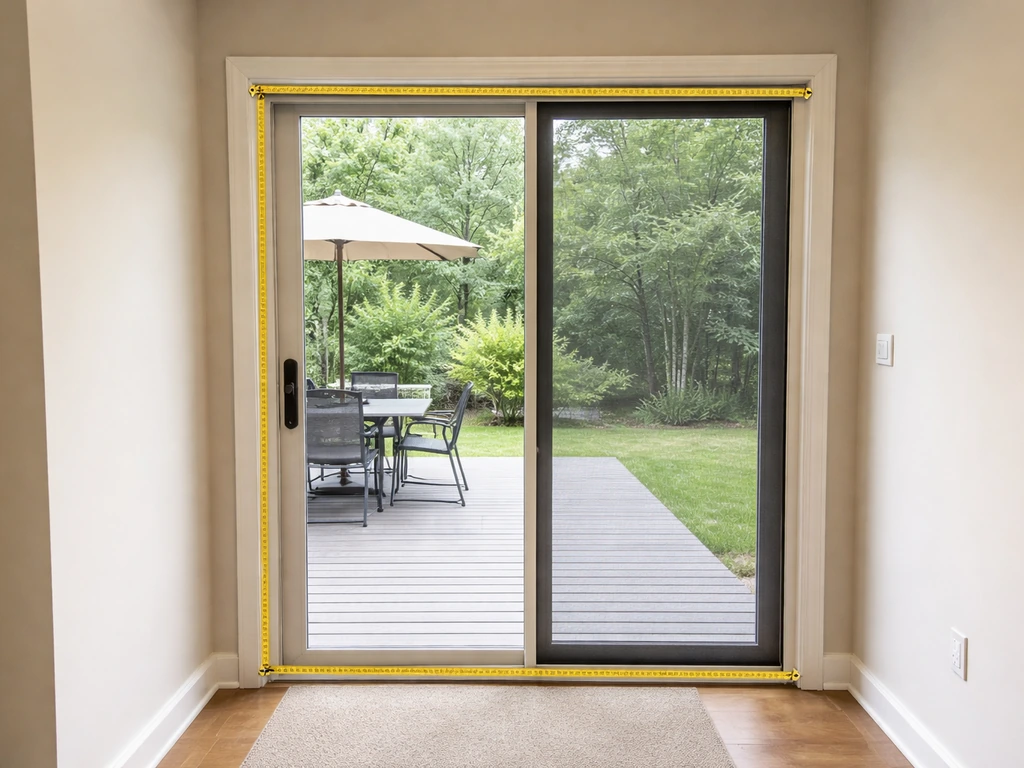
The most common standard patio door size in the U.S. and Canada is 6 feet wide by 6 feet 8 inches tall (72 inches x 80 inches), but that single number only tells part of the story. Standard patio doors realistically range from 60 inches to 96 inches wide and 80 inches to 96 inches tall depending on style, panel configuration, and what the original builder framed into your wall. If you're shopping for a replacement or planning a new install, the number you actually need is your rough opening measurement, which will be slightly larger than the door unit itself.
What Is a Standard Patio Door Size? Guide for Buying

Owen Delaney
28 Apr 2026
What 'standard' patio door size actually means
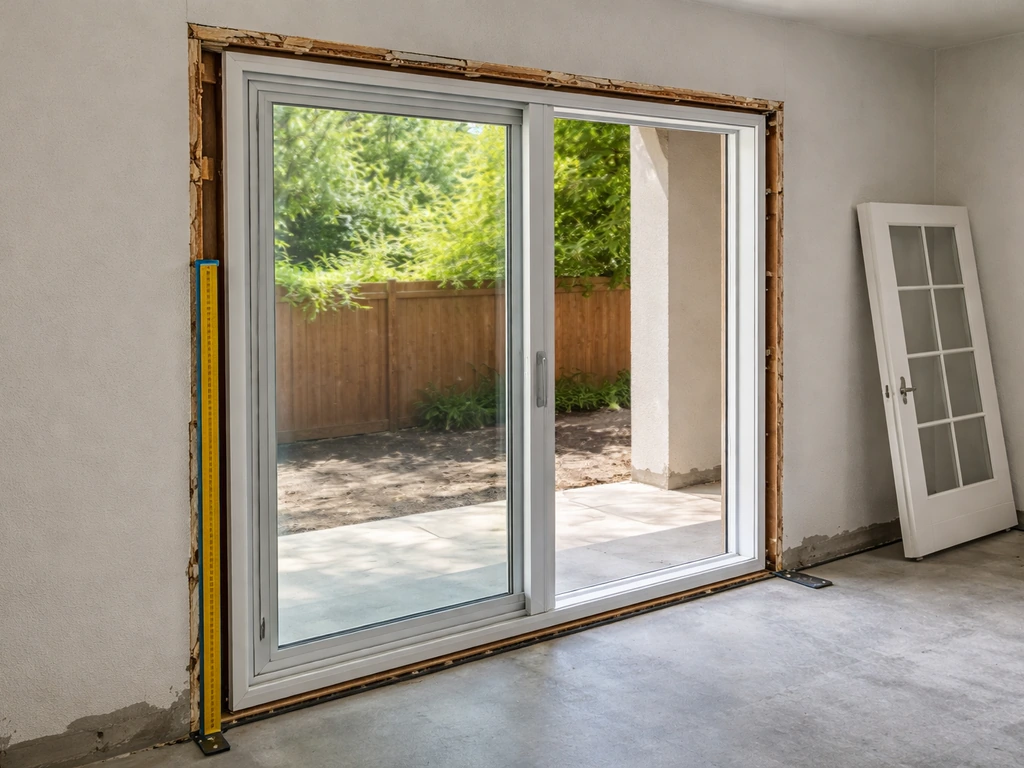
When manufacturers or contractors say 'standard size,' they mean dimensions that correspond to commonly framed rough openings in U.S. and Canadian homes. These aren't arbitrary numbers. They're tied to how lumber is sized, how studs are typically spaced, and which door configurations the major brands keep in stock. Milgard, Andersen, Pella, and JELD-WEN all publish size charts that show their standard product lines, and while each brand has its own slightly different options, the most popular nominal sizes overlap consistently across all of them.
Here's the thing that trips people up: 'standard size' does not mean there's one universal dimension everyone agrees on. If you are wondering whether all patio doors are the same size, the quick answer is no, because standard options vary by style and by the framed rough opening are all patio doors the same size. It means there's a short list of widely available sizes that fit the openings most builders create. If your home was built between roughly 1970 and today, there's a very good chance your opening matches one of these standard dimensions. If it doesn't, you're looking at a custom order or some framing modification, and that changes your cost and timeline significantly.
Most common standard patio door dimensions
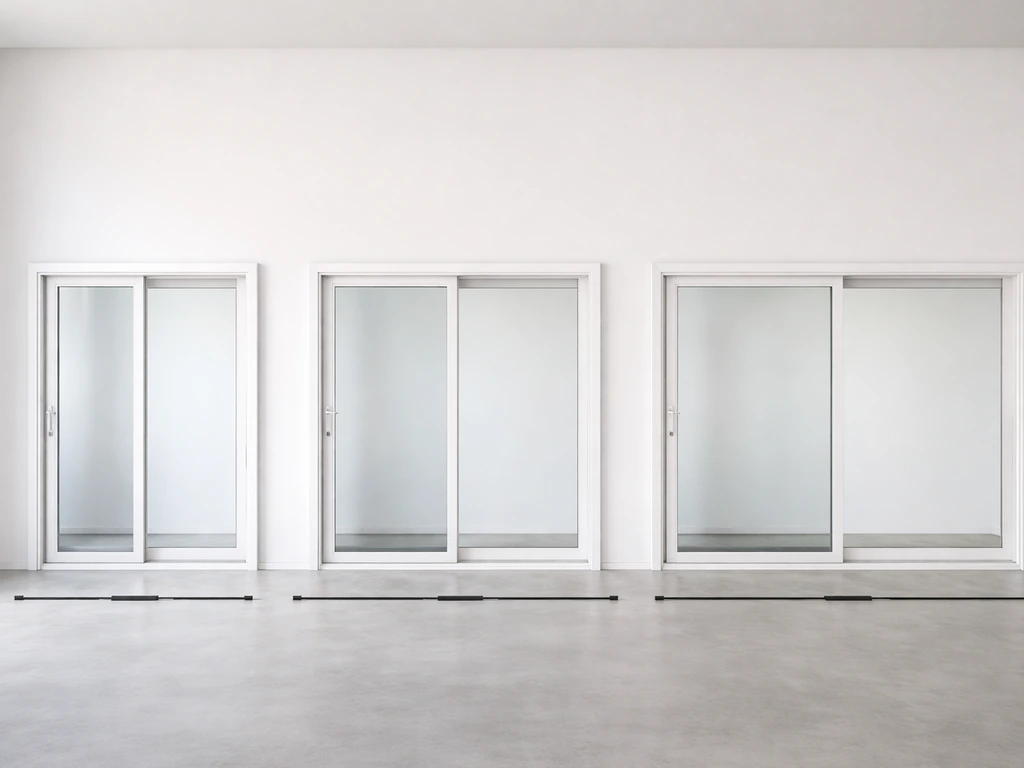
Standard patio door widths cluster around 60, 72, and 96 inches. If you want a quick starting point, review common patio door sizes like 60, 72, and 96 inches wide and about 80 inches tall. Standard heights are almost always 80 inches (6'8"), though 83 inches (6'11") and 96 inches (8') are also offered by most major brands for homes with taller ceilings. Infinity by Marvin puts the full range at 60 to 192 inches wide and 80 to 96 inches tall when you include all configurations and custom options, but for a typical two-panel sliding door, 60 to 72 inches wide at 80 inches tall is the sweet spot you'll encounter in most existing homes.
| Nominal Width | Nominal Height | Typical Use |
|---|---|---|
| 60 in (5'0") | 80 in (6'8") | Smaller openings, replacement in older homes |
| 72 in (6'0") | 80 in (6'8") | Most common standard size, two-panel sliding |
| 96 in (8'0") | 80 in (6'8") | Wider openings, three- or four-panel configurations |
| 72 in (6'0") | 96 in (8'0") | Standard width with taller eight-foot ceiling height |
| 96 in (8'0") | 96 in (8'0") | Larger modern homes, open-concept layouts |
Keep in mind these are nominal sizes, meaning the label manufacturers use to describe the unit. The actual door frame and rough opening are different numbers. A 60 x 80 unit from Milgard's Trinsic series, for example, has a net size of 59.5 x 79.5 inches, and the rough opening needs to match accordingly. More on that below.
Sliding vs. French vs. bifold: how size differs by style
The style of door you choose affects which standard dimensions are realistic for your opening. Each type has its own typical configurations, and the panel count changes the total unit width even if the height stays the same.
Sliding patio doors
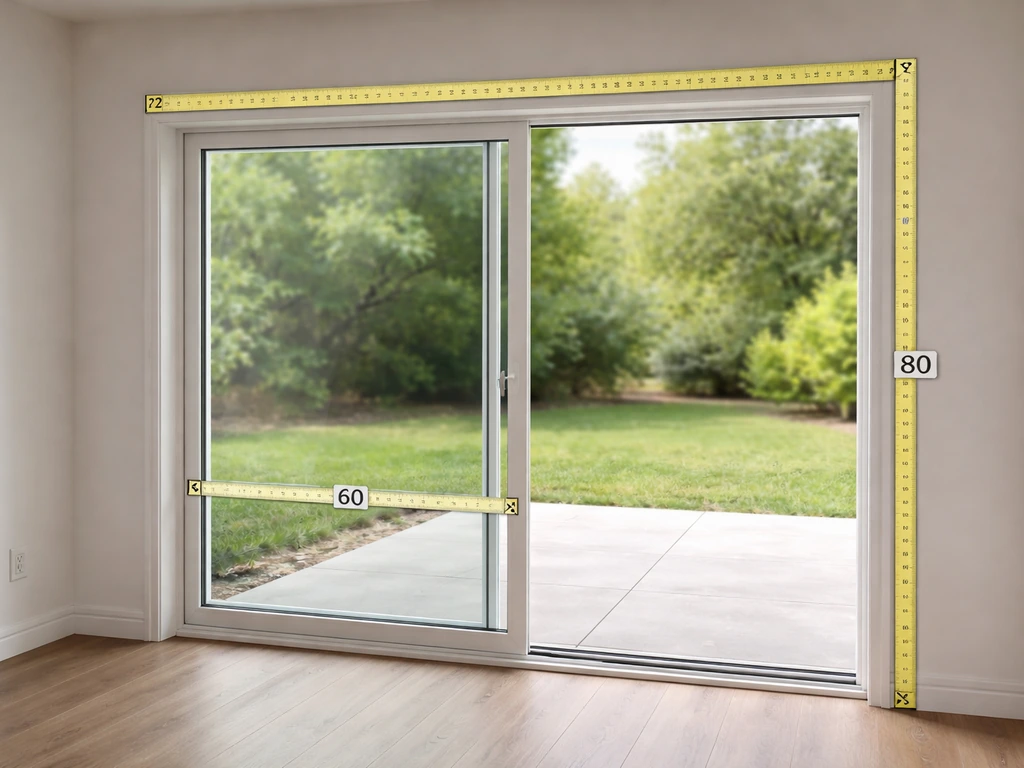
Two-panel sliding doors are the most common, and they typically come in 60 or 72 inches wide at 80 inches tall. What is the smallest sliding patio door you can buy depends on the brand, but two-panel sliding doors are commonly available starting around 60 inches wide. Wider three- and four-panel configurations reach 96 inches or more. Milgard specifically lists 60, 72, and 96 inches as their standard sliding door widths, and Infinity by Marvin notes that two-panel sliding doors generally fall between 60 and 72 inches wide with heights between 80 and 96 inches. If you're replacing an existing sliding door, one of these widths almost certainly matches your current opening.
French patio doors
French doors are hinged rather than sliding, and they typically come as a pair of equal-width panels. Standard French door pairs usually span 60 to 72 inches wide at 80 inches tall, though wider units are available. To answer what is the standard size of French patio doors, most pairs are commonly made for widths in the 60 to 72 inch range and an 80 inch height French door pairs. The distinction matters when measuring: French doors have a different frame depth and threshold design than sliding doors, so even if the nominal width matches, the rough opening requirements can differ slightly. The standard size of French patio doors specifically is worth comparing when you're choosing between styles.
Bifold patio doors
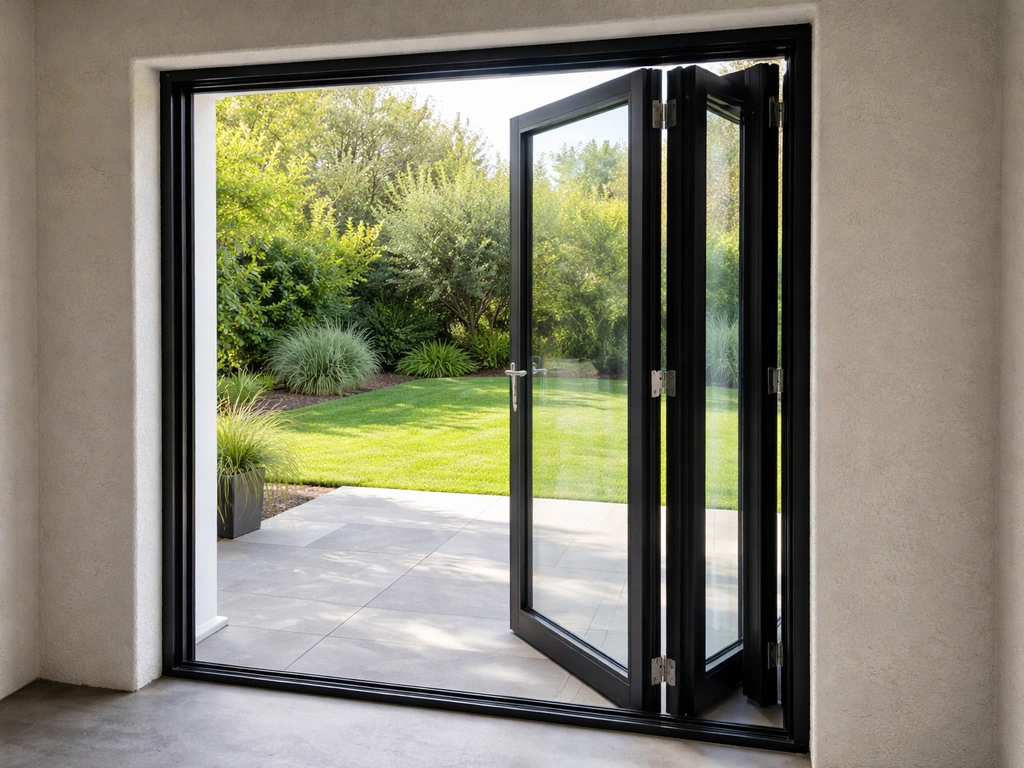
Bifold (or folding) patio doors are the least standardized of the three. Because they're designed to open wide and fold flat against the wall, they're often installed in larger openings starting around 96 inches wide and commonly extending to 144 inches or more. Standard off-the-shelf bifold options are harder to find, and many bifold installations involve some degree of custom sizing or framing modification. If you're considering bifolds, budget for that flexibility before you fall in love with a specific unit.
Rough opening vs. door size: what you're actually measuring
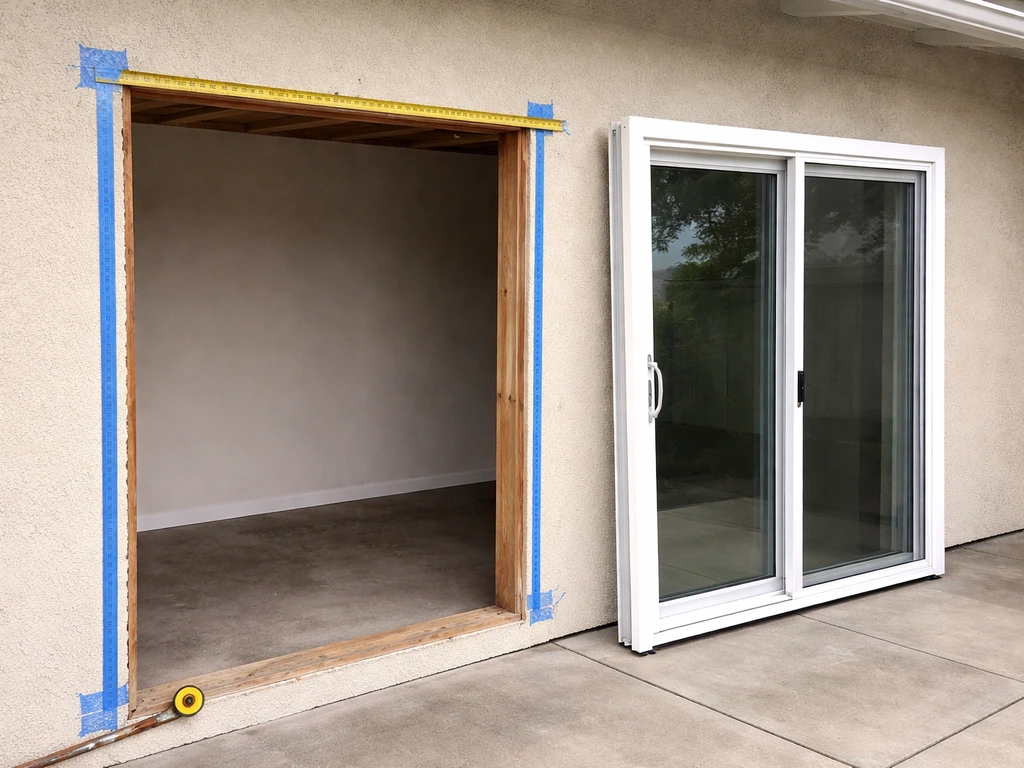
This is where most homeowners get confused, and it's genuinely important to get right before you order anything. The 'door size' or 'unit size' printed on a product sheet is not the same as the rough opening in your wall. The rough opening is always slightly larger than the door unit to allow for shimming, leveling, and the door frame itself.
JELD-WEN makes this explicit in their product documentation: rough opening equals frame width plus half an inch, and frame height plus half an inch. So a door unit with a 72-inch frame width needs a rough opening of approximately 72.5 inches. Milgard's size charts show three separate columns for the same door: rough opening, net size, and clear opening. A unit listed as 72 x 80 might have a net size of 71.5 x 79.5 inches and a different rough opening requirement entirely. Always check the manufacturer's size chart for the specific product you're buying.
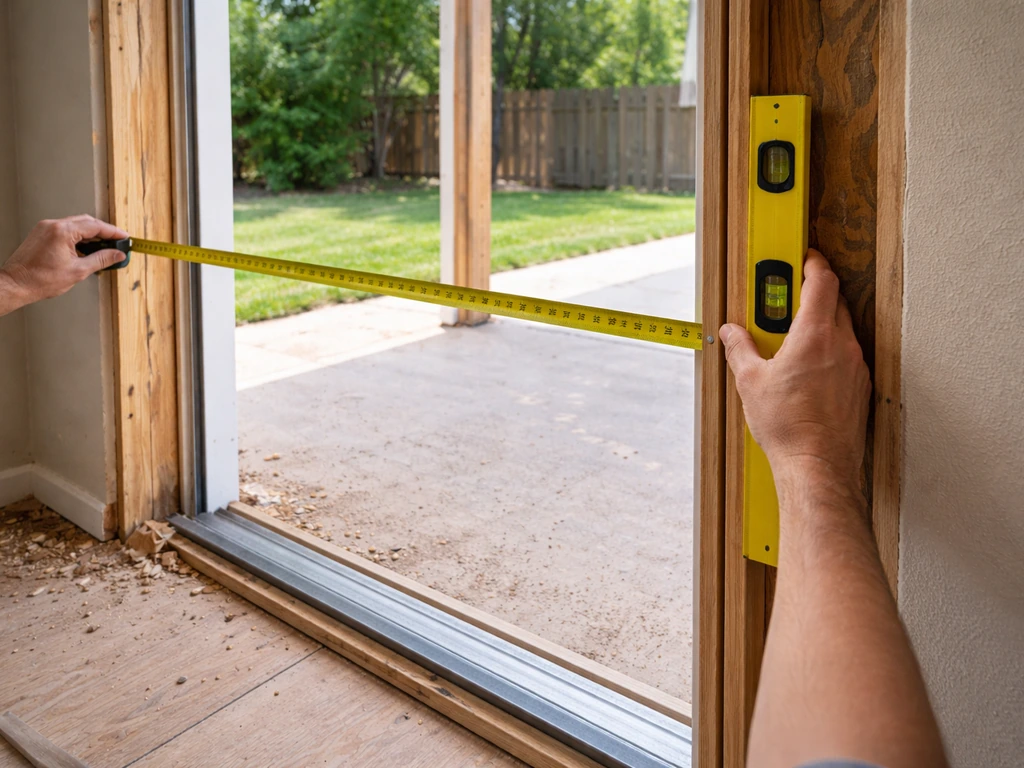
Pella's measurement guidance tells you to measure from the outside of the door frame, extending a tape measure horizontally and vertically across the existing frame. JELD-WEN's Canadian installation guidance adds that you should take three horizontal measurements across the width and record the smallest one, because walls aren't always perfectly plumb. You also need to account for finished floor height before measuring vertical clearance, since the threshold has to sit properly regardless of what flooring you have.
How to measure your opening before you shop
Here's a simple process you can do in about 10 minutes before you start browsing door sizes online or calling a supplier.
- Measure the rough opening width in three places: top, middle, and bottom of the opening. Write down the smallest of the three measurements. This accounts for any bowing or settling in the framing.
- Measure the rough opening height on both the left and right sides of the opening. Again, record the smaller number.
- Note the depth of the existing door frame (from inside face to outside face of the wall). This matters for matching jamb depth on your new door.
- Check your finished floor height. If you're changing flooring thickness, that affects how the threshold will sit and your usable height.
- Compare your rough opening numbers to the manufacturer's size chart for the door you're considering. Your rough opening should match the required rough opening listed, not the nominal door size.
- If your rough opening is between two standard sizes, choose the smaller standard door size and plan to shim the difference, rather than ordering a door that's too wide to fit.
One thing I always tell people: measure twice, in multiple spots, before you commit to anything. A quarter-inch error on a rough opening measurement can mean a door that binds, won't seal properly, or simply won't fit through the opening during installation. It's worth spending 15 minutes being thorough now rather than dealing with a return or a reframe later.
Choosing the right size for your specific opening
Once you have your rough opening measurements, the decision process is pretty straightforward. Match your rough opening to the standard manufacturer sizes below it. For sliding doors, Andersen lists standard heights as 80, 83, and 96 inches, and standard widths for their gliding patio door panels at various configurations including two-panel and four-panel units. Most brands follow a similar pattern.
If your rough opening is 72 x 80 inches, you're in the best position: that's the most common configuration and you'll have the most product choices across price points and materials. If your rough opening is 60 x 80, you're still well within standard territory. At 96 inches wide, you have plenty of options but the price jumps noticeably. The configuration also matters: a 96-inch opening might take a two-panel door with wide panels, a three-panel sliding unit, or a four-panel French configuration, and each of those has different frame requirements.
Also consider what you want the door to do. If you want maximum clear opening (how wide the opening actually is when the door is slid or swung open), a two-panel sliding door gives you roughly half the nominal width as walkthrough space. A French door pair gives you the full width minus the door frames. A bifold gives you nearly the full opening when fully open. That functional difference can help you decide whether a 72-inch or 96-inch unit makes more sense for how you'll actually use the space.
When your opening isn't a standard size
Not every home was built with standard framing. Older houses especially can have openings that don't match any standard product size. If you're in that situation, you have a few realistic paths forward.
- Order a custom door: Most major brands offer custom sizing, though lead times stretch from a few weeks to a couple of months and prices are meaningfully higher than standard stock units. This is the cleanest solution if your opening is significantly off from any standard size.
- Modify the rough opening: A contractor can adjust the framing to match a standard size. If your opening is slightly too wide, adding a jack stud on each side closes it down. If it's too narrow, removing framing and adding a larger header opens it up, though that's a bigger job that may require a structural assessment.
- Use shims and filler: If your rough opening is just slightly larger than the door unit (within about an inch or so), shims and trim can take up the difference. This is common practice and built into standard installation procedures. You can't shim more than about an inch without creating problems with air sealing and structural stability.
- Choose a different style: Sometimes a different door configuration fits the existing opening better. A non-standard 84-inch opening that doesn't match any sliding door might work perfectly with a specific French door pair configuration. It's worth checking multiple styles before committing to a framing modification.
The tradeoff with custom sizing is always time and money versus the cleanliness of the result. Standard doors are cheaper, faster, and easier to find replacement parts for years down the road. Custom doors fit better in unusual openings but cost more upfront and can be harder to service. If your opening is within about two inches of a standard size, modifying the framing to match is usually the better long-term move. If your opening is wildly non-standard, custom is the cleaner path.
Screen door sizing is its own related question worth checking separately, since patio screen doors have their own sizing conventions and don't always match the door unit dimensions directly. If you're figuring out the standard size of a patio screen door for a replacement, check the screen door sizing conventions since they can differ from the sliding or French unit what is the standard size of a patio screen door. Because patio screen doors have their own conventions, it's useful to confirm whether are patio screen doors standard size before choosing a replacement. Because patio screen doors have their own conventions, it's useful to confirm whether are patio doors standard size before choosing a replacement. Similarly, if you're replacing just one style (say, swapping a sliding door for a French door in the same opening), verify that the rough opening requirements match before you order, because the frame designs differ even at the same nominal width.
Your next step today: grab a tape measure, take those three horizontal measurements and two vertical measurements of your current rough opening, write them down, then pull up the size chart for any door you're considering and compare directly. That one step will save you more headaches than anything else in this process.
FAQ
Is the “standard patio door size” the same as the frame size on the label?
No. The label usually shows a nominal unit size, while the rough opening in your wall is slightly larger to allow for the frame, shimming, and leveling. Before ordering, match the rough opening requirements from that exact manufacturer’s chart, not the nominal width and height printed on the brochure.
How much bigger is the rough opening than the door unit in most cases?
It’s typically about half an inch larger in both directions for many common installations, but it varies by brand and product line. For example, some documentation states rough opening equals frame dimension plus 0.5 inch for width and height. Always confirm the add-on amount for the specific model you’re buying.
What if my rough opening measurement is between standard sizes, like 71.2 inches wide?
Treat it as a sizing decision point. In many cases, you can choose the standard size that requires the smallest amount of adjustment, but you should avoid guessing. Compare your measurement to the manufacturer’s required rough opening for each option, then decide whether minor shimming is enough or if you need framing modification.
Can I replace a sliding patio door with a French door without changing the framing?
Sometimes, but not automatically. Even when nominal widths match, French doors and sliding doors can have different frame depth, threshold design, and rough opening requirements. You need to verify the rough opening and threshold height for the French pair, then check whether your current header and sill details support the change.
What measurement should I use if my opening is not square or the wall is out of plumb?
Use multiple measurements and go with the smallest critical dimension. For width, take several horizontal measurements across the opening and record the smallest one, because out-of-plumb walls can make the “top” and “bottom” widths differ. For height, measure with finished floor in mind because the threshold must sit correctly relative to your flooring.
Do I measure from inside drywall, from studs, or from the outside of the frame?
Follow the manufacturer’s measurement instructions for the type of installation you have. Many guides instruct measuring from the outside face of the existing door frame across the opening, not from the center of studs. If you are removing the old unit or changing trim, clarify whether you are measuring for “existing frame” replacement or a “new construction” frame requirement.
How does panel count affect what width door I can actually fit?
Panel count changes the total unit width and the way the panels stack (for sliding) or swing (for French). A 96-inch opening may accept a two-panel setup only if the configuration fits the required frame and stacking geometry, while other configurations (three- or four-panel sliding) may be more realistic. Use the manufacturer’s configuration chart for that opening width.
What is the difference between clear opening and nominal width, and why does it matter?
Clear opening is the usable space when the door is open, it can be significantly different from the nominal unit width. For sliding doors, the sliding panels and track reduce the effective walkthrough width compared with the rough opening. If you care about moving furniture, aim your selection around clear opening rather than the nominal “6-foot” label.
Are standard patio door sizes the same across the U.S. and Canada?
They largely overlap, but installation guidance and rough opening conventions can differ, especially for measuring and leveling steps. Since product lines and installation tolerances vary by brand, rely on the manufacturer’s chart for the region and installation method you are using, not only on generic “standard size” assumptions.
What if I need the patio screen to match my patio door size?
A screen door can follow different sizing conventions than the patio door unit itself. If you are replacing only the screen, verify the screen’s own model sizing and compatibility list. Don’t assume a “72 x 80” patio door automatically means the screen uses the same dimensions.
Is a 60-inch wide patio door always the smallest available?
It depends on style and brand. Two-panel sliding doors are commonly available starting around 60 inches wide, but smallest options for French or bifold setups can vary, and availability can differ by region. If minimum width is critical, confirm the smallest standard size for the exact style you want.