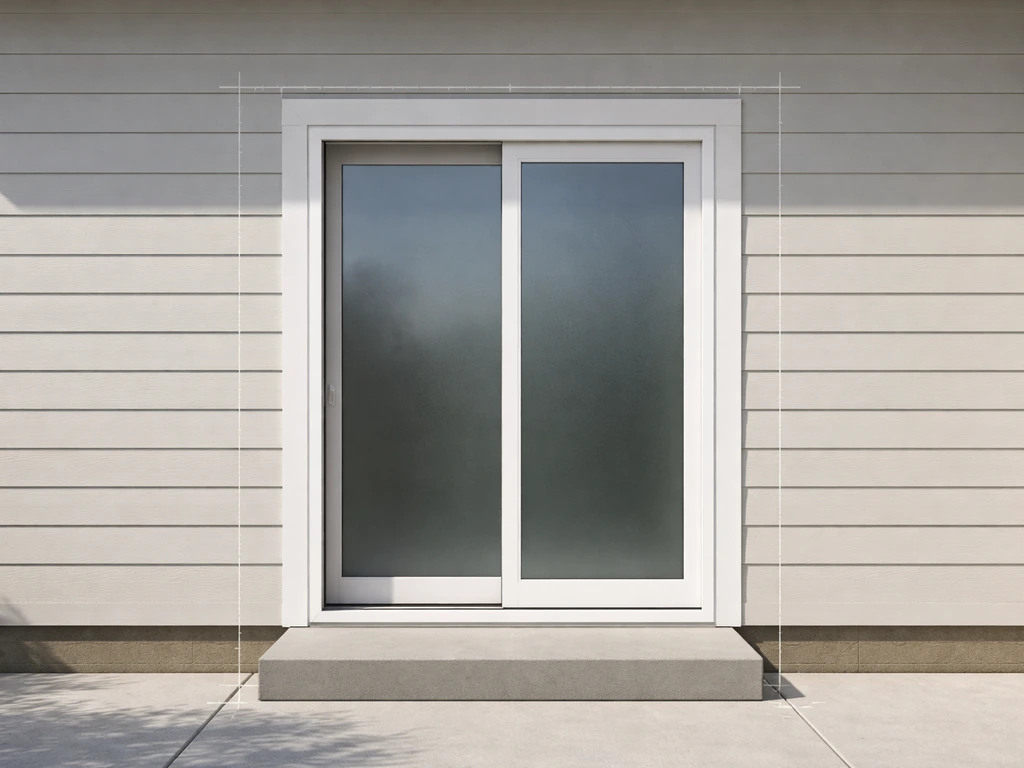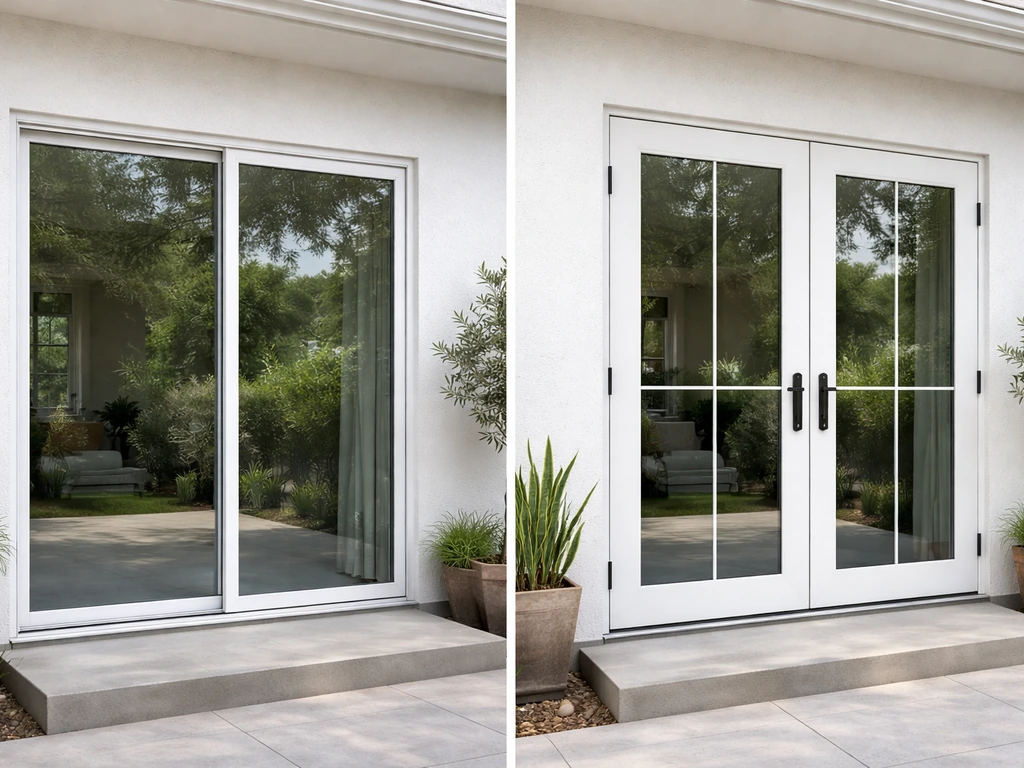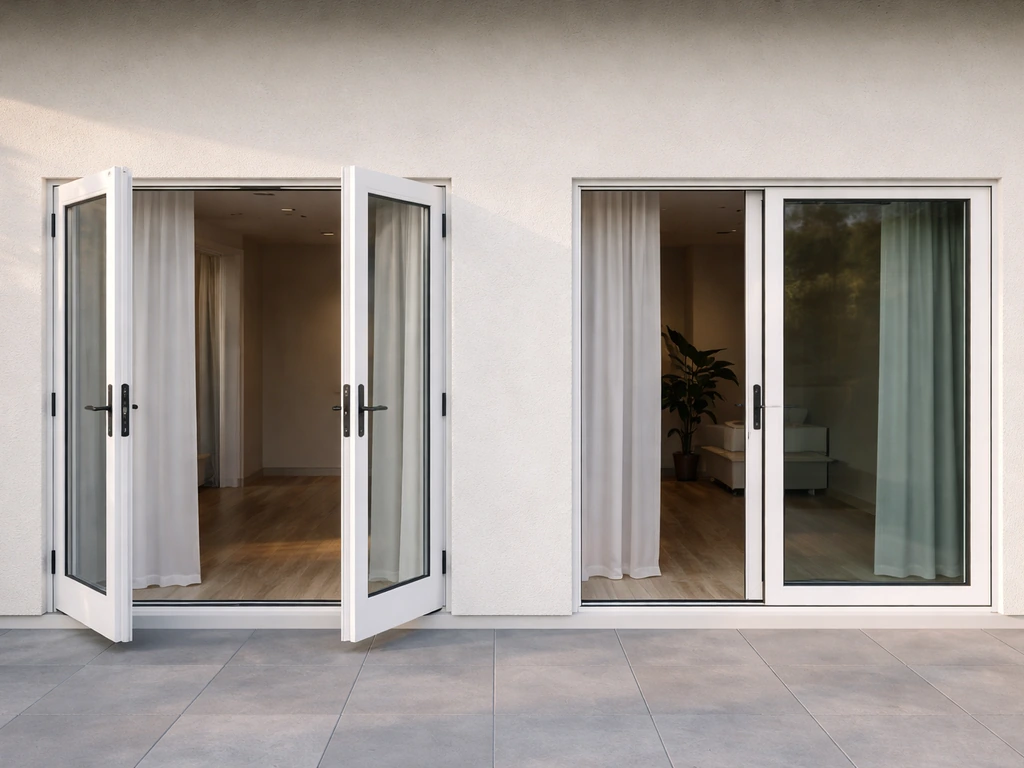
The most common patio door sizes in North American homes are 6 feet wide by 6 feet 8 inches tall (72" x 80") for sliding doors, and 5 feet wide by 6 feet 8 inches tall (60" x 80") as the next most popular. Milgard calls the 72-inch width the standard for sliding patio doors, and those two sizes cover the vast majority of replacement projects you'll encounter. If you want the quick answer for planning purposes, many manufacturers define the standard sliding patio door as 72 inches wide by 80 inches tall using the rough opening what is a <a data-article-id="4CEDF7E3-7427-469A-AE89-6B3D1EEDDD7E"><a data-article-id="7269FDD7-105F-4237-99DD-657E604B0A11"><a data-article-id="7A182A09-66E4-47A8-BB0F-7E12F8EBA9D1">standard patio door size</a></a></a>. The standard sliding patio door size is commonly discussed in terms of rough opening dimensions like 72 inches wide by 80 inches tall. Heights of 80", 96", and occasionally 84" are the standard vertical options, with 8-foot and 10-foot heights becoming more common in newer construction. If you're trying to choose the smallest sliding patio door for your space, you can start with the minimum rough-opening and unit-size ranges that different manufacturers offer what is the smallest sliding patio door.
Common Patio Door Sizes: Sliding Dimensions and How to Measure
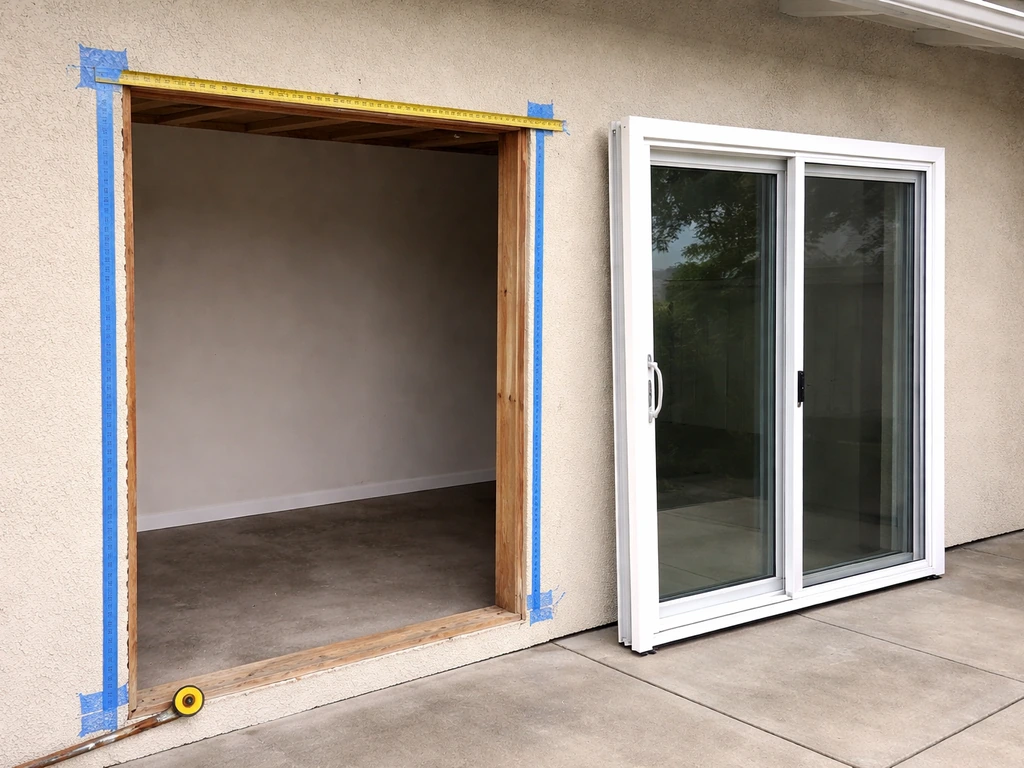
What 'common sizes' actually means for patio doors
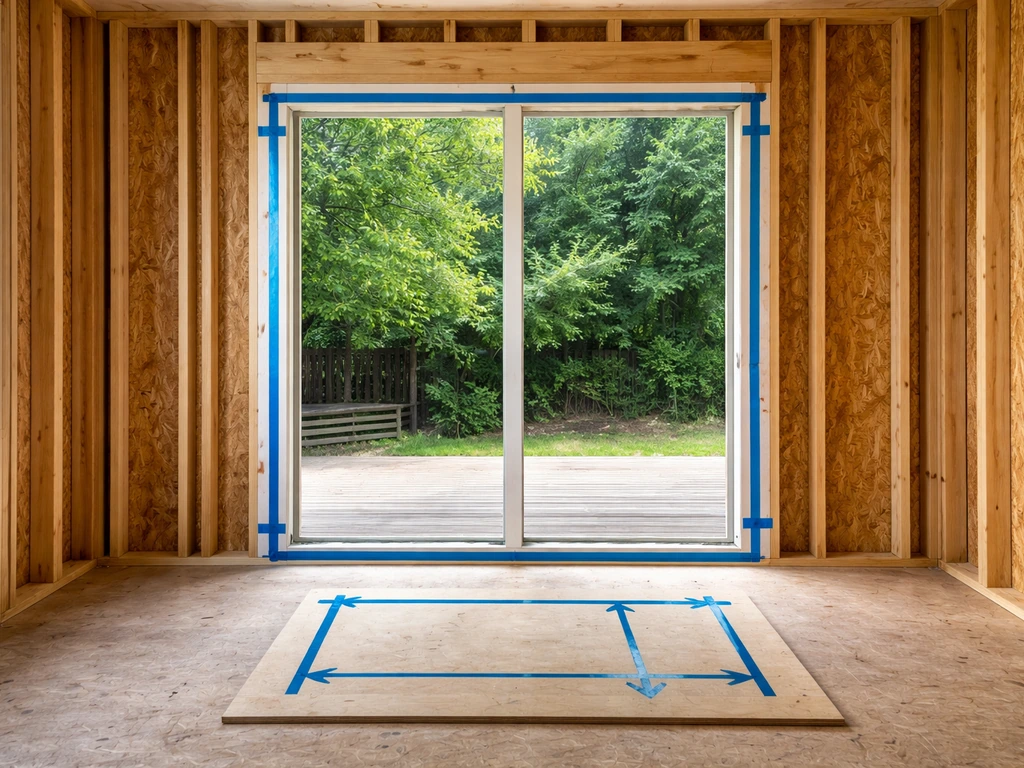
When contractors and manufacturers talk about common patio door sizes, they're referring to the rough opening (RO) dimensions framed into your wall, not the door unit itself. If you’re wondering whether all patio doors are the same size, it helps to start with the most common sizing conventions and then check your rough opening common patio door sizes. If you’re trying to figure out whether your patio door matches the typical dimensions, you can compare your measurements to the standard sliding patio door size. If you’re comparing those common slider dimensions to French patio doors, the standard size is typically discussed in similar width-by-height terms for rough openings standard sliding patio door size. A "72 x 80" door means the rough opening in your framing is 72 inches wide and 80 inches tall. The actual door unit you order will be slightly smaller, typically around 71-1/2" x 79-1/2" to 79-3/4", to fit inside that framing with room for shimming and leveling. This difference trips up a lot of homeowners who measure the door unit they already have and then try to order that exact size.
The "common size" range spans quite a bit wider than most people expect. Infinity by Marvin notes that patio doors broadly run from 60 to 192 inches wide and 80 to 96 inches tall. That wide range exists because sliding doors come in 2-panel, 3-panel, and 4-panel configurations, each adding width. For a standard 2-panel sliding door specifically, you're almost always looking at widths between 60 and 72 inches. Once you go to a 3- or 4-panel setup, total unit widths of 96", 120", and beyond become standard catalog items.
Typical dimensions for sliding patio doors
Here's what you'll find in most major manufacturer catalogs for sliding (gliding) patio doors. Andersen lists standard heights of 6'8", 6'11", 8', and 10'. For 2-panel configurations, their standard widths run 5', 6', 7', and 8'. Multi-panel configurations jump up to sizes like 9'10", 11'10", and 15'10". Pella's Reserve Series goes even further, offering widths from 59-1/4" all the way to 237-1/4" for two-panel doors. Most replacement projects, though, land on one of these sizes:
| Rough Opening Width | Rough Opening Height | Common Configuration | Typical Frame/Unit Width |
|---|---|---|---|
| 60" (5') | 80" (6'8") | 2-panel sliding | 59-1/2" |
| 72" (6') | 80" (6'8") | 2-panel sliding | 71-1/2" |
| 96" (8') | 80" (6'8") | 2-panel or 3-panel sliding | 95-1/2" |
| 60" (5') | 96" (8') | 2-panel sliding | 59-1/2" |
| 72" (6') | 96" (8') | 2-panel sliding | 71-1/2" |
| 120" (10') | 80" or 96" | 3- or 4-panel sliding | Varies by brand |
The consistent pattern across brands like Milgard, Andersen, and Pella is that the frame/unit size runs about 1/2" narrower than the rough opening in width and 1/4" to 1/2" shorter in height. That gap is intentional and necessary for installation. Milgard's Trinsic Series, for example, lists Size 72 with a net size of 71-1/2" x 79-1/2". Their Ultra Series shows the same relationship at taller heights, so a 60" x 96" rough opening yields a net door size of 59-1/2" x 95-1/2".
How to measure your existing opening correctly
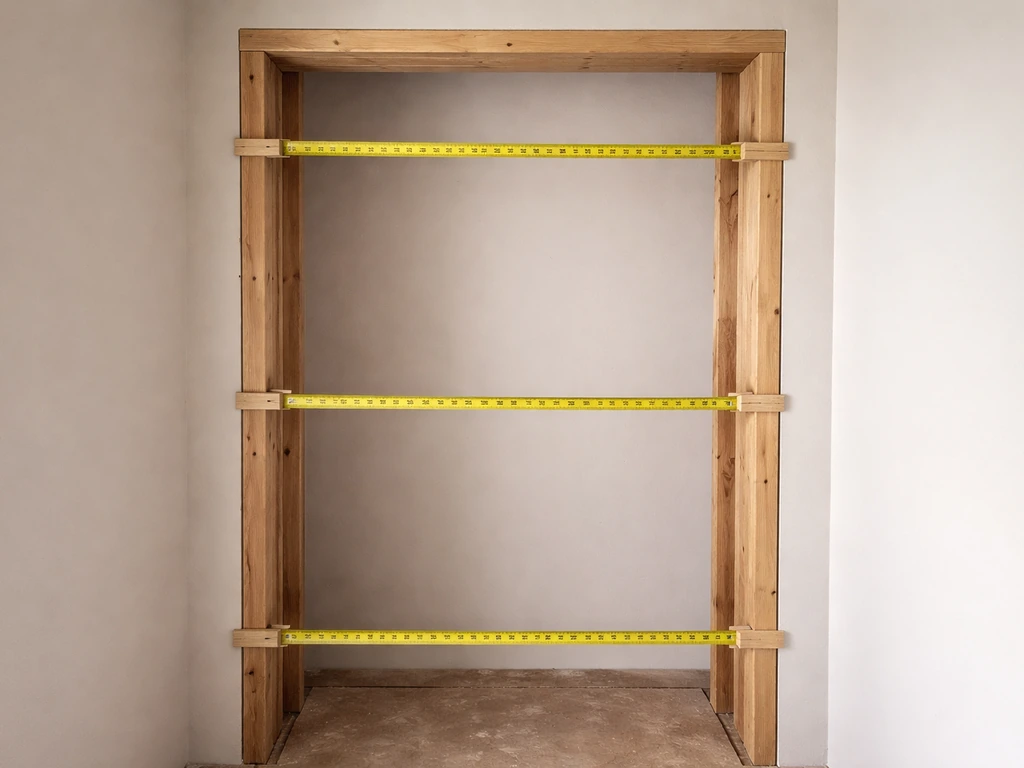
This is where most DIY sizing projects go wrong. There are three different measurements you might take, and they mean different things: the rough opening (framing to framing), the door unit size (outside of frame to outside of frame), and the clear opening (how wide the door actually swings or slides open for you to walk through). You need to know which one a manufacturer is asking for before you order anything.
Step-by-step measurement process
- Measure the width of the rough opening at three points: top, middle, and bottom. Use the smallest measurement as your working width. Framing is rarely perfectly consistent.
- Measure the height of the rough opening at three points: left side, center, and right side. Use the smallest measurement.
- If replacing an existing door, also measure the outside dimensions of the current door frame (jamb to jamb, top to bottom of frame). This tells you the unit size you currently have installed.
- Measure the threshold height from the floor. This matters because a new door's threshold assembly may sit slightly higher or lower than what you have, which can affect floor transitions and weatherseal contact.
- Note the track depth and width at the bottom if you're replacing a slider. The new door's track needs to match or your floor substrate may need modification.
- Write down the rough opening dimensions and the existing unit dimensions separately. Bring both to your dealer.
One common mistake: measuring only the glass or the visible opening between the door panels and calling that the door size. That's the clear opening, which is much smaller than the unit size or rough opening. On a standard 72" x 80" two-panel slider, the clear opening (the usable passage when one panel is slid fully open) is typically around 34" to 36" wide, not 72". If you're replacing a door because you want a wider passage, you need to think about whether you're changing the rough opening size or just swapping the unit.
Rough opening vs. door unit size: verify before you buy
The rough opening is always larger than the door unit size, and different manufacturers specify different tolerances. Loewen's installation guide calls for the rough opening to be 3/4" to 1" larger than the door unit in both width and height. Crestline specifies 1/4" to 3/8" clearance per side, adding up to 1/2" to 3/4" total. Fine Homebuilding's guidance lands around 1/2" in both dimensions as a reliable working target. The bottom line: expect the rough opening to be about 1/2" to 1" larger than the door unit on each dimension, and verify your specific manufacturer's requirement before ordering.
If you're doing a like-for-like replacement where the framing stays untouched, you're ordering to fit the existing rough opening. If you're renovating and have some flexibility, it's worth confirming whether the framing as-built actually matches a standard rough opening size. I've seen 72" rough openings that measured 71-1/4" in one corner and 72-3/4" in another after decades of settling. Always measure the actual framing, not what the building plans say it should be.
Also check your header before finalizing size. Pro Builder notes that the header must be strong enough to carry the roof load above it. If you're widening an opening to fit a larger door, that's a structural change that needs a permit and likely a new header. Swapping a same-size unit into the existing rough opening is much simpler and usually doesn't require new framing.
Sliding-specific sizing: tracks, clearances, and panel configurations
Sliding doors have a few sizing factors that French doors and bifold doors don't share, and they matter when you're replacing or upgrading.
Track type affects the rough opening height
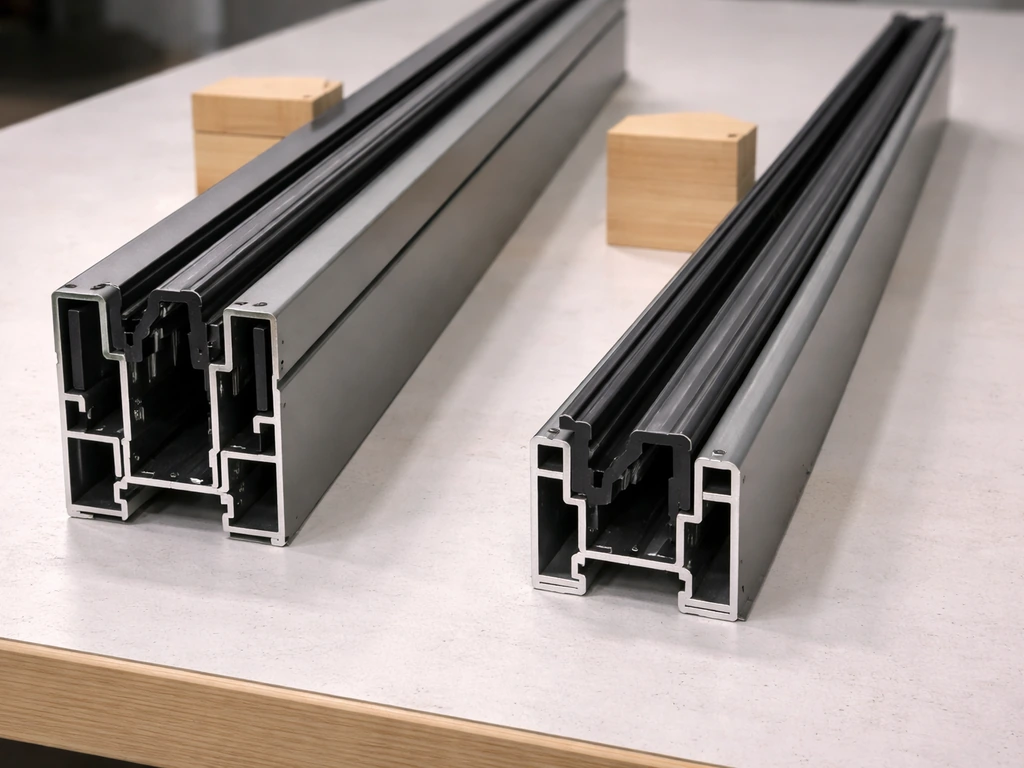
The track system at the bottom of a sliding door changes how the rough opening height is calculated. Loewen's LiftSlide technical documentation shows that rough opening height varies depending on whether you're using a 1-inch flush track, a 1-1/2-inch flush track, or a raised threshold. This is important when replacing a door: if your new door has a different track profile than the old one, the unit height you need may be different even if the rough opening in your framing hasn't changed. Always compare track types when spec'ing a replacement.
Panel count changes the whole sizing equation
A 2-panel (two-lite) sliding door is the most common residential configuration: one panel slides, one is fixed. A 3-panel door, as Pella describes it, typically has one operable panel and two stationary panels, which means a wider total unit for the same clear opening. A 4-panel door can have two operable panels that slide in opposite directions, or a 2-and-2 bypass configuration. Milgard makes 2-, 3-, and 4-panel sliding glass doors as standard catalog items. The practical sizing implication is this: if you want to widen your opening feel without changing the rough opening framing, going from a 2-panel to a 3-panel in the same rough opening width gives you more glass area but not necessarily more clearance.
Required clearances for installation
Alliance Windows specifies a minimum 1/4" clearance on each side of the rough opening and 1/2" above the head jamb for sliding door installations. Mosaic Windows and Doors recommends 1/2" clearance on all sides plus a 1/4" expansion gap for each panel at the jamb. The track substrate also needs to be perfectly flat; a warped or out-of-level sill causes the panels to bind or roll unevenly, regardless of whether the unit size is technically correct. Shimming a level sill is a non-negotiable step before installing any slider.
Matching replacement sizes and confirming compatibility
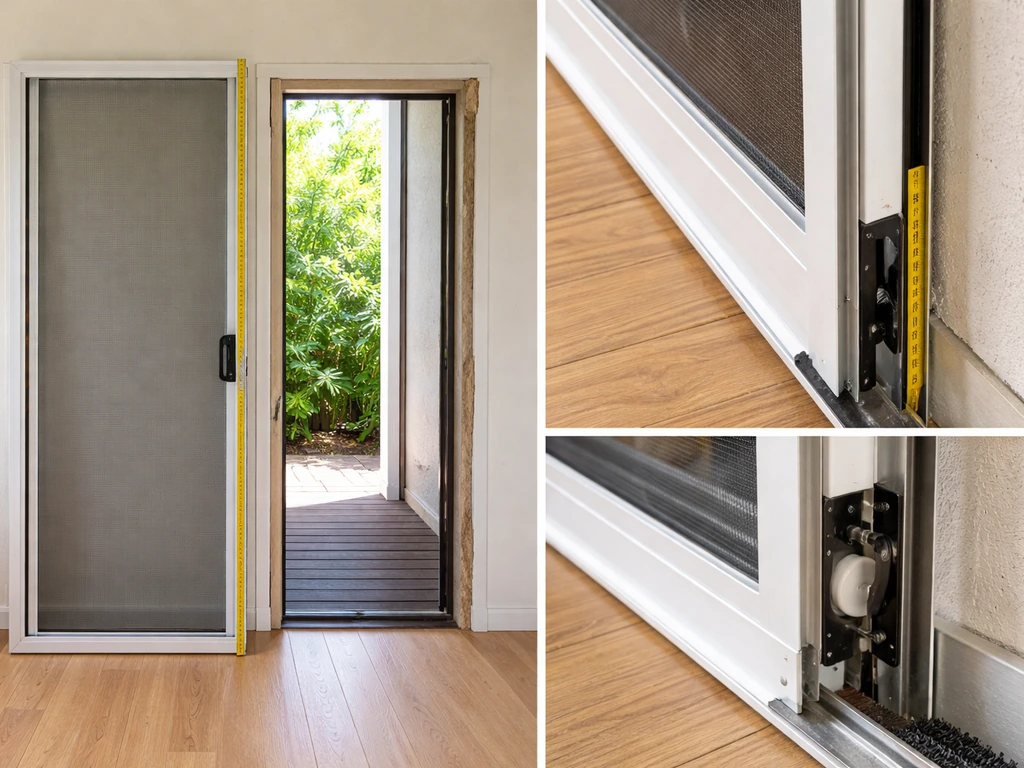
Sizing a replacement isn't just about the door unit fitting the opening. You also need to confirm that your screen, locks, and weatherstripping will work with the new unit. These details are easy to overlook until after the door is delivered.
Screens
Sliding screen doors are sized to fit the screen track on the exterior side of the door unit, not the rough opening or the main door panel dimensions. To measure for a replacement screen, measure between the surfaces the screen frame actually contacts and slides against inside its dedicated track channel. If you also need the screen and hardware, check whether patio screen doors follow the same sizing conventions or require separate measurements are patio screen doors standard size. Screen sizes are not universally interchangeable between door brands or even between different series from the same brand. If you're replacing the main door unit, plan to replace the screen as a matching component from the same manufacturer. Adjustable rollers on the screen give you a small amount of wiggle room (usually 1/4" to 1/2") when fitting the screen into the track.
Locks and hardware
Lock alignment depends on the exact panel height and the position of the strike plate on the fixed panel's frame. When you swap to a new door unit, even at the same nominal size, the lock height may shift slightly depending on the manufacturer's panel design. Bring the lock hardware from your old door to your dealer, or at minimum note the lock brand and model, the distance from the top of the panel to the lock handle centerline, and the distance from the edge of the panel to the latch. A misaligned strike plate is a frustrating problem that's entirely avoidable with a quick measurement before ordering.
Weatherstripping and threshold
Milgard defines the threshold as the entire bottom assembly including the sill, weatherstripping, and bottom components. When a new door's threshold sits at a different height than the old one, you may end up with a gap at the bottom or a raised lip that's a trip hazard. Measure your existing threshold height from the floor before ordering, and compare it against the new unit's spec sheet. Full-frame replacements (where you remove everything down to the rough opening) eliminate this concern because you're starting fresh, but pocket replacements (insert replacements that fit inside the existing frame) are sensitive to threshold height matching.
When standard sizes won't work: custom options and next steps
If your rough opening doesn't match any of the standard sizes, you have two realistic paths. The first is adjusting the rough opening to match a standard size, which is cost-effective if you only need to add 1" to 2" of framing but more involved if you need to shrink the opening. The second is ordering a custom-sized unit. Pella's Reserve Series offers sizing in 1/4" increments for two-panel doors and 1/2" increments for three- and four-panel doors, which is about as flexible as it gets in residential products. Custom sizing typically adds 3 to 6 weeks of lead time and a cost premium, but it eliminates framing work.
Pella also specifically offers full-frame replacement installation for sliding patio doors, which is worth considering if your existing frame has rot, damage, or an out-of-square condition that would compromise a pocket replacement. Full-frame replacement is more disruptive and expensive, but it lets you correct framing issues that would otherwise cause problems with the new door's operation and sealing.
What to bring to your dealer or installer
- Rough opening dimensions (width and height, measured at three points each)
- Existing door unit dimensions (outside of frame, width and height)
- Threshold height from finish floor
- Track type (flush or raised, and approximate depth)
- Number of panels in the current door and which panel is operable
- Lock brand and handle height from top of panel
- Screen dimensions if you're replacing the screen separately
- Photos of the existing installation from both inside and outside
- Note of whether the door swings/slides to the left or right when viewed from inside
Armed with that information, a dealer can confirm whether a standard catalog size works for your opening or whether you need a custom unit. The 60" x 80" and 72" x 80" sizes are stocked by most distributors and have the shortest lead times. If your opening is close to one of those sizes and the framing is in good shape, a standard replacement is almost always faster and cheaper than going custom. Get that rough opening measurement right the first time and you'll save yourself a lot of headaches.
FAQ
If my old patio door says 72 x 80, is that the same measurement I should order from the manufacturer?
Don’t assume you can pick “the same size” from the tag. Verify whether your door is labeled by rough opening, nominal unit size, or clear opening, because manufacturers and installers use different naming conventions even when the numbers look similar.
Can I install a replacement with a different track style into the same rough opening?
Yes, but confirm the type you have before ordering because track and threshold setups can change the required rough-opening height. If your existing door uses a raised threshold or a different flush-track thickness than the replacement, the unit height that fits can shift even with the same framing.
How do I know whether I’m gaining a wider walkway, not just more glass?
If you want to check quickly, measure the usable passage width when one panel is fully open (clear opening). If you need a wider walkway, changing glass or panel count may increase “feel” and light, but it does not guarantee a bigger clear opening unless you change the rough opening or the panel design.
What measurement should I take if I’m replacing because the door doesn’t seal or operate smoothly?
A 72-inch door almost always corresponds to a larger rough opening than what you might measure at the glass. Measure the frame-to-frame opening (rough opening) and compare to the spec sheet, expecting the door unit to be slightly smaller so it can be shimmed and leveled.
Will the locks and strike plate align automatically if I order a door with the same overall size?
Plan for replacement hardware to be checked by model, not just by “door height.” Lock strikes, handle heights, and sometimes weatherstrip geometry can land a few inches different, so the safest path is bringing the old lock hardware (or recording its model details) to the dealer.
When is a full-frame replacement the better choice over a pocket replacement?
A pocket replacement can be risky if the existing frame is out of square or the sill is uneven. If your current door binds, drags, or the rollers look uneven, full-frame replacement is often the better route because it lets you correct the base surface and alignment.
What if my rough opening measurements are different in each corner, like 71-1/4 vs 72-3/4 inches?
If any corner of your rough opening varies by more than about 1/4 inch, you should re-measure and consider ordering to the actual opening rather than the plan. Settling can make a “standard” opening rejectable because the unit needs to fit within the manufacturer’s clearance targets.
How do I measure for a replacement sliding screen if screen sizing doesn’t match the door size?
For sliding screen replacement, measure the screen-track contact surfaces, not the patio door’s rough opening. Also confirm whether the screen uses a separate sizing family from the main door series, since brands and even series can differ.
Does switching from a 2-panel to a 3-panel automatically widen the opening I can walk through?
Not necessarily. Going from a 2-panel to a 3-panel in the same rough opening often increases total glass area, but the clear opening can remain similar because the moving panel size and jamb structure change. Measure your goal (clear opening) instead of assuming panel count equals wider passage.
Why do some replacements leave a bottom gap or create a raised lip even when sizes match?
If the new door has a different threshold design or sitting height, you may end up with a gap or an uneven lip at the floor. Pocket replacements are especially sensitive, so compare the existing threshold height to the new unit’s threshold assembly spec before you order.
What’s the best way to measure a rough opening so I don’t order the wrong size?
For rough opening measurement, use multiple points (top, middle, bottom, and both sides). If you rely on one measurement only, you can order a unit that fits at one point but cannot be shimmed properly everywhere else.
When my opening is not a standard size, should I adjust framing or order custom?
Yes. If you cannot hit a standard rough-opening size, you can either adjust framing (usually practical when you only need a small change) or order custom. Custom typically costs more and has a longer lead time, so compare total project time and labor, not just the door price.
How much bigger should the rough opening be compared to the door unit?
Many installers use the door unit size plus required clearance as the starting point, but the manufacturer’s installation guide is what controls. Expect rough opening to be slightly larger than the unit (enough room for shims), then follow that guide for your specific series.