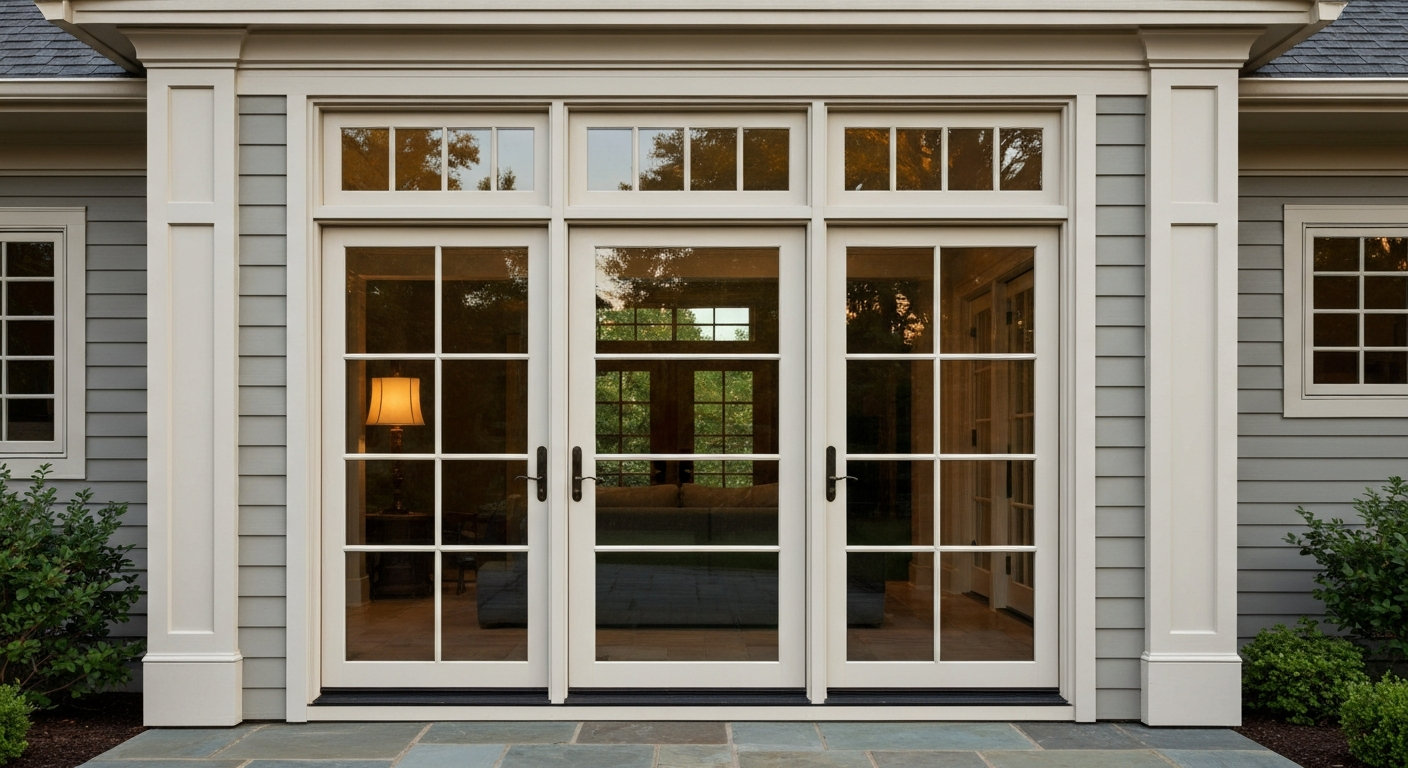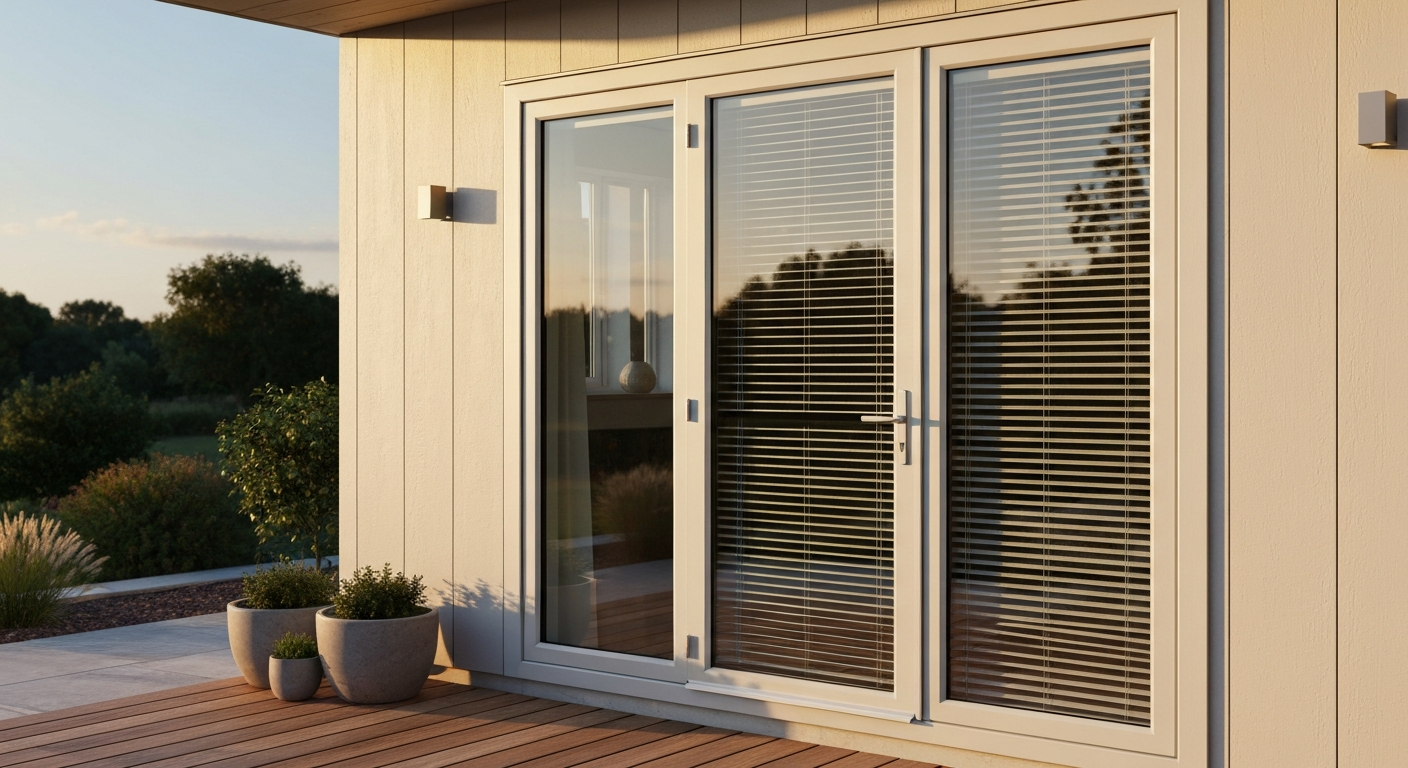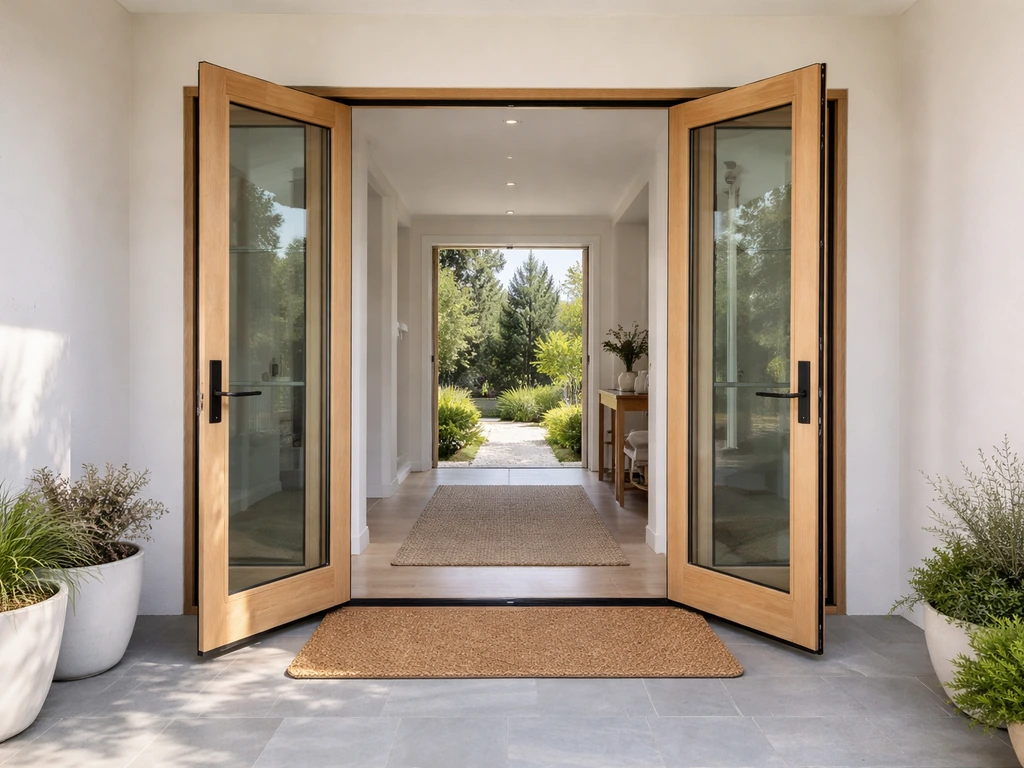
You can buy patio doors at big-box stores like Home Depot and Lowe's, through local window and door dealers, from specialty manufacturers like Pella or Andersen, or from online retailers. Each channel has real trade-offs: big-box stores are fast and returnable, local dealers offer better customization and installation expertise, and buying direct from a manufacturer gets you the deepest product selection and warranty support. The best place for you depends on three things: your budget, how quickly you need the door, and whether you're doing a straightforward replacement or something custom.
Where to Buy Patio Doors: Best Places and How to Order

Owen Delaney
12 May 2026
Best buying option based on your actual goal
Before you pick a seller, figure out what you're optimizing for. Most homeowners fall into one of four camps, and each one points to a different buying channel.
| Your Goal | Best Buying Channel | Why |
|---|---|---|
| Lowest upfront price | Big-box store (Home Depot, Lowe's) | Stock units in standard sizes, frequent sales, in-store financing |
| Widest style and glass selection | Local window/door dealer or manufacturer showroom | Access to full product lines, multiple glass packages, hardware finishes |
| Fastest delivery and install | Big-box store with in-stock units + their install service | Stock doors ship quickly; both offer one-year labor warranties |
| Full customization (size, finish, hardware) | Specialty manufacturer direct (Pella, Andersen, Marvin) or dealer | Custom sizing, premium glass options, series-specific warranties |
| Budget replacement, DIY install | Online retailer or big-box site | Competitive pricing, ships to home, compare specs easily |
Local dealers vs. big-box chains vs. online vs. buying direct: what you actually get
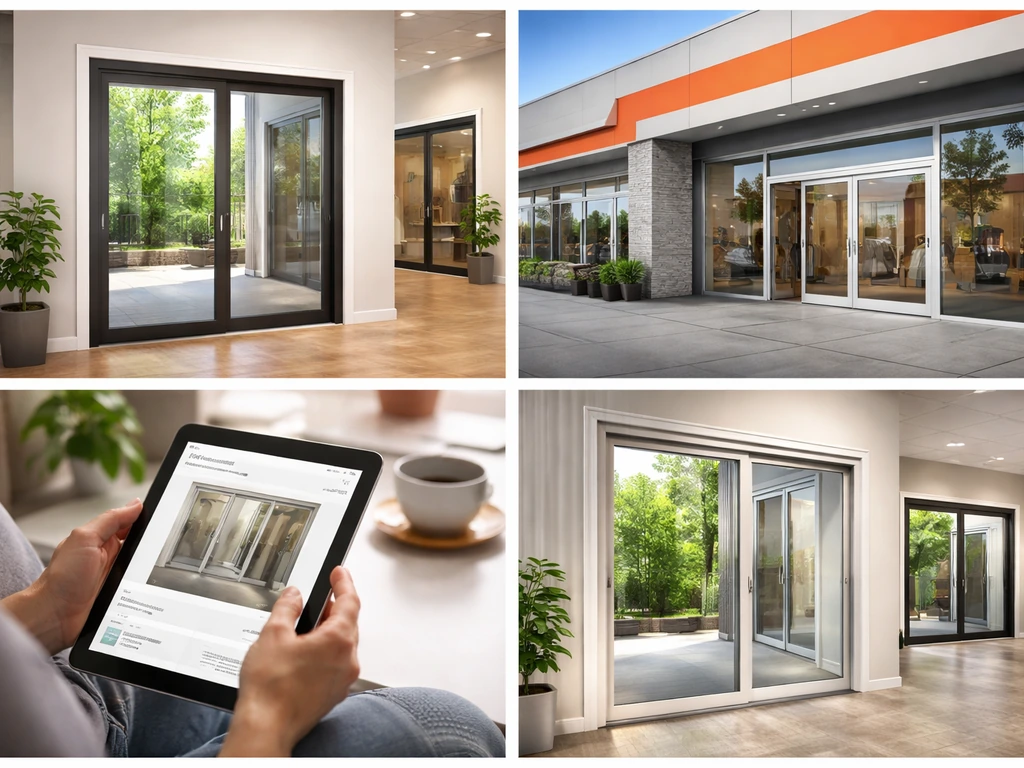
Big-box stores (Home Depot and Lowe's)
These are the most convenient starting point. Both stores stock standard-size sliding and French patio doors in vinyl and aluminum, usually in 60-inch and 72-inch widths for a 6-foot opening. Lowe's carries its RELIABILT house brand, which is backed by a limited lifetime warranty on vinyl and glass. Home Depot carries Andersen, JELD-WEN, and its own private labels. Both offer installation services with a one-year labor warranty. The downside is limited depth: you're picking from maybe a dozen units in-store, glass upgrades are basic, and the installers are third-party contractors managed through the store. Return policies vary by item, so check current terms at the time of purchase because both stores update their policies periodically.
Local window and door dealers
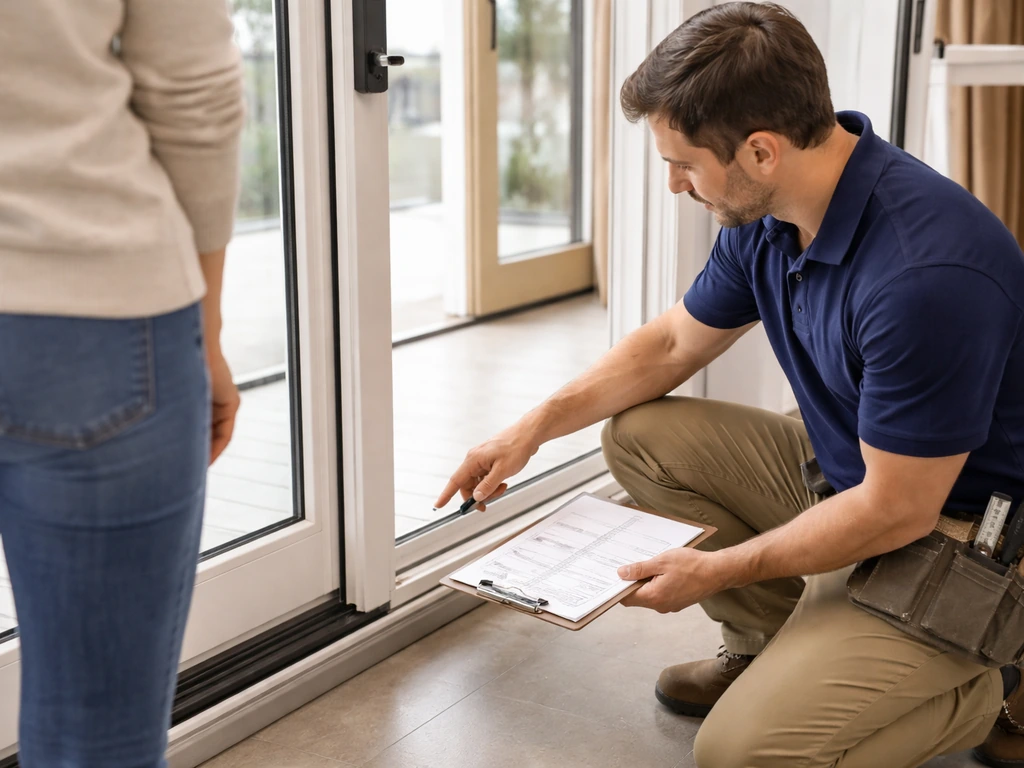
This is where I'd send most homeowners doing a serious replacement or new installation. If you specifically want where to buy French patio doors, a local dealer is also a strong option because they can guide hardware and installation choices for swinging doors. Local dealers typically carry full lines from Pella, Andersen, Marvin, or regional brands, and their staff actually know the products.
You can compare U-factor and SHGC values across multiple glass packages in one appointment, see physical samples, and get a detailed quote that separates door cost, installation labor, trim, and permits. Lead times run 4 to 10 weeks for custom orders, so this isn't the right channel if your old door is broken and you need something next week.
Manufacturer showrooms and direct ordering
Pella, Andersen, and Marvin all have showrooms in major metro areas and online ordering tools. Buying through a manufacturer gives you access to the full product series, the most detailed NFRC performance data (Andersen publishes U-factor, SHGC, and VT tables by product line), and the best warranty documentation. Pella's Impervia fiberglass line, for example, carries a dedicated limited-lifetime warranty on the fiberglass and a separate glass seal warranty.
This Old House also highlights that Pella fiberglass windows and patio doors include limited-lifetime warranty coverage, with important exceptions and coverage differences to review before buying. The catch is that manufacturer direct pricing often isn't meaningfully cheaper than a dealer, and installation still needs to be arranged separately unless you're buying through their certified installer network.
Online retailers and marketplaces
Sites like Build.com, WindowsAndDoors.com, and even Amazon carry patio doors. You can find competitive pricing on stock sizes, and it's easy to compare specs side by side. The risks are real though: you're responsible for verifying measurements before ordering, returns on large door units are complicated and often costly, and you'll need to arrange your own installation. Online buying makes the most sense if you're an experienced DIYer doing a slab-only swap where the existing frame stays in place.
Measure before you do anything else
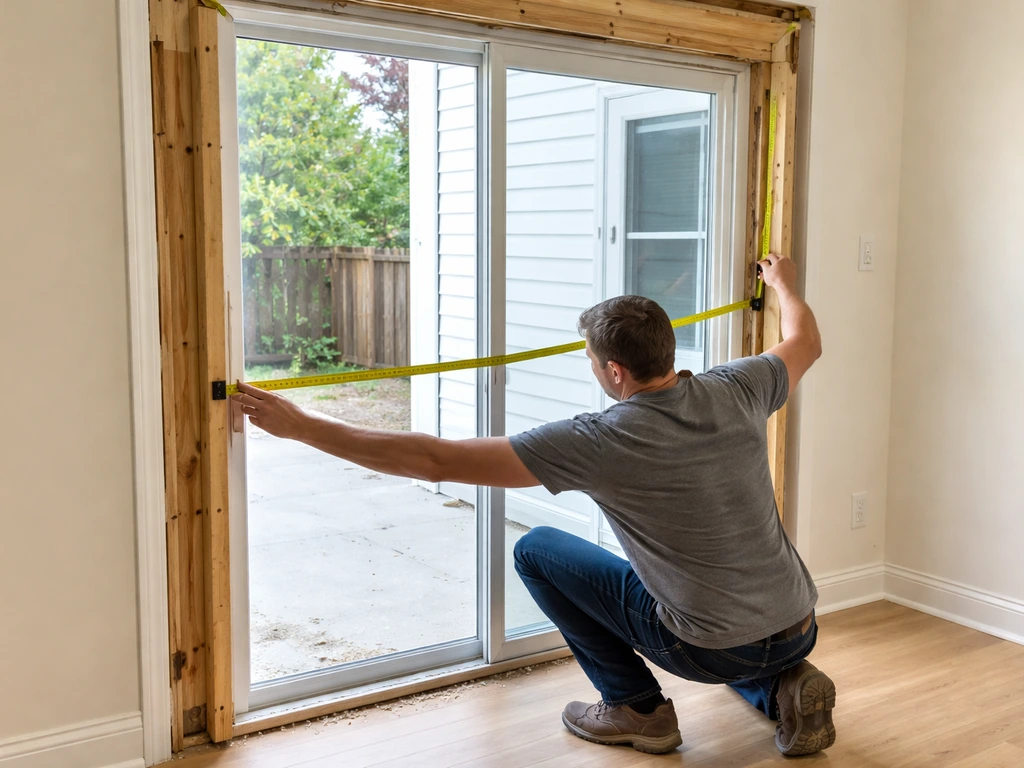
The single biggest mistake homeowners make is ordering a door before confirming whether they need a replacement insert (slab-only or full-frame replacement) or a new opening in an existing wall. These require completely different measurements and have very different cost and complexity profiles.
Replacing an existing patio door
If the existing frame is sound and you're doing a full-frame replacement, measure the rough opening in the wall, not the old door unit. Measure width and height in three places (top, middle, bottom for width; left, center, right for height) and use the smallest measurement as your working dimension. This is critical: ordering to the largest measurement is how you end up with a unit that won't fit. For a slab-only or insert-style replacement where the old frame stays, measure the inside of the existing frame opening instead. Record both sets of numbers before you call any supplier.
New opening in an existing wall
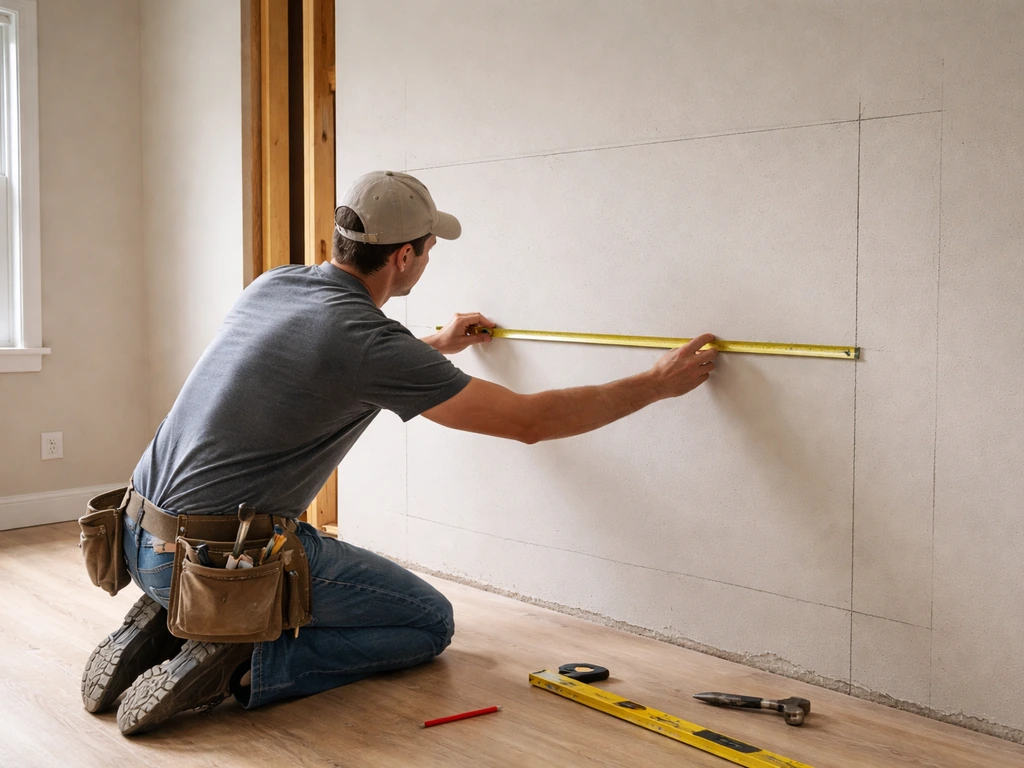
A new opening requires a framing rough opening to be cut, a header installed, and potentially a structural engineer involved depending on whether it's a load-bearing wall. The rough opening is typically 2 inches wider and 2 inches taller than the door unit's nominal size to allow for shimming, leveling, and insulation. For a standard 6-foot sliding door (unit width 71.5 inches), the rough opening would be around 73.5 inches wide. Confirm the exact rough opening spec with the door manufacturer before framing starts.
Standard sizes to know going in
- 5-foot (60-inch) opening: common for smaller spaces, limited product selection
- 6-foot (72-inch) opening: the most common residential size, widest product availability
- 8-foot (96-inch) opening: increasingly popular, good selection from major brands
- 9-foot and 12-foot openings: typically require custom or multi-panel units
- Standard height: 80 inches (6/8) is the most common; 96-inch height is available in premium lines
Picking the right door type and material for your home and climate
Sliding vs. French vs. bifold: which operates best for you
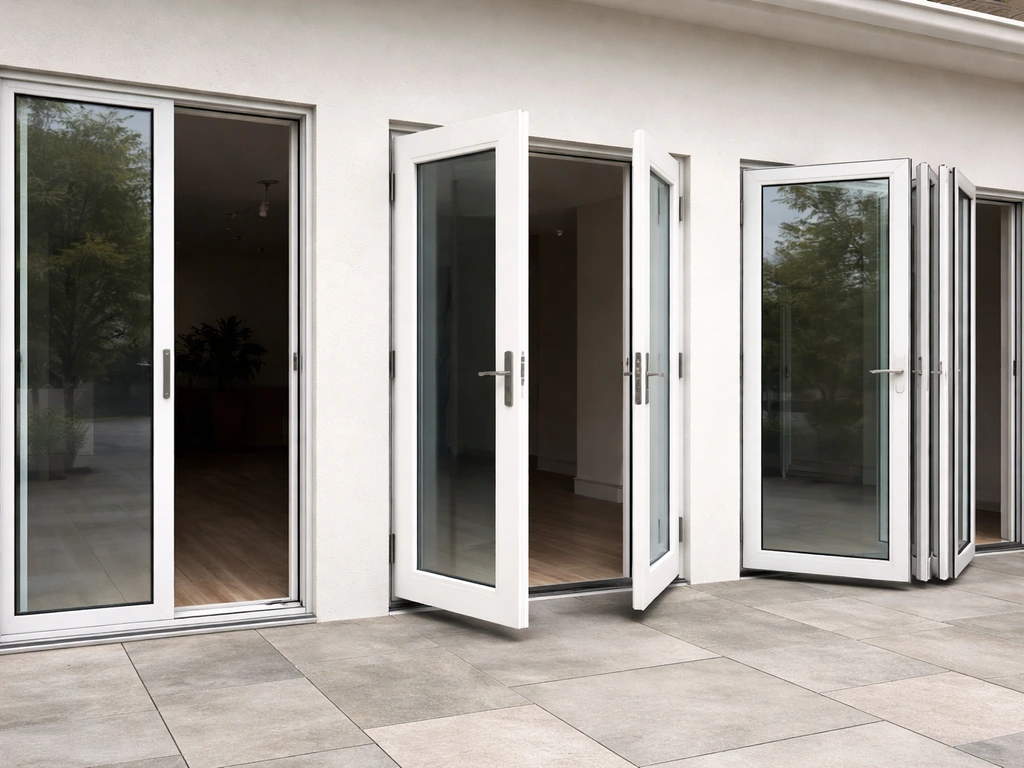
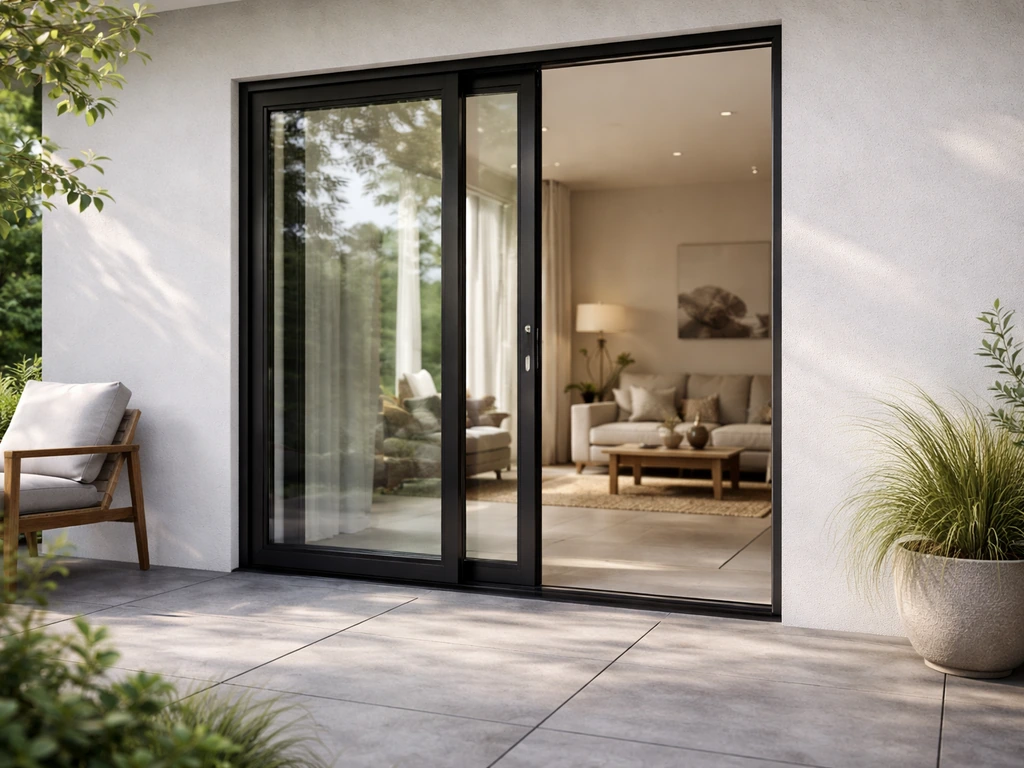
Sliding patio doors are the most popular because they don't require clearance to swing open and work well in tight spaces. The trade-off is air sealing: the DOE explicitly notes that it's essentially impossible to stop all air leakage around weatherstripping on a sliding glass door while still being able to use it. Swinging doors (French doors) offer a tighter seal because the door panel compresses against the weatherstripping when latched.
If you live in a cold climate and energy efficiency is a priority, French doors edge out sliding units on air leakage. Bifold doors are the most dramatic option, folding away to open an entire wall, but they're the most expensive, have more moving parts to maintain, and are best suited for mild climates where you'll actually use the full-open position regularly.
Material comparison: vinyl, wood, aluminum, and fiberglass
| Material | Best For | Typical Cost Range | Trade-offs |
|---|---|---|---|
| Vinyl | Budget-conscious buyers, most climates | $500–$1,800 (door only) | Great insulation, low maintenance, limited color options |
| Wood | Traditional aesthetics, paintable/stainable | $1,200–$4,000+ | High maintenance, can warp/rot if not maintained, best thermal feel |
| Aluminum | Modern look, coastal/humid climates | $800–$3,000 | Strong, slim frames, but conducts cold without thermal break |
| Fiberglass | Cold climates, premium performance | $1,500–$5,000+ | Best durability and insulation, most expensive, limited DIY availability |
Fiberglass (like Pella's Impervia line) is the highest-performing material for cold and extreme climates because it doesn't expand and contract with temperature swings the way wood and aluminum do. Vinyl is the best value for most homeowners. If you're in a coastal area with salt air, avoid untreated aluminum unless it's specifically rated for marine environments; vinyl or fiberglass will hold up much better long-term.
For energy comparisons, always check the NFRC label: look at U-factor (lower is better for insulation), SHGC (lower means less solar heat gain, better for hot climates), and air leakage. ENERGY STAR Version 7. 0 sets the current eligibility criteria, and requirements vary by climate zone, so use the ENERGY STAR product finder to filter by your region.
ENERGY STAR explains that its window, door, and skylight performance criteria are based on NFRC-certified ratings and vary by climate zone requirements vary by climate zone.
Cost and quote comparison checklist

Getting multiple quotes is non-negotiable. I've seen homeowners get quotes ranging from $2,500 to $6,500 for the same basic 6-foot sliding door replacement, mostly because some quotes bundled installation and trim while others just quoted the door. Here's exactly what to line up across every quote you get.
- Door unit price: Get the price for the specific series, size, and glass package you're comparing. Make sure glass specs (double vs. triple pane, low-e coating, gas fill) are identical across quotes.
- Installation labor: Ask if it's included and what it covers. Removal of the old door, framing adjustments, insulation/foam sealing, and final caulking should all be specified.
- Trim and finish work: Interior and exterior trim is often not included. Clarify whether new trim is provided, painted, and stained.
- Delivery and lead time: Stock doors from big-box stores can arrive in days. Custom orders from manufacturers typically take 4 to 10 weeks. Get the actual expected delivery date in writing.
- Permit costs and filing: Some counties require a permit for patio door replacement; new openings almost always do. Ask who pulls the permit and whether the cost is included.
- Warranty coverage: Get specifics. How long is the frame warranty? The glass seal? The hardware? Is the labor warranty from the store, the installer, or the manufacturer? Both Home Depot and Lowe's back their installation services with a one-year labor warranty, but manufacturer warranties like Pella and Andersen have series-specific terms that vary significantly.
- Disposal fee: Removing and hauling away the old door unit sometimes costs extra. Confirm upfront.
Questions to ask before you sign anything
Most of the headaches I've seen with patio door purchases come from things that weren't discussed before the order was placed. Ask these before you commit.
- Is the installer an employee or a third-party subcontractor, and are they licensed and insured in my state?
- Will the installation include foam sealing between the doorframe and rough opening? (The DOE specifically recommends expanding foam caulk to seal this interface and reduce air leakage.)
- What happens if the rough opening measurement is off when the crew arrives? Who covers the cost of adjustments?
- Does this door require a building permit in my jurisdiction, and will you handle pulling it?
- What is the exact warranty on the glass seal, and what voids it? (Condensation between panes is the most common glass failure.)
- If I need to make a warranty claim, do I go to you or directly to the manufacturer? How do I document and register the warranty?
- Is the NFRC label included with the door, and can I see the U-factor and SHGC values for the specific glass package I'm ordering?
- What are the return or cancellation terms if the door arrives damaged or the wrong size?
Accessories and upgrades worth planning now, not later
Adding a screen, security upgrade, or weatherproofing accessory after installation often costs more and causes unnecessary disruption. Plan these at purchase time so everything integrates cleanly.
Screens
Most sliding patio doors come with a screen panel, but French and bifold doors often don't include screens standard. If you want a screen for a French door, you'll need to specify a screen system at order time or plan for a retrofit screen that mounts to the exterior frame. Retractable screens are available for most door types and are worth the upgrade if you use the door frequently in spring and fall. Screens are covered separately in many warranty documents, so confirm screen coverage when reviewing the full warranty terms.
Security hardware and locks
Standard sliding door locks are notoriously weak. Upgrade to a multi-point locking system and add a secondary floor bolt or a steel bar in the track at order time. For French doors, specify a three-point locking system if it's not already included in the base hardware package. These additions are much easier to specify upfront than retrofit later.
Weatherproofing and energy upgrades
If you're in a cold climate, upgrade to a triple-pane glass package and specify a low U-factor (look for 0.25 or below for cold climates). In hot climates, prioritize a low SHGC (0.25 or below) to reduce solar heat gain. The ENERGY STAR Version 6 program sets air leakage at 0.3 cfm/ft² or less for sliding doors; current Version 7.0 criteria may be stricter, so check the ENERGY STAR product finder for up-to-date qualification. Adding a door cover, overhang, or awning protects the door from weather and extends the life of the weatherstripping, which is the first thing to fail on any patio door.
Coverings and treatments
If you're ordering custom curtains, blinds, or cellular shades for the new door, order them at the same time so you have accurate measurements. Patio door curtains need to account for door panel operation: sliding doors need panels that stack off to the side, while French doors need coverage that clears the swing path. If you’re ready to shop, focus your search on options that carry the right size and mounting style, and start by looking for where to buy patio door curtains. Planning this at purchase time means you're not improvising with off-the-shelf panels that don't quite fit.
Your step-by-step plan from here
- Measure your rough opening or existing frame opening in three places each direction; record the smallest dimension as your working size.
- Decide on door type (sliding, French, or bifold) based on your space, swing clearance, and climate priorities.
- Choose your material shortlist: vinyl for value, fiberglass for performance and cold climates, wood for aesthetics, aluminum for modern coastal applications.
- Get at least three quotes: one from a big-box store with installation, one from a local dealer, and one from a manufacturer showroom or online configurator.
- Use the cost checklist above to make sure every quote is covering the same scope: door unit, installation labor, trim, permit, delivery timeline, and warranty terms.
- Ask every seller the pre-purchase questions listed above. Any seller who can't answer them clearly is a risk.
- Add screens, security hardware, and weatherproofing upgrades to the order before finalizing, not afterward.
- Confirm the NFRC label and ENERGY STAR qualification for the glass package you're ordering, especially if you're in a climate-extreme region.
- Get the installation date, permit responsibility, and warranty registration process documented in writing before signing.
FAQ
What measurements should I double-check before I order, to avoid a door that doesn’t fit?
For patio doors, “rough opening size” and “door unit size” get mixed up a lot. If you are doing a full-frame replacement, confirm the rough opening measurements (including the shim space you’ll leave). If you are doing an insert or slab-only swap, confirm the inside-of-frame dimensions. When in doubt, ask the seller for their specific measurement worksheet for your door type, because each brand’s tolerance guidance can differ.
Are custom patio doors returnable if the size or glass package isn’t right?
Most sellers can quote “standard” sizes quickly, but custom doors usually require final review before manufacturing and cannot be returned like stock items. Ask whether your order is considered non-returnable once it goes into production (even if it’s “custom within a template”). Also ask who pays freight for returns, because large door units often come with costly pickup and restocking.
Can I replace the patio door but keep the existing frame and trim?
Yes, but you need to plan for it before the door is ordered. If you want to keep the existing interior trim, ask the dealer for an option that allows a “trim wrap” or matching interior casing, and confirm it will cover your wall thickness without recutting. Otherwise, plan to replace or repaint trim after installation.
If I order French or bifold doors, will a screen come standard?
Many patio doors ship with a screen only for sliding configurations, French and bifold are often screen-less unless you add a system at purchase. If screens matter, confirm three things on the quote: screen type (fixed, retractable), whether it’s included, and whether it’s covered under the same warranty. Retractable systems also vary in height and mounting, so you need the door model number, not just the opening size.
What should I check about the threshold if my door connects to a deck or concrete slab?
If you use the door to a deck or landing, ask the installer about transition details. A mismatch between door sill height and the deck surface can cause water infiltration and make the door hard to operate. In your order notes, request confirmation of the sill clearance and whether they will include or recommend a threshold adapter or water management flashing for your specific deck/sidewalk type.
What installation items are commonly skipped that affect leaks and drafts?
Even when you’re “just replacing the door,” the weatherproofing layers can differ by installation method. Ask what they will do with exterior flashing, sill pan (or pan-like waterproofing), and sealant, and confirm whether they include these in the installation price. If the quote only lists “install,” you can end up with gaps that weren’t visible until after heavy rain.
How do I choose between U-factor and SHGC for my climate?
Builders and homeowners often assume “low U-factor” automatically means it’s good for every climate, but that’s not always the case. In hot climates you may want lower solar heat gain (lower SHGC) even if U-factor is slightly higher. Ask the seller to list both U-factor and SHGC for the exact glass package on your quote, and verify the selection matches your climate goals (heating vs cooling).
What parts of the patio door are usually covered differently under warranty?
Warranty coverage can be split by component. Before you commit, ask whether the warranty differs for the frame material, the insulated glass, and the labor, and whether glass seal failures are covered separately. Also confirm what counts as “normal wear” for screens, weatherstripping, and locking hardware, since these are frequently excluded or have limited coverage.
Can I upgrade to a stronger lock later, or should it be specified at order time?
Yes, but you must match the lock hardware to the door type and thickness, and specify it at order time. Multi-point locks, floor bolts, and track reinforcements can require different pre-drilled locations and compatible strike plates. Ask the seller to confirm the exact locking model number and whether any drill or reinforcement is done by the manufacturer versus the installer after delivery.
Will adding an awning, shade, or door cover after installation change anything for water protection?
Not always. If you’re planning an exterior shade, awning, or storm protection, ask whether the door frame has compatible mounting points and whether the accessory could interfere with operation or drainage. For example, awnings and overhangs can change how water is directed at the head and sides, which affects long-term seal performance.
How can I make sure the quote reflects the best energy performance, not just the product line’s ratings?
If energy efficiency is a priority, ask for the NFRC label information for the exact door configuration being quoted (frame type plus glass package), not a generic product line. Some sellers quote “default glass” and you only get the best U-factor after a glass upgrade. Ensure your quote shows the air leakage value and the U-factor and SHGC for that specific unit.