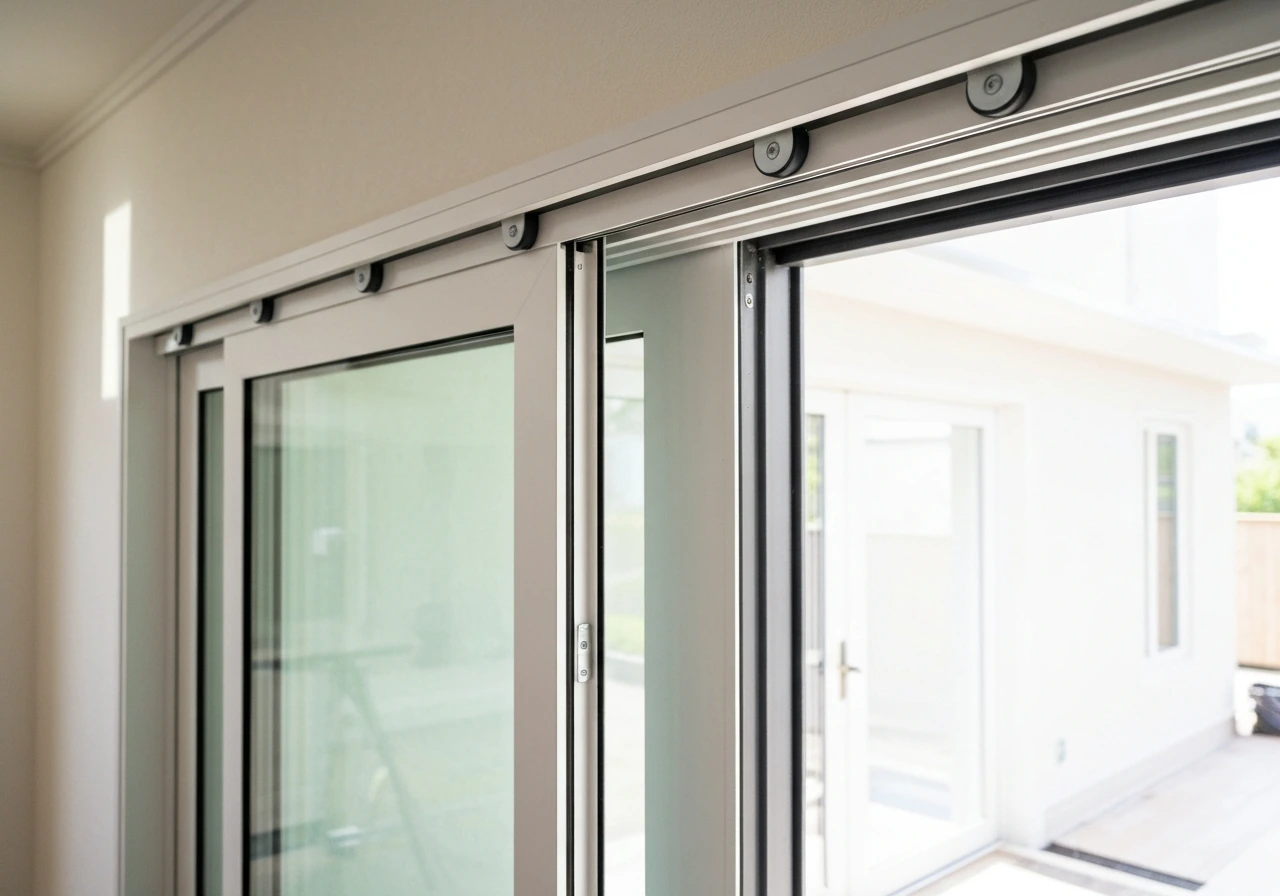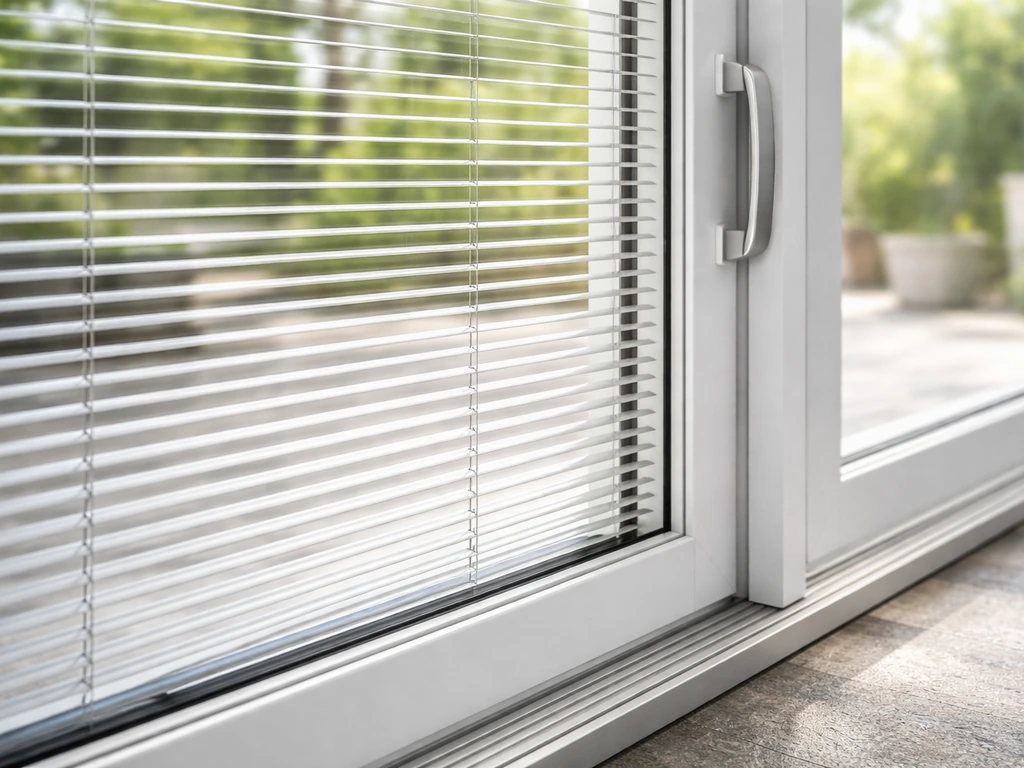
For most sliding patio doors in the UK, vertical blinds or a panel track blind are your best starting point. They move in the same direction as the door, stay out of the way when you open it, and handle the wide spans that sliding doors typically involve. Roller blinds work too, especially on fixed pane sections, but you need to think carefully about overlaps, track clearance, and how you want to operate the door day-to-day before you commit to anything.
Best Blinds for Sliding Patio Doors UK: Measure, Choose
Owen Delaney
11 Jul 2026
Choosing the right blind type for sliding patio doors
The single biggest mistake people make is treating a sliding patio door like a large window. It is not. The door moves, which means your blind either needs to move with it, stack out of the way when open, or sit on a fixed pane only. Pick the wrong style and you will be fighting your own blinds every time you want to step outside.
Here is a quick rundown of the main blind types and how they perform on sliding patio doors specifically.
Vertical blinds
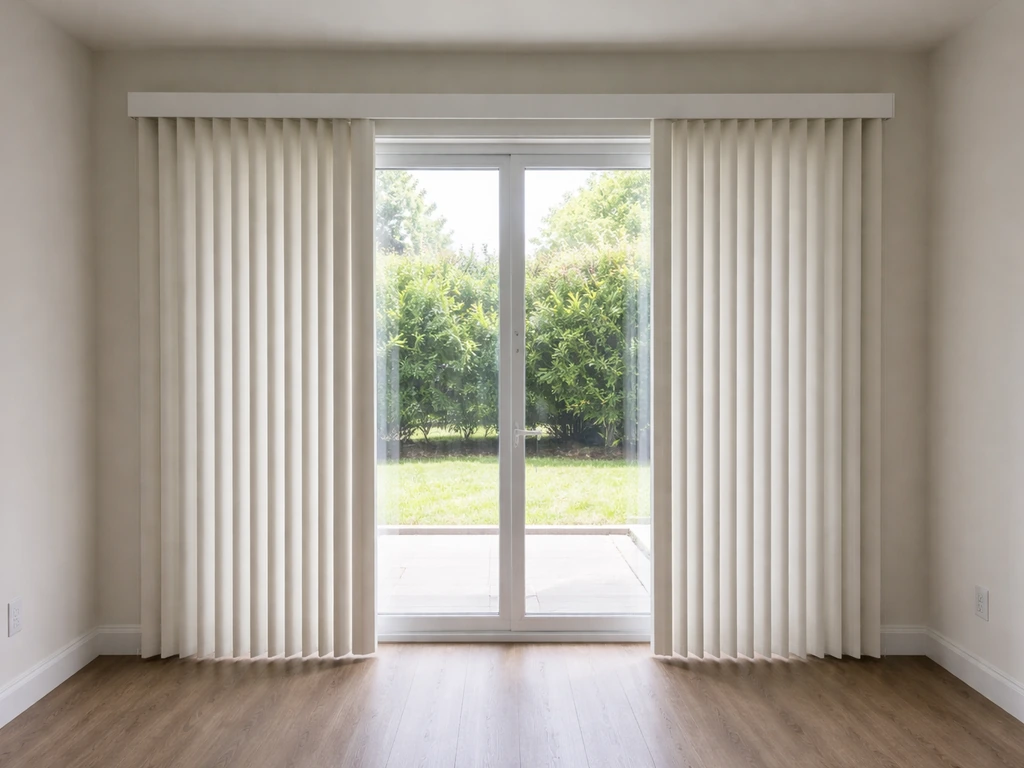
Vertical blinds are the classic choice for a reason. The slats hang from a top track and can be drawn to one side or split in the middle, which mirrors exactly how a sliding door opens. They work across very wide spans without sagging or bunching, and you can tilt the slats to control light and privacy without moving the blind at all. For a standard 1800mm wide sliding door, a set of vertical blinds stacks neatly to one side without blocking your passage. They are also the most affordable option, with decent fabric verticals starting from around £40 to £60 for a standard patio door size.
Panel track blinds
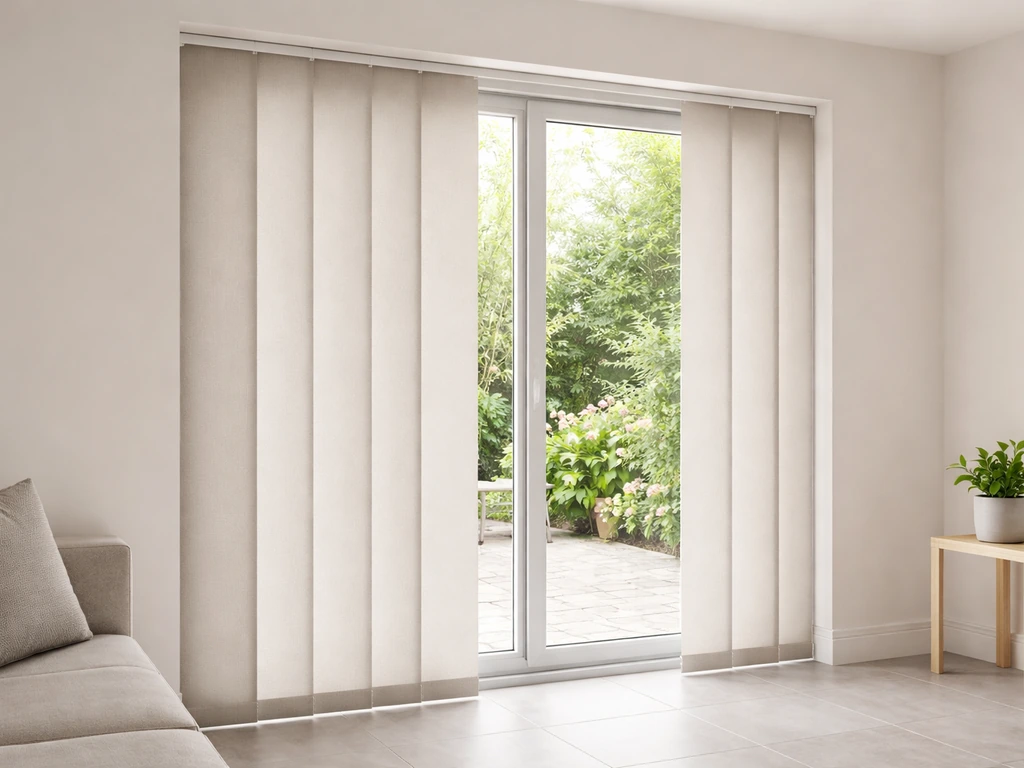
Panel tracks are essentially an upgraded, more contemporary version of vertical blinds. Instead of individual slats, you get wide fabric panels that glide along a multi-channel track. They look more like curtains than blinds, handle large openings beautifully, and are available in light-filtering, solar, and blackout fabrics. If you have a modern open-plan home and the look of vertical slats feels too dated, panel track blinds are worth the extra spend. They tend to start from around £80 to £120 for a made-to-measure patio door size.
Roller blinds
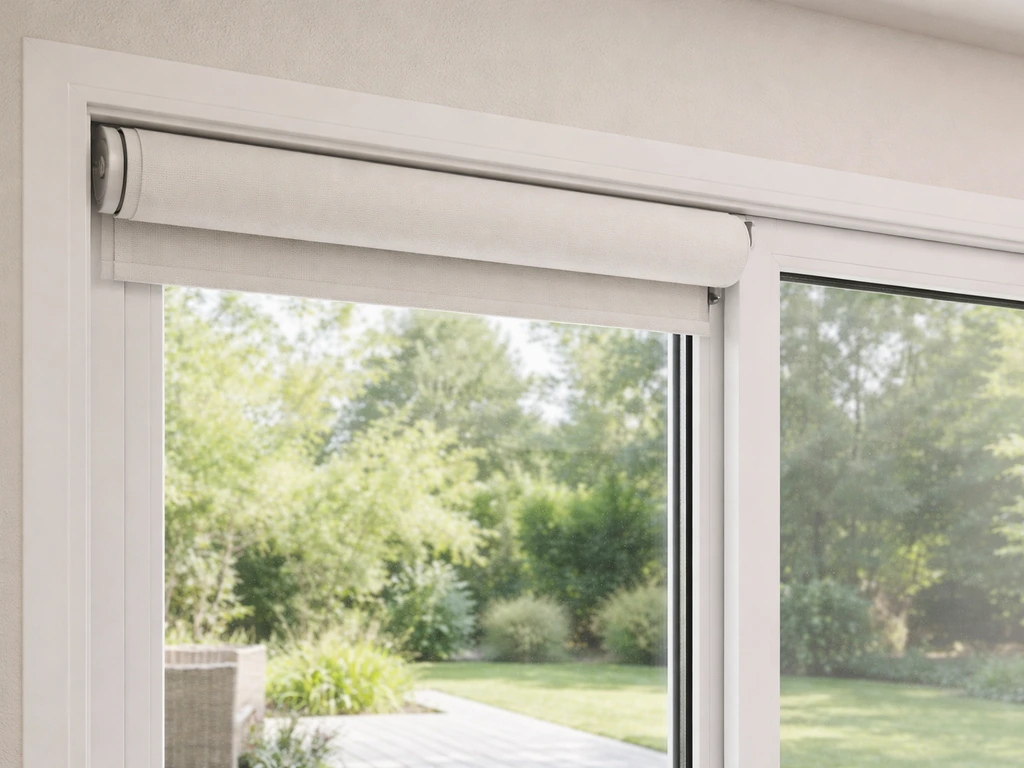
Roller blinds work well when fitted to the fixed pane of a sliding door, or where you have a wide opening covered by multiple individual rollers butting up against each other. The main thing to know here: when you fit multiple rollers side by side, there will be a small gap between each fabric section, typically around 4cm, which is worth factoring in if total blackout or full privacy is important to you. They are one of the most versatile blind types for light control, with options from sheer solar fabrics right through to blackout.
Perfect Fit blinds (read this before you order)
Perfect Fit blinds clip directly into the rubber beading around the glass, with no drilling required, and they are genuinely brilliant on standard casement windows. On sliding patio doors, though, they are almost always the wrong choice. If you are looking for something that actually works smoothly on a sliding door, read our perfect fit blinds for sliding patio doors reviews for the most common real-world clearance and beading issues. The frame sits about 12mm proud of the glass, which can interfere with the sliding mechanism and the door seal. If your sliding panes overlap each other when one is pulled back, you need at least 35mm of clearance between the panes to fit a Perfect Fit frame on the fixed section, and most standard UK sliding doors do not have that gap. There are some forum threads where homeowners have made it work on specific door profiles, but the consensus from blind retailers and real-world experience is that you should blank" rel="noopener noreferrer">avoid Perfect Fit on sliding patio doors unless you have confirmed the exact clearance and beading compatibility first.
Cellular and honeycomb blinds
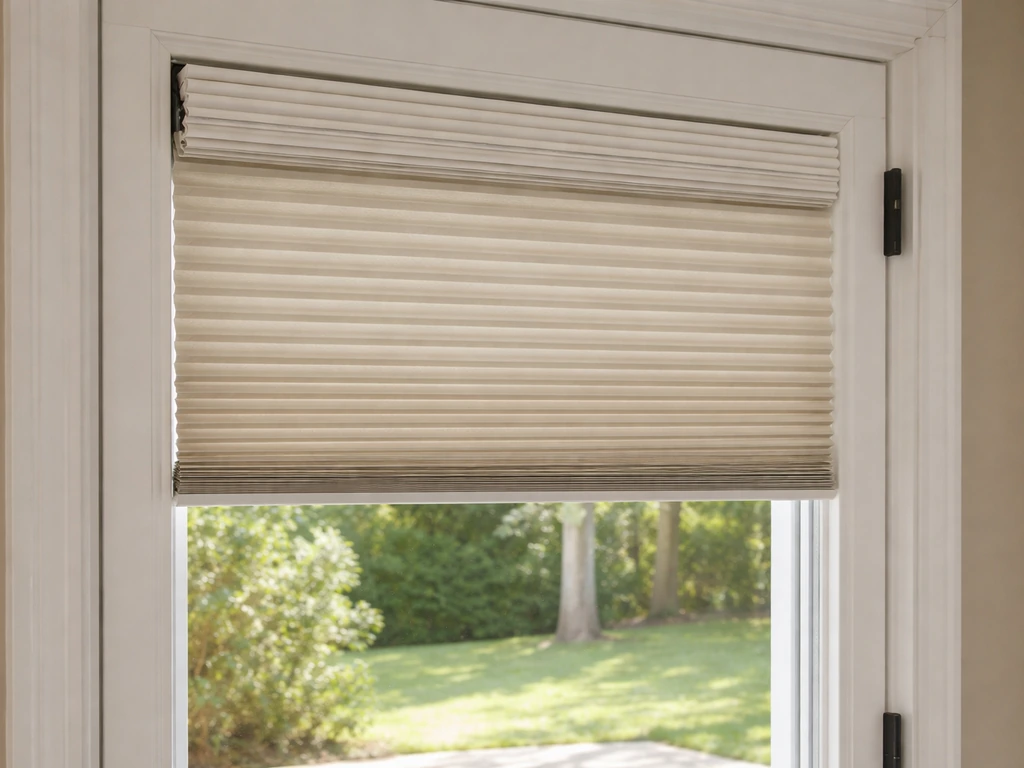
Cellular (honeycomb) blinds are worth mentioning if insulation is your priority. They stack upward rather than to the side, which makes them less naturally suited to a sliding door unless you fit them on the fixed pane only. But if heat retention matters to you, the thermal performance is impressive. More on this in the insulation section below.
UK sizing and measuring for sliding patio doors
Getting this right before you order is everything, because made-to-measure blinds cannot be returned once cut. Most UK blind retailers explicitly exclude measurement errors from their guarantee, so double-check your numbers before hitting the order button. Some retailers like Blinds2go do offer a SureSize guarantee that covers certain measurement mistakes (up to four blinds per order, with a 14-day window to submit updated measurements), which is worth checking if you are buying online.
Inside recess vs outside (face/wall) mount
An inside recess fit means the blind sits within the depth of the door frame or recess. This gives a cleaner look but allows more light around the edges. An outside or face mount means the blind is fixed to the wall or ceiling above the door, overlapping the frame on all sides. For sliding patio doors in particular, an outside mount is usually more practical because it lets you fit one continuous blind or track that spans the full opening width, and it avoids any clearance issues with the door mechanism inside the frame.
How to measure correctly
For an outside/face mount, measure the full width of the door opening including any frame you want to cover, then add your overlap allowance. Blinds2go recommends at least 70mm overlap at the top and 50mm on each side to minimise light leakage on roller blinds fitted outside a recess. For vertical blinds or panel tracks, you typically want the track to extend 100 to 150mm beyond the door opening on the stack side so that when the blind is open, the panels clear the glass entirely. For height, measure from where you plan to fix the brackets down to the floor (or to your desired drop), and check there is enough clearance above the door for the headrail. Always measure in three places (top, middle, bottom for width; left, centre, right for height) and use the smallest measurement if fitting inside a recess.
For roller blinds fitted inside any recess section, measure the internal width at the top of the recess and deduct a small tolerance, typically around 10mm total, to allow the blind to operate without rubbing. Always note where handles, locks, or vents sit, and check your blind will clear them fully when raised or lowered.
| Measurement | Inside Recess | Outside / Face Mount |
|---|---|---|
| Width | Measure inside recess at top; deduct ~10mm for clearance | Measure full opening width + at least 50mm each side |
| Height | Measure inside recess top to bottom; note any obstructions | Measure from fixing point to floor or desired drop |
| Overlap at top | Not applicable | Minimum 70mm recommended for rollers |
| Stack clearance (verticals/panels) | Allow headrail depth within recess | Add 100–150mm on stack side beyond door opening |
| Key check | Confirm door mechanism/seals clear the headrail | Confirm wall/ceiling fixing surface is solid and accessible |
Best blind recommendations by need
Privacy without losing daylight
Solar or light-filtering fabric vertical blinds are the best everyday option here. You can tilt the slats to block the direct view from outside while still letting diffused light through. For a panel track alternative, a woven solar fabric gives the same effect with a more modern look. If you want to sit in your living room during the day without neighbours seeing in, a fabric with an openness factor of around 3% to 5% is the sweet spot for most UK homes.
Glare reduction and light control
South and west-facing patio doors in the UK can produce serious glare, especially in summer afternoons. A dual-function approach works well here: solar fabric verticals or a day/night roller blind on the fixed pane gives you glare control during the day, with a blackout or dim-out option for evenings. If you want precise control, a panel track in a solar fabric is excellent for cutting glare without making the room feel dark.
Insulation and heat retention
Patio doors are one of the biggest sources of heat loss in a UK home, particularly older single-glazed or basic double-glazed units. A cellular (honeycomb) blind on the fixed pane is the most effective blind-based insulation you can add. Louvolite's cellular range claims to reduce heat lost through the glass by up to 55%, and their Low E coated fabrics go further, reducing thermal transmission by up to 71% compared to standard fabric. For the sliding pane, a thermal-lined roller blind or a Roman blind with thermal interlining are practical options. Thermal vertical blinds are also available from retailers like Blinds Direct, though they are less common and usually a special order.
Homes with kids or pets
Cordless vertical blinds are the safest and most practical option if you have children or dogs charging back and forth through the patio door. Looped cords are a genuine hazard, and UK law requires child-safety devices on all blinds with looped cords manufactured and sold after February 2014, in line with BS EN 13120. Any cleats for securing cords must be fixed at least 1.5 metres from the floor, on an adjacent surface rather than on the blind itself. In practice, the cleanest solution is simply to go cordless or use a wand-operated vertical blind, which eliminates the cord hazard entirely. Panel track blinds with a wand or cord tensioner are also a good shout. Avoid fabric with large, dangling vertical chains near a door that a dog can swipe or a toddler can pull.
Material, durability, and weather resistance in the UK climate
Sliding patio doors get a lot of daily use, and the blind right next to them is in a tough spot: UV exposure through the glass, condensation in winter, and regular brushing from people passing through. Material choice matters more here than it does for a bedroom window.
- PVC or faux-wood vertical slats: by far the most durable choice for high-traffic patio doors. Wipe clean, moisture resistant, will not warp or discolour from condensation or sunlight, and hold up well to pets and kids. The trade-off is they look more utilitarian than fabric.
- Fabric vertical slats: more stylish, available in hundreds of textures and colours, but can attract pet hair, fade in direct sun over time, and are harder to clean. Choose a treated or coated fabric if your door faces south or west.
- Solar/screen fabrics for rollers or panel tracks: these are designed for UV exposure and resist fading well. The open weave construction also means they are less likely to trap condensation.
- Cellular/honeycomb fabrics: excellent thermal performance but can sag or deform if they get repeatedly wet from condensation. Keep the room ventilated and wipe down any moisture on the glass regularly.
- Aluminium slat verticals: less common but genuinely tough, often used in commercial settings, and very easy to clean. They can rattle in a draught from the door, which some people find annoying.
For the UK's damp winters, moisture resistance is more important than it sounds. A blind sitting directly against a patio door glass can sit in a pocket of cold, humid air for months. PVC slats and coated solar fabrics handle this far better than untreated natural or woven fabrics.
Installation and fitment tips
DIY installation
Most vertical blind tracks and roller blind brackets are genuinely DIY-friendly if you are comfortable with a drill and a spirit level. A standard vertical blind track for a 1800mm patio door typically comes with two or three brackets, and the hardest part is usually just making sure the track is perfectly level so the slats hang straight. Fix brackets into wall or ceiling rather than the door frame where possible, so the blind is entirely independent of the door movement. Use a stud finder or hollow-wall anchors if you are fixing into a plasterboard wall. For heavier panel track systems, a solid ceiling fixing point is important, so check what is above your patio door before ordering.
Professional installation
You do not strictly need a professional for standard vertical or roller blinds, but it is worth considering for wider, heavier panel track systems, motorised blinds, or if your ceiling above the door is awkward to access. A professional blind fitter typically charges between £50 and £100 per blind in the UK, depending on location and complexity. If you are spending upwards of £200 on a premium panel track or motorised system, paying for fitting gives you peace of mind and usually covers the cost of any remeasure if something does not line up. Always confirm that the fitter is BBSA-registered or similar if child-safety compliance matters to you.
Key things to check before fitting
- Check the headrail or track will not foul the door frame, handle, or lock mechanism when the door is opened fully.
- Confirm the fixing surface above the door is solid enough for the weight of the blind and brackets.
- For outside/face-mount blinds, check that the blind in the fully raised or stacked position still clears the top of the door panel.
- If fitting multiple blinds side by side (e.g., two rollers), mark out the exact position of each bracket before drilling to make sure the fabrics meet cleanly.
- For vertical blinds, ensure the bottom chain or weights are trimmed to the correct length so slats hang just above the floor or threshold without catching.
Operation and safety
The way a blind operates on a sliding patio door is not just a convenience issue, it is a safety and daily-habit issue. Top hung sliding patio doors are a great fit for blinds that can follow the door’s movement, or systems that sit on the fixed pane to avoid clearance issues. The blind should be easy to use one-handed (because the other hand is usually on the door), and it must not interfere with the door's travel.
Wand-operated vertical blinds are the gold standard for ease of use on patio doors. If you want the closest match to built-in style, focus on blinds that integrate with how the sliding door runs, such as panel tracks or cassette-style roller blinds best sliding patio doors with built in blinds. One push of the wand draws the slats to the side and opens the door access. Corded vertical blinds work fine too, but route the operating cord to the side of the door that you access from, so you are not reaching across a fully open door to close the blind in the evening. For roller blinds, a spring-loaded or chain-operated cassette system that can be operated from the side is far more practical than a centre-pull on a wide patio door span.
On child safety: UK law is clear. All blinds with looped cords made after February 2014 must include safety devices as standard under BS EN 13120. If you are buying second-hand or using older blinds, check them carefully. Cord cleats must be fitted at least 1.5 metres from the floor, on a fixed surface like the adjacent wall, and cords should be secured on the cleat (using a figure-of-eight wrap of the spare cord) when the blind is set. The BBSA's Make It Child Safe guidance is straightforward: if children are in the house, go cordless or tensioned wherever possible. Wand-operated vertical blinds, cordless rollers, and panel tracks with a fixed cord tensioner all meet this standard in practice.
For sliding doors specifically, also consider motorised options if you have a very wide opening or limited reach. Motorised roller blinds and panel tracks are increasingly affordable in the UK market, with entry-level systems starting around £150 to £200 for a patio door size. They can be operated via remote or smart home systems, and they completely eliminate cord hazards.
Cost and value: what to expect at every budget
Made-to-measure blinds for a standard UK sliding patio door (typically 1800mm wide by 2100mm tall) vary enormously in price depending on type, fabric, and retailer. If you are trying to work out the best sliding patio doors for the money, the same idea applies: compare total cost, fitment, and how well the system performs day to day. Here is a realistic breakdown.
| Budget Level | Blind Type | Approximate Cost (supply only) | Best For |
|---|---|---|---|
| Budget (under £60) | PVC or basic fabric vertical blinds | £40–£60 | Rental properties, high-traffic doors, low-maintenance priority |
| Mid-range (£60–£150) | Fabric vertical blinds, solar roller blind, basic panel track | £70–£140 | Most owner-occupier homes, good balance of looks and durability |
| Premium (£150–£300+) | Designer panel track, cellular/honeycomb thermal blind, motorised roller | £150–£300+ | Open-plan living areas, insulation priority, smart home integration |
These are supply-only figures. Add £50 to £100 for professional fitting if you go that route. Also factor in whether the retailer offers a remeasure guarantee: Blinds2go's SureSize cover and similar schemes from other UK retailers can save you the cost of a replacement if your measurements turn out slightly off. Always read what the guarantee actually covers. Most UK blind retailer guarantees (typically one to five years) exclude damage from failure to follow cleaning or maintenance instructions, which is worth knowing.
Maintenance and keeping your blinds in good shape
Sliding patio door blinds take more wear than most. A quick weekly dust or vacuum keeps fabric slats and panel tracks looking good and prevents dust from building up on the track mechanism. PVC slats can be wiped down with a damp cloth and a mild detergent. For fabric verticals, a handheld vacuum attachment on a low setting is the easiest regular clean, with a deeper spot-clean using a damp cloth if needed. Do not steam-clean cellular or honeycomb blinds, as the heat can deform the cell structure. For roller blinds on a fixed pane, a light wipe across the fabric with a damp cloth removes most surface dust without risk of shrinkage, but follow the manufacturer's specific guidance for the fabric type. Keep the track mechanism clean by running a dry cloth along the headrail channel every few months, and check that the cord or chain operation is smooth and that no slats are catching on the door handle or frame.
Your next steps before buying
Before you shortlist anything, do these three things. First, measure your door accurately using the method above: width, height, and note whether you are fitting inside a recess or outside on the wall or ceiling. Second, decide on your primary priority (privacy, insulation, glare control, or just not fighting the blind when you open the door) because that should drive your blind type choice more than anything else. Third, if you have children or pets, eliminate any corded options from your list right now and focus on wand-operated verticals, cordless rollers, or panel tracks. For shoppers on a tight budget, compare the best sliding patio doors under $1000 that match your measurements and desired privacy level.
For most UK homes with a standard sliding patio door, a wand-operated fabric vertical blind in a solar or light-filtering fabric is the best all-round starting point. It is practical, affordable, safe, and will not interfere with daily door use. If you want something more contemporary, a panel track blind is worth the extra spend. And if your door faces north or you are losing serious heat through old glazing, adding a cellular blind to the fixed pane is one of the best thermal upgrades you can make at blind-price rather than door-replacement price. If you are also considering whether built-in blinds might suit your needs, it is worth looking at options like sliding patio doors with built-in blinds, which sit between the panes and avoid the fitting questions entirely.
FAQ
Do I have to buy made-to-measure, or can I use standard-sized blinds for sliding patio doors in the UK?
Not always. If you are covering only the fixed pane (for example, using a roller blind inside or on that section), a cheaper option like a fixed-panel roller or a simple fabric vertical can work. Choose vertical or panel track when you need the blind to stay out of the way while the door slides, and use a solar or light-filtering fabric if you still want daylight when the door is open.
How do I stop my blinds from blocking the sliding door when it’s open?
For vertical blinds and panel tracks, the most practical overlap check is at the open position, not the closed one. Ensure the track extends enough beyond the door opening on the stack side so the panels clear the glass completely, and confirm the headrail or track does not sit so low that it hits the door’s top frame as it travels.
What’s the best blind type for full privacy on a sliding patio door?
If you want near-total privacy, vertical or panel track systems are usually easier than roller segments. Roller blinds can look very close when closed, but if you are using multiple roller sections side by side, you will usually get a visible gap between fabrics (often around a few centimetres), which can matter for blackout or fully private evenings.
Will solar blinds stop glare without making the room dark, especially for south or west-facing doors?
Solar and light-filtering fabrics can reduce glare, but they do not replace a day-night or blackout layer for evening. If you need privacy at night, pick a fabric with the right openness factor and consider a blackout or dim-out option on the fixed pane, so you are not relying on a single light-filtering layer after dark.
What measurements do I actually need for outside (face) mounting versus inside recess mounting?
Measure the usable area of the opening, then add overlap for outside mounts, and check stack clearance. A common mistake is using the door frame size instead of the wall or recess depth available for the brackets and headrail, which can leave you with a blind that sits too far inside and leaks light at the sides.
How much clearance should I allow to prevent rubbing in a recess?
Use the smallest width and height from your three-point checks when ordering made-to-measure, but allow for movement. For inside-recess roller blinds, many people miss the need for a small clearance deduction to prevent rubbing during operation, typically around 10mm total tolerance depending on the fit and recess tightness.
Can Perfect Fit blinds work on sliding patio doors if the panes overlap?
Yes, but only if the blind design can physically clear the overlapping doors and beading. Perfect Fit frames are commonly incompatible with typical UK sliding door overlap and beading depth, unless you have confirmed the exact clearance and frame compatibility for your specific door profile.
Where should I place a cellular blind for the best heat loss reduction?
If insulation is your priority, fit cellular (honeycomb) on the fixed pane where it can fully close over the glass and stack upward. For the moving pane, look for thermal-lined roller or a Roman option with thermal interlining, because thermal benefit depends on how much coverage you maintain when the door is closed.
What’s the safest and most convenient operating option if the patio door is used all day?
If there is an opening where you must pass through, prioritize cordless wand operation for the blind nearest to the door path. You can still get comfort with vertical slats, and with a wand you close it from the safe side without reaching across an open door.
Are motorised blinds worth it for sliding patio doors in UK homes?
Motorised blinds can be worth it when the door is very wide, access is difficult, or you want remote control for sun management. A practical decision aid is to cost out the blind plus fitting, then compare to the effort of manual operation, especially if you have pets or children and want to eliminate cords entirely.
Which materials hold up best against UK condensation and damp?
Damp winters and condensation are the big factors. Prefer coated solar fabrics and PVC slats, and avoid leaving untreated natural or easily absorbent fabrics pressed against the glass pocket for months, because they can look tired sooner and may be harder to keep hygienic.
What are the most common DIY mistakes when fitting patio door blinds?
Most problems are installation level issues or bracket placement. Ensure the track or headrail is perfectly level and fixed to a stable surface where possible, then check the operating path clears the door handle and any locks. A quick post-install test is to open and close the door fully several times with the blind operating.
When should I pay a professional blind fitter instead of doing it myself?
If you can access the ceiling or soffit above the door, a professional can save time mainly for heavy panel track, motorised systems, or situations where you cannot confirm fixing points safely. Also ask whether they remeasure, because measurement errors are usually excluded from standard guarantees.