For most homeowners, the best French patio doors for the money in 2026 are mid-range fiberglass or vinyl units in the $2,000 to $3,500 installed range. They hit the sweet spot of durability, energy performance, and low maintenance without the premium price of wood or aluminum-clad. That said, the "right" answer shifts depending on your climate, how much you use the doors, and what you're replacing. This guide breaks it all down so you can walk into a showroom or call a contractor with a real number in mind.
Best French Patio Doors for the Money: Value Guide

Owen Delaney
3 Jul 2026
What counts as a French patio door
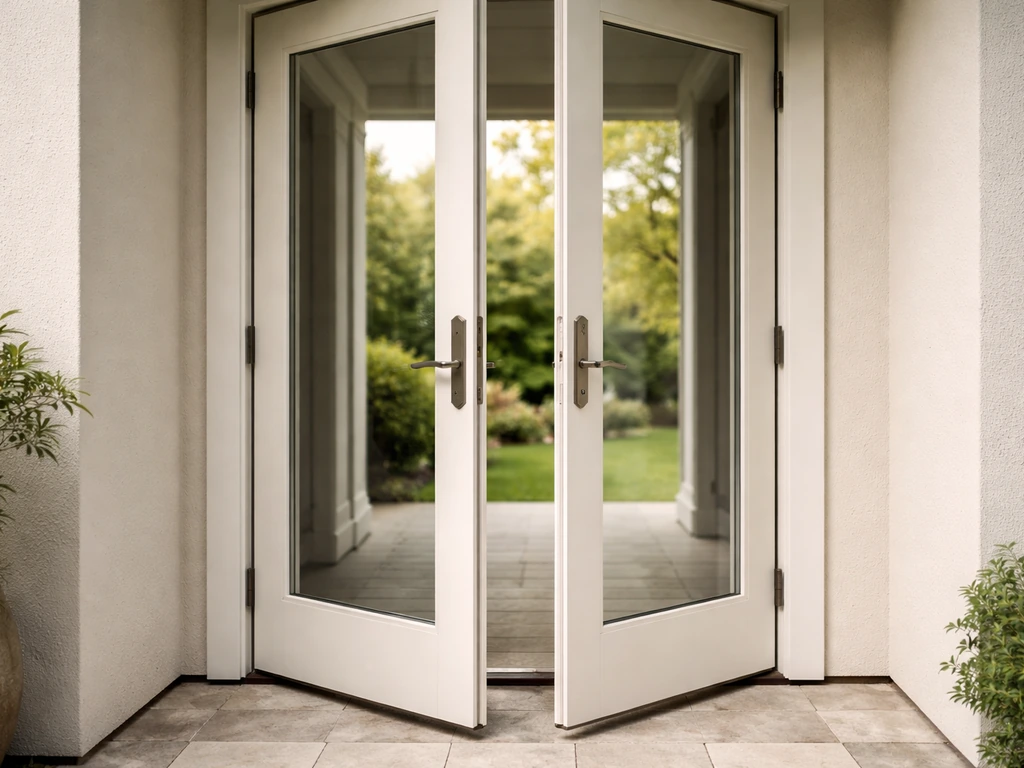
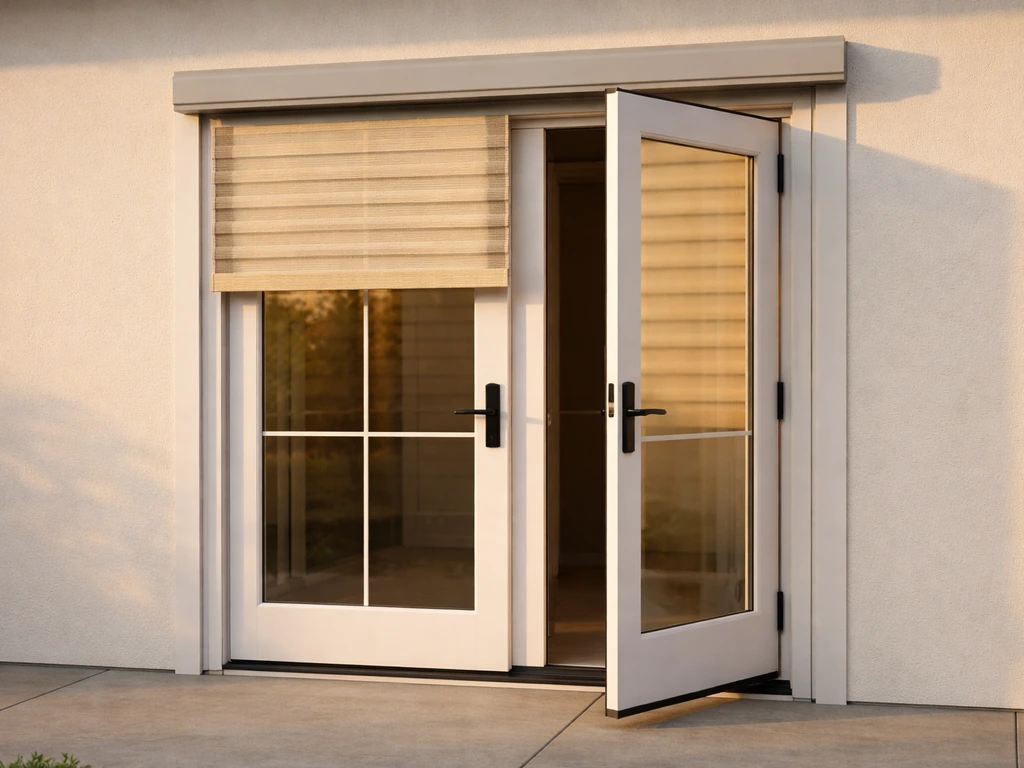
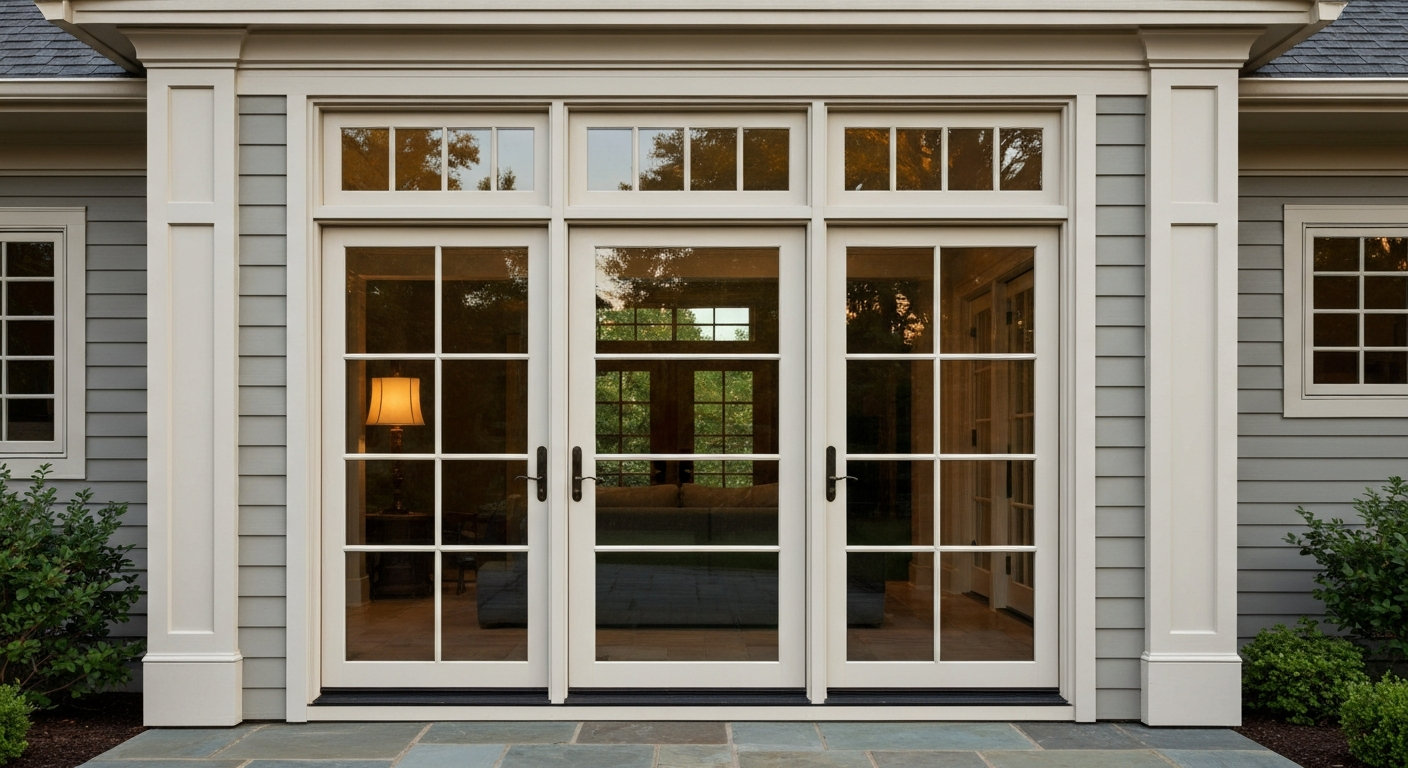
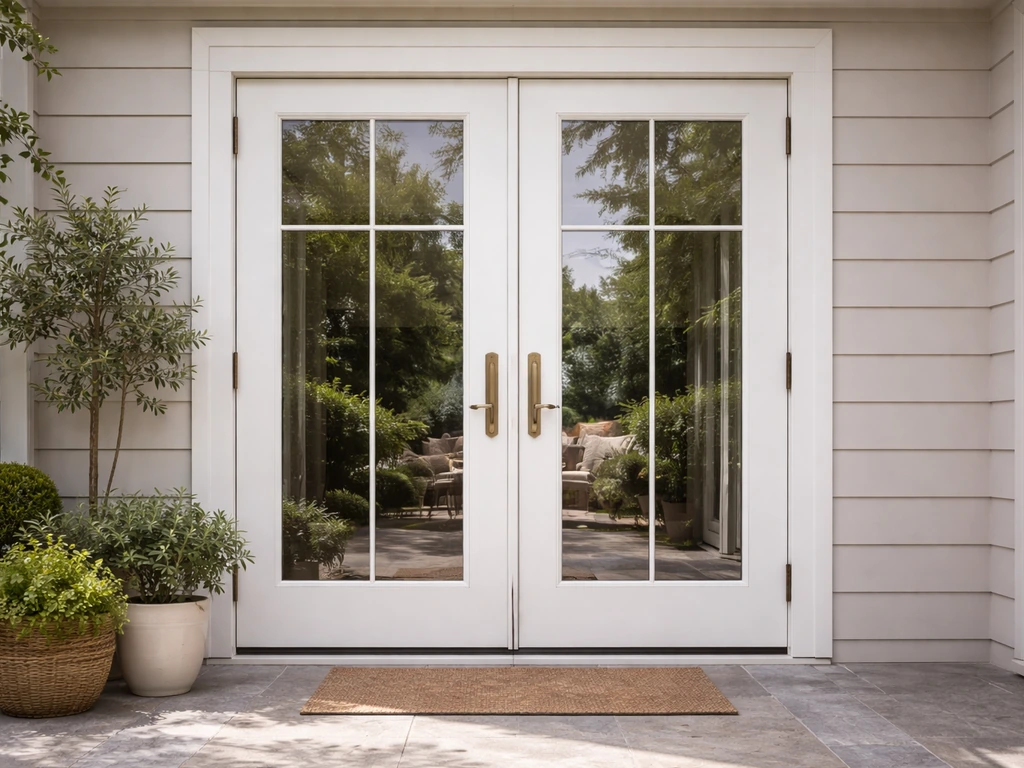
The term gets used loosely, so it's worth nailing down before you start shopping. A true French patio door is a hinged, swinging door, usually with large glass lites divided by grilles or muntins. They come as a single door (one active panel with a sidelite or fixed panel) or as a classic double-door pair where both panels swing open from the center. Some retailers also sell "sliding French doors," which are sliding panels styled to look like French doors with divided lites. Those are a different product category entirely, and they behave differently in terms of sealing, security, and installation.
Material is the other big variable. Here's what you'll actually see on store shelves and in contractor quotes:
- Vinyl: The most common entry-to-mid option. Low maintenance, good insulation, affordable. Can warp slightly in extreme heat over years, but modern formulations are much better than older versions.
- Fiberglass: The best all-around material for most climates. Dimensionally stable, paintable, excellent insulator, and it mimics wood grain convincingly. Costs more than vinyl upfront but lasts longer.
- Wood: Beautiful, traditional, and the most customizable. Also the highest maintenance and most vulnerable to moisture. Best for covered or sheltered openings in mild climates.
- Aluminum-clad wood: Wood on the inside, aluminum on the outside. Great combination of aesthetics and weather resistance, but commands a premium price. Common in higher-end builds.
- Aluminum: Slim profiles, modern look, very durable, but a poor insulator unless it has a thermal break. Common in commercial applications and contemporary homes.
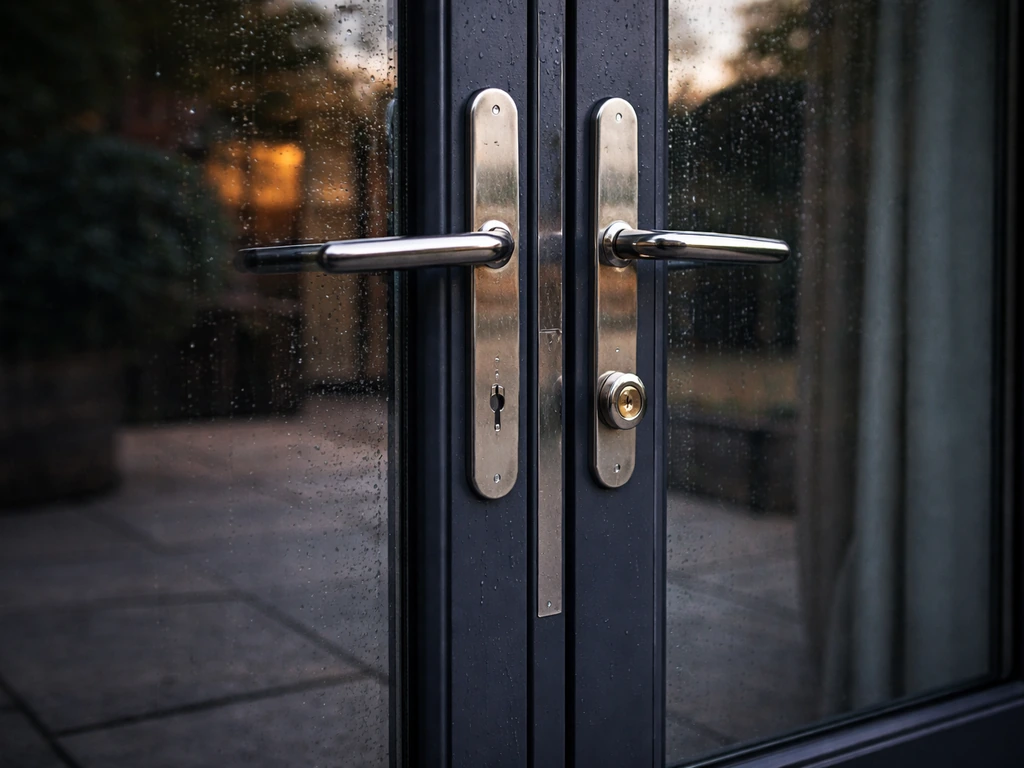
Hardware matters too. Standard French patio doors come with a basic multipoint latch system, but the quality of the hardware varies enormously between budget and premium lines. When shopping for the best locks for French patio doors, look for a solid multipoint option and confirm it matches the door’s active and inactive panels multipoint latch system. Handles, hinges, locks, and threshold seals are all part of what you're buying, and they're usually the first things to fail on cheap units.
What "for the money" actually means: your value checklist
"Best value" isn't just the lowest purchase price. I've seen homeowners buy a $900 door unit and end up spending $1,500 in repairs and air-sealing within three years. Here are the six things that define real value for French patio doors:
- Upfront purchase price vs. total cost of ownership: A cheaper door that needs repainting every two years or new weatherstripping every 18 months costs more over a decade than a mid-range fiberglass unit.
- Durability for your climate: In freeze-thaw climates, wood expands and contracts and will eventually stick or leak. Fiberglass and quality vinyl handle temperature swings far better.
- Energy performance (U-factor and SHGC): The NFRC label on every door shows its U-factor (lower is better for insulation) and Solar Heat Gain Coefficient (lower SHGC keeps heat out in warm climates, higher SHGC is useful in cold climates). ENERGY STAR-qualified swinging doors meet specific U-factor and SHGC thresholds by climate zone, and swinging doors must have air leakage of no more than 0.5 cfm/ft² to qualify.
- Security and locking quality: A French door's center seam is its weakest point. Multipoint locking systems (three or more lock points) dramatically improve security. Budget units often have a single deadbolt at the top, which isn't enough.
- Warranty coverage: Look for at least a 10-year warranty on the frame and a lifetime warranty on the glass seal. Pella, Andersen, and Marvin offer transferable warranties that add resale value.
- Long-term maintenance: Vinyl needs only occasional cleaning. Wood needs annual inspection and periodic refinishing. Factor in your willingness to do that maintenance honestly.
Best-value picks by budget tier
Installed costs for French patio doors run from about $1,300 at the low end to $5,500 or more at the top, with the typical range landing between $1,800 and $4,000 for a standard 5-foot or 6-foot double-door unit. Here's how to think about each tier.
Entry tier: $1,300 to $2,200 installed
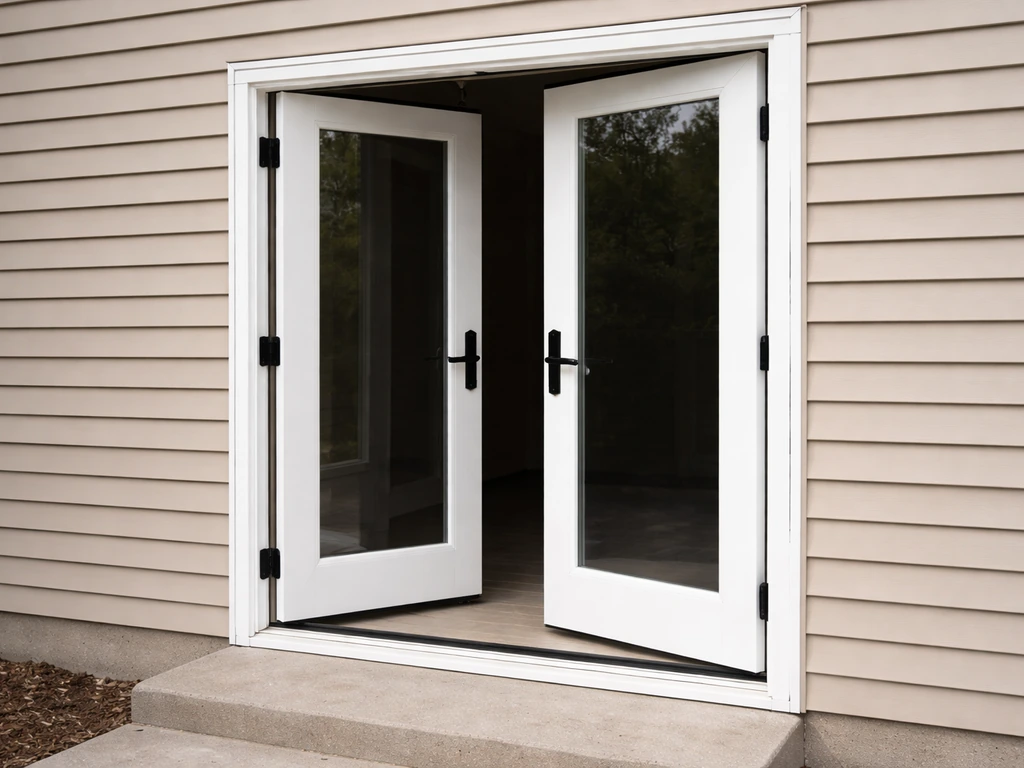
At this price point, you're looking at vinyl French doors from brands like JELD-WEN's entry line, Plastpro, or builder-grade options from big-box stores. The glass is typically double-pane Low-E, which will meet ENERGY STAR requirements in most zones if you pick the right SHGC for your region. The frame and hardware are where corners get cut: expect basic single-point locks (consider upgrading immediately), thinner weatherstripping, and limited finish options. These doors make sense for a rental property, a detached workshop, or a short-term home where aesthetics and longevity aren't the priority. Don't go this route if you're in a high-wind or freeze-thaw climate.
Mid tier: $2,200 to $3,800 installed
This is where most homeowners should land. Fiberglass French doors from JELD-WEN's Aurora or Siteline line, Pella's 250 Series, or Andersen's 400 Series fall here. You get better hardware, a more robust multipoint locking system, better glass packages with improved U-factors (often 0.27 to 0.30 range), and longer warranties. Fiberglass at this price point holds paint well, doesn't rot, and doesn't expand and contract the way wood does. If you want a wood look without the maintenance, a textured fiberglass door in a stainable grain finish is the practical answer. This tier also gives you more configuration flexibility: grille patterns, hardware finishes, sidelite options.
Premium tier: $3,800 to $5,500+ installed
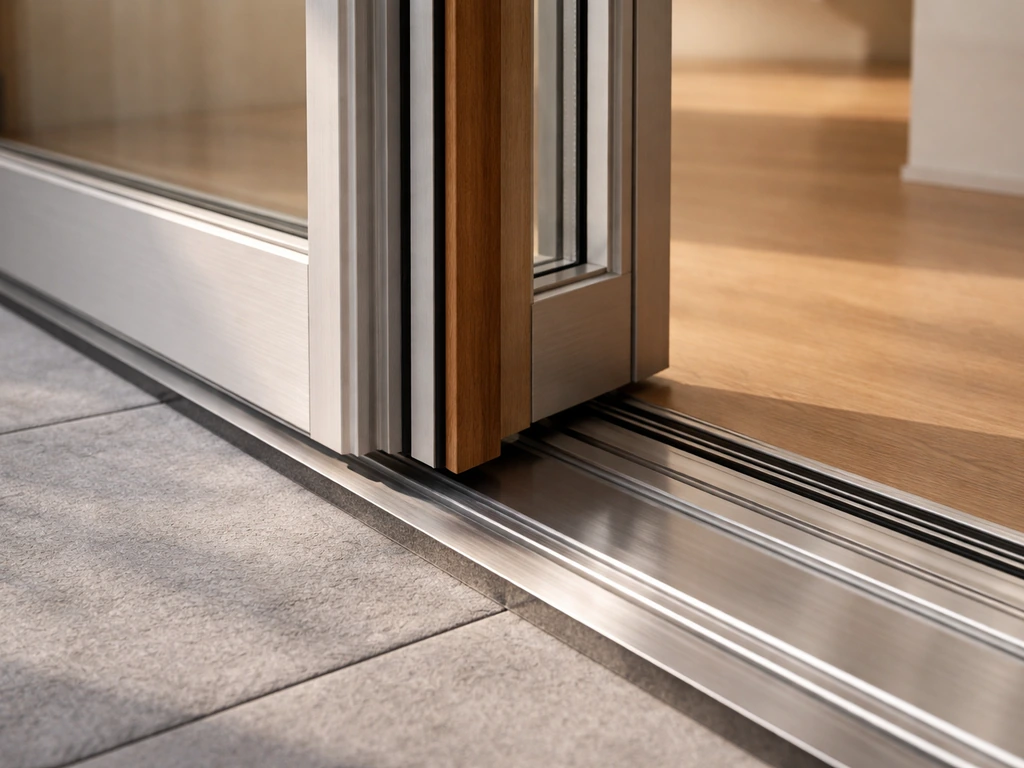
At this level you're into Marvin's Signature or Ultimate lines, Andersen's E-Series or A-Series, and Pella's Reserve or Architect Series. These typically feature aluminum-clad wood or high-end fiberglass, triple-pane glass options, U-factors as low as 0.20 to 0.22, robust multi-point hardware, and excellent warranty packages that transfer to new owners. The energy savings from triple-pane glass rarely pay back the cost difference versus double-pane Low-E on their own, so the premium here is really about longevity, aesthetics, and the quality of the hardware and finish. If you're in a northern climate, adding triple-pane at this tier does make real comfort sense near the door. If you're in a mild climate, double-pane Low-E is plenty.
| Budget Tier | Installed Price Range | Best Material | Key Trade-off |
|---|---|---|---|
| Entry | $1,300–$2,200 | Vinyl | Lower upfront cost, limited hardware quality and warranty |
| Mid | $2,200–$3,800 | Fiberglass | Best overall value: durability, energy, and security balance |
| Premium | $3,800–$5,500+ | Aluminum-clad wood or high-end fiberglass | Best longevity and aesthetics, but energy ROI is marginal |
Getting the size, configuration, and energy specs right
Standard French patio door widths run 5 feet (60 inches), 6 feet (72 inches), and 8 feet (96 inches) for double-door units. Heights are typically 80 inches or 96 inches. Your rough opening needs to be 2 inches wider and 1 to 1.5 inches taller than the door unit to allow for shimming and squaring. This sounds simple, but getting the rough opening wrong is the single most common and expensive installation mistake. Measure twice, and if you're replacing an existing door, measure the rough opening, not the old door frame.
On configuration: a standard double French door (two active swinging panels) is the classic look. But if you're tight on interior clearance, consider an in-swing vs. out-swing setup. Out-swing doors keep the interior clear but need clearance outside and are more exposed to weather. In-swing doors are more sheltered but eat into interior floor space when open. One active panel plus one fixed panel is a good option if you mostly use one side anyway; it's more secure and often better sealed. If you want French patio doors that feel secure, focus on the center meeting seal and the locking hardware, not just the look.
For energy performance, the NFRC label is your guide. The DOE recommends specifying U-factor and SHGC appropriate to your climate zone. ENERGY STAR notes that residential window and door qualification is based on U-factor and, where applicable, SHGC requirements tied to glazing level blank" rel="noopener noreferrer">U-factor and SHGC requirements tied to glazing level. In cold northern climates (ENERGY STAR Northern zone), aim for a U-factor of 0.27 or lower. In hot southern climates (ENERGY STAR South-Central or Southern zone), SHGC matters more: look for 0.25 or lower to reduce solar heat gain. In mixed climates, a U-factor around 0.27 and SHGC around 0.25 to 0.30 covers you reasonably well. The DOE also notes that swinging doors (like French doors) generally offer a tighter seal than sliding patio doors, which is a real advantage on your energy bill and comfort. ENERGY STAR v6 specifies air leakage qualification criteria for doors, and for swinging doors the limit is 0.5 cfm/ft² blank" rel="noopener noreferrer">swinging doors (like French doors) generally offer a tighter seal than sliding patio doors.
Installation costs and the DIY question
Labor for French door installation typically adds $500 to $1,500 to the door unit cost, depending on your region, complexity of the opening, and whether structural work is needed. The total installed cost ranges of $1,300 to $5,500 already include that labor. If the rough opening needs to be enlarged or a load-bearing header needs modification, add another $500 to $1,500 on top of that.
Can you DIY a French door installation? Technically yes, if you're experienced with framing, flashing, and shimming. But French doors are less forgiving than a single door because you need both panels perfectly plumb, level, and square relative to each other. Even a 1/8-inch variance in the rough opening can cause the doors to bind or leave a gap at the center seam. Trade publications are clear that the most common source of French door leaks is improper installation, specifically a missing or incorrect sill pan, inadequate flashing, and poor sealant sequencing. The sill pan is a three-sided pan installed across the bottom of the rough opening, integrated into the water-resistive barrier, designed to catch any water that gets past the door and route it outside. Skipping it to save time is the mistake I see most often on DIY jobs.
Best practices for installation also call for peel-and-stick flashing at the sill before the door goes in, flashing up the sides a minimum of 6 inches, and a head flashing above the door. Shimming must start at the sill to get a level base before you ever worry about plumbing the sides. If you're not confident about all of this, hire a pro. The cost of fixing a leaking French door installation, including drywall repair and mold remediation, can easily hit $3,000 or more.
Common cost pitfalls to avoid
- Wrong rough opening size: Order the door first, then confirm the rough opening matches. Don't assume your existing opening is the right size for the new unit.
- Skipping the sill pan: This is code-required in most jurisdictions and skipping it voids most manufacturer warranties. Budget for it even if you're doing the rest yourself.
- Cheap threshold: The threshold seal takes the most abuse. Upgrade to an adjustable threshold with a compression seal. Budget units often have a flimsy fixed threshold that fails within a few years.
- Mismatched hardware: If you're upgrading locks or handles after purchase, confirm they're compatible with the door's prep holes before buying.
- No structural assessment: If you're creating a new opening or widening an existing one, get a structural assessment first. A missed header issue can turn a $3,000 door project into a $8,000 structural repair.
Upgrades and accessories that are actually worth the money
Once the door is in, a few targeted upgrades deliver real returns. Not all of them are expensive, and some are things you can add later if budget is tight now.
Security
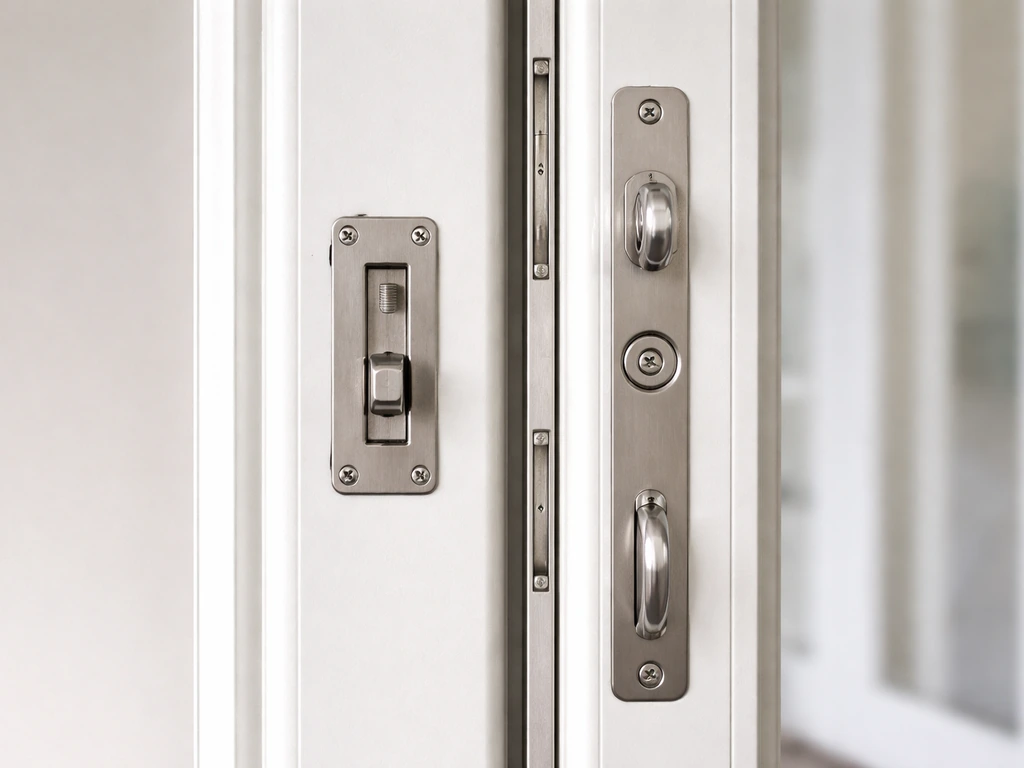
The biggest security vulnerability on French doors is the center meeting stile. A surface-mount flush bolt on the inactive panel, combined with a three-point multipoint lock on the active panel, closes that gap significantly. If your door doesn't come with multipoint locking, it's worth adding a door reinforcement kit and a robust deadbolt. The security comparison between French patio doors and other door types is a real consideration if security is a primary concern for your household. For many households, the most secure choice comes down to the locking system, how the center seam is reinforced, and whether the door is properly installed The security comparison between French patio doors and other door types.
Screens and blinds
Retractable screen systems are the cleanest solution for French doors because they disappear when not in use, which preserves the door's look. Phantom and Larson both make good double-door retractable screen systems for around $400 to $700 installed. Built-in between-the-glass blinds or grilles are another popular upgrade: they eliminate the hassle of cleaning and the risk of blinds getting tangled or damaged, though they do add to the door cost upfront. To complete the setup, compare the best blinds for French patio doors based on light control, heat retention, and how easily they fit between the glass.
Weatherstripping and air sealing
If you're getting drafts around an existing door, start with the weatherstripping before assuming you need a new door. A full set of compression weatherstripping for a French door runs about $30 to $80 in materials and takes an afternoon to replace. The center meeting stile seal (the astragal) is often the first to fail and the most overlooked. For new installs, don't skip the low-expansion spray foam in the shim space around the frame, covered by trim; it makes a meaningful difference in air leakage.
Threshold and handle upgrades
An adjustable threshold with a neoprene or silicone compression seal is a $50 to $120 upgrade that can dramatically reduce drafts and water infiltration at the bottom of the door. On handles, a heavy-duty lever or pull bar in a matching finish doesn't just look better; it provides more mechanical leverage on the latch, which means a better seal every time you close the door.
Keeping your doors working well long-term
French patio doors are low maintenance compared to a lot of home features, but they do have specific things that need attention to avoid expensive problems down the road.
Cleaning and lubrication
Clean the door frames with mild soap and water twice a year. Do not use abrasive cleaners on vinyl or painted fiberglass. Lubricate hinges and lock hardware annually with a dry silicone spray or lithium grease. Avoid WD-40 for long-term lubrication; it attracts dust and gums up hardware over time. For wood or wood-clad doors, inspect the finish every spring and touch up any chips or bare spots before moisture gets into the wood.
Troubleshooting leaks and drafts
If you see water on the interior floor near the door during rain, the most common causes are a failed threshold seal, a compromised sill pan (or no sill pan at all on older installs), or failed caulk at the exterior frame-to-wall joint. Check the exterior caulk line first; it's the easiest fix. If the threshold seal looks compressed or cracked, replace it. If water is coming in at the top corners of the frame, the head flashing may have failed or was never installed, and that's a more involved repair.
Drafts are different from leaks. A draft usually points to worn weatherstripping on the door panels themselves, a misaligned astragal at the center meeting point, or a sagging door that's no longer making full contact with the frame. Adjusting the hinge screws (or replacing them with longer screws into the framing) can fix a sagging door without any new hardware purchases. Check the center seam with a candle or incense stick on a windy day to pinpoint exactly where the draft is coming from.
Hardware care over time
Lock cylinders should be lubricated with graphite powder (not oil-based lubricants) once a year. Multipoint lock systems have a gearbox mechanism that can wear out after 10 to 15 years of heavy use. Replacement gearboxes are usually available from the door manufacturer and run $80 to $200, which is far cheaper than replacing the door. Keep the model and series information for your door in a home file so you can order the right parts when the time comes.
Your next steps
Here's how to move from research to decision. First, measure your rough opening and decide whether you're replacing an existing door or creating a new opening, since that changes your cost picture significantly. Second, pick your material based on climate and maintenance tolerance: fiberglass for most people, vinyl if budget is tight and you're in a mild climate, wood only if you're committed to the upkeep. Third, pull up the NFRC label data for any door you're seriously considering and check the U-factor and SHGC against your climate zone requirements. Fourth, get at least two installed quotes from local contractors and ask specifically whether the sill pan and flashing are included in the price. Fifth, decide on security and screening needs before finalizing your order, since factory-prepped options are almost always cheaper than aftermarket additions. That sequence will get you to a clear decision faster than any amount of brand comparison browsing. If you still want to narrow it down to who makes the best French patio doors, use the material, hardware, and warranty signals you identified from the quotes.
FAQ
What should I ask a contractor to confirm before I pay for the “best french patio doors for the money” option?
Ask for the exact door model and glass package on the contract, plus confirmation that a sill pan, sill pan integration with the water-resistive barrier, and three layers of flashing (sill, sides, head) are included. Also request the plan for the center meeting stile alignment, since that’s where most draft and leak callbacks originate.
If my current door is old, do I measure the rough opening or the frame to order a new French patio door?
Measure the rough opening (width and height), not the existing trim or frame dimensions. You want the new unit to sit with proper shim space, and even a small mismatch can cause binding at the center seam or gaps at the astragal, which are expensive to fix after installation.
Are vinyl French patio doors ever a good value in cold or windy climates?
They can be a value only if the installation is high quality and the door is rated for your climate, but they are more likely to underperform where freeze thaw and high wind pressure are common. If your area has both, fiberglass typically delivers better long-term seal and rigidity, even if the upfront price is higher.
How do I choose between double-pane and triple-pane if the price difference feels small?
Use your climate first. If you are in a northern zone, prioritize lower U-factor performance (and verify the NFRC label), triple-pane can be worth it near the doorway. If you are in a mild climate, the comfort gain often is modest, so spending more on hardware quality, weatherstripping, and a solid threshold usually gives a better return.
What is the simplest upgrade if I’m mainly getting drafts around the center seam?
Start with the center meeting stile alignment and the astragal condition. Replace worn compression weatherstripping if needed, and check for loosened hinge adjustments that can cause the panels to miss each other. Only after that should you upgrade locks or add door reinforcement, because misalignment can make even new hardware seal poorly.
Do I need a special lock for French patio doors, or is a standard multipoint system enough?
A true multipoint system that properly matches your active and inactive panels is the baseline. If your door is frequently used and the inactive panel does not fully latch, consider adding a flush bolt or reinforcement kit specifically designed for the center seam, since that’s the most common entry point on lower-end installs.
What’s the difference between a “sliding French-style door” and real hinged French patio doors for energy and sealing?
Sliding French-style doors look similar but seal differently because the moving contact surfaces and track design are different, so drafts and water risk can be higher if the unit is not engineered well. If you want the tightest seal and strongest weather performance, choose hinged French doors and verify the U-factor and SHGC on the NFRC label.
How can I tell whether a leak is from a bad exterior caulk joint or a problem with the sill pan and flashing?
Look at where the water appears and when. If water shows up near the bottom after rain, suspect the threshold seal or sill pan pathway first. If water appears near the top corners, suspect head flashing or failed sealing at the exterior frame-to-wall joint. If you see consistent moisture at multiple locations, request an inspection of the sill pan and flashing coverage, since those are the most failure-prone parts when installation is rushed.
Is it worth replacing only the center meeting stile parts instead of replacing the whole door?
Often yes if the door frame is sound and the failure is localized to the astragal, weatherstripping, or a multipoint latch gearbox. Keep your door’s manufacturer and series information, because replacement parts are usually available without replacing the entire unit, and it’s commonly cheaper than a full door swap.
Can I DIY a French patio door if I’m comfortable with carpentry?
DIY is possible if you have strong skills in framing, flashing, and shimming, but French doors are less forgiving than single doors because the two panels must be perfectly plumb, level, and square relative to each other. If you are missing tools or experience with water management details like sill pan placement, it’s safer to hire a pro, since incorrect flashing and sealant sequencing can lead to hidden interior damage.
What maintenance schedule prevents the most common “expensive problems” on French patio doors?
Do a twice-year cleaning with mild soap and water, annual lubrication of hinges and lock hardware using dry silicone or lithium-based products, and yearly checks of weatherstripping compression at the astragal and threshold. If you can only do one thing, prioritize inspecting and replacing worn center seam and bottom seals, because those drive both drafts and water infiltration.
When comparing quotes, how do I avoid the “cheap door plus expensive fixes” trap?
Compare installed scope, not just door price. Confirm the glass package (double versus triple, Low-E, and the listed U-factor and SHGC), hardware included, and whether sill pan, peel-and-stick flashing, and interior air-sealing foam are part of the price. Also ask how they handle out-of-square rough openings, because that determines whether the center seam will seal correctly.