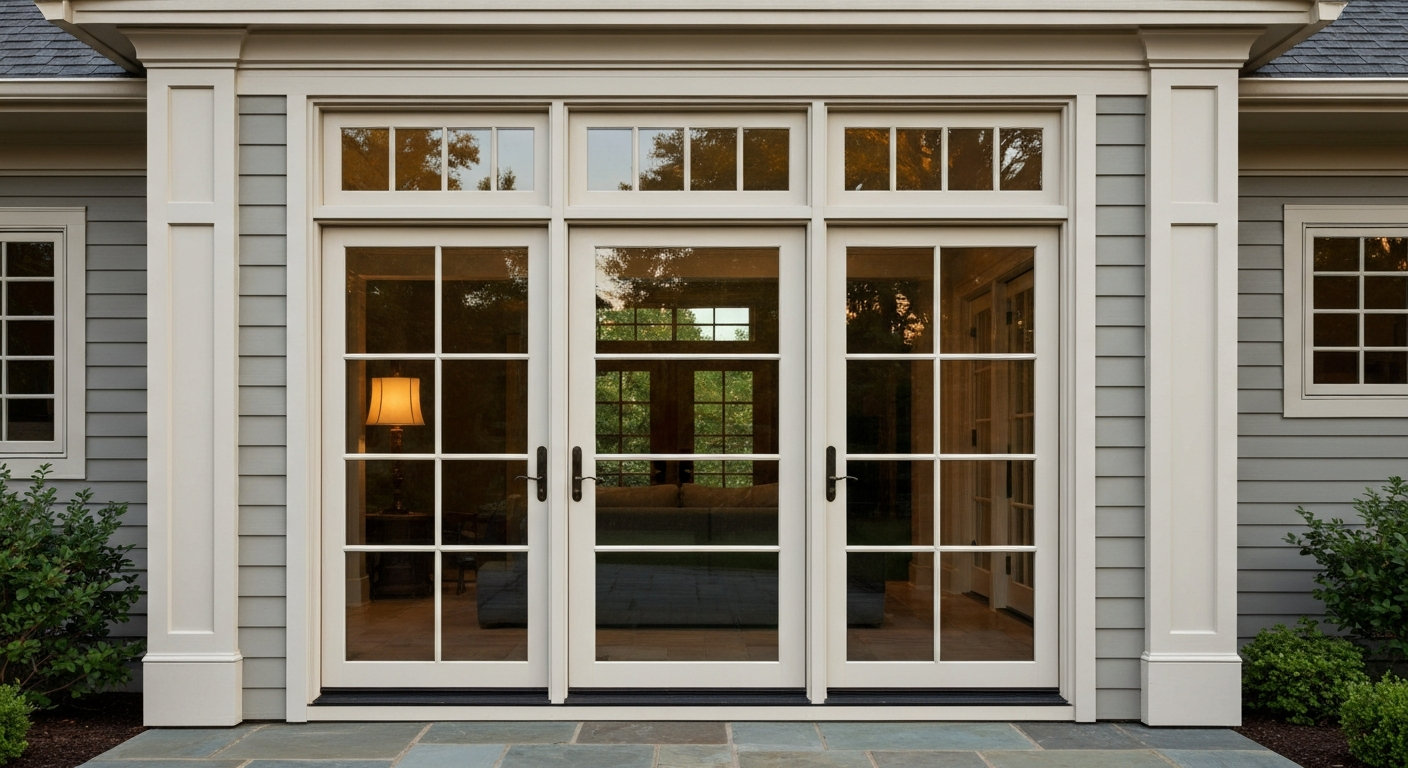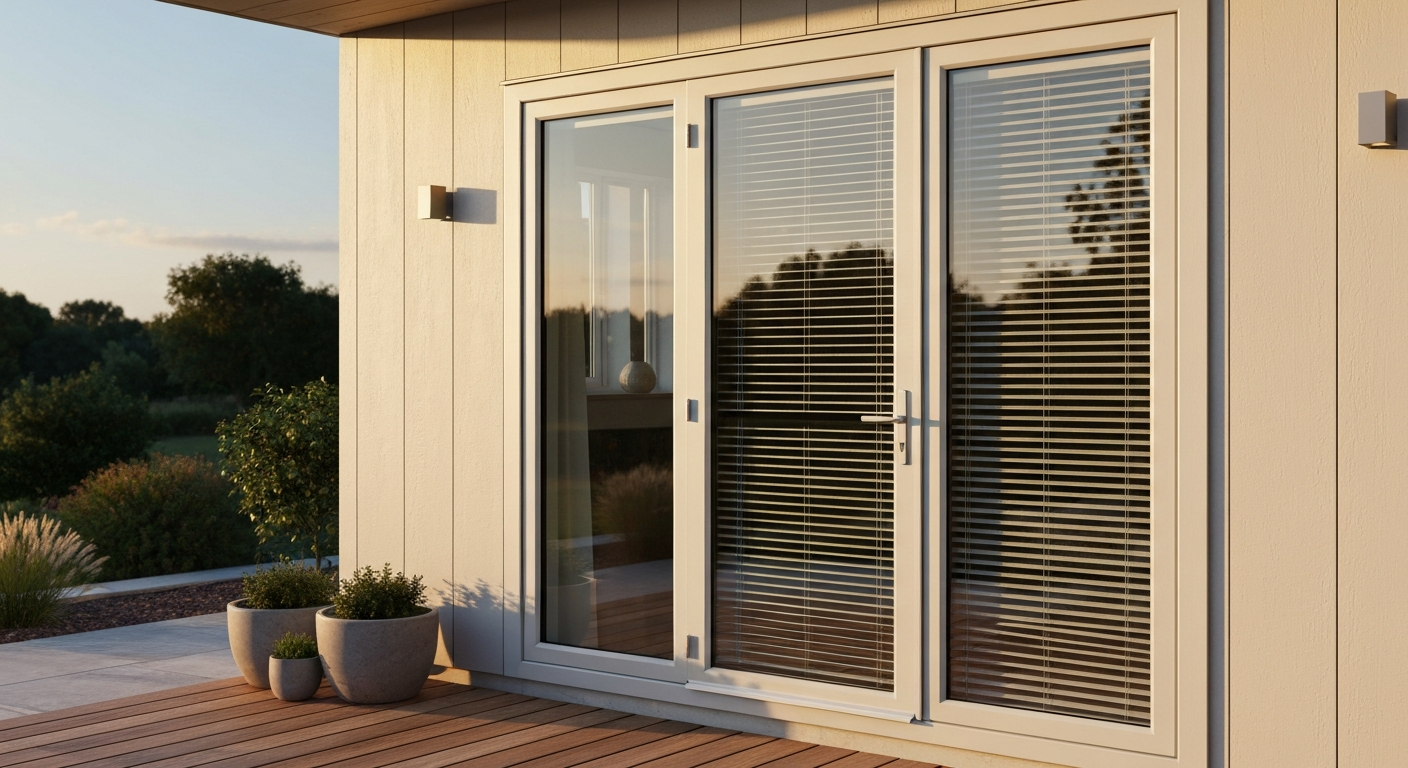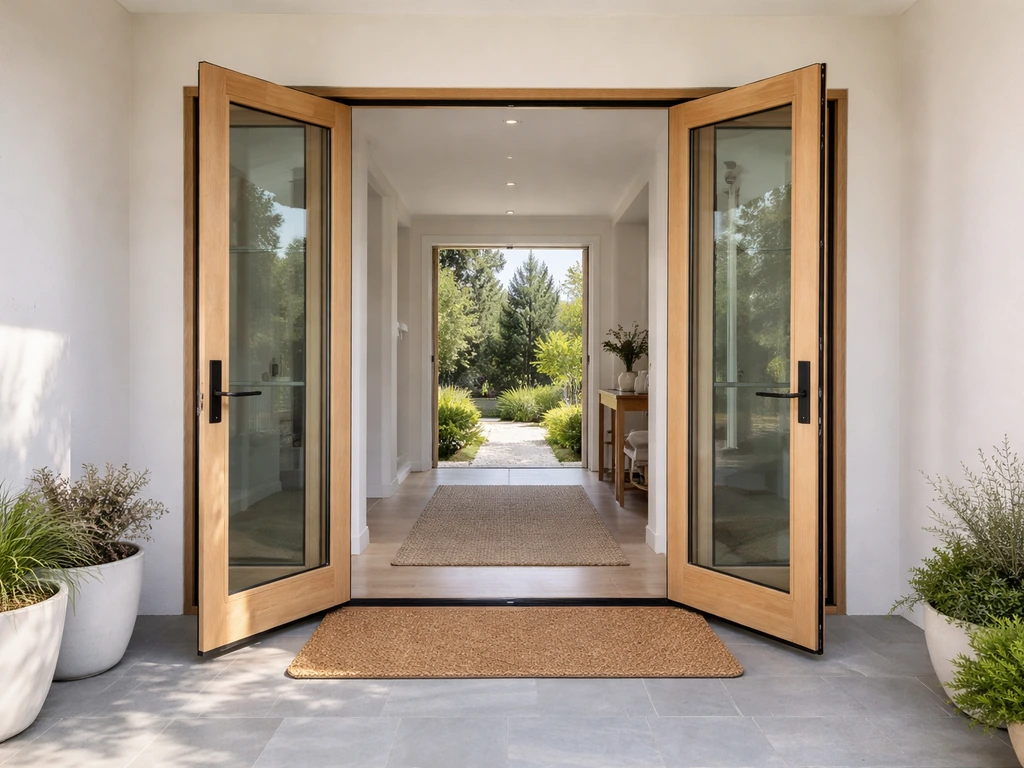
The best lock for French patio doors depends on whether you have a single-point deadbolt setup or a multipoint locking system already built into the door edge. If your doors came with a multipoint lock (look for a metal strip along the door edge with multiple hooks, rollers, or shootbolts), upgrading that system with a quality replacement multipoint kit from Truth Hardware or FUHR gives you the best security for the money. If your doors only have a single deadbolt, adding a surface-mount multipoint retrofit or a combination of a deadbolt, flush bolts on the inactive leaf, and a security bar (often called a Charlie bar) gets you very close to the same result without replacing the full door hardware.
Best Locks for French Patio Doors: How to Choose Fit

Owen Delaney
28 May 2026
How to tell what lock system your French patio doors actually need
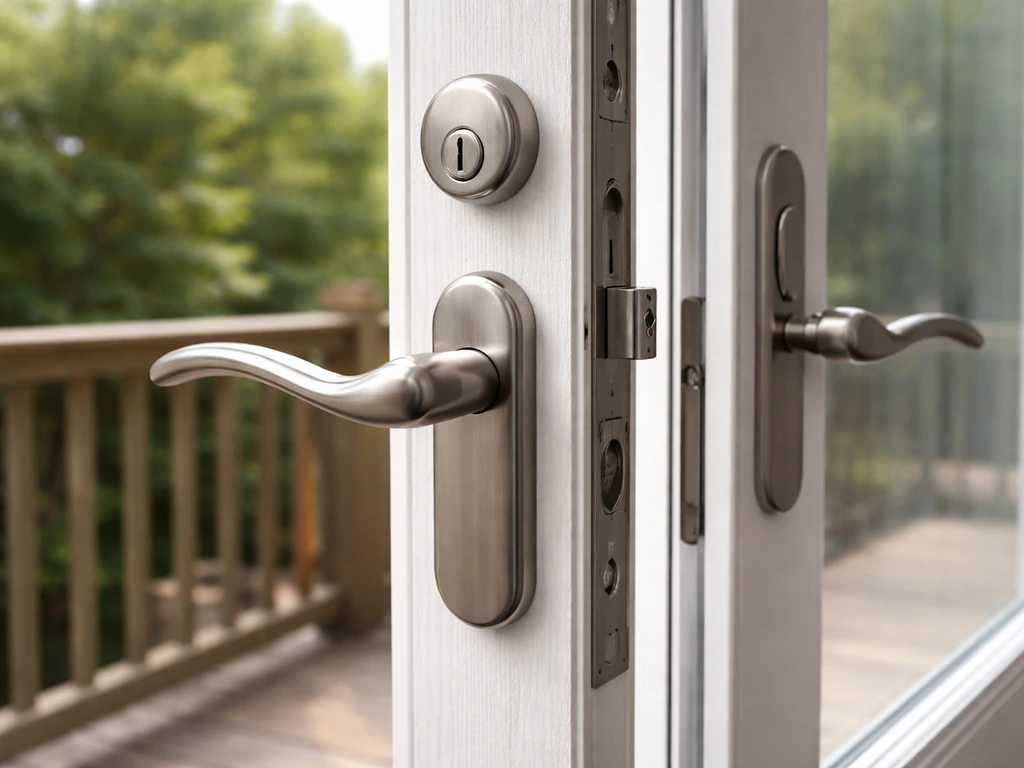
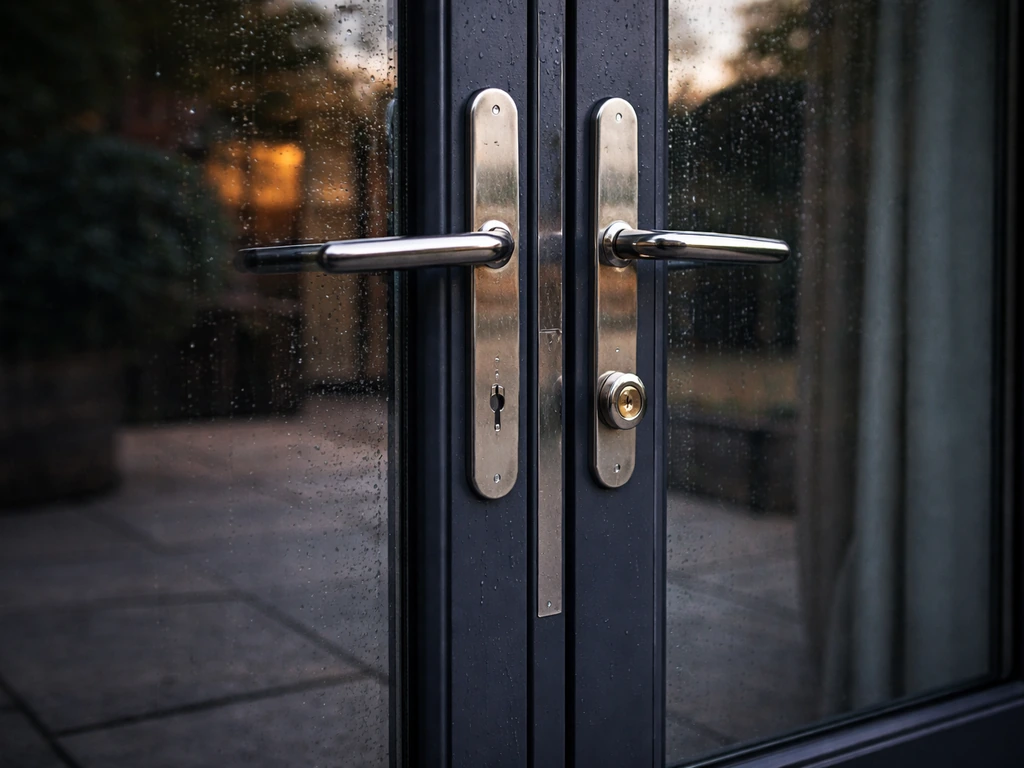
Before you spend a dollar, you need to know what you're working with. French patio doors almost always have two leaves: an active door (the one you walk through daily, which has the operating handle and main lock) and an inactive leaf (the second panel, usually held in place by flush bolts at the top and bottom of the door edge). These two leaves lock very differently, and a lot of break-ins happen because the inactive leaf hardware gets ignored.
To figure out your lock type, open the active door and look at the edge of the door slab. If you see a long metal strip running the full height of the door with several protruding points (hooks, rollers, or shootbolts that retract when you turn the handle), that's a multipoint lock. You'll typically count three to five distinct locking points along that strip. That's a much more secure baseline than a single deadbolt because there are multiple points resisting any prying attack along the seam.
If the door edge just has a single deadbolt throw and a latch, you have a single-point lock. It's the most common setup on older or budget French patio doors and the most vulnerable to forced entry at the meeting rail. Most security upgrades are aimed at exactly this situation.
For the inactive leaf, open it and inspect the top and bottom edges. You should find flush bolts (recessed into the edge so they sit flush with the wood or fiberglass) that slide up into the frame header and down into a floor strike. Because they're recessed, they're easy to miss until something goes wrong. Test them now: do they extend fully and seat firmly in the strike? If they're stiff, worn, or only partially engaging, that's your first fix.
French door locking problems you need to know about
Meeting rail gaps and seam attacks
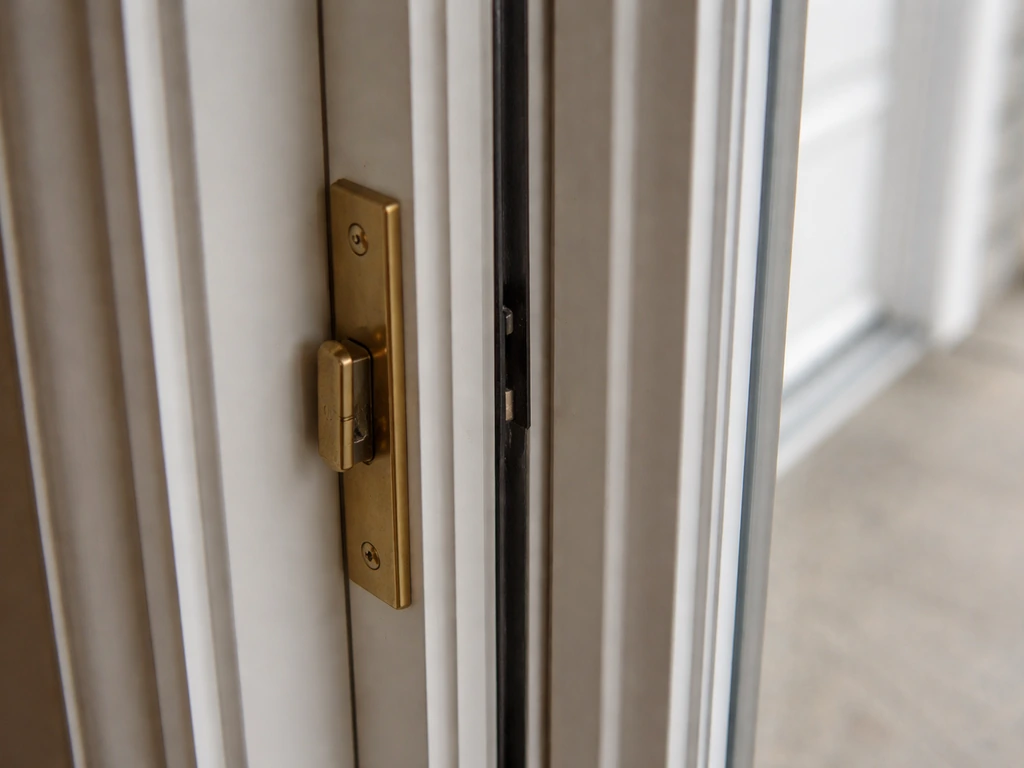
The vertical seam where the active and inactive leaves meet is the most exploited weak point on French patio doors. If there's even a small gap between the two panels, a burglar can work a pry bar or credit card-style shim into that gap and either spread the doors apart or pop the latch. A multipoint lock addresses this by locking at the top, middle, and bottom of the door simultaneously, making it nearly impossible to pry open without destroying the door. A single mid-door deadbolt leaves the top and bottom of the seam free to flex.
Inactive leaf vulnerabilities
The inactive leaf is where most homeowners get complacent. The flush bolts at the top and bottom keep it in place, but they're only as good as their engagement depth. AmesburyTruth’s Entrygard lock product tips and specs note that strike and keeper placement need to match the specific lock system so the bolts seat and maintain alignment and engagement. A bolt that's hitting the side of the strike cup rather than seating fully inside it isn't actually locking anything. Check engagement at least twice a year. If the door has settled or the frame has shifted (very common with wood French doors after a few winters), the bolts may be partially misaligned without any obvious visual clue from the inside.
Alignment and mechanical wear
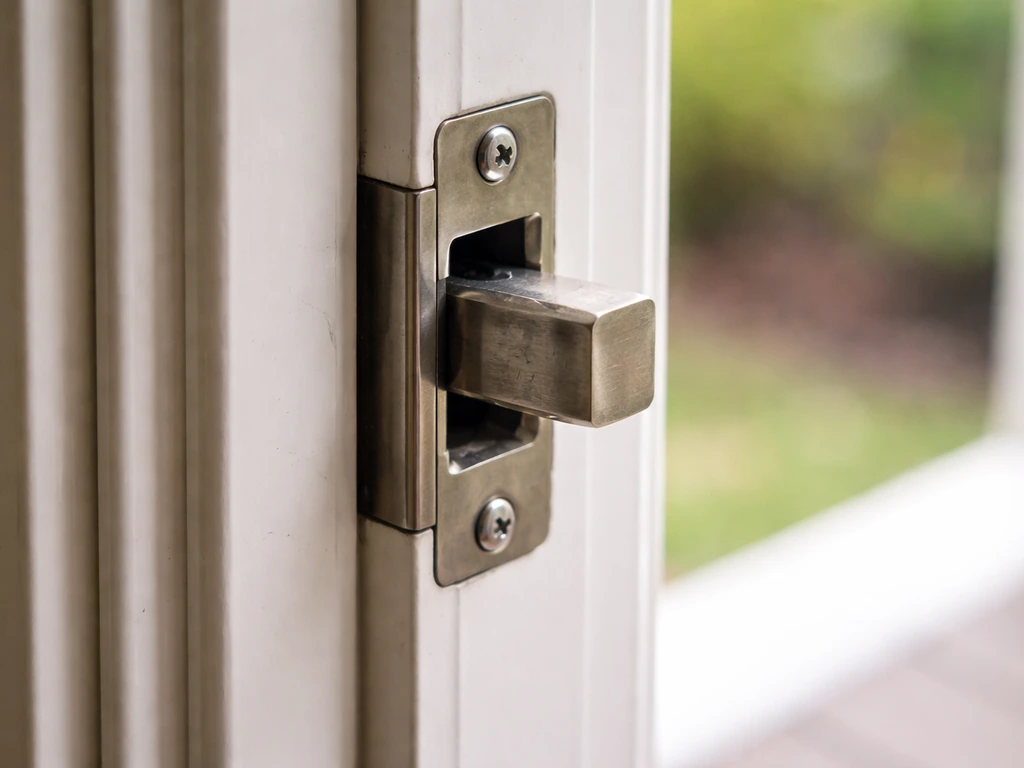
Misalignment is the silent lock killer. When a French door sags even a few millimeters, the deadbolt throw stops lining up with the strike plate, and instead of engaging fully, it rides against the edge of the strike or only projects halfway. That's enough to pass a quick check but not enough to resist a solid kick. The same goes for multipoint locks: if the hooks and rollers don't seat cleanly in their keepers, your multipoint system is essentially a single-point lock. If your lock feels stiff, sticky, or you have to lift the door handle hard to get it to throw, alignment is almost certainly the problem.
Best lock types for French patio doors, ranked by security level
| Lock Type | Security Level | Best For | Approx. Cost (hardware only) | Notes |
|---|---|---|---|---|
| Multipoint locking system (3- or 5-point) | Highest | Active door leaf on any French patio door | $150–$400+ | Truth Hardware Sentry, FUHR, Fullex; requires matching your mortise geometry |
| Deadbolt (single point, Grade 1) | Moderate | Adding keyed lock above handle latch on older doors | $30–$80 | Best used alongside flush bolt upgrades and a security bar |
| Flush bolt upgrade (manual or automatic) | Moderate (inactive leaf) | Inactive leaf top and bottom | $20–$60 per bolt | Automatic flush bolts self-engage when door closes; manual require deliberate action |
| Security bar / Charlie bar | Moderate-High (secondary) | Interior reinforcement, renters, apartments | $30–$80 | Hinged aluminum bar braced across inside; not key-operated from exterior |
| Door reinforcement kit (strike plate + door edge) | Moderate | Upgrading weak single-deadbolt setup | $20–$50 | 3-inch screws into stud, box strike; easy DIY |
| Keyed patio door lock (handle set replacement) | Low-Moderate | Replacing worn or damaged handle/latch sets | $60–$150 | Look for AmesburyTruth or Truth Hardware compatible sets |
Multipoint locking systems: the gold standard
A 3-point or 5-point multipoint lock is the single biggest security upgrade you can make to French patio doors. Truth Hardware's Sentry multipoint system, for example, comes in hook, tongue, or shootbolt locking device styles and is available in both 3-point and 5-point configurations. FUHR multipoint systems are another well-regarded option with replacement kits designed for retrofitting onto existing doors. If you’re trying to figure out who makes the best French patio doors, the lock brand and hardware lineup can be as important as the door itself FUHR multipoint systems. The key advantage of multipoint is simultaneous engagement along the full height of the door, which eliminates the gap-attack vulnerability at the meeting rail.
Security bars (Charlie bars): the renter's best friend
If you're renting, can't modify the door hardware, or just want a fast secondary layer of security, a Charlie bar is a hinged aluminum bar that braces across the inside of the door. You won't find a key-operated version for exterior use, so it only works when you're home, but it's extremely effective at preventing the door from being forced open from outside. For about $40, it's one of the best return-on-investment security additions you can make.
Top lock recommendations by scenario
Budget upgrade (under $100 total)
- Replace the strike plate with a heavy-duty box strike and secure it with 3-inch screws driven into the door frame stud (not just the jamb). This alone significantly improves kick resistance.
- Add or replace flush bolts on the inactive leaf. Manual flush bolts run $20–$30 each and are a straightforward swap.
- Install a Charlie bar on the interior for nights and when the home is occupied.
- Total spend: roughly $60–$90 depending on your door style.
Maximum security upgrade (owners, high-crime areas)
- Replace or retrofit a full multipoint locking system on the active leaf. Budget $150–$400 for hardware; add $100–$200 for professional installation if your door requires mortise work.
- Upgrade the cylinder to a high-security anti-pick, anti-drill cylinder. Look for certifications like ANSI Grade 1 or, if importing European hardware, a TS007 3-star rated cylinder.
- Replace the inactive leaf flush bolts with automatic flush bolts that self-engage when the door closes, eliminating the risk of accidentally leaving the inactive leaf unsecured.
- Add a deadbolt above the handle on the active leaf as a secondary keyed lock.
- Consider a door reinforcement kit (hinge bolts and an edge reinforcer) if your door is wood.
Renters and no-modification situations
- Charlie bar on the interior: no installation required, removable.
- A portable door alarm (battery-powered, adhesive mount) on the active door for audible deterrence.
- Wedge-style door stoppers placed at the base of each leaf to resist inward forcing when you're home.
- Confirm with your landlord whether flush bolt upgrades are allowed, as they typically count as improvements rather than damage.
Keyed-different vs. keyed-alike strategy
If you're adding a deadbolt above your existing handle lock on the active leaf, you'll be asked whether you want it keyed-alike (both locks open with the same key) or keyed-different. Keyed-alike is more convenient but means one copied or stolen key opens everything. For a back patio door specifically, keyed-different is worth the minor inconvenience since you're less likely to need fast one-handed access in an emergency. Either way, choose a Grade 1 deadbolt with a 1-inch throw minimum.
Compatibility and sizing checklist before you buy anything
This is where most DIY lock upgrades go wrong. French patio door locks are not universal, and getting a multipoint replacement wrong means a returned product, a wasted afternoon, and a door you can't secure overnight. Measure everything before ordering.
- Backset: Measure from the edge of the door to the center of the existing lock cylinder hole. Standard backsets are 2-3/8 inches or 2-3/4 inches. This must match your new lock exactly.
- Door thickness: Most French patio doors are 1-3/4 inches thick, but verify yours. Hardware designed for 1-3/4 inches won't function correctly on a 1-3/8 inch door.
- Mortise dimensions: For multipoint locks, measure the height and width of the existing mortise pocket in the door edge. Also record the distance between each locking point (called mortise spacing). Mismatching mortise spacing is the top reason multipoint replacements fail to fit.
- Handing: Determine whether your door is left-handed or right-handed. Stand outside facing the door. If the hinges are on the left and the handle is on the right, it's a right-hand door. Many multipoint systems are handed and cannot be reversed.
- Cylinder type: North American French doors typically use a standard (American) cylinder format. European-style doors (including many Andersen and Pella configurations) may use a Euro-profile cylinder. Confirm before ordering a cylinder upgrade.
- Locking device type: If replacing a multipoint, identify whether your existing system uses hooks, rollers, tongues, or shootbolts. FUHR and Truth Hardware both make different versions for each, and they are not interchangeable.
- Strike/keeper location: Check that the frame-side keepers are positioned to align with the new locking points. If you're swapping a 3-point system for a 5-point, you'll need to add two new strike cups in the frame.
If you're not sure about any of these measurements, most multipoint lock suppliers (including Truth Hardware's technical support line and AmesburyTruth's online resources) have measurement guides and will help you confirm compatibility before you order. It's worth the 10-minute call.
DIY vs. professional installation: what's actually involved
What you can realistically do yourself
- Replacing a like-for-like deadbolt or handle set where the backset and bore holes already match: 30–45 minutes, basic screwdrivers only.
- Installing a Charlie bar: 10 minutes, no tools required for most models.
- Upgrading a strike plate with a box strike and longer screws: 20 minutes, a chisel for mortising the box, and a drill.
- Replacing flush bolts on the inactive leaf when the existing bolt is the same size: 30–60 minutes, a chisel if any mortise adjustment is needed.
- Like-for-like multipoint lock replacement where the new lock matches all existing dimensions exactly: 45–90 minutes, typically involves loosening set screws on the handle, removing the old lock strip from the door edge, and sliding in the new one.
When to call a locksmith or door installer
- You're adding a multipoint system to a door that previously had only a single deadbolt (this requires routing a new mortise pocket in the door edge, which is a precise job).
- The door frame is out of square or the door has settled significantly, causing strike misalignment that requires shimming or frame adjustment.
- Your door is fiberglass or steel and you're not confident routing or drilling into it without cracking the skin.
- You need the work warrantied for insurance or lease purposes.
Professional locksmith installation for a multipoint system typically runs $100–$200 in labor on top of hardware costs, and it's money well spent if the alternative is a botched mortise that leaves the lock wobbling in the door edge.
What to verify after installation
- Close and latch the active door, then operate the lock through its full cycle. Every locking point should engage smoothly without forcing the handle.
- Check that the deadbolt (or each multipoint hook/roller) seats fully inside the strike/keeper with no daylight visible between bolt and strike edge.
- Open and close the door several times to confirm the latch doesn't bind. A latch that drags on the strike will wear both components quickly.
- Test the inactive leaf flush bolts: both top and bottom should extend fully into their strike cups without grinding or stopping short.
- With both doors locked, attempt to push and pull at the seam from the exterior (ask someone to help). There should be no perceptible give or flex at the meeting rail.
- From the exterior, verify that no locking mechanism is visible or accessible through the door gap or frame reveal.
Weatherproofing and maintenance to keep locks working year after year
Outdoor patio door locks take a beating. Moisture, UV exposure, temperature cycling, and airborne grit from the patio all accelerate wear. The good news is that a basic maintenance routine every three months keeps most lock systems running reliably for a decade or more.
Lubrication (the right way)
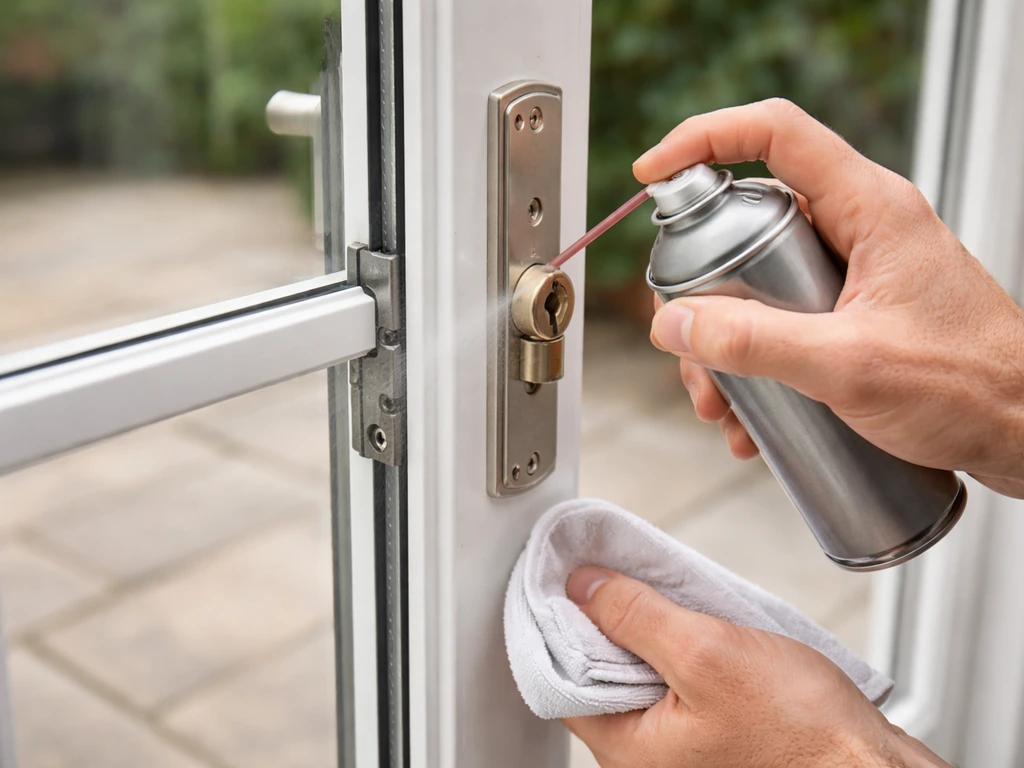
Use a dry lubricant (graphite powder or a PTFE-based spray) on lock cylinders and the multipoint mechanism. Avoid WD-40 for the cylinder: it's a solvent and water displacer, not a long-term lubricant, and it attracts dust that will gum up the cylinder pins over time. For the hinge pivot points and flush bolt slides, a light silicone grease works well. Andersen recommends dry lubricant specifically for their patio door lock mechanisms, and the same guidance applies to most other brands. For the mechanism itself, a spout-type dry graphite bottle lets you get lubricant exactly where it needs to go without overspray.
Maintenance schedule
- Every 3 months: Lubricate the lock mechanism, hinge points, and flush bolt slides. Wipe down all exterior hardware with a damp cloth to remove salt, pollen, and grit.
- Every 6 months: Test full lock engagement on both the active lock and inactive leaf flush bolts. Check strike alignment and look for any signs of the door settling (gaps at the top or bottom of the frame, difficulty throwing the bolt).
- Annually: Inspect all hardware fasteners and tighten any that have backed out. Check the weatherstripping at the meeting rail, as worn seals create gaps that make the door easier to force and harder to lock cleanly.
- After any storm or extreme weather: Inspect the door frame for swelling (wood doors) or warping, and recheck lock alignment before relying on the door for security.
Finish and hardware selection for outdoor exposure
If you live in a coastal area or anywhere with high humidity, hardware finish matters almost as much as lock quality. Oil-rubbed bronze and satin nickel finishes hold up better than chrome in salt-air environments. Stainless steel components are worth the premium if you're within a few miles of the ocean. Avoid standard brass hardware outdoors: it oxidizes quickly and looks terrible within a season. Many Truth Hardware and AmesburyTruth components are available in multiple finishes, so you can match your existing door hardware without sacrificing durability.
Your next steps
Start by inspecting what you have right now: check the active leaf lock type, test the inactive leaf flush bolts, and look for any gap or misalignment at the meeting rail. If everything is in good shape but you want to upgrade security, a multipoint lock replacement (matched to your exact mortise spacing and locking device type) is the most impactful single change you can make. If you're on a tight budget or renting, a quality strike plate upgrade, properly adjusted flush bolts, and a Charlie bar get you most of the way there for under $100. If you want the best French patio doors for the money, focus on a multipoint setup or upgraded strike and flush bolt engagement rather than paying for unnecessary extras. Once your lock hardware is sorted, a quarterly lubrication habit is all it takes to keep it reliable. French patio doors can absolutely be as secure as any other entry point in your home when the hardware is right and properly maintained. If you're shopping for the best French patio doors 2020, focus on door style, locking hardware, and weather resistance together. If you're comparing what is more secure, patio doors or French doors, the locking hardware and how well the doors align usually matter more than the name on the style. If you're also improving privacy and light control, choosing the best blinds for French patio doors can make a big difference.
FAQ
Can I install a multipoint lock on only one leaf, or do I need both active and inactive locking points upgraded?
You can retrofit multipoint hardware to the meeting rail area of the active leaf, but you still must verify the inactive leaf flush bolts fully seat top and bottom. If the inactive leaf bolts are worn or misaligned, a multipoint system won’t fully close the gap-attack risk because the top and bottom engagement depth is what actually resists prying at the frame.
What if my French patio doors already have a multipoint look-alike strip, but the lock still feels like a single deadbolt?
That usually means the locking points are not seating into their keepers. After installation, cycle the handle and confirm each hook or bolt retracts and then engages cleanly, you should feel firm resistance as each point locks. If one or two points are sticky or only partially entering the keepers, check alignment and hinge/sag issues before assuming the lock type is weak.
How do I check for alignment problems without special tools?
Close the doors and look for a visible, consistent seam gap along the vertical meeting rail. Then test engagement by turning the lock and confirming the inactive flush bolts extend fully (you should feel them seat) and the active deadbolt throw projects fully into the strike. If you can lock it easily when the door is slightly lifted or the handle is forced, alignment is almost certainly off.
Should I replace the strike plate and keepers even if my lock seems to fit?
Yes, if you’re upgrading security, because strikes and keepers get deformed or worn and can cause partial engagement even with a new lock. Replace or adjust the strike/keeper so the bolt and flush bolts hit squarely and can seat at full depth, otherwise you may pass a quick test but fail a force test.
Is a keyed-alike setup always a bad idea for French patio doors?
It’s only a liability if you or a previous owner has extra copies floating around. If keyed-alike is important for convenience, consider re-keying all related locks to a controlled keying system so you know exactly who has the master key. For back doors where speed matters, keyed-different can reduce the risk of one compromised key granting access to multiple exits.
What measurements matter most for ordering a multipoint replacement kit?
The mortise spacing along the door edge (where the locking points sit) and the door’s thickness and backset are usually the deal-breakers. Also confirm the locking device style (hook, tongue, shootbolt) matches your door’s existing mechanism type so the retraction and engagement geometry lines up.
Will a Charlie bar work with any French patio door lock setup?
It works best when the bar contacts the door at a strong structure area and prevents the meeting rail from being spread. Because French door frames vary, position matters, you should secure the bar so it reduces prying at the seam without leaving the handle-side free. If your door has a lot of clearance at the meeting rail, you may need to tighten alignment first.
Can I use WD-40 on patio door lock cylinders and multipoint mechanisms?
Avoid it for cylinders. WD-40 can displace moisture but it also leaves residues that attract dust, which can gum up cylinder pins over time. Use a dry lubricant such as graphite powder or a PTFE-based spray for cylinders, and use a light silicone grease only on hinge pivot points and flush bolt slides.
How often should I inspect the flush bolts on the inactive leaf?
At least twice per year you should check extension and full seating, and increase the frequency in areas with big temperature swings or after freeze-thaw cycles. If you notice stiffness or partial engagement, address alignment early since forcing the door to lock can permanently wear the bolt/strike interfaces.
What finish is best if I live near the ocean or in a very humid climate?
Prioritize corrosion resistance and choose stainless steel components where appropriate, or use finishes like satin nickel or oil-rubbed bronze that tend to hold up better than chrome in salt-air. Also consider matching the finish to existing hardware so the keeper screws and strike plates resist rust, not just the lock body.
Is it worth paying a locksmith, or can a DIY multipoint retrofit be just as secure?
DIY can be fine if you have the correct kit and the mortise work is accurate, but multipoint failures often come from incorrect placement that leaves wobble or partial engagement. If you see any looseness after installation, or the lock feels stiff during test cycles, stop and get it corrected, because “almost engaged” usually means “not security-grade engaged” during an attempted entry.