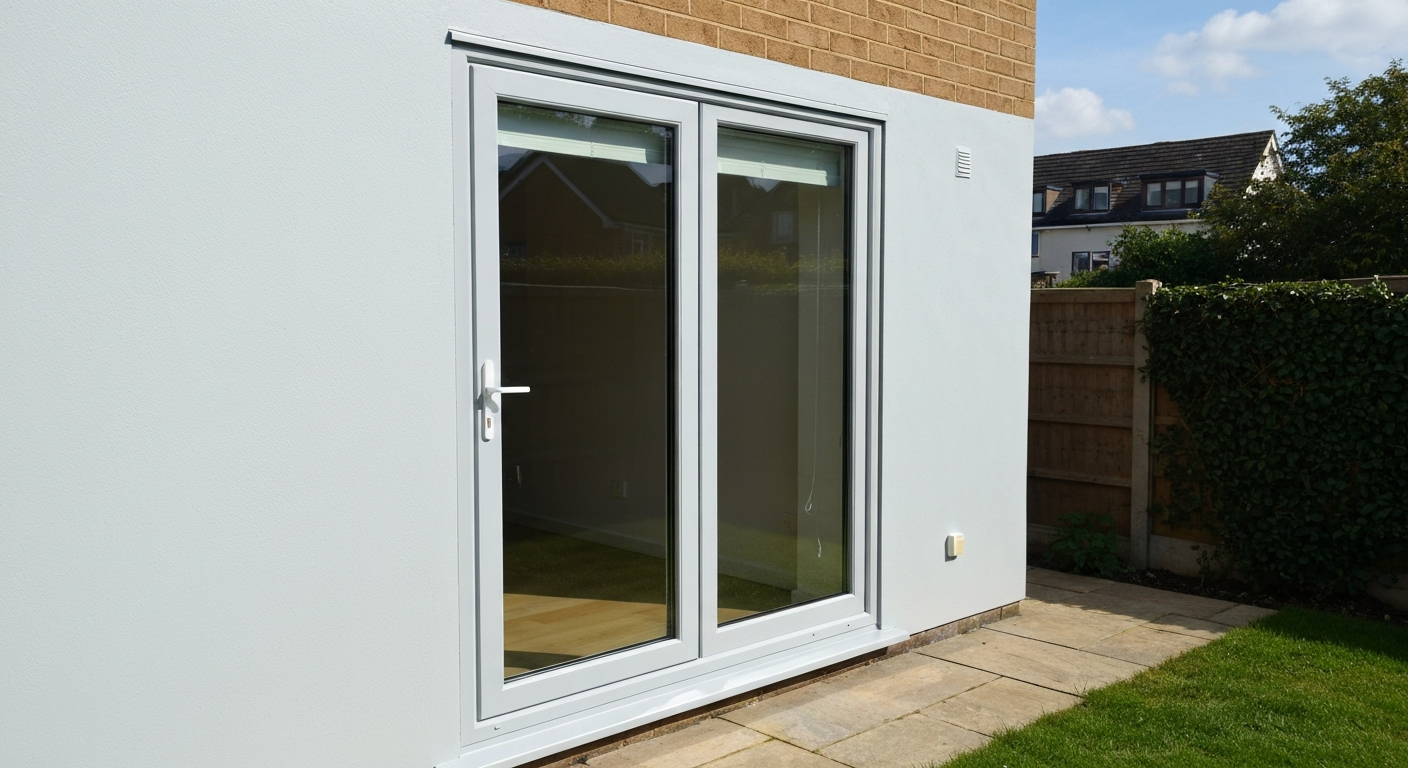
For most patio doors, a simple mix of 70% isopropyl alcohol diluted with distilled water (roughly 1 part alcohol to 2 parts water) or a pH-neutral commercial window cleaner applied with a microfiber cloth and rubber squeegee will give you a streak-free, coating-safe result. If your door has Low-E glass, tinted glazing, or an applied window film, you need to be more careful: avoid anything ammonia-based or strongly acidic until you have confirmed compatibility, because the wrong product can permanently dull or delaminate specialty coatings. This guide walks you through exactly which cleaners are safe for which glass types, the tools worth buying, DIY recipes you can mix today, and a repeatable step-by-step routine built for large patio glass panes.
Best Glass Cleaner for Patio Doors: Safe, Streak-Free Guide

Who this guide is for and what you will walk away with
Whether you just had a new sliding, French, or bifold patio door installed or you are trying to restore the clarity of glass that has gone hazy with hard-water deposits and grime, this guide covers you. I have worked through a lot of patio door maintenance questions over the years, and glass cleaning is one of those areas where homeowners either overthink it (spending money on specialty products they do not need) or underthink it (reaching for whatever is under the sink and unknowingly damaging a Low-E coating worth hundreds of dollars). By the end of this article, you will have a concrete cleaner selection checklist, compatibility rules for coated and tinted glass, a tool list, four DIY cleaning recipes with dilution ratios, a step-by-step method for large panes, a troubleshooting section, and a maintenance calendar. Where relevant, I will also flag when a cleaning problem has crossed into track lubrication, frame refinishing, or glass replacement territory, because those are different jobs requiring different approaches.
Quick picks: best cleaner type for your situation
If you just want a fast answer before reading the full guide, use this table. It maps the most common homeowner goals to the cleaner type that best fits, along with one key compatibility note for each.
| Your goal | Best cleaner type | Key compatibility note |
|---|---|---|
| Streak-free clarity on standard uncoated glass | Alcohol/distilled-water mix or ammonia-based commercial cleaner | Safe for uncoated and tempered glass; confirm no films present |
| Safe cleaning on Low-E or coated glass | pH-neutral commercial window cleaner or mild soapy water | Avoid ammonia and strong acids; check manufacturer label |
| Safe cleaning on applied window film (tints) | Diluted isopropyl alcohol or mild soapy water with soft cloth | Wait 30 days after film installation; no scrapers or abrasive pads |
| Eco- and pet-friendly option | Diluted white vinegar or EWG 'A'-rated commercial cleaner | Avoid vinegar on Low-E coatings; test on a small area first |
| Hard-water mineral deposits | Distilled white vinegar solution or citric acid-based cleaner | Do not use on Low-E; for etched glass, see troubleshooting section |
| Heavy grease or cooking residue (near grill) | Ammonia-based commercial cleaner or alcohol-based mix | Ammonia is fine on bare glass; not suitable for window films or some coatings |
How to choose a glass cleaner for patio doors
Patio door glass is not the same as a bathroom mirror. The panes are large (a standard sliding patio door can run 76 to 96 inches tall), often double or triple-glazed with Low-E coatings, sometimes tinted, and sometimes covered with an aftermarket security or solar film. Each of those conditions changes which cleaners are safe. Before you buy anything, work through these criteria.
Identify your glass type first
Check your door's paperwork or the manufacturer's website. Andersen, Marvin, Pella, and Milgard all publish care guides that list exactly which coatings their glass carries and what is and is not safe to use on it. Andersen, for example, calls out Low-E and HeatLock coatings specifically and warns against abrasive cleaners and corrosive solvents on all its frame finishes, not just the glass. Pella explicitly bans mineral spirits, toluene, xylene, naphtha, and muriatic acid on vinyl and aluminum-clad frames, and recommends testing any specialty cleaner before committing. If your door has an applied window film, 3M's technical bulletin is clear: wait 30 days after installation before any cleaning, and use only soft, non-abrasive cloths.
The five criteria that actually matter
- Coating compatibility: will it damage Low-E, tint, or film? If you cannot confirm it is safe, default to pH-neutral mild soapy water.
- Streak performance: alcohol-based and ammonia-based formulas outperform vinegar and plain water on large panes, especially in direct light.
- Residue and VOC concerns: if you have children, pets, or allergies, look for EWG 'A' or 'Verified' rated products that avoid harsh solvents and synthetic fragrance.
- Hard-water or grease load: hard-water mineral deposits need mild acid (vinegar or citric acid); grease cuts faster with alcohol or ammonia. You may need different products for different cleaning sessions.
- Frame material safety: your cleaner will inevitably contact the frame. Check it is safe for vinyl, aluminum, fiberglass, or wood as applicable.
Types of glass cleaners and which glazing they are safe for
There are five cleaner categories you will encounter. Each has a different chemistry, a different strength, and a different set of surfaces it can and cannot touch. Here is what you actually need to know about each one.
Ammonia-based cleaners
This is the category that includes most blue spray glass cleaners. Consumer Reports testing consistently puts ammonia-based formulas near the top for grease removal and low-streak finish on bare glass. They are fast-evaporating, which helps on large panes where slow-drying cleaners leave more residue. The problem: ammonia can be unsuitable for certain applied window films and some specialty coatings, and many installers' warranties restrict ammonia use on tinted or film-covered glass. 3M's own guidance notes that ammonia-based cleaners are allowable for many of their films after the 30-day cure period, but advises confirming with the installer or warranty document. If your patio door has Low-E coatings on the interior face of the outer pane (a common configuration), ammonia on the exterior glass surface is generally fine. The interior-facing Low-E coating is protected inside the sealed unit and never touched during cleaning.
Alcohol/distilled-water mixes
Isopropyl alcohol diluted with distilled water is my go-to recommendation for most patio door glass. It evaporates quickly, leaves no mineral residue (because you are using distilled water, not tap), and is safe for bare glass, tempered glass, and most applied films after their cure period. The ratio I use is 1 part 70% isopropyl alcohol to 2 parts distilled water in a spray bottle. That concentration is effective without being aggressive. Rubbing alcohol at full concentration is unnecessary and wasteful. This mix is also compatible with most frame finishes, though I still wipe frames separately with a damp cloth rather than soaking them in cleaner.
White vinegar solutions
Diluted white vinegar (around 50/50 with distilled water) is a popular eco-friendly option and genuinely effective against calcium carbonate scale, which is exactly what hard-water deposits are made of. The mild acidity dissolves the mineral bond without scratching. The catch is that AGC's facade cleaning guidance and multiple manufacturer care guides warn against highly acidic products on coated or treated glass surfaces. So use vinegar on standard uncoated glass for hard-water deposits, but keep it away from Low-E coatings, specialty coatings, and applied films. It also has a noticeable odor, though it dissipates quickly.
Mild soapy water
Every major patio door manufacturer, including Andersen, Marvin, Pella, and Milgard, lists mild soapy water as an approved cleaning method. It is the safest universal option across all glass types and frame materials. A few drops of dish soap in a bucket of warm water (not hot) covers most routine cleaning. The downside is that soap can leave a slight film if overused or if you do not rinse and squeegee thoroughly, which is why the technique matters as much as the product. For regular maintenance where there is no heavy grease or mineral buildup, this is a perfectly adequate solution.
Commercial specialty formulas
This category includes ammonia-free aerosol and foaming cleaners (like Sprayway), hard-water stain removers, and products specifically marketed as safe for Low-E or coated glass. Some of these are genuinely useful: ammonia-free aerosol cleaners can match or beat ammonia-based formulas for streak performance with less odor. Hard-water specialty cleaners that use citric acid or oxalic acid chemistry are worth having on hand if you live in a high-mineral-content water area. AGC explicitly prohibits hydrofluoric acid and fluorine-derivative products on coated glass, so always read the ingredient list, not just the marketing claims on the front of the bottle.
Safety and compatibility rules for coatings, tints, Low-E, and sealed units
This is the section most homeowners skip and then regret. A Low-E coating is a microscopically thin metallic layer applied to the glass surface inside a sealed insulating glass unit (IGU). You cannot accidentally clean it off on most modern IGUs because it faces inward, protected by the hermetic seal. But some older configurations and some aftermarket films place coatings on exterior-facing surfaces, where they are absolutely vulnerable to the wrong cleaner. Here is how to protect yourself.
- Always check the manufacturer's documentation before using any cleaner on a door less than five years old with specialty glazing.
- Never use hydrofluoric acid, fluorine derivatives, or strong alkaline strippers on any coated or treated glass. AGC's guidance on this is industry-wide, not brand-specific.
- Avoid abrasive pads, steel wool, razor scrapers, and stiff brushes on all patio door glass. Even fine scratches on glass create streaks and can accelerate surface degradation.
- Do not clean glass in direct sunlight or when the surface is hot. Cleaner evaporates too fast, leaves residue, and can cause uneven thermal stress on large panes. Every major manufacturer flags this.
- If you are unsure whether your glass has an exterior coating or an applied film, test any new cleaner on a small inconspicuous corner and inspect after 24 hours before cleaning the full pane.
- Andersen specifically warns against applying aftermarket films to their insulating glass units, noting it can void warranties and affect performance.
- Fogging or milky condensation between panes is a seal failure, not a cleaning problem. No cleaner or technique will fix it. See the troubleshooting section for what to do.
Tools and supplies worth buying
The right tools make a bigger difference on patio doors than on smaller windows, purely because of surface area. A 72-inch patio door pane is roughly 8 to 10 times larger than a standard interior window, so inefficient technique wastes a lot of time and leaves more streaks. Here is what I keep in my cleaning kit.
| Tool / Supply | What to look for | Why it matters for patio doors |
|---|---|---|
| Microfiber cloths | 16x16 inch or larger, 300+ GSM, lint-free | Removes cleaner without scratching; essential for large panes and frame wipe-down |
| Rubber squeegee | 10-14 inch blade for large panes; brass or stainless channel | Fastest, most streak-free method for big glass surfaces; rubber blade lasts longer than foam |
| Trigger spray bottle (chemical-resistant) | 32 oz, adjustable nozzle | Gives even coverage on large panes; use one bottle per formula to avoid cross-contamination |
| Non-abrasive scrubber / washer sleeve | Soft cotton or microfiber sleeve on a T-bar handle | For applying soapy water to the full pane before squeegeeing; much faster than cloth alone |
| Distilled water (gallon jugs) | Any grocery-store brand | Eliminates mineral spotting in DIY recipes; tap water causes the streaks people blame on the cleaner |
| Bucket (2-3 gallon) | Flat-bottomed, stable | Needed for soapy water method; a bucket with a built-in wringer sleeve saves time |
| Lint-free chamois or detailing cloth | Natural or synthetic chamois | For final edge and corner drying where the squeegee cannot reach |
| Soft-bristle brush or old toothbrush | Non-abrasive bristles only | For cleaning track channels and corners without scratching aluminum or vinyl |
A note on squeegee size: a 14-inch squeegee blade is efficient on a full-height patio pane but harder to control in corners. I usually do two passes with a 14-inch blade down the center field of the glass, then switch to a 10-inch blade or a folded microfiber cloth for the edges. This is the same approach professional window cleaners use and it genuinely saves re-cleaning time.
DIY cleaning recipes and dilution guidelines
These four recipes cover the most common patio door cleaning scenarios. All of them use distilled water rather than tap water to prevent mineral spotting. If you only mix one, make the alcohol/distilled-water formula: it handles 90% of routine cleaning tasks safely.
Recipe 1: Alcohol/distilled-water (everyday cleaner)
- 1 cup 70% isopropyl alcohol
- 2 cups distilled water
- Optional: 1 drop of dish soap for light grease (more than that causes streaking)
- Mix in a 32 oz spray bottle and shake gently
- Safe for: standard glass, tempered glass, most applied films (after 30-day cure), most frame finishes
- Not recommended for: actively degraded or delaminating coatings; test first on unknown specialty glass
Recipe 2: Vinegar/distilled-water (hard-water deposits)
- 1 cup distilled white vinegar (5% acidity, standard grocery store variety)
- 1 cup distilled water
- Mix in a spray bottle; no need to dilute further for surface mineral deposits
- Apply, let sit 2 to 3 minutes on heavy scale, then scrub with a non-abrasive pad and squeegee off
- Safe for: uncoated standard glass and tempered glass
- Not recommended for: Low-E coatings, specialty coatings, window films, or stone/grout surrounding frames
Recipe 3: Mild soapy solution (universal safe option)
- 2 to 3 drops of pH-neutral dish soap (not antibacterial or citrus-additive varieties)
- 1 gallon warm distilled water in a bucket
- Do not exceed 3 drops; excess soap causes streaking that is harder to remove than the original grime
- Apply with a washer sleeve or microfiber cloth, then squeegee and edge-dry
- Safe for: all glass types, all coatings, all frame materials including wood, vinyl, fiberglass, and aluminum
- Best use case: routine maintenance cleaning on any patio door regardless of glazing type
Recipe 4: Diluting a commercial concentrate
- Follow the label ratio exactly; most concentrates specify 1 oz per gallon or similar
- Always dilute with distilled water, not tap, to preserve performance
- Do not mix concentrate with vinegar or alcohol solutions; chemical interactions can reduce effectiveness or create hazardous fumes
- Confirm the concentrate is rated safe for your specific glass type before use
- Store diluted solution in a labeled chemical-resistant spray bottle away from children and pets
Step-by-step method for cleaning large patio glass panes
Large patio door panes reward a systematic approach. Jumping straight to spraying and wiping on a 76-inch pane almost always leaves streaks because the cleaner dries unevenly. This is the method I have settled on after years of patio door maintenance, and it is consistent with the professional squeegee technique the IWCA trains its members to use.
Preparation
- Choose the right time: cloudy day or early morning before the sun hits the glass. Cleaning in direct sunlight causes cleaner to evaporate before you can squeegee it, leaving residue. Every major manufacturer flags this.
- Remove the screen panel if your door has one and set it aside for separate cleaning.
- Dust or dry-brush the glass surface and frame to remove loose dirt and cobwebs. Using wet cleaner on dusty glass turns grit into a mild abrasive.
- Mix your chosen recipe and have your squeegee, washer sleeve or microfiber cloths, and a chamois or dry microfiber ready before you start.
- Lay an old towel or absorbent mat at the base of the door to catch drips on the floor and track.
Washing the glass
- Apply your cleaning solution generously across the entire pane using a washer sleeve on a T-bar or a large microfiber cloth. Work from top to bottom in overlapping horizontal strokes to cover the full surface before any area dries.
- For stubborn spots (bird droppings, sap, dried splashes), let the solution soak for 30 to 60 seconds, then gently agitate with a non-abrasive scrubber. Do not press hard. If a spot will not release, re-wet and wait longer rather than scrubbing harder.
- On the interior side of sliding doors, pay attention to where the door overlaps the frame, as grime accumulates in those edge channels.
Squeegee technique
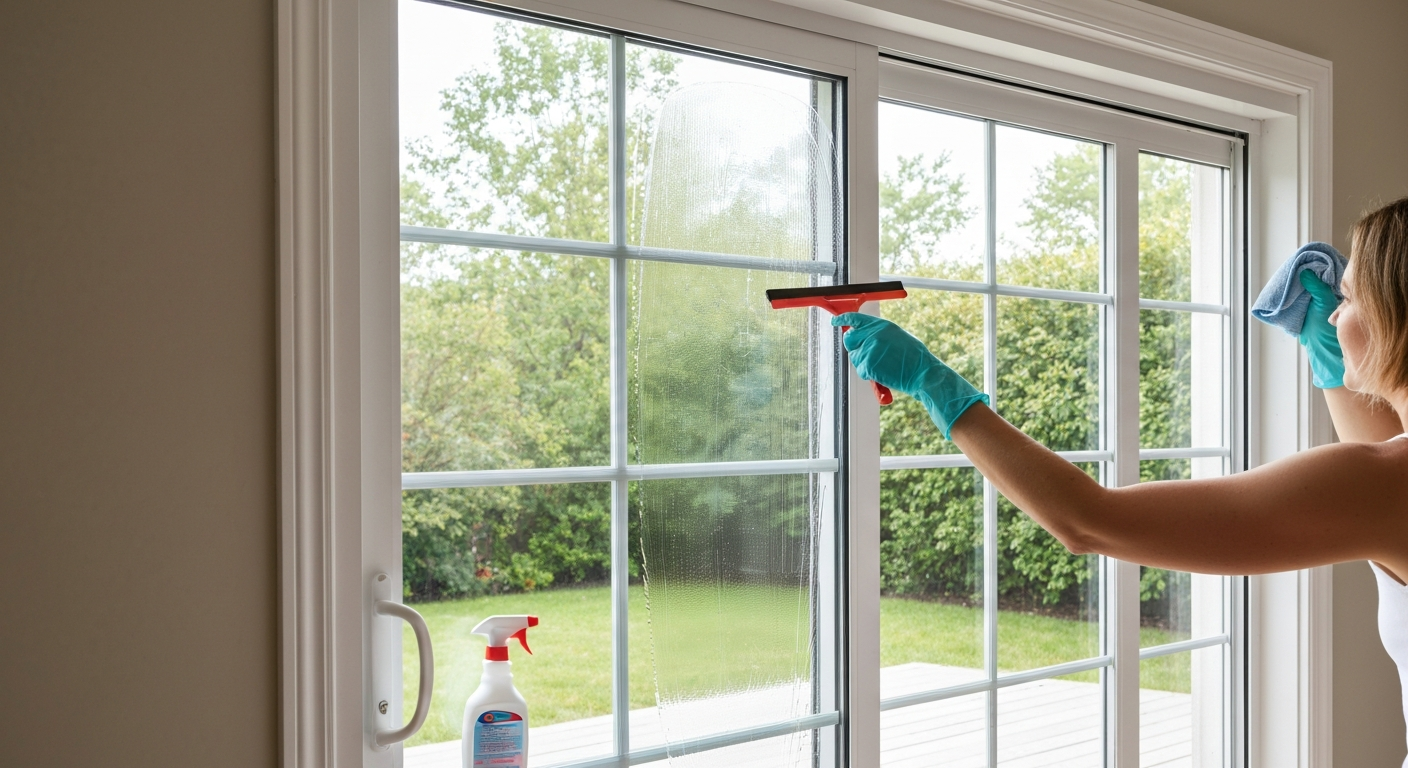
- Start at the top left corner of the pane. Place the squeegee blade flat against the glass at a slight angle (about 30 degrees from vertical) and pull horizontally across to the right edge in one smooth stroke.
- After each horizontal pass, wipe the squeegee blade with a clean dry microfiber cloth or chamois to remove accumulated water and prevent it from being redistributed.
- Overlap each pass by about an inch so you do not leave a dry gap between strokes.
- On very tall panes (over 84 inches), it is easier to work in two horizontal sections: top half first, then bottom half, rather than trying to reach across the full height.
- Finish by running the squeegee vertically down each side edge to pick up any remaining drips.
- Use a folded dry microfiber or chamois to hand-dry the bottom edge and all corners where the squeegee blade cannot reach cleanly.
Frame, track, and screen cleaning
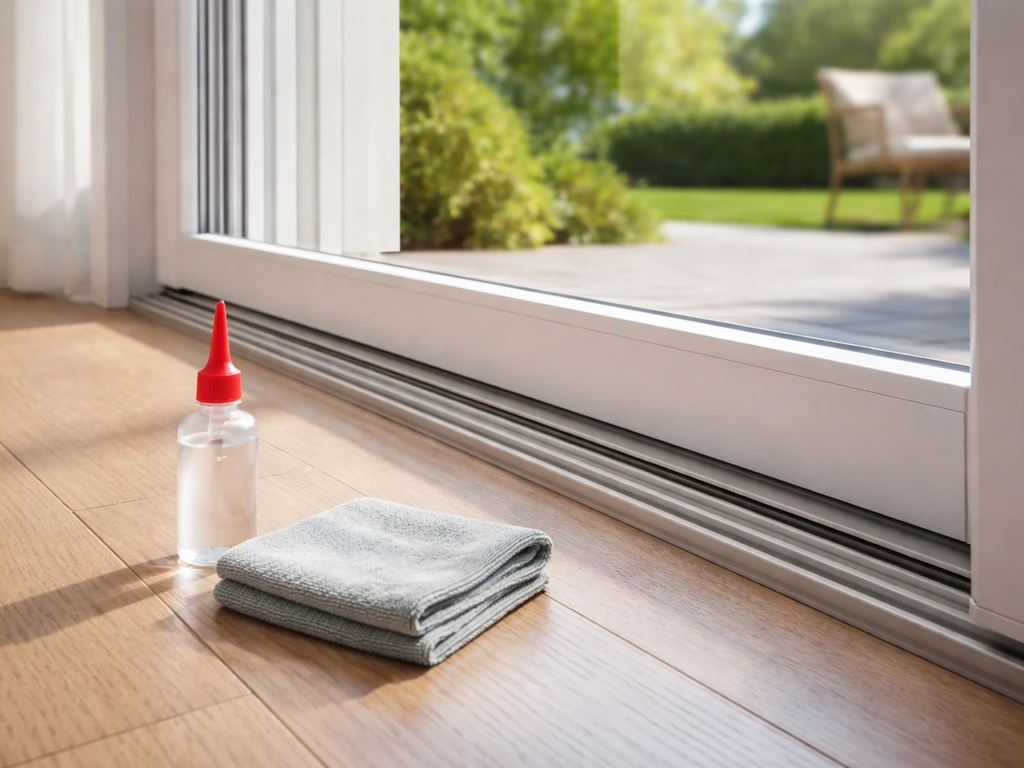
Once the glass is done, wipe down the frame using mild soapy water and a damp microfiber cloth. Rinse with a clean damp cloth and dry immediately to avoid water pooling in joints. For the track channel at the bottom (or top, on top-hung sliding doors), use a soft-bristle brush or old toothbrush to loosen compacted debris, then vacuum out the channel. Tracks accumulate grit fast, and that grit is one of the main reasons rollers wear out prematurely. Cleaning your tracks regularly is a companion habit to keeping your rollers lubricated, which is a separate maintenance task worth addressing on its own schedule. For screens, lay them flat on a clean surface, wash gently with mild soapy water and a soft brush, rinse with a hose on a low-pressure setting, and let them dry fully before reinstalling.
Drying and final inspection
- Step back and view the pane from a low angle against available light to check for streaks or missed spots. Low-angle lighting reveals residue that is invisible straight-on.
- Buff any remaining streaks immediately with a dry lint-free microfiber cloth using circular motions. If streaks persist, a light mist of the alcohol/distilled-water formula followed by a clean, dry cloth usually resolves them.
- Reinstall the screen once it is completely dry.
Troubleshooting common patio door glass problems
Persistent streaks after cleaning
Streaks after cleaning almost always come from one of three causes: tap water mineral content in your recipe (switch to distilled water), too much soap (reduce to 2 drops per gallon maximum), or cleaning in direct sun or on a hot surface (reschedule). Occasionally streaks come from a dirty squeegee blade. Inspect the rubber edge and replace it if it has nicks, kinks, or hardened sections. A new replacement blade costs around $3 to $8 and makes a noticeable difference.
Hard-water deposits and mineral staining
Hard-water deposits are calcium and magnesium carbonate minerals left behind when water evaporates. On uncoated glass, the vinegar/distilled-water recipe or a commercial citric acid cleaner applied with a non-abrasive pad will dissolve most surface deposits. Let it dwell for 3 to 5 minutes on heavy buildup before scrubbing. The critical distinction here is between a surface deposit (white, chalky, dissolves with acid) and true glass etching (permanent microscopic roughening of the glass surface). Etching looks similar but does not dissolve with cleaning solutions. It typically requires cerium oxide polishing paste applied with a drill-mounted pad, or in severe cases, glass replacement. This is a restoration job, not a cleaning job, and most professional window cleaning contracts explicitly exclude it. If you are not sure which you are dealing with, try the vinegar recipe on a small area first: if the haziness dissolves and the glass is clear underneath, it was a deposit. If the haziness remains after cleaning, you likely have etching.
Fogging or condensation between panes
If you see haze, condensation, or milky deposits between the panes of your insulating glass unit (IGU), that is a failed hermetic seal, not a cleaning problem. FGIA and IGMA guidance states that fogging or a milky appearance between IGU panes indicates hermetic seal failure and recommends replacement of the sealed insulating glass unit or the full sash/window depending on frame access and warranty. The desiccant material inside the spacer bar that absorbs moisture has been exhausted, allowing humid air into the sealed cavity. According to FGIA and IGMA guidelines, the appropriate fix is replacement of the sealed IGU or the full sash, depending on your door's construction and whether the frame allows reglazing. This is not a DIY cleaning fix. Some companies offer IGU defogging services that drill small holes and inject a drying agent, but the industry consensus is that this is a temporary measure and that proper seal restoration requires a new unit. If your door is under warranty, contact the manufacturer before doing anything else.
Mildew or biofilm on frames and rubber seals
Mildew on rubber weatherstripping and frame corners is common in humid climates. A diluted solution of one part white vinegar to one part distilled water applied with a soft cloth usually removes light mildew. For stubborn mildew, a small amount of diluted hydrogen peroxide (3% solution) on a cloth works well without the harshness of bleach, which can degrade rubber seals and discolor vinyl over time. Do not let any wet cleaning solution pool in the track channel; dry it out promptly after cleaning.
Cleaning frequency and maintenance schedule
How often you clean depends on your environment. A patio door in a dry, low-traffic area with clean air can go 3 to 4 months between full cleans. A door facing a backyard grill, near a saltwater coast, or in a high-mineral-water area needs attention every 4 to 6 weeks. The practical answer for most homeowners is a quick wipe-down monthly and a full clean with squeegee and track cleaning every season.
| Frequency | Task |
|---|---|
| Monthly | Quick wipe of glass with alcohol/distilled-water mix and microfiber cloth; inspect weatherstripping for grime or mildew |
| Every 3 months (seasonal) | Full glass clean with squeegee technique; clean tracks and brush out debris; check and clean screen |
| Every 6 months | Full clean plus frame wipe-down with soapy water; inspect rubber seals for cracking; check for hard-water buildup and treat if present |
| Annually | Full clean plus inspection of rollers and track hardware; lubricate rollers and track if needed; check glazing seals around frame; inspect for any IGU fogging |
The annual inspection is the one most homeowners skip, and it is the most important. Checking the glazing seals, roller condition, and track hardware once a year catches problems before they become expensive. Track debris is one of the leading causes of roller wear on sliding patio doors, so a clean track directly extends the life of the hardware. Similarly, if you notice the frame finish is chalking, fading, or peeling, that is a refinishing conversation, which is a separate topic involving compatible paints and primers for whatever your frame material is. If you are wondering can you paint upvc patio doors, consult a dedicated guide on painting uPVC doors for compatible primers, surface prep, and warranty considerations. For guidance on choosing compatible coatings, see the guide to the best paint for patio door frames.
When to call a professional (and what to expect)
Routine glass cleaning is a clear DIY job. But there are thresholds where professional service is the right call. Hard-water etching that requires cerium oxide polishing is one: it involves a drill-mounted pad and specialty compound, and getting it wrong scratches the glass permanently. IGU seal failure is another: replacement requires removing the glazing stops, sourcing a correctly sized sealed unit (which means getting exact sash measurements from the manufacturer or a glass supplier), and resealing correctly. Professional window cleaners using water-fed pole systems with purified deionized water are genuinely useful for large patio doors on upper floors or where ladder access is difficult; the purified water method leaves no mineral residue and requires no squeegee work. Expect to pay $8 to $20 per pane for a professional exterior window clean depending on location and access difficulty.
Final checklist before you buy anything
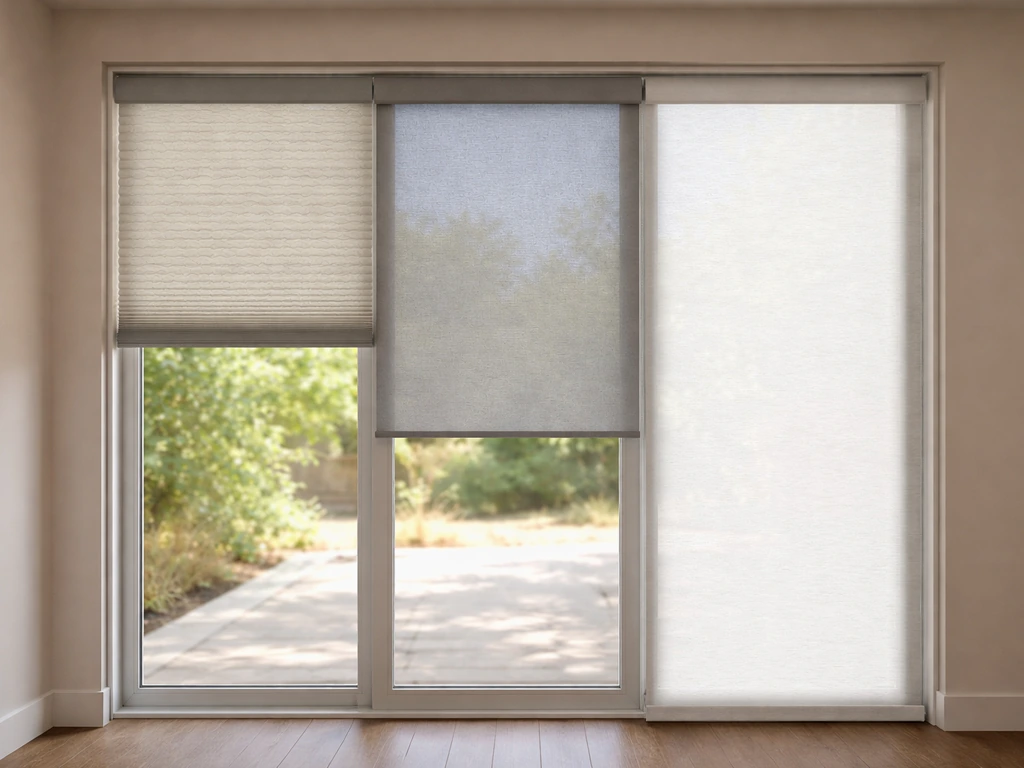
Before spending money on cleaners and tools, run through this quick checklist to make sure you buy exactly what you need and nothing that could damage your door. If you're also considering light control or UV protection, see our guide to the best shades for patio doors for compatible options.
- Identify your glass type: standard, Low-E, tinted, or applied film. Check the manufacturer's care guide or call the dealer.
- Identify your frame material: vinyl, aluminum, fiberglass, or wood. Confirm cleaner is safe for the frame, not just the glass.
- Decide on your primary concern: routine maintenance, hard-water removal, grease, or eco/pet-friendliness. Use the quick selection table at the top of this guide.
- Buy distilled water from the grocery store if you are mixing DIY recipes. This one change eliminates most streak complaints.
- Get a rubber squeegee with at least a 10-inch blade if you do not own one. This is the single highest-impact tool purchase for large patio panes.
- Stock at least two microfiber cloths per cleaning session so you always have a dry one available for drying edges and buffing streaks.
- Do not use any cleaner for the first time on the full pane. Test on a small lower corner and inspect after a few minutes.
- If you have a new window film, mark your calendar 30 days from installation before cleaning.
FAQ
What types of glass cleaners are safest and most effective for patio doors, including coated/Low‑E/tinted glass?
Safe, effective types: 1) Mild soapy water (few drops of dish soap in distilled or deionized water) — safest for all glass and frames. 2) Alcohol/distilled‑water mixes (e.g., 2:1 water:2‑propanol) — good for grease and quick evaporation; generally safe for films after cure. 3) Commercial non‑abrasive window cleaners (ammonia‑based) — excellent for removing grease and streaks but may be unsuitable for some films/ Low‑E coatings; check manufacturer guidance. 4) Vinegar solutions (50:50 white vinegar:water) — economical for light mineral/film deposits but should be avoided on sensitive coatings and some frame finishes. 5) Specialty commercial formulas labeled safe for coated/Low‑E/tinted glass or window film. Avoid strong acids/alkalis, hydrofluoric‑type products, solvents (toluene, xylene, mineral spirits) and abrasive cleaners or pads.
How do I tell if a cleaner is compatible with my patio door’s glass or film?
Check the door/glass manufacturer and film installer instructions first. Look for product statements such as “safe for Low‑E,” “window film compatible,” or manufacturer approval. If unsure, test the cleaner on a small, inconspicuous area for 24–48 hours and inspect for haze, staining or finish change. When in doubt, use mild soapy water or contact the manufacturer/installer for guidance.
What step‑by‑step method should I use to clean large patio door glass panes to avoid streaks and damage?
1) Work out of direct sun and on cool glass. 2) Remove dust/debris with a soft brush or vacuum from frame and sill. 3) Pre‑rinse with distilled/deionized water if very dirty. 4) Apply cleaner (spray or wash) and loosen grime with a soft microfiber or non‑abrasive scrubber. 5) Use a rubber squeegee top→bottom (wipe blade between strokes) or a clean microfiber towel to dry. 6) Buff edges with a dry microfiber to remove remaining film. 7) Inspect for spots and repeat spot‑treatment if needed. For large exterior panes consider a deionized water‑fed pole system for safe reach.
How should I clean patio door frames, tracks and rollers without damaging finishes or hardware?
Frames: use warm soapy water and a soft cloth; avoid solvents and abrasives. Rinse and dry. Tracks: remove loose debris with vacuum or brush, scrub with soapy water and a toothbrush or non‑metallic scrubber, rinse and dry thoroughly. Rollers/tracks: after cleaning, apply manufacturer‑recommended lubricant (generally a dry PTFE or silicone spray; avoid heavy grease that attracts dirt). Do not use abrasive scrapers on tracks or frames. Test specialty products on a hidden area first.
What tools and supplies should I keep on hand for patio door cleaning and maintenance?
Essential tools: microfiber cloths (lint‑free), rubber squeegee (appropriate width), soft non‑abrasive scrubbers, distilled or deionized water, spray bottle, soft brush or small vacuum for tracks, toothbrush or narrow brush, mild dish soap, isopropyl alcohol (for grease spots), silicone or PTFE dry lubricant (for rollers), gloves and safety glasses. Optional: water‑fed pole with deionized water for exterior, masking tape for testing, and a magnifying glass for inspecting etching or seal failures.
What DIY cleaner recipes work well and when should I avoid them?
Safe recipes: 1) Mild: 1–2 drops dish soap per quart of distilled water — best everyday cleaner. 2) Alcohol blend: 2 parts distilled water : 1 part isopropyl alcohol (70%) — good for grease and quick drying. 3) Vinegar spotter: 50:50 distilled water:white vinegar — for light mineral smudges (avoid on some coatings/film). Avoid homemade acidic, abrasive or solvent‑rich mixes on Low‑E, factory coatings, or recently installed window films (wait manufacturer‑recommended cure period, usually 30 days). Always test first on an inconspicuous area.