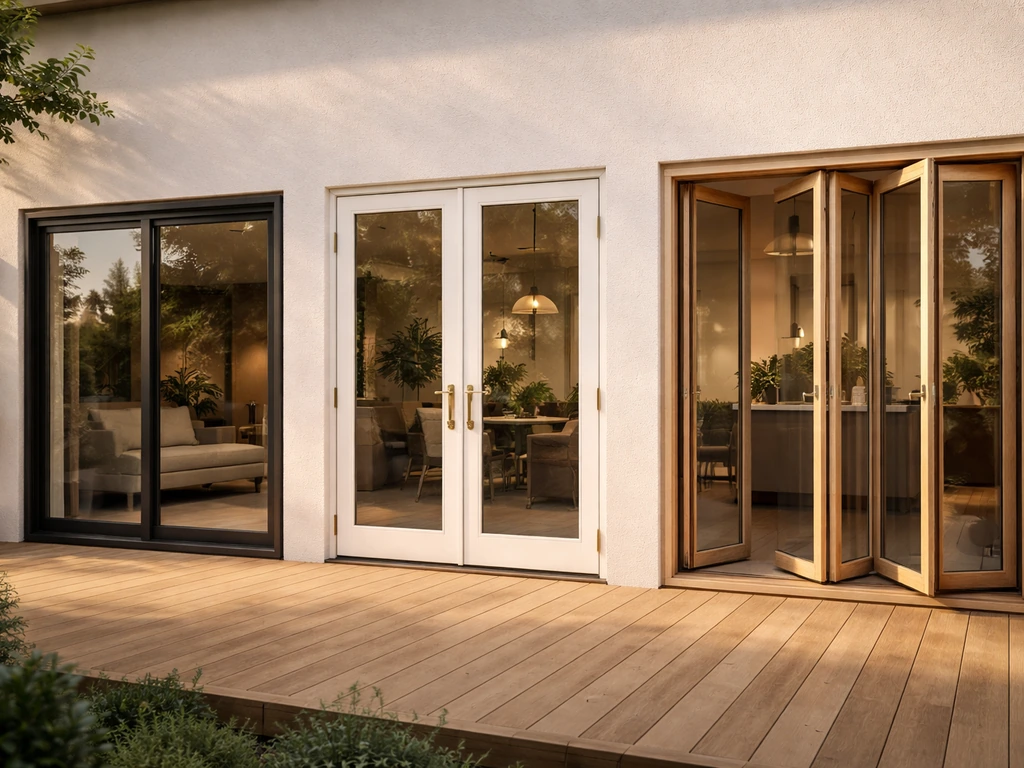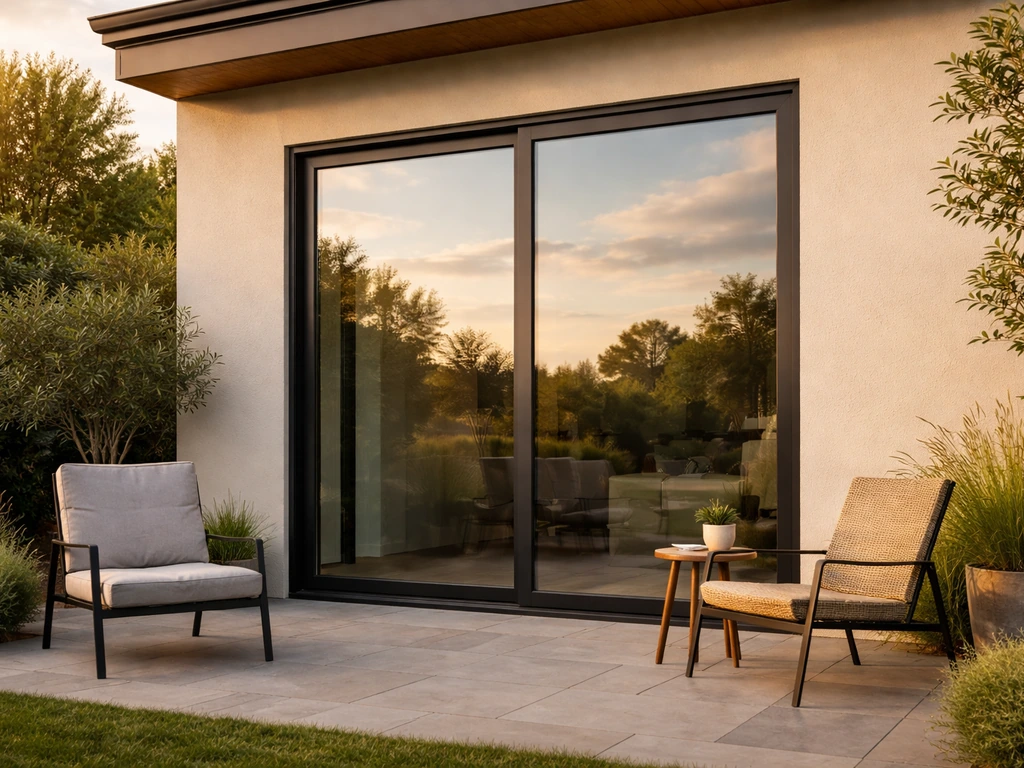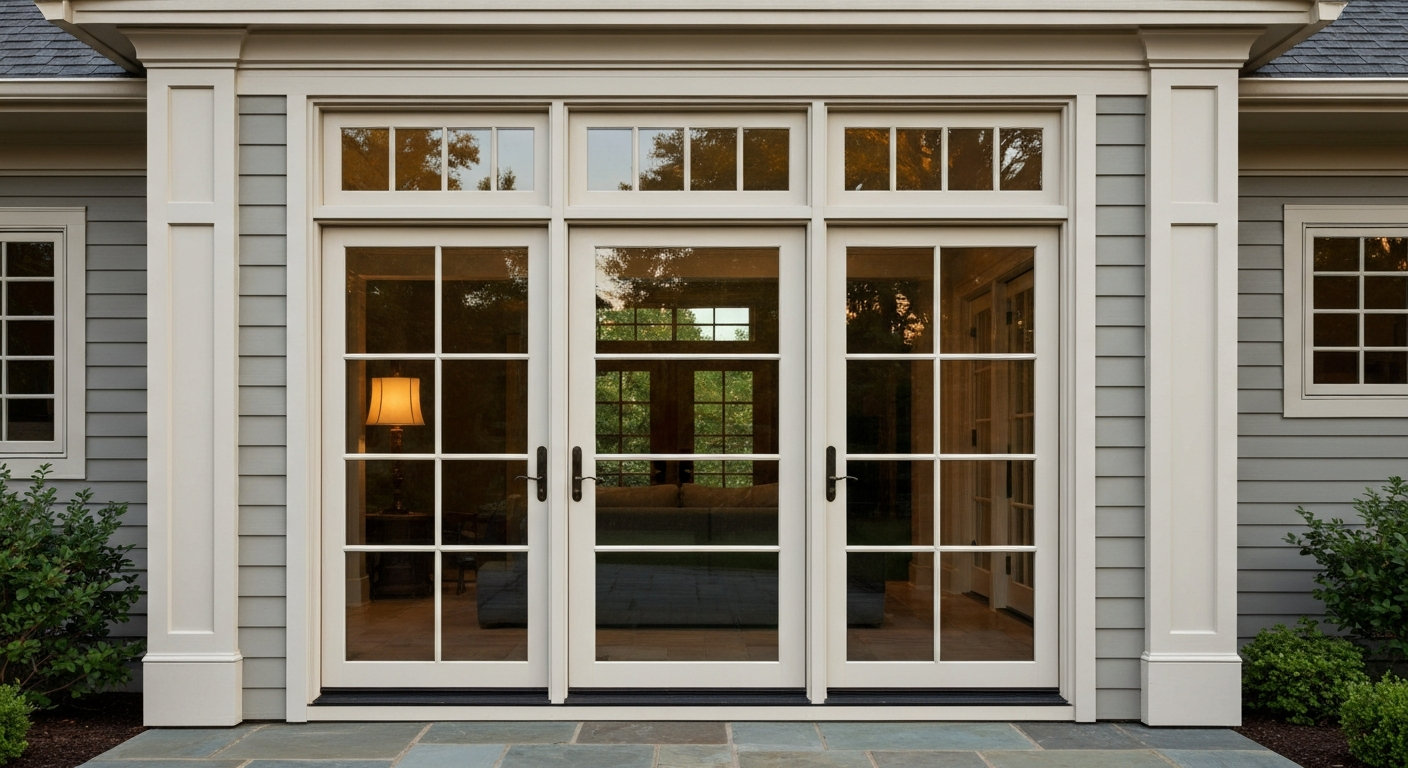
If you installed a patio door in 2018, bought a home with one, or are trying to decide whether to repair or replace a 2018-era unit, the standout performers that year were Andersen's 400 Series Frenchwood Gliding door, Marvin's Elevate line with Ultrex fiberglass, Milgard's Tuscany vinyl slider, and LaCantina's V2 folding system. Those four covered the widest range of budgets, climate zones, and installation scenarios, and two of them still hold up favorably against 2024 models on energy performance. This guide breaks down exactly what made each one worth considering in 2018, what the real costs and sizing realities were, and how to decide right now whether to keep, repair, or replace yours. For background on predecessors and model-by-model comparisons from that era, see best patio doors 2017.
Best Patio Doors 2018: Top Models, Costs & Replacement Guide
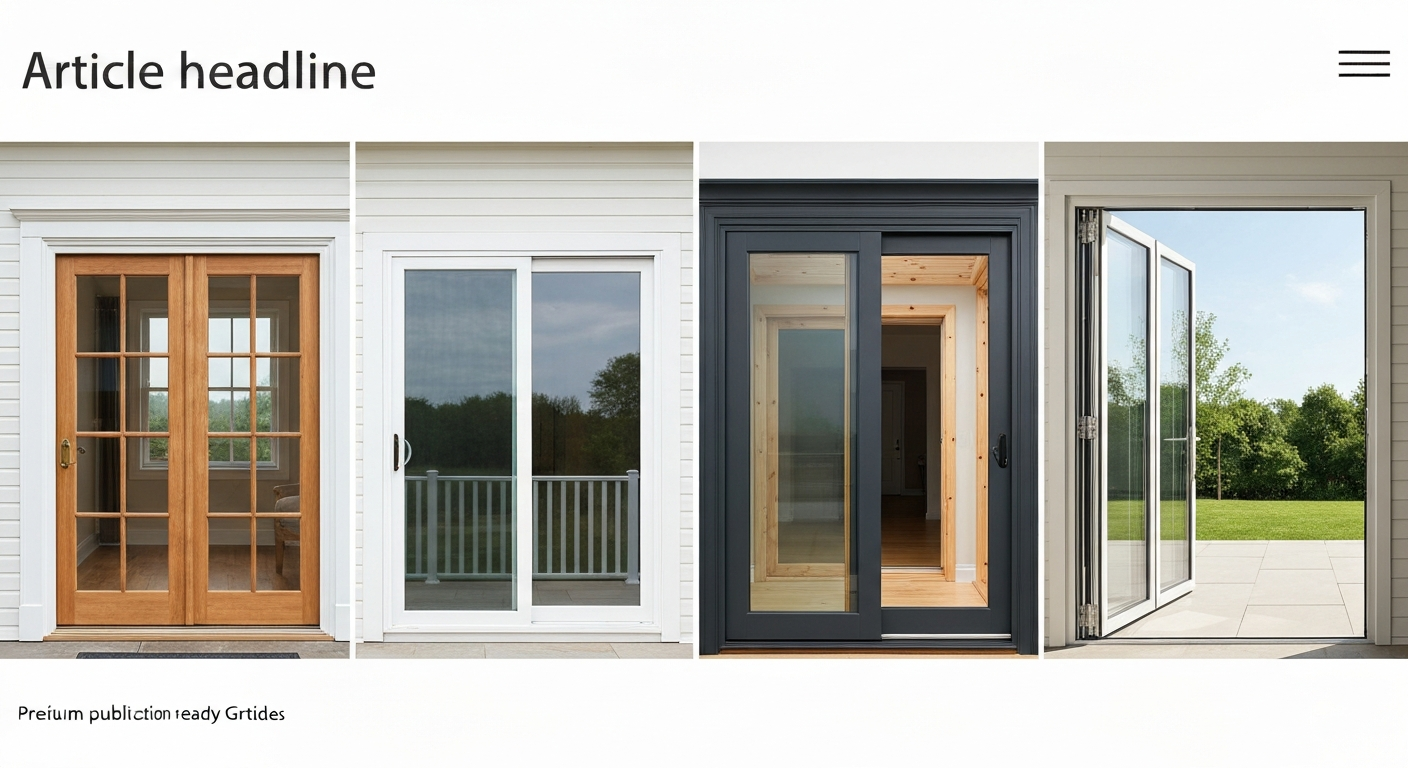
Quick recommendations for homeowners researching 2018 patio doors
The 2018 patio-door market was strong. ENERGY STAR penetration for sliding patio doors hit roughly 83% that year, meaning most mainstream products from name brands were already meeting minimum energy standards. The differences that mattered were in glazing upgrades, frame material longevity, warranty terms, and hardware quality. Here is the fast version of what I would tell a friend calling me from a home improvement store in 2018, and what I would tell someone evaluating one of those same doors today.
- Best overall sliding door (2018): Andersen 400 Series Frenchwood Gliding, dual-pane Low-E, U-factor as low as 0.22 with Heat-Lock glazing option
- Best vinyl slider value: Milgard Tuscany Series, ENERGY STAR qualified for all U.S. climate zones, Full Lifetime Warranty effective September 2018
- Best fiberglass performance: Marvin Elevate with Ultrex pultruded fiberglass, lowest thermal bridging in the category, durable in extreme climates
- Best French door for curb appeal: Simpson Door Company exterior French with optional UltraBlock and WaterBarrier upgrades for coastal/high-rain exposures
- Best folding/bifold for large openings: LaCantina V2 folding door, documented NFRC performance, BIM-ready specs for architect/contractor coordination
- Best budget sliding or folding option: JELD-WEN V-2500 vinyl series, broad availability, documented in July 2018 catalog with standard installation specs
What 'best' actually meant in 2018
In 2018, the patio-door industry had settled on a consistent set of evaluation criteria that professionals and informed homeowners used. The J.D. Power 2018 Windows and Patio Doors Satisfaction Study confirmed that homeowners ranked energy efficiency, security performance, and installation experience as the top three satisfaction drivers, in roughly that order. So when I call a door the 'best' of 2018, I am measuring it against those same benchmarks.
- Energy efficiency: U-factor (lower is better, target below 0.30 for ENERGY STAR in most zones), Solar Heat Gain Coefficient (SHGC, tuned by climate), and Visible Transmittance (VT). NFRC certified product directory entries are the authoritative source for these numbers.
- Security: Multi-point locking hardware, foot bolts, anti-lift pins or brackets for sliding panels, and reinforced glass options (tempered, laminated, or impact-rated).
- Frame material: Vinyl (low maintenance, lower cost), fiberglass (highest dimensional stability, best long-term performance), wood (classic aesthetics, more maintenance), aluminum (slim sightlines, commercial-grade durability).
- Operation type: Sliding (space-efficient), French in-swing or out-swing (traditional look, hardware variety), folding/bifold (maximum opening width, premium price).
- Durability and maintenance: Finish warranties, seal failure rates for insulated glass units (IGUs), hardware replacement availability, and resistance to warping/racking.
- Warranty: In September 2018, Milgard expanded its Full Lifetime Warranty to cover parts and labor for qualifying products. That raised the bar for what homeowners should expect from competitors.
- Price: In 2018, vinyl sliders started around $400–$800 for the door unit alone; fiberglass units ran $1,200–$3,500; wood French doors $1,500–$4,000; folding/bifold systems $3,000–$12,000+ depending on panel count and material.
How to use this guide
This guide is most useful in three specific situations. First, you bought or built a home in 2017 or 2018 and the original patio door is now showing signs of wear: seal failures (foggy glass), hardware difficulty, drafts, or frame damage. Second, you are shopping for a replacement door and want to understand whether a 2018-era model available as new-old-stock or through a specialty dealer is still worth buying. Third, you are comparing a 2018 door you already own against what a 2024 replacement would actually give you, so you can decide whether a repair or full swap makes financial sense. After reading this, you will know which 2018 models were genuinely strong performers, what their specs mean in plain language, what replacement or retrofit will cost and require, and how those 2018 specs stack up against doors from 2016, 2017, 2020, and 2024.
2018 sliding patio door roundup
Sliding patio doors were the dominant category in 2018, both by volume and by ENERGY STAR penetration. The basic geometry has not changed: one fixed panel and one (or more) sliding panel running on a bottom track, in a standard rough opening of 6 ft 0 in wide by 6 ft 8 in tall for a two-panel unit, up to 12 ft wide for multi-panel configurations. Here is what the major players offered that year.
Andersen 400 Series Frenchwood Gliding (wood/composite)
Andersen's 400 Series was the workhorse of the premium builder segment in 2018. The Frenchwood Gliding door used a wood interior with a composite (Fibrex) exterior, giving you the warm look inside without the exterior maintenance burden of a pure wood frame. Standard sizes covered 6-foot and 8-foot widths at 6/8 height, with custom sizing available through dealers. The dual-pane Low-E glazing hit a U-factor of approximately 0.30 in standard configuration, dropping to around 0.22 with the Heat-Lock glass option, which is genuinely competitive even by 2024 standards. SHGC ranged from roughly 0.25 to 0.31 depending on glass package. Hardware was available in multiple finishes including Antique Brass and White, and the Frenchwood profile gave it a traditional divided-light aesthetic that vinyl competitors could not match.
- Pros: Exceptional glazing options, strong NFRC-certified U-factor, classic aesthetic, Andersen dealer network for service and parts
- Cons: Higher price point (roughly $1,800–$3,200 for the door unit in 2018), wood interior requires periodic refinishing, Fibrex exterior is proprietary so third-party repair parts are limited
- Energy performance: U-factor 0.22–0.30, SHGC 0.25–0.31 (NFRC certified)
- Security: Two-point locking standard; multi-point hardware available as upgrade; anti-lift bracket included on sliding panel
Milgard Tuscany Series (vinyl)
Milgard celebrated its 50th year in 2018, and the Tuscany Series vinyl slider was its flagship mass-market product. It was ENERGY STAR qualified for all U.S. climate zones, which in 2018 meant meeting the Northern zone requirement of U-factor 0.27 or below (the toughest threshold). The Tuscany used a multi-chamber vinyl profile and dual-pane Low-E glass as standard. Rough opening sizes followed industry standards (60-inch, 72-inch, and 96-inch widths), and the door came with Milgard's Full Lifetime Warranty after September 2018, covering parts and labor for the original purchaser. Milgard published a Full Lifetime Warranty (Milgard), warranty PDF (0818) effective September 1, 2018, expanding long‑term parts and labor coverage for many Tuscany Series products installed in the U.S Full Lifetime Warranty (Milgard) — warranty PDF (0818). That warranty change was significant: most competitors offered 10–20 year limited warranties on hardware.
- Pros: Lowest total-ownership cost in the vinyl category, Full Lifetime Warranty (post-September 2018), ENERGY STAR all-zone qualified, strong dealer/service network in the Western U.S.
- Cons: Vinyl aesthetics are not for every home style, thicker frame profiles reduce glass area compared to aluminum, limited to Western U.S. dealer network in 2018
- Energy performance: U-factor approximately 0.27–0.29, SHGC varies by glass package
- Security: Standard two-point lock with optional security bar; anti-lift pins standard
Marvin Elevate Sliding Door (Ultrex fiberglass exterior)
Marvin's Elevate line used pultruded Ultrex fiberglass on the exterior with a pine interior. Ultrex fiberglass expands and contracts at nearly the same rate as glass, which means the IGU seal is under far less stress over time than with wood or aluminum frames. In 2018, Marvin added new panel widths, a black hardware finish, and expanded Low-E and texture glass options to the Elevate line. This made it the most customizable high-performance slider in the 2018 lineup. The Elevate was priced in the $2,000–$4,500 range for the door unit, positioning it above the Tuscany but below fully custom wood.
- Pros: Ultrex fiberglass offers best-in-class dimensional stability, paint holds exceptionally well (won't peel like wood), low thermal bridging, expanded 2018 glazing options
- Cons: Higher upfront cost, pine interior still requires finishing, less dealer penetration than Andersen or Milgard nationally
- Energy performance: Excellent due to low thermal bridging of fiberglass; specific U-factor varies by glass package but competitive with Andersen 400 Series Low-E configurations
- Security: Multi-point locking hardware available, field-replaceable rollers and screen components documented in Marvin parts PDFs
JELD-WEN V-2500 (vinyl)
The JELD-WEN V-2500 was the national-availability vinyl slider in 2018, documented in JELD-WEN's July 2018 patio door catalog. It competed directly with the Milgard Tuscany but had broader distribution, especially in the Eastern and Midwest U.S. where Milgard's dealer network was thin. The V-2500 offered standard sliding configurations in 5-foot, 6-foot, and 8-foot widths, with dual-pane Low-E glass and optional screen. Pricing was at the lower end: approximately $400–$900 for the door unit. The warranty was more limited than Milgard's (limited lifetime on the frame, 10 years on glass seals in 2018).
- Pros: Nationally available, competitive entry price, standard rough openings make DIY installation feasible, broad parts availability
- Cons: Shorter glass seal warranty than Milgard post-September 2018, less premium feel than Andersen or Marvin, fewer glazing upgrade options
- Energy performance: ENERGY STAR qualified configurations available, U-factor typically 0.28–0.32 depending on glass package
- Security: Standard two-point lock, optional security hardware available through JELD-WEN dealer
2018 French door roundup
French patio doors (hinged, in-swing or out-swing, typically double-door panels) were the go-to choice in 2018 for homeowners who wanted a traditional look, better sealing against drafts than a sliding track, and the ability to open both panels fully. Standard rough opening for a double French door was 72 inches wide by 80 inches tall (6-0 x 6-8), though 8-foot heights were increasingly common in 2018 new construction. The main tradeoff versus sliding: you need floor clearance for the swing, which matters in tight spaces.
Andersen 400 Series Frenchwood Hinged (wood/composite)
The hinged version of the 400 Series used the same Fibrex composite exterior and wood interior as the gliding model, with the same glazing options. In-swing and out-swing configurations were both available. Out-swing is more common in climates with heavy snow loads because it opens away from drifts, and Andersen documented both configurations in their 2018 technical product PDFs. Hardware options were extensive, including dummy handlesets and active/passive bolt configurations for the double-door setup. The Frenchwood Hinged ran $1,600–$3,500 for the door unit depending on size and glass.
- Pros: Excellent seal when closed (no bottom track gap like sliding doors), wide glazing options, strong aesthetic with divided-light grille options, reliable Andersen dealer support
- Cons: Out-swing requires clearance on the exterior, hardware (hinges, multipoint locks) is a wear point over time, Fibrex exterior limits third-party repair
- Energy performance: Matches the gliding version, U-factor 0.22–0.30 depending on glass package
- Security: Multi-point locking systems available; active/passive door setup is inherently more secure than a single sliding panel
Simpson Door Company Exterior French (wood)
Simpson was the choice in 2018 for homeowners who wanted a fully customizable solid-wood French door and were willing to maintain it. Simpson offered their UltraBlock moisture-resistant core and WaterBarrier bottom rail as upgrade options, both of which significantly improved performance in coastal, high-humidity, and high-rain climates where wood door bottoms rot. These upgrades were tied to expanded warranty coverage. Standard sizes ranged from 4-foot to 8-foot widths, and custom heights were available. Prefinished and factory-painted options were offered to reduce field labor.
- Pros: Maximum customization, beautiful wood aesthetics, UltraBlock/WaterBarrier upgrades make wood viable in demanding climates, expanded warranty with upgrades
- Cons: Wood requires repainting or restaining every 3–5 years, higher maintenance cost than fiberglass or vinyl, pricing $2,000–$5,000+ depending on wood species and size
- Energy performance: Glass-package dependent; wood frames have inherently good insulating value but less consistent than fiberglass or vinyl profiles
- Security: Hardware is homeowner-specified; multi-point locks available from aftermarket suppliers; wood frames accept a wide range of deadbolt and handleset configurations
Marvin Elevate Sliding French Door (fiberglass/wood)
Marvin also offered a Sliding French Door configuration within the Elevate line in 2018, which blurred the line between French and sliding categories. It gave the divided-light French-door aesthetic with the space efficiency of a sliding operation. Panel widths were expanded as part of the 2018 product update. This was a strong option for renovation projects where you wanted the French look without the swing clearance requirement. Pricing was comparable to the hinged Andersen Frenchwood at $2,000–$4,000.
- Pros: French aesthetics without swing clearance requirement, Ultrex fiberglass durability, 2018 expanded panel width options, field-replaceable components
- Cons: Sliding track means slightly less weather-tight seal than a hinged French door, pine interior needs finishing, Marvin dealer network required for service
- Energy performance: Low thermal bridging from Ultrex fiberglass, competitive with Andersen in equivalent glass packages
- Security: Same multi-point hardware options as standard Elevate sliding line
2018 folding and bifold patio door roundup
Folding and bifold doors were the fastest-growing segment in 2018, driven by indoor-outdoor living trends and the proliferation of large multi-panel systems from brands like LaCantina, Marvin, and Ply Gem. These doors fold accordion-style to stack at one or both ends of the opening, creating a fully open wall. They require a level, rigid structural header (typically engineered lumber or steel) and a clean, flat threshold. Rough openings from 8 feet to 20+ feet were common in 2018 project documentation. Budget for professional installation: it is almost always required for folding systems.
LaCantina V2 Folding Door (aluminum)
LaCantina was the specialist in folding systems in 2018. Their V2 Folding Door had documented NFRC performance data, BIM and CAD resources for architect use, and a project gallery showing residential installations in 2018. The aluminum frame came in standard and thermally broken configurations; the thermally broken version was required for ENERGY STAR compliance in most climate zones. Panels were typically 24 to 36 inches wide each, and a 12-foot opening would use four or five panels. Hardware was top-hung or bottom-rolling depending on configuration. LaCantina's technical documentation was among the most complete in the folding-door category in 2018.
- Pros: Purpose-built folding system with published NFRC data, slim aluminum sightlines maximize glass area, BIM/CAD documentation for accurate installation, strong aesthetic for contemporary homes
- Cons: Aluminum conducts heat unless thermally broken (adds cost), requires professional installation, threshold is a trip and weathertight challenge, pricing $3,000–$12,000+ depending on panel count
- Energy performance: Thermally broken aluminum with Low-E glass achieves ENERGY STAR in Southern and Mixed zones; Northern zone is a challenge for aluminum frames
- Security: Multi-point locking hardware standard; folding systems are inherently more secure than single sliding panels when properly locked
Marvin Bifold / Multi-Slide (fiberglass or aluminum)
Marvin's 2018 product lineup also included multi-slide and folding configurations within the Elevate family. The builder/industry product guides from 2018 documented Marvin's expanding multi-panel offerings, and their technical specifications were well-documented for contractor use. Marvin's Ultrex fiberglass option in multi-panel configurations was unique in the folding category, offering better thermal performance than aluminum at a higher price. Sizing documentation in 2018 covered openings up to roughly 16 feet wide in standard configurations.
- Pros: Fiberglass option offers better thermal performance than aluminum folding systems, well-documented for contractor/architect use, Marvin dealer support for parts
- Cons: Premium pricing, limited color options compared to LaCantina aluminum, complex installation requiring experienced contractor
- Energy performance: Fiberglass multi-panel configuration offers best thermal performance in the folding category for Northern climates
- Security: Multi-point locking, consistent with Elevate product line hardware standards
JELD-WEN Siteline / F-2500 Folding (wood/aluminum clad)
JELD-WEN's Siteline and F-2500 folding options appeared in their July 2018 patio door catalog. These were wood-interior, aluminum-clad exterior units, giving you low exterior maintenance with a wood interior. They occupied the mid-to-upper price range for folding systems and were positioned as a more affordable alternative to Marvin's Elevate fiberglass for homeowners who wanted an aluminum-clad look. Pricing in 2018 was approximately $4,000–$10,000 for a standard multi-panel configuration.
- Pros: Aluminum exterior eliminates painting, wood interior provides warm aesthetics and easy hardware installation, broad national distribution
- Cons: Wood interior still requires finishing, aluminum cladding can be damaged by impact and is costly to repair, heavier than pure aluminum systems
- Energy performance: Competitive with thermally broken aluminum when using Low-E glass packages
- Security: Standard multi-point locking; JELD-WEN dealer network for parts
How 2018 materials compare head to head
The frame material you chose in 2018 had more long-term impact than the brand name on the door. Here is how the four main materials stacked up across the criteria that matter most for replacement and upgrade decisions today.
| Material | U-Factor Range (2018) | Maintenance | Durability | Typical 2018 Unit Price | Warranty (best available 2018) |
|---|---|---|---|---|---|
| Vinyl | 0.27–0.32 | Very low (no painting) | Good, may fade/warp in extreme heat | $400–$1,200 | Full Lifetime (Milgard, post-Sept 2018) |
| Fiberglass (Ultrex) | 0.22–0.30 | Low (paint holds well) | Excellent, best dimensional stability | $1,200–$4,500 | Limited lifetime, varies by brand |
| Wood / Wood-composite | 0.22–0.30 | High (refinish every 3–5 yrs) | Good with proper maintenance | $1,500–$4,000 | Limited 10–20 yr, upgrade-dependent |
| Aluminum (thermally broken) | 0.28–0.38 | Very low | Excellent, dent-resistant | $800–$12,000+ | Limited lifetime on frame, 10 yr glass |
If I had to pick one material recommendation for a homeowner in 2018 who wanted the best balance of performance, maintenance, and warranty, it would have been fiberglass for performance-first buyers and vinyl (Milgard Tuscany specifically) for value-first buyers. Wood remained the right choice only for homeowners who genuinely loved the aesthetic and would maintain it. Aluminum made sense for folding/bifold systems where slim sightlines were the priority.
Sizing standards and measurement for replacement
One of the most common mistakes I see is homeowners measuring the door itself instead of the rough opening. For a 2018-era replacement, here is the practical process. Measure the rough opening width and height at three points each (top, middle, bottom for width; left, center, right for height) and use the smallest measurement. Standard rough opening tolerances for a patio door replacement in 2018 called for 1/2 inch clearance on each side and 1/4 inch at the head for shimming and leveling. For a standard 6-0 x 6-8 slider, that means a rough opening of approximately 72.5 inches wide by 80.5 inches tall. Installation manuals from Andersen, Pella, and Marvin from 2018 documented two main replacement approaches: pocket (or full-frame) replacement, where the old jamb and trim are removed and a new unit is set into the rough opening; and flange/nail-fin retrofit for new construction openings. Pocket replacement is typical for like-for-like swap of an existing patio door and usually requires no structural work if you are staying in the same rough opening size.
Installation costs: DIY vs. professional in 2018
In 2018, professional installation of a standard sliding patio door ran $300–$700 for labor alone on a straightforward like-for-like pocket replacement with no structural changes. French door installation was similar, $350–$800, depending on whether the threshold required concrete work. Folding/bifold systems were almost always professional-only due to header requirements and panel alignment precision, adding $1,000–$3,000 to the door cost. DIY installation of a sliding door was feasible for an experienced homeowner comfortable with basic carpentry, but incorrect shimming or sill preparation was (and still is) the most common cause of sliding door operational problems within the first two years. If you are retrofitting a 2018 door today, those same cost ranges apply, adjusted upward roughly 15–20% for 2026 labor rates.
| Door Type | DIY Feasibility | 2018 Professional Labor Cost | Key Installation Risks |
|---|---|---|---|
| Sliding (standard 6-ft) | Feasible for experienced DIYer | $300–$700 | Sill out of level, improper shimming |
| French (hinged, 6-ft) | Moderate difficulty | $350–$800 | Hinge alignment, threshold sealing |
| Folding/bifold (8+ ft) | Not recommended | $1,000–$3,000 | Header deflection, panel alignment, threshold drainage |
| Multi-slide (12+ ft) | Not recommended | $1,500–$4,000 | Structural header, track level precision |
Upgrades, accessories, and security additions for 2018 models
If you are keeping a 2018 door rather than replacing it, there are several upgrades worth evaluating. Glazing replacement (swapping failed or single-pane IGUs for new Low-E dual-pane units) is the highest-impact upgrade and is possible on most 2018 fiberglass and wood-frame doors. On vinyl frames, the sash sometimes needs to be replaced as a unit rather than just the glass, depending on the brand. Security film applied to the glass interior surface adds impact resistance without changing the appearance. Multi-point lock upgrades are available for most sliding door brands from 2018; Andersen, Marvin, and JELD-WEN all had multi-point retrofit kits in their parts catalogs. Screen replacement using standard fiberglass or aluminum screen mesh in the manufacturer's frame is typically a straightforward DIY job. For coverings, interior cellular shades or exterior roller shades both work with 2018-era sliding and French doors without modification to the frame.
- IGU replacement: viable on fiberglass and wood frames; check glazing bead removal before ordering
- Security film: 3M or equivalent, professionally applied, adds laminated-glass-level impact resistance
- Multi-point lock retrofit: available for Andersen 400 Series, Marvin Elevate, JELD-WEN V-2500 from manufacturer parts channels
- Screen replacement: standard DIY, measure frame opening not door opening
- Threshold seal replacement: high-impact low-cost fix for drafts; replacement seals available from manufacturer parts or aftermarket
- Interior cellular shades or exterior roller shades: no modification needed, available in standard patio door widths
Repair vs. replace: making the call on a 2018 door
A 2018 door is now about 7–8 years old. That is still well within the useful life for fiberglass and vinyl frames (20–30 years for quality units), but it is the age when you start seeing seal failures in IGUs (fogging between panes), roller wear on sliders, and hardware loosening on French doors. For Milgard Tuscany units purchased after September 1, 2018, the Full Lifetime Warranty covers parts and labor for the original purchaser, which is an unusually strong repair case. For Andersen 400 Series and Marvin Elevate, parts availability in 2026 is still good because both brands maintain active dealer networks and parts programs. Marvin’s 2018 Replacement Guide and product parts PDFs document panel, track, and sill replacement procedures and list field‑replaceable components (screen, rollers, sill parts) for Elevate sliding doors. The repair argument is strong if: the frame is structurally sound, the failure is limited to glass seals or hardware, and the door's U-factor is 0.27 or below (it is still competitive). The replace argument wins if: the frame shows structural damage or persistent water intrusion, the door predates the 2018 ENERGY STAR updates and has U-factor above 0.35, or if a folding/bifold upgrade is desired to change the opening configuration entirely.
Decision checklist before you buy, repair, or retrofit
- Measure the rough opening at three points each direction and record the smallest dimension
- Check the current door's NFRC label (usually on the frame head or side jamb) for U-factor and SHGC
- Identify the frame material: tap test (hollow = vinyl, solid dull thud = fiberglass/wood, metallic ring = aluminum)
- Check warranty coverage: locate original purchase documentation and check manufacturer website for warranty terms by serial number or product line
- Assess failure type: fogged glass (IGU seal failure, often repairable), operational difficulty (rollers or hardware, usually repairable), water intrusion at frame (may indicate structural issue, evaluate full replacement)
- Get two quotes: one for repair/parts from the door manufacturer's authorized dealer, one for full replacement with a current model
- Compare U-factors: if current door is 0.27 or below, the energy efficiency argument for replacement is weak; focus on operational and structural condition
- Confirm rough opening compatibility before ordering a replacement unit
- Decide on installation: DIY for sliding like-for-like; professional required for folding, multi-slide, or any opening size change
- Check local code requirements for egress, tempered glass, and impact ratings if you are in a hurricane or high-wind zone
How 2018 models compare to 2016, 2017, 2020, and 2024
The 2018 models represented a meaningful step forward from 2016 and 2017 in two specific ways: ENERGY STAR penetration hit that 83% high-water mark, and warranty terms improved significantly (Milgard's September 2018 Full Lifetime Warranty is the clearest example). Readers familiar with our coverage of the best patio doors from 2016 and 2017 will recognize many of the same brand names, but 2018 brought expanded glazing options from Marvin (new Low-E and texture glass in the Elevate line) and improved hardware availability across the board.
By 2020, the main advances over 2018 were in multi-slide and moving-glass-wall systems (wider panels, better threshold drainage), improved triple-pane availability in mainstream brands, and expanded color/finish options for both vinyl and fiberglass. The 2018 core sliding and French door platforms (Andersen 400 Series, Milgard Tuscany, Marvin Elevate) were largely carried forward into 2020 with incremental updates, meaning a 2018 model from those lines is functionally comparable to a 2020 equivalent. Readers looking at 2020 options will find the same brands competitive in both years.
The gap between 2018 and 2024 is more meaningful in the folding and multi-slide category, where threshold design, air infiltration ratings, and automation/smart-lock integration have all advanced. For standard sliding and French doors, the energy performance of a 2018 Andersen 400 Series with Heat-Lock glass (U-factor 0.22) is still competitive in 2024. The 2024 additions are primarily in finish options, smart-home hardware integration, and triple-pane availability in more affordable price tiers. If you are comparing your 2018 door to a current 2024 replacement, the best patio doors from 2024 offer incremental rather than dramatic improvements for energy efficiency in the sliding and French categories, but meaningful advances in folding systems and integrated security hardware. For more on current options and top picks, see our roundup of the best patio doors 2024. For historical context and to compare mid-period developments, see our roundup of the best patio doors 2020 for models and features introduced between 2018 and 2024.
| Year | Key Advance Over Prior Year | Still Competitive in 2026? | Best Reason to Upgrade |
|---|---|---|---|
| 2016 | Broader ENERGY STAR compliance, early fiberglass growth | Marginal — check U-factor | U-factor above 0.32 or frame damage |
| 2017 | Expanding multi-slide options, improved Low-E adoption | Fair — most major brands competitive | Hardware wear, folding system upgrade |
| 2018 | 83% ENERGY STAR penetration, Milgard lifetime warranty, Marvin expanded glazing | Yes, for sliding/French with Low-E | Replace only if frame damaged or folding upgrade desired |
| 2020 | Triple-pane mainstream availability, better bifold thresholds, wider multi-slide | Yes | Smart hardware, triple-pane upgrade |
| 2024 | Smart-lock integration, wider color/finish options, affordable triple-pane | Yes (current) | Automation features, triple-pane in budget tier |
Where to buy, what to measure, and when to call a pro
For 2018 model replacements or parts, start with the manufacturer's authorized dealer network: Andersen dealers, Milgard's service line (1-800-MILGARD), and Marvin's dealer locator all support 2018 product lines in 2026. For JELD-WEN and LaCantina parts, the manufacturer parts lines listed in their 2018 installation documentation are still active. For full replacement units, big-box stores (Home Depot, Lowe's) carry JELD-WEN and Andersen standard sizes; custom sizes and fiberglass/premium lines require a specialty window and door dealer. Call a pro for any folding or multi-slide system, any job involving an opening size change, any installation in a hurricane or high-wind zone requiring impact-rated units, and any job where the sill shows rot or water damage below the current door. For a standard like-for-like sliding door swap with a sound sill, an experienced DIYer with basic carpentry skills and a helper can do it in a day if they have measured correctly and ordered the right unit.
FAQ
What did “best” mean for patio doors in 2018 and how does that affect my decision today?
In 2018 “best” combined three priorities: certified energy performance (NFRC/ENERGY STAR ratings), proven weather/security hardware, and durable materials with available service/parts. Manufacturers emphasized low U‑factors (center‑of‑glass and whole‑unit NFRC entries), multi‑panel options (large sliders and folding systems), and long warranties. For today’s decision: 2018 “best” models remain competitive for fit/quality and many have parts/warranty support, but newer glazing, thermally broken aluminum, and smart-security hardware (post‑2018) offer improved performance. Use 2018 performance numbers (NFRC/Energy Star) as a baseline; upgrade glazing or hardware if you need current top-tier energy or security.
Which were the top 2018 patio‑door models by type (sliding, French/hinged, bifold) and what were their notable specs?
Representative top 2018 models (manufacturer lines active in 2018): - Sliding: Andersen 400 Series gliding patio doors — dual‑pane Low‑E options, center‑of‑glass U‑factors down to ≈0.22 (depending on glass/spacer); multiple hardware/finish choices. - Sliding/French‑style: Marvin Elevate/Essential sliding French doors — Ultrex® pultruded fiberglass exterior option, multiple panel widths, black hardware option added mid‑2018. - Vinyl sliding: Milgard Tuscany series — ENERGY STAR‑qualified across U.S. zones in 2018, robust lifetime warranty expansions effective Sept 2018. - Vinyl/aluminum bifold/moving wall: LaCantina V2 folding door (multi‑panel folding systems) — large panels, architectural performance data and NFRC/DP documents available. - Wood/French: Simpson exterior French doors — customizable wood species, UltraBlock®/WaterBarrier® upgrades for weather. Each model family offered specific glass, spacer, and threshold choices; check NFRC CPD entries or the manufacturer 2018 technical PDFs for exact U‑factor/SHGC numbers for the configuration you’re considering.
How did 2018 materials (vinyl, fiberglass, wood, aluminum) perform for energy, durability, and maintenance?
Summary by material in 2018: - Vinyl: Good thermal performance and low maintenance; many vinyl sliders (e.g., Milgard Tuscany) met ENERGY STAR across zones. Advantages: cost‑effective, minimal painting. Drawbacks: limited high‑end aesthetics and thermal bridging at large sizes. - Fiberglass (pultruded, e.g., Marvin Ultrex®): Excellent dimensional stability, paintable, good thermal performance and low expansion; very durable in climate extremes. Higher price than vinyl. - Wood: Best aesthetic and customization (Simpson); requires more maintenance (finish/caulking) unless protected or paired with cladding. Good thermal performance if well built. - Aluminum: Strong and thin profiles enable large panels (LaCantina, some commercial systems). In 2018, thermal breaks and thermal‑enhanced aluminum improved performance but still trailed fiberglass/wood/vinyl unless using upgraded thermal break/glazing. Choose material based on climate, desired look, and budget.
How do 2018 models compare to adjacent years (2016, 2017, 2020, 2024) in energy and security performance?
Comparison highlights: - 2016–2018: Incremental improvements in Low‑E coatings, warm‑edge spacers, and NFRC ratings; ENERGY STAR penetration increased. Many 2018 models already offered strong dual‑pane Low‑E packages comparable to 2017. - 2020: More manufacturers offered larger multi‑slide panels, triple‑pane options in colder climates, and improved thermal breaks for aluminum. Glazing technology (argon/krpton fills, better coatings) became more standard for high‑efficiency packages. - 2024: Further gains: wider adoption of triple glazing for cold climates, improved edge seals, better structural glazing allowing larger expanses, and integrated smart locks/sensors and more rigorous testing for forced‑entry resistance. Security hardware also matured (smart deadbolts, multi‑point locks). Outcome: many 2018 top models still perform well, but 2020+ options provide measurable gains in U‑factor/SHGC and integrated security/automation.
What were typical 2018 cost ranges for patio doors by type and material, and what should I expect now for repairs or replacement?
Typical 2018 installed ranges (approximate national averages then; local variance large): - Basic vinyl sliding (single 6‑ft x 6‑ft): $700–$1,200 door only; $900–$2,000 installed (standard opening). - Mid‑range fiberglass/wood/higher‑end vinyl slider: $1,200–$2,500 door only; $1,800–$4,000 installed. - French hinged doors (pair, wood or fiberglass): $2,000–$5,000 door only; $3,000–$6,000+ installed. - Multi‑panel bifold/moving wall systems (LaCantina/large): $8,000–$30,000+ installed depending on panels and site work. 2018 repair costs: rollers/screens/locks $75–$300; sill/track repairs $150–$800; glass replacement (single/dual pane) $200–$900 depending on size. Today: expect material and labor inflation—prices generally 15–60% higher depending on region, supply chain and product complexity. Always get 2–3 quotes.
Should I repair, retrofit, or fully replace a 2018 patio door? Checklist to decide.
Decision checklist: 1) Measure frame/rough opening and check operation: sticking, air/water leaks, condensation between IGUs, damaged frame. 2) Age and warranty: is the unit under warranty (check manufacturer Sept 2018 changes like Milgard FLW)? 3) Energy/performance needs: does NFRC U‑factor/SHGC meet your climate goals? 4) Structural issues: rot, sills, flashing or framing damage → full replacement. 5) Parts availability: are rollers, sills, glass and hardware still available for the model? (Check manufacturer parts PDFs from 2018.) 6) Cost comparison: repair/retrofit vs replacement estimate. 7) Desired upgrades: triple glazing, multipoint locks, larger panels. If operation issues are limited to rollers/screens/glass seals and parts are available, repair/retrofit is cost‑effective. If structural damage, persistent air/water intrusion, or you need higher energy/security performance, replace.