The best replacement patio door for most homes is a vinyl sliding door, it fits the existing rough opening without major framing work, resists moisture and warping, and costs significantly less than fiberglass or wood both on the shelf and installed. That said, "best" really depends on your opening size, your climate, how much foot traffic the door gets, and what you're willing to spend. If you nail those four things, the right door becomes obvious pretty quickly. Here's how to work through every step so you don't end up ordering the wrong unit or paying a contractor to fix a sizing mistake.
Best Replacement Patio Doors: How to Choose and Measure

Owen Delaney
21 May 2026
How to choose the best patio door replacement for your home
Start by thinking about why you're replacing the door in the first place. Is the glass fogged from a failed seal? Is the frame rotted? Are you losing heat in winter because the weather stripping is shot? Or do you just want something that looks better and operates more smoothly? Your reason matters because it narrows the field fast. A door with a failed glass unit can sometimes be reglazed without replacing the whole slab, but if the frame is warped, rotted, or out of square, you need a full replacement, and that's where the real decisions start.
The most important single factor is whether your replacement door fits the existing rough opening without requiring you to reframe. Reframing adds labor cost and time, and it's often avoidable if you measure carefully and choose a door sized to match your opening. Most patio door manufacturers build to standard rough opening sizes, so if your existing frame is a standard dimension, your options are wide open. If it's a custom or odd size, you'll need to either special-order or adjust the framing.
Beyond fit, think about these four things in order: how the door opens (sliding, swinging, or folding), what material the frame is made from, what energy performance ratings you need for your climate zone, and what your total installed budget is. Everything else, hardware finish, glass tint, grille patterns, is a preference call you can make at the end.
Sliding patio door vs French vs bifold: fit, function, and tradeoffs
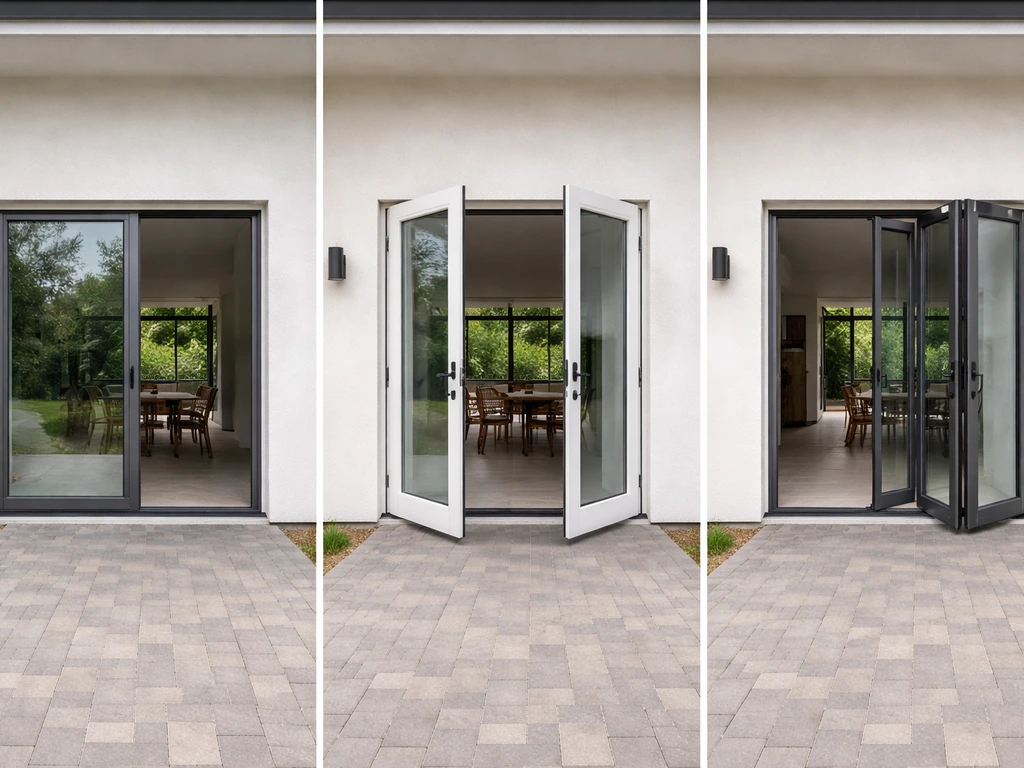
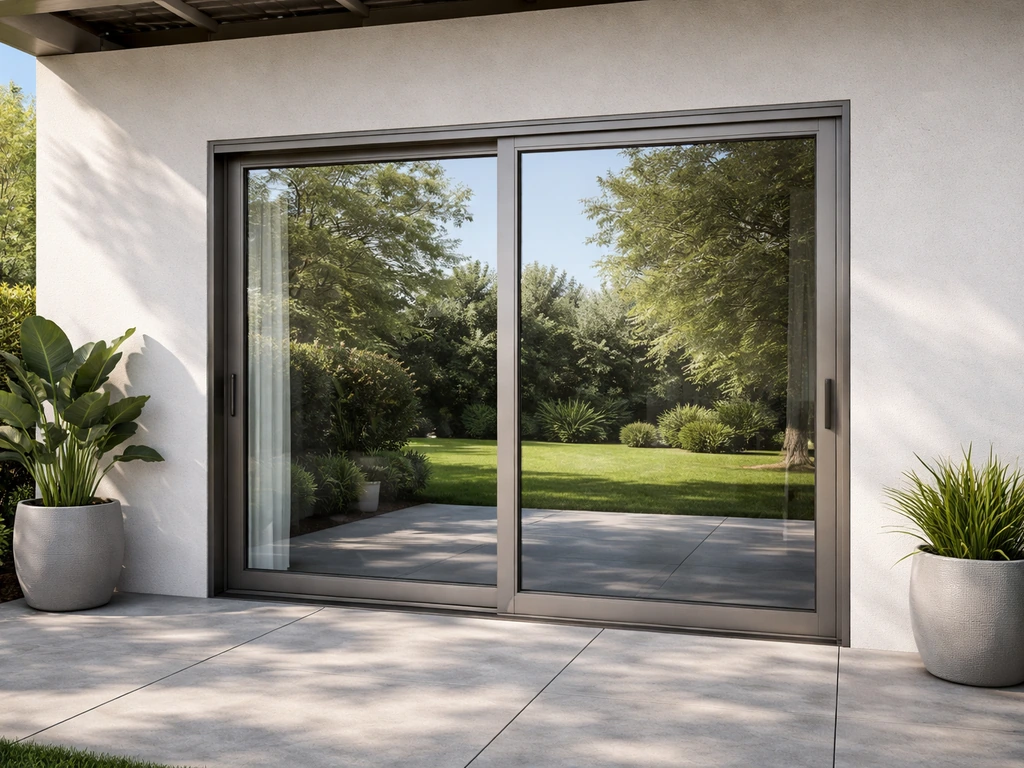
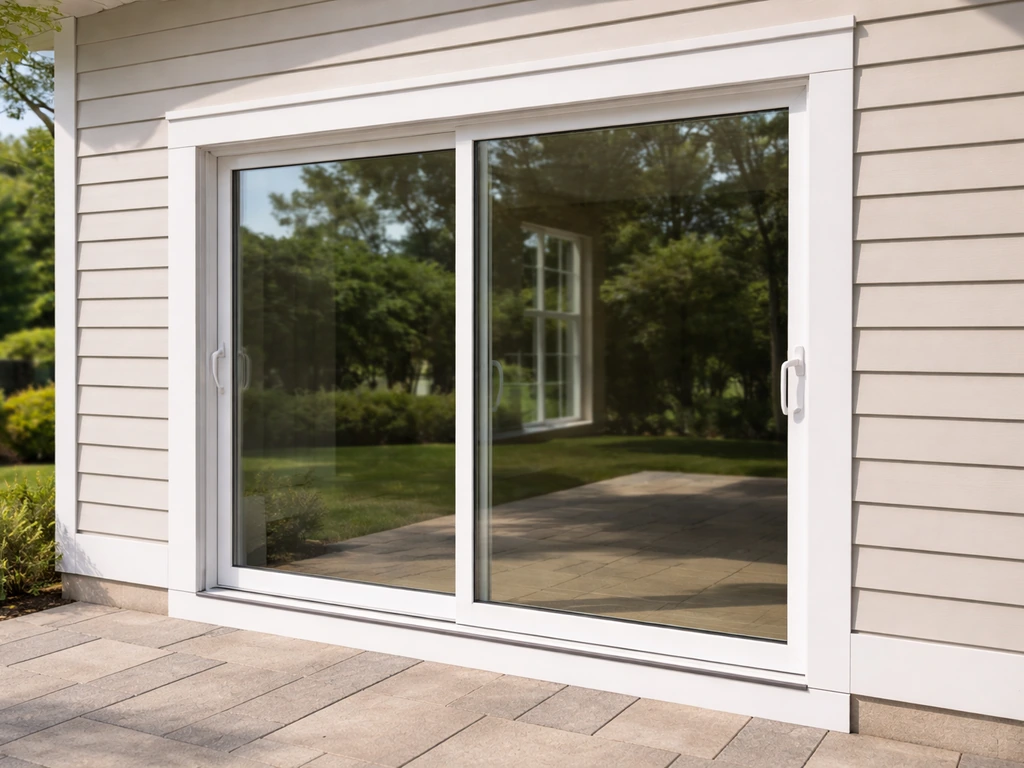
Sliding doors are the default choice for most replacement jobs, and for good reason. They don't require clearance on either side because the panel slides along a track rather than swinging into or out of the room. That makes them ideal for tight decks, small patios, or interior spaces where furniture placement is a concern. Standard two-panel sliders come in widths from 60 inches up to 96 inches, and most replacements are drop-in fits if you're swapping one slider for another of the same nominal size.
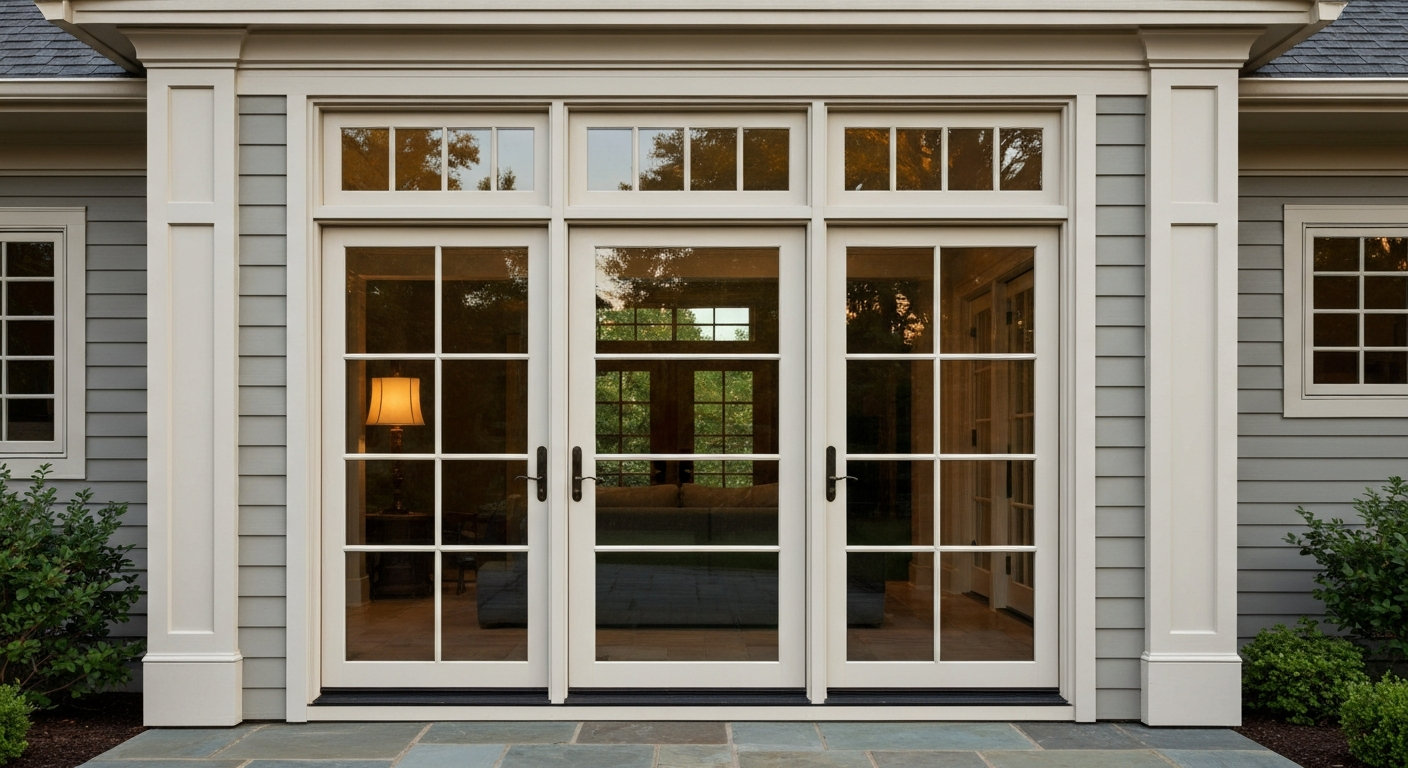
French doors are hinged panels that swing open like interior doors. They look more traditional and formal, and they give you a full unobstructed opening when both panels are open, which matters if you're moving furniture, hosting parties, or just want a wide open connection to the outside. The tradeoff is swing clearance: you need roughly 36 inches of interior or exterior space for each panel to open fully, so French doors are a poor fit for tight spaces. They're also more susceptible to air infiltration because the panel seam runs vertically through the middle of the door, and that seam requires careful weather stripping to seal well. ENERGY STAR's specification for swinging doors (which includes French doors) allows air leakage up to 0.5 cfm/ft², notably higher than the 0.3 cfm/ft² limit applied to sliding doors, which tells you something about the inherent sealing challenge.
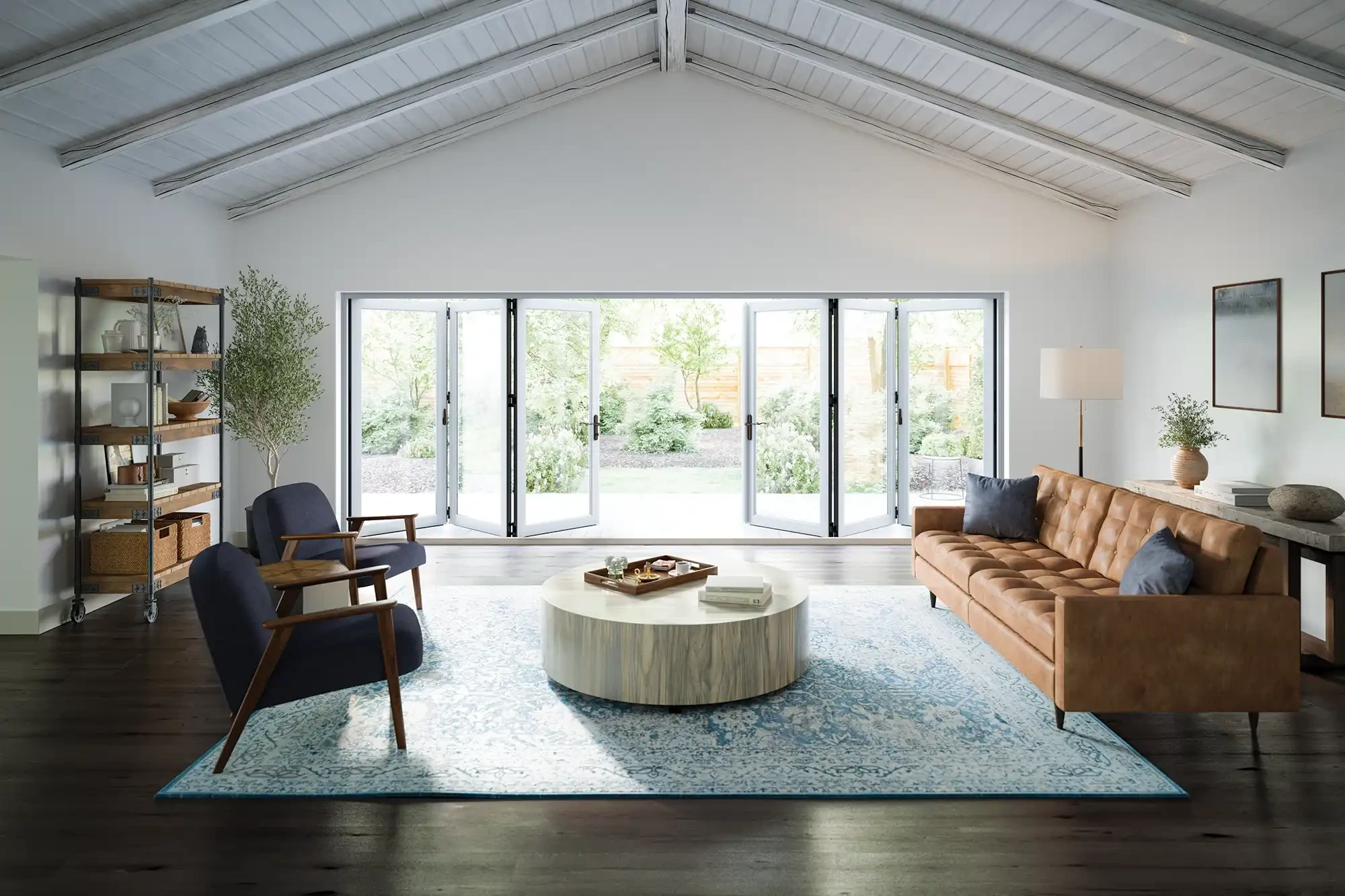
Bifold doors, sometimes called folding glass walls, are a completely different product category. They stack accordion-style against one side of the opening and are capable of opening up 90 percent or more of a wide span. A typical bifold system runs 8 to 20 feet wide and uses three to eight panels. They're stunning in the right setting, but they're expensive (often $3,000 to $10,000+ just for the door unit), require a perfectly level and plumb rough opening, and have more hardware complexity than either sliding or French doors. For a standard replacement job, bifolds are rarely the practical choice unless you're also doing a remodel.
| Door Type | Best For | Clearance Needed | Typical Width Range | Air Sealing |
|---|---|---|---|---|
| Sliding | Most replacements, tight spaces, high traffic | None on sides | 60"–96" | Good (≤0.3 cfm/ft² ENERGY STAR) |
| French (swinging) | Traditional style, wide openings, low traffic | 36" per panel swing | 60"–72" typical | Moderate (≤0.5 cfm/ft² ENERGY STAR) |
| Bifold | Remodels, open-concept, large spans | Stack space on one side | 96"–240" | Varies by brand/installation |
For a straight replacement job, sliding doors are the practical winner in most situations. French doors are worth the extra cost and complexity if the aesthetic matters to you and you have the swing clearance. Bifolds are a remodel-level investment, not a like-for-like swap.
Materials and performance: vinyl vs fiberglass vs aluminum vs wood
Frame material is where you make real decisions about long-term performance, maintenance, and cost. There are four main options, and they're not equally good for every situation.
Vinyl
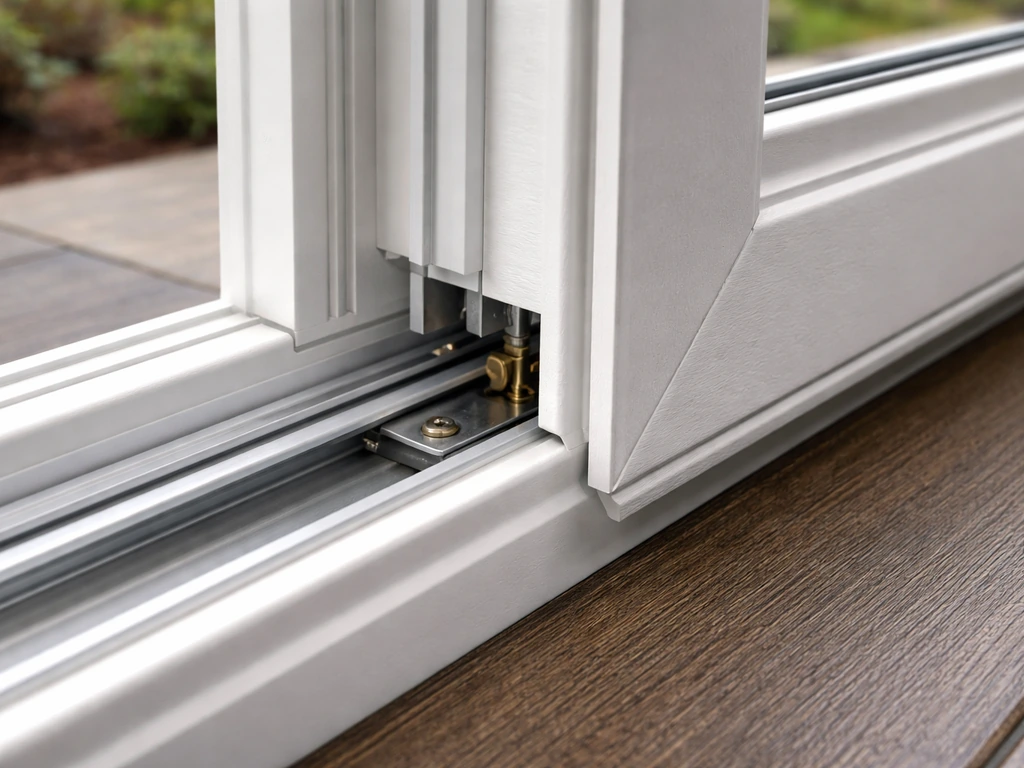
Vinyl (PVC) is the most popular material for replacement patio doors today, and it earns that position. It doesn't rot, doesn't need painting, holds up well in humid or coastal climates, and is the least expensive frame material across the board. A quality vinyl slider from a reputable brand runs $400 to $900 for the door unit alone. The one real knock on vinyl is that it can expand and contract noticeably in extreme temperature swings, which can make tracks sticky in very hot climates or cause frames to warp slightly over time in very cold ones. For most of the continental US, this is a non-issue.
Fiberglass
Fiberglass is the performance upgrade from vinyl. It has much lower thermal expansion and contraction, meaning seals stay tighter over time and the door operates more consistently across seasons. It's also stronger than vinyl, so panels can be made thinner with the same structural integrity, which matters for very large door openings. Fiberglass doors can be painted, stained to look like wood, or left in a factory finish. The downside is cost: fiberglass door units typically run $1,200 to $3,000, and the installed price reflects that. If you're in a climate with very cold winters or very hot summers, or if you want a door that will look and operate like new in 20 years, fiberglass is worth the extra money.
Aluminum
Aluminum frames are slim, strong, and hold up in coastal or high-humidity environments where salt air is a concern. They're a common choice for contemporary or modern homes because the narrow sightlines maximize glass area. The major downside is thermal performance: aluminum conducts heat and cold readily, which means poor insulation and potential for condensation on the frame in cold climates. Thermally broken aluminum frames (where a non-conductive material separates the interior and exterior metal surfaces) address this significantly, but they cost more. If thermal performance matters to you, always ask specifically for thermally broken aluminum. Standard (non-broken) aluminum is really only appropriate in mild climates.
Wood
Wood is the most beautiful frame material and the hardest to maintain. It requires periodic painting or staining to prevent rot and moisture damage, and it's the most expensive option. Most wood patio doors today come clad with aluminum or fiberglass on the exterior to reduce maintenance, with a wood interior for aesthetics. If you love the look and are willing to maintain it, wood-clad is a legitimate choice. If you're replacing a door specifically because the old one rotted or is hard to operate, wood may not be your best move.
| Material | Cost (Door Unit) | Maintenance | Thermal Performance | Best Climate |
|---|---|---|---|---|
| Vinyl | $400–$900 | Very low | Good | Most US climates |
| Fiberglass | $1,200–$3,000 | Low | Excellent | Extreme cold or heat |
| Aluminum (thermally broken) | $900–$2,500 | Low | Good | Mild, coastal |
| Wood / Wood-clad | $1,500–$4,000+ | High | Good–Excellent | Dry or temperate climates |
Sizing, measurements, and what you must confirm before ordering
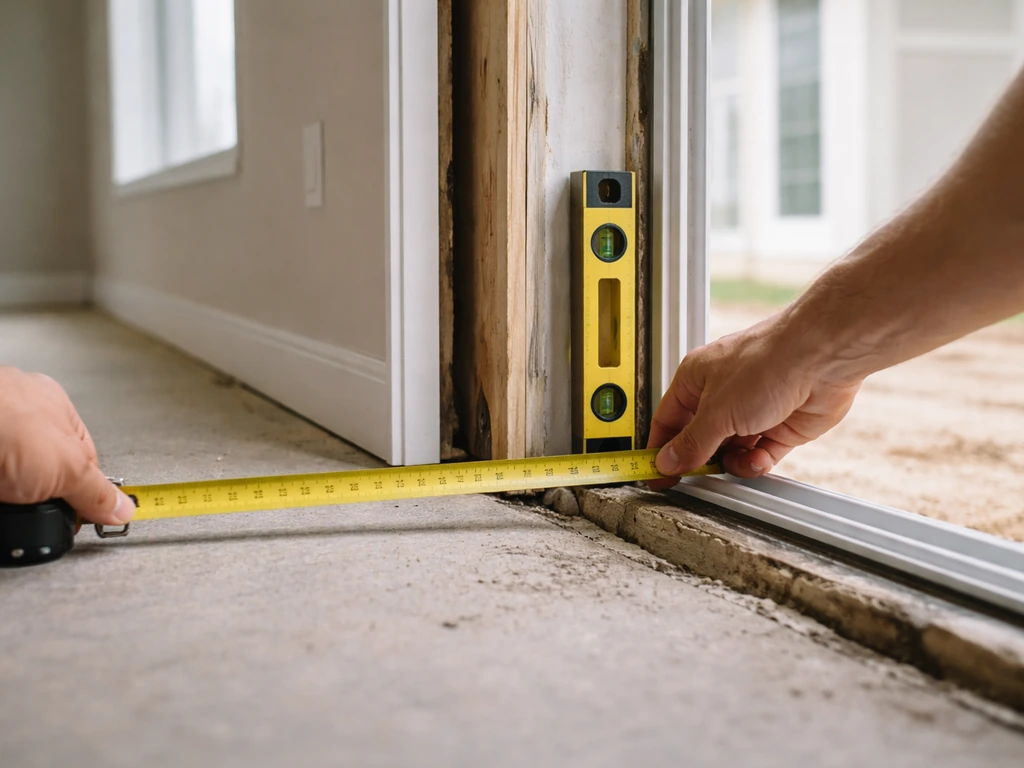
This is the step most homeowners rush, and it's the most expensive mistake to make. Ordering a door that's even half an inch off in the wrong direction can mean it won't fit the rough opening or it'll rattle in the frame. Measure twice, order once.
For a replacement sliding door, you need three measurements: the rough opening width, the rough opening height, and the depth of the existing frame (also called the frame depth or wall thickness). Measure the rough opening, the actual framed opening in the wall, not the old door frame, in at least three places: top, middle, and bottom for width, and left, center, and right for height. Use the smallest measurement in each direction. Rough openings are rarely perfectly square, and the door has to fit the tightest point.
Standard sliding patio door sizes in the US are based on nominal dimensions. Common nominal widths are 60 inches (5 feet), 72 inches (6 feet), and 96 inches (8 feet). Common nominal heights are 80 inches (6'8") and 96 inches (8 feet). The actual door unit is typically about 0.5 to 1 inch smaller than the nominal rough opening dimension on each side, leaving room for shimming and leveling. So if your rough opening measures 71.5 inches wide by 79.75 inches tall, a nominal 72x80 door unit will fit after shimming.
If you're replacing a sliding door with another sliding door of the same brand or product line, also check the track system. Some track profiles are proprietary, meaning you may need to remove the entire old frame and track assembly, not just the sliding panel. If you're doing a full frame replacement (also called a full-frame or nail-fin installation), the door unit includes its own frame and you install it directly into the rough opening. If you're doing an insert replacement (also called a pocket replacement), the new door unit slides into the existing frame, which must be in good condition and square. Insert replacements are faster and cheaper but only work if the old frame is solid.
- Measure rough opening width at top, middle, and bottom — use the smallest number
- Measure rough opening height at left, center, and right — use the smallest number
- Measure wall thickness (frame depth) to confirm you order the right frame depth option
- Check whether the existing frame/track is square using a level and a diagonal measurement
- Decide: full-frame replacement or insert replacement based on existing frame condition
- Confirm the sill slope — sliding door sills should slope slightly outward for drainage
- Note the swing or slide direction (active panel left or right when viewed from inside)
Cost breakdown: door only vs installed, and what drives the price
There's a big gap between what you pay for the door and what you pay to have it in your wall. A vinyl sliding door that costs $600 at a home center can easily cost $1,500 to $2,200 installed, depending on labor rates in your area, the complexity of the installation, and whether any framing, trim, or finishing work is needed. That's not a rip-off, installation on a patio door is genuinely labor-intensive and requires precise shimming, leveling, flashing, and caulking to do correctly.
| Door Type / Material | Door Unit Cost | Typical Installed Cost | Notes |
|---|---|---|---|
| Vinyl slider (standard) | $400–$900 | $1,200–$2,500 | Most common replacement |
| Vinyl French door | $600–$1,200 | $1,500–$3,000 | Includes both panels + hardware |
| Fiberglass slider | $1,200–$2,500 | $2,500–$4,500 | Best long-term performance |
| Fiberglass French door | $1,500–$3,500 | $3,000–$6,000 | Premium option |
| Aluminum slider (thermally broken) | $900–$2,500 | $2,000–$4,500 | Modern/coastal homes |
| Bifold (any material) | $3,000–$10,000+ | $5,000–$15,000+ | Remodel-level investment |
The main cost drivers beyond the door unit itself are: labor rates in your region (contractor rates in major metro areas can be 30 to 50 percent higher than rural areas), whether the rough opening needs reframing, how much interior and exterior trim work is required, and whether you need permits. Most jurisdictions require a permit for exterior door replacement, and permit fees typically run $50 to $200. Some contractors include this; others don't, so ask upfront.
If you're comparing prices across brands and want to think about best value for the money, the answer usually comes down to warranty length, hardware quality, and glass package. If you’re trying to get the best value patio doors, focus on warranties, glass performance, and total installed cost, not just the sticker price. A door with a lifetime frame warranty and a 10-year glass unit warranty from a mid-tier brand (think Reliabilt, JELD-WEN, or Milgard depending on your region) will outperform a cheaper door with a 1-year warranty in every category that matters over a 10-to-20-year ownership horizon. A door with a lifetime frame warranty and a 10-year glass unit warranty from a mid-tier brand (think Reliabilt, JELD-WEN, or Milgard depending on your region) will outperform a cheaper door with a 1-year warranty in every category that matters over a 10-to-20-year ownership horizon best patio door brand. The upfront price difference is usually $100 to $300, which is nothing compared to a premature replacement.
Security, energy efficiency, and weather sealing: the upgrades worth paying for
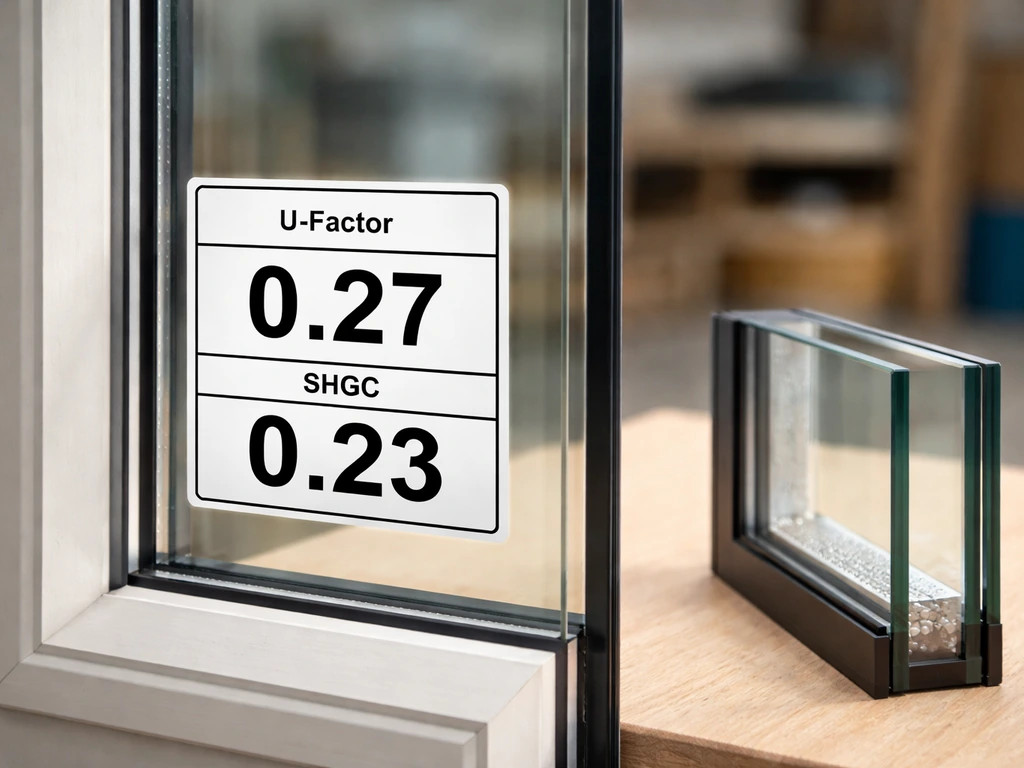
Energy performance on a patio door comes down to three numbers you'll find on the NFRC label: blank" rel="noopener noreferrer">U-factor (thermal transmittance, lower is better), Solar Heat Gain Coefficient or SHGC (how much solar energy passes through, lower is better in hot climates, higher can help in cold climates), and Air Leakage or AL (lower is better, always). NFRC’s label education materials explain that these energy performance ratings include U-factor, solar heat gain, visible transmittance, and air leakage ratings where available, so you can compare doors blank" rel="noopener noreferrer">three numbers you'll find on the NFRC label. ENERGY STAR-certified doors are independently tested and must meet U-factor and SHGC requirements that vary by climate zone. For sliding doors, ENERGY STAR requires air leakage of 0.3 cfm/ft² or less. For swinging doors like French doors, the limit is 0.5 cfm/ft². When you're shopping, ask to see the NFRC label and look for ENERGY STAR certification, this is the easiest way to confirm a door will perform as advertised, not just as marketed.
For the glass package, double-pane with low-E coating is the baseline for any quality replacement door. Triple-pane is available on premium doors and makes a meaningful difference in very cold climates (think Minnesota winters), but in most of the US the energy savings over double-pane low-E won't pay back the added cost in a reasonable timeframe. If you're in a hot climate like Texas or Arizona, look for a low SHGC rating (0.25 or lower) to reduce solar heat gain. In northern climates, a slightly higher SHGC (0.30 to 0.40) can actually help with passive solar heating in winter.
Security on sliding doors is a known weak point if you only rely on the standard latch. A few upgrades make a real difference. First, add a security bar or adjustable rod in the track, this prevents the door from being forced open even if the latch is defeated. Second, upgrade to a multi-point locking system if your door supports it; this engages locks at multiple points along the frame, not just at the handle, making forced entry dramatically harder. Third, check whether your sliding door panels can be lifted out of the track from the outside, many older doors can. Modern doors have anti-lift pins or blocks built in, but if yours doesn't, aftermarket anti-lift clips are a cheap fix.
Weather sealing degrades over time and is often the first thing to fail on older doors. When replacing, look for doors with pile weather stripping (the fuzzy strip type used on most sliding door edges), a solid sweep at the bottom of the active panel, and a threshold with a flexible seal. After installation, run a bead of exterior-grade caulk along the exterior perimeter of the frame where it meets the siding or stucco. This is one of the steps most installers do quickly and imprecisely, it's worth doing carefully yourself or asking your contractor to take their time on it.
Screens, blinds, and exterior covering: day-to-day comfort considerations
Screens are often an afterthought until you've lived without one through bug season, and then they become critical. Most sliding patio doors come with a screen included or available as an add-on. Standard sliding screens run in their own separate track on the exterior side of the door. If your door opens onto a screened porch, you won't need a screen on the door itself, but if it opens directly outside, make sure the door you order includes one or that you budget for it separately. Screen replacements and upgrades (like no-see-um mesh for small insects or pet-resistant screens for dogs and cats) typically run $50 to $150.
For light control and privacy, the most practical options are panel track blinds, vertical blinds, or cellular shades designed for wide openings. Blinds-between-the-glass are also available on some door units, these are built into the glass unit and controlled by a magnetic slider or handle. They're convenient and eliminate the dust problem of exterior blinds, but they add cost ($150 to $400 per panel typically) and they can't be replaced independently if they fail. For most people, a panel track blind or vertical blind on an interior ceiling-mounted track gives the most flexibility at the lowest cost.
Exterior coverings, pergolas, awnings, or patio covers over the door, don't affect the door itself but dramatically affect how much you use the door and how much solar heat the glass absorbs. A retractable awning over a south- or west-facing patio door can reduce solar heat gain through the glass by 65 to 77 percent according to ENERGY STAR data, which means the SHGC rating of the glass matters less if you have good exterior shading. If you're on a tight budget, a well-placed awning can let you buy a less expensive glass package on the door and still get good summer comfort.
Your next steps: how to move from research to order
Here's the practical sequence to go from "I need a new patio door" to having one on order without making expensive mistakes. First, measure your rough opening using the method described above, width and height in three places each, smallest numbers rule. Second, determine whether you're doing a full-frame replacement or an insert, based on the condition of your existing frame. Third, pick your door type: sliding for most situations, French if you have the swing clearance and want the look. Fourth, pick your material based on climate and budget: vinyl is the right answer for most homeowners, fiberglass if you're in an extreme climate or want the best long-term option. Fifth, look for ENERGY STAR certification and check the NFRC label for U-factor and SHGC values appropriate for your climate zone. Sixth, get at least two installed quotes from contractors and confirm the quote includes permits, trim work, and haul-away of the old door. Seventh, add security upgrades (multi-point lock, track bar, anti-lift clips) to your order or ask your contractor to include them.
If you're also evaluating specific brands or comparing models head-to-head on rated performance and warranty terms, the deeper dives into best-rated patio doors and best patio door brands cover those comparisons in more detail. For pure value optimization, getting the most door for your dollar, the best patio doors for the money breakdown is worth reading before you finalize your budget. The decision framework above will get you to the right door type and material, and those resources will help you close in on the specific product. For more precise guidance, also compare the dp rating for patio doors on the NFRC label so you know how the door performs for airflow and comfort ENERGY STAR certification.
FAQ
Can I replace just the patio door glass or panel instead of the entire door unit?
If you are swapping like-for-like (same brand or same nominal size) you may only need the door panel kit, but you still must confirm the track profile and roller spec. Even when measurements match, a different track design can leave poor alignment or make the rollers bind, which shows up as a door that drags or won’t fully latch.
When is an insert (pocket) replacement a bad idea?
Yes, but only when the existing frame is square, solid, and not rotted. A good rule is to try to measure diagonal distances across the rough opening, if the corners differ noticeably, or the frame flexes when you push it, plan on a full-frame (nail-fin) replacement rather than an insert.
How close do my rough-opening measurements need to be for the door to fit?
There is a difference between “nominal” size and the actual sealed unit size. Use the rough opening measurements in at least three spots and follow the typical 0.5 to 1 inch allowance per side for shim space, then confirm the manufacturer’s installation spec for that exact model, because some lines require tighter tolerances than others.
What installation mistakes cause drafts or leaks even if the door fits the opening?
For sliding doors, the most common installation issue is uneven shimming that causes the rollers to sit slightly off-level. That can lead to drafts at the meeting rail, water intrusion at the bottom sweep, and premature wear on the track, so ask installers how they verify level, plumb, and reveal before caulking and trim.
Where do patio doors usually leak, and what should I inspect first after installation?
Check the bottom sweep and threshold design, and do a “water test” after installation if possible. Many leaks originate from the exterior perimeter not being sealed correctly to siding or stucco, so insist that exterior-grade caulk is continuous at the full perimeter, then confirm the threshold channel is clean so water can drain away from the interior.
If French doors look best, what clearance checks should I do before I buy?
If the opening is tight, sliding is usually the safe choice because it does not require swing clearance. However, if you want French doors, measure the space for each panel to swing fully without hitting walls, columns, furniture, or the landing, and remember you need clearance on both sides of the door path.
How does wall thickness (frame depth) change what replacement door I can buy?
Measure the current interior-to-exterior wall thickness, then compare it to the door’s required installation depth. If your wall is unusually thick or has extensive siding layers, you may need different trim components or a different installation method, and those changes can affect total cost and lead time.
Should I prioritize U-factor or SHGC when choosing the best replacement patio doors for my climate?
Pick an energy package based on both your heating and cooling priorities. In cold climates, emphasize a low U-factor and consider triple-pane if you have high winter heating costs, in hot climates prioritize lower SHGC to reduce solar gain, and always verify the NFRC label for U-factor, SHGC, and air leakage rather than relying on marketing claims.
What security upgrades actually matter for sliding patio doors, and how do I verify they work?
If you have kids, pets, or frequent use, multi-point locking is the upgrade that most reliably improves day-to-day security, and a track security bar or anti-lift hardware prevents forced entry at the most common sliding-door weak point. After installation, test the latch engagement and make sure the lock throws consistently even when the door is slightly out of level.
Do I always get a screen with the replacement patio door?
Yes, when screens are not included with the door or when you want a different mesh type. Verify whether your replacement uses a standard screen frame and track or a proprietary system tied to that door model, because proprietary screens can be harder and more expensive to replace later.
What warranty details should I compare, beyond the headline years?
Warranty terms that matter most are frame coverage duration, glass unit coverage duration, and what counts as “failure” (fogging, seal breach, condensation under certain conditions). Also confirm whether the warranty requires professional installation to stay valid, because some manufacturers void coverage if installation isn’t performed per their instructions.