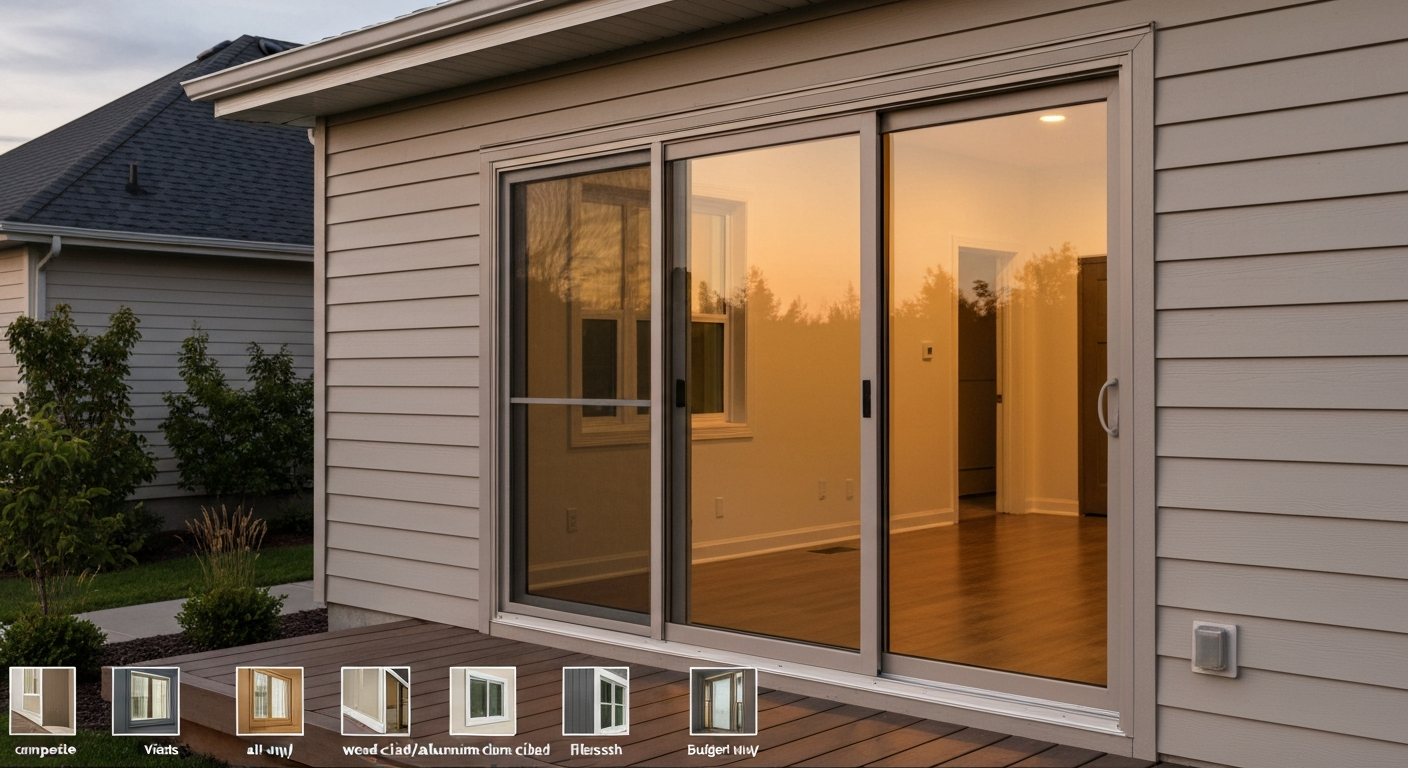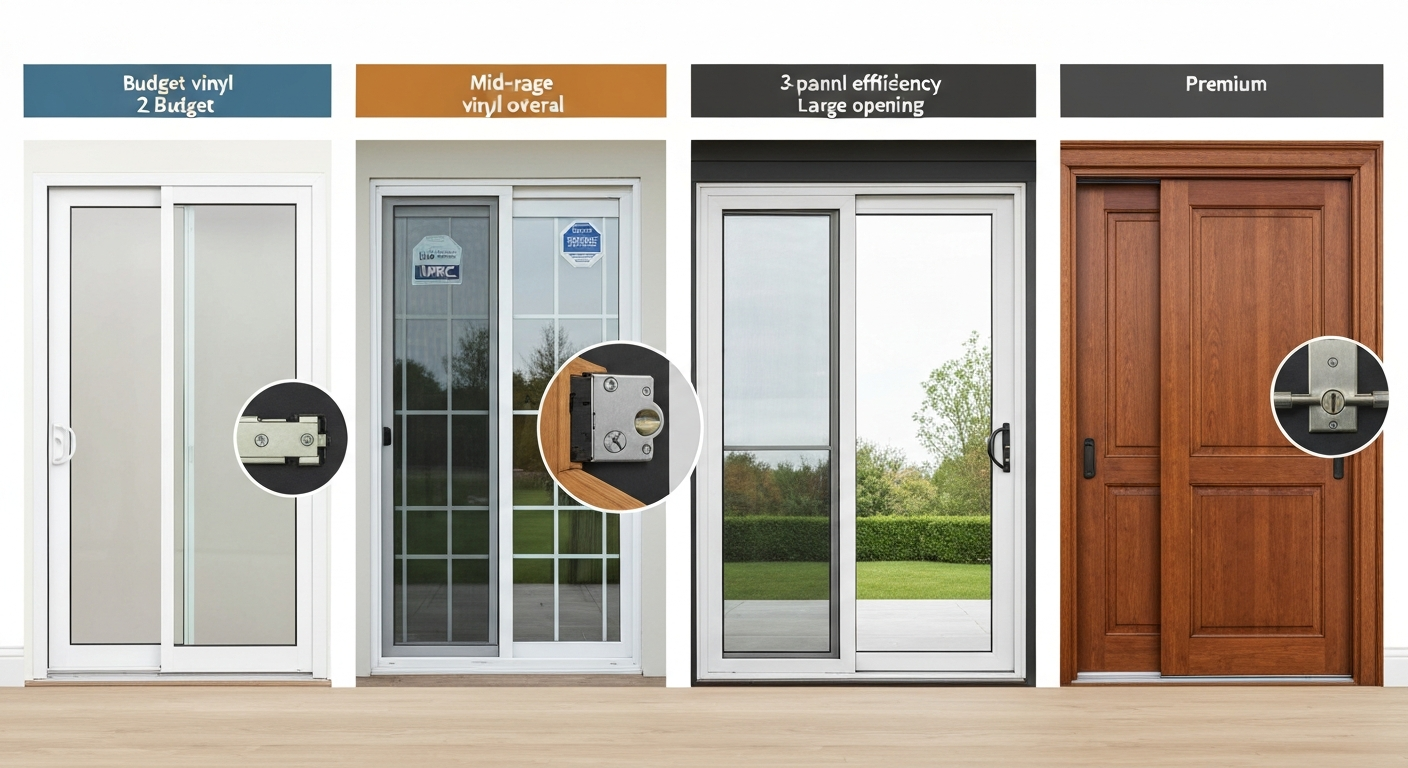
If you are researching sliding patio doors from the 2017 model year, whether you are replacing a door that was installed then, comparing a used home's existing door against current options, or just trying to find a discontinued model's specs, the standout picks from that year were the Andersen 400 Series, Pella Impervia, Milgard Tuscany, JELD-WEN V-4500, and Marvin Ultimate Sliding Door. Each earned its spot through a combination of verified NFRC energy ratings, measurable frame performance, and real-world homeowner value. This guide gives you the concrete specs, trade-off breakdowns, and sizing guidance you need to make a confident decision today.
Best Sliding Patio Doors 2017: Top Picks, Specs & Buying Guide
Owen Delaney
29 Jul 2026
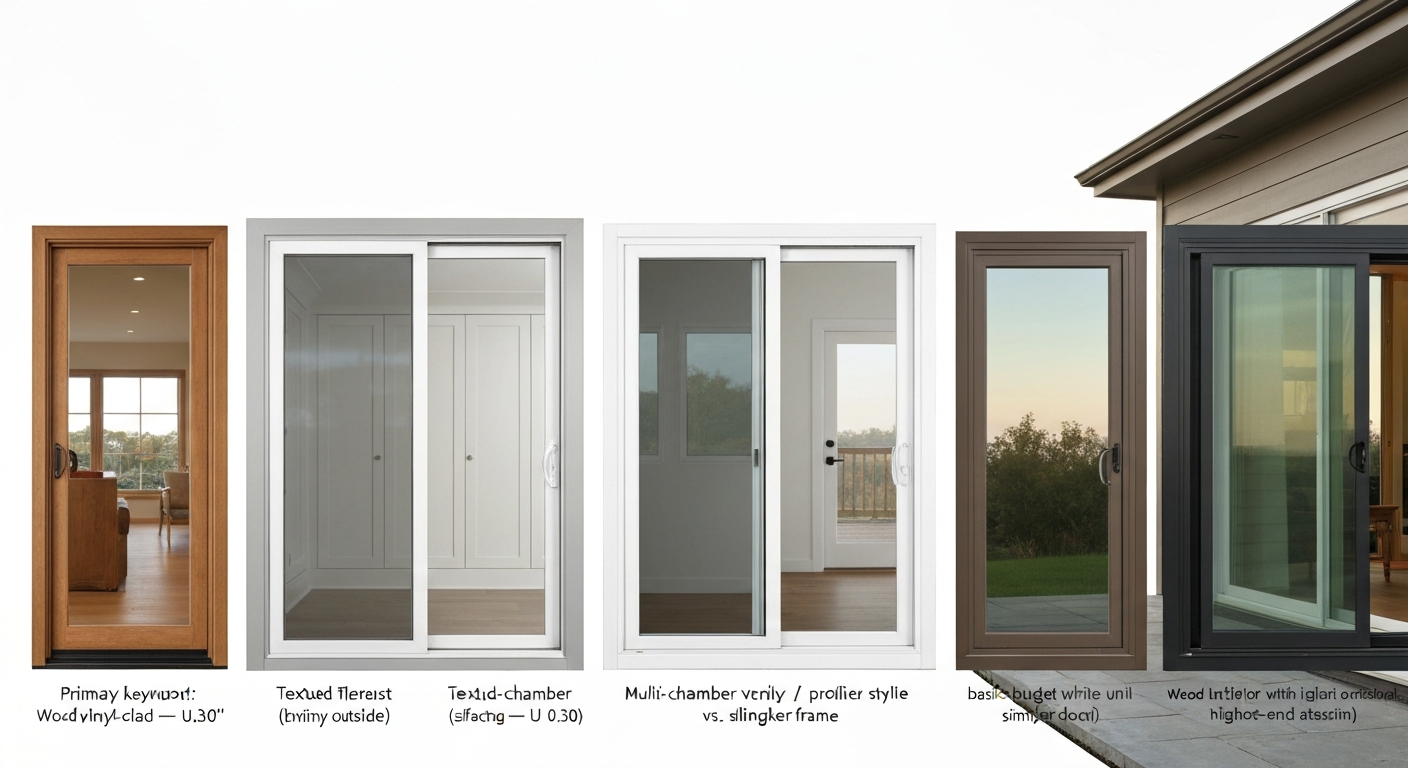
Who this 2017 buying guide is actually for
Honestly, most people landing on a 2017-focused guide fall into one of three groups. First, you bought or moved into a home where a sliding patio door was installed around 2017 and you want to know what you have, what its rated specs are, and whether the warranty is still active. Second, you are a homeowner who did your original research in 2017 and is now finally pulling the trigger on a replacement, wanting to compare what was available then against what manufacturers updated through 2018 to 2021. Third, you are a contractor or inspector who needs to match a door spec for a renovation or insurance claim. Wherever you fit, the specs, measurements, and comparisons below are grounded in manufacturer technical documents, NFRC certified performance data, and AAMA/WDMA/CSA 101/I. Search the NFRC Certified Product Directory to retrieve verified NFRC labels/CPD numbers and the certified U‑factor, SHGC, visible transmittance, gas fill and exact CPD label identifiers for 2017‑sold configurations. S.2/A440-2017 (NAFS) standard test results.
Top sliding patio door picks of 2017 at a glance
- Andersen 400 Series Gliding Patio Door: best all-around value with verified ENERGY STAR qualification across all four U.S. climate zones in standard Low-E configurations.
- Pella Impervia Sliding Patio Door: best fiberglass option in 2017 for cold climates, with U-factors as low as 0.27 and a 20-year limited warranty on the fiberglass frame.
- Milgard Tuscany Series Sliding Door: best vinyl pick for the western U.S. market, backed by Milgard's Full Lifetime Warranty covering glass seal failure for the original owner.
- JELD-WEN V-4500 Sliding Patio Door: best budget-accessible option sold through Home Depot and Lowe's in 2017, with retail prices starting around $400 to $600 for a 60-inch unit.
- Marvin Ultimate Sliding Door: best premium wood/aluminum option for homeowners prioritizing interior aesthetics and architectural-grade performance, with DP ratings up to 50.
2017 model comparison table
| Model | Common Size (W x H) | Frame Material | Glass Standard Config | NFRC U-Factor / SHGC | Typical 2017 Price (door unit) | Why it made the list |
|---|---|---|---|---|---|---|
| Andersen 400 Series Gliding | 72" x 80" (183 x 203 cm) | Wood/Vinyl-clad exterior | Double-pane Low-E4 with argon | U-0.30 / SHGC 0.21–0.34 | $1,200–$2,200 | ENERGY STAR all zones, strong AAMA/WDMA test record, broad size range |
| Pella Impervia Sliding | 72" x 80" (183 x 203 cm) | Fiberglass (Duracast) | Double-pane Low-E with argon | U-0.27–0.30 / SHGC 0.19–0.31 | $1,800–$3,000 | Lowest U-factor in class, 20-yr frame warranty, excellent cold-climate rating |
| Milgard Tuscany Series Sliding | 60"–96" x 80" (152–244 x 203 cm) | Vinyl (uPVC) | Double-pane Low-E with argon | U-0.28–0.32 / SHGC 0.22–0.35 | $700–$1,500 | Full Lifetime Warranty, wide size range, ENERGY STAR qualified, West Coast availability |
| JELD-WEN V-4500 Sliding | 60" x 80" (152 x 203 cm) | Vinyl | Double-pane Low-E (optional argon) | U-0.30–0.35 / SHGC 0.23–0.37 | $400–$900 | Accessible retail pricing, widely stocked at Home Depot/Lowe's, solid entry-level NFRC numbers |
| Marvin Ultimate Sliding Door | 48"–120" x 80"–96" (122–305 x 203–244 cm) | Wood interior / aluminum exterior | Double-pane Low-E2 or Low-E3, argon | U-0.26–0.33 / SHGC 0.17–0.37 | $3,500–$7,000+ | Architectural DP ratings to 50, widest size customization, premium warranty, forced-entry tested |
Detailed specs and warranty notes for each 2017 pick
Andersen 400 Series Gliding Patio Door
The 400 Series was Andersen's most widely installed gliding door line in 2017. Standard panel configurations include 2-panel (one fixed, one operating) and 3-panel options in widths of 60, 72, and 96 inches, with a standard height of 80 inches and an optional 96-inch height. The frame uses a pine wood interior bonded to a vinyl-clad exterior, with a frame depth of approximately 4-9/16 inches. NFRC-certified performance for the double-pane Low-E4 with argon configuration: U-factor of 0.30, SHGC of 0.21 (tinted) to 0.34 (clear), and visible transmittance around 0.52. Air infiltration was tested at 0.01 CFM per square foot per ASTM E283 at 1.57 psf, which is well within the 0.30 limit AAMA sets for residential sliding doors. The 2017 Andersen limited warranty covered glass for 20 years (seal failure, breakage from manufacturing defect), wood parts for 10 years, and hardware for 2 years. Importantly, the warranty was transferable once within the coverage period, which added resale value.
Pella Impervia Sliding Patio Door
The Impervia line used Pella's proprietary Duracast fiberglass composite for both the frame and sash, making it measurably stronger and better insulating than vinyl at cold temperatures. Standard sizes in 2017 matched industry norms: 60 x 80, 72 x 80, and 96 x 80 inches, with a rough opening tolerance of 1/2 inch per side (so a 72 x 80 door needed a rough opening of 73 x 80.5 inches minimum). Pella published U-factors as low as 0.27 for the argon-filled Low-E triple-pane option and 0.30 for standard double-pane Low-E configurations. The SHGC range ran from 0.19 to 0.31 depending on glass package. Pella's 2017 warranty on the Impervia was 20 years on the fiberglass frame and sash, 10 years on the insulating glass unit (seal failure), and 1 year on hardware and finish. One thing I noticed when reviewing the warranty language: it excluded damage from improper installation, so professional installation was effectively recommended to protect coverage.
Milgard Tuscany Series Sliding Door
Milgard's Tuscany Series tech sheets from 2017 listed minimum and maximum panel dimensions as follows: minimum single panel width of 24 inches, maximum single panel width of 60 inches, and standard door unit widths from 60 to 144 inches (with multi-panel configurations). Standard height was 80 inches with 96-inch available. The vinyl frame used a multi-chamber construction with a wall thickness of approximately 0.090 inches. NFRC performance for the standard double-pane Low-E with argon: U-factor 0.28 to 0.32 depending on configuration, SHGC 0.22 to 0.35. Milgard's Full Lifetime Warranty was a standout feature: it covered the original homeowner for as long as they owned the home, including glass seal failure and operational hardware. That warranty did not transfer, which is worth knowing if you are buying a home with a Milgard Tuscany installed in 2017.
JELD-WEN V-4500 Sliding Patio Door
The JELD-WEN V-4500 was the most accessible 2017 option at retail. Home Depot stocked the 60 x 80-inch two-panel unit at prices ranging from roughly $420 to $650 depending on glass package and finish. The vinyl frame was simpler in construction than Milgard's Tuscany, but the NFRC numbers were still respectable: U-factor of 0.30 to 0.35 and SHGC of 0.23 to 0.37 for the standard double-pane Low-E configuration. Argon fill was an add-on option. The 2017 product literature listed a limited lifetime warranty on the vinyl frame and a 10-year warranty on the insulating glass unit. Hardware warranty was 1 year. The V-4500 used a standard 3-5/8-inch frame depth and came pre-assembled, which made DIY installation more manageable than manufacturer-assembled units. That said, the operating force on the V-4500's standard roller system was not independently tested to ASTM F842 in every configuration, so if smooth operation matters to you, verify the specific SKU.
Marvin Ultimate Sliding Door
Marvin's Ultimate line was the top-of-market option in 2017. The wood interior (pine standard, Douglas fir or white oak available) paired with an extruded aluminum exterior clad allowed a wide range of painted and stained finishes. Width ranged from 48 to 120 inches in custom configurations, and height options went to 96 inches. The frame depth was 4-9/16 inches standard. Performance was the strongest of the 2017 group: NFRC U-factors as low as 0.26 with triple-pane Low-E3 argon, and DP ratings tested to 50 on larger panels per AAMA/WDMA/CSA 101. Air infiltration was documented at 0.01 CFM per square foot. The Marvin limited warranty covered the wood interior for 10 years, aluminum exterior for 10 years, and insulating glass unit for 20 years in 2017. Forced-entry resistance was tested per ASTM E2136 in standard configurations, and the multi-point locking hardware met ANSI/BHMA A156.2 Grade 1 standards for high-cycle durability.
How 2017 models compare to 2018-2021 updates
The core specs did not change dramatically year over year, but there were measurable differences across the 2018 to 2021 window that are worth knowing if you are deciding between keeping a 2017 unit or upgrading. For context, the related guides covering 2018, 2019, 2020, and 2021 model years document these changes in detail, but here is a concise breakdown of what actually shifted. See our roundup of the best sliding patio doors 2021 for detailed comparisons and model updates. See our roundup of the best sliding patio doors 2019 for a focused look at model-year changes and top-rated 2019 replacements. See the related guide on best sliding glass patio doors 2020 for a focused comparison of changes introduced that year. See the related guide on best patio sliding doors 2018 for a detailed comparison of the year-to-year changes between 2018 and 2021.
| Area of Change | 2017 Baseline | 2018–2019 Updates | 2020–2021 Updates |
|---|---|---|---|
| ENERGY STAR Requirements | Version 6.0 (Northern zone: U ≤ 0.27, SHGC any) | Version 7.0 phased in (Northern: U ≤ 0.22 in some zones) | Version 7.0 fully enforced; Northern zone U ≤ 0.22 required |
| Andersen 400 Series | Low-E4 glass standard, U-0.30 | Low-E4 Sun glass added as option, improved SHGC control | High-performance hardware upgrades; SmartSun glass option |
| Pella Impervia | U-0.27 minimum, fiberglass frame | Added wider panel options (up to 108" unit width) | Insynctive smart-lock sensors available as add-on |
| Milgard Tuscany | Full Lifetime Warranty, 80" standard height | Added 96" height as standard stock item in more regions | SunCoat Max Low-E glass option added with U-0.25 |
| JELD-WEN V-4500 | Entry-level retail, U-0.30–0.35 | Improved roller hardware; added flush-sill option | Aurora Series replaced V-4500 branding at some retailers |
| Marvin Ultimate | U-0.26, DP-50, aluminum clad | Marvin Signature line rebranded some Ultimate configurations | Composite framing introduced in some sub-lines |
The most practically significant change was ENERGY STAR tightening its Northern climate zone requirement from U-0. ENERGY STAR, Residential Windows, Doors & Skylights (Version 7.0 & archives) provides the specification changes and archived qualified product lists used to verify which 2017 models were ENERGY STAR qualified and the climate-zone criteria for each version blank" rel="noopener noreferrer">ENERGY STAR — Residential Windows, Doors & Skylights (Version 7.0 & archives). 27 (Version 6.0) to U-0.22 (Version 7.0). If you are in a heating-dominated climate like Minnesota or upstate New York and your 2017 door was ENERGY STAR qualified under Version 6.0, it would not qualify under the stricter 2020 rules. That does not mean it performs poorly, but it matters for rebate eligibility and building code compliance on a replacement.
Measuring your opening: standard sizes and a step-by-step checklist
This is where a lot of homeowners get tripped up. The door size listed on a product page (say, 72 x 80 inches) is the nominal door unit size, not the rough opening size you need in your framing. Andersen's installation guides for gliding patio doors specify that the rough opening width should be the door unit width plus 1 inch (1/2 inch per side for shimming), and the rough opening height should be the door unit height plus 1/2 inch. So a 72 x 80-inch nominal door needs a rough opening of 73 x 80.5 inches minimum. Pella's 2017 installation instructions used the same 1/2-inch-per-side tolerance. Here are the most common nominal sliding patio door sizes sold in 2017 and their corresponding rough opening dimensions.
| Nominal Door Size (W x H) | Metric (cm) | Rough Opening Width | Rough Opening Height |
|---|---|---|---|
| 60" x 80" | 152 x 203 cm | 61" | 80.5" |
| 72" x 80" | 183 x 203 cm | 73" | 80.5" |
| 96" x 80" | 244 x 203 cm | 97" | 80.5" |
| 60" x 96" | 152 x 244 cm | 61" | 96.5" |
| 72" x 96" | 183 x 244 cm | 73" | 96.5" |
| 96" x 96" | 244 x 244 cm | 97" | 96.5" |
Before ordering anything, measure the actual opening in your wall, not just the existing door. Here is the measuring checklist I use, derived from Andersen's Installation Guide (documents 0005310 and 9020086) and Pella's sliding door installation instructions.
- Remove the existing door trim (casing) on the interior side to expose the full rough opening framing.
- Measure the rough opening width at three points: near the top, at mid-height, and near the bottom. Record the smallest measurement as your controlling width.
- Measure the rough opening height at three points: near the left jamb, center, and near the right jamb. Record the smallest as your controlling height.
- Check the sill for level using a 4-foot level. A tolerance of 1/8 inch over 4 feet is acceptable per Andersen's guide; anything more requires a sloped sill adapter or shim correction before installation.
- Check the side jambs for plumb using a spirit level. Note any bowing or deviation from plumb greater than 1/8 inch over the full height.
- Measure the wall depth (from exterior sheathing face to interior drywall face) to confirm the door frame depth will match. Standard frame depths are 4-9/16 inches (for 2x4 framing with 1/2-inch drywall) or 6-9/16 inches (for 2x6 framing).
- Verify the sub-sill or structural sill material. Andersen and Pella both specify that the sill must be solid, rot-free wood or concrete/masonry, and both require a sill pan flashing system or approved sealant bead before setting the door frame.
- Subtract 1 inch from your controlling rough opening width and 1/2 inch from your controlling height to determine the maximum nominal door unit size you can order.
One thing I have seen cause real headaches: homeowners who measure the existing door frame instead of the rough opening framing. If the existing door was improperly shimmed or the frame is rotted, you can end up ordering a door that technically fits the old frame but does not fit the actual structural rough opening. Always go back to the studs and header.
Frame materials: vinyl, aluminum, fiberglass, and wood compared
Frame material is probably the biggest decision you will make after size, because it drives cost, long-term maintenance, insulating performance, and how the door looks in your home. Here is an honest breakdown based on what the 2017 market actually offered.
| Material | Typical Frame Thickness | Thermal Conductivity | Typical U-Factor Range (frame only) | Maintenance Level | Typical Unit Price Premium vs. Vinyl | Best For |
|---|---|---|---|---|---|---|
| Vinyl (uPVC) | 0.085–0.120" wall | Low (0.10–0.14 W/m·K) | 0.28–0.40 | Very low (no painting) | Baseline | Budget-conscious buyers, moderate climates, rental properties |
| Aluminum | 0.060–0.080" wall (thermally broken) | High without TBB (160 W/m·K); reduced with thermal break | 0.30–0.55 (TB) / 0.55–0.80 (non-TB) | Low (anodized/powder coat) | +20–40% | Commercial-grade strength, coastal/high-wind areas, contemporary aesthetics |
| Fiberglass | 0.080–0.110" wall | Very low (0.25–0.35 W/m·K) | 0.26–0.35 | Low (paintable, dimensionally stable) | +40–80% | Cold climates, humid climates, long-term durability focus |
| Wood (interior)/Aluminum clad (exterior) | Variable (3/4"–1.5" wood) | Moderate (wood: 0.10–0.17 W/m·K) | 0.26–0.38 | Moderate interior (refinishing every 5–10 yrs) | +80–200% | Architectural homes, premium aesthetics, custom sizing |
Vinyl's big advantage is that it does not conduct heat or cold nearly as readily as aluminum, and it never needs painting. The trade-off is dimensional stability: cheap vinyl can bow or warp in extreme heat (above 140 degrees Fahrenheit in direct sun), which is why quality vinyl doors like Milgard's Tuscany use multi-chamber profiles to add stiffness. Aluminum without a thermal break is genuinely a poor choice for any climate with real winters, because the frame itself becomes a cold bridge, causing condensation inside and significant heat loss. Thermally broken aluminum (which all the name-brand 2017 options used) adds a polyamide or polyurethane strip inside the frame to interrupt that conductive path. Fiberglass expands and contracts at nearly the same rate as glass, which makes it dimensionally stable and reduces seal stress over time. That is a real long-term advantage in climates with big seasonal temperature swings. Wood is the warmest-looking option and structurally excellent, but interior wood surfaces on a patio door get moisture exposure from condensation and cleaning, so they require refinishing every five to ten years to maintain the warranty and prevent rot.
Glass options: what the ratings actually mean and when to choose each
The glass package is where most of the energy performance actually comes from. In 2017, all the top-tier brands offered double-pane insulating glass units (IGUs) with at least one low-emissivity (Low-E) coating and argon gas fill as the standard configuration. Here is what the key specs mean in practical terms.
U-factor and SHGC: the two numbers that matter most
U-factor measures how quickly heat moves through the entire door assembly (frame plus glass) from warm side to cold side. Lower is better for insulating. SHGC (Solar Heat Gain Coefficient) measures what fraction of solar radiation passes through the glass into your home. A higher SHGC is desirable in cold climates (free solar heating in winter) and a lower SHGC is desirable in hot climates (less cooling load). ENERGY STAR Version 6.0 targets for residential sliding patio doors in 2017 were: Northern zone U-0.27 or lower with any SHGC; North-Central zone U-0.30 or lower with SHGC 0.40 or lower; South-Central zone U-0.30 or lower with SHGC 0.25 or lower; Southern zone U-0.40 or lower with SHGC 0.25 or lower. Both numbers on any NFRC label apply to the whole unit (door plus frame), not just the center glass.
Glass type breakdown
| Glass Type | Typical U-Factor (whole unit) | Typical SHGC | When to Choose |
|---|---|---|---|
| Standard double-pane (no Low-E) | 0.45–0.55 | 0.55–0.70 | Rarely recommended; lower cost but fails ENERGY STAR in most zones |
| Double-pane Low-E (air fill) | 0.30–0.40 | 0.20–0.40 | Budget upgrade over standard; adequate for mild climates |
| Double-pane Low-E with argon fill | 0.25–0.35 | 0.19–0.38 | Best value for most climates; meets ENERGY STAR in all zones when paired with good frame |
| Double-pane Low-E with krypton fill | 0.23–0.30 | 0.19–0.36 | Marginally better than argon; higher cost, rarely necessary for residential doors |
| Triple-pane Low-E with argon | 0.18–0.25 | 0.17–0.30 | Best thermal performance; adds 15–30 lbs per panel, increases frame load; best for Northern zone |
| Tempered safety glass | Same as base IGU | Same as base IGU | Required by code for doors within 10" of floor; all patio doors in 2017 used tempered glass as standard |
Low-E coatings work by reflecting long-wave infrared radiation (heat energy) back toward its source. A hard-coat Low-E (pyrolytic) is baked onto the glass surface during manufacturing and is more durable but less thermally effective than a soft-coat Low-E (sputtered). Most premium 2017 sliding doors (Andersen, Pella, Milgard) used soft-coat Low-E on surface 2 or 3 of the IGU, which delivers better performance but requires the coating to be sealed inside the gas-filled space, away from air and cleaning products. If your 2017 door's IGU has failed (fogging between panes), the Low-E coating may be compromised along with the seal. The glass unit should be replaced as an assembly, not cleaned or re-sealed. Argon gas fill is essentially non-toxic, odorless, and about 1.4 times denser than air, which reduces convective heat transfer within the IGU cavity. The typical argon fill rate for a quality 2017 IGU was 90 percent or higher, dropping U-factors by roughly 0.03 to 0.05 compared to air-filled units of the same design. On a 12-foot sliding door exposed to a Minnesota winter, that delta matters.
Security ratings and hardware to look for
Sliding patio doors have historically been a weak point in home security because the standard single-point latch hardware on entry-level models resists only light forced entry. In 2017, the top-tier brands addressed this in measurable ways. Andersen and Marvin listed forced-entry resistance in their product performance test reports per ASTM E2136 and referenced multi-point locking systems as available upgrades. For hardware, the ANSI/BHMA A156.2 standard grades door locks on durability (cycles) and security. Grade 1 is the highest residential/commercial grade, requiring a minimum 250,000 operating cycles and the highest forced-entry resistance. The Marvin Ultimate's standard lock hardware met ANSI/BHMA A156.2 Grade 1. Most 2017 vinyl doors shipped with Grade 2 hardware, which is still functional but lower cycle-rated. Secondary security additions that made sense in 2017 and still do: a foot-actuated Charlie bar or an anti-lift pin (a simple screw driven through the upper frame track) that prevents the panel from being lifted out of the track from outside. Both cost under $20 and add real deterrent value.
DIY vs. professional installation: cost and risk trade-offs
In 2017, professional installation of a standard 72 x 80-inch sliding patio door by a window and door installer typically ran $300 to $600 for the labor alone, assuming no structural changes to the opening. That number climbed to $800 to $1,500 if the rough opening needed to be modified (header replacement, structural framing changes) or if the sill had moisture damage requiring repair. Home Depot and Lowe's both offered installed pricing in 2017 that bundled the door unit, installation labor, and haul-away of the old door, typically ranging from $1,200 to $3,500 for the full job depending on door model and region. The retailer installation programs used third-party contractors, so quality varied by market.
DIY installation is genuinely achievable for an experienced homeowner on a like-for-like replacement (same nominal size, no structural changes), but there are real risks. The biggest are: improper flashing that allows water infiltration behind the frame, which can rot the structural sill plate over years without obvious visible symptoms; and improper shimming that creates a racked frame, causing the sliding panel to bind, drag, or fail to seal at the corners. Both of these can void the manufacturer's warranty. Andersen's installation guides specifically state that installation by a 'qualified installer' is required to maintain warranty coverage. If you are comfortable with a 4-foot level, a caulk gun, and following a 30-page installation guide to the letter, a like-for-like vinyl door replacement is manageable. Anything involving framing changes, masonry openings, or premium doors over $2,000 is worth paying for professional labor to protect the warranty investment.
Screening, covering, and accessory options
Every sliding patio door in 2017 used one of two screen configurations: a surface-mounted framed screen panel that slides in a separate track parallel to the door, or a retractable screen that coils into a housing at one side of the opening when not in use. The standard framed screens used fiberglass or aluminum mesh. Pella and Andersen both offered factory-matched screen frames in standard colors. Aftermarket retractable screens from brands like Phantom Screens or Larson fit standard door widths (60, 72, 96 inches) and cost $200 to $600 installed, compared to $80 to $150 for a basic replacement fiberglass mesh panel. For solar shades and coverings, interior roller shades with a solar fabric openness factor of 1 to 5 percent block summer glare without eliminating daylight and pair well with any Low-E glass package. Exterior roller shades or awnings add a second layer of SHGC reduction but require structural mounting points. Blackout cellular shades added to a sliding door with Low-E glass can improve the combined effective U-factor of the assembly in winter by as much as 0.10 to 0.15, which matters if your 2017 door is underperforming thermally.
Maintenance that actually extends door life
Most sliding door problems I have seen trace back to three neglected maintenance tasks. First, the track. The bottom track accumulates dirt and debris that increases rolling resistance, which then causes homeowners to force the panel, which damages the rollers. Clean the track with a stiff brush and a vacuum every three to six months, and wipe it with a dry silicone spray (not WD-40, which attracts dirt) twice a year. Second, the weatherstripping. The pile weatherstripping on the panel edges compresses over time and can be replaced in about 30 minutes with a manufacturer-matched replacement pile from a hardware supplier, typically costing $15 to $40 for a full door set. Third, the rollers themselves. Most sliding door rollers are adjustable via a screw on the bottom of the panel edge (accessible when the panel is slightly lifted). Turning the adjustment screw raises or lowers the panel's riding height, which affects both ease of operation and how well the panel seals against the top and side weatherstripping. Check and adjust rollers every two years.
Final buyer checklist: what to confirm before you buy or replace
- Confirm your rough opening dimensions (width, height, and sill level) using the step-by-step measuring process above before selecting a door size.
- Verify the NFRC label U-factor and SHGC for the specific configuration you are ordering, not just the marketing headline number. The NFRC Certified Products Directory allows you to look up CPD numbers by manufacturer and product line.
- Check which ENERGY STAR climate zone applies to your zip code and confirm the door meets the current version's requirements, especially if you want to claim utility rebates.
- Match the frame depth to your wall construction: 4-9/16 inches for 2x4 framing, 6-9/16 inches for 2x6 framing. Most manufacturers offer extension jambs for non-standard wall depths.
- Read the warranty carefully for installation requirements (professional vs. DIY), transferability terms, and what counts as a covered glass failure vs. accidental breakage.
- Ask for the AAMA/WDMA/CSA performance grade (PG) rating and design pressure (DP) number on any door you are considering. For most residential applications, a DP rating of 15 to 30 is adequate; coastal or high-wind zones should target DP 35 or higher.
- Confirm that the locking hardware meets ANSI/BHMA A156.2 Grade 1 or 2, and plan to add an anti-lift pin or secondary security bar if using entry-level hardware.
- Get at least two installation quotes if hiring a professional. Ask whether the quote includes flashing materials, sill pan installation, and haul-away of the old door, as these are common add-on charges.
- For a 2017 door replacement, check whether the existing rough opening has any sill rot, water damage, or framing issues before ordering the new unit. Discovering rot after the door arrives delays the job and can add $500 to $1,500 in framing repair costs.
- If your climate experiences significant seasonal temperature swings, prioritize argon-filled double-pane Low-E glass as the minimum spec. Triple-pane is worth the premium only in Northern and very cold climates where ENERGY STAR Version 7.0 U-0.22 compliance is needed.
FAQ
What manufacturer specification documents do I need to verify exact 2017 model specs and dimensions?
Download the 2017 product/spec PDFs, installation guides and technical brochures for each target brand and series (Andersen 100/200/400/A‑Series, Pella sliding lines, Milgard Tuscany/Montecito, Marvin/Integrity Ultimate, JELD‑WEN V‑series). For each model capture: exact nominal and minimum/maximum panel sizes, frame and sash profiles, weight limits, rough‑opening tolerances, available configurations (2/3/4‑panel), sash clearances, and published installation rough‑opening tables. Use the manufacturers’ Technical & Installation Documents pages (example: Andersen technical downloads, Pella downloads, Milgard tech sheets, Marvin product spec PDFs, JELD‑WEN spec sheets). (See Andersen technical downloads: https://www.andersenwindows.com/-/media/Project/AndersenCorporation/AndersenWindows/AndersenWindows/files/technical-docs/; Pella downloads: https://www.pella.com/professionals/downloads/).
Which energy and performance rating sources must I consult to report verified U‑factor, SHGC and NFRC identifiers for 2017 models?
Pull NFRC Certified Product Directory CPD entries for each exact model/configuration sold in 2017 to retrieve certified U‑factor, SHGC, visible transmittance (VT), and gas fill. Cross‑reference manufacturer NFRC/Energy Performance summary sheets (e.g., Andersen A‑Series NFRC PDFs) and archived ENERGY STAR qualified product lists to record climate‑zone qualification. Use NFRC search (https://search.nfrc.org/) and manufacturer NFRC summary PDFs. Also note AAMA/WDMA/CSA test results where NFRC is not present. (Example Andersen NFRC PDFs: https://www.andersenwindows.com/-/media/aw/files/technical-docs/performance/performance-windows-patiodoors-nfrcratings--a-series-triple-pane.pdf).
What structural/air/water/forced‑entry test reports should I capture and where?
Download independent/manufacturer test reports for each 2017 model that list results for ASTM E283 (air infiltration), ASTM E331 (water penetration), ASTM E330 (structural/wind), and any forced‑entry or operating force reports (AAMA/ASTM/FGIA test reports). Use manufacturers’ performance/test report pages (Andersen test reports repository, Milgard performance PDFs, Marvin test reports) and label the exact test standard, sample size, size tested, and resulting PG/DP or performance grade. (See Andersen test reports: https://awwebcdnprdcd.azureedge.net/for-professionals/architect/performance-data/test-reports).
Which standards and performance metrics must I cite so readers know what to ask manufacturers/retailers?
Cite AAMA/WDMA/CSA 101/I.S.2/A440‑2017 (NAFS) for required test methods and rating nomenclature (PG/DP), ASTM standards used in testing (E283, E331, E330, E987/F842 for forced entry/operating force), NFRC test/labeling programs for energy metrics, and ANSI/BHMA A156.x hardware standards for locks. Specify the metrics consumers should request on spec sheets: NFRC CPD number, U‑factor, SHGC, VT, air infiltration (cfm/ft2 or L/s·m2), water penetration pressure rating (psf or Pa), structural design pressure (psf), forced‑entry or hardware grade (BHMA ANSI A156.x). Provide links to the standard documents or vendor pages. (NAFS store: https://webstore.ansi.org/standards/csa/aamawdmacsa101a4402017).
What warranty and service documents are necessary to include for 2017 models?
Download the exact 2017 warranty language for each series from manufacturer warranty pages or the 2017 product guide PDFs. Extract warranty length (glass, frame, hardware), exclusions (insulated glass seal failure timelines), transferability clauses, prorated vs full replacement conditions, and required maintenance to keep warranty valid. Use Pella and Andersen warranty pages and the series product guides for verbatim text. (Example: Pella warranty pages: https://www.pella.com/support/warranties/).
What pricing and installation cost data should I collect and which sources will validate them?
Collect sample 2017 MSRPs and retailer sale prices from Home Depot/Lowe’s archived product pages and PDFs (Wayback or archived retailer catalogs) for mass‑market SKUs. For contractor/installed ranges, collect regional installed cost ranges (low/median/high) from archived retailer installation pricing pages and installer marketplaces (Home Depot Pro/installation services, Angi/Angie’s List historical averages, HomeAdvisor) and manufacturer dealer price guidance where available. Record labor hours, typical additional materials (sill pan/flashing, trim, disposal), and variance by retrofit vs full frame. Use archived retailer product pages and Home Depot JELD‑WEN PDF (example: https://images.thdstatic.com/catalog/pdfImages/7a/7a954450-8bb8-48e9-a827-5f55f4cafa64.pdf) plus Angi/HomeAdvisor regional cost indexes. Present price ranges by brand/series and by region (Northeast, Midwest, South, West) with date stamps (2017 MSRP vs 2018–2021 retail for comparison). Include labor rates used for estimates (e.g., $50–$150/hr range by region in 2017–2021) and typical installed total ranges (mass‑market 5‑10 ft sliding door installed: $1,200–$3,500; premium 6–12 ft multi‑panel installed: $4,000–$12,000) — verify with archived quotes and installer marketplaces before publishing.