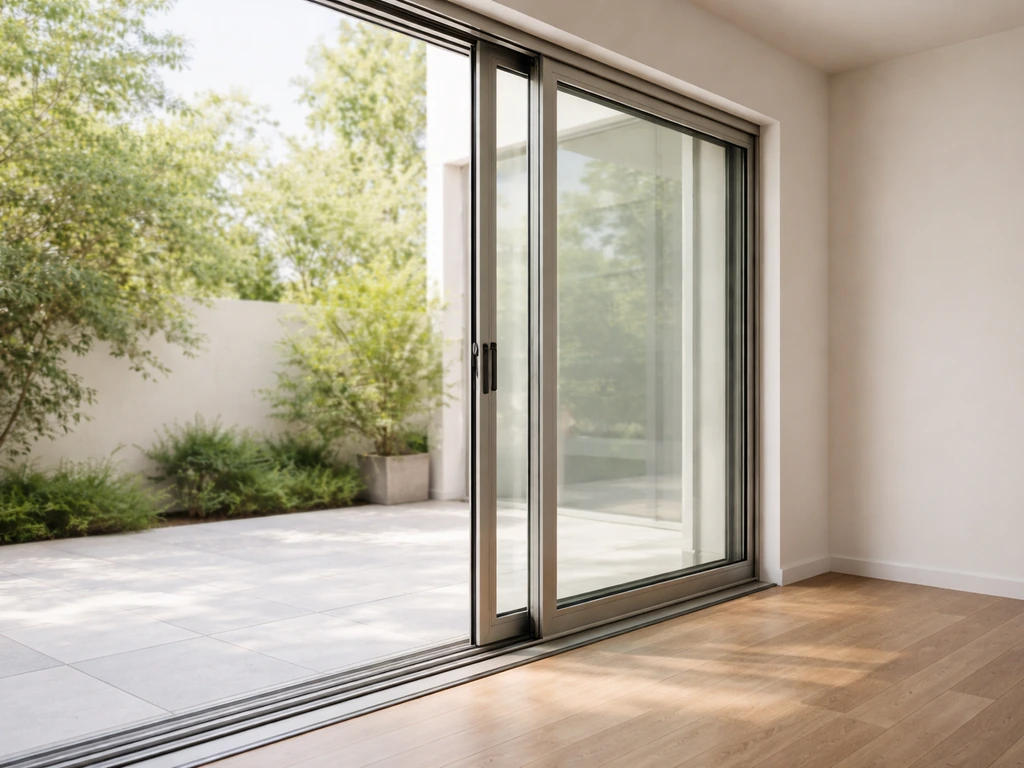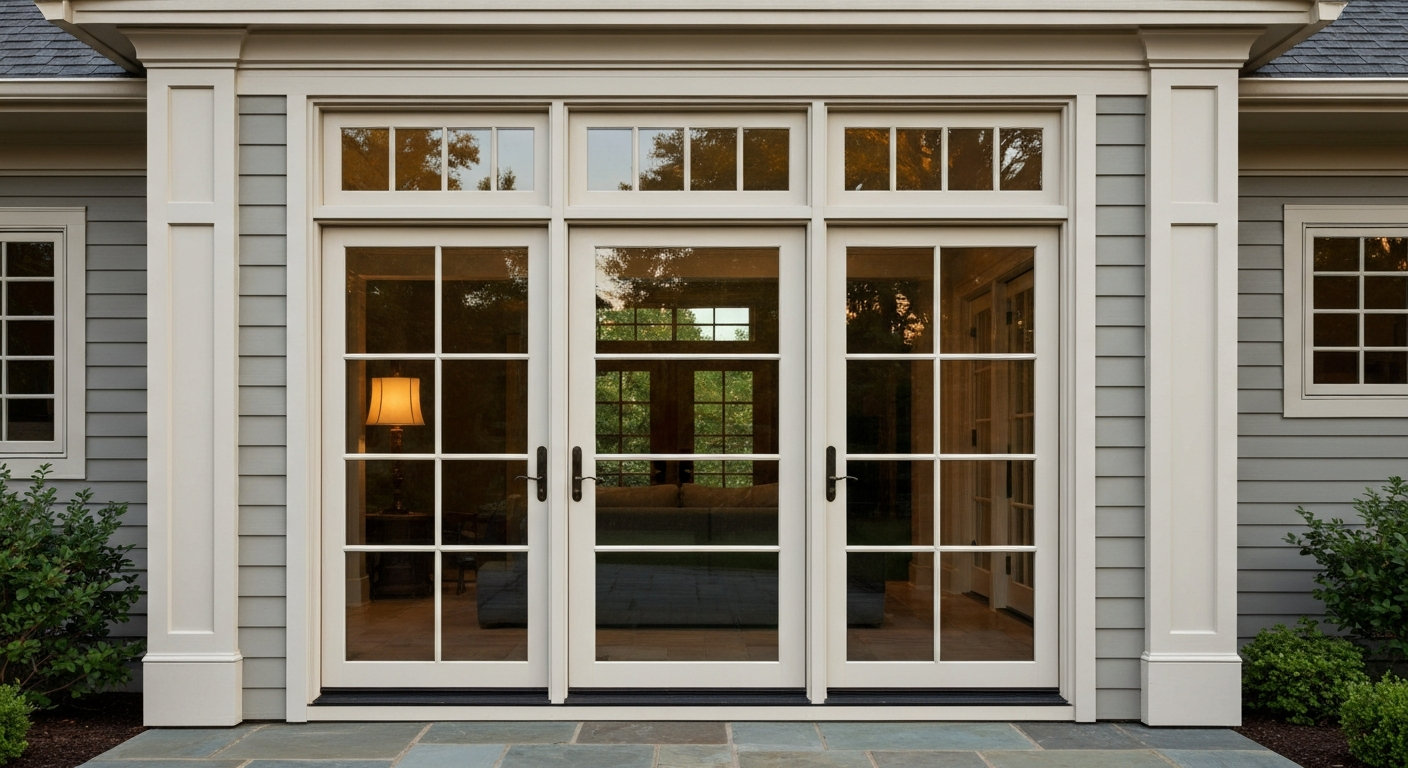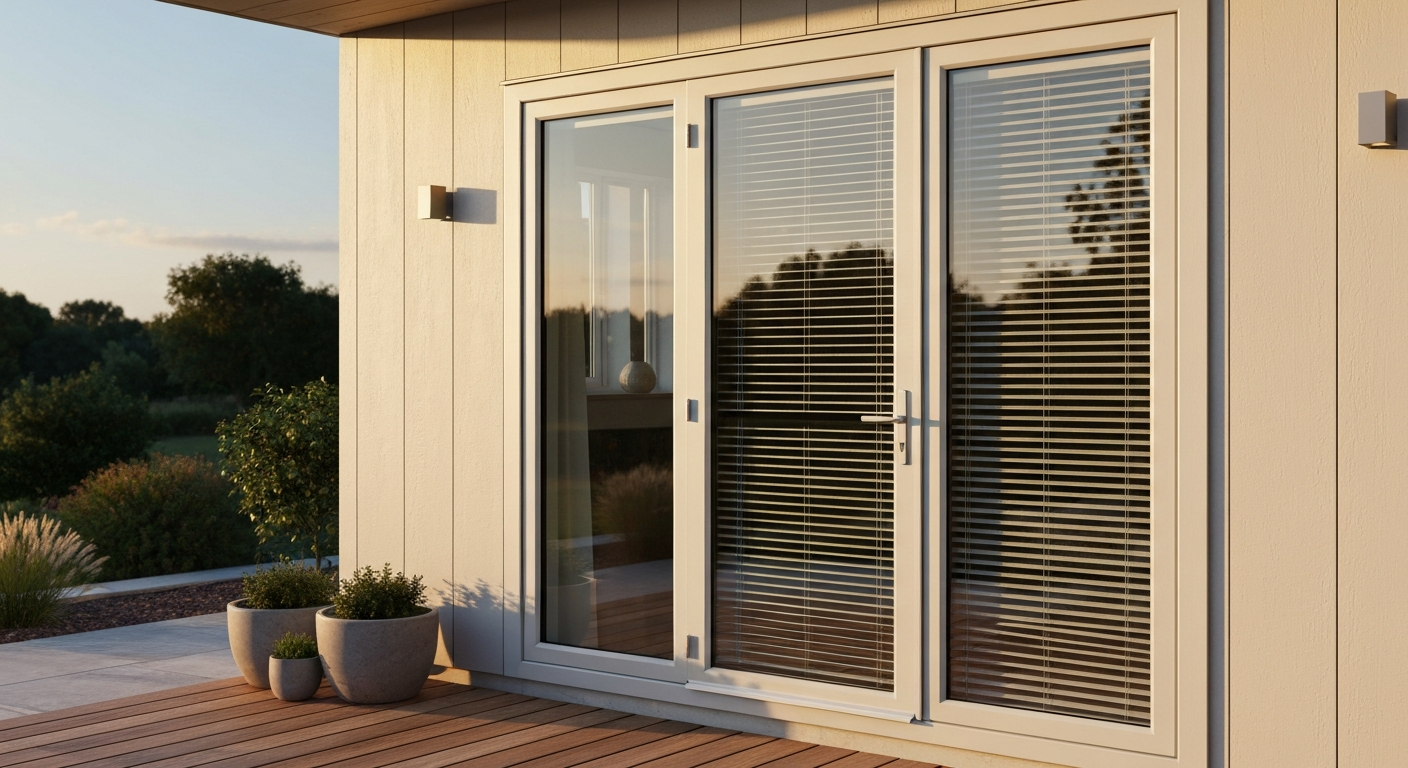
The best overall sliding patio door for most 2019 homeowners was a mid-range vinyl unit with Low-E argon glass, a U-factor at or below 0.30, and tandem ball-bearing rollers, something like the JELD-WEN V-4500 (around $1,400 for a 72×80 at Lowe's) or a Milgard V300/Trinsic if you wanted a step up in hardware quality. If budget was tighter, any NFRC-rated vinyl door from a big-box store in the 60×80 or 72×80 nominal size hit the job for standard openings. If you were willing to spend more, Andersen 200-Series and Pella Lifestyle Series offered better frame stability and stronger warranties. What most buyers got wrong in 2019 was focusing on sticker price alone and ignoring U-factor, roller quality, and rough-opening tolerances, all of which determined whether that door still felt great five years later.
best sliding patio doors 2019: Top picks, guide & prices
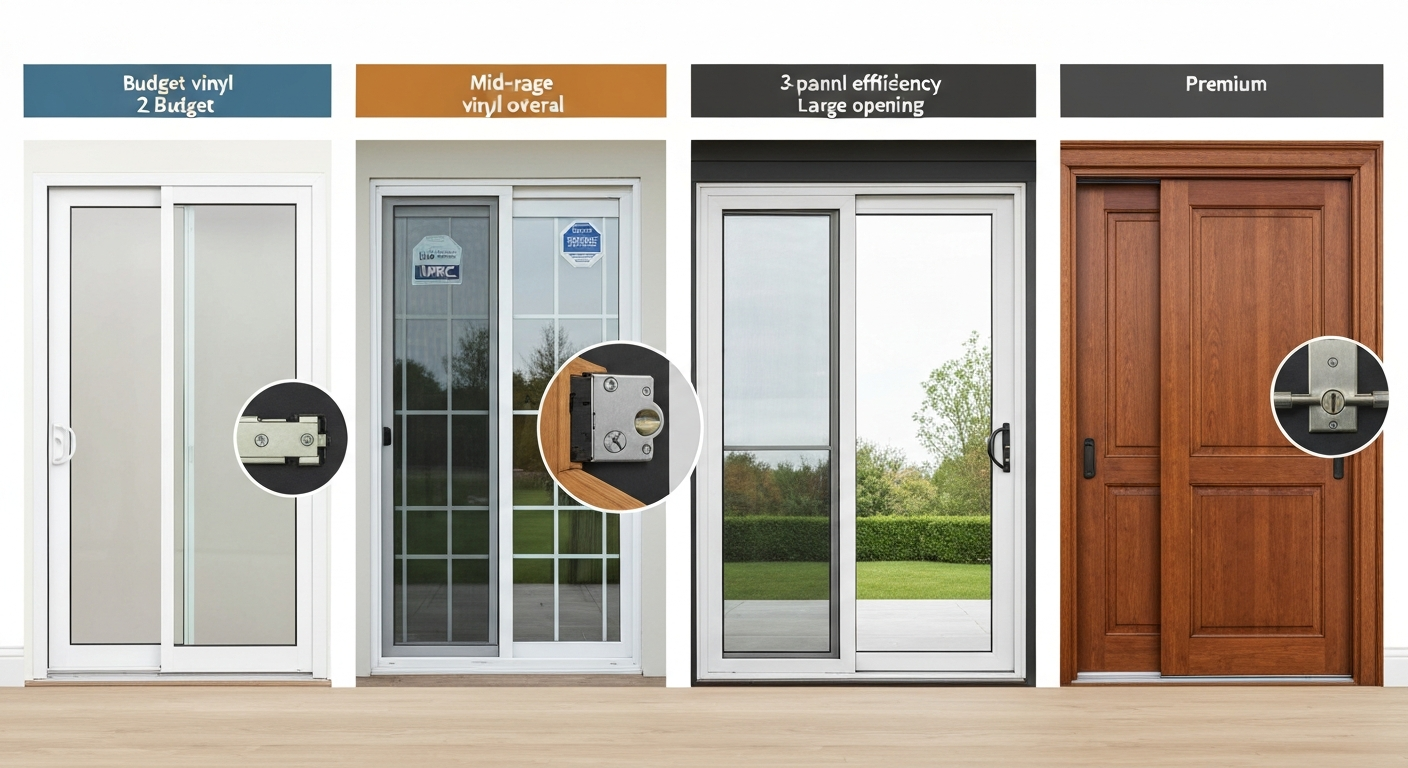
Quick summary: 2019's best sliding patio doors by homeowner need
Every buyer has a slightly different priority. Here's the shortest version of what the 2019 market offered, broken down by the one thing that matters most to you.
| Homeowner Need | Top 2019 Pick | Why It Won |
|---|---|---|
| Best overall | JELD-WEN V-4500 / Milgard V300 Trinsic | NFRC-rated, Low-E argon, solid rollers, lifetime warranty, widely available |
| Best budget | MP Doors or store-brand vinyl at Home Depot/Lowe's (60×80, ~$400–$700) | Lowest unit cost for a code-compliant, Low-E option |
| Best energy-efficient | Andersen 200-Series with SmartSun glass (U≈0.25) | Lowest published whole-unit U-factor in the mainstream category |
| Best for cold climates | Milgard Trinsic or Andersen 100-Series with HeatLock Low-E (U≤0.27, SHGC≥0.25) | High SHGC for solar gain, very low U-factor limits heat loss |
| Best for hot/sunny climates | JELD-WEN V-4500 or Milgard with SunCoat Low-E2 (SHGC≤0.22) | Low SHGC rejects heat gain, Low-E2 blocks UV |
| Best for large openings | Milgard V300 Trinsic 3- or 4-panel (up to ~12 ft wide) or Marvin Elevate | Rated for wide multi-panel configurations with DP30/DP40 ratings |
| Best security | Any door with factory-fitted multipoint lock (Truth Hardware Maxim MP-Plus or equivalent) | Multipoint hardware engages at 3+ points vs. single-point latches |
| Best premium | Pella Lifestyle Series (announced May 2019) or Marvin Ultimate | Wood/composite core, limited lifetime warranty, best hardware quality |
Top 2019 picks by category and brands worth knowing
Budget picks (under $800 for the unit)
At the low end in 2019, the big-box stores sold vinyl sliding patio doors under store-associated brands (MP Doors, ReliaBilt) in the standard 60×80 and 72×80 sizes for $400 to $700. These typically included Low-E glass and argon fill, which gave them a U-factor in the 0.30–0.35 range. They weren't NFRC-certified on every model, and that's the main caution: without NFRC verification, the energy ratings printed on the box are manufacturer self-reported numbers. For a rental property, a tight budget, or a secondary door you'll replace again in a decade, these are fine. For a main living-space door in a climate with real winters or blazing summers, they leave performance on the table. Check Home Depot and Lowe's reviews from 2019 and you'll see a recurring complaint about roller adjustments and track warping within the first couple of years on the cheapest models.
Best overall: JELD-WEN V-4500 and Milgard V300 Trinsic
The JELD-WEN V-4500 in 72×80 sat at $1,407.75 at Lowe's in 2019 and earned its spot as a best-overall recommendation because it checked every practical box: NFRC-rated U-factor of approximately 0.29, Low-E argon double-pane glass, limited lifetime warranty language on the product detail, and availability in common nominal sizes. It wasn't the flashiest door, but it was easy to source, easy to get serviced, and performed close to mid-range energy specs without a mid-range price tag. The Milgard V300 Trinsic ran slightly higher but offered SunCoat Low-E2 glass as standard, which gave it better SHGC control. Milgard's product brochures also documented 3-panel configurations up to approximately 12 feet wide, which made it the natural recommendation when a standard 6-foot or 8-foot opening wasn't enough.
Best energy-efficient: Andersen 100- and 200-Series
Andersen's 2019 product guide for the 100- and 200-Series gliding doors listed whole-unit NFRC-equivalent U-factors ranging from approximately 0.30 with standard Low-E down to around 0.25 with the HeatLock or SmartSun glass packages. That 0.25 number was among the lowest published whole-unit figures in the mainstream (non-fiberglass, non-custom) category in 2019. The tradeoff is that SmartSun glass reduces visible transmittance and SHGC, which is great in the South but not ideal if you're counting on winter solar gain in Minnesota. The 100-Series frame is a Fibrex composite, which sits between vinyl and fiberglass in terms of stability and thermal performance. Andersen doors in 2019 were also among the most commonly stocked at larger lumber yards and building supply stores, which matters when you need a replacement panel years later.
Best for large openings: Milgard Trinsic and Marvin Elevate
When you're opening up a wall for a 10- or 12-foot sliding door, the structural and performance requirements jump significantly. Marvin's Elevate sliding patio door spec sheets documented Design Pressure ratings of DP30 and DP40 for multi-panel configurations, along with published minimums and maximums for 2-, 3-, and 4-panel frame sizes. DP40 means the door is tested to withstand 40 pounds per square foot of wind load, which is relevant in coastal and high-wind regions. Milgard's V300 Trinsic brochures confirmed configurations up to approximately 12 feet in width for 3-panel setups. For large openings, you also need to think about roller load capacity: AmesburyTruth (Truth Hardware) tandem roller assemblies in their 2019 catalog were rated to support panels up to roughly 350 to 500 pounds depending on wheel type, which becomes a real spec to check when panels get big and heavy.
Best premium: Pella Lifestyle Series and Marvin Ultimate
Pella announced the Lifestyle Series wood window and patio door line in May 2019, marketing it with a limited lifetime warranty covering wood windows and patio doors. This put it in direct competition with Marvin Ultimate for buyers who wanted a wood-core door with premium aesthetics and serious hardware. Marvin's Ultimate line carried the strongest design pressure ratings and the tightest air infiltration specs in the mainstream premium category. Neither of these is a Home Depot purchase: you're ordering through a dealer or window-and-door specialty shop, lead times were 4 to 8 weeks in 2019, and installed costs for a standard 72×80 opening regularly exceeded $4,000. But if you're renovating a home you plan to keep for 20 years, the difference in hardware feel, seal longevity, and frame stability is real.
What actually mattered in 2019 buying decisions
The evaluation criteria for sliding patio doors didn't change dramatically between model years. If you're comparing the 2019 picks here with what the market looked like in 2018 or what came out in 2020, the same core metrics apply. Here's what mattered and what to actually check.
- U-factor (whole-unit, NFRC-certified): measures heat transfer through the entire door assembly. Lower is better for all climates. Target 0.30 or below for a solid mid-range performer; 0.25 or below for a high-efficiency pick.
- SHGC (Solar Heat Gain Coefficient): measures how much solar energy passes through the glass. Lower SHGC (0.22 or below) is better for hot, sunny climates. Higher SHGC (0.25 and above) helps with passive solar heating in cold climates.
- NFRC label: the only way to verify that U-factor and SHGC numbers are independently tested, not self-reported. Always check the NFRC Certified Products Directory if the product page number seems too good.
- Frame type: vinyl, aluminum, fiberglass, or wood/composite. Each has different thermal performance, maintenance needs, and cost profiles (covered in the next section).
- Glass package: double-pane with Low-E coating and argon fill is the 2019 baseline for any quality door. Triple-pane existed but was rare and expensive in sliding door configurations that year.
- Roller and hardware quality: tandem ball-bearing rollers, track material, and adjustment hardware determine how the door feels and functions after 3 to 5 years of use. This is where budget doors fall apart.
- Security features: at minimum, a keyed handle lock and an anti-lift pin or bar. Multi-point locking hardware (Truth Hardware Maxim MP-Plus or equivalent) was available as an upgrade on mid-range and premium doors.
- Warranty: look for 'limited lifetime' on the frame and a minimum 10-year seal warranty on the insulated glass unit (IGU). Short IGU warranties on budget doors are a red flag for fogging issues.
- Value: unit price plus installation cost plus expected maintenance over 10 years. The cheapest door often isn't the cheapest door over time.
Energy performance explained: how to read 2019 NFRC metrics
The NFRC (National Fenestration Rating Council) Certified Products Directory was the authoritative source in 2019 for verified whole-unit performance ratings on windows and doors. Manufacturer spec sheets quote their own numbers, but NFRC ratings are independently tested. ENERGY STAR's residential windows and doors specification, which was in Version 7 discussion during 2019, used NFRC ratings to set climate-zone-specific thresholds. Here's how to use these numbers practically.
U-factor: the heat-loss number
U-factor measures how quickly heat transfers through the entire door assembly, frame and glass combined. The lower the number, the better the insulation. In 2019, a standard vinyl double-pane door with Low-E and argon typically produced a whole-unit U-factor of 0.29 to 0.32. An upgraded glass package like Andersen's HeatLock or SmartSun could bring that to 0.25 to 0.27. For cold climates (ENERGY STAR Northern Zone), a U-factor at or below 0.27 was the target to hit the program's threshold. For milder climates, 0.30 was acceptable. Anything above 0.35 in a double-pane door in 2019 was a flag that the frame or spacer design wasn't performing well.
SHGC: the solar heat control number
SHGC runs from 0 to 1. A door with SHGC 0.22 blocks 78% of incoming solar energy as heat. A door with SHGC 0.30 lets more sun-driven heat through. For the hot Southern Climate Zone under 2019 ENERGY STAR criteria, the requirement was SHGC at or below 0.25. For the Northern Zone, there was no upper SHGC limit because winter solar gain is a benefit. The practical mistake I see homeowners make is choosing a very-low-SHGC glass in a cold climate because they saw 'energy efficient' marketing language. In Boston in January, you actually want that sun coming through your south-facing patio door. Milgard's SunCoat Low-E2 and Andersen's SmartSun both reduced SHGC meaningfully, so climate-zone matching matters before you commit to a glass package.
Low-E coatings and what the coating position means
Low-E (low emissivity) coatings are microscopically thin metallic layers on the glass surface that reflect radiant heat. In a double-pane unit, the coating is typically on the interior face of the outer pane (position 2 in glazing notation) for a balance of solar control and winter insulation. Hard-coat Low-E is more durable but less effective; soft-coat (sputtered) Low-E is more effective but must be sealed inside the IGU. Argon gas fill between the panes reduces conductive heat transfer by about 30% compared to air. Krypton is better but was rarely used in sliding patio doors in 2019 due to cost. Most quality 2019 sliding doors at $1,000 and above included soft-coat Low-E with argon as standard.
| Climate Zone | Target U-Factor | Target SHGC | Glass Package to Look For |
|---|---|---|---|
| Northern (e.g., Minnesota, Maine) | ≤0.27 | ≥0.25 (no upper limit) | Low-E argon with higher SHGC (HeatLock-type) |
| North-Central (e.g., Ohio, Colorado) | ≤0.30 | Any / ≤0.40 | Standard Low-E argon |
| South-Central (e.g., Texas, Georgia) | ≤0.30 | ≤0.25 | Low-E2 or SunCoat-type |
| Southern (e.g., Florida, Arizona) | ≤0.40 | ≤0.25 | Low-SHGC Low-E2 coating |
Frame materials and hardware: what to demand before you buy
The frame is half the door's performance story, and the hardware is what determines whether the door is a pleasure or a pain to live with. Here's what each material means in practice, followed by the specific hardware details worth demanding.
Frame material comparison
| Frame Material | Thermal Performance | Durability & Stability | Maintenance | Typical 2019 Unit Cost Premium | Best For |
|---|---|---|---|---|---|
| Vinyl (PVC) | Good (hollow chambers help) | Expands/contracts more in temperature swings; can warp in very wide panels | Very low — no painting, cleans easily | Baseline ($0) | Most climates, standard-width openings, cost-conscious buyers |
| Aluminum | Poor without thermal break; adequate with break | Excellent — very stable, won't warp | Low — won't rot or pit | +$200–$600 | Commercial/modern aesthetic, coastal (corrosion-resistant anodized), mild climates |
| Fiberglass (pultruded) | Excellent — low thermal expansion, stable | Superior dimensional stability, especially in cold | Very low — can be painted | +$500–$1,500 | Cold climates, wide openings, high-performance builds |
| Wood / Wood-composite | Good with proper weatherstripping | Requires protection from moisture; wood-composite (Fibrex, etc.) more stable | Higher — periodic painting/staining for wood; low for composites | +$800–$2,500+ | Premium aesthetics, historic homes, high-end renovations |
Fine Homebuilding and GreenBuildingAdvisor consistently flagged in 2019 that fiberglass frames offered the best dimensional stability and lowest thermal expansion relative to vinyl, which becomes important in wide or tall door configurations where even small frame movements affect seal quality and roller operation. Vinyl is still the right call for most homeowners on a mid-range budget, but if you're putting in a 10-foot wide sliding door in a climate with 80-degree temperature swings, fiberglass is worth the premium.
Hardware details worth demanding
- Tandem ball-bearing rollers: AmesburyTruth's 2019 catalog documented tandem roller assemblies rated to support panels of 350 to 500 pounds depending on wheel diameter and design. Single-roller assemblies are common on budget doors and wear out faster under heavy glass panels.
- Adjustable roller carriages: you want to be able to raise or lower the panel after installation to compensate for minor settlement. This requires an accessible adjustment screw, not a fixed carriage.
- Stainless steel or anodized aluminum track: bare steel tracks rust, especially in coastal or humid environments. This is a question to ask before you buy, not a spec always prominently listed.
- Multi-point locking hardware: standard patio door locks engage at a single point, which makes them easier to force open. Truth Hardware's Maxim MP-Plus multipoint system and equivalent hardware from other manufacturers engage at 3 or more points along the door stile. This was available as factory-fitted or retrofit in 2019.
- Anti-lift devices: a sliding panel can be lifted off its track from the outside if nothing prevents it. An anti-lift pin (a simple bolt through the frame header into the panel) or an anti-lift block in the track costs almost nothing and eliminates this vulnerability.
- Keyed handle lock: the standard push-button or thumb-turn lock on a patio door is not a deadbolt. A keyed handle lock adds meaningful resistance to casual forced entry.
2019 price ranges and what drives the cost
Sliding patio door costs in 2019 split cleanly into three bands: the unit price you see on a product page, the total installed cost including labor and materials, and the hidden costs of permits, header work, and disposal. I've seen homeowners budget only for the first and get sticker shock from the third. Here's the full picture.
Unit price bands
| Tier | Typical 2019 Unit Price Range | Common Brands/Sources | What You Get |
|---|---|---|---|
| Budget | $350–$800 | MP Doors, ReliaBilt (Home Depot/Lowe's) | Vinyl frame, basic Low-E, limited NFRC coverage, shorter warranties |
| Mid-range | $800–$2,000 | JELD-WEN V-4500, Milgard V300 Trinsic, Andersen 100-Series | NFRC-rated, Low-E argon, better rollers, limited lifetime frame warranty |
| Premium | $2,000–$5,000+ | Andersen 200-Series, Pella Lifestyle, Marvin Elevate/Ultimate | Best energy ratings, superior hardware, full lifetime warranty, custom sizing |
Installed costs
Homeowner forum threads and contractor quotes from 2019 documented installed project costs ranging from roughly $1,800 to $2,500 for a standard 6- to 9-foot retail replacement in an existing opening, assuming no structural work. If the opening needed a new or enlarged header, that added $500 to $1,500 to the project. Custom or large openings (10 feet and above) with premium door units ran from $5,000 to $13,000 or more in 2019 contractor quotes. RSMeans cost data for 2019 supports these ranges as reasonable baselines before regional labor adjustments. Keep in mind that labor rates vary significantly by region: a $1,200 installation quote in rural Tennessee could be $2,200 for the same job in San Francisco.
- Standard replacement in existing rough opening (no structural changes): $1,800–$2,500 installed total in 2019
- Mid-range door unit installed with minor trim and weatherstripping work: $2,500–$4,000
- Premium door with custom sizing or new opening: $5,000–$13,000+
- Permit fees (where required): $75–$300 depending on municipality
- Header upgrade for wider opening: add $500–$1,500 in materials and labor
What drives cost up
- Frame material: fiberglass and wood/composite frames cost $500–$2,500 more than vinyl for the same configuration
- Glass package: triple-pane or specialized low-SHGC coatings add $200–$600 to the unit price
- Panel count and width: 3- and 4-panel doors cost significantly more than 2-panel in both unit and installation labor
- Custom sizing: any door outside nominal 60×80, 72×80, or 96×80 typically requires a factory order and adds 4–8 weeks plus 20–40% to unit cost
- Structural modifications: enlarging an opening requires a permit, a new header, and sometimes temporary shoring
- Finish and hardware upgrades: premium handle sets, multipoint locks, and custom colors add $150–$600 to the door package
Sizing and replacement measurement: get this right before you order
Ordering the wrong size is the most expensive mistake you can make with a patio door replacement. The nominal size printed on a door (like '72×80') refers to the door unit size, not the rough opening you need in the wall. A 72×80 prehung unit typically requires a rough opening of approximately 74 inches wide by 82 inches tall to allow for shimming, leveling, and flashing. Getting this measurement wrong means you're either cutting framing you didn't plan to touch or the unit won't fill the opening properly. ASTM E2112 and associated AAMA/WDMA installation guidance set the standards for field measurement tolerances and replacement best practices used by manufacturers and installers in 2019. blank" rel="noopener noreferrer">Building America Solution Center documents practical guidance and points to ASTM E2112 and AAMA/WDMA installation practices for field measurement tolerances, flashing details, and replacement-installation best practices used by manufacturers and installers in 2019.
Step-by-step measurement for a replacement
- Measure the existing rough opening width: measure from the left jack stud to the right jack stud at three heights (top, middle, bottom). Record the narrowest measurement — that's your usable width.
- Measure the rough opening height: measure from the subfloor (or finished floor if the door sits on top) to the underside of the header at three points (left, center, right). Record the shortest measurement.
- Check for square and plumb: use a level on the side jambs and a diagonal tape measure check (corner to corner). A rough opening out of square by more than 1/4 inch will require shimming that eats into your clearance.
- Subtract for shimming and flashing clearance: for most vinyl prehung units, subtract 1/2 inch from both width and height to get the target door unit size. Some manufacturers specify different tolerances, so check the installation guide for the specific product.
- Confirm the threshold height: measure from the subfloor to the top of any existing threshold or sill nosing. The new door's threshold must land at or slightly above the finished floor.
- Note wall thickness: standard 2×4 framing produces a wall thickness of approximately 4.5 inches. If you have 2×6 framing, you'll need extended jambs or a wider-jamb option — confirm with the manufacturer before ordering.
- Verify the panel configuration: for a replacement, confirm which panel slides (typically the right-hand panel when viewed from outside, but this varies). Specify 'OX' (fixed left, sliding right) or 'XO' (sliding left, fixed right) when ordering.
- Order by rough opening or by door unit size: different manufacturers label their products differently. Always confirm with the dealer whether the dimension quoted is the rough opening or the unit size.
Standard nominal sizes in the 2019 market were 60×80 (5-foot), 72×80 (6-foot), and 96×80 (8-foot) as the most common stocked configurations. Anything else was typically a special order. For guidance specific to sizing standards and how door dimensions are classified by type and width, the sizing resources on this site go deeper into the standard size charts and what to do when your opening doesn't match.
DIY vs. professional installation: the real tradeoffs
I'll be honest: a straight replacement of a sliding patio door in an existing, properly sized, square rough opening is one of the more DIY-able exterior door jobs. A competent DIYer with basic carpentry skills can complete a prehung vinyl door installation in 4 to 8 hours with a helper. But that best-case scenario assumes everything lines up, the existing flashing is sound, and no rot or structural surprises are hiding behind the old door frame. In 2019, the permit and inspection requirements for door replacements varied by municipality: some jurisdictions required a permit for any exterior door replacement, others only when the opening was enlarged. Either way, failing to check costs nothing; getting caught without a required permit when selling the home is a much bigger problem.
What DIY actually requires
- Tools: reciprocating saw, drill/driver, level, shims, caulk gun, pry bar, utility knife, and a helper — prehung sliding door units are heavy (typically 150–300 pounds depending on size and glass)
- Skills: ability to check for level, plumb, and square; basic flashing installation; caulking and air-sealing; understanding of shimming patterns
- Time: 4–8 hours for a straight replacement with an experienced DIYer; 8–12+ hours if trim work, flashing corrections, or threshold adjustments are needed
- Risk areas: improper flashing at the sill pan is the leading cause of water infiltration and rot in patio door installations; ASTM E2112 specifies a sloped sill pan with end dams as the standard practice
- Disposal: old sliding door units are large and heavy; factor in dumpster rental or disposal fees (~$50–$150) if your municipality doesn't take construction debris at the curb
When to hire a professional
- The opening is being enlarged or structurally modified — this requires a permit and potentially an engineer for beam sizing
- The existing framing shows rot, pest damage, or water intrusion — you need a contractor who can assess and repair the structure
- You're installing a 3- or 4-panel configuration or a door wider than 96 inches — the panel weights and installation tolerances require experience
- The manufacturer warranty requires professional installation — some premium brands (Pella, Marvin) had installation requirements tied to warranty coverage in 2019
- You're in a high-wind zone or coastal area where flashing and anchoring details are critical for code compliance and insurance
Cost comparison: DIY vs. pro in 2019
| Scenario | DIY Total Cost (approx.) | Professional Total Cost (approx.) | Notes |
|---|---|---|---|
| Standard 72×80 mid-range vinyl replacement | $1,400–$1,700 | $2,200–$3,000 | DIY saves $800–$1,300; requires 6–8 hours and a helper |
| Standard 96×80 replacement, same opening | $1,600–$2,000 | $2,500–$3,500 | Heavier panels increase DIY difficulty significantly |
| New opening with header work | $2,500–$4,000 | $4,000–$7,000+ | DIY not recommended without structural experience; permit required |
| Premium brand (Pella/Marvin) requiring dealer install | Not typically available as DIY | $4,500–$9,000+ | Manufacturer warranty may be voided by owner installation |
How 2019 picks hold up today and when to look at nearby years
If you're reading this in 2025 or 2026, the 2019 recommendations are still valid as a reference framework because the evaluation criteria haven't changed: U-factor, SHGC, frame material, roller quality, and warranty structure are the same metrics. The specific product lines that existed in 2019 (JELD-WEN V-4500, Milgard V300 Trinsic, Andersen 100/200-Series, Pella Lifestyle) mostly still exist in updated or successor configurations. ENERGY STAR version thresholds have tightened slightly with Version 7, so a door that was ENERGY STAR-qualified in 2019 may or may not qualify under the current version depending on climate zone. Always verify current NFRC listings before purchasing.
If you're comparing across model years, the 2018 market was largely the same product landscape with minor spec updates, and 2020 brought incremental improvements in glass coating technology and hardware refinement rather than wholesale changes. For a direct comparison, see our roundup of the best sliding glass patio doors 2020 for models and specs close to those 2019 picks. See our best patio sliding doors 2018 roundup for the closely related 2018 product comparisons and overlap. The 2021 market saw some supply-chain-driven price increases and longer lead times on premium brands. For updated models and buying guidance, see our roundup of the best sliding patio doors 2021. For any year from 2017 through 2021, the evaluation framework here applies directly: the criteria, the size standards, and the installation process are consistent. For historical comparison, see our roundup of the best sliding patio doors 2017 for models and pricing that preceded these 2019 picks. The specific products covered in the 2018 and 2020 roundups from this site are worth checking alongside these 2019 picks if you're shopping current inventory, since discontinued 2019 models sometimes surface as dealer closeouts at significant discounts.
Maintenance basics that protect your investment
JELD-WEN's care and maintenance manual (JPG012) from 2019 documents the core maintenance steps that apply to virtually any sliding patio door regardless of brand: screen removal and cleaning, roller and sill track inspection, sweep replacement, and lubrication of the track and roller carriages. These are not complicated tasks, but skipping them is how a $1,500 door develops a $400 roller problem in year three. The track accumulates dirt and debris that acts as an abrasive on the roller wheels. Clean the track with a vacuum and damp cloth every season, apply a silicone-based lubricant (not WD-40, which attracts dirt) to the track and roller adjustment screws annually, and inspect the weatherstripping and door sweep for compression failure every year or two. Replacing a sweep costs $15 to $30 and takes 20 minutes; replacing the door because the sill rotted from seal failure is a different project entirely.
Your buying checklist before you order
- Measure your rough opening (width and height at three points each) and confirm it's square to within 1/4 inch
- Identify your climate zone and look up the current ENERGY STAR U-factor and SHGC thresholds for your region
- Decide on frame material based on your climate, opening width, and budget (vinyl for most; fiberglass for wide openings or cold climates; wood/composite for premium aesthetics)
- Verify NFRC certification on any door you're considering — check the NFRC Certified Products Directory, not just the product page
- Confirm the glass package: minimum standard should be double-pane Low-E with argon fill; match SHGC to your climate zone
- Check roller type (tandem ball-bearing preferred) and whether the carriage is adjustable
- Ask about multi-point locking hardware and anti-lift provisions, either factory-fitted or available as an upgrade
- Read the warranty: confirm what's covered (frame, glass seal, hardware), for how long, and whether professional installation is required
- Get at least two installed-cost quotes from local contractors if you're not doing it yourself; confirm whether the quote includes permits, disposal, and trim work
- Check lead time: stock vinyl doors in nominal sizes are typically available within days; custom sizes or premium brands take 4–8 weeks
- Review the manufacturer's installation guide before the door arrives so you know what tools and materials to have ready
FAQ
What were the top sliding patio‑door choices for homeowners in 2019 by budget and use case?
2019 top picks by category (typical brands and product families found in 2019 market): • Budget / retail prehung: vinyl/composite models sold by big‑box brands (JELD‑WEN V‑4500 style, MP‑Doors, house‑brand lines). Best for standard 60×80–72×80 openings and low up‑front cost. • Midrange / performance: Milgard Trinsic/V300 and Andersen 200‑Series equivalents — better frame options, SunCoat®/Low‑E glass packages, improved rollers/locks. • Premium / custom: Andersen 100/Marvin Elevate/Marvin Ultimate and Pella Lifestyle Series — wood, wood‑clad or high‑end fiberglass frames, multipoint hardware, larger sizes, higher DP and air/water performance. Selection rationale: match frame material and glass package to climate and opening size — vinyl for low cost, fiberglass/composite or wood‑clad for large spans and cold/wet climates. NFRC ratings and AAMA/NAFS test levels guided choices (see energy & performance FAQ).
Which objective performance metrics mattered in 2019 and what were typical values to look for?
Primary objective metrics and 2019 typical targets: • U‑Factor (whole‑unit NFRC): typical 2019 values ranged ≈0.29 (retail vinyl) down to ≈0.25–0.30 for high‑performance Low‑E/argon units; Andersen spec sheets showed ~0.30 and down to ~0.25 with specific glass packages. • SHGC (solar heat gain coeff.): varies by climate and glass package — low SHGC (~0.25–0.30) for hot climates; higher SHGC (≥0.40) beneficial in cold climates to gain solar heat. • Visible Transmittance (VT): depends on glass tint/Low‑E — tradeoff against SHGC. • Air infiltration, water resistance, design pressure (DP): refer to NAFS/AAMA ratings (DP30/DP40 and tested air/water numbers); Marvin technical data in 2019 listed DP30/DP40 entries and lab test results. • Hardware quality: tandem radial or ball‑bearing rollers (Truth/AmesburyTruth data show tandems supporting ~350–500 lb per door with appropriate hardware). Use NFRC Certified Product Directory and ENERGY STAR listings (2019) to verify whole‑unit ratings.
How did manufacturers demonstrate those performance numbers in 2019 (standards and sources)?
Authoritative references used in 2019: • NFRC Certified Product Directory — verified whole‑unit U‑Factor, SHGC, VT. • ENERGY STAR program and zone‑specific requirements (required NFRC numbers). • AAMA/WDMA/CSA 101/I.S.2/A440 (NAFS) — performance categories for DP, air, water. • ASTM E2112 and AAMA/WDMA installation guidance — field measurement and installation best practices. Use manufacturer spec sheets (Andersen, Marvin, Milgard) and NFRC listings to confirm published numbers.
What were typical 2019 price ranges for sliding patio doors (product only and installed)?
2019 cost context (typical ranges): • Off‑the‑shelf retail prehung vinyl (product only): ~$900–$1,800 (example JELD‑WEN V‑4500 listed at $1,407.75 for a 72×80 model). • Midrange brand product (Milgard/Andersen mid tiers): ~$1,500–$3,500 depending on size and glass. • Premium/custom (Marvin, Andersen 100, Pella wood/clad): $3,500–$8,000+ for larger/more complex units. • Installed costs (contractor labor + product): common small/standard replacement (6–9 ft) ~$1,800–$2,500 in many 2019 homeowner reports; custom/large openings and full frame replacements often $6,000–$13,000+. Use RSMeans/Gordian for city‑specific labor rates and add allowances for flashing, trim, and finish work.
How should I measure for a replacement sliding patio door (2019 measurement standards and steps)?
Replacement measurement (follow ASTM E2112 guidance and typical vendor tolerances): 1) Measure finished opening width: inside jamb to inside jamb at top, middle, bottom — record smallest of three widths. 2) Measure finished opening height: sill to head jamb at left, center, right — record smallest height. 3) Check squareness: diagonal measurements and sill/threshold condition. 4) Measure wall thickness and check for out‑of‑plumb conditions, obstructions, and trim thickness. 5) For prehung replacement, allow 1/4"–3/8" clearance per side and top for shimming (manufacturer specific). For exact manufacturer tolerances and panel counts (2‑,3‑,4‑panel), consult the product spec sheets — e.g., Marvin 2019 technical PDFs list min/max frame sizes for configurations. Link internally to Patio Door Sizes Guide for sizing standards and measurement diagrams.
What installation options were available in 2019 and how do DIY and pro installation compare?
2019 installation options: • DIY: feasible for prehung retail units in plumb/square openings with minor sill work. Pros: lower cost; cons: risk of weep/flash errors, improper shim/level leading to leaks/operation issues. • Professional install: recommended for structural replacements, oversized/custom units, or where flashing and finish carpentry are involved. Pros: code/NAFS‑compliant installation, warranty integrity. Cost comparison: DIY product‑only savings vs. pro install typically $600–$2,500 depending on scope; contractor installed quotes from 2019 homeowner threads ranged widely. Use RSMeans for labor hour estimates and expect higher labor in coastal/windy zones requiring DP ratings and extra flashing.