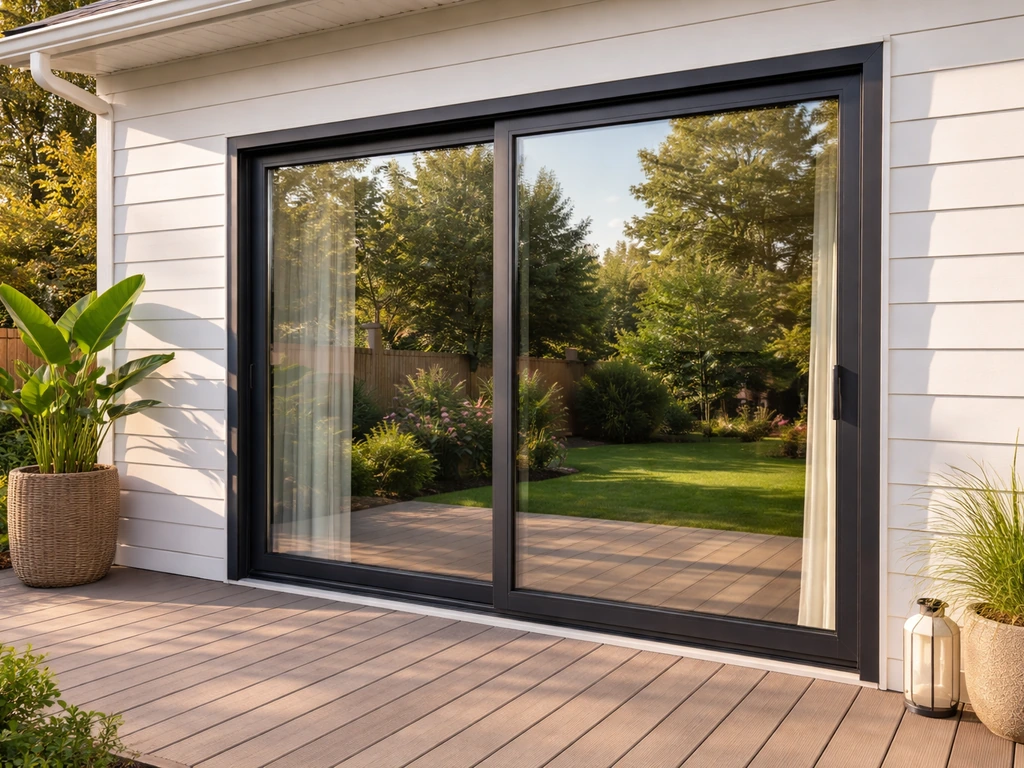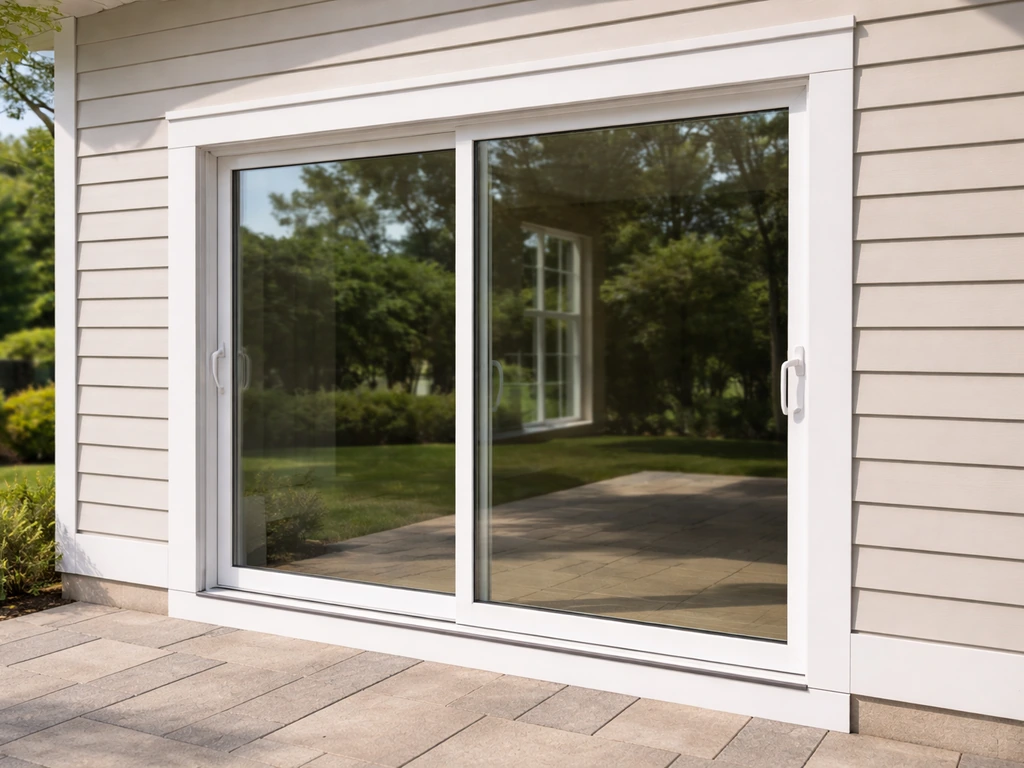
The best value patio door for most homeowners in 2026 is a vinyl sliding door in the mid-range tier, something like the Pella 250 Series or Andersen 200 Series, with a factory-installed low-E glass package. You'll spend roughly $800–$1,400 for the door unit itself and another $500–$1,200 for professional installation on a standard 6-foot opening, landing you well under the national average of $2,500 fully installed. You get ENERGY STAR-qualified performance (U-factor around 0.30 or lower, SHGC tuned to your climate zone), a 10–20 year warranty on the frame and a separate IGU (insulating glass unit) seal warranty, and a door that will realistically last 20–30 years with minimal upkeep. If that starting point sounds right for your situation, the rest of this guide will walk you through exactly how to confirm it, compare alternatives, and avoid the hidden costs that turn a good deal into a headache.
Best Value Patio Doors: Top Picks, Costs & Buying Guide

Quick recommendations by goal
Before diving into criteria, here are direct answers for the three most common buyer goals. These are starting points, not absolute rules, because your climate, opening size, and frame condition matter a lot.
| Goal | Best Pick | Why It Wins Here | Typical Door-Unit Cost |
|---|---|---|---|
| Energy savings (lowest utility bills) | Milgard Tuscany Series vinyl slider with low-E4 glass | U-factor as low as 0.27, SHGC selectable by zone, ENERGY STAR V7.0 qualified, Full Lifetime Warranty on frame | $900–$1,500 |
| Lowest upfront cost | JELD-WEN V-2500 or ReliaBilt vinyl slider (Home Depot/Lowe's stock) | In-stock units starting around $400–$600, basic low-E glass, meets code minimums | $400–$700 |
| Longest warranty coverage | Milgard Full Lifetime Warranty (Tuscany or Style Line series) | Lifetime coverage on frame, glass seal, and hardware — transferable to next owner | $850–$1,600 |
| Best mid-range all-rounder | Andersen 200 Series or Pella 250 Series | Proven track records, NFRC-certified ratings, good installer networks, balanced cost | $800–$1,400 |
| French door aesthetic on a budget | JELD-WEN Premium Atlantic or Pella 150 Series French door | Primed wood composite, paintable, lower entry price than Marvin or Andersen | $700–$1,200 |
Nine-point buying checklist
I use this list every time I evaluate a door for a client or my own home. Tick these off before you commit to any model, and you'll avoid 90 percent of the post-purchase regrets I hear about.
- Measure the rough opening accurately: width x height x depth of the frame jamb (record all three), and check for square with diagonal measurements no more than 1/4 inch apart.
- Confirm the installation scope: insert/pocket replacement (existing frame stays) or full-frame replacement (frame and all trim removed). This choice controls your labor cost more than almost any other factor.
- Check your climate zone: look up your DOE climate zone (1–8) to know the ENERGY STAR V7.0 U-factor and SHGC thresholds that actually apply to your address.
- Pull the NFRC label data: compare U-factor, SHGC, and VT for every shortlisted door using the NFRC Certified Product Directory — don't rely on marketing copy alone.
- Verify DP (Design Pressure) rating: make sure the door's rated DP meets or exceeds your local wind-load requirement, especially in coastal or high-altitude areas.
- Compare total warranty coverage: frame, glass seal (IGU), hardware, and finish — and check whether it's transferable if you sell the house.
- Get at least two installation quotes: labor rates vary significantly by region; BLS OEWS data puts carpenter wages at a national mean of roughly $28–$32/hour, but installed door quotes bundle hours, materials, disposal, and profit.
- Calculate lifecycle cost, not just sticker price: factor in estimated annual energy savings from a better U-factor and whether a higher upfront spend pays back within your ownership horizon.
- Check lead times and return policy: stock doors ship in days; custom-size or specialty-finish doors can take 6–12 weeks, and most manufacturers have strict return windows (often 30 days) for unopened units.
What actually makes a patio door 'good value'
Value isn't the cheapest price. It's the lowest total cost per year of comfortable, trouble-free use. I break that down across six dimensions.
Price vs. installed cost
The door unit price is only part of what you'll pay. For a standard 6-foot (72-inch) two-panel slider, retailer list prices run $400–$700 for builder-grade vinyl, $800–$1,400 for mid-range vinyl or fiberglass composite, and $2,000–$5,000+ for premium wood-clad or aluminum. Add professional installation and the total typically lands between $1,500 and $5,000 for a retrofit swap, with a national average around $2,500 according to Angi and HomeAdvisor data. Full-frame replacement (tearing out the old frame) adds $300–$800 more in labor and disposal. If you're a confident DIYer replacing a same-size door on a level, square opening, a pocket replacement is feasible and can cut costs by $500–$1,000, but factor in the cost of any tools you need to rent or buy.
Energy performance ratings
U-factor measures how much heat escapes through the door (lower is better). SHGC measures how much solar heat the glass admits (lower blocks more sun, higher lets in more passive warmth). VT (visible transmittance) tells you how much natural light comes through. Every number on a legitimate NFRC label is tested to ANSI/NFRC 100 (U-factor) and ANSI/NFRC 200 (SHGC and VT) procedures for the whole unit, including frame, so you can actually compare doors apples-to-apples. Don't compare a center-glass-only spec from one brand to an NFRC whole-unit spec from another.
Materials and durability
Vinyl frames are low-maintenance and thermally broken by nature, but cheap vinyl can warp or yellow in extreme heat. Fiberglass composite (like Andersen's Fibrex or Milgard's fiberglass line) is dimensionally stable across a wider temperature range and paints well. Wood and wood-clad doors offer the best aesthetics and good thermal mass but need periodic refinishing. Aluminum frames are strong and slim-profile but conduct heat unless they have a genuine thermal break. For durability, look for ASTM E283 air infiltration, E330 structural, and E547/E331 water penetration test data, these tell you whether the door will stay airtight and leak-free after years of opening cycles and weather exposure.
Warranty: what to actually read
Warranties for patio doors typically have three separate components: the frame/sash (often 10–20 years or lifetime on premium lines), the insulating glass unit seal (often 10–20 years), and hardware and finish (often 5–10 years). Milgard's Full Lifetime Warranty stands out because it covers all three and is transferable. Andersen and Pella offer strong warranties but with more tiered coverage by product line, so a 200 Series Andersen isn't covered the same as an A-Series. Always read the exclusions: most warranties void if the door isn't installed per the manufacturer's instructions, which is another argument for hiring a certified installer.
Lifecycle value
Here's a simple way to think about it: a $600 builder-grade door with a U-factor of 0.40 versus a $1,100 mid-range door with a U-factor of 0.27. The difference in heat loss over a typical heating season in a cold climate (Zone 5) can translate to $40–$80/year in heating savings on a standard door. Over 15 years, that's $600–$1,200 back in your pocket, meaning the better door can effectively pay for its own price premium while also being more comfortable to stand next to in January.
DP ratings and energy metrics explained
DP (Design Pressure) rating is a structural performance number, not an energy number. It measures how much wind pressure and water resistance the door can handle, expressed in pounds per square foot (psf). A DP 15 door handles about 15 psf of uniform load, which is the bare minimum for residential use. Most quality residential sliding doors are DP 25–50. If you're in a coastal area or a region with hurricane design requirements, check local building code for the minimum DP rating required, and match or exceed it. The NAFS standard (AAMA/WDMA/CSA 101/I.S.2/A440) defines the performance class tiers: R (residential), LC (light commercial), C (commercial), and HC (heavy commercial). Residential homeowners are almost always in the R or LC class.
For energy, the numbers that move your utility bill are U-factor and SHGC. ENERGY STAR Version 7.0 (effective October 2023) sets the following minimum criteria by climate zone for doors to earn the ENERGY STAR label. In the Northern zone (roughly DOE Zones 5–8), you need U-factor of 0.20 or lower and SHGC of any value. In the North-Central zone (Zones 4 and some 3), the threshold is U-factor 0.25 and SHGC 0.40 or lower. In the South-Central zone, U-factor 0.30 and SHGC 0.25. In the Southern zone (Zone 1 and coastal Zone 2), U-factor 0.40 and SHGC 0.25. Most decent mid-range vinyl doors today hit 0.27–0.32 U-factor with the standard low-E glass upgrade, which qualifies across most zones. Upgrading to triple-pane or a premium low-E package gets you into the 0.20–0.24 range, which matters most in Zones 5 and above.
| ENERGY STAR Climate Zone | DOE Zone Approx. | Max U-Factor | Max SHGC | Practical Door Spec Target |
|---|---|---|---|---|
| Northern | 5–8 | 0.20 | Any | Triple-pane or premium low-E, U ≤ 0.20 |
| North-Central | 4 / some 3 | 0.25 | 0.40 | Mid-range low-E, U ≤ 0.25 |
| South-Central | 3 / some 2 | 0.30 | 0.25 | Low-E with lower SHGC, U ≤ 0.30 |
| Southern | 1–2 coastal | 0.40 | 0.25 | Single-chamber IGU + low-E coating, focus on SHGC |
VT (visible transmittance) doesn't affect your energy bill directly but affects how bright your room feels. A standard clear low-E glass runs around 0.60–0.70 VT. Some high-SHGC-blocking coatings drop VT to 0.40 or lower, which can make an interior noticeably dimmer. If your living room depends on that door for natural light, pay attention to VT when comparing glass packages.
Picking the right door for your climate
Climate is the single biggest variable that should drive your glass package and material choice. Getting this wrong means either paying more than necessary for performance you don't need or choosing a door that works against your climate.
Cold climates (DOE Zones 5–8)
Your priority is a low U-factor to stop heat from bleeding out through the glass on a -10°F night. Target U-factor of 0.20 or lower for the full unit. Triple-pane glass gets you there reliably. Also look for a high SHGC (0.40+) on south-facing doors so you capture passive solar gain in winter. Frame material matters here too: avoid aluminum without a genuine thermal break, because condensation and frost on the frame interior is a real comfort and moisture problem. Vinyl and fiberglass perform well. Make sure weatherstripping is multi-point or pile-seal type, and check that the door has passed ASTM E283 at the pressure rating for your area.
Mixed climates (DOE Zones 3–4)
You need a door that handles both heating and cooling loads. A U-factor of 0.25–0.30 with a mid-range SHGC (0.25–0.35) is a good balanced target. Dual-pane low-E glass handles this well without the price premium of triple-pane. Vinyl or fiberglass frames are ideal. This is where the standard mid-range Pella 250 or Andersen 200 with the factory low-E upgrade earns its keep.
Hot climates (DOE Zones 1–2)
Keeping solar heat out is the goal. Prioritize a low SHGC (0.25 or lower) even if U-factor is only moderate. A spectrally selective low-E coating (like PPG's Solarban or Cardinal's LoĒ-366) blocks solar heat without dramatically reducing VT. Light-colored or reflective frame finishes help too. In extreme heat, vinyl can soften slightly, a fiberglass frame is more dimensionally stable over 110°F+ summers.
Coastal climates
Salt air corrodes aluminum hardware and frames faster than almost anything else. If you're within a mile of the ocean, avoid exposed aluminum unless it's specifically rated for coastal exposure (anodized or marine-grade coating). Fiberglass and vinyl frames hold up well. Prioritize a high DP rating (DP 40+ is common in coastal building codes), impact-resistant glass where required by local code, and multi-point locking hardware with stainless steel components. Don't skip the coastal glass upgrade just to save $150, replacing corroded hardware or a fogged IGU after three years will cost far more.
Sliding vs. French vs. bifold: value trade-offs by style
Style choice affects not just aesthetics but total cost, air sealing performance, and how much opening width you actually get. Here's how the three main types compare honestly.
| Style | Clear Opening Width (typical) | Air Sealing | Starting Cost (unit only) | Best For | Biggest Trade-off |
|---|---|---|---|---|---|
| Sliding (gliding) | ~50% of rough opening | Good (compression or pile seal) | $400–$1,500+ | High-traffic areas, small to medium openings, budget-conscious buyers | Panel that slides doesn't fully open the space; track requires cleaning |
| French (in-swing) | ~95% of rough opening | Excellent (compression seal, multi-point lock) | $700–$2,500+ | Traditional/colonial homes, full clear-opening need, premium feel | Panels swing into interior space; out-swing version affected by outward clearance |
| French (out-swing) | ~95% of rough opening | Excellent | $700–$2,500+ | Tight interior spaces, traditional homes | Door swing obstructs exterior deck/patio; harder to screen effectively |
| Bifold/multi-fold | ~90% of rough opening | Fair (more panel joints = more potential leak points) | $2,500–$8,000+ | Opening entire wall, indoor-outdoor living, large openings 8–20 ft | High cost, more maintenance points, complex installation |
Sliding doors
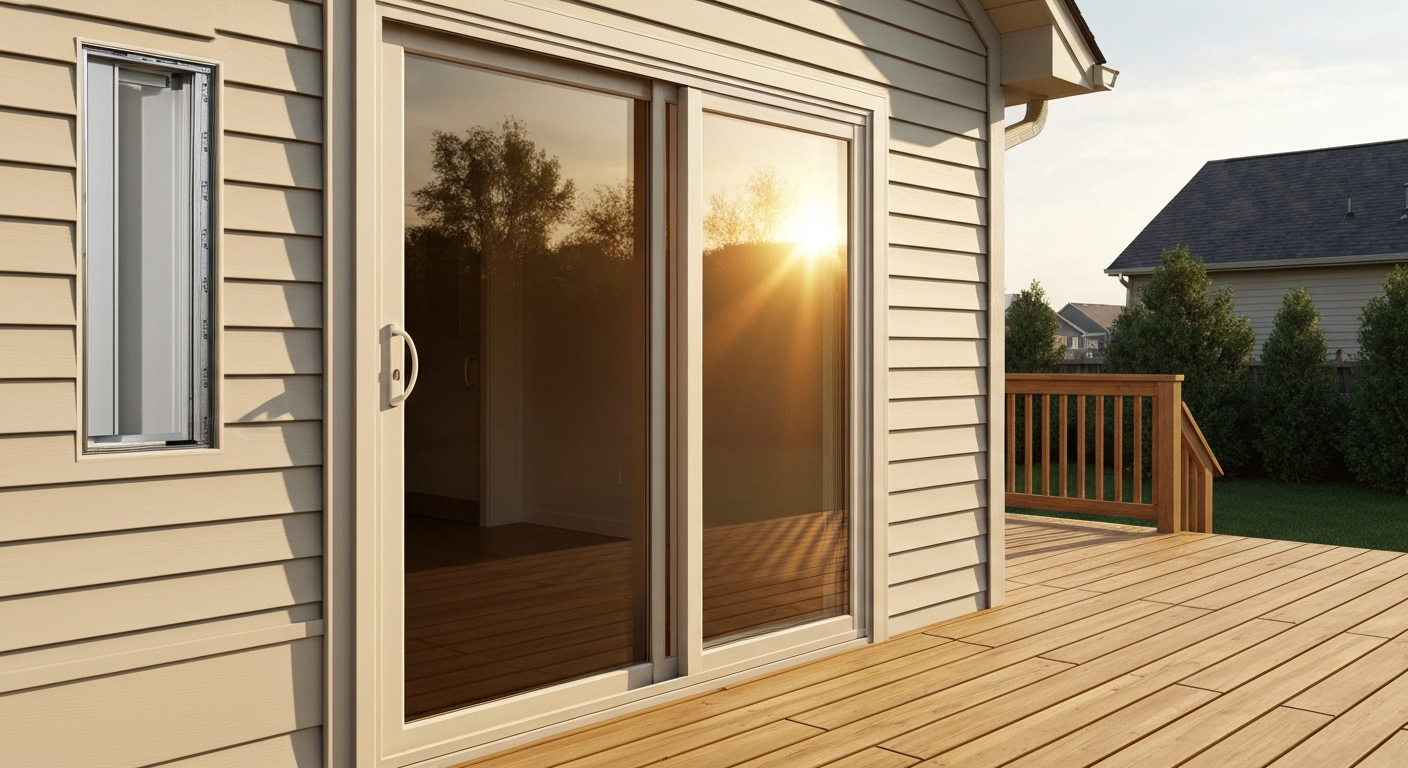
Sliding (gliding) doors are the most popular patio door style in the U.S. for good reason: they're widely stocked, easy to install in a standard rough opening, and have the lowest entry price. The main limitation is that only one panel opens, so you get roughly half the door width as clear opening. The track at the bottom can accumulate debris, and rollers eventually wear out, but replacement roller kits are cheap and a reasonable DIY fix. For most suburban homes with a standard 6-foot opening onto a deck or backyard, a sliding door is the sensible, cost-effective default.
French doors
French doors cost more than sliders for the same opening size, but they deliver a full clear opening and a more traditional look that suits colonial, craftsman, and farmhouse-style homes well. In-swing panels require interior clearance (furniture placement matters). Out-swing panels need a clear exterior zone and are harder to retrofit with a standard screen door. Air sealing on a well-made French door with multi-point locking and compression weatherstripping is actually excellent, often better than a slider. The price premium over a comparable slider is typically $200–$600 for the unit; installation costs are similar.
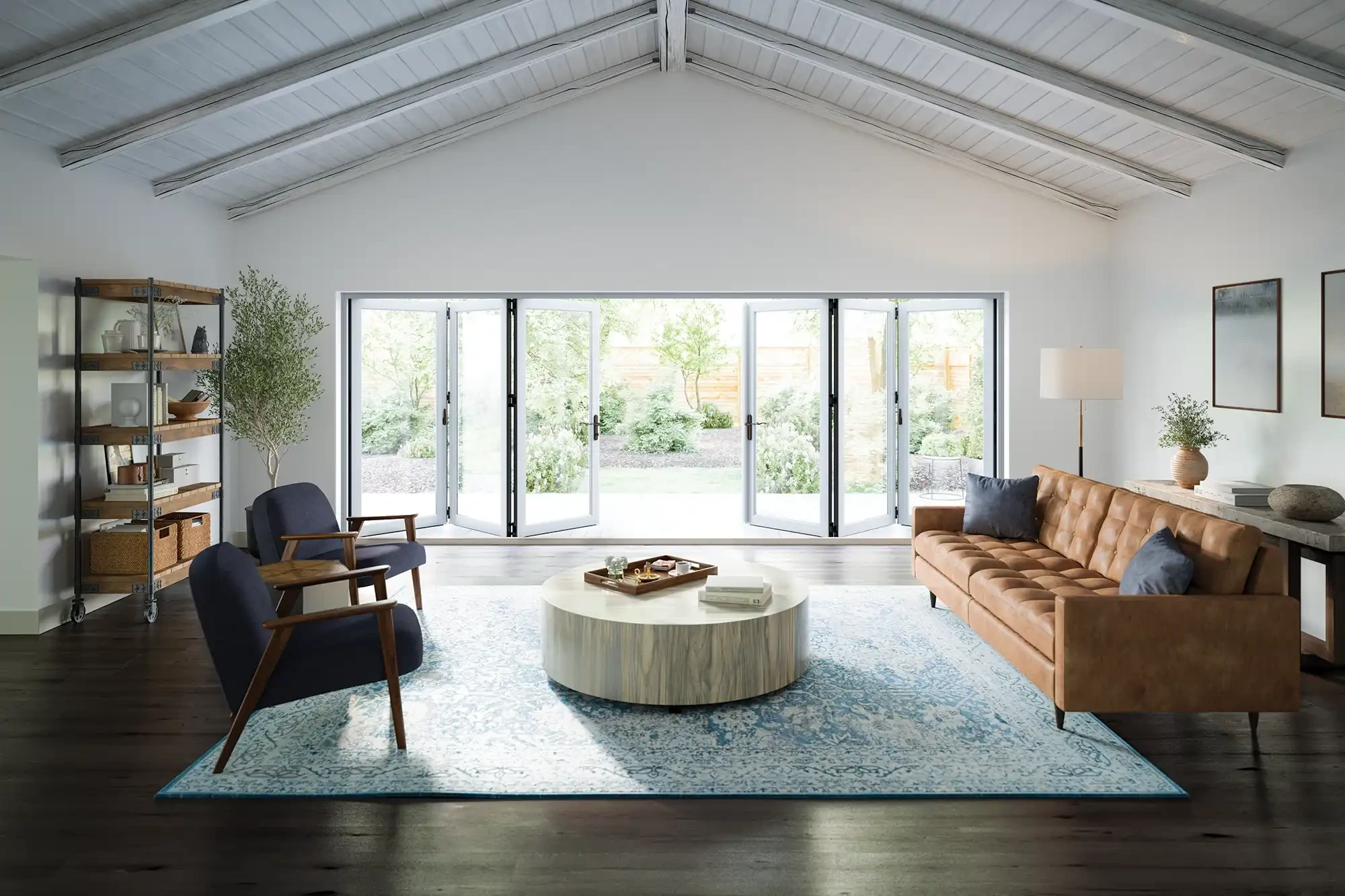
Bifold doors
Bifold and multi-fold (accordion) doors are a premium product for a specific use case: opening a large section of wall, usually 8–20 feet wide, to merge interior and exterior living space. They are not a budget value play, starting costs of $2,500 for a basic unit and $5,000–$8,000+ fully installed are realistic. Air sealing at the panel joints is a known weak point compared to sliders and French doors, so energy performance per dollar is lower. If you're building an addition or renovating a family room with a large opening, bifolds make sense. For a standard patio replacement on a budget, they don't.
Brand and model recommendations by style and budget
I'm not going to tell you one brand is objectively the best, it depends on your climate, installer relationships, and what's in stock locally. What I can do is give you honest starting points and flag what to watch for in each tier. Note that model names and pricing shift with supply and manufacturer updates, so always verify current specs in the NFRC Certified Product Directory and the manufacturer's current spec sheets before buying. If you want a quick shortlist of manufacturers to consider, see our guide to the best patio door brand for practical recommendations and comparisons. If you want a curated shortlist, check our guide to the best rated patio doors for verified performance and real-world pros/cons.
Sliding patio doors
| Budget Tier | Brand / Model | Frame Material | Typical U-Factor (low-E) | Warranty Highlights | Approx. Unit Cost (6 ft) |
|---|---|---|---|---|---|
| Budget | JELD-WEN V-2500 Series | Vinyl | 0.30–0.35 | 10-year glass, limited frame warranty | $400–$650 |
| Budget | ReliaBilt 3000 Series (Lowe's) | Vinyl | 0.30–0.35 | 10-year IGU | $380–$600 |
| Mid-range | Andersen 200 Series Gliding | Fibrex composite | 0.27–0.30 | 20-year glass, 10-year finish | $900–$1,300 |
| Mid-range | Pella 250 Series Sliding | Vinyl | 0.27–0.32 | 20-year glass, lifetime frame | $850–$1,250 |
| Mid-range | Milgard Tuscany Series | Vinyl | 0.27–0.30 | Full Lifetime (frame, glass, hardware) | $900–$1,400 |
| Premium | Marvin Elevate Sliding | Fiberglass/wood interior | 0.22–0.27 | Limited lifetime frame, 20-year glass | $2,000–$3,500 |
| Premium | Andersen E-Series / A-Series | Wood-clad | 0.20–0.25 | Limited lifetime frame, 20-year glass | $2,500–$5,000+ |
When reading model codes: Andersen's '200 Series' uses Fibrex (a wood-fiber/PVC composite) and is a notch above their basic Silverline vinyl line. The 'A-Series' is their top wood-clad tier. Pella's '150 Series' is entry-level wood composite; '250 Series' is mid-range vinyl; '350 Series' steps up in hardware quality. Milgard's product lines go Style Line (budget vinyl) to Tuscany (mid-range vinyl) to Ultra (fiberglass premium). Knowing these naming patterns lets you decode what you're actually comparing when two doors have similar prices on a retailer's website.
French patio doors
| Budget Tier | Brand / Model | Frame Material | Typical U-Factor | Warranty Highlights | Approx. Unit Cost |
|---|---|---|---|---|---|
| Budget | JELD-WEN Premium Atlantic | Wood composite (primed) | 0.28–0.35 | Limited 10-year | $700–$1,100 |
| Budget | Pella 150 Series French | Wood composite | 0.29–0.35 | Limited frame warranty | $750–$1,100 |
| Mid-range | Andersen 200 Series French | Fibrex | 0.27–0.30 | 20-year glass, 10-year finish | $1,100–$1,600 |
| Mid-range | Pella 250 Series French | Vinyl/vinyl-clad | 0.27–0.30 | 20-year glass, lifetime frame | $1,100–$1,600 |
| Premium | Marvin Elevate French | Fiberglass exterior, wood interior | 0.22–0.25 | Limited lifetime, 20-year glass | $2,500–$4,500 |
| Premium | Andersen A-Series French | Wood-clad aluminum exterior | 0.20–0.24 | Limited lifetime | $3,000–$5,500+ |
Bifold / multi-fold doors
| Budget Tier | Brand / Model | Frame Material | Notes | Approx. Unit Cost (8 ft) |
|---|---|---|---|---|
| Entry | LaCantina Aluminum Bifold (basic config) | Aluminum with thermal break | Good clear opening, limited color options at entry price | $2,500–$4,000 |
| Mid-range | Andersen Multi-Slide Door | Fibrex/aluminum clad | Lift-and-slide option available, NFRC certified | $4,000–$7,000 |
| Premium | Marvin Lift & Slide / Bifold | Fiberglass or wood-clad | Best air sealing in class, high DP ratings available | $6,000–$12,000+ |
Best replacement options for common scenarios
Replacing a patio door isn't one-size-fits-all. For a deeper comparison of models and installation options, see our guide to the best replacement patio doors. Your existing frame condition, opening size, and aesthetic goals lead to three different approaches, each with different cost profiles and ideal door picks.
Scenario 1: Like-for-like retrofit (insert/pocket replacement)
This is the most affordable replacement path. The existing frame stays in place and you're inserting a new door unit into it. It works well when the old frame is structurally sound, square, and not rotted. Because you keep the frame, the new door unit must be sized slightly smaller than the existing rough opening (typically 1/4–1/2 inch smaller on each side to allow for shimming), so have your frame measurements ready before ordering. Labor runs lower here, roughly $300–$600 typically, versus $600–$1,200+ for a full-frame swap.
- Budget pick: ReliaBilt 3000 Series or JELD-WEN V-2500 (stock sizes at Lowe's/Home Depot, $380–$650, ships fast)
- Mid-range pick: Pella 250 Series or Milgard Tuscany (factory low-E included, ENERGY STAR certified, order exact size)
- Premium pick: Andersen 200 Series with Perma-Shield (Fibrex frame, strong warranty, available through Andersen dealers for custom sizing)
Scenario 2: Full-frame replacement
When the existing frame is rotted, severely out of square, or you're changing door style (slider to French, or widening the opening), you need a full-frame replacement. The old frame, interior casing, and exterior trim all come out. This is a bigger job, typically $1,800–$3,500 for standard openings when you factor in framing adjustments, new flashing, and re-trimming. But it also gives you the chance to air-seal properly and size up if you want a wider opening. Plan for a 1–2 day professional installation.
- Budget pick: JELD-WEN V-4500 or Pella 150 Series (primed wood composite, paintable, solid value for the full-frame job where aesthetics matter more post-trim)
- Mid-range pick: Milgard Tuscany Series or Andersen 200 Series (both hold up well in full-frame installs, good air sealing out of the box)
- Premium pick: Marvin Elevate or Andersen E-Series (worth the investment here because you're already spending on labor — step up the door and get 20+ more years)
Scenario 3: Historic or architectural match-up
If you have a pre-1960s home with non-standard rough openings, unusual sill depths, or architectural detail requirements (true divided lites, specific muntin profiles), off-the-shelf doors often won't work or won't look right. This is the scenario where custom ordering from Marvin, Andersen's higher series, or a specialty manufacturer is actually worth the premium. Many historic renovation projects also intersect with local preservation requirements, so check before you order.
- Budget-focused option: JELD-WEN's custom-size program allows non-standard sizes at closer to stock pricing; lead time is 4–8 weeks but unit prices are $100–$400 more than stock equivalents
- Mid-range option: Pella's Architect Series or Andersen's E-Series both offer simulated divided lites (SDL) and true divided lites (TDL) in custom sizes; expect $1,500–$3,500 for a custom French door
- Premium option: Marvin's custom wood-interior lines or Andersen A-Series are the go-to for period-accurate aesthetics; budget $3,500–$7,000+ for a matching custom unit
Installation: DIY vs. professional and what it really costs
I'll be straight about this: a standard pocket replacement on a 6-foot slider, with a square existing frame and no rot, is a realistic DIY project for someone comfortable with basic carpentry. You're shimming, fastening, and caulking, not framing. The catch is that an improper install voids most manufacturer warranties and can create air leaks and water infiltration that cause thousands of dollars in damage over time. If you're not confident reading a flashing detail or you've never set a door before, hire a professional for at least the first installation and watch. BLS wage data pegs carpenters at roughly $28–$32/hour nationally (May 2025), but installed door quotes bundle overhead, markup, and materials, so expect $500–$1,200 in labor for a pocket replacement and $800–$1,800 for a full-frame job in most markets. Full-frame replacement involving structural header work or opening enlargement should always be professional work.
Accessories and upgrades worth the money
Once you've chosen your door, a few targeted upgrades and accessories can meaningfully improve value without a large additional spend.
- Low-E glass upgrade: if the base model doesn't include it, adding a low-E coating during ordering is almost always worth $80–$200 — it's the single best energy-performance upgrade available
- Multi-point locking hardware: standard sliders often come with a single-point latch; upgrading to a multi-point lock improves both security and air sealing at the frame, often for $50–$150 as a factory option
- Retractable screen doors: standard sliding screens get damaged easily; retractable roll-up or folding screens (Phantom, Larson, or manufacturer-branded options) last longer and work better for French and bifold doors where a traditional screen doesn't fit
- Security bars or foot bolts: a secondary security measure for sliding doors that costs under $30 and takes minutes to install — worth it if security is a concern
- Interior blinds-between-glass: some models (Pella, Andersen) offer factory-installed blinds or shades sealed inside the IGU — no cleaning, no cord hazards, but adds $150–$400 to unit cost and makes IGU replacement more complex if the seal fails
Maintenance and keeping your warranty valid
Most patio door problems I've seen, sticking slides, fogged glass, drafts, come from neglected maintenance rather than manufacturing defects. A 20-minute annual inspection covers most of it.
- Clean the track and rollers on sliding doors at least twice a year; debris on the track accelerates roller wear
- Lubricate hardware (rollers, hinges, lock mechanisms) with a silicone-based spray annually — avoid WD-40, which attracts dirt
- Inspect weatherstripping every year and replace it when you feel drafts or see compression loss; a $15–$25 pile or foam strip replacement takes 30 minutes
- Check the exterior caulk line at the frame perimeter every spring; re-caulk any gaps with a paintable silicone or siliconized acrylic rated for windows and doors
- For wood or wood-clad doors, inspect the exterior finish every 2–3 years and refinish or repaint before bare wood is exposed to moisture
- Keep your installation documentation, permit (if applicable), and warranty registration paperwork in a home folder — warranty claims almost always require proof of proper installation and maintenance
Your next steps
Here's how to move from reading to buying without second-guessing yourself. First, measure your rough opening (width, height, depth) and check it for square. Second, look up your DOE climate zone and note the ENERGY STAR V7.0 U-factor and SHGC thresholds for your zone. Third, decide your installation scope: pocket replacement or full-frame. Fourth, set a realistic budget that includes both the door unit and installed cost, not just the sticker price. Fifth, shortlist two or three models from the tables above that fit your budget tier and style, then cross-check their NFRC whole-unit ratings in the NFRC Certified Product Directory to confirm the energy numbers are accurate. Finally, get at least two installation quotes before you order the door, because some installers have brand relationships that affect lead times and warranty coverage. The right door for your home isn't the most expensive one or the cheapest one, it's the one that balances your climate needs, your budget, and a warranty you can actually rely on. For a concise shortlist of reliable and affordable options, see our guide to the best patio doors for the money.
FAQ
What are the essential performance metrics and standards I must research to evaluate patio‑door energy and durability 'value' objectively?
Gather NFRC whole‑unit ratings (U‑factor, SHGC, VT) from the NFRC Certified Product Directory; reference ANSI/NFRC 100 and 200 for test procedures. Include relevant structural/weather tests (ASTM E283, E330, E547/E331, E2190) and the AAMA/WDMA/CSA 101/I.S.2/A440 (NAFS) standard for performance classes and installation requirements. Use ENERGY STAR specification criteria (Version 7.0) to map performance to climate zones.
Which authoritative bodies and document types should I consult to source verified technical data?
Primary sources: NFRC (ratings and CPD), ENERGY STAR specs and product finder, DOE/Building America climate maps, ASTM standards, and AAMA/WDMA/CSA (NAFS) documentation. Use manufacturer technical specs/warranty pages (Pella, Marvin, Andersen, Milgard) for model‑level details; consult retailer product listings for current MSRP/upgrade pricing; and use installer marketplaces/cost guides (Angi, HomeAdvisor, This Old House) plus BLS wage data for labor estimates.
What model‑level information should I collect for each candidate patio‑door to compare 'best value'?
Collect: product name/model number, door type (sliding, French, bifold, multi‑slide), unit dimensions and configurable sizes, NFRC U‑factor/SHGC/VT (CPD reference), glass package options (low‑E, gas fill), frame material, hardware/security features, DP rating or NAFS class if available, warranty terms (length, transferability, exclusions), manufacturer's recommended installation method (insert vs full‑frame), and MSRP vs typical installed price.
How should I research pricing and installed cost to present accurate cost ranges and tradeoffs?
Use retailer listings (Home Depot, Lowe's) and manufacturer suggested pricing for baseline unit costs; compare with installer marketplace averages (Angi, HomeAdvisor, This Old House) for installed ranges. Calculate labor shares using BLS carpenter wage data adjusted for local multipliers. Separate costs by scope: insert/retrofit vs full‑frame, glass upgrades (low‑E, argon), hardware/security, and site work (trim, drywall, flashing). Document price deltas for common upgrades.
What climate and code context must I include to make performance recommendations regionally accurate?
Map DOE/Building America climate zones to ENERGY STAR door criteria to recommend appropriate U‑factor/SHGC targets by region. Check local building codes for fenestration requirements and wind/hurricane design where applicable. Use NFRC/ENERGY STAR thresholds and manufacturer's NFRC labels to verify local suitability.
Which manufacturers and source types should I consult for reliable model specs, installation options, and warranty details?
Consult manufacturer websites and technical downloads (Pella, Marvin, Andersen, Milgard) for model specs, installation guides (insert vs full‑frame), NFRC references, and warranty pages. Use NFRC CPD to cross‑check manufacturer energy numbers. For retail availability and pricing, consult Home Depot/Lowe's product pages and downloadable PDFs.