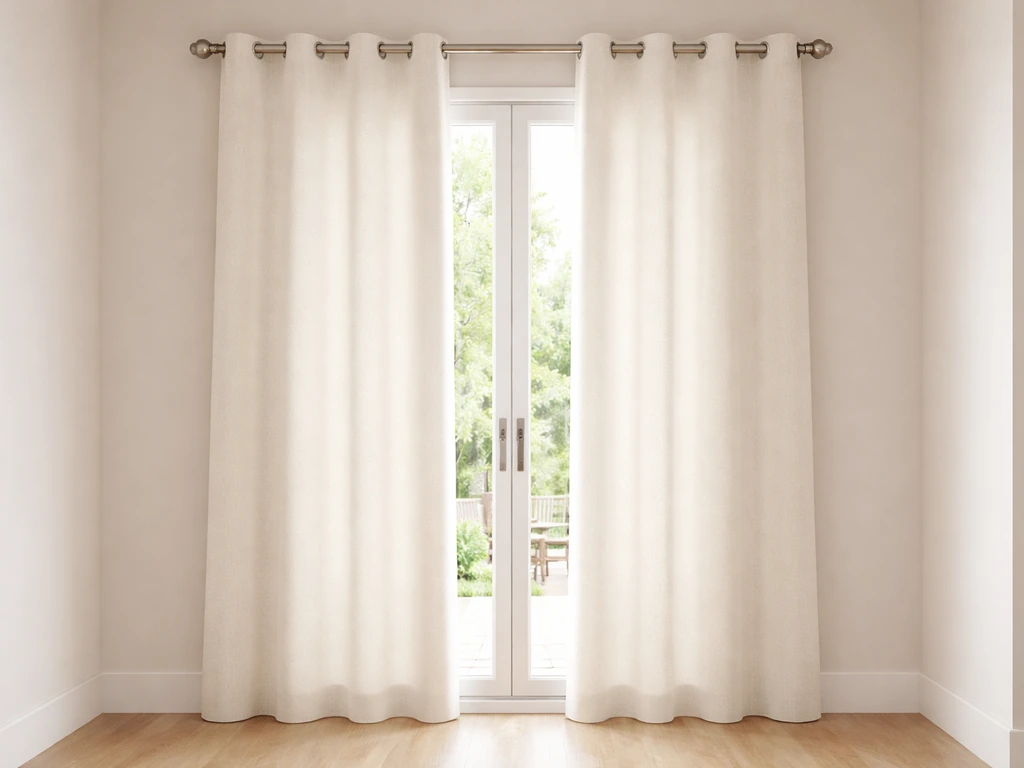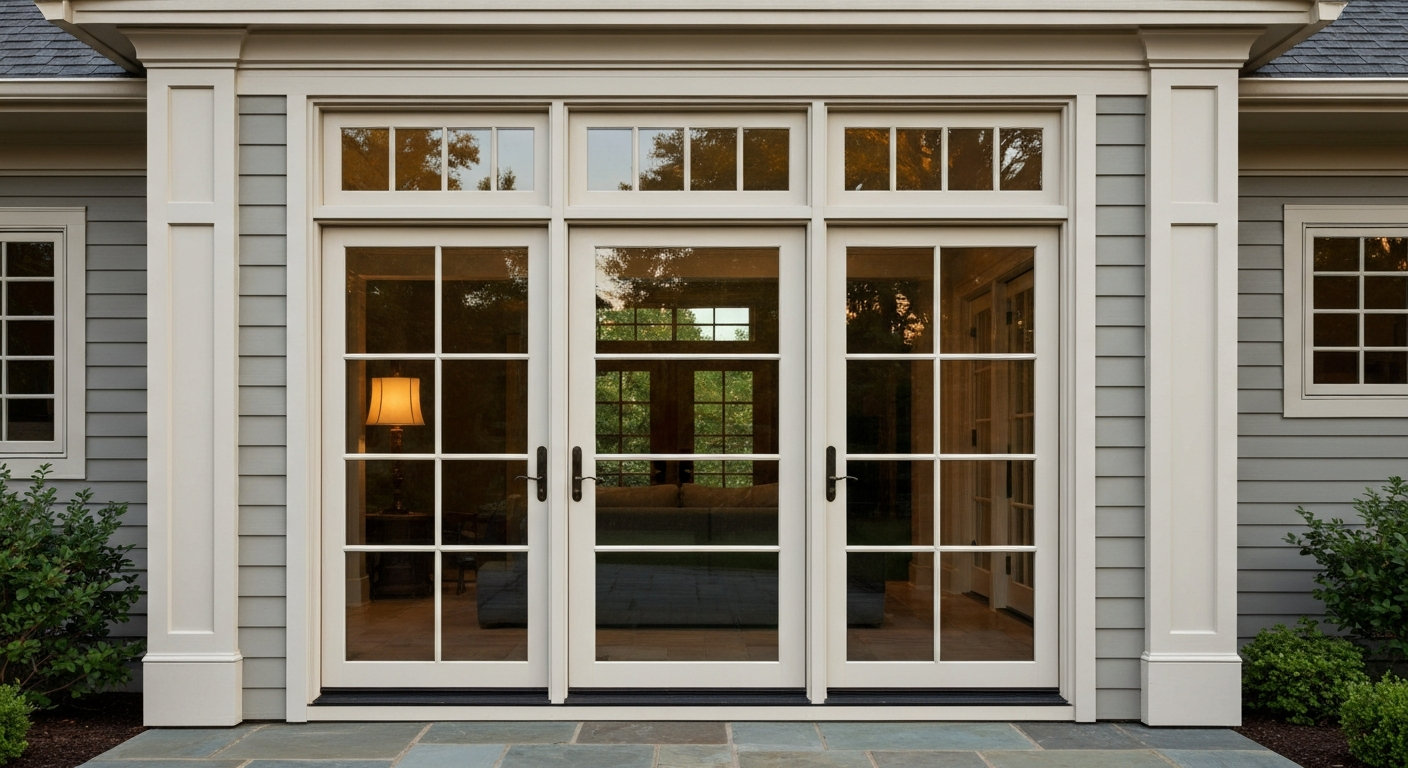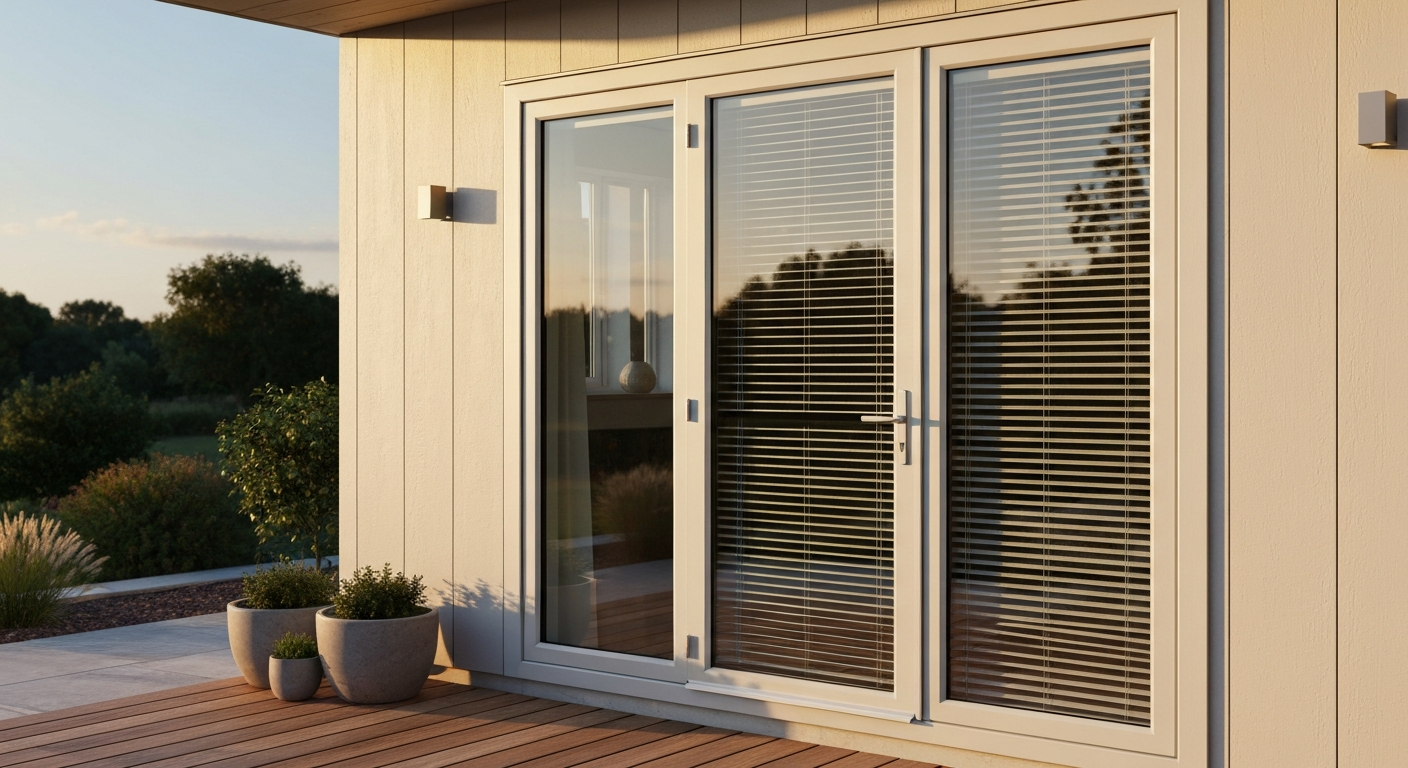
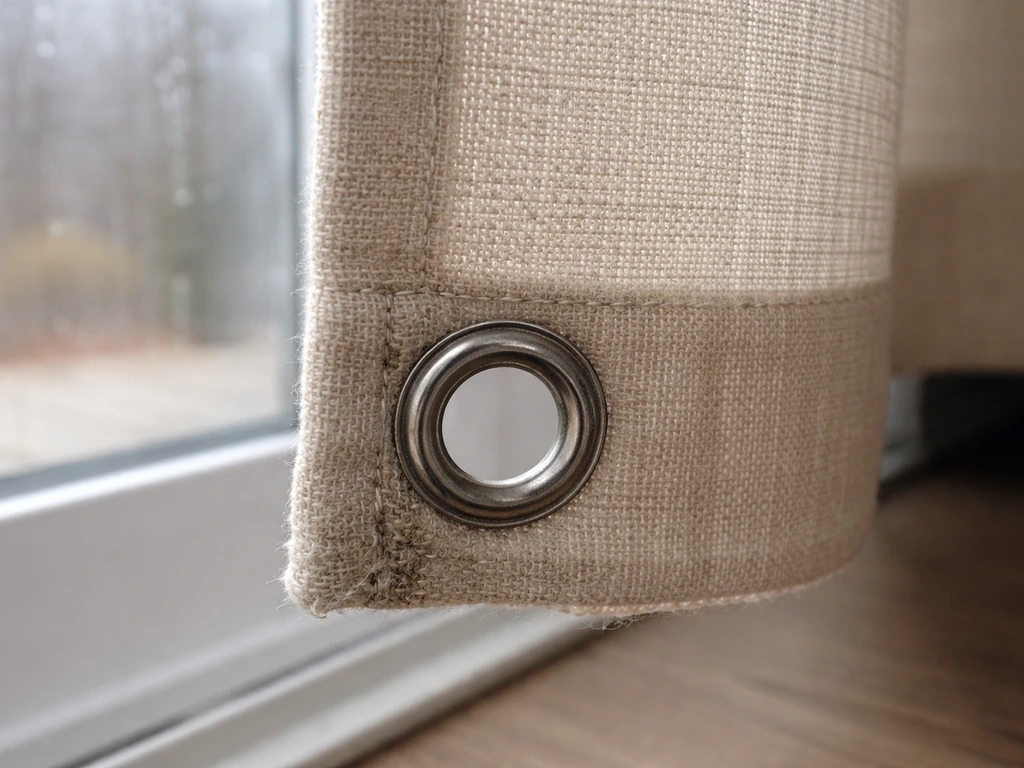
Grommet top insulated patio door curtains are wide, thermally-lined panels with metal rings punched into the top of the fabric. You thread them onto a rod and they slide open and closed to cover your patio door. The "insulated" part means they have a special thermal backing, usually a layer of foam or tight-weave acrylic, that slows heat transfer and blocks cold drafts at night. They work on sliding glass doors, French doors, and some bifold setups. If your patio door lets in a cold chill in winter, bakes the room in summer, or you just want to cut glare without losing the view when you open up, these are the curtains to look at.
Grommet Top Insulated Patio Door Curtains: Fit and Install Guide
Owen Delaney
10 Jul 2026
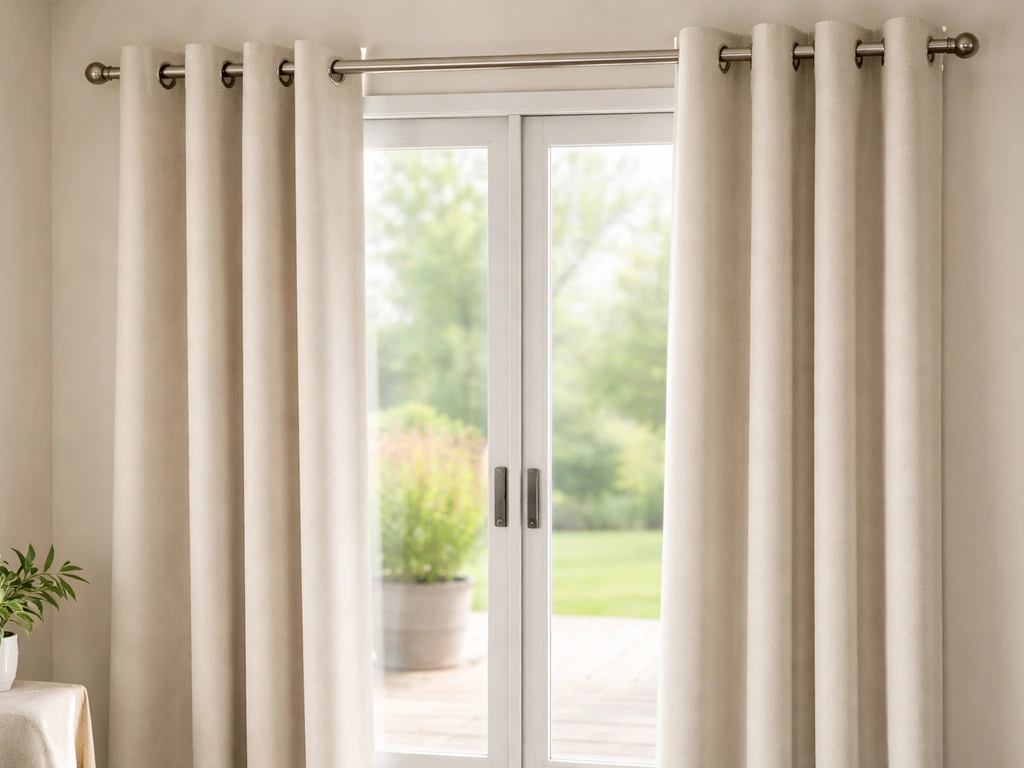
What grommet top insulated patio door curtains are and when you need them
A grommet-top curtain gets its name from the metal rings (grommets) that are punched directly into the curtain fabric at the top of each panel. That is different from rod-pocket curtains (where the rod slides through a sewn fabric sleeve) or tab-top curtains (where fabric loops attach to the rod). The grommet style slides more smoothly, hangs in clean, even folds, and is much easier to operate on a wide patio door where you need to push panels out of the way quickly. The insulated part is the key upgrade over a standard decorative curtain: the panel has a thermal lining, often a thick foam-backed or brushed fleece layer, bonded to the back of the fabric. That lining creates an air pocket between the curtain and the glass, which is where most of the insulating benefit comes from.
You need these specifically when a regular curtain is not cutting it. If you notice a cold draft near your patio door on winter nights, a temperature difference you can feel when standing near the glass, or direct sun heating up one room during summer afternoons, an insulated panel will make a real difference to your comfort. They are also the right choice when you want blackout or near-blackout light control, which is common for a patio door that opens into a bedroom or media room. Plain thick curtains look insulated but often lack the bonded thermal backing, so it is worth checking the product description before you buy.
How to measure for the right fit
Measuring for a patio door is different from measuring for a standard window because the scale is bigger and clearance from hardware matters more. Get this right before you buy anything.
Width
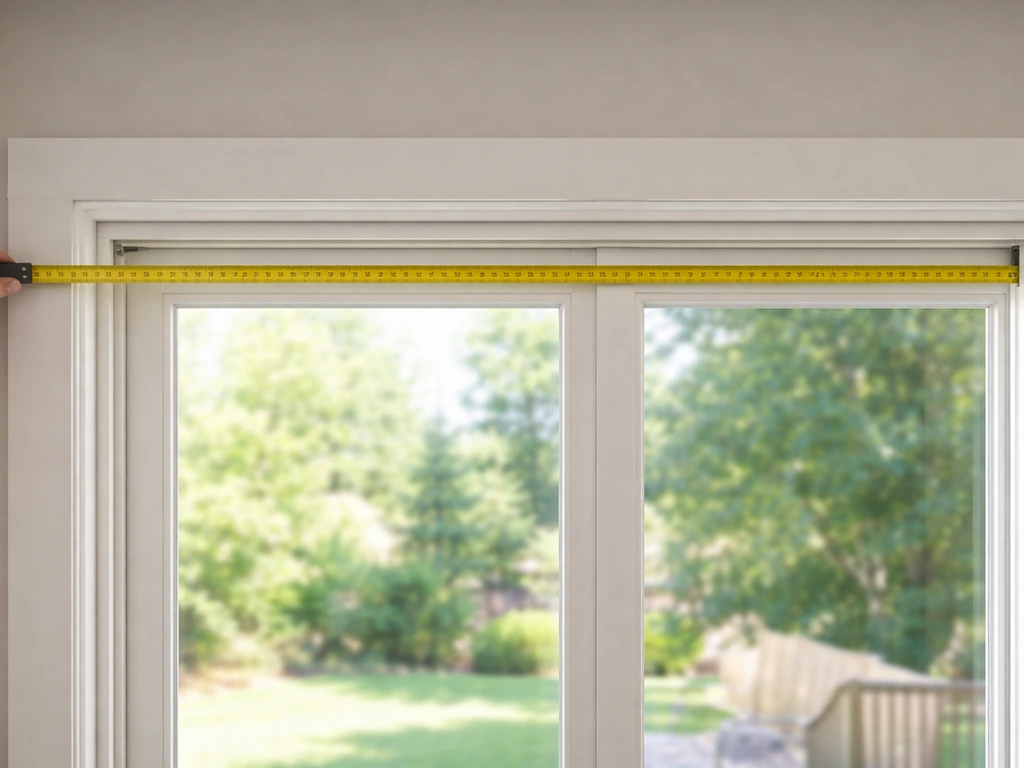
Measure the width of the area you want to cover. For a sliding glass door this is typically the full door frame opening, usually 72 or 96 inches wide. For fullness and draft coverage, grommet-top panels need to be 1.5 to 2 times the width of the area you are covering. So for a 72-inch door, you want 108 to 144 inches of total curtain width, split across however many panels you are hanging. Two panels of 54 to 72 inches each will handle a standard 72-inch door. If you want a really full look or maximum draft blocking when closed, aim for the 2x end of that range.
Height
Measure from where you plan to mount the rod down to the floor (or to wherever you want the curtain to end). For grommet-top panels, curtain length is measured from the top of the fabric, not from the top of the metal grommet ring. This matters because the ring sits above the fabric, and if you use the ring top as your reference, your panels will end up shorter than expected. When a curtain hangs on the rod, the fabric starts slightly below the rod because the grommets loop over it, so account for about 1 to 1.5 inches of drop when planning your rod height. If you want the curtains to just brush the floor, mount your rod so that the fabric measurement gets you to floor level, then add a few inches to the rod height to compensate for the grommet drop. If you want better insulation, aim for the curtain hem to brush the floor or stop just slightly above it rather than leaving a big gap.
Overlap and side clearance
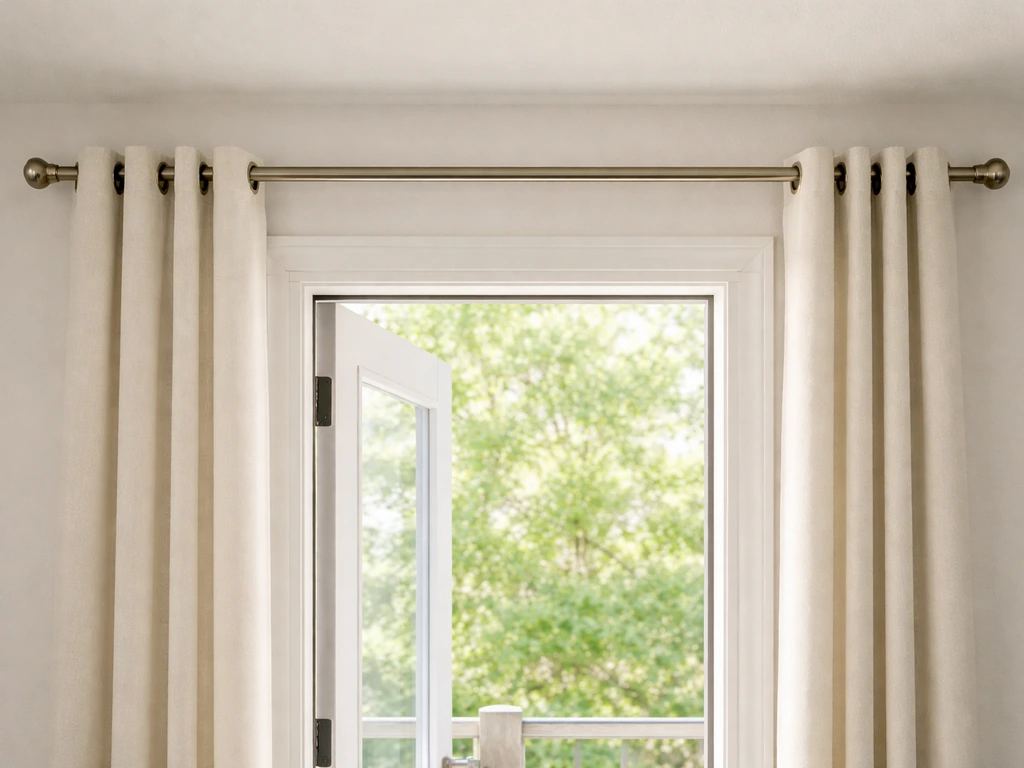
For real draft and light control, the curtain rod needs to extend beyond the door frame on each side by at least 6 to 12 inches. This lets you stack the open panels completely off the glass so you do not block the door when it is open, and it means the panels can overlap the wall when closed, sealing out side drafts. At the center, plan for at least a 4 to 6 inch overlap between two panels when they are closed. That center overlap is one of the biggest things people skip and then wonder why there is still a light gap or a cold draft running through.
Rod and grommet sizing
Rod diameter has to match the grommet opening. Most grommet curtains designed for patio doors use a grommet with an inside diameter around 1.6 inches, which is compatible with a 1-inch rod (a common standard). The general rule is to subtract about half an inch from the grommet's inside diameter to get the maximum rod diameter, so a 1.6-inch grommet ID works with a rod up to about 1 inch in diameter. Going larger than that and the grommets will bind and not slide smoothly. One product I have seen specifies stainless steel grommets at 1.65 inches inside diameter and recommends up to a 1-inch rod for easy movement. Always check the grommet spec in the product listing and compare it to your rod before buying.
What to expect from the insulation
Let me be direct about expectations here: an insulated curtain panel is not a replacement for a well-sealed or well-glazed door. It is a comfort upgrade, not a renovation. That said, the improvement can be meaningful. The insulating effect comes from the thermal lining trapping a layer of still air between the curtain and the glass, which slows heat transfer. When properly installed and closed at night, an insulated curtain can reportedly raise the effective R-value of a window assembly up to around R-6, versus a basic single-pane window sitting around R-1. A Wayfair Basics thermal blackout grommet sliding patio door curtain panel is designed to deliver this kind of insulation and light-blocking performance when it is properly fitted and closed insulated curtain can reportedly raise the effective R-value. Most patio doors, even double-pane ones, sit somewhere in the R-2 to R-4 range on their own, so adding a well-fitted insulated curtain at night genuinely helps.
The Department of Energy recommends closing curtains and shades at night to protect against cold drafts and opening them during the day to let in warming sunlight in winter. That is the most effective pattern for energy savings: open in the day, closed at night. The catch is that the insulating benefit depends heavily on how well the curtain fits. Gaps at the sides, top, or bottom let air bypass the curtain entirely and eliminate most of the thermal benefit. A curtain that extends past the frame on both sides, overlaps at center, and hangs close to the floor will outperform a correctly sized curtain hung too short or too narrow.
For light control: insulated curtains usually come in either blackout or light-filtering versions. Blackout uses a tighter, denser backing (often a triple-weave or coated foam liner) and blocks essentially all light. Light-filtering or thermal-only versions cut glare and UV but allow some diffused light through. Blackout is better for bedrooms and media rooms; light-filtering works better where you want to reduce heat without losing all natural light.
How to pick the right curtain: materials and features
Not all insulated patio curtains are the same. Here is what actually matters when you are comparing options.
| Feature | What to Look For | Why It Matters |
|---|---|---|
| Thermal lining | Foam-backed, brushed fleece, or triple-weave blackout lining bonded to the face fabric | Creates the air layer that provides insulating value; a loose lining reduces effectiveness |
| Fabric material | Polyester, acrylic, or solution-dyed polyester for outdoor-exposed doors | Resists fading and moisture; cotton and linen degrade quickly near patio doors |
| Fade resistance | UV-protective or solution-dyed fibers (Sunbrella-type construction) | Patio doors get direct sun; dyes break down fast without UV protection |
| Blackout vs light-filtering | Triple-weave or coated blackout vs standard thermal lining | Choose based on room use; blackout blocks more heat and light, thermal-only allows diffused light |
| Mildew resistance | Fabric treated or inherently resistant (solution-dyed acrylic) | Condensation near patio doors encourages mildew on untreated fabrics |
| Weight and wind resistance | Heavier panel weight (ideally with weighted hem) | Keeps panels in place and reduces thermal gaps from air movement |
| Grommet material | Rust-proof stainless steel or coated grommets | Standard steel grommets rust near exterior-facing doors and stain the fabric |
For a patio door that gets a lot of direct sun, fade resistance is not optional. Solution-dyed acrylic fabrics, like those used in Sunbrella products, have UV ratings up to 1,500 hours of direct exposure and are inherently fade-resistant because the color is locked into the fiber rather than applied on top. Standard polyester curtains sold as "fade resistant" are better than untreated cotton but will still lose color noticeably over two to three seasons if they face direct sun for several hours a day. If the door faces south or west, pay for the better fabric.
On the blackout vs thermal question: if your main goal is draft and heat control and you still want some ambient light, go with a thermal-lined panel that is not full blackout. If you want both insulation and complete darkness, get a blackout panel. Both categories now come with proper thermal backing, so you are not giving up insulating performance either way.
How to hang grommet-top curtains on a patio door
Hanging grommet panels is straightforward, but there are a few places people go wrong on patio doors specifically.
Tools and hardware you need
- A heavy-duty curtain rod rated for the full span (for a 96-inch door plus side extensions, you need a rod that can hold weight across 110 to 120 inches without bowing)
- Brackets and wall anchors appropriate for your wall material (drywall, masonry, or stucco)
- A stud finder
- A level
- A drill and bits
- A tape measure
- A pencil for marking bracket positions
Rod strength is more important on patio doors than on regular windows because the panels are heavier and span further. A single center-support bracket is usually needed for rods over 84 inches to prevent sagging in the middle. For exterior-adjacent installations where moisture is a concern, go with a rod that has a rust-resistant finish, not bare iron.
Where to mount the rod
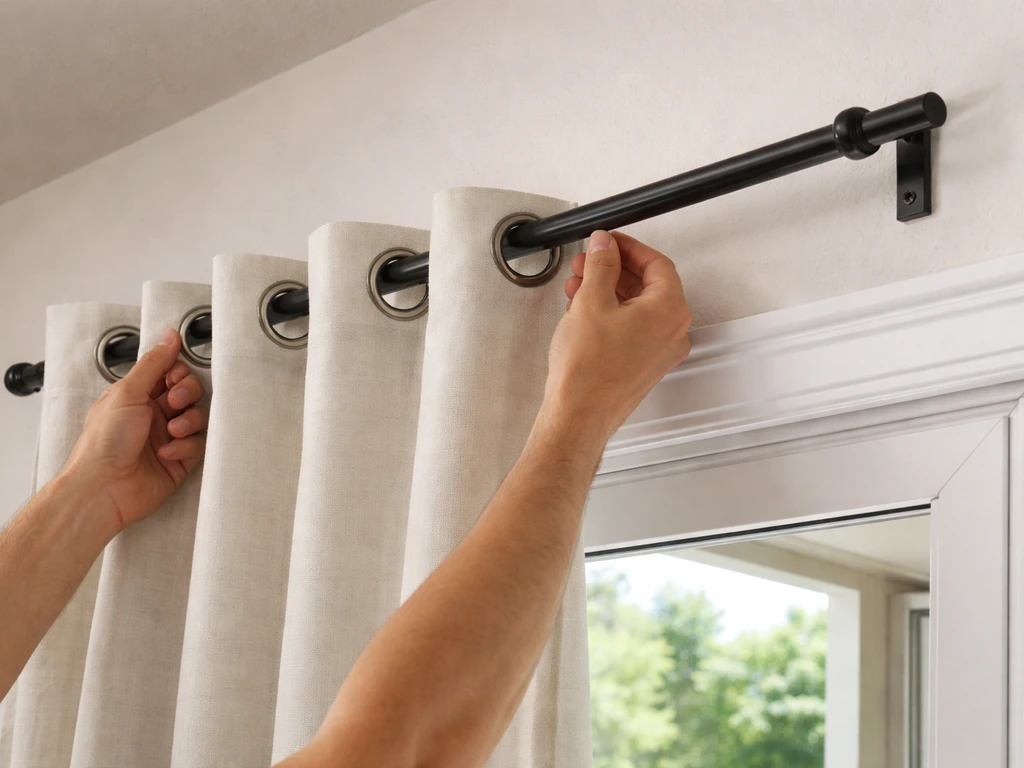
Mount the rod 4 to 6 inches above the door frame. This gives the curtain enough clearance to hang without touching the top trim or door hardware, and it makes the door feel taller visually. Remember that the fabric will drop slightly below the rod because the grommets loop over it, so account for that when marking your bracket height. The rod should extend 6 to 12 inches beyond the door frame on each side so you can push panels fully to the wall when the door is open.
Threading and hanging
Thread the rod through all the grommets before you mount the rod to the brackets. It is much harder to thread panels with the rod already up. Once all panels are on the rod, lift the completed assembly onto the brackets and secure it. Then spread the panels out evenly, check that the hem clears the floor by about half an inch (to avoid wear but maintain a draft seal), and adjust the spacing of the grommets along the rod for even folds.
Direct mounting vs tension rods
Tension rods are not recommended for heavy insulated patio door panels. The panels are too wide and too heavy, and a tension rod will slip under that load. Use bracket-mounted rods with screws into wall studs or masonry anchors. If you are in a rental or cannot drill into the trim, look for heavy-duty adhesive mounting systems rated for the load, but understand they are a compromise and may fail over time with temperature swings near a door.
Installation on different patio door types
Sliding glass doors
Sliding doors are the most common application and the most straightforward. Mount the rod above the entire door frame (both the sliding panel and the fixed panel) and use two curtain panels. When the door is open, both panels stack to one side, usually the fixed-panel side. The key issue here is rod length: make sure you have enough rod on the stacking side so that the open panels do not hang over the door opening and interfere with foot traffic. If your door opens to the right, extend the rod further to the right. One panel stays mostly on the left (covering the fixed glass side) and one stacks to the right when the door is open.
French doors
French doors are the trickiest. Because both door panels swing open, you almost always need two curtain panels that part at the center, and they need to be able to move out of the way without being removed. You have two real options: mount a single rod above both doors and use two panels that stack to each side when you open (which means both doors can open freely), or mount individual rods on each door panel itself so the curtain moves with the door. The door-mounted approach keeps the curtain paired with the door but requires careful hardware selection to avoid interfering with the handle or lock. Whichever approach you use, plan for a 4 to 6 inch overlap at the center of the two panels when they are closed, which helps with draft control. Two separate panels are always the right call for French doors.
Bifold patio doors
Bifold doors fold in sections and stack to one or both sides when open. A single rod above the full opening works well here, with panels that stack completely off to the sides when the doors are open. The main clearance concern with bifolds is the depth of the folded door stack when it is open: make sure your curtain panels stack further out than the folded door sections so they do not prevent the doors from fully opening. You may need a longer rod extension on the stacking side than you would for a sliding door. Also check that the rod brackets clear any track hardware at the top of the bifold frame.
Hardware clearance on all door types
Before you mount anything, open and close your door with the rod in the planned position (you can hold it up temporarily) and check that the curtain hem clears the floor handle, lock lever, and any floor track. Curtains that drag on a sliding door track will wear out fast and eventually catch. A half-inch clearance from the floor is the minimum. If the door has a surface-mounted lock or handle that sticks out from the face, the curtain panels need to clear that when moving across the rod.
Care, maintenance, and keeping performance up over time
Washing
Most insulated patio door curtains can be machine washed, but always check the label first because the thermal lining can be damaged by hot water or a dryer. The standard guidance for performance fabrics is cold water on a delicate cycle, then air dry flat or hang dry. Do not dry clean (most manufacturer care instructions specifically say no to dry cleaning) and skip the dryer if you have a foam-backed lining, as heat will break down the foam layer over time. For Sunbrella-type solution-dyed acrylics, you can use a mild bleach solution on mildew spots without damaging the color.
Mold and mildew
Mildew is the main enemy of curtains near patio doors, because condensation builds up on and around the glass, especially in winter. The mildew does not grow on clean synthetic fabric itself, but it will grow on dirt and debris trapped in the fibers. The practical fix is to hose or brush the panels down once a month if they are in a high-humidity environment, and spot treat any mildew growth as soon as you see it. A mix of mild soap and water handles light spots. For serious mildew, a pressure wash at 1,200 to 1,400 PSI works on durable outdoor fabrics, or use a product like Sunbrella Renew for treated performance fabrics. Let panels dry completely before closing them against the door, otherwise you are trapping moisture and making the problem worse.
Checking grommets and edges
Grommets can loosen or crack over time, especially if the curtain is heavy and the rod is too small in diameter (which puts stress on the edge of the grommet opening). Check them at the start of each season. If a grommet is pulling away from the fabric or cracked, the panel will eventually tear at that point. Rust-proof or stainless steel grommets last significantly longer than standard steel near exterior doors. Also check the hem edges for fraying, which is where moisture tends to wick up from the floor if the curtain sits too close to a floor track.
Seasonal switching
If you use heavyweight blackout insulated panels in winter for maximum draft blocking, consider switching to a lighter thermal-only or light-filtering panel in summer. The blackout panels trap heat in summer, which can actually make the room hotter if you are not running the curtains closed during the hottest part of the day. Store off-season panels clean and dry, ideally folded or rolled rather than stuffed, to avoid creasing the thermal backing. Some homeowners also find it worthwhile to remove patio panels entirely during extended humid spells (a wet summer or rainy season) to let the door area air out and prevent mildew buildup behind the curtain.
Common failures to watch for
- Thermal lining delaminating from the face fabric (caused by dryer heat or years of UV exposure)
- Grommets pulling free or cracking from a rod that is too heavy or the wrong diameter
- Mildew staining behind the panel where air circulation is lowest
- Hem fraying from contact with a floor track
- Color fading on the face fabric from sustained direct sun if the fabric is not UV-rated
Your next steps
Here is the practical sequence to follow. First, measure your door width and decide on rod placement, then calculate total curtain width needed at 1.5 to 2 times the door width. Second, choose your fabric based on sun exposure (UV-rated or solution-dyed if you get direct sun), light control needs (blackout vs thermal-only), and whether the door faces a damp environment (mildew-resistant fabric and rust-proof grommets if so). Third, confirm the grommet inside diameter on any panel you are considering and match it to a rod that is about half an inch smaller than that measurement. Fourth, mount a bracket-supported rod rated for the full span, positioned 4 to 6 inches above the frame and extended well past each side. Thread the panels before mounting the rod, then hang and adjust. Finally, set a reminder to check the grommets and clean the panels at the start of each season. You do not need to spend a lot to get a well-performing setup, but the fit and installation details matter far more than the price tag.
FAQ
Do all grommet top insulated patio door curtains fit any curtain rod?
Not always. Some grommet-top insulated panels are designed for a single rod, some require specific ring spacing, and French or bifold setups sometimes need two or even separate rods. Check the product listing for “stacking” instructions or whether the panels include a recommended rod diameter, since mismatched rings can bind and reduce how well the panels slide and seal.
How much clearance should I leave between the curtain hem and the floor?
If you want insulation, the curtain hem matters. Aim for the fabric to brush the floor or leave only about a half-inch gap, not several inches. A larger gap lets warm or cool air bypass under the panel, which cuts the insulating effect even if the curtain is the right width.
Why do my grommet insulated curtains end up a different length than I expected?
Measure from the top of the fabric to the level you want the hem to reach, not from the top of the metal rings. Because the grommets sit above the fabric, using the ring as your measurement reference can make the finished curtain end up shorter, leaving a bigger-than-expected gap and weaker draft blocking.
What rod diameter should I use with insulated grommet curtains?
Because the curtain needs to open smoothly and the rings can bind if the rod is too large. Compare the grommet inside diameter to your rod size, and use a rod that is about half an inch smaller than the grommet ID (for many common specs, this often means a 1-inch rod for roughly a 1.6-inch grommet opening).
Can I hang grommet top insulated patio door curtains with a tension rod?
A tension rod is usually a poor match for heavy insulated panels. The weight and span can cause slipping, which creates uneven stacking and side gaps, both of which reduce draft and light control. If you cannot drill, look for a rated adhesive mounting system, but plan to re-check after temperature swings.
Should I keep blackout insulated curtains closed all summer?
Yes, but you may need to be more selective. Some blackout insulated panels can trap more heat during hot months, especially if they are kept closed through peak sun. For summer, consider switching to a light-filtering thermal panel, and keep the blackout panels stored clean and dry so you do not damage the thermal backing.
Why do I still feel cold air even after installing insulated curtains?
Yes, and it is normal to see a tight, sealed look only when the curtains are pulled fully to the sides and overlapped at center. If you still feel drafts, re-check that the rod extends beyond the frame on both sides and that the two panels overlap by the recommended amount at the center when closed.
What are the most common installation mistakes that ruin insulation?
Yes. Many patio-door setups fail because the rod is placed too low or too short. Mounting the rod about 4 to 6 inches above the frame helps the panels clear hardware and hang properly, and extending the rod 6 to 12 inches past each side helps panels stack off the glass and seal the sides when closed.
How should I wash insulated grommet patio curtains without damaging the thermal lining?
Follow the care label, but as a general rule use cold water on a gentle cycle and avoid the dryer if there is a foam-backed or thermal liner. Heat can degrade foam, and hot water can compromise thermal layers. If you have mildew, treat spots early and let the panels dry completely before closing them against the door.
Will my rod sag over time, and how do I prevent it?
They are heavy, so expect sagging if the rod is undersupported. For long spans, use a center support bracket when the rod length exceeds typical thresholds, and verify the rod’s load rating. Sagging shifts the hem and can break the floor seal, which affects both draft control and light blocking.
How do I prevent mildew when my patio door area gets a lot of condensation?
Mildew usually happens when moisture stays trapped, especially in humid or winter conditions near glass. Clean once you see spotting, treat early, and make sure the panels fully dry before closing them. If you often see condensation, consider temporarily opening the curtain during the day to let the area air out.
How do I know when a grommet curtain is wearing out?
Grommets can loosen, crack, or rust, especially outdoors and when the rod is slightly oversized. Check grommets at the start of each season, and if you see gaps between ring and fabric or any cracking, stop using that panel because tearing often starts at the grommet opening.