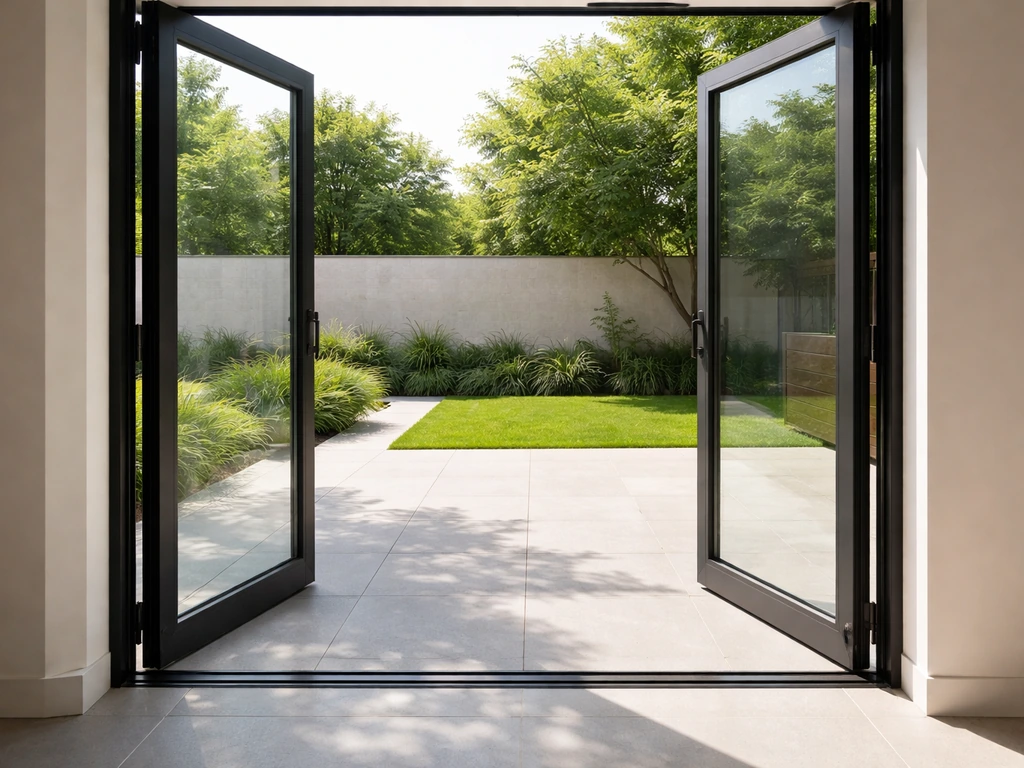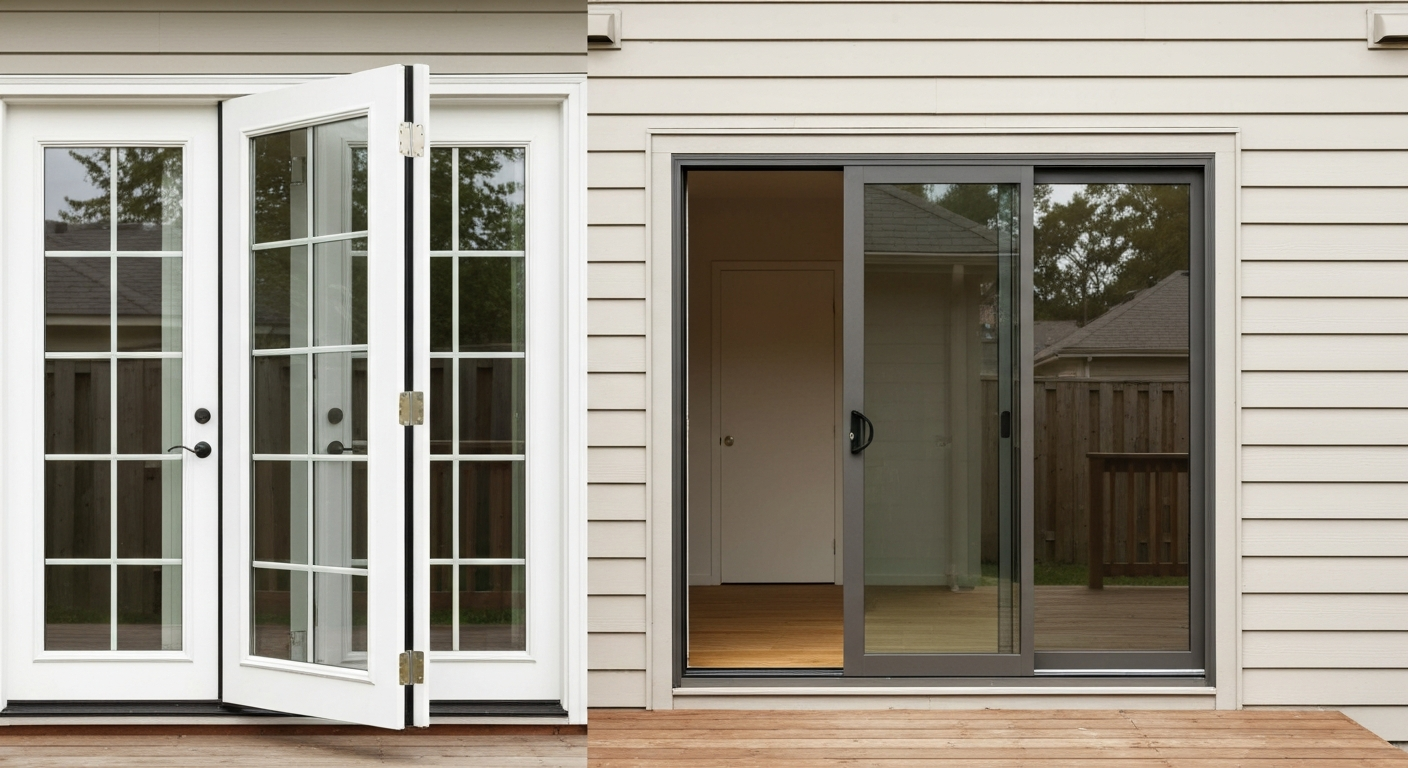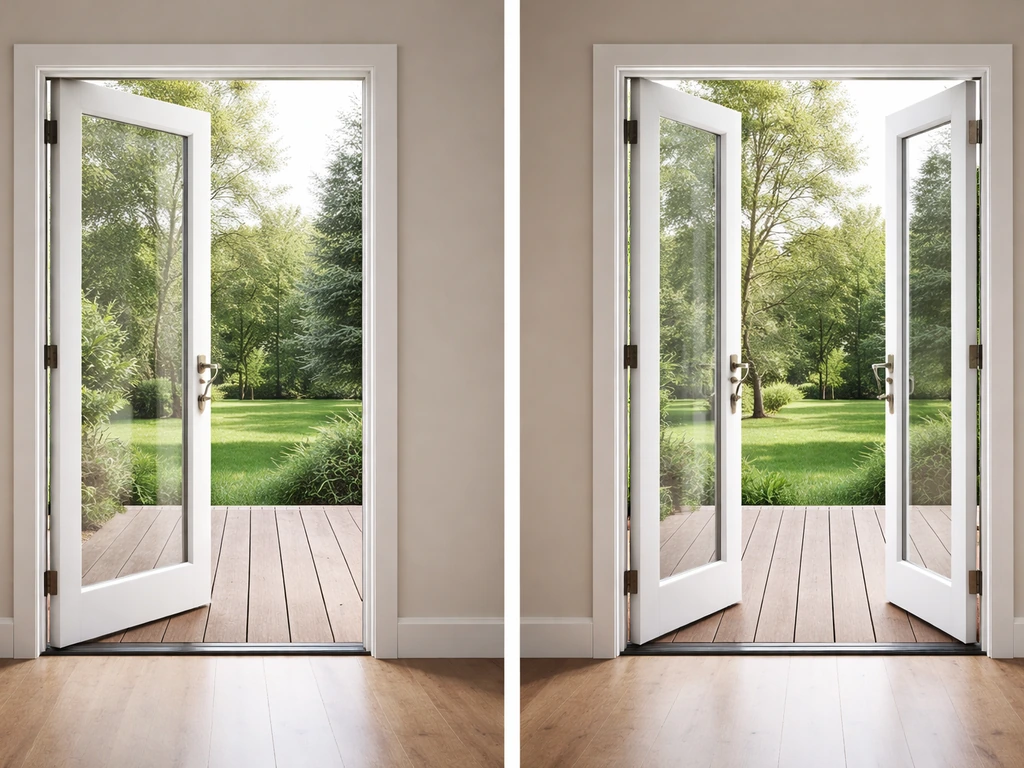
Most French patio doors do not come with screens included. A French patio door is typically a pair of hinged doors that swing open outward or inward, bringing a wider view and easy access to the outside what is a french patio door. Unlike sliding patio doors, which often ship with a screen panel in the track, hinged French doors treat insect screens as a separate accessory you have to select and install yourself. That's the honest answer, and it trips up a lot of homeowners who assume they'll get the same bug protection out of the box. The good news is there are solid screen options built specifically for French doors, and with the right measurements and a bit of planning, you can add proper insect protection without ruining the look of the doors.
Do French Patio Doors Have Screens? Options for Insects

Why French doors usually don't include screens
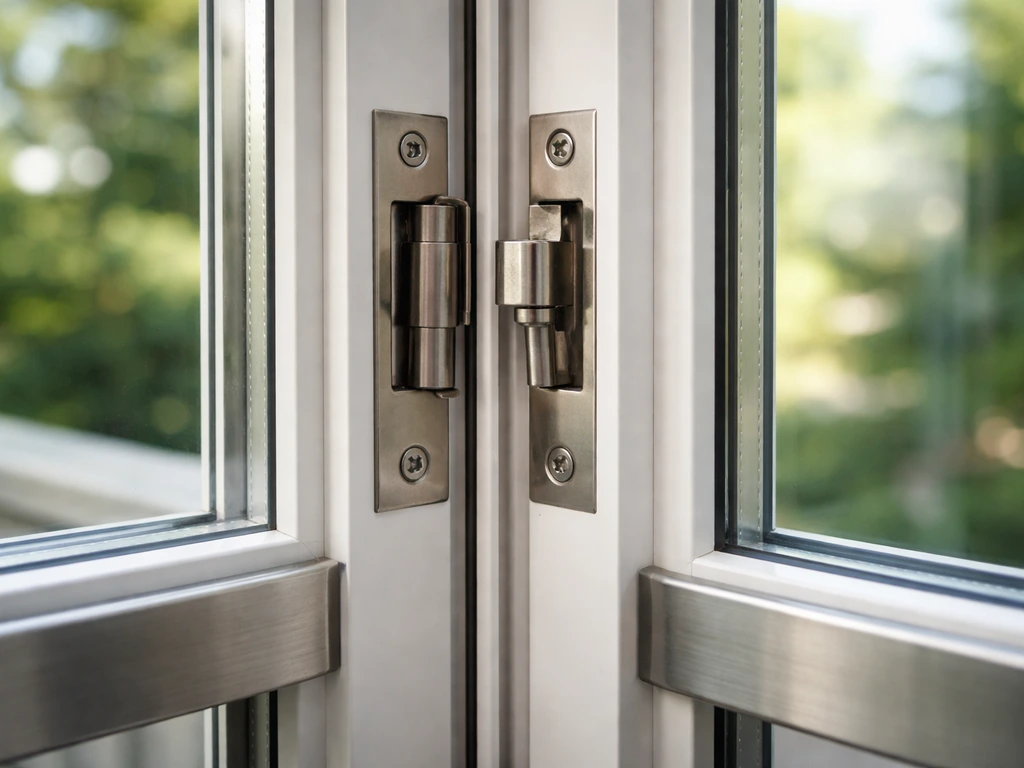
It comes down to how the doors work. A sliding patio door has a fixed track system on both sides, so a screen panel can ride in the same track without much extra engineering. French doors swing open on hinges, and the two door slabs meet at the center with an astragal (the vertical bar where the doors latch). There's no natural track for a screen to slot into, and the swing direction, hinge placement, and clearance all vary from one installation to the next. Manufacturers like Andersen treat insect screens as a separate accessory system with its own documentation and installation guide, not as part of the base door package. If you've been Googling this and found homeowners complaining that their new French doors arrived with no screen solution, you're not alone, and it's not a mistake or an oversight on the manufacturer's part.
Screen types that actually work on French doors
There are three main approaches, and each has real trade-offs depending on your door layout.
Hinged insect screen panels
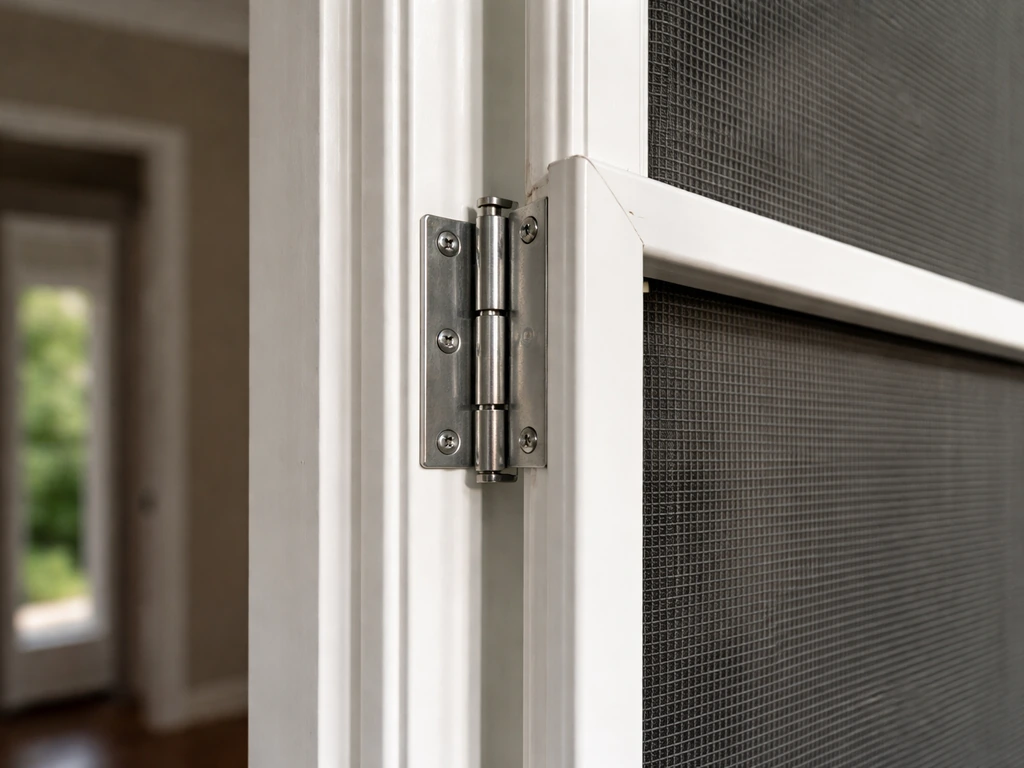
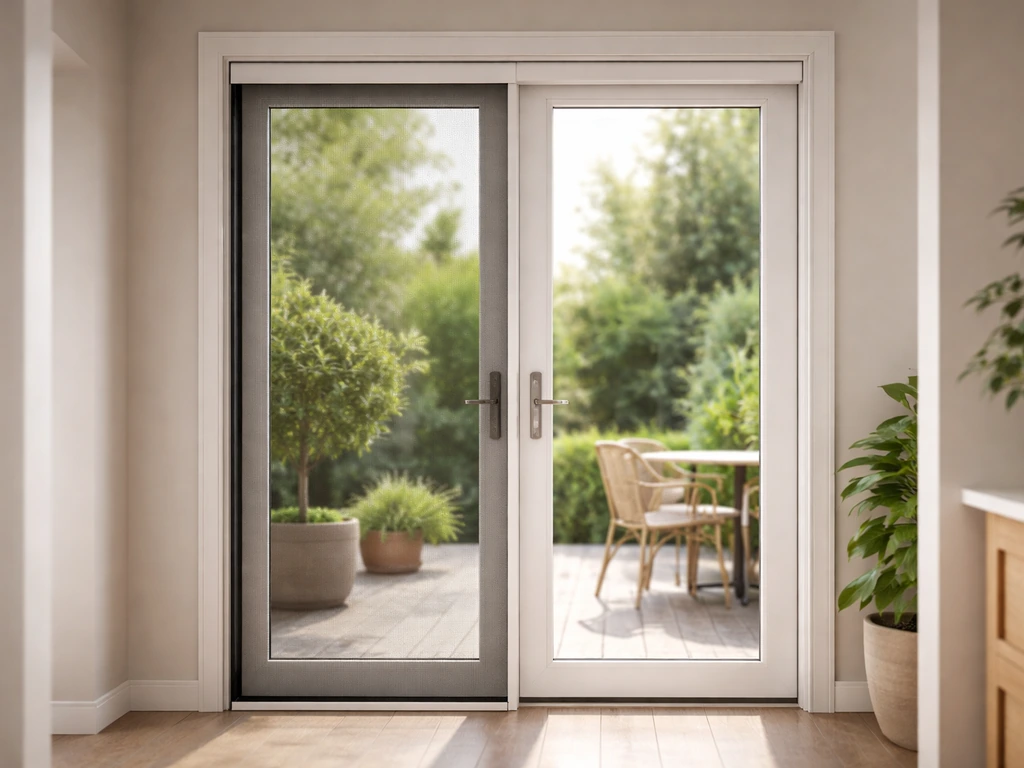
These work like a traditional screen door, but they're designed to mount onto the French door frame using hinge leaves that fit into the door frame's kerf (the routed slot in the frame). Andersen's hinged insect screen system is a good example: hinge leaves insert into the existing frame kerf, align at the top and bottom, and fasten with hardware like #6 x 3/4" bolts. This is a clean, permanent-looking solution, but it only works if your frame has the right kerf profile. If your doors aren't from a brand that sells a matching insect screen accessory, you'll have a harder time making this work without custom fabrication.
Retractable screen systems
Retractable screens are the most popular upgrade for French doors right now, and honestly they're the best option for most homeowners who want something that looks good when not in use. If you're shopping specifically for the best French doors patio setup, focus on the screening solution first so bugs and usability are both covered. For a double French door, the system uses two cassette assemblies, one mounted on each side of the frame. The screen panels pull out from each cassette and meet in the center when you want bug protection, then blank" rel="noopener noreferrer">retract into the cassettes when you want the full view. Andersen's LuminAire retractable insect screen is one of the better-known branded options, marketed specifically for patio doors with a straightforward installation system. Independent products like the Phantom Double Door Retractable Screen serve the same purpose. The key compatibility requirement is mounting surface depth: Andersen's system, for example, requires at least 3/4" of mounting surface depth on your frame. If your frame is narrow or your casing gets in the way, you may need a surface-mount adapter or a different product altogether.
Tracked sliding insect screens
Some homeowners add a separate track system across the top and bottom of the door opening and use a sliding screen panel. This is the closest thing to a traditional sliding door screen, but it requires the door to be square and the opening to have enough clearance for the screen to park off to one side when the doors are open. Andersen also offers a double insect screen track guide for this configuration. The challenge is that French doors swinging outward will clear the screen track, but inward-swinging doors will clash with it, so you have to know your swing direction before committing to a track system.
Magnetic screen panels
Magnetic screens are a low-cost, temporary option where a mesh panel with magnetic edges clings to your door frame. They're cheap and you can pull them down and store them off-season, but homeowner feedback is genuinely mixed. The magnets can misalign, the mesh sags over time, and in high-traffic areas (kids, dogs, frequent door use) they tend to fall apart faster than you'd like. Fine as a stopgap, but not a long-term answer.
DIY vs. hiring a pro for screen installation
This really depends on the screen type and your comfort level with basic carpentry. Retractable cassette systems like the LuminAire are specifically marketed as DIY-friendly with basic tools, and if your opening is square and your frame has the right mounting surface, the install is genuinely manageable for someone who's comfortable drilling into door casing. Hinged screen panels that require kerf-fit hinge leaves are more precise and less forgiving of errors, so if your frame geometry is even slightly off, a professional installer will save you a lot of frustration. Track-based systems fall somewhere in the middle: the track installation itself isn't complicated, but getting everything level and aligned takes patience.
Where a pro is clearly worth it: if you have outswing French doors with limited exterior clearance, if your frame is old or out of square, or if you're buying a higher-end retractable system in the $1,800–$3,500 range where a bad install would be a costly mistake. For a basic removable or magnetic screen under a few hundred dollars, DIY makes more sense.
How to pick the right screen for your specific door setup
Before you order anything, you need to answer four questions about your doors.
- Swing direction (inswing or outswing): This is the single most important factor. Inswing French doors rule out most track-based systems because the door slab will hit the track. Outswing doors have more options, but you need to confirm exterior clearance for a cassette or hinged screen.
- Active leaf vs. double-active: Some French doors have one fixed leaf (pinned at top and bottom) and one active leaf you use daily. Others are true double-active with both panels in use. A double retractable cassette system is designed for true double-active use. If one leaf is fixed, a single hinged screen panel on the active side may be all you need.
- Frame material and kerf availability: Brand-specific hinged screen systems (like Andersen's) require the matching frame kerf. If your doors are a different brand or a generic import, verify whether the hinge leaf dimensions are compatible before ordering.
- Frame mounting surface depth: For retractable systems, measure the depth of the flat surface on your door casing where the cassette will mount. Andersen's LuminAire requires a minimum of 3/4". Less than that and you'll need a spacer or a surface-mount bracket.
Also check that your door frame is plumb and square. Retractable screen systems rely on roller mechanics that bind up or misalign when the opening is racked. A frame that's 1/4" out of plumb can cause the screen to drag or not retract cleanly. If your existing doors operate smoothly, you're probably fine, but it's worth putting a level on the frame before you order.
Beyond screens: other ways to reduce insects and improve the door
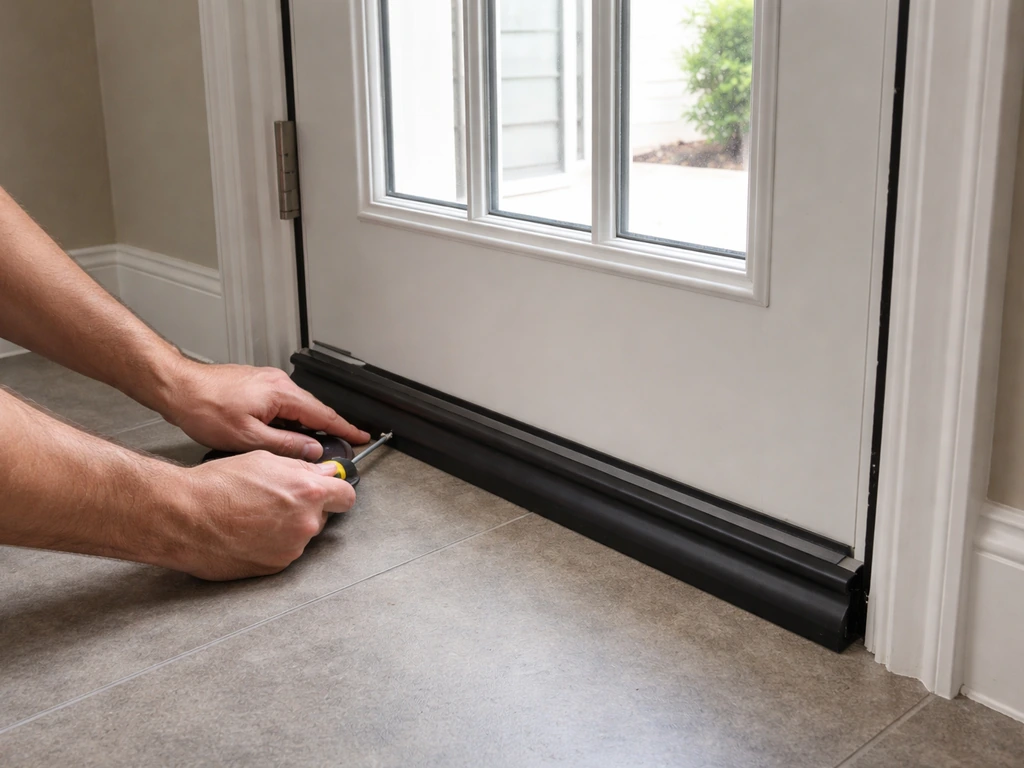
Screens handle flying insects, but they don't address the gaps around the door perimeter or underneath the slab. Weatherstripping the door frame and adding a door sweep to the bottom of each slab significantly reduces insect entry through those cracks. A pest-management perspective: weatherstripping forms a compression barrier in the door/frame gap, and a rubber or vinyl door sweep stops insects from crawling under the door. Both of these are inexpensive (usually $15–$40 per door) and take about 30 minutes to install. They also improve energy efficiency, which is a side benefit worth mentioning.
If you're already thinking about French door accessories, it's also worth considering what's available for shade and privacy. Retractable exterior shades can mount above the door opening and roll down over the glass when sunlight is direct, which is completely separate from insect screening but often gets evaluated at the same time. Some homeowners also look at built-in blinds between the glass panes for privacy, which is a different product category entirely. If you want shade and privacy without sacrificing airflow, look for the best French patio doors with built-in blinds as part of the door itself. And on the security side, French doors with a center astragal are sometimes seen as a weak point, so adding a multi-point lock or a surface-mounted security bar to the passive leaf is a common upgrade that pairs well with a screen door project.
Costs, lead times, and what to measure before ordering
Here's a realistic breakdown of what different options cost in 2026, including parts and installation where applicable.
| Screen Type | Typical Cost Range | DIY Friendly? | Lead Time |
|---|---|---|---|
| Magnetic screen panel | $30–$120 | Yes | Ships from stock, 2–5 days |
| Hinged insect screen panel (brand-matched) | $150–$400 (parts) | Moderate | 7–14 days for custom sizes |
| Retractable double cassette system (mid-range) | $750–$1,400 installed | Moderate to Pro | 7–14 days custom + install |
| Retractable double cassette system (premium/full-service) | $1,800–$3,500 installed | Pro recommended | 2–4 weeks with pro fitting |
| Track-based sliding insect screen | $200–$600 (parts) | Moderate | 7–10 business days custom |
Custom screen components typically ship within 7–10 business days after the order is confirmed, but that clock doesn't start until you submit the correct measurements. Ordering the wrong size means waiting through the whole lead time again, so get the measurements right the first time.
The exact measurements you need before ordering
- Opening width: Measure at the top, middle, and bottom of the door opening. Use the smallest measurement. For a double cassette retractable system, this is the full opening width spanning both door slabs.
- Opening height: Measure at the left, center, and right. Use the smallest measurement.
- Mounting surface depth (for retractable systems): Measure the flat face of the casing or jamb where the cassette bracket will attach. Must be at least 3/4" for most systems.
- Hinge side and swing direction: Note which side the hinges are on for each slab and whether doors swing in or out.
- Active leaf configuration: Confirm whether both panels open regularly or one is pinned/fixed.
- Clearance on the latch side: Check how much space exists on the exterior (outswing) or interior (inswing) latch side for a screen panel to park when the doors are open.
Write all of this down before you contact any supplier or start an online configurator. Most custom screen companies will ask for exactly these numbers, and having them ready will save you from multiple back-and-forth emails. If your opening is non-standard (wider than 72" total, or a height over 96"), expect to pay more and confirm the product specs cover your size before ordering. Getting this step right is what separates a screen installation that works cleanly from one that binds, sags, or ships back.
FAQ
How can I tell if my French door frame has the kerf needed for a hinged insect screen?
Check the routed slot in the frame where an inset hinge leaf would sit, look for a consistent groove running along the hinge side and confirming the slot depth and width match the screen system’s spec. If you cannot see a kerf or it looks shallow or uneven, plan on a different screen type (retractable or magnetic) or ask a pro to verify fit before ordering.
What measurements should I verify before ordering a retractable French door screen?
Confirm three items: the width and height of each active door opening (not just the overall patio opening), the frame mounting surface depth, and whether the opening is square by checking diagonals. If you only measure glass size or the rough opening, the cassette and track placement can end up off and cause drag or poor retraction.
Will a retractable screen still work if my French doors swing inward instead of outward?
Retractable cassette systems can work either way as long as the cassette position clears the door swing, but track and top-bottom slider-style screens are much more sensitive. Before committing, test clearance with painter’s tape outlines for the screen parked position and make sure the door does not hit the screen components at full open.
Do I need to weatherstrip and add door sweeps even if I install a screen?
Yes, screens mainly block flying insects, they do not seal perimeter gaps or the space under the door. Adding compression weatherstripping around the frame and a door sweep on each slab reduces crawling insects and also helps with drafts and energy loss.
Are magnetic screens a good choice for high-traffic homes with kids or pets?
They can be a temporary stopgap, but higher wear often causes misalignment, sagging, and faster magnet wear or edge curling. If the door is used frequently, consider a retractable or hinged system designed for regular opening cycles.
What should I do if my French doors are slightly out of square and the screen won’t retract smoothly?
First, recheck frame plumb and square (a small 1/4 inch out can matter). Then inspect for binding points like a roller not seated, uneven mounting screws, or a cassette that is not level. In many cases, careful shimming and alignment fixes the problem, but if the opening is significantly racked, you may need professional adjustment or a different screen design.
Can I install a screen without removing my current hardware, like locks or handles?
Sometimes, but it depends on mounting locations and clearance. Retractable and hinged systems can require drilling into the frame near the latch side, which may conflict with existing lock reinforcements. If you have a multi-point lock or thicker passive-leaf hardware, confirm compatibility with the screen’s mounting plan before you drill.
How do I choose between a removable hinged screen and a retractable cassette screen?
Choose hinged/removable if you want the cleanest permanent look and your frame matches the kerf system specs, accept that it is more precise and may be more work for seasonal removal. Choose retractable if you want the screen out of the way most of the time, and you have enough mounting depth and a door opening that is square enough to support roller mechanics.
Will adding a security bar or multi-point lock affect screen installation?
It can, especially if the passive leaf hardware changes how close the screen frame or mesh components can mount. Verify that any surface-mounted security bar does not obstruct the screen’s latch-side operation or the path of a hinged panel, and confirm the screen does not cover vents or weep areas needed for door drainage.
What’s the most common mistake that leads to ordering the wrong screen?
Measuring the visible glass or the rough opening instead of the exact door-frame and mounting surface dimensions the screen system uses. Another frequent issue is missing the required mounting surface depth for retractable cassettes, which is why confirming frame casing depth and square geometry before ordering is critical.