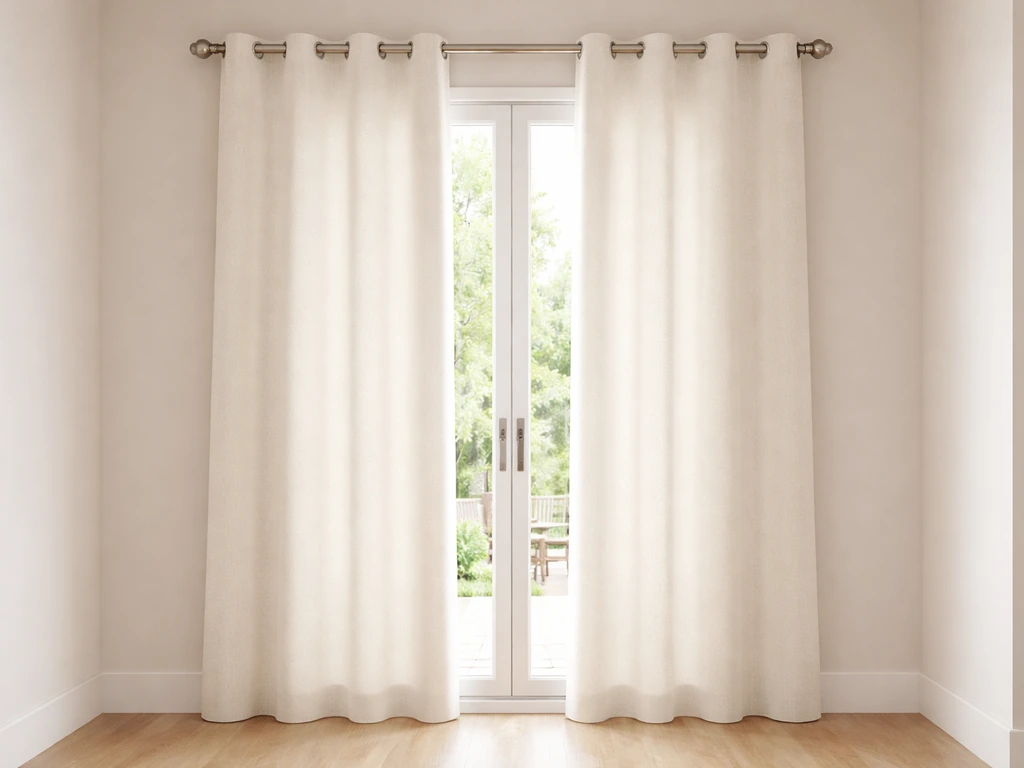
Grommet top patio door curtains are the easiest style to hang, look clean and modern, and work on almost every rod you already own. The key to getting them right is measuring from the rod down (not from the floor up), giving yourself enough width for fullness, and making sure your grommet's inner diameter is at least 1/8 inch wider than your rod so the panels actually slide. Get those three things right, and you'll have curtains that hang evenly, cover your door properly, and look like you paid someone else to install them.
Patio Door Curtains Grommet Top Guide: Measure to Install
Owen Delaney
3 Jun 2026
What grommet top curtains are and when they're the right call
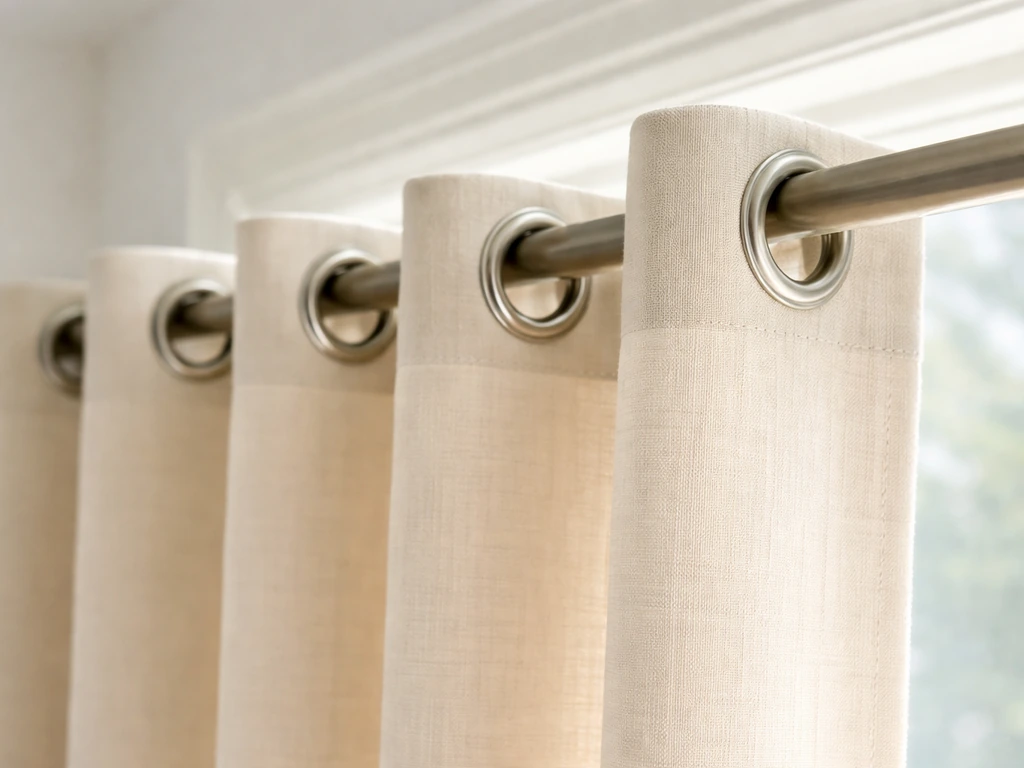
Grommet top curtains (also called eyelet curtains) have hollow metal rings sewn directly into the fabric header. The rod threads straight through those rings, so there are no clips, hooks, or pocket casings involved. The panels hang in soft, even folds between each grommet, which gives them that relaxed, slightly formal look you see in most home design photos.
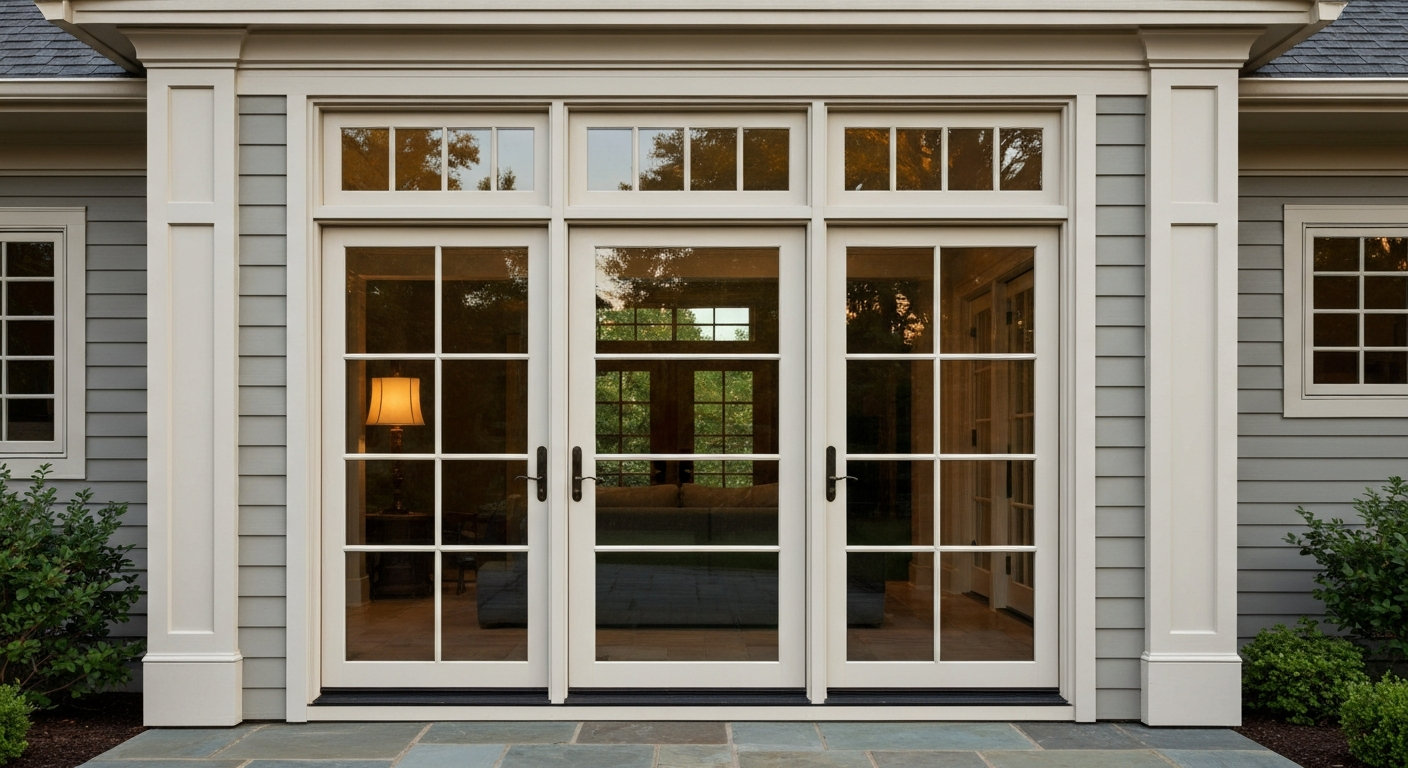
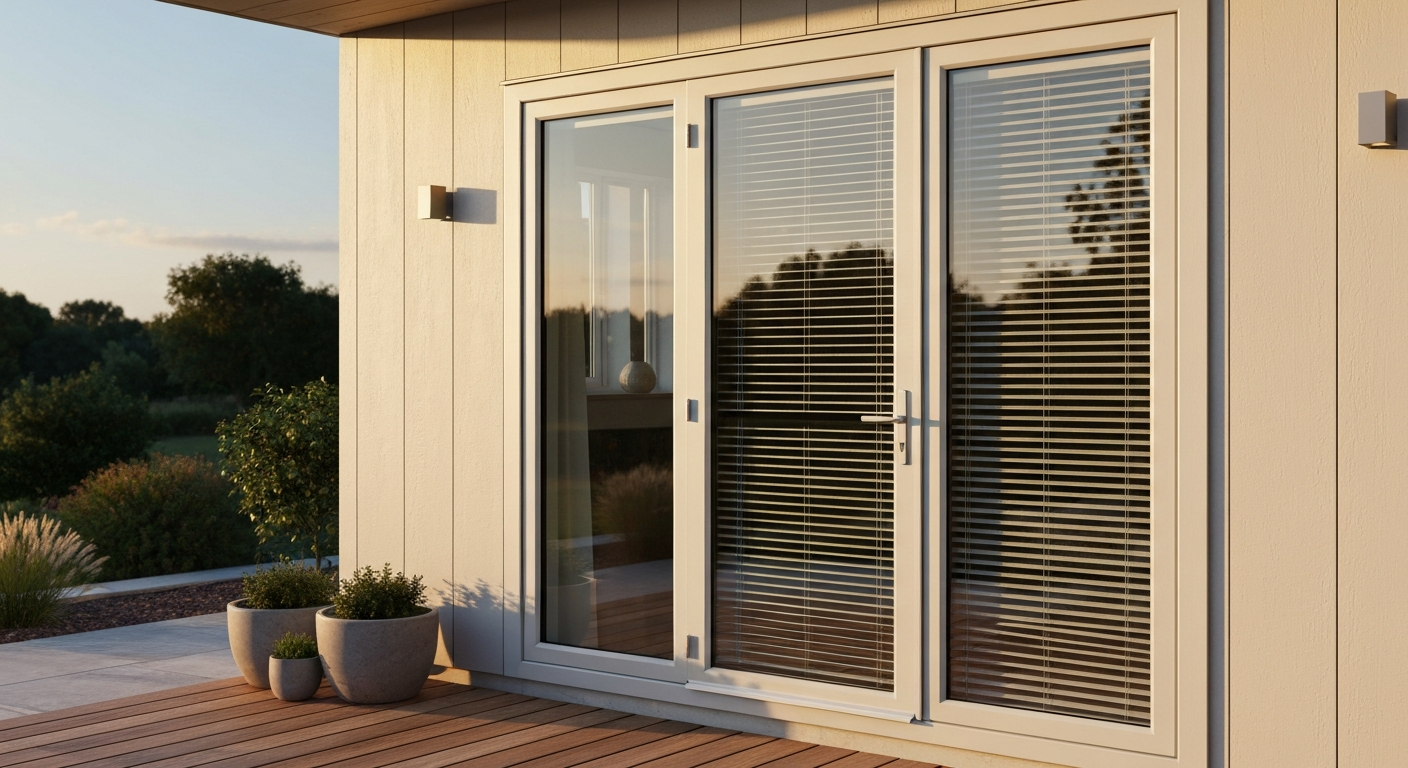
For patio doors specifically, this style has real advantages. Because the rings glide directly on the rod, you can push the panels fully to one side to open your door without wrestling with hooks or bunched pocket fabric. On a wide sliding door, that matters a lot. On French doors, the grommets let you hang panels that swing cleanly with the doors rather than catching on hardware. For a patio door with a top window, the same grommet top setup can help you maintain smooth operation and a clean, finished look French doors.
Where grommet tops are the strongest choice: sliding glass doors (especially wide ones), French doors where you want a tailored look, and any situation where you're going for a contemporary or transitional aesthetic. If your patio door gets heavy direct sun, grommet tops also pair easily with insulated or thermal-lined fabrics, which we'll get to below. If you're considering tab top panels instead, those work similarly but have a more casual look and don't traverse as smoothly on the rod. Tab top patio door curtains follow a similar sizing approach, but their hanging style changes the look and movement on the rod.
How to measure your patio door for grommet top curtains
There are two measurements you need: rod width and drop length. Don't skip either, and don't assume you know them from memory. Pull out a tape measure.
Measuring the width
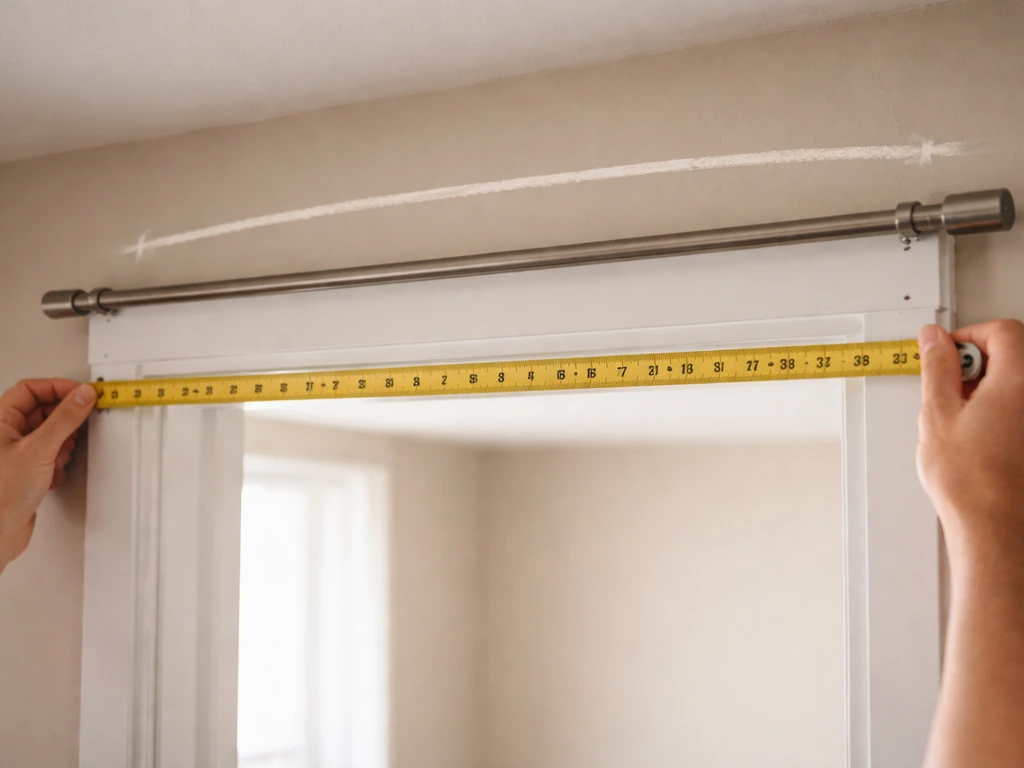
Start by deciding where your rod will sit. Most people mount the rod 4 to 6 inches above the door frame and extend it 3 to 6 inches past each side of the frame (so 6 to 12 inches total beyond the frame width). PleatedCurtain’s measuring guidance notes that when you measure width beyond the frame, you often use about 6 to 15 inches total per side concept, and it also connects this to different fullness multipliers by header style extend it 3 to 6 inches past each side of the frame (so 6 to 12 inches total beyond the frame width). This lets the panels stack off the glass when the door is open, so you're not losing light or clearance. Measure the full rod span from end to end, including the parts that extend past the frame.
Now multiply that rod measurement by 1.5 to 2.0 to get your total fabric width. This is the fullness factor. At 1.5x, the curtains look full but not overly gathered. At 2.0x, they look lush and dramatic. For most patio doors, 1.5x is plenty and keeps the panels from being too bulky when stacked to the side. If you're using two panels (one on each side), divide that total by two to get the width per panel. For example, if your rod spans 100 inches, you want 150 to 200 inches of total fabric, which means two panels of 75 to 100 inches each.
Measuring the drop (length)
This is where people most often get confused with grommet curtains. The curtain panel length is measured from the very top of the fabric (not the top of the grommet ring) to the bottom hem. But because the grommet sits above the fabric, once you thread the panel onto the rod, the fabric drops roughly 1.25 to 1.5 inches below the rod centerline.
The practical way to measure: decide where you want the bottom of your curtain to land, then measure from the top of where your rod will sit down to that point. Subtract about 1.25 inches to account for the grommet drop. The result is the curtain panel length you need. For a clean, modern look, aim to have the bottom of the curtain sit about half an inch above the floor. This avoids dragging without looking too short.
One more thing: measure your curtain panel length from the top of the fabric to the bottom, not from the top of the grommet. If you're ordering custom panels or comparing product listings, check whether the listed length includes or excludes the grommet header. Most retail panels list total fabric length, which is what you want to match to your calculation.
Choosing the right length, width, fabric, and light control
Length and width are about fit. Fabric and opacity are about function. You need both.
Standard lengths and when to go custom
Most patio doors are 80 to 84 inches tall, and standard curtain lengths of 84, 95, or 96 inches cover most installations well once you account for the rod height above the frame. If you mount your rod 4 to 6 inches above the frame, a 96-inch panel will typically land right where you want it. Always verify with your own measurements before buying. If your ceilings are taller or you're going for a floor-to-ceiling look on a tall door, 108-inch panels are worth the search.
Fabric weight and opacity options
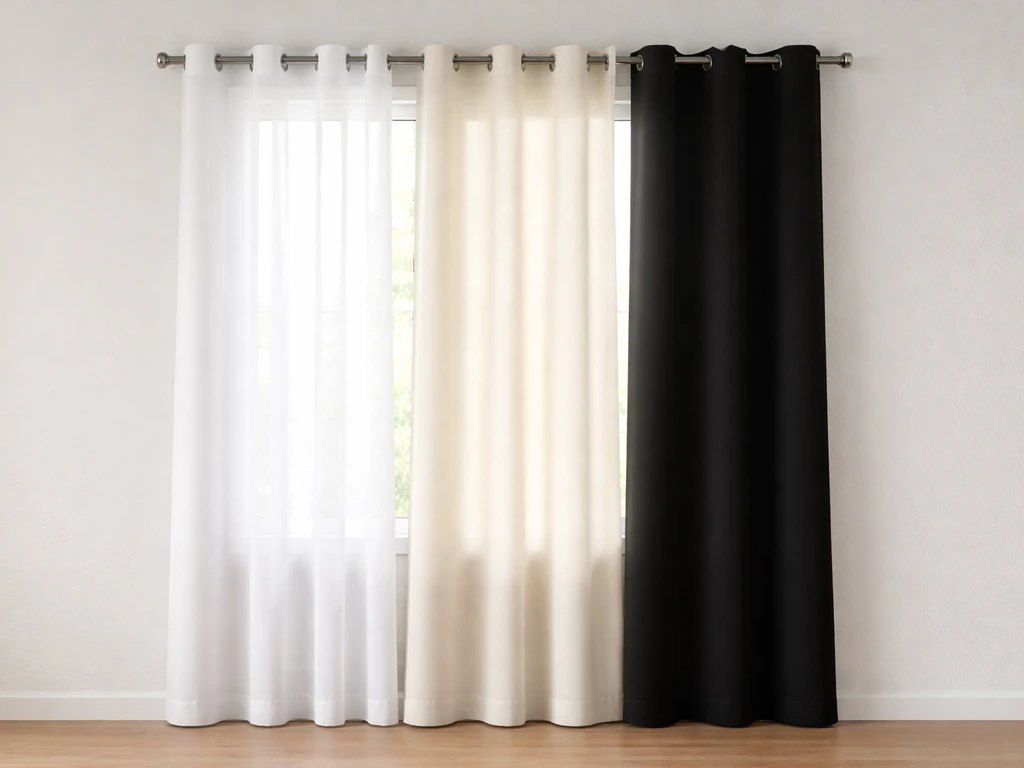
For patio doors, fabric choice is more important than for interior windows because these doors face outside, get more sun, and in many homes see more moisture from rain or humidity. Here's how the main categories break down:
| Fabric Type | Light Control | Privacy | Best For | Durability Note |
|---|---|---|---|---|
| Sheer polyester | Light filtering only | Low | Softening light without blocking it | Fades faster in direct sun |
| Medium-weight polyester | Moderate | Good | General use, mixed light exposure | Decent, check for UV treatment |
| Blackout / triple weave polyester | Full blackout | Maximum | West/south-facing doors, bedrooms | Good; wash per label, max ~160°F |
| Thermal insulated (Thermaweave-type) | Near blackout | High | Sun/heat control on hot exposures | Excellent for patio door use |
| Solution-dyed acrylic (e.g., Sunbrella) | Moderate to high | Good | Year-round outdoor exposure | Best fade and mildew resistance |
If your patio door faces south or west and gets several hours of direct sun, solution-dyed fabrics like Sunbrella are the most fade-resistant option available. Regular polyester will fade noticeably within a season or two in that kind of exposure. For doors that get indirect light or are mostly shaded, standard polyester blackout or thermal panels work well and cost significantly less. Insulated or thermal curtains also help reduce heat gain in summer and drafts in winter, which is a real benefit on a large glass door. Insulated and thermal designs like Wayfair Basics thermal blackout grommet sliding patio door curtain panels are a practical way to improve comfort on drafty, high-traffic doors.
On the privacy question: if your patio door faces a neighbor, a backyard with foot traffic, or a street, go blackout or at minimum a medium-weight opaque fabric. Sheer panels look beautiful but offer almost no privacy, especially at night when interior lights are on.
Getting the grommet and rod setup right
This is the part most guides skip, and it's why people end up with curtains that bunch, won't slide, or look lopsided. The grommet inner diameter and rod diameter have to be compatible.
Grommet sizing basics
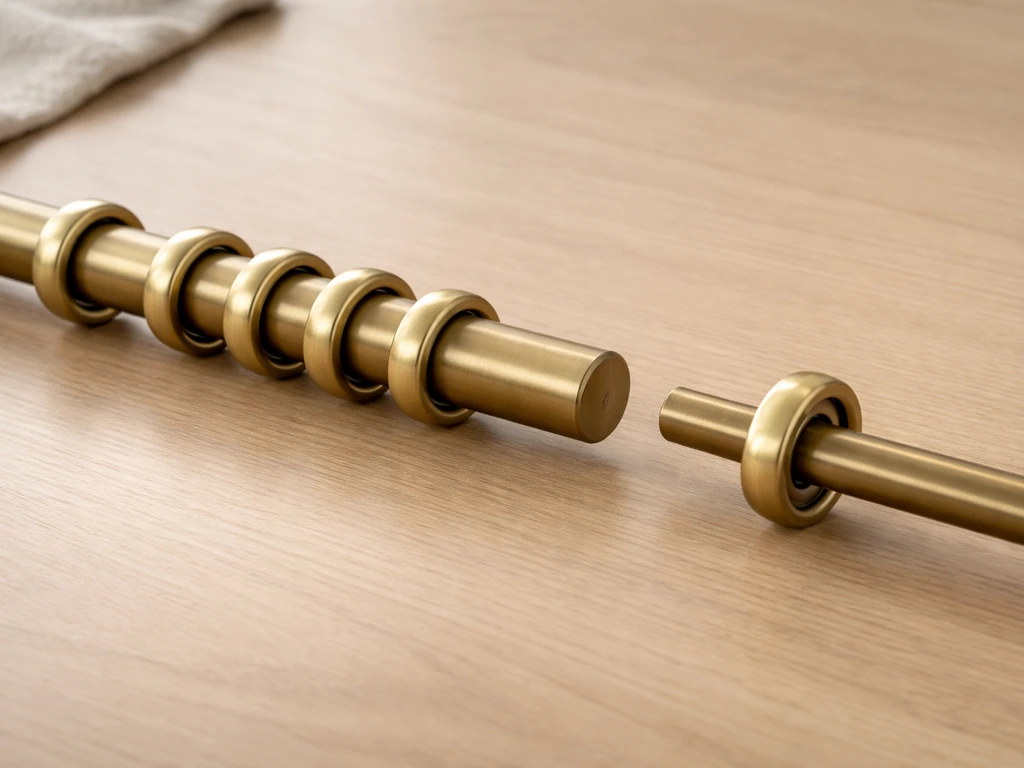
The most common decorative grommet used in retail curtains has an inner diameter of about 40 mm (roughly 1.5 inches). Standard curtain rods typically run 19 to 25 mm (3/4 to 1 inch) in diameter, which fits comfortably through a 40 mm grommet and allows easy sliding. The rule of thumb: the grommet's inner diameter should be at least 1/8 inch larger than your rod's outer diameter. If the grommet is just barely bigger than the rod, the panels won't traverse smoothly. If the grommet is way larger than the rod, the panel can tilt and hang unevenly.
Most off-the-shelf grommet curtains are designed for standard 1-inch or 1.25-inch rods, so if you have a standard rod, you're almost certainly fine. Where it gets tricky is with oversized decorative rods (2 inches or larger) or very thin tension rods. Always check the rod diameter against the grommet size listed in the product specs before you buy.
Rod style and hardware for patio doors
For sliding patio doors, use a full-width traversing rod or a standard rod that extends well past both sides of the door frame. You want the panels to stack fully off the glass when the door slides open. A rod that's too short forces you to push panels partially over the glass opening, which is annoying every time you use the door.
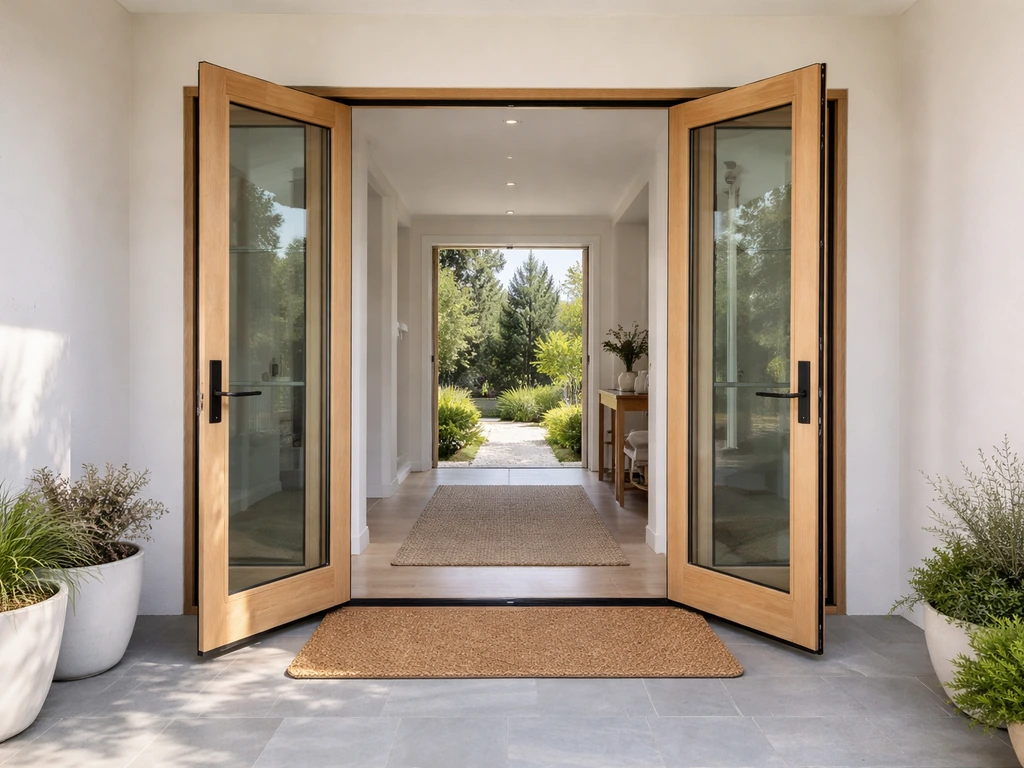
For French doors, you have two options: a single rod above both doors spanning the full width, or individual rods mounted on each door panel itself. Door-mounted rods need to be low-profile and use rubber-backed brackets so they don't swing loose when the door opens. Most people go with the single overhead rod for a cleaner look, as long as the panels are wide enough to clear the door swing when pushed to the sides.
Tension rods work fine for lightweight grommet panels in smaller openings (like a single French door panel), but they're not reliable for wide sliding doors or heavier fabrics. Use wall-mounted hardware for anything over about 60 inches wide or for thermal or blackout-weight fabric.
Style and fit by patio door type
Not all patio doors work the same way, and the curtain approach changes depending on which type you have.
Sliding patio doors
This is where grommet tops really shine. Use two panels, one on each side, and size each panel to cover at least half the door width plus a few extra inches of overlap at the center. When you need to open the door, both panels push to one side (or one to each side) without getting stuck on hooks or bunching. Keep your rod at least 12 inches wider than the door frame total so the panels have room to stack off the glass completely. Neutral colors (linen, gray, white) work well with the typically minimalist look of sliding door frames. If you want thermal insulation, look for panels specifically labeled for patio or sliding door use, which are often sold in 100-inch or 108-inch widths to cover the wide opening.
French patio doors
French doors have two outward or inward-swinging panels, which means your curtains need to clear the swing arc. A single rod above the frame with two grommet panels works best aesthetically. Size each panel wide enough that when pushed to the sides, they don't obstruct the swing. If your French doors open inward, be especially careful that the panel stacks don't land where the door swings. If you want each door covered independently (for light control when one door is open), door-mounted rods with small grommet panels are a clean solution, though more hardware is involved.
Bifold patio doors
Bifold doors fold back accordion-style and typically open the full wall width when in use. For these, curtains are usually mounted high on the wall above the entire opening and pushed fully to the sides when the doors are open. Because the opening is so wide, you'll likely need three or four panels to get proper fullness and coverage. Grommet tops work well here because moving multiple panels along a long rod is easy. Just make sure your rod extends far enough past the opening on both sides to accommodate the stacked panels without blocking the glass.
How to install grommet patio door curtains (and fix what goes wrong)
Basic installation steps
- Mark your bracket positions using a level, not just by eye. Even a slight tilt in the rod causes the panels to slide to one end on their own.
- Install your wall brackets and check they're level before tightening. For heavy thermal or blackout panels over a wide door, use wall anchors or locate studs.
- Slide all grommet rings onto the rod before mounting the rod in the brackets. You can't add panels easily after the rod is up.
- Alternate the direction of the folds as you thread the panels so the fabric falls in even pleats. On a two-panel setup, the innermost grommet on each panel should face outward so the panels meet neatly in the center.
- Hang the rod in the brackets and distribute the folds evenly before tightening the final hardware.
- Let the panels hang for a few hours to settle, then adjust any uneven folds by hand.
Fixing the most common problems
Curtains hanging unevenly or at an angle: almost always a rod level problem. Take down the rod and recheck with a level. Use a level to adjust the curtain rod when your curtains hang unevenly or crooked. Even a 1/4-inch difference from one bracket to the other is visible once fabric is hanging. Fix the bracket height first before adjusting anything else.
Panels sliding to one end: the rod has a slight tilt, or one bracket is lower than the other. Same fix as above. On very wide rods, you may also need a center support bracket to prevent the rod from bowing under the weight of heavy panels.
Gap in the center between panels: your panels aren't wide enough, or the rod doesn't extend far enough past the frame so the panels can't reach the center. Add more overlap to each panel (buy wider panels or use three panels instead of two), or shift the rod brackets inward slightly.
Curtains dragging on the floor: your panels are too long, or you mounted the rod lower than your measurements called for. The cleanest fix is to rehang the rod a couple of inches higher. If that's not practical, have the panels hemmed. Dragging panels look sloppy and wear out faster.
Curtains look flat instead of draped: your panels don't have enough width. You need at least 1.5x fullness relative to the rod width. If you already bought panels that are too narrow, add a third panel to fill out the look.
Grommets catching or sticking on the rod: usually a size mismatch (grommet barely larger than rod) or a rough rod surface. Try rubbing a little beeswax or a dry bar of soap along the rod. If the grommets are genuinely too small for the rod, you'll need to change one or the other.
Keeping your curtains in good shape over time
Patio door curtains take more wear than interior curtains. They're near a door that opens and closes constantly, they get touched by hands, and if your door faces the sun, the fabric takes a real beating from UV exposure. A few habits make a big difference.
For cleaning: most polyester grommet curtains are machine washable, but keep the water temperature under 160°F (check your specific label, as some thermal or blackout linings can delaminate in hot water). Wash on a gentle cycle, remove promptly, and hang to dry or tumble dry on low. Don't iron directly over the grommet rings. For solution-dyed acrylic fabrics like Sunbrella, spot cleaning with mild soap and water is usually sufficient, and the fabric can handle outdoor rinsing.
For sun protection: if your door faces south or west, even good polyester panels will fade over a few years. Rotating panels occasionally (if you have matching sets) slows uneven fading. Solution-dyed fabrics hold their color significantly longer than surface-dyed options and are worth the price premium if you have a high-sun exposure. The thermal and blackout panels with Thermaweave-type construction also provide better UV blocking, which protects both the fabric itself and your interior flooring and furniture.
For hardware longevity: check the mounting brackets once or twice a year, especially after winter. Temperature swings can loosen screws in drywall anchors over time. A quick tighten takes two minutes and prevents a sagging rod from ruining the drape. The grommet rings themselves rarely fail, but if one comes loose from the fabric, catch it early. A loose ring causes uneven spacing that gets worse with every use.
If you want to take the insulation benefits further, pairing your grommet panels with insulated or thermal-lined options is worth exploring, as some products combine a grommet top header with a full thermal backing in one panel. Whether the bottom of the curtain should touch or clear the floor is also worth thinking through carefully before you finalize your measurements, since both have legitimate trade-offs depending on traffic and flooring type.
Your next steps
Before you buy anything, measure your rod span and your drop from rod position to desired bottom edge. Calculate your total fabric width at 1.5x your rod span and divide by the number of panels. Confirm your rod diameter against the grommet inner diameter in the product specs (you want the grommet at least 1/8 inch wider than the rod). Then choose your fabric based on sun exposure: solution-dyed acrylic for high sun, thermal blackout polyester for heat and privacy, lighter polyester for shaded or north-facing doors. Install with a level, and you'll be done in under an hour.
FAQ
Can I hang patio door curtains with grommet tops on a decorative rod that has a finial or thicker end caps?
Yes, but confirm clearance. Even if the rod diameter matches the grommets, large end caps can limit how far panels slide and fully stack off the glass. Measure the effective sliding length (rod span between inside edges of end caps) and compare it to your needed stack area.
What if my grommet curtains list a “measured fabric width” and “number of rings,” does that affect fullness?
Fullness is primarily about total fabric width, but ring spacing can change how evenly the folds form. If two listings give the same total width but one has fewer rings, the folds may look less refined. For a modern look, prioritize width first, then choose a listing with consistent ring spacing for smoother drape.
How do I tell whether curtain “length” in the product title includes the grommet header or not?
Use the product’s measurement statement and look for wording like “total length” or “finished length.” If it does not specify, assume the listed length is total fabric length including the header (most retail panels). Your safest method is to compare the listed length against your target bottom height using the 1.25 to 1.5 inch drop allowance mentioned in the guide.
My rod is slightly thicker than the grommet spec. Will forcing the panels onto the rod work?
It can damage either the rings or the rod finish, and it may make the panels bind. If the grommet inner diameter is not at least about 1/8 inch larger than the rod’s outer diameter, plan to use a different curtain size or rod. Forcing usually leads to uneven sliding and potential tearing over time.
Do grommet top curtains need extra spacing above the window or frame to clear a track or molding?
Sometimes, yes. If there is trim, a track, or a decorative soffit, the grommet rings sit higher than the fabric header. Check the clearance from the mounting point to any obstruction, and ensure the panels can move without hitting hardware when the door is pushed open.
What is the best number of panels for a very wide sliding patio door if I want full coverage on both sides?
For wide sliding doors, use two panels only if your rod extends far enough past the frame so both sides can stack cleanly, and each panel covers at least half the door width plus overlap. If you notice a center gap after installing, switch to three panels, or use two much wider panels instead of shortening the rod.
Can I mix different curtain panels (different colors or widths) on the same rod with grommets?
You can, but keep ring counts and lengths consistent, or the bottom hem will land at different heights as the fabric settles. If colors differ, match opacity and fabric weight so the panels drape similarly. Mixing weights can also affect sliding because heavier panels may pull folds unevenly.
My curtains slide, but they never stack neatly off the glass. What usually causes this?
Most often it is an inadequate rod extension beyond the frame, or a rod tilt that forces one side to “park” the fabric early. Confirm your rod length from end to end (including beyond the frame) and recheck the rod with a level before changing fabric width.
How do I stop grommet curtains from bunching in the middle when I open the door?
Bunching usually indicates either insufficient panel width or too little overlap at the center. Increase coverage by adding overlap (wider panels) or switch from two panels to three so the center region has enough fabric to distribute folds while the panels travel to the sides.
Should I iron or steam grommet curtains before hanging, and does it damage the rings?
Steam lightly or iron on low heat only if the fabric label allows it. Avoid placing heat directly over the rings, and let panels hang for a day to relax into the natural fold pattern. Direct heat near grommets can discolor some fabrics or loosen coatings.
Are tension rods ever appropriate for patio door curtains with blackout or thermal fabric?
Usually not. Thermal and blackout panels are heavier, and tension rods are more prone to sag and tilt, which causes uneven stacking and dragging. If your opening is over about 60 inches wide or the fabric is heavier than standard, choose wall-mounted hardware.
How often should I recheck the hardware if my patio door is used daily?
A practical schedule is every season change, and again after winter temperature swings. Tighten mounting bracket screws if needed, especially if anchors are used in drywall. This prevents slow rod sag that becomes visible once the curtains are loaded with fabric.
What’s the floor clearance trade-off if I don’t want the bottom hem near the floor?
You can clear the floor for less drag and easier sweeping, but you may lose some of the “finished” look and light-blocking effect. If you have pets or high foot traffic, a small gap often helps, but keep the hem alignment consistent across panels to avoid an uneven appearance.