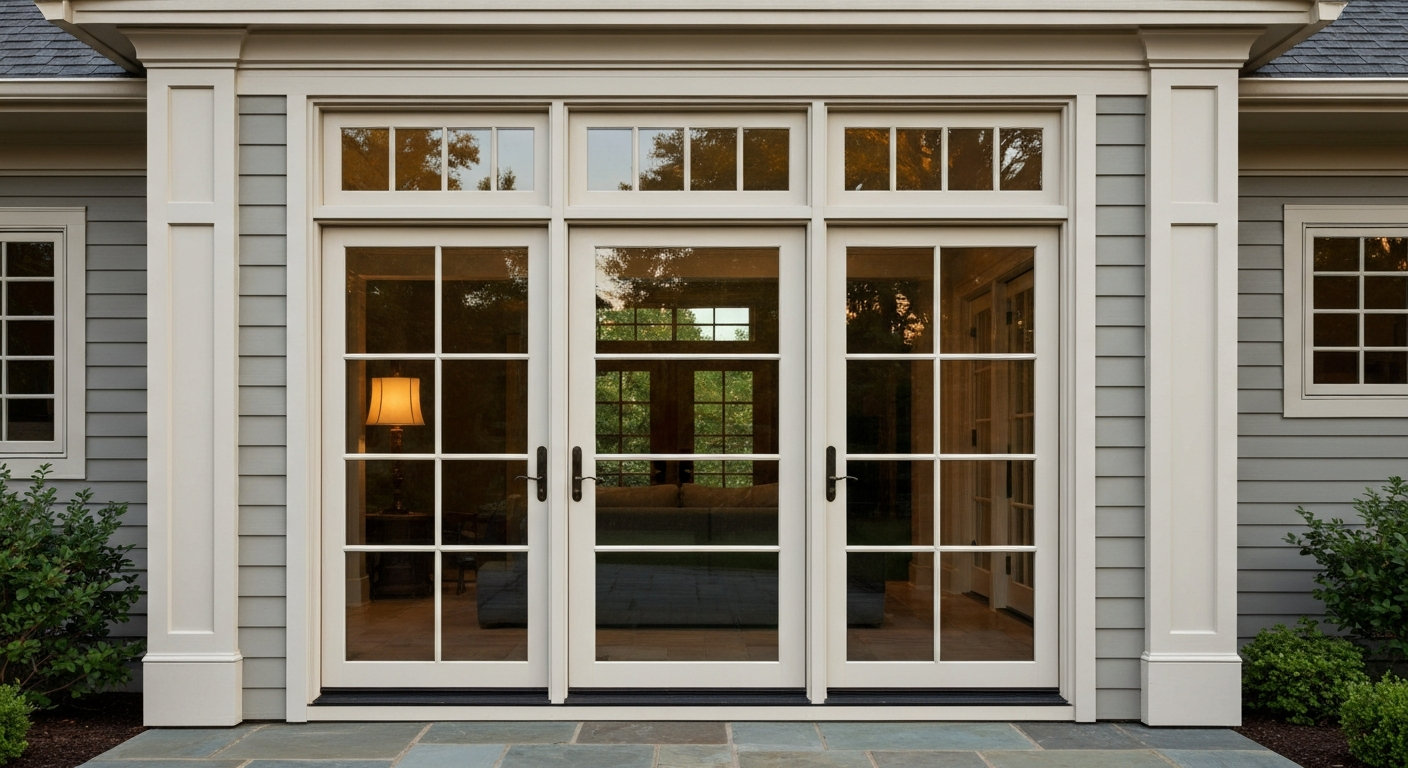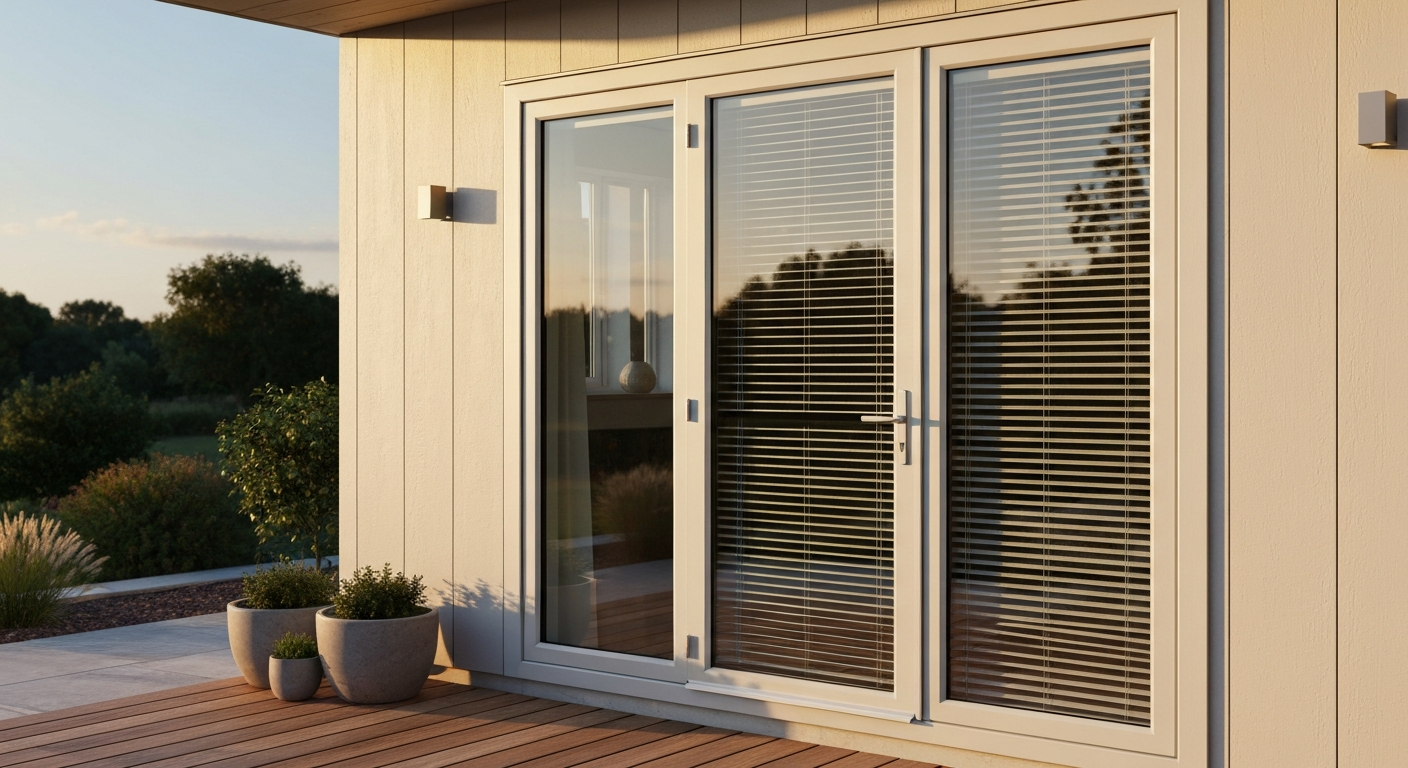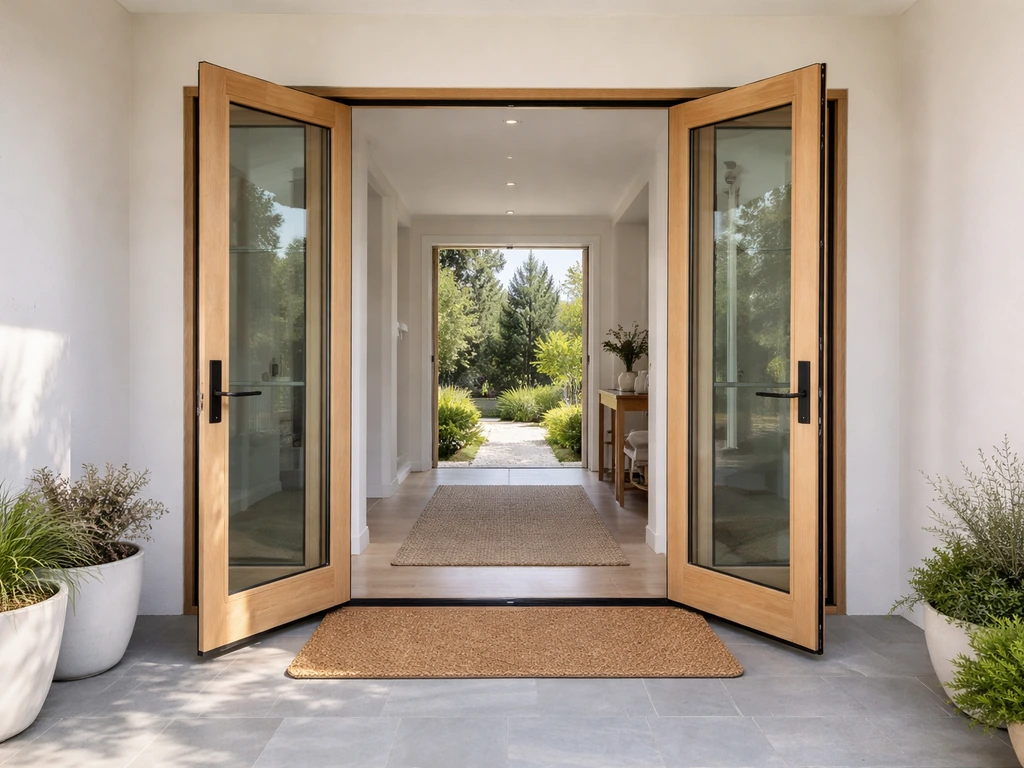
Sliding patio doors in the UK typically cost £800–£1,200 supply-only for a standard uPVC 2-panel inline slider, rising to £1,100–£1,600 once you add professional fitting. Aluminium versions run £1,500–£2,500 supply-only and £2,000–£3,200 fitted. If you want a premium lift-and-slide aluminium system across a 3m opening, budget £3,800–£6,000 all-in. Those are the honest mid-market numbers for 2026, and the rest of this guide explains exactly what shifts the price up or down, what the hidden extras look like, and how to avoid paying over the odds.
How Much Do Sliding Patio Doors Cost UK: Prices & Tips
Owen Delaney
17 Jul 2026
What this guide covers and who it's for
This guide is written for UK homeowners who are replacing an existing sliding patio door or fitting one for the first time and want honest, current numbers before they start calling installers. It covers supply-only and supply-plus-fit price bands, typical costs by size (including the popular 8 ft / 2.4m opening), how sliding doors compare in cost to accordion and bifold alternatives, what Milgard doors cost for buyers considering importing or sourcing internationally, a brief look at door costs in Spain for those with overseas properties, and everything you need to budget for beyond the door itself. There is also a measurement guide, a quote checklist, a repair-versus-replace section, and a glossary of the terms installers throw at you.
At-a-glance: supply-only vs supply+fit price bands
The table below pulls together the main cost bands from current UK market data (updated April–June 2026). Use these as planning figures, not final quotes, because your opening size, glazing spec, and site conditions will all move the needle.
| Door type | Supply-only | Supply+fit (typical) |
|---|---|---|
| uPVC inline slider (2-panel, standard) | £800–£1,200 | £1,100–£1,600 |
| Aluminium inline slider (2-panel) | £1,500–£2,500 | £2,000–£3,200 |
| Lift-and-slide aluminium (c.3m span) | £3,000–£5,000 | £3,800–£6,000 |
| uPVC slider (c.2.4m / ~8 ft, fitted) | N/A | £1,200–£1,800 |
| Standard aluminium (c.2.4m, fitted) | N/A | £2,500–£3,500 |
| Slim-line aluminium (c.2.4m, fitted) | N/A | £3,500–£5,000 |
Labour alone typically runs £500–£1,200 per sliding-door job, with most installers charging a day rate of £200–£400 or an hourly rate of £40–£80. The gap between supply-only and supply+fit is rarely less than £400 and can exceed £1,500 for complex aluminium installations, so if you are buying supply-only and organising your own fitter, get the labour quote before you commit to the door.
Typical costs by common sizes
Smaller openings (up to about 1.8m wide)
At the lower end, B&Q stocks entry-level uPVC patio door sets in formats around 1790×2090mm for £797–£847 supply-only. These are good for a modest opening where you want a budget-friendly, DIY-friendly option, but bear in mind the 1.79m width is noticeably narrower than the typical garden opening most people have. For anything larger you will need to step up in price or order a made-to-measure unit.
The 2.4m (approximately 8 ft) opening, the most common UK size
The 2.4m wide opening is the sweet spot for most UK homes, and it is where you will find the widest selection of off-the-shelf and made-to-measure options. Screwfix lists Crystal uPVC sliding sets at 2400×2090mm for £1,310–£1,471 supply-only (inc. VAT), and Wickes prices a Crystal uPVC 2390×2090mm unit at around £1,495 (ex. delivery). Once installed, the total for a uPVC 2.4m door lands at £1,200–£1,800 fitted, standard aluminium runs £2,500–£3,500 fitted, and slim-line aluminium reaches £3,500–£5,000 fitted. Aggregator averages from Less, WindowCost, Checkatrade and RatedPeople show a practical mid‑market fitted total for a 2.4m sliding patio door of roughly £1,200–£3,500 blank" rel="noopener noreferrer">Aggregator averages from Less, WindowCost, Checkatrade and RatedPeople show a practical mid‑market fitted total for a 2.4m sliding patio door of roughly £1,200–£3,500.. For a deeper breakdown of this specific size, there is a dedicated guide on how much an 8 ft sliding patio door costs that is worth reading alongside this one.
Wider openings and architectural sizes
Once you go beyond 2.4m, you are almost always in made-to-order territory. A Travis Perkins retail listing for an Aston aluminium sliding door frame at 3500×2200mm (frame only, unglazed) sits at around £2,319 inc. VAT, and that is before glazing, threshold, delivery, or labour. For a fully fitted wide aluminium lift-and-slide system at 3m+, expect £3,800–£6,000, with the most premium systems topping £8,000–£10,000 for very large spans.
Accordion and bifold doors: how the costs compare
Accordion doors (also sold as bifold or folding sliding doors) look spectacular but they consistently cost more than inline sliders for the same opening width. A typical aluminium bifold for a 2.4m opening runs £3,000–£5,000 fitted, compared to £2,000–£3,200 for an aluminium inline slider of the same span. That is a typical saving of £1,000–£2,000 in favour of the sliding door, which buys a lot of secondary glazing or flooring upgrades. The reason bifolds cost more comes down to the folding mechanism, the higher number of panels and hinges, and the tighter tolerances required during installation. If you are weighing up accordion-style folding doors specifically, the detail on how much accordion patio doors cost is covered separately and is worth a direct comparison before you commit. For a direct price comparison, see the dedicated guide on how much do accordion patio doors cost.
Milgard patio doors: what UK buyers need to know about cost
Milgard is a well-regarded American door manufacturer, and its name comes up fairly often in UK renovation forums. The honest answer for UK buyers is that Milgard doors are not manufactured for the UK market and are not widely stocked by UK distributors. If you import or source a Milgard unit, you will face additional costs including transatlantic shipping, customs duty, and potentially conversion work to meet UK building regulations on U-values and threshold height. Milgard's own pricing in the US ranges from roughly $1,500–$6,000+ for sliding patio doors depending on size and series, which at current exchange rates converts to approximately £1,200–£4,800 before any import costs. Once you factor in shipping (typically £300–£800 for a single door unit), customs, and the risk of warranty complications, most UK installers will steer you toward comparable domestic aluminium or uPVC systems at equivalent price points. For a full cost breakdown on Milgard specifically, the guide on how much Milgard patio doors cost covers the brand's product lines and what UK buyers realistically pay.
Patio door costs in Spain: a quick international comparison
For homeowners with a Spanish property or those comparing costs across borders, patio door prices in Spain are generally lower than in the UK. Aluminium sliding doors are the dominant choice in Spain due to the climate and architectural style, and supply-only costs for a standard aluminium slider sit broadly in the €600–€2,000 range depending on size and thermal specification. Labour rates are also lower, with typical installation costs around €200–€600 per door. That said, thermal performance requirements differ, Spanish building codes historically demanded lower insulation performance than UK Part L, though newer regulations are tightening this. If you are buying for a Spanish property, local sourcing almost always beats importing from the UK. The full breakdown on patio door costs in Spain covers Spanish market specifics and what to expect from local suppliers. For detailed local price bands and supplier tips, see our guide on how much do patio doors cost in Spain.
What a professional installation normally includes
When an installer quotes you a supply-plus-fit price, you should expect the following to be covered as standard. If any of these are absent from a written quote, ask why.
- Surveying and measuring the opening before ordering (critical for made-to-measure doors)
- Removal and disposal of the existing door (sometimes quoted separately — always check)
- Preparation of the rough opening, including checking the lintel is adequate
- Fitting the new frame, sill, and threshold to the manufacturer's specification
- Glazing installation if panels are supplied separately
- Sealing, weatherproofing, and draught-proofing around the frame
- Hardware fitting and adjustment (handles, locks, rollers)
- A basic operational check and handover including maintenance guidance
- Completion paperwork (Building Regulations notification or FENSA certificate where applicable)
FENSA registration is the key document for resale purposes. Any installer fitting a new door in England, Wales, or Northern Ireland should issue a FENSA certificate or equivalent (Local Authority Building Control notification) confirming the installation complies with current Building Regulations. If they do not offer this automatically, ask before work starts.
Extra charges to budget for
The headline supply-plus-fit figure is rarely the final bill. In my experience, the extras on a sliding patio door project can add £500–£3,000 to what looked like a straightforward job. Here is what to watch for.
| Extra cost item | Typical cost range | Notes |
|---|---|---|
| Removal and disposal of old door | £100–£300 | Often quoted separately from fitting labour |
| Lintel installation or upgrade | £500–£1,500 | Required if opening is being widened or lintel is inadequate |
| Low-profile / flush threshold upgrade | £200–£500 | Needed for level-access or accessibility requirements |
| Scaffolding (single elevation, erect + 1 week + dismantle) | £300–£1,200 | Needed if door sits above ground level or access is restricted |
| Mobile tower hire (short access) | £30–£80/day | Lower-cost alternative for straightforward single-day access |
| Double-to-triple glazing upgrade | £300–£800 | Per panel set; varies by size and glass spec |
| Laminated, acoustic, or solar-control glass | £150–£500 extra | Per panel; adds both cost and lead time |
| VAT (20%) | On all goods and labour | Ensure quotes state whether prices are inc. or ex. VAT |
| Security upgrades (multi-point locks, anti-lift blocks) | £100–£400 | Many budget doors ship with basic hardware only |
| Fly screens or insect screens | £150–£400 per door | Rarely included in standard supply |
| Integral or frame-mounted blinds | £300–£800 | Optional but popular for south-facing doors |
| Redecoration of surrounding plasterwork | £200–£600 | Almost always needed after a frame swap |
The main cost drivers and what each one does to the price
Material
uPVC is the cheapest frame material and the most widely available at retail level. Aluminium costs roughly double for the same size but gives slimmer sightlines, longer lifespan, and better colour retention. Timber and engineered wood typically add a further premium, with total supply-plus-fit costs running £2,500–£5,000+ for a standard 2-panel timber slider. The material choice is the single biggest cost lever on any sliding patio door project.
Size and number of panels
Wider and taller doors require heavier glass, larger frames, and more robust running gear. Going from a 1.8m to a 2.4m to a 3m+ opening can double the supply cost, and the installation complexity increases with it. Three-panel and four-panel systems cost more than two-panel for the same overall width because of the additional track sections and panels involved.
Glazing and energy specification
Standard double glazing (DGU) is included in most quoted prices. Upgrading to triple glazing (IGU with three panes) adds roughly £300–£800 per door set. Argon or krypton fill, warm-edge spacer bars, and low-E coatings all affect the U-value and the price. UK Building Regulations currently require doors to meet a whole-product U-value of 1.4 W/m²K or better (Part L 2022), so any reputable door sold in the UK should already meet this, but if you are comparing older stock, check.
Frame finish and colour
Standard white uPVC carries no colour premium. A dual-colour uPVC door (white inside, grey or anthracite outside) typically adds £100–£300. Powder-coated aluminium in RAL colours beyond a standard palette can add £200–£600 depending on the manufacturer. Wood-effect foils on uPVC are usually mid-range, roughly £150–£400 above white.
Threshold type
A standard rebated threshold is the cheapest option and is fine for most domestic situations. A flush or low-profile threshold for level-access typically adds £200–£500 to the project cost, partly because it requires careful floor-level drainage planning. If you are aiming for Part M accessibility compliance or simply want a seamless indoor-outdoor flow, this is a cost worth paying.
Hardware and mechanism
A standard inline sliding mechanism is the baseline. A lift-and-slide mechanism, which lifts the sash off the track for effortless movement on large panels, costs roughly 50–100% more than an equivalent inline slider, translating to an additional £1,500–£4,000 on the door price for wide spans. Multi-point locking, premium stainless handles, and concealed running gear all add to the hardware bill.
Site access and complexity
Restricted access, awkward angles, or a door on an upper floor (rare but not unheard of in split-level homes) adds cost. If a lintel needs installing or upgrading, budget £500–£1,500 on top of the door cost. Structural engineer fees (if required for an opening alteration) typically add £200–£500.
Insulation and energy rating
A higher U-value specification reduces heat loss and can affect your EPC rating, which matters both for running costs and property value. Moving from a U-value of 1.4 to 1.0 W/m²K (achievable with triple glazing and premium frame profiles) typically adds 20–35% to the door cost. Worth doing if you are in a cold-facing elevation or heating costs are a concern.
Measurement and sizing: how to avoid an expensive mistake
The most common, and most costly, mistake I see homeowners make is ordering a door based on the finished frame dimensions rather than the required brickwork opening. Manufacturers specify their doors by the brickwork opening (sometimes called the rough opening or structural opening), not the overall door frame size. A uPVC sliding door listed as 2400×2090mm typically needs a brickwork opening of 2400×2100mm, a small but critical difference.
- Measure the structural (brickwork) opening width and height at three points each: left, centre and right for width; top, middle and bottom for height. Use the smallest measurement.
- Allow for the frame reveal: the door frame sits inside the opening with a small gap (usually 10–15mm per side) for adjustment and sealant.
- Check the floor level is consistent across the threshold. Any slope greater than about 5mm will need addressing before fitting.
- Confirm the lintel height and whether the existing lintel spans the full width of the new opening if you are widening.
- For an 8 ft opening: the nominal dimension is 2438mm (8 ft exactly), but most UK manufacturers size their nearest standard product at 2400mm wide. Always confirm whether the 2400mm door fits your actual structural opening before ordering.
- Have a FENSA-registered installer or surveyor double-check your measurements before committing to a made-to-order door — most will do this for free or for a small survey fee that is credited against the job.
Tolerances matter more with sliding doors than with hinged doors because the panels need to glide freely on the track. A door that is even 10mm too wide for its opening cannot simply be forced in. The cost of re-ordering a made-to-measure door because of a measurement error can easily exceed £500–£1,500.
Checklist for getting accurate quotes
Getting three written quotes is the baseline minimum. Here is what each quote should cover and what to ask before you accept.
- Is the price supply-only, supply-plus-fit, or supply-plus-fit-plus-extras? Get it broken down.
- Does it include removal and disposal of the existing door?
- Is VAT included? (Always confirm — many trade quotes are ex-VAT.)
- Is a pre-installation survey included, or is it charged separately?
- What glazing specification is quoted: DGU, TGU, what U-value?
- What is the frame material, profile system, and colour/finish?
- What threshold type is quoted, and is a flush threshold available?
- Does the installer carry their own public liability insurance (ask to see the certificate)?
- Will they provide a FENSA certificate or arrange Local Authority Building Control sign-off?
- What is the manufacturer's warranty on the door, and what is the installer's workmanship guarantee?
- What happens if a lintel needs replacing — is this in scope, and at what cost?
- What is the lead time from deposit to installation?
Practical ways to save money without cutting corners
There is a difference between saving money sensibly and going cheap in ways you will regret. Here are the approaches that genuinely work.
- Buy in the shoulder season: January–February and October–November tend to be quieter for glazing installers. You can often negotiate 5–10% off labour costs, and some suppliers discount slow-moving stock.
- Stick to standard sizes where possible: made-to-measure doors cost 20–40% more than off-the-shelf sizes. If your opening is 2350mm wide, it may be worth asking a builder to adjust the opening to 2400mm standard rather than ordering bespoke.
- Choose uPVC over aluminium if aesthetics are not the priority: for a rear garden door that is not visible from the street, a quality uPVC unit at £1,100–£1,600 fitted performs well thermally and will last 20+ years with minimal maintenance.
- Avoid integral blinds if cost is tight: standalone roller blinds or curtains cost a fraction of integrated blind systems and are easier to replace if they break.
- Get the glazing upgrade done at the time of fitting: retrofitting triple glazing later is almost impossible without replacing the whole unit. If you are close to the budget for an upgrade, do it now.
- Compare merchant and retail prices before accepting the installer's supplied door: many installers are open to fitting a door you have sourced yourself — check retail prices at Screwfix, Wickes, or trade merchants and compare to the installer's supply price.
- Ask installers about any ex-display or end-of-line doors: window and door showrooms often have ex-display units at 30–50% off. Sizes are fixed, but if one matches your opening it is a significant saving.
Repair vs replace: how to decide
Not every problem door needs to be replaced. The question is whether the underlying structure and glazing are still sound, or whether you are putting money into a door that will keep failing.
Repair is the right call when the frame is structurally sound (no rotting timber, no cracked uPVC, no warped aluminium), the glazing is intact and meeting current U-value requirements, and the problem is isolated to a specific component. Common repair jobs include replacing worn rollers (£80–£200 including labour), adjusting or replacing the locking mechanism (£50–£200), replacing a failed double-glazed unit due to seal breakdown (£150–£400 per pane), and re-sealing a draughty frame (£50–£150).
Replacement makes more sense when the door is more than 20–25 years old and was never particularly energy efficient, when the frame has visible cracks, severe warping, or rot that compromises structural performance, when the glazing has multiple failed seals, when the door no longer locks securely and the lock mechanism is discontinued, or when you are planning wider works (extension, garden room, knock-through) and the door size no longer suits the opening. In most cases, if repair quotes come to more than 40% of the cost of a new door, replacement is the better long-term investment.
Typical project timeline from quote to installation
| Stage | Typical duration | Notes |
|---|---|---|
| Initial quotes from 2–3 installers | 1–2 weeks | Allow time for site visits, not just phone/email estimates |
| Pre-installation survey (if separate) | 1–3 days after booking | Often done at quote stage by reputable installers |
| Door manufacture (standard/off-shelf uPVC) | 1–3 weeks | Off-the-shelf retail doors can be faster |
| Door manufacture (made-to-measure aluminium) | 4–8 weeks | Premium systems can take 10–12 weeks |
| Installation day | 1–2 days | Most 2-panel sliding doors fit in a single day |
| Snagging and FENSA paperwork | 1–2 weeks after install | Certificate typically arrives digitally within 30 days |
Plan for a total project time of 6–12 weeks from first quote to signed-off installation for a standard uPVC door, and 10–16 weeks for a bespoke aluminium system. If you are working to a deadline (a house sale, for example), factor that lead time in early, it is one of the things that catches homeowners off-guard.
Recommended next steps for UK homeowners
Here is a practical sequence to follow once you have finished reading.
- Measure your structural opening (width and height) three times at different points, and note the floor level tolerance.
- Decide on your material (uPVC vs aluminium vs timber) based on budget, aesthetics, and thermal priority — this single decision will shape every other quote you receive.
- Shortlist three FENSA-registered installers: check their registration at fensa.org.uk, read recent reviews on Checkatrade or Rated People, and ask specifically for a site visit quote rather than a remote estimate.
- Ask each installer to quote for the same specification: same material, same glazing (DGU or TGU), same colour, same threshold type. This is the only way to compare quotes fairly.
- Confirm whether each quote is inc. or ex. VAT, whether removal is included, and whether FENSA certification is part of the service.
- Have your paperwork ready: building ownership documents (or freeholder permission if leasehold), any existing FENSA/BWIC certificates for the current door, and your latest Energy Performance Certificate if you are upgrading for EPC reasons.
- If you are considering a non-standard option (accordion doors, a particularly wide opening, or a premium brand), read the specific cost guides for those options before signing anything.
Glossary of key terms
| Term | What it means |
|---|---|
| U-value | A measure of heat loss through a material; the lower the number, the better the insulation. UK Building Regs (Part L 2022) require doors to achieve 1.4 W/m²K or better. |
| DGU (Double Glazed Unit) | Two panes of glass sealed with a gap (usually argon-filled) between them. The standard glazing for most UK patio doors. |
| IGU / TGU (Insulated / Triple Glazed Unit) | Three panes of glass with two cavities. Better thermal performance than DGU; adds cost and weight. |
| Sightlines | The visible width of the frame when looking through the door from inside. Slim sightlines (common in aluminium) mean more glass and a cleaner look. |
| Inline slider | A sliding door where the panel moves on a track parallel to the fixed panel — the most common and cost-effective sliding mechanism. |
| Lift-and-slide | A mechanism where the sash lifts off the track for movement then re-seats for an airtight seal. Smoother on large panels; costs 50–100% more than inline. |
| Threshold | The horizontal sill at the base of the door frame. A standard rebated threshold is cheapest; a flush/low-profile threshold is more accessible but more complex to fit. |
| FENSA | Fenestration Self-Assessment Scheme. A government-authorised body that registers window and door installers. A FENSA certificate confirms Building Regs compliance and is needed for property sale. |
| Part L | The section of UK Building Regulations covering energy conservation in buildings. Sets minimum thermal performance standards for replacement doors. |
| Rough opening / structural opening | The masonry or structural gap before the frame is fitted. Always larger than the door frame size by a small tolerance. |
| Warm-edge spacer bar | The strip separating the glass panes in a DGU/TGU. A warm-edge spacer reduces heat loss at the glass edges and improves the overall U-value. |
Final decision checklist before you commit
Sliding patio doors are a straightforward purchase when you have the right numbers in front of you. For most UK homeowners, a uPVC inline slider at a 2.4m opening installed for £1,200–£1,800 is the most practical and cost-effective choice. If you want a slimmer, more contemporary look and have the budget, a standard aluminium inline slider at £2,500–£3,500 fitted is a significant step up in aesthetics and longevity. Lift-and-slide and wide aluminium systems are worth the premium for larger openings, but get a structural check done first. Always get three written quotes, always confirm VAT and removal are included, and always ask for the FENSA certificate upfront. The door itself is only half the story, knowing what sits around it in the budget is what separates a smooth project from an expensive surprise.
- Structural opening measured at multiple points: yes / no
- Material choice confirmed (uPVC / aluminium / timber): yes / no
- Glazing specification agreed (DGU U-value / TGU): yes / no
- Three written quotes obtained, all on same spec: yes / no
- All quotes confirm VAT status (inc. or ex.): yes / no
- Removal and disposal confirmed in scope: yes / no
- Lintel condition checked or survey booked: yes / no
- FENSA registration of installer verified: yes / no
- FENSA or LABC certification confirmed as part of the job: yes / no
- Lead time checked against your target date: yes / no
- Extras budgeted (threshold, screens, blinds, redecoration): yes / no
FAQ
How much do sliding patio doors typically cost in the UK (supply‑only vs supply+fit)?
Typical UK price bands (2026 market guide averages): uPVC 2‑panel supply‑only ≈£800–£1,500; fitted ≈£1,100–£1,800. Aluminium inline supply‑only ≈£1,500–£2,500; fitted ≈£2,000–£3,500. Premium lift‑and‑slide aluminium supply‑only ≈£3,000–£5,000; fitted ≈£3,800–£6,000. Trade/aggregator mid‑market fitted totals commonly fall in ≈£1,200–£4,000 depending on size and spec.
What does a typical installed cost look like for an 8 ft (≈2.4 m) sliding patio door?
For an ≈2.4 m (8 ft) opening expect: uPVC fitted ≈£1,200–£1,800; standard aluminium fitted ≈£2,500–£3,500; slim‑line or premium aluminium fitted ≈£3,500–£5,000. Retail supply‑only models at this width (off‑the‑shelf) commonly list around £1,300–£1,500.
How do sliding patio doors compare cost‑wise with bifold or accordion doors?
Sliding patio doors are generally cheaper. For the same opening span expect typical savings of ≈£1,000–£2,000 compared with bifold/accordion systems. Example: a 2.4 m aluminium slider ≈£2,000–£3,200 fitted vs an aluminium bifold for the same span ≈£3,000–£5,000 fitted.
What extra charges should I budget for beyond the door supply and basic fitting?
Common extras: removal and disposal of old doors (£50–£300), lintel/structural work (£500–£1,500), scaffolding or tower hire (£30/day–£1,100 for single‑elevation hire), glazing upgrades (double→triple or special glass £300–£800+), low‑profile thresholds/drainage/engineering (£200–£500), security upgrades (laminated glass/locks premium), insect screens/blinds (£50–£500), VAT (20% on most supply and install contracts), and site‑access surcharges if installers need extra time or equipment.
What does a standard installation normally include?
A normal installation typically includes removing the old unit, preparing the opening, fitting the new frame and sashes, insulating and sealing around the frame, installing threshold and hardware, fitting glazing (if supplied fitted), making good internal/external finishes to a reasonable standard, and a final operational/security check. Confirm whether removal, rendering/plastering returns, and external re‑pointing are included in the quote.
What are the main factors that drive the price of a sliding patio door?
Main cost drivers: frame material (uPVC cheapest, then aluminium, then engineered timber), overall width and height, glazing specification (double vs triple, low‑E, laminated/acoustic), mechanism type (standard inline vs lift‑and‑slide), frame finish and colour (powder coat costs), threshold type (low/thermal thresholds cost more), hardware/security specification, bespoke sizes or site measurements, site access/complexity and any structural work required.