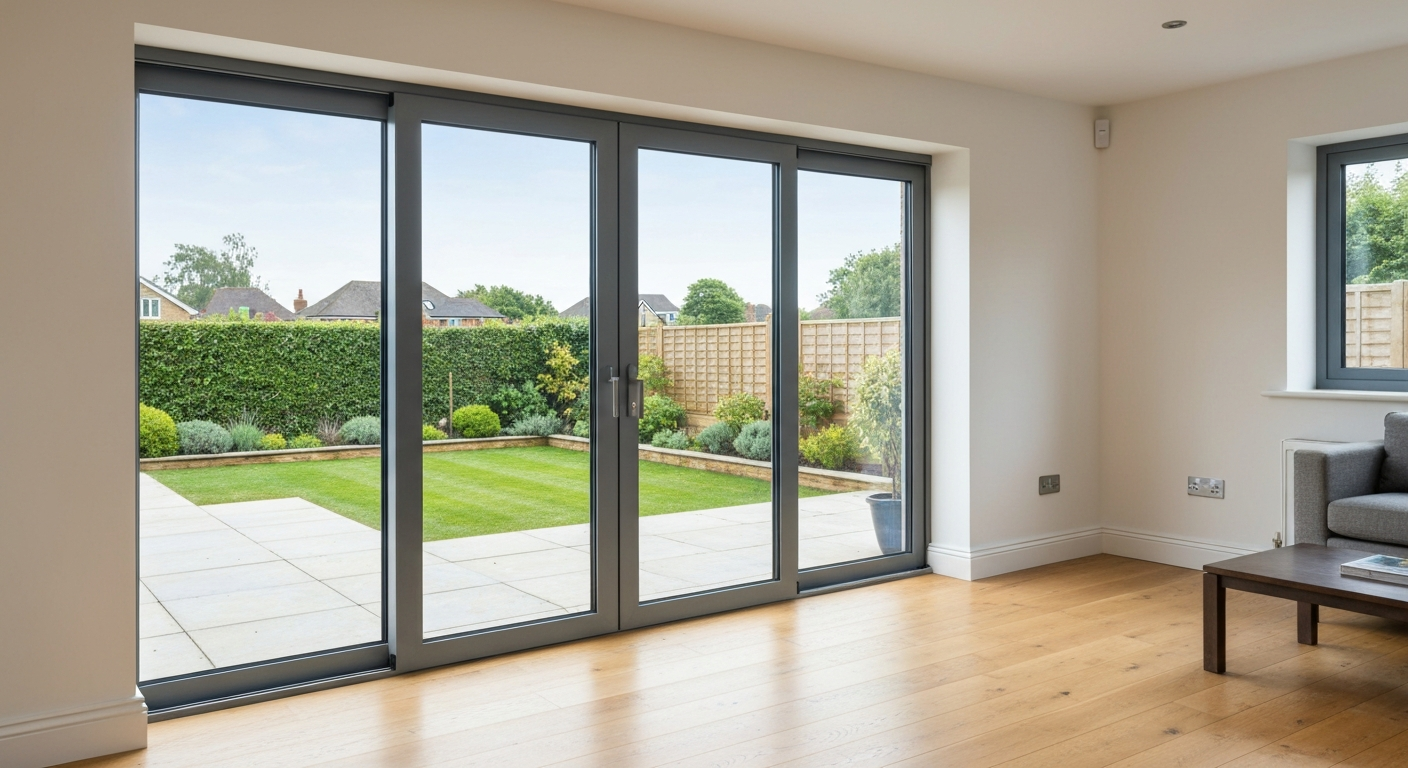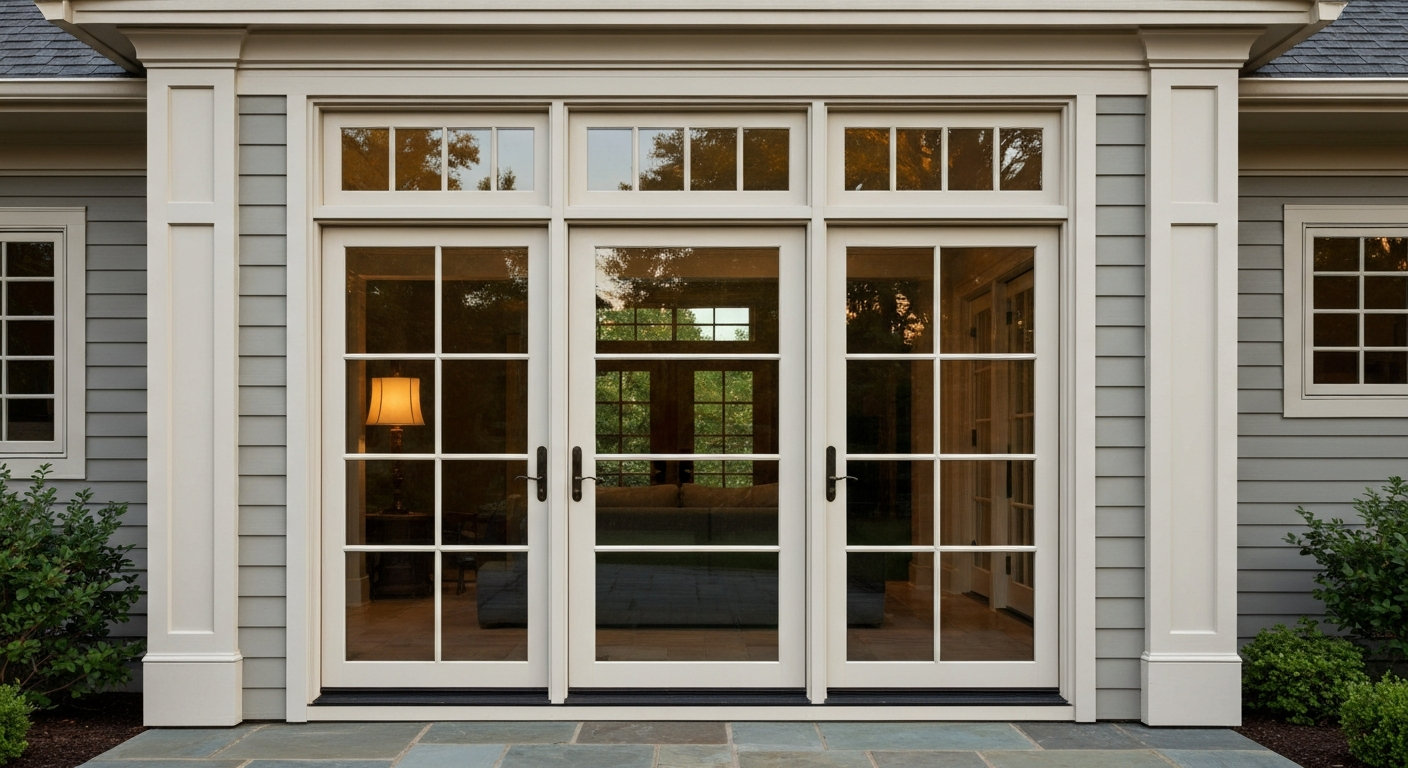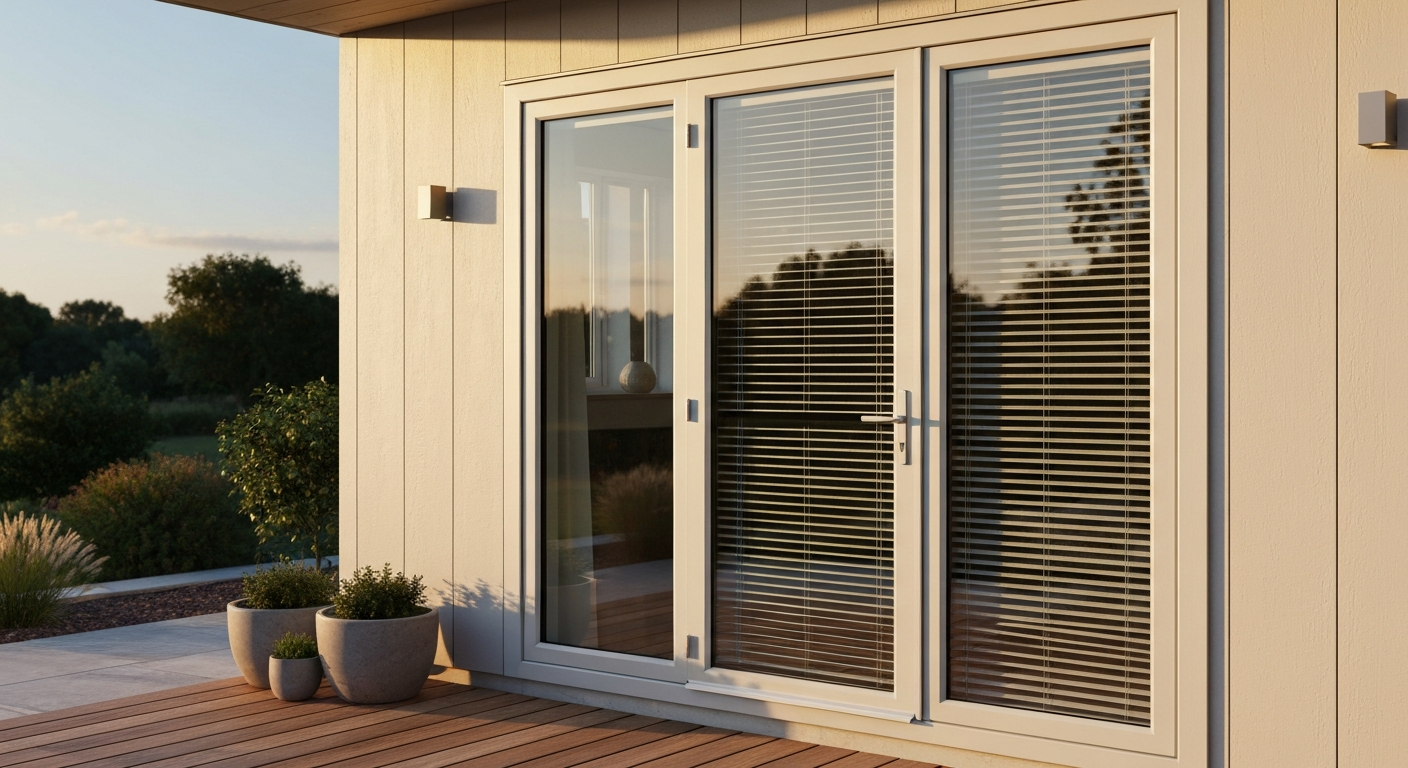
An 8 ft (96-inch) sliding patio door costs roughly $800 to $3,500 for the unit alone, and $2,000 to $8,000 fully installed in the U. National installed cost ranges commonly run $2,000–$5,000 for a typical 8‑ft sliding patio door, with basic like‑for‑like replacements often $1,500–$3,000 and higher‑end or multi‑panel systems reaching $5,000–$12,000+. S., depending on material, glass package, and whether your rough opening needs modification. Premium wood, fiberglass, or multi-panel stacking systems push that ceiling well above $12,000 installed. If you are doing a straight like-for-like swap on an existing 8 ft opening with a mid-range vinyl or aluminum door and double-pane low-E glass, budget around $3,000 to $5,500 all-in and you will cover most real-world scenarios.
How Much Does an 8 ft Sliding Patio Door Cost, Prices
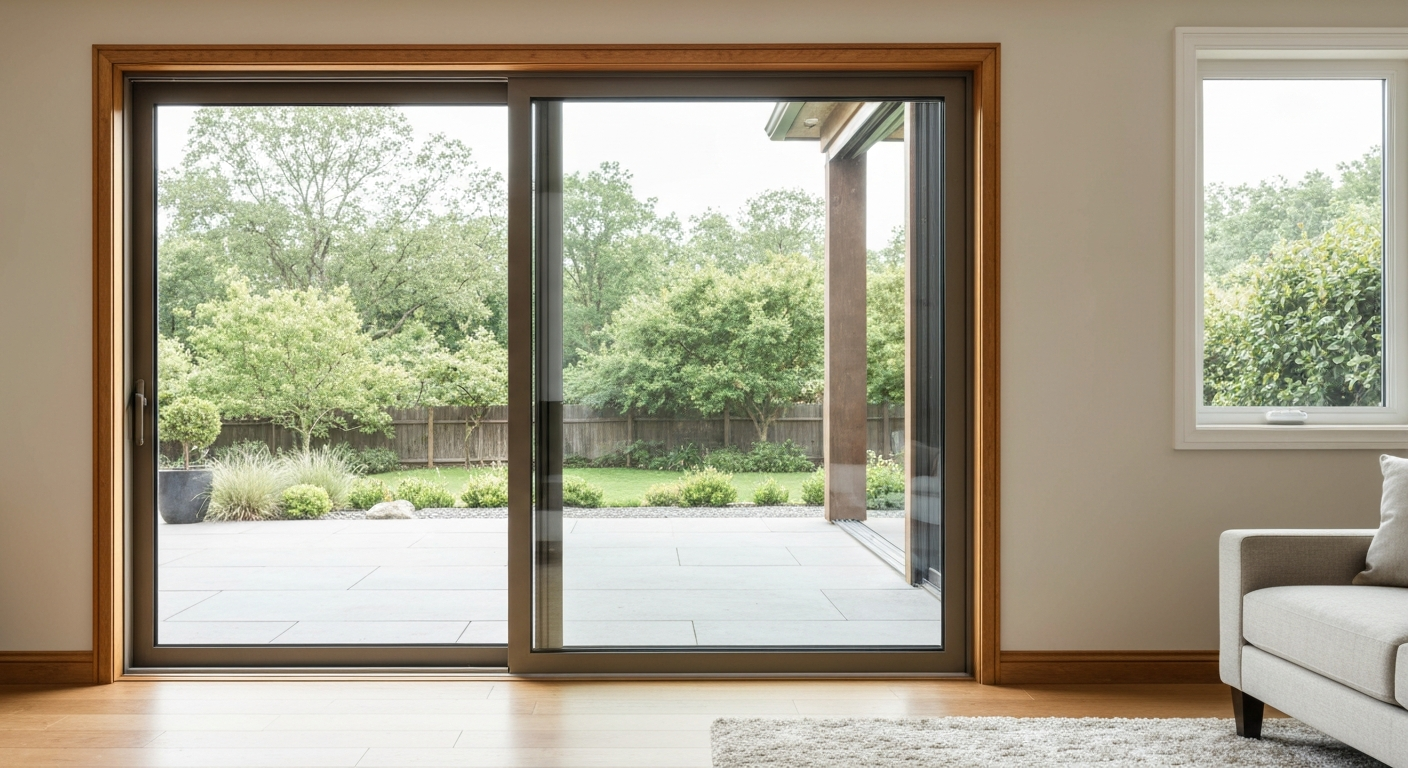
At-a-glance price ranges for an 8 ft sliding patio door
| Material / Configuration | Unit Only (Retail) | Fully Installed (US) |
|---|---|---|
| Entry-level vinyl, 2-panel, single-pane | $800 – $1,200 | $1,500 – $2,500 |
| Mid-range vinyl, 2-panel, double-pane low-E | $1,200 – $2,000 | $2,500 – $4,000 |
| Thermally-broken aluminum, 2-panel, double-pane | $1,500 – $3,000 | $3,000 – $5,500 |
| Wood or clad-wood, 2-panel (e.g. Pella Lifestyle ~$3,510) | $3,000 – $5,000 | $5,000 – $8,500 |
| Fiberglass, 2-panel, premium glass | $2,500 – $5,500 | $4,500 – $9,000 |
| Multi-panel (3- or 4-panel) sliding or pocket system | $3,500 – $8,000+ | $6,000 – $12,000+ |
| Premium pocket/multi-slide stacking system | $5,000 – $10,000+ | $9,000 – $15,000+ |
These ranges reflect current market data from big-box retailers, manufacturer MSRPs, and national contractor cost aggregators through mid-2026. The Home Depot lists 96-inch sliding and stacking units in stock from around $2,379 to $5,695 for aluminum and fiberglass options. Installation labor, permit fees, and rough-opening work are not included in the unit price and are covered in detail below.
Material-by-material cost breakdown
Vinyl
Vinyl is the most affordable option and the most common choice for budget-conscious replacements. An 8 ft vinyl slider retails from about $800 on the low end to $2,000 for a well-insulated double-pane unit from a mid-tier brand. Installation on an existing opening adds $700 to $2,000 in labor, bringing typical installed costs to $1,500 to $4,000. Vinyl holds paint poorly and can warp in extreme heat, but modern fusion-welded frames are dimensionally stable and require almost no maintenance. Energy performance depends almost entirely on the glass package rather than the frame itself at this size, so spec the best glass you can afford within a vinyl frame and you close much of the gap with more expensive materials.
Aluminum
Aluminum frames at 96 inches retail from roughly $1,500 to $3,500 for thermally-broken units. Without thermal breaks, aluminum conducts cold straight into your living room, so I would not touch non-thermally-broken aluminum in any climate with genuine winters. The better thermally-broken aluminum doors from brands like Milgard or Fleetwood cost more upfront but hold up well in coastal and humid climates where wood would swell and vinyl might discolor. Installed costs land between $3,000 and $5,500 for a standard 2-panel replacement. Aluminum is the dominant material in the premium architectural market, which is why multi-slide and pocket systems priced at $10,000+ are almost always aluminum or aluminum-clad.
Wood and clad-wood
Wood is the most expensive commodity frame material and the most demanding to maintain. A Pella Lifestyle Series wood 2-panel 8 ft slider is listed at around $3,510 unit-only, and that is not even the top of the Pella range. Clad-wood doors (wood interior, aluminum exterior) reduce maintenance significantly and typically retail from $3,000 to $5,000 at 8 ft. Budget $5,000 to $8,500 installed for wood or clad-wood, more if your installer needs to reinforce the rough opening for the added weight. If you want the warmth of wood on the interior but do not want to repaint exterior trim every few years, clad-wood is the smarter compromise.
Fiberglass
Fiberglass frames sit between wood and aluminum in cost and combine the dimensional stability of vinyl with better insulation than aluminum. Retail prices for an 8 ft fiberglass slider typically run $2,500 to $5,500 depending on brand and glass. Installed, expect $4,500 to $9,000. Fiberglass also accepts paint and stain, which is a genuine advantage over vinyl if you want a wood-grain look without the upkeep. Pella and Andersen both offer fiberglass lines, and Milgard's Essence Series uses fiberglass with a wood interior. The premium is real, but so is the longevity.
How glass type changes the price (and your energy bill)
| Glass Type | Typical Unit Price Impact | Key Benefit |
|---|---|---|
| Single-pane | Base price (lowest) | Minimal — avoid in most climates |
| Double-pane clear | +$100 – $300 vs. single-pane | Basic insulation, standard for most installs |
| Double-pane low-E + argon | +$200 – $600 vs. clear double-pane | Reduces heat gain/loss, qualifies for energy credits |
| Double-pane low-E + krypton fill | +$400 – $900 vs. clear double-pane | Better U-factor than argon, useful in colder climates |
| Triple-pane | +$800 – $2,500 vs. double-pane | Best insulation, significant weight increase |
| Tempered (safety) glass | +$100 – $400 per panel | Required by code for most exterior doors |
| Laminated (impact-rated) | +$500 – $2,000 per door unit | Hurricane zones, security upgrade |
At 8 ft wide, the glass panels are large, and every upgrade multiplies across a bigger surface area than a standard window. Low-E plus argon is the sweet spot for most U.S. climates: it adds a few hundred dollars to the unit price but meaningfully reduces solar heat gain and winter heat loss, and it qualifies for federal energy efficiency tax credits (25C) where eligible. Single-pane glass on an 8 ft door is essentially a wall of energy waste and should only appear on unheated sunrooms or covered lanais in the mildest climates. Tempered glass is code-required in most jurisdictions for glazed exterior doors, so treat it as the baseline, not an upgrade. Impact/laminated glass is non-negotiable in hurricane-rated zones and adds real security value elsewhere.
Price by configuration: 2-panel, 3-panel, 4-panel, and pocket systems
The standard 8 ft sliding patio door is a 2-panel unit: one fixed panel and one sliding panel. That is what most of the prices in this article default to. When you step up to 3-panel or 4-panel configurations, or to pocket and multi-slide stacking systems, costs escalate quickly because you are adding glass area, hardware complexity, and installation time.
| Configuration | Materials Only | Installed Range (US) |
|---|---|---|
| 2-panel sliding (standard 8 ft) | $800 – $3,500 | $1,500 – $6,000 |
| 3-panel multi-track | $1,500 – $4,500 | $3,500 – $8,000 |
| 4-panel multi-track | $2,500 – $6,500 | $5,500 – $12,000 |
| Pocket / sliding-stacking system (all panels pocket) | $5,000 – $10,000+ | $9,000 – $15,000+ |
Pocket and sliding-stacking systems require a wall cavity to receive the panels, which almost always means structural work, a larger header, and a deeper rough opening. If you are converting from a standard 8 ft slider to a pocket system, budget at least $2,000 to $5,000 in additional structural and finish work on top of the door unit price. These systems look spectacular and essentially dissolve the wall between indoors and outdoors, but they are not cheap and they are not DIY-friendly.
Labor, permits, and modification costs
Installation labor
A standard like-for-like 8 ft slider replacement (same opening size, no structural changes) takes most professional crews 4 to 8 hours, often completed in a single day. Installers in the U.S. typically bill $50 to $150 per hour depending on region and contractor type, so labor alone on a clean replacement runs roughly $400 to $1,200. Full-frame replacements or openings that need resizing take 1 to 3 days (7 to 24+ crew hours), pushing labor costs to $1,500 to $4,000. Many contractors quote sliding door labor as a flat rate rather than hourly, typically $500 to $1,500 for a clean swap, so always ask how they bill and what is included.
Permits and inspections
In many U.S. jurisdictions, a true like-for-like door replacement in the same rough opening can be done without a permit, but check with your local building department first. If you are enlarging the opening, changing the header, altering egress, or working on a historic property, a permit is almost certainly required. Permit fees vary enormously: a small municipality like Algonquin, IL charges as little as $10 per door for a simple replacement permit, while larger cities can charge $100 to $500 or more. Algonquin, IL, Windows/Doors Permit Application Checklist (example $10 per window/door) provides a local example showing a nominal $10 fee per door for a simple replacement permit Algonquin, IL — Windows/Doors Permit Application Checklist (example $10 per window/door). Budget $50 to $400 for a permit if you expect to need one, plus the time cost of inspection scheduling.
Structural and rough-opening modifications
This is where budgets get blown. If your existing rough opening is not the right size for an 8 ft door (the standard rough opening is typically 97 to 97.5 inches wide), you need framing work. Widening an opening in a load-bearing wall requires a new header, temporary shoring, and sometimes an engineer's stamp. That work alone can add $1,500 to $5,000+ to your total project cost. Narrowing an opening is simpler but still adds labor. Always get a contractor to assess the structural situation before you buy the door unit.
Other add-ons to budget for
- Demolition and haul-away of the old door: $100 – $300
- Flashing, weatherstripping, and sealants: $50 – $200
- Interior and exterior trim/casing (if replaced): $200 – $600
- Drywall patching after framing changes: $300 – $800
- Sill pan and waterproofing membrane: $100 – $300
- Threshold replacement or concrete grinding: $150 – $500
Every price driver explained
Understanding what actually drives the cost of an 8 ft sliding door helps you control the budget rather than be surprised by it. Here are the factors that move the needle most.
- Frame material: Vinyl is cheapest, fiberglass and wood cost more, thermally-broken aluminum commands a premium in architectural lines.
- Glass package: Single vs. double vs. triple pane, low-E coatings, gas fills (argon vs. krypton), and impact/laminated ratings all stack price onto the unit.
- Hardware quality: Entry-grade rollers and locks vs. stainless multi-point locking systems can add $200 – $800 to the unit price.
- Finish and color: Standard white or mill-finish aluminum is cheapest. Custom powder-coat colors (bronze, black, custom RAL) add $200 – $600+ to the unit.
- Energy certifications: ENERGY STAR and specific NFRC ratings (low U-factor, low SHGC) drive up glass and frame costs but unlock tax credits.
- Brand and warranty tier: A Milgard Tuscany vs. a builder-grade slider from a regional supplier can differ by $800 – $2,000 for comparable specs.
- Installation complexity: Like-for-like replacement is cheapest. New opening, structural header, or multi-panel track work multiplies labor cost.
- Site access: Tight access, second-floor work, or long carries from delivery point to install location add labor time and cost.
- Rough-opening changes: Widening or heightening for an 8 ft door in a wall that was framed for a smaller door is the single biggest budget wildcard.
Accessories and upgrades: what they cost and whether they are worth it
| Accessory / Upgrade | Typical Cost Added | Worth It? |
|---|---|---|
| Retractable screen (roll-away) | $300 – $700 | Yes — especially for 8 ft openings where swinging screens fail |
| Pleated or sliding screen door | $150 – $400 | Good budget option for standard 2-panel doors |
| Built-in blinds between glass | $400 – $900 | Yes if you want zero-maintenance privacy without cord hazards |
| Exterior roller shades or solar shades | $300 – $800 | Good for sun control in west-facing openings |
| Multi-point locking system upgrade | $200 – $500 | Yes — standard single-point locks on large sliders are weak |
| Smart lock / keypad deadbolt | $150 – $400 (hardware) + $100 – $200 install | Useful if you use the patio door as a secondary entry point |
| Interior wood or MDF casing trim | $150 – $450 | Finish cost, almost always needed on a full-frame replacement |
| Exterior aluminum cladding/trim kit | $200 – $600 | Worth it for long-term paint-free exterior finish |
| Security bar / Charlie bar | $25 – $80 | Yes — cheap, effective secondary security for sliding doors |
| Foot bolt / floor pin | $20 – $60 per panel | Inexpensive and effective for panel security |
Built-in blinds deserve a specific mention because they look like a minor luxury but actually solve a real problem at 8 ft: standard blinds and curtains on a door this wide are awkward, heavy, and constantly in the way of foot traffic. Paying $400 to $900 extra for factory-installed between-glass blinds at the time of purchase is almost always cheaper than retrofitting a solution later. Retractable screens are similarly worth budgeting for upfront if you plan to use the door with the panel open, especially in the $300 to $700 range for a quality roll-away unit.
How an 8 ft slider compares to French doors, accordion doors, and other styles
The 8 ft sliding patio door is not your only option for a large opening. French doors (hinged double doors) at 8 ft require swing clearance both inside and out, which rules them out in tight spaces, and they typically cost similarly to a mid-range slider for the unit but need more floor clearance planning. Accordion and bifold patio doors (multi-panel folding systems) are a premium alternative that can fold nearly flush with the wall, but they start at significantly higher prices. For comparable openings, accordion/bifold systems commonly run $5,000 to $20,000 installed depending on panel count and material. If you want to explore that direction, accordion door pricing has its own detailed cost structure worth comparing separately.
For most homeowners replacing a standard 8 ft patio door, a quality 2-panel sliding door gives the best combination of cost, reliability, and low maintenance. Multi-slide and pocket systems make sense when you are doing a whole-room renovation or prioritizing architectural impact over budget efficiency. French doors make sense when you value symmetry and do not have furniture placement issues with the swing arc.
Regional pricing notes: UK and Spain
If you are shopping in the UK, the market looks different. Standard uPVC (the UK equivalent of vinyl) 2-panel sliding patio doors start at around £1,800 installed for a basic job, and larger aluminum or thermally-broken aluminum multi-slide systems commonly run £3,800 to £6,000+ installed. UK carpenter and joiner labor rates run broadly £30 to £45 per hour, though London tradespeople bill considerably more. For a focused UK pricing guide, see our article on how much do sliding patio doors cost in the UK for current installed and unit-only ranges. Permit requirements in the UK are generally handled through planning permission or building regulations approval, and many like-for-like replacements in uPVC fall under permitted development, though this changes if you are in a conservation area or listed building.
In Spain, the picture shifts again. Local labor rates for carpentry and related trades run roughly €15 to €35 per hour depending on skill level and city, making labor cheaper than the U.S. or UK. However, if you are enlarging an opening or changing a facade, Spanish municipalities require a Licencia de Obras (obra mayor), which involves an architect-stamped project and municipal fees that can range from €200 to €3,000 depending on the ayuntamiento and scope of work. A simple like-for-like replacement (obra menor) is often handled with a straightforward administrative notice. Local Spanish door prices vary based on whether you source from a local fabricator or import a branded system. For more detailed local pricing and examples, see how much do patio doors cost in Spain.
Brand examples worth knowing
Milgard is one of the most frequently referenced brands for sliding patio doors in the western U.S. and is worth knowing about if you are pricing mid-to-premium options. Milgard's Tuscany Series (vinyl) and Aluminum Series are commonly stocked by western dealers, while the premium Essence Series uses a fiberglass frame with a wood interior. Milgard pricing for an 8 ft slider varies by dealer and region, but the brand generally sits in the $1,800 to $4,500 unit range for standard configurations, with the Full Lifetime Warranty on most products being a genuine differentiator. If you want a quick answer to how much do Milgard patio doors cost, expect dealer quotes to fall in the mid-$1,800 to $4,500 unit range for standard 8 ft configurations, with regional variation. Pella, Andersen, and JELD-WEN are the other major national brands; Pella's wood Lifestyle Series 8 ft slider retails at approximately $3,510 for the unit, which is representative of the mid-to-upper wood tier. For budget installs, regional builders often specify no-name or private-label units from door fabricators that are perfectly serviceable but carry shorter warranties and less parts availability.
How to get an accurate quote and choose an installer
- Measure your rough opening accurately: width, height, and depth of the wall (important for frame thickness compatibility).
- Confirm whether the opening is load-bearing before contacting contractors — this single fact changes the scope of work dramatically.
- Get at least three quotes. Ask each contractor to itemize: door unit cost, labor, permits, demolition, flashing, and trim separately.
- Ask for the door unit's NFRC label values (U-factor and SHGC) so you can compare glass performance across bids.
- Check that the installer is licensed and insured in your state or region. Ask whether they are factory-authorized for the brand you want — some warranty claims require professional installation.
- Ask about the lead time for the unit. Custom or special-order 8 ft doors can take 4 to 12 weeks. Schedule installation accordingly.
- Clarify who handles the permit application if one is required — some contractors include this, others do not.
Homeowner checklist before the install day
- Measure the rough opening at three points (top, middle, bottom) to catch any racking or settling.
- Confirm the door unit has arrived and matches the order (size, color, glass type, hardware finish) before the crew shows up.
- Clear 5 to 10 feet of interior and exterior space around the opening for staging.
- Confirm the permit (if required) is issued and posted — inspectors will want to see it.
- Plan for the opening to be exposed for part of the day: secure pets and cover interior flooring.
- Ask the installer about the drainage/flashing plan for the sill — this is where most patio door leaks originate.
- Get the warranty documentation and installation receipt before the crew leaves.
Cost-saving tips that actually work
The single biggest saving available on an 8 ft sliding door project is avoiding rough-opening changes. If you can select a door unit that fits your existing opening without structural modification, you eliminate the most unpredictable cost category entirely. The second-biggest lever is buying the unit separately from the installation, especially if you can source the door directly from a manufacturer dealer or big-box store at a discount versus a contractor's markup. Many contractors add 15 to 30 percent to unit costs when they supply the door themselves.
- Stick to your existing rough-opening size to avoid structural work costs.
- Shop big-box sales events (Black Friday, spring home improvement sales) for in-stock 8 ft sliders at significant discounts.
- Choose a vinyl or thermally-broken aluminum frame over wood or fiberglass if budget is tight — the performance gap is smaller than the price gap.
- Specify double-pane low-E argon as your glass and skip triple-pane unless you are in a very cold climate — the energy payback on triple-pane at door sizes rarely justifies the premium in moderate climates.
- Do the demo yourself (removing the old door unit) if the contractor allows it — this can save $100 to $300 on labor.
- Bundle the door replacement with other exterior projects (windows, trim painting) to reduce per-job mobilization costs.
- Check for federal energy tax credits (25C) and utility rebates if you are installing an ENERGY STAR-certified unit.
Warranty and maintenance: what to expect long-term
Most reputable manufacturers offer limited lifetime warranties on the frame and hardware with separate glass coverage (typically 10 to 20 years on the insulated glass unit for seal failure). Milgard offers a Full Lifetime Warranty that is transferable to subsequent owners, which has genuine resale value. Pella and Andersen offer tiered warranties depending on the product line. Read the fine print on what voids coverage: improper installation (a reason to use factory-authorized installers), non-approved finishes, and lack of maintenance are common exclusions.
Maintenance on an 8 ft slider is straightforward but matters more than on a smaller door because the weight and size amplify any track debris or roller wear. Clean the track every few months with a vacuum and a damp cloth. Lubricate the rollers and track with a silicone-based spray (not WD-40, which attracts dirt) once or twice a year. Check the weatherstripping annually and replace it when it shows compression set or cracking, this is a $20 to $60 DIY fix that prevents much larger energy and water infiltration problems. Inspect the sill flashing and exterior sealant every spring and re-apply caulk where needed. A well-maintained 8 ft vinyl or aluminum slider should give you 20 to 30 years of reliable service.
FAQ
Quick answer — How much does an 8 ft (≈96 in) sliding patio door cost (unit-only and installed)?
Quick answer: unit-only retail ranges roughly $800–$8,000+ depending on material and quality. Typical installed ranges in the U.S. are about $1,500–$12,000: common like‑for‑like 2‑panel replacements $1,500–$5,000; higher‑end multi‑track, lift‑and‑slide or structural openings $5,000–$12,000+. In the UK expect basic uPVC installed ~£1,800–£4,000 and aluminium/multi‑slide £3,800–£8,000+; in Spain expect broad installed ranges roughly €1,200–€8,000+ depending on material, city and permit needs. These are ranges — specifics depend on material, glass, configuration, brand, installation complexity and regional labour.
How do prices break down by frame material (vinyl, aluminum, wood, fiberglass) for an 8 ft slider (unit-only and installed)?
Material breakdown (approx. retail unit-only → typical installed range): - Vinyl: $800–$2,000 → installed $1,500–$3,500 (economical, low maintenance). - Aluminum (standard): $1,000–$3,000 → installed $2,000–$5,000 (slim sightlines; thermally broken aluminum costs more). - Wood / clad-wood: $2,500–$8,000+ → installed $4,000–$10,000+ (premium finish; higher maintenance). - Fiberglass: $1,500–$5,000 → installed $3,000–$7,000 (durable, stable). Higher-end architectural systems (multi-slide, lift‑and‑slide) exceed these and can reach $10k–20k installed.
How much do glass types add to the cost (single, double, Low‑E, tempered, laminated, triple)?
Glass upgrade typical deltas for an 8 ft door (added to base unit): - Single‑pane (rare for modern doors) cheapest — base price. - Double‑pane (insulated) adds roughly $300–$1,500 vs single. - Low‑E coating and argon fill: add ~$200–$1,000 depending on area and vendor. - Tempered safety glass: $100–$500 extra (often required by code for doors). - Laminated/security glazing: $400–$2,000+. - Triple‑pane / high‑performance IGU: $1,000–$3,000+ extra. Exact values scale with glass area and manufacturer; for large 96‑in units expect upgrades to add several hundred to several thousand dollars.
How does configuration (2‑panel, 3‑panel, multi‑track, stacking) change price?
Configuration effect: - 2‑panel sliding (standard) is the lowest-cost large option. - 3‑panel or pocketing/multi‑slide increases materials and hardware: unit-only often $1,500–$4,000; installed $3,000–$7,000. - 4‑panel and stacking/multi‑track systems rise further: unit-only $2,500–$6,000+; installed $4,500–$12,000+. - Lift‑and‑slide and high‑performance multi‑slide systems are premium: unit-only $3,000–$10,000+; installed commonly $6,000–$20,000 depending on size, track complexity and structural work.
What is the labor/time cost for installing an 8 ft sliding door and what affects it?
Labor/time: a like‑for‑like 2‑panel replacement typically takes 4–8 crew hours (single‑day), while full‑frame swaps or opening changes commonly take 1–3 days (7–24+ hours). U.S. contractor billing appears typically $50–$150/hr depending on region — translating to $400–$1,500+ in labor for straightforward jobs. Complexity drivers that raise labor: changing rough opening, adding or altering structural headers, flashing and water-proofing, interior/exterior trim, finishing, removing old material, masonry or stucco repair, and working at height.
What permits and modification costs should homeowners expect (U.S., UK, Spain)?
Permits/modifications: - U.S.: in‑kind like‑for‑like replacements may require no permit in many jurisdictions; enlarging openings or altering headers usually triggers building permits and inspections. Permit fees vary from nominal ($10–$200) to several hundred dollars; structural engineer or architect involvement increases cost. - UK: like‑for‑like uPVC replacements often need no planning, but thermal or structural changes or conservation areas may require approvals; expect simple installs from ~£1,800 installed, with larger aluminium systems needing planning or building‑reg involvement. - Spain: replacing in the same opening is often 'obra menor' — sometimes simple administrative notice is enough; enlarging openings or changing façade needs Licencia de Obras (obra mayor) and an architect project; municipal fees vary widely (~€200–€3,000 or more). Always check local authority before work.