For most homeowners, a new patio door costs somewhere blank" rel="noopener noreferrer">between $700 and $6,500 installed in the US, or roughly £800 to £6,500 fitted in the UK. If you want a reliable ballpark for the total job, compare similar standard patio doors by type and size, because installation cost varies a lot. The wide range is real and not just padding: a basic uPVC sliding door on a standard opening sits at the low end, while a large aluminium bifold across a 3-metre rear wall can push well past £6,000 once labour, steel support, and making good are factored in. If you just want the door unit itself without installation, expect to pay significantly less, but most people replacing a patio door are paying for the full fitted job, and that's where you need accurate numbers before you call anyone. If you want the full answer to how much it costs to install patio doors, the next step is to compare door-only pricing against the supplied-and-fitted total how much does it cost to install patio doors.
How Much for New Patio Doors Cost Installed vs Door Only
Typical Cost Ranges: Door Only vs. Fully Installed
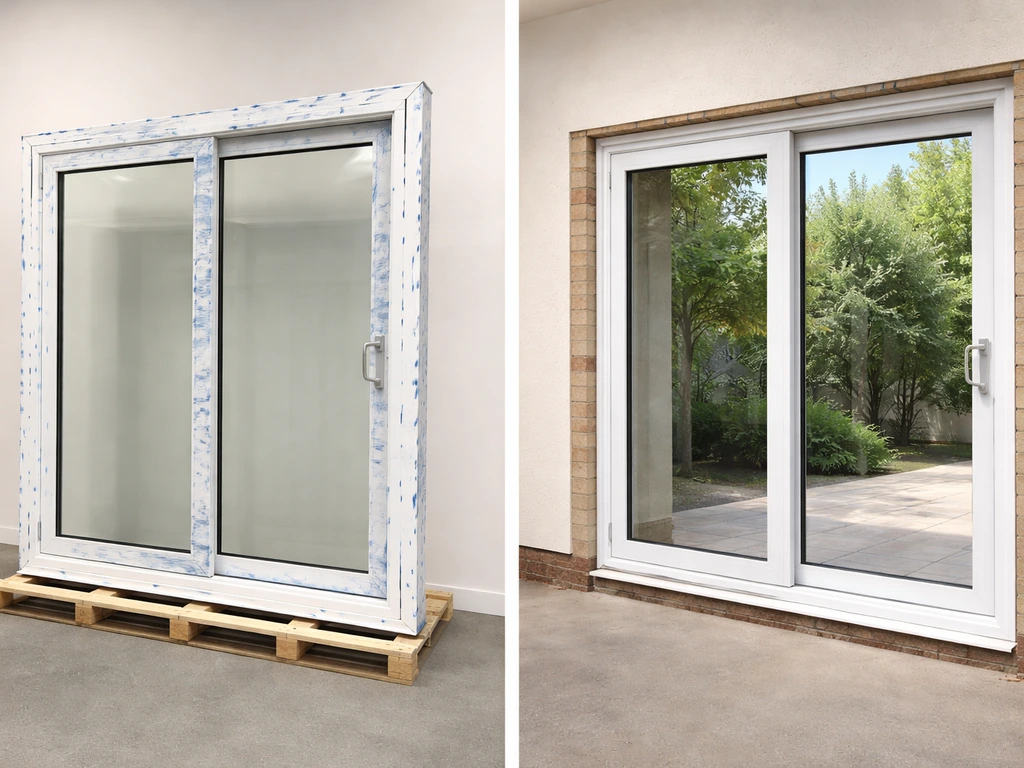
There are two prices you'll encounter when shopping: the supply-only price (just the door unit) and the supplied-and-fitted total (what you actually pay when someone does the job). Most online quotes and comparison sites quote the fitted total, which is the more useful number. Door-only prices can look tempting, but you'll need to add labour, removal of the old door, disposal, any frame repairs, and finishing work on top, which can easily add £300 to £800 in the UK or $400 to $1,200 in the US depending on complexity.
| Door Type | Door Only (approx.) | Supplied & Fitted (approx.) |
|---|---|---|
| uPVC Sliding (2-panel) | £350–£700 / $400–$900 | £800–£1,730 / $1,200–$2,500 |
| uPVC French Doors | £400–£800 / $450–$1,000 | £900–£2,000 / $1,500–$2,800 |
| Aluminium Sliding | £600–£1,200 / $700–$1,500 | £1,200–£3,000 / $2,000–$4,000 |
| Aluminium French Doors | £700–£1,400 / $800–$1,800 | £1,500–£3,500 / $2,200–$4,500 |
| Timber French Doors | £800–£2,000 / $900–$2,500 | £1,500–£4,000 / $2,500–$5,500 |
| Aluminium Bifold (3m+) | £2,000–£5,000 / $2,500–$6,000 | £4,000–£9,000 / $5,000–$10,000+ |
These ranges assume a like-for-like replacement on an existing opening. If you're creating a new opening, adding a lintel, or doing structural work, the installed cost rises considerably beyond these figures.
Patio Door Prices by Type and Size
Door type and size are the two biggest pricing levers before you even think about materials. Here's how the main styles stack up in practice.
Sliding Patio Doors
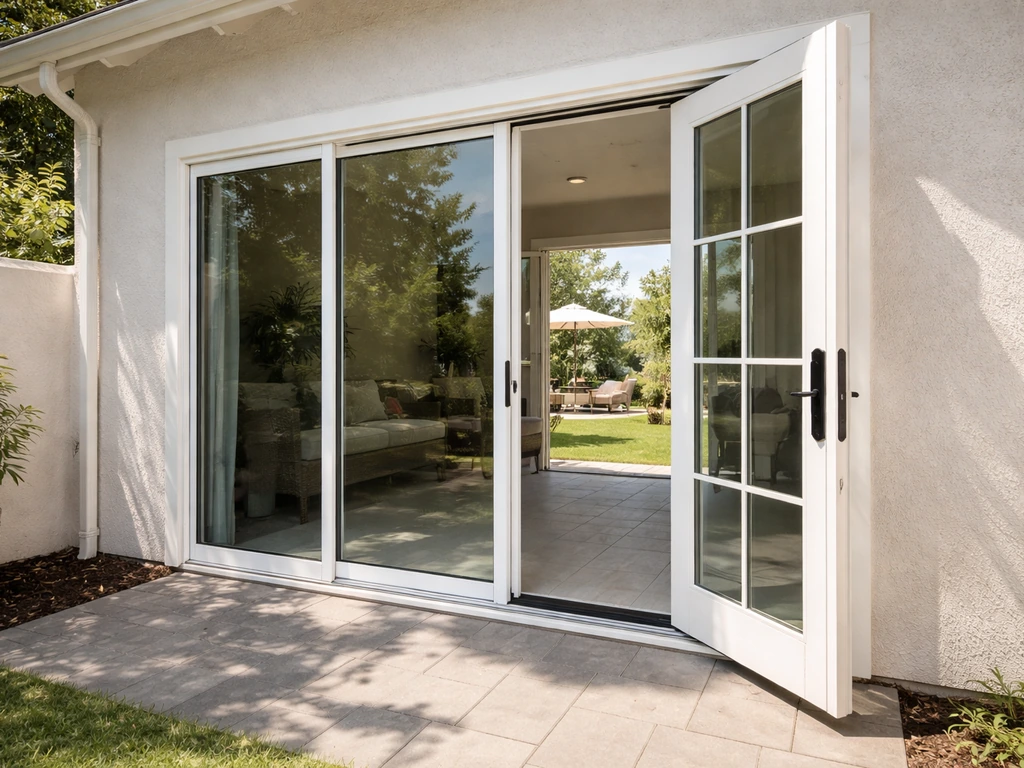
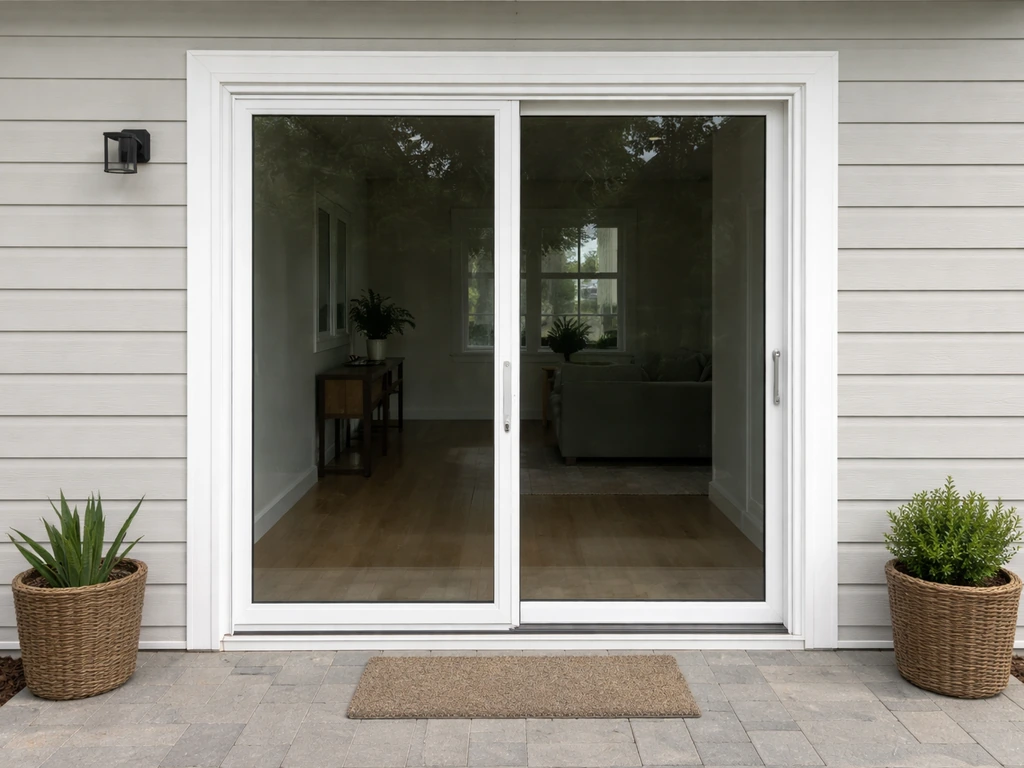
A standard 2-panel sliding door (typically around 72 inches or 1,800mm wide by 80 inches or 2,100mm tall) is the most affordable option. In the US, Fixr puts a 72-inch by 80-inch aluminium sliding door at around $2,756 installed nationally. In the UK, a uPVC 2-panel slider comes in at roughly £895 to £1,730 fully fitted. Go up to a 3-panel or wider configuration and prices jump 20 to 40 percent. Sliding doors are generally the cheapest to install because they don't require wide clearance for swing and fit into most standard openings without modification.
French Patio Doors
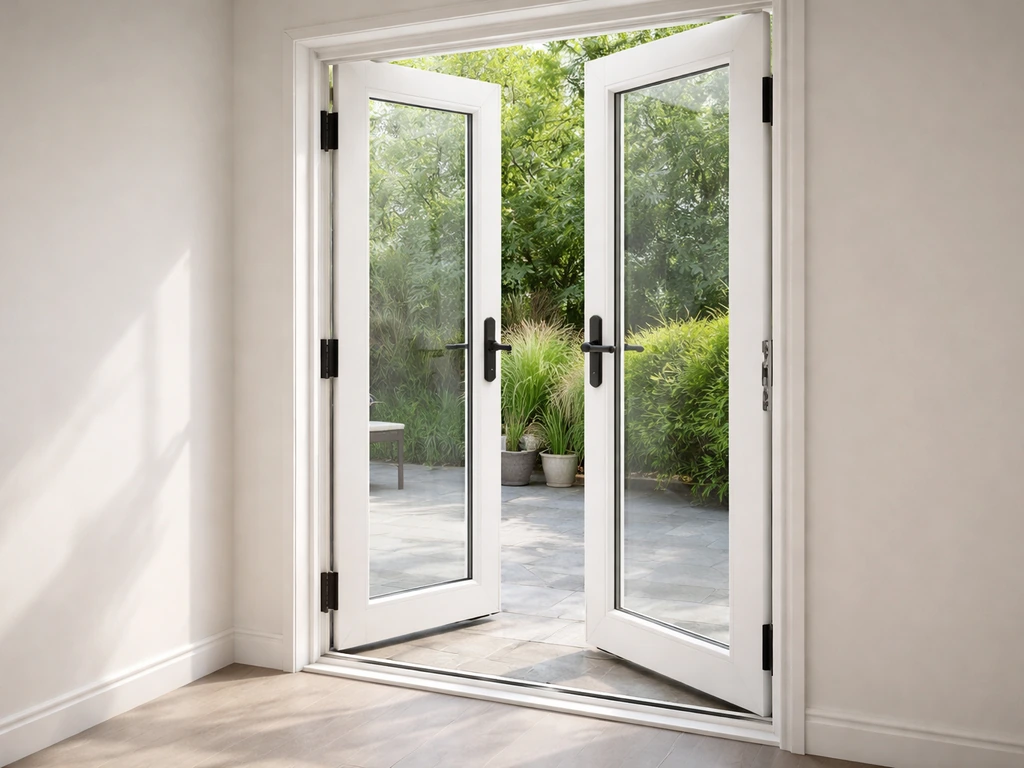
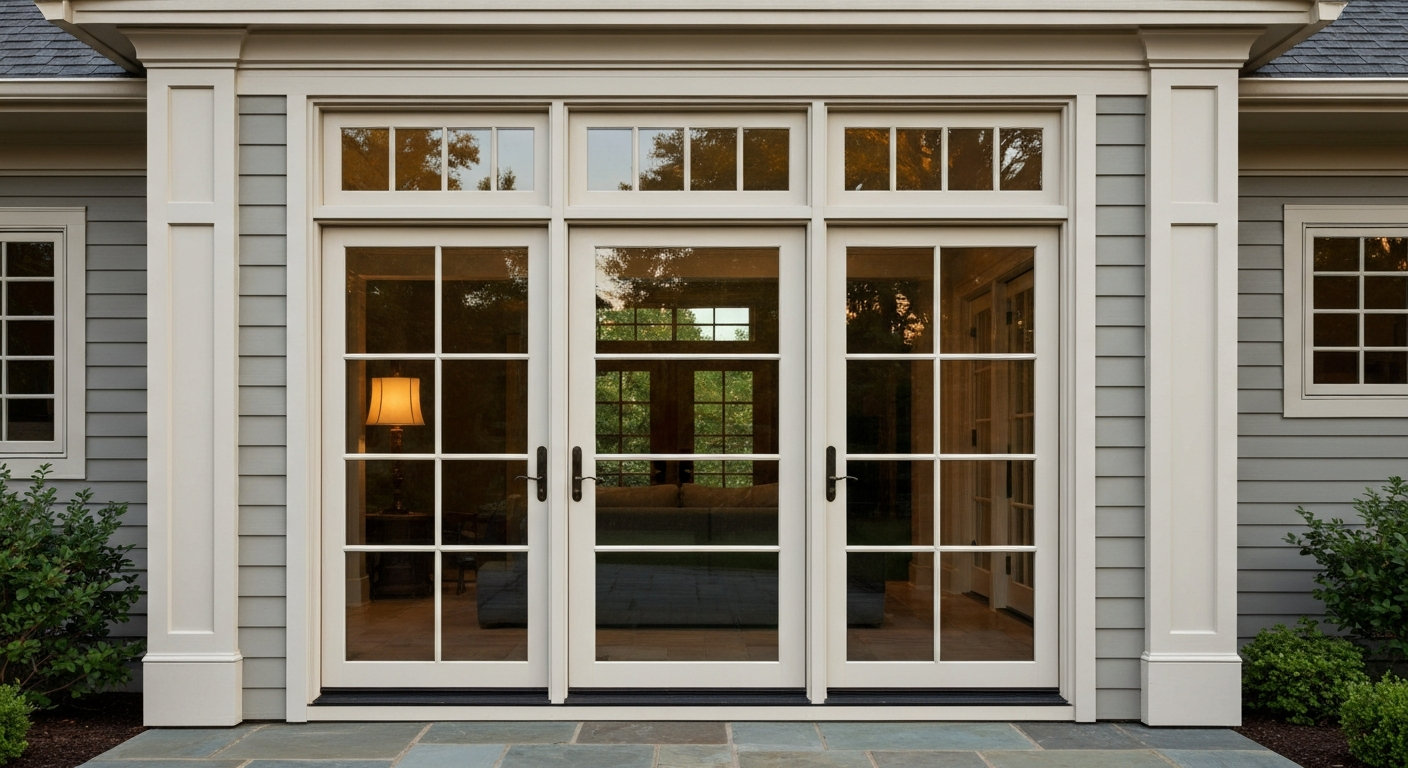
French doors sit in a similar price bracket to sliding doors at the standard 1,500mm to 1,800mm width. Where they get more expensive is in hardware, hinges, and multi-point locking systems, which are standard on good-quality units. A uPVC French door fitted in the UK typically runs £900 to £2,000. Aluminium French doors add another £500 to £800 on average. Timber versions in hardwood or engineered oak can push the fitted cost to £3,500 or more.
Bifold Doors
Bifolds are in a different league. A typical 3-metre aluminium bifold installation in the UK, once you account for supply, labour, any steel support beam, and making good of the surrounding walls, lands at roughly £6,000 to £9,000. Larger spans (4 to 5 metres) push that further. In the US, large bifold or multi-panel systems run $5,000 to $10,000 or more installed. If bifolds are on your shortlist, budget accordingly and get at least three quotes, because pricing varies significantly between installers.
Double Glazed Patio Door Costs: What You're Actually Paying For
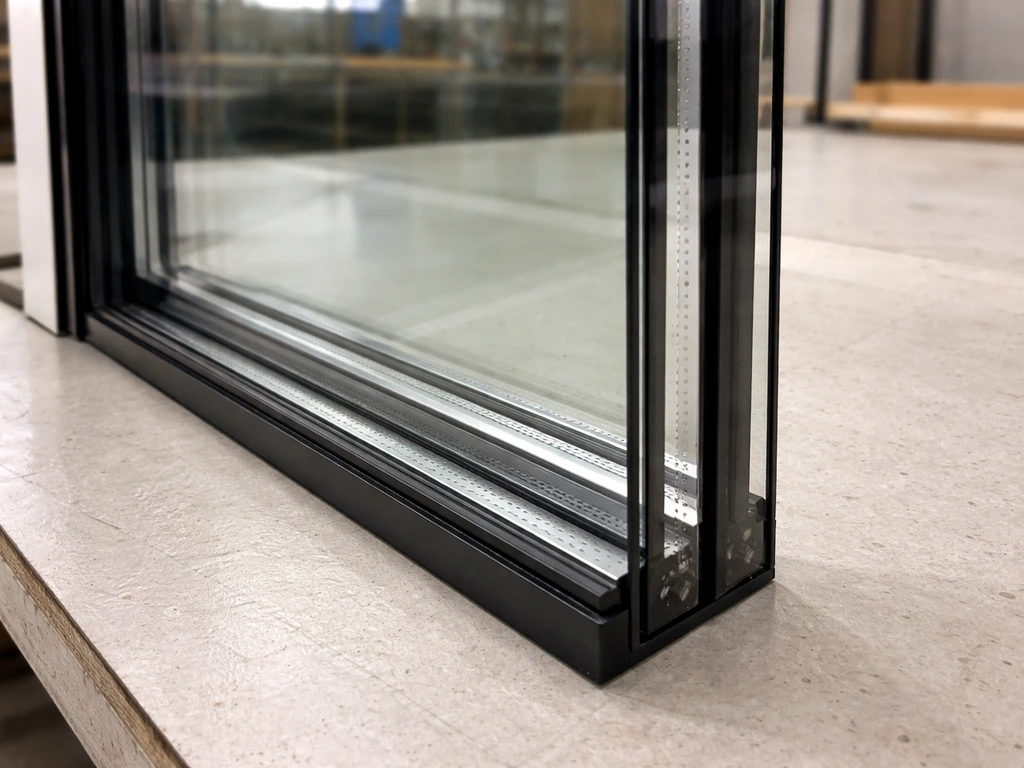
Almost every patio door sold today is double glazed as standard, so in most cases asking 'how much do double glazed patio doors cost' is really just asking about patio door prices in general. Where glazing starts to affect your quote is when you move beyond standard double glazing into upgraded specs. If you also want to know how much to fit a patio door, the glazing specification is just one part of the total installed cost.
- Standard double glazing (4-12-4 or 4-16-4 unit): included in most base prices, no premium
- Low-E coated glass: adds roughly £50–£150 per door in the UK or $80–$200 in the US, improves thermal retention
- Triple glazing: adds 15 to 25 percent to the door price, most relevant in very cold climates
- Toughened or laminated safety glass: often required by building regulations for doors anyway, usually included in the quoted price
- Solar control glass: reduces summer heat gain, adds £100–£300 / $150–$400 depending on spec
- Decorative or frosted glass: modest premium, usually £50–£200 per door depending on design
The biggest glazing-related cost jump most people don't expect is when they opt for a door with a large single pane rather than a traditional divided-light or bar design. A full-height single pane of toughened double-glazed glass on a wide sliding door is more expensive to manufacture and replace if it ever breaks, so factor that into your long-term thinking.
Single vs. Double Patio Doors: Price Differences
When people search 'how much are double patio doors' they usually mean a two-panel door (two glass panels side by side) rather than double glazing. Here's how single and double configurations compare on price and practicality.
| Configuration | Typical Width | Fitted Price Range (UK) | Fitted Price Range (US) |
|---|---|---|---|
| Single panel sliding or French | 700–900mm | £600–£1,200 | $800–$1,800 |
| 2-panel sliding (standard) | 1,500–1,800mm | £800–£2,000 | $1,200–$3,000 |
| Double French doors (pair) | 1,500–1,800mm | £900–£2,200 | $1,500–$3,200 |
| 3-panel sliding or bifold | 2,100–2,700mm | £1,800–£4,000 | $2,500–$5,500 |
| 4+ panel bifold | 3,000mm+ | £4,000–£9,000 | $5,000–$12,000+ |
A single-panel sliding door or a single French door makes sense for a narrower opening or as a secondary access point. The standard double (2-panel) configuration is the sweet spot for most homes: wide enough for easy furniture movement, affordable, and available in every material. Going to three panels or more is where costs escalate quickly, and you'll want to confirm your structural opening and any lintel requirements before committing.
What Drives the Final Installed Cost
Two quotes for what sounds like the same door can differ by £1,000 or more. Here are the main variables that explain why.
Material
uPVC is the most affordable and lowest-maintenance option. Aluminium costs more upfront but offers slimmer sightlines, a more modern look, and better durability in harsh weather. Timber is the premium choice aesthetically, but it requires ongoing maintenance (repainting or re-oiling every few years) and is the most expensive to supply and fit. For most homeowners replacing a standard rear door, uPVC hits the best value-for-money mark. Aluminium makes sense if aesthetics matter or if you're doing bifolds. Timber is worth it if you're working on a period property or if the look is non-negotiable.
Glazing Specification
As covered above, standard double glazing is already included in base prices. Upgrading to low-E, solar control, or triple glazing adds cost but can meaningfully reduce energy bills over time. If your home already has good insulation, standard double glazing with a low-E coating is usually sufficient and keeps costs manageable.
Security and Locking
Multi-point locking systems are standard on most reputable patio doors today. If you're buying budget units, check the lock spec carefully. Upgrading to a higher-security cylinder, anti-lift devices, or a door alarm can add £100 to £400 to the job. For sliding doors specifically, ask about anti-lift and anti-jimmy protection as standard features, not add-ons.
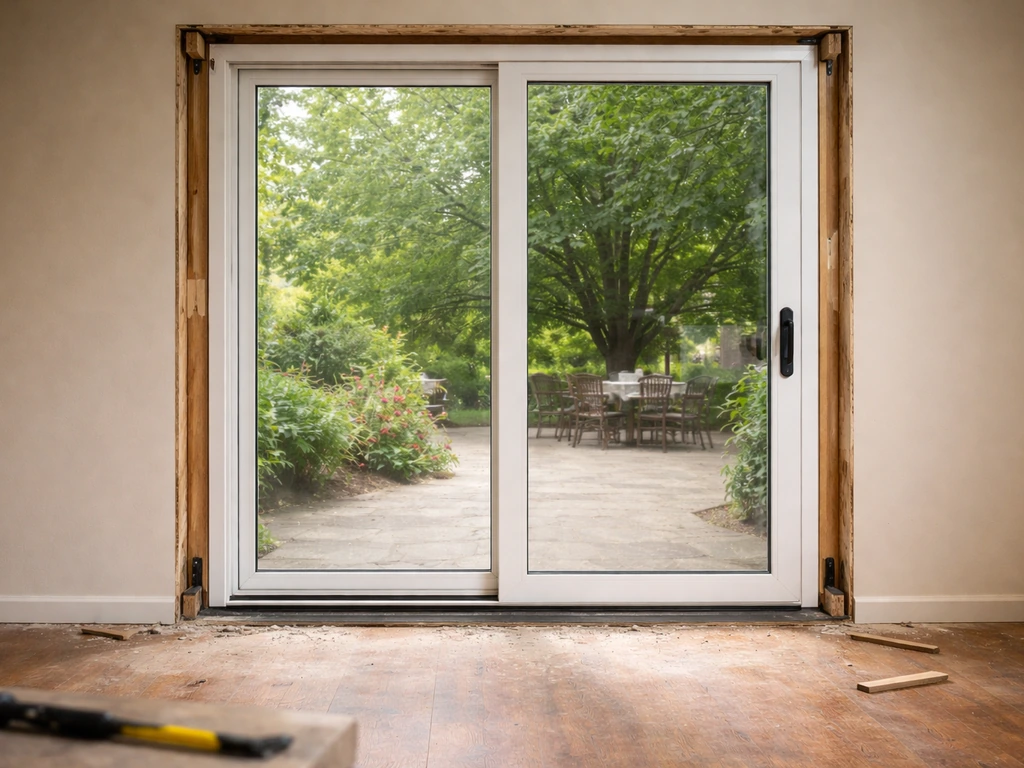
Removing the Old Door and Making Good
Replacing an existing door is cheaper than creating a new opening. The cost to rescreen a patio door is usually lower than a full replacement, but it depends on the size of the screen and the frame condition. However, removal still takes time and costs money. Most fitted quotes include removal and disposal of the old unit, but always confirm this in writing. If the existing frame or surrounding brickwork is damaged or out of square, expect extra charges for making good. On older properties, this can add £200 to £600 to the job without much warning.
Door Size vs. Standard Sizing
Non-standard sizes cost more. A door that needs to be manufactured to a custom width or height takes longer to produce and may limit your supplier options. If your opening is close to a standard size, it's worth asking whether a slight adjustment to the frame or threshold can bring you into standard dimensions and save money on the unit cost.
Door Style
Sliding doors are generally the cheapest to install. French doors are similar in price but require swing clearance. Bifolds are the most complex mechanically and structurally, so they carry the highest installation cost. Choosing sliding over bifold on a similar opening width can save you £2,000 or more on the total job.
How to Compare Quotes and Get Accurate Pricing Fast
Getting three quotes is the standard advice, and it's right, but only if you're asking for the same thing from each installer. Vague briefs produce incomparable quotes. Here's how to make the process efficient.
What to Measure and Gather Before You Call
- Measure the existing opening width and height in at least three places (openings are rarely perfectly square), and note the widest and narrowest points
- Note the material of the existing frame (uPVC, timber, aluminium, or masonry reveal)
- Photograph the existing door, frame, threshold, and surrounding wall from inside and outside
- Note which way the door swings or slides, and whether that needs to change
- Check whether there's a step up or down at the threshold, and if you need a flush or low-threshold option (important for accessibility)
- Write down any specific requirements: colour, handle style, obscured glass, security rating
What to Ask Each Installer
- Is the quote for supply and fit, or supply only?
- Does it include removal and disposal of the existing door?
- What happens if the existing frame or reveal needs repair work? Is that included or charged separately?
- What glazing spec is included (U-value, low-E coating)?
- What locking system is fitted and is it PAS 24 or equivalent security rated?
- How long is the lead time from order to installation?
- What guarantee covers the door unit, and what covers the installation workmanship?
When you receive quotes, compare them line by line rather than bottom-line total. A quote that's £300 cheaper may be excluding removal, using a lower-grade glass spec, or carrying a shorter guarantee. Angi data puts the US average patio door replacement at around $2,500, with most jobs landing between $1,550 and $6,250. In the UK, most standard replacements land between £800 and £3,500. If a quote is significantly outside either end of those ranges for a straightforward job, ask why.
Choosing Door Style and Options Without Blowing Your Budget
The style you choose should be driven by your opening size, how you actually use the space, and your budget in that order. Aesthetics matter, but they're the last thing to optimise once the practical boxes are ticked.
For most standard rear-of-house replacements on a 1,500 to 1,800mm opening, a uPVC sliding door or uPVC French door gives you the best value. You'll get double glazing, multi-point locking, and a 10-year manufacturer guarantee for well under £2,000 fitted in the UK or under $3,000 in the US. If you want the aluminium look without bifold prices, aluminium sliding doors are a good middle ground: slimmer sightlines than uPVC, more contemporary, and still £1,000 to £2,000 cheaper than bifolds on a similar opening.
Bifolds are worth considering if you genuinely want the full opening and have the budget. But don't let a showroom talk you into bifolds on a tight budget by stretching finance: the ongoing maintenance on bifold tracks and seals is higher than on simpler door types, and a cheap bifold installation is one of the fastest ways to end up with draughts, leaks, and warranty headaches.
On options and upgrades, prioritise glazing quality and locking spec over cosmetic upgrades. A low-E coating is worth paying for. Coloured aluminium frames often add £200 to £500 over standard white or grey, and that's genuinely a personal preference call. Integral blinds are a popular add-on but can be expensive to repair if they fail, so think about whether you actually need them or whether an external blind or curtain would do the same job for less.
If you're also weighing up whether to go with a premium brand like Renewal by Andersen or Pella at the higher end of the market, or comparing costs for a screen door alongside the main unit, those are separate cost conversations worth digging into. If you're looking specifically at screen doors, compare the frame material and whether it's a sliding or hinged unit to estimate how much are patio screen doors for your opening. If you are specifically interested in Pella patio doors, the price depends on the door type, size, and whether you are comparing door-only or fully installed quotes Pella patio door pricing. The installed pricing for brand-name doors and the cost of adding screen doors alongside your new patio door can both shift your total significantly, so factor those into your overall budget before you finalise a quote. If you're asking specifically about a Renewal by Andersen patio door, brand pricing and installation can shift the total compared with generic sliding or French door estimates brand-name doors.
Your Next Steps
- Measure your opening now, before you call anyone, and take photos
- Decide on door type (sliding, French, or bifold) based on your opening size and how you use the space
- Choose a material shortlist: uPVC for budget, aluminium for aesthetics, timber for a period look
- Request at least three like-for-like supplied-and-fitted quotes using the question checklist above
- Compare glazing spec, locking system, and guarantee terms alongside the bottom-line price
- Confirm that removal of the existing door is included and ask about any potential extra charges for making good
FAQ
What’s usually included in the “installed” price for new patio doors?
Most fitted quotes include removal of the old door, disposal, fitting and weatherproofing, and internal and external “making good” (sealant and finishing around the frame). Ask whether the price also includes any brickwork trimming, replacement flashing, and matching thresholds, since those items are sometimes treated as extras.
How much should I budget for removing and re-installing patio-door thresholds or sills?
If the existing threshold is uneven, rotted, or out of square, installers may replace or rework it, which can add cost beyond the base door price. A typical callout is when there are gaps at the bottom, drainage issues, or when the new frame requires a different sill height for proper sealing.
Do I need building permission or structural work to replace patio doors, and how does that affect cost?
Replacing within an existing opening usually avoids structural permits, but creating a wider opening, moving load-bearing elements, or adding a lintel can trigger additional surveys and labor. If your quote is based on a “like-for-like” swap but your plan involves structural changes, expect installed pricing to rise substantially.
Why do two quotes for the same door type and size differ by a lot?
Line-item differences usually come down to glass specification (standard vs upgraded), frame material, lock and security hardware, whether the old door and any frame repairs are included, and the guarantee length. Confirm what glass, lock set, and finishing details are being priced, not just the total figure.
Is door-only pricing ever the better option?
It can be useful if you have a contractor lined up and the opening is already prepared to the manufacturer’s tolerances. However, you still need labor for removal, fit-up, weatherproofing, and disposal, and some suppliers won’t support warranties if installation doesn’t meet their requirements.
How much extra does it cost if my existing frame is out of square or damaged?
Expect additional charges when the surrounding brickwork or framing needs re-cutting, shimming, or replacement. A frequent trigger is draughts or poor alignment in the current door, which becomes obvious once the old frame is removed.
What should I ask about the lock, especially for sliding patio doors?
For sliding doors, ask specifically whether anti-lift and anti-jimmy features are included in the fitted spec, not only “multi-point locking.” Also confirm if the quote includes any cylinder upgrade and whether keying is matched across doors for convenience.
How much more should I pay for triple glazing or higher-performance glass?
Upgraded glazing can add a noticeable increment on top of standard double-glazed door pricing, but the actual spread depends on whether it’s low-E, solar control, or full triple. Request the exact glass make-up and performance values, then compare the cost to your likely heat-loss and energy savings.
Can I reduce cost by choosing a smaller or standard size door?
Yes, custom-made sizes typically cost more and can limit supplier options. If your opening is close to a standard width or height, ask whether minor adjustments to the frame or threshold could bring you into a standard manufacturing dimension and reduce the unit price.
What about delivery and access, can it change the final price?
It can, especially if access is tight, there are steps, a long carry distance, or there are restrictions on delivery times. Ask if the quote includes offloading, carrying to the rear of the property, and any protection needed for flooring and landscaping.
Do patio door prices change if I’m replacing an older single-glazed door?
Yes, because the opening conditions often differ, older frames may be wider or damaged, and thresholds and flashing might need updating for modern weatherproofing. Even if the new door is a similar size, expect potential extra “making good” work once the old unit is removed.
If I choose bifold, what extra costs should I plan for beyond the door itself?
Bifolds often require additional structural support (for example, a steel beam), careful alignment, and more extensive weatherproofing. Confirm whether the quote includes the support, any required lintel work, and the final sealing and finishing around the full opening.
Are integral blinds or built-in insect screens worth the extra cost?
Integral blinds can be convenient but are sometimes expensive to repair or replace if mechanisms fail, and availability of replacement parts can affect long-term value. For screen doors, cost varies by whether it’s a sliding or hinged unit and what frame material is used, so compare like-for-like before paying for bundled options.
What guarantee or warranty details should I verify before paying?
Look for the manufacturer guarantee length for parts and seals, plus the installer’s workmanship warranty, and whether it covers glass replacement, hardware servicing, and weatherproofing. A cheaper quote may come with a shorter or narrower warranty, especially on labor and sealing.