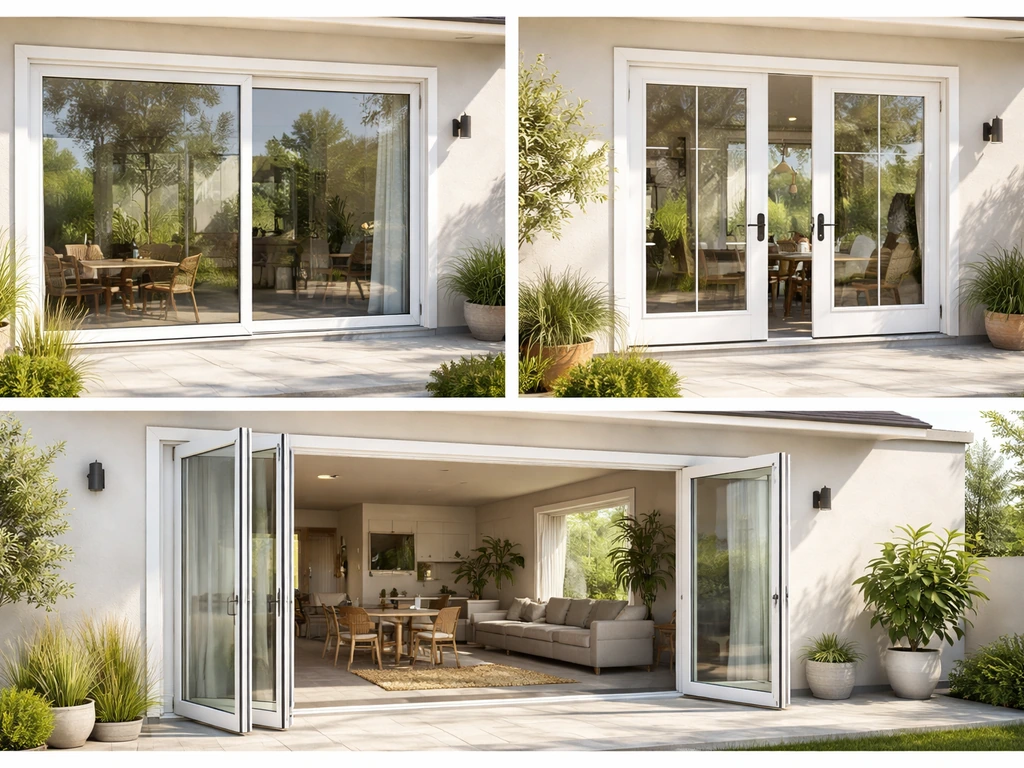
If you're searching for patio doors in Fort Worth, you're most likely dealing with a door that's letting in hot air, leaking around the frame, fogging up between the glass panes, or just grinding and sticking every time you try to open it. If you are new to the terminology, a patio door is typically the large exterior door that opens to your patio and is designed for light, airflow, and easy indoor-outdoor access. The good news: replacement patio doors are one of the more straightforward home upgrades you can do in North Texas, and a well-chosen door with proper installation will pay you back in lower energy bills, less noise, and a lot less frustration. The typical cost in Fort Worth runs roughly $974 to $2,800 for a standard sliding door installed, though French and bifold styles can push that number higher. Here's how to make the right call on style, material, sizing, and who to hire.
Patio Doors Fort Worth Replacement Guide for 2026

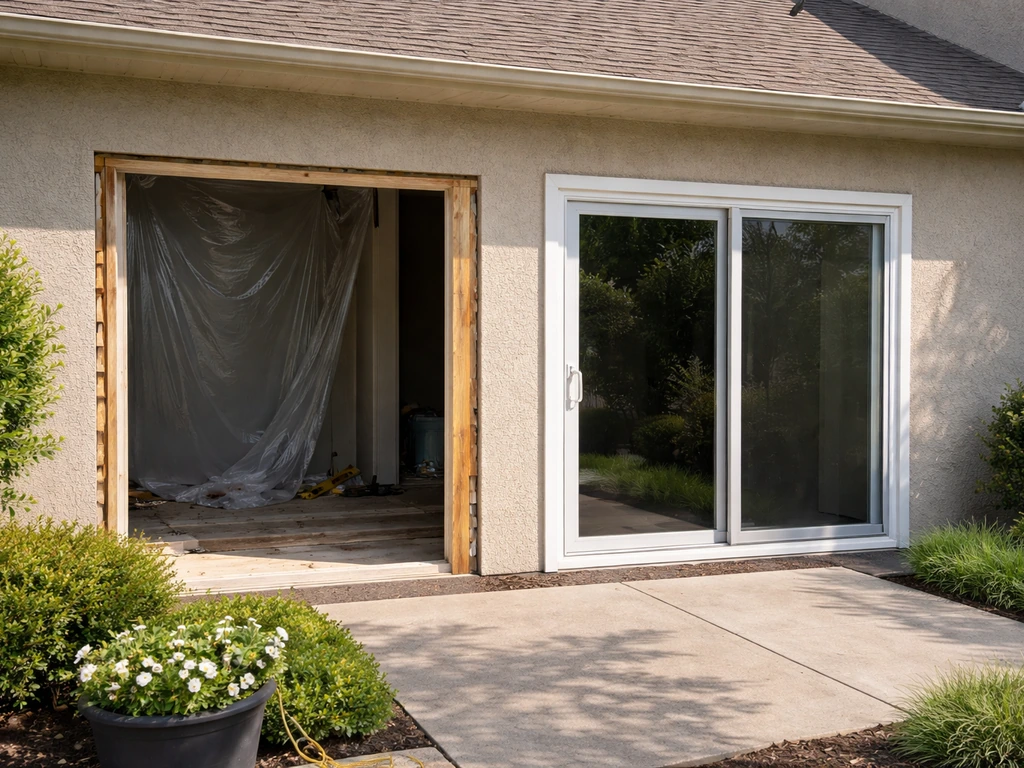
Signs your patio door actually needs replacing (not just a repair)
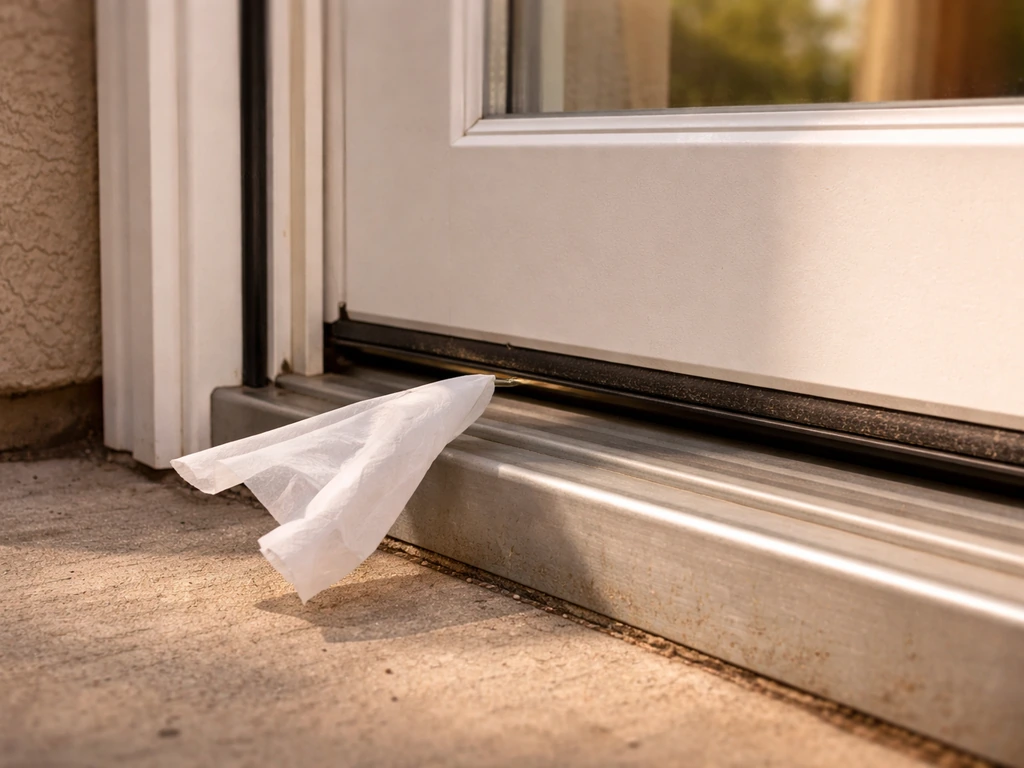
Not every problem door needs full replacement. But there are clear signs where patching is just delaying the inevitable, and in Fort Worth's climate, waiting too long usually means the damage gets worse fast.
- Cold or hot air seeping in around a closed door: This points to failed weatherstripping or a warped frame. Replacing weatherstripping is cheap, but if the frame itself has shifted or rotted, no amount of foam tape fixes it.
- Fog or condensation trapped between the glass panes: Once the insulating seal breaks, the thermal performance is gone. The glass unit needs replacement, and if the frame is also failing, the whole door is worth swapping out.
- Water at the threshold or sill: A leaking sill is serious. Water doesn't stay at the threshold. It travels down into the door jambs and subfloor beneath. If the sill plate has rotted, threshold replacement alone won't solve the moisture path.
- Frame or jamb rot: Minor surface rot can sometimes be repaired with epoxy filler, but rot that has penetrated deep into the jamb or spread behind the casing almost always needs full frame and door replacement. If the structural integrity is gone, a patch will rot back.
- Door that's hard to open, won't seat properly, or drafts at the meeting rail: Failed rollers on a sliding door can be replaced, but if the door doesn't seal at the meeting rail or the frame is racked out of square, those are installation or structural failures that replacement addresses.
- Consistently rising energy bills with no other explanation: A door that's out of square, has a failing threshold, or relies on a broken seal is an energy drain, especially during Fort Worth summers when heat gain through a poorly sealed door adds up fast.
A good rule of thumb: if the rot, seal failure, or frame damage is isolated to a small spot, repair it. If it's spread to the jambs, sill plate, or the framing behind the casing, you're better off replacing the whole unit. A Fort Worth door contractor can probe the frame in about ten minutes and tell you how deep the damage goes.
Sliding, French, or bifold: which style makes sense for North Texas
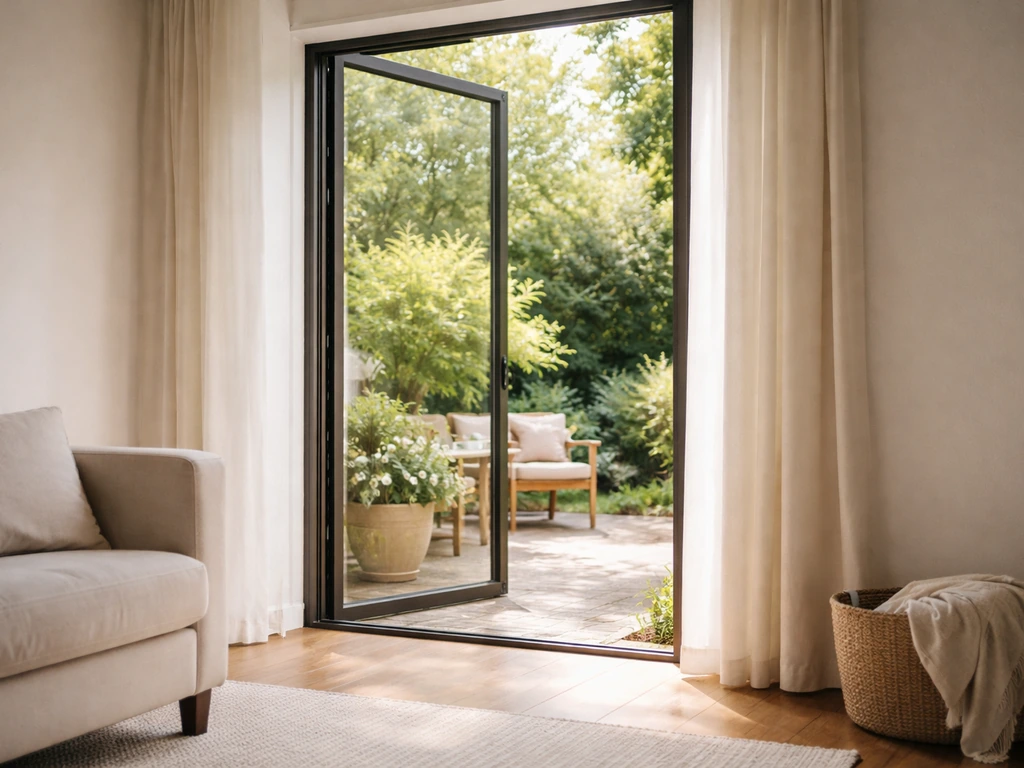
The right door style depends on your opening size, how you use the space, and honestly, how much you want to spend. If you're wondering what a single patio door is called, it usually refers to a single slab door used for an exterior opening, often as a single hinged patio door what is a single patio door called. Each type has real trade-offs in a climate that swings from 105°F summers to occasional hard freezes.
Sliding patio doors
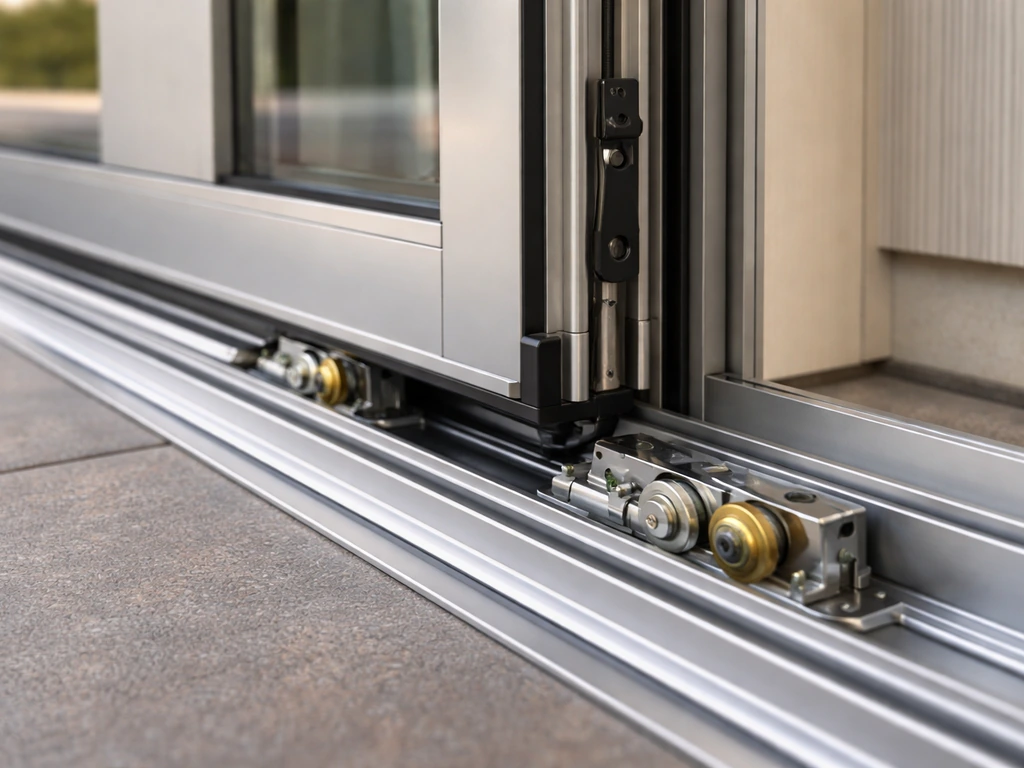
Sliding doors are the most common choice in Fort Worth homes, and for good reason. A lift and slide patio door is a different operation type where the panels lift slightly to roll open smoothly and seal tightly when closed. They don't swing into your living room or onto your patio, they work well in tighter spaces, and modern versions with quality rollers and multi-point locks perform well on both energy efficiency and security. The main thing to watch for: the meeting rail seal. A poorly installed or worn meeting rail is where most drafts and water infiltration start on a sliding door. When you're shopping, look for doors with compression weatherstripping at the meeting rail, not just brush seals.
French patio doors
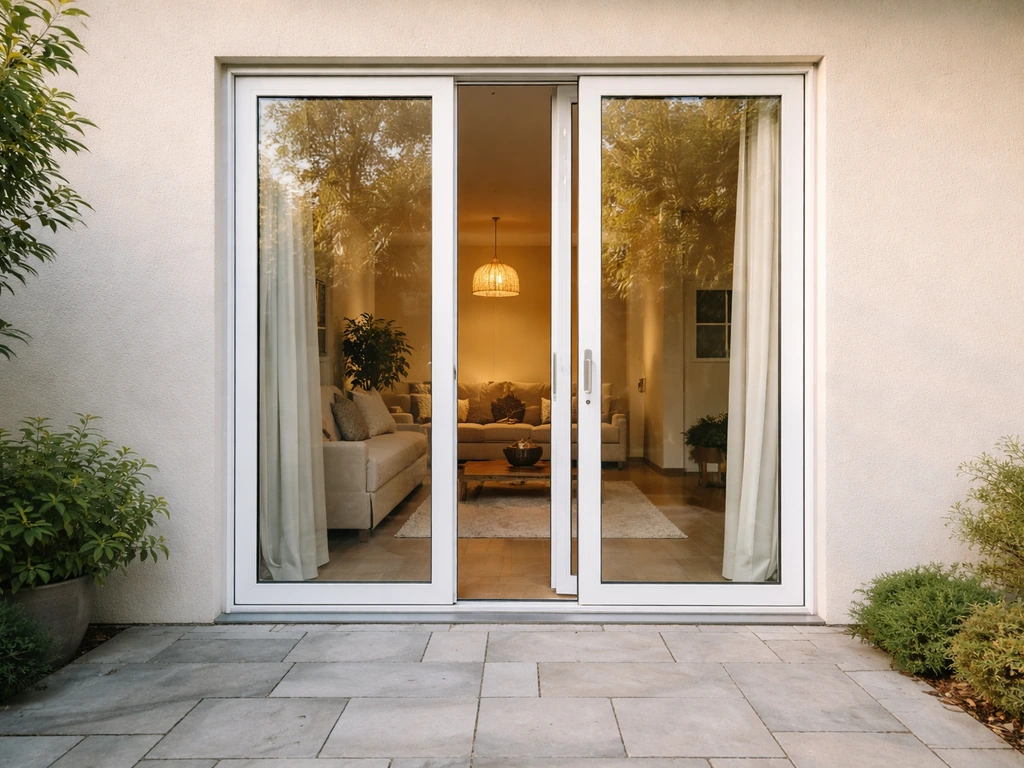
French doors (two hinged panels that swing open) give you a wider unobstructed opening when both panels are open and tend to seal tighter when closed because hinged doors compress against the frame. They're a good fit if you're replacing an older single or double outswing door and want a more traditional look. The trade-off is swing clearance: you need room on both sides for the panels to open without hitting furniture or patio steps. French doors can also start lower in price than sliding doors for basic units.
Bifold patio doors
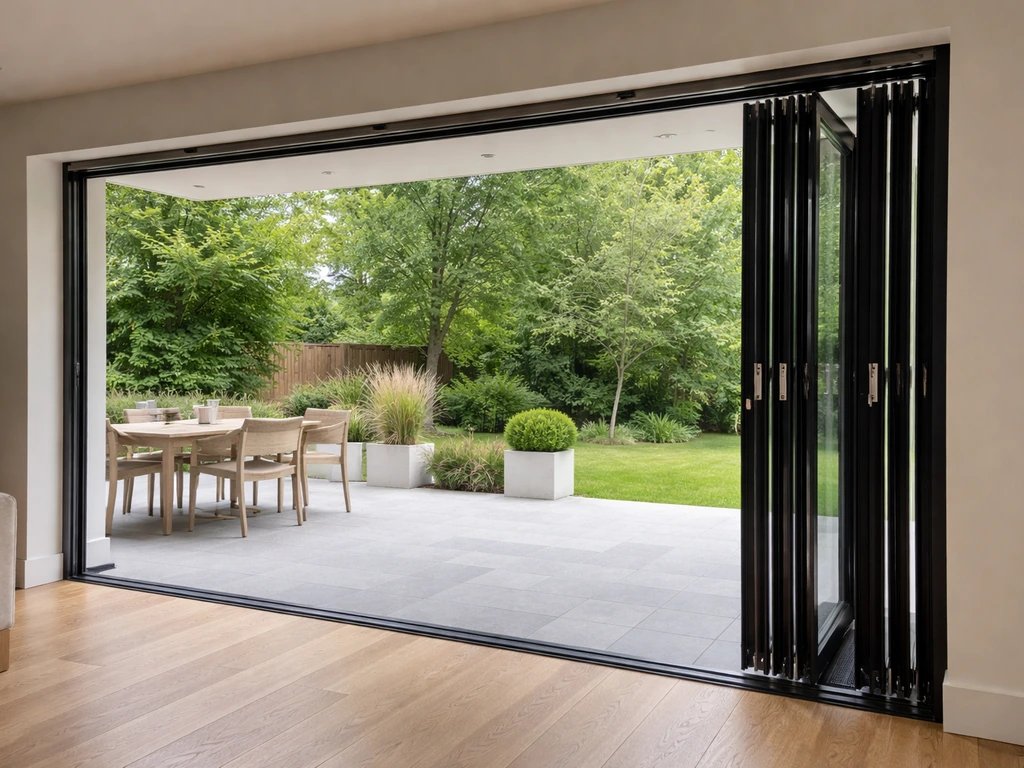
Bifold doors fold accordion-style and stack to one or both sides, opening up nearly the entire wall. They're a dramatic upgrade for indoor-outdoor living spaces, but they come at a cost: quality bifold systems can run up to $10,000 or more installed. They also have more moving hardware, which means more potential failure points over time. For most Fort Worth homeowners doing a straightforward replacement, bifolds are an upgrade choice rather than a like-for-like swap.
| Style | Best for | Typical installed cost | Main trade-off |
|---|---|---|---|
| Sliding | Space-saving, everyday use, most openings | $974–$2,800 | Meeting rail seals wear over time |
| French (hinged) | Traditional look, tight seal, wider openings | $400–$3,500+ | Needs swing clearance on both sides |
| Bifold | Expanded views, indoor-outdoor flow | $3,000–$10,000+ | Higher cost, more hardware to maintain |
For most Fort Worth replacement projects, a quality sliding door or French door covers 90% of situations well. Go bifold if you're specifically opening up a wall and the budget supports it.
How to measure your opening correctly before ordering
Measuring wrong is the most expensive mistake in a door replacement. You want the rough opening dimensions, not the old door slab size. The rough opening is the framed hole in the wall before any door unit or trim is installed.
- Remove interior casing/trim to expose the rough opening. Measure width at three points: top, middle, and bottom. Use the smallest measurement.
- Measure height at three points: left, center, and right. Use the smallest measurement.
- If any two measurements differ by more than 1/4 inch, the opening may be out of square and needs to be addressed before a new unit goes in. An out-of-square opening causes exactly the gaps and sealing failures you're trying to fix.
- Measure jamb depth (the thickness of the wall from interior to exterior). Standard is 4-9/16 inches for 2x4 framing, but Fort Worth homes with exterior insulation or stucco may run deeper.
- Check whether the sill plate and subfloor are level and solid. Probe for soft spots that indicate hidden rot before ordering.
If you're ordering a custom or special-order door, keep in mind that manufacturing lead times typically run 6 to 12 weeks. Standard stock sizes (usually 6-foot or 8-foot wide sliding units) can ship faster from local suppliers, but anything non-standard will take longer. Order before you demo the old door if at all possible.
Materials and energy performance for Fort Worth's climate
Fort Worth sits in a mixed-humid climate with brutally hot summers and occasional cold snaps. That combination means you need a door that manages solar heat gain in summer and holds heat in during a January freeze. The two numbers to focus on when comparing doors are U-factor and SHGC.
- U-factor measures how well the door insulates. Lower is better. A well-performing patio door will have a U-factor of 0.30 or below (the Andersen A-Series Frenchwood patio door, for example, lists a U-factor of 0.30).
- SHGC (Solar Heat Gain Coefficient) measures how much solar energy passes through the glass. For Fort Worth, you want a lower SHGC to reduce summer heat gain. The same Andersen example lists an SHGC of 0.15.
- Air infiltration should be at or below 0.3 cfm/ft² to meet both ENERGY STAR requirements and residential energy code. Better products come in below 0.2 cfm/ft².
- Look for the NFRC label on any door you're considering. It lists U-factor, SHGC, visible transmittance (VT), and air leakage in a standardized format so you can compare products side by side.
Frame materials compared
| Material | Pros | Cons | Fort Worth fit |
|---|---|---|---|
| Fiberglass | Excellent insulation, resists warping and rot, low maintenance | Higher upfront cost | Best overall for North Texas heat and humidity |
| Vinyl | Affordable, good insulation, no painting needed | Can expand/contract in extreme heat | Good budget choice; look for reinforced frames |
| Aluminum | Strong, slim sightlines, won't rot | Poor thermal performance without thermal break | Avoid unless thermally broken; conducts heat badly in summer |
| Wood | Beautiful, excellent insulation | Susceptible to rot in humidity and rain; high maintenance | Not recommended without full clad exterior protection |
Fiberglass is the top pick for Fort Worth if the budget allows. It doesn't warp in the heat, doesn't conduct cold the way aluminum does, and doesn't rot when the inevitable spring rain soaks the sill. Vinyl is a solid second choice and will satisfy most budgets. Just make sure any vinyl door you buy has a multi-chamber frame and reinforced corners, not the thin single-chamber construction found in budget units.
Beyond the frame and glass, proper installation is what makes energy performance real. That means a sill pan flashed and sloped outward toward the exterior, flashing tape integrated with the housewrap in the correct sequence, and continuous weatherstripping compressed against the door on all four sides. TAMKO’s TW Flash-N-Wrap Pro instructions include the blank" rel="noopener noreferrer">flashing and WRB integration sequence for exterior door openings. A beautiful door installed without proper flashing will leak in Fort Worth's spring storms just as fast as the door you're replacing.
What replacement patio doors actually cost in Fort Worth
A standard sliding patio door installation in Fort Worth, including materials and labor, typically runs between $974 and $2,800. That range covers a basic vinyl or aluminum unit at the low end and a mid-range fiberglass or name-brand vinyl unit at the upper end. Here's how the numbers break down and what pushes prices higher. If you're looking at costs, you may also want to check whether your patio doors tax credit applies to your specific replacement project.
| Budget tier | Door type | Estimated installed cost |
|---|---|---|
| Entry level | Vinyl sliding, stock size | $974–$1,400 |
| Mid-range | Fiberglass or upgraded vinyl sliding, French door | $1,400–$2,800 |
| Premium | Fiberglass French, large format sliding, bifold entry | $3,000–$10,000+ |
Labor in Fort Worth typically runs $65 to $85 per hour, and a standard sliding door installation takes around 7 hours including removal of the old unit. That puts labor alone at roughly $450 to $600 before materials. The door unit itself is the larger variable.
What drives the price up
- Frame or structural rot discovered during removal: Repairing rotted framing, sill plates, or subfloor adds labor and materials cost before the new door even goes in.
- Non-standard opening size: Custom-ordered doors cost more and take longer than stock units.
- Door style: Bifolds cost significantly more than sliding or French doors in both the unit price and installation complexity.
- Glass upgrades: Low-E coatings, triple pane, or impact-rated glass add to the base door price but can improve energy performance noticeably.
- Trim, casing, and finishing work: Interior and exterior casing replacement, patching stucco or siding around the new unit, and painting are often separate line items.
- Permit fees: Fort Worth may require a building permit for exterior door replacement. City permit fees are a modest add-on but need to be in the budget.
When comparing quotes, make sure every bid includes removal and disposal of the old door, all flashing and weatherproofing materials, trim and casing work, cleanup, and any required permit fees. In most cases, home insurance may cover patio door damage only if it was caused by a covered peril like windstorm, hail, or a break-in, and it typically won't pay for wear and tear does home insurance cover patio doors. A low quote that doesn't include those line items isn't actually cheaper.
Finding and vetting a local installer in Fort Worth
There are established door installation and replacement companies operating in Fort Worth and the broader Tarrant County area, including outfits with 20-plus years of local experience. Here's how to evaluate whoever you're talking to.
Getting and comparing quotes
- Get at least three written quotes. Phone estimates aren't quotes. An installer who won't put numbers in writing isn't worth hiring.
- Ask each contractor to specify: door brand and model, glass package (U-factor and SHGC), frame material, weatherstripping type, flashing method, and what's included for removal, disposal, trim, and sealing.
- Ask specifically about sill pan flashing. If a contractor looks blank at that term, find someone else. Proper sill pan installation is the single most important water management detail in a door replacement.
- Ask about permits. Replacing an exterior door in Fort Worth may require a building permit. A legitimate contractor will either pull the permit for you or clearly explain why one isn't required in your specific situation.
- Ask for references from Fort Worth-area jobs completed in the last 12 months, not just a general portfolio.
Timelines and warranties
For stock-size doors, installation can happen within a week or two of ordering. Custom or special-order doors typically require 6 to 12 weeks of manufacturing lead time on top of scheduling. Factor that in before you demo anything. On warranties, you should expect two separate warranties: one from the door manufacturer covering the product itself (frame, glass seal, hardware), and one from the installer covering their labor and installation quality. When you’re budgeting for a patio door replacement, it helps to understand how patio door definition insurance can affect your coverage and out-of-pocket costs. Get both in writing. A manufacturer warranty that covers glass seal failure for 10 or 20 years means nothing if the installer refuses to come back when the flashing leaks in year two.
Screens, security upgrades, and covering options
Once the door is in, there are a few practical add-ons worth considering, especially given how much Fort Worth homeowners use their patios in the spring and fall months.
Screen options
Standard sliding screen doors are included with most sliding patio door packages, but they're often the first thing to fail. Retractable screen systems are worth the upgrade if you want screens that disappear when not in use and don't degrade in the sun. Products like the Larson Brisa retractable sliding screen and Andersen's LuminAire retractable screen (sized for standard 72-inch by 80-inch openings) mount to the door frame and roll away when not in use. For French doors, a retractable screen system spanning both panels keeps insects out without a fixed screen blocking the view.
Security improvements
Standard single-point patio door locks are easy to defeat. Two worthwhile upgrades: a multi-point locking system (which engages the door frame at multiple points along the height of the panel, not just one latch) and a track block or adjustable stop bar that prevents the panel from being lifted out of the track from the outside. Some multi-point locking packages pair an integrated bolt lock with the handle mechanism for improved resistance over a basic single-point lock. These are low-cost add-ons at installation time and significantly harder to retrofit later.
Covering and shade options
A patio door facing west or south in Fort Worth is going to take direct afternoon sun for months at a time. Interior cellular shades or solar shades reduce heat gain through the glass and help your HVAC keep up. On the exterior, a pergola, retractable awning, or patio cover over the door reduces direct sun load on the glass itself, which extends the door seal's lifespan and reduces interior temperatures near the door significantly. If you're replacing the door anyway, it's a good time to have a patio cover conversation with the same contractor. Insurance coverage varies by policy and the type of damage, so you should confirm with your provider whether patio door repairs or replacement are covered.
Your next steps
Here's the practical sequence to move from search to installed door. Start by walking your current door with a flashlight: probe the sill and jambs for soft spots, look for fog between the panes, and feel for air movement when the door is closed. That tells you whether you're doing a straightforward upgrade or dealing with moisture damage that needs to be factored into the scope and budget. This quick patio doors meaning guide helps you choose the right type for your space and climate needs. Then measure your rough opening carefully at three points in each direction and note your jamb depth. Take photos of the existing frame, threshold, and exterior trim before any contractor visits. Get three written quotes that include the full scope: door unit specs, flashing method, trim work, permit, and both manufacturer and labor warranties. If you need a custom-size door, start that process immediately because lead times can run two to three months. Prioritize fiberglass or quality vinyl with a U-factor at or below 0. A buying guide that references blank" rel="noopener noreferrer">NFRC labeling also highlights an air infiltration benchmark of 0.3 cfm/ft² or less to aim for when comparing patio doors. 30 and a low SHGC for the Fort Worth climate, and add multi-point locks and a retractable screen at installation rather than after the fact.
FAQ
My patio door only leaks during heavy rain. Should I repair it or replace it?
In Fort Worth, patio door frames often get damaged at the sill first. If you see soft wood, crumbling caulk, or water staining along the threshold after rain, that is usually more than a “glass fix” and you should plan for frame or full unit replacement, not just re-caulking.
Why does my sliding patio door still draft even after I adjusted the rollers?
For a sliding door, remove and reinstall adjustments won’t fix a worn meeting rail seal or a track system that has shifted or warped from water intrusion. If you can feel drafts along the meeting rail with the door closed, replacement hardware or full replacement is more likely than a simple alignment.
Can I replace just the glass in my patio door instead of the whole unit?
Yes, but only when the problem is truly isolated. If fogging is between the glass panes, that indicates a failed insulated glass seal, and you typically need an IGU replacement or a full unit replacement, depending on whether the manufacturer sells IGUs for your exact model.
What should I confirm in the measurements before ordering patio doors in Fort Worth?
You should usually ask for the rough opening dimensions to be measured in writing, plus the jamb depth and threshold type the installer plans to use. If the contractor only measures the old slab or gives a total size without referencing the framed opening, that quote is higher risk for misfit and later air leaks.
How can I tell whether my patio door warranties actually protect against leaks?
Confirm the warranty split in plain terms: manufacturer coverage for the door components (including glass seal and hardware) and installer coverage for installation items like flashing and sealing. If the installer warranty doesn’t cover weatherproofing failures, you could end up paying again if water intrusion happens.
Are retractable patio door screens compatible with all door styles and openings?
Screen upgrades can be worth it, but don’t assume every retractable system fits your existing frame. Ask the installer to confirm the exact opening size and whether the new screen is top-guided or side-guided, then verify it can be serviced without removing the entire door.
My door is difficult to slide. What checks should a contractor do first?
If the door is hard to open or the rollers seem to jump, the issue can be a debris-packed track, misalignment from a settling frame, or water-damaged subframe. A contractor should check for track level and frame plumb, not only roller replacement.
Should I install a patio cover before or after replacing my patio doors?
If you plan to add a patio cover or pergola, you should coordinate the timing with the door order and installation. Delaying a patio cover can reduce your ability to shade the new seal during its early months, so discuss whether exterior flashing and coverage edges will overlap.
Why do some patio door replacement quotes differ so much in Fort Worth?
Be careful with discount “look-alike” quotes that exclude flashing integration, sill pan work, or permit handling. Ask whether the bid includes housewrap tie-in, flashing tape sequencing, and disposal of the old unit, since those details often determine whether the door stays leak-free after the first spring storm.
Do multi-point locks require special installation beyond replacing the lock hardware?
Multi-point locks improve security, but they only work as intended if the door frame receives the correct reinforcement and the locking points align with the strike plates. Ask if the installer will verify alignment at all points after installation, not just at the main latch.
When should I demo the old patio door if I’m ordering custom sizes?
The best time is right before installation, because lead times can be 6 to 12 weeks for custom units. However, you can still take measurements and prep the site early. Just avoid removing the old door fully until your rough opening checks and delivery dates are confirmed.
Which matters more in Fort Worth, low U-factor or low SHGC?
For energy performance in Fort Worth, target a low SHGC for west or south-facing doors to reduce afternoon heat gain, and pair it with a low U-factor for winter comfort. If you pick only one metric, you can still end up with a door that feels cold in January or makes the room overheat in July.
What installation step prevents patio doors from leaking at the threshold?
If the door was installed with a damaged or missing sill pan, even a new door can fail quickly at the threshold. Ask whether the installer will use a sill pan flashed and sloped outward, and whether the flashing ties into the exterior water barrier correctly.
If my patio door is failing, when would insurance actually help in Fort Worth?
Insurance typically does not pay for deterioration like failed weatherstripping, worn rollers, or long-term seal failure, unless a covered event caused the damage (for example hail breakage or a storm). Ask your insurer whether they treat replacement due to weather damage as “repair first” or “replacement eligible,” since claim rules differ.