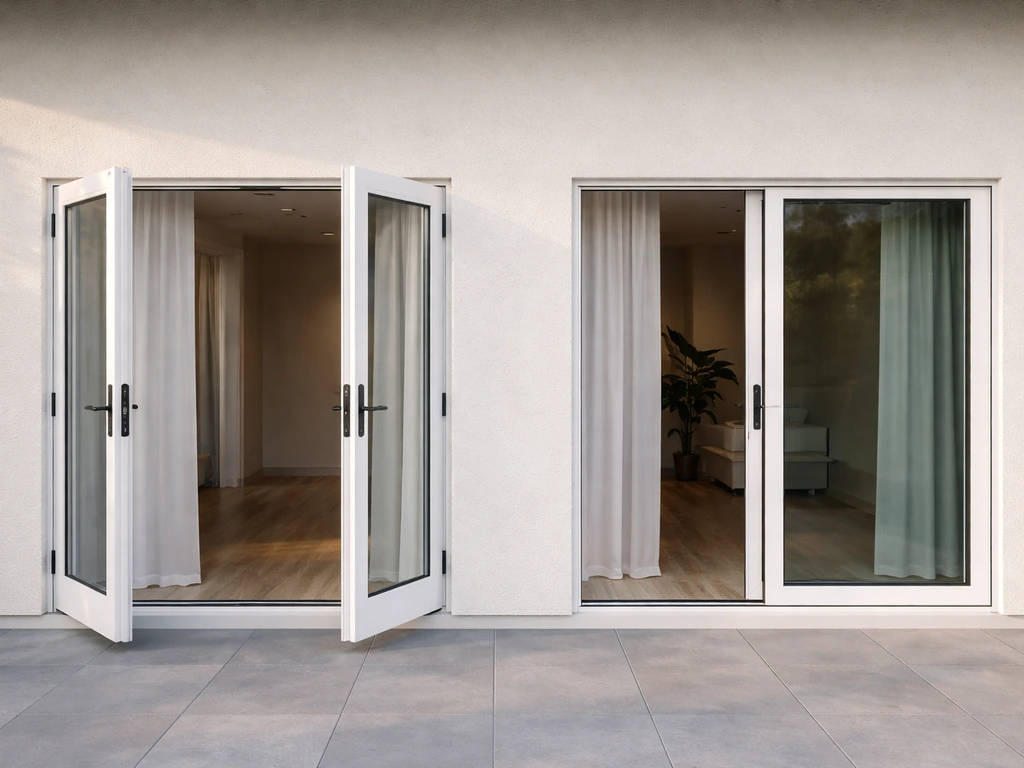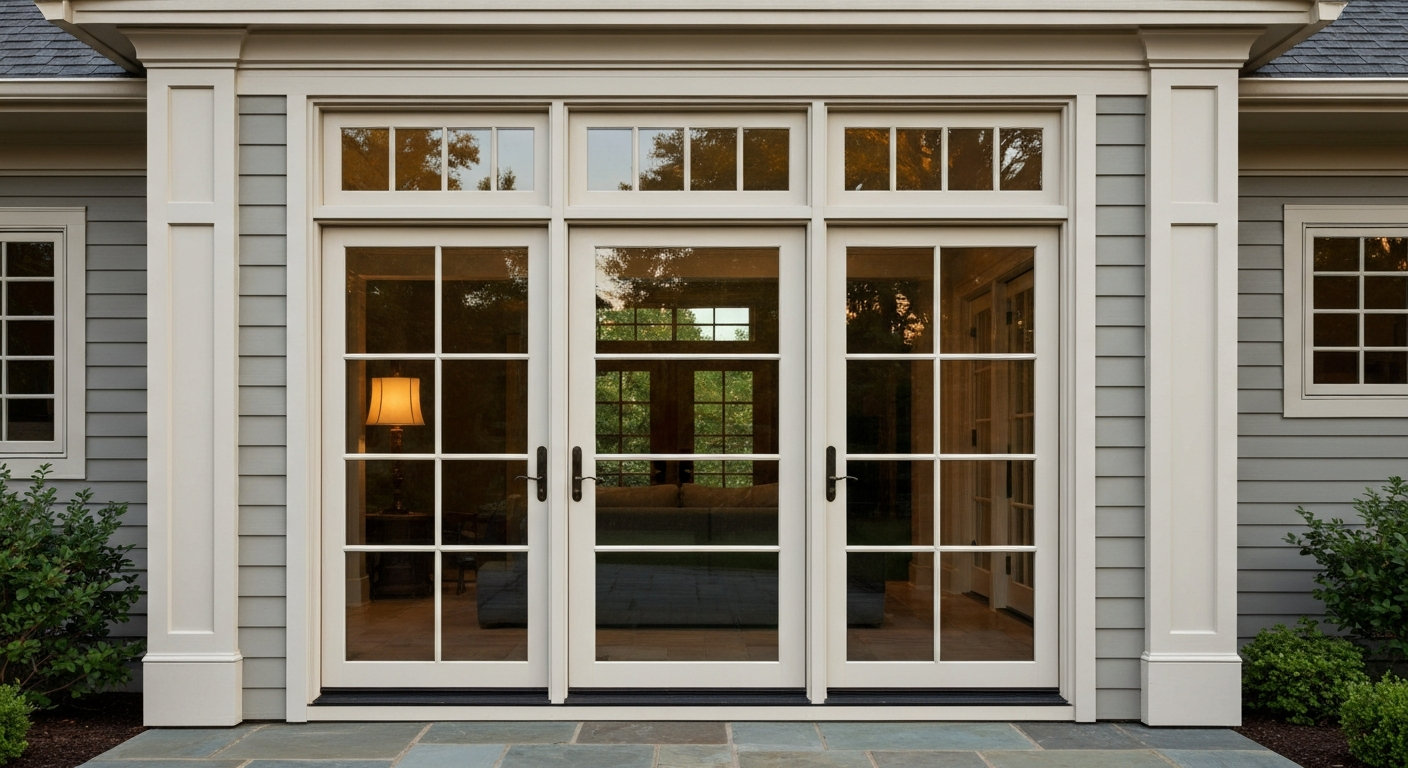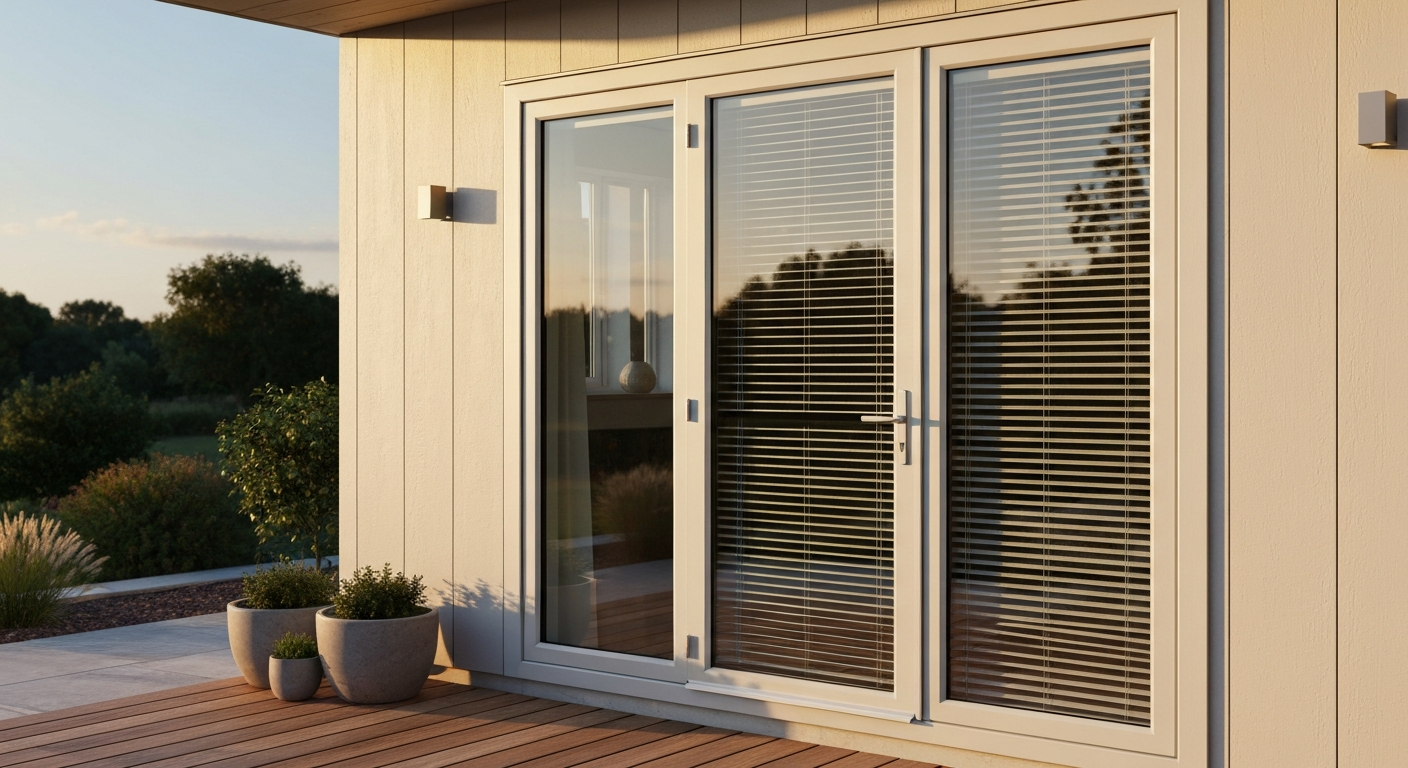
Most of the confusion here comes from a naming problem: 'patio doors' is actually a broad category that includes sliding doors, hinged/French-style doors, bifold doors, and multi-slide systems. When people ask 'patio doors vs French doors,' they're usually comparing sliding patio doors against hinged French doors, and that's the comparison this guide focuses on. If you're replacing an exterior opening today, sliding patio doors give you more usable floor space, easier traffic flow, and lower upfront cost. French doors give you a wider, unobstructed opening, better curb appeal, and a stronger indoor/outdoor connection. Which one wins depends on your layout, budget, and how you actually use the space.
Patio Doors vs French Doors: Which Is Best for Your Home?

Owen Delaney
3 May 2026
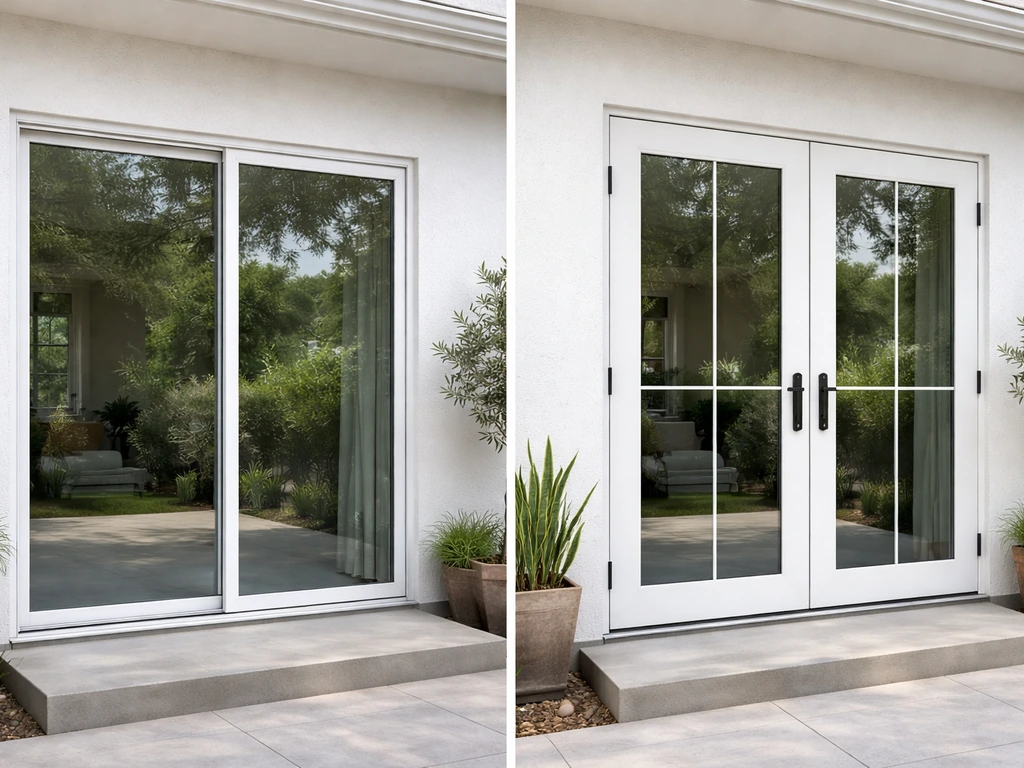
The real difference between patio doors and French doors
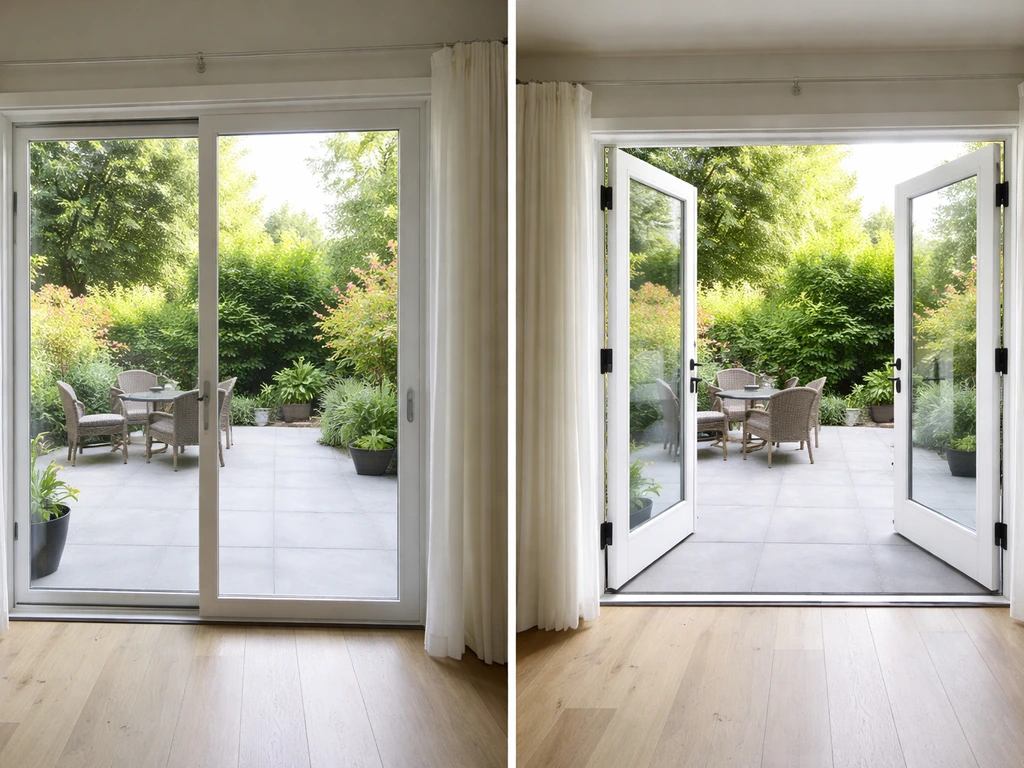
A standard sliding patio door has one fixed panel and one panel that glides along a track, no swing clearance needed, and the opening is limited to about half the door's total width. A French door (what Pella and other manufacturers call a 'hinged patio door') uses two panels that swing open from the center on hinges. Open both panels fully and you get the entire width of the rough opening as usable clearance. That single operational difference drives almost every practical trade-off between the two styles.
French doors can swing inward, outward, or both, and you can get them in single- or double-door configurations. Sliding doors don't need any clearance arc, which makes them the default choice in tight spaces. Bifold and multi-slide systems sit in their own category, they're worth knowing about if you want a wall-of-glass effect, but for a standard 6-foot or 8-foot opening, you're almost always choosing between sliding and hinged/French.
Which door works best for your specific situation
Privacy
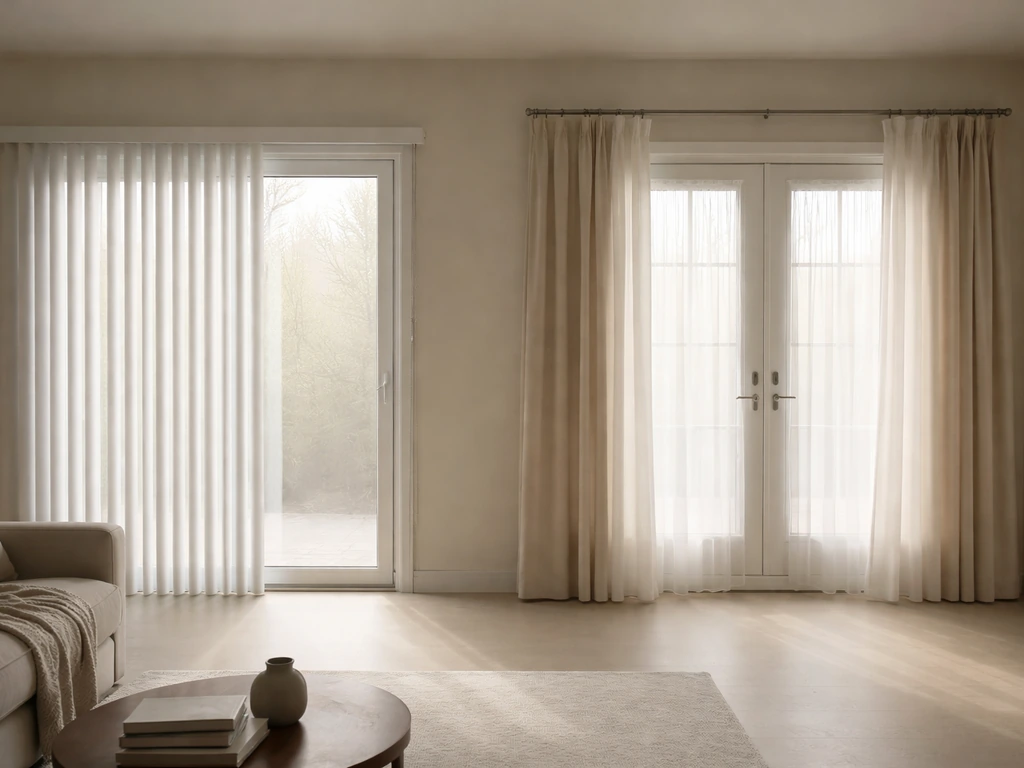
Neither style gives you a structural privacy advantage, both are largely glass. The difference is in what you can add. Sliding doors accept vertical blinds, roller shades, and between-the-glass blinds (available from Pella and Andersen) more easily than French doors, simply because of the flat, uninterrupted panel geometry. French doors, with their divided-light grid patterns and dual-panel swing, can make certain blind and shutter configurations awkward. If privacy is a high priority, sliding doors with built-in blinds are the more practical choice.
Natural light
French doors typically let in more light because a standard 6-foot French door unit has less frame-to-glass ratio than a comparable sliding door with its thick track housing and overlapping stile. If your main goal is maximizing daylight, French doors have a slight edge, and if you go up to a 8-foot or 9-foot height (now a common upgrade), the difference becomes even more noticeable.
Traffic flow and moving large items
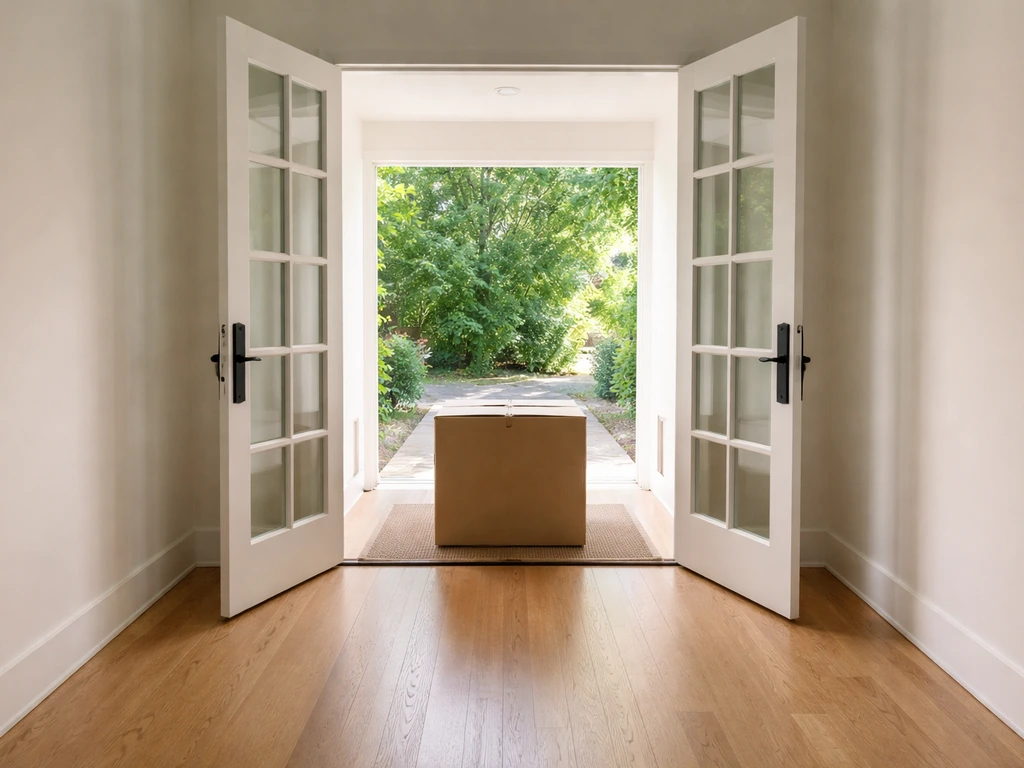
This is where French doors genuinely shine. Opening both panels of a 6-foot French door gives you a full 72 inches of clear passage. A 6-foot sliding door gives you roughly 35 inches, about half. If you regularly move outdoor furniture, grills, or large party setups through that opening, French doors are dramatically more practical. They're also better for high-traffic households where multiple people pass through at once.
Space constraints
A French door swinging inward needs about 36 inches of clear floor space on the interior side per panel. In a small dining room or tight kitchen layout, that swing arc can block a table or create a hazard. Outswing French doors solve the interior space problem but require a clear exterior path. Andersen also provides technical installation guidance for its Frenchwood outswing hinged patio doors, including rough-opening preparation and installation instructions. If neither works, a sliding door is the right call, it needs zero swing clearance and fits into almost any floor plan.
Indoor/outdoor feel
French doors create a stronger visual and physical connection between inside and outside. When both panels are open, there's no track to step over, no panel blocking the center of the view, and no mechanical sliding feel. For decks, patios, and entertaining spaces where you want the interior to flow naturally into the exterior, French doors deliver a noticeably more open, architectural look. Sliding doors are functional and clean, but they don't disappear into the wall the way a fully open French door does.
Security, durability, and maintenance
Security
Sliding doors have historically been seen as a weak point, the glass panel can sometimes be lifted out of the track from the outside on older installations. Modern sliding doors address this with anti-lift pins, multi-point locking hardware, and stronger frames, so a new sliding door from a reputable manufacturer isn't inherently less secure than French doors. That said, French doors with multi-point locking systems (where the door locks at three or more points along the frame, not just at the knob) are considered very secure. The weak point on French doors is often the astragal, the vertical strip between the two panels, which can be kicked in on cheaper units. Look for doors with a reinforced astragal and deadbolt provisions if security is a top concern.
Durability
Sliding door tracks are the most common durability failure point. Dirt, debris, and pet hair accumulate in the track channel and cause the roller mechanism to wear out over time, typically 10 to 20 years depending on use frequency and how well the track is maintained. French door hinges, weatherstripping seals, and the astragal seal between panels are the equivalent failure points. Hinge sag is real on heavy solid-wood French doors after 10 to 15 years, especially on outswing configurations exposed to sun and rain. Fiberglass and steel frames hold up better than wood in both styles.
Maintenance
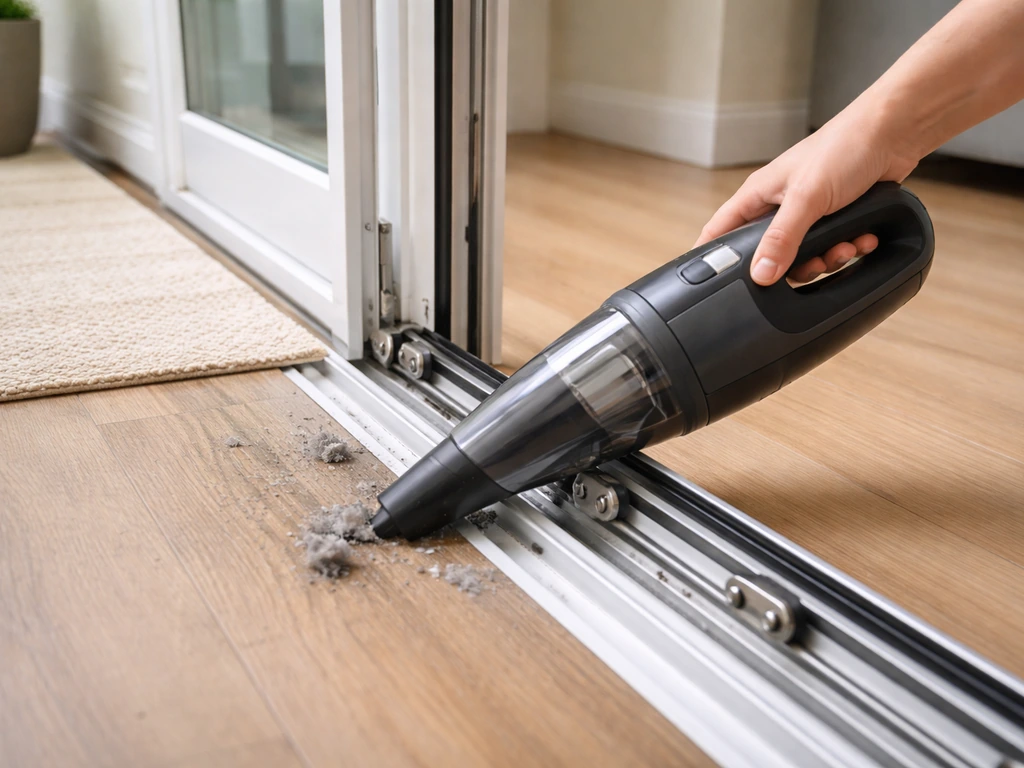
Sliding doors: vacuum and wipe the track channel every few months, lubricate the rollers once a year with a silicone-based spray, and check the weatherstripping at the base annually. French doors: lubricate hinges once a year, inspect the center astragal seal before winter, and check the door sweep at the bottom of each panel. Wood French doors require repainting or resealing every 3 to 5 years. Fiberglass and vinyl options in both styles dramatically reduce maintenance burden.
What each option actually costs
French doors tend to cost more than sliding patio doors at equivalent quality levels, though the gap has narrowed. The bigger cost drivers are material, glass package, and installation complexity, not the operating style alone. Here's how the numbers break down as of 2026, including professional installation in a standard existing opening.
| Door Type | Entry-Level | Mid-Range | Premium |
|---|---|---|---|
| Sliding patio door (vinyl) | $800 – $1,500 | $1,500 – $3,000 | $3,000 – $5,500 |
| Sliding patio door (fiberglass) | $1,500 – $2,500 | $2,500 – $4,000 | $4,000 – $7,000 |
| French door (vinyl) | $1,000 – $2,000 | $2,000 – $3,500 | $3,500 – $6,000 |
| French door (fiberglass) | $2,000 – $3,500 | $3,500 – $5,500 | $5,500 – $10,000+ |
| French door (wood) | $2,500 – $4,500 | $4,500 – $7,000 | $7,000 – $15,000+ |
These ranges include door unit plus standard installation labor (roughly $500 to $1,500 for a straightforward replacement in an existing opening). What pushes price up: triple-pane glass or low-E coatings ($300 to $800 more), built-in between-the-glass blinds ($200 to $600 more), multi-point locking hardware ($150 to $400 more), and non-standard sizing or structural modifications to the rough opening (can add $500 to $2,500+ in labor). If you're curious about the full breakdown of why door prices vary so much, the cost drivers run deeper than just materials. If you are wondering why patio doors cost more than you expect, the biggest drivers are usually the glass package, hardware, and installation complexity why patio doors so expensive.
Sizing, clearances, and what to measure before you buy
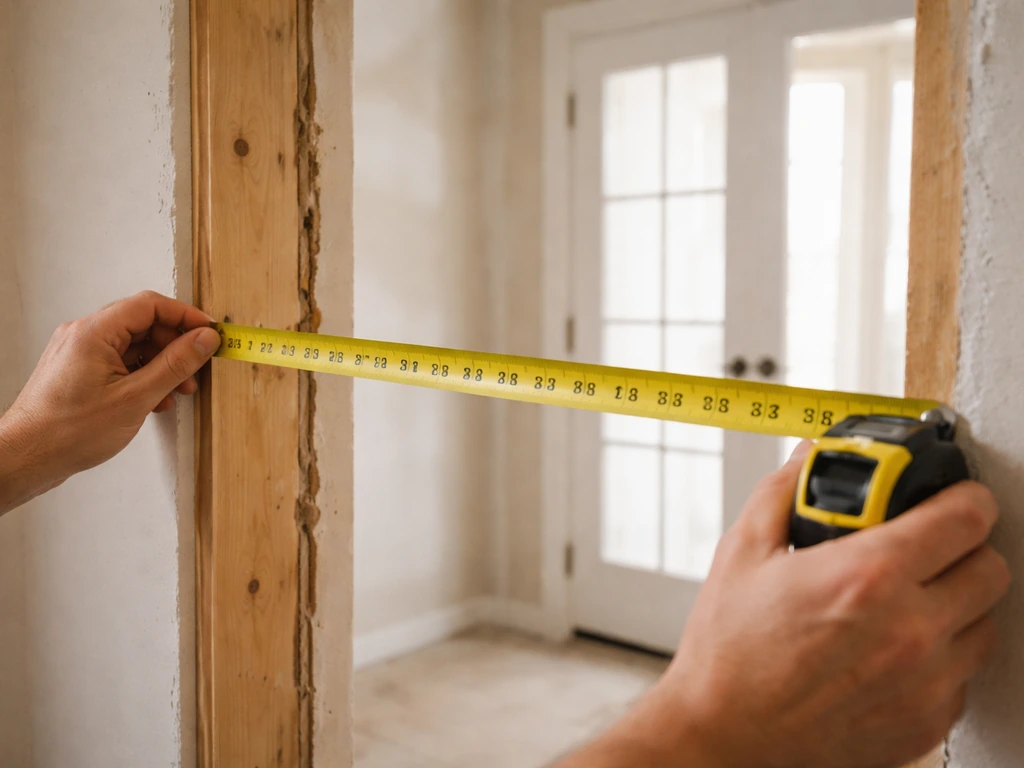
Before you order anything, measure the rough opening, the framed hole in the wall, not the existing door. Standard patio door rough openings are typically 72 inches wide by 80 inches tall (for a 6/0 x 6/8 unit) or 96 inches wide by 80 inches tall (for an 8/0 x 6/8 unit). The door unit itself runs slightly smaller than the rough opening to allow for shimming and squaring during installation, usually about 0.5 to 1 inch per side.
For French doors specifically, also measure the interior swing arc. Stand at the centerline of the opening and mark a 36-inch radius on the floor, that's the clearance each panel needs to open fully. If that arc hits a wall, cabinet, or piece of built-in furniture, you need outswing French doors or a different door style altogether. For sliding doors, measure the wall depth (the thickness from interior face to exterior face) because some sliding door frames require a minimum wall depth of 4.5 inches for proper installation.
- Measure rough opening width and height (not the existing door unit)
- Check wall depth — minimum 4.5 inches for most patio door frames
- Map the interior swing arc for French doors (36 inches per panel)
- Confirm which direction the door swings or slides relative to the exterior step or deck
- Check whether the existing header can support the load if you're widening the opening
- Verify whether the sill is level — out-of-level sills cause sliding track and French door alignment problems
One thing that trips people up: 'active' vs 'inactive' panel orientation on French doors. The active panel (the one with the handle you open first) needs to be on the side that makes sense for your traffic pattern. If you order it wrong, it's a frustrating fix. Tell your dealer which side the active panel should be on before finalizing the order.
Screens, coverings, and upgrades that make either door work better
Screens
Sliding doors come with a standard screen that glides on the outer track, simple, reliable, and easy to remove for cleaning. French doors require a different screen solution: retractable screen systems (like Phantom or Larson) that pull from a housing mounted at the top or side of the opening, or hinged screen doors that swing with the main door. Retractable screens cost $400 to $1,200 installed per opening and are the cleanest-looking option for French doors. Hinged screen doors are cheaper ($150 to $400) but add more visual bulk.
Blinds and coverings
For sliding doors, a standard 2-inch faux wood blind or cellular shade ordered to the door's width works well. Many manufacturers now offer between-the-glass blinds factory-installed, these are maintenance-free and look very clean. For French doors, you have a few options: door-mounted blinds that attach directly to each panel (they move with the door), separate curtain panels hung from a rod above the opening, or plantation shutters on each panel. Door-mounted blinds ($80 to $200 per panel) are the most practical for frequent privacy use.
Weather and seal upgrades
Both door types benefit from upgrading the weatherstripping if you're in a climate with extreme cold or driving rain. For sliding doors, add a door sweep to the bottom of the sliding panel and replace the pile weatherstripping on the frame sides every 5 to 7 years. For French doors, the center astragal seal is the most common draft point, look for a compression-style astragal rather than a brush seal in cold climates. A door shoe (a thicker, adjustable bottom sweep) on each panel adds meaningful draft protection for under $50 per door.
Security add-ons
For sliding doors: a sliding door bar (a metal rod laid in the track, around $20) and anti-lift pins drilled through the top of the sliding panel frame are cheap, effective additions. A smart lock with a keypad is harder to retrofit on sliding doors but available through brands like Yale and Schlage in sliding-specific versions. For French doors: a surface-mount deadbolt or a flush bolt at the top and bottom of the inactive panel adds meaningful security beyond the standard knob lock. Multi-point lock upgrades from brands like Andersen or Pella (often $150 to $350) are worth it on any high-end French door unit.
How to choose: a quick decision framework
Here's how I'd think through this decision based on the most common homeowner situations:
| Your situation | Best choice | Why |
|---|---|---|
| Tight budget (under $2,000 installed) | Sliding patio door (vinyl) | More options at lower price points, lower installation complexity |
| Small room with limited swing space | Sliding patio door | No swing arc needed, works in any floor plan |
| Frequent large item passage (furniture, grills) | French door | Full opening width when both panels open |
| High-traffic household, kids and pets | Sliding patio door | One-handed operation, no door to swing into anyone |
| Maximizing indoor/outdoor flow for entertaining | French door | Fully open feel, no center obstruction, better aesthetics |
| Cold or high-wind climate | Sliding door (fiberglass) OR outswing French (fiberglass) | Fiberglass resists warping; outswing avoids wind-forced-open risk |
| Hot climate, maximizing ventilation | French door (inswing) | Full opening captures cross-breeze; screens required |
| Strong curb appeal priority | French door | Architectural character, visible from street |
| Low-maintenance priority | Sliding (vinyl) or fiberglass either style | Avoid wood; sliding track is the only real maintenance task |
If you're still genuinely torn, go with fiberglass French doors in a 6-foot outswing configuration, it's the option I see hold up best across climates and use patterns, and it adds resale value without the maintenance burden of wood. If budget is the constraint, a quality vinyl sliding door from Pella, Andersen, or JELD-WEN will serve most households reliably for 20-plus years.
Your next steps before buying
- Measure your rough opening (width x height) and wall depth before contacting any dealer or ordering online
- Walk the interior swing arc for French doors with a tape measure — rule out the option now if clearance is a problem
- Decide on frame material first (vinyl, fiberglass, or wood) — this sets your budget range more than anything else
- Choose your glass package: standard double-pane is fine in mild climates; upgrade to low-E or triple-pane in USDA Climate Zones 5 and above
- Get at least two quotes from local installers on supply-and-install, and one from a big-box store (Home Depot, Lowe's) for comparison
- Ask each dealer about lead time — fiberglass French door units can run 6 to 12 weeks from order to delivery in 2026
- Confirm screen, blind, and lock options before finalizing the order — retrofitting these later always costs more
The naming confusion between 'patio doors' and 'French doors' is real, but once you understand that most of the debate is actually sliding vs. The difference between French door and patio door comes down to how each style opens, how much clearance it needs, and the kind of outdoor flow it creates. hinged, the decision gets straightforward. Match the operating style to how you actually use the space, pick the right frame material for your climate, and don't skip the accessories, screens, seals, and locks are what make either door genuinely livable for the long term.
FAQ
Can I use a sliding patio door where a French door swing would normally be, if my opening is too narrow for the swing arc?
Yes, that is one of the most common fixes. If you cannot clear the 36-inch interior arc per French panel, switch to a sliding unit so you do not block tables or create a traffic hazard. Also confirm your wall depth for sliding (some frames need about 4.5 inches) so the door doesn’t end up too recessed for proper weather sealing.
Will a French door always give me more usable passage width than a sliding door?
Only if both French panels can fully open into the space you have. If you have an interior obstruction or you select the wrong swing direction, the clearance advantage disappears. For a true comparison, measure the open path in your room (not just the door width) and verify that both panels reach their full stop angles.
Do I lose privacy with sliding doors because the glass is divided into fewer sections?
Not necessarily. Sliding doors often work best for privacy upgrades because built-in between-the-glass blinds and vertical blind options sit more cleanly on a single flat panel. With French doors, divided-light grids and two-panel swing can limit which privacy products sit flush, so you may need door-mounted blinds or curtains for the same effect.
Are French doors more drafty because there are more seals and meeting points?
Draft risk usually comes from the seal design, not the door style. The center astragal seal on French doors is a common leakage point, so choosing a compression-style astragal for cold climates matters. For sliding doors, the bottom sweep and side weatherstripping drive most comfort issues, so replacing worn pile weatherstripping often improves performance more than changing the frame type.
How do I know whether my French doors should swing inward, outward, or be configured both ways?
Base it on where you can provide clearance. Inward swing can interfere with interior furniture and hazards, while outward swing requires an unobstructed exterior path for safe egress. If you have no safe exterior clear zone, consider a sliding door or an outswing French door only if the exterior area is fully usable year-round.
What’s the most common mistake when ordering the “active” French door panel?
Ordering the active panel on the wrong side relative to your traffic pattern. If the handle-first panel is set up opposite how you enter and exit, you will feel the door workflow every day. Before you finalize, tell your dealer which side needs to be active and confirm the hinge handing and swing direction match your preferred route.
Can I retrofit a screen easily on a sliding patio door or French doors?
It depends on the screen type. Sliding doors usually use a standard track screen that glides on the outer track and is relatively straightforward to maintain. French doors often require retractable systems or hinged screens, retractables look clean but cost more, and hinged screen doors add more visual bulk, so factor this in at order time rather than later.
Is it worth upgrading security hardware even if I’m not worried about break-ins?
Yes, but prioritize in the right order. For sliding doors, the biggest improvements are anti-lift pins and good multi-point engagement where available. For French doors, consider a deadbolt or flush bolts on the inactive panel, and if the unit is cheaper, specifically ask about reinforced astragal construction because that area is frequently targeted.
How do I choose the best frame material if I live in a freeze-thaw or wet climate?
Look for low-maintenance materials and seal compatibility. Fiberglass and steel generally resist warping and hold up better across heavy weather, while wood can require more frequent repainting or resealing. Also confirm the weatherstripping system you plan to use (sweeps and astragal type) matches your local conditions so you don’t fight leaks every season.
Which door type is easier to keep operating smoothly over time if I have pets or lots of debris?
Sliding doors can be easier to neglect but harder to keep flawless if the track gets clogged, debris and pet hair typically accumulate in the track channel. Regular track vacuuming and annual roller lubrication help, but if you expect heavy debris, prioritize easy-clean maintenance access or choose a configuration where cleaning the track is simple. French doors avoid track-clog issues but still require hinge lubrication to prevent sag over time.
Are the typical measurements in the guides enough, or do I need to re-check anything before installation day?
Re-check both the rough opening and the practical clearance around opening. Confirm you measured the framed opening, not the old door slab, and validate interior swing clearance for French doors and wall depth for sliding doors. Also verify any floor level transitions like tile edges or thresholds, because they can change how much sweep contact and usable clearance you get.