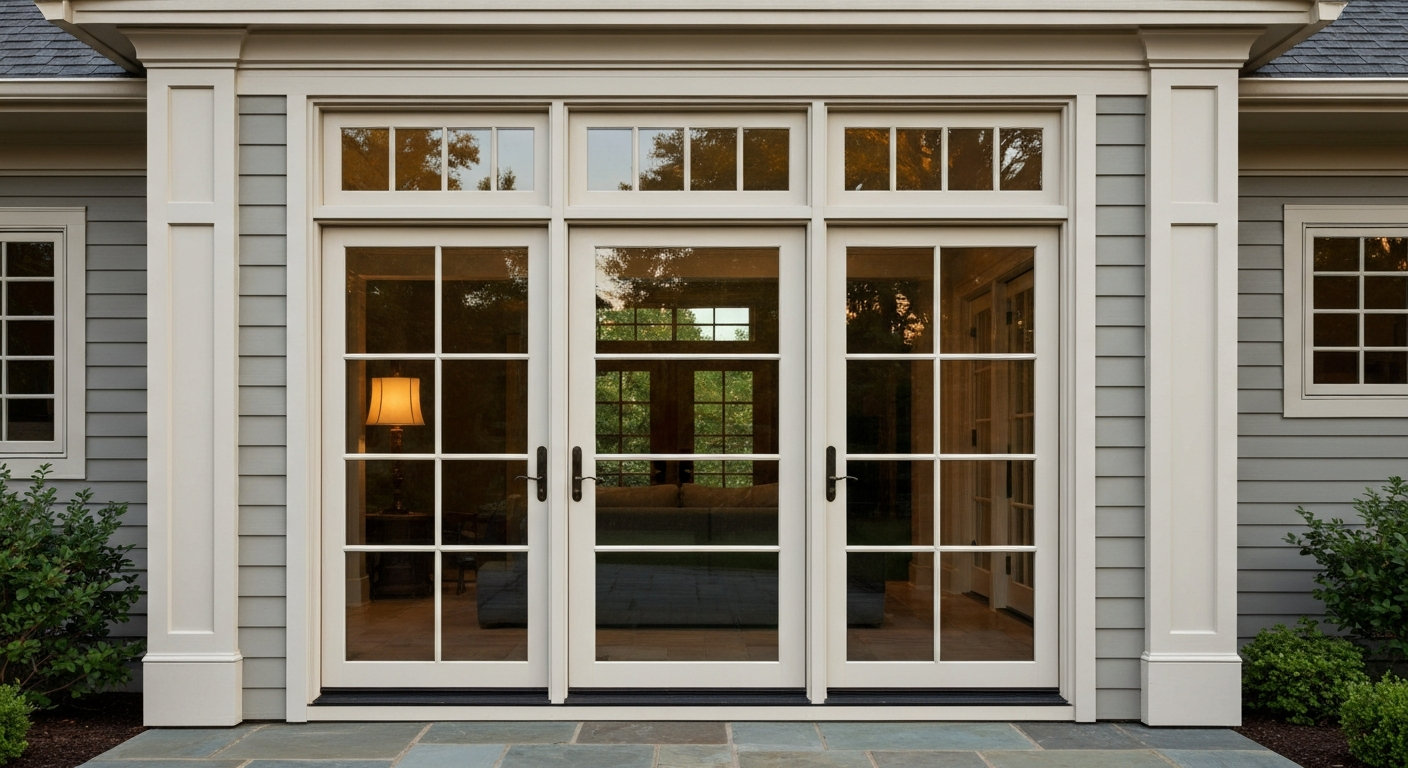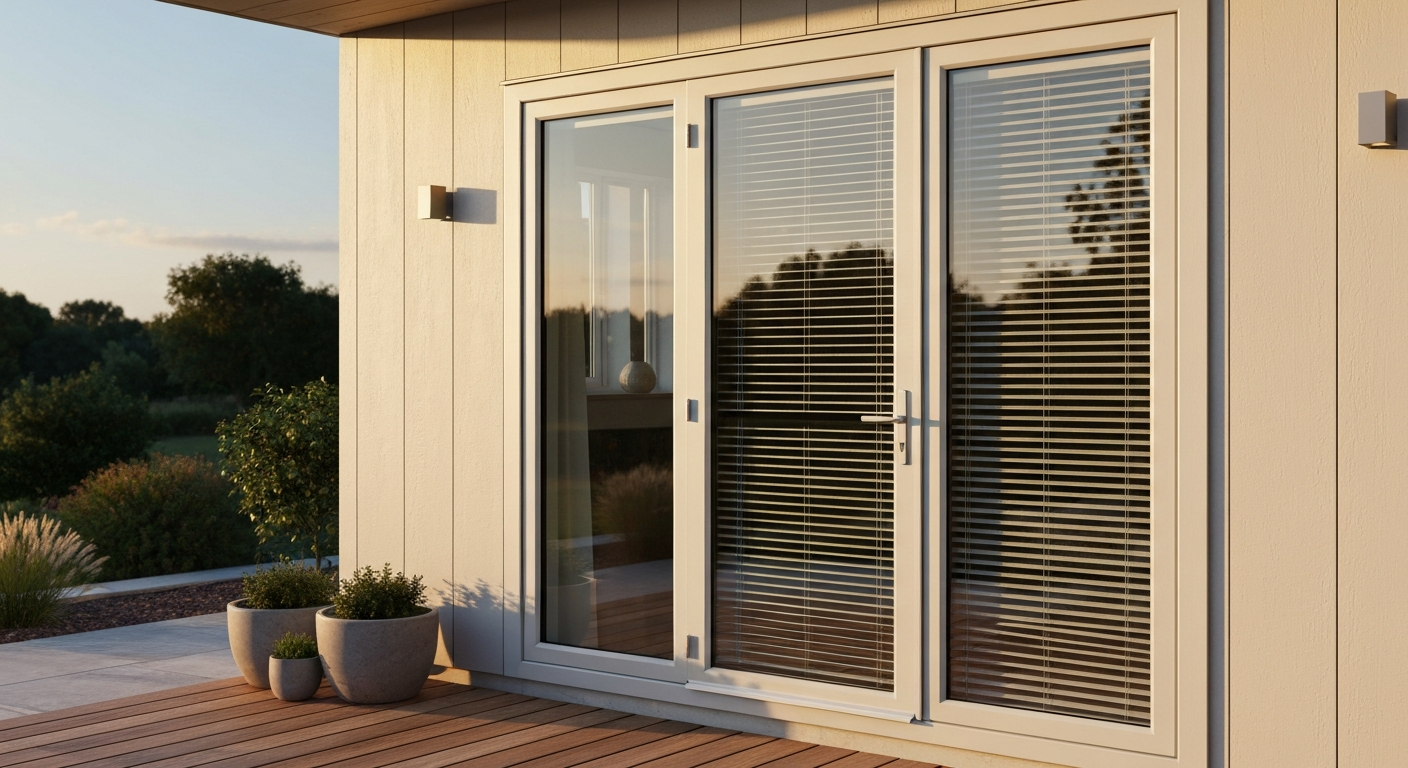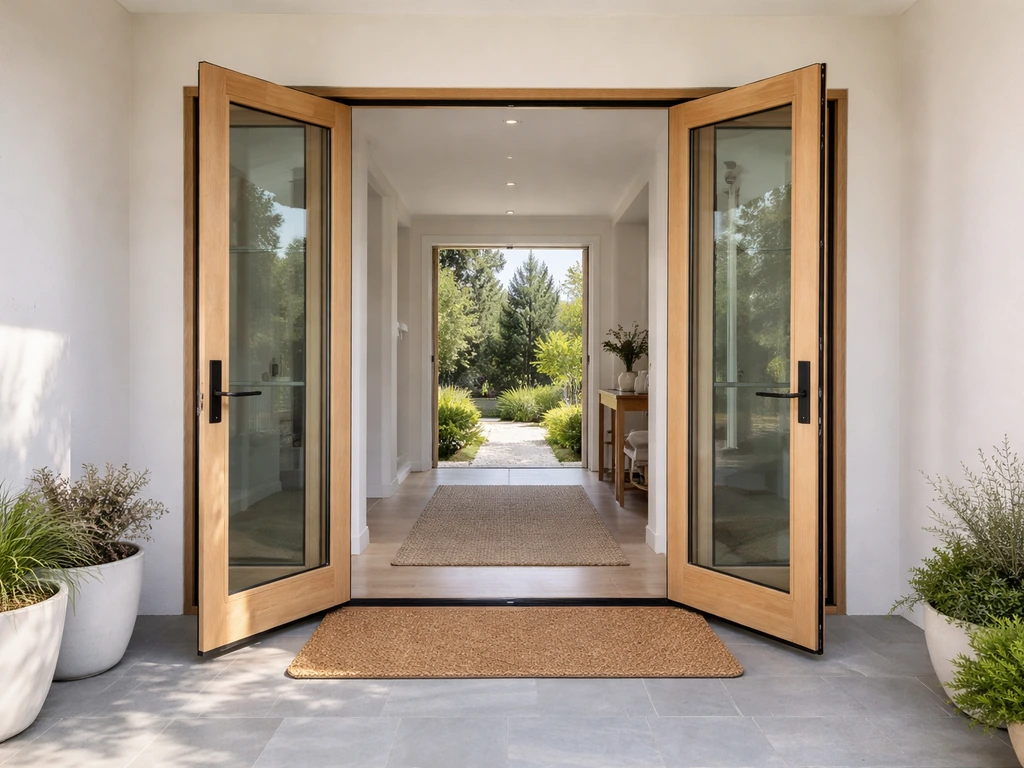
If your patio space is tight or you want maximum clear opening width without eating into the room, go with a sliding patio door. If you love the classic look, want both panels to swing fully open, and have the floor space to accommodate the swing, French doors (also called hinged patio doors) are worth the extra cost. That's the short version. But the real answer depends on five or six concrete factors, and getting them wrong means spending $2,000 to $5,000 on a door that frustrates you every single day.
Patio Doors French vs Sliding: Which Is Better for Your Home?

Owen Delaney
2 May 2026
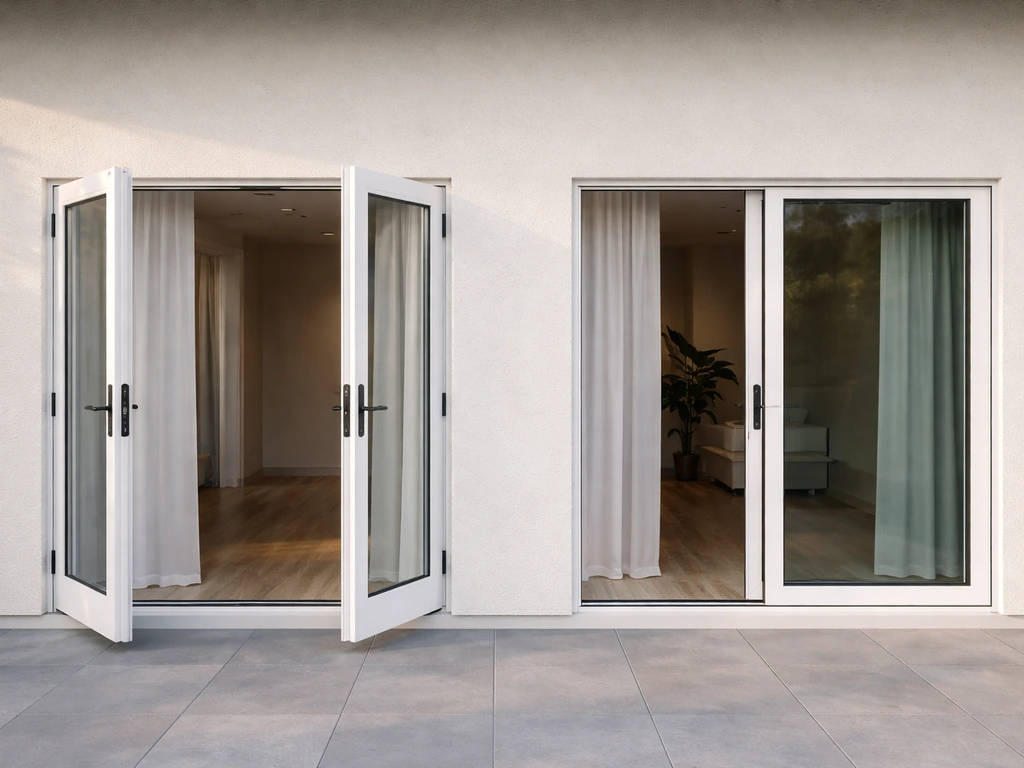
French vs sliding: what each door type really is
Here's where terminology trips people up constantly. 'Patio door' is a broad term that covers any exterior door leading to a patio, deck, or backyard. It includes sliding glass doors, French/hinged doors, and even bifold options. 'French door' specifically means a hinged door where two panels meet in the middle, each hinged at the outer frame, and both panels swing open. Pella, Andersen, and Marvin all describe French doors as 'hinged patio doors' on their product pages, which is accurate. So when you see 'hinged patio door,' that's a French door. When you see 'gliding patio door' or 'sliding glass door,' those are the same thing: a panel that slides horizontally along a track.
A standard sliding patio door from Andersen's 100 Series comes in heights of 6'8", 6'11", and 8' and is typically a two-panel configuration, meaning one fixed panel and one sliding panel. Marvin's Essential sliding door goes up to 9' wide and 8' high in two- or three-panel configurations. French/hinged doors from Pella's Vista Series in aluminum can reach a maximum panel height of around 117.6 inches (nearly 10 feet). So both styles can go big, but they get there differently and require very different rough openings and installation approaches.
Space, layout, and day-to-day use
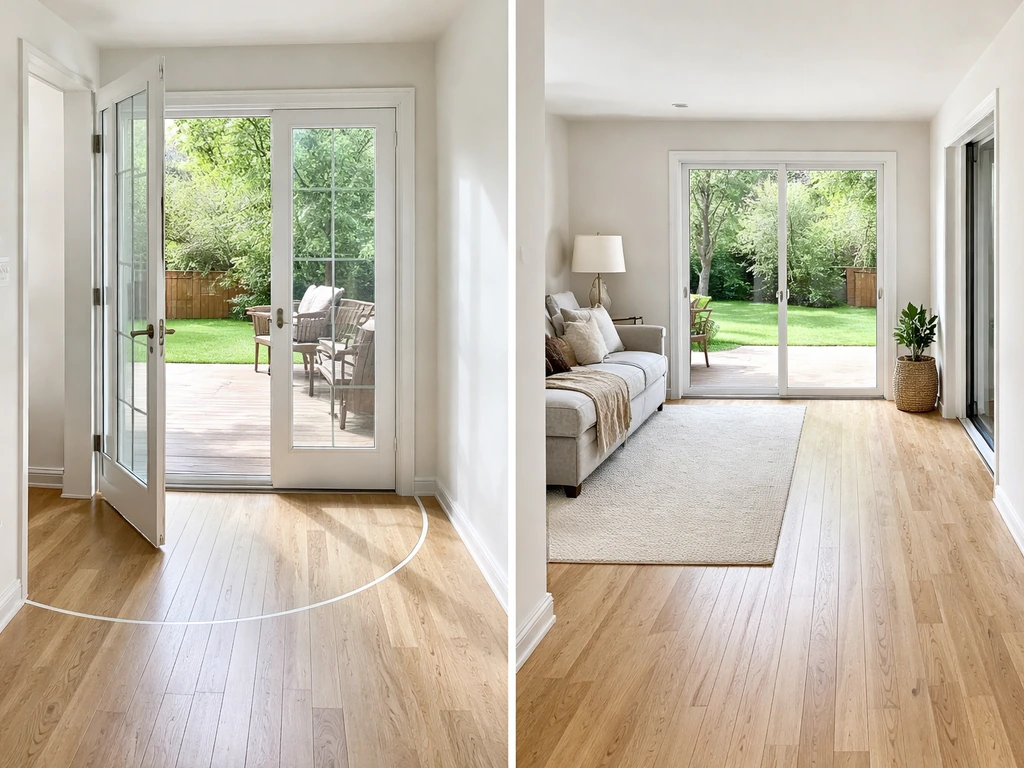
This is honestly the deciding factor for most homes. French doors need swing clearance, and that clearance matters a lot. If they open inward, you lose about 3 to 4 feet of usable floor space in front of the door. If they open outward, you need the same clearance on the patio side, which can conflict with furniture, railings, or tight deck layouts. A sliding door needs zero swing clearance. The panel moves parallel to the wall, so you can put a couch 12 inches from a sliding door and it still opens fine.
For traffic flow, sliding doors also win in busy households. Kids and dogs running in and out don't have to wait for a door to arc through its swing. That said, French doors give you a much wider clear opening when both panels are fully open. A standard 6-foot rough opening with French doors gives you close to the full 6 feet of clearance. With a two-panel sliding door in the same opening, you only get about half that width because one panel is always fixed. If you're moving furniture through regularly or want that indoor-outdoor entertaining flow with a single wide-open passage, French doors have the edge here.
Weatherproofing and energy efficiency
This is where sliding doors get a reputation they don't entirely deserve. Older sliding doors had terrible seals and drafty aluminum frames. Modern sliding patio doors are a different story. Andersen's A-Series Frenchwood gliding door has a published air infiltration rate in CFM/FT2 and meets AAMA/WDMA performance grades. Marvin's Modern Sliding Door integrates a water management and weep system directly into the performance sill. Andersen builds a sill exterior drainage weep hole into their A-Series gliding door as a standard feature. These aren't afterthoughts; they're engineered into the product.
French doors, by nature of their hinged design, have a center seam where the two panels meet. High-quality French doors use compression seals and multi-point locking to pull that seam tight, which helps, but that meeting point is still a potential weak spot in wind-driven rain. Pella's 250 Series hinged door meets AAMA/WDMA ratings of LC-PG25 or PG30, which covers air infiltration and water penetration resistance. Both door types are rated under the same AAMA/WDMA/CSA 101 standard, so you can actually compare performance grades apples-to-apples when you're shopping. The key takeaway: for consistently windy or wet climates, a well-sealed sliding door often performs better day-to-day than a French door with a center meeting point.
Security and durability
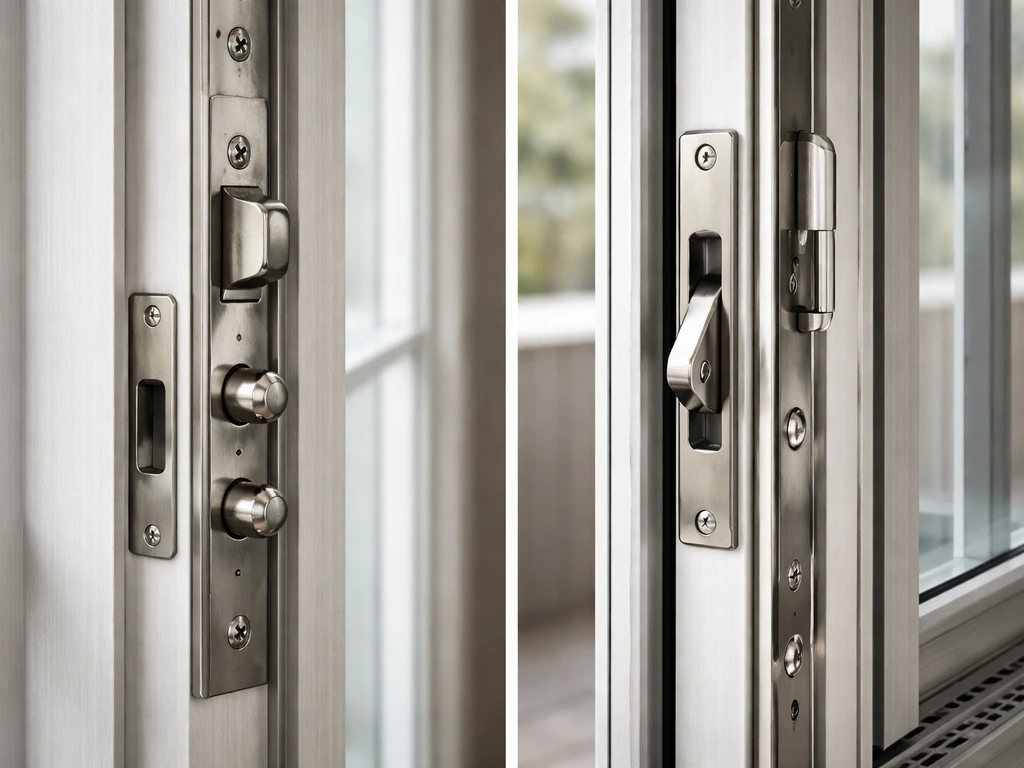
Both door types have gotten significantly better on security. The old complaint about sliding doors being easy to lift off their tracks is largely addressed in modern doors through anti-lift hardware and reinforced frames. That said, French doors have a structural advantage because a hinged door set into a solid frame with multiple lock points is inherently harder to force than a sliding panel in a track.
For both styles, multi-point locking is the upgrade worth paying for. Pella's Lifestyle Series hinged door includes a mortised, keyed multi-point lock that engages at the top, middle, and sill. Pella's Vista Series hinged door has a 5-point locking system. On the sliding side, Pella recommends multi-point locks for sliding doors as well, and their vinyl patio door hardware explicitly includes a multi-point system that secures the door in more than one place. If you're in a neighborhood where security is a concern, go with multi-point locking on whichever style you choose.
Maintenance and long-term costs
Sliding doors require track maintenance. That's the honest truth. [Dirt and debris build up in the track and around the rollers, which is what causes sliding doors to drag or stick over time. ](https://www.
aspwindows. com/blog/common-sliding-door-issues) Renewal by Andersen specifically calls this out: track debris is the number one reason sliding doors stop gliding smoothly. Marvin's guidance puts it clearly too: sliding patio doors don't need a lot of regular maintenance, but the sill needs periodic cleaning to stay free of obstructions. Andersen has a full hardware adjustment and replacement guide for gliding door rollers, because rollers do eventually wear.
Milgard's care guidance goes further, noting that rollers can be adjusted for proper clearance and that the weep system needs regular maintenance for proper drainage.
French doors have hinges instead of rollers, and hinges are generally more durable over a long time horizon. They don't collect debris the same way. But French doors have more weather stripping to maintain (the full perimeter plus the center meeting point), and the hardware (handles, locks, hinges) is more complex and more expensive to replace if something fails. Andersen's guidance for screen maintenance on gliding doors specifically recommends a soft-fiber brush for debris removal, rinsing after cleaning, and avoiding oil-based lubricants on insect screens. Either way, budget 30 minutes of cleaning per year minimum for whichever style you pick, and set a reminder.
| Factor | Sliding Patio Door | French (Hinged) Patio Door |
|---|---|---|
| Swing clearance needed | None | 3-4 ft interior or exterior |
| Clear opening width | ~50% of rough opening (2-panel) | Up to ~100% of rough opening |
| Typical maintenance item | Track and roller cleaning | Weatherstripping and hinge care |
| Weather sealing weak point | Track sill if not maintained | Center meeting seam |
| Security upgrade | Multi-point lock + anti-lift | Multi-point lock (5-point available) |
| Price range (rough) | Lower starting cost | Typically higher starting cost |
| Best climate fit | Wind/rain-prone (when sealed well) | Drier or sheltered locations |
| Best layout fit | Tight spaces, furniture near door | Open floor plans, wide clear access needed |
Sorting out the terminology: sliding, hinged, garden, and patio doors
Homeowners searching this topic run into a wall of overlapping terms, so here's a plain-English breakdown. For practical purposes, all of these lead to the same place: your backyard, deck, or patio.
- Patio door: a catch-all for any exterior door opening onto a patio or deck. Includes sliding, hinged/French, and bifold styles.
- Sliding glass door / gliding patio door: a horizontally sliding panel door, typically with one fixed and one operable panel. Andersen calls theirs 'gliding,' Pella says 'sliding,' Marvin says 'sliding.' Same thing.
- French door / hinged patio door: two panels hinged at the outer frame, meeting in the center. Pella, Andersen, and Marvin all use 'hinged patio door' and 'French door' interchangeably in their product categories.
- Garden door: a regional and older term, especially common in Canada, referring to a hinged patio door. Functionally the same as a French patio door. Some manufacturers use 'garden door' for a single hinged panel with sidelites.
- Sliding door vs patio door: not really a comparison. A sliding door IS a patio door. If you're seeing this framing, the article is usually comparing sliding to hinged/French styles.
The important distinction to lock in before you shop: 'hinged patio door' equals French door equals garden door. 'Sliding glass door' equals gliding patio door. When you're getting quotes, confirm which category the installer is pricing, because the installation process, rough opening requirements, and hardware costs differ significantly between them.
Sliding vs French vs bifold: picking the right style
Bifold and folding patio doors are a third category that's genuinely different from both sliding and French doors, and they're worth mentioning here because they show up in the same search results and sometimes get confused with multi-panel sliding doors. A bifold door folds accordion-style, with multiple panels that stack to one or both sides. The payoff is an almost fully open wall when stacked, which is the closest thing to removing the wall entirely. The trade-off: bifold doors are the most expensive of the three options, require the most precise installation (the folding hardware is complex), and typically have more air leakage because of the multiple panel seams.
Here's how to think about which style fits your situation. Go with a sliding door if you have limited floor space, want lower maintenance, want reliable weather sealing, and don't need both panels to open simultaneously. Go with French doors if you want a classic hinged look, need a wide clear opening when both panels are open, and have the swing clearance available.
Go with bifold/folding if you want a full wall of opening for outdoor entertaining and your budget is higher, your opening is wide enough (typically 8 feet or more), and you're willing to invest in professional installation and more careful maintenance. For most homeowners replacing an existing door in a standard 6-foot to 8-foot rough opening, it comes down to sliding vs French. Bifold is usually a project-specific choice for significant renovations.
Before you buy: measurements, installation questions, and an accessories checklist
What to measure right now
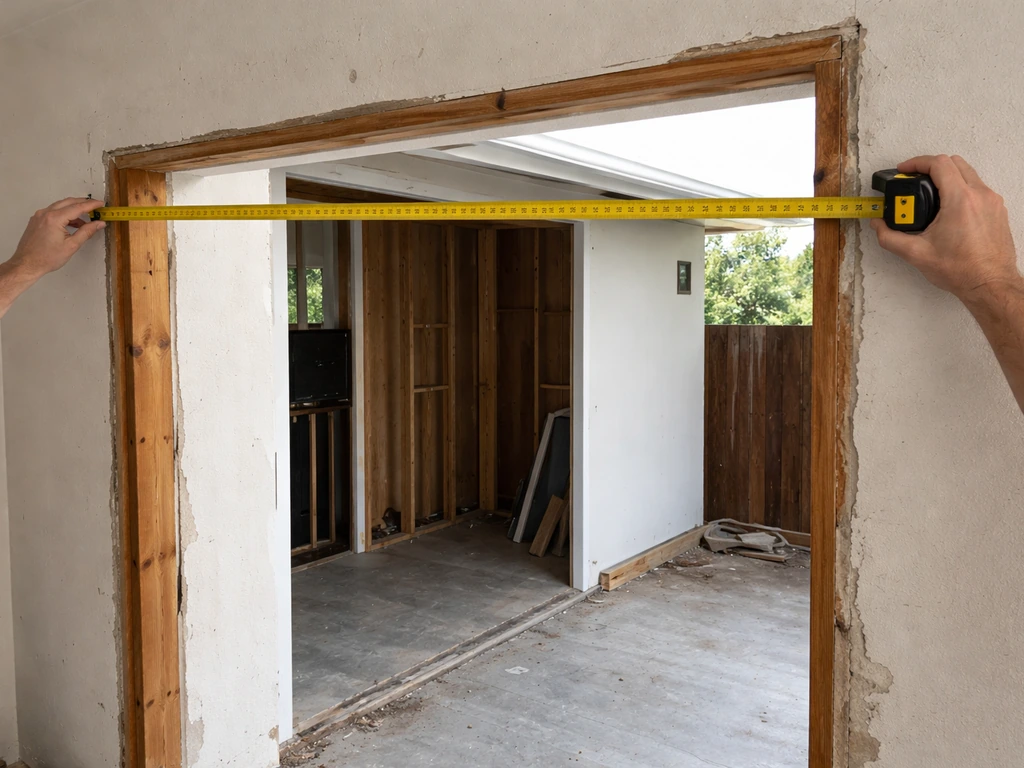
Whether you're replacing a sliding door or going with French, start by measuring your rough opening width and height. For a hinged/French patio door, Pella's aluminum door installation guidelines call for the rough opening to be 3/4 inch larger than the door unit width and 1/2 inch larger in height. This clearance lets the door swing without binding. Sliding doors have their own clearance requirements.
Andersen's A-Series gliding door technical PDF specifies minimum rough opening dimensions for each configuration (2-panel, 3-panel, 4-panel), so check those before ordering. Measure the rough opening in at least three places (top, middle, bottom for width; left, center, right for height) and use the smallest measurement. Also check the floor level and threshold height: [the International Residential Code sets different maximum threshold heights above the exterior deck for sliding doors versus other door types](https://codes. iccsafe.
org/s/IBC2018/chapter-10-means-of-egress/IBC2018-Ch10-Sec1010. 1. 7), so if you're on a deck or balcony, verify that your chosen door style meets egress requirements.
Questions to ask your installer
- What is the rough opening required for this exact door unit, and does my existing opening match or need modification?
- Is the sill/threshold level? Sliding doors especially need a level sill for the rollers to function correctly long-term.
- What AAMA performance grade does this door carry, and what are the air infiltration and water penetration test results?
- Is multi-point locking included or an add-on?
- What is the labor cost broken out separately from the door unit cost?
- Does the installation include flashing and sill pan, or is that extra?
- What is the warranty on the door unit vs the installation labor?
Accessories checklist
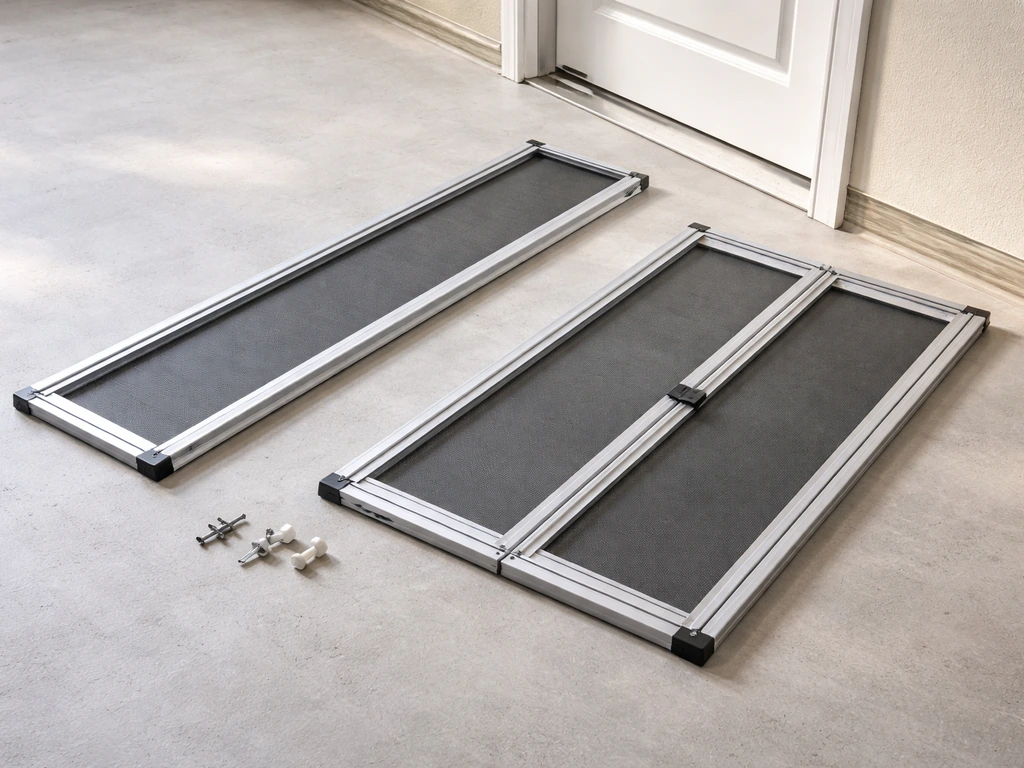
- Screen door: both sliding and French doors need compatible screen solutions. Sliding doors use a sliding screen panel; French doors use a retractable or hinged screen. Confirm the screen type before finalizing the door order.
- Security hardware: multi-point lock upgrade for whichever style you choose. Budget $100 to $300 depending on the brand.
- Window treatments / coverings: sliding doors work well with vertical blinds or panel track shades. French doors need coverings that account for the swing arc, such as shutters mounted to the frame or blinds built into the glass.
- Sill threshold cap or ramp: if accessibility is a concern, check the threshold height and consider a low-profile or zero-threshold option.
- Weather stripping replacement kit: buy one at the time of installation so you have it when the original seal eventually wears.
- Track cleaning brush (sliding doors): a narrow brush sized for the sill track makes the annual cleaning significantly easier.
Total cost reality check
French doors generally cost more than a comparable sliding door at the same quality level. Basic sliding doors start lower, and French/hinged doors typically carry a price premium driven by more complex hardware, hinges, and the center-meeting seal system. That cost difference is why many homeowners ask why are patio doors so expensive, even when the styles look similar.
But the real total cost includes the door unit, installation labor, any rough opening modification, flashing and sill pan, hardware upgrades, and the screen solution. Get itemized quotes that break all of these out. A 'cheap' sliding door with a rough opening modification and full installation can easily land at the same price as a mid-range French door installation, so compare total installed cost rather than sticker price.
For climate-specific decisions: if you're in a consistently rainy or windy region, prioritize the AAMA performance grade and choose the door with the better published air infiltration and water resistance numbers, regardless of style.
FAQ
Can I choose either sliding or French if my patio door must meet egress code requirements?
Yes. If your patio door is part of an emergency exit path, you need to confirm egress requirements (including threshold height and clear opening) for the specific door type and configuration. French doors can have a center seam and hinge-side clearance limits, while sliding doors may have different threshold constraints for decks and balconies.
What’s the biggest mistake when measuring for a patio door replacement?
Not always. You can end up with an incorrect rough opening if you only measure the current frame opening. Some retrofits require adjusting for different clearance around the unit, especially for hinged swing clearance and for sliding configurations that vary by number of panels (2-panel versus 3-panel).
Which style is harder to keep bug screens and seals working year-round?
Plan for a different maintenance routine for screens. Sliding doors often allow easier access to track-area debris, but insect screens can clog, and manufacturer guidance may recommend avoiding oil-based lubricants on screen parts. French doors have more weather stripping along the perimeter, so cleaning and checking seals at the full perimeter and center meeting point matters more.
How should I think about “clear opening” when choosing between sliding and French?
If you use a lot of furniture or move large items through the opening, the usable width matters more than the nominal opening size. With French doors you can sometimes approach the full rough opening when both panels open, while a sliding door in the same opening will always leave one panel fixed, reducing the clear pass-through width.
Do sliding door “widths” mean the same thing for all configurations (2-panel vs 3-panel)?
Yes, because the panel count changes the math and the installation. Sliding doors can be 2-panel or 3-panel (and sometimes more), and French doors can also come in different configurations. Always compare the exact configuration in the quote, not just the style name, because the fixed-panel area and hardware differ.
If I live in a rainy, wind-driven area, which style is safer to prioritize for performance?
In many climates, the best day-to-day weather performer is the one with the strongest tested air infiltration and water resistance, not the one that “feels” tighter. For French doors, pay special attention to how the meeting point is sealed and locked. For sliding doors, prioritize sill drainage and weep/management features plus how the manufacturer rates water penetration resistance.
What should I check about French door swing direction in a tight outdoor layout?
If you’re installing near stairs, railings, or a tight walkway, swing direction can make or break usability. French doors need clear space where the panels arc, either inside or outside depending on swing. Before you sign, do a physical mock-up of the swing arc with taped cardboard at your real furniture locations.
What installation line items should I confirm so my quote includes real water protection?
Ask whether the quote includes a new sill pan, flashing details, and interior trim modifications as part of water management. Two doors with the same price can behave differently if one installation includes more complete drainage and flashing coverage and the other is “door-only.”
How can I tell if a patio door will be drafty before buying?
Yes, and it affects both cost and day-to-day comfort. A door with insufficient insulation at the frame, or incorrect threshold sealing, can increase drafts. Compare the published performance metrics (air infiltration and water resistance) and make sure the installer verifies the rough opening is properly shimmed and sealed for that specific unit.
Are multi-point locks worth it for both sliding and French patio doors?
Multi-point locking is the practical upgrade that reduces force on a single latch point. For French doors, that also helps keep the center seam pulled tight. For sliding doors, it can help secure more than one location along the closing edge, improving resistance even if the door rides on tracks.
What long-term wear-and-tear differences should I plan for between sliding and French?
Set expectations on long-term wear. Sliding doors commonly need track cleaning to prevent dragging, and rollers may require adjustment or eventual replacement. French doors typically avoid track debris issues, but they can require more attention to weather stripping and hinge hardware if the environment is harsh.
Will I need a different screen type when switching from sliding to French doors?
Screens and hardware differ, and those differences can surprise you during maintenance. Confirm whether you need a new screen type, whether it’s removable, and what the recommended cleaning approach is (for example, using a soft-fiber brush and rinsing after cleaning).