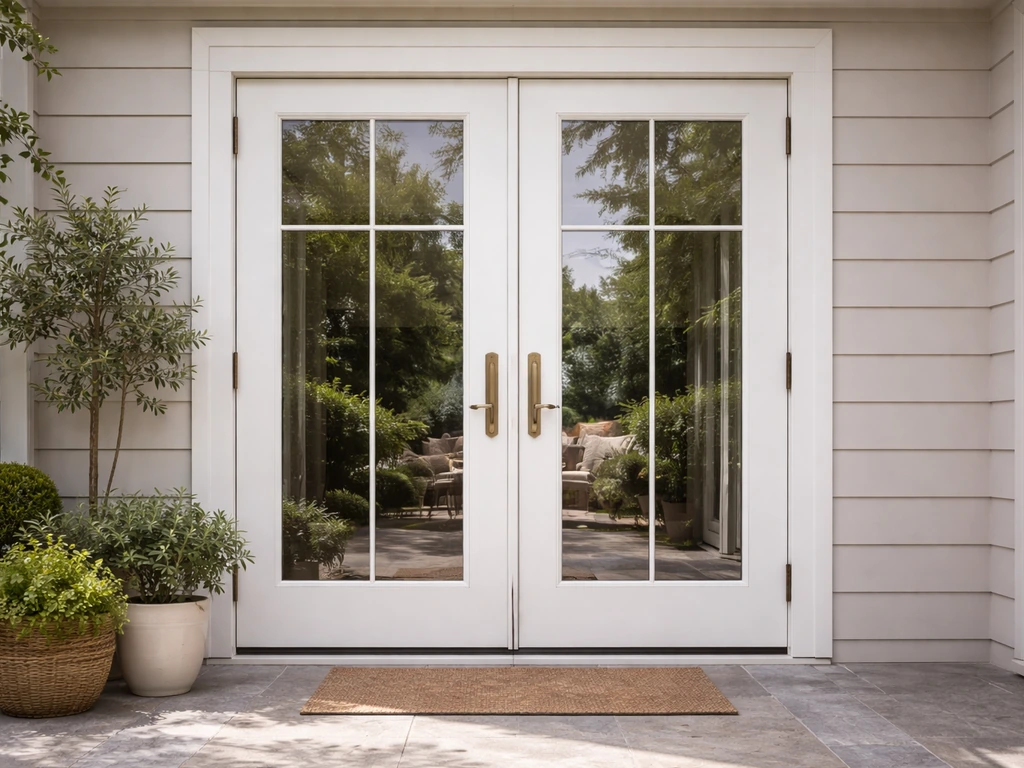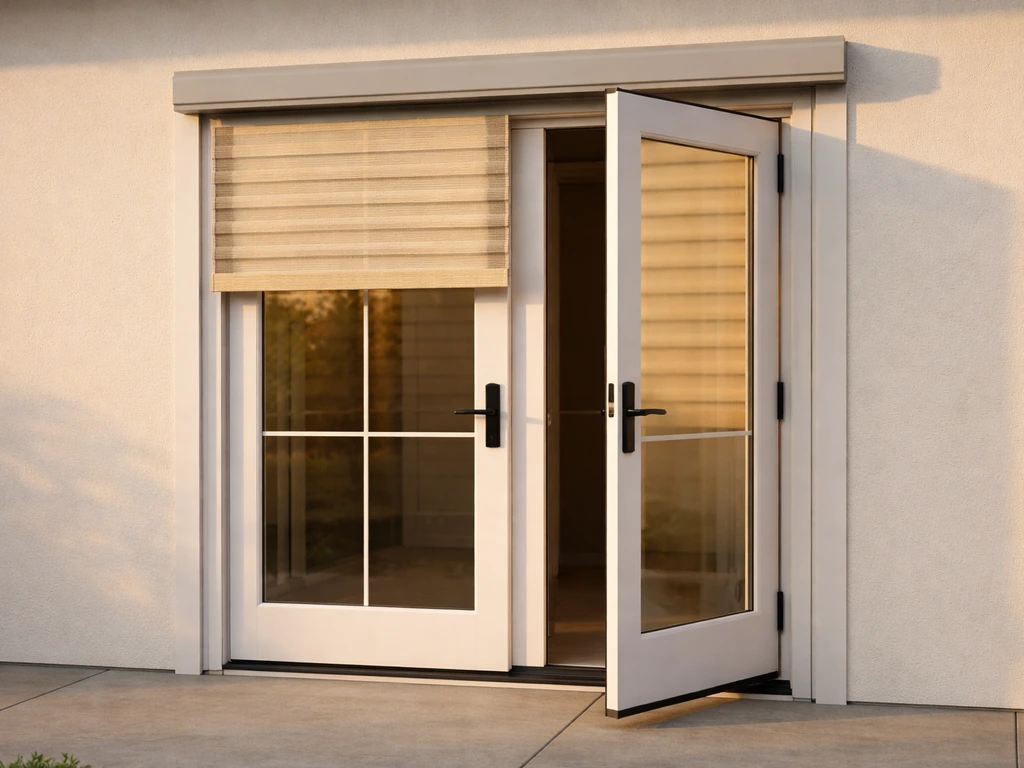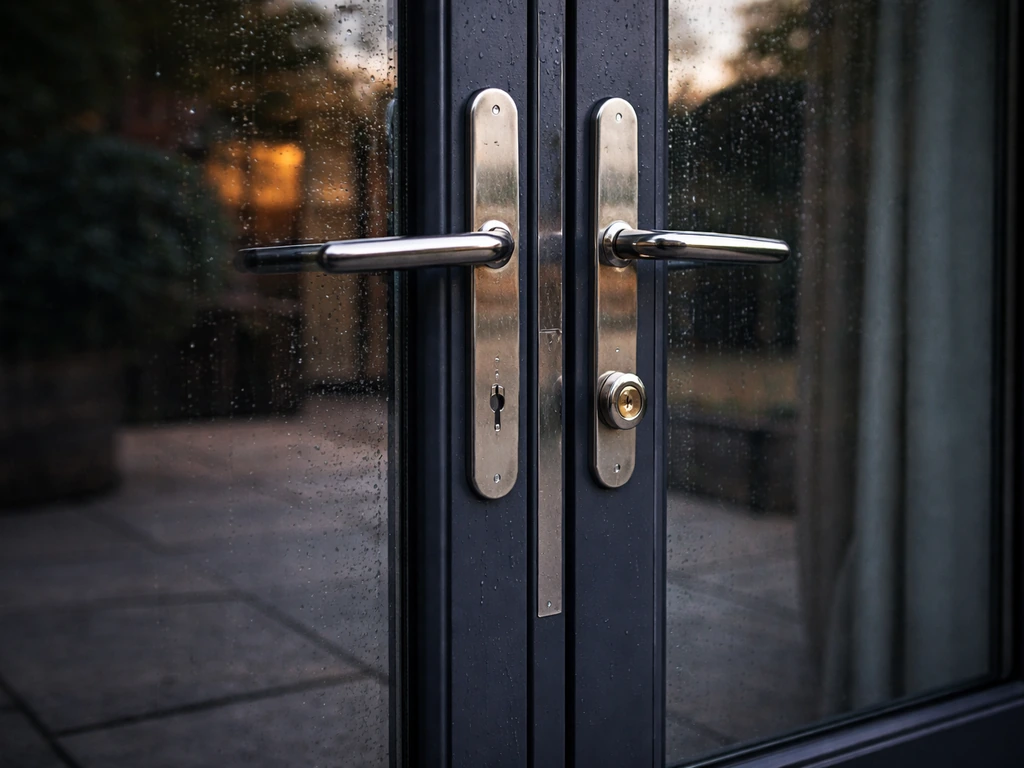
Sliding patio doors and French doors both have real, fixable security weaknesses, but out of the box, a well-specified French door with multipoint locking edges ahead of a basic sliding patio door. The main reason is mechanical: most stock sliding doors ship with a single-point latch that can be lifted off its track or jiggled open in seconds, while a quality French door with a multipoint lock engages bolts at the top, center, and bottom of the frame simultaneously, making it dramatically harder to force. That said, a sliding door with the right upgrades can match or exceed a poorly secured French door, so the full answer depends heavily on what hardware, glass, and installation you actually get.
What Is More Secure: Patio Doors or French Doors? Expert Guide
Owen Delaney
13 Aug 2026
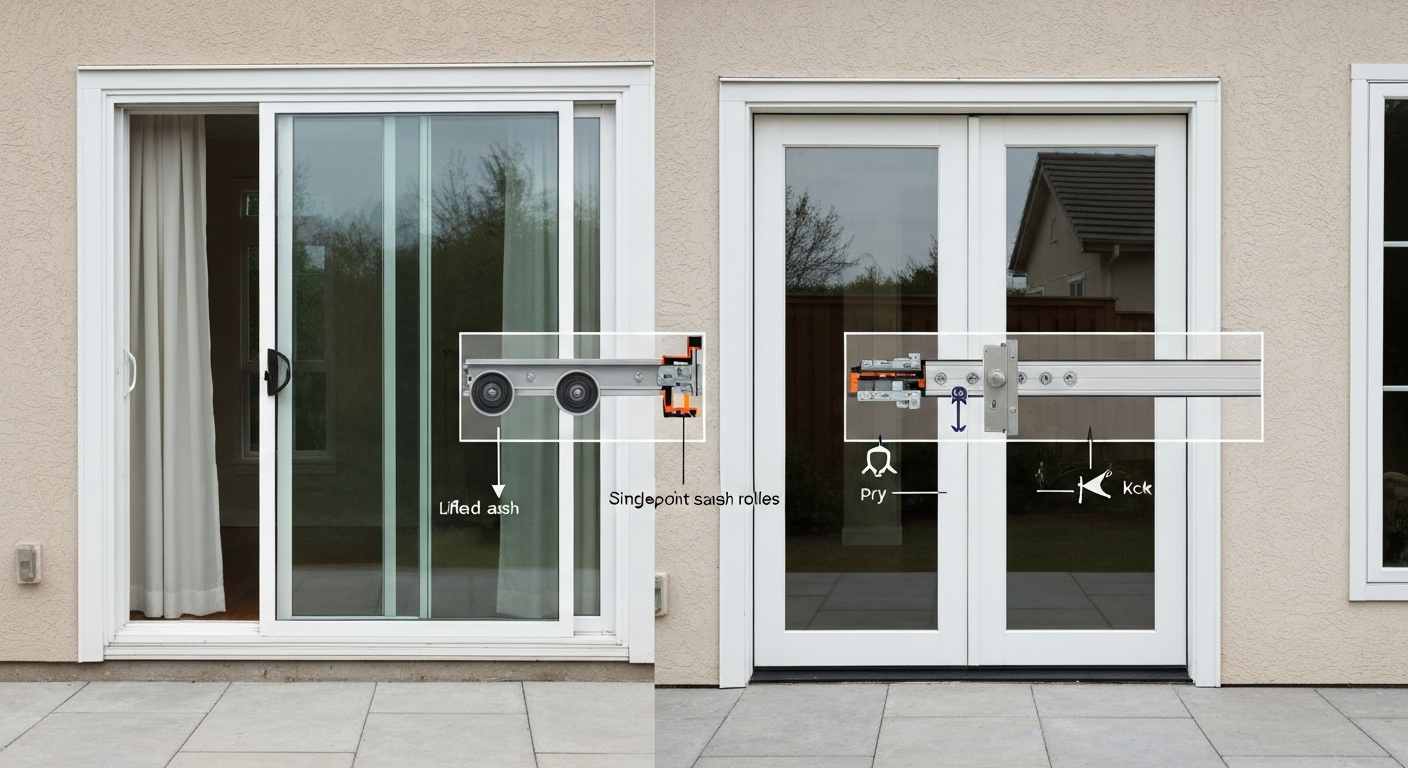
How sliding patio doors and French doors actually differ
Sliding patio doors operate on a horizontal track, with one fixed panel and one (or more) moving panels that roll on rollers. French doors are hinged double doors that swing inward or outward, with one active leaf and one inactive leaf held in place by flush bolts at the top and bottom. That basic mechanical difference shapes almost every security conversation about the two types.
A sliding door's sash sits in a channel, which means the door is only as secure as the latch holding it there plus whatever stops you from simply lifting it out of that channel. The track itself is not a locking mechanism. French doors, by contrast, are hinged, so they are anchored at two hinge points and lock at a third point (the latch or bolt). That geometry is inherently harder to defeat without making noise or applying sustained force, particularly if the hinges are concealed or fitted with hinge bolts.
From a day-to-day standpoint, sliding doors are lower maintenance because there is no door weight bearing on hinges, no sag over time, and no risk of the door swinging in wind. French doors develop hinge sag after years of use, which prevents the multipoint lock from fully engaging, and that is one of the most commonly overlooked security failures I see on older installs. Both door types come in vinyl, aluminum, wood, and fiberglass, and the frame material plays its own role in security, which I will cover separately below.
Where each door type is genuinely vulnerable
Before you spend money on upgrades, it helps to understand exactly how each door fails. Burglars favor speed and noise avoidance, and both door types have specific weak points that make their jobs easier if the hardware is basic or the installation is sloppy.
Sliding door vulnerabilities
- Lifting: The most common attack on a sliding door. Without anti-lift hardware, an intruder can simply lift the sash upward out of the bottom track, then swing the bottom outward and remove the panel entirely. It takes less than 30 seconds on an older or cheap slider.
- Latch bypass: The standard single-point latch can be forced sideways with a thin pry bar or, on worn latches, jiggled open. The typical factory latch has almost no resistance to lateral force.
- Track manipulation: Bending or damaging the aluminum track compromises the door's closure, preventing full latch engagement.
- Glass breakage: Large single panes of standard tempered glass will shatter under a sharp blow from a center punch or heavy object. The glass breaks cleanly away, leaving an immediate entry point.
French door vulnerabilities
- Inactive leaf bypassed first: On French doors with basic flush bolts, the inactive leaf is often the weakest point. Flush bolts that engage only 1/2 inch into a soft wood floor or header can be pried free quickly.
- Door kick-in: A single-point deadbolt on a French door focuses all kick resistance at one strike plate. If the strike plate is fastened with 3/4-inch screws into door casing rather than into solid framing, one kick can split the jamb.
- Hinge attack: Exterior-swing French doors with exposed hinge pins can have the pins driven out, pivoting the door out from the hinge side regardless of the lock.
- Glass breakage: Like sliding doors, French doors feature large glass panels. Standard single or insulated double panes break readily, and the divided-lite grid of a French door actually gives an attacker a smaller target for a cleaner, quieter break near the handle.
It is worth noting that roughly one-third of residential burglaries involve no forced entry at all, according to Bureau of Justice Statistics NCVS data. An unlocked patio door or French door requires zero tool skills. Locking the door consistently matters more than almost any hardware upgrade.
Locks and hardware: what to use and what it costs
Hardware is where you get the most security improvement per dollar on either door type. Here is what actually moves the needle, along with realistic cost ranges I have seen at retail and through installers.
For sliding patio doors
- Keyed sash lock: Replaces the factory latch with a key-operated lock at the meeting rail. Adds resistance to latch-bypass attacks. Cost: $20 to $60 at hardware stores.
- Anti-lift devices: Either a screw-in track pin (drilled through the sash frame into the fixed panel) or a commercial anti-lift block that prevents the door from being raised. Essential upgrade. Cost: $5 to $30 DIY.
- Secondary foot bolt or floor lock: A keyed or push-button bolt that drops into the track at the bottom, preventing horizontal sliding even if the main latch is bypassed. Cost: $15 to $50.
- Security bar (Charlie bar): A steel or aluminum bar that rests in the track behind the closed door. Nearly impossible to defeat from outside. Cost: $20 to $80. A cut-down broom handle does the same job for free, though it is less convenient.
- Multipoint lock retrofit: Some sliding door brands offer aftermarket multipoint kits that engage bolts at the top and bottom of the sash in addition to the center latch. These are more expensive at $150 to $400, and installation may require a locksmith.
For French doors
- Multipoint locking system: Factory-fitted or aftermarket multipoint hardware that throws bolts (or hooks) into the frame at three or more points simultaneously. This is the single most important upgrade for a French door. Factory-installed systems on premium doors such as Renewal by Andersen are standard at higher price points; aftermarket kits run $200 to $600 installed.
- Flush bolts on the inactive leaf: Upgraded heavy-duty flush bolts with longer bolt throw (at least 1 inch) into a steel receiver in the floor and head jamb. Standard flush bolts are thin and short. Upgraded versions run $40 to $120 per set.
- Surface-mount deadbolt or rim lock: Adds a secondary single-point deadbolt to the active leaf. Cost: $30 to $100 for the hardware, plus installation.
- Hinge bolts (security studs): Steel pins inserted into the hinge edge of the door that engage holes in the frame when the door is closed, preventing hinge-side attack even if the hinge pin is removed. Cost: $10 to $30 per pair.
- BHMA Grade 1 locksets: All hardware should meet ANSI/BHMA Grade 1 (highest residential/light commercial rating). Grade 3 hardware, which is common on budget doors, fails cycle and impact tests significantly faster.
| Hardware type | Best for | Approx. cost (DIY/materials) | Security benefit |
|---|---|---|---|
| Multipoint lock (factory) | French doors | Included on premium models ($4,000+ doors) | High: multiple bolt points resist levering |
| Multipoint lock (aftermarket) | French or sliding doors | $150–$600 installed | High |
| Keyed sash lock | Sliding doors | $20–$60 | Medium: stops latch bypass |
| Anti-lift device / track pin | Sliding doors | $5–$30 | High: stops lift-out attack |
| Security bar / Charlie bar | Sliding doors | $20–$80 | Very high: bars horizontal movement |
| Flush bolt upgrade (inactive leaf) | French doors | $40–$120 per set | Medium-high: secures passive leaf |
| Hinge bolts | French doors (exterior swing) | $10–$30 per pair | Medium: prevents hinge-side attack |
| Foot bolt / floor lock | Sliding or French doors | $15–$50 | Medium: secondary locking point |
Glass and glazing: the part most people skip
A burglar who cannot defeat the lock will often go straight through the glass, especially if it is close to the handle or latch. Standard tempered glass, which is what most entry-level patio and French doors ship with, shatters into small pebbles on impact. That sounds safer than sharp shards, but it also means an opening appears almost instantly. If security matters, glass selection is not optional.
Laminated glass
Laminated glass bonds two or more panes around a polyvinyl butyral (PVB) interlayer. When it breaks, the fragments stick to the interlayer rather than falling away, so the opening does not appear cleanly. Under the EN 356 standard (P-class attack-resistance ratings), laminated glass is specifically tested for manual attack resistance. P2A is the minimum rated class, requiring the glass to survive hammer and pick-axe blows; P8B is the highest class. For a residential patio door, P2A or P4A laminated glass is a practical and proportionate choice. Upgrading from standard insulated glass to laminated glass in a patio door typically adds $200 to $600 per panel depending on size and specification.
Tempered glass
Tempered glass is stronger than annealed glass under normal loads and is required by code in door applications, but it offers less attack resistance than laminated glass because once it reaches its break point, it fails completely and suddenly. It is not a security glass in the EN 356 sense, just a safety glass.
Security film
Applied to existing tempered glass, 3M Safety Series or equivalent security films (8 mil or thicker) hold fragments together after impact, slowing entry. This is not the same as laminated glass and should not be treated as equivalent, but it is a useful retrofit on existing doors where glass replacement is not in the budget. A professional window film installation on a standard patio door runs $150 to $400 depending on panel size and film specification.
Double-glazed units (IGUs)
Standard insulated glass units (double-glazed) improve energy efficiency but do not meaningfully increase security unless at least one pane is laminated. An intruder can break through both panes of a standard IGU with the same tool. Specifying a laminated inner pane in a double-glazed unit gives you both thermal performance and security benefit.
| Glass type | Attack resistance | Code/standard | Approx. upgrade cost per panel | Best use |
|---|---|---|---|---|
| Standard tempered | Low (shatters fully on impact) | Building code safety glass only | Baseline | Budget installs where security is not a priority |
| Security film on tempered | Low-medium (slows entry, not rated attack glass) | No EN 356 rating | $150–$400 installed | Retrofit on existing doors |
| Laminated (P2A/P4A) | Medium-high (fragments retained, resists manual attack) | EN 356 P-class | $200–$600 added per panel | New builds or glass replacement projects |
| Laminated inner pane in IGU | Medium-high + thermal performance | EN 356 + insulation standard | $300–$700 added per panel | Best all-around choice for new installs |
Frames, thresholds, and jambs: material choices matter more than people think
The lock is only as strong as the frame it bolts into. I have seen expensive multipoint locks installed in vinyl frames that flex so much under pressure that the bolts disengage before the frame itself fails. The frame material and how it is reinforced determines whether a quality locking system can do its job.
Vinyl (uPVC)
Vinyl is the most common frame material for patio doors in the U.S. because of its low cost and good thermal performance. Its security weakness is that hollow-chamber profiles flex under force. Better-quality vinyl doors include internal steel or aluminum reinforcement in the frame and sash, which makes a substantial difference. Always ask whether a vinyl door has internal reinforcement before buying it for security purposes.
Aluminum
Aluminum frames are stiffer than vinyl and hold up well against prying, but the weak point shifts to the corners and glass bead. Thermally broken aluminum (two aluminum profiles connected by a polyamide thermal break) is the right choice for both energy performance and structural stiffness. Internal glazing beads, where the glass is retained from the inside rather than the outside, prevent the glass from being popped out from the exterior.
Wood and fiberglass
Solid wood frames are inherently stiff and hold screws well, but are vulnerable to rot at the threshold and sill, which is one of the most common installation-related security failures. Rotted wood around the jamb can be pried away regardless of how good the lock is. Fiberglass frames are arguably the best balance of rigidity, rot resistance, and dimensional stability for a security-focused install. They do not swell, shrink, or rot, so multipoint locks stay aligned over time.
The threshold deserves its own mention. Sliding door thresholds that are low-profile or poorly anchored to the subfloor can be pried up, displacing the track and making the door removable from below. A threshold bolted into the subfloor with appropriate sill anchors eliminates this attack vector.
Aftermarket reinforcement: cheap upgrades with real payoff
If you already have a door installed and are not ready to replace it, these aftermarket additions give you the most security per dollar. Most can be installed in under an hour without professional help.
- Security bar or door brace for sliding doors: A bar fitted into the bottom track prevents horizontal movement. The Buddybar and similar commercial products add a vertical steel brace that also resists lift. Cost: $30 to $80. These are my first recommendation for any existing sliding door.
- Anti-lift pins: Drill a downward-angled hole through the top of the inner sash frame into (but not through) the outer frame. Insert a removable pin or bolt. Cost: under $10 in hardware. This is the fastest single upgrade for a sliding door.
- Strike plate reinforcement: Replace the standard strike plate on a French door with a heavy-duty steel strike plate (ANSI A115.2 reinforced, such as the Door Armor or DOOR Jamb Armor kits) installed with 3-inch screws into solid framing. Cost: $20 to $60. This single upgrade dramatically improves kick-in resistance.
- Keyed foot bolt: A floor-mount keyed bolt that drops into a floor receiver can be added to either French doors or sliding doors. It adds a second independent locking point. Cost: $30 to $80.
- Security film: As noted above, applying security film to existing glass is a low-cost interim measure. It will not stop a determined attacker with time, but it meaningfully slows smash-and-grab entry. Cost: $150 to $400 professionally installed.
- Surface-mounted door alarm sensors: Magnetic contact sensors on the door frame and sash (sliding) or door and frame (French) add a deterrent layer. Most integrate with existing home security systems. Cost: $10 to $40 per sensor.
For a sliding door in need of a full security refresh, a realistic budget of $100 to $200 covering a security bar, anti-lift pins, a keyed sash lock, and security film gets you to a meaningfully more secure door without replacement. Independent locksmith guidance (Master Locksmiths Association Handbook, Minimum security requirements (sliding doors guidance)) recommends anti‑lift devices, multi‑point locking and additional key‑operated patio locks or security bolts as minimum measures for sliding/patio doors Master Locksmiths Association Handbook — Minimum security requirements (sliding doors guidance). For a French door, the highest-value interventions are strike plate reinforcement ($20 to $60) and flush bolt upgrades on the inactive leaf ($40 to $120). Multipoint lock retrofits exist but are a bigger investment and ideally should be spec'd from the factory if security is the goal.
Installation: where security is won or lost
I have walked through a lot of installs over the years, and the pattern is consistent: the door itself is often fine, and the installation is where the security falls apart. A perfectly specified door with laminated glass and a multipoint lock is only as secure as its connection to the house structure. Burglary of single‑family houses, problem‑oriented policing literature (ASU / POP Center overview) notes that poor installation and weak attachments are major contributors to door security failures blank" rel="noopener noreferrer">Burglary of single‑family houses — problem‑oriented policing literature (ASU / POP Center overview).
What a secure installation looks like
- Frame anchored into solid structural framing: The frame should be screwed or bolted into the rough opening king studs and header, not just into the drywall or trim. For a standard 6-foot sliding door, a minimum of six frame anchor points is typical.
- 3-inch screws at strike plates and hinges: Standard installation screws (often 3/4 inch to 1.5 inch) reach only the door casing, not the framing behind it. Strike plates and hinge plates must be fastened with 3-inch screws that reach solid wood framing. This single detail turns a kick-resistant lock into a truly kick-resistant door.
- Correct shimming: The frame must be plumb and square in the opening. A misaligned frame causes the door to bind or not fully close, preventing multipoint locks from engaging all their bolt points. On French doors especially, I check this by closing the door and watching the gap around the perimeter. Any variation over 3/16 inch at any point is a problem.
- Threshold fastened to the subfloor: As mentioned above, the threshold or sill anchor should be screwed into the subfloor, not just set in sealant.
- Proper exterior sealing: Gaps around the frame allow water infiltration, which leads to wood rot and frame failure over time. A properly sealed and flashed install keeps the structural integrity of the rough opening intact for the life of the door.
- Hardware tested after installation: Before the installer leaves, test the lock in every position (all bolt points on a multipoint lock, both flush bolts on a French door inactive leaf) to confirm full engagement.
Common installer mistakes to avoid
- Short screws on strike plates and hinges (the single most frequent error I see)
- Skipping frame anchors and relying on trim nails to hold the frame in position
- Installing on rotted or water-damaged rough framing without repairing the framing first
- Leaving the door slightly out of plumb because it 'opens fine,' without checking that all lock points engage
- Using the factory hardware without upgrading even when the installer knows the homeowner bought a budget door
- Failing to seal and flash the exterior perimeter, leading to slow moisture damage that undermines the install within a few years
If you are hiring an installer, ask them specifically which fastener length they use at the strike plate and hinge locations. If they cannot answer immediately or say 'whatever comes with the door,' that is a warning sign worth addressing before they finish the job.
Sliding vs. French: a direct security comparison
| Security factor | Sliding patio door (basic) | Sliding patio door (upgraded) | French door (basic) | French door (upgraded/multipoint) |
|---|---|---|---|---|
| Default locking | Single-point latch, low resistance | Multipoint or keyed sash lock | Single-point deadbolt + basic flush bolts | Multipoint lock + heavy flush bolts |
| Lift-out / track attack | High vulnerability | Eliminated with anti-lift devices | Not applicable | Not applicable |
| Kick-in resistance | Low to medium (track + latch) | Medium | Low without reinforced strike | High with reinforced strike + multipoint |
| Hinge vulnerability | None (no hinges) | None | Medium (exposed hinge pins on outswing) | Low with hinge bolts |
| Glass attack | High with standard tempered | Medium-high with laminated glass or film | High with standard tempered | Medium-high with laminated glass or film |
| Inactive leaf bypass | Not applicable | Not applicable | Medium-high with basic flush bolts | Low with upgraded flush bolts |
| Overall out-of-box security | Low | — | Medium | — |
| Overall with full upgrades | — | Medium-high | — | High |
The verdict is clear in the table: a fully upgraded French door with multipoint locking, reinforced strike plates, hinge bolts, and laminated glass is the most secure option of the four. But an upgraded sliding door is a close second and costs significantly less in hardware additions. If you are starting from scratch and security is your top priority, spec a French door with factory multipoint locking. If you have an existing sliding door and a modest upgrade budget, the combination of an anti-lift pin, a security bar, a keyed sash lock, and 3-inch strike plate screws will close most of the gap for under $150.
What security-rated certification actually tells you
If you are shopping for a new door and security is a genuine priority, look for independently tested and certified products. In the UK, Secured by Design (SBD) certification and PAS 24 (last significantly revised through 2022/2024) are the benchmarks: doors carrying SBD status have been tested to defined attack methods and resistance times. In Europe, EN 1627 to EN 1630 define six Resistance Classes (RC1 through RC6), with RC2 being the practical minimum for residential security and RC3 for higher-risk properties. RC2 doors must resist a skilled attack with standard burglar tools for at least three minutes. For hardware in the U.S., ANSI/BHMA Grade 1 certification is the equivalent benchmark for locksets and hardware. Doors certified to these standards are tested products, not marketing claims. Always ask for the actual test certificate or certification reference, not just a claim of 'enhanced security' in the brochure.
Your next steps
Whether you are buying new or upgrading what you have, the path to a genuinely secure patio or French door is not expensive or complicated, but it does require a checklist rather than assumptions. Here is where to focus your attention: For a focused answer and clear upgrade checklist, see our guide “Are French patio doors secure?”.
- Decide which door type fits your space and usage: French doors for a higher-security, hinged double-door feel; sliding doors where space or budget is the constraint.
- For new purchases, insist on multipoint locking (standard on premium French door lines, available as an upgrade on quality sliders) and specify laminated glass or at least a laminated inner pane in the IGU.
- For existing sliding doors: install anti-lift hardware and a security bar this week. Both are under $50 and take 30 minutes.
- For existing French doors: check that the flush bolts on the inactive leaf engage at least one inch into a solid receiver, and replace the strike plate with a reinforced version using 3-inch screws.
- Verify your installer is using 3-inch screws at strike plates and hinge plates and anchoring the frame into structural framing, not just the casing.
- Check door alignment seasonally, especially on wood-framed French doors, to confirm all lock points are fully engaging.
- Consider BHMA Grade 1 hardware and, for high-risk locations, ask your door supplier about EN 1627 RC2 or SBD-certified doorsets.
If you are deep into comparing French door brands or thinking through the best lock types for a French patio door specifically, those are topics worth exploring in their own right, since the lock and hardware market for French doors in particular is much broader than most people realize when they first start shopping. See our guide on who makes the best French patio doors for brand comparisons and lock recommendations. For hands-on product recommendations, see our guide to the best French patio doors for the money. For a benchmark of models and specifications, see our round-up of the best French patio doors 2020. If window treatments matter to your decision, see our guide to the best blinds for French patio doors for fitting, privacy, and security-friendly options. For specific recommendations, see our guide to the best locks for French patio doors.
FAQ
Which is more secure for homes: patio (sliding) doors or French (hinged double) doors?
Neither type is inherently 'always more secure' — security depends on design, hardware, glazing, and installation. In general: properly specified and installed French doors with multipoint locks and solid frames resist forced entry better than basic single‑point sliding doors. However, a sliding patio door upgraded with anti‑lift devices, reinforced frames/strikes, keyed interlocks or laminated glazing can equal or exceed the security of a typical French door. The biggest security failures are unlocked doors, weak locks, poor frame anchoring, and low‑quality glazing — address those first.
What are the main vulnerabilities of sliding patio doors?
Common vulnerabilities: sash lift (removing the sliding panel from its track), single‑point latch bypass or jiggling, weak interlock hardware, single‑pane or tempered glass that breaks cleanly, and insufficient frame anchoring. Many simple sliding doors lack factory multipoint locking and can be opened quickly if unreinforced.
What are the main vulnerabilities of French (hinged double) doors?
Typical issues: single‑point latches on each leaf (especially the inactive leaf relying on flush/slide bolts), weak or short strike‑plate screws, exposed hinges (on outward‑opening doors), and poor frame attachment that allows levering. Without multipoint locks and secure inactive‑leaf bolts, sidelights of a double door are easier to force.
Which lock types and hardware upgrades do you recommend?
Recommended locks and hardware: - Multipoint locking systems (engage top, bottom and center) for hinged doors and many modern sliding systems. - 1" full‑throw deadbolts on solid jambs for single doors. - Keyed sash locks or keyed foot/bolt locks and anti‑lift devices for sliding doors. - Heavy‑duty strike plates with 3" screws anchored into framing. - BHMA/ANSI Grade 1 or 2 certified locksets where possible. - Consider cylinder upgrades (anti‑snap, anti‑pick) and monitored door sensors if using an alarm.
What glazing and glass options increase security?
Best options: - Laminated security glazing (EN 356/P‑class or equivalent) holds the pane together after impact and greatly slows entry. - Tempered/annealed glass with security film can delay penetration but is not equal to laminated glazing. - Consider impact‑rated or laminated insulated glass for higher resistance. - For a budget approach, security film + internal window sensors adds deterrence and time.
What low‑cost reinforcement methods are effective?
Effective, affordable upgrades: - Anti‑lift blocks or clips for sliders. - Security bar or adjustable door brace in the sliding track. - Keyed patio bolt (interlock) or foot lock. - Reinforced strike plates with 3" screws. - Door‑frame reinforcement kits around the latch area. These typically cost much less than full door replacement and materially improve resistance.