You can buy patio door curtains at Home Depot, Lowe's, Walmart, Wayfair, IKEA, and specialty outdoor retailers like OutdoorCurtains.com and The Shade Store. The trickier part is knowing which type to buy before you order, because "patio door curtains" can mean three very different things: standard indoor panels hung on a rod over a sliding door, outdoor-rated weatherproof panels for a covered porch, or a panel-track system designed specifically for wide sliding door openings. Get that sorted first, measure your door correctly, and buying from any of these channels becomes straightforward.
Where to Buy Patio Door Curtains: Best Options to Order
Owen Delaney
24 Jun 2026
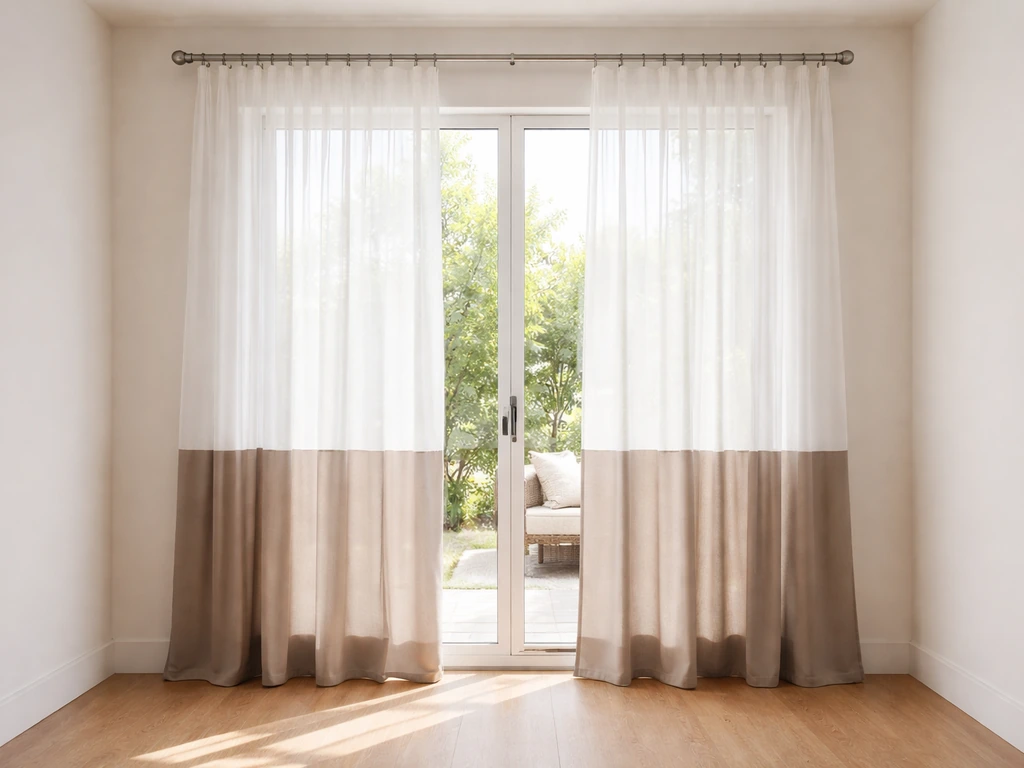
What exactly are patio door curtains? (Clearing up the confusion)
The phrase covers a lot of ground. When most homeowners search for patio door curtains, they fall into one of three camps, and knowing which one you're in saves you from buying the wrong thing twice.
- Indoor panel curtains for a patio door: Standard rod-pocket or grommet-top fabric panels hung on a curtain rod or track over a sliding glass or French door. These live inside your home and don't need to be weather-resistant. They block light, add privacy, and improve insulation. This is what most people actually need.
- Outdoor-rated patio curtains: Waterproof or water-repellent panels designed to hang on a porch, pergola, or exterior door frame. They need to handle UV exposure, rain, humidity, and mildew. Think of these as weather-resistant privacy screens more than decorative drapes.
- Panel-track systems: A hardware-and-panel combo (similar to vertical blinds but with fabric panels) that slides along a ceiling-mounted track. This is the cleanest solution for wide sliding doors because a standard curtain rod sags under the weight of fabric covering an 8-foot opening.
For sliding patio doors, rod-pocket and grommet panels work well on standard rods up to about 72 inches wide. Beyond that, a traverse rod or panel-track system handles the weight better and makes the curtain easier to open and close. Lowe's actually recommends hanging pinch-pleat curtains on a traverse rod specifically for patio doors, because it gives you smooth, cord-operated operation without fighting heavy fabric every time you want to step outside. French doors get their own category of narrow panels (French door panels are typically 25 to 30 inches wide per panel) because you're hanging fabric on each door, not across the whole frame. Bifold doors are a different situation entirely and almost always require a track or stack-back solution.
Measure your patio door before you buy anything
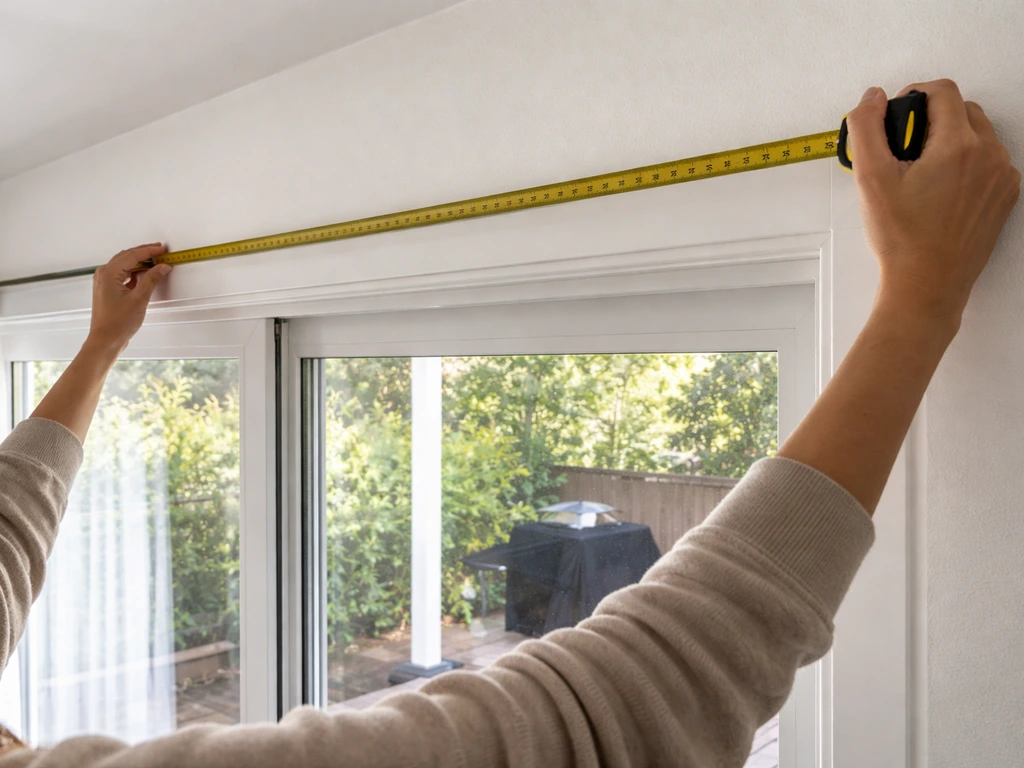
Ordering curtains without measuring first is the most common and most expensive mistake. Here's the process that actually works.
Measure the width
Don't measure the glass or the door frame. Measure where your rod or track will actually sit. For a rod, that means measuring the wall space where you plan to mount the brackets, usually 4 to 6 inches beyond the door frame on each side so the open curtain stacks off the glass and doesn't block the door when you open it. IKEA's measuring guidance suggests adding about 6 inches to your measured window width to get your rod or track rail width, which is a good minimum. Then, to get the fabric width you need, multiply the rod/track width by 2 to 3 for proper fullness. A 96-inch wide door opening with brackets mounted at 108 inches needs roughly 216 to 324 inches of total fabric width, spread across however many panels you're buying.
If you have a curtain track with a center overlap (common on sliding door tracks), measure the full track width AND measure the overlap section separately, then add them together. That overlap is where the panels meet in the middle, and ignoring it creates a gap that defeats the purpose of hanging curtains at all.
Measure the height
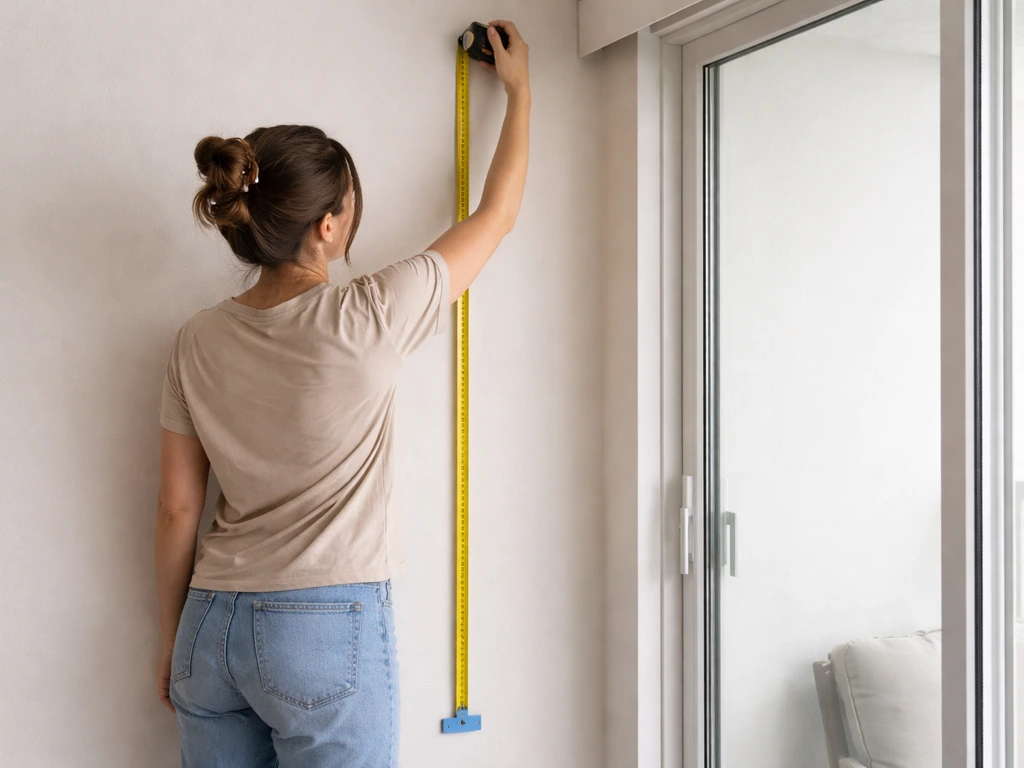
Measure from where the rod or track bracket will sit (not the top of the door frame) down to where you want the curtain to end. Floor-length panels typically stop half an inch to an inch above the floor. For a dramatic look, you can go 1 to 3 inches longer and let them puddle slightly, but for a patio door you use daily, keeping them just above the floor is more practical. Note your mounting point precisely, because curtain panels are sold by their finished length, not the rod-to-floor distance.
Panel count
Most curtain sets come in pairs (two panels). For a standard 72-inch sliding door, two panels is usually enough. For a wider door (96 inches or more), four panels gives you better fullness and makes each panel lighter and easier to slide. French doors take one narrow panel per door leaf. When in doubt, buy more panels than you think you need. Returning an unused panel is far easier than dealing with a flat, stretched-looking curtain that barely covers the opening.
Where to buy in person
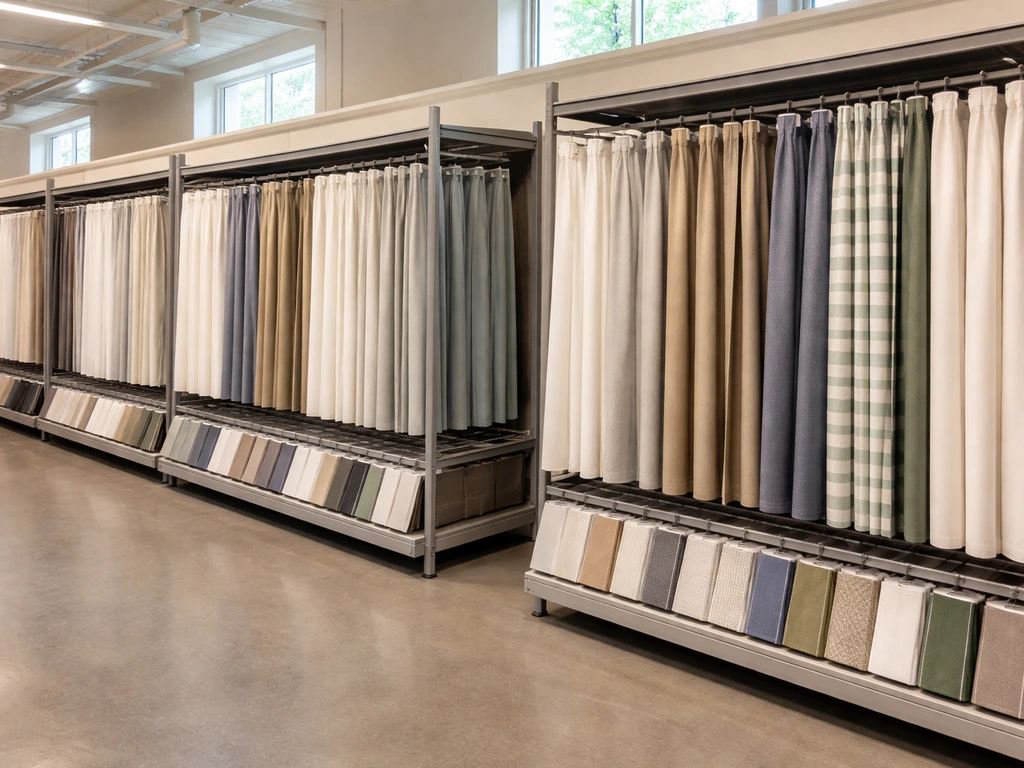
Brick-and-mortar stores are still worth visiting first, especially if you're unsure about fabric weight, light-blocking level, or how a specific top style (grommet vs rod-pocket) actually looks. If you're wondering where to buy patio doors, local showrooms can help you compare sizes, finishes, and installation options in person Brick-and-mortar stores. You can feel the fabric, check how heavy it is, and visualize the finish before committing.
- Home Depot: Carries a solid selection of both indoor and outdoor-rated patio curtain panels, organized by header type (rod-pocket, grommet). Their outdoor options include explicitly weatherproof panels marketed as waterproof with UV, fade, and mildew resistance. Staff in the window treatments aisle can help with basics, but they won't size a custom solution for you.
- Lowe's: Similar range to Home Depot with a decent in-store panel selection. Their curtain hanging guides specifically address patio doors and traverse rods, which tells you their staff is at least somewhat familiar with the unique challenges of door-width curtains.
- Walmart: Surprisingly good for budget-friendly outdoor-rated panels. In-store availability varies a lot by location, but the store pickup option from Walmart.com is fast. Look for their indoor/outdoor mesh grommet panels, which carry UV (UPF 50+), fade resistance, and mildew resistance ratings at a low price point.
- IKEA: The VIDGA panel curtain track system is specifically designed for wide openings like sliding patio doors. It's a modular ceiling-mounted track with fabric panel carriers. You can buy the track and panels together in-store, and their measuring guides walk you through the setup step by step. Great option if you want a clean, modern look.
- Local fabric and drapery shops: Worth visiting for custom or semi-custom work. A local workroom can make panels to your exact measurements in any fabric you choose, including outdoor-rated materials. Turnaround is typically 2 to 4 weeks and costs more, but the fit is perfect.
Where to buy online
Online is where you'll find the widest selection, especially for outdoor-rated panels and specialty hardware. If you are wondering where to buy sliding glass patio doors, online retailers are a good place to start because they list many options and hardware types in one search widest selection. The downside is that you can't feel the fabric before buying, so knowing what to look for in a product listing matters a lot.
- Wayfair: The largest online selection for patio door curtains in essentially every style, size, and price range. Their filtering system lets you narrow by door type, top style, light-blocking level, and whether panels are outdoor-rated. Read the return policy carefully before ordering: Wayfair allows returns on most non-custom items, but return shipping on heavy curtains can be expensive.
- Amazon: Fast shipping, broad price range, and lots of customer photos showing panels actually hung on patio doors (much more useful than product photos). Search specifically for 'outdoor grommet patio curtains' or 'sliding door panel curtains' to filter out decorative-only options. Check Q&A sections for real sizing and mounting answers.
- The Shade Store: A specialty retailer focused on window treatments including custom drapery for patio doors. They offer the three main hardware types (traditional rods and rings, track systems, motorized tracks) and will make panels to your exact measurements. Priced for it, but the quality and fit are excellent.
- OutdoorCurtains.com: Focused entirely on outdoor-rated curtain panels in performance fabrics including Sunbrella, Tempotest, Duracord, and BellaDura. This is where to go if you need curtains for an exposed porch that gets real weather. Products are built for outdoor life, not just claimed to be.
- Sunbrella's website: Good for browsing fabric options and finding authorized dealers. Their outdoor sheer and drapery fabrics use Color to the Core pigmentation and are certified fade, mold, and mildew resistant. You typically buy through a dealer rather than directly, but the site helps you identify which fabric and product line to ask for.
- Designer Drapery Hardware and similar specialty hardware sites: If you already have panels but need outdoor-rated hardware (powder-coated rust-resistant rods, heavier brass grommets, or exterior-grade tracks), these niche suppliers have what big-box stores don't.
What to check in any online listing
- Material: 100% polyester is the standard for outdoor-rated panels. Acrylic (including Sunbrella) is the premium option with better fade resistance and longevity.
- Weather claims: Look for specific ratings, not vague marketing. UV protection (UPF 50+ is the standard), fade resistant, mildew resistant, and water repellent or waterproof are the four to confirm.
- Grommet material: Stainless-steel or rustproof brass grommets only for outdoor or humid environments. Cheap zinc grommets rust and stain fabric quickly.
- Finished panel dimensions: Confirm both the width per panel and the finished length. Don't assume a '95-inch' panel is 95 inches long. Some listings use that to describe a pair.
- Return policy: Check before you buy. Custom or made-to-order panels are typically final sale. Ready-made panels are usually returnable but confirm return shipping responsibility.
Outdoor-specific buying tips
Buying outdoor-rated patio curtains is different from buying indoor curtains, and the differences matter more than most product listings let on.
Weather resistance
Water repellent and waterproof are not the same thing. Water-repellent panels shed light rain and moisture but will eventually soak through in heavy rain. Waterproof panels have a laminated or coated outer layer that fully blocks water. If your patio door is under a covered roof or overhang, water repellent is usually enough. If the curtains will be exposed to direct rain, go waterproof. Mildew resistance is non-negotiable for any outdoor curtain in a humid climate. Look for it explicitly in the product specs.
Light control and privacy
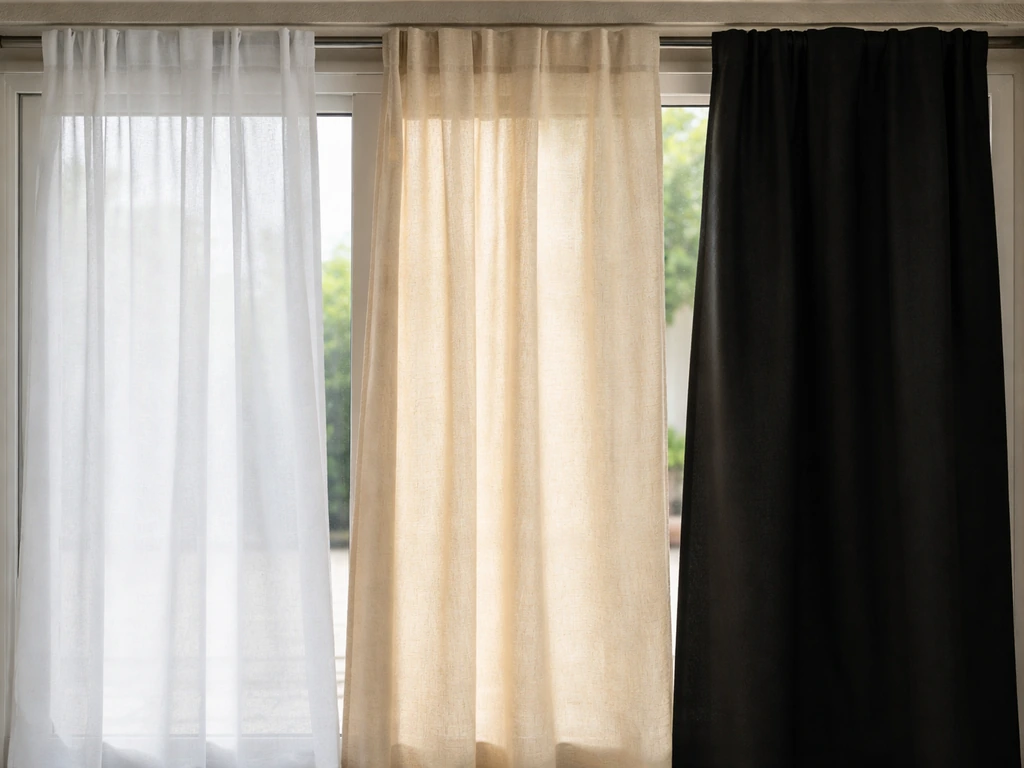
Outdoor curtains come in three main light-control levels: sheer (diffuses light, minimal privacy), light-filtering (softens light, moderate privacy), and blackout (blocks 99% or more of sunlight, full privacy). For a patio door that opens to a backyard or street-facing porch, light-filtering is the most useful all-around choice during the day. If you use the space as an outdoor room and want to sleep late or watch a screen without glare, blackout outdoor panels exist and work well. NICETOWN's outdoor blackout line, for example, claims 99%+ sunlight blocking with UV protection and rustproof grommets.
Mounting for outdoor use
Indoor curtain rods are not rated for outdoor use. Even a covered porch creates humidity, temperature swings, and occasional splash that will corrode a standard steel rod within a season or two. For any outdoor-facing mount, use powder-coated rust-resistant rods or tracks. Heavier brass grommets resist corrosion better than zinc. If you're mounting into concrete or stucco, you'll need masonry anchors, which most big-box stores carry alongside the rods but won't always flag as necessary.
Cost comparison: ready-made vs custom
| Option | Typical Cost Range | Best For | Trade-offs |
|---|---|---|---|
| Ready-made indoor panels (big-box/online) | $20–$80 per panel | Standard-width sliding or French doors, interior use | Limited size options; may not fit wide or tall doors perfectly |
| Ready-made outdoor panels (big-box/online) | $40–$120 per panel | Covered porches, weather-exposed patio doors | Fewer style choices; verify weather ratings carefully |
| Semi-custom (retailer cut-to-length) | $80–$200 per panel | Doors with non-standard heights (e.g., 9 or 10 ft) | Some retailers offer this; limited fabric selection |
| Custom panels (local workroom or specialty retailer) | $150–$500+ per panel | Bifold doors, awkward widths, high-end finishes | Longer lead time (2–4 weeks), no returns, higher cost |
| Panel-track system (IKEA VIDGA or similar) | $100–$400 total for track + panels | Wide sliding doors (96 in+), clean modern look | Ceiling mount required; panel count and track length must be precise |
| Motorized track system (The Shade Store, etc.) | $800–$2,500+ installed | Large doors, smart home integration, premium finish | Highest cost; professional installation recommended |
Ready-made panels are the right call for most homeowners. If you are wondering where to buy patio screen doors, start by checking the same big-box stores and online retailers that carry patio door accessories, then filter by the size and mounting style you need Ready-made panels are the right call for most homeowners.. They're returnable, available immediately, and cover the vast majority of standard patio door sizes. Custom becomes worth the extra cost when your door is non-standard (very wide, very tall, or an unusual bifold configuration), when you want a specific outdoor performance fabric like Sunbrella that isn't available ready-made, or when you're doing a whole-room renovation and want everything to match precisely. Professional installation is only necessary for motorized tracks or complex ceiling-mount panel systems. Standard rod-hung or grommet curtains are genuinely DIY-friendly if you own a drill and a level.
Best options by patio door type and climate
Sliding glass patio doors
For a standard 6-foot (72-inch) wide sliding door, two 54-inch-wide grommet panels on a 96-inch rod works well and is the most common setup. For wider 8-foot or 9-foot doors, move to a panel-track system or use four panels on a traverse rod. Cold climates benefit from thermal-lined panels that add an insulation layer over the glass. Warm, sunny climates need UV-blocking fabric to slow solar heat gain. A light-filtering thermal panel covers both reasonably well.
French patio doors
French door panels are narrow (typically 25 to 30 inches wide) and mount directly on each door leaf with a rod attached to the door itself, not the wall. You need two rods (one per door) and two narrow panels. Make sure the panels are snug enough not to swing around when the door opens but loose enough to stay gathered when you want light in. For French doors facing west or south in sunny climates, a blackout or heavy light-filtering panel keeps afternoon heat out noticeably. If you're wondering where to buy French patio doors, it's worth comparing big-box retailers, local contractors, and specialty door showrooms before you choose a style.
Bifold patio doors
Bifold doors fold and stack to the side, which means you can't mount a curtain rod across the opening the same way you would with a sliding door. A ceiling-mounted track or a rod mounted well above and outside the door frame (so the curtain stacks completely clear of the folding panels) is the only practical option. Custom or semi-custom wide panels work better here than ready-made pairs, because you often need one large continuous panel that sweeps completely to one side. This is the one configuration where consulting a local drapery workroom before buying is genuinely worth the conversation.
Hot and humid climates
UV protection and mildew resistance are the two non-negotiables. Sunbrella-fabric panels are the long-term investment choice here because the pigment is baked into the fiber rather than applied as a coating, meaning they won't fade or crack over years of exposure. Budget-friendly polyester panels rated UPF 50+ work fine for covered porches but will degrade faster in direct sun over multiple seasons.
Cold and wet climates
Thermal-lined indoor panels are your best ROI item. A good thermal curtain on a well-sealed sliding door measurably reduces drafts and heat loss in winter. For any outdoor-exposed application in rainy climates, waterproof (not just water-repellent) panels prevent the mildew and fabric rot that humid conditions accelerate. Powder-coated hardware is essential because raw steel corrodes fast in wet climates.
Your next steps, in order
- Decide: indoor or outdoor use? If the curtains stay inside your home, you have a much wider selection and lower price range. If they'll face weather or live on a porch, filter specifically for outdoor-rated panels.
- Measure your door opening now, using the rod or track mounting position (not the glass). Write down: rod/track width, fabric width needed (rod width x 2 for minimum fullness), and finished panel length from rod to floor.
- Choose your hardware type: simple rod for standard widths up to 72 inches, traverse rod for heavy panels or wider doors, panel track for 8-foot-plus sliding doors or bifold setups.
- Pick a buying channel: Home Depot or Lowe's if you want to see options in person before committing. Wayfair or Amazon for the widest online selection and competitive pricing. OutdoorCurtains.com or The Shade Store if you need outdoor-performance or custom work.
- Before you add to cart: confirm the grommet material (rustproof only for outdoor), check the return policy on the specific product (not just the retailer's general policy), and verify the finished panel dimensions match what you measured.
FAQ
Can I use indoor patio door curtains outdoors if the porch is covered?
Sometimes, but treat it as a temporary fix. Covered areas still get humidity and occasional splash, which can corrode rods and accelerate mildew. If the curtains will touch wet air often, choose an outdoor-rated panel and a powder-coated or rust-resistant rod, even under an overhang.
What should I look for in outdoor curtain fabric if I mainly worry about sun fading?
Prioritize UV protection plus mildew resistance. Look for explicit UV or UPF ratings in the product specs, and if direct sun is frequent, consider fabrics marketed for long-term UV stability (for example Sunbrella-style options) rather than relying only on “outdoor” labeling.
What is the difference between water-repellent and waterproof, and how do I decide for my patio door?
Water-repellent sheds light moisture but can soak through during sustained rain. If the curtain will be exposed to direct rainfall or strong sideways wind-driven rain, choose waterproof panels with a coated or laminated outer layer to prevent saturation and mildew.
Do I need to buy the curtain track hardware separately or is it included?
It depends on the listing, some “curtain sets” include panels only, others include a rod or track kit. Before ordering, confirm what’s included (panels, rod, brackets, track, overlaps, and finials) and match the top style (grommet, rod-pocket, pinch-pleat) to the included hardware.
How do I calculate curtain length correctly if my door isn’t perfectly level?
Measure from the mounting point where the bracket or track sits to the floor or where you want the hem. If floors are uneven, measure at both ends of the opening and use the shorter measurement for a clean look, or go slightly longer (1 to 3 inches) if you want a controlled puddle.
What happens if I buy panels but the overlap or center seam ends up visible?
That usually means the track overlap or meeting section wasn’t included in your fabric width. For center-overlap tracks, measure overlap separately, add it to the full track width, then calculate fullness again so the seam area still covers when panels close.
How many panels should I buy for a wide sliding patio door, and what if my door height is tall?
For wider doors, more panels usually improves fullness and ease of use, four panels is commonly better for 96 inches and up on rods or grommet setups. For tall openings, double-check that the “finished length” matches your rod-to-floor measurement, because longer height can require different panel lengths than standard sets.
Can I mount curtains directly to brick or stucco without special hardware?
You typically need masonry anchors and correct screw size for the substrate. Confirm the wall type on the product’s installation notes, because generic wall anchors for drywall won’t hold well in masonry, and improper mounting can cause brackets to pull out over time.
Which curtain top style works best for easy operation on a heavy patio door curtain?
For heavier fabric or wider spans, traverse rods or panel-track systems generally move more smoothly than standard rods. Also ensure the top style matches the system (grommets for grommet rods, rod-pocket for rod-pocket setups, pinch-pleat for traverse/patio-specific systems) to avoid binding.
Are UV-protective outdoor curtains enough for privacy at night?
Not always. UV or UPF ratings address sun exposure, they do not guarantee night privacy. If privacy is a nighttime priority, choose light-filtering with a heavier weave or outdoor blackout, and consider adding a liner if you’re using sheers.