Patio door handles are not universal. Whether you can swap one in depends on your door type (sliding, French, or bifold), which direction the door is handed, the backset measurement, the spindle or rod size and shape, the screw hole pattern, and whether your door uses a single-point latch or a multipoint locking system. Get all of those right and a replacement handle drops straight in. Miss even one and you end up forcing it, ordering returns, or realizing too late that the handle itself was never the problem.
Are Patio Door Handles Universal? Compatibility Checklist

Owen Delaney
25 Jun 2026
Are patio door handles truly universal
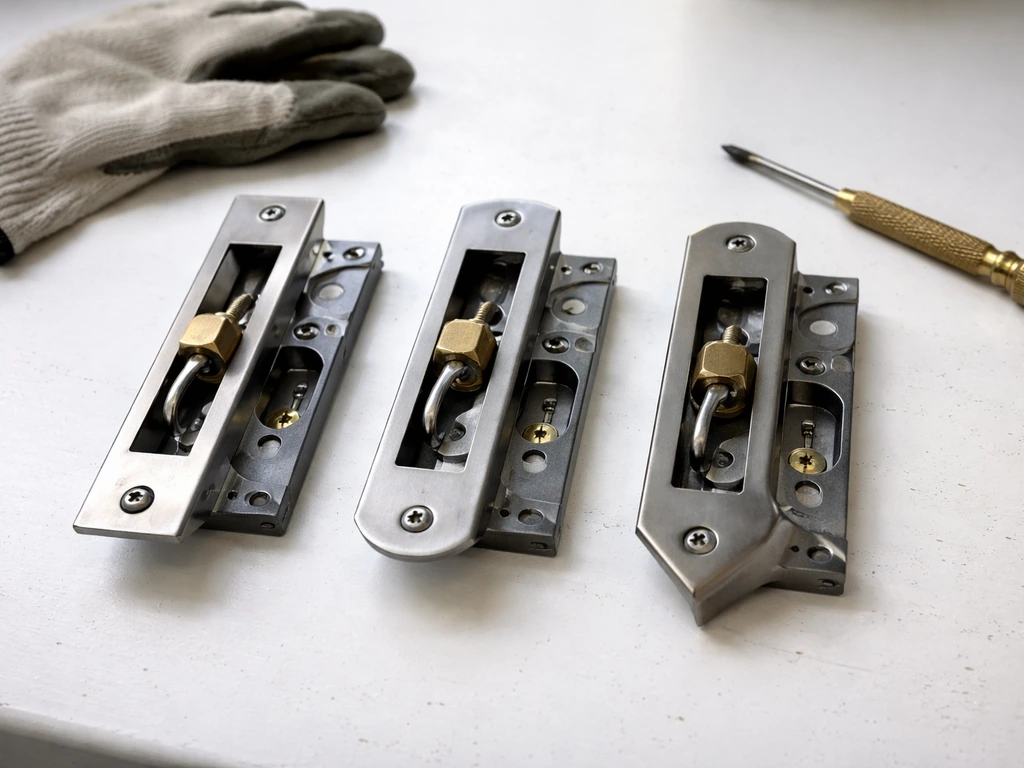
The short version from people who sell this stuff: no. A parts retailer puts it plainly: patio door handles are not universal, and compatibility comes down to the mortise style, the handle backplate, and where the thumb lever sits relative to the screw holes. That is before you even think about spindle geometry or latch type.
Manufacturers reinforce this constantly. Andersen publishes separate installation guides for different door series because handle hardware varies by series prep, not just by looks. Pella routes customers through a serial number lookup specifically because the correct replacement part depends on the exact door model, not a generic size. The idea of a single handle that fits any patio door is a convenient fiction.
That said, there is more standardization in the aftermarket than there used to be, especially for sliding doors using multipoint locking systems. You will see a lot of handles listed as "92mm PZ, 122mm fixing centres" and that does cover a broad range of doors. But even then, spindle length, spindle shape, and backplate footprint still have to line up. Universal is a marketing word here, not a guarantee.
How to identify your patio door handle type (sliding, French, bifold)
Before you measure anything, you need to know what kind of door you have, because sliding, French, and bifold doors use fundamentally different handle hardware.
Sliding patio doors
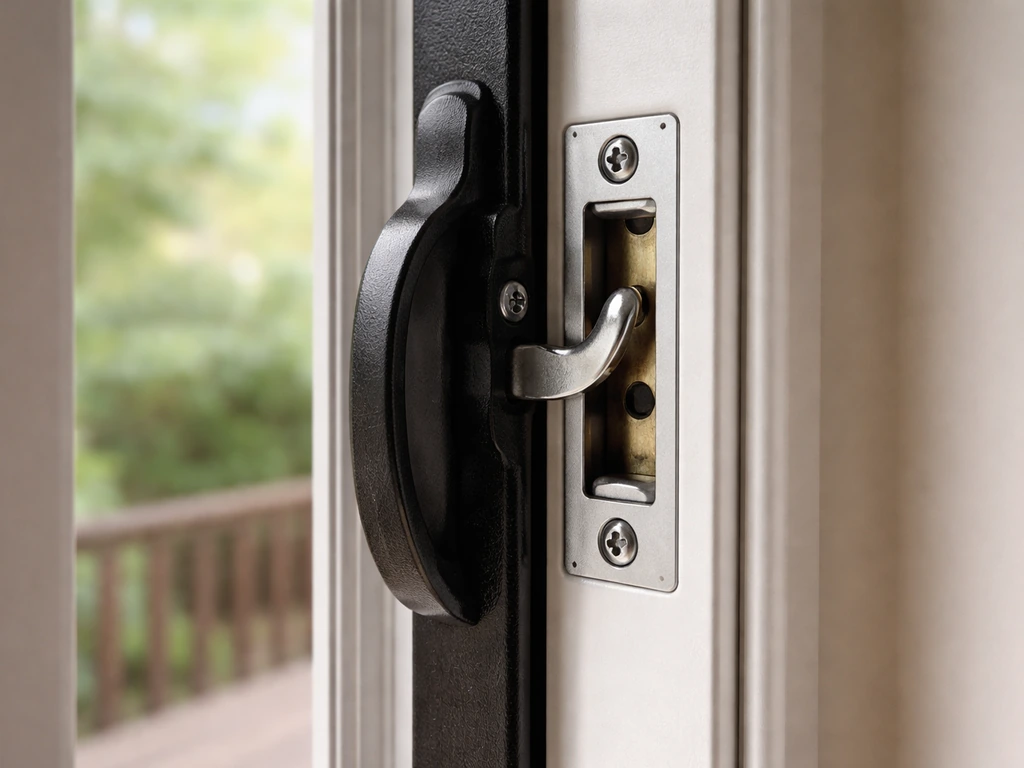
Sliding doors almost always use a handle set that operates a hook or claw latch engaging a strike on the door frame. If you are considering patio security upgrades, retractable bug screens are a practical add-on that can help keep insects out without blocking fresh air when the doors are in use retractable bug screens for patio. Many modern sliding doors have multipoint locking, where one handle motion drives multiple lock points up and down the door edge.
The handle on the interior usually has a thumb lever or thumb turn, while the exterior gets a pull handle or a keyed cylinder. The key spec for sliding doors is spindle centers (the distance between the spindle hole and the key cylinder hole, often 92mm) and fixing centers (the screw hole spacing, often 122mm).
French patio doors
French patio doors swing on hinges and typically use lever handle sets, similar to interior door hardware but with a longer backplate to accommodate the lock body. The critical measurements are backset (from the door edge to the center of the spindle hole, usually 2-3/8 inches or 60mm, sometimes 2-3/4 inches or 70mm), the spindle square size (usually 8mm), and the center-to-center distance between screw holes. French doors are where multipoint systems are most common in higher-end installations, and those require matching the lock body geometry exactly, not just the handle trim.
Bifold patio doors
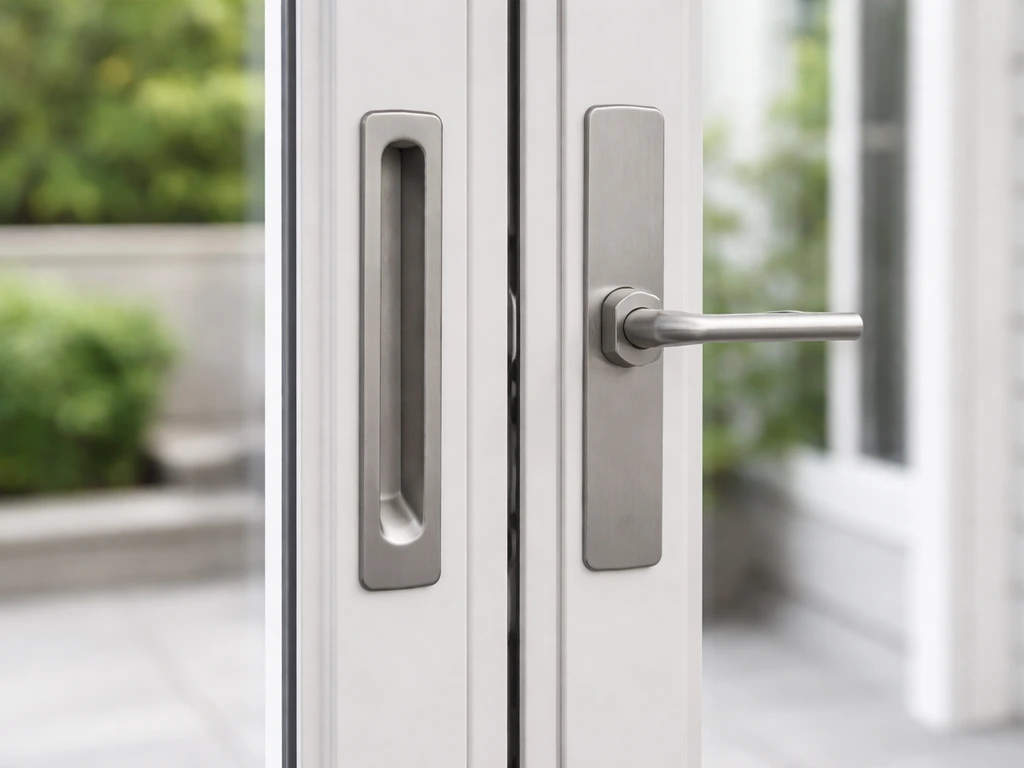
Bifold doors fold in panels and usually use flush pull handles or slim lever sets that sit tight to the door face to avoid catching on adjacent panels. The handle hardware here is often panel-specific, with the active door leaf carrying the main lock and the passive panels using inline handles. Replacement hardware is almost always sourced from the door manufacturer or a specialist, because the lock gear running through the panel stack is proprietary more often than not.
Common standards and compatibility factors
Once you know your door type, these are the five things that actually determine whether a handle fits.
Handing (left vs. right)
Handing describes which side the handle operates from and which direction the door opens or slides. A left-handed sliding door handle is a mirror image of a right-handed one, and the two are not interchangeable. Get this wrong and the thumb lever or key cylinder ends up on the wrong side, or the latch hook points the wrong direction. Always confirm your handing before ordering.
Backset
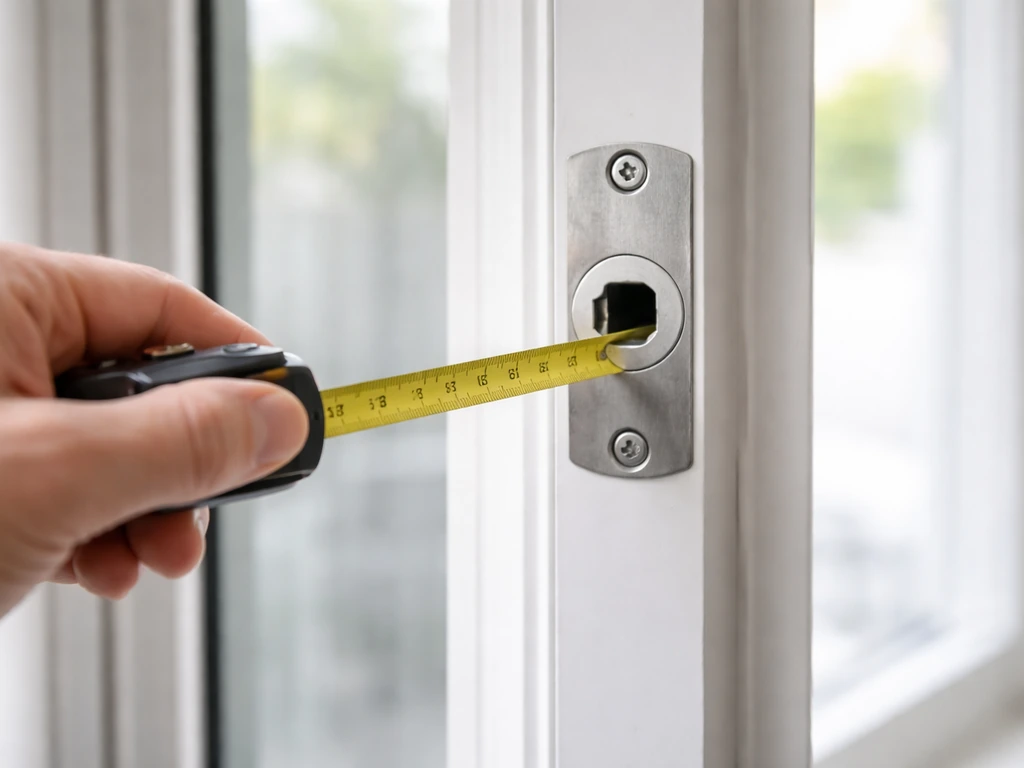
Backset is the distance from the door edge (or face of the latch bore) to the center of the spindle hole. On French-style patio doors, 2-3/8 inches (60mm) is most common, with 2-3/4 inches (70mm) as a secondary standard. Some latch bodies are adjustable across both sizes, but the handle trim itself still needs to match the door prep. Do not confuse backset with the PZ center measurement (spindle hole to cylinder hole), which is a separate dimension.
Spindle and rod size
The spindle is the square metal bar that passes through the door and connects the interior and exterior handles so they move together. Standard size on most European-style multipoint systems is 8mm square. The spindle length depends on door thickness, typically 40-45mm for standard doors but longer for thicker profiles. Shape matters too: some doors use a D-shaped or paddle-shaped drive rod instead of a square spindle, and a square-spindle handle will not engage that geometry. If a "universal" handle is not working, spindle mismatch is the most common reason.
Screw hole pattern and fixing centers
Fixing centers is the distance between the two screw holes on the handle backplate. The most common standard on sliding patio door handles is 122mm. But the backplate footprint (its overall length and width) also has to match the existing cutout or door prep, or you will either leave gaps around the old mounting holes or find the new holes drilling into wrong spots. Measure both the center-to-center spacing and the overall backplate size.
Latch type: single-point vs. multipoint
A single-point latch has one bolt or hook. A multipoint system drives multiple hooks or bolts simultaneously when you lift or turn the handle. These are not interchangeable. If your door has a multipoint lock body, the replacement handle has to engage the same gear.
Swapping a handle designed for single-point onto a multipoint door means the additional lock points never engage, leaving the door insecure even if the handle feels like it installed correctly. A standard latch throw is 1/2 inch; key backset on multipoint mortise locks is typically 1 inch or 1. Imperial Hardware’s Eurolox multipoint mortise lock dimensions also show common key backset options of 1 inch and 1.
377 inches alongside the latch throw, tying the lock geometry to compatible handle/trim choices key backset on multipoint mortise locks is typically 1 inch or 1. 377 inches.
377 inches depending on the system.
Measuring a handle for a match
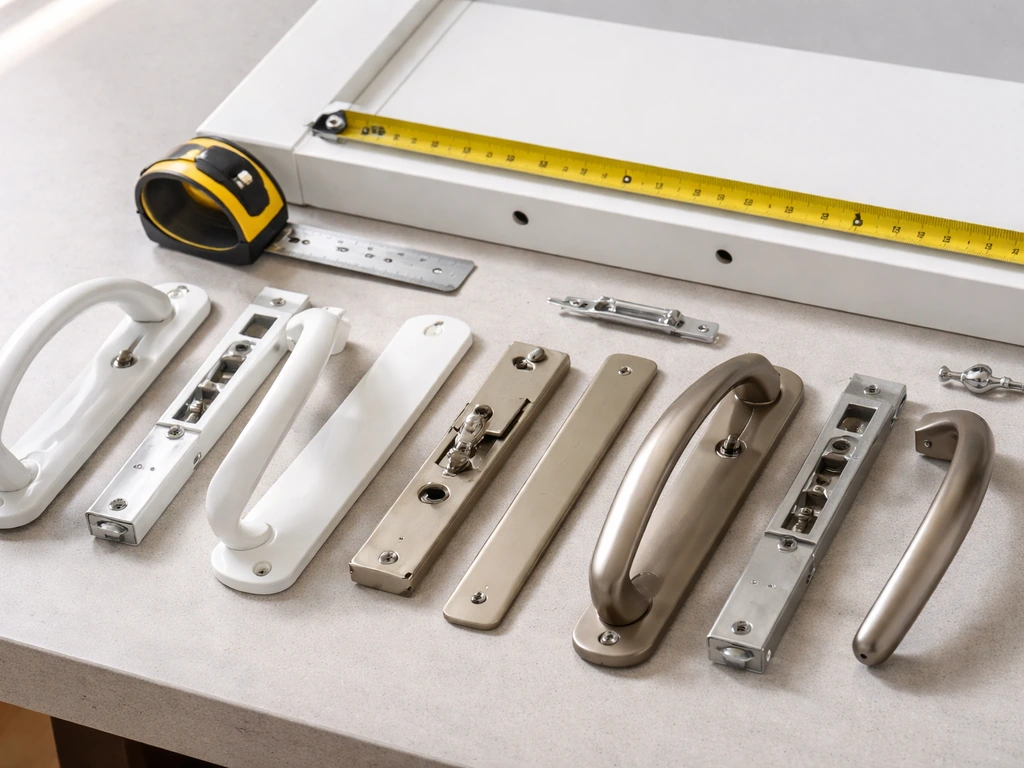
The fastest way to avoid a return is to take all your measurements before you search for a replacement, not after you have already picked one out. Here is what to measure and how.
- Backset: With the door closed, measure from the door edge to the center of the spindle hole. Write it down in both mm and inches (60mm = 2-3/8"; 70mm = 2-3/4").
- PZ center (spindle to cylinder): On handles with a key cylinder or thumbturn, measure from the center of the spindle hole to the center of the cylinder hole. The standard is 92mm. Do not guess at this one — a common mistake is treating backset and PZ as the same measurement.
- Fixing centers (screw hole spacing): Measure from the center of one screw hole to the center of the other on the backplate. Standard is 122mm but verify yours.
- Backplate dimensions: Measure the overall length and width of the existing backplate. The new handle's backplate needs to be at least as large to cover any wear marks or prep cutouts.
- Spindle hole size and shape: Note whether it is square (usually 8mm) or a different profile. Measure the square across its flat sides with calipers if possible.
- Spindle length: Measure the length of the existing spindle from face to face through the door. This is essentially your door thickness in the handle zone. Buy a spindle that matches or is slightly longer (it can be cut down; too short cannot be fixed).
- Latch face and throw: If replacing the latch too, measure the latch face plate width (usually 16mm or 20mm), the forend length, and the throw distance of the bolt.
If the existing handle or packaging is still accessible, check for a model number or part number stamped on the back of the handle or on the latch forend. Manufacturers like Pella and Andersen use serial numbers to cross-reference replacement hardware directly, which is faster and more reliable than measuring alone. The serial number is usually on a sticker inside the door frame or on the frame itself near the hinge or latch side.
Once you have your measurements, compare them against the product spec sheet for any handle you are considering. Reputable aftermarket retailers list all the critical dimensions: one product I have seen does this well explicitly states blank" rel="noopener noreferrer">"92mm cylinder centre to lever spindle centre" and "122mm fixing centres" right in the product title. If a listing does not give you those numbers, do not buy it.
Handle and lockset compatibility: key cylinders, thumbturns, and multipoint systems
The handle is the part you touch, but the lock body is the part that actually secures the door. These two interact in ways that trip people up constantly. I have seen Reddit threads where someone installs a handle that fits perfectly by all measurements, then finds the door will not latch unless they manually hold it in position, because the handle's cam or drive interface does not engage the lock body at the right point in its rotation.
For doors with a key cylinder, the cylinder size (Euro profile being the most common, typically 30/30mm or similar) has to match the cylinder hole in the handle backplate. If you are keeping the existing cylinder and just swapping the handle, confirm the cylinder profile is compatible with the new handle's cam pocket.
Thumbturns (the indoor rotating knob that locks the door without a key) are usually integrated into the handle assembly on sliding doors. When you replace the handle, the thumbturn mechanism also changes, so make sure the new one's throw range engages your existing multipoint lock body. If it does not rotate far enough, or rotates too far, the hooks will not seat.
Multipoint systems require the most attention here. The handle is essentially the actuator for a lock case embedded in the door edge. Different manufacturers use different gear ratios and cam profiles. An Andersen multipoint system aligns the handle assembly over its proprietary locking shaft, and that shaft geometry dictates what fits. A handle from a different brand's multipoint system will almost certainly not engage correctly even if the external measurements match. If you have a multipoint door, start with the lock case part number if you can find it, then find a handle confirmed compatible with that lock case.
Quick replacement paths: OEM vs. aftermarket and when to swap the full lock
There are three practical replacement scenarios, and knowing which one applies saves you time and money.
| Scenario | What to replace | Best source | Notes |
|---|---|---|---|
| Handle looks worn or broken but door latches and locks fine | Handle set only (trim, backplate, spindle) | OEM parts store or aftermarket with matching specs | Confirm spindle size and fixing centers match exactly before buying |
| Handle moves but door does not latch or lock reliably | Handle set plus latch/lock body | OEM preferred; aftermarket if lock case part number is confirmed | The handle itself is rarely the cause of a latch failure — inspect the lock body and rollers too |
| Older or discontinued hardware, cosmetic upgrade, or full security upgrade | Full lockset: handle, lock body, cylinder, and strike | OEM through manufacturer's parts store (Pella, Andersen) or specialist hardware retailer | Measure everything and use serial number lookup to avoid ordering mismatched components |
OEM parts are almost always the safest bet for branded doors. Pella has an online parts store where you enter your door's serial number and get hardware matched to your specific model. Andersen publishes series-specific installation guides and sells replacement hardware by door series. Yes, OEM costs more. But it eliminates the guesswork around spindle engagement, multipoint compatibility, and backplate fit.
Aftermarket handles work well when you have a standard sliding door with a 92mm PZ and 122mm fixing centers, and you are not dealing with a proprietary multipoint system. Stick to aftermarket retailers that publish full dimensional specs and offer genuine compatibility guarantees rather than vague "fits most" language. Brands like Hoppe and Winlock publish explicit specs (92mm spindle centers, 122mm screw centers, 8mm square spindle) that let you do a real comparison before buying.
One failure mode worth calling out: forcing a handle that is close but not quite right. I have read accounts of people shimming or over-tightening a slightly mismatched handle, only to have it come away from the door again within weeks because the backplate was never properly seated. If it does not go in smoothly, it is the wrong part. If you are instead shopping for retractable patio screens, pricing varies by frame size and whether you need a manual or motorized setup.
Where to buy and how to avoid returns
Your best options, in order of return risk from lowest to highest: If you are also shopping for outdoor shade, look into a manual retractable patio awning that rolls out smoothly and is sized for your space.
- Manufacturer's parts store (Pella, Andersen, or your door brand): Use your door's serial number to pull the exact replacement. This is the most reliable route and nearly eliminates compatibility risk. Andersen's parts hub and Pella's shop parts portal both support this workflow.
- Specialist aftermarket retailers with full spec listings: Look for retailers that list PZ centers, fixing centers, spindle size, latch throw, and backset on every product page. If you find a handle with all your measurements matching, confidence is high. Read the compatibility notes in the listing carefully — many explicitly name which lock cases or door types they work with.
- General hardware retailers (big-box stores, Amazon): These carry branded sets like National Hardware's patio door handle/latch sets, which list specific dimensions. The risk here is that product pages sometimes lack the full spec sheet, so download any available PDF spec before buying. Check return policies.
- Local glazing or door hardware specialists: Useful for older or discontinued hardware where online searches keep coming up empty. Bring your measurements and ideally the old handle. A good specialist can cross-reference the part or find a compatible alternative on the spot.
To cut return risk further: photograph the existing handle from the front, back, and latch side before you remove it. Note the brand and any part numbers stamped on the hardware. Keep the packaging if the handle is less than a year old. When the new handle arrives, do a dry fit before you commit any screws, check that the spindle engages the lock body, the backplate sits flush, and the thumb lever or key cylinder aligns correctly. Manual patio screens can add privacy and airflow, but you still need the right fit and hardware for your door type. Only then fasten it down.
Installation itself is straightforward for most handle swaps: remove the old screws, pull the handle set, slide the new spindle through, align the new backplate, and fasten. The part that catches people is spindle length, if the spindle is too long for your door thickness, the handle will not sit flush. Most aftermarket spindles come in adjustable lengths or can be cut with a hacksaw.
After fitting, test the full range of latch and lock motion before putting the door back into regular use, and check that the door still closes and latches without resistance. A manual retractable patio screen is another common upgrade for keeping bugs out while preserving airflow on sliding patio doors.
If Andersen or Pella hardware is involved, follow the series-specific adjustment guide for roller and latch alignment, since even a correct replacement may need fine-tuning to engage the strike properly.
FAQ
If a listing says “universal,” can I still buy it for my patio door handle?
Treat “universal” as unverified until the ad includes your exact dimensions (fixing centers and cylinder or PZ/lever measurements) and confirms your door type (sliding vs French vs bifold) plus handing. If the listing does not state spindle shape and the backplate footprint dimensions, you are more likely to get a near-fit that either won’t latch or leaves gaps around the old screw holes.
What’s the quickest way to confirm compatibility without taking everything apart?
Look for a model or serial number on the door frame or inside the frame near the latch side (often a sticker), then match it to the manufacturer’s parts lookup. If you cannot find that, photograph the handle from the latch side and measure fixing centers, backset, and spindle drive type (square vs D-shaped), because spindle geometry is often the hidden mismatch.
Can I use the same handle on a left-hand and right-hand patio door?
Usually no. Handing affects latch hook direction, thumb lever or key cylinder placement, and sometimes cam rotation. Even if the measurements match, a mirror-image assembly can end up with the latch pointing the wrong way or the key cylinder on the wrong side.
Do I need to replace the thumbturn or can I reuse my existing one?
On many sliding doors, the thumbturn is integrated into the handle assembly, so reusing it may not fit the new cam or actuator shape. If you are keeping the lock body, verify the thumbturn throw range aligns with the multipoint gear so the hooks seat fully, not just partially.
My new handle installs but the door won’t latch unless I hold it, what does that mean?
That usually indicates the handle’s cam or spindle interface is not engaging the lock body at the correct rotational position, even if the backplate and screw holes line up. Double-check latch throw engagement (especially on multipoint systems) and verify spindle shape and length, not just centers.
How do I tell whether my patio door uses single-point or multipoint locking?
If the lock engages multiple bolts or hooks along the door edge when you lift or turn the handle, it is multipoint. You can also check for a multipoint lock case or additional strike points on the frame. Don’t assume multipoint based on door style alone, confirm the lock body and strike layout.
What measurement do people confuse the most, and why does it matter?
Many people mix up backset (door edge to spindle hole center) with cylinder center measurements (often PZ, spindle hole to key cylinder hole). Those are separate distances, and a handle can match one measurement while still having the cylinder or spindle positioned incorrectly.
If my spindle is too long, can I just force it in or trim it?
Don’t force the handle. If the spindle overhang prevents the backplate from seating flush, it is the wrong spindle length or spindle type. Many aftermarket spindles are adjustable or can be cut, but you must cut accurately and recheck that the spindle engages the lock body smoothly across the full latch and lock range.
What should I check for keyed patio doors during a handle swap?
Confirm the cylinder profile and cylinder size match the handle’s backplate cam pocket and cylinder hole. If you are keeping the existing cylinder, verify the new handle is compatible with that cylinder’s mounting geometry, otherwise you can get a handle that fits screws and still won’t actuate the lock correctly.
Are aftermarket handles safe to use on multipoint patio doors?
They can work only when the handle is explicitly confirmed compatible with your exact lock case or lock body part number, not just matching “typical” dimensions. Different brands can have different gear ratios and cam profiles, so a dimension match without compatibility confirmation often fails either in the latch feel or in full hook engagement.
What’s the best return-risk reduction step if I need to shop online?
Before ordering, compare your measurements against the product title or spec sheet that lists key numbers (for example, cylinder center to lever/spindle center and fixing centers) and confirms spindle type (like 8mm square). Also dry-fit the handle and test latch and lock motion without fully fastening, so you can stop early if the spindle does not engage the lock gear.
Do French and bifold patio doors share handle hardware standards with sliding doors?
No. French doors typically need lever hardware matched to backset and a longer backplate for the lock body, bifolds often use slim or flush panel hardware tied to the panel stack and gear running through the door. Even if centers look close, spindle engagement and backplate geometry usually won’t match across these door types.