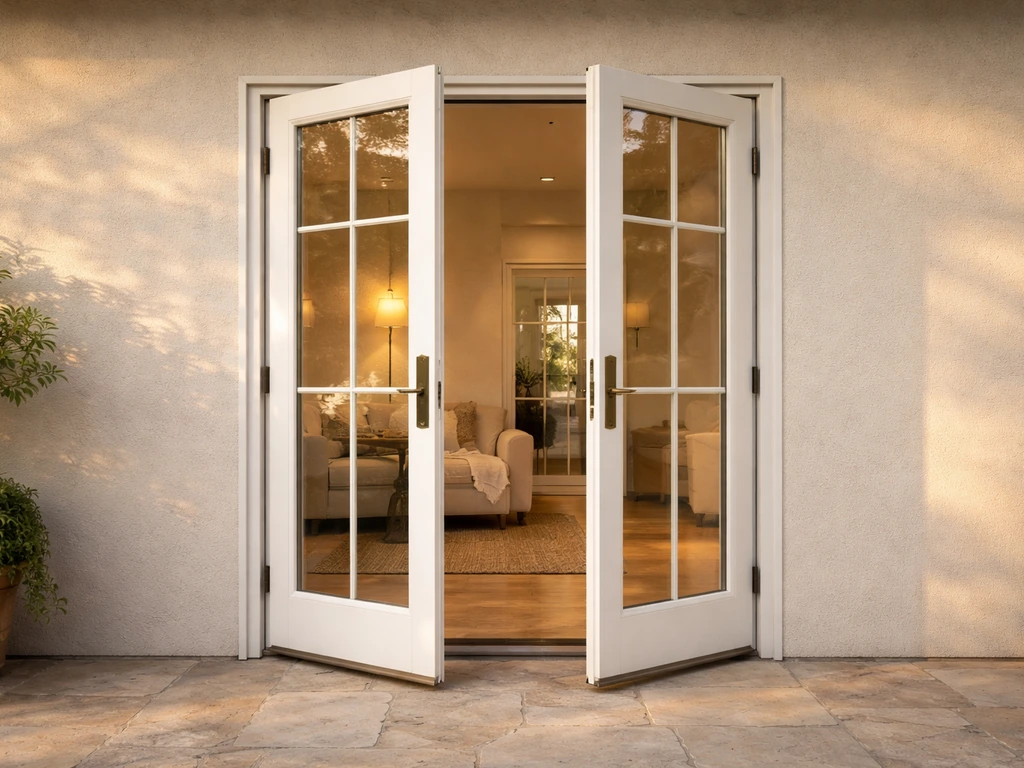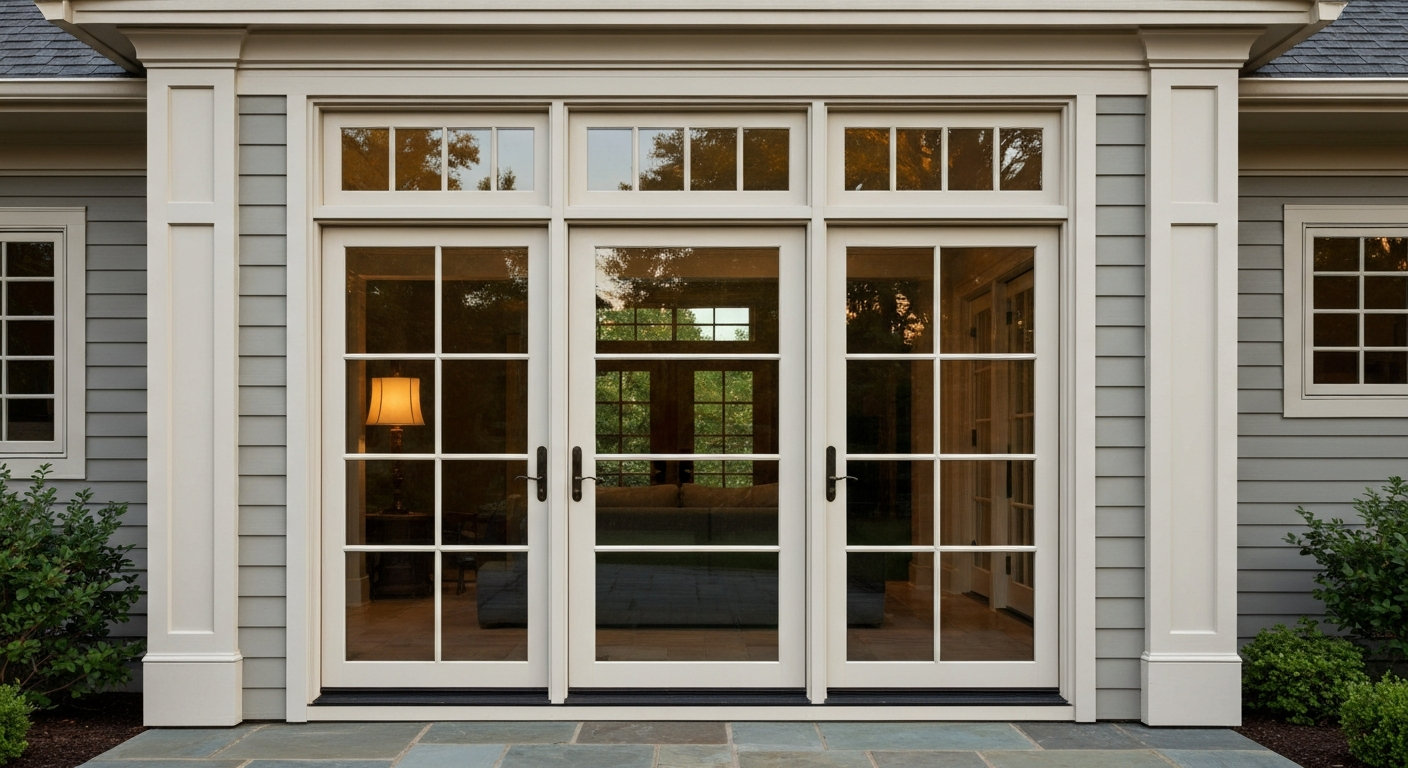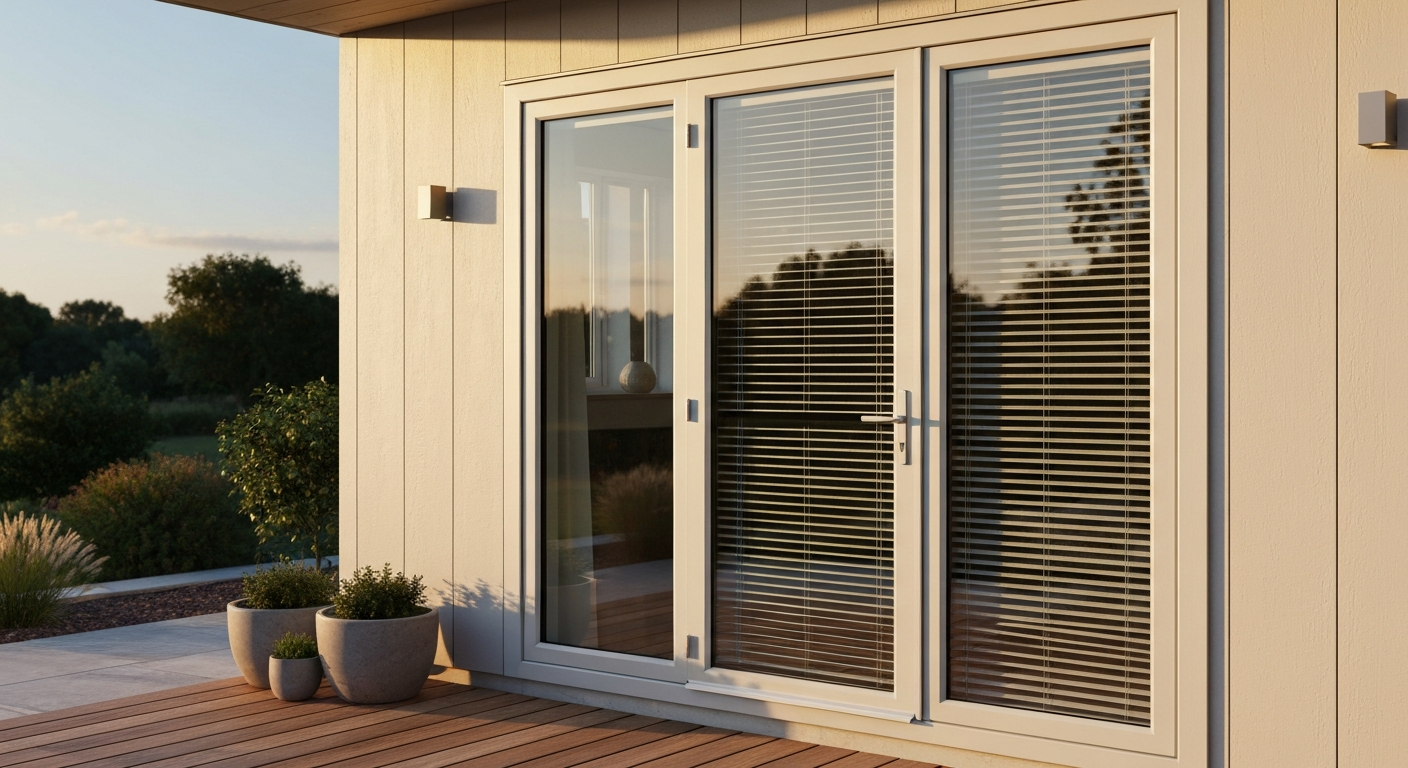
For cold climates, a fiberglass or vinyl-framed French door with triple-pane glass and a U-factor at or below 0.22 is the best patio door you can buy. It outperforms sliding doors on air sealing, handles freeze-thaw cycles without warping, and cuts heating bills noticeably compared to a standard double-pane slider. If you absolutely need a sliding door, choose one rated for the Northern ENERGY STAR climate zone with a thermal-break frame, low-E triple glazing, and an air leakage rating of 0.3 cfm/ft² or less. That combination gets you most of the way there.
Best Patio Door for Cold Weather: Sliding Guide & Specs

Owen Delaney
8 Jun 2026
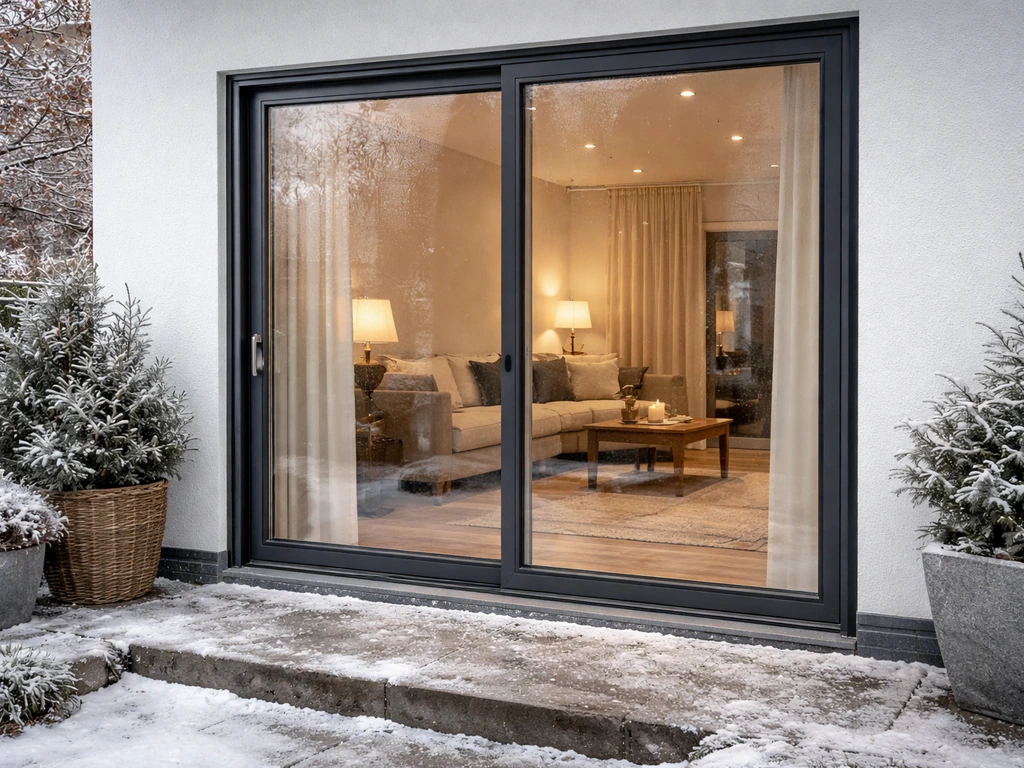
What 'best for cold weather' actually means
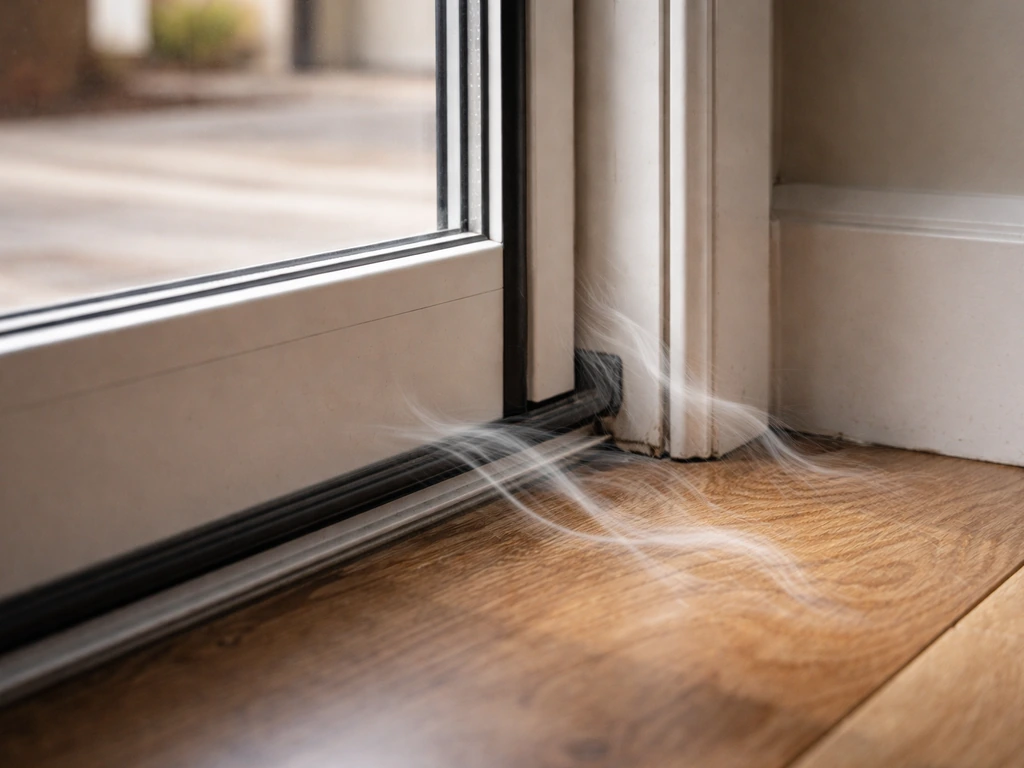
People searching for a cold-weather patio door are usually dealing with one or more of three things: drafts that make the room near the door feel 10 degrees colder than the rest of the house, heating bills that spike every winter, and condensation or frost forming on the glass or frame. A great cold-weather door solves all three at once.
Drafts come from air leakage around the frame, through the weatherstripping, and along the threshold. Energy loss comes from conductive heat transfer through the glass and frame, which is measured by U-factor (lower is better). Condensation forms when warm indoor air hits a cold surface and drops below its dew point. The Department of Energy is clear on this: once air reaches the dew point, moisture condenses on the first cold surface it encounters, and patio doors are notorious cold spots. A high-performance door handles all three by combining tight seals, thermally broken frames, and insulating glass.
Security in cold weather also matters more than people expect. When temperatures drop below zero, metal hardware contracts, older locks stiffen, and warped frames leave gaps that are both a draft problem and a security problem. A door built for cold climates uses hardware and locking mechanisms designed to function reliably in freezing temps.
Sliding vs. French vs. bifold: who should pick what
This is the decision most people agonize over, and in cold climates the honest answer is that the door type matters a lot, not just the glass spec.
French doors (swinging)
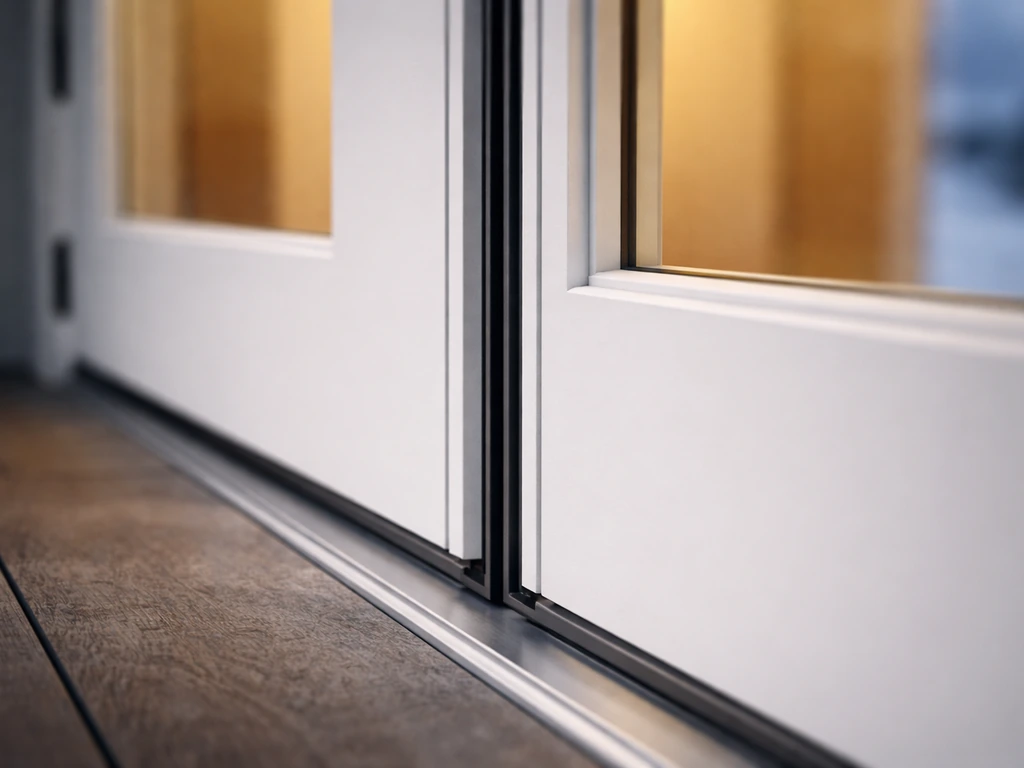
French doors are the best choice for cold climates, full stop. If sound control is a priority, the best soundproof patio doors use the same airtight, insulated design choices that reduce drafts and condensation. The DOE explicitly notes that swinging doors generally offer a tighter seal than sliding types, because the door panel compresses directly against weatherstripping all the way around the frame when closed.
There's no track gap, no sliding panel overlap issue, just a panel pressing into a seal. In very cold climates, this compression-seal design is a meaningful advantage. The downsides are real, though: you need swing clearance inside or outside, they're harder to use when carrying things, and they cost more up front. If you have the space for the swing arc and your budget allows it, go French.
Sliding patio doors
Sliding doors are the most popular patio door type in North America, and they work fine in cold climates if you buy a well-rated one. For coastal areas, follow the same focus on tight air sealing and low-E triple-pane glass so you get the best patio doors for coastal conditions sliding doors. But you need to go in with eyes open.
The DOE states plainly that it's essentially impossible to stop all air leakage around the weatherstripping on a sliding glass door while still being able to use it. That's not a knock on a specific brand, it's a physics reality: the panel has to move along the track, so there will always be a small gap somewhere. High-quality sliders minimize this dramatically with multi-point locking, pile weatherstripping, and precision-machined tracks, but they'll never seal as tightly as a swinging door.
Choose a slider if you have a wide opening, limited interior swing space, or a design where a slider fits better. Prioritize a Northern Zone ENERGY STAR rating and an air leakage rating of 0. 3 cfm/ft² or less.
Bifold patio doors
Bifold doors are beautiful and great for opening a wall to an outdoor space in summer, but they're a poor choice as a primary cold-weather door. They have many more panel joints, more potential air leakage points, and the folding panels make consistent weatherstripping compression nearly impossible. If you live somewhere with harsh winters and you love bifolds, the honest move is to treat them as a three-season door and plan to close them off with a heavy insulated curtain or cover during the coldest months. For anyone in a Northern climate zone, bifolds should not be the primary exterior door on a cold-facing wall.
| Door Type | Cold Climate Seal Quality | Best Use Case | Cold Climate Verdict |
|---|---|---|---|
| French (swinging) | Excellent (compression seal) | Most homes with swing clearance | Best choice |
| Sliding | Good (with high specs) | Wide openings, limited swing space | Good if properly rated |
| Bifold | Poor (many panel joints) | Wide openings, aesthetic priority | Not recommended as primary |
Cold-weather performance specs to look for
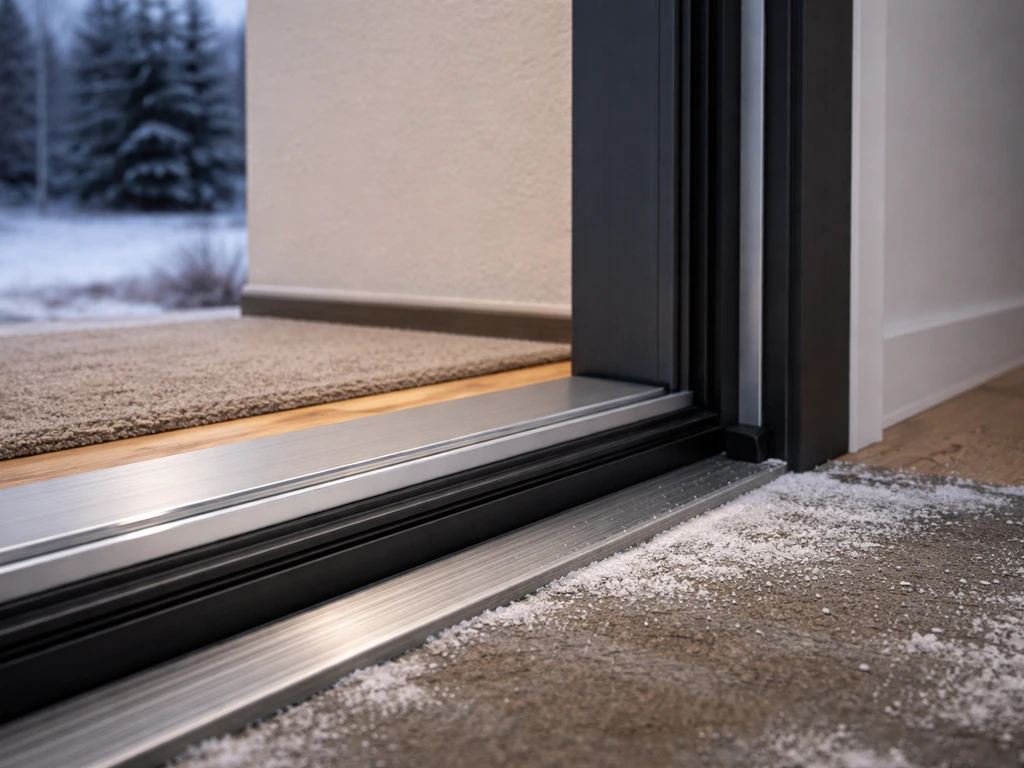
This is where most homeowners get lost in the numbers. Here's what each one actually means for your comfort and heating bill.
U-factor
U-factor measures how quickly heat escapes through the door. Lower is better. For Northern climates (Minnesota, Wisconsin, Maine, upper Midwest, mountain West), ENERGY STAR Version 7.0 requires a U-factor of 0.22 or lower. That's your target. A typical builder-grade slider from five years ago might be rated at 0.35 or higher, which is noticeably worse. A triple-pane, thermally broken door can hit 0.17 to 0.20. Every 0.05 improvement in U-factor translates to real, measurable heat retention.
Air leakage (AL)
Air leakage is measured in cubic feet per minute per square foot of door area (cfm/ft²). ENERGY STAR Version 7.0 sets an AL threshold of 0.3 cfm/ft² for sliding doors and skylights. Look for that number on the NFRC label. A door rated at 0.1 cfm/ft² is dramatically tighter than one at 0.3, even if both technically pass. For cold climates, the lower this number, the less drafty the room will feel.
Glazing: double-pane vs. triple-pane
Double-pane with low-E coating is the current standard and is adequate for mild to moderate cold. Triple-pane is worth the upgrade in Northern zones. The extra glass layer and two gas-filled cavities (typically argon or krypton) push U-factors well below 0.22 and reduce the interior glass surface temperature, which directly reduces condensation and frost risk. If you're in a zone where temps regularly drop below 0°F, triple-pane is not a luxury.
Low-E coatings
Low-E (low-emissivity) coatings are microscopically thin metallic layers applied to the glass surface. They reflect radiant heat back into the room in winter and block heat gain in summer. In cold climates, look for a low-E coating spec designed to maximize solar heat gain (higher SHGC), which lets passive solar heat into the room during the day. The ENERGY STAR climate zone finder will tell you what SHGC range makes sense for your specific location. NFRC labels list both U-factor and SHGC, so you can compare products directly. ENERGY STAR explains that the blank" rel="noopener noreferrer">ENERGY STAR label is used with the NFRC label to identify climate-specific efficiency, including U-factor and SHGC listed on the NFRC side for doors and windows.
Condensation resistance
The NFRC label optionally includes a condensation resistance (CR) score from 1 to 100. Higher is better. For cold climates where frost and interior condensation are a concern, look for a CR of 50 or higher. Triple-pane units with warm-edge spacers typically score 60 to 70+.
Frame and glass materials that handle freezing better
The frame is where a lot of cold-weather performance is won or lost, and it's the part homeowners often overlook when comparing prices.
Fiberglass
Fiberglass is the best frame material for cold climates. It expands and contracts at nearly the same rate as glass, which means seals stay tight through freeze-thaw cycles and the frame doesn't warp over time. Fiberglass is also a poor conductor, so it doesn't transfer cold from outside to inside the way aluminum does. Brands like Pella Impervia, Marvin Elevate, and Andersen 100 Series use fiberglass composites. Expect to pay a 20 to 40 percent premium over comparable vinyl, but the long-term performance and durability in harsh climates justifies it.
Vinyl (PVC)
Vinyl is the most common frame material and performs well in cold climates at a lower price point. It's naturally non-conductive, so there's no thermal bridging issue like you get with standard aluminum. The catch is that lower-quality vinyl can become brittle in sustained extreme cold and may warp over time in wide panels. Multi-chamber vinyl frames (look for this in product specs) are significantly stiffer and more thermally efficient than single-chamber designs. For budget-conscious buyers in cold climates, a quality multi-chamber vinyl door is a solid choice.
Thermal-break aluminum
Standard aluminum frames are terrible for cold climates because aluminum is highly conductive and will act as a heat highway between your warm interior and the cold outside. However, thermal-break aluminum uses a layer of non-conductive material (usually polyamide) inserted into the frame to interrupt that conductive path. Thermal-break aluminum frames can meet Northern zone U-factor requirements and are popular for contemporary design aesthetics where slim sightlines matter. They cost more than vinyl and perform slightly below fiberglass, but they're a reasonable middle ground if aesthetics are a priority.
Wood and wood-clad
Wood is a natural insulator and can perform well thermally, but bare wood requires significant maintenance in cold, wet climates and can swell, stick, or rot if not properly protected. Wood-clad doors (aluminum or fiberglass exterior, wood interior) offer the thermal performance and aesthetics of wood with much better weather resistance. They're expensive but beautiful and durable if maintained.
| Frame Material | Cold Climate Performance | Durability in Freeze-Thaw | Cost (relative) | Best For |
|---|---|---|---|---|
| Fiberglass | Excellent | Excellent | High | Northern climates, long-term investment |
| Multi-chamber vinyl | Very good | Good | Medium | Budget-conscious cold climate buyers |
| Thermal-break aluminum | Good | Very good | Medium-high | Contemporary design, moderate cold |
| Standard aluminum | Poor | Good | Low-medium | Not recommended for cold climates |
| Wood-clad | Very good | Very good (exterior) | High | Premium homes, wood interior appeal |
Buying checklist and sizing for replacement or upgrade
Before you order anything, measure twice. A patio door replacement that doesn't fit the rough opening will cost you far more in labor and patching than getting the size right from the start. Here's what to confirm before you buy.
Measuring your rough opening
Measure the width and height of the rough opening (the framed hole, not the existing door frame). Standard patio door sizes run 60 inches wide by 80 inches tall (5x6.8 ft), 72x80 inches, and 96x80 inches for two-panel configurations. Three-panel configurations go wider. The door unit you order should be 0.5 to 0.75 inches smaller than the rough opening on each side to allow for shimming and leveling. The DOE specifically notes that patio doors must be installed as square as possible so the door seals tightly to the jamb and swings properly, so that gap is not wasted space, it's where proper installation happens.
Configuration checklist
- Confirm swing direction (inswing vs. outswing for French doors, or which panel is active for sliders)
- Check if the rough opening is square using a diagonal measurement (both diagonals should match within 1/8 inch)
- Note which side the hinge or active panel is on when viewed from outside (left-hand or right-hand)
- Measure from the subfloor to the top of the rough opening for height, and confirm your threshold height works with existing flooring
- Check whether your configuration needs a sill extension or jamb extension to match interior wall thickness (typical for walls thicker than 4.5 inches)
- Decide on venting: for sliders, which panel slides? For French doors, do both panels open or just one?
- Confirm the ENERGY STAR climate zone for your ZIP code using the ENERGY STAR climate zone finder before comparing product specs
Product listing spec checklist
- U-factor of 0.22 or lower for Northern zone (or whatever your climate zone requires)
- Air leakage (AL) of 0.3 cfm/ft² or lower
- NFRC certified label (not just manufacturer claims)
- ENERGY STAR certified for your climate zone
- Low-E coating specified (ask: which surface is coated and what is the SHGC?)
- Double or triple-pane glazing with argon or krypton fill
- Multi-point locking system for French doors
- Warm-edge spacer between glass panes (reduces condensation at edges)
- Insulated or thermally broken threshold
- Warranty: look for at least 10 years on the glass seal, 20+ years on the frame
Costs and value: what you'll pay and what differences matter most
Patio door pricing spans a wide range, and it's worth understanding where the money actually goes in a cold-climate installation.
| Door Type & Spec Level | Door Unit Cost (approx.) | Installation (approx.) | Total Installed (approx.) |
|---|---|---|---|
| Builder-grade vinyl slider, double-pane | $400–$800 | $300–$600 | $700–$1,400 |
| Mid-range vinyl slider, triple-pane, ENERGY STAR Northern | $900–$1,800 | $400–$700 | $1,300–$2,500 |
| Mid-range fiberglass French door, double-pane low-E | $1,200–$2,500 | $500–$900 | $1,700–$3,400 |
| Premium fiberglass/wood-clad French, triple-pane | $2,500–$5,000+ | $700–$1,200 | $3,200–$6,200+ |
| Thermal-break aluminum slider, triple-pane | $1,500–$3,500 | $500–$1,000 | $2,000–$4,500 |
The upgrade from a builder-grade slider to a Northern-rated triple-pane unit is where you get the most value per dollar in cold climates. That step up (roughly $600 to $1,000 more in door cost) can meaningfully reduce heat loss, eliminate most drafting, and prevent the condensation problems that create mold and damage trim. Going from mid-range to premium is more about longevity, aesthetics, and marginal performance gains. The sweet spot for most homeowners is a quality mid-range fiberglass or multi-chamber vinyl door with triple-pane glazing.
Installation cost is not optional to skimp on. A premium door poorly installed will perform worse than a mid-range door installed correctly. A badly squared frame lets the door sag, breaks the seal, and creates drafts regardless of the U-factor on the label. Get at least two installation quotes and ask specifically about their process for squaring the frame, sealing the perimeter with spray foam, and flashing the exterior.
Cold-weather accessories and sealing solutions
Even a good door can underperform if the accessories around it are inadequate. These are the additions worth spending money on for cold climates.
Thresholds and door sweeps
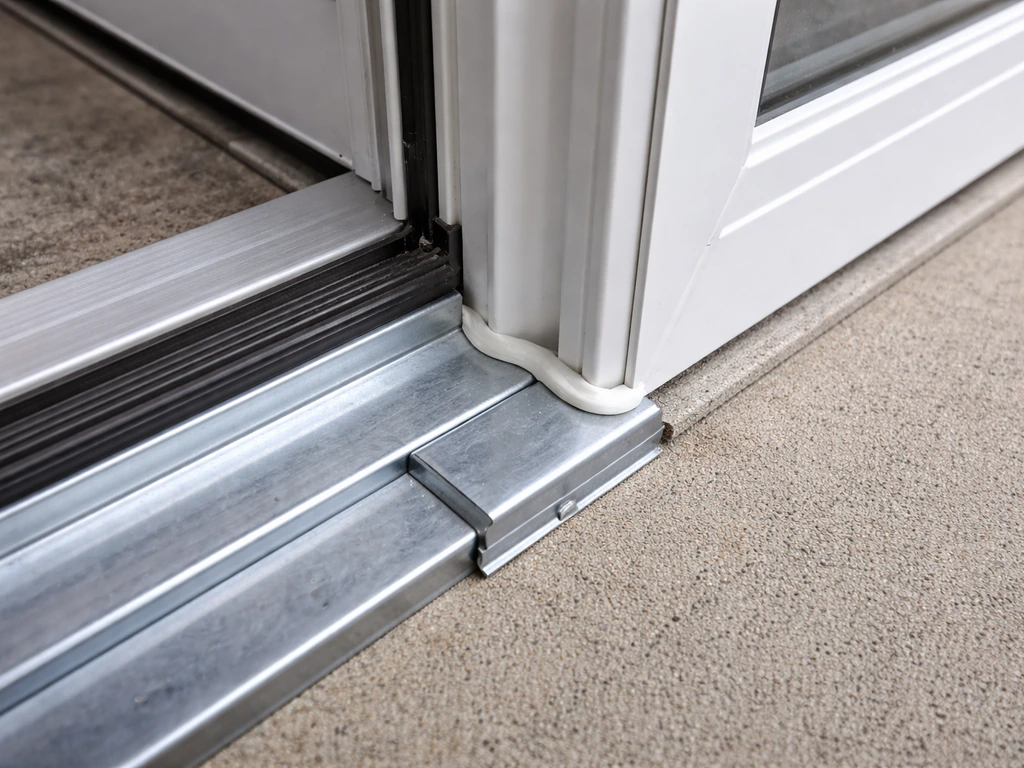
The threshold is the most common weak point in a patio door's thermal envelope. An insulated or thermally broken threshold (sometimes called a sill dam) prevents cold from conducting straight through the floor-level connection. For sliding doors, look for thresholds with an integrated pile or rubber sweep that contacts the panel bottom consistently. Replacement thresholds for existing doors cost $30 to $150 and are one of the highest-value upgrades you can make to an existing underperforming door.
Weatherstripping
Weatherstripping on patio doors wears out over time and is often the first thing to fail on doors that were once airtight. For sliding doors, the pile weatherstripping (that fuzzy gray strip in the track) should be replaced every five to seven years in cold climates. For French doors, compression foam or rubber weatherstripping around the frame perimeter should be replaced when it no longer springs back. Both are DIY jobs that take under an hour and cost $20 to $60 in materials. If your existing door is drafty but otherwise in good shape, start here before buying a new door.
Insulated curtains and door covers
Heavy insulated curtains or cellular shades add meaningful R-value over any patio door. Cellular shades with sealed guides can help patio doors with built-in blinds improve insulation and energy performance. A good thermal cellular shade can add R-3 to R-5 of insulation on its own, which makes a real difference overnight in very cold weather. For doors on walls that face North or experience heavy winter wind exposure, a removable insulating cover (interior or exterior) is worth considering for the coldest two to three months. This pairs especially well with bifold doors that aren't optimally sealed.
Draft stoppers and perimeter sealing
If you're dealing with an existing door that has air leakage at the perimeter (frame-to-wall connection), a bead of interior-grade caulk along the trim can fix it in 20 minutes. On the exterior, check that the perimeter is sealed with flexible exterior caulk or backer rod plus caulk. These are often the source of drafts that people blame on the door itself. For sliding tracks, foam backer rod cut to fit and inserted in unused portions of the track can block significant cold-air infiltration.
Locking hardware for cold climates
Multi-point locking systems are worth specifying for cold-weather French doors. They compress the door at multiple points along the frame (top, middle, bottom), not just at one handle latch, which dramatically improves the seal. For sliders, a secondary blocking bar in the track is inexpensive and adds both security and a secondary stop against the door shifting in high winds. Hardware rated for use in temperatures below -20°F is available from commercial suppliers if you're in an extreme climate.
Installation and maintenance to keep it airtight for years
A new door starts performing below spec the moment installation corners are cut. Here's what proper cold-climate installation looks like, and how to maintain it.
What proper installation includes
- Remove the old door and inspect the rough opening framing for rot, moisture damage, or out-of-square conditions before setting the new unit
- Install a continuous sill pan flashing at the base of the opening to direct any water that gets behind the door out and away from the framing
- Shim the unit level, plumb, and square before fastening, and verify with a level and diagonal measurement
- Fill the gap between the door frame and the rough opening framing with low-expansion spray foam (not standard expanding foam, which can bow vinyl or fiberglass frames)
- Apply flexible flashing tape over the nailing fins on all four sides, lapping correctly so water can't work its way in
- Seal the interior perimeter with paintable caulk and reinstall or replace interior trim
- Test the door operation: it should open and close smoothly with no binding, and the weatherstripping should compress evenly all the way around
Annual cold-weather maintenance routine
Every fall, before temperatures drop, spend 30 minutes checking your patio door. Run your hand around the closed door on a cold or windy day and feel for drafts. Check the weatherstripping for compression and cracks. Lubricate sliding door tracks with a silicone-based spray (not WD-40, which attracts dirt). For French door hinges, use a dry lubricant. Check the exterior caulk at the perimeter and reapply where it has cracked or pulled away. Clean the tracks of any debris that can prevent the door from seating fully against the weatherstripping. These 30 minutes once a year extend the life of the weatherstripping significantly and keep your heating bill where it should be.
When to replace vs. upgrade
If your existing door is single-pane, has a standard aluminum frame, or has a U-factor above 0.35, replacement is almost always the right call. The energy savings from a proper Northern-rated door will typically pay back the upgrade cost in heating savings within 7 to 12 years, and comfort improves immediately. If your door is already double-pane with a decent frame but is drafty, start with weatherstripping, threshold, and perimeter caulk before committing to a full replacement. Upgrading weatherstripping, thresholds, and installation details are often the fastest way to make patio doors more energy efficient without replacing the whole unit. Often that combination resolves the problem for under $100.
Your cold-climate patio door shortlist
Here's the framework to narrow it down based on your situation. If you're in a Northern climate zone and want the best performance, get a fiberglass French door with triple-pane glazing, a U-factor of 0. 20 or lower, AL at 0. 3 cfm/ft² or below, multi-point locking, and a thermally broken threshold.
Brands like Pella, Andersen, Marvin, and ProVia all offer configurations that meet this spec. If you need a slider (wide opening, limited interior space), buy one rated specifically for the Northern ENERGY STAR zone with a multi-chamber vinyl or thermal-break aluminum frame, triple-pane low-E glass, and the lowest air leakage rating you can find in your budget.
For many homeowners, the best portable air conditioner for a patio door is the one that can be used near the door while still maintaining good airflow and temperature control best portable air conditioner for patio door. If your budget is tight and replacement isn't in the cards this year, prioritize weatherstripping replacement, threshold upgrade, perimeter caulking, and insulated curtains, which together can cut drafts by 50 to 70 percent on a mediocre existing door.
And if you're comparing cold-weather patio door performance with adjacent energy decisions, know that glazing type and frame material also matter significantly for general energy efficiency and insulation ratings, which tie directly into the broader question of how to make your existing doors perform better year-round. A best patio door insulation kit can complement those upgrades by sealing hard-to-reach gaps around the door edges.
FAQ
Can I hit “cold-weather ready” performance with a double-pane door if it has low-E glass?
Sometimes, but only if your U-factor is low enough for your climate. If you routinely see subzero temperatures, double-pane often still leaves the interior glass surface too cold, which increases condensation and frost risk even when drafts are controlled. For best results, confirm the NFRC U-factor and, if available, the condensation resistance score (CR), and compare against a triple-pane target rather than relying on low-E alone.
What NFRC label numbers should I compare first when shopping for the best patio door for cold weather?
Start with U-factor, then air leakage (AL), then condensation resistance (CR) if the listing includes it. Two doors can look similar in advertising, but a tighter AL rating can feel dramatically less drafty, even if their U-factor difference is small. Use the AL value in cfm/ft² directly, lower is better, and don’t assume “Northern” marketing implies the same specific numeric thresholds.
How do I know if my sliding door issues are mostly installation problems instead of a bad product?
Do a quick cold-day test: close the door and feel around the perimeter, especially near the corners and the meeting area where panels overlap. If drafts are concentrated in those spots, it points to squareness, shimming, or perimeter sealing rather than glass performance. Also check whether the door fully seats into weatherstripping, if it doesn’t, look for track debris, warped hardware, or misalignment before replacing expensive glazing.
Is a thermally broken threshold enough, or do I also need a better threshold for sliding doors?
A thermally broken threshold helps, but sliding doors also need consistent panel contact. Look for a threshold design that includes an integrated sweep or pile that maintains contact across the panel bottom, because a small gap here creates a strong cold-air path. If your current slider has visible frosting at the bottom edge, upgrading the threshold and sweep usually improves comfort faster than changing only the frame or glass.
How often should I replace weatherstripping in very cold climates?
The article notes typical replacement timing, but the practical rule is to replace when it no longer rebounds or compresses evenly. In climates with repeated freeze-thaw cycles, check annually by closing the door and inspecting for gaps, cracking, or flattened material. If you feel drafts at the perimeter even when the door appears closed, treat that as a sign the weatherstrip has lost spring.
Are there any “red flags” when buying a cold-weather sliding patio door?
Yes. Avoid doors where the air leakage rating is not clearly stated or appears worse than about 0.3 cfm/ft² for Northern-zone targets, and be cautious if the product relies on generic “energy efficient” claims without NFRC metrics. Also check that the door uses multi-point locking and features designed to minimize track gaps, because a sliding design inherently has some tolerance space that only good construction manages well.
What can I do if my patio door glass is fogging up inside the house?
Fogging usually means condensation is forming on the cold surface. First, confirm your door’s U-factor and condensation resistance (CR) if available, then address controllable contributors like interior humidity and nighttime airflow. In many cases, triple-pane with warm-edge spacers and proper perimeter sealing reduces the cold surface temperature enough that the fogging stops, but if humidity is high, a moisture management step like a dehumidifier can prevent recurrence.
Should I prioritize security hardware rated for extreme cold, even if I’m not in a commercial setting?
Yes if you hit sustained below-zero temperatures. Cold can stiffen older locks, and contracted hardware can create gaps that both reduce sealing and increase vulnerability. When shopping, look for locking components intended for subzero operation, and if your door currently binds or doesn’t latch smoothly, fix alignment and weatherstripping compression before assuming the lock alone is the problem.
Will insulated curtains or cellular shades interfere with how the patio door seals?
They usually won’t, as long as they don’t block the door from fully closing or prevent the panel from compressing weatherstripping. Use them to reduce heat loss from the glass and immediate air near the frame, especially at night. For sliding doors, confirm the shade’s guides and cords do not snag the door when you operate it, and keep the curtain clear of the threshold so it doesn’t trap moisture against the sill.
When should I choose a patio door insulation kit instead of replacing the door?
An insulation kit is most useful when the door unit itself is reasonably modern (typically double-pane or better) but you suspect small perimeter gaps. If your U-factor is high (for example above 0.35) or the frame is single-pane style, an insulation kit rarely provides enough improvement. For better odds, combine the kit with perimeter caulk, weatherstripping replacement, and a threshold upgrade, because kits can’t fully correct major air leakage paths.
What’s the fastest maintenance check that predicts winter performance problems?
The hand-draft test on a cold or windy day is quick and revealing, then focus on the perimeter and corners. Next, inspect for weatherstripping compression and cracks in exterior caulk, and confirm the door seats fully against the seal. Catching alignment or sealing failure early prevents accelerated weatherstrip wear and reduces the odds of condensation-related trim damage.