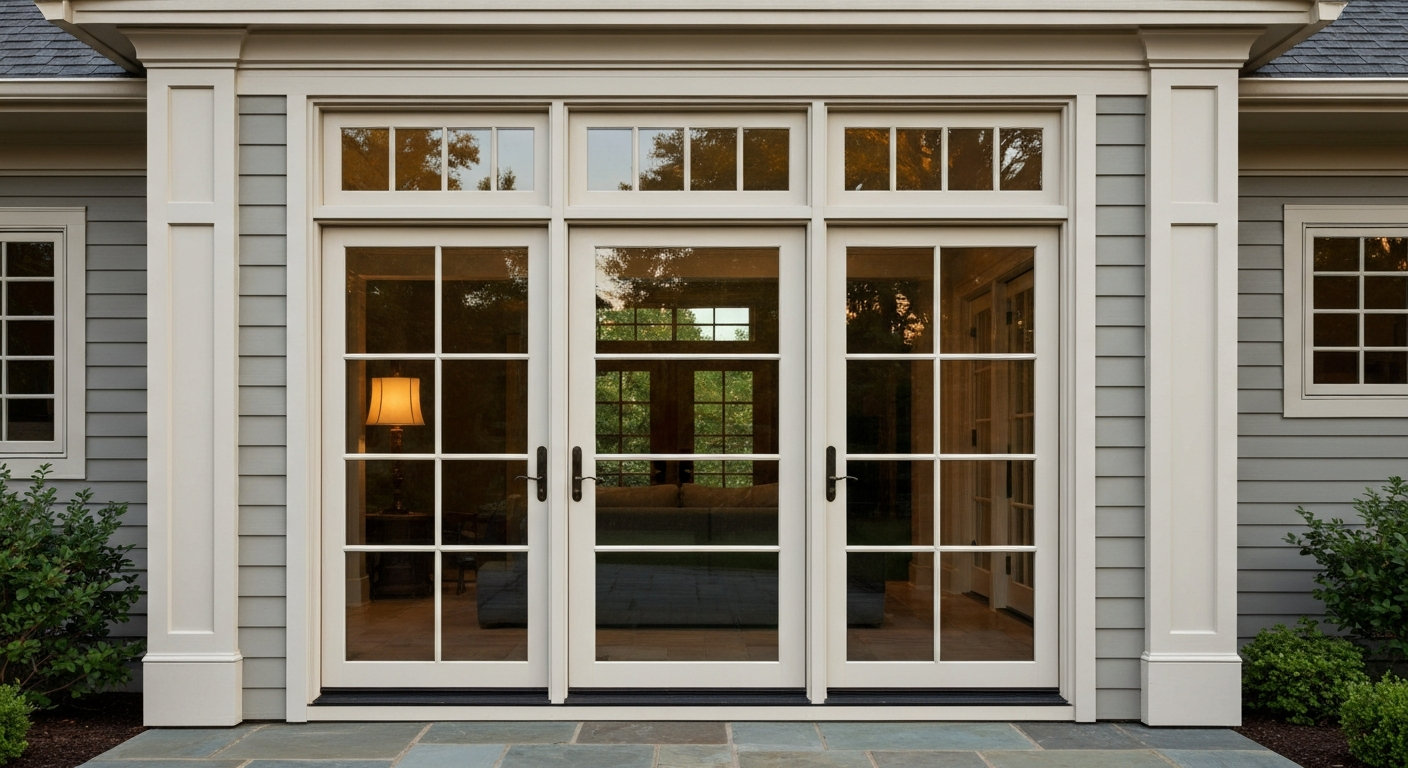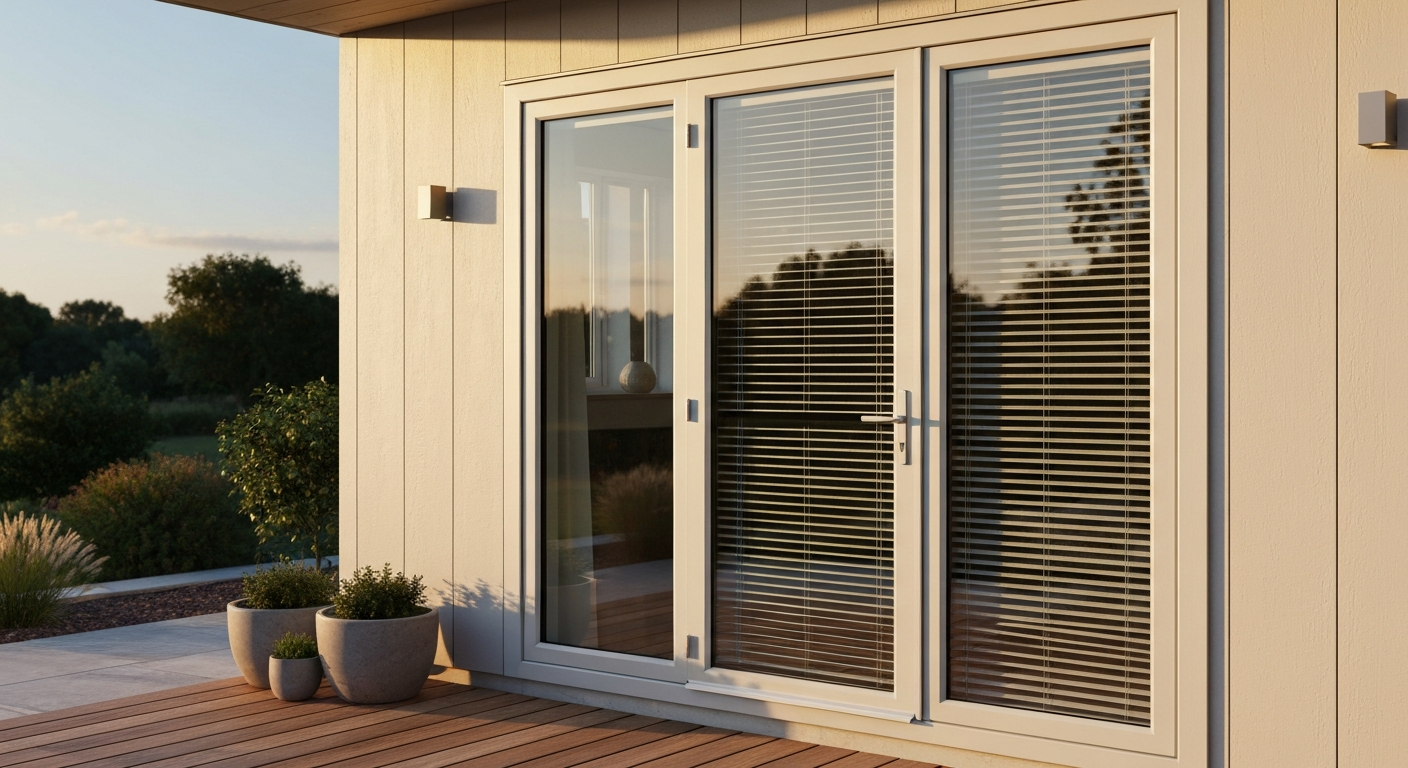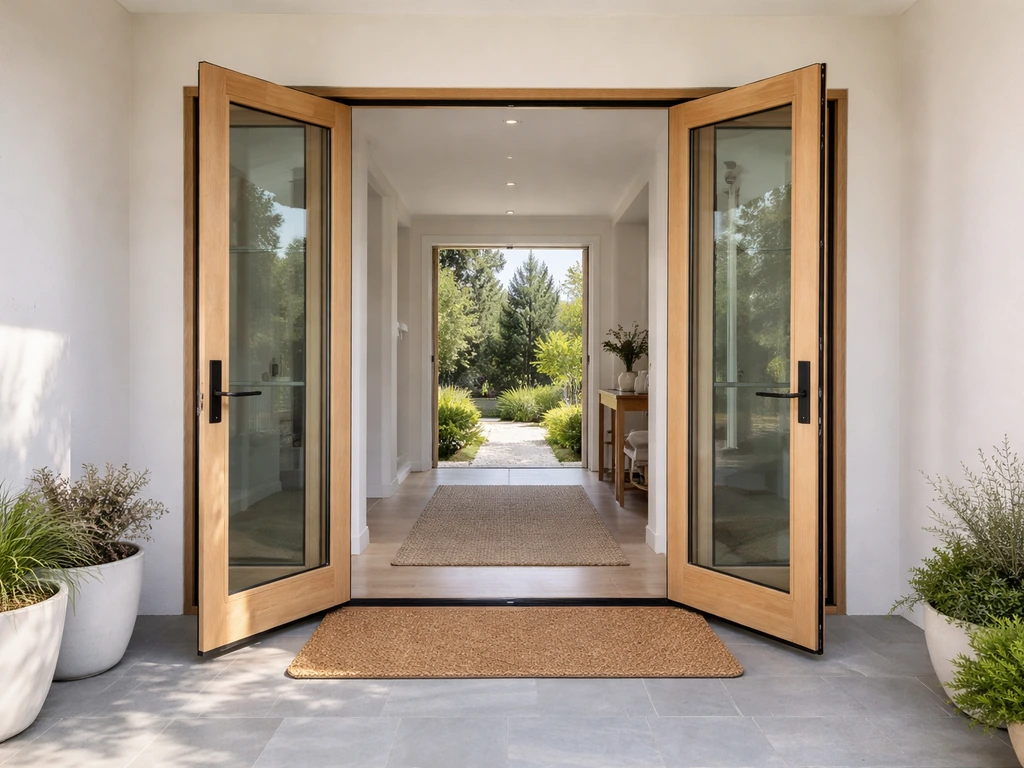
French doors and other hinged patio door styles are the most energy efficient option you can buy today. The Department of Energy says it plainly: swinging doors provide a tighter seal than sliding types because you simply cannot fully stop air leakage around a sliding door's weatherstripping while still letting it move. That's the fundamental physics of the thing, and no amount of premium glazing fully overcomes it. If your top priority is energy performance and you can live with a swing-in or swing-out door, go hinged. That said, the gap between a well-built sliding door and a poorly built French door can be enormous, so glass package, frame material, air-leakage rating, and installation quality matter just as much as door style.
Best Energy Efficient Patio Doors: Top Types by Climate

Owen Delaney
4 Jun 2026
Sliding vs. French vs. Bifold: Which Style Actually Wins on Efficiency
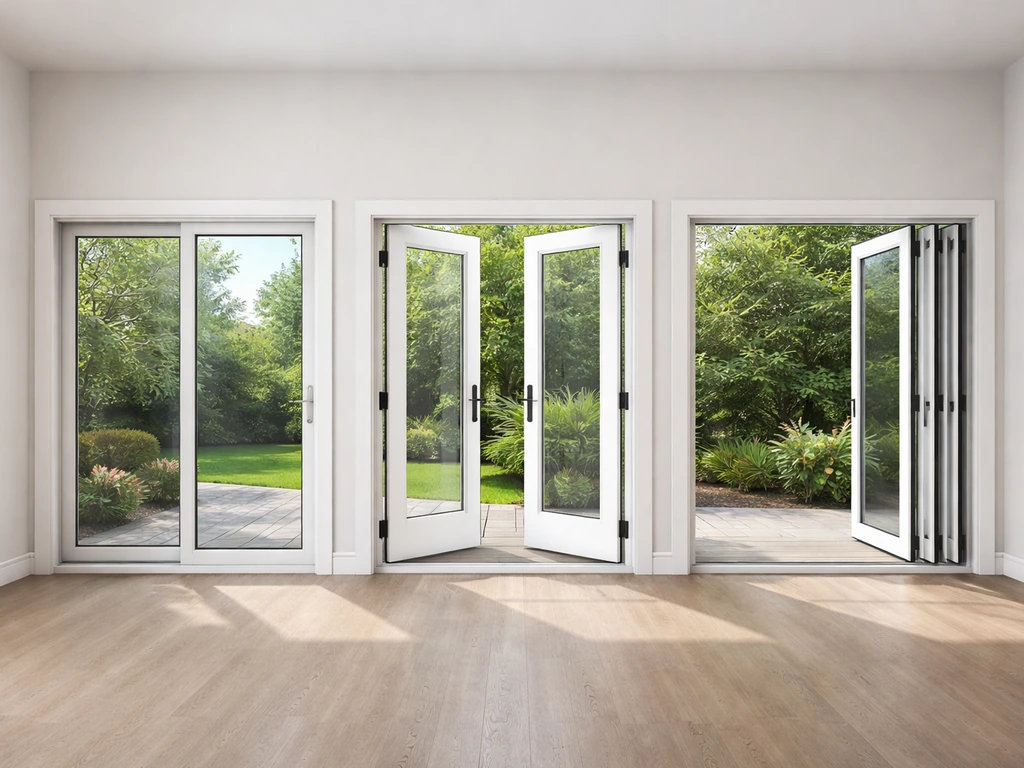
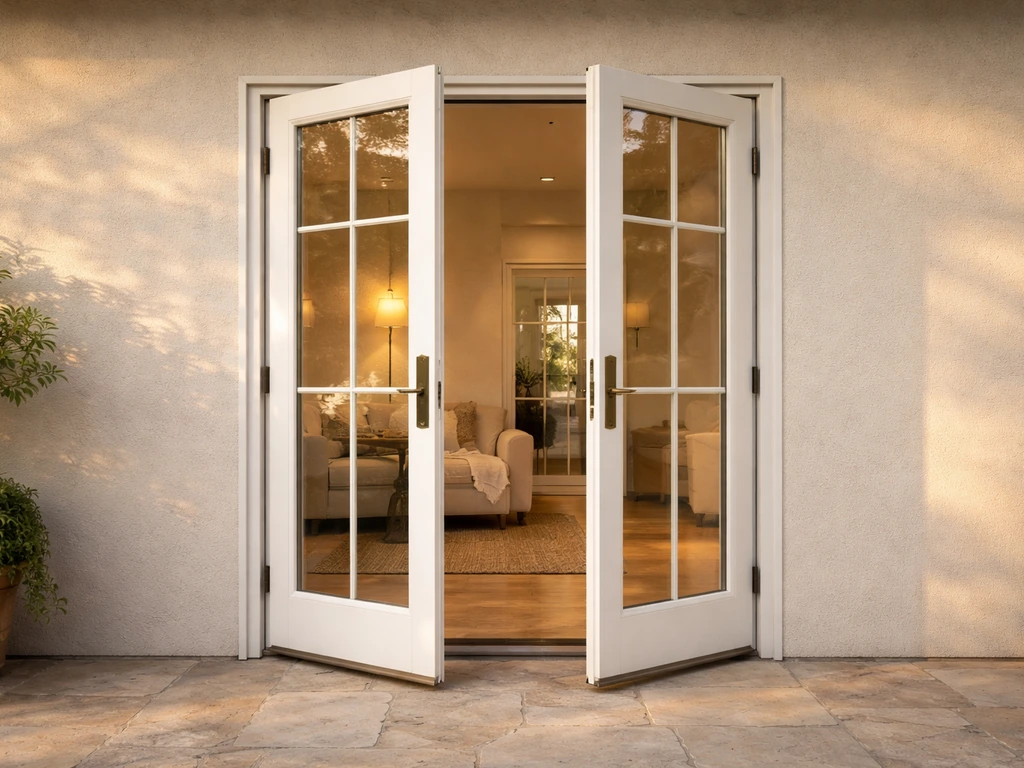
Let's be direct about the hierarchy before getting into individual products. French doors (double hinged panels that swing open) sit at the top for air sealing. Multi-point locking hardware pulls the door slab firmly into the weatherstripping all the way around the frame, creating a compression seal that a sliding panel just can't match. Sliding glass doors use a bypass system where panels travel along a track, and the contact between the sliding panel and the frame is always a gliding interface, not a compression one. Bifold and multi-panel folding doors are at the bottom of the energy-efficiency ranking despite often costing the most, because every panel joint and track opening is another opportunity for air leakage. They're spectacular for indoor-outdoor living but should not be your choice if energy savings is the primary driver.
| Door Style | Air Sealing Ability | Best Glass Packages Available | Energy Efficiency Ranking | Best For |
|---|---|---|---|---|
| French (hinged) | Excellent (compression seal) | Triple pane, low-E, argon/krypton | 1st | Cold climates, max efficiency |
| Sliding (gliding) | Good (varies by build quality) | Double/triple pane, low-E, argon | 2nd | Most homes, good value balance |
| Bifold / Folding | Fair (many panel joints, tracks) | Double pane, low-E available | 3rd | Indoor-outdoor priority, mild climates |
Top Energy-Efficient Patio Doors: Real-World Reviews and Comparisons
These are the options I'd actually point a homeowner toward today, based on certified performance data, real installer feedback, and value for money. Prices are for the door unit only, before installation.
Andersen 400 Series Frenchwood Hinged Patio Door
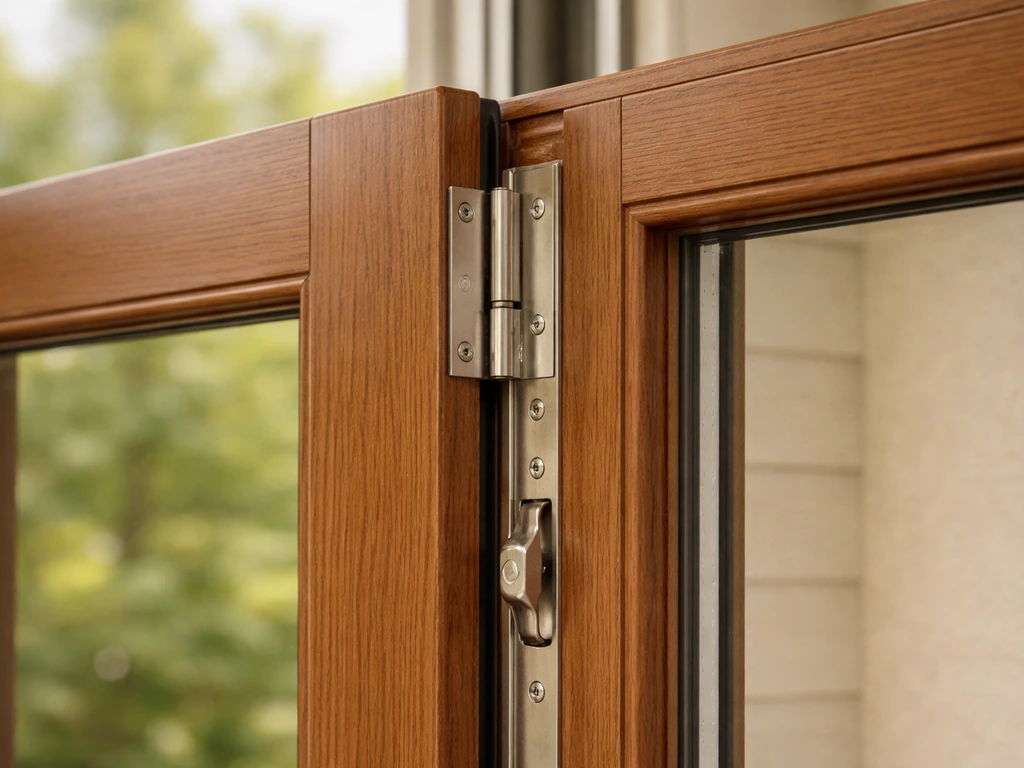
This is the benchmark that most other brands get compared against. The 400 Series uses Andersen's Fibrex composite material (a wood fiber and thermoplastic polymer blend) for the frame, which insulates better than aluminum and resists rot better than wood. With the High-Performance Low-E4 glass package and argon fill, it hits U-factors in the 0.27 to 0.30 range, which qualifies for ENERGY STAR in most U.S. climate zones. The compression seal on the hinged version is tight, and Andersen backs it with a 10-year glass and 20-year non-glass limited warranty. Typical cost for a standard 6-foot double-door unit is $2,500 to $4,500 depending on configuration. It's not the cheapest, but the long-term performance data is there.
Pella 250 Series Vinyl Sliding Patio Door
For homeowners who need a sliding door (maybe you have limited interior swing space), Pella's 250 Series is a strong performer in the mid-price tier. Full vinyl frames eliminate thermal bridging, and the Low-E insulating glass with argon fill puts U-factors around 0.29 to 0.32. It carries ENERGY STAR certification across multiple climate zones and has a solid reputation among installers for consistent factory quality control. A standard 6-foot unit runs $1,200 to $2,200. The air leakage isn't as tight as Pella's hinged options, but for a sliding door it's among the best in class. Good choice if you're doing a direct sliding door replacement and want a real performance upgrade without breaking the budget.
Milgard Tuscany Series Vinyl Sliding Door
Milgard is especially popular in the western U.S., and the Tuscany Series earns it. Full-frame vinyl construction, dual-pane low-E glass, and argon fill deliver U-factors around 0.28 to 0.31 depending on configuration. The SunCoat Low-E glass option gives you SHGC values around 0.22, which is ideal for hot, sunny climates where solar heat gain is the enemy. Milgard's Full Lifetime Warranty (transferable to a second owner) is genuinely hard to beat in this category. Expect to pay $1,000 to $2,000 for a standard sliding unit, making it one of the better value plays on this list.
Marvin Elevate Sliding and French Patio Doors
If budget is flexible and you want near-custom performance, Marvin Elevate doors use a fiberglass exterior with a wood interior. Fiberglass is dimensionally stable (doesn't expand and contract with temperature swings like vinyl or aluminum), which means the weatherstripping seal stays consistent year after year. Triple-pane options are available, pushing U-factors to 0.19 to 0.22, which is exceptional for a patio door. These doors cost $3,500 to $7,000+ for a standard opening, so they're an investment. But for a cold-climate home where you're losing serious heat through a south or west-facing patio opening, the energy math can actually pencil out over 15 to 20 years.
JELD-WEN W-2500 Series Vinyl Patio Door
JELD-WEN's W-2500 is the most accessible price point on this list, typically $800 to $1,500 for a sliding door, and it still pulls ENERGY STAR certification in most zones. U-factors land around 0.29 to 0.35 depending on the glass package chosen, and argon-fill low-E glass is standard. For a homeowner replacing an old aluminum frame slider on a tight budget, this is a meaningful upgrade that will deliver real energy savings. The warranty (limited lifetime on glass, 10 years on non-glass) is acceptable but not class-leading. Verify the specific NFRC label ratings on the unit you're buying, since JELD-WEN's product line is broad and quality varies.
What Actually Drives Energy Savings: Glass, Frame, and Air Sealing
The three numbers that determine whether a patio door actually saves you money are U-factor, SHGC, and air leakage (AL). Every other claim in a brochure is secondary to these three. The critical thing Fine Homebuilding's experts hammer home: always look for the NFRC-certified stamp, which guarantees the ratings represent the whole unit, including frame, spacers, edge seals, and glazing, not just the glass center pane. A door marketed with a "glass U-factor of 0.18" can still have a whole-unit U-factor of 0.32 because the frame and edge are thermal weak points.
U-Factor: Heat Flow Through the Door
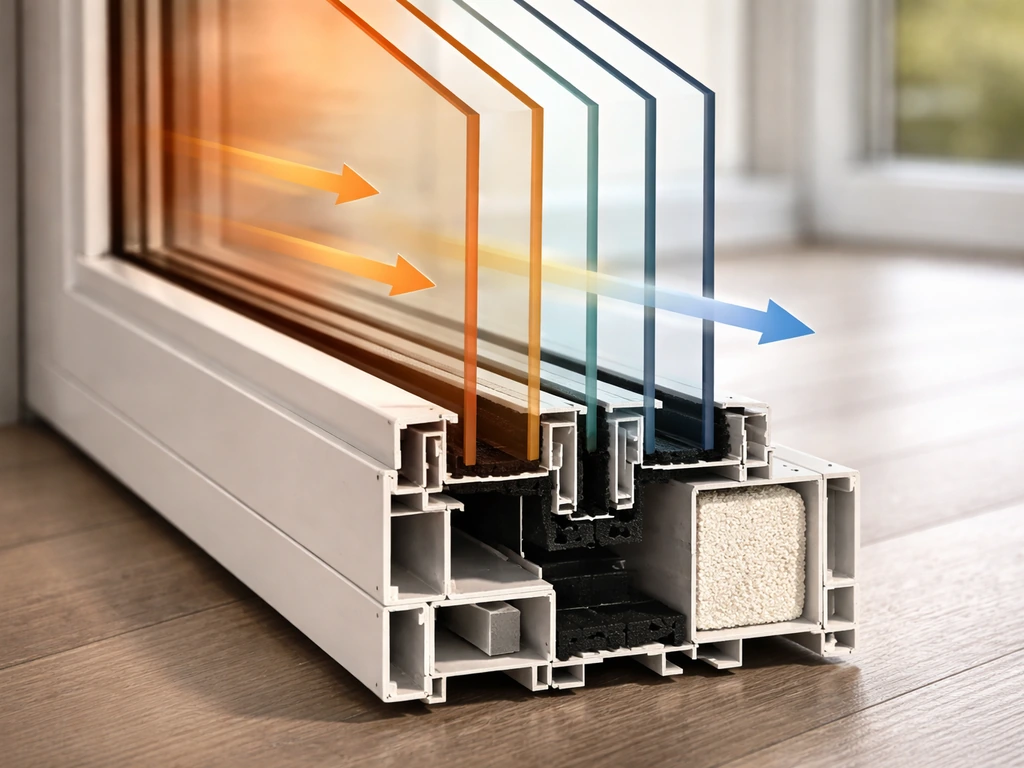
U-factor measures how much heat passes through the door (lower is better). For patio doors, here's a practical benchmark: anything above 0.40 is performing like a basic insulated wall at best. ENERGY STAR Northern Zone requires U-factor of 0.20 or lower. North-Central requires 0.25 or lower. South-Central requires 0.30 or lower. Southern Zone allows up to 0.40. If you're in a cold climate and your current patio door is old aluminum with single pane, it's likely running a U-factor of 1.0 or worse, so even a mid-range vinyl double-pane replacement at 0.30 is a massive improvement.
SHGC: Solar Heat Gain
Solar Heat Gain Coefficient measures how much solar radiation passes through the glass (lower means less heat gain). In hot, sunny climates like the Southwest, Florida, or Texas, you want a low SHGC (0.25 or below) to prevent the door from turning into a solar heater in summer. In cold climates, you may actually want a moderate SHGC (0.35 to 0.45) on a south-facing door to capture free solar heat in winter, offsetting heating costs. In a mixed climate with hot summers and cold winters, balance matters: aim for SHGC around 0.25 to 0.35 unless you have good exterior shading or overhangs.
Air Leakage Rating
Air leakage (AL) is rated in cubic feet per minute per square foot of frame area. Lower is better. ENERGY STAR Version 7.0 requires a maximum of 0.5 cfm/ft² for qualifying products. ENERGY STAR Version 7.0 lists a maximum air leakage of ≤ 0.5 cfm/ft² for qualifying residential windows, doors, and skylights in Table 5. The best patio doors on the market hit 0.1 to 0.2 cfm/ft², and this is where hinged doors consistently outperform sliding doors. When comparing products side by side, if the air leakage number isn't on the NFRC label or the manufacturer's data sheet, push back and ask for it. You can also verify any door's certified ratings for free through the NFRC Certified Products Directory online.
Frame Materials Compared
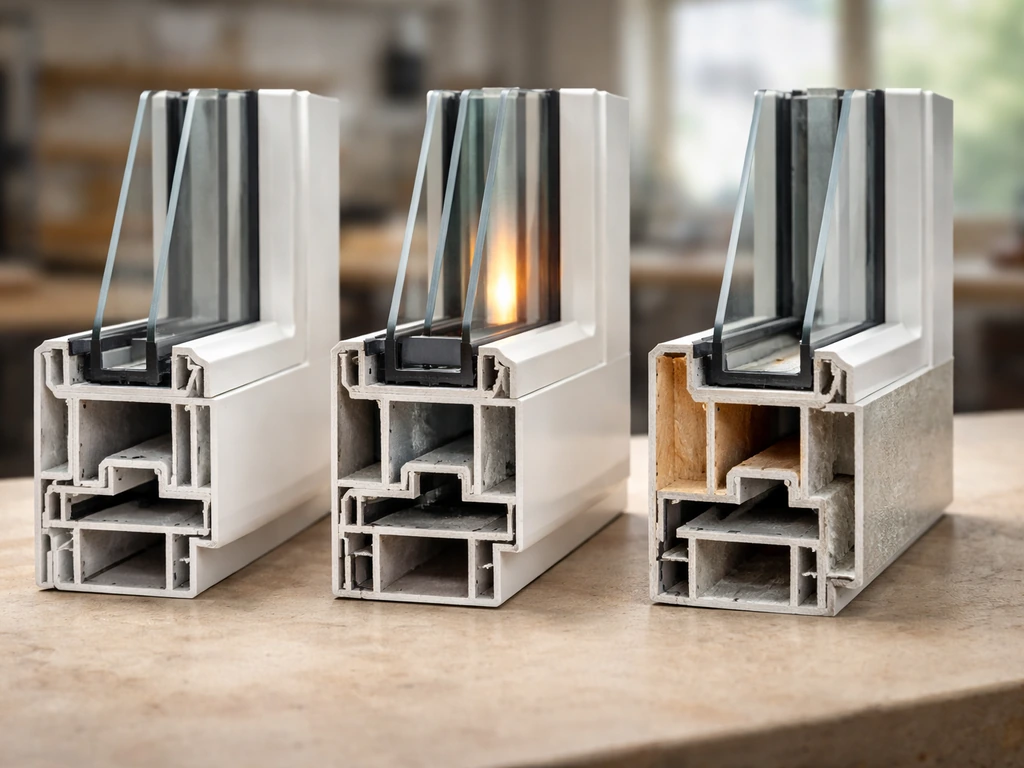
| Frame Material | Thermal Performance | Durability | Maintenance | Cost (Relative) | Best For |
|---|---|---|---|---|---|
| Full vinyl (uPVC) | Excellent (no thermal bridging) | Very good | Very low | $ | Budget-conscious, most climates |
| Fiberglass | Excellent (stable, low expansion) | Outstanding | Very low | $$$ | Extreme climates, long-term value |
| Wood or clad wood | Good (natural insulator) | Good (if maintained) | High | $$-$$$ | Aesthetics priority, moderate climates |
| Composite (e.g., Fibrex) | Very good | Very good | Very low | $$-$$$ | Balance of performance and durability |
| Aluminum with thermal break | Fair (better than no break) | Excellent | Low | $$ | Commercial, coastal salt air |
| Aluminum (no thermal break) | Poor (conducts cold directly) | Excellent | Low | $ | Avoid for energy efficiency |
Glass Packages: What the Upgrades Actually Do
Double pane with argon fill and low-E coating is the baseline for any energy-efficient patio door purchase in 2026. Single pane doors have no place in an energy-efficient home. Triple pane adds another layer of insulation, dropping U-factors by 20 to 30% compared to double pane, but it also adds 25 to 40 lbs to the door weight, which matters for sliding hardware and hinges. Krypton gas fill (denser than argon) performs better in thinner spaces and is common in triple-pane units. Warm-edge spacers (foam, silicone, or thermoplastic instead of aluminum) reduce heat loss at the glass edge and significantly help condensation resistance. If you're buying a door for a cold climate, ask specifically whether the spacer is a warm-edge design.
Which Door to Buy Based on Your Climate
Cold Climates (Minnesota, New England, Northern Midwest)
Your absolute priority is U-factor, with air leakage a very close second. Target a whole-unit U-factor of 0.22 or lower if possible, and go hinged (French door) if your layout allows it. Choosing the right insulated patio door for your conditions means prioritizing whole-unit U-factor, air leakage, and proper installation, not just the glass label best patio doors for insulation. Triple pane is worth serious consideration in ENERGY STAR Northern Zone, especially for large openings. A fiberglass or Marvin Elevate-style door with triple pane and krypton fill is the gold standard for this climate. If budget requires a double-pane solution, full vinyl frames with low-E argon glass and multi-point locking hardware will get you most of the way there. For more detail on surviving extreme winters with patio doors, it's worth reading up on what separates the best patio doors for cold weather specifically. For cold weather, aim for a whole-unit low U-factor, tight air sealing, and ENERGY STAR Northern Zone or better performance best patio doors for cold weather specifically.
Hot and Sunny Climates (Florida, Texas, Southwest, Southern California)
SHGC matters more here than anywhere else. Your door may actually receive less solar radiation in winter when the sun is low, but in summer a large west or south-facing patio door can push significant heat into your home. Look for SHGC of 0.25 or below (some hot-climate ENERGY STAR requirements go as low as 0.25 maximum). U-factor still matters, aim for 0.35 or below. Full vinyl frames or aluminum with thermal breaks are both practical choices since extreme cold isn't the concern. Coastal homeowners in Florida or the Gulf Coast also need to verify corrosion resistance, since salt air degrades aluminum hardware and some vinyl compound formulas faster than expected. Coastal areas also call for corrosion-resistant hardware and finishes, plus design choices that hold up to salt air.
Mixed Climates (Pacific Northwest, Mid-Atlantic, Great Plains)
In a mixed climate you're balancing both sides of the equation. A U-factor of 0.28 to 0.32 with a moderate SHGC of 0.30 to 0.40 usually hits the sweet spot, letting you capture some solar gain in winter without cooking in summer. Check which ENERGY STAR climate zone your zip code falls into (North-Central or South-Central for most mixed climates) and use that zone's requirements as your minimum bar, then buy slightly above it. A good vinyl or composite sliding door with double-pane low-E argon glass typically qualifies and performs well across seasons.
What You'll Actually Pay vs. What You'll Actually Save
Here's the honest cost picture. An entry-level ENERGY STAR-certified vinyl sliding patio door (like the JELD-WEN W-2500 or a basic Milgard unit) costs $800 to $1,500 for the door, plus $400 to $800 for professional installation, so roughly $1,200 to $2,300 all in. A mid-tier option like the Pella 250 or Andersen 400 runs $1,200 to $2,500 for the door plus similar installation, total $1,600 to $3,300. High-end fiberglass or triple-pane units (Marvin Elevate, Andersen E-Series) can hit $3,500 to $8,000+ installed.
On the savings side, replacing an old single-pane aluminum sliding door with a modern ENERGY STAR double-pane unit typically saves $100 to $350 per year on heating and cooling combined, depending on your climate, energy rates, and how much of your wall area the door represents. That puts a simple payback period at 5 to 12 years for mid-tier replacements, which is reasonable for an improvement that also adds comfort, reduces condensation, and lasts 20 to 30 years. The jump from a good double-pane to a triple-pane unit saves an additional $40 to $100 per year in most climates, which rarely justifies the extra $800 to $2,000 cost on its own, though comfort and noise reduction add intangible value. If you are also trying to reduce noise, look for a well-sealed, properly installed patio door since sound travels through gaps and thin frames best soundproof patio doors. There are also federal tax credits available under the Inflation Reduction Act (check the current credit terms for your situation since these can change year to year), which can knock 30% off the cost of ENERGY STAR-certified products, making premium options meaningfully more accessible.
What to Look for When You're Actually Buying
Walk through this checklist before you commit to any patio door purchase. It will save you from marketing fluff and help you compare apples to apples.
- Find the NFRC label. Every qualifying product has one. It lists whole-unit U-factor, SHGC, visible transmittance, and ideally air leakage. If a salesperson only quotes glass-center U-factor, ask for the NFRC whole-unit number.
- Check the NFRC Certified Products Directory. Look up the specific model number you're buying at nfrc.org to confirm the ratings are certified, not just claimed. This takes five minutes and can save you from greenwashing.
- Verify ENERGY STAR qualification for your climate zone. ENERGY STAR's product finder lets you filter by zone. Don't accept a door that's only certified for the Southern Zone if you live in Minnesota.
- Ask for the air leakage rating in cfm/ft². Anything at or below 0.3 cfm/ft² is excellent. Anything above 0.5 cfm/ft² fails ENERGY STAR Version 7.0 requirements and is worth questioning.
- Confirm the glass package specifics: number of panes, gas fill type (argon vs. krypton), low-E coating position (coating on surface 2 or 3 matters for heat direction), and spacer type (warm-edge or aluminum).
- Check the warranty terms carefully. Glass seal failure warranties typically range from 10 to lifetime. Know what's covered and whether the warranty is transferable if you sell the home.
- Ask about the locking and compression hardware. Multi-point locks on hinged doors significantly improve air sealing. On sliding doors, look for positive-engagement latches with adjustable rollers.
- Confirm rough opening requirements and whether the unit is a direct replacement for your existing opening, or whether structural modification is needed (which adds installation cost).
Brands Worth Trusting
At the premium end: Marvin, Andersen (E-Series and 400 Series), and Pella (Lifestyle Series). These consistently hit strong NFRC numbers and have quality control processes that mean the door you receive matches the specs you bought. Mid-range with solid track records: Milgard, Simonton, and PGT (especially strong in Florida and Gulf Coast markets). Budget tier that still qualifies for ENERGY STAR: JELD-WEN W-2500 and American Craftsman (Home Depot's house brand). Avoid any door without a published NFRC certification number, regardless of price.
Installation and Upgrades That Make or Break Performance
I've seen a $3,000 Andersen door installed badly perform worse than a $1,200 vinyl slider installed properly. The door's rated specs assume correct installation, and gaps in the rough opening, improper shimming, or missing sill flashing can erase most of the energy benefit. If you're hiring an installer, ask whether they use a pan flashing at the sill (standard on quality installs) and whether they fill the gap between the rough opening and the frame with low-expansion spray foam rather than fiberglass batt (batt compresses and allows air movement). Both of these details matter more than most people realize.
Weatherstripping and Threshold Upgrades
Even a well-installed door benefits from periodic weatherstripping checks. Compression foam and pile weatherstripping on sliding doors wear down over 5 to 8 years and should be replaced when you notice drafts or light gaps. On hinged doors, check door-to-frame contact all the way around after the first winter since wood and composite frames settle slightly. The threshold is the most overlooked air leakage point: a good adjustable threshold with a vinyl or rubber sweep creates a tight seal at the bottom of the door where cold air infiltrates easily. If you're not replacing your door but want an immediate upgrade, a quality door insulation kit with a new door sweep and weatherstripping tape can meaningfully reduce drafts for under $50.
Screens, Coverings, and Hardware
Standard insect screens actually reduce solar heat gain by 15 to 20% (helpful in hot climates, less desirable in cold ones), so consider retractable screens if you're in a climate where you want winter solar gain. Interior cellular shades or honeycomb blinds, including patio doors with built-in blinds, add meaningful insulation value, particularly at night in cold climates. Exterior awnings or overhangs over south and west-facing patio doors are one of the most cost-effective ways to reduce summer SHGC without changing the door itself. Hardware alignment matters too: misaligned hinges or worn rollers on a sliding door create subtle frame gaps that show up as air leakage even when the door appears closed.
Your Next Steps
Start by measuring your existing rough opening (width and height, in three places each) so you know your replacement constraints before you get to a showroom or start browsing specs. Then identify your ENERGY STAR climate zone, which takes 30 seconds with your zip code on the ENERGY STAR website, and write down the U-factor and SHGC maximums for your zone. Those two numbers are your minimum bar. From there, pull up the NFRC Certified Products Directory and compare whole-unit ratings on the specific models you're considering. If a door you like isn't in the NFRC directory, it's a red flag worth investigating before you commit.
If you're replacing a door that's more than 15 years old, especially an aluminum frame single or thin double pane, almost any modern ENERGY STAR-certified door will be a significant improvement in comfort and efficiency. If you're upgrading from a relatively recent but underperforming door, focus on the air leakage rating and frame material first, since those are the hardest things to fix after installation. And if you're in an extreme climate, whether brutally cold winters or relentlessly hot summers, don't skip reading up on climate-specific guidance for cold weather patio doors or hot-climate performance, because the optimized spec package looks meaningfully different depending on which direction your biggest energy losses run. To cool a patio space efficiently, you may also want to look at the best portable air conditioner for patio door areas where ducting isn't practical patio doors.
FAQ
Which matters more for energy savings, U-factor or SHGC, for best energy efficient patio doors?
It depends on your climate and door orientation. For hot, sunny exposures (especially west and south), prioritize low SHGC (around 0.25 or below) and accept a moderately higher U-factor as long as the whole-unit U-factor stays low enough for your ENERGY STAR zone. In cold climates, a moderate SHGC (often 0.35 to 0.45 on south-facing doors) can reduce heating demand because it lets in winter solar gain, but you still want tight air leakage and a low whole-unit U-factor.
How can a door’s glass numbers look excellent, but the whole-unit performance disappoints?
Yes, but only when the door is truly the same “whole unit” being rated. A brochure can quote a glass-only U-factor that looks great, yet the frame, edge spacers, and seal quality raise the whole-unit number. Use the NFRC label and its whole-unit U-factor, SHGC, and air leakage (AL) value, because that is what determines real performance.
What should I do if the air leakage rating is not shown on the patio door listing?
If the NFRC air leakage (AL) number is missing or hard to find, treat it as a serious comparison problem. Energy-efficient hinged doors often win on AL, but you cannot confirm that without the certified figure. Ask the seller for the NFRC label or the product’s certified rating sheet, and walk away if they cannot provide the AL value for the exact door configuration you’re buying.
What measurements besides rough opening size should I confirm before choosing an energy efficient patio door?
For retrofit sizing, measure the rough opening precisely, but also measure the existing threshold height and the sill details, because replacements often require a new flashing approach. If you are switching from a sliding unit to a hinged French style (or vice versa), confirm you have clearance for door swing and room to operate without blocking furniture or walkways.
If my patio door is ENERGY STAR certified, will I automatically get low drafts and condensation?
Not always. ENERGY STAR deals with whole-unit performance, but local comfort can still be affected by installation, threshold sealing, and interior climate control. If you have drafts, condensation, or noticeable temperature differences near the opening, you may still have an air-sealing or glazing gap issue even with a high-rated door. In that case, prioritize correcting installation details and weatherstripping before you assume the door itself is underperforming.
Where do best energy efficient patio doors usually leak air, and what should I inspect first?
Yes, especially at the bottom. Check for a continuous door sweep or gasket, an adjustable threshold that compresses evenly, and no gaps where the door meets the sill. Sliding doors are particularly prone to air leakage at rollers and weatherstripping contact points, so test the seal by feeling for drafts on cold mornings near the corners and center.
Is a hinged French-style door always better than sliding for energy efficiency?
In many climates, yes, but it depends on what you mean by “best.” A high U-factor is less of a concern than air leakage when it comes to drafts and comfort, particularly for poorly sealed installs. For maximum energy performance, select a hinged door with certified whole-unit low U-factor and very low AL, then match SHGC to your sun exposure.
Should I always choose triple-pane for best energy efficient patio doors, especially for sliding models?
Often, but not if you only compare glass type. Triple-pane can improve U-factor and comfort, yet added weight can strain sliding hardware or hinges if the door system is not designed for it. If you choose triple-pane for a sliding door, confirm the track and rollers are rated for that configuration and plan for maintenance or adjustments over time so seals remain tight.
What upgrades help most if I can’t replace my existing patio door immediately?
Yes, and it can improve performance even when the door itself is already upgraded. Prioritize air sealing first (weatherstripping, sweeps, threshold adjustments), then add insulation that reduces nighttime heat loss, such as cellular shades or an interior thermal panel. If you add an exterior solution, an overhang or awning can reduce SHGC impact without changing door performance.
How do warm-edge spacers affect both energy loss and condensation on energy efficient patio doors?
For cold climates, look for warm-edge spacers and confirm the whole-unit U-factor on the NFRC label rather than relying on glass claims. Warm-edge spacers also help with edge condensation risk, which is a comfort issue even when the overall U-factor is acceptable. If condensation is common around the frame edges, that is a signal to target spacer and edge-seal quality.
How should I plan for federal tax credits when buying energy efficient patio doors?
Yes. Federal tax credits can change year to year and depend on eligibility criteria (such as whether the product qualifies and how it is installed). If you want to use credits, keep documentation like the NFRC label and purchase/install invoices, and verify eligibility before ordering because some “comparable” products may not meet the credit conditions.
Do insect screens help energy efficiency, or can they hurt it depending on the season?
Often, but you must match the door to the sun exposure strategy. In hot climates, insect screens can reduce solar gain, but if you rely on them in winter you may lose beneficial solar heat. Retractable or removable screens can offer flexibility, letting you keep solar gain when you want it and reduce overheating when you do not.
What installation details matter most for getting the rated energy performance from my patio door?
If the goal is energy savings, installation quality can outweigh brand differences. Ask your installer about sill pan flashing, how they manage water drainage, and whether they use low-expansion foam to seal the rough opening without creating gaps. Also confirm they shim and level properly so the door compresses the weatherstripping evenly across the entire frame.
Should I replace an older patio door, or try repairs first?
If the existing door is older than about 15 years, the biggest gains are usually comfort and air sealing plus improved whole-unit U-factor. But if the current door is newer and just “feels drafty,” the better first step can be diagnosing air leakage and weatherstripping condition, because that is often the fastest, lowest-cost fix.