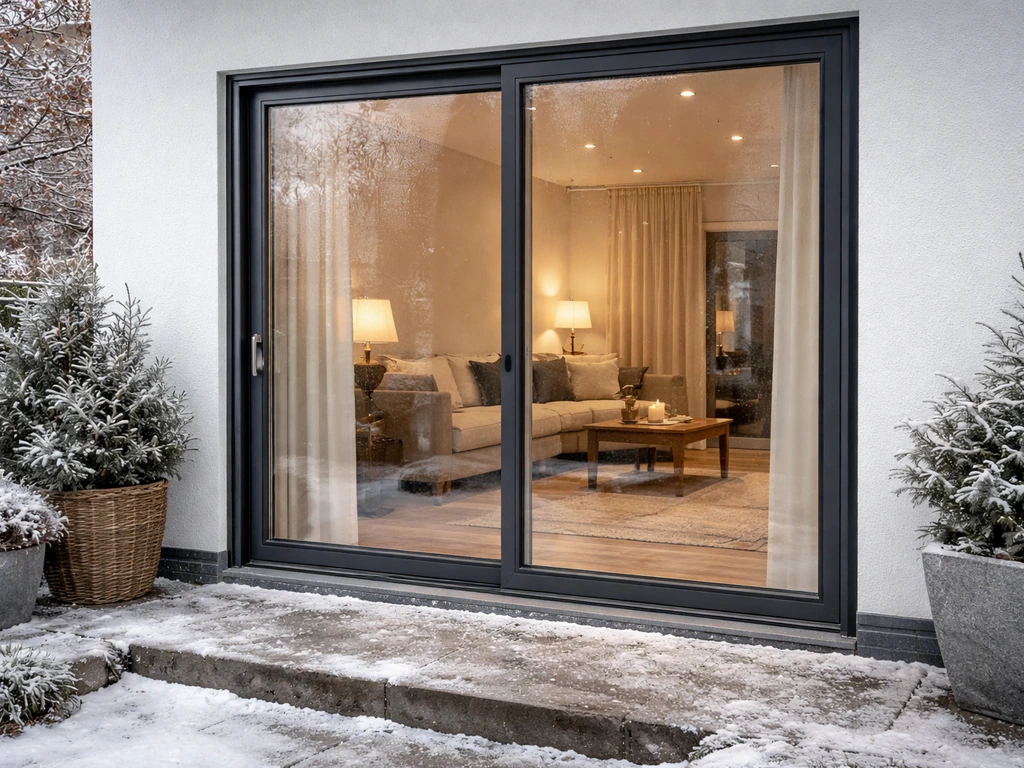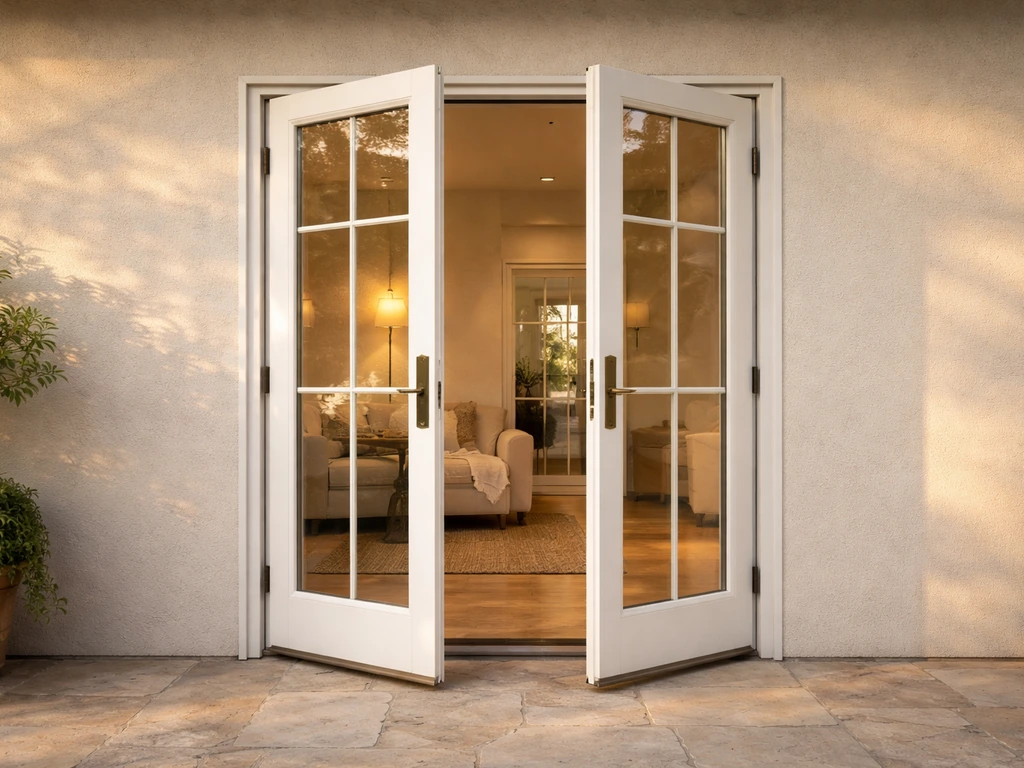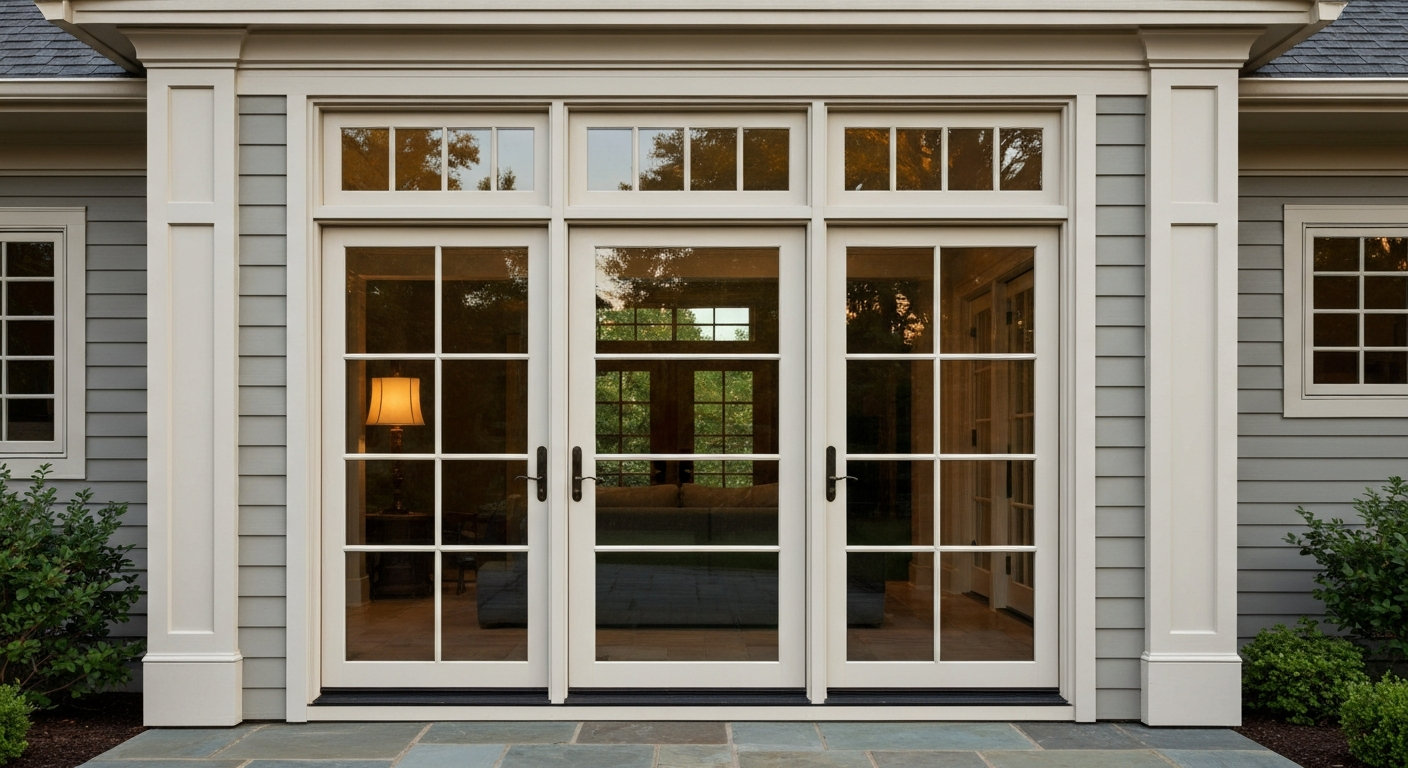
Patio doors with built-in blinds are moderately more energy efficient than bare glass doors, but the blinds themselves are not what drives the biggest gains. The glass package, frame material, weatherstripping, and installation quality do most of the heavy lifting. What integrated blinds genuinely add is better solar heat control (especially in summer), zero draft from curtain rods or blind brackets, and a cleaner sealed system that keeps the blind inside the insulating glass unit where it can actually do some thermal work. If you're choosing between two otherwise identical doors and one has between-the-glass blinds, the one with blinds will likely manage solar gain better. But if you skip the low-E coating or buy a door with a cheap vinyl frame and poor seals, the blinds won't save you.
Are Patio Doors With Built-In Blinds Energy Efficient?

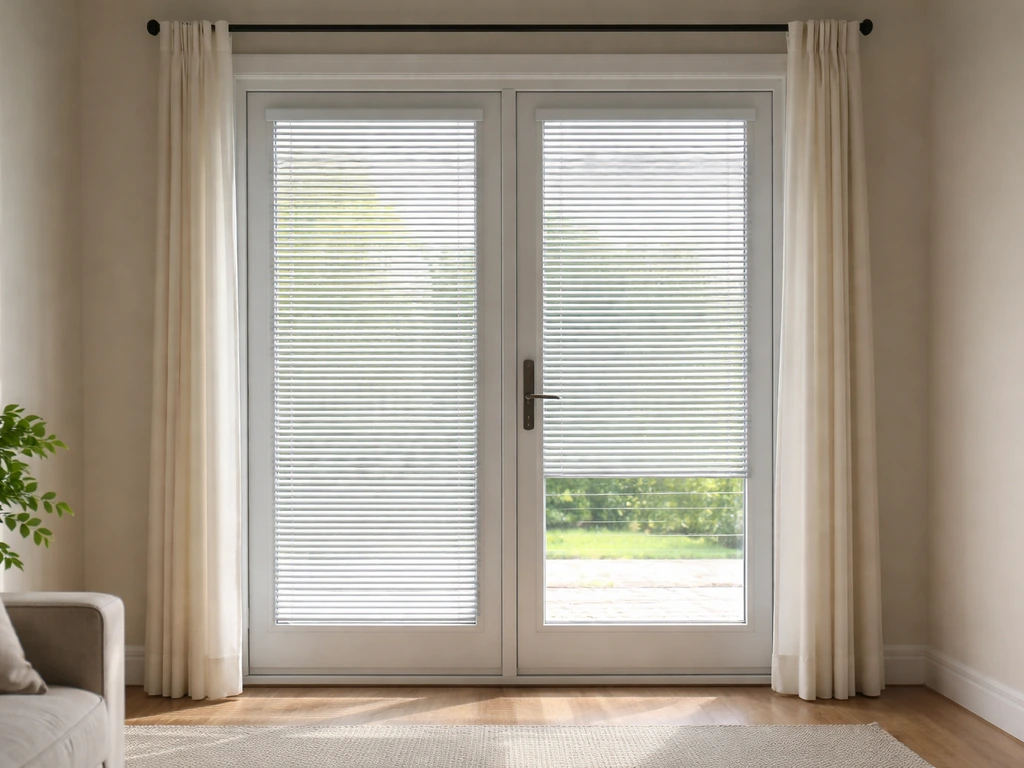
What 'built-in blinds' actually means on a patio door
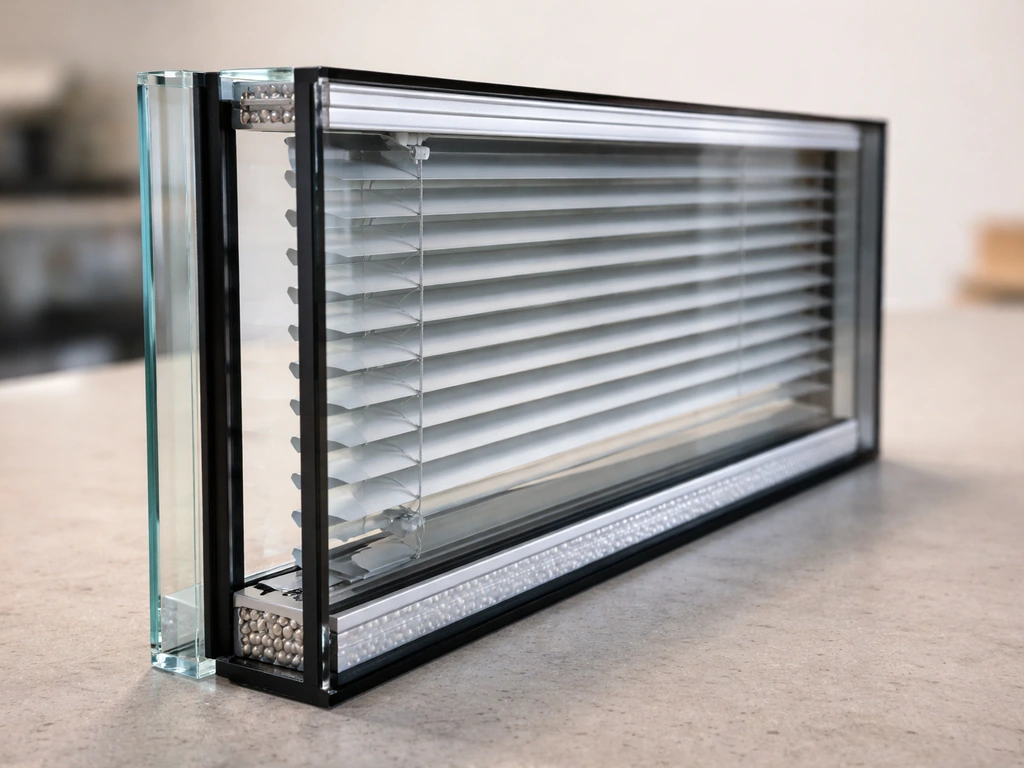
The term gets used loosely in showrooms, so it's worth being precise. On a patio door, 'built-in blinds' almost always means between-the-glass blinds, sometimes called integral blinds or integrated blinds. The slats or shade fabric are sealed inside the insulating glass unit (IGU) itself, sitting in the air space between the two (or three) panes of glass. Pella, for example, describes their version as 'tucked away between panes of insulating glass' and permanently sealed, with the blinds accessible by a mechanism on the door's edge if service is ever needed.
This is completely different from a standard interior blind or curtain you hang on the room side of the door. Those add-on treatments sit in open room air, collect dust, and require brackets that can create small gaps in weatherstripping or trim. Between-the-glass blinds are part of the door's glass assembly, not an accessory hung on top of it. Some manufacturers, including Pella's Lifestyle Series and Windsor's Next Dimension vinyl line, only offer the integrated blind option on their triple-pane configurations, which tells you something about how the product is positioned: it's a premium glass system add-on, not a budget upgrade.
So are they actually more energy efficient?
Yes, but with important context. Between-the-glass blinds sit inside the insulated cavity, which means when you close them, they interrupt solar radiation before it can enter the room and add heat. NFRC (the National Fenestration Rating Council, the body that certifies window and door energy performance) actually models integral venetian blinds as a distinct configuration in its THERM7/WINDOW7 simulation tools. The SHGC (Solar Heat Gain Coefficient, which measures how much solar heat passes through the glass) changes depending on whether the blind is open, tilted, or fully closed. Closed blinds can meaningfully reduce the SHGC of the overall unit.
What the blinds do less effectively is reduce U-Factor, the measure of how fast heat escapes through the door when there's no sun involved. Think of a cold winter night: the blinds are closed but the sun isn't shining. In that scenario, the dominant factor is the glass itself, the gas fill (argon is standard, krypton is premium), the low-E coating, and the frame. The blinds inside the cavity don't add a meaningful air barrier beyond what the gas-filled space already provides. So if you're in a cold northern climate and your main concern is heat loss in winter, the blinds are a smaller piece of the puzzle than the glass specification.
The biggest real-world benefit homeowners report is summer heat management. When the sun hits a south or west-facing patio door in July, closed between-the-glass blinds can significantly reduce how much that solar energy converts to indoor heat. That Reddit user who said their salesperson recommended between-the-glass blinds for 'summer heat buildup' wasn't wrong, that's genuinely where the payoff is most noticeable.
What actually drives energy performance (beyond the blinds)
If you want a door that performs well year-round, these are the factors that matter more than whether it has integrated blinds or not. If you are shopping for the best patio doors for coastal areas, use these performance factors to choose a door that handles humidity, salt air, and wind-driven weather well.
Glass package
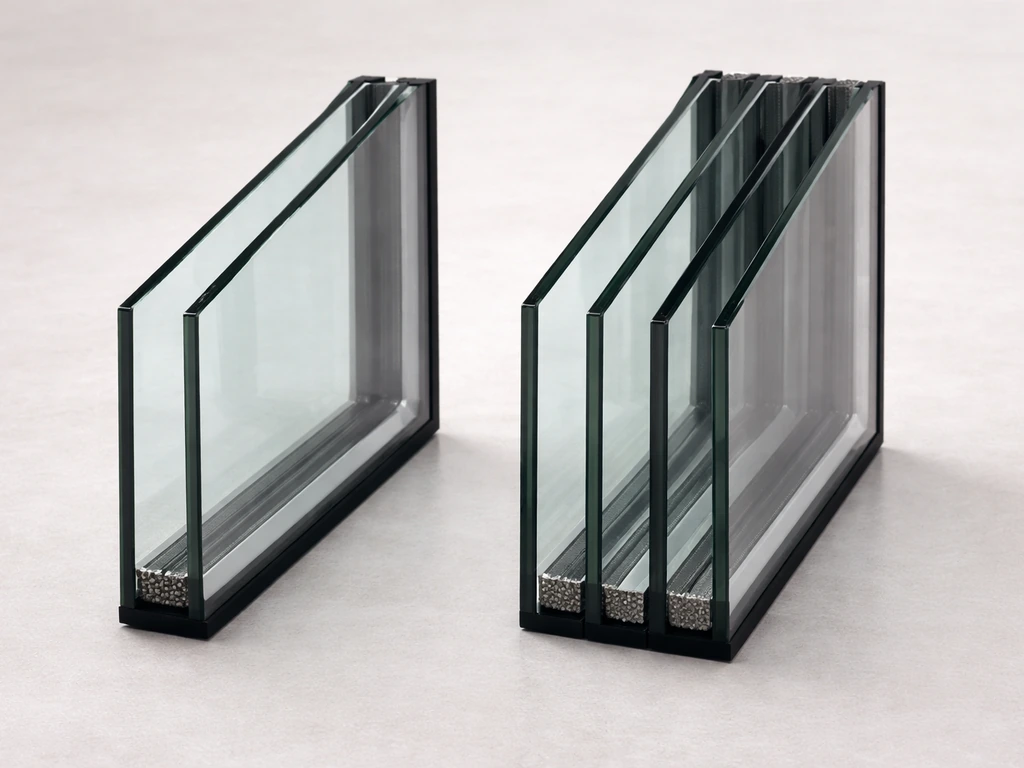
Double-pane versus triple-pane is the first decision. Triple-pane adds a third glass layer and an additional insulating cavity, which drives the U-Factor down significantly. If insulation is your top goal, compare the door's U-Factor alongside the frame and weatherstripping triple-pane adds a third glass layer. Low-E coatings on the glass surface control both heat loss and solar gain, and different coating types are tuned for different climates (more solar blocking for hot climates, more solar-permissive for cold ones). JELD-WEN's EpicVue glazing, for example, publishes a table showing how U-Factor and SHGC shift substantially across different low-E variants, from around 0.47 U-Factor with basic clear glass down to much lower numbers with multiple low-E coatings. Argon gas fill between panes reduces convective heat transfer, which is why it's standard on any door worth buying today.
Frame material
Fiberglass frames are the best thermal performers because fiberglass conducts heat at a fraction of the rate aluminum does. Vinyl frames are good and affordable. Wood frames can be excellent if properly maintained but are less predictable long-term. Aluminum frames without a thermal break are poor insulators and should be avoided in any climate with significant heating or cooling loads.
Weatherstripping and seals
A door with mediocre weatherstripping will leak air regardless of how good the glass is. Sliding patio doors are particularly prone to seal degradation at the bottom track. French-style patio doors need good compression seals at the meeting stile. If you're replacing an older door, air leakage around the frame is often the biggest single improvement the new door provides, not the glass upgrade.
Installation quality
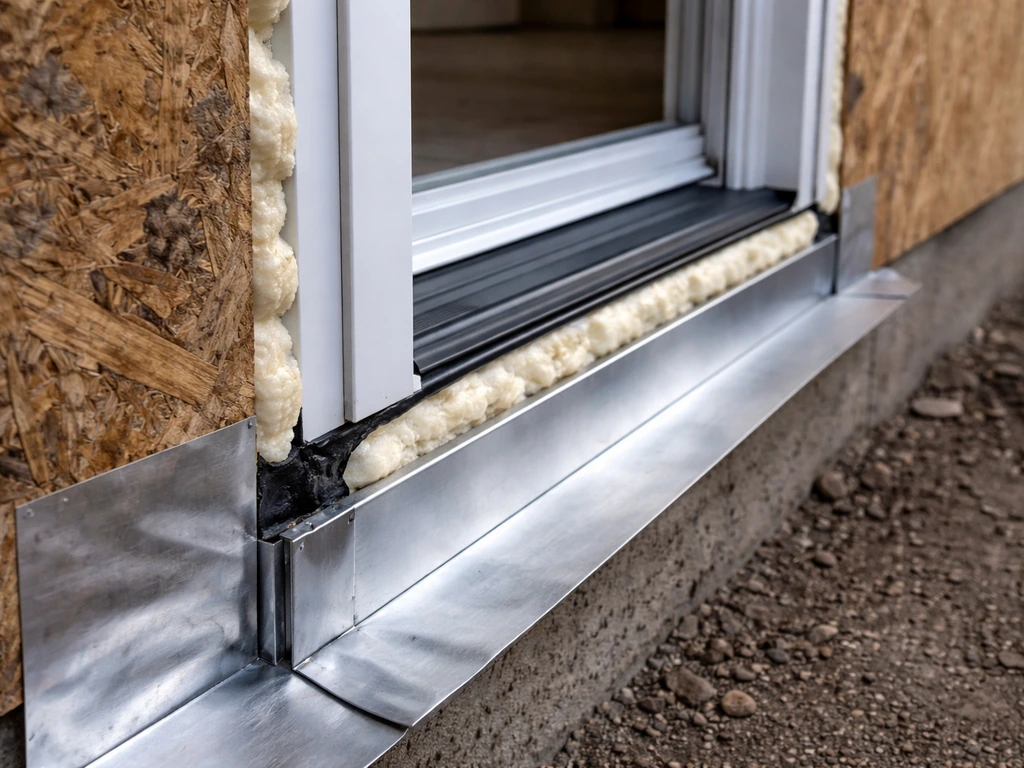
A poorly installed door undermines everything else. Gaps between the rough opening and the door frame, insufficient insulation in the cavity around the frame, and improper flashing all create energy losses that no glass specification can fix. If you're getting a full replacement, this is not the place to cut corners or hire the lowest bidder.
How built-in blinds perform by season and climate
| Scenario | Blind benefit | What matters more |
|---|---|---|
| Hot summer, south/west exposure | High: closed blinds cut solar heat gain (SHGC) significantly | Low-E coating type, shade orientation |
| Cold winter nights | Low: blinds don't add meaningful insulation when sun is absent | U-Factor, triple pane, frame, seals |
| Cold winter days with sun | Moderate: open blinds let solar heat in; closed blocks it | Low-E coating tuned for northern climate |
| Mixed/moderate climate | Moderate: useful for solar management year-round | ENERGY STAR certification for your zone |
| Overcast northern climate | Low: minimal solar gain to manage | U-Factor and air sealing dominate |
The DOE's guidance on window coverings directly supports this pattern: open coverings in winter to let in solar heat, close them in summer to block it. Between-the-glass blinds make that habit easy because they're already there, protected, and operated with a simple lever or magnetic control. You're more likely to actually use them versus standalone curtains you have to open and close manually every day.
If you live somewhere like Phoenix or central Texas where the patio door faces west, between-the-glass blinds can make a noticeable difference in your cooling load from May through September. If you're in Minnesota and your main concern is keeping heat in during a February night, the integrated blinds are a nice feature but they're not your primary efficiency tool. For cold climates, focus on getting triple-pane glass, a low U-Factor, and a quality frame first.
How to compare products: the numbers that actually matter

Marketing language like 'energy efficient' or 'high performance' means nothing without numbers. Here's what to ask for and how to read it.
U-Factor
This measures how fast heat escapes through the door assembly. Lower is better. For a sliding or French patio door with substantial glass area, look for a U-Factor of 0.30 or below for a good performer, and closer to 0.22 to 0.25 for a top-tier triple-pane door. Any door above 0.40 is relatively poor, and anything above 0.50 is basically older double-pane technology.
SHGC (Solar Heat Gain Coefficient)
This measures how much solar heat passes through. Values run from 0 to 1, and what you want depends on your climate. Hot climates benefit from a lower SHGC (around 0.25 or below) to block summer heat. Cold climates often want a higher SHGC (0.40 or above) on south-facing doors to capture winter solar gain. When a door has between-the-glass blinds, the rated SHGC may be listed for the blind-open or blind-closed position, so ask the salesperson which configuration the NFRC label reflects.
ENERGY STAR certification
ENERGY STAR requirements for residential doors are based on NFRC-certified U-Factor and SHGC values, broken out by climate zone. A door meeting ENERGY STAR for your specific zone (Northern, North-Central, South-Central, or Southern) is a reliable baseline for performance. You can cross-check products on the ENERGY STAR product finder, which lets you filter by U-Factor, SHGC, and product type. Always look for the actual NFRC label on the door unit, not just a marketing claim.
Questions to ask the salesperson
- What is the NFRC-certified U-Factor and SHGC for this door with the integrated blinds? Are those values rated with the blind open or closed?
- Is this door ENERGY STAR certified for my climate zone?
- Is the between-the-glass option only available with triple-pane glazing, or can I get it with double-pane?
- What low-E coating is standard, and can I upgrade to a coating better suited to my climate?
- What is the warranty on the sealed IGU if the blind mechanism fails or the seal fails?
- What is the frame material and does it have a thermal break?
Cost versus savings: where you get the most bang
Between-the-glass blinds typically add $100 to $300 or more to the price of a patio door unit depending on the brand and configuration. On premium lines like Pella's Lifestyle Series (which pairs the option with triple-pane glass), you're often looking at a door that already costs $2,000 to $5,000 or more installed, so the blind upgrade is a relatively small incremental cost.
The honest truth is that the integrated blinds rarely pay for themselves purely through energy savings. The bigger payoff is in convenience (no separate window treatment to buy, clean, or replace), durability (blinds can't be bent or broken by kids or pets because they're sealed inside), and solar comfort in summer. If you were going to buy a separate cellular shade or good blind for a 72-inch patio door anyway, that would cost $150 to $400 on its own, and it still wouldn't be as clean or as effective as a sealed between-the-glass system.
The biggest energy gains in a door replacement come in this order, and it's not even close: (1) replacing a single-pane or old aluminum-frame door with a modern insulated unit, (2) upgrading from double-pane to triple-pane with low-E coating, (3) fixing installation and air sealing around the frame, and (4) adding between-the-glass shading for solar control. If you're shopping for a new door and considering whether to add the blind option, think of it as a quality-of-life and solar management feature that happens to also improve performance, rather than the primary efficiency driver. For specific guidance, compare the best soundproof patio doors based on the STC rating and the door and frame construction.
One more thing worth knowing: some homeowners find that even with between-the-glass blinds, adding a good cellular shade or insulated curtain on the room side provides a noticeable additional layer of insulation in very cold climates. The two aren't mutually exclusive, and if you're in a northern climate where winter heating bills are your main pain point, don't assume the integrated blinds replace all other window treatments. If you want a low-effort way to boost the insulation layer around your patio door area, a best patio door insulation kit can be a good related option for very cold climates.
Your next steps for choosing and upgrading today
Here's what I'd actually do if I were shopping for a patio door with built-in blinds right now. If you want a moveable cooling solution for a patio door, compare the best portable air conditioner for patio door setups based on exhaust hose length, BTU output, and how well it vents to the outdoors.
- Measure your rough opening first. Width and height of the opening (not the old door), and check whether it's square. Bring those numbers to any showroom conversation so you're talking about actual product options, not theoretical ones.
- Decide your climate priority before walking into a showroom. If you're in a hot climate, ask for a low SHGC (under 0.25) and confirm the door is ENERGY STAR certified for your Southern or South-Central zone. If you're in a cold climate, prioritize a low U-Factor (under 0.30, ideally under 0.25 with triple pane) and choose a low-E coating that allows some solar gain.
- Ask for the NFRC label on any door you're seriously considering. The label shows U-Factor, SHGC, VT (visible transmittance), and condensation resistance. If a salesperson can't produce the NFRC certification data, move on.
- Compare the integrated blind option against buying the same door without blinds plus a quality cellular shade. If the price difference is under $150 to $200, the integrated option usually wins on convenience and long-term cleanliness. If the door brand charges a large premium, run the math.
- Ask about the seal warranty on the IGU. Between-the-glass blinds add a moving mechanism inside the sealed unit. A good manufacturer will warranty the seal for 10 to 20 years. Know what happens if the seal fails or the blind mechanism breaks before you commit.
- Check whether smart or motorized controls are available. Several manufacturers now offer integrated blinds with wireless or smart-home-compatible controls, which makes the 'open in winter, close in summer' habit effortless and can improve real-world energy savings compared to blinds that never get adjusted.
- If you're also worried about broader patio door energy performance, look into the full glass upgrade path (double to triple pane, low-E coating upgrades, and argon fill) as the foundation, and consider the blind option as the layer on top.
The bottom line is that patio doors with built-in blinds are a genuinely useful feature, especially for solar heat management, but they work best as part of a well-specified door system. Get the glass, frame, and seals right first, and the integrated blinds become a practical bonus that earns its cost in comfort and convenience over time.
FAQ
Do between-the-glass blinds change the energy rating compared to the same door without blinds?
Often they change the solar number more than the heat-loss number. Expect the SHGC to differ based on blind position (open, tilted, closed), while the U-Factor usually stays dominated by the glass stack, gas fill, low-E coating, and frame. Always compare the NFRC label for the specific configuration that matches the blind position you plan to use most.
If I keep the blinds closed most of the time, will that hurt winter heating efficiency?
It can. In cold climates, closing the blinds reduces solar gain, which matters if you rely on sun to offset heating. If your patio door faces south, consider leaving blinds open during winter daylight hours, or choose a glass/low-E setup that balances SHGC to your climate.
Are built-in blinds energy efficient if I never tilt or close them?
Their main efficiency benefit is linked to the blind position. If the blinds stay open all the time, you lose much of the summer SHGC reduction and the advantage becomes mostly convenience and cleanability, not energy savings.
Do between-the-glass blinds offer the same insulation as cellular shades at night?
No. Integrated blinds mainly interrupt solar radiation, they do not replace a dedicated insulating air layer like a cellular shade. In very cold weather, many homeowners still add an interior insulated curtain or cellular shade for better nighttime heat retention.
What should I ask the salesperson to make sure I get the correct efficiency values?
Ask whether the NFRC label is for blind-open or blind-closed (or both), then confirm the tested configuration. Also ask for the U-Factor and SHGC numbers, not just an “energy efficient” claim, and request the climate zone the rating corresponds to.
Do integrated blinds help with glare and overheating even if the door is not very leaky?
Yes, for comfort. Even with good air sealing, summer glare and radiant heat gain can still be noticeable on south- and west-facing doors. Closed between-the-glass blinds reduce how much solar energy gets through, which can lower the cooling load and improve comfort near the doorway.
Are patio doors with built-in blinds worth it if I live in a cool climate?
Often they are more of a comfort feature than a primary efficiency upgrade. In areas where heat loss dominates, focus first on low U-Factor, triple-pane (if available), a good frame material, and excellent weatherstripping and installation. The blinds can still help with occasional summer sun, but they usually are not the biggest driver of winter savings.
Do integrated blinds make the door more durable than standalone blinds?
Usually, yes. Because the slats or shade fabric are sealed inside the IGU, they are less likely to be damaged by dust buildup or by kids and pets compared to room-side treatments. That said, you still should confirm the warranty coverage for the blind mechanism, especially on premium systems.
Can installing curtains or a secondary shade on the room side reduce the benefit of built-in blinds?
It typically enhances overall performance, especially for nighttime insulation. Adding a well-fitting cellular shade or insulated curtain can lower heat loss further without interfering with the blind’s solar blocking during daytime. The main tradeoff is usability, make sure the combined setup is easy enough that you will actually use it.
Do integrated blinds require extra maintenance or repairs over time?
They are generally low-maintenance because they are sealed, but you should plan for possible service if the operating mechanism fails. Confirm whether service is possible without replacing the entire glass unit and check whether parts and labor are covered under the door warranty.
Will a between-the-glass blind help if the patio door draft leaks around the frame?
Not much. If air leakage is the problem, solar control and sealed-in blinds cannot compensate for warm air infiltration or cold air exfiltration. Prioritize weatherstripping quality, proper bottom track sealing for sliding doors, and correct installation with insulation and flashing.