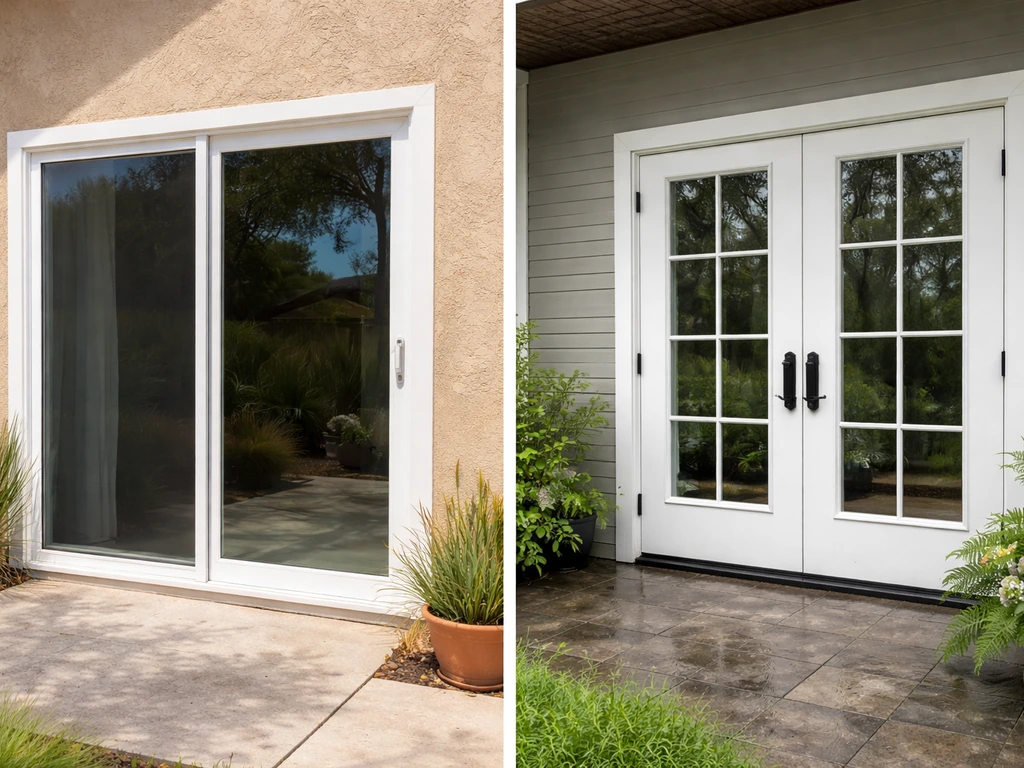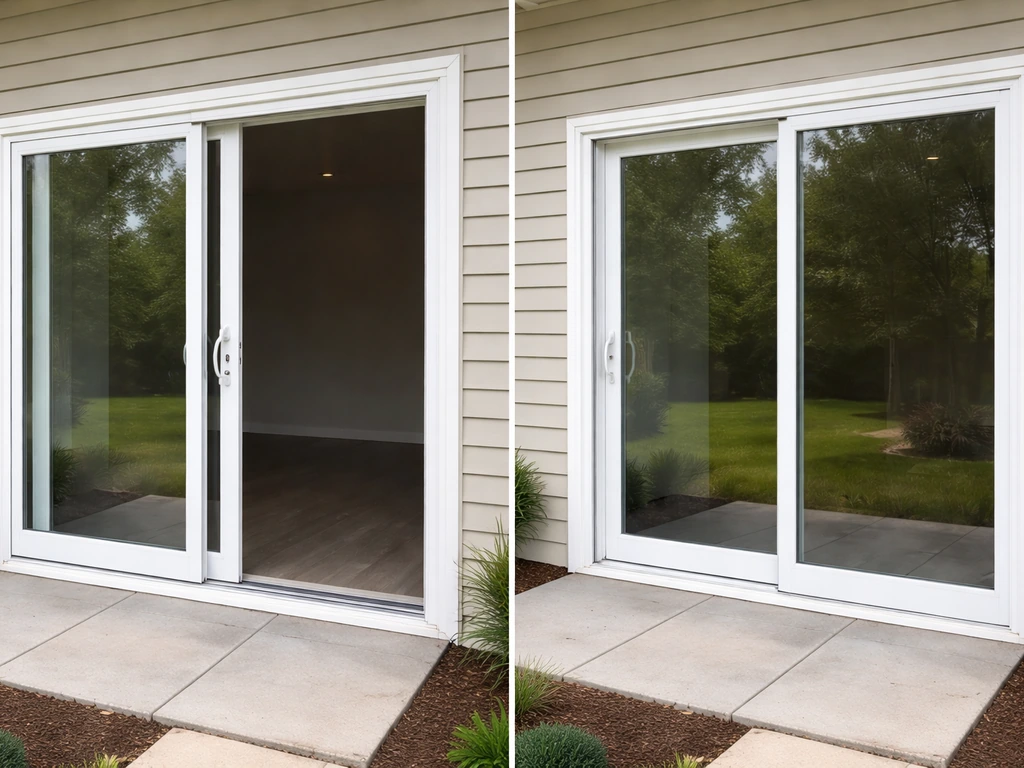
For most homes, fiberglass is the better patio door material. It outperforms steel on energy efficiency, resists rust and corrosion completely, expands and contracts far less with temperature swings, and requires almost no maintenance over its lifetime. Steel still wins on raw security strength and upfront cost in certain budget-entry product lines, but for the average homeowner replacing a worn-out sliding or French patio door, fiberglass is the easier long-term choice. That said, the right answer shifts depending on your climate, budget, and exactly what you're replacing, so let's get into the specifics.
Fiberglass vs Steel Patio Doors: Which Is Better for You?

Owen Delaney
22 Jun 2026
When fiberglass beats steel (and when it doesn't)
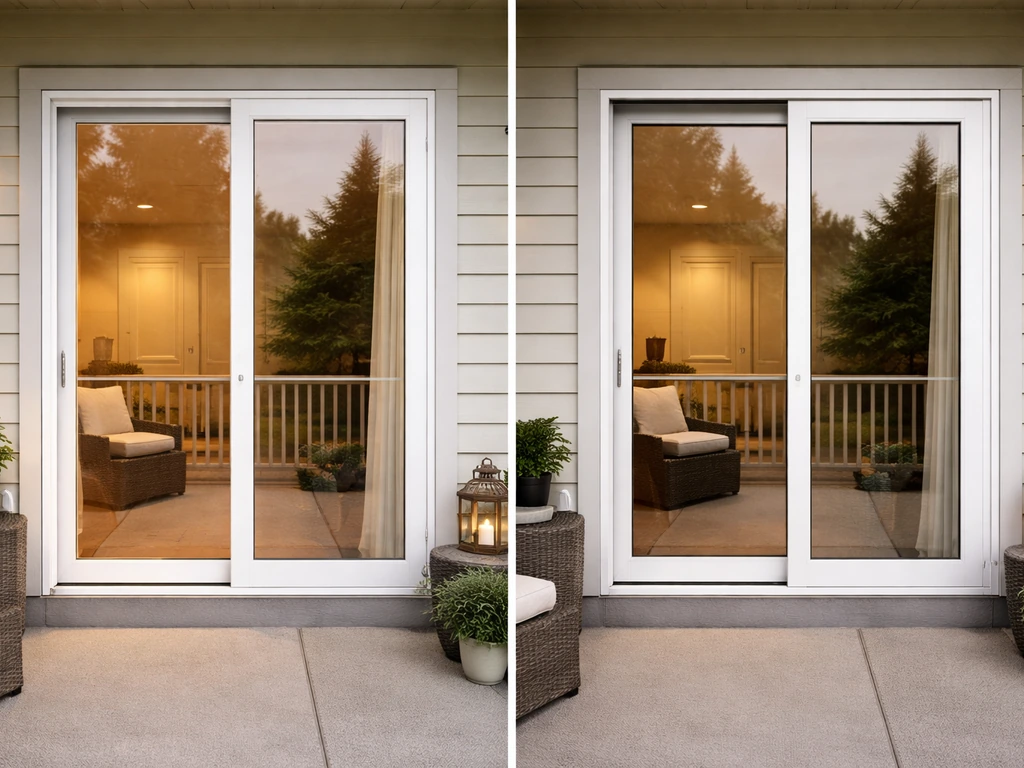
Fiberglass is the clear winner when your priority list includes energy efficiency, coastal or humid climates, low maintenance, and longevity. Fiberglass frames have a thermal expansion coefficient very close to glass itself, which means the seal between the frame and glazing stays tight across seasons. They don't rust, they resist denting from casual impacts, and most quality fiberglass doors carry 20- to 30-year finish warranties. If you live somewhere that gets genuinely cold winters or salt air, fiberglass should be your default.
Steel earns the edge in two scenarios: maximum forced-entry resistance on a tight budget, and commercial or semi-commercial applications where a very heavy-duty frame is specified. A steel patio door, particularly one built to ANSI/SDI standards, offers excellent impact resistance against forced entry. Steel is also generally cheaper at the entry-level tier. If you're outfitting a rental property on a strict budget and live somewhere dry where rust isn't a major concern, a steel door with a quality finish can work well.
| Factor | Fiberglass | Steel |
|---|---|---|
| Energy efficiency (U-Factor) | Excellent (U-0.19 to 0.30 typical) | Moderate (U-0.25 to 0.40 typical) |
| Rust/corrosion resistance | Immune | Vulnerable without maintained finish |
| Dent resistance | Good | Can dent from sharp impacts |
| Warping/thermal movement | Minimal | Moderate expansion/contraction |
| Maintenance frequency | Very low | Low to moderate (finish upkeep) |
| Forced-entry resistance | Very good | Excellent |
| Typical frame lifespan | 30-50 years | 20-35 years with maintenance |
| Entry-level cost (door only) | $800 to $1,800 | $500 to $1,400 |
| Best climate | All climates, especially coastal/cold | Dry, temperate climates |
| Sound insulation | Good | Moderate |
Frame performance: insulation, condensation, and weatherproofing
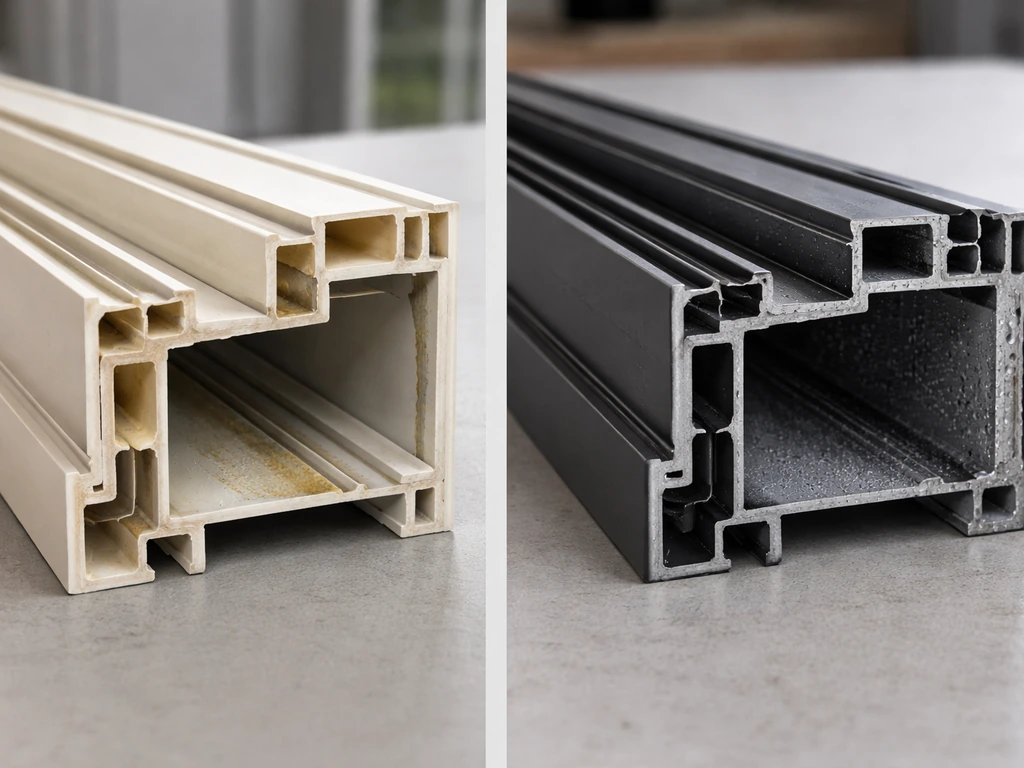
This is where fiberglass really separates itself. Fiberglass frames are poor conductors of heat, so they don't act as a thermal bridge the way steel does. In practical terms, a steel frame will feel noticeably cold to the touch on a January morning, and that cold surface is exactly what causes condensation to form on the interior frame edge. Fiberglass frames stay much closer to room temperature, which dramatically reduces condensation risk.
The industry rates condensation resistance using a Condensation Resistance Factor (CRF), which is based on AAMA 1503-09 testing. CRF scores run roughly 30 to 80, with higher numbers meaning better resistance to condensation forming on the room-side surface. A fiberglass door unit with a well-insulated core will typically score in the 50 to 70 range. Steel doors tend to score lower, especially at the frame, because the metal conducts cold inward.
When comparing quotes, ask for the CRF value alongside the U-Factor. For more detail on condensation rating systems and what the CRF reflects for fenestration products, see FGIA's discussion of indoor condensation and rating methods CRF value alongside the U-Factor. The overall CRF of a door assembly reflects the lower-performing component, whether that's the frame or the glass, so a high CRF number tells you the whole unit is performing well, not just the glass.
Weatherproofing at the perimeter matters just as much as the frame material itself. The Steel Door Institute points out that weather resistance in a door assembly depends heavily on perimeter weatherstrips, gaskets, and thresholds, not just the door panel material. A premium fiberglass door poorly installed with bad flashing will leak air and water just like a cheap steel door. Look for multi-point compression weatherstripping, an adjustable threshold with a sweep, and a sill pan flashing detail in the installation spec. One bad installation step can erase the thermal performance advantage you paid for.
Durability and maintenance: what actually breaks down over time
Steel patio doors have one Achilles heel: the finish. The moment the paint or powder coat gets scratched or chips at the bottom corner near the threshold, moisture gets in and rust starts. In dry inland climates, a careful homeowner can manage this by touching up scratches promptly. In coastal areas, humid climates, or anywhere with regular rain and temperature swings, steel finish degradation happens faster than most homeowners expect. Once rust starts at the frame corners or bottom rail, it's very difficult to stop without full refinishing.
Fiberglass doesn't rust, period. It also resists the UV degradation that causes vinyl to yellow and become brittle over time, which is one reason fiberglass tends to outlast vinyl as well. If you're specifically shopping for the best vinyl patio doors, compare insulation, weatherstripping, and glass packages alongside the frame material and installation quality. The composite material doesn't swell, rot, or warp when exposed to moisture.
The main maintenance task on a fiberglass door is occasional cleaning and repainting or re-staining if you have a painted or stained wood-look finish. Gel-coat fiberglass finishes can last 15 to 20 years before needing any attention. Most steel doors will need paint touch-ups within 5 to 10 years depending on climate and sun exposure.
Both materials can dent, but they dent differently. Steel dents from concentrated sharp impacts (think a flying rock or a hard kick) but holds up well to casual bumps. Fiberglass can crack or chip from a very hard strike at a corner but is more resilient to everyday abuse. Neither material warps from humidity the way wood does, which is a genuine advantage over wood-framed patio doors. If you're comparing this decision to what vinyl offers, fiberglass handles temperature extremes better than vinyl too, which tends to warp in very hot climates and become brittle in extreme cold.
Security and strength: what the frame material actually means for protection
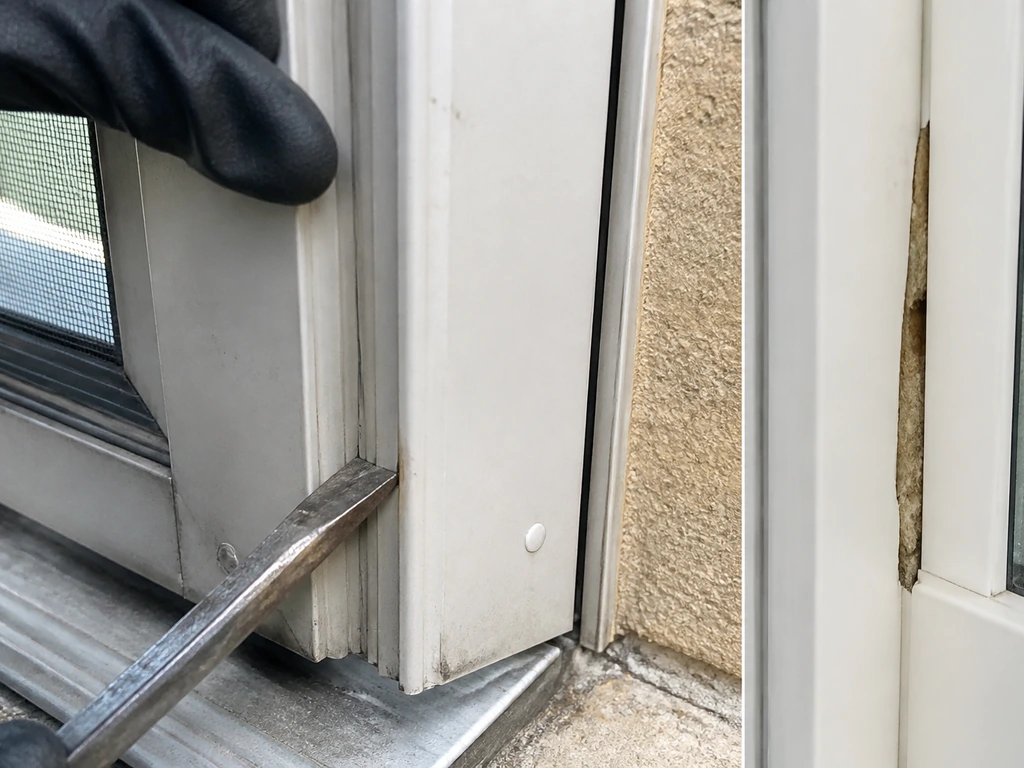
This is where steel has a legitimate edge, and it's worth being honest about it. A thick-gauge steel frame is harder to kick through or pry apart than a fiberglass frame of equivalent wall thickness. Steel door assemblies built to SDI (Steel Door Institute) standards offer excellent resistance to forced entry, which is why commercial and institutional buildings have used steel doors for decades.
That said, the security of a patio door system depends more on the locking hardware and frame anchoring than on the panel material alone. A fiberglass patio door with a multi-point locking system, reinforced strike plates, and properly anchored frame in a structural rough opening is genuinely secure. Most residential burglary attempts on patio doors target the lock mechanism and track, not the frame material itself. If security is your top concern, invest in multi-point locks, a door reinforcement kit for the strike area, and a secondary security bar or pin lock regardless of whether you choose fiberglass or steel.
For impact resistance in hurricane-prone areas, both materials are available in impact-rated versions with laminated glass. In those cases, the glass specification (impact rating, frame anchoring, and AAMA/NFRC certification) matters far more than whether the frame itself is fiberglass or steel.
What you'll actually pay: cost comparison and what moves the price
Steel patio doors are generally cheaper at the entry and mid-range tiers. A basic single-panel steel sliding patio door starts around $500 to $800 for the door unit alone. Mid-range steel French patio doors run $900 to $1,500. For more help comparing styles and price points, review the best aluminum sliding patio doors and what features matter most. Fiberglass patio doors start higher, typically $800 to $1,200 at the entry level, and premium fiberglass French or multi-panel configurations can run $2,000 to $4,500 before installation.
Installation adds $300 to $800 for a standard replacement in an existing rough opening, assuming no structural changes. If the rough opening needs modification, framing repairs, or if you're switching from a sliding door to a French door configuration, budget an additional $500 to $1,500 for that carpentry work. Total installed costs typically land between $1,500 and $3,500 for a mid-range fiberglass patio door and $1,000 to $2,500 for a comparable steel option.
What actually drives the price difference within each material category? Glass package is usually the biggest variable. Double-pane low-E glass is standard; triple-pane adds $200 to $500 to the door unit cost but meaningfully improves U-Factor and CRF performance in cold climates. Hardware finish (brushed nickel vs. oil-rubbed bronze vs. matte black) adds $50 to $200. Decorative glass, grilles, and transoms stack on fast. Factory prefinished or factory stained fiberglass adds $150 to $400 over unfinished units. Always get the total installed price in your quote, not just the door unit cost.
French patio doors specifically: where material choice really matters
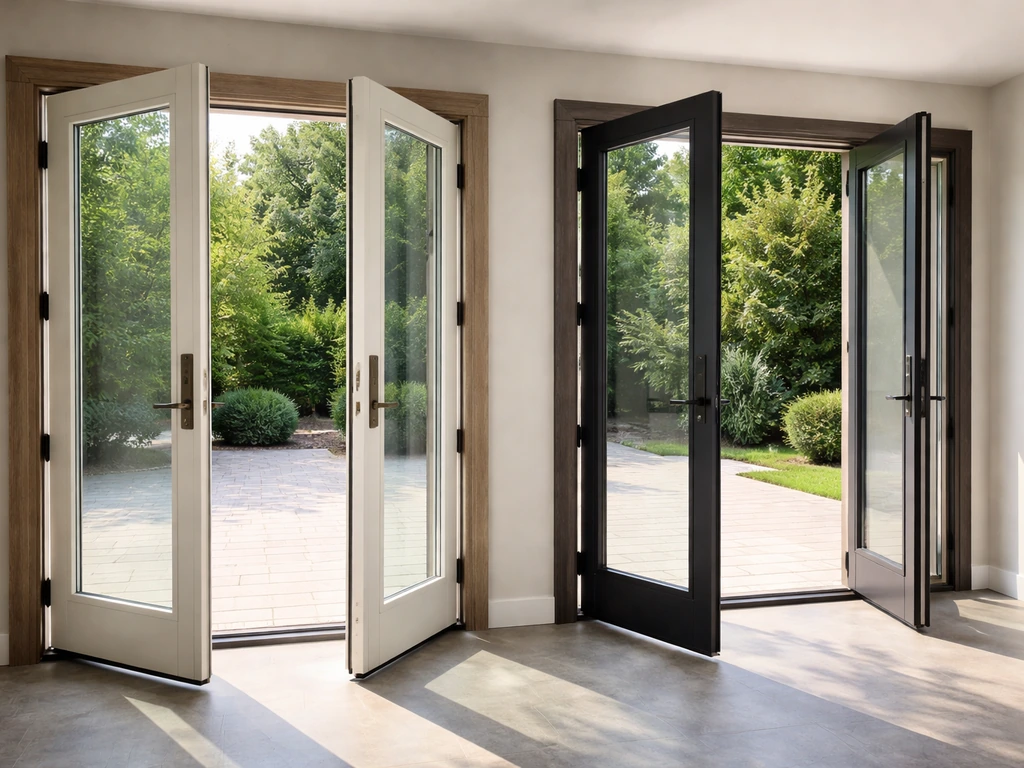
If you're choosing between fiberglass vs steel French patio doors, the material decision carries more weight than it does for sliding doors. French doors are heavier assemblies with two active panels that swing, and the frame corners and hinge points take more stress over time. Steel French doors are available and can look striking, but the weight of a steel French door panel (often 80 to 120 pounds per panel) puts real load on hinges and requires quality hardware to avoid sag over time. Fiberglass French door panels are lighter, typically 50 to 80 pounds per panel, and are much easier for one or two people to hang during installation.
Hardware quality matters more on French doors than on sliding doors because you're relying on hinges, handles, and a multi-point lock to keep an active panel weather-sealed when closed. Look for heavy-duty stainless or zinc-alloy hinges (three hinges per panel minimum), a multi-point locking system that engages at the top, middle, and bottom of the active panel, and an adjustable astragal (the vertical strip between the two panels) that compresses against weatherstripping when locked. These specs apply to both fiberglass and steel French doors, but the lighter weight of fiberglass panels puts less cumulative stress on these components.
Airflow is a genuine selling point for French doors over sliding doors, and the material choice doesn't affect this directly. A standard 6-foot French patio door opens the full width to a 5-foot or wider clear opening. In-swing vs. out-swing configuration affects how the door interacts with your interior furniture and exterior deck furniture. Out-swing French doors are more common in high-wind climates because the wind pressure presses the door into its seal rather than pulling it open, but they require clear exterior clearance. Decide on swing direction before you shop, because it affects rough opening requirements and weatherstripping design.
Your shopping checklist: specs to ask for in every quote
When you're getting quotes from door suppliers or contractors, don't just compare door unit prices. Here are the specific specs to collect and compare across all options:
- Whole-unit U-Factor (lower is better; target 0.30 or below, ideally 0.22 or below in cold climates)
- Condensation Resistance Factor (CRF) based on AAMA 1503-09 testing (higher is better; 50+ is solid, 60+ is excellent)
- Frame material and wall thickness (fiberglass: look for pultruded or reinforced composite; steel: ask about gauge)
- Glass package: double vs. triple pane, low-E coating type (soft coat vs. hard coat), argon or krypton fill
- Weatherstripping type: compression vs. wiper, number of contact points, whether it's adjustable or replaceable
- Hardware: multi-point lock included or extra cost, hinge count and material, handle set finish and warranty
- Factory finish warranty: how many years, what conditions void it
- AAMA or NFRC certification label on the unit (confirms tested performance, not just spec-sheet claims)
- Rough opening size required vs. your actual rough opening (confirm before ordering)
- Lead time: custom sizes and finishes can add 6 to 12 weeks in 2026
It's also worth asking whether the door is pre-hung (frame attached, ready to drop into the rough opening) or slab-only (panel only, you reuse the existing frame). For most patio door replacements, pre-hung is the right choice because the existing frame has likely degraded if the door is being replaced. Reusing an old frame with a new door panel is a false economy that usually leads to air leaks and warranty headaches.
Getting it done: measuring, budgeting, and your next steps today
Start by measuring your existing rough opening, not just the door unit itself. Measure the width between framing members at three heights (top, middle, bottom) and use the smallest measurement. Do the same for height. Standard patio door rough openings are typically 72 inches wide by 80 inches tall (for a 6-foot sliding or French door) or 96 inches wide by 80 inches tall (for an 8-foot unit). If your measurements don't land within about half an inch of these standard sizes, you may need a custom-sized door or a rough opening adjustment, both of which affect cost and timeline.
Set your budget in three tiers before you start shopping: your target spend, your stretch budget, and your absolute ceiling. This matters because door salespeople and contractors will always have an upsell ready. Knowing your ceiling keeps you from getting talked into a triple-pane fiberglass unit with decorative glass and a custom finish when a clean double-pane fiberglass door with standard low-E would meet your actual needs.
Get at least three quotes: one from a big-box store with installation (Home Depot or Lowe's), one from a local door and window dealer, and one from a local remodeling contractor who sources their own product. These will give you a real-world price range and expose which specs are standard vs. which are add-ons in your market. Ask each quote to specify the door brand and model number so you can compare apples to apples.
If you're still weighing material options beyond fiberglass and steel, it's worth knowing that aluminum and vinyl patio doors occupy different points on the cost-performance curve. Vinyl vs aluminum patio doors are often compared for their price, insulation, and condensation behavior, so consider those trade-offs alongside durability aluminum and vinyl patio doors. Aluminum is lighter and slimmer than steel but shares similar condensation vulnerabilities in cold climates. Vinyl is the most affordable framing option and performs reasonably well thermally, though fiberglass consistently outperforms it on durability and stability in extreme temperatures. These comparisons can help you calibrate whether fiberglass's premium over steel is worth it for your specific situation.
For most homeowners in 2026, the practical path is this: choose fiberglass if you're in a cold, humid, or coastal climate and plan to stay in your home long-term. The energy savings, durability, and reduced maintenance genuinely pay back the price premium over 10 to 15 years. Choose steel if you're on a tighter budget, live somewhere dry and temperate, and want maximum forced-entry resistance at a lower price point. Either way, the glass package and installation quality will have more impact on your day-to-day satisfaction than the frame material alone, so don't cut corners on those even if you're trying to save money elsewhere.
FAQ
If I have condensation inside, does switching from steel to fiberglass always fix it?
It often helps because fiberglass frames conduct less heat to the interior side, but condensation can also come from the glazing package, air leaks, or a cold bridge at the threshold. Before you replace the door, ask the contractor to confirm the U-Factor and the CRF for the entire assembly, and have them check perimeter flashing and weatherstripping continuity.
How do I compare quotes fairly if one door is fiberglass and the other is steel?
Make sure each quote lists the exact brand, model number, glass package (double vs triple, low-E type), and the CRF and U-Factor for the full door assembly. Also confirm whether the price includes pre-hung installation, new sill pan flashing, and any rough-opening modifications, those items can swing total cost more than frame material.
Is steel “worse” for coastal homes even if it has a good finish?
Steel can perform well initially in coastal areas if the coating system is high quality, but scratches at corners near the threshold are still a common failure point because moisture is driven into the frame over time. Fiberglass is more forgiving in salt air because it does not rely on paint or powder coat to prevent corrosion.
What should I look for in weatherstripping if I want the best performance from either material?
Look for multi-point compression weatherstripping on the active panel, a proper adjustable threshold with a sweep if appropriate for your flooring, and a specified sill pan or flashing detail in the install instructions. If the spec is vague, ask to see the written installation steps, because poor perimeter work can negate the energy and condensation benefits of a better frame.
Does fiberglass dent or crack more than steel in real everyday use?
Steel usually handles minor bumps better and dents under concentrated impacts, fiberglass resists routine knocks but can chip or crack from hard corner strikes. If you have kids, move patio furniture often, or have frequent yard equipment traffic near the door, ask your dealer whether the finish is gel-coat and what impact resistance the glazing package has.
Are triple-pane fiberglass doors always the best choice for cold climates?
Triple-pane improves thermal performance, but it is not automatically the right upgrade if the door is oversized, poorly flashed, or paired with a leaky rough opening. In many cases, good installation plus a high-performing double-pane low-E unit can outperform an average triple-pane door that is installed with gaps or an incorrect threshold setup.
Will a steel patio door be noticeably colder to touch than fiberglass?
Often yes, especially at the interior frame edge during very cold mornings, because metal conducts heat inward faster. If comfort is a priority, compare the assembly’s CRF and also ask whether the interior frame is thermally broken or insulated, not all steel products feel the same.
If I care most about security, should I still choose fiberglass over steel?
Frame material is only part of the security picture. Choose whichever material you can pair with a strong multi-point locking system, reinforced strike plates, and correct frame anchoring into a structural rough opening. For patio doors, burglars frequently target the lock and track area, so specify a reinforcement kit for that zone.
What hurricane or impact-rated requirements should I verify beyond “impact glass”?
Confirm that the door is certified as an impact-resistant assembly, including the frame and anchoring method, not just that it uses laminated glass. Ask for the relevant certification information on the quote and ensure the installer follows the manufacturer’s anchorage and fastening schedule, because incorrect fastening can fail the rating.
Should I get a pre-hung door or a slab-only replacement?
For most patio door replacements, pre-hung is the safer choice because the existing frame often shows hidden wear or damage that leads to air and water leaks. If you go slab-only, require an inspection of the existing frame condition and a written plan for sealing and weatherproofing around the perimeter, otherwise you risk warranty issues and performance loss.
How much does door swing direction matter, especially for French patio doors?
It matters for wind loading and space planning. In-swing or out-swing changes how the door interacts with exterior pressure, so out-swing can help in some high-wind situations if you have enough exterior clearance and a correct weather seal layout. Decide before ordering because it affects the rough opening and how the threshold seals.
What hidden costs commonly show up after measurement?
Expect add-ons if your rough opening is not within the typical near-standard sizes, because custom sizing or framing adjustments can add time and labor. Also confirm whether you need new sill pan flashing, interior trim changes, or structural modifications when switching from a sliding configuration to French doors.
Do I need to worry about hardware longevity differently for fiberglass vs steel French doors?
Yes, French doors place more load on hinges, astragal alignment, and locking compression. Even if both materials are fine, fiberglass panels may be lighter, which can reduce cumulative stress on hinges over time. Still, require heavy-duty hinges and a multi-point lock with proper adjustment, regardless of frame material.
At what point does fiberglass’s higher price usually pay off?
A reasonable rule of thumb is to model payback over 10 to 15 years using your local utility rates and expected maintenance costs. If your climate is humid, coastal, or has cold winters, the reduced condensation risk and lower likelihood of finish-related rust repairs can make fiberglass cost-effective sooner than it would in a dry, mild area.