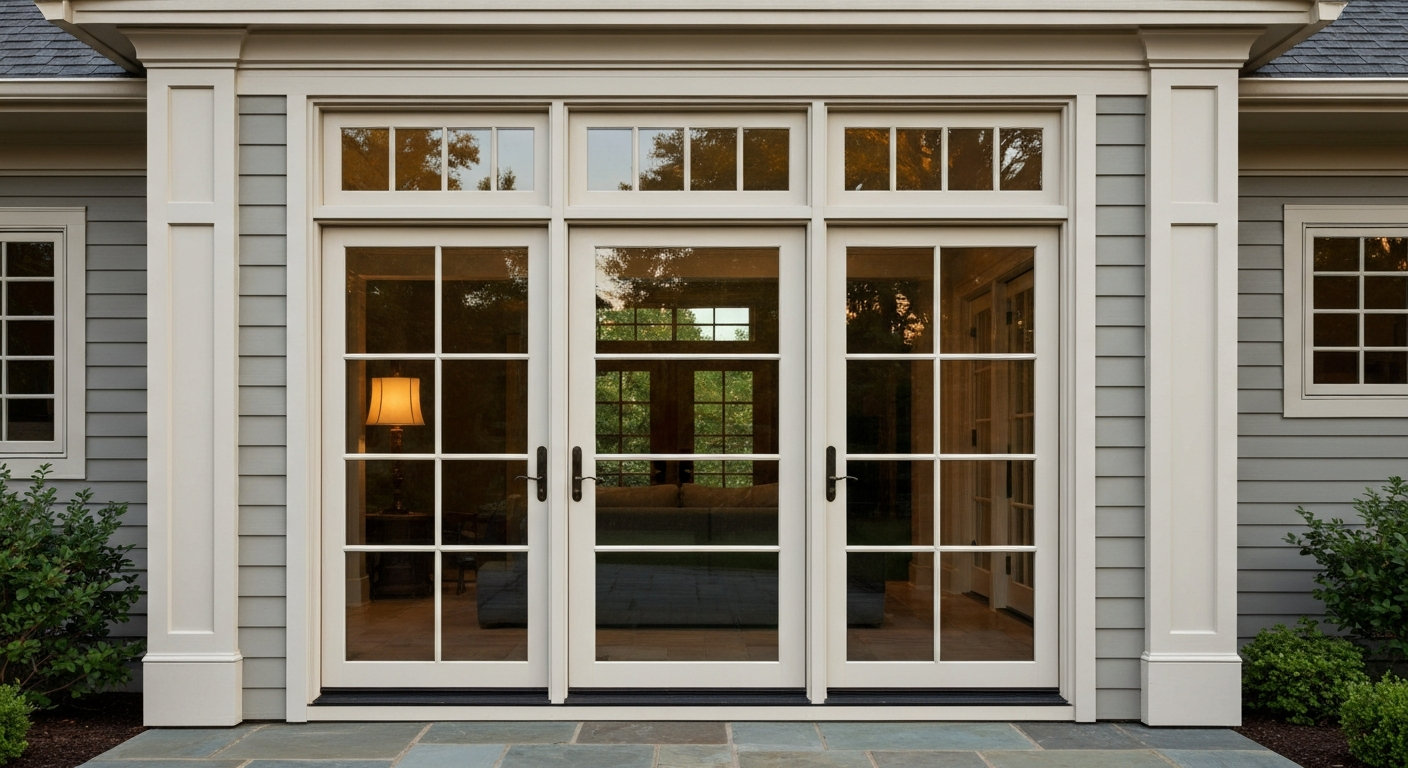
The best vinyl sliding patio doors right now combine a multi-chamber PVC frame (at least 3 chambers), triple-pane or argon-filled double-pane glass with a U-factor under 0.25, stainless-steel or brass ball-bearing rollers, and a multi-point locking system. Brands like Milgard, Andersen (via their Renewal by Andersen vinyl composite line), Simonton, and Pella all make solid vinyl sliders in that spec range, typically priced between $800 and $2,500 for the door unit alone before installation. If you're replacing a standard 6-foot or 8-foot sliding door, you have plenty of options at every price point. The key is knowing which specs actually matter so you stop comparing marketing language and start comparing numbers.
Best Vinyl Patio Doors: How to Choose Sliding Sets

Owen Delaney
6 Jun 2026
What 'best' actually means for a vinyl patio door
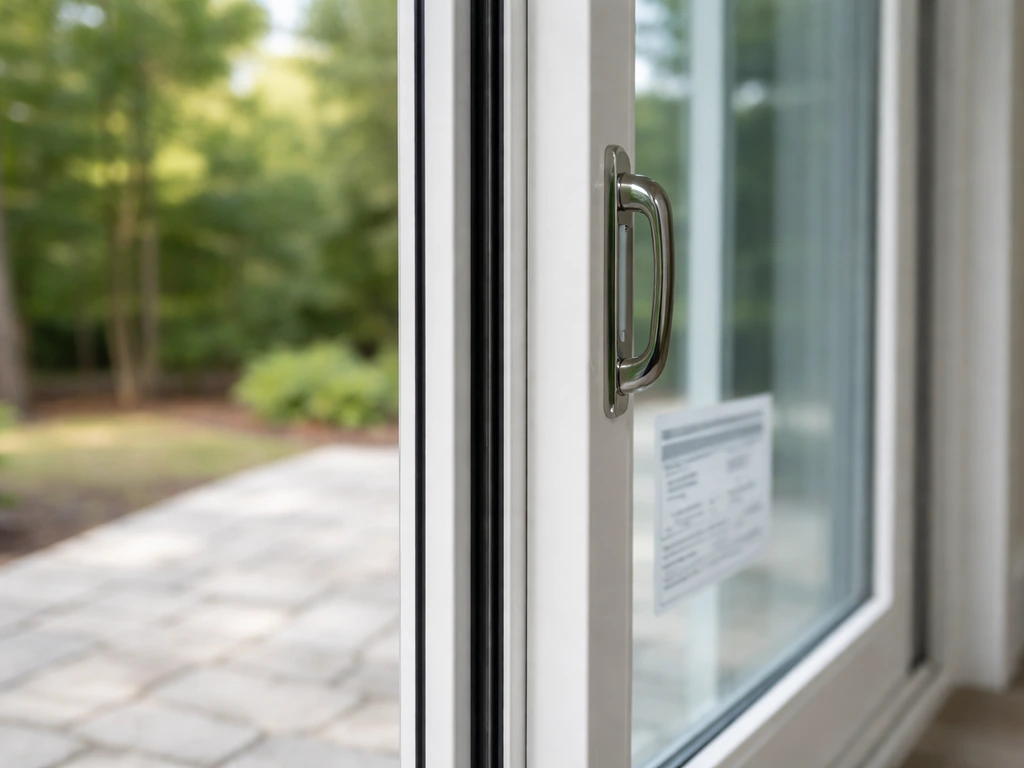
Manufacturers love words like 'premium,' 'heavy-duty,' and 'superior.' None of those tell you anything useful. When I talk about the best vinyl sliding patio door, I mean a door that: seals well enough that your energy bills don't spike in January, slides smoothly after five years of use (not just when it's brand new), resists warping in heat and cold, and keeps out rain and wind at a level that matches your local weather. That's it. Everything else is a bonus.
The performance benchmarks that actually matter are tied to third-party ratings. NFRC (the National Fenestration Rating Council) is the independent certification body that tests and certifies U-factor, SHGC, and air leakage for windows and doors. ENERGY STAR uses NFRC-certified numbers to qualify products, so an ENERGY STAR label is a reliable shortcut. For structural performance, air leakage, and water penetration resistance, look for doors tested to AAMA/WDMA/CSA 101/I.S.2/A440, the North American standard that governs door performance grades. A door that carries NFRC certification, ENERGY STAR qualification, and an AAMA performance class rating has been independently verified. A door that only shows you the manufacturer's own test results has not.
For sliding patio doors specifically, 'best' also means paying attention to the track and roller system. A beautiful frame with poor rollers will feel stiff or gritty within a couple of years. Look for stainless-steel or brass ball-bearing rollers, a recessed track (which reduces tripping), and an adjustable roller system so you can re-level the door yourself without calling a technician.
Are vinyl patio doors actually a good choice?
Yes, for most homeowners, vinyl is genuinely one of the best patio door materials available right now. It's not a compromise pick. Here's the honest breakdown. If you’re comparing fiberglass vs steel patio doors, the same NFRC, ENERGY STAR, and air-leakage details help you evaluate which material will insulate and seal best for your climate.
The real advantages
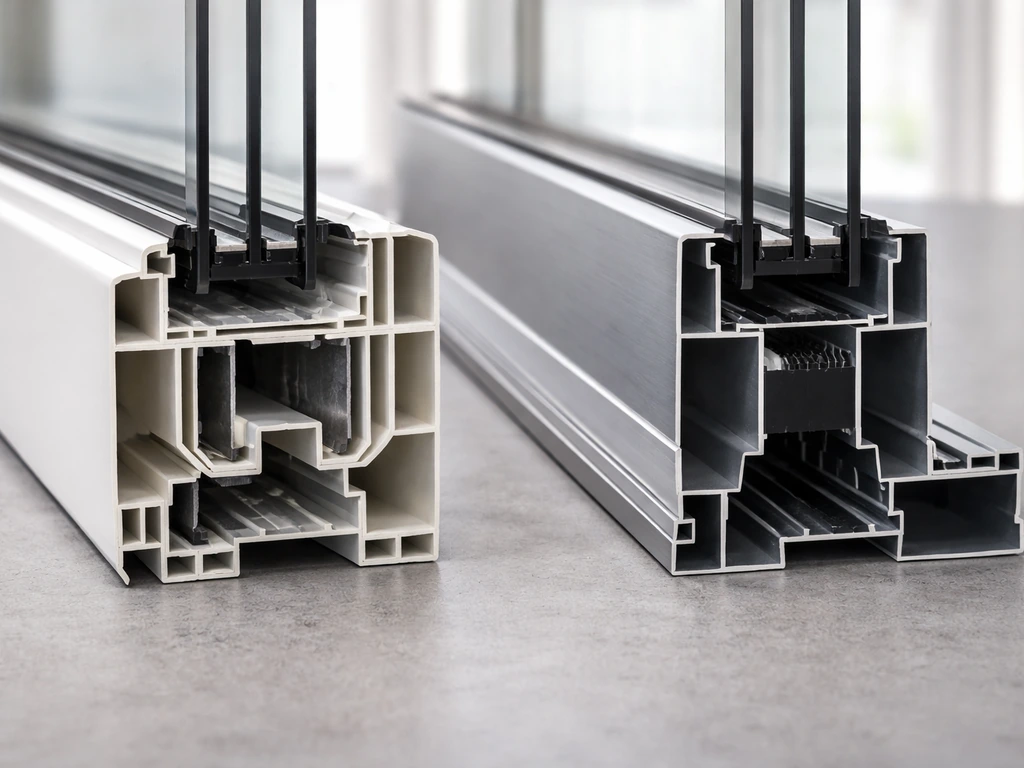
- Thermal performance: PVC frames are naturally poor conductors of heat, so a quality vinyl slider outperforms aluminum on U-factor without thermal breaks. You can hit a U-factor of 0.20 to 0.25 on a good vinyl door, which meets ENERGY STAR Most Efficient thresholds in most climate zones.
- Low maintenance: Vinyl doesn't rust, rot, or need painting. Cleaning is soap and water, maybe once or twice a year.
- Cost: Vinyl sliding doors are meaningfully cheaper than fiberglass and significantly cheaper than clad wood or aluminum with proper thermal breaks. That price difference leaves room in your budget for better glass or hardware upgrades.
- Color stability: Modern vinyl uses UV stabilizers that hold color well. Fading is much slower than it was 15 years ago.
- Sound dampening: The multi-chamber frame design and insulated glass do a decent job of reducing traffic and neighbor noise compared to single-pane or thinner aluminum frames.
The honest drawbacks
- Aesthetics: Vinyl frames are bulkier than aluminum. If you want slim sightlines and a modern look, aluminum will always look sharper. Vinyl tends to suit traditional or transitional home styles better.
- Color options are limited: Unlike aluminum or fiberglass, vinyl can't be field-painted reliably without voiding warranties. You're choosing from the manufacturer's palette at the time of purchase.
- Extreme temperature vulnerability: In climates with sustained temperatures above 110°F, cheap vinyl can soften slightly. High-quality vinyl with reinforced frames handles it better, but this is worth confirming if you're in the desert Southwest.
- Strength-to-weight ratio: Vinyl requires more material (thicker frames) to achieve the same structural rigidity as aluminum or fiberglass, which is why the frames look chunkier.
- Resale perception: In very high-end homes, some buyers perceive vinyl as a downgrade relative to clad wood or fiberglass. In most homes, it's a non-issue.
Who is vinyl the right fit for? If you want a high-performing, low-maintenance door at a reasonable price and you're not fixated on ultra-slim frames or custom colors, vinyl is almost certainly your best call. It suits the widest range of homeowners, climates, and budgets. If slim sightlines and aesthetics are your top priority, aluminum is worth considering as an alternative, and the trade-offs between those two materials go deeper than this article covers. If you are considering aluminum instead, compare aluminum sliding patio doors on insulation, track performance, and corrosion resistance.
The specs that actually separate good vinyl doors from bad ones
Frame construction
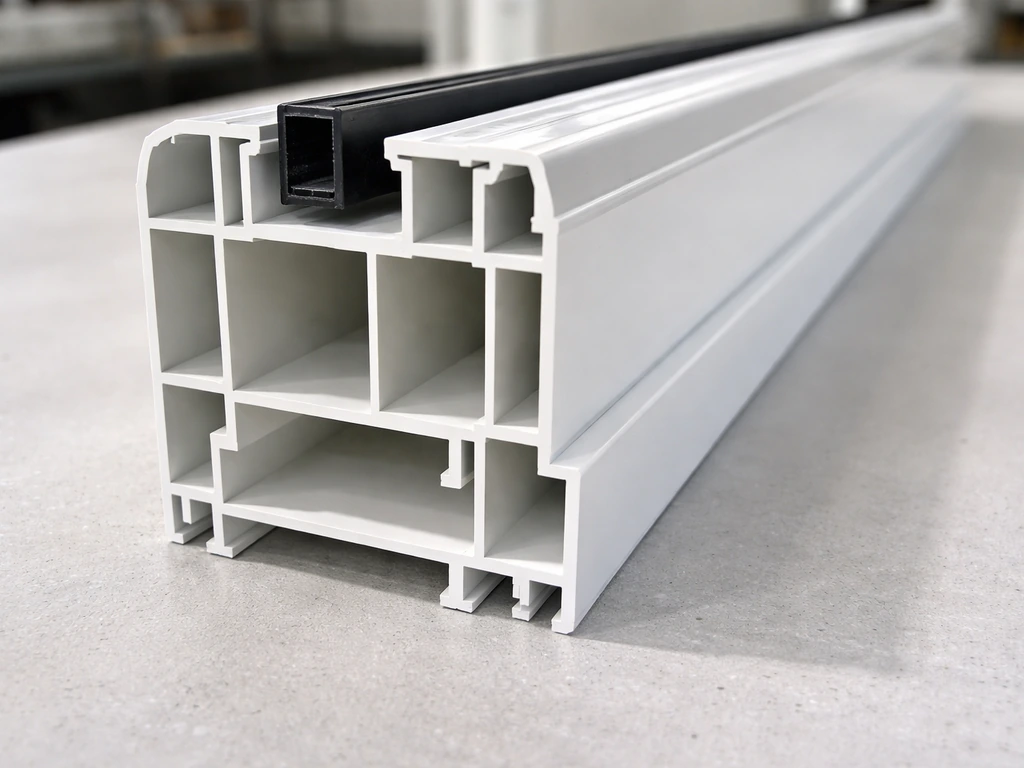
Not all vinyl is the same. Look for frames with at least three internal chambers (the hollow sections within the PVC profile). More chambers mean better insulation and more structural rigidity. Some manufacturers add steel or fiberglass reinforcement in the meeting rail or sill area, which helps with larger door widths (anything 8 feet or wider really benefits from this). Wall thickness matters too: aim for a minimum 0.090-inch wall thickness on the main frame extrusions. Budget vinyl often cuts corners here.
Glass and insulation
The glass package is where you'll spend most of your upgrade budget, and it's usually worth it. Argon-filled double-pane glass with a low-e coating is the baseline. Triple-pane is available from some manufacturers and meaningfully improves U-factor, but it adds weight and cost. Here are the ENERGY STAR Most Efficient 2025 targets for sliding glass doors by climate zone, which give you a concrete goal: ENERGY STAR’s 2025 criteria publish climate-zone-specific U-factor and SHGC targets that you can use as a benchmark when choosing your sliding glass door ENERGY STAR Most Efficient 2025 targets for sliding glass doors by climate zone.
| Climate Zone | U-Factor Target | SHGC Target |
|---|---|---|
| Northern | ≤ 0.24 | ≥ 0.20 |
| North-Central | ≤ 0.20 | ≤ 0.40 |
| South-Central | ≤ 0.20 | ≤ 0.23 |
| Southern | ≤ 0.21–0.22 | ≤ 0.23 |
U-factor measures how much heat passes through the door (lower is better for insulation). SHGC measures how much solar heat the glass lets in (lower is better in hot climates, higher is acceptable in cold climates where you want passive solar gain). Ask your dealer for the NFRC label, not just the manufacturer's spec sheet, because NFRC numbers are independently verified.
Hardware and rollers
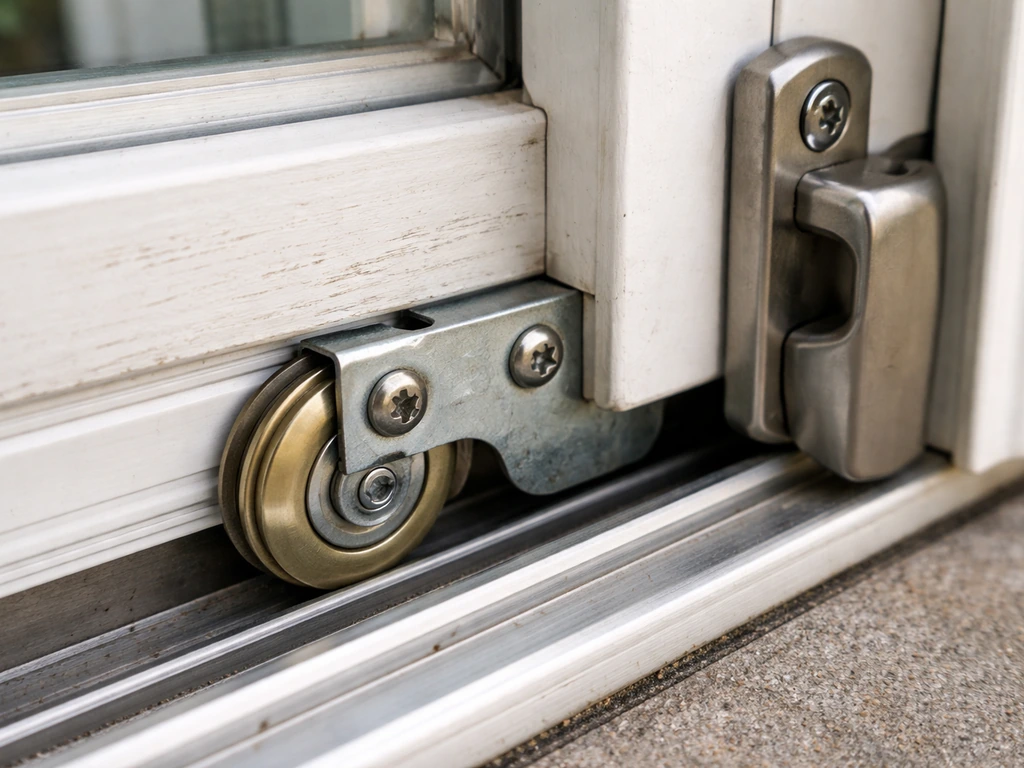
Hardware is where a lot of mid-range vinyl doors cut corners. The rollers should be stainless-steel or brass ball-bearing units, not plastic tandem rollers. The handle and latch should have a solid feel with no play. Multi-point locking (where the door engages at two or three points along the frame, not just one central latch) is the security standard you want. Single-point latches are easier to pry open. Ask specifically whether the rollers are user-adjustable, because doors settle and you will need to fine-tune them over time.
Weatherstripping and air leakage
ENERGY STAR tracks air leakage as a separate metric from U-factor and SHGC. A door can have great glass but lousy seals and still leak air badly. Look for pile weatherstripping (a brush-like seal) along the meeting rail and a foam or rubber compression seal along the top and bottom. Better doors use dual-pile or triple-fin seals. The NFRC label will show an air leakage rate if the manufacturer had it tested: aim for 0.30 CFM per square foot or lower.
Security features
Beyond multi-point locking, good vinyl sliders should include an anti-lift feature (a pin or block that prevents someone from lifting the door out of the track from outside), a reinforced strike plate, and optionally a keyed lock for when you're away. Some doors accept a secondary bar lock or foot bolt as well. If you're in a ground-floor situation or a high-crime area, these details matter more than which brand logo is on the frame.
Getting the size and configuration right for replacement
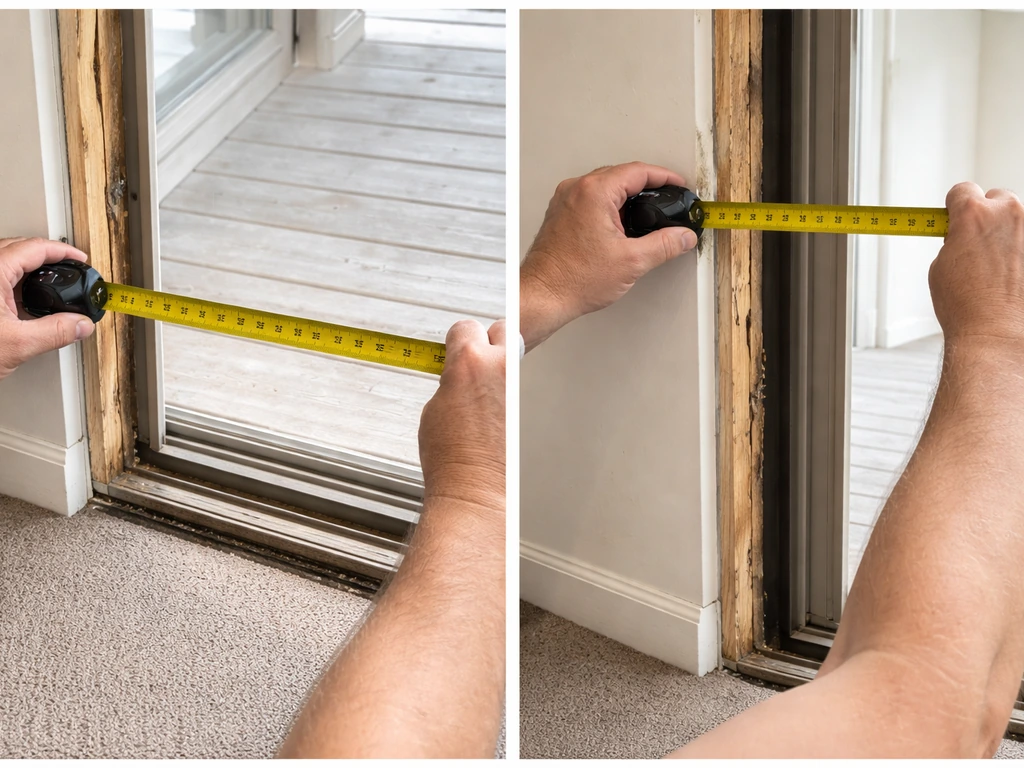
This is where a lot of homeowners get tripped up. Standard sliding patio door rough opening widths in North American homes are 60 inches (5 feet), 72 inches (6 feet), and 96 inches (8 feet). The actual door unit is typically 1 to 1.5 inches smaller than the rough opening to allow for shimming and framing. A 6-foot opening takes a 70.5-inch or 71-inch door unit, depending on the brand. Measure your existing rough opening (width and height) before you shop, not the door panel itself.
If you're replacing an existing slider, you almost certainly want to match the existing rough opening. Changing the rough opening means framing work, which adds $500 to $1,500 to your project cost. If the old door was non-standard, a custom-sized vinyl door is available from most major brands, usually with a 4 to 6 week lead time and a 15 to 25 percent price premium.
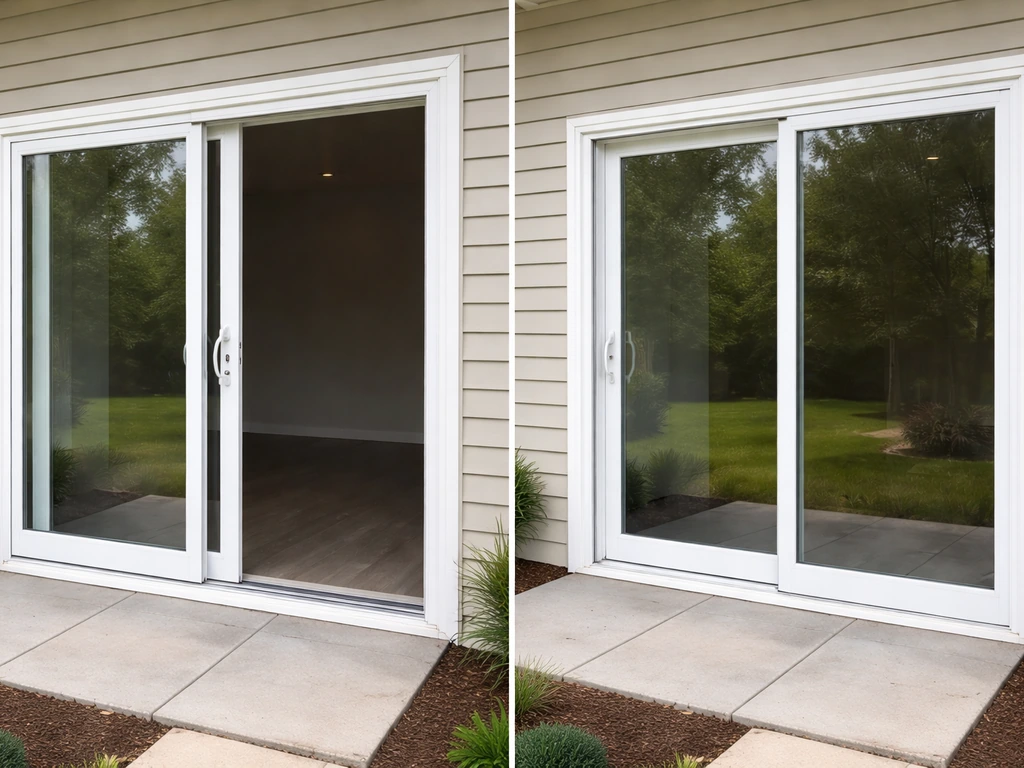
Configuration choices for vinyl sliders: most residential sliders are 2-panel (one fixed, one sliding) or 3-panel (two fixed, one sliding, or a bypass setup). For openings over 8 feet, a 3-panel or 4-panel setup gives you a wider clear opening without giant individual panels that are heavy and hard to slide. If you want a very wide opening and maximum airflow, a multi-panel folding or bifold configuration is an option, though that's a bigger project and a different article. For most standard replacement projects, a 2-panel or 3-panel slider is the right answer.
Height is usually 80 inches (6 feet 8 inches) in standard construction, but 96-inch (8-foot) heights are increasingly common in newer builds and give a noticeably more open feel. Confirm your existing height before assuming standard.
What a vinyl sliding patio door actually costs
Here's the range you're working with in mid-2026, based on real market pricing for a standard 6-foot (72-inch) sliding patio door:
| Tier | Door Unit Price | Installation (Add) | Total Typical Range |
|---|---|---|---|
| Entry-level (builder grade) | $400–$800 | $300–$600 | $700–$1,400 |
| Mid-range (Simonton, Milgard, Pella) | $800–$1,800 | $500–$900 | $1,300–$2,700 |
| Premium (Andersen, Marvin, custom) | $1,800–$3,500+ | $800–$1,500 | $2,600–$5,000+ |
Installation cost depends heavily on whether this is a straightforward drop-in replacement (existing frame stays, new door unit slides in) or a full frame-out replacement where the old frame and casing come out completely. Drop-in replacement runs $300 to $700 for labor. Full frame-out replacement, which you need if there's rot, damage, or a non-standard existing frame, runs $800 to $1,500 or more.
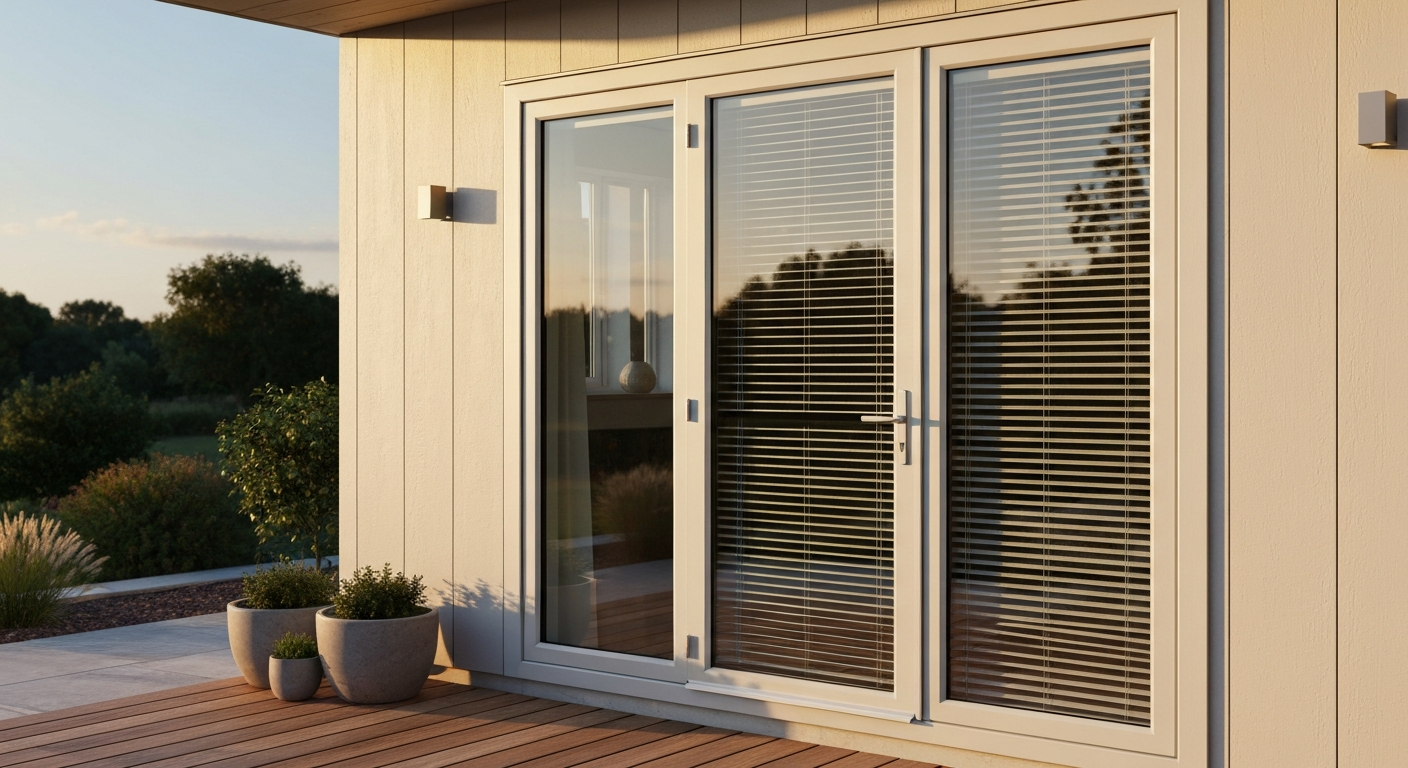
Common upgrades that add to the total: a retractable screen adds $150 to $400 depending on brand and panel size. Blinds-between-glass (integral blinds sealed inside the glass unit) add $200 to $600 to the door price. A keyed lock upgrade is usually $50 to $100. Low-e glass upgrade from standard double-pane to argon-fill adds roughly $100 to $300 per door unit at mid-range brands. Triple-pane can add $300 to $700. These are worth it if you're in a heating-dominated or cooling-dominated climate, because the glass upgrade typically pays back in energy savings within 5 to 10 years.
One thing I always tell people: get at least three installation quotes, because labor pricing varies wildly. I've seen the same door installed for $450 and $1,100 by two different contractors in the same zip code. The cheaper quote isn't always wrong, but ask both what's included (haul-away of the old door, interior trim work, caulking and insulation around the frame).
Maintenance, longevity, and how climate affects performance
A quality vinyl sliding door from a reputable brand should last 20 to 30 years with basic care. The frame itself rarely fails. What degrades first is typically the rollers, the weatherstripping, and the glass seal (which can fail and cause fogging between panes). All three of those are serviceable or replaceable without replacing the whole door.
What maintenance actually looks like
- Clean the track 2 to 4 times per year with a stiff brush and vacuum, then wipe with a damp cloth. Grit in the track is the number one cause of rough sliding and roller wear.
- Lubricate rollers and the track with a silicone-based spray (not WD-40, which attracts dirt) once a year.
- Inspect weatherstripping annually and replace pile seals when they flatten or tear. Replacement pile is inexpensive and available at hardware stores.
- Clean the frame with mild dish soap and water. Avoid abrasive cleaners that scratch the vinyl surface.
- Check and adjust rollers every 2 to 3 years. Most adjustable rollers have a hex-head screw accessible through a hole in the bottom of the panel.
Climate considerations
Cold climates: In northern states and Canada, prioritize U-factor. A door with a U-factor of 0.24 or lower is your target (matching the ENERGY STAR Most Efficient northern zone). Look for reinforced frames to handle the expansion and contraction from freeze-thaw cycles. Foam-filled frame chambers perform better than hollow ones in sustained cold.
Hot and sunny climates: SHGC is your primary concern. A low-e coating that targets SHGC of 0.23 or lower (South-Central and Southern zone targets) will meaningfully reduce solar heat gain. In the desert Southwest, confirm with your dealer that the vinyl meets heat-resistance specs for sustained high temperatures. Some cheaper vinyl profiles can distort in sustained 115°F+ conditions.
Coastal and humid climates: Water penetration resistance is critical. Ask for the AAMA/WDMA/CSA 101 test performance grade, which includes water penetration testing. Higher grades (Performance Grade 40 or 50 versus 15 or 25) indicate better water resistance under pressure. Vinyl won't rust, which gives it an advantage over aluminum in salt-air environments, but the hardware (rollers, screws, lock components) should be stainless steel in coastal settings.
Your shopping checklist and next steps
Here's how to go from confused to purchase-ready in a practical sequence:
- Measure your rough opening (width x height) and confirm whether you need a drop-in replacement or full frame-out. Check for rot or damage around the existing frame before you assume it's drop-in.
- Identify your climate zone using the ENERGY STAR map and write down your U-factor and SHGC targets before you start talking to dealers.
- Set your budget range including installation. If your total budget is $1,500, you're in entry-to-mid range door territory. If it's $2,500 to $3,500, you can move into mid-to-premium with better glass and hardware.
- Request NFRC labels (not just spec sheets) from any door you're seriously considering. Confirm ENERGY STAR certification if energy performance matters to you.
- Ask about the AAMA/WDMA/CSA performance grade for the specific door unit, especially if you're in a windy or rainy region.
- Get three installation quotes. Ask each contractor: Does the quote include haul-away of the old door? Interior trim and casing work? Caulking and insulation around the new frame?
- Decide on upgrades before you finalize the door order: argon-fill, low-e coating, triple-pane, integral blinds, retractable screen, multi-point lock. Some of these are harder to add after the fact.
- Check the warranty terms: what's covered, for how long, and whether it transfers to a new owner if you sell the home.
Questions to ask your installer or dealer
- What is the NFRC U-factor and SHGC for this specific door unit and glass package?
- Is this door ENERGY STAR certified, and for which climate zones?
- What AAMA/WDMA/CSA performance grade has this door been tested to?
- Are the rollers stainless-steel or brass ball-bearing, and are they user-adjustable?
- Does this door include multi-point locking and an anti-lift feature as standard, or are those upgrades?
- What type of weatherstripping is used, and is it field-replaceable?
- What does the warranty cover, and does it transfer if I sell the home?
- Is this a drop-in replacement or will we need to modify the rough opening?
If you're still weighing whether vinyl is the right material for your project, the comparisons between vinyl and aluminum or vinyl and fiberglass go deeper than this article covers, and those trade-offs are worth working through before you commit. But if you've already landed on vinyl and you're ready to buy, the specs above will tell you the difference between a door that performs for 25 years and one you'll be replacing in 10.
FAQ
Do I need ENERGY STAR and NFRC certification for the best vinyl patio doors if I’m only worried about insulation?
Yes, because energy performance depends on independently tested metrics. NFRC certification ties to U-factor (insulation) and SHGC (solar gain), while ENERGY STAR uses those NFRC numbers to qualify products, so you can compare doors from different brands on the same verified basis.
What SHGC target should I use if I’m in a mixed climate (hot summers, cold winters)?
Use your season that dominates your bills as the tie-breaker. If heating costs are the main concern, prioritize U-factor, but still avoid SHGC that is excessively high. If cooling dominates, prioritize SHGC. If you qualify, look for low-e glass options that hit both reasonable U-factor and a moderate SHGC rather than chasing only the best single metric.
Is triple-pane worth it for vinyl patio doors or should I stick to double-pane?
Triple-pane is most worthwhile where heating losses drive the decision (cold climates) or where you need extra noise reduction. It adds weight and cost, so for mild climates double-pane with argon plus low-e usually delivers the best value, as long as the overall door air leakage and sealing meet your standards.
How do I verify a door’s air leakage rating when the dealer only shows glass specs?
Ask for the NFRC label details for air leakage specifically, and request the tested air leakage figure rather than an estimate. It’s possible to have excellent U-factor and still get drafts if the weatherstripping and meeting-rail seals are weak.
What’s a realistic minimum air leakage rate to aim for?
Aim for 0.30 CFM per square foot or lower. If you can’t get a tested number, treat the product as a red flag and ask whether it has been NFRC-certified with measured air leakage.
Do ball-bearing rollers that are adjustable actually reduce long-term maintenance?
They help because doors settle after installation and as temperature cycles expand and contract frames. Adjustable, ball-bearing rollers let you re-level and restore smooth travel without replacing hardware, reducing the chance of the door dragging or rattling later.
How can I tell if a vinyl sliding patio door will be secure beyond the main latch?
Confirm the door has more than a single central latch engagement point, plus anti-lift hardware that prevents lifting the panel out of the track. Also ask about a reinforced strike plate and whether a keyed lock or secondary locking option is available for your setup.
What should I check if my new door doesn’t slide smoothly right after installation?
First confirm roller height and door alignment, since improper leveling often causes binding. Ask the installer to adjust the rollers and verify the track is unobstructed. Persistent grit can also come from missing protective caps or debris in the recessed track after construction.
How do I make sure I’m ordering the right size, given rough opening and door unit differences?
Measure the rough opening width and height, then order the door unit size that matches that opening, accounting for the typical 1 to 1.5 inch gap for shims and framing. If you match the existing rough opening when replacing, you usually avoid expensive framing work.
Is it worth changing the rough opening size to get a better-looking patio door?
Usually no for cost control. Altering the rough opening often means additional framing and finish work, which can add $500 to $1,500 or more. If you want a different look, consider choosing within the manufacturer’s standard sizes or selecting a different configuration that maximizes sightlines without changing the opening.
What’s the difference between a drop-in replacement and a full frame-out, and how do I decide?
Drop-in means the existing frame stays and only the door unit is replaced. Full frame-out is needed if there is rot, damage, failed seals, or a non-standard existing frame. If you’re unsure, have the installer inspect the surrounding sill and subframe for water intrusion before committing.
Should I prioritize frame wall thickness when choosing the best vinyl patio doors?
Yes, especially if you’re buying mid-range or larger sizes. A minimum around 0.090-inch wall thickness on main frame extrusions is a practical benchmark, and additional reinforcement helps reduce flex and keeps the door operating smoothly as the panel expands and contracts.
What reinforcement matters most for wider door widths?
For larger openings (commonly 8 feet and wider), ask whether the meeting rail or sill has steel or fiberglass reinforcement and whether the system is rated for that size. Reinforcement affects rigidity and reduces sagging that can lead to poor weather sealing.
If I live near the coast, should I only consider stainless steel hardware?
Prioritize stainless steel or other corrosion-resistant hardware for rollers, screws, and lock components. Vinyl resists rust, but the metal hardware is often where coastal deterioration starts, affecting smooth operation and long-term security.
How long should I expect parts like rollers and weatherstripping to last on vinyl patio doors?
Frames often last decades, but rollers and weatherstripping typically degrade earlier due to wear and compression set. Glass seals can also fail, sometimes showing fogging between panes, and these issues are usually repairable or replaceable without replacing the whole door unit.
What upgrades give the best real-world benefit, retractable screens or blinds-between-the-glass?
Retractable screens are most valuable for usability and visibility with airflow. Blinds-between-the-glass tend to offer the cleaner look and better durability with less cleaning, but they add cost and can reduce options for later adjustments. Choose based on whether you care more about convenience (screen handling) or long-term privacy and maintenance.
How do I reduce the risk of paying for the wrong installation quote?
Ask each contractor what’s included, haul-away, interior trim work, caulking, insulation around the frame, and whether they will check and adjust roller operation. The scope differences often explain wide price gaps, more than the door price itself.