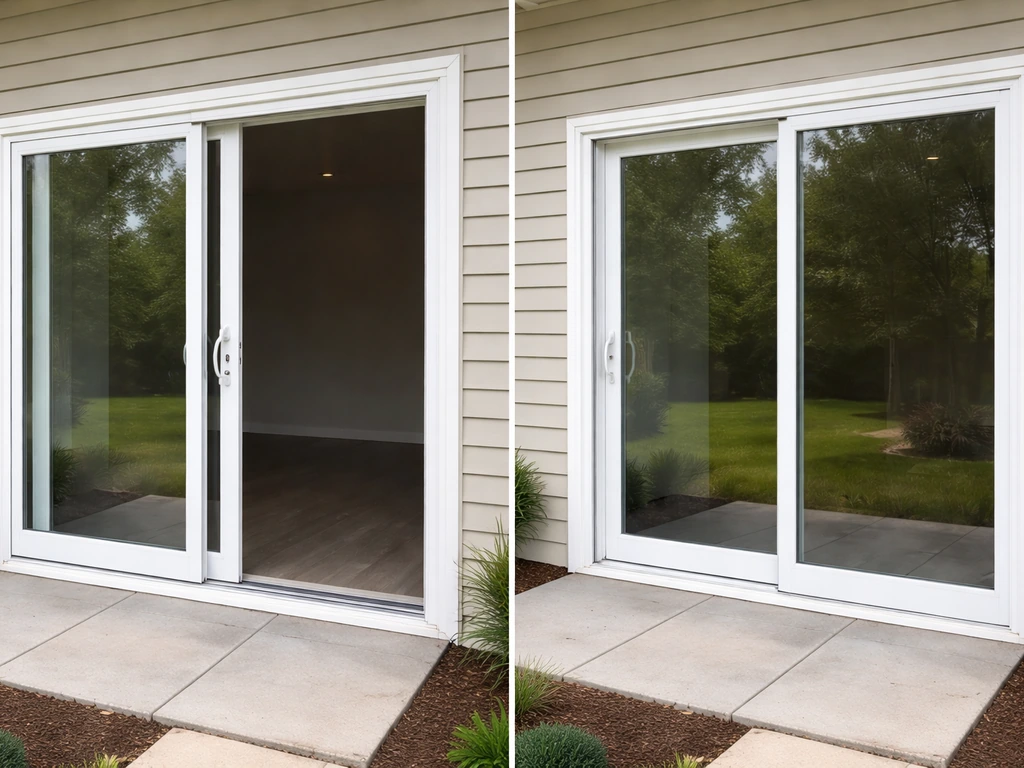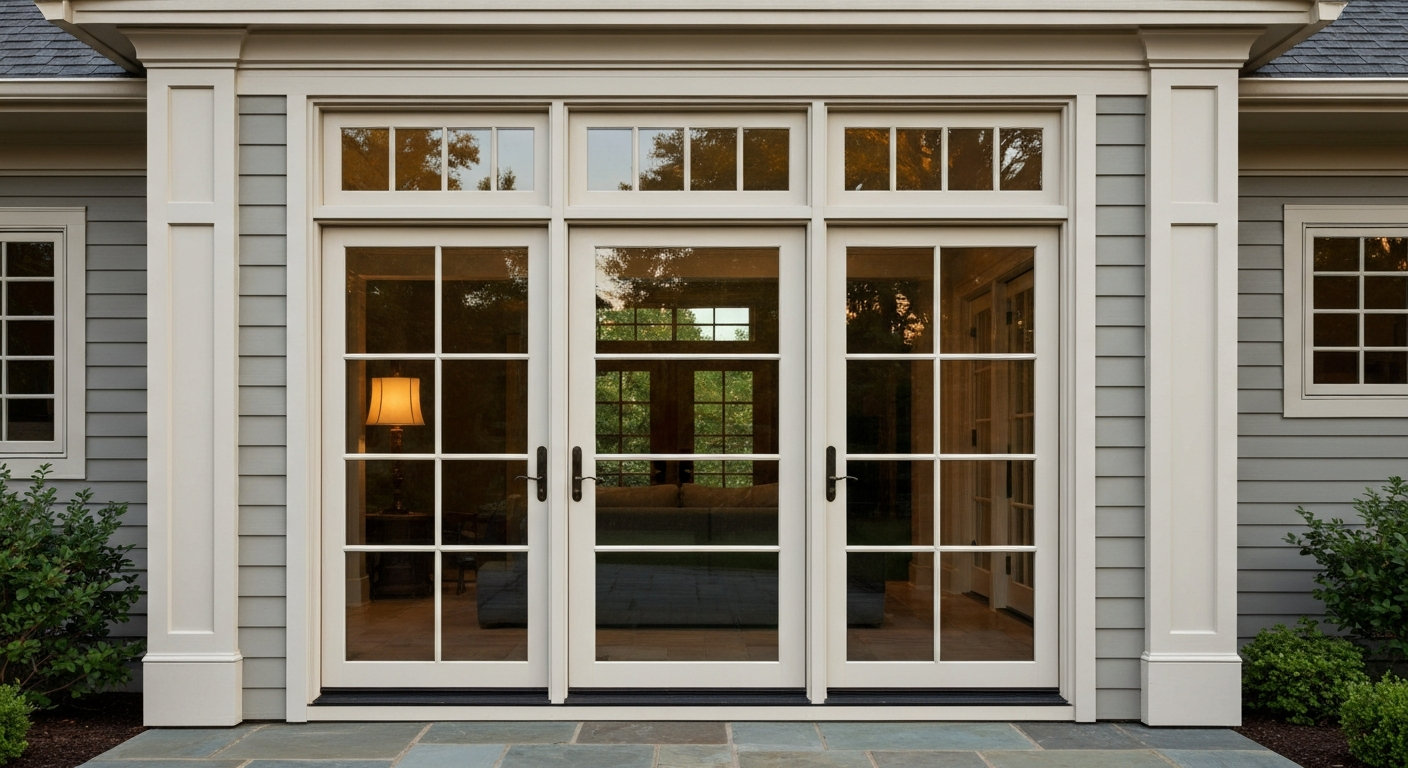
For most homes in moderate climates, vinyl is the smarter buy: lower upfront cost, solid energy performance, and almost no maintenance. But if you live somewhere with extreme temperature swings, high humidity, or you just want a door that will still look sharp in 30 years without fading or warping, fiberglass is worth the extra money. If you are considering aluminum frames, it helps to compare the best aluminum sliding patio doors for your climate and desired durability. The real decision comes down to your climate, your budget, and how long you plan to stay in the house.
Vinyl vs Fiberglass Patio Doors: How to Choose

Owen Delaney
17 Jun 2026
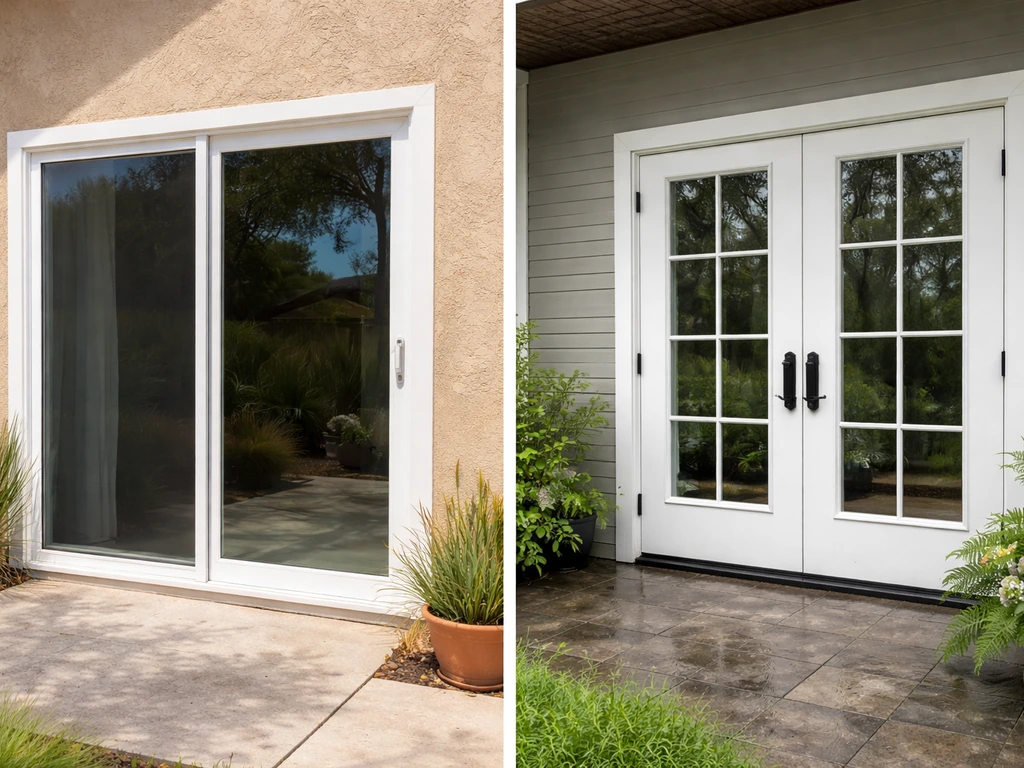
Quick recommendation: vinyl or fiberglass for your climate and needs
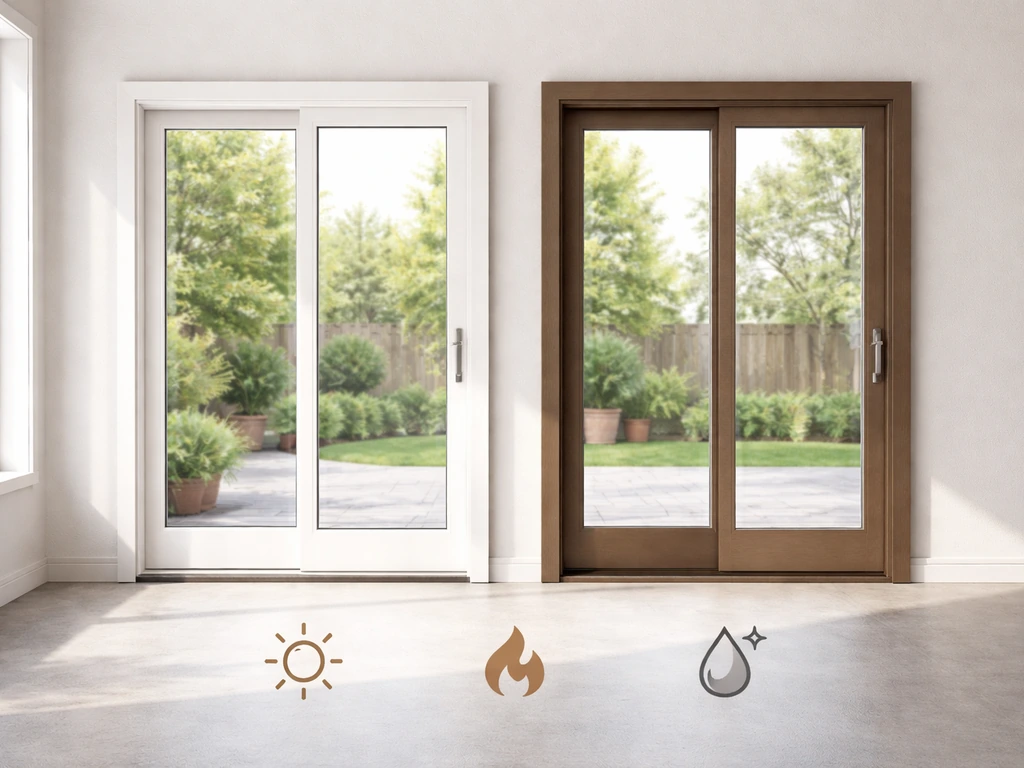
Here's the honest shortcut. Vinyl patio doors are the right call for most homeowners doing a standard replacement in a temperate or mixed climate. They're energy efficient, widely available, and significantly cheaper than fiberglass. A Pella 250 Series vinyl sliding patio door with a dual-pane SunDefense Low-E glass package hits a U-factor of 0.27 and an SHGC of 0.21, which meets ENERGY STAR requirements across most U.S. climate zones. If you upgrade to triple-pane, you're looking at a U-factor of 0.18 and SHGC of 0.17, which gets you close to the ENERGY STAR Most Efficient 2025 threshold of U-factor 0.20 for Northern climates.
Fiberglass is the better pick in four specific situations: you're in a harsh northern climate with extreme cold and heat cycling, you live near the coast with salt air and high humidity, you want a door with the visual depth of wood without the maintenance, or you're building a forever home and want the most durable frame available. Pella's Impervia fiberglass line uses a proprietary material called Duracast, which the company backs with a limited lifetime warranty against cracking, splitting, corroding, and warping for as long as you own the home.
| Situation | Best Choice |
|---|---|
| Tight budget, temperate climate | Vinyl |
| Extreme cold/heat cycling (northern climates) | Fiberglass |
| Coastal or high-humidity area | Fiberglass |
| Wants wood look without the upkeep | Fiberglass |
| Energy efficiency is top priority | Vinyl (triple-pane) or Fiberglass |
| Long-term / forever home | Fiberglass |
| Rental property or shorter time horizon | Vinyl |
Vinyl vs fiberglass: performance differences homeowners feel
These two materials can look similar in a showroom, but they behave very differently over time and in extreme conditions. Here's where the real-world gaps show up.
Insulation and energy efficiency
Both materials are good insulators, but they get there differently. Vinyl frames are hollow and often filled with foam, which gives them a low thermal conductivity. Fiberglass has naturally low conductivity and expands and contracts at almost the same rate as glass, which means the seal between the frame and the glass unit stays tighter over decades of temperature cycling. In practice, a well-spec'd vinyl door and a fiberglass door at the same glass package will have similar U-factor numbers, but the fiberglass frame tends to hold that performance longer because it doesn't warp or flex with temperature changes. For the coldest climates, that matters.
Durability and warping risk
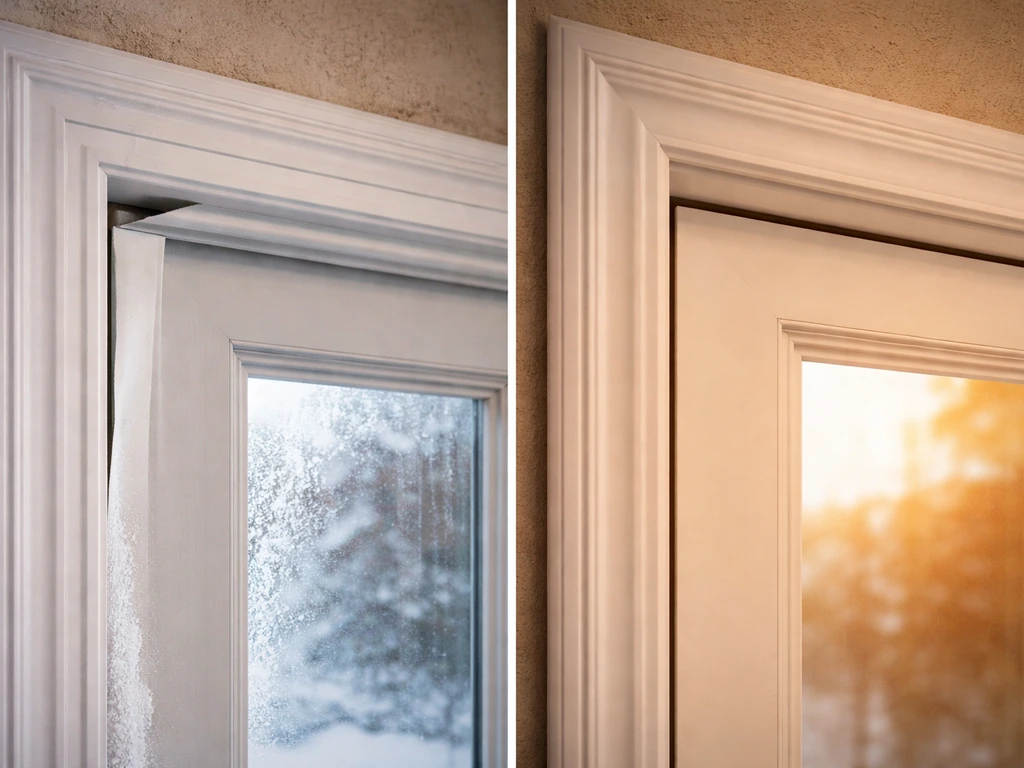
Vinyl expands and contracts significantly with temperature. In most climates that's a non-issue, but in places with brutal winters and hot summers, the repeated thermal cycling can cause lower-quality vinyl frames to warp or bow over time, which makes the door harder to operate and can let air and water infiltrate. Fiberglass barely moves with temperature changes, which is a measurable advantage.
If you’re really torn between vinyl and vinyl alternatives, you’ll also want to check vinyl vs aluminum patio doors for how frame material affects insulation, warping risk, and long-term maintenance. Pella claims their Duracast fiberglass material outperforms wood, vinyl, aluminum, and certain composites in [ASTM D638 tensile and ASTM D790 flexural strength testing](https://store. astm. org/d0790-17.
html). That's manufacturer testing, so take it with some skepticism, but the underlying material science is real: fiberglass is genuinely stiffer and harder to deform than vinyl at the frame level.
Moisture and fade resistance
Both vinyl and fiberglass resist moisture well, and neither will rot the way wood can. Vinyl can fade or chalk over many years, especially in high-UV environments. Fiberglass holds color better and can be painted if you ever want to change the look. If your patio door faces west or south with a lot of direct sun exposure, that color retention difference will matter after 15 or 20 years.
Hardware, locks, and security
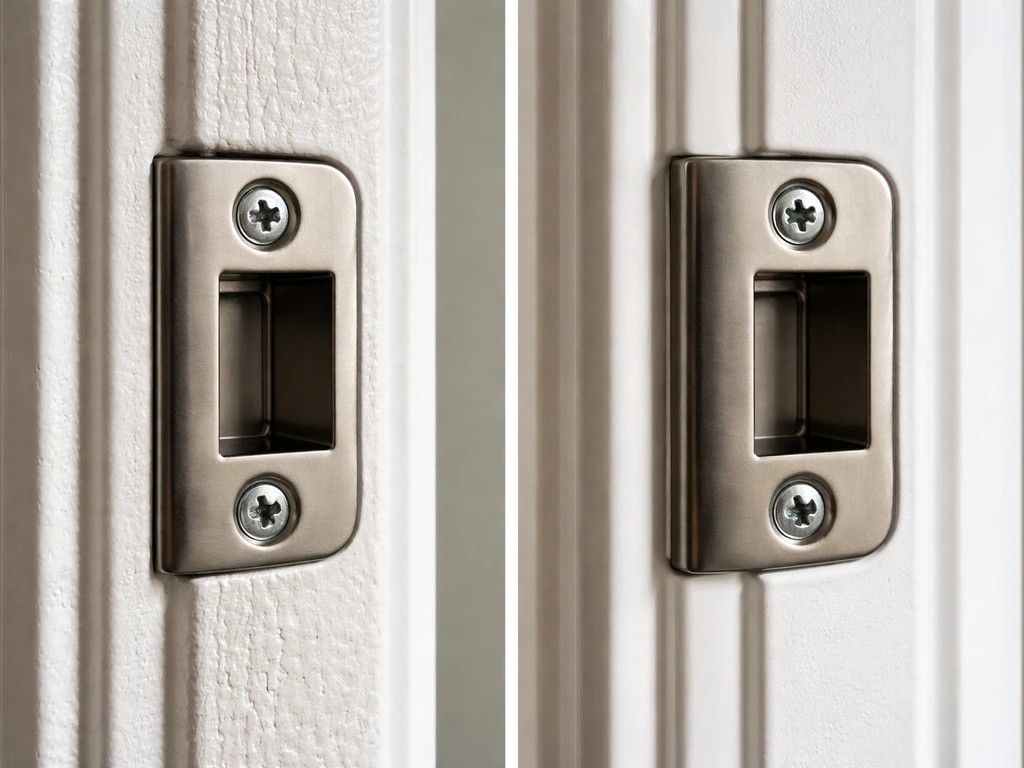
The frame material affects how well hardware is anchored. Fiberglass is denser and stiffer, which means lock mechanisms and handle sets tend to have a more solid feel and are harder to force open at the frame level. Vinyl is softer, and on cheaper doors, the area around lock hardware can be a weak point. This doesn't mean vinyl doors are insecure, but if security is a priority, spend more on a reinforced vinyl door with multipoint locking or step up to fiberglass. Both Pella's vinyl and fiberglass lines also offer impact-resistant laminated glazing as a glass upgrade, which addresses the glass portion of the security equation.
Day-to-day maintenance
Vinyl and fiberglass are both low maintenance compared to wood. Vinyl cleans up with soap and water and needs no painting. Fiberglass is the same, with the added upside that it can be painted if you want to refresh the look or match a new exterior color. Neither material needs sealing or staining. The track and roller hardware on sliding versions will need occasional cleaning and lubrication regardless of frame material.
Composite vs vinyl: what "composite" actually means on a patio door label
This is where homeowners get tripped up. "Composite" is not a single material. It's a broad category that includes several different things, and some manufacturers use it as a marketing term that makes mid-grade products sound more premium than they are.
The most well-known composite in the door and window industry is Andersen's Fibrex material, which is a blend of reclaimed wood fiber and thermoplastic polymer fused together. Andersen claims it's twice as strong as vinyl and resists rot and fungal growth due to the polymer content. That's a meaningful composite: it has real structural advantages and behaves differently from a pure vinyl frame. But other products labeled "composite" might be vinyl with a wood grain texture applied, or a foamed PVC, or a fiberglass-reinforced vinyl. You need to ask specifically what the composite is made of before you put any stock in the label.
When you're comparing a composite sliding patio door to a vinyl one, the key questions are: What materials make up the composite? How does it perform in NFRC-certified U-factor and SHGC testing? What does the warranty cover and for how long? A true wood-fiber composite like Fibrex sits in a middle tier between standard vinyl and fiberglass, both in performance and price. Pure fiberglass (like Pella Impervia's Duracast) is a different category entirely: it's not a blended material and offers the highest dimensional stability of the bunch. Red flag: if a dealer calls a door "composite" but can't tell you what it's made of, walk away.
Vinyl vs wood patio doors: durability, maintenance, and the look trade-off
Wood patio doors are beautiful. If you have a craftsman-style home or a space where aesthetics really matter, a wood door with real stain and grain is hard to beat visually. But wood demands consistent upkeep, and in patio door applications, the combination of glass weight, sun exposure, and exterior moisture makes that maintenance burden higher than on a standard entry door.
Wood patio doors need to be refinished (stained or painted) every few years depending on exposure. A wood sliding door track needs to stay sealed to prevent swelling that binds the panel. Wood frames are vulnerable to rot at the bottom sill, which is a common failure point in wet climates. Over a 20-year ownership window, the maintenance cost and time on a wood door adds up in ways that vinyl and fiberglass simply don't.
Vinyl beats wood on every practical maintenance metric. It won't rot, warp (in most climates), or need painting. The trade-off is that vinyl can look a bit flat compared to natural wood grain, and it comes in a limited palette of factory colors. If you want the look of wood without the work, a fiberglass door is the better bridge: it can be stained or painted to mimic wood grain and won't rot or swell.
Wood vs vinyl sliding patio doors specifically
In a sliding configuration, the maintenance gap gets even wider. A wood sliding door panel is heavier (which stresses the rollers faster) and the bottom track is a prime spot for water infiltration and rot. Vinyl and fiberglass sliding doors have sealed hollow or foam-filled frames that don't absorb moisture at the track. If you're replacing a sliding patio door specifically, vinyl is almost always the more practical choice over wood unless aesthetics are the primary driver and budget is not a constraint. Wood doors at the sliding patio door size also cost significantly more than vinyl, often starting above $3,000 just for the door unit before installation.
Cost, lifetime value, and warranty: what to actually budget
Here's the practical cost picture for 2026. Installed costs for standard 6-foot sliding patio doors run roughly like this: vinyl doors typically fall in the $1,500 to $3,500 installed range depending on glass package and brand. Fiberglass doors run higher, with a 6-foot fiberglass sliding door typically landing between $1,700 and $3,400 just for the door unit, and total installed costs pushing into the $2,500 to $5,000+ range depending on market and complexity. Reddit homeowners report real-world Pella 250 Series vinyl installs in the $4,000 range with professional installation in higher-cost markets, which tracks with the upper end of that range.
Glass replacement, if you only need to swap out a failed IGU (insulating glass unit) rather than the whole door, is considerably cheaper: typically $150 to $1,000 including labor, depending on the pane count and size. That's worth knowing because a good vinyl or fiberglass frame can outlast its original glass, and replacing just the glass unit is a much more affordable fix than full door replacement.
On warranties: Pella covers their vinyl windows and patio doors with a Limited Lifetime Warranty for the original purchaser in an owner-occupied single-family home, subject to conditions and exclusions. Their fiberglass Impervia line includes a separate Limited Lifetime Warranty specifically on the Duracast material, covering cracking, splitting, corroding, and warping for as long as you own the home. Both warranties are nontransferable, which matters if you're buying a house or plan to sell. When you're getting quotes from other brands like JELD-WEN, check whether their warranty is similarly structured or has a time limit, and ask specifically what's covered versus excluded.
| Material | Typical Installed Cost (6 ft slider) | Maintenance | Warranty (typical) | Best For |
|---|---|---|---|---|
| Vinyl | $1,500–$4,000 | Very low | Limited lifetime (original owner) | Most climates, most budgets |
| Fiberglass | $2,500–$5,000+ | Very low | Limited lifetime (original owner) | Harsh climates, forever homes |
| Composite (e.g., Fibrex) | $2,000–$4,500 | Very low | Varies by brand | Mid-tier performance upgrade |
| Wood | $3,000–$6,000+ | High (refinish every 2–5 years) | Varies, often limited | Aesthetic priority, controlled exposure |
How to compare door specs and quotes the right way
The single biggest mistake homeowners make is comparing quotes without comparing specs. A $2,200 quote and a $3,800 quote might be for very different doors, and the cheaper one might cost you more in energy and repairs over 10 years. Here's what to measure and ask before you sign anything.
What to measure
- Rough opening width and height (measure in three places and use the smallest dimension)
- Door unit size vs. rough opening to confirm clearances for installation
- Existing sill height and whether it's level (unlevel sills add installation cost)
- Panel swing clearance for French or bifold configurations
What to ask every contractor and dealer
- What is the NFRC-certified U-factor and SHGC for the specific door unit and glass package quoted? (Not the glass alone, the whole unit per NFRC 100/200/500.)
- Is the glass package dual-pane or triple-pane, and does it include Low-E coating and argon fill?
- What is the frame material exactly? If they say "composite," ask what it's made of.
- What does the warranty cover and for how long? Is it transferable to a new owner?
- Who is doing the installation, and are they factory-certified or authorized for this brand?
- Is the price inclusive of removal and disposal of the old door, and does it include trim and caulking?
- Are there any code or permit requirements in your area that affect installation scope?
A few red flags to watch for: any quote that doesn't specify the exact model number is hard to compare apples to apples. Any dealer who describes a vinyl door as "composite" without explaining what the composite consists of is using the term loosely. And any warranty that requires you to use that dealer for all future service calls should prompt careful reading of the fine print.
If you're comparing vinyl options from different brands, the specs that matter most are the blank" rel="noopener noreferrer">total-unit U-factor (not just the glass), the frame construction (foam-filled vs. hollow), and the hardware quality. The same glass package in a cheaper frame can underperform a slightly lower-spec glass package in a better frame because air infiltration at the corners and perimeter matters as much as center-of-glass performance. This is also relevant when considering fiberglass vs. If you’re comparing fiberglass vs. steel patio doors, pay close attention to the frame thermal break and how it impacts insulation performance. steel patio doors, where the thermal break design in the frame is the key differentiator.
Upgrades and care: glass, weatherstripping, screens, security, and maintenance
Once you've picked your material and installed the door, there are meaningful upgrades and maintenance habits that will determine whether you get 15 or 30 years out of it.
Glass upgrades worth paying for
If you're in a northern climate and the difference between dual-pane and triple-pane is a few hundred dollars, pay it. Going from a U-factor of 0.27 to 0.18 (as the Pella 250 data shows between those two packages) is a real insulation jump that you'll feel every winter. For hurricane zones or high-security situations, impact-resistant laminated glazing is available on both vinyl and fiberglass lines including Pella's Impervia. Low-E coatings with argon fill are essentially standard now and should be included in any serious quote, not treated as an upgrade.
Weatherstripping: replace it before it fails
Weatherstripping is the most commonly neglected part of patio door maintenance. On a sliding door, the pile weatherstripping along the top and sides compresses over time, and the sill seal at the bottom takes the most abuse. Inspect it every year and replace it at the first sign of gaps or compression. Replacement weatherstripping for most standard patio door brands costs under $50 and takes an afternoon. If you wait until you feel a draft, you've already been losing energy for months.
Screens and covering
If your door came with a standard fiberglass mesh screen, it's functional but not the best option in high-pet or high-traffic situations. A pet-resistant or heavy-duty screen mesh upgrade typically costs $30 to $80 for the screen material and can be installed in an existing screen frame. Retractable screen systems are available for both sliding and French patio doors and give you the option to disappear the screen entirely when it's not needed. For sun control, exterior solar shades or interior cellular shades cut both glare and heat gain if your door faces south or west, which also reduces strain on your low-E glass.
Security upgrades that actually help
Standard sliding patio door locks are notoriously weak. Add a secondary security bar in the track (a cut-down broom handle works, but there are purpose-made adjustable bars for about $20 to $40) to prevent the door from being forced open even if the latch is compromised. A pinlock through the top channel accomplishes the same for lifting attacks. For French-style patio doors, a multipoint locking system that secures the top, middle, and bottom of the door simultaneously is the most effective hardware upgrade and is worth asking about at purchase time rather than retrofitting later.
Routine cleaning and track maintenance
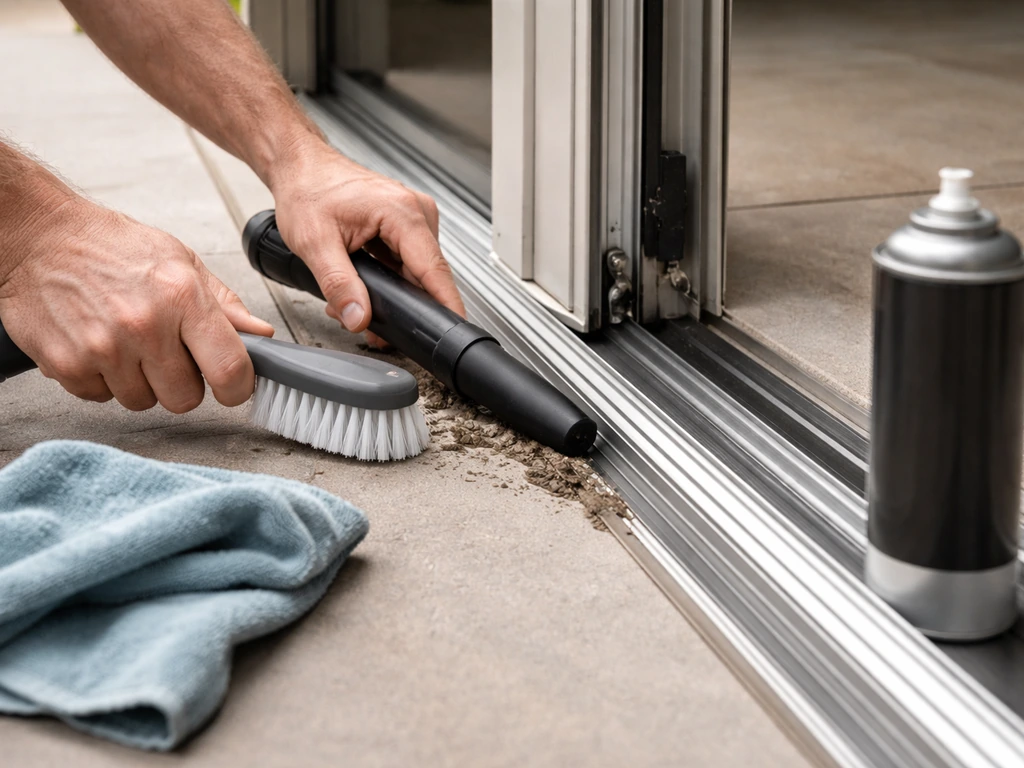
Clean the track of a sliding door every few months with a stiff brush and vacuum, then wipe it down with a damp cloth. Lubricate the rollers and track with a silicone-based spray, not WD-40, which attracts dirt and gums up over time. For vinyl frames, a mild soap and water solution is all you need to clean the frame exterior. Avoid abrasive cleaners that scratch the surface. For fiberglass, the same mild soap approach works, and if you've painted the frame, touch up any chips before moisture gets under the paint film.
Bottom line: vinyl is the practical, cost-effective choice for most homeowners replacing a patio door today. If you want the best vinyl patio doors, focus on an efficient glass package, solid frame construction, and good installation quality. Fiberglass earns its price premium in harsh climates, coastal environments, and long-term ownership situations. Whichever material you choose, the glass package, installation quality, and ongoing maintenance habits will determine how much of that door's potential you actually get.
Get three quotes with matching specs, check the NFRC numbers, read the warranty exclusions, and don't let a dealer talk you into "composite" without explaining exactly what that means. NFRC guidance explains that the U-factor and SHGC ratings used in codes refer to NFRC technical standards such as ANSI/NFRC 100 and ANSI/NFRC 200 by accredited independent laboratories check the NFRC numbers.
FAQ
Which material is more likely to keep a sliding patio door from getting hard to open over time?
If your priority is keeping the door operable for decades, pay extra attention to frame movement and seal integrity: fiberglass frames typically expand and contract less than vinyl, which helps the perimeter seals maintain compression after years of freeze-thaw. Vinyl can still be a good choice, but only when the door quality is solid, the installation is tight, and the weatherstripping and sill seal are maintained.
What specs should I compare to make a true vinyl vs fiberglass patio door price and performance comparison?
The most effective way to compare vinyl vs fiberglass is to match the whole thermal package, not just the glass. Ask each quote for the NFRC total-unit U-factor and SHGC for the exact model and configuration, and confirm whether the door uses a foam-filled vinyl construction or a hollow frame. Two doors with the same advertised glass can perform differently if the frame design and air leakage paths differ.
I live near the ocean, does fiberglass automatically win over vinyl?
If you have coastal salt air, fiberglass usually has the edge for color stability and frame dimensional stability, but the real make-or-break detail is the hardware and installation sealing. Choose stainless or properly coated fasteners, ensure the installer uses compatible sealants at the sill and jambs, and plan to rinse the track and sill area periodically to prevent salt buildup.
Will vinyl patio doors look worse than fiberglass after 10 to 20 years of sun?
Not always. Vinyl can be factory-colored and fade or chalk in intense sun, but many newer vinyl doors use improved pigment systems, and the damage is largely cosmetic. If you want the safest long-term appearance with minimal upkeep, fiberglass is typically better because it holds color better and can be repainted if you ever want a change after many years.
Can I replace only the glass (IGU) if my vinyl or fiberglass patio door fails, or will I need a full door replacement?
Yes, but it is not the same as replacing just the glass. If your IGU fails, you may be able to replace the insulating glass unit without replacing the frame, but some doors have limited parts availability, and warranty terms can differ. When requesting quotes, ask specifically whether IGU-only service is offered for your exact model and whether labor is included.
What warranty details should I look for beyond the headline “limited lifetime” claim?
A good warranty does not guarantee good long-term performance, and some warranties place conditions on installation and exclusions. Before buying, request the warranty document and check whether it is nontransferable, what counts as covered “warping” or “cracking,” and whether service requires using the installing dealer. Also confirm if glass units are covered under the same umbrella or a separate warranty.
How do I make sure the installer is not driving the cost difference more than the door material is?
If your quotes differ because of installation scope, the material choice may be less important than what is being done around the opening. Ask whether the company is doing a full frame replacement vs insert replacement, whether they are replacing damaged trim, and what they use for flashing and perimeter sealing. A poorly flashed installation can cause drafts and leaks regardless of whether the door is vinyl or fiberglass.
What should I ask about for security if I choose vinyl or fiberglass sliding patio doors?
For security upgrades, start with the lock style and reinforcement, not just the material. Ask whether the door has multi-point locking, whether the frame has reinforcement around the lock, and what types of laminated glass are available. As an edge case, sliding doors are vulnerable to rail lifting, so confirm the track and top-channel features support an effective pinlock or anti-lift hardware.
How often should I inspect and replace patio door weatherstripping, and what signs mean it is already too late?
Treat weatherstripping as a seasonal consumable. Look for compressed pile at the top and sides, gaps visible when the door is closed, and bottom sill seal degradation. If you delay until you feel drafts, you can end up fighting higher energy bills and moisture exposure that stresses the seal and finishes.
If I upgrade my screen, what details matter for retractable vs heavy-duty pet-resistant options?
A retractable or heavy-duty screen can help in high-pet or high-traffic homes, but the frame and mesh type matter. Ask whether the upgrade keeps proper tension, whether it is rated for pet claws, and whether it can be serviced without replacing the whole unit. Also verify that the screen system does not interfere with the door’s rollers or track cleaning access.
In very cold climates, is triple-pane worth it versus relying on fiberglass or vinyl alone?
For extreme cold or heat cycling, choose the glass package first, then the frame. If the difference between dual-pane and triple-pane is small, triple-pane often reduces conductive and radiant heat transfer meaningfully in the coldest zones. However, make sure the U-factor is listed as total-unit, and confirm the door’s low-E and gas fill (for example argon) are included as specified in the quote.