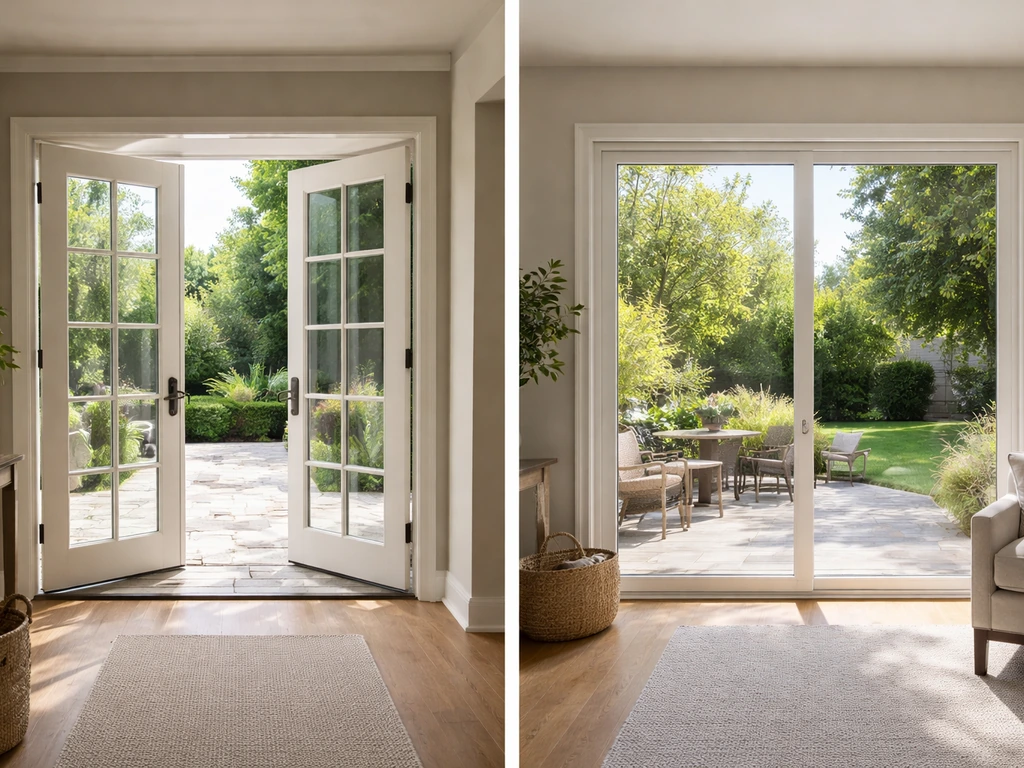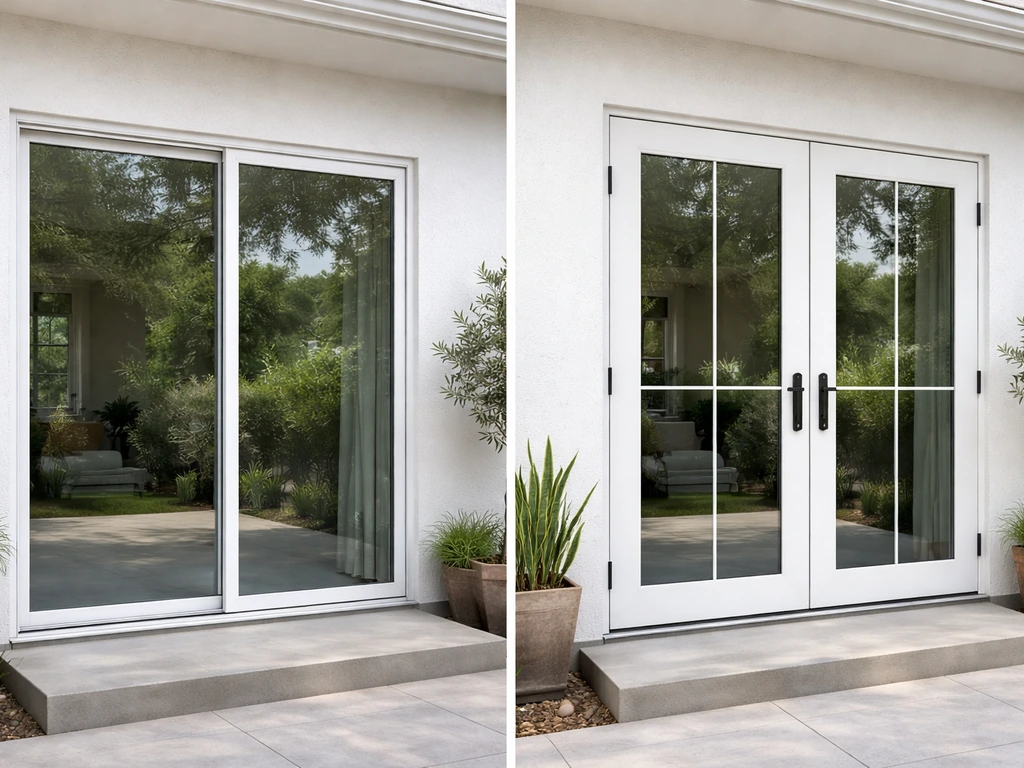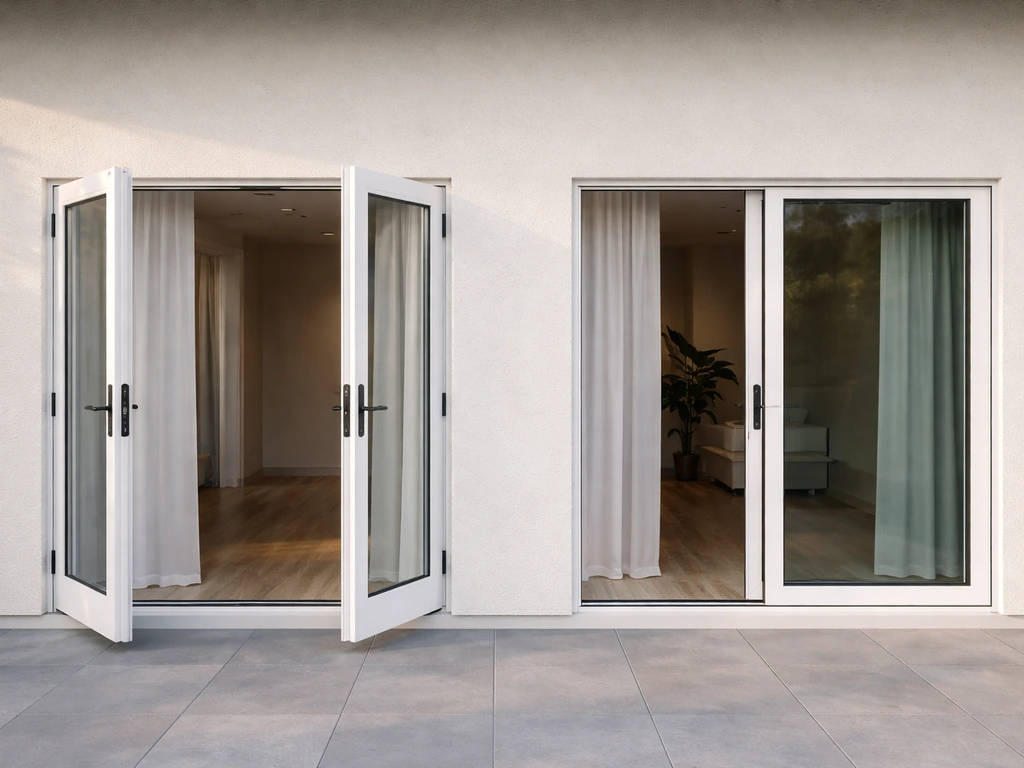
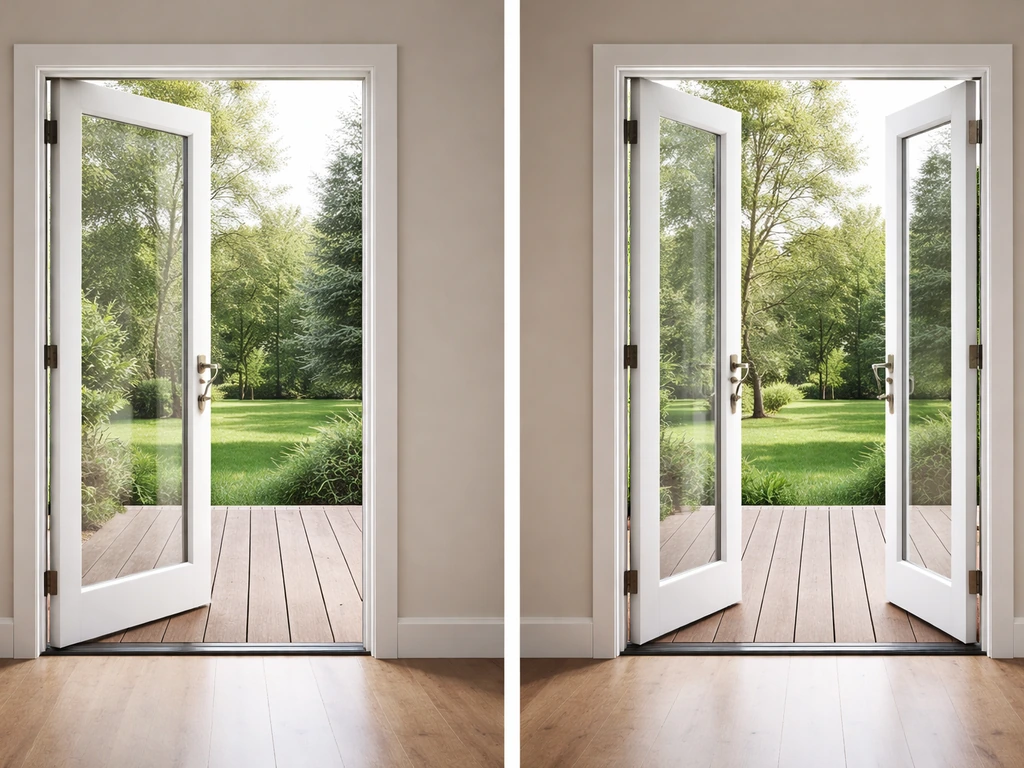
A hinged patio door and a French door are, in most cases, the same thing with different labels. Pella even says it outright: hinged patio doors are commonly referred to as French patio doors. Where it gets genuinely confusing is when people use 'center-hinged patio door' to describe a specific one-active-panel setup versus a classic French door where both panels swing open. That distinction is real, and it matters for clearance, everyday use, and cost. If you are trying to choose between the two right now, here is everything you need to make the call.
Hinged Patio Door vs French Door: Key Differences and Choice Guide
Owen Delaney
24 Jun 2026
Are they actually the same door?
Mostly yes, but with one meaningful difference in how they operate. Manufacturers like Pella and Andersen use 'French patio door' and 'hinged patio door' interchangeably across their product lines. Both styles involve two door panels set in a frame with a center post (called the astragal) between them, and both hinge on the outer jambs rather than sliding on a track. So they look nearly identical from the outside.
The real split comes down to which panels actually open. A center-hinged patio door, as Angi describes it, has one active panel that swings open while the other stays fixed (the stationary or passive panel). A full French door setup has both panels operable, so you can swing them both wide open when you need the maximum opening.
A key difference between French door and patio door is whether one panel or both panels are designed to swing open both panels operable. Andersen's Frenchwood documentation actually labels this clearly with three panel roles: active, passive, and stationary. Not every door gets all three roles, but knowing the difference tells you how much of that opening you can actually use day to day.
One more terminology trap worth flagging: some manufacturers call certain four-panel sliding doors 'French patio doors' too, because of their divided-light glass aesthetic. If you are also considering sliding options, the tradeoffs for clearance and security can differ a lot from hinged patio doors sliding patio doors. That is a completely different product. If you are shopping and someone hands you a brochure with that label, confirm whether it hinges or slides before you go any further.
How each one opens and why hinge placement changes everything
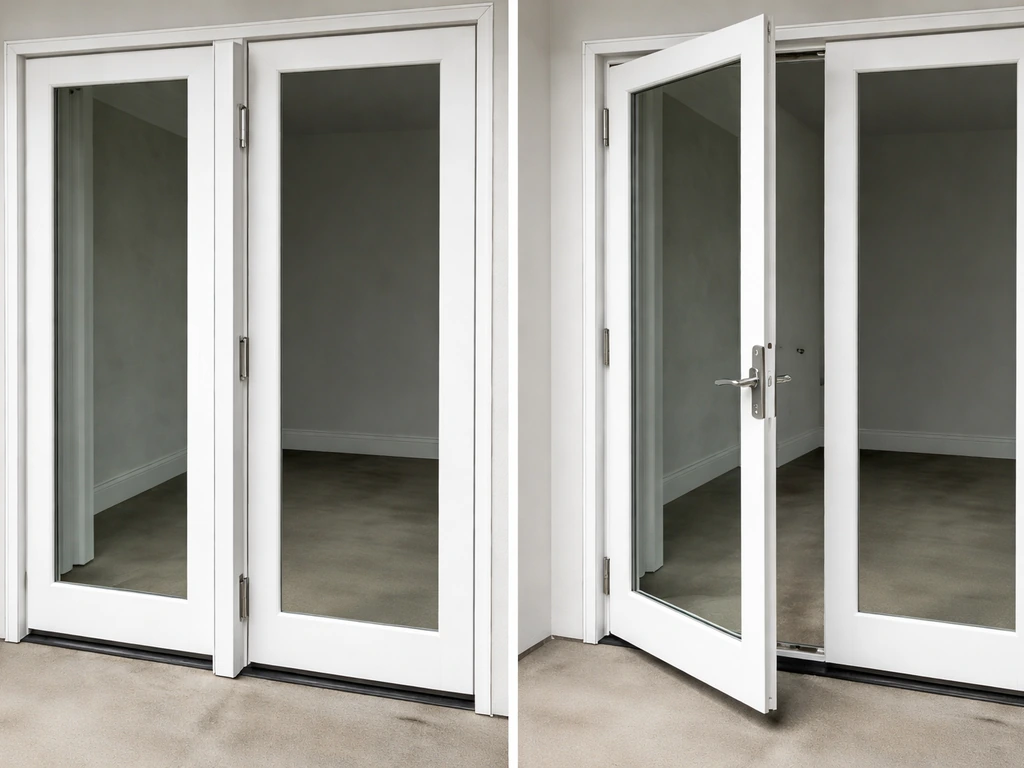
On a center-hinged patio door, the active panel is hinged on the center mull post or astragal, and swings outward or inward from that centerline. You get roughly half the rough opening as usable clearance on any given use. The inactive panel stays bolted in place via a passive lock mechanism with bolts that engage at the top, middle, and bottom of the frame. For day-to-day coming and going, this is actually fine for most people. You open one panel like any exterior door, and the frame stays stable and tight.
A full French door configuration has both panels hinged on the outer jambs, so each panel swings independently from its own side. When you want the full opening, you can prop or hold both panels open. This is where hinge placement matters physically: each door swings in a full arc equal to its own width, which is usually around 30 to 36 inches per panel. That is 30 to 36 inches of clearance that must be free of furniture, walls, or other obstructions on whichever side the door swings toward.
Inswing vs. outswing affects this just as much as the panel count. An inswing door sweeps interior floor space when it opens, so rugs, furniture legs, or anything sitting close gets hit. An outswing door clears interior space but requires the exterior side to be obstacle-free, which matters if you have a step, a railing, or patio furniture right outside. Neither is wrong, but you have to think through the specific geometry of your opening before you order.
Which one actually fits your patio and traffic flow
This is where the 'are they the same?' question stops mattering and practical layout takes over. Think about how you actually use that door every day, who uses it, and what is on both sides of it.
| Situation | Better Choice | Why |
|---|---|---|
| Narrow opening, under 5 feet wide | Center-hinged patio door (single active panel) | One panel gives enough clearance; two-panel swing in a tight space is awkward |
| Wide opening, 6 feet or more | Full French door (both panels operable) | Lets you maximize the opening for furniture, entertaining, or large items |
| High daily foot traffic (kids, pets) | Center-hinged (one active panel) | Easier to open quickly with one hand; less wear on hardware with simpler operation |
| Accessibility or wheelchair use | Full French door (both panels open) | Maximizes clear width; ADA-friendly when both panels are open |
| Tight interior clearance or small room | Outswing configuration on either style | Keeps the interior swing arc out of the living space entirely |
| Furniture close to the door interior | Outswing, or sliding door instead | Inswing arc will conflict; outswing or slider avoids it |
| Screen door needed for ventilation | Center-hinged or either hinged style | Both support retractable or add-on screens; check manufacturer compatibility |
One scenario I see homeowners underestimate is patio furniture placement. If your Adirondack chairs or a side table sit right next to the door on the patio side, an outswing French door with both panels opening will immediately become a daily frustration. An inswing door or a center-hinged door where only one panel swings often solves that without any rearranging.
Sizing, rough openings, and configurations to know before you measure
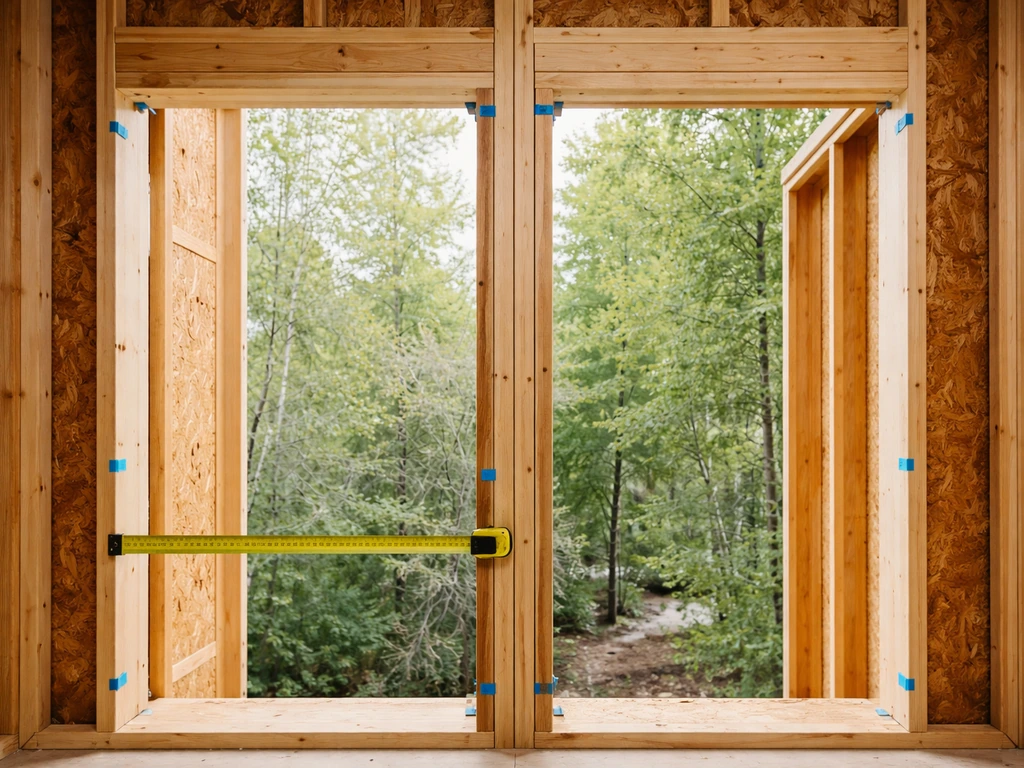
Manufacturers are consistent on one thing: the rough opening needs to be slightly larger than the door unit itself. Pella's aluminum hinged patio door installation documents specify a rough opening that is 3/4 inch larger in width and 1/2 inch larger in height than the door unit dimensions. Andersen uses a similar formula in their Frenchwood inswing sizing documents. These gaps allow for shimming, leveling, and getting the jambs plumb, which matters enormously for how a hinged door operates over time. A door installed in an out-of-square opening will bind, stick, or seal poorly, and no amount of weatherstripping fixes a frame that was never right to begin with.
Standard hinged patio door units typically come in widths of 5 feet (60 inches) and 6 feet (72 inches) for double-panel configurations, with each panel being roughly 30 or 36 inches wide. Heights are commonly 80 inches or 96 inches. If your existing rough opening does not match a standard unit, you will either need custom sizing (which adds significant cost) or a rough opening modification (which adds labor). Measure your existing rough opening width and height, note whether it is square by checking diagonal measurements, and bring those numbers to any dealer conversation.
For configurations, the main choices are: single active panel with one stationary panel, or both panels active. You can also get sidelites (fixed glass panels flanking the door unit), which add visual width without adding swing clearance. Transom windows above are another option if you want height without changing the door unit itself. These additions change the rough opening size, so plan the full assembly before you measure.
Security, insulation, and weather performance
Hinged patio doors (both center-hinged and full French configurations) have a structural advantage over sliding doors: according to ENERGY STAR and DOE guidance, swinging doors generally offer a tighter seal than sliding types because compression seals work differently than the wipe seals used on sliding tracks. That said, a hinged door is only as tight as its weatherstripping and how well it was installed. A Reddit thread documenting cold air gaps on a Pella patio door illustrates the point: improper installation or adjustment over time can undo any design advantage.
Renewal by Andersen addresses this directly, marketing continuous weatherstripping and interlocking design on their Frenchwood hinged doors to prevent drafts. The weak spot to watch on any two-panel hinged setup is the astragal, that center post where the two panels meet.
The passive panel's lock bolts engage at the top, middle, and bottom of the frame here, and if those bolts are not fully engaged or the door settles over time, you can get air infiltration right down the centerline of the door. Check the U-factor and air leakage ratings on any unit you are considering, since ENERGY STAR certification requires both to be independently tested.
ENERGY STAR explains that U-factor and air leakage are certified through required program processes, and that air leakage measures the rate of air passing through joints in windows and doors U-factor and air leakage ratings.
For security, hinged patio doors have a clear advantage when equipped with multipoint locking hardware. Pella's multipoint lock systems engage at multiple points along the frame (typically top, middle, and bottom of the active panel's latch side), which distributes load and significantly increases forced-entry resistance compared to a single-point deadbolt. If the door unit you are looking at only has a single-point lock, ask the dealer about multipoint upgrade options. The passive panel should also have its own bolt receivers at the top and bottom to keep it from being pried or kicked in. That passive-panel locking is easy to overlook when you are focused on the active panel's hardware.
- Look for ENERGY STAR certified units with labeled U-factor and air leakage ratings
- Prioritize multipoint locking on the active panel, not just a standard deadbolt
- Confirm the passive panel has top and bottom bolt receivers, not just a center latch
- Ask the installer about hinge-jamb shimming to ensure the frame stays plumb post-install
- Consider a door with interlocking astragal design to reduce the centerline gap vulnerability
What to budget: cost and installation tradeoffs right now
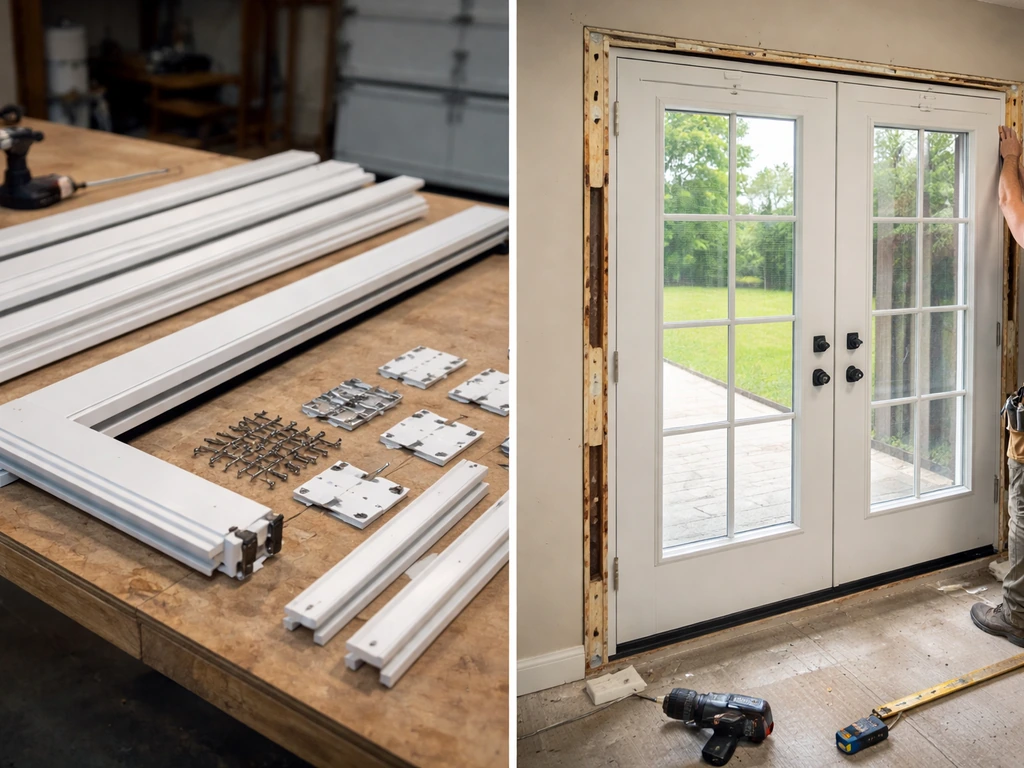
The installed cost range for hinged patio doors and French doors varies more than most homeowners expect, and the door unit itself is often not the biggest variable. If you’re wondering why patio doors so expensive, the short answer is that the door unit price is only part of the total once installation and hardware are included why are patio doors so expensive. Labor, trim work, rough opening modifications, and hardware choices all add up fast.
| Door Type / Configuration | Installed Cost Range (2026) | Key Cost Drivers |
|---|---|---|
| Center-hinged patio door (one active panel) | $1,000–$1,500 | Simpler hardware, standard rough openings, fewer operable components |
| Full French door (both panels operable) | $2,000–$5,000+ | More hardware, two sets of hinges, multipoint lock complexity |
| Andersen Frenchwood hinged/French patio door (premium brands) | $5,000–$12,000 installed | Premium materials, custom sizing, professional installation labor |
The $1,000 to $1,500 range from Homeguide for center-hinged installations reflects simpler setups with standard sizing and basic hardware. The jump to $5,000 and beyond for premium brands like Andersen reflects wood or fiberglass construction, energy performance glass packages, and the labor involved in a precise hinged door installation. A Reddit commenter framing hinged/French doors as noticeably more complex than sliders is not wrong: getting both panels to hang true, seal completely, and swing smoothly takes more skill than dropping a slider into a track.
The questions worth asking any installer before you commit: Does the quote include all trim, casing, and weatherstripping? Is the rough opening modification (if needed) included or separate? What is the labor warranty? And for hardware: is the multipoint lock included in the unit price or an upgrade? These line items can add $300 to $800 to a job that looked affordable on paper.
It is also worth noting that whether French doors are more expensive than patio doors overall depends heavily on the comparison you are making. A basic center-hinged patio door can be cheaper than a high-end sliding patio door, and a premium French door from Andersen will cost more than most entry-level sliders. The configuration and brand tier matter more than the category label.
Screens, privacy, and accessories worth thinking about before you buy
Screens are a legitimate consideration for hinged doors, and they work differently than on sliding doors. Sliding screen doors track beside the glass panel, which is simple. On a hinged door, you are typically looking at a retractable screen that rolls into a housing mounted on the frame, or a hinged screen door that swings independently of the main door. Renewal by Andersen notes that screen options differ depending on whether you have a single active panel or a double-panel configuration, so confirm compatibility with your specific unit before assuming any screen will work.
Retractable screens are the most popular upgrade for hinged patio doors because they disappear when not in use, which preserves the look of the door. Full-width retractable screens that span both panels are available and work well on full French door setups. They do cost more than a basic hinged screen, typically $200 to $600 installed depending on width, but for a door you paid $3,000+ for, it is worth matching the quality.
For privacy, interior blinds or shades built between the glass panes are available on several fiberglass and wood hinged patio door lines. This eliminates the need for curtains or external window treatments and makes a big difference in bedrooms or homes on small lots. It is a factory option, not something you add later, so decide during the purchase phase.
Child safety and secondary security upgrades to consider for either door style include sash pins (a simple rod that prevents the active panel from being opened even when unlocked), door alarms on the active panel, and vent locks that let you leave the door cracked a few inches for airflow while keeping it secured. These are inexpensive add-ons, usually under $50 each, and worth doing if security or child safety is a priority for you.
Choose this one if...
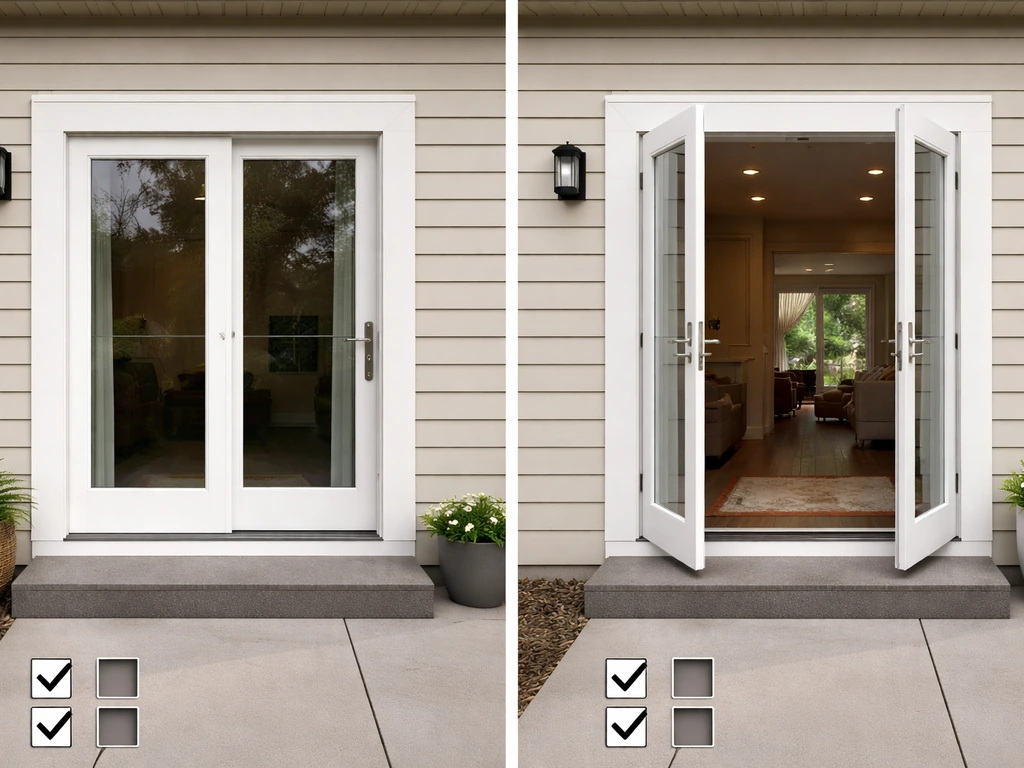
Choose a center-hinged patio door (one active, one stationary panel) if you want a clean, everyday-use door that functions like a standard entry door, works well in standard 5-foot or 6-foot openings, is easier to seal tightly, and keeps your furniture and patio layout simple. It costs less, installs more predictably, and handles high daily traffic without drama.
Choose a full French door (both panels operable) if you want the ability to open the full width of the frame for entertaining, moving furniture, accessibility, or airflow. It demands more clearance on both sides, costs more in hardware and installation, and requires a bit more attention to passive panel locking, but the wide-open experience is genuinely different and worth it for the right layout.
Either way, the practical steps are the same: measure your rough opening carefully (width, height, and both diagonals), bring those numbers to at least two dealers, ask specifically about multipoint locking and weatherstripping quality, and get a written quote that itemizes the door unit, hardware, trim, and labor separately. That breakdown will tell you more about what you are actually buying than any brochure will.
FAQ
If a door is labeled “hinged patio door” but it only opens one side, does it function more like a center-hinged door or a true French door?
It will behave like a center-hinged (one active panel) configuration if only one panel swings and the other remains locked. Ask the dealer to confirm the door’s panel roles (active, passive, stationary) and whether both panels have operable hinges, since labeling varies by brand even when the exterior look matches.
How much extra clearance do I need for a full French door compared with a center-hinged patio door?
For a full French door, you need clearance on both sides because each panel can swing on its own, so plan for roughly one panel’s width of free space per swing side (often about 30 to 36 inches). For a center-hinged door, you typically only need that clearance on the active-panel side, while the passive panel stays in place.
What is the most common layout mistake people make when choosing inswing versus outswing?
They measure the door opening but forget what sits near the door path on the hinge side. For outswing units, check the exterior for steps, railings, patio furniture, or planters that could interfere with the swing arc. For inswing units, check for rugs, furniture legs, and flooring transitions that can get struck or prevent the door from fully closing.
Can I “fix” a drafty hinged patio door just by adjusting weatherstripping after installation?
Sometimes, but not always. If the frame is out of square, the astragal seam or passive-panel bolts may not align correctly, creating air leakage that weatherstripping cannot fully compensate for. Ask your installer to confirm the jamb is plumb, level, and properly shimmed, and verify passive-panel bolt engagement depth and operation.
How do I verify the weak spot at the center seam (the astragal) before buying?
Ask for a demonstration of how the passive panel locks into the frame and how the center area seals. Look for clear engagement of the top, middle, and bottom bolts (as applicable to the model) and ask whether the astragal has replaceable sealing components or an adjustment procedure if gaps appear over time.
Do both panels need multipoint locks for security, or is it enough on the active panel?
You generally want multipoint locking on the active panel and secure bolt engagement on the passive panel as well, because the passive side is often the easy prying target if it is under-locked. Confirm the passive panel has bolt receivers and that the lock system is more than a single-point latch.
What should I ask about U-factor and air leakage ratings on hinged patio doors?
Request the specific product’s tested air-leakage and U-factor numbers, not just marketing claims. Also ask whether the ratings were for the exact configuration you’re buying (including panel roles, glass package, and whether it is inswing or outswing), because performance can vary by model and options.
Do retractable screens work the same on center-hinged versus full French door setups?
No. Many retractable screen systems are built around whether you have one active swinging panel or two operable panels. Confirm whether the screen is a one-panel housing, a dual-panel system, or a full-width unit, and verify the screen will clear the active swing arc without interfering with the passive-panel lock area.
If my rough opening is not a standard size, is custom sizing always the best option?
Not always. Custom doors can be more expensive, and sometimes modifying the rough opening labor can be cheaper overall, especially if the opening is only slightly off. Ask for both options in writing: (1) custom door pricing and (2) rough opening modification cost, then compare total turnaround time and whether either option affects insulation or trim requirements.
Should I buy blinds between the glass at the same time, or can I add them later?
Between-the-glass blinds are typically a factory option tied to the specific door unit. If you need them, decide during purchase because you usually cannot retrofit them after installation without replacing the door assembly.
Are child safety and ventilation locks worth it, or do they create more draft risk?
They can be worth it, especially sash pins and door alarms for basic risk reduction. Vent locks that allow the door to stay cracked can increase airflow if the passive seal is not designed for that position, so confirm the lock limits and ask whether the system includes a reliable sealing behavior at the ventilation crack setting.
What should be included in a written quote so I do not get surprised by add-on costs?
Make sure the quote itemizes door unit, hardware (including multipoint lock), trim/casing, any rough opening modification, and labor separately. Also confirm whether screens, blinds between glass, and insect/energy upgrades are included, since these are common “almost included” items that change the price significantly.